A Buddha Truly Recognized as Such in Accordance with the Dharma
The people on both sides of H.H. Dorje Chang Buddha III on this page are the highest present-day dharma kings and regent dharma kings from various Buddhist sects or are famous rinpoches. It is they who wrote recognitions, corroborations, or congratulations to H.H. Dorje Chang Buddha III.
H.H. Dorje Chang Buddha III is the first Buddha on earth to have received such a large number of recognitions, corroborations, and congratulations and to have been recognized as having the highest status! No other Rinpoche on earth has ever received even one third of the number of recognitions, corroborations, and congratulations from great dharma kings, regent dharma kings, etc. that H.H. Dorje Chang Buddha III has received. H.H. Dorje Chang Buddha III has singlehandedly manifested accomplishments in thirty large categories involving all of the Five Vidyas, thereby establishing the highest record of accomplishment in the history of Buddhism in this world.
Certain evil people have slandered H.H. Dorje Chang Buddha III as having conferred upon Himself the status of H.H. Dorje Chang Buddha III, and they have thereby guided Buddhist practitioners toward evil. In order to protect the wisdom roots of living beings, H.H. Dorje Chang Buddha III makes the following vow of truth: “If those recognitions, corroborations, and congratulations that follow did not come from the dharma kings, regent dharma kings, and rinpoches whose photographs appear on this page of from their temples and/ or are not copies of the original texts but rather are my fabrications with forged signatures – if even one such case exists – then i should descend into hell without the possibility of ever leaving hell. If those recognitions, corroborations, and congratulations were written or typed by them as well as signed and/ or stamped by them, the merit of this truth will bring to everyone wonderful blessings and wisdom! Vow Maker- Dorje Chang Buddha III“
FATHER OF MEDICINE, FERRYBOATS, BRIDGES, AND OPERAS IN TIBET IN A PREVIOUS LIFE: H.E. DHARMA KING TANGTONG GYALPO
H.E. Tangtong Gyalpo is a greatly accomplished person within Tibetan esoteric Buddhism who attained the rainbow body. In a prior life in Tibet, he was the supreme dharma king of the four main sects esoteric Buddhism. He is a great Bodhisattva known and respected by one and all in Tibet. He is also a person of great holiness who has made huge contributions to the Tibetan people. It was this great Bodhisattva who was the father of medicine, ferryboats, bridges, and operas in Tibet. To this day, Tibetan temples and families continue to worship H.E. Tangtong Gyalpo Bodhisattva.
H.E. the 16th Tangtong Gyalpo Bodhisattva (Thangtrul Rinpoche) took birth in Bhutan. His physical appearance resembles that of Guru Padmasambhava. Even when he sleeps, his eyes remain open. During a Dharma Assembly that took place in 2005 at Hua Zang Si in San Francisco, he entered a supernatural state of samadhi in which he saw H.H. Dorje Chang Buddha. H.E. Tangtong Gyalpo said to H.H. Dorje Chang Buddha III that he had received teachings directly from Guru Padmasambhava. He also said that he specially came to formally acknowledge H.H. Dorje Chang Buddha III as his Master and to request the highest dharma in order to save living beings. H.H. Dorje Chang Buddha III immediately accepted H.E. Tangtong Gyalpo as one of his disciples who is on the level of a great venerable one and performed an initiation for him. H.E. Tangtong Gyalpo organized many rinpoches to practice the Kuan Yin Dharma one billion times as an offering to the treasure book about H.H. Dorje Chang Buddha III. He also sent his written congratulations stating that the magnificence of H.H. Dorje Chang Buddha III is supreme and that no other holy being in history can compare with this master of the Buddhas.
H.E. Dharma King Tangtong Gyalpo, the Father of Medicine, Ferryboats, Bridges, and Operas in Tibet in a previous life, acknowledged H.H. Dorje Chang Buddha III (H.H. Dharma King Wan Ko Yeshe Norbu) as his Master, who is unanimously recognized by great holy beings as the true incarnation of Dorje Chang Buddha, the Master of the Five Buddhas, having manifested complete mastery of exoteric and esoteric Buddhism and the Five Vidyas.
During a Dharma Assembly held by the International Buddhism Sangha Association at the Hua Zang Si temple in San Francisco, I saw the awe-inspiring and peerless powers and realization of the Master. Bodhi nectar went through the walls of the bowl unhindered as it left and entered the bowl. That nectar can make a person’s body change involuntarily in an instant. H.H. Dharma King Wan Ko Yeshe Norbu bestowed upon me that holy bowl. H.H. Dharma King Sakya Trizin; Dharma King Omniscience Jamyang Lungdok Gyaltsen; Lama palchug Ugyen Sherab; Dharma King Renzeng Nima; the Eastern Tibetan Dharma King of the Nyingma sect, Renqing Rongbo Barongbo Rinpoche; the Green Jewel Crown karmapa, Dharma King Jiezong; and other great, holy and virtuous beings who are on the levels of Buddhas and Mahasattvas unanimously acknowledge that H.H. Wan Ko Yeshe Norbu is the true incarnation of Dorje Chang Buddha, the Master of the Five Buddhas, and has for the first time in the history of Buddhism in the human realm truly manifested complete proficiency in exoteric and esoteric Buddhism and perfect mastery of the Five Vidyas. This is a goal of Buddhism that all other Buddhists have not been able to achieve. This goal has finally been achieved by H.H. Master Wan Ko Yeshe Norbu. This is an honor to Buddhism and a blessing to living beings.
May the seven types of Buddhist disciples hear the true dharma taught by H.H. Great Dharma King Wan Ko Yeshe Norbu, and may they soon realize enlightenment!
This ancient Buddhist narrative reveals a timeless truth: the value of spiritual wisdom far outweighs any material wealth. It is a powerful reminder to cherish the opportunity to hear and practice the true teachings.
The story begins with the aunt of Shakyamuni Buddha. Out of deep love and devotion, she wove a magnificent robe for him, intricately threaded with gold. It was a labor of heart, an offering fit for an enlightened one.
Yet when she presented it, the Buddha gently advised her to give the robe instead to the entire monastic community—the Sangha.
This puzzled her. The garment was made especially for him. Why give it away?
The Buddha explained with compassion:
“The Field of Merit provided by the Sangha is vast and boundless. Offer it to them, and the virtue you gain will be immeasurable. To give to the Sangha is to give to me.”
Moved by this wisdom, she offered the robe to the monks. Out of humility, none dared to accept it—except Bodhisattva Maitreya, the future Buddha.
Wearing the golden robe, Maitreya went into the city to receive alms. His majestic presence, radiant in that resplendent garment, astonished the townspeople. They were mesmerized—so much so that they forgot to offer him food.
Among them was a master bead-stringer. Captivated, he invited Maitreya to his home for a meal. Afterward, he requested a Dharma discourse.
The artisan listened with such joy and absorption that he forgot everything—including an urgent commission from a wealthy patron who had paid him generously to craft a wedding ornament worth one hundred thousand coins.
When the client’s messengers arrived repeatedly to collect the finished piece, they found him entirely engrossed in listening to the teachings. Enraged, the wealthy man demanded back his jewels and the full down payment.
The artisan’s wife was devastated. Facing such a financial loss, she scolded him bitterly:
“By simply finishing that order, you would have earned a great fortune. Instead, you threw it all away listening to philosophy!”
The artisan felt a wave of regret wash over him.
Sensing this inner turmoil, Maitreya gently asked, “Will you come with me to the monastery?”
The artisan nodded.
Back at the monastery, Maitreya posed a question to the venerable Arhats:
“Which carries greater merit: listening to the Dharma with a joyful heart, or earning a great fortune?”
One by one, the senior monks affirmed that nothing can compare to the merit of hearing the true teachings.
Venerable Kaundinya declared:
“Receiving ten thousand pounds of gold cannot compare to offering even a single bowl of food to a virtuous practitioner. And listening to the Dharma with pure faith—even for a moment—surpasses that merit by hundreds of millions of times.”
Four other Arhats repeated this profound truth.
Finally, Maitreya asked Venerable Aniruddha why this was so.
Aniruddha replied:
“In a past life, I offered just one bowl of food to a Pratyekabuddha. Because of that single offering, for ninety-one world cycles I was reborn as a Heavenly Emperor and a human King, enjoying peace and prosperity. In this life, I was born into the same clan as the Buddha, and came into this world with a natural treasure field forty li wide.”
Hearing this, the bead-stringer felt his regret dissolve. Joy filled his heart. He understood the treasure he had received was far beyond the hundred thousand coins he had lost.
This ancient story is far more than a tale. It invites us to reflect deeply on the power of the Dharma.
Listening to the Truth is not merely an intellectual exercise. It opens the heart. It awakens wisdom. It strengthens the willpower needed to transform our deepest flaws and afflictions.
Material wealth is limited and fleeting. The merit gained from receiving the Dharma is limitless, enduring, and life-changing.
And yet the opportunity to listen does not always come easily. Conditions shift. Circumstances change. None of us can guarantee the next moment of life, much less another chance to sit peacefully and hear teachings that can liberate us from suffering.
When the causes and conditions ripen—when the Dharma reaches our ears—we must listen wholeheartedly.
We must not assume tomorrow will come. We must not assume our hearts are already pure. We must not assume we know enough.
The greatest freedom comes only when we break the cycle of birth and death and attain effortless liberation. Every moment of listening, every spark of understanding, moves us closer to that awakening.
This story encourages us to treasure every opportunity to hear the teachings, to recognize that spiritual wisdom is the greatest wealth of all, and to remember that even a moment of true Dharma listening can bring blessings far beyond the measure of gold.
In this Dharma-ending age, we are truly blessed that an ancient Buddha has come into our world to reveal the authentic, uncorrupted Dharma. The recorded discourses of H.H. Dorje Chang Buddha III guide practitioners through a clear and progressive path of cultivation, offering incisive teachings that encompass the essence of the twelve divisions of the Tripitaka and the ten divisions of the esoteric scriptures. Nothing is diluted or lost—each teaching preserves the profound meaning of both the exoteric and esoteric Dharma. These discourses illuminate an extraordinary range of topics, from the principles of the Trikaya and the Four Wisdoms of a Buddha to the supreme vajra Dharma of the highest division. They reveal the true realization of the Great Perfection of Ultimate Wisdom, and through the Xian Liang Buddha Wisdom Great Perfection Dharma, disciples may even personally witness the rainbow-body state on the very day the Dharma is transmitted. In both theory and practice, the teachings of H.H. Dorje Chang Buddha III stand complete, perfect, and unparalleled—an immeasurable blessing in this age of fading Dharma.
Most religions have moral and ethical rules and commandments. Buddhism has Precepts, but it’s important to understand that the Buddhist Precepts are not a list of rules to follow.
In some religions, moral laws are believed to have come from God, and breaking those laws is a sin or transgression against God. But Buddhism doesn’t have a God, and the Precepts are not commandments. However, that doesn’t exactly mean they’re optional, either.
The Pali word most often translated as “morality” is sila, but sila has many connotations that go beyond the English word “morality.” It can refer to inner virtue such as kindness and truthfulness as well as the activity of those virtues in the world. It can also refer to the discipline of acting in a moral way. However, sila is best understood as a kind of harmony.
Being in Harmony
The Theravadin teacher Bikkhu Bodhi wrote,
“The Buddhist texts explain that sila has the characteristic of harmonizing our actions of body and speech. Sila harmonizes our actions by bringing them into accord with our own true interests, with the well-being of others, and with universal laws. Actions contrary to sila lead to a state of self-division marked by guilt, anxiety, and remorse. But the observance of the principles of sila heals this division, bringing our inner faculties together into a balanced and centered state of unity.” (“Going for Refuge and Taking the Precepts “)
It is said that the Precepts describe the way an enlightened being naturally lives. At the same time, the discipline of upholding the Precepts is part of the path to enlightenment. As we begin to work with the Precepts we find ourselves “breaking” or defiling them over and over. We can think of this as something like falling off a bicycle, and we can either beat ourselves up about falling—which is disharmonious—or we can get back on the bicycle and start pedaling again.
The Zen teacher Chozen Bays said, “We just keep on working, we are patient with ourselves, and on and on it goes. Little by little our life comes more into alignment with the wisdom that gives rise to the precepts. As our minds get clearer and clearer, it’s not even a matter of breaking or maintaining the precepts; automatically they are maintained.”
The Five Precepts
Buddhists don’t have just one set of Precepts. Depending on which list you consult, you might hear there are three, five, ten, or sixteen Precepts. Monastic orders have longer lists.
The most basic list of Precepts is called in Pali the pañcasila, or “five precepts.” In Theravada Buddhism, these Five Precepts are the basic precepts for lay Buddhists.
A more literal translation from the Pali for each of these would be “I undertake to observe the precept to abstain from [killing, stealing, misusing sex, lying, abusing intoxicants].” It’s important to understand that in maintaining the Precepts one is training oneself to behave as a buddha would behave. It’s not just a matter of following or not following rules.
The Ten Grand Precepts
Mahayana Buddhists generally follow a list of Ten Precepts that are found in a Mahayana Sutra called the Brahmajala or Brahma Net Sutra (not to be confused with a Pali sutra of the same name):
Some Mahayana Buddhists also vow to uphold the Three Pure Precepts, which are associated with walking the path of a bodhisattva. These are:
To do no evil
To do good
To save all beings
The Pali words usually translated as “good” and “evil” are kusala and akusala. These words can also be translated “skillful” and “unskillful,” which takes us back to the idea of training. Very basically, “skillful” action takes oneself and others closer to enlightenment, and “unskillful” action leads away from enlightenment.
To “save all beings” is the bodhisattva’s vow to bring all beings to enlightenment.
The Sixteen Bodhisattva Precepts
You will sometimes hear of the Bodhisatva Precepts or the Sixteen Bodhisattva Vows. Most of the time, this refers to the Ten Grand Precepts and Three Pure Precepts, plus the Three Refuges:
I take refuge in the Buddha. I take refuge in the Dharma. I take refuge in the Sangha.
The Eightfold Path
To fully understand how the Precepts are part of the Buddhist path, begin with the Four Noble Truths. The Fourth Truth is that liberation is possible through the Eightfold Path. The Precepts are connected to the “ethical conduct” part of the Path—Right Speech, Right Action and Right Livelihood.
The moment I heard that I would be going with Venerable Dharma Teacher Long Hui to Los Angeles, unspeakable joy arose in my heart. On the way to Los Angeles, a rainbow suddenly emerged from the drizzling sky, emitting beautiful lights of various colors. A white celestial crane seen in the distance flew near and landed at the side of the freeway gazing at us, as if paying us respect. All of these signs expressed auspicious blessings. I strongly sensed that what I had wished for so long was about to come true.
A notice arrived in the afternoon of December 28th. From Venerable Dharma Teacher Long Hui’s somewhat tense facial expression, I could tell this must be the time for me to pay my respects and visit the Buddha Master. Just as expected, when we stepped into the mandala, I saw H.H. Dorje Chang Buddha III Wan Ko Yeshe Norbu Holiest Tathagata sitting upright on the dharma platform. His Holiness appeared so dignified and had an expression of loving-kindness. As I sincerely prostrated myself to H.H. Dorje Chang Buddha III, all I heard was the cordial voice of His Holiness telling everyone to come sit toward the front. I sat beside Venerable Dharma Teacher Long Hui. Dharma Teacher Jue Hui and Dharma Teacher Ruo Hui also sat with us.
Venerable Dharma Teacher Long Hui reported to the Buddha Master regarding the Buddhist chanting work that had taken place at Hua Zang Si over the past two months. Next, the Buddha Master called my name: “Fa Hai, proceed with what you want to say.” Without knowing why, my mind went totally blank. I felt that my entire body was soaking in a kind of freshness. I remained kneeling with a very straight back, as if I had entered a state of meditation. At this time, I only heard the Buddha Master say, “It is all right. Just speak directly!” Yet, I still could not speak and was silent for another eight or nine minutes. I could sense that the Buddha Master was patiently waiting. Finally, a sound floated out of my mouth: “My karmic affinity with the Buddha Master should have begun ten years ago. Because I could not come to America, I was not able to visit His Holiness. I finally got a visa last year. Only this year did I have the opportunity to visit Hua Zang Si, where I respectfully listened to recorded dharma teachings of the Buddha Master. For more than one straight month, I have listened to the recorded dharma discourses without the slightest sense of tiredness.
This has been the most beneficial and rewarding time of my entire life. The beneficial effects I have experienced can never be expressed in words. I bring my body, speech, and mind to respectfully visit the Buddha Master at this time. Today, I would like to specially request a great dharma from H.H. Dorje Chang Buddha III. I would not hesitate to leap into boiling water or walk on fire in order to obtain this great dharma. I am willing to undergo any test in order to obtain such dharma. I am even willing to sacrifice my own life. It might sound like I am exaggerating, but I truly can do such things.”
Perhaps because I was too nervous or focused, I unexpectedly was not able to express exactly what I meant to say. However, I silently told myself that the Buddha Master definitely understands what I am trying to express and what dharma I am requesting. I still remember that I fasted for a full 21 days in the Philippines in order to obtain this great dharma. This is because I am very aware that in this world only H.H. Dorje Chang Buddha III can accomplish this task and announce to the world this great dharma in order to demonstrate the brightness of Buddha and enable the correct dharma to exist in this world forever.
At first, the Buddha Master did not answer my request directly but gave us a profound and important discourse. Only afterward did I realize that this discourse was actually the beginning of His Holiness’s response to my question. His Holiness specifically pointed out the various kinds of confusion and mistakes that have appeared within Buddhism in this current Dharma Ending Age. Some Buddhist sutras contain serious mistakes. What is even more serious is that there are some so-called eminent monks and great virtuous beings who, due to their erroneous understanding and views, seriously misguide others when giving discourses on the dharma. What is even sadder is that believers who do not understand the truth still fanatically follow them and prostrate to them in worship. H.H. Dorje Chang Buddha III does all He can to correct these heretical ideas and views. However, being limited by the karma of living beings, H.H. Dorje Chang Buddha III feels that it is very difficult to change the current situation despite His wish to do so. The Buddha Master gave some examples of these heretical ways within both esoteric Buddhism and exoteric Buddhism. These very worrisome examples left me not knowing whether to laugh or cry.
After finishing the discourse, the Buddha Master said to me directly, “Fa Hai, you did not say what great dharma you want to request. Let me say it for you. The dharma you want to request is to film a movie of the Buddha. There really is no one else besides me who can do this because I completely understand the teachings of the Buddha. I can write the script. This movie must be filmed. The only thing is that the karmic conditions this year are not quite mature enough because the script needs to be written and actors need to be found, especially actors who are qualified. As for funding, as long as there is a script, there will be people who will sponsor and invest. Besides, the movie of the Buddha will not be filmed as one undivided whole but will be divided into a series of 100 parts or episodes. Perhaps this is really the right channel. After all, the influence of a book is limited as it reaches fewer people than a movie, which has much more of an international impact. In addition, when we do this, many problems might be solved. We might even be able to build several temples this way!” At this moment, I understood that the discourse just given by H.H. Wan Ko Yeshe Norbu Holiest Tathagata on the current chaotic situation within Buddhism illustrated that it is impossible for anyone else to write in a script the authentic doctrines of the Buddha.
Listening to this point, I was really shocked in my heart. I used to pay respect and visit many eminent monks and great virtuous beings. I requested from them great dharma. None of them knew what this great dharma in my mind was that I wanted to request. H.H. Dorje Chang Buddha III is truly magnificent. I did not reveal in the slightest what great dharma I wanted to request. Nonetheless, what His Holiness stated was the exact great dharma in my mind that I wanted to request.
His Holiness then said, “Fa Hai, when you come back from mainland China, I will transmit to you dharma according to the formal rituals of Tibetan esoteric Buddhism. You still have some negative karma. At that time, I will perform an initiation for you and eliminate your karmic hindrances. You will see.” I was totally engulfed in the joy of the dharma. The Buddha Master further said, “On your way here, the rainbow and the celestial crane you saw augured that your future undertakings will be bright. However, behind the brightness lurks darkness, and there are twists and turns on the path. We will soon face some attacks and slander, although those who commit the slander will all end up losing. When A Treasury of True Buddha-Dharma is published, no force can obstruct or destroy us because what is in that book are facts.” The Buddha Master finished by saying, “The movie of the Buddha definitely has to be filmed. You see, Fa Hai, your wishes have all been fulfilled. How fortunate you are!”
Actually, there are no words that can express my happiness. There are also no words that can express my gratitude toward H.H. Dorje Chang Buddha III.
I only want to respectfully offer to the Dorje Chang Buddha III my most beautiful spirit, my most beautiful melody, my most beautiful singing voice, and my best wishes. May all those who hear this beautiful melody and singing voice be happy.
I would like to express my special thanks to an anonymous person who ten years ago sent me an express mail package in which a yellow silk scarf was wrapped around the book The Fruits of Pious Devotion and CD’s that had a picture of H.H. Dorje Chang Buddha III on their covers. It is because of this present that seeds planted ten years ago have borne fruit in the form of my taking refuge in the His Holiness as my Buddha Master and in the form of my witnessing the magnificence of the Buddha-dharma.
Everything I described above is true. I am a Buddhist nun. I accept the karmic responsibility for my words. If what I have stated is false, I will descend into the Vajra Hell. If what I have stated is true, I would like to dedicate the resulting merit to all living beings in the dharma realm so that they will soon realize enlightenment.
Respectfully written by disciple Fa Hai Shi December 30, 2006
The above account was written by Fa Hai Shi. We three humble Buddhist nuns provide the following testimonials.
Encountering an Unusual Occurrence
Basically, whenever people pay their respects and visit H.H. Dorje Chang Buddha III Wan Ko Yeshe Norbu Holiest Tathagata, they make good use of their short meeting time by posing prepared questions or by requesting the transmission of dharma. Some groups have really made the best use of their time by requesting answers to problems that have arisen.
From left to right: Ruo Hui Shih, Long Hui Shih, and Jue Hui Shih
However, there was one particular occasion in the afternoon of December 28, 2006 when a dharma teacher from the Philippines, Fa Hai, came to the mandala from thousands of miles away. This was the first time she was granted an audience with H.H. Dorje Chang Buddha III. When H.H. Dorje Chang Buddha III asked her what question she had, I saw that Buddhist nun take a deep breath. She then unexpectedly remained silent as she stared at the Buddha Master with open eyes, sometimes lowering her head. Perhaps all of this was due to nervousness or other factors. At this time, the Buddha Master also did not speak. Seconds and then minutes passed by in silence. Then, that dharma teacher sighed once more and straightened her back, still looking at the Great Dharma King without uttering a sound. Strangely, Dorje Chang Buddha III also remained silent. A moment later, she sighed for the third time but still did not reply to the Buddha Master. The duration of this silence lasted more than eight minutes. This kind of situation had never happened before.
Finally, the dharma teacher spoke. She said she had come with a wish to request a great dharma. If her wish to obtain this great dharma were fulfilled, she said she would dedicate her life to the Buddha-dharma and living beings, even if it meant sacrificing her life. After uttering such words, she again fell into silence without mentioning what dharma she wished to request.
At this time, Dorje Chang Buddha III said, “Do not say anymore. I will give you a discourse.” The Buddha Master pointed out what request was in the mind of this Buddhist nun. That discourse not only enabled us disciples who were there to once again witness the supernatural powers of H.H. Dorje Chang Buddha III, it also enabled us to understand precious dharma principles.
Because I took Dharma Teacher Fa Hai to pay her respects to H.H. Wan Ko Yeshe Norbu Holiest Tathagata, I was there and personally witnessed everything that happened. Everything I described above is true. If what I have stated above contains false words, may I never become accomplished in the dharma. If what I have stated above is true, I dedicate the resulting merit to all living beings so that they may soon hear the correct dharma and soon attain liberation and accomplishment.
Buddhist disciple Long Hui Shih
I was present at the time. I hereby confirm that what is stated above is true. If what is stated above is false, I am willing to descend into hell and experience negative karmic retribution. If everything stated above is true, I dedicate the resulting merit to all living beings so that they may soon hear the correct dharma and soon realize enlightenment.
Buddhist disciple, Jue Hui Shih
Everything stated above is true. If what is stated above contains false words, I will not become accomplished in the dharma and will become impoverished and miserable. If what is stated above is true, I wish to dedicate the resulting merit to all living beings so that they may always see Buddha and attain liberation.
Buddhist disciple, Ruo Hui Shih
(This is a complete translation of the Chinese text that follows originally written and signed by Fa Hai Shih, Long Hui Shih, Jue Hui Shih, and Ruo Hui Shih.)
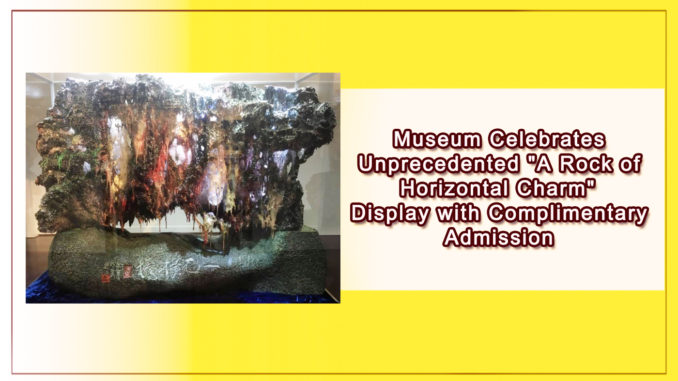
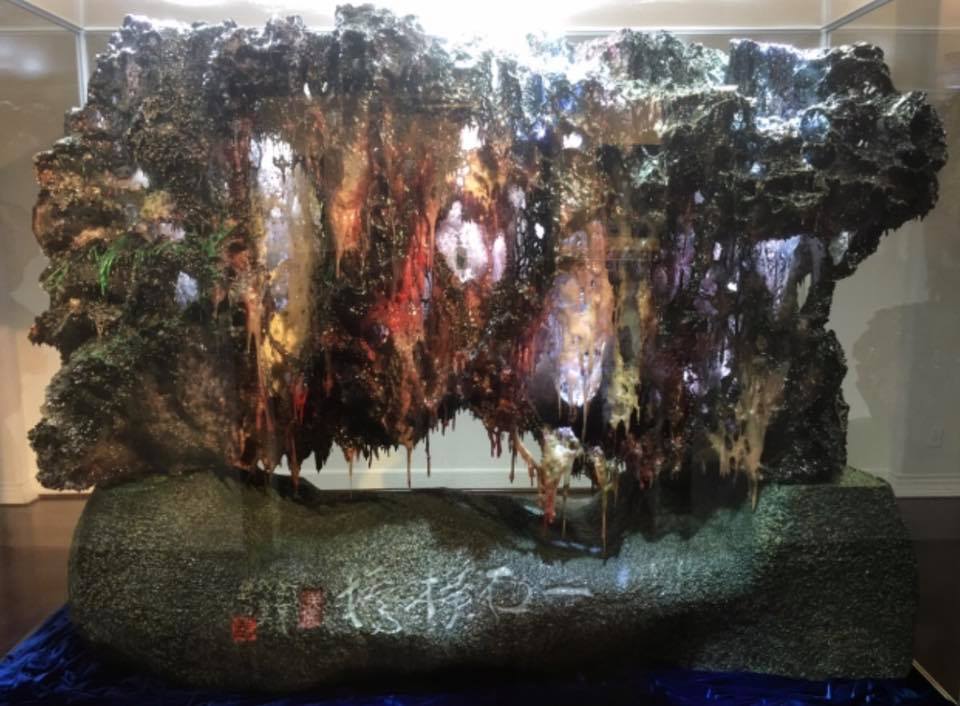
The H.H. Dorje Chang Buddha III Cultural and Art Museum is pleased to announce its exhibition of “A Rock of Horizontal Charm“, a masterpiece of Yun Sculpture that embodies the spirit of art in a truly dis-tinctive way. In honor of this extraordinary form of art, the museum is offering free admission to the public for a limited time.
“A Rock of Horizontal Charm” was created by the world-renowned and internationally-revered highest leader of Buddhism, H. H. Dorje Chang Buddha III. The Yun Sculpture is a piece of original artwork that expresses a unique set of qualities. Various art experts and professors who have viewed the sculpture art say it has surpassed natural beauty and represents a level of perfection that extends well beyond what can be described as superb craftsmanship or inspired artistry.
The H.H. Dorje Chang Buddha III Cultural and Art Museum is exhibiting A Rock of Horizontal Charm, an unparalleled masterpiece of Yun Sculpture. For a limited time, visitors can receive free admission to the museum and witness the unsurpassed natural beauty of the superb sculpture art first hand.
When viewed from different angles, the Yun Sculpture’s colors, structure, and atmosphere change completely, inexhaustibly transforming in unpredictable ways. Furthermore, it possesses multidimen-sional spatial structures that are complex yet delicate and intricate, and exquisite to the utmost. In addi-tion, its colors—kaleidoscopic and majestic, yet mature and assured—manifest a supernatural, visionary beauty. “A Rock of Horizontal Charm“, alone, is so endlessly variegated that it provides thousands of beautiful vistas.
The astounding beauty of this amazing sculpture art goes far beyond mere words. Therefore, it is no surprise that it has distinguished itself as the “emperor” of the four great Yun Sculptures. In fact, the creation of “A Rock of Horizontal Charm“ is considered to be a miracle in human history because no craftsman in the ancient or modern world—or even high technology—has been able to devise such ex-traordinary works of divine art. Consequently, this original artwork has been designated a “peerless treasure” that cannot be replicated, and the museum has named the room in which it is being displayed, Peerless Treasure.
“Even the “He Shi Bi (the Jade Disc of He) “, recorded in history as a treasure of monumental value, does not fit the title of ‘peerless treasure,’ since it is completely replicable—and if it can be replicated, it is not unique; if it is not unique, it is not peerless,” states the museum’s website. “In fact, any master sculptor’s magnum opus can be recreated; thus, only “A Rock of Horizontal Charm“ is the true peerless treasure.”
Despite an invitation to create an identical replica Yun Sculpture for a $50 million prize, no human sculpture master or technology has successfully duplicated “A Rock of Horizontal Charm“. From this, one can see how H.H. Dorje Chang Buddha lll’s artistic level has far exceeded the summit of sculptural art in human history.
The exhibit featuring “A Rock of Horizontal Charm“ will allow visitors to experience the divine charm of H.H. Dorje Chang Buddha lll’s original artwork in person. The unreplicatable sculpture exudes an inex-plicable amalgamation of color, motion, energy and spirit. “A Rock of Horizontal Charm“ has transcend-ed the category of highest human sculptural attainment and entered into the enjoyments of a mystical world.
Located in Covina in East Los Angeles, the H.H. Dorje Chang Buddha III Cultural and Art Museum is housed in a building with a 117-year history. The structure was renovated in 2014 and transformed into the cultural and art museum that occupies the space today. Since then, the museum’s world-class, un-matched treasures have attracted a steady stream of culture and art lovers from around the globe.
The mission of the cultural and art museum is to promote the exceptional accomplishments of an Amer-ican with outstanding talent—H.H. Dorje Chang Buddha III—by displaying his achievements in culture, literature, philosophy, art, science, technology, and other fields. Visitors to the museum can learn about the noble ethics and morality of H.H. Dorje Chang Buddha III and the holy character of this magnificent, selfless Buddha who altruistically contributes to society through his vast achievements and who advances world peace as well as the happiness of people. In addition, visitors can be guided by the teachings of H.H. Dorje Chang Buddha III and model themselves after him to elevate their own moral character and benefit the public.
About H.H. Dorje Chang Buddha III H.H. Dorje Chang Buddha III has been recognized by the most highly realized practitioners of Buddhism as the third incarnation of the original Buddha, Dorje Chang Buddha. His accomplishments transcend religion, healing and art. As the first in history to manifest real accomplishments in the five vidyas, He meets the highest standard of Buddhism. He is recognized for his devotion to a wide scope of cultural and religious activities, which enrich the lives of people from communities throughout the world. His Holiness has mastered 16 unique painting styles or schools, representing an unprecedented pioneering achievement in the history of art. Additionally, He is the pioneer of a new class of artwork that cannot be duplicated by any living being: Yun Sculpture. Experts predict that His paintings and sculptures will become increasingly valuable.
Shakyamuni Buddha at Benevolence Temple, Las Vegas, Nevada.
On November 13 and 14, The Benevolence and Pure Cultivation Temples in Las Vegas, Nevada conducted a special Zen Meditation Retreat for English (and Chinese) speakers that taught, demonstrated, and finally allowed all who attended to participate in their form of meditation. This Ru Lai Zheng Fa (Tathagata True Dharma) method features the Great Dharma of Zen Practice by H.H. Dorje Chang Buddha III and the traditional methods followed in ancient China that combined fast walking or moving meditation with silent sitting meditation. Although His Holiness transmitted three mantras that enhance the experience, alternatives are also provided for anyone wishing to participate who has not received them.
Kuan Yin Bodhisattva shrine at the Benevolence Temple.
The first day gave us a tour of the beautiful hidden Benevolence Temple and the experience of what it took for the monastics and lay people of that temple and their companion Pure Cultivation Temple to transform their central Grand Buddha Hall into a Meditation Hall. They would normally do their meditation in a private smaller hall, but this space was created to accommodate the 43 who attended the actual retreat. The afternoon consisted of training for the experience, which we all enjoyed the following day. The second day was the actual Meditation Retreat. It consisted of ten sessions—five fast walking or moving and five sitting sessions. It also included a delicious breakfast, lunch, and evening meal in the nun’s dining hall plus snacks during the morning and afternoon sessions in the Meditation Hall. Everything was conducted in silence except for the bells, gongs, and instructions from Venerable Fa Chao, the abbot of the Pure Cultivation Temple who led the event, and an occasional crack of the cudgel to start each moving session and monitor the sitting sessions.
Grand Buddha Hall at the Benevolence Temple before converting it into a Meditation Hall for the retreat.
Removing desks and benches at Benevolence Temple to create Meditation Hall.
Constructing a new altar for the Meditation Retreat at Benevolence Temple.
Waiting for sitting meditation instruction at Benevolence Temple.
The Medicine Buddha is a great teacher who purifies all obstacles and brings healing to the world. When the Medicine Buddha was practicing the Bodhisattva path in past lives, he made twelve great vows to relieve the suffering of sentient beings and bring them happiness including curing physical disabilities, relieving poverty, providing material needs, guiding those astray, and liberating prisoners. He is associated with a pure land in the East called Vaiḍūryanirbhāsa, or “Pure Lapis Lazuli”.
On the 29th day of the ninth lunar month, Buddhist disciples worldwide honor the birthday of Bhaisajyaguru Buddha, known as the Medicine Buddha or the Great Medicine King. He is also referred to as the Buddha of Twelve Great Vows, embodying deep compassion and healing. Presiding over the Pure Land of Lapis Lazuli Light in the East, the Medicine Buddha has inspired countless practitioners with his transformative teachings and boundless compassion.
Hua Zang Si, a Buddhist temple in the Mission District of San Francisco, California, held a Namo Medicine Buddha Holy Birthday Dharma Assembly on November 16, 2025. The next scheduled Dharma assembly will be the Namo Amitabha Buddha Dharma Assembly to be held on December 28, 9:30 am.
In Tibetan esoteric dharma, there are five types of precious pills. They are the Nectar Pill, the Long Life Pill, the Great Precious Pill, the Vajra Pill and the Supreme Precious Pill. Actually, these five types of pills are made from nectar bestowed by different Buddhas. There are also red pills and black pills made with Chinese herbs after the herbs are empowered through mantras, such as the red pills and white pills made by H.E. Tangtong Gyalpo. The Long Life Pill has the empowering effect of extending one’s lifespan. The Great Precious Pill can further one’s accomplishment in the dharma. The Vajra Pill can help dispel demons and increase longevity and good fortune. The Supreme Precious Pill can ensure accomplishment in the dharma. The five types of pills are crystallization of merit produced from the power of Buddha-dharma and the empowerment of Buddhas and Bodhisattvas. Basically, all great rinpoches have what they call precious pills. But most of them are of the ordinary type, not the holy precious type of pills. Holy precious pills and ordinary ones are two totally different concepts. I personally saw Nectar Pills made from nectar bestowed by Buddhas. I also personally saw true Vajra Pills and heard them chant mantras.
Certain famous rinpoches and dharma kings from the highest temples in Tibet have said that the Buddha-dharma that can enable a vajra pill to fly has not been seen in this world in three hundred years. This is a fact. There was a crazy yogi named Be Wa Ba who could manifest such power hundreds of years ago, but according to these respected rinpoches and dharma kings who have had contact with all of the well known dharma kings of recent times, this dharma had disappeared from this world.
I follow my Buddha Master, H.H. Dorje Chang Buddha III Wan Ko Yeshe Norbu Holiest Tathagata, and am constantly by His Holiness’s side. Therefore, I have experienced many magnificent and real manifestations of Buddha-dharma. Now I will tell everyone about my experience of the true Vajra Pill. When the holy vajra mantra and mudra are practiced, the Vajra Pill will jump and even transform into rainbow light and soar into the sky. I have also heard the Vajra Pill dance and chant mantras. I watched other people listen to the Vajra Pill sing songs.
I vow that the events reported here are true and happened as reported. If not, I am willing to bear the karmic retribution of the hell realms.
Amazing supernatural events preceded my first experience with the karmic affinity of the Vajra Pill. This happened in April, 2003. I traveled from San Francisco to Los Angeles to see H.H. Wan Ko Yeshe Norbu. During the trip I suddenly saw a colorful and large rainbow light appear in the sky. The rainbow completely surrounded the sun. There were also Sanskrit symbols in the sky. Just as the rainbow was fading from sight, I was able to take a picture of the bottom half of this light by focusing the camera below the sun. A dignified Buddha–Dorje Chang Buddha–appeared in the middle of the rainbow. This Buddha became my Buddha master, H.H. Wan Ko Yeshe Norbu, who was wearing a red robe and was sitting in the middle of the rainbow. The scene was awesome and extremely wonderful. The rainbow light appeared in the sky for several hours.
When I arrived, I was fortunate to immediately see my Buddha Master. A great lama obtained three true Vajra Pills and had respectfully given them to H.H. Wan Ko Yeshe Norbu Holiest Tathagata as an offering. The Buddha Master bestowed me with two of them. Unexpectedly the Vajra Pills in my hand started to jump. At that time the Vajra Pills jumped in my hand just as if they were alive. They not only jumped but one of them started to circle around and left my hand. It transformed into a dazzling bright red light and soared into the sky. At that time, I saw that the Buddha Master, who sat far away on the dais, had become a blue Buddha Vajradhara. The blue light was shining bright. The scene was very dignified. I was greatly astonished. This is when I first saw the true Vajra Pill and the true identity of my Buddha Master.
There was a very virtuous disciple who came from Australia. Because of a question I had asked H.H.Wan Ko Yeshe Norbu Holiest Tathagata about a dharma matter concerning mysterious power, the Holiest Tathagata said to me, “Bring your Vajra Pill to empower this disciple.” I took out the Vajra Pill. In order to prevent the Vajra Pill from escaping, this great layperson personally put the Vajra Pill in a small cup and sealed the cup with a piece of paper. The disciple put the cup to his ear and moved 15-20 feet away from the Holiest Tathagata. Several of us were sitting on the floor around H.H. Wan Ko Yeshe Norbu Holiest Tathagata. Then everyone started to chant mantras and practice dharma. Soon the Vajra Pill began to chant and sing Buddhist songs. This layperson was very moved. It is hard to believe that a tiny pill can actually sing Buddhist songs, but I have heard this myself. Actually, I did not hear Buddhist songs, but clearly heard the chanting of holy mantras. The sound came from this tiny BB sized pill that I personally held to my ear. It is truly unbelievable. In this world within the supreme Vajra Division of Esoteric Buddhism the Vajra Pill truly can be categorized into ordinary types and holy types. The Vajra Pill in my hand was living proof of the holy type.
Today I sincerely tell everyone my personal experience. My Buddha Master, H.H. Dorje Chang Buddha III Wan Ko Yeshe Norbu Holiest Tathagata is the supreme and highest Buddha. May all living beings have the good fortune to hear, learn, and practice the true Buddha-dharma and quickly attain enlightenment.
I, Buddhist disciple Zhaxi Zhuoma, sincerely vow and clearly write down these events to prove the existence of the true Buddha-dharma in the world today.
Every Buddhist practitioner longs for achievement and liberation. Hearing the true Buddha-Dharma is the key. The following article is a genuine account written by a monastic bhikshu Huihai (慧海) who personally listened to the Dharma teachings of H.H. Dorje Chang Buddha III.
In this life, I am able to encounter my supreme and unsurpassable Buddha Master—this truly is the greatest blessing I have accumulated through many lives and countless eons!
The Buddha Master’s genuine and pure teachings, in the turbulent waves of today’s chaotic era, are the vessel that carries sentient beings to the shore of liberation. The Buddha Master’s profound and skillful instructions transcend religion, directly point to mind-transmission, accord with conditions and the Dharma-realm, and enlighten sentient beings to step onto the path of awakening.
As a disciple, whenever I am in the presence of the Buddha Master, my heart always feels immeasurably moved, deeply experiencing the holiness and greatness of the Buddha’s virtue
I remember it was in early September of 2005 that I had an audience with the Buddha Master. The Buddha Master said: “In the history of Tibet and the Han region, there were many practitioners who cultivated many Dharma methods, yet achieved very little in their entire lifetime. Only in their old age did they realize that they had seldom listened to true Dharma, which caused them not to understand the Buddha-principles, and thus they walked a deviated path.
Most of the ancestral masters through generations, most of the Buddhas and Bodhisattvas of the past, attained great accomplishment precisely because they listened to Dharma. Therefore, listening to Dharma is extremely important. Now, in this degenerate era, there is truly far too much false Dharma. You must listen to Dharma more, listen more to the Dharma I teach. Only by clearly understanding the Dharma sounds, learning the true Buddha-Dharma, and deeply applying it in actual practice, can the problem of birth and death be resolved. This is the most important, most important thing!”
I knelt and prostrated to the Buddha Master and said: “Your disciple is very grateful for the Buddha Master’s teachings, and I hope all sentient beings may hear and receive the Buddha’s Dharma sound and learn the true Buddha-Dharma.”
The Buddha Master sat for a moment and then went into the room. Several senior brothers and sisters happened to come out, each with joyful expressions on their faces. I asked them curiously: “I see all of you beaming with smiles—what joyful thing has happened?”
One senior brother said: “We just respectfully listened to a recording of a most supreme Dharma-sound.”
I said: “No wonder you are filled with Dharma joy. May I listen to this Dharma-sound recording?” The senior brother said: “This is a rarely accessible Dharma-sound. Permission must be requested before you can listen.”
At that moment, the Buddha Master came out from the room. I quickly reported: “I request Buddha Master’s permission—may I listen to that Dharma-sound recording?”
The Buddha Master smiled and said to me: “Of course you may. You certainly may listen. If even you, a monastic, cannot listen, then who else could?” I joyfully placed my palms together and prostrated to my kind Master, saying: “Thank you, Buddha Master.”
I went to the altar to pay respect to the Buddha, offered a khata and offerings, performed the pre-Dharma-listening rituals, and began to attentively and reverently listen to the Dharma. The Dharma-teaching that the Buddha Master expounded in the recording was unprecedented—unmatched in its sublimity.
Upon hearing this Dharma, I received tremendous blessing power; suddenly my obstructions opened, joy surged within me, like a spontaneous celestial empowerment pouring down, nectar filling me completely. The karmic forces of beginningless time all became like illusions. Such a supreme Dharma—how could it not be something that is difficult to encounter even in hundreds of thousands of eons?
What sentient beings find hard to see, I now see; what sentient beings have not heard, I have now heard. How could beings burdened by countless karmas possibly comprehend its wondrous principles? After leaving the altar, I saw the Buddha Master and immediately knelt down in gratitude.
I said excitedly: “Buddha Master! How could this merely be a teaching or a Dharma-sound? This is fundamentally a great Dharma—an unsurpassable great Dharma!”
The Buddha Master looked at me and smiled: “Excellent! You received the blessing of Buddhas and Bodhisattvas and understood the Dharma I taught.”
I continued: “Buddha Master, this Dharma truly leaps directly and suddenly into the Tathāgata’s state! And truly, it requires no effort—you can attain it instantly.” The Buddha Master said: “Indeed so.”
I further said: “This Dharma is truly magnificent. Indeed, everyone can practice it, but ordinary people will not understand it and will only regard it as an ordinary teaching.”
The Buddha Master said: “This is even easier than realizing mind and seeing one’s nature. Even those who realize mind and see their nature may not attain this state.”
My Buddha Master—the Supreme Protector, H.H. Dorje Chang Buddha III—expounds Dharma by observing sentient beings’ karmic conditions through the complete Buddha-wisdom. Every teaching is given for the liberation of Buddhist disciples and future beings. The Dharma principles revealed are tailored to each person’s capacity, deep yet simple. Though spoken casually, they unfailingly accord with the profound truths of the Buddhist Tripiṭaka and esoteric scriptures. Moreover, many penetrating and unique Dharma principles are not found in any sutras—they arise directly from the Buddha Master’s innate enlightened realization.
Since I drew close to the Buddha Master and respectfully listened to the Buddha Master’s Dharma-sounds, I have finally gained a complete understanding of the Tathāgata’s perfect and true teachings. The benefits I have received are far too many to express in words—far surpassing everything I had learned in Buddhism over the past decades.
Because Buddhist sutras have been transmitted in the world—especially after translation—they inevitably contain mistranslations or misinterpretations. Moreover, the classical literary language used in the scriptures is truly difficult for modern readers accustomed to vernacular style. The numerous technical terms in the sutras also pose a challenge for beginners entering the Buddhist path.
The Dharma-sounds taught by H.H. Dorje Chang Buddha III are the authentic Tathāgata true Dharma, explained through modern language and analogies, expressing principles in accordance with intrinsic nature, unfolding the stages of realization, and enlightening the ignorant. Those who listen can easily learn pure Buddha-Dharma and establish correct understanding and correct views. Therefore, it is most suitable for every practitioner in today’s world to rely on and cultivate.
The Dharma-sounds spoken by H.H. Dorje Chang Buddha III are a bright lamp illuminating the path of cultivation. They are the supreme Dharma-treasure that enables sentient beings to become Arhats, enables Arhats to become Bodhisattvas, and enables Bodhisattvas to become Buddhas—to attain accomplishment, liberation, realization, and sainthood.
I often feel this: whenever the Buddha Master expounds Dharma with perfect, lion-like sound, the Dharma-voice flows throughout the boundless space; humans and non-humans all receive its benefit; the Dharma assembly at Vulture Peak seems as if it has never dispersed—
Before my eyes it is as if scenes from ancient times appear again: the Buddha teaching under the Bodhi tree, when Bodhisattva-Mahāsattvas, monks, nuns, laymen, laywomen, along with heavenly beings, nāgas, humans, and non-humans—countless multitudes—surrounded Him, making offerings, honoring, respecting, and praising. Heavenly mandārava flowers rained down, scattering over the Buddha and the assembly…
In this degenerate age, as a disciple of the Buddha, I feel fortunate to have this rare Dharma affinity, able to personally hear the Dharma before the Buddha and practice the true Dharma. I sincerely pray:
May the Dharma Wheel of the supreme and great H.H. Dorje Chang Buddha III always turn, and may He abide in this world forever.
May all beings in the Dharma-realm hear the Dharma-sounds spoken by H.H. Dorje Chang Buddha III, increase in blessings and wisdom, forever leave all suffering and obtain happiness, and together realize Bodhi.
Disciple of the Buddha — Huihai
For the original Chinese speech, please click here. This English translation is by Linda Chang and is provided for reference only.
In the Tang Dynasty, there lived a monk named Jian Kong (Venerable “Mirror-of-Emptiness”), who in his previous life had been a diligent spiritual practitioner. Yet after reincarnating, he was born not as a monk, but as a poor scholar—one who, despite twenty long years of effort, could not pass the imperial examinations. He had no money, no connections, and often struggled even to find a simple meal. Hunger followed him like a shadow.
One day, after days of near-starvation, he set out toward a nearby temple, hoping to find something—anything—to eat. But halfway there, by the side of a river, his strength gave out completely. Weighed down by exhaustion and despair, he collapsed on the riverbank and began to cry. He was already around forty-five years old, and life felt unbearably harsh.
As he wept, a Brahmin monk suddenly appeared before him, radiant and calm.
“Venerable Dharma Master,” the monk said, “are you satisfied with the taste of wandering through worldly life?”
The scholar was startled. “Satisfied? It has been nothing but suffering! But I am a layman—why do you call me “Dharma Master”? That title doesn’t belong to me.”
The Brahmin monk smiled gently. “You are starving and confused now, so you’ve forgotten everything.”
He reached into his bag and took out a large, fist-sized date. “This is a special fruit from my homeland. Eat it. Then you’ll understand.”
The scholar ate the date. Sleepiness washed over him at once, and he lay down beside the river. When he awoke, something astonishing had occurred— his entire past life came flooding back.
He remembered that he, the Brahmin monk standing before him, and three others had all been fellow practitioners in their previous lives. Filled with emotion, he asked:
“What about Monk Zhen? How is he doing in this life?”
The Brahmin monk replied, “In his past life he had not yet cut off worldly attachments, nor had he achieved realization. In this life, he has become a monk again in Sichuan. He has now completely severed his desire for fame and fortune. He will attain accomplishment in this very life.”
The scholar asked about another of their five companions. “And Master Shen? What about him?” “His wishes remain unfulfilled,” the monk answered.
Then he asked about the third companion, Master Wu. The monk sighed gently: “You know him. In our past life, he once joked before a stone Buddha statue: ‘If I cannot attain supreme enlightenment, then at least let me become a mighty nobleman.’ Well, his vow has come true. Just yesterday, I heard he was appointed a general. He has completely forgotten he was once a monk.*”
Finally, the Brahmin monk turned to him and said:
“Among the five of us, I alone have attained liberation. And you—of all of us—you alone have fallen to such a state that you cannot even find enough food to fill your stomach.”
The scholar was bewildered. “In my past life,” he said, “for decades I ate only one meal a day and wore one tattered robe for over thirty years. I practiced diligently and lectured on the Dharma tirelessly. I was a well-known Dharma Master. How could my karma now be so miserable?”
The Brahmin monk answered with unmistakable compassion:
“Yes, you cultivated hard. But when you taught the Dharma, you often mixed in ideas from Daoist and other non-Buddhist teachings. This confused your listeners. You also held back special teachings out of stinginess, unwilling to share them openly. And although you kept the precepts, you broke them in many subtle ways. Given all this, your current life’s hardship is already a fortunate result.”
Hearing this, the scholar felt deep remorse and sadness. But instead of despair, a new resolve arose within him.
He vowed to renounce worldly life and become a monk once more.
Seeing his sincerity, the Brahmin monk took out a mystical mirror from his bag. In it, the scholar saw with clarity:
his own past lives,
the karmic results of all beings’ actions,
even the future rise and fall of the Dharma.
The mirror was said to be like the Seven-Jewel Trees of the Pure Land, which reveal the karmic truths of the universe with perfect brightness.
With this profound vision, his conviction became unshakable. He immediately entered monastic life, practiced with genuine diligence, and in time became a highly respected and accomplished master.