A Life Well-Loved: Finding Strength in Softness and Wisdom in Time

After more than fifty years of experiencing life’s ups and downs, I have finally come to understand the profound importance of quieting down, reflecting, and learning how to truly love myself. It is only through self-love that we can genuinely love others.

“When I truly began to love myself, I started going to bed earlier and learned to enjoy exercise. I stopped getting lost in worries and anxieties. Instead, I became confident and pursued meaningful people and endeavors with passion. That was the moment my life truly began.”

Understanding another person is never easy. We must walk in their shoes, see the world through their eyes, and consider life from their perspective. Yet, this journey often brings sadness. But in that sadness, we discover clarity—we learn to focus on what truly matters.

Rather than wasting our time on trivial concerns and unfulfilling distractions, we should devote ourselves to nourishing pursuits: sleep, books, exercise, the beauty of nature, and, above all, the love we have for the world. When we consciously take control of our time, the tranquility of daily life emerges naturally, and anxiety fades away.

Kahlil Gibran once said, “If one day you stop searching for love and simply love; stop yearning for success and just do; stop pursuing empty growth and begin to cultivate your character, then your life will truly begin.” This wisdom reminds us that authentic living starts with our inner transformation.

Loving yourself means understanding that pain and emotional turmoil are often just reminders to live authentically. Unless it stems from physical illness, much of our suffering comes from misplaced values rather than objective reality. The things we cling to the most are often the very things that torment us, while those beyond our control are simply not worth our distress. True wisdom lies in knowing when to hold on and when to let go.

To be nurtured by others is a gift; to nurture others is an even greater act of cultivation.

May we have eyes that shine like stars, hearts as vast as the ocean, and lives that leave behind the fragrance of kindness wherever we go.

The Wisdom of Middle Age

Middle age teaches us the value of patience, restraint, and measured action. In our youth, we often equate eloquence with intelligence, only to later realize that true wisdom often lies in silence. As W. Somerset Maugham observed, “In a crowd, the quietest person is often the most powerful.”

In conversations, we should not rush to take center stage. Instead, we should listen more and speak less, exercising the grace of restraint. When others share, let us resist the urge to interrupt. When disagreements arise, let us not hastily refute. Instead of saying, “I think,” we can ask, “What do you think?” Instead of declaring, “You are wrong,” we can offer, “Perhaps there is another way to see this.” By replacing subjective judgment with open-minded awareness, we foster deeper understanding.

The world is not simply black and white. By speaking a beat slower and thinking a step faster, we cultivate clarity and wisdom in our lives.

In psychology, there is a concept called task separation: our emotions are our responsibility, while others’ reactions belong to them. The wisdom of softness lies in maintaining a gentle boundary between the two. It allows us to be vulnerable and to accept imperfection in ourselves and others. Harsh confrontation often leads to conflict, but a simple, “I understand your difficulties,” can resolve tensions effortlessly. As Alfred Adler wisely said, “True strength lies in the courage to expose one’s vulnerabilities.”

Try shifting from “I must win” to “We can solve this together.” Instead of “Why don’t you understand me?” consider, “Perhaps I need to express myself differently.” Softness is not weakness—it is a space that allows relationships to breathe and grow.

Kazuo Inamori once said, “What you hold in your heart is what you will encounter.” True generosity is not about calculated acts of kindness but instinctive goodwill. A small gesture—carrying a neighbor’s trash, offering a sincere compliment, or leaving a light on for a loved one—creates ripples that spread far beyond our immediate reach.

A generous heart does not tally whether kindness is repaid. As the Tao Te Ching states, “The more you give to others, the more you have yourself.” Every act of warmth we extend ultimately enriches our own lives.

As we journey through middle age, wisdom is cultivated through restraint. In youth, we may be like strong liquor—bold and fiery; with time, we become like fine tea—subtle yet deeply enriching. Speaking slowly allows us to reflect, gentleness fosters harmonious relationships, and generosity ensures lasting blessings.

These qualities of slow cultivation cannot be rushed or feigned. But with daily practice and yearly dedication, we will come to embody the depth of the old adage: “Still waters run deep.”

Link:https://peacelilysite.com/2025/04/02/a-life-well-loved-finding-strength-in-softness-and-wisdom-in-time/

Vimalakirti’s Profound Teachings on Suffering and Liberation

The Profound Wisdom of the Holy Buddha Vimalakirti

The Vimalakirti Sutra stands as one of the most profound texts in Mahayana Buddhism, offering deep insight into wisdom, compassion, and the nature of illness. One of its most significant sections, the “Chapter on Illness,” presents a powerful dialogue between Manjushri and Vimalakirti, a lay Bodhisattva of extraordinary realization.

Vimalakirti, despite his unparalleled wisdom, feigns illness to teach a vital lesson. When Manjushri visits him and asks, “Aren’t you successful in your practice? If so, how can you be ill?” Vimalakirti responds, “I am ill because all sentient beings are ill.” This response redefines illness—not as a personal affliction but as an expression of universal suffering. His illness is a manifestation of his boundless compassion, mirroring the pain of all beings so that he may guide them toward liberation.

Manjushri Bodhisattva and other disciples visiting H.H. Vimalakirti

The dialogue between Vimalakirti and Manjushri unfolds into a deeper contemplation on suffering. When asked when his illness will be cured, Vimalakirti replies, “When the last sentient being is free from illness, then my illness will be cured.” This statement embodies the heart of Mahayana Buddhism—the vow to attain enlightenment not for oneself alone but for all beings. His words resonate with the self-sacrificial love found in other spiritual traditions, such as Jesus Christ’s willingness to bear humanity’s suffering.

Vimalakirti further explains, “From ignorance comes love, and thus my illness arises.” He reveals that suffering stems from attachment—attachment to family, possessions, ambitions, and even spiritual practice. Such attachments cloud the mind, giving rise to suffering. True liberation, he teaches, comes from transcending these attachments through wisdom and compassion.

The holy and venerable Vimalakirti is unique in Buddhist history, as he was an ancient Buddha who chose to manifest as a layperson rather than an ordained monk. During the time of Shakyamuni Buddha, he played a crucial role in teaching monastics and Bodhisattvas who struggled to develop Mahayana bodhicitta. His unparalleled wisdom and skillful means helped bridge the gap between monastic and lay practitioners, proving that profound realization is not limited to those in monastic robes.

In reality, Vimalakirti was the incarnation of the supreme Buddha Dorje Chang (Vajradhara), the primordial Buddha and master of all Buddhas. Yet, instead of taking a leadership role that might have caused sectarian divisions, he humbly chose to serve as a Bodhisattva assisting Shakyamuni Buddha. His teachings, recorded in the Vimalakirti-nirdesa Sutra, are regarded as sutras in their own right, carrying the weight of authentic Buddha-dharma.

The depth of Vimalakirti’s wisdom was so vast that even the most accomplished Bodhisattvas hesitated to engage him in dialogue. When Shakyamuni Buddha asked Maitreya Bodhisattva to inquire about Vimalakirti’s health, Maitreya declined, admitting that Vimalakirti had once humbled him with his superior insight. Ultimately, only Manjushri, the ancient Buddha and master of the seven Buddhas, dared to engage Vimalakirti in discourse.

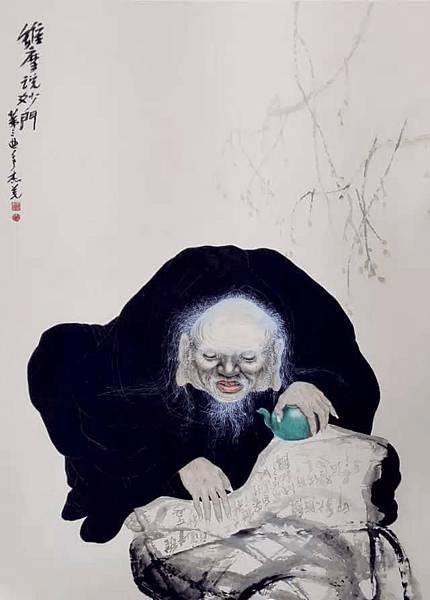
Chinese Ink painting Holy Master Vimalakirti by H.H. Dorje Chang Buddha III

Vimalakirti’s teachings were not limited to words alone—he also demonstrated his supreme realization through extraordinary miracles. In one instance, he used his boundless supernatural powers to bring the entire Buddha-land of Abhirati, including the Immovable Buddha (Aksobhya), into the human realm. Even the Immovable Buddha himself declared, “I did not do this; it was through the supernatural powers of Vimalakirti.” Such feats reveal that Vimalakirti’s realization surpassed that of all Bodhisattvas and was equal to that of Shakyamuni Buddha himself.

Shakyamuni Buddha himself affirmed the extraordinary status of Vimalakirti, stating, “One who makes offerings to that holy being should know that this is making offerings to the Buddhas. One who transcribes this sutra or keeps it in a room should know that the Tathagata exists in that room.” These words confirm that Vimalakirti was, in essence, a Buddha.

His teachings continue to inspire practitioners today, offering a profound perspective on suffering, wisdom, and compassion. His willingness to manifest illness as a teaching tool, his unparalleled debates with great Bodhisattvas, and his supernatural demonstrations all serve as timeless lessons in the path to enlightenment.

Link:https://peacelilysite.com/2025/03/28/vimalakirtis-profound-teachings-on-suffering-and-liberation/

The Intersection of Science and Buddhism: Exploring the Nature of Reality

The Secret Connection Between Quantum Physics And Buddhism

The German philosopher Karl Jaspers once said, “In science, half-understood knowledge leads one to abandon faith, while complete knowledge brings one back to faith.” This profound statement encapsulates the evolving relationship between scientific discovery and spiritual insight. Over the past century, science—particularly in the realm of quantum physics—has begun to reveal striking parallels with the teachings of Buddhism, suggesting that the boundary between scientific and spiritual understandings of reality is far more porous than once believed.

One of the most fascinating intersections between Buddhism and quantum physics lies in the concept of Emptiness (Śūnyatā). According to Buddhist philosophy, Emptiness is the fundamental nature of all phenomena—it is the limitless, dynamic potential from which everything arises and to which everything ultimately returns. This notion mirrors the scientific concept of the Quantum Field, the invisible yet omnipresent ground of pure potentiality that gives rise to all matter and energy in the universe.

Imagine a dream: within the dream, we experience vivid landscapes, emotions, and interactions. Yet, upon waking, we realize that none of it was truly real. However, the consciousness that enabled the dream was undeniably present. Similarly, in quantum physics, the Quantum Field remains unseen, yet it is the essential foundation from which all particles and forms emerge and dissolve. Nothing within the dream is independently real, just as in Buddhism, reality is understood through Pratītyasamutpāda, or dependent arising—the principle that all things exist in interdependence, without intrinsic self-existence.

Quantum mechanics further supports this view by demonstrating that particles do not exist as fixed entities but as probability waves, manifesting only when observed. This aligns with Buddhist teachings that emphasize the illusory nature of a solid, independent reality. Just as a wave transforms into a particle through observation, our perception shapes the world we experience.

The implications of these parallels are profound. If science and Buddhism are describing reality in similar ways, then understanding the universe may require not just empirical observation but also deep contemplation. As both disciplines continue to explore the mysteries of existence, they may converge on a deeper, unified truth—one that transcends dualities and reveals the interconnected nature of all things.

In this age of scientific breakthroughs and spiritual awakening, perhaps the most important lesson is that reality is far more mysterious than we ever imagined. Whether through the lens of quantum physics or the wisdom of Buddhism, we are invited to look beyond appearances and embrace the boundless potential that underlies all existence.

The Secret Connection Between Quantum Physics And Buddhism

Link:https://peacelilysite.com/2025/03/25/the-intersection-of-science-and-buddhism-exploring-the-nature-of-reality/

Exploring the Concept of Size in Buddhism: Mount Sumeru and the Mustard Seed

In the realm of Buddhist philosophy, the imagery of Mount Sumeru and the mustard seed serves as a profound metaphor for understanding the nature of reality and perception. Originally a mountain in Indian mythology, Mount Sumeru is revered in Buddhism as the dwelling place of celestial beings like Indra and the Four Heavenly Kings. Standing at an astonishing height of 84,000 yojanas, it symbolizes the vastness and grandeur of existence. In contrast, the mustard seed, a tiny grain often used in culinary practices, represents the minuscule aspects of life.

This juxtaposition is beautifully illustrated in a dialogue between Li Bo, a governor of Jiangzhou during the Tang Dynasty, and the Zen master Zhi Chang. Li Bo questioned the seemingly paradoxical notion found in Buddhist texts that “Mount Sumeru can fit within a mustard seed, and a mustard seed can contain Mount Sumeru.” He found it hard to believe that such a small seed could encompass such a towering mountain.

With a smile, Zhi Chang responded by asking, “People say you have read thousands of books; is that true?” Proudly, Li Bo affirmed, “Of course! I have read far more than that!”

Zhi Chang then inquired, “And where are those thousands of books now?”

Li Bo pointed to his head and replied, “They are all right here!”

Zhi Chang chuckled and said, “Strange, then. Your head seems no bigger than a coconut; how could it possibly hold thousands of books?”

At that moment, Li Bo experienced a profound realization: the distinctions of large and small are mere constructs of the mind. In reality, size is subjective and arises from our perceptions.

This concept resonates deeply with modern science, which demonstrates that vast amounts of knowledge can be stored within a minuscule chip, echoing the Buddhist teaching that the universe can be contained within the smallest of objects.

The English poet William Blake expressed a similar sentiment in his famous lines:
“To see a world in a grain of sand,
And a heaven in a wild flower,
Hold infinity in the palm of your hand,
And eternity in an hour.”

His words capture the essence of this Buddhist teaching: within the tiniest elements of our world lies the vastness of the infinite.

Ultimately, Buddhist wisdom encourages us to transcend conventional notions of size and reality. When we embrace the idea that the vast can reside within the minute, we cultivate a deeper awareness of the interconnectedness of all things. In this way, Mount Sumeru and the mustard seed serve as powerful reminders of the boundless nature of existence and the limitless potential of the human mind.

In the Āgama Sūtra, there is a remarkable story that illustrates how the merit of a single grain of rice can be as vast as Mount Sumeru.

During the time of the Buddha, a poor couple lived in a crumbling cave with nothing to their name. They were so impoverished that they owned only a single set of clothes, which they had to share. When the husband went out, the wife had to stay home, and when the wife needed to leave, the husband had no choice but to remain inside, barely clothed.

One day, they heard that the Buddha and his disciples were passing through their village on their alms rounds. The couple reflected on their misfortune and said, “We have never practiced generosity, which is why we suffer such poverty today. Now that the Buddha is here, how can we miss this rare opportunity to give?”

However, as they looked around their home, the wife sighed deeply, “But we have nothing to offer…”

The husband, after thinking for a moment, made a firm decision: “No matter what, we must not let this opportunity slip away. Even if we starve, we must make an offering! The only thing we still have of value is this set of clothing—let us give it to the Buddha!”

With hearts full of joy, they humbly presented their only garment as an offering. The disciples, however, hesitated, feeling uneasy about receiving such an item. They passed the garment among themselves, reluctant to accept it, until Ananda finally brought it before the Buddha and asked, “Lord, this garment is too worn to be used. Should we discard it?”

The Buddha, filled with compassion, gently instructed, “My disciples, do not think this way. The generosity of the poor is the most precious of all. Bring the garment to me.”

Feeling ashamed for their earlier hesitation, Ananda and Maudgalyayana took the garment to the river to wash it. But as soon as they immersed it in the water, the entire river surged wildly, waves crashing in all directions. Alarmed, Maudgalyayana used his divine powers to summon Mount Sumeru in an attempt to subdue the turbulent waters. Yet, no matter how he pressed it down, the waves remained uncontrollable.

Helpless, the two disciples rushed back to the Buddha to report what had happened. At that moment, the Buddha was calmly eating his meal. Without saying much, he gently picked up a single grain of rice and handed it to them, saying, “Take this rice grain to the river, and it will settle.”

Perplexed, Ananda asked, “Lord, even the mighty Mount Sumeru couldn’t calm the waves—how can a tiny grain of rice possibly do so?”

The Buddha smiled and said, “Try it and see.”

Still doubtful but obedient, Ananda and Maudgalyayana took the grain of rice and cast it into the river. Miraculously, the raging waters instantly calmed, becoming as still as a mirror.

Shocked by what they had witnessed, the two disciples returned to the Buddha and asked, “How could a single grain of rice hold more power than a mountain?”

The Buddha then explained, “From the moment a grain of rice is planted, it undergoes countless efforts—watering, fertilizing, harvesting, processing, and selling—each step carrying the labor and dedication of many beings. Because of this, a single grain of rice contains immeasurable merit. Likewise, the garment offered by the poor couple was their only possession, their entire livelihood. Their act of giving was boundless in sincerity, making its merit just as vast. The Dragon Kings of the ocean understood the profound virtue behind this offering, which is why they immediately retreated in reverence. This is the power of true devotion—whether a grain of rice or a simple piece of clothing, when given with absolute sincerity, its merit can equal that of Mount Sumeru.”

From this teaching, a well-known Buddhist verse arose to remind monks and practitioners of the sacred nature of even the smallest offering:

“A single grain of rice in the Buddha’s gate,
As vast as Mount Sumeru.
If enlightenment is not attained in this life,
One shall return repaying the debt, bearing horns and fur.”

This verse serves as a powerful reminder that every offering—no matter how small—carries immense significance when given with a pure heart. It also warns practitioners to cherish and respect all acts of generosity, for every grain of rice represents the kindness and labor of countless beings.

Link:https://peacelilysite.com/2025/03/21/exploring-the-concept-of-size-in-buddhism-mount-sumeru-and-the-mustard-seed/

Buddhist disciple Zhao Yusheng received a transmission of Buddha Dharma that is True and Real

I personally witnessed the special and wonderful passing of layman Zhao Yusheng

told by Ms Mao Meimei, September 2, 2017

Ms. Moh and Zhao Yusheng’s daughter

Amitabha! Dharma masters, rinpoches, and kind virtuous ones, my name is Mei Mei Moh. I will now talk about the magnificent process occurred when Layperson Zhao Yusheng passed away perfectly. To avoid missing something when I talk, I wrote my speech down earlier.

Zhao Yusheng was a disciple of Chen Baosheng and had learned the evil teaching from Chen Baosheng before. Every day, he chanted “supreme vajra master” and that one’s accomplishment all depends on the master and relies on the joy and pleasure of the master. Zhao Yusheng said that he helped Chen Baosheng hide the truth and create false information while working at the tile company. That caused the company to lose more than 800,000 yuan just last year. He said, “I also helped him make false propaganda to deceive people. My situation became worse and worse as I was learning from Chen Baosheng. I am bounded by sin and bad karmas. My body now has cancer and is in great pain and suffering.” Zhao Yusheng realized that he had been harmed by Chen Baosheng’s demonic dharma. He was able to meet H.H.  Dorje Chang Buddha III after his cancer had reached the terminal stage. When Zhao Yusheng saw His Holiness, the Buddha, he piously repented before the Buddha Master. The Buddha Master said that repenting or not is not important and it is important that one should cultivate oneself well and truly correct the evil and pursue goodness to benefit society and living beings. Zhao Yusheng repented wholeheartedly. He no longer wanted to be a rinpoche and completely stopped learning the evil teaching. He did not fear death and only wished to be reborn in the Buddha-land. He made the greatest vow. H.H.  Dorje Chang Buddha III saw his sincerity and the maturing of his karmic condition and transmitted the dharma to him. Amitabha Buddha was invited to manifest in person to touch his head and transmit the dharma to him. Brother Zhao Yusheng was also able to see the main gate of the Western Paradise of Ultimate Bliss at that time. Amitabha Buddha told the Brother that Namo Kuan Shi Yin Bodhisattva would come to receive him to go to a place in the 5th lotus stage in the Pure Land. After receiving the dharma transmission from Amitabha Buddha and returning to San Francisco, the Brother practiced the dharma all the time every day and did not want to talk much. Sister Zhao Chen, who is the Brother’s daughter and I waited day by day. We did not know which day Namo Kuan Shi Yin Bodhisattva would come to receive the Brother. I have a company at Washington DC to run, but I also wanted to see the Brother attaining accomplishment. That created a contradiction in my mind. Well, a day spent was like a year to me! Eventually I had to call to beseech instructions from the Buddha Master. The Buddha Master said, “He will not be reborn there for the time being. For Zhao Yusheng’s physical condition, the decisions from the doctors and nurses should always be followed.”

On the day before Brother Zhao’s perfect passing away, he and I sat on a bench outside. He told me, “Chen Baosheng is a demonic devil, demonic evildoer, person of sin, criminal of fraud, and swindler. Kuan Shi Yin Bodhisattva wanted me to expose his sinful acts and said that He will come tomorrow to receive me. I was told to manifest the dharma to let people know when I am received to leave. However, I am worried that I may be drowsy and forget to expose him when Kuan Shi Yin Bodhisattva comes to receive me tomorrow.” I told the Brother, “Don’t worry. You don’t worry. Namo Kuan Shi Yin Bodhisattva will definitely come to receive you, and you will not be drowsy.”

At about 2:30pm in the afternoon on August 24 in American time, I was taking a nap at the time. After going outside to the restroom by himself, Brother Zhao came in to wake me up. He told us that he was about to leave and we should sincerely learn the dharma from the Buddha Master so we will meet again in the Western Paradise of Ultimate Bliss. He was going to take a bath. At that time, we felt quite sad. Is this person who is alive now truly going to leave? We help him take out the clothing prepared for him earlier. After putting on his clothing, we smelled a kind of special fragrant scent from Brother Zhao’s body. Then, the Brother said, “I will now use my freedom from birth and death to prove that the Buddha-dharma of H.H.  Dorje Chang Buddha III is the holiest. Chen Baosheng is a demonic devil and demonic evildoer! He is an evil master, big swindler, and a person of sin!” He also said, “The true dharma of the Tathagata is at where our great Buddha Master, H.H.  Dorje Chang Buddha III, is. Okay, okay, I will stop now. Namo Kuan Shi Yin Bodhisattva has come to receive me!” After finishing speaking, Brother Zhao emitted light from his entire body.

I saw the extremely tall and great Kuan Shi Yin Bodhisattva, radiating strong and intense white light everywhere from His body. Surrounded by five-colored light, Namo Kuan Shi Yin Bodhisattva was extremely solemn and majestic, standing above the top of Brother Zhao’s head. At that time, I saw that Brother Zhao’s spiritual consciousness rushed out from the top of his head toward Kuan Shi Yin Bodhisattva and left in the sky! While watching, I suddenly was unable to see Kuan Shi Yin Bodhisattva and Brother Zhao. I hurriedly ran into the courtyard. At this time, my phone rang. I raised my head and saw that Brother Zhao left in the sky while stepping on white clouds and following Kuan Shi Yin Bodhisattva. I also saw that fragrant nectar was coming down from the trees in the yard! Dharma masters from Hua Zang Si came right at that time. When they arrived, they also saw that nectar was descending from the trees. The dharma masters also recorded the scene by video. This nectar was strange. It disappeared before touching the ground. I was not the only one seeing the event. An elder lady who is 92 years old and from Malaysia also saw that Kuan Shi Yin Bodhisattva received Brother Zhao Yusheng and brought him away! This holy manifestation is difficult to hear even in millions of kalpas.

I am grateful to H.H.  Dorje Chang Buddha III.

I am grateful to Namo Amitabha Buddha.

I am grateful to Namo Kuan Shi Yin Bodhisattva.

Thank you all.

Link:https://peacelilysite.com/2025/03/14/buddhist-disciple-zhao-yusheng-received-a-transmission-of-buddha-dharma-that-is-true-and-real/

The Sacred Dragon Stone: Manjushri Bodhisattva’s Compassion and the Five Dragon Princess

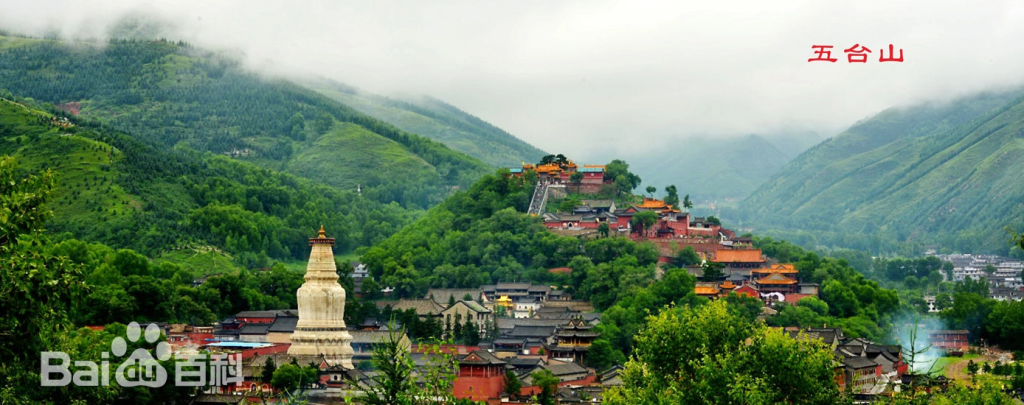
Mount Wutai, home to over 53 sacred monasteries, stands as one of the Four Sacred Mountains of Chinese Buddhism. Each of these mountains is regarded as the bodhimaṇḍa of one of the four great bodhisattvas, and Wutai is the sacred domain of Manjushri, the Bodhisattva of Wisdom. Revered since ancient times, Mount Wutai holds a profound spiritual significance, attracting countless pilgrims seeking enlightenment and divine blessings.

Mount Wutai was the first of the four great mountains to be identified and is often referred to as the “First Among the Four Great Mountains.” Due to its unique status, it is also known as “Golden Wutai.” The identification of this sacred site can be traced back to the Avataṃsaka Sūtra, which describes the abodes of many bodhisattvas. In this scripture, Manjushri is said to reside on a “clear cold mountain” in the northeast. This passage not only solidified Wutai’s spiritual identity but also inspired its alternative name, “Clear Cool Mountain.” With an annual average temperature of around -4°C and high-moisture air, the mountain’s name perfectly encapsulates its serene and pure atmosphere.

Legends tell of Manjushri’s frequent appearances on Mount Wutai, often taking the form of ordinary pilgrims, monks, or most notably, five-colored clouds. Among the many tales that surround this sacred land, the story of the Xielong Stone and the Dragon Temple remains one of the most awe-inspiring.

In ancient times, the climate of Mount Wutai was harsh—winters were bitterly cold, and powerful spring winds carried dust and sand, making the land inhospitable. At that time, the mountain was simply known as “Five Peaks Mountain.” Determined to transform Wutai into a haven for spiritual cultivation and to bring blessings to sentient beings, Manjushri sought the mystical Xielong Stone, a sacred gem held by the Dragon King of the Eastern Sea. This stone possessed miraculous powers that could regulate the climate, making the land fertile and serene.

Manjushri traveled to the Dragon Palace and humbly requested the Xielong Stone. However, the Dragon King hesitated, explaining, “This stone was left behind by the goddess Nüwa. It is a resting place for our dragon clan, and we cannot part with it.”

With infinite compassion, Manjushri responded, “I seek this stone to benefit all sentient beings. I hope you, great Dragon King, will fulfill this virtuous karmic connection.”

Although moved by Manjushri’s vow, the Dragon King was reluctant to relinquish the treasured stone. He assumed that even with his great dharma powers, Manjushri would be unable to move it, as it weighed tens of thousands of pounds. Feigning generosity, he said, “Great Bodhisattva, if you can take the stone, you may do so.”

To the Dragon King’s astonishment, Manjushri gently approached the stone, recited a divine mantra, and instantly shrank the massive rock to the size of a marble. With a flick of his sleeve, he stowed it away, bowed to the Dragon King, and effortlessly departed.

The Dragon King, realizing his mistake too late, could only watch in stunned regret.

When the five dragon princes returned to the palace and learned what had happened, they were enraged. Determined to reclaim the stone, they pursued Manjushri to Wutai Mountain. As they arrived, Manjushri sat in serene meditation, awaiting them.

Upon seeing him, the Fifth Dragon Prince demanded, “Are you truly the teacher of the Seven Buddhas, the Awakened Mother of the Three Periods, Manjushri Bodhisattva?”

Manjushri calmly replied, “Indeed, I am.”

Scoffing, the young dragon sneered, “It is said that past Buddhas were your disciples, yet you appear to be only fifteen or sixteen years old. How can this be?”

Manjushri then imparted a teaching:

“The Buddha taught that there are four things in the world that must never be underestimated:

  • A young prince—though small, he will one day rule the land and influence countless lives.
  • A young dragon—though young, he will one day command the winds and tides.
  • A small flame—though weak, it can grow into an all-consuming blaze.
  • A young monk—though inexperienced, he may attain supreme wisdom through practice.”

Hearing this, the young dragons began to reflect on the depth of Manjushri’s wisdom. However, the young dragons were still defiant. They demanded, “If you truly have great divine power, why not change the climate of Wutai Mountain directly? Why did you have to take the Xielong Stone?”

With patience, Manjushri explained, “Divine power can temporarily change conditions, but only through the Xielong Stone can Wutai Mountain remain perpetually cool and become a sanctuary for spiritual cultivation.”

Unconvinced, the young dragons retorted angrily, “So you admit that your power is limited! Return the stone at once, or we will show no mercy!”

Furious, the five dragons launched a fierce attack, unleashing their claws, storms, and lightning against Manjushri. Yet, no matter how they struck, they could not harm him in the slightest.

In their frustration, they began to tear at the mountains, hoping to shake the ground beneath Manjushri. Their immense strength clawed away the mountaintops, scattering rocks across the land, creating what is now known as the Dragon-Turned Stones (龙翻石).

Realizing the young dragons’ arrogance and aggression, Manjushri used his supreme power to subdue them. He sealed them beneath Mimo Rock (秘魔岩), merging two great peaks, leaving only a narrow crevice for them to reflect and temper their hearts. He then instructed the local mountain spirits and earth deities to ensure the dragons were provided with food and offerings, allowing them to cultivate patience and wisdom until their minds were at peace.

Later, the Dragon King of the Eastern Sea personally traveled to Wutai Mountain, pleading with Manjushri to release his sons.

With a compassionate smile, Manjushri assured him, “I have never harmed even an ant, let alone your five sons. They are here only to refine their minds. Once they achieve inner harmony, they will be freed naturally.”

To honor the young dragons and appease their spirits, Manjushri decreed that a Dragon King Temple be built in their name. There, they would receive offerings and incense from devoted followers, increasing their divine merits while they cultivated.

From then on, the Dragon King Temple on Wutai Mountain flourished, becoming a revered site for pilgrims seeking blessings for favorable weather and divine protection. Its existence symbolizes humanity’s reverence for the water deities and our hope for harmony between nature and sentient beings. Amidst the rising incense and prayers, worshippers not only feel the celestial blessings but also gain insight into wisdom and inner peace through spiritual practice.

Today’s Wutai Mountain is surrounded by lush green hills, beneath a sky of pure blue and auspicious clouds. In summer, the weather shifts between sunshine and rain, mist and fog. On clear days, the vast sky is brilliantly blue, filling the heart with joy and serenity; on rainy days, the misty veils create an atmosphere of elegance and tranquility, bringing deep peace to the soul. Strolling through the mountains, one feels naturally at ease and in harmony with the surroundings.

All of this, in truth, is a manifestation of the blessings and protection of Manjushri Bodhisattva. With His innate cool radiance, Manjushri employed the Dragon-Resting Gem to enlighten the beings of the dragon lineage. In doing so, He also established this sacred pure land of Wutai, where both ordinary and holy beings coexist. Here, He watches over this realm, awaiting the return of the countless wayfarers lost in the endless cycles of samsara.

Link:https://peacelilysite.com/2025/03/04/the-sacred-dragon-stone-manjushri-bodhisattvas-compassion-and-the-five-dragon-princess/

Nezha: From Buddhist Origins to a Chinese Cultural Icon

Recently, the animated film Nezha 2 has become incredibly popular, reaching the top spot in global box office earnings for animated movies. While many believe Nezha is a character from Chinese mythology, his origins can actually be traced back to Buddhist scriptures.

Vaisravana

Nezha’s name first appeared in Vajrayana Buddhist texts, where he is associated with the role of a Dharma protector. He is described as the third son of Vaisravana, one of the Four Heavenly Kings. According to The Ritual of Vaisravana, “The Heavenly King’s third son, Prince Nezha, holds a pagoda and always follows the King.” His duty is to assist his father in safeguarding the Dharma, driving away evil forces, and protecting humanity. In The Mantra of the Dharma Protector Following the Northern Vaisravana Heavenly King, translated by the eminent Tang Dynasty monk Amoghavajra, Nezha is again referred to as Vaisravana’s third son. Other Buddhist texts from the Tang Dynasty, such as The Awakening of Faith in the Mahayana and The Lotus Sutra, also mention Nezha.

In Buddhism, Dharma protectors and yaksha deities often have fierce appearances, symbolizing their hatred of evil and fearless bravery. As a result, Nezha is typically depicted with a wrathful and intimidating image. As Buddhism spread to China, many Buddhist stories and figures gradually merged with local Chinese culture, giving rise to new belief systems. Over time, Nezha became integrated into Taoism and Chinese folk beliefs, forming a unique cultural phenomenon.

The story of Nezha is filled with many well-known and beloved episodes, such as his birth from a ball of flesh, cutting his flesh and bones to repay his parents, and being reborn from a lotus flower. Although this scene cannot be found in modern Buddhist scriptures, it became a popular topic among monks after the Song Dynasty. For example, Volume 1 of The Comprehensive Collection of Zen Verses on Ancient Cases mentions: “Prince Nezha offered his flesh to his mother and his bones to his father, then manifested his true form and used his divine power to preach to his parents.” This suggests that the story of Nezha sacrificing his flesh and bones likely originated from Buddhist texts. Although the exact cause and details are unclear, this story undoubtedly provided a prototype for later adaptations in folk literature.

As Buddhism spread throughout China, the assimilation of foreign religions by local culture and the evolution of folk beliefs gradually transformed Nezha’s image, steering it away from its original Buddhist context and toward a more Chinese identity. After the Tang Dynasty, the worship of Vaisravana (known as Bishamonten in Japan) reached its peak in China, gaining widespread recognition from both the imperial court and the common people. He was honored in official rituals and revered by many folk believers. Simultaneously, Li Jing, a prominent Tang Dynasty military general, became a popular figure of worship as a god of war. Renowned for his military campaigns against the Turks and Tuyuhun in the northwest, Li Jing was deified as early as the Tang Dynasty, with dedicated temples built in his honor during the Song Dynasty.

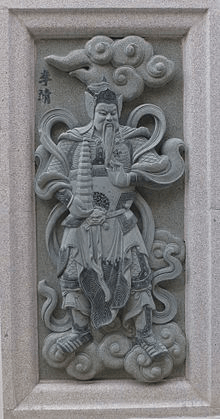
Li Jing’s temple wall statue

The broader and deeper the spread of a belief, the greater the possibility of its transformation and integration with other cultural elements. Over time, through public imagination and interpretation, the belief in Vaisravana merged with the worship of Li Jing, forming a new deity known as “Pagoda-Wielding Heavenly King Li” (Tuota Li Tianwang) by the Song Dynasty at the latest. From then on, Vaisravana took on the surname Li and became more secularized and localized within Chinese culture. Since Li Jing became identified with Vaisravana, it was only natural within folk beliefs to regard Nezha as Li Jing’s son. This marked Nezha’s departure from the cultural context of foreign religions and his integration into the Chinese pantheon.

This transformation made Nezha a more relatable and accessible figure, understood through the lens of native cultural concepts. As a result, Nezha’s story gained broader appeal, providing ample room for reinterpretation and adaptation in later generations.

Nezha holds an important place in ancient Chinese mythology. Under the influence of Taoism, he was endowed with more mythological attributes, portrayed as a young hero with powerful magical abilities who frequently battles demons and protects the people. His story further developed in classic literary works such as Journey to the West and Investiture of the Gods, where Nezha became a symbol of justice and courage.

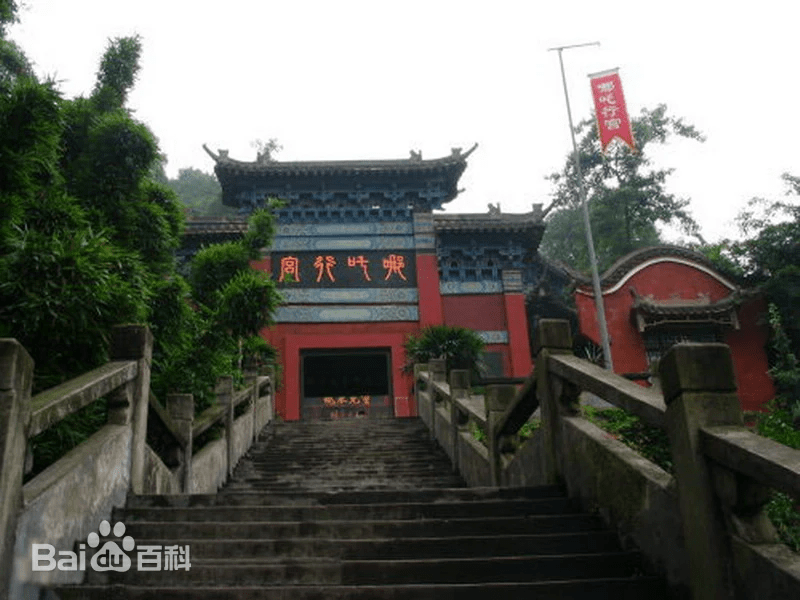
Nezha Temple in HeNan China

Folk worship activities for Nezha

Link:https://peacelilysite.com/2025/02/21/nezha-from-buddhist-origins-to-a-chinese-cultural-icon/

Embracing Life’s Truths: Carl Jung’s Wisdom for Modern Challenges

In a world of endless distractions and relentless challenges, Carl Jung’s reflections on life’s most essential lessons remain profoundly relevant. In his later years, Jung observed that accepting all aspects of life is not just important—it is the cornerstone of a meaningful existence. His insights offer a timeless guide for navigating the complexities of modern society.

Jung poignantly recalled how people often try to escape the realities that life presents, whether in the form of suffering, challenges, or existential questions. This avoidance, he argued, only deepens pain and confusion. By evading suffering and placing blame on external circumstances or personal shortcomings, individuals reject the price of truly living. Such resistance, rather than shielding us from discomfort, births an even greater torment: the isolation and repression of the human spirit.

In today’s fast-paced world, where instant gratification and superficial solutions abound, Jung’s warning is especially pertinent. Modern society often encourages us to numb our struggles—whether through technology, consumerism, or escapism—but this path leads not to fulfillment, but to emptiness.

The Value of Acceptance

Jung’s philosophy centers on the idea that life’s true value lies in accepting one’s destiny, no matter how daunting it may seem. He acknowledged the inevitability of suffering but believed that such pain should stem from our authentic choices and realities, not from a refusal to face life’s responsibilities. Staying true to oneself and living authentically, Jung suggested, is the most profound response to life. As he put it:

“I have always remained true to myself, doing everything I could to the best of my knowledge and ability. As for whether I was right or wrong, I cannot say.”

This philosophy calls on us to embrace the fullness of life, including its struggles, as a path to authenticity and wholeness.

One of Jung’s most profound insights is the intergenerational impact of avoiding one’s destiny. He reflected on the heavy psychological burdens he inherited from his parents, describing them as unfulfilled responsibilities that weighed on his life like a snail’s shell—inescapable and ever-present. Jung warned that when we refuse to confront our challenges, we inadvertently pass these unresolved burdens to the next generation.

In the modern era, this serves as a powerful reminder of the importance of addressing our inner conflicts. By facing our struggles head-on, we not only free ourselves but also spare our children from carrying the weight of our unfinished business.

Jung believed that avoiding life’s essence severs us from our inner selves. While it may seem that evading certain troubles brings temporary relief, such avoidance also cuts us off from the vitality and richness of life itself. Ultimately, the deepest regrets arise not from the joys we never experienced, but from the moments we failed to embrace.

This insight is especially relevant in an age where disconnection has become commonplace. Whether through the overuse of technology or the prioritization of material success over personal growth, many people find themselves estranged from their true selves. Jung’s call to embrace life fully offers a powerful antidote to this modern malaise.

A Path to Wholeness

Jung’s enduring wisdom reminds us that the worth of a human being lies in taking responsibility for their own debts. This is not merely a duty but a journey toward completeness. As he said:

“The worth of a human being lies in taking responsibility for their debts—not just as a duty but as a path to wholeness.”

This profound philosophy encourages us to accept life, embrace our true selves, and confront our challenges with courage and authenticity. In doing so, we reconnect with our inner selves and pave the way for a more meaningful existence.

Jung’s reflections offer a timeless guide for navigating the complexities of modern life. By rejecting avoidance, accepting life’s realities, and living authentically, we can overcome the spiritual isolation that plagues our era. His philosophy is a call to action for anyone seeking to live a life of depth, connection, and purpose.

As we face the uncertainties of today’s world, let us carry forward Jung’s legacy and strive to embrace all aspects of life. In doing so, we honor his profound insights and open the door to a richer, more fulfilling human experience.

Link:https://peacelilysite.com/2025/01/19/embracing-lifes-truths-carl-jungs-wisdom-for-modern-challenges/

Embracing Life’s Impermanence: A Call to Seek Liberation Through Buddhism

Life is fleeting, a truth echoed by philosophers across history. Human existence is undeniably intertwined with suffering. To counterbalance this suffering, people often seek meaning through achievements or temporary relief in material pleasures. When conflicts arise, modern psychology offers positive thinking strategies to ease distress, yet it seldom explores the deeper essence of life, offering only superficial comfort rather than lasting resolution.

A lifetime passes in the blink of an eye. Pause for a moment and reflect: If you were to gather all the joyful moments of your life, how many days would they truly account for? And how many days were instead consumed by pain, worry, resentment, frustration, or helplessness? For most, the latter dominates.

Everything in this world is impermanent. Our loved ones, our wealth, the children we raise, and even our own bodies—none can remain with us forever. Eventually, all things return to dust. Life is like a passing guest, reminding us that the most vital truth is to seize the present moment while we can.

The ancient Greek philosopher Epictetus taught: “For things beyond our control, we should remain optimistic and confident. For things within our control, we should stay cautious and restrained.” Anxiety and fear cannot alter tomorrow’s outcomes, but they can ruin today. True wisdom lies in accepting what we cannot change and acting mindfully where we can.

Life’s path is unpredictable. No one knows what the next moment holds. Beyond treasuring the present, we can only strive to be our best selves. Do not wait until happiness slips away to feel regret. Treasure each effort and every connection, for what is lost may never return.

Nature’s cycles remind us of renewal—flowers bloom after withering, grass sprouts anew with the seasons. Yet human life is different. We are not like flowers or grass; our lives come but once. Once this life ends, it will not return. This truth makes it even more crucial to cherish each moment and live with purpose.

A beautiful Russian poem reminds us of life’s brevity:

“A day is short, so brief that before you can embrace the morning, dusk has already arrived. A year is short, so fleeting that before you can savor the vibrant reds and greens of spring, autumn frost is already setting in. A lifetime is short, so brief that before you can fully enjoy your youthful days, old age has already arrived.”

Among the most precious blessings in life is not what we have lost or seek to gain but the ability to treasure the present. As taught in Buddhism:

“The human body is rare and difficult to obtain, yet we have attained it. The Dharma is difficult to encounter, yet we have heard it. If we do not seek liberation in this lifetime, in which lifetime shall we seek it?”

In this rare and precious life, we have not only obtained a human body but also the extraordinary opportunity to encounter the true Buddha — H.H. Dorje Chang Buddha III and hear the sacred teachings. The Buddha’s Dharma voice purifies the heart, and when we apply these teachings in our daily conduct, it is like donning armor that shields us from suffering and empowers us with boundless blessings and wisdom.

For those beginning their spiritual journey, the safest and most effective path to rapid growth is to purify and fortify the mind with the authentic teachings of H.H. Dorje Chang Buddha III. His words offer a beacon of guidance, cleansing karmic obstacles and illuminating the path to liberation.

When this precious human life ends, if we remain trapped in the endless cycle of reincarnation, where will we seek the path to liberation? The opportunity is now. As Buddhist disciples, we must cherish this rare blessing, dedicating our lives to listening to the Dharma, studying the sacred teachings, and aligning our actions with the truths taught by the Buddha.

To cherish the H.H. Dorje Chang Buddha III‘s Dharma voice is, ultimately, to cherish our own lives. Let us not delay but strive for liberation in this very lifetime.

Link:https://peacelilysite.com/2025/01/09/embracing-lifes-impermanence-a-call-to-seek-liberation-through-buddhism/

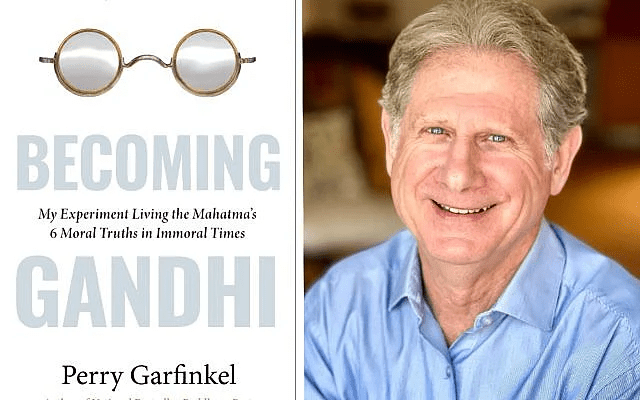
Perry Garfinkel: A Jewish Writer’s Search for Gandhi’s Truth

By Gregory Lyakhov

Perry Garfinkel embarks on a spiritual journey, blending Jewish roots with Gandhi’s transformative principles in ‘Becoming Gandhi.’

Perry Garfinkel, a longtime contributor to the New York Times and author of four books, has spent a lifetime seeking the deeper meaning of truth. In his latest book, Becoming Gandhi, he embarks on a spiritual journey to embody Gandhi’s principles. His unconventional path to this project bridges the values of his Jewish upbringing, his career in journalism, and his exploration of Gandhi’s teachings.

“What’s a nice Jewish boy doing writing about a Hindu icon?” Garfinkel joked during an interview. Beneath the humor, however, lies a profound question about faith, identity, and the search for common ground.

Born on Staten Island, a borough of NYC, but having lived briefly in Queens, Garfinkel has roots that trace back to a Jewish family from Queens, New York. He grew up in West Orange, New Jersey, and attended High Holy Day services with his grandfather, Moe Garfinkel, at the Queens Jewish Center in Queens Village. Religion was a pillar of his childhood, but something always felt missing.

“I never felt the heart of Judaism,” he said. “I wanted to taste it, but it felt out of reach.”

This sense of spiritual longing led Garfinkel beyond his roots. In his twenties, he traveled to India, where he encountered Hinduism and Buddhism. Garfinkel’s experiences sparked a fascination with spiritual practices that would shape his life.

“I’m a spiritual expeditionary,” he said. “I’ve always been searching for the truth—something that connects us all.”

His journey took a significant turn when his literary agent suggested he write about Gandhi. At the time, Garfinkel was coming off the success of Buddha or Bust, a national bestselling book documenting his exploration of Buddhism. The suggestion to focus on Gandhi intrigued him.

“I’ve been visiting India since 2003,” he explained. “Gandhi is everywhere—his quotes are on walls, his statues are in the streets. But I wanted to go deeper than the surface.”

The result was Becoming Gandhi, a book in which Garfinkel challenged himself to live by six of Gandhi’s core principles: truth, nonviolence, vegetarianism, simplicity, faith, and celibacy. Each principle posed unique challenges and taught him invaluable lessons.

“Truth was the hardest,” he admitted. “You look in the mirror and ask, ‘What is my truth?’ It’s like chasing mercury—you try to hold it, and it moves.”

Nonviolence tested him in different ways. In a world filled with conflict, war, and violence in entertainment, staying true to Gandhi’s vision of peace was no small task. “We’re bombarded by violence in so many forms,” he said. “How do we filter that out and choose something better?”

As he immersed himself in Gandhi’s teachings, Garfinkel found his thoughts returning to his Jewish identity. Gandhi himself had a deep interest in other religions, including Judaism. “He read the Old Testament, the New Testament, and the Quran,” Garfinkel said. “That openness inspired me to revisit my faith with fresh eyes.”

Perry Garfinkel interviews Ela Gandhi, granddaughter of Mahatma Gandhi and former member of Parliament in South Africa, in Durban.

Garfinkel had begun to re-identify his Jewish roots, working for about six years as media manager for the Jewish Community Federation of San Francisco. But through Gandhi, Garfinkel found a way to reinterpret Judaism’s role in his life. “Judaism gave me a foundation,” he explained. “But Gandhi provided new ways to think about it. He showed me that being rooted in your tradition doesn’t mean closing yourself to other perspectives. Instead, it can enrich your understanding.”

Perry Garfinkel interviews Ela Gandhi, granddaughter of Mahatma Gandhi and former member of Parliament in South Africa, in Durban.

Not all of Gandhi’s principles were easy for Garfinkel to adopt. Vegetarianism, for example, was particularly challenging for someone raised in a “meat and potatoes” family.

“I grew up on steak, corned beef, and other deli meats,” he said. “Giving that up wasn’t easy.” Eventually, he found a middle ground. “I call it tapering—gradually cutting back rather than going cold turkey. It’s about finding balance and making it sustainable.”

Beyond the personal challenges, Gandhi’s approach to global issues also led to deep reflection for Garfinkel. Gandhi’s decision to write letters to Adolf Hitler, addressing him as “Dear Friend,” struck many as naive or even offensive. Garfinkel, however, saw another perspective.

“Gandhi wasn’t trying to excuse Hitler’s actions,” he explained. “He attempted to model moral behavior, even when it seemed futile. His letters weren’t really for Hitler but for the rest of us. They were a reminder of what it means to stand for peace, even when the world is falling apart.”

For Garfinkel, the Holocaust added another layer to this complex discussion. His grandmother fled Poland before the worst atrocities, but many relatives were not so fortunate. “The Holocaust is personal for me,” he said. “It’s part of my identity as a Jew and a writer. Balancing that history with Gandhi’s message of forgiveness and nonviolence has been one of the hardest parts of this journey.”

Through his writing, Garfinkel bridges his Jewish heritage with his spiritual explorations, demonstrating that the two are not in opposition but in harmony. “Being Jewish and open to other traditions aren’t contradictory,” he said. “They’re complementary. They deepen your understanding of who you are.”

Today, Garfinkel continues to write and reflect, encouraging others to embark on their journeys of self-discovery. Gandhi’s message is simple but profound: “Be the change you want to see in the world.”

For Garfinkel, change begins with understanding—of oneself, one’s traditions, and the connections that bind us all. His work encourages others to reflect on their identity and potential by adopting some of Gandhi’s principles.

About the Author: Gregory Lyakhov is a sixteen-year-old high school student from New York with a passion for politics and law. He has been fascinated by government from an early age and aspires to be involved one day. Outside of politics, you’ll often find him running, swimming, or enjoying Pickleball and snowboarding. Join him on his journey of exploration!

Link:https://peacelilysite.com/2025/01/09/perry-garfinkel-a-jewish-writers-search-for-gandhis-truth/

Source: https://blogs.timesofisrael.com/perry-garfinkel-a-jewish-writers-search-for-gandhis-truth/?utm_source=flipboard&utm_content=topic/spirituality