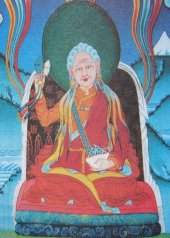
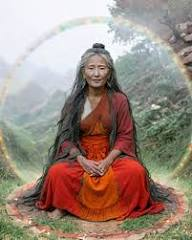
In the rich tapestry of Tibetan Buddhism, there are extraordinary practitioners whose lives themselves become teachings. Among them, Ayu Khandro (阿玉康卓) — also known by her Dharma name Dorje Peldron — stands as one of the most inspiring yoginis of the Nyingma tradition. Her life is not merely a story; it is a living example of devotion, perseverance, and profound realization.
Born in 1839 in the remote region of Kham, eastern Tibet, Ayu Khandro began her spiritual journey at a young age. She received teachings from many of the greatest masters of her time, including Jamyang Khyentse Wangpo, Jamgon Kongtrul, Chokgyur Lingpa, Nyala Pema Dundul, Adzom Drukpa, and Togden Rangrig — figures who were central to the non-sectarian Rimé movement in Tibetan Buddhism.
Unlike many who seek comfort or recognition, Ayu Khandro chose a life of renunciation and yogic discipline. She wandered widely across Tibet, lived in caves and hermitages, and devoted herself to decades of intense meditation. She spent more than fifty years in retreat, including prolonged periods of dark retreat, known in Tibetan as Yangti Nagpo — an advanced Dzogchen practice where the meditator withdraws from external light to focus inwardly on the nature of mind.
Dzogchen — The Great Perfection
Ayu Khandro’s life was profoundly rooted in Dzogchen (Great Perfection) — a teaching that points directly to the intrinsic, luminous nature of consciousness. Rather than seeking external accomplishments, she focused entirely on direct inner realization.
She was recognized as a terton — a revealer of hidden teachings — and was particularly known for transmitting sacred practices and giving initiations to practitioners, including the renowned master Chogyal Namkhai Norbu Rinpoche, who later wrote her biography based on her own oral account.
Ayu Khandro lived to the remarkable age of 115. In 1953, near the end of her life, she received visitors, gave away her precious possessions, and continued to teach and encourage those around her. After she passed away, it is reported in Tibetan Buddhist biography that her body remained in meditation posture for about two weeks before any signs of physical change occurred. By the end of this period, her body had shrunk to a fraction of its original size — an occurrence some traditions associate with deep spiritual attainment in Dzogchen practice, where the physical elements dissolve into subtler states.
This remarkable account, while extraordinary, is part of how her life has been transmitted in spiritual biographies — not as a spectacle, but as a sign of the depth and authenticity of her practice.
What makes Ayu Khandro’s life especially compelling is not just her longevity or her meditative achievements, but her steadfast devotion to the Dharma. She never sought fame or comfort. Instead, she walked the rugged paths of realization, teaching through action rather than words, presence rather than proclamation. Her retreats, pilgrimages, and meditation practices were not about escape, but about coming fully home to the true nature of mind.
Although few of us will ever undertake decades of meditation in darkness or faraway hermitages, Ayu Khandro’s life still speaks directly to modern seekers. In an era filled with distraction and ambition, her example invites us to ask:
What is true commitment?
How deeply can we trust the path we walk?
Can we place inner understanding above outer achievement?
Her life encourages us to remember that spiritual depth is not measured by loud accomplishments, but by quiet fidelity to practice.
Ayu Khandro remains a powerful reminder that liberation is not found on the surface of life, but in its quiet depths. Her unwavering dedication, her silent courage, and her embrace of the path offer inspiration — not as myth, but as a living reminder of what is humanly possible when devotion meets discipline.
In the southwestern suburbs of Xining, where the air grows thin and the spirit grows light, stands one of the most significant sites in the Buddhist world: Kumbum Monastery.
Known in Tibetan as Kumbum Jampa Ling, meaning “A Supreme Temple of a Hundred Thousand Lion’s Roar Buddha Images,” this sprawling complex is far more than just a collection of buildings. It is a living monument to Lama Tsongkhapa, the revered founder of the Gelug (Yellow Hat) sect of Tibetan Buddhism.
The Legend of the Golden Tree
Unlike many temples built to house statues, Kumbum was built to house a pagoda.
Legend tells us that Tsongkhapa was born here in 1357. When his mother cut his umbilical cord, drops of blood fell to the earth, and from that spot grew a miraculous sandalwood tree—the “Tree of Great Merit.” It is said this tree had 100,000 leaves, each bearing a natural image of the Buddha.
Years later, when Tsongkhapa was studying in Tibet, his mother sent a letter begging him to return. He replied that he could not leave his studies, but sent a self-portrait and a “Lion’s Roar” image, instructing her to build a pagoda over his birthplace. “Seeing this pagoda,” he promised, “is the same as seeing me.” In 1379, the Julian Pagoda was built, forming the sacred heart of what would become Kumbum Monastery.
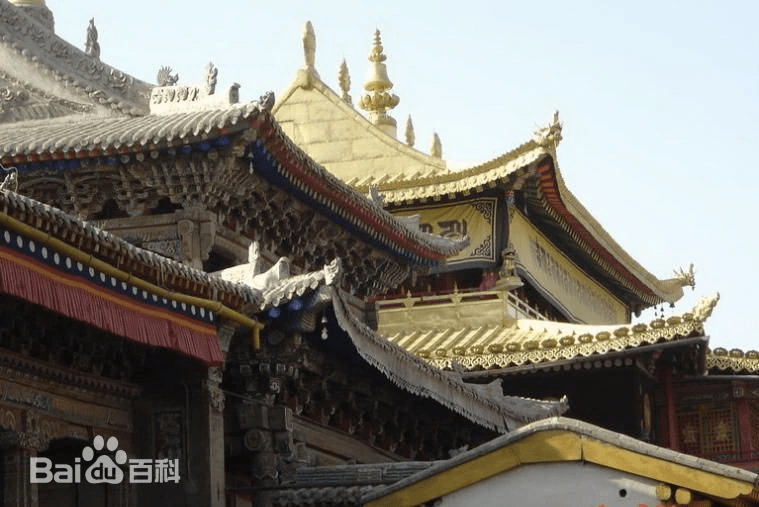
Kumbum is world-renowned for its harmonious blend of traditional Tibetan and Chinese Han architectural styles.
1. The Eight Pagodas of Buddha Shakyamuni
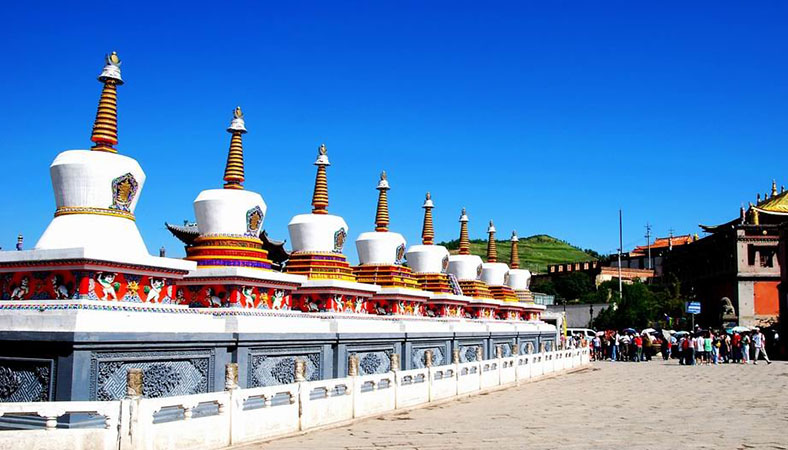
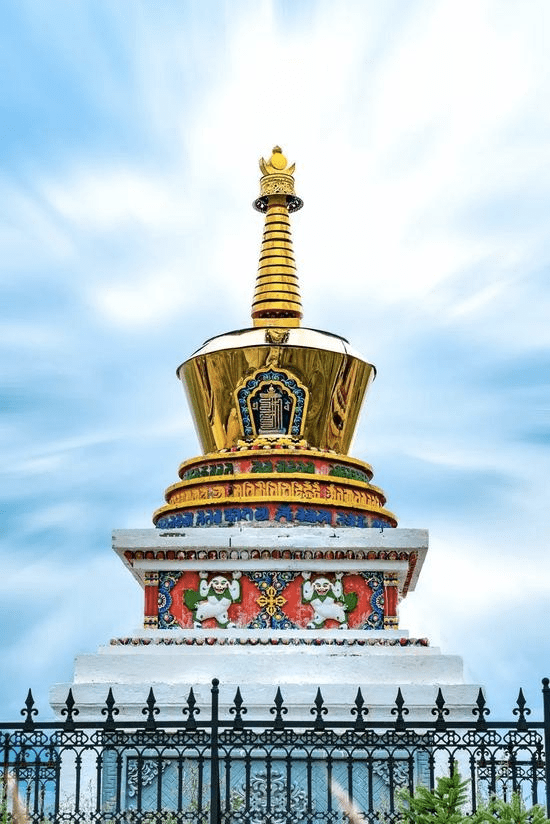
Greeting visitors in the front square are eight gleaming white pagodas. Built in 1776, they commemorate the eight great merits and virtues of Buddha Shakyamuni. Each stands 6.4 meters tall, decorated with delicate Sanskrit scriptures and guardian lions, serving as a powerful symbol of the monastery’s spiritual authority.
2. The Grand Golden Tiled Hall
This is the soul of the monastery. With its gilded copper roof and emerald glazed-tile walls, the hall radiates a celestial glow. Inside, you will find an 11-meter-tall golden tower wrapped in white sandalwood and encrusted with jewels. At its peak sits a statue of Tsongkhapa. For pilgrims, meeting this tower is considered a direct meeting with the Master himself.
3. The Main Assembly Hall
Spanning nearly 2,000 square meters, this is the center of monastic life. Under a flat roof adorned with gilded bronze bells and “Aquarius” vases, hundreds of monks gather to recite sutras. The interior is a sensory masterpiece of colorful streamers and intricate carvings.
Dhammapala Hall
The “Three Artistic Wonders” of Kumbum
Kumbum is celebrated throughout Asia for its “Three Arts,” which represent the peak of Tibetan craftsmanship and devotion.
I. Vivid Yak Butter Sculptures
In the freezing depths of winter, when fresh flowers were unavailable for offerings, monks began carving flowers from yak butter. This evolved into a sophisticated art form. In the Yak Butter Sculpture Hall, you can see entire landscapes, pavilions, and deities crafted with impossible detail. To keep the butter from melting while they work, monks must dip their hands in ice water—a true testament to their endurance and faith.
II. Imaginative Barbola (Embroidered Appliqué)
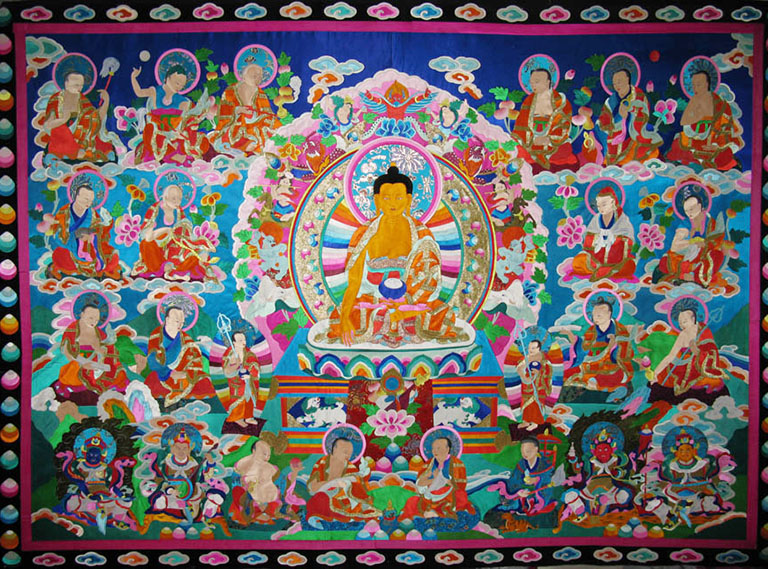
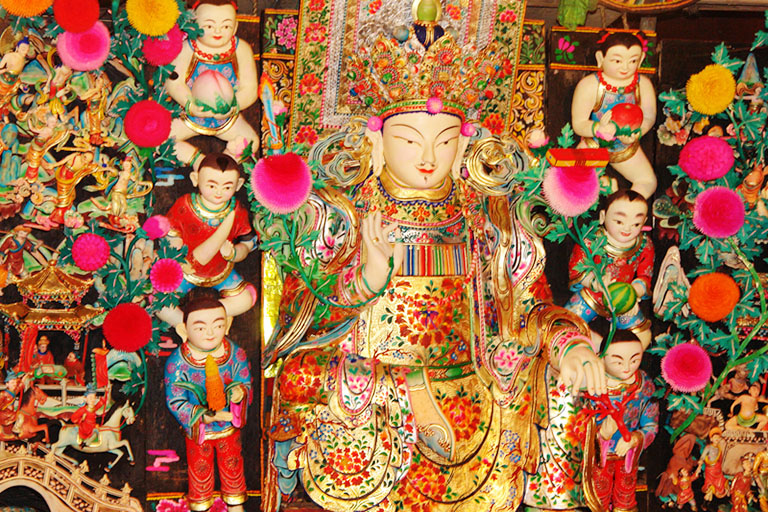
Barbola is a unique form of 3D silk embroidery. By layering silk and cotton, artists create raised patterns that give the figures of Buddhas and animals a lifelike, three-dimensional appearance. The “Sixteen Disciples of Buddha” housed in the Main Assembly Hall are considered national treasures.
III. Exquisite Murals
The walls of Kumbum are alive with color. Using special mineral pigments that remain vibrant for centuries, these murals depict the life of Shakyamuni and scenes from the sutras. During the Sutra-viewing Festival, a massive 30-meter-long Buddha scroll is unfurled on the hillside, a breathtaking sight known as the “Great Buddha Exhibition.”
Kumbum Monastery hosts four major Dharma assemblies annually, held during the first, fourth, sixth, and ninth months of the lunar calendar. These gatherings are a blend of traditional festivals and grand religious events unique to the monastery. During these times, the temple comes alive with sacred activities, including monastic debates, mask dances, and sutra chanting.
A highlight of these fairs is the Cham Dance, where monks wear ornate masks and vibrant costumes, using dramatic gestures to express profound Buddhist teachings to the rhythm of cymbals and suonas (traditional horns). One of the most awe-inspiring sights is the Giant Thangka Unveiling, where a massive, delicate image of Tsongkhapa is unfurled down the mountainside. For the faithful, witnessing this Thangka is considered a direct and holy encounter with the Master himself.
Thangka Exhibition during the Buddha Festival
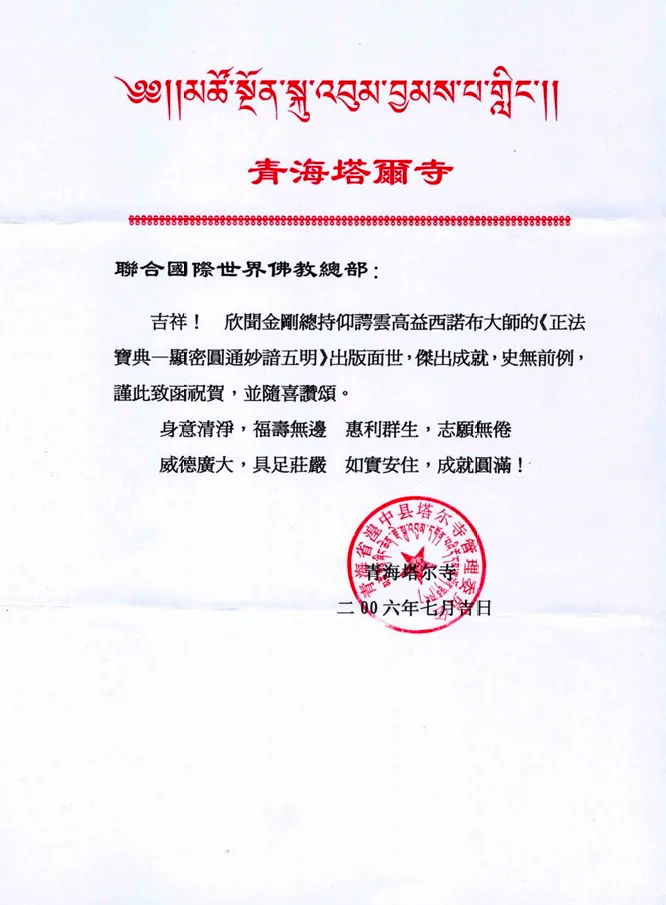
In July 2006, this sacred temple issued its formal recognition and congratulations to H.H. Dorje Chang Buddha III
United International World Buddhism Association Headquarters:
Under auspicious circumstances, we were happy to learn of the publication of A Treasury of True Buddha-Dharma—Complete Proficiency in Exoteric and Esoteric Buddhism and Perfect Mastery of the Five Vidyas about the Buddha Vajradhara, H.H. Master Yangwo Wan Ko Yeshe Norbu. His Holiness’s outstanding accomplishments are unprecedented. We respectfully send this letter of congratulations and joyfully offer our praise.
His actions and mind are pure, and His good fortune and wisdom are limitless. He benefits myriad living beings, and His willpower never tires. His powerful virtue is widespread, and His appearance is completely dignified. He truly abides in peace and His accomplishments are perfect!
Qinghai Skuvbum Monastery An auspicious day in July of 2006
Below is the original copy of the recognition letter in Chinese:
Yaqing Monastery, located in Achang Township, Chatai District, Baiyu County, Sichuan Province, is a prominent monastery of the Nyingma tradition in Tibetan Buddhism. Established in 1985 by Jamyang Lungtok Gyaltsen Rinpoche (Achuk Lama), this spiritual sanctuary is nestled in the tranquil Changqu River Valley, surrounded by verdant mountains. The Changqu River divides the monastery, creating “Nuns’ Island,” the world’s largest monastic community exclusively for female practitioners, known as chömos (nuns).
Achuk Lama, a revered Nyingma master, revitalized the lineage through profound teachings, especially the Dzogchen Great Perfection practice. Concerned about the lack of spiritual opportunities for women in Tibetan Buddhism, he established Yaqing Monastery as a space for equality and enlightenment. His efforts granted chömos a platform for rigorous training, embodying the compassionate and egalitarian principles of the Buddha’s teachings.
Achuk Dharma King
Yaqing Monastery is renowned for the intense dedication of its practitioners. The chömos are celebrated for their strict retreats, such as the famed “Hundred-Day Retreat,” where they meditate in small wooden huts with minimal provisions, focusing entirely on spiritual purification and self-realization. This disciplined way of life reflects their unwavering devotion and sets Yaqing Monastery apart as a beacon of spiritual depth and discipline.
Though young in its establishment, Yaqing Monastery has become a vital site for Tibetan Buddhism. Its unique role as a center for female monastics and its connection to the profound teachings of the Great Perfection have drawn pilgrims and practitioners from across the globe. Achuk Lama’s wisdom and compassion, coupled with the exceptional spiritual commitment of the chömos, have elevated Yaqing Monastery into a symbol of devotion, equality, and spiritual excellence.
Through its rich history, natural beauty, and spiritual depth, Yaqing Monastery continues to inspire countless individuals on their path to enlightenment, offering a sacred space where the wisdom of the Nyingma lineage flourishes.
On the slopes near Nuns’ Island, there are small huts known as “matchbox houses,” created from single wooden boxes just large enough for one person to sit inside. These structures are scattered across the hills and serve as meditation spaces for monks and nuns during the winter “Hundred-Day Retreat,” a period of intense spiritual practice and seclusion.
Each practitioner here embodies solitude and quiet perseverance. Every morning at sunrise, the lamas and chömos of Yaqing Monastery walk towards the surrounding mountains, beginning their daily practice of kora—circumambulation. Their steps are unwavering, driven by their devotion to the Buddha. From sunrise to sunset, their journey is not just a physical one but a spiritual pilgrimage, symbolizing the pursuit of liberation and the transformation of future lives.
Yaqing Monastery, with its unique geographical setting, profound spiritual significance, and the compassionate aspirations of Achuk Rinpoche, provides humanity with a sacred haven filled with light and hope for the soul.
THE WORLD’S SOLE HOLDER OF THE HIGHEST RAINBOW BODY ACCOMPLISHMENT DHARMA: H.H. DHARMA KING DODRUPCHEN
H.H. Dodrupchen Rinpoche stands as the supreme leader and sole lineage holder of the complete Great Perfection Longchen Nyingthig Dharma across the world. Every Longchen Nyingthig lineage practiced in the major monasteries worldwide traces its origins to the initiations and teachings of H.H. Great Dharma King Dodrupchen. Without his guidance, the highest esoteric dharma, Longchen Nyingthig Great Perfection, would not exist.
The Longchen Nyingthig transmissions of the Nyingma tradition, including those practiced in renowned monasteries like Kathok and Dzogchen, all flow from the empowerment of H.H. Dodrupchen Rinpoche.
The title “Dodrupchen” translates to “the great accomplished one from the Dokham Valley,” a name rooted in the legacy of the First Dodrupchen Rinpoche, who was born in the Upper Dokham Valley of the Golok region in eastern Tibet. When the First Dodrupchen Rinpoche met the great master Jigme Lingpa, he received the complete transmissions of the “Buddha’s Words” and the “Treasured Teachings.” Jigme Lingpa also recognized him as the sole root lineage holder of Longchen Nyingthig. Remarkably, when Dodrupchen Jigme Trinle Ozer, the reincarnation of Jigme Lingpa, encountered Dodrupchen Rinpoche, he saw him as Guru Padmasambhava. Over generations, the Dodrupchen Rinpoches have demonstrated profound wisdom and miraculous abilities, while also tirelessly transmitting Longchen Nyingthig teachings to those with the right karmic connections, nurturing many accomplished masters.
The Fourth Dodrupchen Rinpoche, Thubten Thrinle Lhawang Sangpo, was born in 1927 in the Tse village of the Serta Valley, Golok. Even before his birth, auspicious signs appeared, such as rainbows gracing the skies above his village almost daily and the protector deity Rahula being seen atop his rooftop nightly. A rare flower bloomed on his rooftop, similar to those cherished by the Third Dodrupchen during his retreat, even though it had never been seen in the region. His mother experienced miraculous phenomena throughout her pregnancy, such as the unborn child momentarily disappearing and a mysterious light accompanying her, enabling her to see in the dark without any need for illumination.
After Rinpoche was born, many miraculous events occurred. On one occasion, a Mani stone fell from a rock and struck Rinpoche, shattering many of his bones. However, just a few hours later, all signs of injury miraculously disappeared. Sometimes, young Rinpoche would be on the ground one moment, and in the blink of an eye, he would be on the rooftop or a mountain rock wall. Before the monks from Dodrupchen Monastery came to visit and identify the reincarnated lama, Rinpoche’s parents were unaware of their visit. Yet, Rinpoche told his parents, “Guests are coming today,” and joyfully began to sing.
When the search team presented items previously used by the previous Dodrupchen, such as books and prayer beads, mixed with items from other people, Rinpoche accurately selected his past life’s belongings, saying, “These are mine.” The Fifth Dzogchen Rinpoche personally recognized the young boy as the Fourth Dodrupchen Rinpoche.
As Rinpoche grew older, he rarely displayed miraculous powers, except in rare circumstances. Despite not needing to purify his mind or accumulate merit like ordinary practitioners, he sought teachings from various human masters and completed many years of retreat to set a true example of practice for all beings. By age fifteen, Rinpoche had already mastered mandala painting, calligraphy, pottery, architecture, and numerous other skills, as well as profound teachings like the supreme methods of seed syllables and karmic selection. Throughout his life, he interacted with others with unwavering peace, humility, and simplicity, without any pretense. His compassionate actions, in every moment and place, served as a guiding light for all beings.
The Fourth Dodrupchen Rinpoche’s status was elevated above many great Dharma kings, and his disciples spanned across all major lineages, many of whom became renowned masters, celebrated worldwide. Among them are illustrious lineage holders such as the Seventh Dzogchen Rinpoche, Sogyal Rinpoche, Rinchen Nyingma Rinpoche, H.H. Jigme Phuntsok Rinpoche, and H.H. Togdan Rinpoche, among others.
In December 2006, after reading A Treasury of True Buddha-Dharma, H.H. Dodrupchen Rinpoche was deeply moved by the accomplishments of H.H. Dorje Chang Buddha III Wan Ko Yeshe Norbu. In response, he promptly wrote a congratulatory letter, stating that the accomplishments of H.H. Dorje Chang Buddha III are miraculous and clearly demonstrate the absolute truth of Buddha-dharma.
Losang Phuntsok Geshe, known by his Chinese name Xing Suzhi, was born in 1916 in Nanjing into a family deeply rooted in the Buddhist tradition. His spiritual journey began early; he embraced Buddhism at the age of nine and, by sixteen, had enrolled in the Sino-Tibetan Buddhist Institute in Chongqing, Sichuan. Here, he studied Tibetan, laying the foundation for his future studies in Tibet. That same year, he became the secretary to Master Taixu, one of the most prominent modern Buddhist scholars, who bestowed upon him the Dharma name Bison.
During his time at the Sino-Tibetan Buddhist Institute, Losang Phuntsok studied under Master Taixu and Master Fazun. His studies were deep and rigorous, focusing on key scriptures such as the Śūraṅgama Sūtra and Cheng Weishi Lun. He also diligently organized and recorded Master Taixu’s lectures. Both Master Taixu and Master Fazun held Tibetan esoteric Buddhism in high regard, especially the Amrita Dharma, a teaching said to have been revealed by the Buddha himself. This Dharma, they believed, was immensely powerful and rare, capable of revealing the true nature of reality, bestowing the six spiritual powers, and leading to liberation from the cycle of life and death. The Amrita blessing was also said to grant longevity, health, and the accumulation of merit and wisdom.
Inspired by these teachings, Losang Phuntsok embarked on a journey to Tibet in 1937, determined to seek the highest Vajrayana teachings, including the elusive Amrita Dharma. His journey was fraught with challenges, but he was resolute in his quest. He sought out eminent monks and scholars across the Kham and Tibetan regions, studying over 300 different Sakya teachings. His goal was to become a modern-day Tang Sanzang, the legendary monk who brought Buddhist teachings from India to China, and to bring the esoteric teachings of Tibet back to his homeland.
After seven years of intense study and practice, Losang Phuntsok Rinpoche achieved a historic milestone. In the first month of 1945, he passed the ten-thousand-person debate examination hosted by the Regent of Tibet at Drepung Monastery in Lhasa, becoming the first Han Chinese to obtain the highest degree in Tibetan Buddhism, the Lharampa Geshe. This degree, equivalent to a doctorate in Buddhist studies, is highly respected within Tibetan Buddhism and is recognized by both the government and the people.
Losang Phuntsok Rinpoche spent many years in Tibet, receiving over 600 empowerments and learning from many great masters. However, the Amrita Dharma, the teaching he had long sought, remained elusive. Many masters told him that this profound teaching was extremely difficult to find and that it might take many years for a great holy being to appear who could transmit it. Despite this, Losang Phuntsok Rinpoche remained undeterred. Over the decades, he traveled to Hong Kong, the United States, and other places around the world, translating and lecturing on scriptures, teaching disciples, and continuing his search for enlightened masters. He once served as the President of the American Vajrayana Buddhist Association.
In 1997, after years of searching, Losang Phuntsok Rinpoche’s efforts bore fruit. He formally became a disciple of H.H. Dorje Chang Buddha III in Chengdu, recognizing Him as his root guru. H.H. Dorje Chang Buddha III performed empowerments and transmitted teachings to him, manifesting the mandalas of the deities each time He transmitted a Dharma. Losang Phuntsok Rinpoche witnessed these sacred phenomena firsthand, which deeply moved him.
During an interview in Chengdu, he expressed his profound realization: “I have been practicing Buddhism for 60 years and have met over a hundred so-called great masters of Tibetan Buddhism. I also spent a long time with Chinese Buddhist masters like Master Taixu. I have received more than 600 empowerments from great masters like Fazun, but none of these empowerments have had the impact and blessing power on me like the ones I received today. The teachings and empowerments from the Master (H.H. Dorje Chang Buddha III) are so effective that I can’t help but think: my 60 years of Buddhist practice are not as valuable as this one day. Sixty years have passed in vain, not as meaningful as today!”
In June 2000, during an extraordinarily auspicious moment that occurs only once in countless eons, Losang Phuntsok Rinpoche, the only living Han Chinese Lharampa Geshe celebrated worldwide and the President of the American Vajrayana Buddhist Association, participated in a highly significant Dharma assembly. He attended this event along with other world-renowned high monks and elders, including Elder Master Wuming, the President of the World Buddhist Sangha Council, and Elder Master Yizhao, the Dharma heir of the Venerable Xu Yun. This Dharma assembly was personally presided over by H.H. Dorje Chang Buddha III, the highest Buddhist leader in the world today.
During the event, Losang Phuntsok Rinpoche not only witnessed the sacred phenomenon of the Amrita descending but also personally tasted the Amrita. He felt an unparalleled sense of comfort throughout his entire body. Deeply moved and excited, he expressed that at the age of 85, after spending more than a decade in Tibet and having taken many great masters as teachers, he had never been able to receive the Amrita. He never expected that his wish would finally be fulfilled upon meeting H.H. Dorje Chang Buddha III. He personally witnessed two rays of red light entering the bowl and transforming into Amrita, fulfilling a wish that had eluded him during his many years of seeking in Tibet.
In February 2001, at the request of his Buddhist disciples, Losang Phuntsok Rinpoche once again taught the Lamrim (Stages of the Path to Enlightenment) by the great master Tsongkhapa of the Gelug school of Tibetan Buddhism and organized his lecture notes for future publication. When he completed the translation of the Lamrim and submitted it to H.H. Dorje Chang Buddha III for review, H.H. Dorje Chang Buddha III performed a Dharma practice on the spot, inviting the Dharma-protecting Bodhisattvas to the mandala. Losang Phuntsok Rinpoche personally requested guidance from the Dharma protectors, who responded that it would indeed be best for H.H. Dorje Chang Buddha III to revise the text. Losang Phuntsok Rinpoche remarked that Dorje Chang Buddha III’s Dharma practice was so powerful that the Dharma-protecting Bodhisattvas appeared immediately, allowing him to seek their guidance directly with his own eyes. He acknowledged that no one else in the world possesses such remarkable spiritual realization.
The photo above shows Losang Phuntsok Geshe in Chengdu, Sichuan, taking refuge in H.H.Dorje Chang Buddha III as his master. The photo below shows H.H.Dorje Chang Buddha III performing an empowerment for Losang Phuntsok Geshe in the United States.
Master QinDing taking refuge in H.H.Dorje Chang Buddha III as his master
Great monks and virtuous masters do not wish to let their lives pass in vain. They understand the rarity of human life, the difficulty of pursuing the Dharma, and the challenge of attaining the path to liberation. For these great monks and virtuous masters, the Dharma is not merely empty Buddhist theory or superficial titles of lineage. They deeply understand that whoever can truly demonstrate supreme realization, manifesting responses across the three realms, mastering both the exoteric and esoteric teachings, and thoroughly comprehending the Five Vidyas, represents the true Dharma of the Tathagata. Therefore, they willingly bow down and take refuge in the true incarnation of the primordial Buddha, Vajradhara H.H. Dorje Chang Buddha III.
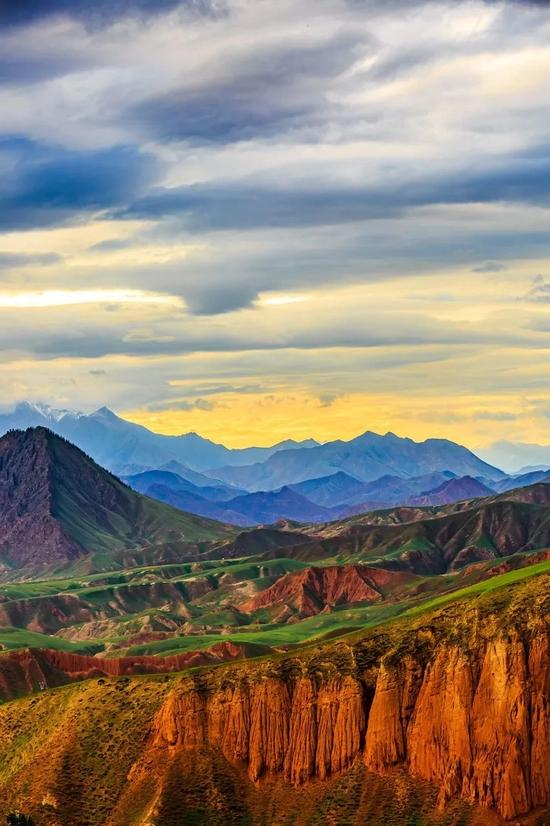
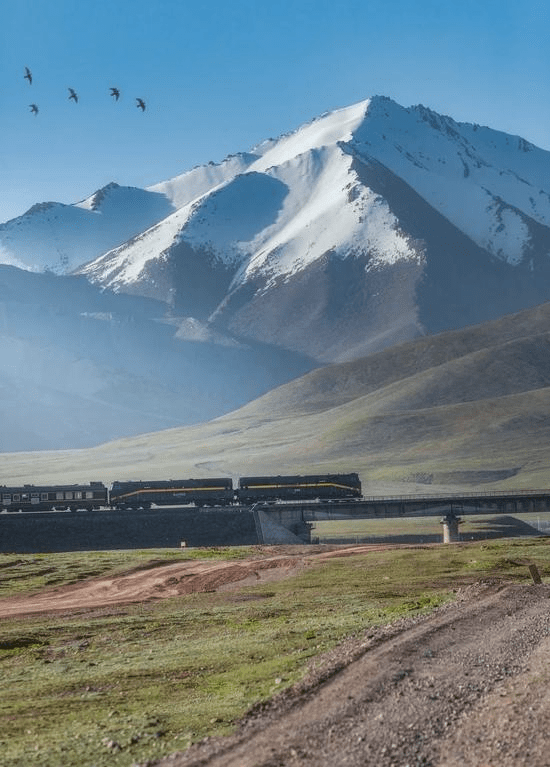
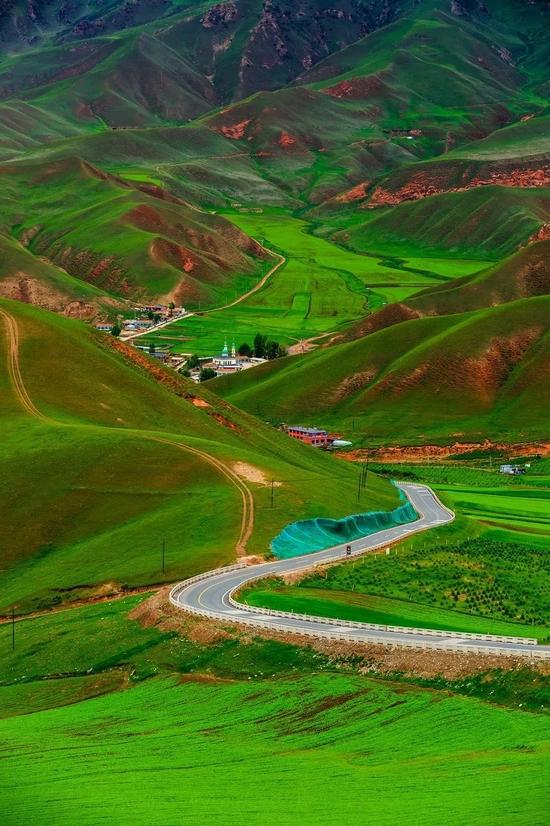
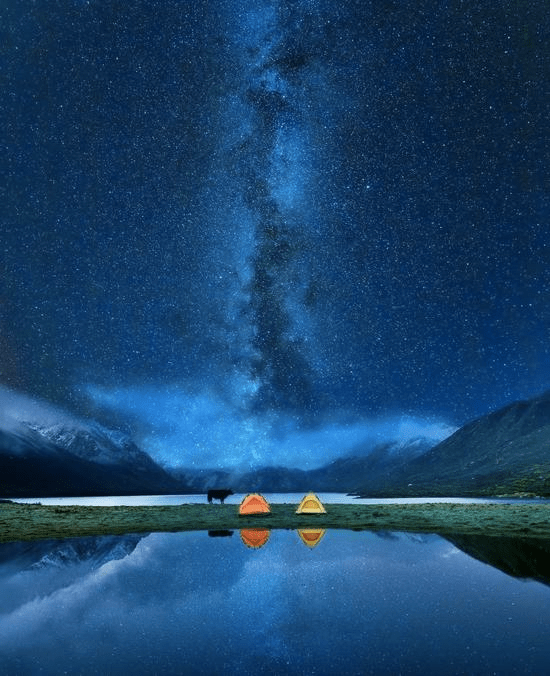
Entering summer, the northwest is like a fairyland, and as the gateway to this paradise, Qinghai is so breathtaking that one forgets the passage of time. Snow-capped mountains, lakes, grasslands, deserts, Yadan landforms, temples, prayer flags…
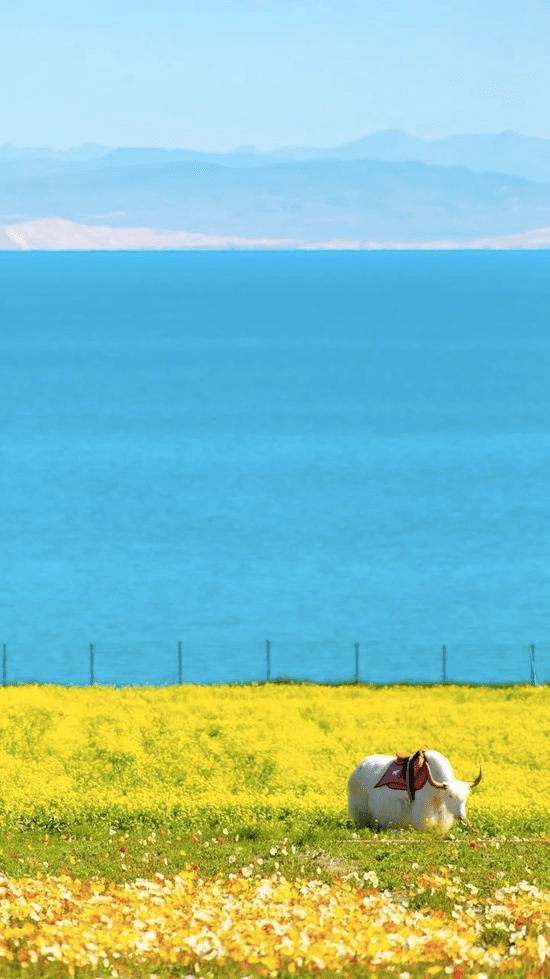
Countless unique landscapes make Qinghai a place worth exploring in depth. Here, you can easily encounter breathtaking scenery: lakes, flower fields, deserts, and starry skies, along with six vibrant colors: blue skies, green lakes, white mountains, golden deserts, green grasslands, and yellow rapeseed flowers. Walking on this vast land, the vitality and colors continually surprise you. Qinghai is a place you’ll fall in love with and never want to leave. In July, Qinghai Lake is romantic and poetic, with vast fields of rapeseed flowers along the lakeshore, blue water blending with the sky, and smoke rising from small wooden houses by the shore, resembling a pastoral landscape painting.
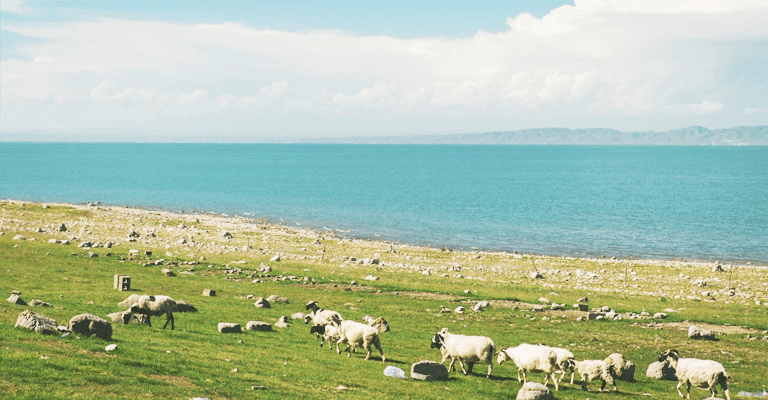
Qinghai Lake or Ch’inghai Lake, also known as Lake Koko Nor, is the largest lake in China (the size of Rhode Island or three Greater Londons). Located in the northeast of the Tibetan Plateau, this huge alkaline salt lake is usually No. 1 on “Most Beautiful Lakes in China” lists.
Spectacular Sunrise of Qinghai Lake
Erlangjian Scenic Area
Fairy Bay Area – The Sea of Flowers
Fairy Bay Area is a wet land located in the northern coast of Qinghai Lake. There are two legends about how Fairy Bay Area got its name. In one old legend, the queen of the west area fell in love with the King of Central Plains. The queen always served a feast for the king in Qinghai Lake with pretty fairies singing and dancing for them. Another ancient poem showed that the Queen of the west had been waiting for the king of Central Plains in Qinghai Lake for thousands of years but he never kept his appointment. The sad queen left for Heaven, but she ordered the fairies to guard Qinghai Lake. Later, these fairies masqueraded as swans living in Fairy Bay Happily. Might be attracted by these beautiful swans, a dozen of other birds also prefer Fairy Bay as a habitat.
Apart from various birds, different kind of flowers blooms here from every June to October. Just like a carpet waved by fairies, Fairy Bay presents on white, yellow, orange, pink, red etc., really deserving its name of Flowers’ Ocean. Because of the magic legends and amazing landscape, local people regard it as sacred ground and several solemn rituals are held here. So, you can feel a strong cultural fragrance.
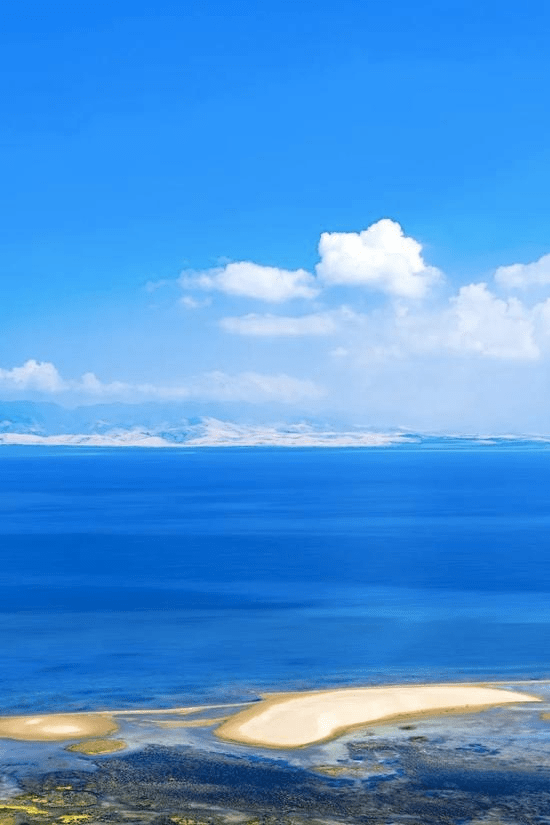
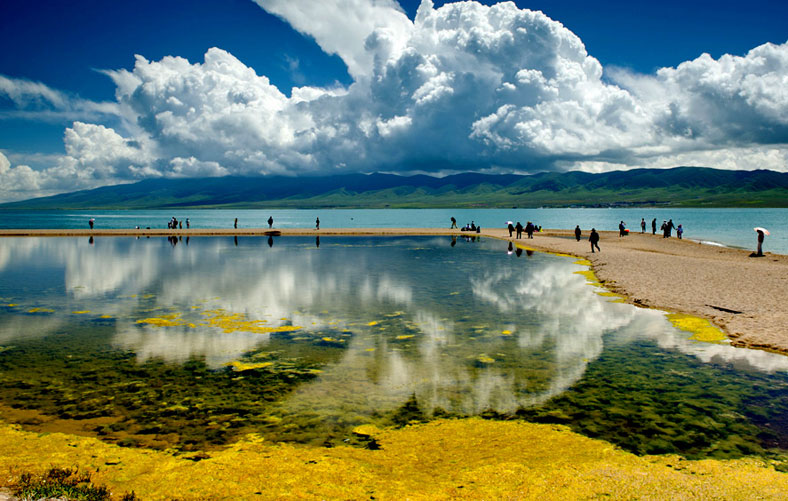
Sand island in the lake
Great Scenery in the Biking Trip
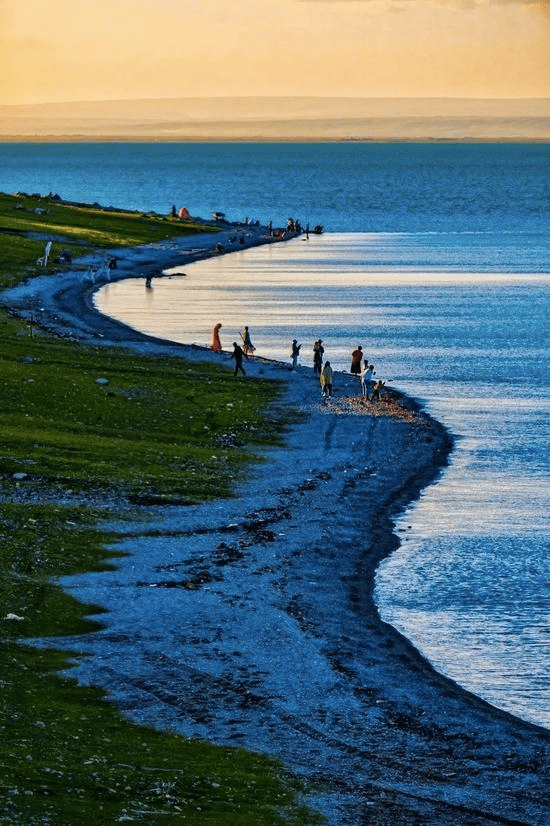
There’s a Tibetan folk custom that Buddhists should walk around the lake in the Year of Goat, circle the mountains in the Year of Horse, and circle the forest in the Year of Monkey. Some believe it’s a decree left by Buddha. Qinghai Lake is a sacred lake for Buddhist pilgrimages. Especially in Horse years of the 12-year cycle, many Buddhists will take a kora around the Qinghai Lake which is believed to be helpful to lead a safe and happy life. By traveling to Qinghai Lake you can get close to the devoted Tibetans and appreciate Tibetan culture. When the weather is warm in the summer months, there are ethnic festivals of the Tibetans and Muslims. Nowadays, there are still lots of minority tribes and herdsman families living beside the Lake. You can feel the strong nomadic ethnic culture there.
Buddhist Pilgrims Worshiping Qinghai Lake
Besides Qinghai Lake, there are many lakes in Qinghai, such as Chaka Salt lake, ChaErHan Salt lake, etc.
Qinghai has many mountains, 3,600 mountain peaks, clustered together, resemble giant petals in full bloom, tracing graceful arcs across the sky. Up close, they resemble ancient castles, pyramids, animal shapes, and cylindrical pillars. Being there feels like entering a maze, making it difficult to distinguish directions.
In July and August, large fields of rapeseed flowers bloom beneath Zhuo’er Mountain. Standing at the top of the mountain, the view is incredibly expansive and unobstructed. As far as the eye can see, the earth is covered with a golden-yellow carpet.
This summer, embark on a pilgrimage to Qinghai.
On this vibrant land, there exists a power, ancient and resolute, with the solemn sound of bells echoing in all directions, suppressing all disturbances. The 400-year-old Kumbum(or Ta’er Monastery ) is one of the most important temples of the Gelug sect of Tibetan Buddhism. Entering the incense-filled Ta’er Monastery, one begins to feel detached from the mundane world. Devout followers, serene temples, and vivid Buddha statues all convey the weight of faith. The monastery’s buildings are grand, blending Han palace and Tibetan flat-top styles. With over 4,500 rooms, it forms a unique architectural complex that integrates Han and Tibetan craftsmanship.
The most captivating event is the annual “Shai Da Fo” or “Shai Da Thangka,” also known as the “Buddha Exhibition Festival.” This involves displaying a large Buddha image outdoors to prevent mold and insect damage, and more importantly, as a special way for monks and followers to pay homage to the Buddha. The image is actually a special type of large Thangka, a rare treasure among scroll paintings. The best time to unfold the Buddha image is at dawn when the first rays of sunlight hit the earth, hence the name “Shai Fo,” which means “Sun Buddha.”
Held twice a year during the lunar fourth and sixth months, the festival commemorates the birth, enlightenment, and nirvana of Shakyamuni, the emergence of Maitreya, and the birth and nirvana of Tsongkhapa. By displaying the Buddha image, followers can gaze upon it, receive its blessings, and protect it from damage. Ta’er Monastery has four large embroidered Buddha images: “Lion’s Roar,” “Shakyamuni,” “Tsongkhapa,” and “Vajrasattva,” with only one displayed each time on the monastery’s hillside. The ceremony is grand, attracting many spectators and creating a spectacular scene.
Dechen Shak-Dagsay is a Swiss-Tibetan musician and author. Over the past few decades, she has built a career in music by combining the Tibetan mantra transmissions passed down by her father, Ven. Dagsay Rinpoche, with innovative melodies and contemporary instrumental productions. She has also engaged in collaborative projects with other spirituality-inspired musicians. Having lived in Switzerland for most of her life, Dechen is one of the most prominent contemporary Tibetan singers in Europe today, and has also become globally recognized through various music awards, and for having performed songs from her albums Jewel and Day Tomorrow at Carnegie Hall in New York. Dechen is also the founder of the Dewa Che charity organization, which engages in social projects in Tibet.
Dechen’s newest album, emaho – The Story of Arya Tara, released in October 2021, is about the enlightened activity of the Vajrayana goddess Tara and contains a musical rendition of the “21 Praises of Tara.” BDG recently had a chance to speak with Dechen about her latest project.
BDG: You’ve sung about Tara on various albums before, but this new album is devoted specifically to her story. What do you find inspiring about this female buddha?
Dechen Shak-Dagsay: I have had a wish for many years now to share the extraordinary story of Goddess Arya Tara, the gentle-yet-indomitable princess who became a female buddha. The mythic story goes back many eons in ancient India, where she was called Princess Jhana-Chandra, which means Wisdom-Moon. In Tibetan, her name is Yischi Dawa, and it touches me profoundly that, out of a deep sense of compassion, she would not even eat breakfast before she had liberated hundreds of thousands of beings from samsara each day. She was a faithful disciple of her teacher Buddha Dundubhisvara, and her entire community admired her.
One day, the monks urged her to make an aspiration (vyakarana) to be reborn as a man in her next life in order to attain full enlightenment. The princess laughed at this sexist exhortation and replied: “There is no male, there is no female. To discriminate between male and female is the mind of a small being. There are neither men nor women, nor a self, nor beings.” She vowed to return again and again in a female form in order to help all beings from suffering and to reach enlightenment in female form. Therefore, her teacher, Dundubhisvara, gave her the name Tara, which means “Swift Liberator.”
Tara’s story reminds us every day that we are all equally beautiful beings blessed with great inner qualities, such as love, compassion, kindness, and clarity. These qualities are just waiting to be rediscovered and nurtured.
BDG: Your album emaho captures a profound thought: “What an amazing, wondrous moment when the mind awakens.” How does the music create a mood and ambience in which the listener can realize this moment for themselves?
DSD:Emaho is indeed not an ordinary word. It is found in ancient Tibetan spiritual texts and is an exclamation of joy and amazement when the obscured mind awakens and experiences the pure, clear, and bright shining light of the true nature of our mind.
Personally, I find that each of the eight pieces hold beautiful emaho moments for the listeners. As with all my previous albums, I received the texts for this exalted goddess from my dear father, Ven. Dagsay Rinpoche. It is a great blessing that Rinpoche gave me the transmissions for these beautiful “21 Praises of Tara,” which are practiced in all Tibetan traditions. I also had the privilege of working with Swiss producer Helge van Dyk, who also composed and produced the music of my two previous albums, Jewel and Day Tomorrow.
I said to Helge that I wished to represent the four enlightening activities of Tara in four musical pieces. I cannot thank Helge enough for creating the most sublime music to present the four skillful enlightening activities of Tara: the pacifying, enriching, magnetizing, and wrathful aspects.
When you listen to emaho – The Story of Arya Tara, my hope is that you will enter the wonderful, unique space and landscape of Tara’s buddha-field, and perceive her different fields of activities through the following musical compositions.
“emaho – an Amazing One” – “The Wisdom of Tara” – Tara’s magnetizing activities. Audio courtesy of VANDYKMUSIC
“emaho – an Amazing One” – Tara’s enriching activities. Audio courtesy of VANDYKMUSIC
“emaho – an Amazing One” – “Magic Pulse” (of Prayer Drumming) – Tara’s wrathful activities. Audio courtesy of VANDYKMUSIC
BDG: How do you think the spirit of emaho can help heal our fractured and hurting world, which is now immersed in COVID-19 and a range of other immense crises?
DSD: We generally believe in the great healing power of the Buddha’s teachings, especially when the world is going through a difficult time. We are still in a worldwide pandemic, and we constantly face threats of natural calamities and other crises.
The whole world has faced unprecedented challenges over the last two years, and we are still trying to find solutions for how to handle them. From a worldly point of view, these problems are simply devastating and are creating immense suffering for everyone. But from a Buddhist view, such challenges are exactly what we call “precious moments” for our minds to awaken and to encourage a total reset in our interior world and inner being. We call these moments precious because they allow us to open our hearts to the Buddha’s teachings, such as the Three Marks of Existence. Recalling them always has an instant healing effect on me:
• Impermanence (Skt: anitya): Nothing stays the same, everything is constantly changing.
• Whatever we experience is marked with some kind of suffering. As long as we identify ourselves with a sense of solid self, we will always suffer (dukkha).
• Everything around us and even our own person is empty of a self (anatman).
Dechen Shak-Dagsay. Image courtesy of VANDYKMUSIC
Together with Helge and other musicians, we created emaho in the hope that it will be a small contribution to helping us all through these troubled times together.
We hope to be able to bring calm and peace into people’s hearts. We will not be able to get rid of COVID-19, or the economic, social, and political fallout it has caused, but the music that carries the blessings of Arya Tara, the Swift Liberator, will help us all to overcome our fears, sadness, frustration, and pain to create some space in our hearts and to rebalance our minds. It is within this calm space that we will be able to tap into our innate beauty and strength. We all need this to transform our pain and negative thoughts, and to calmly face and embrace the difficult times ahead of us; to fully become aware of our own inner qualities.
The release of the new double album was followed by the release of my new book, Mantras, Musik & Magic Moments, in December 2021, in which I write about the healing aspects of the old Tibetan mantras, and why I chose music as a tool to reach people’s hearts. I also talk about how Tibetan healing symbols have carried sacred power for centuries. I began making mantra music about two decades ago, and I hope followers will enjoy this new perspective I am offering through my work.
BDG: Your music has been received very well worldwide and your profile has also been rising in Asia. Do you present your music as non-denominational and embracing of all Buddhist traditions, even while it expresses your Tibetan heritage?
DSD: Although I am very rooted in Tibetan or Vajrayana Buddhism, I embrace all Buddhist traditions. My dear father Dagsay Rinpoche, who lives in Chengdu, always reminded us that the essence of the Buddha’s teachings is non-violence and cultivating love and compassion for all beings. All Buddhist traditions, including the Tibetan heritage, are following this beautiful path. It is my wish to one day come to Asia to meet all my Asian friends and to perform my music in Asia together with the Jewel Ensemble.
In my third piece on disc two, called “Peace of Mind,” I sing a “Praise to the 21 Taras” in Chinese and in Tibetan. It is my deep wish to create a wonderful space of peace, respect, and reconciliation.
BDG: You’ve come together with various artists to create a fusion of music. These artists also tend to have a spiritual flavor to their work. How do you decide to work with an artist? How do you identify a potential collaboration?
DSD: Thank you for sensing what I see as a very special energy to our music. I am very thankful to Helge, who has a distinct talent in finding the right artists for a special collaboration that requires not only technical musical skills, but also an open heart that is fully inspired to play soulful music with us. He has carefully selected outstanding musicians to form the Jewel Ensemble, with whom we have played many concerts all around the world. I feel very privileged to have the following members of the Jewel Ensemble, as well as an extended ensemble that we shared the stage with when playing the Call for Peace concerts with the renowned Zurich Chamber Orchestra (ZKO).
I would like to take this opportunity to thank my Jewel Ensemble musicians and guest musicians from around the world for their beautiful contributions on emaho. It has been such an honor to work with all these outstanding artists, who committed their heartful work to this album.* I would like to thank BDG for opening the door to the story of Arya Tara. I would be very happy if this music finds its way across Asia, and I would like to thank all my musicians, my producer Helge, and my dear father Dagsay Rinpoche for letting me create such precious music. I hope it will help to remind people all around the world of their own inner strength and beauty.
A commonly held view is that the body houses the soul—but have you ever thought that the soul could live elsewhere? I have experienced that feeling. Although my body was born in 1981 to my German mother in Brazil, where I grew up, 18 years later I had an “encounter” with my soul’s home in Mongolia. For almost a year, my family and I traveled east by motorhome from Germany and right across Russia. Reaching the border between Russia and western Mongolia, it took days just to receive permission to cross. Stuck in the middle of nowhere, we feared we might never make it! Finally a drunken general provided the necessary authorization and we drove freely onwards into Mongolia, sometimes without a visible road in front of us.
Beneath the expansive blue sky that crowned the arid landscape, my happy tears fell like rain. Those tears nourished a hungry artistic seed within me that desired to grow in the direction of the sunshine; to follow a path to spiritual liberation through art. I believed in such a path and it made sense to me, but until then I hadn’t known how to go about following it. Once in Mongolia, however, I was introduced by a monk at Gandantegchinlen Monastery in Ulaanbaatar to the sacred art of thangka painting, which depicts the various Buddhas, spirits, enlightened beings, and spiritual worlds of Tibetan Buddhism. I had been seeking an artistic discipline of some kind that would guide me to the divine, and this was it!
One of the paintings by Tiffani at Lama Padma Samten’s temple in Brazil
Nevertheless, it was a long road before I was accepted three years later as the first Western student at the Norbulingka Institute, founded by His Holiness the Dalai Lama, near Dharamsala in northern India. I have traveled all my life—even living for a few months with an aborigine community in the Australian outback, and spending a couple of years on a sailboat on the Brazilian coast during my teens—but India was beyond anything I could have imagined. I was sick for the first three months I spent there, during which time the school was unsure whether to accept me or not. Even my mother urged me to go home. But something inside me was unmoved by all these “tests.” I felt that if I went back, my soul would abandon my body.
I was finally accepted as a student at the Norbulingka Institute in September 2003. All the wise and holy artists I had expected to meet turned out to be mostly teenagers eager to meet a girl—a blond girl—in the studio at last. Gen-la, the master, was initially somewhat reticent, and we didn’t even share a common language. He gestured towards a Buddha face made up of many symmetrical lines and then pointed to a blank sheet of paper, so I sat on the floor near him and started to sketch. The first word I learned in Tibetan from Gen-la was “again!”—do it again! And so I did, for weeks, the same drawing over and over again until Gen-la would give me my next project.
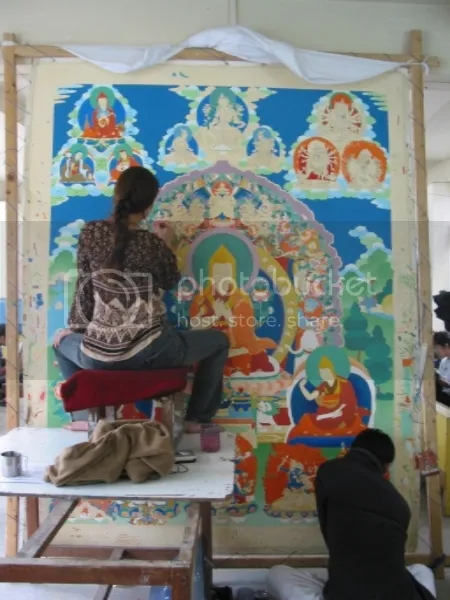
Painting class at the Norbulingka Institute, 2005
My apprenticeship during the three years I spent there was very slow and painstaking. It was essentially this atmosphere that molded my predisposition to understand that painting a thangka is a spiritual practice in itself; the thangka is there for you to give your time and attention to, and to house your soul. It is a sacred art with a unique function. If you do not have that understanding in the very depth of your being, you will soon abandon the training. Some do not even consider thangka painting to be art, but a practice involving paint that has the same aim as any other Buddhist practice. It was a year before Gen-la even called me by my name; until then he just called me “intchi bhumo,” or “foreign girl.” And it was more than a year before I actually even touched paint, and then only because one of my classmates hid me behind a big canvas and started to teach me himself. Gen-la was actually proud of my boldness when he found out, and finally guided me on my first proper painting. Those were precious times; I was truly happy despite the difficulties I experienced, and my certainty of being on the right track never wavered.
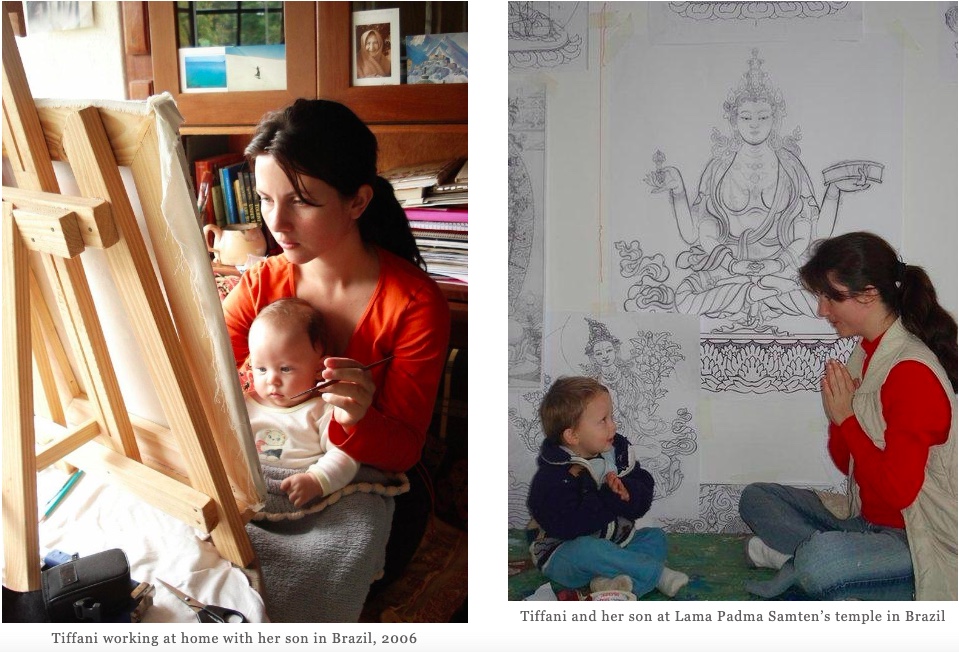
In 2006 I returned to Brazil to discover that I was pregnant. In October that year, a little boy of Tibetan-Brazilian-German heritage was born. His father came over and we lived together for a few years until he moved to the United States to join a larger Tibetan community. Back in Brazil I was fearful that I would have to stop painting—I was 24 with a baby and no money, and all I knew how to do was paint. Afraid that such worries would make me lose my path, I continued to paint my thangkas, my son held close to my body.
When my son was only a few months old, I was contacted by a Brazilian lama—Lama Padma Samten, a disciple of Chagdud Tulku Rinpoche, who had already established a huge sangha. He had heard about me through a mutual friend and sent my son and me tickets to visit his new temple in the south of Brazil. When I finally arrived I was amazed by the size of the temple, which was built to accommodate 300. As I stood there sleep-deprived and perfumed with milk and diapers, he asked me if I would paint the interior walls. I was astonished—but I agreed!
For a month I stood gazing at those terrifyingly huge white walls in fear. I really had no idea how to start! I could not call anyone in India because of the language barrier, and the materials available in Brazil for painting murals wouldn’t be the same as those I was familiar with. So I began slowly, as Gen-la had taught me. First, I met with a local artist to learn more about the proper materials. I learned about the specific deities and mandalas that Lama Samten wished to incorporate. The members of his sangha were very supportive, and many came to help. Those who could give more of their time I trained to paint. Those who couldn’t paint, I asked to massage our aching shoulders, play some instrument or other, give yoga lessons, or even bake a cake for our tea breaks. I felt that everyone should be included. The project took five challenging years to complete, all guided by Lama Samten’s blessings.
As mentioned earlier, those tears in Mongolia had fed the artist within, and now the artist was awake. I soon had the feeling that thangka painting was a “safe zone” for me as the work is all done according to rules that, if followed, offer some guarantee of success. So, in a way, I felt that thangkas had given me discipline and now, only now, was I ready to risk expressing myself. So I began to take more seriously the opportunity to try a more intuitive kind of painting, especially when my personal life was a mess. I was allowed to explode on the canvas, I was allowed to make mistakes . . . I needed to be able to be wrong yet acceptable.
Accumulating a body of art pieces during my free time while painting the temple, with some trepidation I presented my work to Tibet House in New York. I was relieved when they accepted my work and agreed to produce my first show, in 2012—a solo exhibition titled Mystic Nostalgia, in which I sought to express that longing for a lost “home.” Not necessarily a real place; the work is more about our inner landscape . . . a mystic longing. My second exhibition will open at Tibet House on 23 October this year.
Since completing my work at the temple at the end of 2012, I have focused on holding thangka workshops, producing thangkas to order, and taking part in workshops and retreats to teach the intuitive process of self-expression through paint, movement, and writing. I believe the key is maintaining the approach of an apprentice—the beginner’s mind. I feel that I’m learning each time I teach, each time I listen to people, each time I encounter another culture or eat a different food. I learned the benefits of discipline and following rules from the thangka tradition, and when I walk into the unknown with my wild self that sometimes wants its own way, I continue to learn.
Tradition provides us with the roots and structure through which we express ourselves like a hundred branches growing in the air, catching the breeze with their lush leaves. Nourish discipline as much as you nourish your freedom and you’ll soon discover that they are one.
Tiffani Gyatso is a traditional Buddhist thangka painter and a member of the Dakini As Art Collective. To learn more about Tiffani, her work, and Dakini As Art, please visitDakini As Art.

























 Peace LiLy