Dr. Jeff Walker’s Rising Stars: Transforming Arts Education Through Passion and Purpose

Matthew Kayser Contributor

Jeff Walker

In a world increasingly dominated by artificial intelligence and digital innovation, Dr. Jeff Walker, a retired neurosurgeon turned philanthropist, is on a mission to “keep the humans in the humanities.”  His Walker’s Rising Stars Scholarship Program, launched in 2003 in partnership with the Pinellas Education Foundation in Florida, has awarded over $970,000 to high school students excelling in Dance, Instrumental, Theater, Visual Arts, and Vocal Performance. 

Now, with a bold vision to expand the program nationally, Walker is poised to reshape arts education across the United States: “I want this to expand to cover the whole country and change arts education in high school and college,” says Walker, who has made it his mission to provide free education for all. 

Walker’s inspiration—rooted in personal tragedy, a love for the arts, and a deep commitment to education—drives a movement that empowers young artists to pursue their dreams without the crushing weight of student debt. 

His path to philanthropy was anything but conventional. A Duke-trained neurosurgeon who performed over 10,000 operations and established a major trauma center in Florida, Walker’s career was defined by precision and impact. 

Yet his drive to give back stems from a deeply personal experience at age five. “I had a tragic event, a near-drowning incident,” he recalls. His best friend didn’t know how to swim. Influenced by childhood media and misunderstanding the risks, he pushed him into the water. The outcome was devastating: his friend drowned, and Walker nearly did too. “I felt so guilty, blocked it out for 15 years,” he says. “I think I tried to overcompensate by helping people. It was something that took an incredibly long time for me to forgive myself for.” 

This tragedy instilled a lifelong mission to serve others—first through medicine and later through philanthropy. His medical journey began under the influence of his father, a dentist and university chairman, and his mother. “I scrubbed in on over 200 open-heart operations,” he says. But it was in medical school that he discovered neurosurgery, drawn to the brain as “what you are.” He completed his residency at Duke by 1985, laying the foundation for a career that blended science with service. 

Walker’s love for the arts, though not as a performer, also shaped his vision: “I played the piano when I was younger, very methodical, classical music,” he shares. A humbling moment came at 15 when a friend played a Beatles song effortlessly, revealing Walker’s limitations. “I couldn’t do that at all,” he admits. 

Yet, this experience underscored his belief in the arts as a universal force: “Every culture has their own dance, songs, music, symphonies, operas—the arts are a unifying factor,” he says. “There’s so much diversity in America today, and this brings everyone together.” 

In 2003, Walker channeled his passion for education and the arts into the Walker’s Rising Stars Scholarship Program, partnering with the Pinellas Education Foundation to support local high school students. The program, which awards scholarships for arts education, is a vibrant celebration of talent, culminating in an annual event at the Mahaffey Theater. 

“The kids get there at noon, we have lunch, they audition during the day, and then put on a show at night—three-minute acts, five categories, with the county jazz band. Families are cheering, it’s super fun,” he says. 

The program’s impact transcends financial support. After the show, students gather backstage, hugging and celebrating. “They’re all aspiring artists, and you can feel the love,” Walker says. 

As a father of four and grandfather of eight, Walker connects deeply with the pride parents feel at these events. “You’ve taken these kids to music, art, dance lessons for years, and to see them on stage as young adults—the pride and love bounce off the walls.” 

The scholarships address the broader student loan crisis, which Walker views as a significant burden on young people. “Every dollar is $1 the family doesn’t have to spend on education,” he says. 

Beyond financial relief, the program instills confidence and recognition. “It’s not easy to get on that stage, knowing hundreds of kids are vying for that spot,” Walker says. “The confidence they get is key.” 

He recalls a student letter that captures the program’s transformative power: “She wrote, ‘I was going to go to St. Pete College, but after winning this, I’m going to Manhattan School of Art.’ It’s a life-changing event.” 

Walker estimates that the program changes “about half the kids’ lives,” with alumni achieving remarkable success. “They’re making a living in the arts,” he says proudly. 

Walker’s inspiration for Rising Stars is grounded in his belief in education as a pathway to opportunity: “As a Duke-trained neurosurgeon, I went to school a long time, and I owe everything I have to my education,” he states. “In the end, when you look back on your life, it’s not what you get, it’s what you give.” 

This philosophy fuels his commitment to expanding arts education, particularly in public schools. “Education is the way out,” he says. “Through hard work and education, I still believe in the American Dream—you can be anything.” 

Walker also recognizes the challenges the arts face in an increasingly digital age. He trademarked the phrase “keep the humans in the humanities” to emphasize the need for genuine human creativity. “How do you combat that? You create a generation of talented singers, dancers, actors,” he explains. The program reinforces human expression and creativity during a time when automation is on the rise. 

Now, Walker has announced the national expansion of Rising Stars, choosing the prestigious Sundance Film Festival to unveil his plan. His goal: establish 1,000 program sites, each supported by a $4 million endowment that yields 5% annually to fund 25,000 students each year. “After four years, that’s 100,000 Rising Stars in college—enough to transform arts programs,” he calculates. 

The national rollout will replicate the local model, with auditions and performances administered through public school districts and education foundations. “Everything goes through the school district, the teachers,” Walker says, highlighting a grassroots approach. Local events will feed into regional, state, and national competitions—potentially televised to amplify awareness and participation. 

“This will bring every community together to support their young people,” he says, envisioning the program as a unifying force during divisive times. 

Walker also sees the initiative as a response to the underfunding of arts education. “In high school, the arts are underfunded,” he notes. “Everybody’s talking STEM these days, but an education in the arts is very difficult.” 

The program aims to uplift students pursuing creative careers, helping them gain recognition, validation, and the resources they need to thrive. “This program tells them, ‘You’re a great singer, artist, you’ve got talent,’” Walker says. “It gives them the confidence to pursue their dreams.” 

Scaling Rising Stars nationwide presents challenges, but Walker remains focused: “As a Duke-trained neurosurgeon, I didn’t get here by luck. We have a plan.” 

He’s connecting with artists’ unions and entertainment professionals to grow the network of supporters. To aid in funding, Walker has even developed a travel toothbrush—with proceeds directed toward scholarships—and is exploring other creative avenues to generate resources. “This is a generational project,” he says. “If you can’t get the generation behind it, it’s not going to happen.” 

Walker’s long-term goal is free college education for students in the arts—including room and board. “I envision a future where Rising Stars have their own dorms, live and perform together, support each other,” he says. “If a student’s parent gets sick and they can’t afford school, let’s have a concert to raise money so they don’t drop out.” 

For Walker, the legacy is not about awards but impact: “In 2035, if every Oscar, Emmy, or Tony category has a Rising Star, that’d make me happy,” he says. 

What brings him joy is the personal fulfillment: “At first, I thought it was about sitting in the front row, hearing nice things,” he reflects. “But it makes me happy inside. I’m a good person, and this brings fulfillment, self-satisfaction, and love for myself.” 

As Walker’s Rising Stars prepares to take the national stage, it stands as a powerful testament to one man’s belief in the power of art, education, and human connection to change lives and strengthen communities. 

Link:https://peacelilysite.com/2025/07/15/dr-jeff-walkers-rising-stars-transforming-arts-education-through-passion-and-purpose/

Source: https://www.usatoday.com/story/special/contributor-content/2025/07/09/dr-jeff-walkers-rising-stars-transforming-arts-education-through-passion-and-purpose/84524014007/

The Desert-Conquering Queen: Yin Yuzhen’s 36-Year Battle Against the Sands

In 1985, a drunken promise set a young woman on a path that would change not only her life, but the fate of an entire desert.

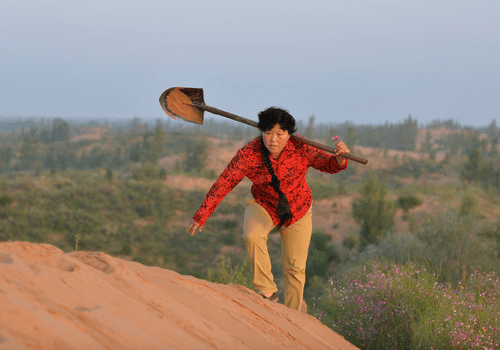
At just 19 years old, Yin Yuzhen was forced to marry Bai Wanxiang, a man living deep in China’s Mu Us Desert.

On her wedding night, while Bai lay down early to rest, Yin Yuzhen sat awake until dawn, her eyes red from weeping. When she looked out from her tiny dugout home, she saw nothing but endless waves of yellow sand stretching to the horizon. She felt as if her life had ended before it began.

Her new home was a four-square-meter pit carved into a sand dune. To enter, she had to stoop under a doorway so low it nearly grazed her back. Inside, there was nothing but a bed of dry twigs and straw.

Her husband was four years older and came from a family who had battled the desert for generations. Years earlier, Yin’s father had been saved by Bai’s father when a sandstorm left him lost in the dunes. Grateful, the men became sworn brothers, and in a haze of alcohol, her father vowed to give his daughter to the Bai family. Though he regretted it once sober, he felt bound to keep his word.

Life was brutal. There was no electricity or running water. Summers scorched and winters froze. They survived on millet, wild plants, and the occasional scavenged animal carcass. For forty days after her wedding, Yin Yuzhen saw no one but her husband—until, at last, a wandering herder passed by.

The isolation was unbearable. In her loneliness, she would cover footprints in the sand with a basin, pretending someone was still there.

Seven times she tried to flee, and seven times she became lost in the swirling sand. Once, she walked for two days and nights, only to find herself back where she started. That was when she realized the desert was not going to let her go.

At her lowest point, she contemplated ending her life. But in that moment, she remembered her mother’s tearful face the day she left home—and she stepped back from the edge. If she couldn’t escape, she decided, she would have to find a way to survive.

Hope arrived in the form of two poplar saplings she brought home from a visit to her parents. Miraculously, one took root. That little sprig of green whispered a possibility: maybe the desert wasn’t completely invincible.

In 1986, Yin Yuzhen made a bold choice. She sold their only “three-legged sheep”—a wounded animal that was still precious—and used the money to buy 600 young trees.

That spring, she and Bai planted each sapling in the sand around their cellar.

The challenges were immediate. Every day, they walked kilometers to fetch water. Under the searing sun, most of the saplings withered. By summer’s end, fewer than 100 remained. But for Yin Yuzhen, that was enough to keep going.

From then on, reclaiming the desert became her life’s purpose. Bai took work wherever he could to buy more trees, while she stayed behind to plant, water, and protect them.

Every morning she rose at 4 a.m. and worked until late into the night.

Through years of trial and error, she devised a three-layer planting method: shrubs to anchor the sand, trees to form a windbreak, and fruit trees to sustain their livelihood. This innovation transformed survival rates.

But the desert kept testing her resolve.

In 1989, a monstrous sandstorm struck while they were returning with new saplings. The wind tore the trees from their cart and buried them. Yin Yuzhen clung to their ox’s tail, stumbling forward in the blinding grit. When they finally reached home, she didn’t rest—she planted every surviving sapling that same night.

Setbacks never stopped coming.

They flattened kilometers of sand to make water channels, only to watch them swallowed again and again.

She went into premature labor from exhaustion. He developed pneumonia. But neither ever quit.

For the first ten years, the progress was almost invisible. The trees grew painfully slowly, and the dunes kept advancing. Still, she believed that if she didn’t give up, someday the desert would yield.

In the fifteenth year, signs of hope appeared. The dunes near their home began to stabilize. The wind softened. Small animals returned.

After twenty years, their desolate hollow had transformed into an oasis that drew neighbors to settle nearby.

Today, after thirty-six years of relentless labor, Yin Yuzhen and Bai Wanxiang have reclaimed more than 70,000 acres of desert.

They have planted over 20 million trees—forming a vast green barrier against the sands.

Their perseverance has inspired 84 families to join in the mission, proving that even the harshest landscapes can be transformed.

Yin Yuzhen’s story has captured global attention. She has won over 100 honors, including “National Model Worker” and “Green China Person of the Year.” She was the first Chinese woman nominated for the Nobel Peace Prize, and the United Nations has praised her work as a model of ecological restoration.

What began as a forced marriage became the catalyst for a transformation no one imagined possible.

The young bride who wept in despair became a legend—China’s Desert-Conquering Queen.

Standing in her thriving “green kingdom,” she often reflects on her journey from hopelessness to triumph.

“At first, I only wanted to survive,” she says. “Later, it became my life’s mission.”

Today, the cellar where she once had to crawl inside has been replaced by a bright brick house surrounded by orchards and forests. That place—once a symbol of despair—has become a destination where people come to learn, to marvel, and to be inspired.

Yin Yuzhen’s life is a powerful reminder that in the most unforgiving environments, the strongest life force can grow.

One woman’s 36-year battle against the desert ended in a victory of green.

Link:https://peacelilysite.com/2025/07/08/the-desert-conquering-queen-yin-yuzhens-36-year-battle-against-the-sands/

Source: https://www.facebook.com/permalink.php?story_fbid=pfbid02UztZikitftmaF5mxFQ5hoJtqtvEFZSQjnfhEWWR12h9vKd4zhVZN2mMUcGoAVAcdl&id=100063478189650

Photos from: https://www.chinastory.cn/PCzwdbk/chinastory/wap/detail/20190617/1006000000039761560767204146970666_1.html

The Power of a Good Mindset in Times of Conflict

My friend Wendy used to be very emotional and overly cautious. But in recent years, she has undergone an astonishing transformation.

One day, when we met up, she shared a story that showed me just how much she has changed.

At the end of last year, Wendy finally decided to buy her daughter-in-law the new car she had dreamed of for so long. The whole family welcomed the New Year with excitement and joy.

That day, her daughter-in-law drove the car out to register it, while Wendy stayed home reading stories to her granddaughter.

Not long after, the phone rang. On the other end, her daughter-in-law’s voice trembled with panic:

“While turning, I got hit by a truck going straight. The entire front bumper is smashed. It’s all our fault. Mom, I’m too scared to come home—your son is going to be furious.”

Wendy replied calmly, “As long as you’re okay, that’s what matters. Just come home.”

A while later, her son returned from work. Before he could react, Wendy sent her granddaughter over to ask him to tell her a story about a carpenter.

He couldn’t resist her pleading eyes and began reading in an animated voice:

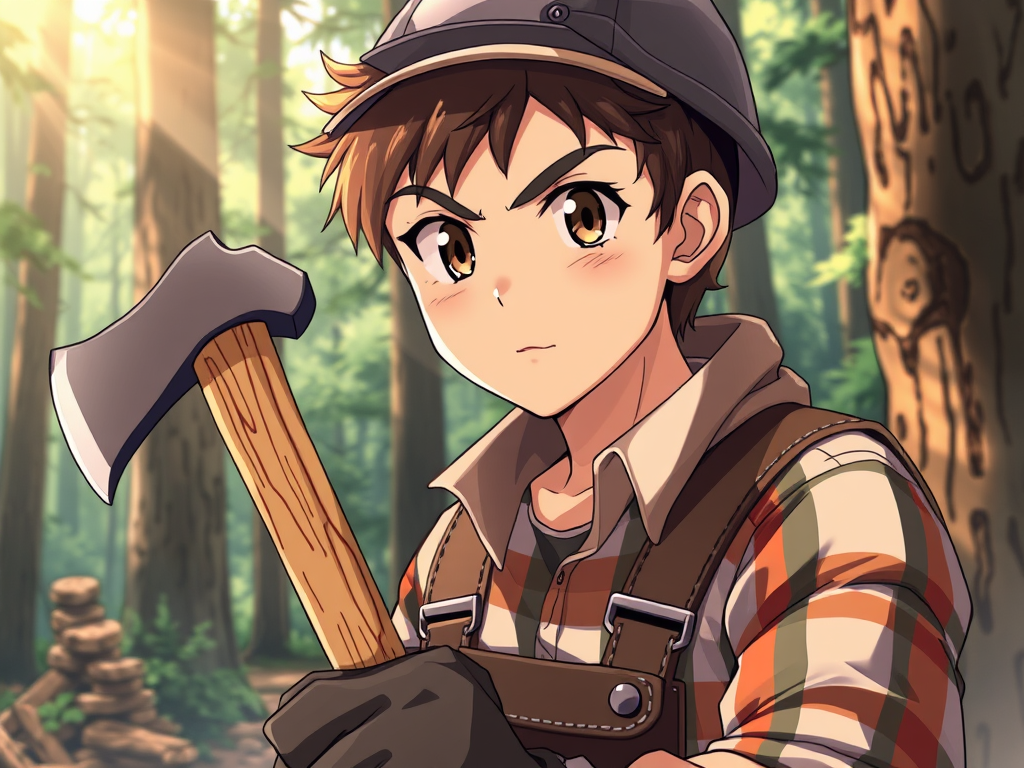
“There was a kind-hearted carpenter who, though already old, still had no house and couldn’t find a wife. His elderly mother was terribly worried. Finally, a young woman agreed to marry him—but only if he could provide a home.

So the carpenter worked tirelessly, chopping and hammering for two months until he built a beautiful wooden house. One day, while he was out, a fire broke out next door and burned his house to the ground.

People thought he would collapse in despair, but instead, he searched through the charred remains. Everyone was puzzled—what could he possibly be looking for? At last, he found an unburned axe and exclaimed with relief, ‘I finally found you!’

People thought he must be crazy—his house was gone, and he was happy just to find an axe? The carpenter said, ‘As long as I’m here and I have my axe, why would I worry about not having a house?’”

Just then, the daughter-in-law slipped quietly back into the house, looking like a child who had done something wrong.

When her son learned what had happened, he exploded:

“You’re such a spendthrift! No brains at all! So careless—on the very first day, you wrecked a car worth hundreds of thousands!”

Wendy looked at her son calmly and asked:

“Are you done yet? The car is already damaged—will shouting fix it?

Just a minute ago, you were telling your daughter that as long as you have an axe, you can build another house. Now you’ve turned into a chameleon—how will you teach her in the future?

What’s more important: people or cars? A damaged car can be repaired or replaced. But if something had happened to your wife, this family would be over.

It’s the New Year. What matters most is that we are safe, healthy, and together. Everything else is just material. You should be grateful she came home without a scratch. So many people are facing life-and-death partings right now. Be content.”

Her son made a face and joked, “Mom, ever since you started practicing Buddhism, you’ve changed. You’re always siding with your daughter-in-law—have you forgotten you have a son? I feel like I’m adopted!”

Wendy rolled her eyes at him, and the whole family burst into laughter as they sat down to dinner.

Later, Wendy told me that after studying Buddhism, she finally understood how to let go of the suffering that comes from clinging to the self and how to transform afflictions into wisdom.

I watched in amazement as what could have been a chaotic family argument dissolved effortlessly in her hands. In the end, everyone was able to celebrate the New Year in peace and joy.

Life will always bring troubles and joys. A grateful and content mindset makes happiness bloom everywhere, while a lack of appreciation can turn even good fortune into heartache.

Hearing Wendy’s story reminded me how powerful a positive mindset can be in times of conflict. I hope more families can draw on the wisdom of the Dharma to transform challenges into understanding, live long lives free from illness, and enjoy peace, prosperity, and lasting happiness.

Link:https://peacelilysite.com/2025/07/01/the-power-of-a-good-mindset-in-times-of-conflict/

It took me a lot to be this gentle

By Rye

When you grow up in a house where voices are always raised and love comes with conditions, where apologies never come and mistakes are blamed on you, it’s hard to understand what gentleness even means. I didn’t grow up with soft words or warm hugs. No one told me it was okay to make mistakes, or that I was still loved even when I failed. What I learned was to keep quiet, to survive, to toughen up.

I protected myself by building walls, not by opening up. I kept my emotions inside because showing them only led to being hurt or ignored. I became harsh with myself because that’s how others treated me. I thought strength meant being cold. I thought love had to hurt. I thought being kind to myself was weakness.

But somewhere inside, a quiet voice kept whispering “maybe there’s another way.”

It took years of breaking down and rebuilding myself. It took crying in silence and slowly learning how to listen to what my heart really needed. It meant letting go of old beliefs, painful habits, and the voices in my head telling me I wasn’t good enough.

I had to teach myself how to speak gently not just to others, but to myself.

I had to unlearn the idea that I deserved pain. I had to remind myself, again and again, that softness isn’t weakness. That it’s okay to be tender with a heart that’s been hurt too many times.

Gentleness became a daily choice—on angry days, broken days, on the days when the world told me to toughen up and stop caring.

I’ve learned that gentleness isn’t about pretending things don’t hurt. It’s about holding pain with care. It’s about choosing peace when your past only taught you chaos. It’s showing up with kindness, even when life hasn’t been kind to you.

Now I am gentle but it took everything — every scar, every sleepless night, every painful memory, every lonely moment. I lost myself. Then I found myself again.

So when others call me calm, kind, or soft, they don’t see the storms I survived. They don’t hear the silent nights or feel the weight I carried.

And that’s okay. I didn’t become gentle for others to understand me. I did it so I could breathe. So I could find peace. So I could love others the way I wish someone had loved me. Most of all, so I could finally love myself.

It took me a lot to be this gentle.

And I wouldn’t trade it for anything.

Source: https://ryeee.medium.com/it-took-me-a-lot-to-be-this-gentle-4c0801145835

The Lucky Table: A Story of Kindness, Chance, and Rebirth

For over three long months, Danny’s small restaurant had been bleeding money. What once was a bustling little eatery with lines stretching out the door had fallen silent in the shadow of economic downturn. On this particular evening, after tallying up the accounts, Danny made a heavy decision: Tonight will be the restaurant’s last night.

It was supposed to be the dinner rush, yet only a father and his young son sat at a corner table, quietly sharing a single meal. The child fidgeted and whined, while the father, clearly tired and irritable, snapped for him to be quiet.

Then the door creaked open.

A man wearing a cap and an expression of weariness stepped into the restaurant. Danny greeted him with a smile, thinking, Perhaps he’s my last customer ever… why not go the extra mile for him? Though he didn’t have much to give, Danny decided to offer a small surprise that might brighten someone’s day.

The Lucky Table

After taking the man’s order, Danny returned with a cheerful announcement:
“Congratulations! You’ve been seated at tonight’s Lucky Table! Your entire meal is on the house — and we’re including a complimentary dessert!”

The man blinked in disbelief. “I can’t believe I’m this lucky!” he said, breaking into a smile for the first time.

As Danny brought out the dessert, the man’s demeanor softened.

At the neighboring table, the little boy stared wide-eyed at the sweet treat and tugged at his father’s sleeve, begging for one too. The father, flustered and embarrassed, muttered, “We don’t have money for that. Stop fussing.”

The man at the Lucky Table noticed. He turned to Danny and said, “I’d like to share my good fortune. Could you bring a dessert to that little boy as well?”

Danny nodded and delivered the dessert. The child’s face lit up, laughing and clapping in delight. Even the father, moments ago so downtrodden, managed a smile and walked over to thank the kind stranger.

That’s when the conversation began.

The two men sat and talked. The stranger introduced himself as Kurt, the owner of a small business. Curious, he asked the father what he did for a living.

The man looked down and said dejectedly, “I was a sales manager, but the company’s shutting down. They’ve asked me to stay only until the end of the month…”

Kurt paused. “Actually… I’m currently looking for someone with experience in sales. Would you be interested in coming in for an interview tomorrow?”

The father looked stunned. “Really? Of course — thank you!”

They set the appointment, and the spark of hope in the father’s eyes was unmistakable.

That night, moved by what had unfolded, Danny changed his mind. Maybe I’ll keep going a little longer, he thought. From that day forward, he introduced a daily tradition: each evening, one table would be chosen at random to be the Lucky Table — free meals, and a sprinkle of kindness.

Word spread.

Curious customers came to try their luck, and Danny’s restaurant slowly regained its warmth and energy. It wasn’t long before the once-empty tables were full again.

A Twist of Fate

Years passed, and Kurt became one of the restaurant’s most loyal patrons — and a close friend of Danny.

One evening, as they chatted over dinner, Kurt suddenly asked, “Danny, do you know what I was thinking the very first time I walked into this place?”

Danny shook his head.

Kurt looked down for a moment, then said quietly, “That night, I was planning to have a final meal before ending my life.”

Danny’s eyes widened in shock.

Kurt continued, his voice steady but soft. “That night, my wife left me. She wrote in a letter that she couldn’t take being ignored anymore — that she’d fallen in love with someone else. I was devastated. I felt worthless. I had nothing left to live for.”

He paused, then smiled faintly.

“But then… I sat at the Lucky Table. At first, I thought it was a cruel joke. But when I chose to share the dessert, and saw that little boy smile — something in me shifted. I realized that even in my broken state, I could still bring joy to someone else. That moment saved me. It reminded me that I wasn’t useless after all. And that was the beginning of rebuilding my life.”

Danny’s eyes welled with tears.

He realized that true luck isn’t something we wait for. It’s something we create — through kindness, selflessness, and the courage to give even when we ourselves feel empty.

That night, Danny understood: he, too, was one of the lucky ones.

Link:https://peacelilysite.com/2025/05/23/the-lucky-table-a-story-of-kindness-chance-and-rebirth/

How I Quit Smoking After 20+ Years — Thanks to the Buddha Dharma of H.H. Dorje Chang Buddha III

During my school days, I unknowingly picked up the bad habit of smoking. After entering the workforce as a designer, the nature of my job required prolonged thinking, which led me to smoke incessantly. Sometimes, I would smoke over 60 cigarettes a day, staining my fingers a light yellow. The smell of tobacco lingered on my hands, and even when I brought them close to my nose, I could still sense the scent. Despite knowing how harmful smoking was to my health, I simply couldn’t quit.

I always felt that smoking was a form of enjoyment. Being frugal, I would smoke cheaper cigarettes when alone and keep a better pack for social occasions. Smoking also came with a significant financial cost. In my early working years, money was tight, and I couldn’t always afford cigarettes. Often, I bought just one or two loose cigarettes. Sometimes, I would smoke a cigarette in multiple sittings—lighting it, taking a couple of puffs, extinguishing it, and repeating the process. When I had no cigarettes, I would secretly pick up discarded cigarette butts to smoke. Occasionally, I even picked up others’ cigarette butts—how miserable it was just to satisfy my smoking habit! Even now, an old classmate of mine still teases me about how, back in the day, I would visit him for a meal when I was broke. After eating, I would crave a cigarette and would blurt out, “A cigarette after a meal is better than being an immortal!” This classmate, who never smoked, still brings up this incident to mock me.

Later on, although I could afford cigarettes, I knew deep down that smoking was not a good thing. The numerous “No Smoking” signs everywhere made it clear that smoking was frowned upon. I couldn’t smoke freely in public and had to step outside no-smoking areas when I couldn’t resist the urge. Even at home, I couldn’t smoke at ease. To avoid annoying my family and exposing them to secondhand smoke, I had to hide away on the balcony to smoke. This furtive way of smoking made me feel like a thief, carrying a constant sense of guilt.

“You’re just taking a puff of smoke into your lungs and then exhaling it—what’s the point?” My wife often said this to me. She was right; there was no real meaning to it. I was spending money to harm my own health. So, I made up my mind to quit smoking!

However, quitting a habit cultivated over twenty years was no easy task. I tried every quitting method I heard of—keeping snacks in my pocket to replace cigarettes, writing a quit-smoking journal, telling people I was quitting so they could hold me accountable, and even just holding a cigarette without lighting it. I experimented with all these strategies. At best, I lasted four or five days; my longest attempt lasted three to four months. But I always ended up relapsing. Every time I finished a cigarette, I immediately regretted it and resolved to quit again. This cycle repeated endlessly—I quit, then smoked again, and then quit again. I both hated and loved smoking. I wanted to quit but just couldn’t. Quitting smoking was truly not easy.

After so many failed attempts, no one believed I could do it anymore. People would just smile knowingly when I mentioned quitting, and even I lost hope in myself. But then, due to an extraordinarily auspicious connection, I encountered the Buddha Dharma as taught by H.H. Dorje Chang Buddha III, who is no different from Shakyamuni Buddha. This profoundly touched my heart. I realized that this bad habit was leading me toward degeneration, so I firmly resolved to quit smoking.

I started using the money I would have spent on cigarettes to buy fruits as offerings to the Buddhas and Bodhisattvas, increasing my merits. Sometimes, I used it to release captive animals or to show filial respect to my parents. This time, quitting smoking felt surprisingly effortless. My wife was amazed and praised the power of Buddha Dharma, marveling at how I had truly succeeded in quitting.

Once, a Dharma brother was setting up a Buddhist shrine in his factory. A highly virtuous master traveled from afar to lead the ceremony. More than thirty of us gathered to celebrate, and everything was prepared—except that we couldn’t find a lighter to light the lamps. No one in the group smoked, so no one had a lighter. Eventually, someone had to step outside to borrow one. At that moment, I was struck by how remarkable Buddhist disciples were—out of so many people, not a single one smoked. I thought, Surely, many of them, like me, must have quit smoking. When I asked a fellow practitioner if he had a lighter, he just smiled knowingly and shook his head.

After quitting smoking, I no longer coughed or felt nauseous when brushing my teeth in the morning. I felt lighter, both physically and mentally. However, the habit formed over nearly thirty years didn’t just disappear overnight. For a long time—sometimes even one or two years later—after dinner, I would pace back and forth on the balcony, feeling like I was supposed to be doing something but not knowing what. Only after thinking for a while would I realize, Oh! It’s the old smoking habit. This proved just how difficult it is to break ingrained habits. Truly, “A leopard cannot change its spots.”

Yet, after much effort, I finally broke the long-standing smoking habit. I realized that smoking was simply a habit, and not smoking was also a habit. H.H. Dorje Chang Buddha III teaches: “All phenomena become natural through habit.” That is why we must be cautious not to develop bad habits, as they can easily become ingrained. Instead, we should cultivate good habits, no matter how small, and continue to practice them.

After I quit smoking, my old friends were impressed: “You have incredible willpower!” “You’re so determined!” Receiving praise naturally felt good—much better than being criticized. I would joyfully reply, “Yes, I quit! I know this was the power of Buddha Dharma.”

Indeed, life is like a puff of smoke—it quickly vanishes into thin air. No matter how enjoyable, it is nothing more than fleeting mist. Only by maintaining good health can we have a future. Now, whenever I hold a cigarette in my hand, I smile at my past ignorance and feel grateful for my present success.

Today, as I embark on a new journey, how could I ever harm myself again? I shall light an eternal lamp in my heart, illuminating the path of my Buddhist practice with the radiant light of wisdom.

Written by: Ming Xun
Edited by: Bodhi Seed & Others

How I Quit Smoking After 20+ Years — Thanks to the Buddha Dharma of H.H. Dorje Chang Buddha III

Link: https://dharma-hhdorjechangbuddhaiii.org/how-i-quit-smoking-after-20-years-thanks-to-the-buddha-dharma-of-h-h-dorje-chang-buddha-iii/

#DorjeChangBuddhaIII #HHDorjeChangBuddhaIII #Buddha #Dharma #BuddhaDharma #QuitSmoking #Smoking

Crossing a Mountain, the Small Boat Enters the Canyon

Crossing a Mountain, the Small Boat Enters the Canyon is an awe-inspiring masterpiece of Yun sculpture. How did H.H. Dorje Chang Buddha III capture the shimmering reflections on the lake’s surface? And how was it possible to create such a vivid and lifelike scene using ordinary plastic steel materials? The majestic mountains, the gentle ripples of the lake, and the lifelike figures aboard the small boat—all elements that seem beyond the reach of ordinary people—were brought to life through the unparalleled artistry of H.H. Dorje Chang Buddha III.

This sculpture is not merely a visual creation—it possesses a soul. Every detail, from the rugged mountains and tranquil lake to the humble fishermen, seems to pulse with vitality. The artwork evokes a sense of harmony with nature, conveying a profound feeling of peace and joy that resonates deeply with viewers.

The Unique Art of Yun Sculpture:
Yun sculpture is a groundbreaking art form created by H.H. Dorje Chang Buddha III, with no precedent in history. Since the emergence of Yun sculpture, humanity has witnessed the birth of an art form that is truly non-reproducible. This genre is distinguished by several remarkable features:

  1. Multidimensional Spatiality: Yun sculptures possess an extraordinary sense of multidimensional space. Their intricate and delicate forms exhibit endless variations, captivating viewers from every angle.
  2. Vibrant, Dreamlike Colors: The colors of Yun sculptures are rich, radiant, and dreamlike—depicting scenes beyond the realm of this world. Their hues seem to emanate a light of their own, enchanting all who behold them.
  3. Sacred and Incomparable Depth: Many Yun sculptures possess a profound and sacred quality. For instance, Color Rhythm, displayed in the Holy Relics Room of H.H. Dorje Chang Buddha III Cultural Art Museum, measures only two to three feet in size. Yet, when viewed through its openings, one can perceive a vast inner depth that seems to extend far beyond the sculpture itself, leaving viewers awestruck by its unfathomable dimensionality.

Countless individuals who have had the privilege of witnessing H.H. Dorje Chang Buddha III’s Yun sculptures have expressed their wonder and reverence: “This is a treasure sent from the divine to humanity,” “A sacred gift from the Buddha,” and “So breathtakingly beautiful that it touches the soul.” Others have compared these masterpieces to the finest jade jewelry and the most magnificent stone sculptures, only to find that even the most exquisite human creations pale in comparison—like dim stars surrounding the brilliance of the moon.

Indeed, the advent of Yun sculpture has elevated the realm of art to an entirely new level, offering the world creations that are not only visually stunning but also spiritually profound, filling the hearts of all who witness them with a sense of wonder and inspiration.

Master Wan Ko Yee (H.H. Dorje Chang Buddha III) Has Made A Great Contribution To Art

Link: https://peacelilysite.com/2025/02/19/crossing-a-mountain-the-small-boat-enters-the-canyon/

Everything Has a Spirit: The Heartwarming Tale of GiGi the Great Horned Owl

In a world where every creature carries a spirit, we often find ourselves reminded of the profound connections we can share with the beings around us. This truth was beautifully illustrated in the story of GiGi, a majestic great horned owl who faced the brink of death but found hope through the kindness of a stranger.

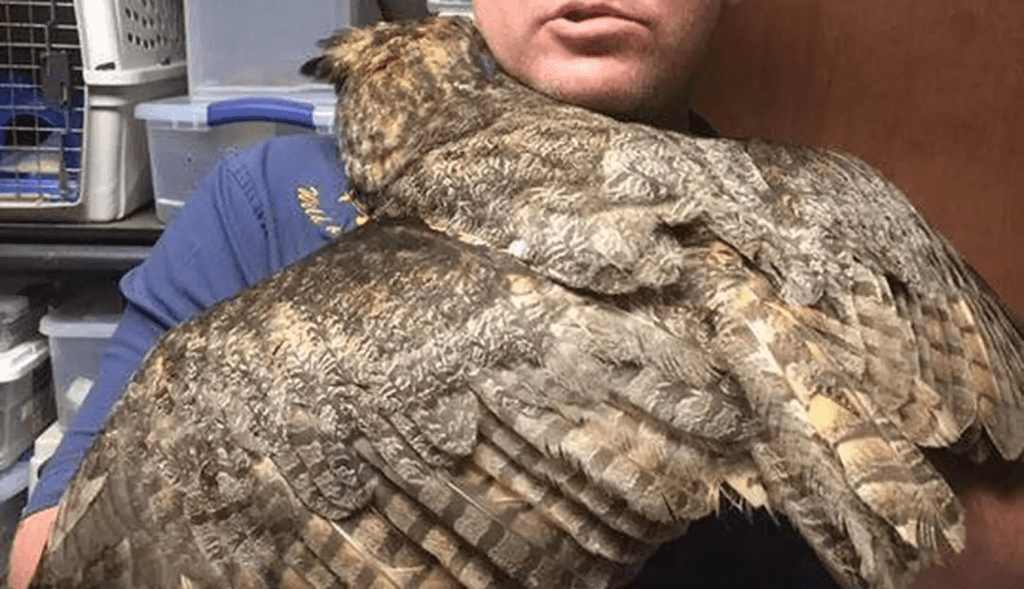
GiGi’s journey began in May, 2016 when she was brought to the Wild at Heart Rescue in Mississippi after suffering severe head trauma, likely from a car accident. She arrived with a massive concussion, weight loss, and a serious respiratory condition known as aspergillosis. Missy Dubuisson, the founder and director of Wild at Heart, described GiGi’s condition as one of the most critical the rescue had ever encountered.

Despite her dire situation, there was one person at the rescue who could help GiGi regain her strength: Douglas “Doug” Pojeky, affectionately known as the “birds of prey whisperer.” Dubuisson noted, “In all my years of working with birds of prey, I have never seen someone with such a bond with these magnificent birds.” Under Pojeky’s dedicated care, GiGi began her remarkable recovery, transitioning from a fragile state to regaining her independence.

The bond between GiGi and Pojeky deepened as she learned to trust him. When he returned from a trip to Michigan, the reunion was nothing short of magical. GiGi’s excitement was palpable; she bobbed her head and danced on his arm before making her way to his chest for a heartfelt embrace. In that moment, with her head resting on his shoulder and her wings wrapped around him, it was clear that their connection transcended words.

Pojeky shared that GiGi’s embrace held a special significance for him. Growing up, a great horned owl often perched on his family barn, a symbol of comfort and connection. On the morning of his father’s passing, that same owl was spotted overlooking their farmhouse. “For some reason when that bird was hugging me, all I could think of was my dad,” he reflected, highlighting the deep emotional ties that can exist between humans and animals.

As GiGi continued her recovery, she was eventually released back into the wild. Yet, she had Pojeky by her side—a testament to the love and compassion that can thrive even in the face of adversity. Dubuisson remarked, “It literally brings tears to my eyes to watch him interact with these birds. They absolutely know him and trust him. It’s the trust that you see in her face.”

GiGi’s story serves as a powerful reminder that every being has a spirit and that our efforts to help and protect others—whether human or animal—bring profound joy and fulfillment. Let us strive to extend our hands and hearts to those in need, for in doing so, we not only uplift others but also enrich our own lives in ways we may never fully comprehend.

Link:https://peacelilysite.com/2025/02/14/everything-has-a-spirit-the-heartwarming-tale-of-gigi-the-great-horned-owl/

Source: https://www.thedodo.com/gigi-owl-hugs-rescuer-1843393092.html

Desiderata

Go placidly amid the noise and haste,
and remember what peace there may be in silence.
As far as possible without surrender
be on good terms with all persons.
Speak your truth quietly and clearly;
and listen to others,
even the dull and the ignorant;
they too have their story.

Avoid loud and aggressive persons,
they are vexations to the spirit.
If you compare yourself with others,
you may become vain and bitter;
for always there will be greater and lesser persons than yourself.
Enjoy your achievements as well as your plans.

Keep interested in your own career, however humble;
it is a real possession in the changing fortunes of time.
Exercise caution in your business affairs;
for the world is full of trickery.
But let this not blind you to what virtue there is;
many persons strive for high ideals;
and everywhere life is full of heroism.

Be yourself.
Especially, do not feign affection.
Neither be cynical about love;
for in the face of all aridity and disenchantment
it is as perennial as the grass.

Take kindly the counsel of the years,
gracefully surrendering the things of youth.
Nurture strength of spirit to shield you in sudden misfortune.
But do not distress yourself with dark imaginings.
Many fears are born of fatigue and loneliness.
Beyond a wholesome discipline,
be gentle with yourself.

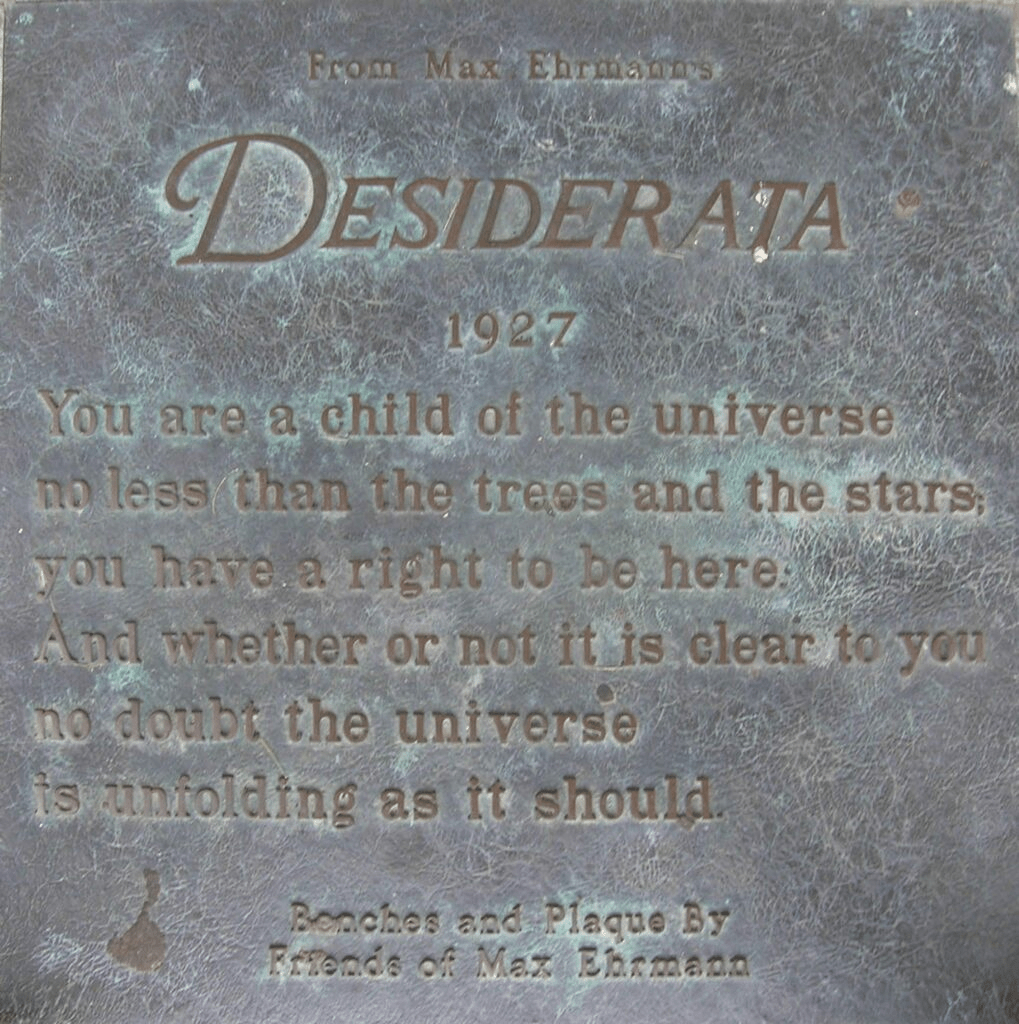
You are a child of the universe,
no less than the trees and the stars;
you have a right to be here.
And whether or not it is clear to you,
no doubt the universe is unfolding as it should.

Therefore be at peace with God,
whatever you conceive Him to be,
and whatever your labors and aspirations,
in the noisy confusion of life keep peace with your soul.

With all its sham, drudgery, and broken dreams,
it is still a beautiful world.
Be cheerful.
Strive to be happy.

Written in 1927 by American poet Max Ehrmann, Desiderata is a timeless poem that continues to inspire readers with its gentle, universal wisdom. The title, meaning “things desired” in Latin, perfectly reflects the poem’s themes of peace, authenticity, and compassion.

Ehrmann composed this prose poem to guide people in living a meaningful life. Though it gained widespread recognition only decades later, Desiderata resonates deeply with readers across generations. Its advice—such as staying calm amid chaos, embracing individuality, and showing kindness—feels especially relevant in today’s fast-paced world.

The poem also carries a spiritual undertone, encouraging acceptance of life’s challenges while celebrating its beauty. Its words remind us to live mindfully, cherish our unique paths, and find serenity in our connection to the larger universe.

In a world where noise and haste often dominate, Desiderata offers a calming presence and serves as a reminder to align our lives with values that bring lasting peace and joy. Whether you’re encountering it for the first time or revisiting its wisdom, this poem remains a meaningful touchstone for navigating modern life with grace.

Link: https://peacelilysite.com/2024/12/06/desiderata/

Source: https://www.cse.cuhk.edu.hk/~cslui/desiderata.html

I Am Me and I am Okay

I Am Me

by Virginia Satir

In all the world there is no one else exactly like me.

Everything that comes out of me is authentically mine because I choose it…

I own everything about me, my body, my feelings, my mouth, my voice, all my actions whether they be to others or to myself

I own my fantasies, my dreams, my hopes, my fears

I own all of my triumphs and successes, all of my failures and mistakes because I own all of me.

I become intimately acquainted with me by so doing, I can love me and be friendly with me in all my parts

I know there are aspects about myself that puzzle me and other aspects I do not know…

but as long as I am friendly and loving to myself, I can courageously and hopefully look for solutions to the puzzles and for ways to find out more about me…

however I look and sound whatever I say and do, and whatever I think and feel at a given moment in time is authentically me

if later some parts of how I looked, sounded, thought and felt turned out to be unfitting, I can discard that which is unfitting and keep the rest and invent something new for that which is I discard

I can see, hear, feel, think, say and do.

I have the tools to survive, to be close to others, to be productive, and to make sense and order out of the world of people and things outside of me…

I own me and therefore I can engineer me

I am me and I AM OKAY.

Satir’s beautiful and empowering poem “I Am Me” encapsulates her core belief in self-worth and individuality. Its heartfelt lines inspire readers to embrace their authentic selves, fostering inner peace and self-acceptance. Through her words, Satir invites us to celebrate who we truly are, reminding us that personal growth is both possible and transformative.

Link:https://peacelilysite.com/2024/11/25/i-am-me-and-i-am-okay/