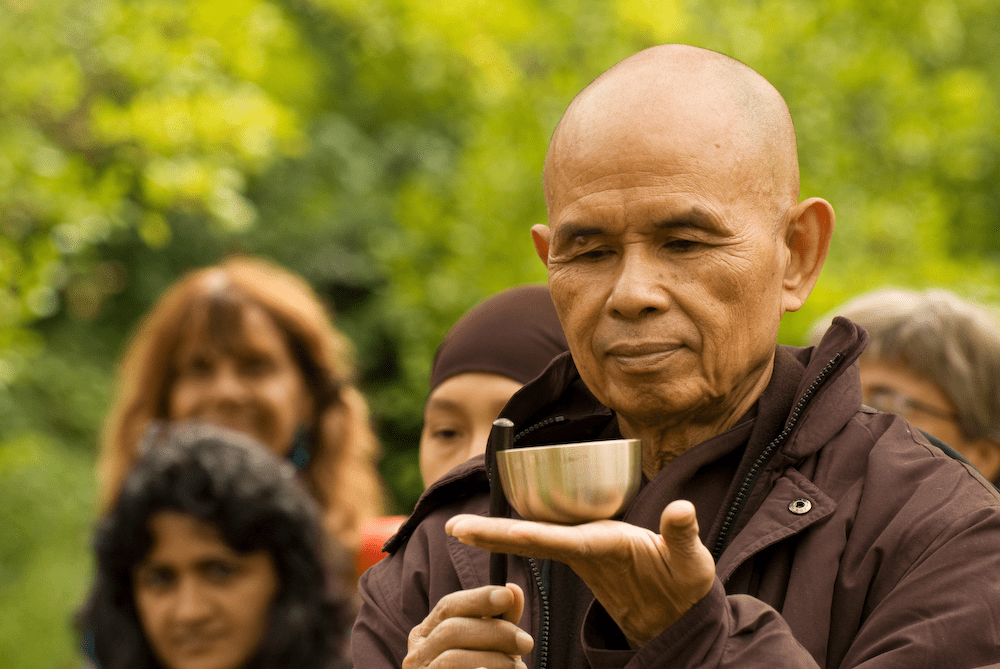
Appreciation of the Western Painting of H.H. Dorje Chang Buddha III — “The Rhythm of Water Bubbles”

A supernatural abstract color work

Through his brushwork, H.H. Dorje Chang Buddha III renders the subtle life cycle of a water bubble—its emergence, transformation, and eventual dissolution—with remarkable vitality. Though the medium is static, the painting evokes a striking sense of movement and immediacy. One almost senses the gentle drifting of bubbles across the surface, and even imagines the delicate sound that might accompany the instant when a bubble touches the ground and quietly disappears.

Beyond its visual beauty, the work carries a deeper contemplative resonance. In the fleeting rhythm of the bubbles, one cannot help but see a metaphor for the human condition. The trajectory of a bubble—from its brief formation to its silent vanishing—mirrors the arc of human life: birth, growth, aging, and departure. Life itself unfolds within the span of a breath, fragile and transient, reminding us of the importance of awareness and presence in each passing moment.

From an artistic perspective, the painting also demonstrates a remarkable command of impressionistic expression. The composition operates not only as a unified whole but also as a constellation of smaller visual worlds. Any isolated fragment of the canvas could stand independently as an exquisite impressionist study, rich in color, light, and atmosphere. This structural richness gives the work a dreamlike, almost illusory quality—where forms appear to emerge and dissolve within layers of color and movement.

In this way, the painting invites the viewer to linger, not merely to observe, but to reflect. It transforms a simple natural phenomenon into a meditation on impermanence, perception, and the delicate beauty of existence.

Click here to Wikitia page on H.H. Dorje Chang Buddha III that list major accomplishments and teachings with links.

Link: https://peacelilysite.com/2026/03/04/appreciation-of-the-western-painting-of-h-h-dorje-chang-buddha-iii-the-rhythm-of-water-bubbles/

150. The Story of Sañjīva [Sañjīva-Jātaka]

When the Buddha was in Jetavanārāma, the king Ajātasattu was friendly with Devadatta. Even though unrighteous and sinful, Ajātasattu was pleased with him. He built for Devadatta a temple in Gayāsīsa, which he gave to him. And he assisted him by giving him all the necessary perquisites. In the meantime, following Devadatta’s words, he sent the elephant NāÀāgiri to kill the Buddha and he sent bowmen to shoot at the Buddha. Many bad things such as these were done by him. After that, his father who was a very righteous king and who was one who had attained the stream entrance state of mind [sotāpanna], was killed by him through the persuasion of Devadatta.

Later, he heard that Devadatta had died and had gone to hell sinking down through the earth. On hearing this, he became afraid for his life believing that if anything happened to Devadatta, no doubt it would happen to him, too. He was very much afraid day and night. He spent the daytime in the routine activities of his daily life. But at night, when he went to bed, he dreamed that he was falling through the earth that had opened up and was shooting forth the fires of hell. From this, he became even more afraid as if he were a chicken that had its neck twisted and had been thrown into the hot sun to die. In this way, he suffered day and night despite his royal luxuries.

He had a keen interest in questioning the Buddha about the dream he was having, but he was reluctant to express that interest to Jīvaka. One day he saw the moonlight bright as if it were daylight, and he said to his minister Jīvaka, “The moonlight is so clear that one can see the distance of forty- five arrow shots as if it were daytime. It is not good to waste our time by staying here. This night is pleasant, calm, attractive, and beautiful. Let us go to a good ascetic, to someone like that, to listen to the Dhamma. I have now such an intention. Do you know to whom we can go?” The other ministers who heard him started to mention the names of the various religious masters to whom they each paid obeisance. Most of them were NigaÏæha-s. One minister said, “There is the ascetic PūraÏa Kassapa. He is a Buddha. Let us go to see him.” Another minister said, “It would be good to go to the Buddha Makkhali Gosāla.” Another minister said, “Instead of going to him, let us go to the Buddha Ajita Keśakambala.” Then some other minister wanted to go to the Buddha Kakudha Kaccāyana. After, another said, “I think it would be good to go to the Buddha Sañjaya Belaææhiputta.” The sixth one said, “I suggest that more than any other Buddha, NigaÏæha Nāthaputta is the best one to whom to go.”

In this way, all the ministers said what they thought, mentioning various NigaÏæha-s, all of who were like children [with regard to spiritual advancement]. The king did not listen to them seriously, thinking, “No doubt Jīvaka will respond  to  my  question.”   But  Jīvaka  was  silent.

Understanding his silence, the king addressed Jīvaka. He asked, “Jīvaka, these people are all praising their own Buddha-s whom each of them follows. Why do you not say something? Do you have no such a Buddha?”

Jīvaka heard this and got up from his seat. He paid respect toward the direction in which the Buddha was, and he recited the nine-fold virtuousness of the Buddha. He said, “Such a virtuous, omnipresent one is now living in my mango park followed by 1,800 monks. Therefore, I suggest that it would be good for your lordship to go there.”

On listening to him, the king said, “It is wonderful. Let us go there.” And he made arrangements to go there by elephants together with his retinue. He went to the Buddha in royal magnificence. He approached the Buddha’s residence and dismounted his elephant. He then came to the followers of the Buddha who were wearing neat and clean clothes, who had tranquil faculties, who all were seated still with arms and feet close to their bodies, and of whom not even one sneezed or coughed. He was very pleased by seeing this. First he paid his respects to the monks, and then to the Buddha. He sat down and said, “Sir, I would like to ask a question.” “Well, your lordship, ask your question.” Then the king said, “Venerable sir, what is the result that one can gain by being a monk?” The Buddha said the discourse called the Sāmaññaphala Sutta divided into two sections [bhāÏavāra-s] and into 500 points to be explained [grantha-s].23

After this preaching, Ajātasattu knelt down in the presence of the Buddha to pay his respect and said, “Revered sir, please excuse my wrong deeds that I have done out of ignorance.” Buddha accepted his apology, and the king went away.

Then the Buddha addressed the monks, saying, “Oh monks, this King Ajātasattu by being associated with a bad person both killed his father and at the same time ruined his chance for future salvation. If he did not do so, he would today be one who has entered into the stream entrance state of mind [sotāpanna].”

The next day, the monks assembled in the preaching hall were discussing how King Ajātasattu had lost his good fortune to become a Sotāpanna. The fully enlightened one entered the preaching hall then and asked the monks, “Oh monks, what were you discussing before I came here?” The monks mentioned the previous day’s incident. And the Buddha said, “Oh monks, not only in this life but even in the past, Ajātasattu by associating with evil ones created for himself misfortune.” The monks invited the Buddha to disclose the past story.

“At one time, when King Brahmadatta was ruling in Benares, the Enlightenment Being was born in a Brahmin family in that city. When he was grown, he went to a well- known teacher who used to teach in the city and began to study under him. After studying under him, he started to teach students on his own.

“While he was teaching students like this, he had a student named Sañjīvaka. He taught him a spell that could be used to bring the dead to life. And when they gain life, they can walk—but only a short distance. He did not teach him the spell to immobilize them if they come near.

“Once, that student went with a group of other students to fetch firewood from the forest. On their way, they saw a dead tiger on the ground. Sañjīvaka said to the other students, ‘Do you want to see my power? I will bring this tiger back to life.’ The other students said, ‘How can you bring a dead being back to life? It will never happen.’ Sañjīvaka said, ‘Just look at what I do.’ And he started to recite the spell. The other students said, ‘Who knows what will happen!’ And they climbed up trees.

“While Sañjīvaka was repeating the spell, he threw some pebbles toward the dead body of the tiger. When he was throwing the pebbles, the tiger started to get up. He came forward, and jumping up on the very person who was chanting the spell, he killed him. The tiger that had been brought back to life also fell dead at that spot.

“The other students collected the firewood and returned to where they were studying. They told the teacher what had happened. On hearing the news, the teacher said to the students, “It is not good to help an evil friend. If you do so, such is the result.” And he advised them to live generous and peaceful lives. He himself lived such a life, did many meritorious deeds, and acquired much merit. At the end of his life he died, and was born in heaven.

“Sañjīvaka was King Ajātasattu at that time. The teacher of Benares was I who have become the Buddha.” In this way, the Buddha ended the story of Sañjīva.

23 The Sāmaññaphala Sutta is to be found in the Dīghanikāya, but it is not divided there into two sections.

The moral: “Choose your friends wisely.”

150. The Story of Sañjīva [Sañjīva-Jātaka]

Link: https://hhdorjechangbuddhaiiiinfo.com/2026/01/27/150-the-story-of-sanjiva-sanjiva-jataka/

#Buddhisttalesforyoungandold #Buddhiststories #storiesforkids #moralstories #Buddha #Jatakastories #PansiyaPanasJataka #JatakaTalesofSakyamuniBuddha #JatakaTales #SakyamuniBuddha’sPast

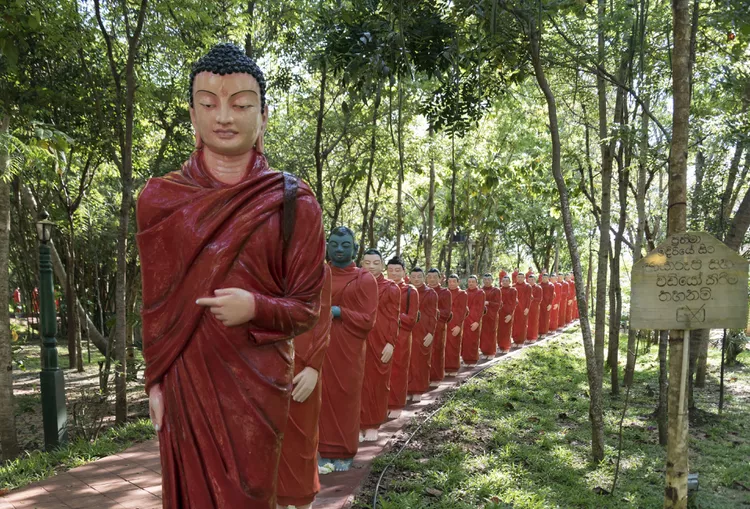
What Is an Arhat or Arahant in Buddhism?

By Barbara O’Brien

In early Buddhism, an arhat (Sanskrit) or arahant (Pali) — “worthy one” or “perfected one” — was the highest ideal of a disciple of the Buddha. He or she was a person who had completed the path to enlightenment and achieved nirvana. In Chinese, the word for arhat is lohan or luohan.

Arhats are described in the Dhammapada:

“There is no more worldly existence for the wise one who, like the earth, resents nothing, who is firm as a high pillar and as pure as a deep pool free from mud. Calm is his thought, calm his speech, and calm his deed, who, truly knowing, is wholly freed, perfectly tranquil and wise.” [Verses 95 and 96; Acharya Buddharakkhita translation.]

In early scriptures, the Buddha is sometimes also called an arhat. Both an arhat and a Buddha were considered to be perfectly enlightened and purified of all defilements. One difference between an arhat and a Buddha was that a Buddha realized enlightenment on his own, while an arhat was guided to enlightenment by a teacher.

In the Sutta-pitaka, both the Buddha and arhats are described as being perfectly enlightened and free from fetters, and both achieve nirvana. But only the Buddha is the master of all masters, the world teacher, the one who opened the door for all others.

As time went on, some early schools of Buddhism proposed that an arhat (but not a Buddha) might retain some imperfections and impurities. Disagreement over the qualities of an arhat may have been the cause of early sectarian divisions.

The Arahant in Theravada Buddhism

Today’s Theravada Buddhism still defines the Pali word arahant as a perfectly enlightened and purified being. What, then, is the difference between an arahant and a Buddha?

Theravada teaches there is one Buddha in each age or eon, and this is the person who discovers the dharma and teaches it to the world. Other beings of that age or eon who realize enlightenment are arahants. The Buddha of the current age is, of course, Gautama Buddha, or the historical Buddha.

The Arhat in Mahayana Buddhism

Mahayana Buddhists may use the word arhat to refer to an enlightened being, or they may consider an arhat to be someone who is very far along the Path but who has not yet realized Buddhahood. Mahayana Buddhist sometimes use the word shravaka — “one who hears and proclaims” — as a synonym for arhat. Both words describe a very advanced practitioner worthy of respect.

Legends about sixteen, eighteen, or some other number of particular arhats can be found in Chinese and Tibetan Buddhism. It is said these were chosen by the Buddha from among his disciples to remain in the world and protect the dharma until the coming of Maitreya Buddha. These arhats are venerated in much the same way Christian saints are venerated.

Arhats and Bodhisattvas

Although the arhat or arahant remains the ideal of practice in Theravada, in Mahayana Buddhism the ideal of practice is the bodhisattva — the enlightened being who vows to bring all other beings to enlightenment.

Although bodhisattvas are associated with Mahayana, the term originated in early Buddhism and can be found in Theravada scripture as well. For example, we read in the Jataka Tales that before realizing Buddhahood, the one who would become the Buddha lived many lives as a bodhisattva, giving of himself for the sake of others.

The distinction between Theravada and Mahayana is not that Theravada is less concerned with the enlightenment of others. Rather, it has to do with a different understanding of the nature of enlightenment and the nature of the self; in Mahayana, individual enlightenment is a contradiction in terms. 

Link: https://www.learnreligions.com/arhat-or-arahant-449673

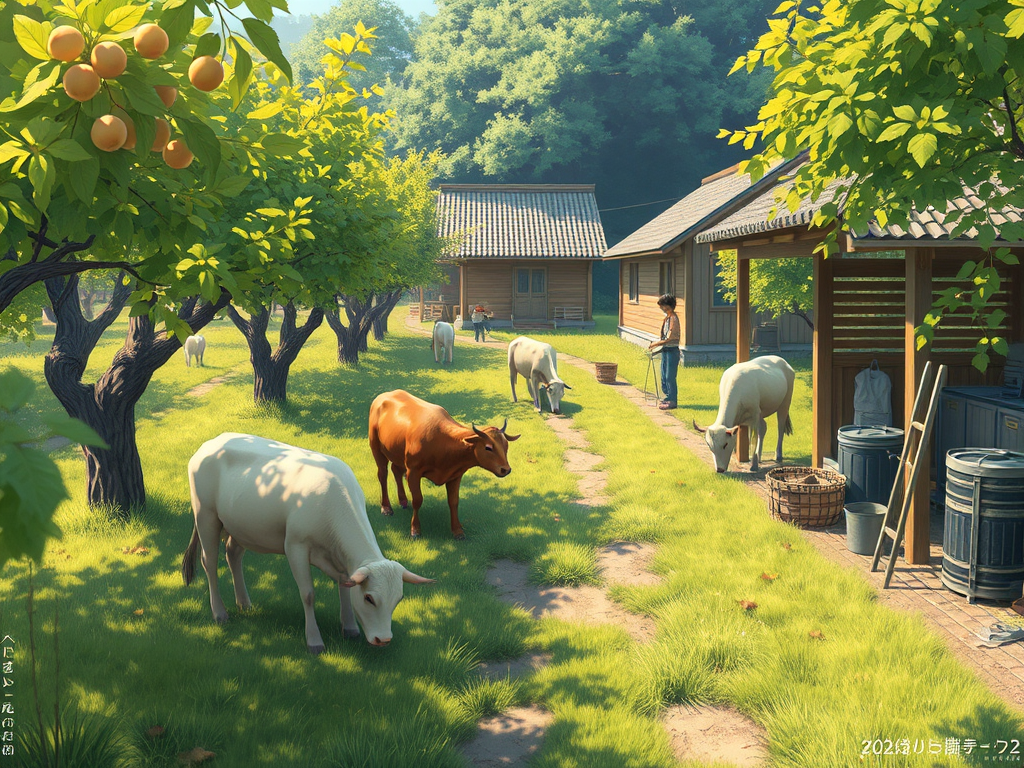
Reintroducing Biological Partnerships in Modern Orchards: A Design Question for the Future

There was a time when fruit trees did not stand alone. Animals grazed beneath them. Nutrients cycled in place. Fallen fruit did not represent waste; it became feed. Manure did not represent disposal; it became fertility. Pest cycles were interrupted not only by intervention, but by interaction.

Then agriculture specialized.

Livestock and orchards separated. Nutrients began arriving in bags. Pest control came in formulated products. Management became cleaner, more legible, more optimized.

It also became more linear.

What we gained in control, we may have lost in biological depth.

From a systems perspective, an orchard is not simply a collection of perennial plants. It is a layered biological network: canopy, understory, soil microbiome, arthropods, vertebrates, fungi.

When livestock were integrated into orchards historically, they were not an accessory enterprise. They were functional components of nutrient cycling, disturbance regimes, and trophic interactions.

Consider the ecological functions grazing animals can perform:

  • Nutrient redistribution: Manure and urine return nitrogen, phosphorus, potassium, and micronutrients in biologically active forms.
  • Organic matter incorporation: Hoof action and plant residue trampling stimulate microbial decomposition.
  • Pest and disease interruption: Consumption of fallen fruit can reduce overwintering sites for insects and pathogens.
  • Vegetation management: Targeted grazing suppresses competitive groundcover while maintaining living roots.

These are not romantic ideas. They are biophysical processes.

When we removed animals, we did not eliminate these functions. We replaced them — typically with fossil-energy-dependent inputs and mechanical disturbance.

The system still performs the same tasks. It just performs them differently.

Modern orchard systems are remarkable in their productivity. Precision irrigation, fertigation, canopy management, rootstock optimization — these advances have dramatically increased yields per hectare.

But specialization also reduces functional redundancy — a core principle in ecological resilience theory.

In complex ecosystems, multiple organisms often perform overlapping roles. If one pathway fails, another compensates. This redundancy stabilizes the system under disturbance.

In simplified agricultural systems, functions are often concentrated:

  • Fertility depends on external nutrient supply.
  • Weed suppression depends on mechanical or chemical control.
  • Pest management depends on targeted interventions.
  • Revenue depends primarily on fruit yield.

When external inputs become more expensive or less reliable, or when climate volatility increases stress on tree physiology, the system has fewer internal buffers.

This is not a moral critique of modern agriculture. It is a structural observation.

Linear systems are efficient under stable conditions. Networked systems are resilient under variable conditions.

And we are entering an era defined by variability.

Rising temperature variability, altered precipitation patterns, and increased pest pressure are not hypothetical future risks — they are present design constraints.

Under these conditions, resilience becomes a measurable asset.

Integrated orchard grazing introduces additional biological actors into the system. That increases management complexity — but it also increases adaptive capacity.

Well-managed integration can:

  • Increase soil carbon inputs and aggregation, improving water infiltration and retention.
  • Enhance microbial diversity, which is linked to nutrient cycling efficiency and plant health.
  • Diversify farm income streams, reducing economic exposure to single-crop failure.
  • Reduce reliance on imported fertility and weed control inputs.

None of these effects are automatic. Poorly managed integration can cause compaction, tree damage, or nutrient imbalance.

The point is not that integration is inherently superior.

The point is that biological partnerships expand the design space.

We now have tools that earlier farmers did not:

  • Rotational grazing models informed by soil science.
  • Electric fencing and mobile infrastructure.
  • Precision nutrient monitoring.
  • Data analytics to track soil carbon and productivity outcomes.

In this light, animals are not nostalgic additions. They are distributed biological processors — converting biomass into fertility, interrupting pest cycles, and activating soil life.

Complex systems are not messy by accident. They are structured networks of interaction.

The question is whether we are willing to design orchards as ecological networks again — not just as input-responsive production platforms.

That may require more than improved inputs.

It may require rebuilding functional relationships between trees, animals, soil organisms, and farmers.

Not because it is traditional.

But because complex systems absorb shocks that simplified systems cannot.

And resilience, increasingly, is the most valuable yield of all.

Link:https://peacelilysite.com/2026/03/02/reintroducing-biological-partnerships-in-modern-orchards-a-design-question-for-the-future/

A Hopeful Skeptic

By Jamil Zaki

According to an ancient myth, hope arrived on earth as part of a curse. Prometheus stole fire from the gods, and Zeus avenged the theft with a “gift.” He commanded Hephaestus to mold the first woman, Pandora, and presented her to Prometheus’s brother. Pandora, in turn, was given a clay jar—which Zeus told her never to open. Curiosity got the better of her, she lifted the lid, and out flew all the world’s ills: sickness and famine for our bodies, spite and envy for our minds, war for our cities. Realizing her mistake, Pandora slammed the jar shut, leaving only hope trapped inside.

But what was it doing there in the first place, alongside our miseries? Some people believe hope was the jar’s only good, and trapping it further doomed us. Others think it fits in perfectly with the other curses. The philosopher Friedrich Nietzsche called hope “the most evil of evils because it prolongs man’s torment.” You might agree. Hope has been typecast as delusional and even toxic—causing people to ignore their problems and the world’s.

Scientists think of hope differently. The psychologist Richard Lazarus wrote, “To hope is to believe that something positive, which does not presently apply to one’s life, could still materialize.” In other words, hope is a response to problems, not an evasion of them. If optimism tells us things will get better, hope tells us they could. Optimism is idealistic; hope is practical. It gives people a glimpse of a better world and pushes them to fight for it.

Any of us can practice hope. [My friend] Emile did. He saw the same world most of us do, but instead of retreating into cynicism, he chose to work for peace, build community, and live his principles. To me and many who knew him, Emile’s positivity seemed supernatural. Temperament, experience, will, or some alchemy of all three graced him with a mind and a heart many of us could learn from. Through dozens of tearful, grateful conversations, I gained a deeper understanding of who Emile was and how he got that way. Emile pursued peace the way doctors pursue healing. If illnesses are aberrations in the body’s function, Emile saw conflict and cruelty as diseases of social health. He and his colleagues diagnosed the triggers that inspire hatred, and then designed psychological treatments to reduce conflict and build compassion.

One powerful tool he used to fight cynicism was skepticism: a reluctance to believe claims without evidence. Cynicism and skepticism are often confused for each other, but they couldn’t be more different. Cynicism is a lack of faith in people; skepticism is a lack of faith in our assumptions. Cynics imagine humanity is awful; skeptics gather information about who they can trust. They hold on to beliefs lightly and learn quickly. Emile was a hopeful skeptic, combining his love of humanity with a precise, curious mind.

This mindset presents us with an alternative to cynicism. As a culture, we are so focused on greed, hatred, and dishonesty that humanity has become criminally underrated. In study after study, most people fail to realize how generous, trustworthy, and open-minded others really are. The average person underestimates the average person.

If you’re anything like the average person, this hides some good news: People are probably better than you think. By leaning into skepticism—paying close attention rather than jumping to conclusions—you might discover pleasant surprises everywhere. As research makes clear, hope is not a naive way of approaching the world. It is an accurate response to the best data available. This is a sort of hope even cynics can embrace, and a chance to escape the mental traps that have ensnared so many of us.

Cynicism often boils down to a lack of good evidence. Being less cynical, then, is simply a matter of noticing more precisely. I hope we can witness the good in others and work toward the world most of us want. The cynical voice inside each of us claims that we already know everything about people. But humanity is far more beautiful and complex than a cynic imagines, the future far more mysterious than they know. Cynicism is a dirty pair of glasses more of us put on each year. But we can take them off. We might be astonished by what we find.

Link:https://peacelilysite.com/2026/02/28/a-hopeful-skeptic/

Source: https://www.awakin.org/v2/read/search.php

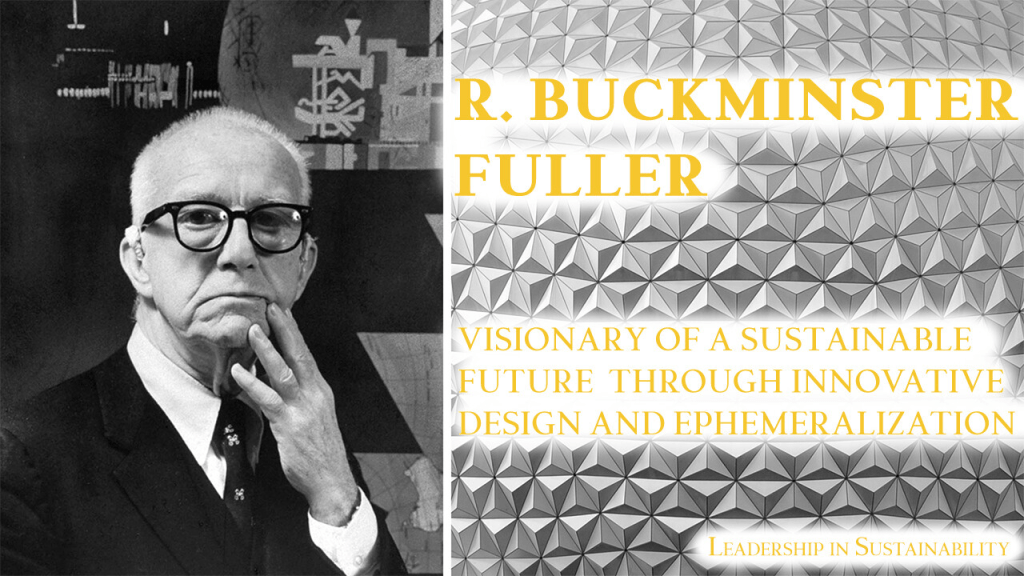
Building a World That Works for Everyone

Inspired by Buckminster Fuller

“It is now highly feasible to take care of everybody on Earth at a ‘higher standard of living’ than any have ever known. It no longer has to be you or me. Selfishness is unnecessary and henceforth unrationalizable as mandated by survival.”
— Buckminster Fuller

These words, spoken decades ago, feel more relevant today than ever before.

We live in a time of extraordinary technological advancement. We can communicate instantly across continents. We can grow food more efficiently than at any other time in history. We have the scientific knowledge and global infrastructure necessary to ensure that every human being has access to clean water, nourishment, shelter, education, and healthcare.

And yet, division persists. Scarcity thinking dominates. Nations compete. Individuals hoard. Systems prioritize profit over people.

Buckminster Fuller saw clearly what many still struggle to accept: the world already has enough. The issue is not capacity—it is consciousness.

For centuries, humanity operated under survival-based thinking. Resources seemed limited. Expansion required conquest. Security demanded competition. But Fuller argued that we have entered a new era—an era where cooperation is not only morally preferable, but practically possible.

Today, it is technologically feasible to care for everyone on Earth. Renewable energy can power entire regions. Regenerative agriculture can restore depleted soil. Global collaboration can solve complex problems faster than any single nation working alone.

What prevents us from realizing this potential is not a lack of tools—it is a lack of shared vision.

To build a world that works for everyone, we must shift from isolation to interconnection.

Every action we take ripples outward. The food we purchase affects farmers and ecosystems. The words we speak shape emotional climates. The values we teach our children become the architecture of tomorrow’s society.

A conscious world begins with conscious individuals.

It begins when we recognize that no one truly thrives while others suffer. It begins when we see that compassion is not weakness—it is intelligent design for humanity’s future.

Fuller’s statement—“It no longer has to be you or me”—is revolutionary. For much of history, survival appeared to demand winners and losers. But in a globally connected civilization, that paradigm is outdated.

Environmental collapse in one region affects the whole planet. Economic instability spreads across borders. Violence anywhere diminishes humanity everywhere.

Likewise, innovation anywhere uplifts humanity everywhere. Kindness anywhere restores hope everywhere.

The future no longer belongs to competition alone. It belongs to collaboration.

Our mission to cultivate a more conscious, interconnected world is not idealistic—it is realistic.

It asks us to:

  • Think beyond personal gain.
  • Support systems that uplift the many, not just the few.
  • Practice compassion in daily life.
  • Align innovation with wisdom.
  • Remember that humanity shares one home.

The tools are here. The knowledge is here. The opportunity is here.

What remains is our collective choice.

Will we cling to outdated models of fear and separation?
Or will we step into the maturity of cooperation and shared flourishing?

Buckminster Fuller believed humanity was capable of making that leap. The question now is whether we are ready to live up to that possibility.

The future is not something that happens to us.
It is something we consciously create—together.

Link:https://peacelilysite.com/2026/02/26/building-a-world-that-works-for-everyone/

When the Miraculous Manifests: A Testament to Supreme Realization

The president of the International Zhengfa Buddhist Institute, Layman Zheng Zhenhuang, a Taiwanese who served for many years as the head of Huiju Publishing House, and who also worked as an on-site interpreter for Tenzin Gyatso (the Dalai Lama), is a deeply devoted Buddhist practitioner. He has accumulated profound merit through his sincere dedication to Buddhist affairs and is known as a filial son.

In order to help his father quickly attain rebirth in a Buddha-land, he, together with Dharma Master Guangxin and others, journeyed across rugged mountains and snowy grasslands to seek an audience with the Great Dharma King Yangwo Yeshe Norbu (H.H. Dorje Chang Buddha III), the supreme Vajrayana upholder.

Before the Great Dharma King (H.H. Dorje Chang Buddha III) knelt three Rinpoches, twelve Dharma masters, over twenty virtuous lay practitioners including Zheng Zhenhuang, as well as dakinis, Dharma protectors, and various visible and invisible beings. At that time, the Great Dharma King announced:

“Now that you have come, nothing is more important than liberating the deceased. The deliverance of Zhenhuang’s father will be presided over by Vajravārāhī A Wang Norbu Pamu. Though she is thousands of miles away, she will use the miraculous powers of Buddhadharma to draw your father’s conscious spirit into her mandala. Within three days, he will be sent to the Western Pure Land of Ultimate Bliss, attaining rebirth at the middle grade of the middle level. Later, when you watch the video and look at the sky, you will know.”

After speaking, the Great Dharma King took out a videotape of Pamu’s Dharma image and said:

“First, you must understand how great Pamu is. Watch this tape.”

Layman Zhenhuang personally rewound the tape and operated the machine himself. As everyone watched, they repeatedly exclaimed that the merit was immeasurable and inconceivable. The true form of Vajravārāhī manifested—how could it possibly resemble an ordinary worldly appearance? It was incomparably majestic and solemn.

An alliance of eighty-three universities in the United States and around the world had jointly conferred upon Pamu the world’s first and only Triple-Body Doctorate along with the highest Golden Crown and Royal Robe. Seated upon the Dharma throne, Pamu received the certificate, the doctoral royal robe, and a diamond-studded golden crown valued at over twenty million U.S. dollars. These were presented after the American conferral chairman, the British vice chairman, and great living Buddhas performed formal prostrations.

Wearing the diamond crown, Pamu gave a teaching:

“Although you have done much, I will not say thank you. For me, this is merely a skillful means in carrying out Dharma activities. In truth, all conditioned phenomena are illusory and unreal, just like your bodies. Though they appear to exist, they are falsely existent—unreal.”

At that very moment, the diamond crown atop Pamu’s head suddenly vanished—in less than a hundredth of a second, it disappeared without a trace. When she then said she would bestow blessings upon everyone, the diamond crown instantly reappeared on her head. The chairmen and the great Rinpoches witnessed this transformation of impermanence in a single instant. Hearing her profound exposition of ultimate truth, their discursive thoughts were stilled, wisdom opened suddenly, and all generated the Mahayana bodhicitta.

After the viewing, Layman Zhenhuang removed Pamu’s Dharma-image tape from the camera, wrapped it in a khata (ceremonial scarf), and hung it around his neck for blessing.

At that moment, the Great Dharma King (H.H. Dorje Chang Buddha III) instructed him to immediately write out his father’s birth data. Then Layman Zhenhuang took from his pocket a brand-new, unused videotape and recorded the birth information along with the scene of the Rinpoches, Dharma masters, monks, nuns, and lay disciples present. After filming, he removed that newly recorded tape and placed it securely in his jacket pocket.

The Great Dharma King (H.H. Dorje Chang Buddha III) then pointed to the Pamu tape hanging around Zhenhuang’s neck and said:

“Pamu possesses unsurpassed merit. She is the great and compassionate Holy Mother. Now, through the great miraculous powers of Buddhadharma, Pamu has gathered all the images you just recorded into the Dharma tape hanging around your neck.”

Though everyone held the Great Dharma King (H.H. Dorje Chang Buddha III) in the highest respect, several people harbored serious doubts. They had just watched Pamu’s tape from beginning to end and had seen none of the present assembly in it. Moreover, after playing it, Zheng had hung it around his neck without removing it even for a second. The newly recorded tape had been kept separately in his pocket—how could its images possibly enter the tape around his neck?

The Great Dharma King then said:

“Watch Pamu’s tape again.”

Zheng removed the tape from his neck, rewound it the same way, and played it a second time. Instantly, everyone exclaimed in unison, “Wow!” They were stunned and deeply moved. The entire scene that had just been recorded—and was still in Zheng’s pocket—now appeared clearly and identically on Pamu’s tape. They played it a third time; it remained perfectly clear and unchanged.

Most crucially, after the first viewing, Pamu’s tape had not come into contact with any machine. Everyone had seen Zheng hang it around his neck immediately, without it leaving him for even a second. How could completely unrelated footage have entered that tape? The true Buddhadharma is profoundly great and wondrous—whether radio waves, cables, computers, or anything in the universe, all realms can transform in accordance with the mind.

After watching again, the tape remained in the machine. The Great Dharma King (H.H. Dorje Chang Buddha III) then said:

“Now I request Pamu to gather your father and everyone’s images into her Dorje mandala for blessing.”

With just that sentence, they played the tape a fourth time. The clear scenes of the assembly had vanished without a trace, leaving only Pamu’s original footage. At that moment, Rinpoche Bodi Wentu shouted:

“Everyone, look! There is Buddha-light in the sky!”

All present saw multicolored Buddha-light flashing across the boundless heavens, radiating warm streams of blessing upon the assembly. They were filled only with awe and praise. Pamu had indeed gathered them for blessing—only their images had been removed; Pamu’s own image remained as before.

The Great Dharma King (H.H. Dorje Chang Buddha III) then said:

“I will convey a few words from Pamu to you. These are also my words: When miraculous powers manifest, once the event has passed, let it pass. Do not cling to it. It should be understood as illusion, encompassed by emptiness. Therefore, one should give rise to the mind without abiding anywhere. If you have the opportunity, study my ‘The Supreme and Unsurpassable Mahamudra of Liberation,’ and everything will become clear.”

After speaking, the Great Dharma King (H.H. Dorje Chang Buddha III) closed his eyes and remained unmoving.

You may reflect on this: in today’s world, who possesses such realization and spiritual attainment? You may ask Layman Zheng. He has encountered many great Rinpoches and Dharma masters, and especially has had deep karmic connections translating Dharma for the Dalai Lama. If any other Dharma King possessed such realization, he would surely have sought the Dalai Lama’s assistance. He would not have crossed mountains and grasslands to seek this Great Dharma King to liberate his father.

More importantly, this Great Dharma King (H.H. Dorje Chang Buddha III) is untouched by worldly fame and profit. His Dharma virtue rises to lofty peaks, transcending past and present. He is supremely proficient in both the Exoteric and Esoteric teachings and the Tripiṭaka, and is a great upholder of Buddhadharma in today’s world. Thus, his correction of the treatises attributed to Bodhidharma is an invaluable treasure, worthy of the utmost reverence and study. You should also read The Essence of Buddhadharma, recorded by Venerable Guangxin. Only after reading and realizing will you truly understand. To say more would be of little use—let it end here.

(This post is translated and excerpted from the preface to On Correcting the Treatises of Patriarch Bodhidharma, written by Lama Dorje Losang for your reference only. For the original Chinese version, please click here.)

Click here to Wikitia page on H.H. Dorje Chang Buddha III that list major accomplishments and teachings with links.

Link:https://peacelilysite.com/2026/02/26/when-the-miraculous-manifests-a-testament-to-supreme-realization/

Walking for Peace: A Call for Moral Leadership Today

In a world shadowed by war, polarization, and a visible crisis of character among national leaders, many people feel a quiet but persistent sense of moral drifting. We watch the headlines, we hear the rhetoric, and we wonder: Where is the steady compass that points us toward what is right?

At this crossroads, political strategies alone are not enough. What we urgently need is moral leadership.

History reminds us what that looks like. Martin Luther King Jr. transformed American society not by deepening divisions, but by calling a fractured nation back to its highest values. His authority did not come from force, wealth, or position. It came from moral clarity. He appealed to conscience. He awakened compassion. He united people under the banner of shared human dignity.

Today, facing new global conflicts and cultural tensions, we must ask again: Where will the next wave of moral authority arise?

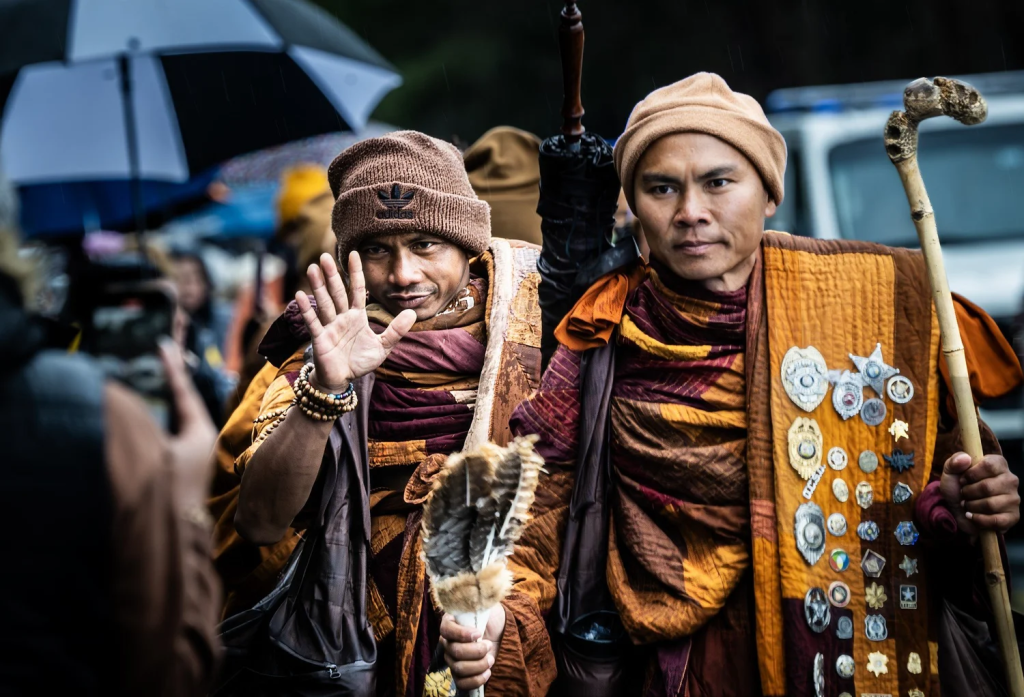
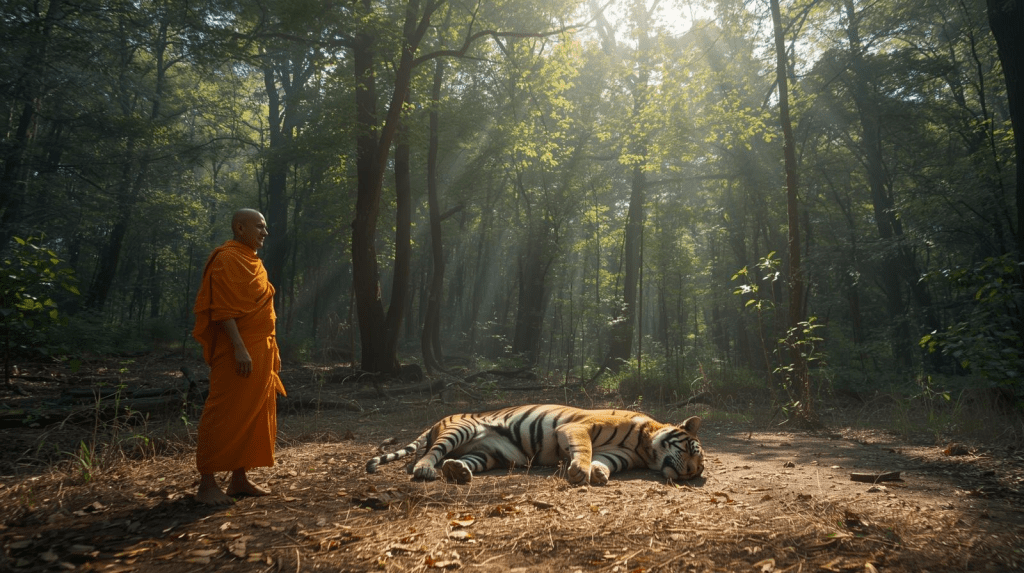
Buddhist monks walking in silence, carrying a powerful message of peace and mindfulness. (Handout photo)

Recently, about twenty monks completed a 108-day walking journey for peace. Their pilgrimage was not a political campaign. It was not a media spectacle. It was a living embodiment of mindfulness and compassion in action. Step by step, through towns and cities, they carried a quiet message: peace is not merely an agreement signed on paper—it is a way of walking through the world.

In a society saturated with noise, outrage, and endless commentary, their disciplined silence spoke volumes. Their presence offered a visual reminder that true leadership begins with inner cultivation. When we lead with anger, we multiply conflict. When we lead with compassion, we create space for healing.

This is where Buddhist wisdom offers a profound contribution. Rooted in great compassion, loving-kindness, and deep self-reflection, the Buddhist path teaches that personal transformation and public responsibility are inseparable. A leader who has not mastered their own mind cannot bring harmony to others.

Across North America, millions now identify with Buddhist teachings, making it one of the most influential spiritual communities in the region. This growing presence brings an essential perspective to our troubled era—one that emphasizes empathy for all who suffer and reverence for every form of life.

Within this tradition, many look to Dorje Chang Buddha III as an example of moral leadership. Having lived in the United States for more than two decades, he has been recognized internationally for humanitarian and charitable work. His honors include the World Peace Prize, the Presidential Gold Medal, the Dr. Martin Luther King Jr. Legacy Award, and even a resolution passed in the United States Senate in recognition of his contributions.

Yet perhaps more powerful than any award is his response to recognition. In an age driven by ego and self-promotion, he has expressed a vow of radical humility:

“I will bear all of the karmic offenses committed by living beings, and I will give everyone all of the good karma and merit that I plant.”

Whether one interprets this statement spiritually or symbolically, its moral essence is clear: a true leader does not seek to accumulate praise or advantage. A true leader seeks to shoulder responsibility and give benefit.

This is the kind of leadership our world desperately needs.

Moral leadership is not confined to one religion, culture, or tradition. It can be expressed through Judeo-Christian ethics, Buddhist compassion, or any path that places the common good above personal ambition. What matters is the heart behind the action.

If we are to navigate the challenges of our era, the answer will not come solely from policy, power, or popularity. It will come from conscience.

And perhaps the real invitation is not only to seek moral leaders—but to become them, each in our own sphere of influence.

Link:https://peacelilysite.com/2026/02/19/walking-for-peace-a-call-for-moral-leadership-today/

My Final Shareholder Letter

By Warren Buffett

One perhaps self-serving observation. I’m happy to say I feel better about the second half of my life than the first. My advice: Don’t beat yourself up over past mistakes – learn at least a little from them and move on. It is never too late to improve. Get the right heroes and copy them. You can start with Tom Murphy; he was the best.

Remember Alfred Nobel, later of Nobel Prize fame, who – reportedly – read his own obituary that was mistakenly printed when his brother died and a newspaper got mixed up. He was horrified at what he read and realized he should change his behavior.

Don’t count on a newsroom mix-up: Decide what you would like your obituary to say and live the life to deserve it.

Greatness does not come about through accumulating great amounts of money, great amounts of publicity or great power in government. When you help someone in any of thousands of ways, you help the world. Kindness is costless but also priceless. Whether you are religious or not, it’s hard to beat The Golden Rule as a guide to behavior.

I write this as one who has been thoughtless countless times and made many mistakes but also became very lucky in learning from some wonderful friends how to behave better (still a long way from perfect, however). Keep in mind that the cleaning lady is as much a human being as the Chairman.

Link:https://peacelilysite.com/2026/02/18/my-final-shareholder-letter/

Finding Your North Star: A Guide to the Five Mindfulness Trainings

In a world that often feels fragmented and fast-paced, many of us are searching for a compass—a way to live that feels both grounded and deeply ethical. Thich Nhat Hanh, the beloved Zen Master and founder of the Plum Village tradition, offered exactly that through the Five Mindfulness Trainings.

These aren’t rigid “commandments” or a list of “don’ts.” Instead, they are a modern, proactive framework for cultivating peace, protecting life, and nurturing happiness within ourselves and the world.

At their core, the trainings are a reinterpretation of traditional Buddhist precepts, designed for our modern, interconnected lives.

  1. Reverence for Life This training is an invitation to cultivate compassion. It’s about more than just avoiding harm; it’s about actively protecting life and practicing nonviolence toward ourselves, our neighbors, and the natural world.
  2. True Happiness We often chase wealth or fame, thinking they are the keys to joy. This training reminds us that true happiness is found in generosity and the ability to be content in the present moment. It encourages us to live simply and avoid exploiting others.
  3. True Love In our relationships, integrity is everything. This training emphasizes responsibility and ensures that our most intimate connections are grounded in deep love, commitment, and respect for the harmony of families.
  4. Loving Speech and Deep Listening Communication is a powerful tool for healing. By practicing deep listening without judgment and using speech that inspires hope and reconciliation, we can move mountains of misunderstanding and alleviate the suffering of those around us.
  5. Nourishment and Healing What we “consume” isn’t just food. It’s the media we watch, the conversations we have, and the substances we use. This training focuses on mindful consumption to protect our mental and physical well-being from toxins and despair.

The beauty of the Five Mindfulness Trainings lies in how they address the complexities of the 21st century.

  • Interbeing: They are rooted in the understanding that we are not separate entities. What happens to the Earth happens to us. When we heal ourselves, we heal the world.
  • Universal Ethics: While born from Buddhist wisdom, these trainings are non-sectarian. They are accessible to anyone, regardless of their religious or spiritual background.
  • Transformation over Rules: This is an ongoing practice. The goal isn’t “perfection” but a continuous, mindful process of shifting our focus from self-interest to collective well-being.
  • Sangha (Community) Support: We don’t have to do this alone. These trainings are often practiced within a Sangha, a community of friends who support each other in staying mindful and compassionate.

The Five Mindfulness Trainings are a gift—a map that leads us back to our best selves. By embracing these guidelines, we contribute to a collective awakening, one mindful breath and one compassionate action at a time.

“The Five Mindfulness Trainings are the most concrete way to practice mindfulness. They show us how to live our lives in a way that brings peace and happiness to ourselves and to others.” — Thich Nhat Hanh

Link:https://peacelilysite.com/2026/02/16/finding-your-north-star-a-guide-to-the-five-mindfulness-trainings/