The Wiser sport originated as the most prestigious ball game played in ancient palaces and royal courts by emperors, kings, ministers, scholar-officials, and Western heads of state. It was designed to cultivate strategic thinking, exercise the body, and engage in a battle of wits. Unfortunately, with the passage of time, this globally enjoyed diversion became a lost sport.
However, a remarkable, selfless, virtuous individual has rediscovered and perfected the Wiser sport for public benefit. This individual, known for the noble moral character, received unanimous recognition from the 112th Congress of the United States Senate through resolution 614, which commended his contributions to humanity. When this virtuous individual taught the techniques and rules of Wiser to the World Wiser Sport Committee, he stated, “You must spread the Wiser sport worldwide and become the headquarters that leads it. Remember, everyone—regardless of gender, age, or background—has the right to enjoy Wiser. It is a ball sport bestowed by nature to strengthen the body and improve health. Its purpose is to benefit humanity by enhancing physical fitness, health, morality, friendship, and peace.” The World Wiser Sport Committee, now formally established with its headquarters in the United States, held its inaugural leadership ceremony on March 2, 2013.
Wiser is a ball sport that combines strategy and exercise, where teams compete in a setting that requires no special playing field. It can be played anywhere, regardless of obstacles, making it extremely safe and suitable for all—men, women, young, and old.
For the elderly, playing Wiser can improve immunity, strengthen the body, enhance stamina, rejuvenate brain cells, prevent senile dementia, ease the mind, increase happiness, and prevent conditions like rheumatism, insomnia, and limb numbness.
Middle-aged and young people also benefit from Wiser by enhancing their wisdom, mental vitality, and social interactions. It helps resolve tendencies toward solitude and asocial behavior by encouraging outdoor activity, friendship, self-confidence, and healthy social relationships.
Teenagers and children who play Wiser will develop independent thinking, courtesy, and virtue. They will gain tenacity, physical strength, and intelligence, making it an excellent sport for nurturing talent. Moreover, Wiser is extremely safe and inclusive, promoting individual and group strategies and tactics.
Wiser offers seven key benefits: strengthening the body, improving health, enlivening the spirit, developing brainpower and wisdom, increasing unity and friendliness, boosting immunity, delaying stamina decline, and elevating moral character. Players consistently praise the positive impact Wiser has on their physical and mental well-being.
The game is growing in popularity and is now played in many countries, including the United States, Canada, Paraguay, Mexico, China, Taiwan, Malaysia, Vietnam, Thailand, South Africa and Germany.
Full Version, “How To Play Wiser Ball” Video Tutorial by WWSC
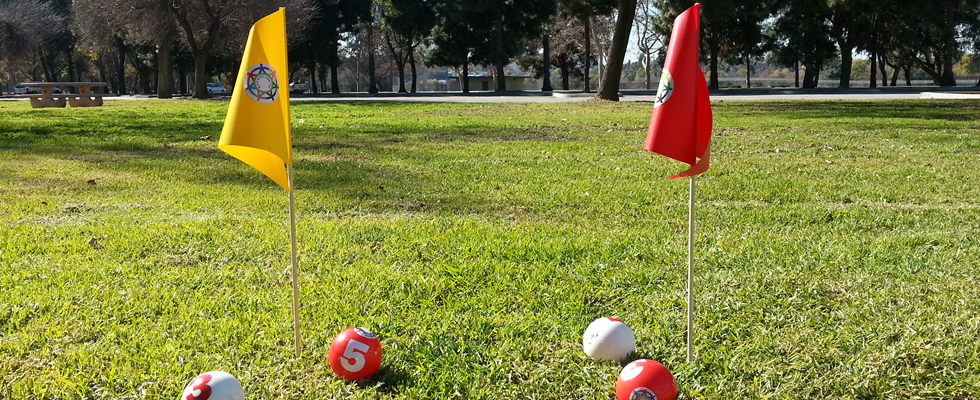
To celebrate the Holy Birthday of H.H. Dorje Chang Buddha III, on June 17 this year, Buddhist disciples and their friends gathered at the Holy Heavenly Lake, the future site of the Buddhist Town, to hold a Wiser ball game. The event was organized by the newly established North American Wiser Ball Association, which includes the United States, Canada, and Mexico. Eight teams from six regions participated in friendly matches in the morning. In the afternoon, Wiser ball referees from the United States, Canada, Mexico, China, Taiwan, and Hong Kong engaged in an exchange of experiences, which was one of the highlights of the event. Each piece of valuable experience contributed by the participants has injected new energy into the future development of Wiser ball around the world! Everything is just beginning, and we look forward to meeting again!
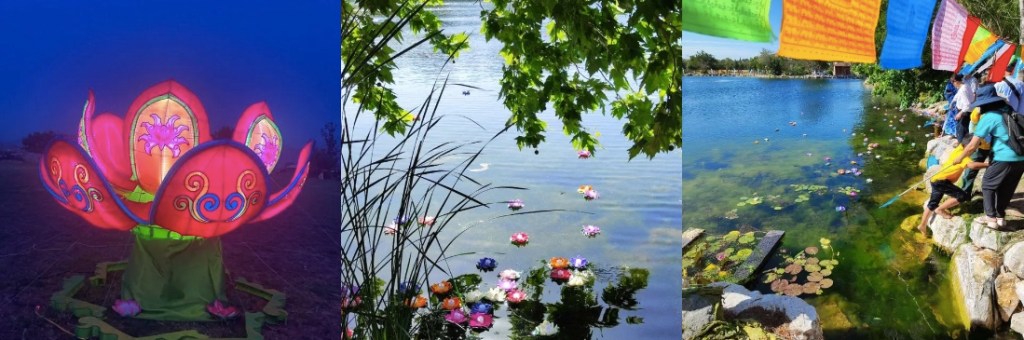
In the evening following the Wiser ball competition, a beautiful float lantern ceremony took place. Each lotus lantern symbolized everyone’s best wishes, world peace, and an auspicious future for all beings. The beautiful lotus lanterns stood amidst a sea of green, enveloped in a radiant blue glow. As night fell, the floating lotus prayer lanterns gradually spread across the lake, carrying with them the countless wishes in each of our hearts.
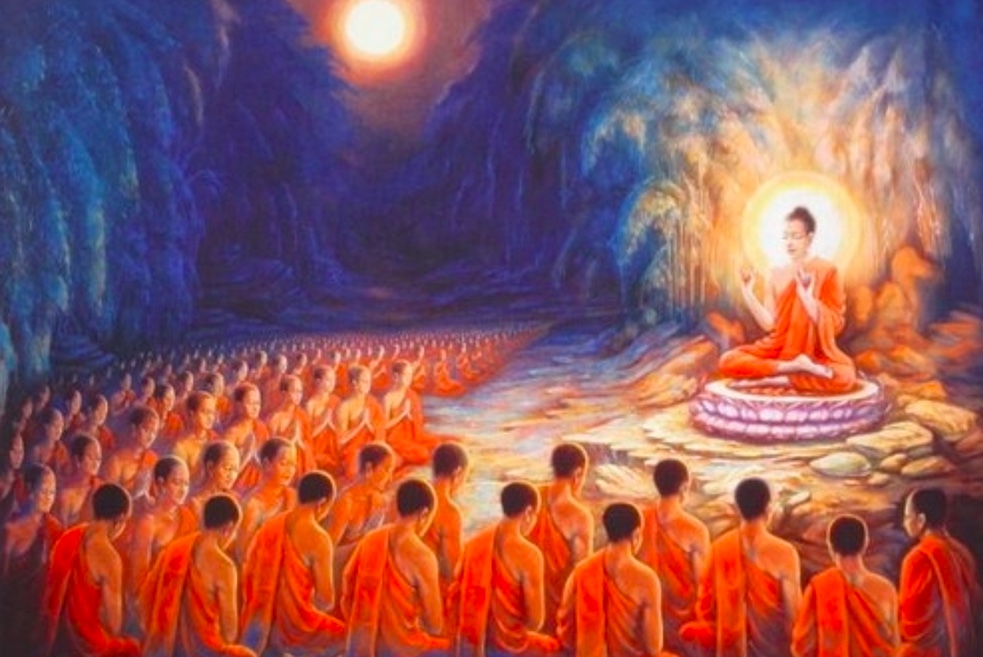
“Monks, I will teach you about the nature of a person without integrity and a person with integrity. Listen carefully and pay close attention.”
“Yes, Lord,” the monks replied in unison.
The Blessed One began, “What defines a person without integrity? Such a person is ungrateful and unthankful. This ingratitude and lack of thankfulness are characteristics of rude individuals and belong entirely to those without integrity. These individuals fail to recognize and appreciate the good done to them by others. They are driven by selfish desires and a sense of entitlement, neglecting the virtue of gratitude, which is the foundation of a harmonious and compassionate society.
“In contrast, a person with integrity is grateful and thankful. This gratitude and thankfulness are traits of civilized individuals and belong entirely to those with integrity. They recognize the value of the kindness and support they receive from others and make it a point to express their appreciation. Such individuals foster positive relationships and contribute to a community where mutual respect and support flourish.
“Monks, there are two people who are difficult to repay. Who are they? Your mother and father. Even if you were to carry your mother on one shoulder and your father on the other for 100 years, attending to their needs by anointing, massaging, bathing, and rubbing their limbs, even if they were to defecate and urinate right there on your shoulders, you still would not have repaid them. If you were to establish them in absolute sovereignty over this great earth, filled with the seven treasures, you still would not have repaid them.
“Why is that? Because parents do much for their children. They care for them, nourish them, and introduce them to this world. From the moment of birth, parents make countless sacrifices, enduring sleepless nights and countless worries to ensure their child’s well-being. They provide food, shelter, education, and unconditional love, guiding their children through the complexities of life. These acts of love and devotion create a debt that is immeasurable.
“However, monks, the greatest way to repay one’s parents is not through material means or physical care alone. True repayment comes from leading them towards the path of virtue and wisdom. If someone inspires his unbelieving mother and father to have faith, guides his unvirtuous parents towards virtue, encourages his stingy parents to be generous, and leads his foolish parents to wisdom, then, to that extent, he has repaid his mother and father.
“Consider the transformative power of such actions. When you rouse your unbelieving parents to embrace faith, you open their hearts to a greater understanding of life’s purpose. By encouraging them to practice virtue, you help them cultivate qualities that bring inner peace and happiness. Inspiring them to be generous allows them to experience the joy of giving, and guiding them towards wisdom leads them to a deeper comprehension of the world and their place in it.
“Monks, remember that integrity and gratitude are the cornerstones of a meaningful life. By embodying these virtues and helping others, especially your parents, to do the same, you contribute to a legacy of compassion and understanding that extends beyond your lifetime. This is the true measure of repayment and the highest expression of filial piety.”
The monks, deeply moved by the Blessed One’s words, reflected on the profound teachings and resolved to cultivate integrity and gratitude in their own lives, vowing to honor and repay their parents in the most meaningful way.
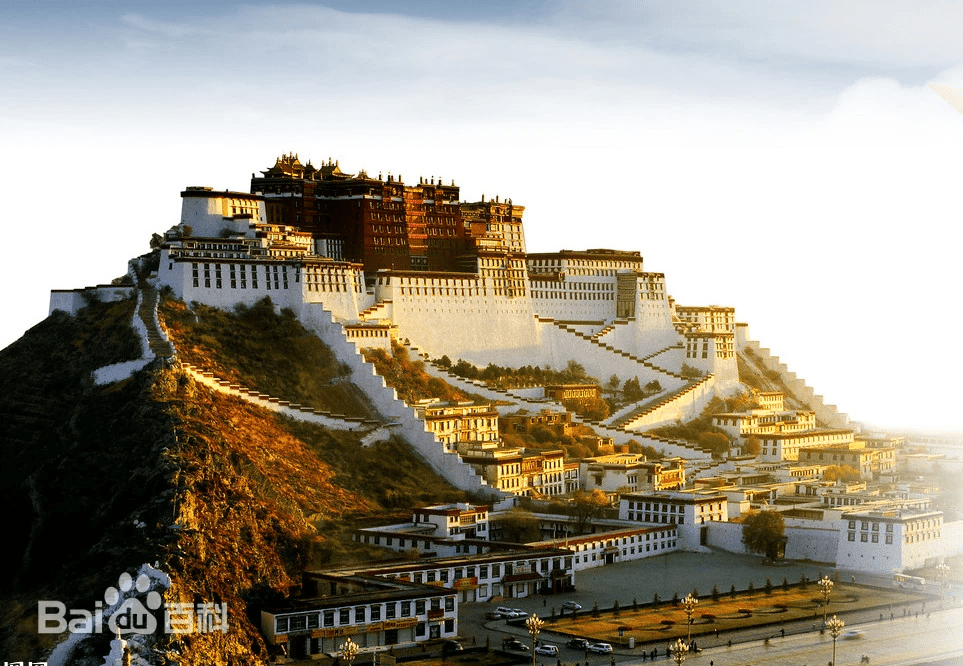
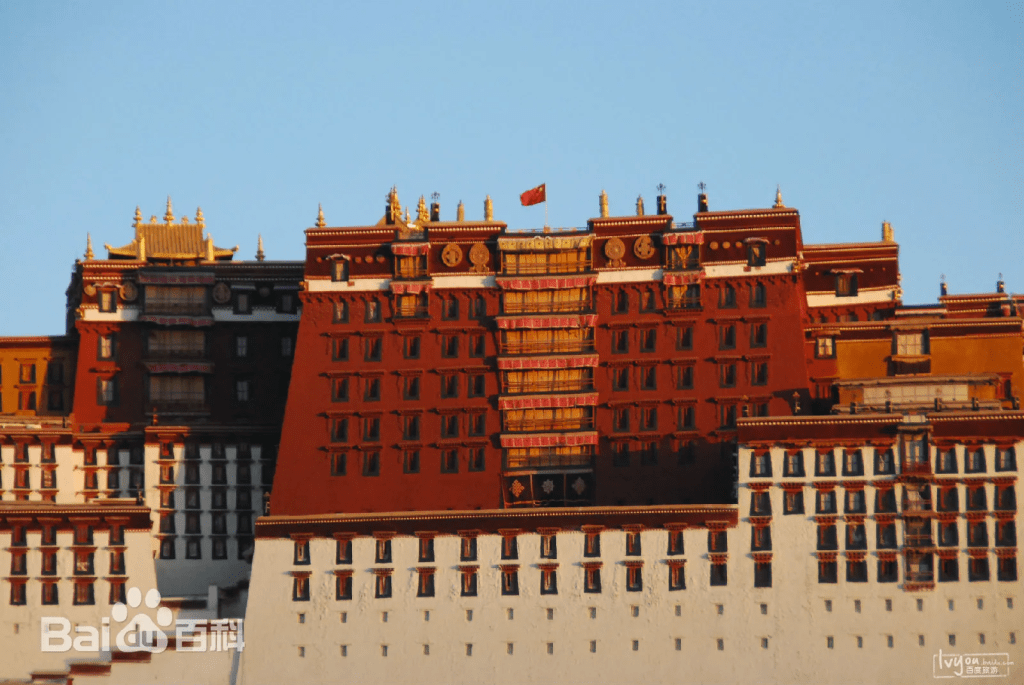
Located in the Tibet Autonomous Region of China, the Potala Palace is known as the “Jewel of the Roof of the World.” It stands as a symbol of China, Lhasa, and the Qinghai-Tibet Plateau. This palace, the highest and most majestic in the world, houses an incredibly rich collection of cultural relics and artifacts, preserving the unique heritage of the Snowy Plateau. The palace is renowned for its architectural layout, civil engineering, metal smelting, painting, and carving, showcasing the extraordinary skills of Tibetan artisans and the architectural achievements of the Tibetan people, as well as contributions from Han, Mongolian, and Manchu craftsmen. In December 1994, the Potala Palace was inscribed on the World Heritage List.
The magnificent Potala Palace stands at an altitude of 3,700 meters, covering a total area of 360,000 square meters, with a total building area of 130,000 square meters. The main building is 117 meters high, appearing to have 13 floors from the outside, while actually containing 9 levels internally. The complex includes palaces, stupas, Buddhist halls, scripture halls, monks’ quarters, and courtyards.
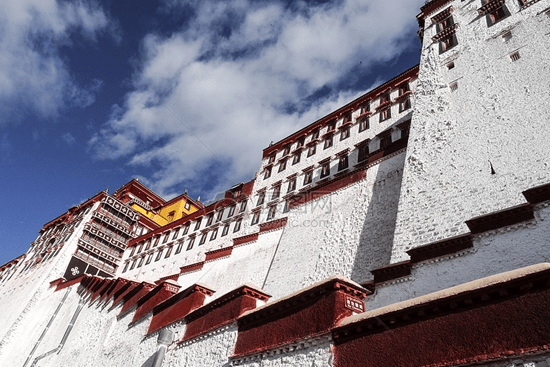
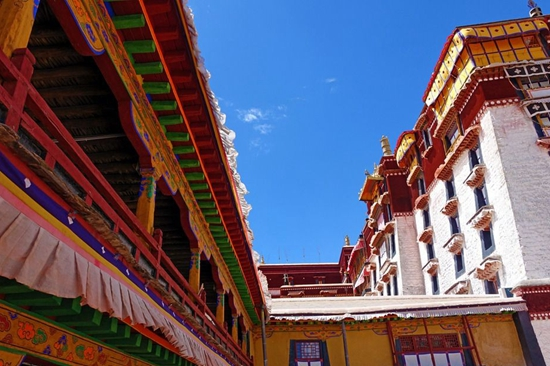
The Potala Palace’s main structure is divided into the White Palace and the Red Palace. Built into the mountainside, the complex features overlapping buildings, imposing halls, and a grand, sturdy granite structure. The white balustrades made of smooth bema grass, the resplendent golden roofs, and the large gilded bottles, stupas, and red banners create a striking decorative effect. The vivid contrast of red, white, and yellow, along with the intricate interlocking architecture, highlights the enchanting characteristics of ancient Tibetan buildings.
Historical records indicate that the Potala Palace was first constructed in the 7th century during the reign of Songtsen Gampo of the Tubo Kingdom, making it 1,300 years old. In the early 7th century, after moving the capital to Lhasa, Songtsen Gampo built three nine-story buildings with a total of one thousand rooms on Red Hill to welcome Princess Wencheng of the Tang Dynasty. The palace was named Potala Palace. The three walls surrounding Red Hill and a silver and copper bridge connecting the palaces of Songtsen Gampo and Princess Wencheng were part of the original structure. Outside the east gate of the Potala Palace was Songtsen Gampo’s horse-racing track.
When Princess Wencheng traveled to Tibet, she brought with her a large collection of books and documents, greatly promoting the development of Tibetan culture. It is said that there were more than 300 types of books on astronomy and calendrical calculations alone. The Tibetan calendar, still in use today, was created by absorbing and learning from the Han calendar, combined with the characteristics of Tibetan-inhabited areas and the experiences of the Tibetan people’s production labor. Classic works representing the excellent traditional culture of China, such as “Liezi,” “Shangshu,” “Strategies of the Warring States,” and “The Book of Questions Between Confucius and Xiang Tuo,” were also introduced to Tibet.
Ingenious Design and Construction
The design and construction of the Potala Palace take into account the patterns of sunlight in the plateau region. The foundation walls are broad and sturdy, featuring a network of tunnels and ventilation openings beneath them. Inside, the palace employs pillars, brackets, wooden struts, beams, and rafters to form its framework. The floors and roofs are made from a hard soil called “Arga.” Skylights are installed in the ceilings of each main hall and bedroom to facilitate lighting and air circulation. The pillars and beams inside the palace are adorned with various carvings, and the colorful murals on the walls cover an area of more than 2,500 square meters.
The Red Palace’s Enchanting Halls
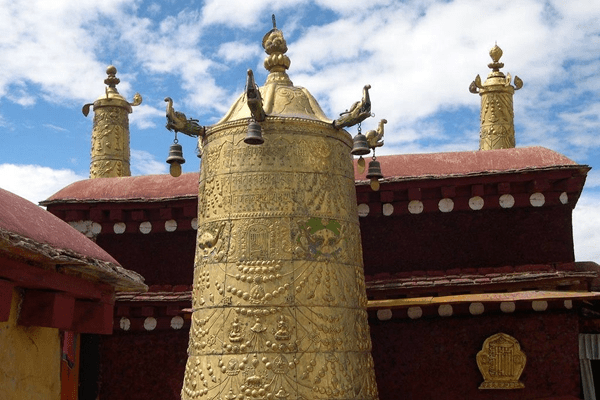
The Red Palace, situated in the central position of the Potala Palace, is distinguished by its red outer walls and mandala layout. The Hall of the Dharma King (Qujiejiebu) and the Hall of the Sage (Pabalakang) within the Red Palace are said to be structures remaining from the Tubo period. The Hall of the Dharma King is located in the middle of the Potala Palace, directly above the peak of Marpori Mountain. It is believed that this hall was once the meditation retreat of Songtsen Gampo and now houses statues of Songtsen Gampo, Princess Chizun, Princess Wencheng, and other ministers. The Hall of the Sage enshrines Songtsen Gampo’s principal deity, a naturally formed sandalwood statue of Avalokiteshvara. The rooftop platform of the Red Palace is adorned with the golden roofs of various stupa halls, all single-eaved hip-and-gable structures supported by wooden brackets and covered with gilded copper tiles.
Songtsen Gampo and Princess Wencheng (Image source: Potala Palace official website)
White Palace
A Masterpiece of Tibetan Architecture
The Potala Palace is a masterpiece of ancient Chinese architecture and an outstanding representative of Tibetan architecture. Its architectural artistry is the most remarkable example among the thousands of Tibetan Buddhist temples and palaces, unmatched anywhere in the world. At the pinnacle of the palace stand three gilded pagodas, one large and two small, shining brightly and dazzling the eyes. The parapet around the rooftop is constructed from a deep purple-red shrub, decorated with various gold ornaments. The roof is adorned with large gilded finials and red prayer flags, reflecting a strong Tibetan style.
A Fusion of Artistic Traditions
The sculptural art within the Potala Palace combines techniques from Han, Indian, and Nepalese Buddhist art. The palace houses a vast collection of treasures, including heavy-colored clay sculptures, wood carvings, stone carvings, and a significant number of metal statues made from gold, silver, copper, and iron. These works of art range in size from over ten meters tall to just a few centimeters.
Thangka Paintings and Cultural Treasures
“Thangka,” a Tibetan transliteration, refers to scroll paintings mounted on colorful silk brocade, depicting religious figures, historical events, and doctrines, as well as subjects like Tibetan astronomy, calendrical calculations, and traditional medicine. The Potala Palace preserves nearly ten thousand thangkas, some of which are several tens of meters long.
The palace also houses numerous religious and artistically significant artifacts, including Tibetan carpets, prayer cushions, prayer flags, canopies, and embroidered satin hangings.
Thangka of a stupa inscribed with the calligraphy of Emperor Qianlong. (Image source: Potala Palace official website)
Gilded bronze openwork incense burner with handle from the Potala Palace. (Image source: Potala Palace official website)
A National Treasure and World Heritage Site
The Potala Palace preserves a vast number of statues, murals, scriptures, and other cultural relics, making it a treasure trove of national art and culture. It is listed as a national cultural relic protection unit and a UNESCO World Heritage Site, reflecting its immense cultural and historical significance.
Explore the Potala Palace and immerse yourself in the rich tapestry of Tibetan history, art, and culture. Its breathtaking architecture and priceless artifacts offer a unique glimpse into the soul of Tibet, making it a must-visit destination for anyone seeking to understand the heritage of the Roof of the World.
Avalokiteshvara Bodhisattva, from beginningless eons, has been tirelessly saving countless sentient beings with his immense compassionate power. Despite his boundless efforts, he felt a sense of inadequacy. Thus, from the power of samadhi born of great compassion, he formed an immense compassionate force. This force, combined with the great compassionate power of Buddhas from the ten directions, resulted in a drop of green tear flowing from his eye, transforming into the infinitely majestic green female Bodhisattva, known as Green Tara. Due to this origin, Tara’s power to save is boundless and infinite.
Green Tara is revered as the Great Compassionate One and the Holy Savior Mother Buddha. The practice of the Green Tara ritual has a rich history that originated in India and later spread to China, Tibet, Japan, and beyond. The sacred roots of this practice trace back to Green Tara herself, who was initially the ancient Buddha Pravartaka and an incarnation of Avalokiteshvara Bodhisattva.
Chanting the Green Tara mantra even once, with focused contemplation of Tara’s sacred image, brings immense merit. Such merit is equivalent to chanting the names of seventy-two billion Buddhas and Bodhisattvas as numerous as the sands of the Ganges. Both the exoteric and esoteric traditions have extensive practices based on this ritual, and many practitioners have achieved great success and benefit from it.
Over time, the original texts and mandalas related to this profound practice have suffered from omissions and distortions in their transmission. For the past two hundred years, these deviations have increasingly moved away from the authentic regulations. In recent decades, the practice has nearly completely lost its true essence. Furthermore, the representations of Green Tara have deteriorated in form, lacking the dignity of the authentic appearance. This includes discrepancies in hand mudras, attire, and overall sacred depiction, resulting in a significant loss for the Buddhist community.
The Green Tara Perfect Practice Ritual and Thangka by H.H. Dorje Chang Buddha III
In response to these issues, H.H. Dorje Chang Buddha III transmitted the “Green Tara Perfect Practice Ritual” and personally supervised the creation of the Green Tara mandala thangka.
This three-dimensional thangka is not only lightweight and portable, making it easy to carry, but also presents the mandala clearly and vividly, ensuring that it remains etched in memory. Additionally, it possesses several extraordinary merits:
Authenticity and Compliance: The Green Tara mandala presented in the thangka fully complies with the regulations of the “Green Tara Perfect Practice Ritual.” This ensures that the practice remains true to its original form.
Historical and Miraculous Significance: Tara had already attained Buddhahood countless eons ago, her divine power is illustrious, and her sacred deeds are well-documented. Today, in the “Tara Hall” in Nethang, Tibet, the sacred statue of Tara once spoke to Atisha, instructing him, further propagating her holy name and Dharma power across China and Tibet. During the creation of this three-dimensional thangka, many miraculous occurrences were witnessed. For example, the sacred image of Tara, originally looking straight ahead, appeared differently in subsequent photographs taken from the same angle: one showed her looking up at the sky, while the other depicted her looking down at sentient beings. This clearly demonstrates Avalokiteshvara Bodhisattva’s extraordinary vow power: above, he shares the same compassionate force with all Buddhas and Bodhisattvas; below, he joins in compassionate aspiration with all sentient beings in the six realms. Additionally, when viewed from different angles, the main deity of Green Tara always faces the observer, and the seed syllables in the sky behind her follow her movement, appearing above her head. Furthermore, the colorful clouds, initially close to the sun and moon, seem to remain stationary while the sun and moon move vividly between the clouds from different perspectives.
Majestic and Unmatched Representation: The sacred image of Green Tara in the thangka is exceptionally majestic and perfect, unrivaled in both China and Tibet throughout history. The twenty Taras, each with different postures, exhibit supreme Dharma power, arranged behind the main deity, appearing and disappearing miraculously. Notably, standing in different positions reveals the Great Brahma Deva, the primary protector, initially as one, then suddenly as two, and then back to one again, a phenomenon unprecedented in history! Meanwhile, the Four Great Heavenly Kings and the Eight Dragon Kings remain unchanged. Additionally, Indra, the Four Great Heavenly Kings, and the retinue of the Eight Dragon Kings, wielding their divine weapons and instruments, surround and protect Tara with unmatched divine transformation. Visualizing this thangka makes the practice highly effective and rapidly fruitful.
Validation and Praise
Upon the completion of the “Green Tara Perfect Mandala Thangka,” Buddha Master specifically instructed disciples to bring all existing Green Tara statues of various materials from around the world to the Vajra Dharma Circle for public verification. They were to determine which one is the most orthodox and perfect thangka. The Vajra marbles immediately entered the mandala thangka, confirming that the Buddhas and Dharma protectors of the ten directions unanimously endorsed it.
Many of the seven classes of Buddhist disciples, upon practicing with this three-dimensional thangka, experienced unprecedented and unique realms. High monks, living Buddhas, and even Dharma Kings from around the world have all respectfully praised and recommended this rare and precious sacred image. In truth, among all the existing Green Tara images, none can compare to the perfection and majesty of this mandala thangka. Its blessing power is extraordinarily miraculous; a single glance imprints it deeply in the mind, leaving a lasting impression.
The Green Tara Perfect Practice Ritual and its accompanying thangka, as transmitted and supervised by H.H. Dorje Chang Buddha III, represent a revival of the authentic practice of Green Tara. This thangka not only restores the true essence of the practice but also enhances the spiritual experience for practitioners worldwide, offering unparalleled blessings and merits.
Vesak honors the Buddha’s birth, enlightenment and passing. On May 23, 2024, in recognition of the occasion, President Biden issued the following official statement from the White House:
“Jill and I extend our warmest wishes to Buddhists in the United States and around the world as they celebrate Vesak. As we honor the birth, passing, and enlightenment of Buddha, we recognize the American Buddhists who contribute so much to our communities and our country. For over 2,500 years, those who adhere to the Buddha’s teachings have enriched and strengthened this world we share. Vesak is a time to reflect on the Buddha’s teachings, including the need to work for peace and justice, and cultivate humility and compassion as we work together towards a brighter future.”
Representing President Biden at the Vesak ceremony was Second Gentleman Doug Emhoff, husband of Vice President Kamala Harris, whose opening remarks highlighted the significance of the Buddhist holiday.
“It’s important that we all come together,” Emhoff said. “One, to express our interconnectedness, our faith, our joy, but also to combat hate. Because the one and best way to combat hate is to do it together. Because we know in this room that there’s so much more that unites us than divides us.”
Emhoff said that as the “first Jewish White House principal, I always talk about finding joy in my own faith, even in the face of hate and anti-semitism. As we celebrate this event and celebrate our cultures coming together, let’s just keep that joy at all times.”
The event was coordinated by Wangmo Dixey, President of the International Buddhist Association of America (IBAA) and the Executive Director of Dharma College in Berkeley through the offices of Shekar Narasimhan, President of the Dharma Into Action Foundation.
Dixey noted that there are about 3,000 Buddhist temples in the United States, each representing the Theravada, Mahayana and Vajrayana traditions that trace back to the time of the Buddha. Jodo Shinshu Buddhism is part of the Mahayana tradition.
“Many elders have journeyed here to America, enriching our nation with their profound truth of reality,” Dixey told the gathering. “At the heart of the Buddha-Dharma is the conveyance of the truth of reality. It teaches the Four Noble Truths that we should understand suffering and identify its cause, and so find a path to the cessation of suffering and the way of life that embodies that this fundamental teaching illuminates a universal truth that remains timeless and profoundly relevant to the challenges we face in modernity. Central to these teachings is the practice of the Eightfold Noble Path, a guide to living, wisdom, ethical conduct and mental discipline.”
Before Emhoff and the Buddhist dignitaries lit a butter lamp in honor of Vesak, Dixey spoke about the lamp’s symbolism to light the way to world peace.
“Let us reimagine this light as a beacon of hope, a possibility for each of us to manifest harmony and well-being within ourselves and ultimately to become ambassadors of world peace,” she said. “This message originating in this room can resonate around the world, as so many look to America to lead with its profound commitment to true internal freedom. Imagine the power within us to illuminate the world, showing that wisdom and compassion are the ways to lead humanity. Let us remember that we have such great figures like the Buddha to remind us that enlightenment is possible, even in this lifetime.”
Dixey said “each of us carry the inspiration and spirit of Vesak into our everyday lives. May we embrace the beautiful qualities that the Buddha has shown us to build a brighter and kinder future for all Americans guided by the timeless quality of love, compassion and mutual understanding. By lighting this lamp today, we send a message of peace and harmony that will resonate throughout the world.”
After Emhoff lit the lamp, representatives from the various Buddhist traditions took turns lighting the lamp and chanting sutras. Rev. Harada spoke as part of the Mahayana tradition.
“Mahayana literally means ‘large vehicle’ like a big bus that carries many people,” Rev. Harada said. “Buddhism uses the metaphor of a vehicle to illustrate how it is a teaching that carries us from a life of delusion, ignorance and suffering to a life of awakening, wisdom and liberation. This large vehicle carries anyone and everyone regardless of race, gender, social status or sexual orientation.
“Our world is in great need of the teachings to awaken us to our own greed, anger and ignorance that bring suffering not only for ourselves, but to others,” he continued. “We are in great need of the teachings that urges us to listen to the Dharma to listen to others, to listen to our own inner voice. We are in great need of the teachings that urges us to live a life of a bodhisattva to work with the enlightenment of all beings.”
After the Vesak ceremony, there was a Buddhist peace march around the Washington Monument the evening of May 23 with leaders from various Buddhist traditions. The event was held in partnership with the Tzu Chi Foundation and listed Dharma College as a key collaborator.
It is hard to believe that anyone could possess all-encompassing wisdom. For us humans, dedicating a lifetime to mastering even one discipline is remarkable. How could someone be a philosopher, scientist, painter, sculptor, writer, doctor, and inventor all at once, mastering each within a few decades? This seems impossible by human standards. However, the Buddha’s vast and profound wisdom is genuinely real. Over 2,500 years ago, Siddhartha Gautama, the Buddha, invited anyone to ask him any question, promising a detailed answer. This is illustrated in the story of the Buddha teaching a cowherd, as recorded in the “Sutra of the Cowherd Parable.”
King Bimbisara of Magadha once invited the Buddha and 500 disciples to preach in his kingdom for three months. To provide them with fresh dairy products daily, the king arranged for cowherds to stay nearby. As the end of the three months approached, the king suggested the cowherds meet the Buddha. The cowherds, having heard of the Buddha’s wisdom, decided to test him with questions about cowherding. They reasoned that if he could answer these, he truly possessed all-encompassing wisdom.
Upon arriving at the Bamboo Grove, they were struck by the Buddha’s radiant presence. They saw him sitting under a tree, glowing like a golden mountain, radiating light like melted gold. Overwhelmed with joy, the cowherds discussed among themselves, “Regardless of whether the Shakyamuni possesses all-encompassing wisdom, anyone who sees him feels joy. His light is unparalleled, his appearance noble, and his presence exudes majesty. His radiance is clear and bright, his demeanor commanding respect, and his body adorned with the aura of virtue, making anyone who sees him feel immense joy.
If he indeed possesses all-encompassing wisdom, it must be due to his immeasurable merits. No worldly treasure can compare to the Buddha’s sublime and dignified presence, which brings great joy and pure faith to all who see him. It is clear that the Buddha must indeed possess all-encompassing wisdom.”
The shepherd thought about this and sat down to pay respects to the Buddha. They asked the Buddha, “What are the various methods a shepherd can use to ensure that the cattle thrive and reproduce well? And what conditions might prevent the cattle from growing properly and living peacefully?” The Buddha answered: There are eleven methods by which a shepherd can ensure the cattle’s well-being and reproduction. What are these eleven methods?
Understanding the Caretaker: Having a strong and capable caretaker who can protect and nourish the cattle, keeping them healthy and well-maintained. Similarly, a monk should be a respected and virtuous leader who can uphold the Dharma and guide beings toward good deeds.
Understanding Color: Knowing the colors of the cattle, such as black, white, or mixed. Similarly, a monk should understand that all phenomena in the world are composed of the four elements: earth, water, fire, and wind.
Understanding Appearance: Recognizing whether the cattle’s appearance is auspicious and whether they will be harmonious. A monk should similarly be able to discern whether someone’s actions indicate wisdom or ignorance.
Understanding Scraping: If insects bite the cattle and their blood is consumed, sores will develop. Scraping can remove these pests and promote the cattle’s well-being. Likewise, a monk should remove harmful views and misconceptions that corrupt their spiritual practice.
Understanding Wound Treatment: Applying medicine to prevent mosquito and fly bites and other injuries. Similarly, a monk should use correct Dharma teachings to protect themselves from delusions and negative emotions.
Understanding Smoke: Using smoke to drive away insects so the cattle can stay in a comfortable, insect-free shelter. Similarly, a monk should use the teaching of Dharma to lead beings to the state of emptiness and liberation.
Understanding Good Ways: Knowing the behavior and preferences of the cattle and how to keep them healthy. A monk should understand how to practice the Noble Eightfold Path to achieve Nirvana and avoid falling into the extreme paths of annihilation or eternalism.
Understanding the Right Place: Knowing how to provide a place where the cattle can live healthily and with minimal sickness. Similarly, a monk should practice and teach the Dharma to cultivate purity and increase good roots.
Understanding Good Routes: Knowing which paths are safe and which places are good for crossing rivers, avoiding places with waves and pests. Similarly, a monk should learn from knowledgeable teachers and adapt their teachings to the capacities of sentient beings.
Understanding Safe Places: Ensuring the cattle live in places free from predators and harmful creatures. Similarly, a monk should maintain mindfulness to avoid the harmful effects of negative emotions.
Understanding Milk Preservation: Ensuring that the mother cow’s milk is not consumed completely by the calf so that both the mother and the owner can benefit from it daily. Similarly, laypeople should use offerings such as clothing and food economically to benefit both the givers and receivers.
The cowherds, after hearing the Buddha’s teachings, thought, “We cowherds know only three or four methods, and our predecessors knew only five or six. Hearing the Buddha today is truly astonishing and unprecedented! The Buddha indeed possesses complete wisdom beyond doubt.”
This is described in the “Sutra of the Parable of the Cowherds.” From this, we understand that there are individuals with complete wisdom.
Today, due to the supreme and exceptional causes and conditions, the original primordial Buddha, Vajradhara has once again descended into the Saha World to manifest all-encompassing wisdom. H.H. Dorje Chang Buddha III once said: Within five years (from 1995 to 1999), if any sentient being asks ME any question, the answer should be given immediately without any hesitation. If there is any need to think about it, or if there is slight hesitation or any fabrication, or if the answer is not comprehensive, I will immediately step down from the Dharma throne and no longer be qualified to teach the Dharma.”
In the more than two thousand Dharma discourses spoken by the Buddha, He provided direct and comprehensive answers to various questions on practice and methods for His disciples. Sometimes, even before the disciples spoke, He would say, ‘I know what you want to ask. You don’t need to say anything; I will answer you directly.’ The disciples would nod in agreement. There was also Zeng Ruzhang, who studied stealth aircraft and asked why they can be invisible. Lobsang Zhenzhu Rinpoche once proposed to see Green Tara, and shortly after, a divine manifestation appeared, H.H. Dorje Chang Buddha III fulfilled his wish…
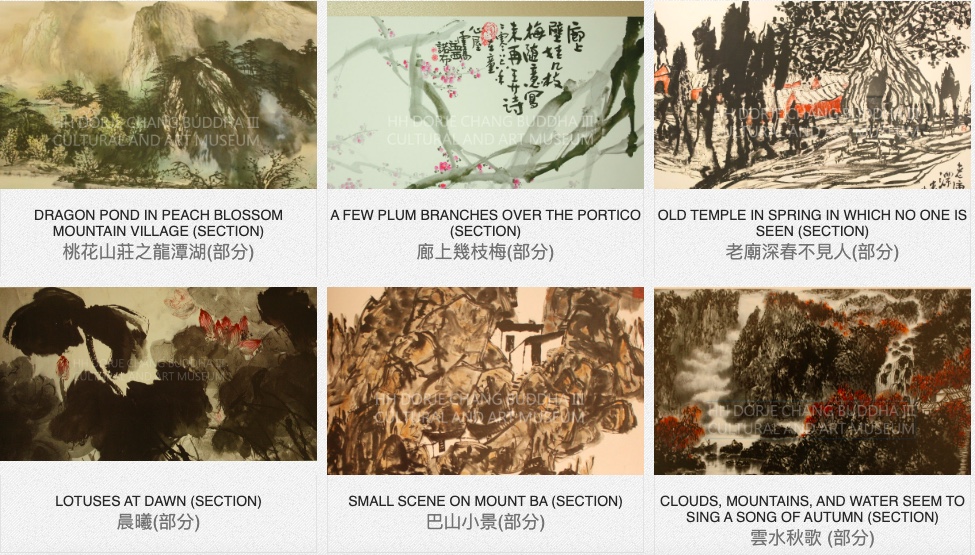
Step into the International Art Museum of America in San Francisco or the H.H. Dorje Chang Buddha III Culture and Art Museum in West Covina, and you will be able to appreciate world-class masterpieces of art. H.H. Dorje Chang Buddha III has created Chinese paintings, oil paintings, and various styles of calligraphy. In addition to mastering styles from existing schools of painting, such as Realism, Abstract, Line, and Impressionism, H.H. Dorje Chang Buddha III has independently developed sixteen unique schools of painting.
At the fourth session of the World Poets and Culture Conference held in Hungary in 1994, more than 5,600 experts and scholars representing 48 countries and regions unanimously approved conferring upon H.H. Dorje Chang Buddha III the title “Distinguished International Master,” which has an honorific status comparable to a head of state.
H.H. Dorje Chang Buddha III possesses extraordinary and saintly wisdom, perceiving the true essence of the universe and life. Whether it be within the various sects of Buddhism or in all worldly fields such as art, science, medicine, and philosophy, His accomplishments reach the highest level in every aspect, with unparalleled expertise and a unique status beyond any saint.”
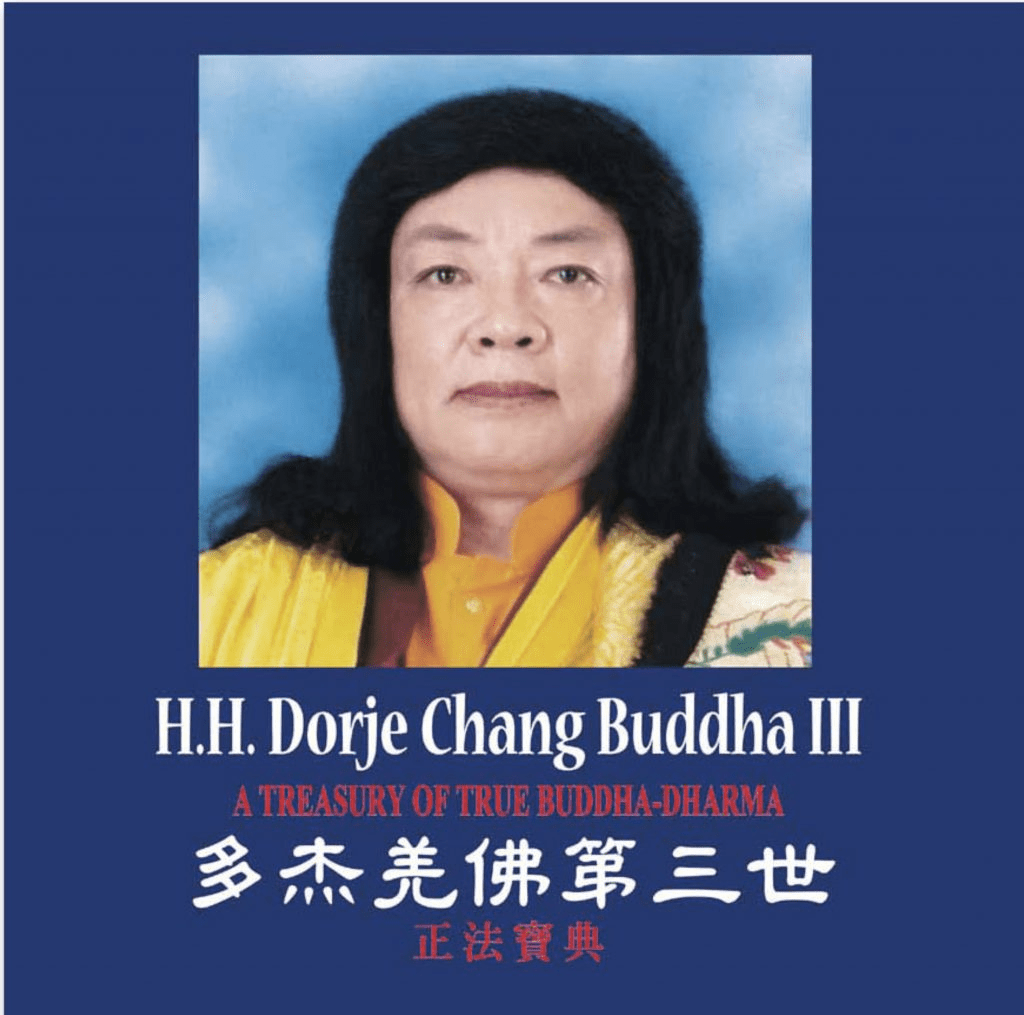
The treasure book, “H.H. Dorje Chang Buddha III,” stands as a testament to this statement. However, this book contains only a drop of water from the vast ocean of Buddha’s teachings and wisdom.
The video below showcases the boundless compassion and highlights the extraordinary accomplishments of H.H.Dorje Chang Buddha III. It was published by China Educational Channels TV and features interviews with Buddhist disciples from around the globe.
The speech given by the Venerable Rambo Tsemang at the 2024 Dharma ceremony in honor of the holy birthday of Namo Dorje Chang Buddha III on June 15, 2024, is published below.
Namo Dorje Chang Buddha III!
Namo Shakyamuni Buddha, Lord of Buddhism in the Saha World!
Namo Yuhua Shouzhi Wang Holy Mother the Great Mahasattva!
Namo all Buddhas in the ten directions, Vajra Beings, Bodhisattvas, Sky-goers, and Dharma Protectors!
Today, Buddhist disciples from all over the world have once again gathered here to commemorate the Holy Birthday and infinite merit of Namo Dorje Chang Buddha III. We want to express our gratitude to Namo Dorje Chang Buddha III for bringing to humanity His magnificent, unprecedented, and unsurpassed Buddha Dharma and accomplishment in the Five Vidyas.
I will summarize the questions that some of you have raised recently and share my personal thoughts for your reference.
First: Cultivation is the foundation for all Buddhists to attain liberation
Throughout the time that Namo Dorje Chang Buddha III propagated Dharma to save living beings, His Holiness the Buddha continuously reminded Buddhist disciples that cultivation is of utmost importance, and it is the only foundation for attaining liberation. In many audio recordings of expounded Dharmas, Namo Dorje Chang Buddha III taught many aspects of cultivation and emphasized that Buddhist disciples must practice cultivation at all times. Therefore, we must always remember the teachings of Namo Dorje Chang Buddha III by respectfully listening to the audio recordings of the Dharmas of His Holiness Dorje Chang Buddha III and reading the “Namo Dorje Chang Buddha III Complete Sutra Collection.” That is how we may learn correct knowledge and views and apply them in our own cultivation practice. This is very important for all Buddhist disciples. We must always remember that it is by practicing cultivation that we may accumulate good fortune and merit, stay away from dark karma, receive initiation to the highest Dharmas, and ultimately attain liberation from transmigration and cyclical birth and death. We must not pay lip service to practicing cultivation. Cultivation must be applied to every thought, word, and deed.
Some people tend to sway or regress from their cultivation whenever they encounter setbacks, but they should not be like that. We should know that during our transmigration since beginningless time, we have done so many bad deeds and taken on so much dark karma. All of our suffering and adversities are the effects of bad causes that we planted. By understanding this, we then understand that both good times and bad times are opportunities for us to practice our own cultivation. As our respected ancient elders said, “We do not evade bad retributions and face them with ease. We must be cautious with our every word and deed to plant good causes.”
Second: Actively Promote the “Namo Dorje Chang Buddha III Complete Sutra Collection”
Ever since Buddha Shakyamuni established Buddhism in our sahā world, the Sutras of the World Honored Buddha have enabled innumerable Buddhist disciples to attain liberation and accomplishment. The “Namo Dorje Chang Buddha III Complete Sutra Collection” is, once again, a collection of Dharmas expounded by a Buddha in this world. This Collection will certainly enable many more Buddhist disciples to attain liberation. Namo Buddha Shakyamuni’s Sutras have been the guidance that we have followed for more than 2,000 years. Upon that foundation, Namo Dorje Chang Buddha III used simple language to teach us the quintessence of Buddha Dharma, and the essentials for attaining liberation and accomplishment. Therefore, the “Namo Dorje Chang Buddha III Complete Sutra Collection” is and will be the fundamental guide for all Buddhist cultivators in the sahā world to attain liberation.
Since we have received this supreme Dharma treasure, the “Namo Dorje Chang Buddha III Complete Sutra Collection,” we should apply the four limitless states of mind and Bodhicitta to enable more people to learn the Sutra Collection. Namo Dorje Chang Buddha III taught us that we will accumulate the most abundant merit by propagating Dharma to benefit living beings and that more merit we have, the sooner we can attain Buddhahood. The best method to propagate Dharma now is to actively promote the “Namo Dorje Chang Buddha III Complete Sutra Collection.” This is the quickest way for us to accumulate merit.
Think about this: In the Diamond Sutra, Buddha Shakyamuni told Subhuti that if someone were to grasp just the four-line gatha of the Dharma and make it known and explain it in detail to living beings, this person’s merit would far exceed someone who were to fill the billion worlds of this universe with the seven jewels in almsgiving.
The four-line gatha is only about emptiness and Dharmakaya. The “Namo Dorje Chang Buddha III Complete Sutra Collection” comprises the truth about Dharmakāya, Saṃbhogakāya and Nirmāṇakāya, and how to attain realization states of the Three Bodies. Therefore, by promoting the “Namo Dorje Chang Buddha III Complete Sutra Collection,” not only will you enable others to understand the truth contained in the four-line gatha; you may even enable them to achieve abidance in the realization states described in that four-line gatha and become a holy person. Then your merit will increase even more. That’s why whenever you introduce one person to study the “Namo Dorje Chang Buddha III Complete Sutra Collection,” you will gain an increment of merit.
However, we must be clear that explaining the four-line gatha to others or promoting the Namo Dorje Chang Buddha III Complete Sutra Collection doesn’t mean that we as ordinary people would then quote Dharma out of context or randomly explain Dharma to others. In doing so, we would end up in the hell realm. We should guide living beings to study the Sutras and respectfully listen to the audio recordings of the Dharmas themselves, so that they can learn directly from His Holiness the Buddha. In this way, we can also increase our merit without incurring any sins.
Third: Make Effort to Protect the Dharma
There are many different ways to protect the Dharma, such as protecting organizations that propagate true Tathagata Dharma or supporting Buddhist cultivators who have correct knowledge and views and who practice in accordance with the Dharma. What I want to talk about here is how to protect the Dharma on the Internet.
In the current Internet era, Buddhist disciples make use of the Internet to propagate Buddha Dharma. However, evil demons also make use of the Internet to slander true Buddha Dharma. Therefore, if any one of us sees any evil deeds of slandering the Buddha or the Dharma, we must rebut those slander with correct knowledge and views.
There are two things that we must not misunderstand about protecting the Dharma.
First, it is seriously wrong to think that rebutting others is getting yourself tied up in matters of right and wrong. It is only with correct knowledge and views that you may understand Buddha Dharma, but some people understand Dharma incorrectly due to their incorrect knowledge and views. We must be very clear about this without any confusion: If a Buddhist disciple cannot differentiate between correct and incorrect knowledge and views, how can they properly understand the Dharma? If they cannot understand the Dharma, how can they attain accomplishment? Getting involved in matters of right and wrong usually refers to personal arguments about who’s right and who’s wrong as a result of attachments to self and to worldly phenomena. This is not the same as defending the correct meaning of the Dharma. The meaning of Dharma must be made clear.
Second: It is wrong to think, “I don’t want to do the work of protecting the Dharma, but I will make effort to practice forbearance and cultivate my conduct.” Actually, protecting the Dharma is an important aspect of cultivation. If you don’t protect Buddha Dharma, you are essentially a fake Buddhist who is not cultivating yourself. Therefore, it will be impossible for you to attain accomplishment. When cultivating ourselves, if anyone points out our shortcomings or wrongdoings, we should thank them, reflect upon ourselves, and do better in our cultivation. For whatever reasons, if someone insults us or attacks us, we should ignore those distractions and focus on cultivating ourselves with forbearance. But if the attacks are targeted toward the Buddha and Buddha Dharma, we must step up and fearlessly protect the Buddha and Buddha Dharma. Even if we don’t have enough abilities on our own, we can work with other Buddhists and discuss how to protect the Dharma together. If we don’t even protect the Buddha, if we don’t protect the integrity and benefit of Buddha Dharma, will Buddhas and Bodhisattvas receive us in the Buddha Lands? Will Dharma Protecting Bodhisattvas and deities help us?
All in all, if we want to attain liberation and accomplishment, we must cultivate ourselves. To cultivate ourselves, we must abide by the precepts, promote the “Namo Dorje Chang Buddha III Complete Sutra Collection,” and protect the Dharma. By doing these three things well, we can quickly eliminate our dark karma, accumulate merit, receive Buddha Dharma, and be liberated from transmigration forever! Throughout Buddhist history, all holy people who attained holy accomplishments were precept-abiding. They all propagated Dharma to benefit living beings. They all protected the Dharma. That’s how respected ancient elders attained accomplishment. These are also the things that we must do to attain accomplishment.
Here, I wish that all congregants and living beings fulfill their good wishes, have good fortune and wisdom, and attain accomplishment and liberation! I wish that the countries that you live in be prosperous and powerful, and that all people enjoy happiness. May there be peace in the world and the circumstances of all living beings be auspicious.
Finally, let us once again pay obeisance:
Namo Dorje Chang Buddha III!
Namo Shakyamuni Buddha, Lord of Buddhism in the Saha World!
Namo Yuhua Shouzhi Wang Holy Mother the Great Mahasattva!
Namo all Buddhas in the ten directions, Vajra Beings, Bodhisattvas, Sky-goers, and Dharma Protectors!
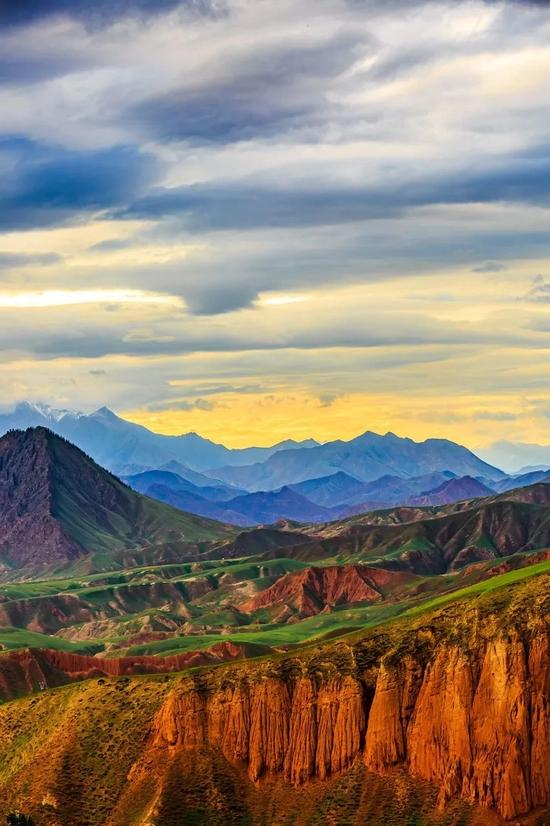
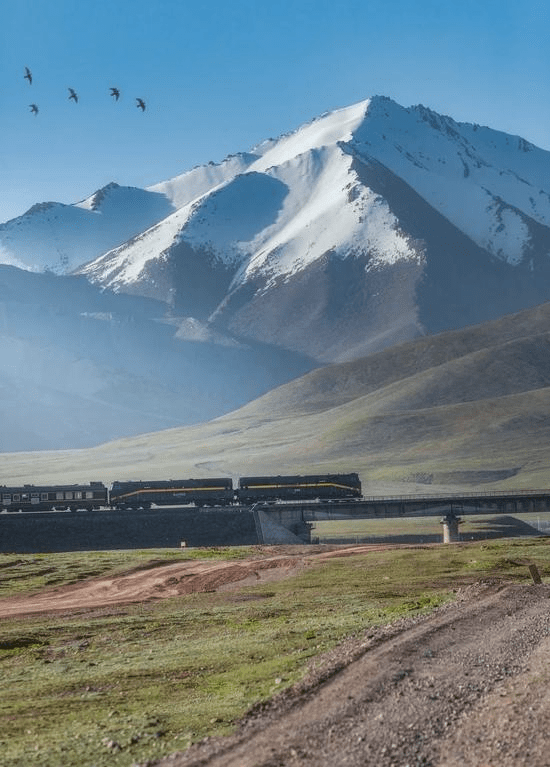
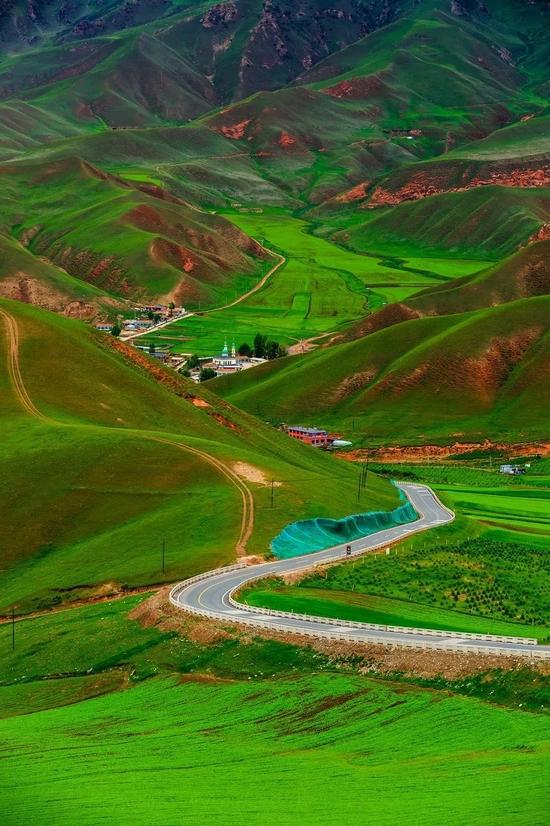
Entering summer, the northwest is like a fairyland, and as the gateway to this paradise, Qinghai is so breathtaking that one forgets the passage of time. Snow-capped mountains, lakes, grasslands, deserts, Yadan landforms, temples, prayer flags…
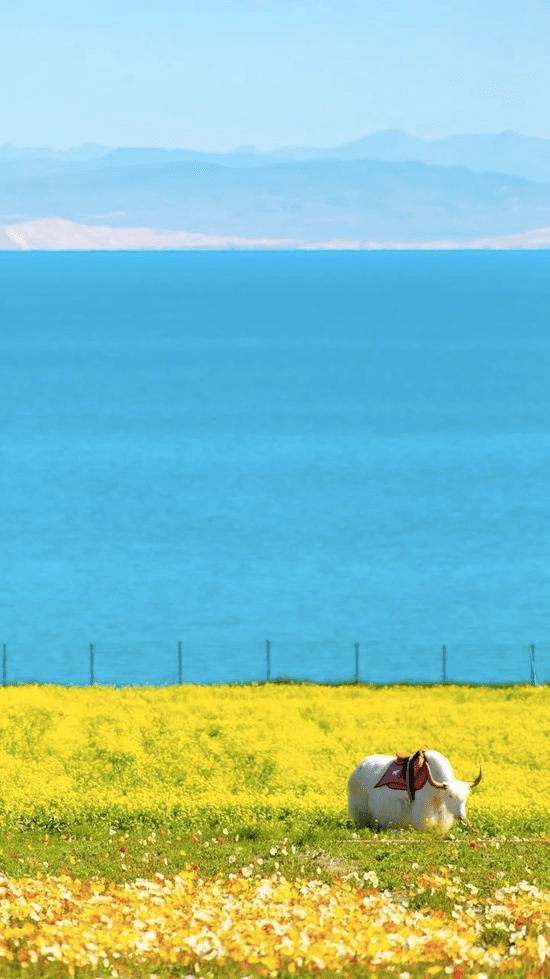
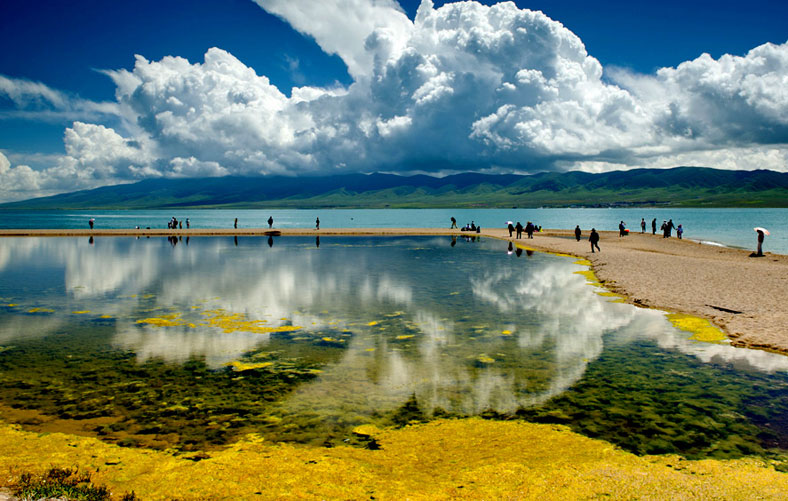
Countless unique landscapes make Qinghai a place worth exploring in depth. Here, you can easily encounter breathtaking scenery: lakes, flower fields, deserts, and starry skies, along with six vibrant colors: blue skies, green lakes, white mountains, golden deserts, green grasslands, and yellow rapeseed flowers. Walking on this vast land, the vitality and colors continually surprise you. Qinghai is a place you’ll fall in love with and never want to leave. In July, Qinghai Lake is romantic and poetic, with vast fields of rapeseed flowers along the lakeshore, blue water blending with the sky, and smoke rising from small wooden houses by the shore, resembling a pastoral landscape painting.
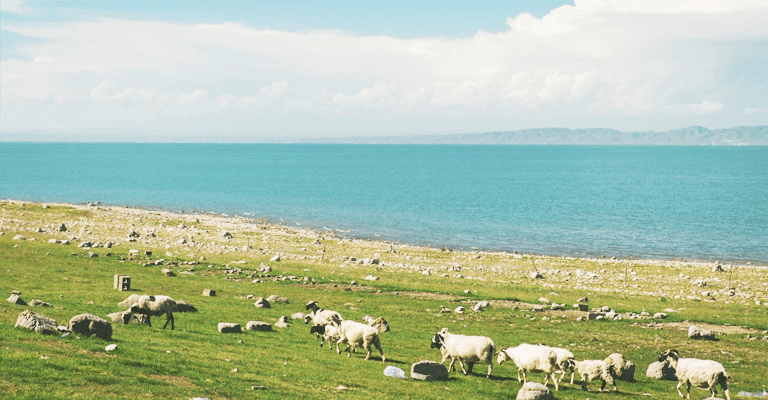
Qinghai Lake or Ch’inghai Lake, also known as Lake Koko Nor, is the largest lake in China (the size of Rhode Island or three Greater Londons). Located in the northeast of the Tibetan Plateau, this huge alkaline salt lake is usually No. 1 on “Most Beautiful Lakes in China” lists.
Spectacular Sunrise of Qinghai Lake
Erlangjian Scenic Area
Fairy Bay Area – The Sea of Flowers
Fairy Bay Area is a wet land located in the northern coast of Qinghai Lake. There are two legends about how Fairy Bay Area got its name. In one old legend, the queen of the west area fell in love with the King of Central Plains. The queen always served a feast for the king in Qinghai Lake with pretty fairies singing and dancing for them. Another ancient poem showed that the Queen of the west had been waiting for the king of Central Plains in Qinghai Lake for thousands of years but he never kept his appointment. The sad queen left for Heaven, but she ordered the fairies to guard Qinghai Lake. Later, these fairies masqueraded as swans living in Fairy Bay Happily. Might be attracted by these beautiful swans, a dozen of other birds also prefer Fairy Bay as a habitat.
Apart from various birds, different kind of flowers blooms here from every June to October. Just like a carpet waved by fairies, Fairy Bay presents on white, yellow, orange, pink, red etc., really deserving its name of Flowers’ Ocean. Because of the magic legends and amazing landscape, local people regard it as sacred ground and several solemn rituals are held here. So, you can feel a strong cultural fragrance.
Sand island in the lake
Great Scenery in the Biking Trip
There’s a Tibetan folk custom that Buddhists should walk around the lake in the Year of Goat, circle the mountains in the Year of Horse, and circle the forest in the Year of Monkey. Some believe it’s a decree left by Buddha. Qinghai Lake is a sacred lake for Buddhist pilgrimages. Especially in Horse years of the 12-year cycle, many Buddhists will take a kora around the Qinghai Lake which is believed to be helpful to lead a safe and happy life. By traveling to Qinghai Lake you can get close to the devoted Tibetans and appreciate Tibetan culture. When the weather is warm in the summer months, there are ethnic festivals of the Tibetans and Muslims. Nowadays, there are still lots of minority tribes and herdsman families living beside the Lake. You can feel the strong nomadic ethnic culture there.
Buddhist Pilgrims Worshiping Qinghai Lake
Besides Qinghai Lake, there are many lakes in Qinghai, such as Chaka Salt lake, ChaErHan Salt lake, etc.
Qinghai has many mountains, 3,600 mountain peaks, clustered together, resemble giant petals in full bloom, tracing graceful arcs across the sky. Up close, they resemble ancient castles, pyramids, animal shapes, and cylindrical pillars. Being there feels like entering a maze, making it difficult to distinguish directions.
In July and August, large fields of rapeseed flowers bloom beneath Zhuo’er Mountain. Standing at the top of the mountain, the view is incredibly expansive and unobstructed. As far as the eye can see, the earth is covered with a golden-yellow carpet.
This summer, embark on a pilgrimage to Qinghai.
On this vibrant land, there exists a power, ancient and resolute, with the solemn sound of bells echoing in all directions, suppressing all disturbances. The 400-year-old Kumbum(or Ta’er Monastery ) is one of the most important temples of the Gelug sect of Tibetan Buddhism. Entering the incense-filled Ta’er Monastery, one begins to feel detached from the mundane world. Devout followers, serene temples, and vivid Buddha statues all convey the weight of faith. The monastery’s buildings are grand, blending Han palace and Tibetan flat-top styles. With over 4,500 rooms, it forms a unique architectural complex that integrates Han and Tibetan craftsmanship.
The most captivating event is the annual “Shai Da Fo” or “Shai Da Thangka,” also known as the “Buddha Exhibition Festival.” This involves displaying a large Buddha image outdoors to prevent mold and insect damage, and more importantly, as a special way for monks and followers to pay homage to the Buddha. The image is actually a special type of large Thangka, a rare treasure among scroll paintings. The best time to unfold the Buddha image is at dawn when the first rays of sunlight hit the earth, hence the name “Shai Fo,” which means “Sun Buddha.”
Held twice a year during the lunar fourth and sixth months, the festival commemorates the birth, enlightenment, and nirvana of Shakyamuni, the emergence of Maitreya, and the birth and nirvana of Tsongkhapa. By displaying the Buddha image, followers can gaze upon it, receive its blessings, and protect it from damage. Ta’er Monastery has four large embroidered Buddha images: “Lion’s Roar,” “Shakyamuni,” “Tsongkhapa,” and “Vajrasattva,” with only one displayed each time on the monastery’s hillside. The ceremony is grand, attracting many spectators and creating a spectacular scene.
There are these five rewards in listening to the Dharma. Which five?
Firstly, one hears what one has not heard before. By listening to the teachings, individuals are exposed to new insights and wisdom that they had not previously encountered, enriching their understanding and broadening their perspective.
Secondly, one clarifies what one has heard before. The act of listening allows individuals to deepen their comprehension and gain clarity on teachings they may have heard previously but did not fully understand. This repetition and elaboration help solidify their grasp of the concepts.
Thirdly, one gets rid of doubt. The Dharma provides answers and explanations that resolve uncertainties and questions in the listener’s mind. Through the teachings, one finds reassurance and a clearer path forward, dispelling confusion and hesitation.
Fourthly, one’s views are made straight. Listening to the Dharma helps align one’s thoughts and beliefs with the truth. It corrects misconceptions and guides the listener toward right understanding, ensuring that their views are in harmony with the teachings.
Lastly, one’s mind grows serene. The wisdom imparted through the Dharma brings peace and tranquility to the mind. As one absorbs and reflects on the teachings, the agitation and restlessness of the mind diminish, leading to a state of calm and serenity.
These are the five rewards in listening to the Dharma. Each reward contributes to the listener’s spiritual growth and well-being, making the practice of attentive listening profoundly beneficial.
The “Ten Paths to Happiness” sutra, where an eight-year-old girl named Sumati asks Buddha ten profound questions. These questions explore essential aspects of human life and happiness, and Buddha provides insightful answers. This sutra is significant as it presents complex philosophical ideas in an accessible manner through the dialogue between Buddha and a child.
Thus have I heard. At one time, the Buddha was in the city of Rājagṛha, on the mountain of Gṛdhrakūṭa, along with a great assembly of bhikṣus, twelve hundred and fifty people in all. The bodhisattva-mahāsattvas there numbered ten thousand in all.
At that time in the city of Rājagṛha, there was a laywoman named Sumati, who was in her eighth year. Her appearance and features were upright, colorful, and beautiful, appearing so nice that those who saw her were happy. Already, she had approached and made offerings before innumerable buddhas of the past, planting good roots. When that maiden went to the place of the Tathāgata, she bowed her head at the feet of the Buddha, and then circled around him three full times to the right. Kneeling with palms joined, she spoke a gāthā:
Anuttarā Samyaksaṃbodhi Is a lamp for the entire world! Of the practices of a bodhisattva, I wish you would hear my questions!
The Buddha said to Sumati, “You may now ask questions as you like, and the answers will cut through your net of doubts.” At that time, Sumati went before the Buddha and spoke a gāthā to inquire:
How can one attain upright features And a body of wealth and nobility? Moreover, what causes and conditions Make kinship difficult to destroy?
How may one perceive oneself Receiving birth by transformation, Arising from a thousand-petaled lotus flower, And giving reverence to the bhagavāns face-to-face?
How is one able to attain realization Of supreme and sovereign superknowledge, And go off to innumerable lands To pay homage to the buddhas?
How can one attain blamelessness, So that others will have belief, Purely removing obstacles to the Dharma And forever departing from the deeds of Māra?
How is one able, at the end of life, To attain perception of the buddhas, Hear the speech of the pure Dharma, And not be subject to suffering?
Great compassionate supremely honored one, I merely wish you would speak of these for me!
At that time, the Buddha spoke to the maiden Sumati, saying, “Excellent, excellent! It is good that you are able to ask about such profound matters. Now listen carefully, listen carefully and well mindfully, and I will tell you.” Sumati then spoke, saying, “Just so, Bhagavān. We are joyfully wishing to hear it.”
The Buddha told Sumati, “A bodhisattva who accomplishes four dharmas receives an upright body. What are these four? [1] The first is not giving rise to a mind of hatred for bad friends. [2] The second is to abide in great kindness. [3] The third is to have profound delight in the correct Dharma. [4] The fourth is to create images of the Buddha.”
“Moreover, Sumati, a bodhisattva who accomplishes four dharmas will attain a body that is rich and noble. What are these four? [1] The first is that you should give timely gifts. [2] The second is to do so without a mind of disdain for others. [3] The third is to do so with happiness. [4] The fourth is to do so without expecting any reward.”
“Moreover, Sumati, a bodhisattva who accomplishes four dharmas will attain birth by transformation before the buddhas, seated upon a lotus flower. What are these four? [1] The first is to give flowers, fruit, and fine powdered incense as offerings to the Tathāgata and to the stūpas. [2] The second is not to tell lies or harm others. [3] The third is to make images of the Tathāgata placed within a lotus flower. [4] The fourth is to give rise to profound and pure faith in the bodhi of the buddhas.”
“Moreover, Sumati, a bodhisattva who accomplishes four dharmas may travel from one buddha-land to another buddha-land. What are these four? [1] The first is to not perceive others’ cultivation of goodness as obstruction or annoyance. [2] The second is to never hinder others when they are expounding the Dharma. [3] The third is to burn lamps and make offerings to the stūpas of the Tathāgata. [4] The fourth is to constantly strive to cultivate the dhyānas.”
“Moreover, Sumati, a bodhisattva accomplishes four dharmas for the station of blamelessness in the world. What are these four? [1] The first is to draw near to virtuous friends without a mind of flattery. [2] The second is to not have a mind of jealousy regarding others’ excellence in the Dharma. [3] The third is to always be happy when others receive honors and recognition. [4] The fourth is to not vainly criticize the practices of a bodhisattva.”
“Moreover, Sumati, a bodhisattva accomplishes four dharmas for his speech to be believed by others. What are these four? [1] The first is develop speech and cultivation always in unison. [2] The second is to not do evil things to virtuous friends. [3] The third is to not find faults in the Dharma one has heard. [4] The fourth is to not give rise to a mind of evil for one who speaks the Dharma.”
“Moreover, Sumati, a bodhisattva accomplishes four dharmas for being able to leave obstacles to the Dharma and quickly attain purity. What are these four? [1] The first is to accept the Threefold Discipline with profound conviction. [2] The second is that one does not give rise to slander for extremely profound sūtras. [3] The third is to perceive the newly-developed intention of a bodhisattva as the arising of the mind of omniscience. [4] The fourth is regarding sentient beings with great kindness and equanimity.”
“Moreover, Sumati, a bodhisattva accomplishes four dharmas for being apart from māras. What are these four? [1] The first is to fully know the equality of the nature of dharmas. [2] The second is to give rise to determination. [3] The third is to constantly strive to be mindful of the Buddha. [4] The fourth is to transfer over all good roots.”
“Moreover, Sumati, a bodhisattva accomplishes four dharmas so that at the end of life, the buddhas manifest before him. What are these four? [1] The first is to fulfill the wishes of others by giving what they are seeking. [2] The second is giving rise to profound faith and understanding of good dharmas. [3] The third is to give adornments to the bodhisattvas. [4] The fourth is to diligently make offerings to the Triple Gem.”
At that time, the maiden Sumati heard what the Buddha had spoken, and said, “Bhagavān, as the Buddha has spoken of the practices of a bodhisattva, so will I practice them! Bhagavān, among these forty practices, if there is one that is lacking or uncultivated, then this will be conflicting with the Buddha’s teachings and deceiving the Tathāgata.”
At that time, Venerable Mahāmaudgalyāyana spoke to Sumati, saying, “The practice of a bodhisattva is extremely difficult to carry out. You are now developing this extraordinary great aspiration. How will you attain accomplish mastery over this vow?”
Sumati replied, “Venerable, if my great aspiration is true and not void, able to bring these practices to complete fulfillment, then may the three thousand great thousand-worlds shake in six directions, and the heavens rain wondrous flowers, and may the drum of heaven sound of its own accord!” When this had been spoken, flowers fell from the sky like rain, and the drum of heaven sounded of its own accord, and the three thousand great thousand-worlds shook in six directions.
At this time, Sumati again addressed Maudgalyāyana, “From my true words, in a future era I will attain buddhahood, just as Śākyamuni, the Tathāgata. In my land there will be no deeds of Māra, and not even the words for evil destinies, or for women. If what I say is not fabrication, then may the bodies of those in the great assembly all take on a hue of gold!” After speaking this, the assembly took on a hue of gold. At that time, Venerable Mahāmaudgalyāyana then arose from his seat, bared his right shoulder, and bowed with his head at the Buddha’s feet. He spoke saying, “Bhagavān, from these things I have developed the mind of a bodhisattva and even that of the assembly of bodhisattva-mahāsattvas!”
At that time, Dharma Prince Mañjuśrī spoke to Sumati, saying, “In what dharma do you abide to make this sincere aspiration?” Sumati replied, saying, “Mañjuśrī, it is not proper to ask this. Why? This is because in the Dharma Realm there is nothing which abides.” He also asked, “Then what is Bodhi?” She answered, “The non-differentiation of dharmas is what is called Bodhi.” He also asked, “Then what is it that is called a bodhisattva?” She answered, “A bodhisattva is one who is aware that all dharmas are equal to the manifestation of empty space.” He also asked, “What is it that is called the practice of Bodhi?” She answered, “The practice of Bodhi is like a mirage, or like the echo of a valley.” He also asked, “With what underlying meaning do you say such things?” She answered, “In this I do not perceive even the slightest thing which may be underlying or manifest.”
He also asked, “If it is as you say, then all ordinary people would have Bodhi.” She answered, “You speak of Bodhi as being different from an ordinary person? You should not have this view. Why? These are all of the same characteristic of the Dharma Realm, to be neither grasped nor abandoned, with nothing to accomplish or destroy.” He again asked, “How many beings are able to fully understand your meaning?”
She answered, “Their number is like the number of illusory minds and mental functions. The illusion of sentient beings is already able to understand my meaning.” Mañjuśrī said, “Illusions are without basis, so how can there be such minds and mental dharmas?” She answered, “The Dharma Realm is also such, neither existing nor non-existing, and for the Tathāgata is it also such as this.”
At that time, Mañjuśrī addressed the Buddha, saying, “Bhagavān, this Sumati is extraordinary, even able to accomplish such dharma-patience!” The Buddha said, “Thusly, thusly! What she has spoken is sincere and true. In such a way, this maiden has long since developed the mind of Bodhi, throughout the past thirty eons, even developing the destiny of my supreme Bodhi, causing such abiding in the patience of the non-arising of dharmas.”







































 Peace LiLy