Owls have always fascinated me with their air of enigma. Creatures of the night, they rest in the shadows by day and emerge only after dusk, rarely granting humans more than a fleeting glimpse. Across cultures, they have inspired legends both wondrous and foreboding. In ancient Greece, the wise and fearless goddess Athena chose the owl as her emblem, making it an enduring symbol of wisdom. So revered was this bird that Greek coins bore Athena’s face on one side and the owl on the other. Yet, in other parts of the world, the owl has been shrouded in darker associations, seen as a harbinger of misfortune or an omen of ill will.
In Chinese culture, the owl’s symbolism is particularly layered—holding both shadows and light. In ancient times, owls were often viewed as inauspicious creatures, linked to misfortune, death, and the old saying, “When the night owl enters a home, it never comes without cause.” And yet, in certain cultural contexts, they also stand for wisdom, keen insight, and even mysterious, almost magical power.
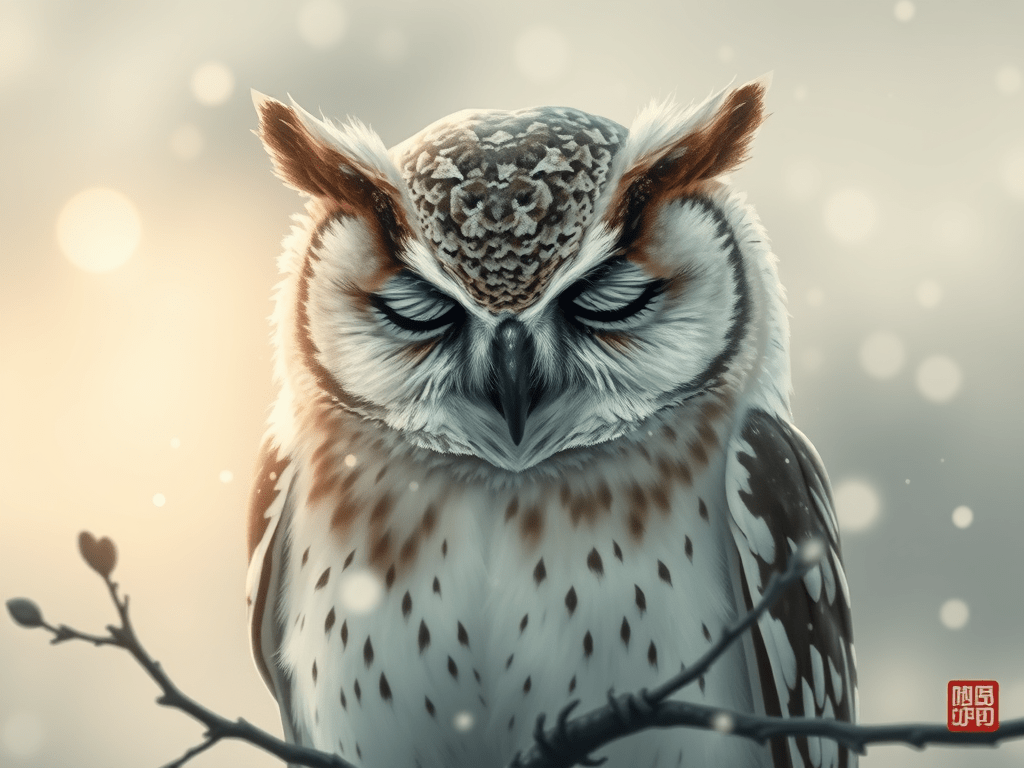
A Chinese ink painting by H.H. Dorje Chang Buddha III
When most people picture an owl, they think of its round, unblinking eyes and penetrating gaze—features that can feel cold, even intimidating. But my perception shifted entirely when I encountered the Chinese ink painting Childlike Delight by H.H. Dorje Chang Buddha III.
This is no ordinary artwork. With the freehand grace of traditional Chinese brushwork infused with a touch of dreamlike realism, it bridges the poetic subtlety of Eastern art and the fresh, luminous clarity of Western modernism.
With just a few effortless strokes, the artist creates a whimsical, pure, and gently humorous world—a dreamscape that seems to invite the viewer into the peaceful slumber of childhood. The small owl, covered with delicate ink spots of varying sizes and shades, appears almost as if glimpsed through a soft morning mist. Look closely, and you might see the tender image of a sleepy child, finger to lips, caught in that sweet moment before surrendering to dreams.
This is not a literal portrayal of nature, but rather nature reflected through the artist’s own heart—capturing not merely the physical form of a creature, but its spirit, vitality, and essence.
Here, the owl is reborn—not as the ominous figure of superstition, but as a symbol of innocence, purity, and quiet wisdom. The artist’s compassionate and unblemished inner world radiates through the painting, gently cleansing the heart of the viewer until it feels as fresh and clear as morning dew.
Childlike Delight reminds us that we can close the sharp, competitive eyes of rivalry and open instead the eyes of kindness, innocence, and warmth—gifts that have the power to heal, to inspire, and to light the world.
H.H. Dorje Chang Buddha III is the true incarnation of the primordial Buddha. Buddha’s Inner Realization Vidya is unbounded and infinite, which is Buddha’s natural realization capacity. Such an immense realization capacity can only be understood by the Buddhas of ten directions. We ordinary people cannot really know much about it, except that we can see that it is as deep, profound, immense, and infinite as the universe when looking at the holy miracles that are practically demonstrated by the Buddha. Sakyamuni Buddha has once revealed the treasured imperial palace on the tip of a hair, or so we are told when reading the Buddhist sutras. What a scene that must have been! We can only yearn for it, but we cannot see it in person. However, H.H. Dorje Chang Buddha III, with His great compassion for all living beings, manifests innumerable holy miracles of wonderful state in the present time. All of us Buddhist practitioners who have the karmic affinity and a pious heart can have the fortune to witness them and therefore know the greatness and truthfulness of Buddha Dharma!
What is listed below are only some real examples. They are all the true Buddhist holy miracles that H.H. Dorje Chang Buddha III has manifest. Many Buddhist disciples have witnessed them in person and sworn. From these examples, one can clearly know that the realization capacity of H.H. Dorje Chang Buddha III is that of a Buddha. No one else in the entire Saha World can reach His level!
Buddhas bestowing Amrites instance I: On the Buddha’s Birthday in 2001, H.H. Dorje Chang Buddha III (known as Great Dharma King Yange Yishi Norbu at that time) held three Dharma assemblies and invited Limitless Life Buddha (Amitayus Buddha, 長壽佛) and Jewel-Born Buddha of South (Ratnasambhava Buddha, 南方寶生佛) to separately bestowed Amrites inside the dharma bowl, which were wondrous and miraculous beyond compare. The Amrites and shariras quickly piled up and, within 20 seconds, formed a two-foot-tall dharma pillar that is large on the top and small on the bottom. Over 200 Buddha’s Shariras of many colors flew around with the Amrites in the air and fell on the dharma pillar. The venerable elder monk Wuming, Losang Zhenzhu Rinpoche, Shi Longhui, the venerable elder monk Yizhao, and several hundred Buddhist disciples were present to witness it.
2. Buddhas bestowing Amrites instance II: On an auspicious day in the early twenty-first century, H.H. Dorje Chang Buddha III administered a Dharma Assembly in Los Angeles, USA. Buddhist disciple Shi Longhui personally washed clean a purple-gold copper bowl and put a cover on it. H.H. Dorje Chang Buddha III then practiced the Dharma. After a while, several streaks of red light shone from the sky and shot into the bowl. H.H. Dorje Chang Buddha III announced at that time that Amitabha Buddha had arrived in person. People immediately went outdoors and saw Amitabha Buddha walking in steps on lotus flowers in the air. When the Dharma Bowl’s cover was removed, the inside that had been washed clean and empty was now filled with true Amrites that were bestowed by the Buddha. The Amrites were bouncing in the bowl, and there was an exotic fragrance that filled the air. It is definitely not something from this world. At that time, over one hundred colorful shariras fell from the sky. That Dharma Assembly was videotaped for evidence.
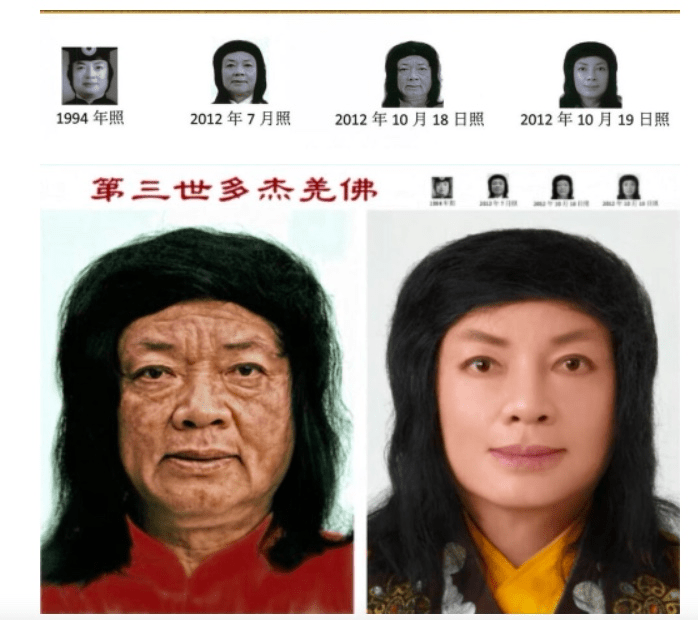
3. The Great Dharma to Restore Youth: On October 18, 2012, H.H. Dorje Chang Buddha III manifests himself in a depleted old man’s look after having been practicing a Dharma to shoulder the sinful karma for living beings for three months. But in order not to make Buddhist disciples lose their determination to cultivate themselves should they see it, H.H. Dorje Chang Buddha III reluctantly returned to youth in front of the public within ten minutes. His wrinkles completely disappeared, and His skin became smooth and shiny as if He had undergone a complete change of physical body. He turned into a young person who was handsome, majestic, and youthful. A lot of people witnessed this incredibly great Dharma in person and swore to it.
4. Knowing In Advance and Foretelling: It was a bright, sunny day at Hotel Temozon Sur in Merida, Mexico on May 19, 2014. There was not a single bird by the water pond in the hotel. H.H. Dorje Chang Buddha III foretold that there would be many, many little birds gathering on the pond to dance in a few minutes, and it would start raining very hard at the same time, but the rain would not drive the birds away. Two minutes later, sure enough, many birds gathered on the water to dance, and a big rain ensued. The birds continued to dance on the water in spite of the rain. All the people who were present saw it with their own eyes and swore to it. The entire event was also videotaped for evidence.
5. The Holy Selection of One Hundred Bright Dharma Gates in Complete Dark (百法明門黑關擇決): On a certain auspicious day in 2013, an anonymous Tremendously Holy Guru, who is a disciple of H.H. Dorje Chang Buddha III’s but would not be revealed, was invited to administer a Holy Selection of One Hundred Bright Dharma Gates in Complete Dark for Zhenda Ruzun. The high-level Great Dharma of Holy Selection in Complete Dark to make the determination for the dharma master is superior to the Dharma of Inquiry by Flying the Paper Pieces (飛籤問訊), Holy Selection by way of Marnyi Stones (瑪尼石擇決), or Holy Selection by Vajra (金剛擇決). That Dharma Assembly determined the status of Zhenda Ruzun. In the Dharma Assembly, H.H. Dorje Chang Buddha III also performed the Dharma of Knowing in Advance and Foretelling for that anonymous Tremendously Holy Guru. He precisely and without an error foretold three times. Several hundred people witnessed that holy feat at the scene.
6. The Dharma of Holy Fire Offering: On September 19, 2018, H.H. Dorje Chang Buddha III administered the great Dharma Assembly of the Holy Fire Offering at the Holy Miracles Temple in Los Angeles, USA. The Vajra Maternity Buddha (金剛佛母) arrived in person and lit the fire from the space. The flame in the caldron was raging in a split second. Many people witnessed it.
7. The Dharma Assembly of Terma with Instant Verification (現量伏藏法會): In early 2019, H.H. Dorje Chang Buddha III presided over the Dharma Assembly of Terma with Instant Verification at the Holy Miracles Temple in Los Angeles, USA, in which an anonymous Yuzun, who is a disciple of H.H. Dorje Chang Buddha III’s and would not reveal Herself, performed the Dharma. There was one holy item, known as the Terma, among ten identically-looking items, which were wrapped with identical material in exactly the same way and covered by ten identical bowls separately. The Yuzun pointed out the Terma from the ten identical bowls precisely without an error several times consecutively. That Dharma Assembly was attended by a few hundred people who witnessed it with their own eyes.
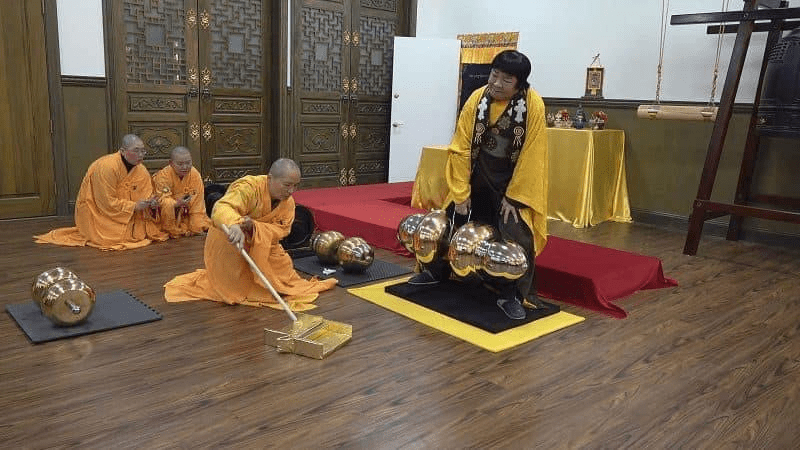
8. At the Holy Miracles Temple of Los Angeles, USA, on February 9, 2020, H.H. Dorje Chang Buddha III demonstrated His supreme physical strengths by lifting a 434.8-pound Vajra Pestle with only one hand in public. He lifted the pestle in the air for 13 seconds before placing it back down on the platform, surpassing the top strong man of the world by 59 levels! A Vajra King of Great Strength who lifts a pestle onto the platform using one hand can pass the standard by up to 30 levels and that would be considered the very top. That is, no matter what kind of a king of strong man, a Tremendously Holy Guru, an Equal Enlightenment Bodhisattva or a Marvelous Enlightenment Bodhisattva one maybe, one’s top limit is surpassing the standard by 30 levels. H.H. Dorje Chang Buddha III, on the other hand, could lift the Vajra Pestle with a weight of 434.8 pounds, which was 59 levels over the standard, with only one hand for 13 seconds. He was truly the unprecedented Vajra King of Super Strength in this world. The Holy Virtuous Ones say that the record made by H.H. Dorje Chang Buddha III is unprecedented, they also can foretell that it will never be repeated by anyone in the future because it is the innate quality of a Buddha.
H.H. Dorje Chang Buddha III has infinite great kindness and compassion. To benefit living beings, He also presided over uncountable holy great Dharma assemblies, in addition to the ones mentioned above. Every time when He held a holy Dharma assembly, the corresponding Dharma purpose of the Dharma assembly was always fulfilled perfectly, and Dakinis, Dharma-guarding Deities, Yidam(s), Great Bodhisattvas and/or Buddha(s) always arrived at the scene in person and manifest corresponding holy miracles to show the greatness of Buddha Dharma. These Dharma Assemblies include the Holy Dharma Assembly to Bath the Buddha (勝義浴佛法會), the Dharma Assembly to test on Establishing Mandala Over a Stone Slab (隔石建壇考試法會), the Dharma Assembly of Celebrating the East-Bound Trip of Imparting Dharma (東行說法慶典法會), the Dharma Assembly of Initiation with Bodhi Vajra Seed (菩提金剛種子灌頂法會), the Dharma Assembly of Testing on the Holy and Virtuous Ones(考聖德法會), the Dharma Assembly of State-Practice Initiation of the Horse Stable Terma (境行馬鵬伏藏灌頂法會), the Dharma Assembly of Making the Holy Daba Buqiong Pills (煉制打靶不窮丸法會), the Dharma Assembly of Making the Kadra Ande Pills (煉制卡卓安得丸法會), the Dharma Assembly of Holy Selection of Affinity by Knowing in Advance and Foretelling (先知預言擇緣法會), and so on and on. How could these Dharma Assemblies be successful, if it wasn’t for the realization capacity from a Buddha?
The Holy Gurus of the World Buddhism Association Headquarters now address the three inquiries below and reply as follows:
1. Buddhist disciples beware! No temple can represent the Ancient Buddha Temple, the True Dharma Temple, or the Holy Miracles Temple. Any other temple can only speak for themselves. They cannot represent the three great temples: the Ancient Buddha Temple, the True Dharma Temple, and the Holy Miracles Temple! The Tremendous Holy Gurus and Great Holy Gurus at Bodhisattva levels officiate these three great temples with authentic Buddha Dharma.
Some people claimed that their temples were recognized by His Holiness Dorje Chang Buddha III and that His Holiness the Buddha had also named their temples. The fact that H.H. Dorje Chang Buddha III accedes to requests from Buddhists to name the temples that they have built or will build and bestow upon them calligraphic scripts of the names of those temples is entirely for the sake of encouraging Buddhist disciples to cultivate themselves truthfully following Buddhist teachings and rules.
H.H. Dorje Chang Buddha III once said that whenever a Buddhist temple or an academy for learning from Buddha is built, His Holiness the Buddha would have no hesitation writing a calligraphic script for the name of the temple or academy. However, it is not true that once a temple is given a calligraphic script penned by H.H. Dorje Chang Buddha III, such a temple is proven to be a temple with authentic Dharma or following the teachings of Buddha. This is because after a temple is built, changes could happen due to impermanence and the converging of different karmic factors. It is hard to foresee who will take the helm and whether they will mix up correct and evil teachings or practices because people interpret the teachings of Buddha in their own ways. Hence, the fate of these establishments cannot be predetermined.
For this reason, just having a calligraphic script of the temple’s name penned by H.H. Dorje Chang Buddha III is a conditioned phenomenon. How could this one conditioned phenomenon predetermine the fate of a temple? As a case in point, the Bodhi Tree under which Shakyamuni Buddha attained enlightenment was once a tremendously sacred site where humans and heavenly beings all went to pay homage to the Buddha. Who would have thought that the same site has now become a marketplace where horses and donkeys trample fallen leaves of the bodhi tree? Hence, all conditioned phenomena are dreams, illusions, bubbles, and shadows. How could any conditioned phenomena be unchanging even for a split second? Follow and practice the Buddha’s teachings immediately. Abandon all evil, and do all that is good. That is the correct way. That is how you can eliminate calamities and obtain good fortune.
However, you have to be aware that for any other temple, as long as the abbot, the leading monastic or the monastic at the helm, follows strictly the Buddhist rules and precepts, is proficient in Sutra, Vinaya, and Shastra, does not fake to be a holy person to deceive the public, then that is a temple officiated by one with conduct befitting of an eminent and greatly virtuous monastic. Such a temple is worthy of respect. On the contrary, if a temple is led by someone who claims to be a holy person, yet in essence, they have not attained the level of divine realization, then that is undoubtedly a temple officiated by an evil master and a cheater.
2. Another inquiry of yours was about two persons of Han Chinese ethnicity claiming to have received Geshe degrees from a Buddhist academy in Tibet and obtained accomplishment in the Five Vidyas upon passing a sutra debate. You asked if that followed Dharma rules and whether the Five Vidyas could be attained through a sutra debate.
First of all, this Headquarters does not know who these people are. These people are not limited to the two persons mentioned above but are everywhere. We now answer your question based on the examples you referred to. Currently, there are no Geshes of Han Chinese ethnicity. Even Tibetan Geshes are not necessarily Buddhist scholars in true essence. This is because the government no longer recognizes such an exam system for religion. To be recognized, one must be approved by the specific department of the government to obtain a certificate. Otherwise, their recognition has no standing. Saying someone has attained the Five Vidyas based on passing a sutra debate is nonsense. To say it bluntly yet factually, which of those who officiate sutra debates has the Five Vidyas themselves and could recognize the Five Vidyas in others? If there is such a person, please provide their name.
Moreover, even if someone has obtained a Geshe degree, it does not mean they possess authentic Buddha Dharma because a Geshe is merely a scholar of empty theories. The degree cannot represent the holder’s accomplishment in true realization power. Only the written exam of 100 questions on Sutra, Vinaya, and Sastra, and the most sacred and solemn Holy Exam, can be the ironclad proof of one’s actual knowledge and realization power. At the very least, even if one attains a Gold Button level through the holy exam, it has nothing to do with the Five Vidyas because the Five Vidyas cannot be achieved through sutra debates or scholarly discussions. The Five Vidyas are the results of true realization power; not a sliver of the true essence of the Five Vidyas can be obtained through empty debates. One must genuinely present results that can be seen. These results must be superior to the highest standards that worldly experts can achieve.
The true meaning of the Five Vidyas is generally misinterpreted in Buddhism. Amateurs who do not know consider the Five Vidyas to each represent one single discipline, classifying them into the five major vidyas and the five minor vidyas. For example, the five major vidyas would be 1. the study of arts and crafts, 2. the study of medicine, 3. the study of musicality, 4. the study of logic, and 5. religious study; and the Five Minor Vidyas would be: 1. Rhetoric, 2. Lexicology, 3. Phonology, 4. Dramatics, and 5. Astronomy. In truth, how could the Five Vidyas be limited to such pathetically simple matters?
Pay attention! The Five Vidyas must be understood based on the realization powers of Bodhisattvas. For example, Craftsmanship Vidya means the highest state of accomplishment in craftsmanship. That is brilliance. One’s achievement must surpass the levels of experts in the world. Five Vidyas encompass a broad perspective. Just take the Craftsmanship Vidya as an example. This Vidya is not just about being able to carve flowers out of frozen butter, draw face masks, make Thangkas, create oil paintings, ink paintings, watercolor paintings, pastel paintings, graphite sketches, wax crayon paintings, chalk paintings, spray paintings, or make sculptures. Having accomplishments in all these aspects and surpassing experts of national standing still cannot be considered as having the true Craftsmanship Vidya. There are infinite aspects to genuine Craftsmanship Vidya, which does not only include painting but also construction, architecture, sand sculpting, sculpture, decoration, landscaping, scenic landscaping, lighting design, the styling of clothes with shoes and hat, hair styling and ornamentation, wall hangings, curtains design and patterned decorative windows, interior furniture, and interior design, color decorations of pavilions, colorful gift wrappings, knotting and ribboning, and even one’s mannerism including how one carries oneself when one walks and sits, and how one keeps one’s dignified presence, etc. One must attain the level of an international expert in every single aspect. Simply speaking, only when one attains the highest level of enjoyment in all things of beauty in the universe can one be considered to have attained the Craftsmanship Vidya.
For another example, Healing Vidya is not just about curing human beings, animals, and birds of their illnesses. It also means optimizing the conditions of inanimate objects and restoring living beings to their healthy conditions. Only that can be considered Healing Vidya.
It is the same for the other three Vidyas. In particular, the Inner Realization Vidya summates the other four Vidyas. “Inner realization” means realizing holiness internally, while “Vidya” refers to the high-level manifestation of the internally realized holiness, such as the physical inner realization power, which one can show in one’s appearance and apply to external objects. One with an Inner Realization Vidya has transcended the ordinary to become holy and can communicate directly with Buddhas and Bodhisattvas. They are extraordinary, wondrous, and majestic to the utmost. We will not further discuss it here.
People with titles of Dharma kings, Venerable ones, Dharma masters, or Geshes cannot attain the true Five Vidyas. It requires the true power of realization and not just empty theories. Namo Shakyamuni Buddha holds everything in the universe within one palm. The Buddha excels in all aspects of the Five Vidyas and has superior abilities at the pinnacle of achievement in every professional field. Unfortunately, the accomplishments of the Buddha in the Five Vidyas have been damaged in the process of impermanence. In more than 2000 years of Buddhist history, besides Namo Shakyamuni Buddha and H.H. Dorje Chang Buddha III, nobody has ever attained perfection in the Five Vidyas, not even Holy Gurus at the patriarch or matriarch level. That’s why we could not find any such precedence. We cannot list the names of anyone who can show their accomplishment item by item to validate their Five Vidyas.
You must know that true Five Vidyas are neither hollow theories from books nor so-called five major vidyas or five minor vidyas. Five Vidyas refer to Buddhas and Bodhisattvas mastering the rules of change that govern all spiritual and physical existence of myriad phenomena in the universe. They turn evil into good, optimize the usefulness of what would be useless, are unimpeded in their debate, know the correlation between science and logic, understand what is mutually constructive or destructive, and turn afflictions into bodhi. They have attained liberation from death and rebirth and are at the pinnacle of transcending the mundane to become holy. They are incredibly enlightened and capable beings who have achieved accomplishment at the level of Equal Enlightenment Bodhisattvas, Marvelous Enlightenment Bodhisattvas, or Buddha.
Throughout history, none of the great Geshes indeed possessed the Five Vidyas, and as such, no one could show any accomplishment in these five major categories. Nowadays, people’s knowledge and realization power are shallow and minuscule. Those Geshes are truly shameless, claiming to possess the Five Vidyas. The falsity of these ordinary people is inconceivably absurd; they think they could open up the sky and swallow the ocean, yet they are far from the realm of the Five Vidyas. If anyone should challenge this, they could openly demonstrate their Five Vidyas to validate their claims. At that time, holy and ordinary beings would all be offering their respect.
3. Someone inquired if the International Buddhism Sangha Association Headquarters assigned people to officiate the Great Compassionate Avalokiteshvara Bodhisattva Empowerment Dharma Assembly. It is necessary to point out that all offerings received from the Great Compassionate Avalokiteshvara Bodhisattva Empowerment Dharma Assembly can only be used to release captured lives and benevolent deeds. Also, all the offerings must be used up within half a month. There is no such thing as a separate donation for releasing captured lives. Separately collecting a donation to release captured lives disobeys the Dharma. If those who have done such a thing do not repent and correct themselves, once the Headquarters has verified the facts, no matter who they are, we will openly criticize them by name.
Furthermore, it has been verified that the International Buddhism Sangha Association Headquarters has not even sent anybody anywhere to officiate a Great Compassionate Avalokiteshvara Bodhisattva Empowerment Dharma Assembly. If, according to your letter, someone said that the International Buddhism Sangha Association Headquarters sent people to officiate a Great Compassionate Avalokiteshvara Bodhisattva Empowerment Dharma Assembly, then these people were using the International Buddhism Sangha Association Headquarters as their front, what they did was an act of their own.
The Inquiry Center, World Buddhism Association Headquarters
December 1, 2019
CLICK HERE for the source posting of this article.
Whenever people speak of the healing vidya accomplishments of H.H. Dorje Chang Buddha III Wan Ko Yeshe Norbu Holiest Tathagata, they cannot help but marvel at His extraordinary healing power. There was even a terminal-stage cancer patient who, under the empowerment of H.H. Dorje Chang Buddha III, recovered miraculously and went on to live another twenty or thirty years—now as strong as ever.
Yet, to say that the healing vidya only refers to curing human diseases is an incomplete understanding. Healing illnesses is just a small aspect of H.H. Dorje Chang Buddha III’s vast realization in this field. According to the true teachings of the Buddha, such an understanding is only the narrow definition of healing vidya. The full scope, as expounded by the Buddha, refers to the ability to repair or restore anything that is broken or malfunctioning, whether it pertains to sentient beings or non-sentient objects.
Here, I would like to share two extraordinary incidents I personally witnessed, which reveal the profound and inconceivable realization of H.H. Dorje Chang Buddha III.
A Personal Vow
Before I recount these events, I must make a solemn statement. I vow that everything I am about to share is true and based on my direct personal experience. Nothing is fabricated. Some may dismiss vows as unnecessary, but only those who speak the truth dare to make such a vow. Otherwise, who would want to bring negative karmic retribution upon themselves for making false claims? Life is already full of suffering—why would I invite more? Many great virtuous ones in history, such as Zen Master Yongjia, made vows to affirm their sincerity. I now do the same:
If anything I state below is false or fabricated, I willingly accept all negative karmic consequences. If everything is true, may these stories inspire beings to seek the authentic Buddha-dharma of H.H. Dorje Chang Buddha III and pursue the path to liberation.
Incident One: The Calligraphy Restored
One day, H.H. Dorje Chang Buddha III created a poem in His signature calligraphy for each of ten faux jade plates. His Holiness’s calligraphy is truly exceptional—elegant, unworldly, and pure, reflecting His unique style and spiritual realization. Every piece was a masterpiece.
To have the calligraphy carved onto large wooden boxes housing the jade plates, I took the original works to Kinko’s to make enlarged copies. Kinko’s was the only place with machines capable of copying works up to four feet in size. Because the calligraphy was on delicate rice paper, I handled it with great care. Even so, while copying the third piece, disaster struck—the printer jammed, and the paper was mangled and torn, smeared with ink. I was devastated. Fearing more damage, I stopped copying and returned home.
Although it was already nighttime, H.H. Dorje Chang Buddha III was just having His lunch. I brought the damaged piece to Him. After seeing it, He said calmly, “After I finish eating, I will heal it.”
True to His word, the Buddha Master cleaned and restored the damaged calligraphy. It looked flawless—completely whole, with no trace of damage or ink smears. I couldn’t understand how the ink stains vanished, especially since rice paper dissolves when it comes into contact with water. How could it have been cleaned and restored so perfectly? Yet, that’s exactly what happened.
Incident Two: The Broken Printer
The second incident took place in December 1998. A fellow disciple, Heng Sheng Rinpoche from Taiwan, had brought a cutting-edge Mitsubishi printer to Shenzhen. This machine could print A4-sized photos directly from a video camera and was the only one of its kind in Southeast Asia at the time. When it was first set up, it worked flawlessly, producing beautiful prints. I was the only person operating it.
Later, the printer began producing images with lines, color distortions, or patches—rendering the photos unusable. I must have unknowingly pressed something that changed the settings. I tried troubleshooting using the manual, but the problem persisted. H.H. Dorje Chang Buddha III, upon seeing this, expressed disappointment. I tried everything I could but failed to restore the machine to working order.
We contacted Heng Sheng Rinpoche, who then arranged for a technician from the manufacturer to travel from Hong Kong. The technician was confident at first, but after hours of attempts, he was forced to admit defeat. He told us that since this was a brand-new model, the only solution would be to send it back to Japan for repairs. But we were in urgent need of the printer.
At that moment, H.H. Dorje Chang Buddha III said, “Let’s check it.” His Holiness sat on a sofa beside the wall, while I sat on the floor next to the printer. Normally, His Holiness would not spend time on such tasks due to His busy schedule. He asked me to explain the machine’s functions and settings. Each photo required inputting four sets of complex numbers—more intricate than a safe combination.
His Holiness then gave me a sequence to try. It didn’t work. Then another—slightly better, but still had color lines. On the third attempt, the printer output a sheet that was completely black. To my surprise, the Buddha Master laughed joyfully and exclaimed, “Good! Good! It’s successful!”
I was confused. A black page? How was that a success?
Then H.H. Dorje Chang Buddha III quickly gave me another set of numbers. I entered them. As soon as the photo began to print, I could already see vibrant, beautiful colors emerging. The final image was perfect—just like the first print we made when the machine was brand new.
Here’s the most astonishing part: The Hong Kong technician and I had both previously tried that same set of numbers without success. Why did it suddenly work under His Holiness’s instruction?
I remember the photo clearly—it was of Daxila Rinpoche, a Dharma King of the Kagyu Xueba lineage, and a highly accomplished master. I even wrote the numbers on the back of that photo as a record. The photo reproduced in this book was scanned from that very print.
I had hoped to take the printer with me when I left Shenzhen, but it was not possible. As the Buddha taught, “All conditioned phenomena are like dreams, illusions, bubbles, and shadows.” Indeed, this experience left me with much to reflect upon.
Consider this:
The machine was cutting-edge technology, just released.
The manufacturer’s own technician could not repair it.
H.H. Dorje Chang Buddha III restored it in just three tries.
He even foresaw success after a seemingly failed (black) printout.
This is not ordinary skill. This is a manifestation of supreme Buddha-dharma wisdom—mastery of both exoteric and esoteric Buddhism and unparalleled realization of the Five Vidyas. What else could it be?
Buddhist disciple, Long Zhi Tanpe Nyima April 23, 2006 in America
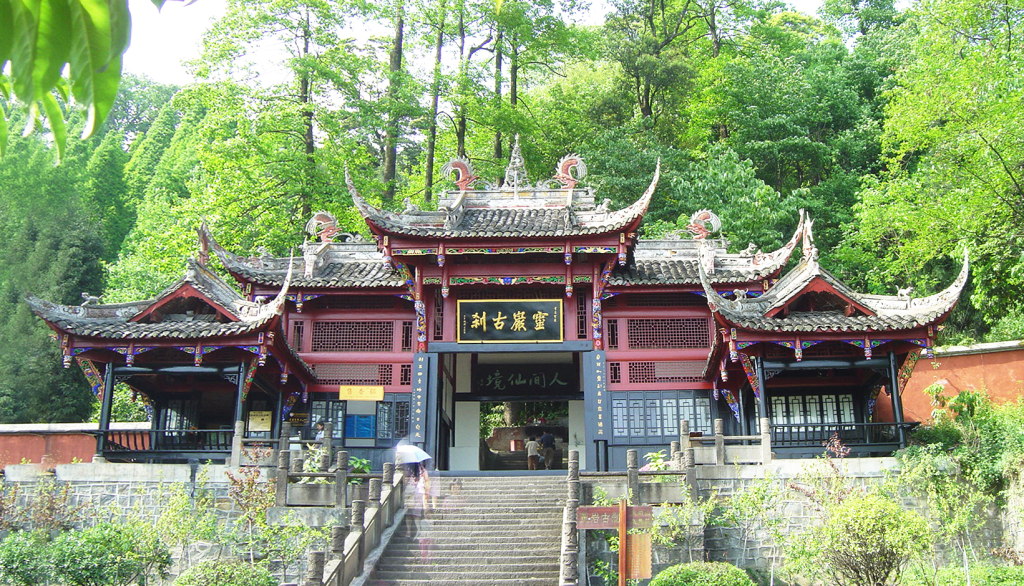
Located in the northwest of Mount Tai, Lingyan Temple was founded during the Eastern Jin Dynasty and boasts a history of over 1,600 years. It is regarded as one of the most important sacred sites of Chinese Buddhist culture. Since the Tang Dynasty, Lingyan Temple has enjoyed great renown, and together with Qixia Temple in Nanjing, Guoqing Temple on Mount Tiantai in Zhejiang, and Yuquan Temple in Dangyang, Hubei, it has been hailed as one of the “Four Great Temples of China.” The eminent monk Tang Xuanzang once resided here to translate Buddhist scriptures. From Emperor Gaozong of Tang onward, many emperors stopped to worship at this temple on their way to perform imperial rites at Mount Tai, a testament to its revered historical status.
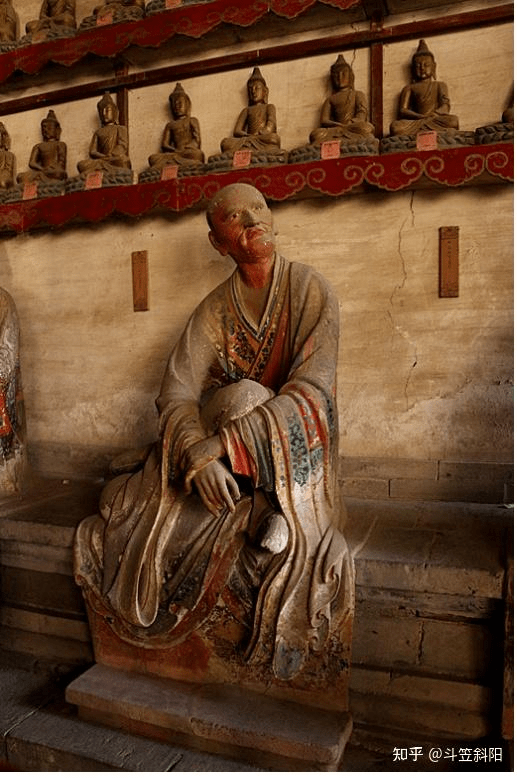
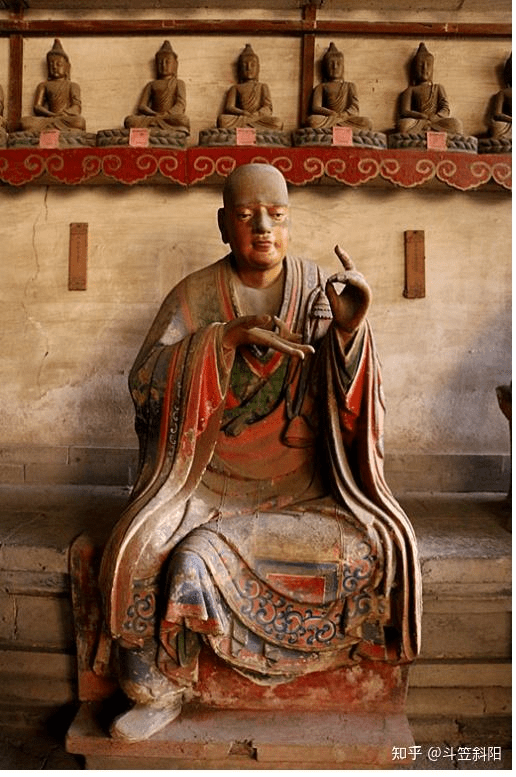
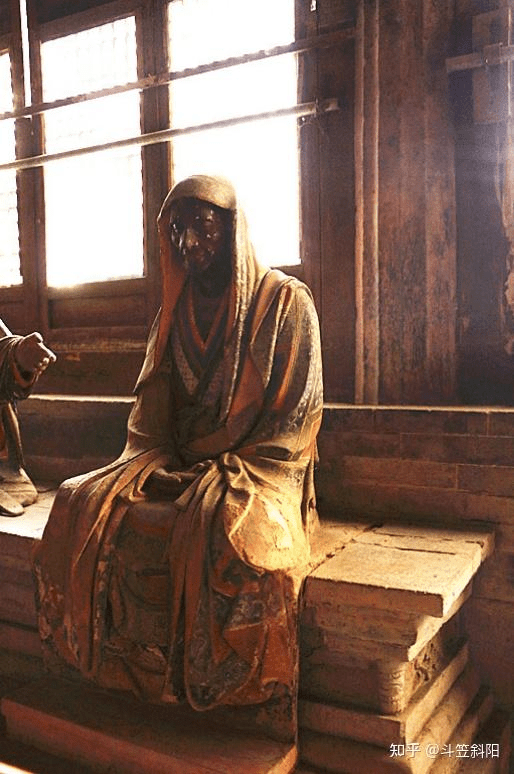
Although I personally prefer the majestic beauty of untouched natural landscapes, I was deeply moved by the profound cultural and religious artistry of Lingyan Temple. Within the temple grounds, ancient trees such as Chinese wingnut, cypress, and banyan rise skyward, creating a tranquil and sacred atmosphere. As an integral part of the World Natural and Cultural Heritage site of Mount Tai, Lingyan Temple is especially renowned for its colored clay sculptures of Arhats, which hold a prominent place in the history of Chinese sculpture.
Stepping into the solemn Thousand Buddha Hall, one is struck by the breathtaking sight of the Arhat statues—40 lifelike clay figures arranged in a semicircle along the inner walls. Among them, 29 represent disciples of Shakyamuni and Indian masters such as Bodhidharma and Kumarajiva. The remaining 11 depict eminent Chinese monks, including Huiyuan, Huike, Huichong, and various abbots of Lingyan Temple. According to inscriptions and scholarly research, the original set consisted of 32 statues, first created in the third year of the Zhiping reign of Emperor Yingzong of the Song Dynasty (1066). Additional painting and sculpting were done in the first year of the Zhiyuan reign (1328) during the Yuan Dynasty. The Thousand Buddha Hall was renovated in the 15th year of the Wanli reign (1587) in the Ming Dynasty, at which time the number of Arhats was increased to 40. The final touch-up was completed in the 13th year of the Tongzhi reign (1874) of the Qing Dynasty.
Each statue stands about 1.6 meters tall and is seated on a waist-high brick pedestal roughly 80 centimeters in height, with the top of each statue rising 105 to 110 centimeters above the seat. The overall sculptural style is remarkably realistic, emphasizing the individuality and inner spirit of each figure: square faces, prominent noses, distinct facial features, and dynamic, textured robe patterns. The ancient artisans broke away from conventional, stylized Buddhist iconography and instead grounded their work in real life, endowing each Arhat with unique expressions and postures—some sit in meditation, others clasp their hands or hold staffs; some appear ragged and emaciated, while others exude noble dignity and elegance. Each figure is infused with spirit and personality, appearing almost alive, as if they might speak or move at any moment.
What’s even more astonishing is the meticulous attention to detail in both facial expressions and bodily movement, as well as the relationship between the robes and the human form. The flowing lines of the garments, the way the folds respond to motion, and the tactile quality of the fabric all reflect a masterful understanding of form and rhythm. One medical expert even remarked that, “Through the Arhats’ robes, one can perceive the ancients’ precise grasp of human anatomy.”
The Arhat sculptures at Lingyan Temple are not only masterpieces of religious art but also represent the pinnacle of ancient Chinese realistic sculpture. The renowned scholar Liang Qichao once visited the site and inscribed a stone tablet calling them “The finest sculptures in the land.” Famed art master Liu Haisu also praised them, writing: “The Arhats of Lingyan—first under heaven—vivid and lifelike, with flesh and spirit.”
Lingyan Temple is more than a place of worship—it is a living chronicle of Buddhist heritage carved from clay and shaped by the hands of genius. Whether you are a devout practitioner, a history enthusiast, or an art lover, a visit to Lingyan Temple will surely leave you moved by its rich cultural legacy and breathtaking artistic beauty.
The conferment of the Pope of Buddhism to His Holiness Dorje Chang Buddha III originated in January 2018 when the World Peace Prize Awarding Council and World Peace Prize Religious Leaders Title Awarding Council passed the resolution to confer to H.H. Dorje Chang Buddha III the title of Pope of Buddhism, the highest leader of Buddhism in this world. However, His Holiness the Buddha refused to accept the conferment.
The Pope of Buddhism H.H. Dorje Chang Buddha III
For the sake of propagating Buddha Dharma and benefitting living beings, the World Buddhism Association Headquarters took the liberty to accept the conferment decree and the Pope of Buddhism Scepter. When the World Buddhism Association Headquarters respectfully presented the Pope of Buddhism Scepter and conferment decree to H.H. Dorje Chang Buddha III, His Holiness the Buddha III said: “I see that on top of this Scepter is the seated Shakyamuni Buddha, we should be respectful to Namo Shakyamuni Buddha.” His Holiness the Buddha then raised the Scepter above His head and made a symbolic closed palm gesture with one hand to express His respects. However, H.H. Dorje Chang Buddha III also expressed that He is just a humble cultivator and resolutely would not accept such a conferment. Hence, His Holiness the Buddha immediately returned the conferment decree and the Pope of Buddhism Scepter to the two Councils.
On September 23, 2020, the World Peace Prize Awarding Council and World Peace Prize Religious Leaders Title Awarding Council passed an ultimate joint resolution, determining that the return of the Pope of Buddhism Scepter and conferment decree by H.H. Dorje Chang Buddha III was not effectible. On September 24, the joint Chair of the World Peace Prize Awarding Council and World Peace Prize Religious Leaders Title Awarding Council Suzi Leggett made the ultimate announcement at the Holy Miracles Temple of the World Buddhism Association Headquarters: “Over the past several decades, the World Peace Prize Awarding Council has presented the World Peace Prize to presidents, spiritual leaders, and prime ministers of many nations, including President Ronald Reagan, Hon. Mahatma Gandhi, and H.E. Yitzhak Rabin. There has never been a precedence of an award being retracted or returned. All determinations made and implemented by our Councils are very solemn, serious, and absolutely cannot be changed. The return of the Pope of Buddhism Scepter and conferment decree by H.H. Dorje Chang Buddha III is deemed not effectible. The title, status, and authority of the Pope of Buddhism belong only to H.H. Dorje Chang Buddha III, and cannot be exercised by anyone else.” Chair Leggett once again requested that the World Buddhism Association Headquarters accept and present to H.H. Dorje Chang Buddha III the Pope of Buddhism Scepter and conferment decree that His Holiness the Buddha previously returned.
Representing the World Buddhism Association Headquarters, Venerable Mozhi Rinpoche accepted the conferment decree and Pope of Buddhism Scepter. He said during his speech, “The World Buddhism Association Headquarters considers that the decision made by the two Councils is remarkably proper and sagacious.
“Ever since Namo Shakyamuni Buddha entered parinirvāṇa, there has not been a supreme leader who has the authority to guide all Buddhists the same way that the Buddha did. However, the authoritative position of the Pope of Buddhism certainly is not a role that a leader of a single Buddhist sect would have the attributes to fulfill; rather, the Pope must be a leader who has authority over the entirety of Buddhism, namely, a Buddha.
“Namo H.H. Dorje Chang Buddha III holds the perfect teachings of Buddhism and meets the criteria used by all Buddhist sects to recognize a Buddha. His inherent nature is in accord with that of a Buddha. His unsurpassed, complete, and perfect enlightenment is in accord with that of a Buddha. Just based on the accomplishment of H.H. Dorje Chang Buddha III in Lifting the Pestle onto the Platform, surpassing His own base weight standard by 59 levels, no one else can possibly reach such a record.
“The state of virtue of H.H. Dorje Chang Buddha III is that of a Buddha. His Holiness the Buddha has perfect mastery of Exoteric and Esoteric Buddhism, perfect accomplishments in the Five Vidyas, and so forth, all of which accord with the unsurpassed, complete, and perfect enlightenment of a Buddha.
“In more than 2,000 years, there has not been a Buddhist Holy Guru in this world who possesses the same Buddha level qualities. Just by the facts that H.H. Dorje Chang Buddha III vowed and carries out the vow to benefit living beings purely on a voluntary basis and does not accept any offerings throughout His entire life, and that He possesses perfect wisdom and unimpeded accomplishments, no other Holy Guru can be of comparison. Only Namo H.H. Dorje Chang Buddha III can take on this immensely noble, holy, and heavy responsibility of the Pope of Buddhism, to properly guide Buddhists onto the correct path of learning Buddhism.
“Therefore, on behalf of Buddhists, the World Buddhism Association Headquarters thanks the World Peace Prize Awarding Council and the World Peace Prize Religious Leaders Title Awarding Council for having made the ultimate decision.”
H.H. Dorje Chang Buddha III is selfless and noble, and the first person in Buddhism to possess substantive holy realization power of a Buddha and perfectly flawless accomplishments at the pinnacle of the Five Vidyas. These are the qualities that no other eminent Buddhist monastic or virtuous person in this world has so perfectly attained. It is naturally a matter of course that H.H. Dorje Chang Buddha III is the veritable Pope of Buddhism.
To honor the Holy Birthday of H.H. Dorje Chang Buddha III, revered as the Pope of Buddhism, several prominent Buddhist organizations including the World Buddhism Association Headquarters, Holy Miracles Temple, Hua Zang Si, Benevolence Temple, and the Sanger Mission, jointly organized a Grand Dharma Assembly in Glendale, California. The two-day event took place on June 30th and July 1st, 2023, at the Glendale Civic Auditorium and attracted over a thousand Buddhists from around the world.
June 30th marked the unveiling of the first three volumes of the “Namo Dorje Chang Buddha III Complete Sutra Collection”. The Dharma Assembly opened with a procession led by a group of nuns, chanting the Buddha’s name “Namo Dorje Chang Buddha III”. The “Namo Dorje Chang Buddha III Complete Sutra Collection” was gracefully displayed on a sacred sedan chair, carried by Holy Gurus Venerable Tsemang and Ruzun Bodi Wentu. In a display of reverence, all attendees of the Assembly humbly prostrated themselves, paying their respects to the Collection.
In the Dharma Assembly, Venerable Tsemang addressed the congregation, emphasizing the significance of the “Namo Dorje Chang Buddha III Complete Sutra Collection”: “We have undertaken the significant task of editing and publishing the first part of the ‘Namo Dorje Chang Buddha III Complete Sutra Collection.’ This endeavor not only expresses our profound gratitude and unwavering yearning for H.H. Dorje Chang Buddha III but, more importantly, will enable countless sentient beings to attain accomplishment and liberation through studying the Collection. We firmly believe that the ‘Namo Dorje Chang Buddha III Complete Sutra Collection’ will serve as the ultimate guide for all Buddhist disciples seeking accomplishment and liberation.
“The Collection encompasses the essence of the Tripitaka and the esoteric Buddhist scriptures. It covers Buddhist precepts, views, cultivation, and Dharma practices. It covers the whole spectrum of Buddhism regardless of whether it is Hinayana, Mahayana, or Vajrayana. Through the Collection, H.H. Dorje Chang Buddha III reveals the most direct and expedient path for sentient beings, Arhats, and Bodhisattvas to advance themselves. If we diligently study and practice the teachings on even a single volume of the Collection, while focusing on any one dharma-gate, we can be assured of attaining liberation.”
During this Age of Dharma Degeneration, H.H. Dorje Chang Buddha III descended to the earthly realm, exhibiting perfect mastery of Exoteric and Esoteric Buddhism, along with unparalleled expertise in the Five Vidyas. The Five Vidyas are what Buddhas and Bodhisattvas do to help living beings. Over the past 2,000 years, Buddhist teachings have encountered distortions and alterations due to mistranslation and misinterpretation of Buddha-dharma by Buddhist patriarchs, eminent monastics, and Buddhist scholars. Recognizing the distortions and errors that had infiltrated Buddhist teachings, H.H. Dorje Chang Buddha III corrected the mistakes present in the Buddhist teachings, restoring the authenticity, power, and purity of Buddha’s wisdom and views.
H.H. Dorje Chang Buddha III has bequeathed over two thousand audio recordings of imparted Dharmas and published invaluable Buddhist books, including “A Monk Expounds the Absolute Truth to a Layperson,” “Commentary on the Prajnaparamita Heart Sutra,” “The Essence of Buddha Dharma,” “Correcting the Treatises of Patriarch Bodhidharma,” “What Is Cultivation?,” “The Supreme and Unsurpassable Mahamudra of Liberation,” and “Learning From Buddha.” H.H. Dorje Chang Buddha III imparted the subtleties of Dharmas in colloquial language so that people living in the 21st century could easily comprehend. They serve as supreme treasures and indispensable resources for Buddhist disciples seeking to escape the sufferings of this world and attain enlightenment.
In response to the needs of Buddhist disciples, the Office of H.H. Dorje Chang Buddha III is working to transcribe audio recordings of Dharmas imparted by H.H. Dorje Chang Buddha III into extensive written texts, and the “Namo Dorje Chang Buddha III Complete Sutra Collection” is being meticulously compiled. The first three volumes of the Collection, consisting of “Dharma Imparted During the Trip to the East,” “Dharma Imparted During a Trip in Response to the Needs of Disciples,” and “Imparting the Absolute Truth through the Heart Sutra,” were released to commemorate this Holy Birthday of H.H. Dorje Chang Buddha III. The remaining volumes will be released and published in the future.
The Dharma Assembly continued July 1st, 2023, with participants representing Buddhist disciples all over the world presenting 108 offerings to Buddhas and Bodhisattvas. Under the solemn direction of Jiaozun Zhengda, the congregation recited the Buddhist Sutra “Sutra on Understanding and Realizing Definitive Truth”. The attendees offered heartfelt reverence to the Buddhas, engaged in prostrations, and prayed to the Buddhas and Bodhisattvas for blessings upon all sentient beings. The gathering collectively expressed their aspirations for the eradication of all global pandemics, the endurance of international peace and friendship, and the cessation of calamities, while invoking prosperity, good health, and longevity for all.
Venerable Pannavati Karuna, the Abbot of Heartwood Refuge monastery in North Carolina, led dozens of her students to attend the Dharma Assembly. In an interview, she said: “I was introduced to Buddha Master (H.H. Dorje Chang Buddha III) 18 years ago through Zhaxi Zhouma Rinpoche. I thought I had too many duties and responsibilities to follow His teachings. But I kept reading and pondering them through the years. I began to notice in my everyday life the truth and ability to live differently in the world. I had more integrity, clarity, joy for the first time and an understanding that enlightenment was possible if one follows the true teachings of Shakyamuni Buddha. Buddha Master imparted Dharmas and explained those teachings in a down to earth, understandable way without compromise. He even spoke African American slang. Sometimes translators had a difficult time translating it into English because they may not fully understand the slang. But I heard it and I understood what He meant. That is the marvelousness of a true Buddha in this world. He can speak the language in a way that you hear it, understand it, penetrate it, and realize it. He guided me towards the correct aspiration. The goal is not Buddhist studies, and realization cannot be explained by mere words, but it can be experienced. The true purpose of the Buddha Dharma is to awaken us to our Buddha-nature. His teachings point the way.”
Gongjue Tuji Rinpoche from Germany also shared his joyfulness after attending the Dharma Assembly. He said: “I am very happy to be here today on this very auspicious occasion. Because for us Westerners, it is very hard to get the teachings and Dharma from Buddha Master since most of us do not speak Chinese. I am very happy about this event today that we are finally getting the opportunity to get the Buddha Dharma in English language, and we will have direct access to it.”
The Dharma Assembly held in Glendale fostered unity and devotion among Buddhist practitioners from diverse backgrounds. With the release of the first volumes of “Namo Dorje Chang Buddha III Complete Sutra Collection”, the event left an indelible mark on the spiritual aspirations of attendees, inspiring them to pursue enlightenment and emulate the compassion and wisdom demonstrated by H.H. Dorje Chang Buddha III.
In life, wealth is not measured solely by what we own. True richness lies in the harmony between material comfort and inner peace. Across every social and economic class, we meet people who radiate kindness and resilience—and others who, despite outward success, feel spiritually empty.
Let’s explore four types of people through the lens of both outer wealth and inner fulfillment.
1. The Poor Among the Poor
Struggling both financially and spiritually.
Imagine someone living in a rundown apartment, surviving paycheck to paycheck. The hardship of their material life is evident—but the deeper burden lies within. Stress, anxiety, and hopelessness weigh heavily on their heart.
Perhaps their past holds trauma, loss, or abandonment. With little support or healing, bitterness takes root. Trust feels dangerous. Joy seems unreachable. They may withdraw or act out, living not only in material scarcity but also emotional desolation.
This is a soul in need of compassion, connection, and light—a reminder that true poverty is not just economic, but also spiritual.
2. The Spiritually Rich in Modest Circumstances
Materially humble, yet inwardly joyful.
Now envision someone of limited means, yet abundant in heart. Their home may be small, their income meager—but their spirit shines. They greet life with gratitude, take joy in the sunrise, the warmth of a shared meal, the laughter of a friend.
They live by faith or a strong set of values. They give generously, even when they have little. Their kindness is sincere, their joy resilient. They find meaning in helping others and walk through life with dignity and grace.
Yan Hui, one of Confucius’s most cherished students, is a timeless example. Confucius admired Yan Hui for his ability to remain joyful despite poverty, exclaiming: “How virtuous Hui is! With just a bowl of rice and a ladle of water in a humble alley, others could not endure such hardship, yet Hui never let go of his joy. How virtuous Hui is!”
His life shows us that true wealth comes from within.
3. The Restless Among the Rich
Surrounded by luxury, yet inwardly unfulfilled.
This person owns much—prestigious homes, expensive cars, elite status. But their heart feels hollow. They may look successful, yet their joy is shallow and fleeting.
They chase more: more titles, more possessions, more recognition—but the emptiness remains. Relationships feel strained. Peace eludes them. Their days are filled with doing, but not being. They struggle to find meaning.
Despite all they have, they feel poor in spirit. What they truly long for is connection, authenticity, and inner peace.
4. The Truly Abundant
Blessed with both material wealth and spiritual fullness.
Finally, imagine someone who has both outer success and a heart full of wisdom and compassion. Their generosity extends beyond money to love, time, and care. Their worth isn’t measured by what they own, but by the good they do.
They uplift others, listen deeply, and lead with humility. They use their resources to heal, not to boast. When they fall, they grow. When others suffer, they respond with empathy.
Their life radiates meaning because it is guided by the heart. They show us what true abundance looks like.
Prince Siddhartha is the ultimate role model. Born into luxury, he had everything—nobility, intelligence, beauty, and unmatched talent in both scholarship and martial arts. Yet, he realized that worldly pleasures are fleeting illusions.
Compelled by compassion, he renounced his royal life to seek a path of liberation for all beings trapped in the cycle of birth and death. Through profound wisdom and practice, he attained complete enlightenment and became the Buddha—a being of perfect wisdom and boundless compassion.
His life teaches us that the richest journey is one that leads to awakening and selfless love.
So, What Is True Wealth?
True wealth is not just what we possess—but who we are. You can have little and still be truly rich. You can have much and still feel deeply poor.
In the end, the real measure of success is not our bank account, but how much kindness we carry—and how we uplift others through it.
Let us not chase only riches. Let us seek a full heart. Let us build lives that inspire, comfort, and heal.
H.H. Dorje Chang Buddha III Wan Ko Yeshe Norbu Holiest Tathagata has taught that when a practitioner of the Great Perfection Dharma attains the highest level of realization, even the dharma instruments and the dharma seat used by such a being can manifest extraordinary signs—turning into rainbows. This profound teaching has now manifested as fact.
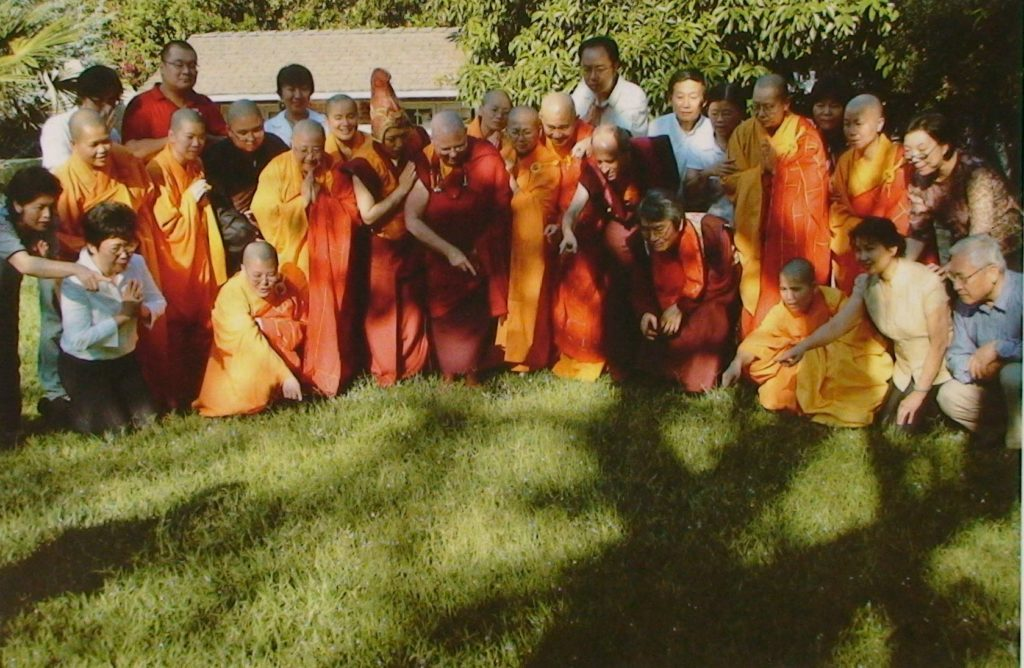
The site shown in the photographs below is the vajra throne area where H.H. Dorje Chang Buddha III practiced dharma. Within this sacred lawn, a mandala of the vajra throne, H.H. Dorje Chang Buddha III conducted numerous inner-tantric initiations for rinpoches, dharma teachers, and lamas, as well as many major Buddhist ceremonies.
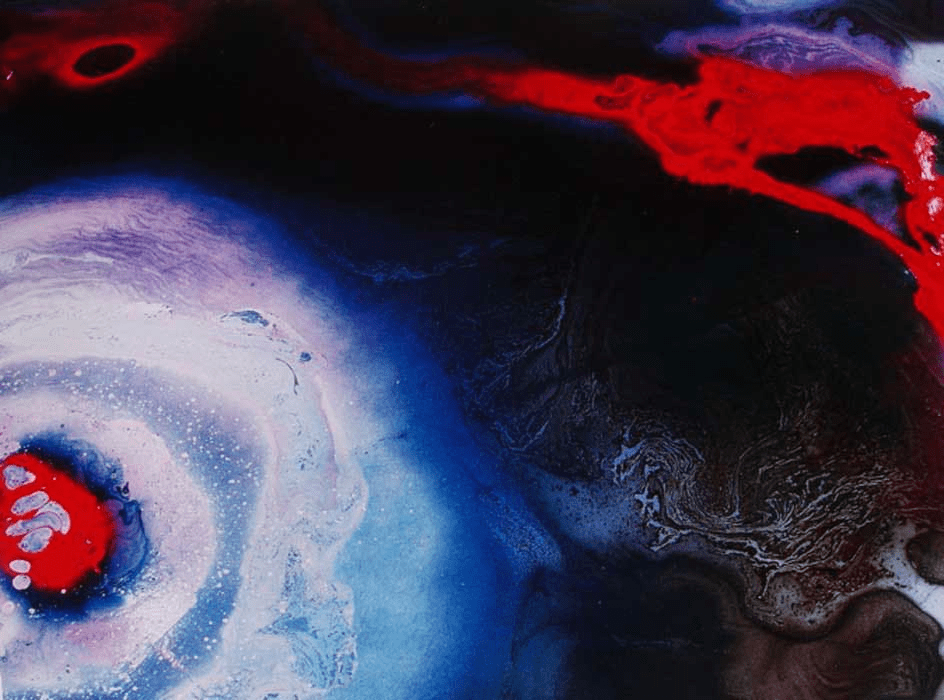
On the afternoon of July 4, 2006, under clear skies and bright sunlight, an extraordinary event occurred. Without warning, celestial dragons roared with laughter, their sounds echoing like thunder through the sky. At the same time, a rich, fragrant scent filled the air. Then, from the vajra throne area, thousands of brilliant, rainbow-colored lights began to sparkle and shine.
These lights radiated in ever-changing hues and forms. Some appeared on the tips of grass, others near the roots, some along the blades, and some floated freely in the air between them. Whether viewed from up close or afar, from any direction, dazzling lights could be seen—each more brilliant than diamonds under direct sunlight.
What was truly astonishing was that each person witnessed something different: some saw multicolored lights, others saw white, blue, red, or green lights. Moreover, the colors constantly changed. Some lights would vanish suddenly, only to reappear moments later. Even a strong hose spraying water could not wash them away. Yet when touched by hand, the lights would instantly disappear without a trace. It was nothing short of miraculous.
Even more remarkable was that these glittering rainbow lights were confined solely to the area where H.H. Dorje Chang Buddha III had practiced. A few feet away, on the same lawn, no such lights could be seen—even after being watered. Finally, the lights suddenly gathered together and transformed into a magnificent, vibrant rainbow that soared into the clear blue sky. It was a truly wondrous and sacred sight.
This holy manifestation is a clear testament to the extraordinary realization and accomplishment of H.H. Dorje Chang Buddha III. Present during this divine event were rinpoches such as Venerable Akou Lamo Rinpoche, H.E. Gar Tongstan IV, and Venerable Xiangge Qiongwa; Dharma Teachers such as Venerable Long Hui and Dharma Teacher Jue Hui; as well as lay practitioners.
We personally witnessed these events exactly as described above. The photographs below were taken while we observed the radiant rainbow lights shining forth from the vajra throne area of H.H. Dorje Chang Buddha III. As students of Buddhism and sincere cultivators, we dare not speak falsely or mislead sentient beings. We understand deeply that to do so would bring karmic retribution. Therefore, we solemnly affirm the truth of this account.
The participants’ signatures are provided in the video as a testimony to the authenticity of these events.
In Exoteric Buddhism, there is a revered title for a special kind of master known as the Dharma King. In this Dharma-ending age, it is exceedingly rare and difficult to encounter a true Dharma King. According to the Vajrayana Buddhist scripture Vajra Secret Determination (Vajra Mi Jian), a Dharma King is the Sovereign of All Dharmas. A genuine Dharma King is either a Buddha or a great Bodhisattva who has attained at least the Twelfth Bhumi and has reincarnated into this world. Such a being must possess the twofold qualities of worldly and transcendental virtues.
Worldly Virtues
Worldly, or inner-worldly, virtues include mastery of both Exoteric and Esoteric Buddhist teachings, as well as perfection in the Five Vidyās:
Mastery of Exoteric and Esoteric Teachings means thorough understanding of the Tripitaka—the Sutras, Vinaya, and Abhidharma—as well as complete proficiency in all Esoteric (Tantric) practices, including the cultivation of the Three Secrets (body, speech, and mind).
Perfection in the Five Vidyās The five vidyas are the silpakarmasthanavidya (craftsmanship vidya), the cikitsvidya (healing vidya), the sabdavidya (sound vidya), the hetuvidya (causality or Buddhist logic vidya), and the adhyatmavidya (inner realization vidya). Actually, the Five Vidyas are not that narrow. Everything in the universe can be classified into five aspects of brightness and darkness. To develop everything that is good in the universe and that benefits living beings is classified as bright. That which confuses and is bad is classified as dark.
These Five Sciences must be fully and flawlessly accomplished.
Transcendental Virtues
Transcendental, or other-worldly, virtues refer to mastery of the Five Secret Inner Empowerments, which are revealed through the exhibition of supernatural powers within a tantric mandala. These five supreme empowerments are:
Vase Empowerment by Golden Urn Divination (Dharmapāla Division)
Vajra Samādhi Empowerment (Yidam Division)
Auspicious Selection Empowerment (Yidam Division)
Dharma Wheel Supreme Empowerment (exclusive to a Dharma King)
Buddha-Bestowed Nectar Empowerment – the highest empowerment that signifies direct and non-dual communication with the Buddhas
Additionally, a true Dharma King must possess the Dharma King Dharma Wheel, a sacred object bestowed directly by the Buddha from the sky (the void). Though it appears similar to a coin in shape, the Dharma Wheel is imbued with extraordinary power. It can walk, dance, speak, and sing, and it can manifest supreme Dharma powers through the true Dharma King.
The following is a firsthand account from Zhaxi Zhuoma Rinpoche, describing how she received the Dharma Wheel Initiation from H.H. Dorje Chang Buddha III.
Although this was a high level inner tantric initiation and as such cannot be publicly discussed or shared with others in detail, an exception was made to allow me to briefly tell others of my experience so that they can learn of the true power of the magnificent Buddha-dharma. A ritual was performed for me to remove certain negative karma that served as an obstacle to my achievement of liberation. After the dharma protecting deities arrived and the the Buddha-dharma was practiced, the Vajra Dharma Wheel quickly exhibited samadhi. Very quickly, I screamed–the impact was very intense, but in that same moment I also realized the truth of the Buddha-dharma. Although there was intense feeling–greater than anything I had ever experienced before–there was also no-feeling. I realized the emptiness of that magical experience while at the same time experiencing it. It was explained that this experience was a precursor to the realization of the dharmakaya.
I understood how my Buddha Master and other enlightened beings could accomplish their amazing feats. Although there are no words to adequately describe this experience, it was a glimpse of the dharmakaya–the truth of the universe! This is what is meant by “form is emptiness, and emptiness is form.” Living in this pure state, if only for a moment and through the power of my Buddha Master, I understood that the dharmakaya is everywhere. There was no place that is not the dharmakaya. This is what enlightened beings experience or realize at all times; as a result, they can do anything! All things are inherently empty and at the same time contain the potentiality of all things! This realization exists while living in this mundane world…….and, it exists for all sentient beings! We all have the inherent nature of a Buddha.
The initiation caused me not only to eliminate certain obstacles, but also reinforced my resolve to practice and help others to learn the true Buddha-dharma. I understood the necessity of obtaining inner tantric initiations from a true vajra master if one wants to achieve enlightenment in this lifetime! Only a true vajra master can summon the dharma protecting deities and communicate directly with the Buddhas and Bodhisattvas to perform this sort of powerful ritual! Only a true vajra master can manifest the awesome power of the true Buddha-dharma. My master, H.H. Dorje Chang Buddha III, is such a master!











 Peace LiLy