Zuo Zongtang, a prominent official of the late Qing dynasty, was renowned not only for his military prowess but also for his skill in the game of Go. His expertise was so exceptional that none of his subordinates could match him.
One day, while traveling incognito, Zuo Zongtang stumbled upon a thatched cottage with a plaque reading “The Best Go Player in the World.” Skeptical, he decided to challenge the owner to a series of games. To his surprise, he won all three matches. With a smile, Zuo Zongtang remarked, “You can take down that plaque now!” Satisfied, he continued on his journey.
However, after a successful military campaign, Zuo Zongtang returned to the same area. Curious to see if the plaque had been removed, he visited the cottage once more. To his astonishment, the plaque was still there. Determined to test his luck again, he challenged the owner to another three games—and this time, he lost all three. Perplexed, he asked the owner how this was possible.
The owner explained, “The last time you visited, you were on a mission to lead troops into battle. I didn’t want to affect your spirit negatively. But now that you’ve returned victorious, I felt free to play at my best.”
This story highlights a profound lesson: True mastery often involves knowing when to yield. A master may win, but true greatness lies in the ability to be gracious. Similarly, wisdom involves understanding the feelings of others and knowing when to let go of one’s own ambitions.
Life often mirrors this dynamic. While the clever may fixate on gains and losses, the truly wise are those who bravely release their attachments. Wisdom is not merely about cleverness but about humility and compassion.
In Buddhism, true wisdom arises from great compassion. When one transcends self-interest and embraces deep compassion, the door to true wisdom opens. H.H. Dorje Chang Buddha III emphasizes in his teachings that genuine cultivation involves prioritizing the well-being of others. In his Dharma discourses, His Holiness has repeatedly highlighted the importance of:
“Establishing great compassion as your foundation. Avoid all evil deeds. Commit to all that is good. Set aside personal interests to benefit others. Patiently endure humiliation and adversity. Practice humility. Purify your mind. When encountering beings, regardless of their condition—be they handicapped, deficient, sick, or healthy—treat them all as family. Understand that all phenomena are governed by causality.”
The Buddha’s life exemplified this principle perfectly. He never sought to be revered from a lofty pedestal but instead viewed himself as a humble servant to all beings. Every action he took was dedicated to promoting peace, liberation, and happiness for all.
As a true Buddha living in the world at this time, H.H. Dorje Chang Buddha III has never been concerned about damaging His own honor, status, or image, for He has effaced Himself in order to benefit living beings by saying that He is an ordinary person like everyone else. In reality, the facts prove that in the few-thousand-year history of Buddhism, H.H. Dorje Chang Buddha III is truly one who has actually manifested the pinnacle of attainment in both Exoteric and Esoteric Buddhism and perfection in the Five Vidyas! His Holiness the Buddha is also the only one in the history of Buddhism who has made it His practice to benefit and serve living beings without accepting any offerings.
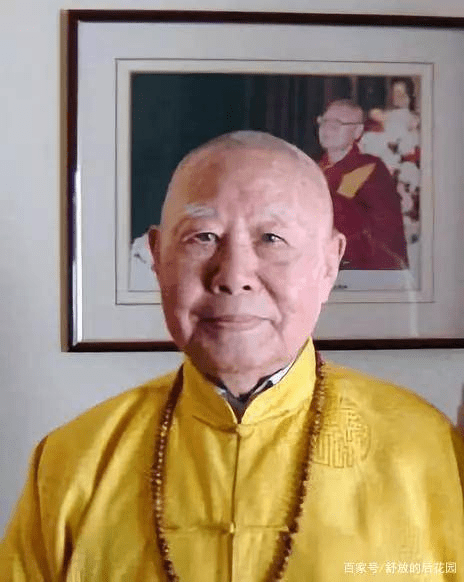
Losang Phuntsok Geshe, known by his Chinese name Xing Suzhi, was born in 1916 in Nanjing into a family deeply rooted in the Buddhist tradition. His spiritual journey began early; he embraced Buddhism at the age of nine and, by sixteen, had enrolled in the Sino-Tibetan Buddhist Institute in Chongqing, Sichuan. Here, he studied Tibetan, laying the foundation for his future studies in Tibet. That same year, he became the secretary to Master Taixu, one of the most prominent modern Buddhist scholars, who bestowed upon him the Dharma name Bison.
During his time at the Sino-Tibetan Buddhist Institute, Losang Phuntsok studied under Master Taixu and Master Fazun. His studies were deep and rigorous, focusing on key scriptures such as the Śūraṅgama Sūtra and Cheng Weishi Lun. He also diligently organized and recorded Master Taixu’s lectures. Both Master Taixu and Master Fazun held Tibetan esoteric Buddhism in high regard, especially the Amrita Dharma, a teaching said to have been revealed by the Buddha himself. This Dharma, they believed, was immensely powerful and rare, capable of revealing the true nature of reality, bestowing the six spiritual powers, and leading to liberation from the cycle of life and death. The Amrita blessing was also said to grant longevity, health, and the accumulation of merit and wisdom.
Inspired by these teachings, Losang Phuntsok embarked on a journey to Tibet in 1937, determined to seek the highest Vajrayana teachings, including the elusive Amrita Dharma. His journey was fraught with challenges, but he was resolute in his quest. He sought out eminent monks and scholars across the Kham and Tibetan regions, studying over 300 different Sakya teachings. His goal was to become a modern-day Tang Sanzang, the legendary monk who brought Buddhist teachings from India to China, and to bring the esoteric teachings of Tibet back to his homeland.
After seven years of intense study and practice, Losang Phuntsok Rinpoche achieved a historic milestone. In the first month of 1945, he passed the ten-thousand-person debate examination hosted by the Regent of Tibet at Drepung Monastery in Lhasa, becoming the first Han Chinese to obtain the highest degree in Tibetan Buddhism, the Lharampa Geshe. This degree, equivalent to a doctorate in Buddhist studies, is highly respected within Tibetan Buddhism and is recognized by both the government and the people.
Losang Phuntsok Rinpoche spent many years in Tibet, receiving over 600 empowerments and learning from many great masters. However, the Amrita Dharma, the teaching he had long sought, remained elusive. Many masters told him that this profound teaching was extremely difficult to find and that it might take many years for a great holy being to appear who could transmit it. Despite this, Losang Phuntsok Rinpoche remained undeterred. Over the decades, he traveled to Hong Kong, the United States, and other places around the world, translating and lecturing on scriptures, teaching disciples, and continuing his search for enlightened masters. He once served as the President of the American Vajrayana Buddhist Association.
In 1997, after years of searching, Losang Phuntsok Rinpoche’s efforts bore fruit. He formally became a disciple of H.H. Dorje Chang Buddha III in Chengdu, recognizing Him as his root guru. H.H. Dorje Chang Buddha III performed empowerments and transmitted teachings to him, manifesting the mandalas of the deities each time He transmitted a Dharma. Losang Phuntsok Rinpoche witnessed these sacred phenomena firsthand, which deeply moved him.
During an interview in Chengdu, he expressed his profound realization: “I have been practicing Buddhism for 60 years and have met over a hundred so-called great masters of Tibetan Buddhism. I also spent a long time with Chinese Buddhist masters like Master Taixu. I have received more than 600 empowerments from great masters like Fazun, but none of these empowerments have had the impact and blessing power on me like the ones I received today. The teachings and empowerments from the Master (H.H. Dorje Chang Buddha III) are so effective that I can’t help but think: my 60 years of Buddhist practice are not as valuable as this one day. Sixty years have passed in vain, not as meaningful as today!”
In June 2000, during an extraordinarily auspicious moment that occurs only once in countless eons, Losang Phuntsok Rinpoche, the only living Han Chinese Lharampa Geshe celebrated worldwide and the President of the American Vajrayana Buddhist Association, participated in a highly significant Dharma assembly. He attended this event along with other world-renowned high monks and elders, including Elder Master Wuming, the President of the World Buddhist Sangha Council, and Elder Master Yizhao, the Dharma heir of the Venerable Xu Yun. This Dharma assembly was personally presided over by H.H. Dorje Chang Buddha III, the highest Buddhist leader in the world today.
During the event, Losang Phuntsok Rinpoche not only witnessed the sacred phenomenon of the Amrita descending but also personally tasted the Amrita. He felt an unparalleled sense of comfort throughout his entire body. Deeply moved and excited, he expressed that at the age of 85, after spending more than a decade in Tibet and having taken many great masters as teachers, he had never been able to receive the Amrita. He never expected that his wish would finally be fulfilled upon meeting H.H. Dorje Chang Buddha III. He personally witnessed two rays of red light entering the bowl and transforming into Amrita, fulfilling a wish that had eluded him during his many years of seeking in Tibet.
In February 2001, at the request of his Buddhist disciples, Losang Phuntsok Rinpoche once again taught the Lamrim (Stages of the Path to Enlightenment) by the great master Tsongkhapa of the Gelug school of Tibetan Buddhism and organized his lecture notes for future publication. When he completed the translation of the Lamrim and submitted it to H.H. Dorje Chang Buddha III for review, H.H. Dorje Chang Buddha III performed a Dharma practice on the spot, inviting the Dharma-protecting Bodhisattvas to the mandala. Losang Phuntsok Rinpoche personally requested guidance from the Dharma protectors, who responded that it would indeed be best for H.H. Dorje Chang Buddha III to revise the text. Losang Phuntsok Rinpoche remarked that Dorje Chang Buddha III’s Dharma practice was so powerful that the Dharma-protecting Bodhisattvas appeared immediately, allowing him to seek their guidance directly with his own eyes. He acknowledged that no one else in the world possesses such remarkable spiritual realization.
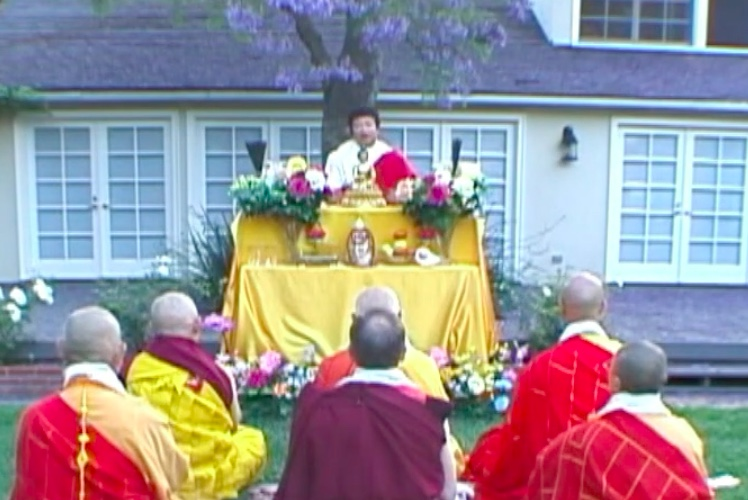
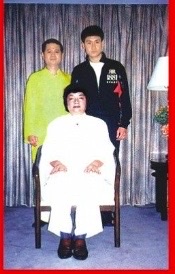
The photo above shows Losang Phuntsok Geshe in Chengdu, Sichuan, taking refuge in H.H.Dorje Chang Buddha III as his master. The photo below shows H.H.Dorje Chang Buddha III performing an empowerment for Losang Phuntsok Geshe in the United States.
Master QinDing taking refuge in H.H.Dorje Chang Buddha III as his master
Great monks and virtuous masters do not wish to let their lives pass in vain. They understand the rarity of human life, the difficulty of pursuing the Dharma, and the challenge of attaining the path to liberation. For these great monks and virtuous masters, the Dharma is not merely empty Buddhist theory or superficial titles of lineage. They deeply understand that whoever can truly demonstrate supreme realization, manifesting responses across the three realms, mastering both the exoteric and esoteric teachings, and thoroughly comprehending the Five Vidyas, represents the true Dharma of the Tathagata. Therefore, they willingly bow down and take refuge in the true incarnation of the primordial Buddha, Vajradhara H.H. Dorje Chang Buddha III.
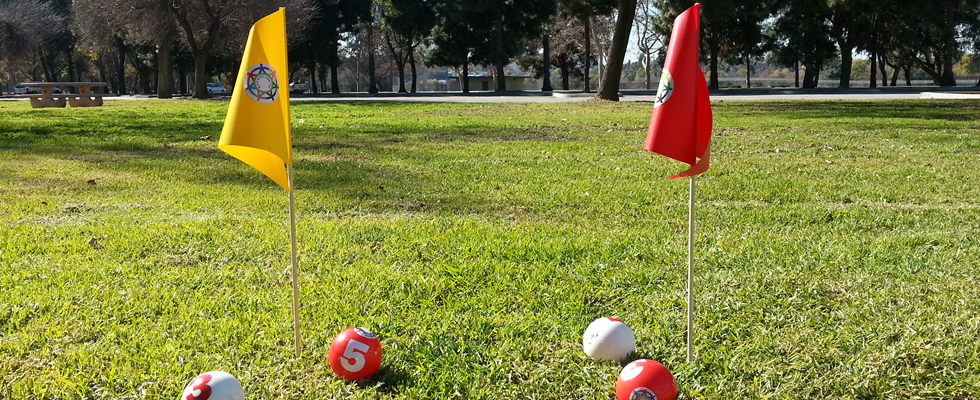
The Wiser sport originated as the most prestigious ball game played in ancient palaces and royal courts by emperors, kings, ministers, scholar-officials, and Western heads of state. It was designed to cultivate strategic thinking, exercise the body, and engage in a battle of wits. Unfortunately, with the passage of time, this globally enjoyed diversion became a lost sport.
However, a remarkable, selfless, virtuous individual has rediscovered and perfected the Wiser sport for public benefit. This individual, known for the noble moral character, received unanimous recognition from the 112th Congress of the United States Senate through resolution 614, which commended his contributions to humanity. When this virtuous individual taught the techniques and rules of Wiser to the World Wiser Sport Committee, he stated, “You must spread the Wiser sport worldwide and become the headquarters that leads it. Remember, everyone—regardless of gender, age, or background—has the right to enjoy Wiser. It is a ball sport bestowed by nature to strengthen the body and improve health. Its purpose is to benefit humanity by enhancing physical fitness, health, morality, friendship, and peace.” The World Wiser Sport Committee, now formally established with its headquarters in the United States, held its inaugural leadership ceremony on March 2, 2013.
Wiser is a ball sport that combines strategy and exercise, where teams compete in a setting that requires no special playing field. It can be played anywhere, regardless of obstacles, making it extremely safe and suitable for all—men, women, young, and old.
For the elderly, playing Wiser can improve immunity, strengthen the body, enhance stamina, rejuvenate brain cells, prevent senile dementia, ease the mind, increase happiness, and prevent conditions like rheumatism, insomnia, and limb numbness.
Middle-aged and young people also benefit from Wiser by enhancing their wisdom, mental vitality, and social interactions. It helps resolve tendencies toward solitude and asocial behavior by encouraging outdoor activity, friendship, self-confidence, and healthy social relationships.
Teenagers and children who play Wiser will develop independent thinking, courtesy, and virtue. They will gain tenacity, physical strength, and intelligence, making it an excellent sport for nurturing talent. Moreover, Wiser is extremely safe and inclusive, promoting individual and group strategies and tactics.
Wiser offers seven key benefits: strengthening the body, improving health, enlivening the spirit, developing brainpower and wisdom, increasing unity and friendliness, boosting immunity, delaying stamina decline, and elevating moral character. Players consistently praise the positive impact Wiser has on their physical and mental well-being.
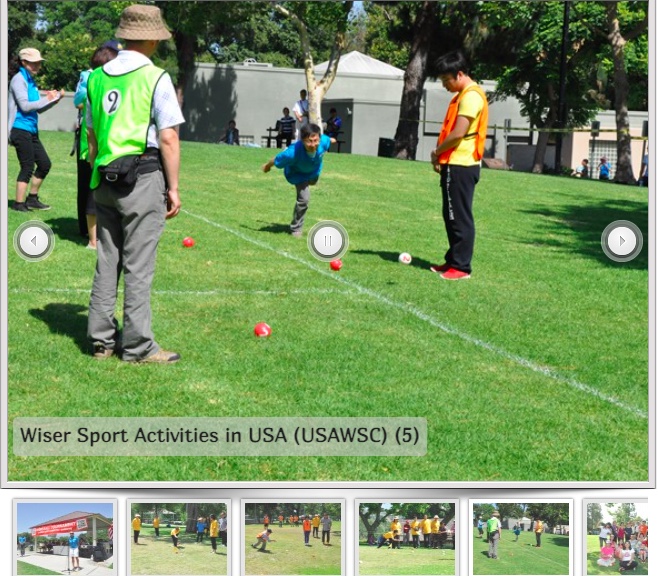
The game is growing in popularity and is now played in many countries, including the United States, Canada, Paraguay, Mexico, China, Taiwan, Malaysia, Vietnam, Thailand, South Africa and Germany.
Full Version, “How To Play Wiser Ball” Video Tutorial by WWSC
To celebrate the Holy Birthday of H.H. Dorje Chang Buddha III, on June 17 this year, Buddhist disciples and their friends gathered at the Holy Heavenly Lake, the future site of the Buddhist Town, to hold a Wiser ball game. The event was organized by the newly established North American Wiser Ball Association, which includes the United States, Canada, and Mexico. Eight teams from six regions participated in friendly matches in the morning. In the afternoon, Wiser ball referees from the United States, Canada, Mexico, China, Taiwan, and Hong Kong engaged in an exchange of experiences, which was one of the highlights of the event. Each piece of valuable experience contributed by the participants has injected new energy into the future development of Wiser ball around the world! Everything is just beginning, and we look forward to meeting again!
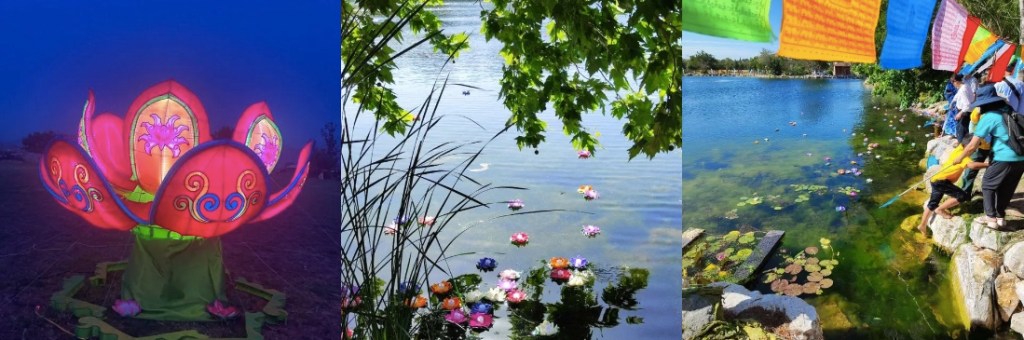
In the evening following the Wiser ball competition, a beautiful float lantern ceremony took place. Each lotus lantern symbolized everyone’s best wishes, world peace, and an auspicious future for all beings. The beautiful lotus lanterns stood amidst a sea of green, enveloped in a radiant blue glow. As night fell, the floating lotus prayer lanterns gradually spread across the lake, carrying with them the countless wishes in each of our hearts.
Avalokiteshvara Bodhisattva, from beginningless eons, has been tirelessly saving countless sentient beings with his immense compassionate power. Despite his boundless efforts, he felt a sense of inadequacy. Thus, from the power of samadhi born of great compassion, he formed an immense compassionate force. This force, combined with the great compassionate power of Buddhas from the ten directions, resulted in a drop of green tear flowing from his eye, transforming into the infinitely majestic green female Bodhisattva, known as Green Tara. Due to this origin, Tara’s power to save is boundless and infinite.
Green Tara is revered as the Great Compassionate One and the Holy Savior Mother Buddha. The practice of the Green Tara ritual has a rich history that originated in India and later spread to China, Tibet, Japan, and beyond. The sacred roots of this practice trace back to Green Tara herself, who was initially the ancient Buddha Pravartaka and an incarnation of Avalokiteshvara Bodhisattva.
Chanting the Green Tara mantra even once, with focused contemplation of Tara’s sacred image, brings immense merit. Such merit is equivalent to chanting the names of seventy-two billion Buddhas and Bodhisattvas as numerous as the sands of the Ganges. Both the exoteric and esoteric traditions have extensive practices based on this ritual, and many practitioners have achieved great success and benefit from it.
Over time, the original texts and mandalas related to this profound practice have suffered from omissions and distortions in their transmission. For the past two hundred years, these deviations have increasingly moved away from the authentic regulations. In recent decades, the practice has nearly completely lost its true essence. Furthermore, the representations of Green Tara have deteriorated in form, lacking the dignity of the authentic appearance. This includes discrepancies in hand mudras, attire, and overall sacred depiction, resulting in a significant loss for the Buddhist community.
The Green Tara Perfect Practice Ritual and Thangka by H.H. Dorje Chang Buddha III
In response to these issues, H.H. Dorje Chang Buddha III transmitted the “Green Tara Perfect Practice Ritual” and personally supervised the creation of the Green Tara mandala thangka.
This three-dimensional thangka is not only lightweight and portable, making it easy to carry, but also presents the mandala clearly and vividly, ensuring that it remains etched in memory. Additionally, it possesses several extraordinary merits:
Authenticity and Compliance: The Green Tara mandala presented in the thangka fully complies with the regulations of the “Green Tara Perfect Practice Ritual.” This ensures that the practice remains true to its original form.
Historical and Miraculous Significance: Tara had already attained Buddhahood countless eons ago, her divine power is illustrious, and her sacred deeds are well-documented. Today, in the “Tara Hall” in Nethang, Tibet, the sacred statue of Tara once spoke to Atisha, instructing him, further propagating her holy name and Dharma power across China and Tibet. During the creation of this three-dimensional thangka, many miraculous occurrences were witnessed. For example, the sacred image of Tara, originally looking straight ahead, appeared differently in subsequent photographs taken from the same angle: one showed her looking up at the sky, while the other depicted her looking down at sentient beings. This clearly demonstrates Avalokiteshvara Bodhisattva’s extraordinary vow power: above, he shares the same compassionate force with all Buddhas and Bodhisattvas; below, he joins in compassionate aspiration with all sentient beings in the six realms. Additionally, when viewed from different angles, the main deity of Green Tara always faces the observer, and the seed syllables in the sky behind her follow her movement, appearing above her head. Furthermore, the colorful clouds, initially close to the sun and moon, seem to remain stationary while the sun and moon move vividly between the clouds from different perspectives.
Majestic and Unmatched Representation: The sacred image of Green Tara in the thangka is exceptionally majestic and perfect, unrivaled in both China and Tibet throughout history. The twenty Taras, each with different postures, exhibit supreme Dharma power, arranged behind the main deity, appearing and disappearing miraculously. Notably, standing in different positions reveals the Great Brahma Deva, the primary protector, initially as one, then suddenly as two, and then back to one again, a phenomenon unprecedented in history! Meanwhile, the Four Great Heavenly Kings and the Eight Dragon Kings remain unchanged. Additionally, Indra, the Four Great Heavenly Kings, and the retinue of the Eight Dragon Kings, wielding their divine weapons and instruments, surround and protect Tara with unmatched divine transformation. Visualizing this thangka makes the practice highly effective and rapidly fruitful.
Validation and Praise
Upon the completion of the “Green Tara Perfect Mandala Thangka,” Buddha Master specifically instructed disciples to bring all existing Green Tara statues of various materials from around the world to the Vajra Dharma Circle for public verification. They were to determine which one is the most orthodox and perfect thangka. The Vajra marbles immediately entered the mandala thangka, confirming that the Buddhas and Dharma protectors of the ten directions unanimously endorsed it.
Many of the seven classes of Buddhist disciples, upon practicing with this three-dimensional thangka, experienced unprecedented and unique realms. High monks, living Buddhas, and even Dharma Kings from around the world have all respectfully praised and recommended this rare and precious sacred image. In truth, among all the existing Green Tara images, none can compare to the perfection and majesty of this mandala thangka. Its blessing power is extraordinarily miraculous; a single glance imprints it deeply in the mind, leaving a lasting impression.
The Green Tara Perfect Practice Ritual and its accompanying thangka, as transmitted and supervised by H.H. Dorje Chang Buddha III, represent a revival of the authentic practice of Green Tara. This thangka not only restores the true essence of the practice but also enhances the spiritual experience for practitioners worldwide, offering unparalleled blessings and merits.
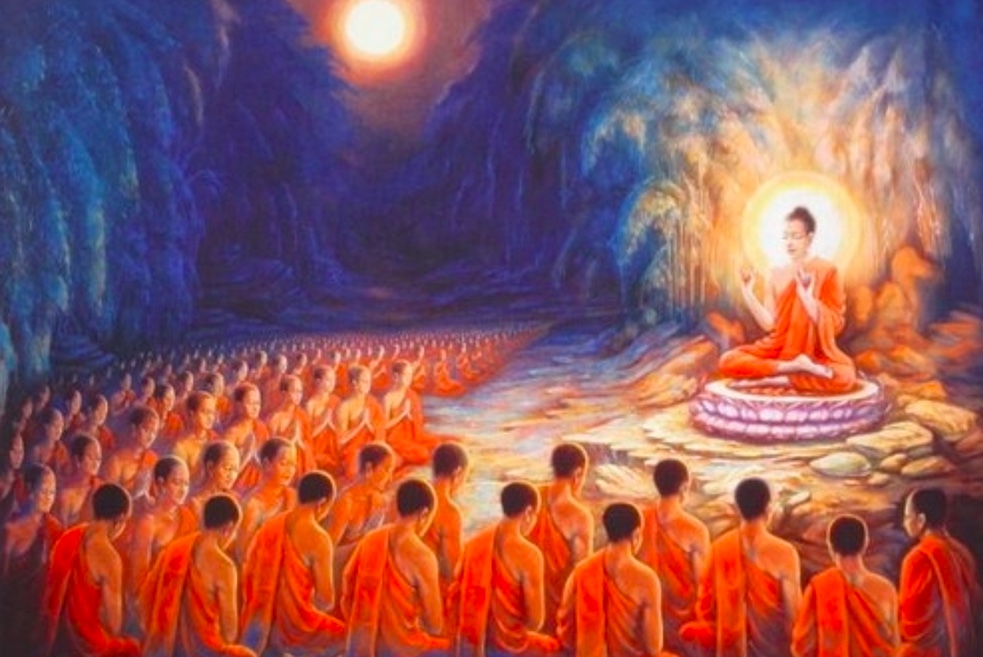
It is hard to believe that anyone could possess all-encompassing wisdom. For us humans, dedicating a lifetime to mastering even one discipline is remarkable. How could someone be a philosopher, scientist, painter, sculptor, writer, doctor, and inventor all at once, mastering each within a few decades? This seems impossible by human standards. However, the Buddha’s vast and profound wisdom is genuinely real. Over 2,500 years ago, Siddhartha Gautama, the Buddha, invited anyone to ask him any question, promising a detailed answer. This is illustrated in the story of the Buddha teaching a cowherd, as recorded in the “Sutra of the Cowherd Parable.”
King Bimbisara of Magadha once invited the Buddha and 500 disciples to preach in his kingdom for three months. To provide them with fresh dairy products daily, the king arranged for cowherds to stay nearby. As the end of the three months approached, the king suggested the cowherds meet the Buddha. The cowherds, having heard of the Buddha’s wisdom, decided to test him with questions about cowherding. They reasoned that if he could answer these, he truly possessed all-encompassing wisdom.
Upon arriving at the Bamboo Grove, they were struck by the Buddha’s radiant presence. They saw him sitting under a tree, glowing like a golden mountain, radiating light like melted gold. Overwhelmed with joy, the cowherds discussed among themselves, “Regardless of whether the Shakyamuni possesses all-encompassing wisdom, anyone who sees him feels joy. His light is unparalleled, his appearance noble, and his presence exudes majesty. His radiance is clear and bright, his demeanor commanding respect, and his body adorned with the aura of virtue, making anyone who sees him feel immense joy.
If he indeed possesses all-encompassing wisdom, it must be due to his immeasurable merits. No worldly treasure can compare to the Buddha’s sublime and dignified presence, which brings great joy and pure faith to all who see him. It is clear that the Buddha must indeed possess all-encompassing wisdom.”
The shepherd thought about this and sat down to pay respects to the Buddha. They asked the Buddha, “What are the various methods a shepherd can use to ensure that the cattle thrive and reproduce well? And what conditions might prevent the cattle from growing properly and living peacefully?” The Buddha answered: There are eleven methods by which a shepherd can ensure the cattle’s well-being and reproduction. What are these eleven methods?
Understanding the Caretaker: Having a strong and capable caretaker who can protect and nourish the cattle, keeping them healthy and well-maintained. Similarly, a monk should be a respected and virtuous leader who can uphold the Dharma and guide beings toward good deeds.
Understanding Color: Knowing the colors of the cattle, such as black, white, or mixed. Similarly, a monk should understand that all phenomena in the world are composed of the four elements: earth, water, fire, and wind.
Understanding Appearance: Recognizing whether the cattle’s appearance is auspicious and whether they will be harmonious. A monk should similarly be able to discern whether someone’s actions indicate wisdom or ignorance.
Understanding Scraping: If insects bite the cattle and their blood is consumed, sores will develop. Scraping can remove these pests and promote the cattle’s well-being. Likewise, a monk should remove harmful views and misconceptions that corrupt their spiritual practice.
Understanding Wound Treatment: Applying medicine to prevent mosquito and fly bites and other injuries. Similarly, a monk should use correct Dharma teachings to protect themselves from delusions and negative emotions.
Understanding Smoke: Using smoke to drive away insects so the cattle can stay in a comfortable, insect-free shelter. Similarly, a monk should use the teaching of Dharma to lead beings to the state of emptiness and liberation.
Understanding Good Ways: Knowing the behavior and preferences of the cattle and how to keep them healthy. A monk should understand how to practice the Noble Eightfold Path to achieve Nirvana and avoid falling into the extreme paths of annihilation or eternalism.
Understanding the Right Place: Knowing how to provide a place where the cattle can live healthily and with minimal sickness. Similarly, a monk should practice and teach the Dharma to cultivate purity and increase good roots.
Understanding Good Routes: Knowing which paths are safe and which places are good for crossing rivers, avoiding places with waves and pests. Similarly, a monk should learn from knowledgeable teachers and adapt their teachings to the capacities of sentient beings.
Understanding Safe Places: Ensuring the cattle live in places free from predators and harmful creatures. Similarly, a monk should maintain mindfulness to avoid the harmful effects of negative emotions.
Understanding Milk Preservation: Ensuring that the mother cow’s milk is not consumed completely by the calf so that both the mother and the owner can benefit from it daily. Similarly, laypeople should use offerings such as clothing and food economically to benefit both the givers and receivers.
The cowherds, after hearing the Buddha’s teachings, thought, “We cowherds know only three or four methods, and our predecessors knew only five or six. Hearing the Buddha today is truly astonishing and unprecedented! The Buddha indeed possesses complete wisdom beyond doubt.”
This is described in the “Sutra of the Parable of the Cowherds.” From this, we understand that there are individuals with complete wisdom.
Today, due to the supreme and exceptional causes and conditions, the original primordial Buddha, Vajradhara has once again descended into the Saha World to manifest all-encompassing wisdom. H.H. Dorje Chang Buddha III once said: Within five years (from 1995 to 1999), if any sentient being asks ME any question, the answer should be given immediately without any hesitation. If there is any need to think about it, or if there is slight hesitation or any fabrication, or if the answer is not comprehensive, I will immediately step down from the Dharma throne and no longer be qualified to teach the Dharma.”
In the more than two thousand Dharma discourses spoken by the Buddha, He provided direct and comprehensive answers to various questions on practice and methods for His disciples. Sometimes, even before the disciples spoke, He would say, ‘I know what you want to ask. You don’t need to say anything; I will answer you directly.’ The disciples would nod in agreement. There was also Zeng Ruzhang, who studied stealth aircraft and asked why they can be invisible. Lobsang Zhenzhu Rinpoche once proposed to see Green Tara, and shortly after, a divine manifestation appeared, H.H. Dorje Chang Buddha III fulfilled his wish…
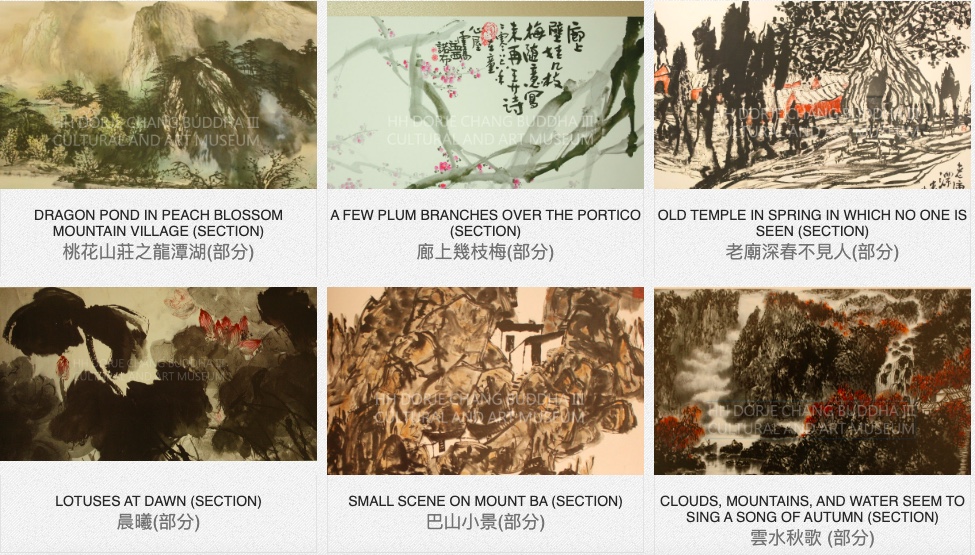
Step into the International Art Museum of America in San Francisco or the H.H. Dorje Chang Buddha III Culture and Art Museum in West Covina, and you will be able to appreciate world-class masterpieces of art. H.H. Dorje Chang Buddha III has created Chinese paintings, oil paintings, and various styles of calligraphy. In addition to mastering styles from existing schools of painting, such as Realism, Abstract, Line, and Impressionism, H.H. Dorje Chang Buddha III has independently developed sixteen unique schools of painting.
At the fourth session of the World Poets and Culture Conference held in Hungary in 1994, more than 5,600 experts and scholars representing 48 countries and regions unanimously approved conferring upon H.H. Dorje Chang Buddha III the title “Distinguished International Master,” which has an honorific status comparable to a head of state.
H.H. Dorje Chang Buddha III possesses extraordinary and saintly wisdom, perceiving the true essence of the universe and life. Whether it be within the various sects of Buddhism or in all worldly fields such as art, science, medicine, and philosophy, His accomplishments reach the highest level in every aspect, with unparalleled expertise and a unique status beyond any saint.”
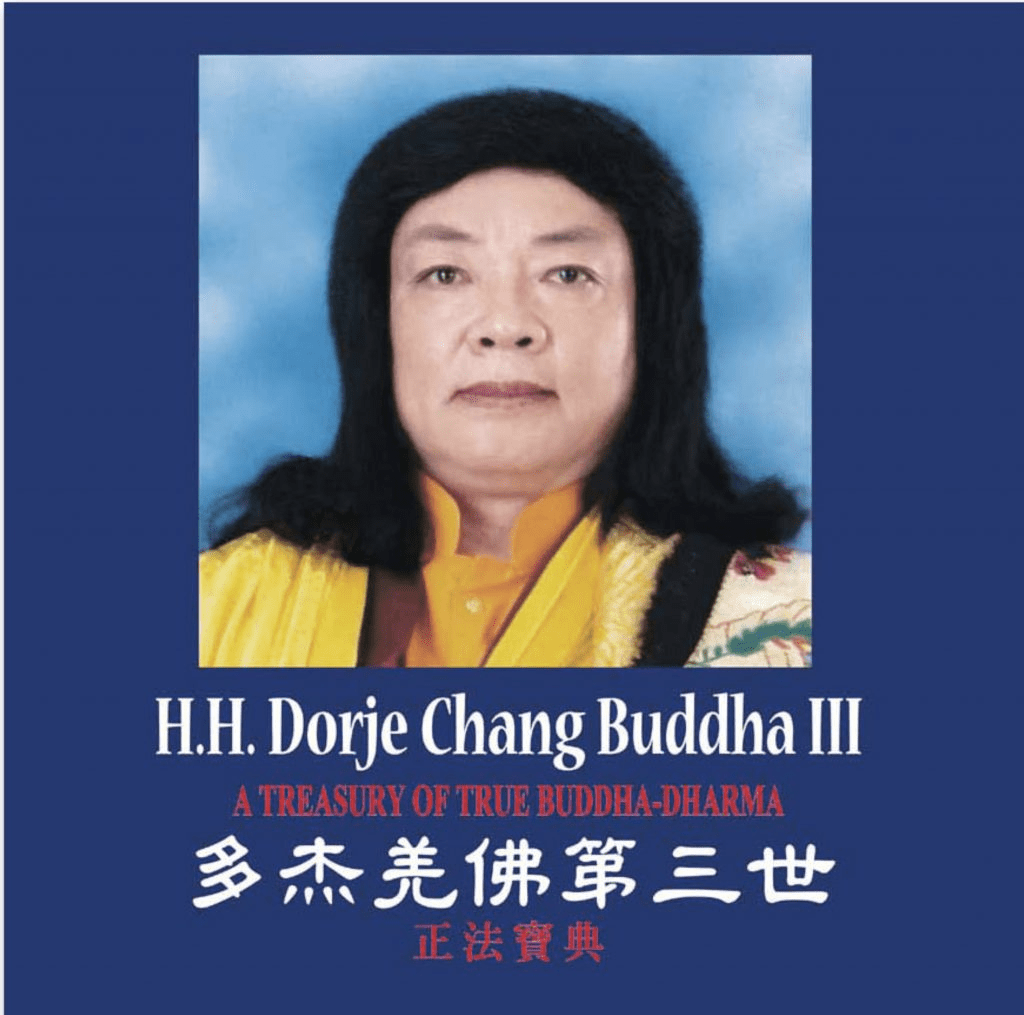
The treasure book, “H.H. Dorje Chang Buddha III,” stands as a testament to this statement. However, this book contains only a drop of water from the vast ocean of Buddha’s teachings and wisdom.
The video below showcases the boundless compassion and highlights the extraordinary accomplishments of H.H.Dorje Chang Buddha III. It was published by China Educational Channels TV and features interviews with Buddhist disciples from around the globe.
The winners and finalists of the 2024 IAMA International Youth Art Contest with the President of IAMA / Photo courtesy: John TrieuMore than 400 amazing artworks by young artists from 9 countries on exhibit at IAMA Grand Exhibition Hall / Photo Courtesy: John Trieu “
The International Art Museum of America (IAMA) hosted the 2024 Youth Painting Competition and Award Ceremony on Sunday, July 14th, at its Market Street location. The event celebrated the artistic achievements of young artists, awarding certificates and cash prizes. Over 400 second-round entries are exhibited from July 13th to 21st.
IAMA’s commitment to promoting youth art development was evident throughout the competition, which included submissions from over 300 youths across nine countries. Divided into three age groups (7-10, 11-14, and 15-18), the competition awarded certificates and cash prizes to the top three winners in each group, along with ten “Young Artist Awards” per group.
The competition, with its theme of “free creation,” encouraged children to express their imagination and creativity. Judges Dr. Amy Hughes, Dr. Gabriela Sotomayor, and Prof. Adam Caldwell praised the participants’ diverse techniques and styles. Dr. Hughes noted the high quality of work, akin to graduate-level creations, while Prof. Caldwell celebrated the impressive achievements of all contestants.
The award ceremony, held on July 14th at IAMA’s Garden Hall, attracted nearly 300 attendees, who were moved by the young artists’ talent and passion. The museum’s president, Mr. KC Hsieh, and other distinguished guests, including Professor Caldwell, participated in the ceremony. The day also featured a Master Class on painting by Professor Caldwell, inspiring young artists to further explore their creativity.
Chairman of Jury Committee Professor Caldwell congratulating all at the award ceremony while 300 people attended / Photo courtesy: John Trieu
IAMA Director Mr. KC Hsieh reiterated the museum’s dedication to fostering youth art development. Emily Su, third-place winner in the 15-18 age group, expressed that the award motivates her to continue pushing the boundaries of her artistic vision.
IAMA’s mission is to make art appreciation and education accessible to all, believing that “Art is for everyone.” The International Youth Art Contest exemplifies this mission, providing a platform for young artists to pursue their passion and leadership in the art world.
Located at the heart of downtown San Francisco, on 1025 Market Street near Sixth Street, the International Art Museum of America is a permanent , non-profit museum open to the public. The museum’s goal is to utilize the exhibition forum to pass on works of art that have achieved the most exquisite beauty and preciousness in the history of civilization, in order to further humanity’s moral progress, spiritual wellbeing, cultural development and world peace. It takes as its mission bringing humanity happiness and uplifting aesthetic enjoyment.
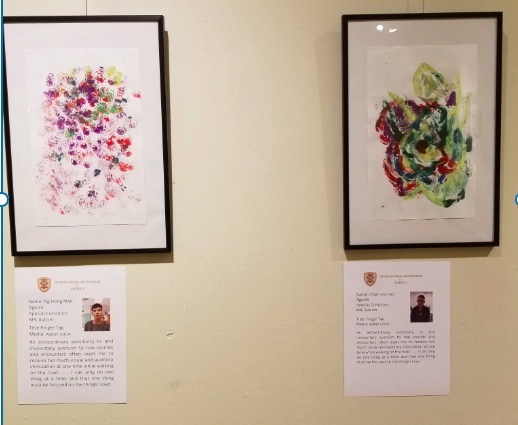
Currently, until July 21st, the museum is hosting “Art Without Boundaries,” an inspiring exhibition showcasing paintings by artists with disabilities. This event, presented by the Arts with the Disabled Association Hong Kong in partnership with The Neighborhood Advice-Action Council, provides a platform for these talented artists to exhibit their work in an international museum. This charitable initiative aims to support artists with disabilities, aligning with IAMA’s mission to actively promote public charitable art activities.
The speech given by the Venerable Rambo Tsemang at the 2024 Dharma ceremony in honor of the holy birthday of Namo Dorje Chang Buddha III on June 15, 2024, is published below.
Namo Dorje Chang Buddha III!
Namo Shakyamuni Buddha, Lord of Buddhism in the Saha World!
Namo Yuhua Shouzhi Wang Holy Mother the Great Mahasattva!
Namo all Buddhas in the ten directions, Vajra Beings, Bodhisattvas, Sky-goers, and Dharma Protectors!
Today, Buddhist disciples from all over the world have once again gathered here to commemorate the Holy Birthday and infinite merit of Namo Dorje Chang Buddha III. We want to express our gratitude to Namo Dorje Chang Buddha III for bringing to humanity His magnificent, unprecedented, and unsurpassed Buddha Dharma and accomplishment in the Five Vidyas.
I will summarize the questions that some of you have raised recently and share my personal thoughts for your reference.
First: Cultivation is the foundation for all Buddhists to attain liberation
Throughout the time that Namo Dorje Chang Buddha III propagated Dharma to save living beings, His Holiness the Buddha continuously reminded Buddhist disciples that cultivation is of utmost importance, and it is the only foundation for attaining liberation. In many audio recordings of expounded Dharmas, Namo Dorje Chang Buddha III taught many aspects of cultivation and emphasized that Buddhist disciples must practice cultivation at all times. Therefore, we must always remember the teachings of Namo Dorje Chang Buddha III by respectfully listening to the audio recordings of the Dharmas of His Holiness Dorje Chang Buddha III and reading the “Namo Dorje Chang Buddha III Complete Sutra Collection.” That is how we may learn correct knowledge and views and apply them in our own cultivation practice. This is very important for all Buddhist disciples. We must always remember that it is by practicing cultivation that we may accumulate good fortune and merit, stay away from dark karma, receive initiation to the highest Dharmas, and ultimately attain liberation from transmigration and cyclical birth and death. We must not pay lip service to practicing cultivation. Cultivation must be applied to every thought, word, and deed.
Some people tend to sway or regress from their cultivation whenever they encounter setbacks, but they should not be like that. We should know that during our transmigration since beginningless time, we have done so many bad deeds and taken on so much dark karma. All of our suffering and adversities are the effects of bad causes that we planted. By understanding this, we then understand that both good times and bad times are opportunities for us to practice our own cultivation. As our respected ancient elders said, “We do not evade bad retributions and face them with ease. We must be cautious with our every word and deed to plant good causes.”
Second: Actively Promote the “Namo Dorje Chang Buddha III Complete Sutra Collection”
Ever since Buddha Shakyamuni established Buddhism in our sahā world, the Sutras of the World Honored Buddha have enabled innumerable Buddhist disciples to attain liberation and accomplishment. The “Namo Dorje Chang Buddha III Complete Sutra Collection” is, once again, a collection of Dharmas expounded by a Buddha in this world. This Collection will certainly enable many more Buddhist disciples to attain liberation. Namo Buddha Shakyamuni’s Sutras have been the guidance that we have followed for more than 2,000 years. Upon that foundation, Namo Dorje Chang Buddha III used simple language to teach us the quintessence of Buddha Dharma, and the essentials for attaining liberation and accomplishment. Therefore, the “Namo Dorje Chang Buddha III Complete Sutra Collection” is and will be the fundamental guide for all Buddhist cultivators in the sahā world to attain liberation.
Since we have received this supreme Dharma treasure, the “Namo Dorje Chang Buddha III Complete Sutra Collection,” we should apply the four limitless states of mind and Bodhicitta to enable more people to learn the Sutra Collection. Namo Dorje Chang Buddha III taught us that we will accumulate the most abundant merit by propagating Dharma to benefit living beings and that more merit we have, the sooner we can attain Buddhahood. The best method to propagate Dharma now is to actively promote the “Namo Dorje Chang Buddha III Complete Sutra Collection.” This is the quickest way for us to accumulate merit.
Think about this: In the Diamond Sutra, Buddha Shakyamuni told Subhuti that if someone were to grasp just the four-line gatha of the Dharma and make it known and explain it in detail to living beings, this person’s merit would far exceed someone who were to fill the billion worlds of this universe with the seven jewels in almsgiving.
The four-line gatha is only about emptiness and Dharmakaya. The “Namo Dorje Chang Buddha III Complete Sutra Collection” comprises the truth about Dharmakāya, Saṃbhogakāya and Nirmāṇakāya, and how to attain realization states of the Three Bodies. Therefore, by promoting the “Namo Dorje Chang Buddha III Complete Sutra Collection,” not only will you enable others to understand the truth contained in the four-line gatha; you may even enable them to achieve abidance in the realization states described in that four-line gatha and become a holy person. Then your merit will increase even more. That’s why whenever you introduce one person to study the “Namo Dorje Chang Buddha III Complete Sutra Collection,” you will gain an increment of merit.
However, we must be clear that explaining the four-line gatha to others or promoting the Namo Dorje Chang Buddha III Complete Sutra Collection doesn’t mean that we as ordinary people would then quote Dharma out of context or randomly explain Dharma to others. In doing so, we would end up in the hell realm. We should guide living beings to study the Sutras and respectfully listen to the audio recordings of the Dharmas themselves, so that they can learn directly from His Holiness the Buddha. In this way, we can also increase our merit without incurring any sins.
Third: Make Effort to Protect the Dharma
There are many different ways to protect the Dharma, such as protecting organizations that propagate true Tathagata Dharma or supporting Buddhist cultivators who have correct knowledge and views and who practice in accordance with the Dharma. What I want to talk about here is how to protect the Dharma on the Internet.
In the current Internet era, Buddhist disciples make use of the Internet to propagate Buddha Dharma. However, evil demons also make use of the Internet to slander true Buddha Dharma. Therefore, if any one of us sees any evil deeds of slandering the Buddha or the Dharma, we must rebut those slander with correct knowledge and views.
There are two things that we must not misunderstand about protecting the Dharma.
First, it is seriously wrong to think that rebutting others is getting yourself tied up in matters of right and wrong. It is only with correct knowledge and views that you may understand Buddha Dharma, but some people understand Dharma incorrectly due to their incorrect knowledge and views. We must be very clear about this without any confusion: If a Buddhist disciple cannot differentiate between correct and incorrect knowledge and views, how can they properly understand the Dharma? If they cannot understand the Dharma, how can they attain accomplishment? Getting involved in matters of right and wrong usually refers to personal arguments about who’s right and who’s wrong as a result of attachments to self and to worldly phenomena. This is not the same as defending the correct meaning of the Dharma. The meaning of Dharma must be made clear.
Second: It is wrong to think, “I don’t want to do the work of protecting the Dharma, but I will make effort to practice forbearance and cultivate my conduct.” Actually, protecting the Dharma is an important aspect of cultivation. If you don’t protect Buddha Dharma, you are essentially a fake Buddhist who is not cultivating yourself. Therefore, it will be impossible for you to attain accomplishment. When cultivating ourselves, if anyone points out our shortcomings or wrongdoings, we should thank them, reflect upon ourselves, and do better in our cultivation. For whatever reasons, if someone insults us or attacks us, we should ignore those distractions and focus on cultivating ourselves with forbearance. But if the attacks are targeted toward the Buddha and Buddha Dharma, we must step up and fearlessly protect the Buddha and Buddha Dharma. Even if we don’t have enough abilities on our own, we can work with other Buddhists and discuss how to protect the Dharma together. If we don’t even protect the Buddha, if we don’t protect the integrity and benefit of Buddha Dharma, will Buddhas and Bodhisattvas receive us in the Buddha Lands? Will Dharma Protecting Bodhisattvas and deities help us?
All in all, if we want to attain liberation and accomplishment, we must cultivate ourselves. To cultivate ourselves, we must abide by the precepts, promote the “Namo Dorje Chang Buddha III Complete Sutra Collection,” and protect the Dharma. By doing these three things well, we can quickly eliminate our dark karma, accumulate merit, receive Buddha Dharma, and be liberated from transmigration forever! Throughout Buddhist history, all holy people who attained holy accomplishments were precept-abiding. They all propagated Dharma to benefit living beings. They all protected the Dharma. That’s how respected ancient elders attained accomplishment. These are also the things that we must do to attain accomplishment.
Here, I wish that all congregants and living beings fulfill their good wishes, have good fortune and wisdom, and attain accomplishment and liberation! I wish that the countries that you live in be prosperous and powerful, and that all people enjoy happiness. May there be peace in the world and the circumstances of all living beings be auspicious.
Finally, let us once again pay obeisance:
Namo Dorje Chang Buddha III!
Namo Shakyamuni Buddha, Lord of Buddhism in the Saha World!
Namo Yuhua Shouzhi Wang Holy Mother the Great Mahasattva!
Namo all Buddhas in the ten directions, Vajra Beings, Bodhisattvas, Sky-goers, and Dharma Protectors!
Hong Kong’s superstar Jacky Cheung has achieved numerous successes in the entertainment industry and is widely recognized as a superstar. However, few people know about his dedication to studying Buddhism. Jacky Cheung’s master is H.H. Dorje Chang Buddha III, an internationally acclaimed master in arts, philosophy, and culture. He was awarded the International Master of Arts and Culture by the World Cultural Conference, comprising experts from 48 countries and regions. Additionally, the Chinese government built a grand museum in his honor in Dayi County, Sichuan, highlighting his unique achievements and contributions.
Around 1995, at the earnest request of many disciples, including Jacky Cheung, H.H. Dorje Chang Buddha III composed a unique masterpiece called “Rare Supreme Chant.” The lyrics, composition, singing, and chanting were all personally handled by the master.
The song’s melody is rich, and its sound changes are exquisite, ranging from powerful and resonant to gentle and intricate. It includes lion’s roars, sacred chants, deep contemplations, and even modern rock and rap elements. The singing techniques transcend traditional vocal resonance, harmonizing with the cosmic realm. This “Rare Supreme Chant” not only broadens the listener’s auditory experience, allowing them to hear various sounds, but also elevates the mind, nurtures moral strength, and purifies body and soul through the blessings of H.H. Dorje Chang Buddha III’s voice.
According to those who provided musical accompaniment for H.H. Dorje Chang Buddha III, his lyrics and melodies are filled with ancient charm and profound knowledge. His voice is versatile and spontaneous, making it difficult to complement with our limited cultural and musical expertise. While they believe his unaccompanied voice is superior, they fear that without accompaniment, the music might be too challenging for listeners to appreciate, thus missing the compassionate intention behind its creation. Despite these challenges, they made an effort to provide accompaniment, hoping listeners would understand and appreciate the master’s work. Listeners are encouraged to attentively enjoy and experience the profound benefits of the music.
The Great Bright Six Syllable Mantra is a very popular Buddhist song, with many audiotapes and CDs distributed worldwide. However, His Holiness’s rendition of the Great Bright Six Syllable Mantra is entirely different from all others I have heard. It is in a powerful vajra style, and at the end of the song, His Holiness uses the lion’s roar voice, with a bursting energy that seems to penetrate the universe and awaken all living beings.
The great bright six syllable mantra
The song “Guo Ping Chang” describes the scenery and feelings of His Holiness passing through Ping Chang (a place in Sichuan).
The sound of the flute sends me across Pingqiang, The boat docks at Wuyou, filled with lantern-lit halls. The spring breeze warmly welcomes visitors, Mist colors the dusk, but the mountains remain evergreen.
This song was sung in an opera style. It has four lines of lyrics, which the Buddha sang using four different Peking Opera styles. This fully demonstrates the Buddha’s profound vocal skills, leaving listeners deeply moved and with a lasting impression.
Passing through PingQiang
H.H. Dorje Chang Buddha III, has even composed a unique masterpiece, in modern rock and rap style, the energetic and festive song “Chinese Dragon,” showcasing the dragon’s cultural significance. This song demonstrates the Buddha’s ability to effortlessly and masterfully handle any musical form.
Chinese Dragon
The Prajnaparamita Heart Sutra is a very important Buddhist scripture. The Buddha composed an elegant and beautiful yet powerful melody for this sutra. His voice is rich and clear, strong yet gentle, as if bringing the compassionate love of the Buddhas and Bodhisattvas to every sentient being.
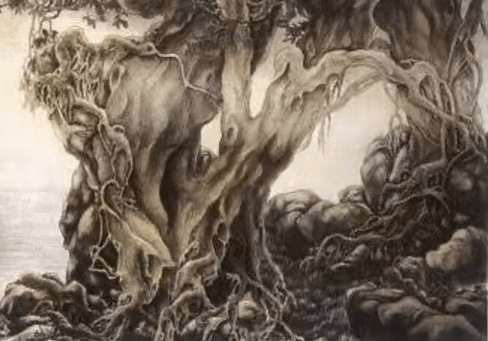
“Scene of Xishuang Banna Life” is a Chinese ink-and-wash painting with a three-dimensional quality reminiscent of oil paintings, created by the renowned artist H.H. Dorje Chang Buddha III. The moment I laid eyes on it, I felt a profound sense of comfort and tranquility. The painting’s primary hue is light brown, and the varying depths of this color vividly depict the fresh, clear water and misty air weaving between the trees. A few girls are making waves, chatting, and enjoying themselves as they wash clothes by the riverside. The elegant and beautiful banyan trees stand majestically, with cobblestones naturally scattered around them.
The old banyan tree, with its peeling bark and exposed roots, stands as a silent testament to the passage of time. The raised roots extend in all directions, seemingly spreading the pulse of life to distant places, using their vitality to nurture the earth and rivers. The roots nestle against the smooth, round pebbles like inseparable companions. Over time, they have become so intertwined that no one notices whether they are roots or stones, much like an elderly couple who depend on each other and cannot be separated.
Around the tree roots, a misty white space, activated by detailed depictions, brings boundless imagination to people. In the white mist, there is a vast expanse of water, with soft sunlight illuminating the surrounding forest. The endless lakes and rivers nourish the sturdy old roots, supporting them through countless hardships and weathering the elements, ultimately creating a world of their own. The intertwined and winding roots, twisting and coiling across the scene, form the main structure of the composition along with the variously shaped stones, the sculptural massive trunk, and the other responding trees. The sparse leaves hanging from the old tree are adorned in light green, contrasting with the large brown trunk, evoking the philosophical sentiment of “the true essence remains after all embellishments fade, gold emerges after being sifted by great waves.”
Beneath the tree are three graceful women in different postures, enjoying the flowing stream under the water-colored sky. Some are combing their freshly washed hair, some are holding a delicate veil, and some are drawing clear water from the stream.
The banyan tree, the stream, and the sunlight, along with the beautiful women in traditional attire, compose a symphony of southern charm, making one feel as if they can hear the whispers of the gentle breeze: “My enchanting homeland is where my heart belongs…” The setting resembles the sweet childhood memories buried in my heart.
About fifty years ago, my family lived in a small village in the mountains. There were no cars, TVs, toys, phones, or any other modern luxuries. We lived a very simple and modest life. All the mothers washed vegetables and rice in the clean creek and cooked meals. Very often, they washed clothes in the river for the whole family while the kids played in the water, on the trees, or along the riverbanks. School was far away, and we could only go there when we were old enough. But we had the biggest classroom—nature itself. We studied everything we could find: trees, flowers, insects, stones, etc. Twigs were our pens, and tree trunks were our tables. The chirping of the birds and the rushing of the stream were our music. We had physical education class all day long. We went to bed when the sun set. What a simple, happy life!
This is the beautiful and pure spiritual space created by the great artist, H.H. Dorje Chang Buddha III. This painting, “Scene of Xishuang Banna Life,” opens a window to another dimension, allowing people to experience the joy of living in a paradise. People in cities increasingly yearn for natural landscapes akin to an earthly utopia. Fortunately, noble artists create pure lands for people’s hearts, showing us wonderful scenery, evoking warm emotions, and deeply touching us.
The pure land in our hearts is like a secluded utopia, free from the noise and disturbances of the mundane world. It carries the dreams of people. When darkness descends, the pure land within can emit a serene fragrance, helping people discard the suffering brought by worries, gently wipe away the dust, and infuse a bit of brightness.
The paintings of H.H. Dorje Chang Buddha III are like wordless songs, containing endless stories, ancient calls, and boundless compassion for all sentient beings.
Sister Sun Houfang has gone to the hospital for chemotherapy again. She suffers from leukemia, a disease that is almost a death sentence, but she has miraculously survived. She became a Buddhist disciple in July 2016 and often says, “Others with the same illness as mine have all died, but I am still alive. I want to thank Namo Dorje Chang Buddha III and all Buddhas and Bodhisattvas of the ten directions. I also want to bring those with affinity into Buddhism.” No one expected that her friends with affinity would be three Christian friends.
On April 28, 2017, I visited Sister Sun at the hospital again. She was having lunch, so we chatted briefly. I learned that she was scheduled to start chemotherapy medication the next day, and her wardmate, Wei Wenwen, was to be discharged in the afternoon. I sincerely invited them to our Tantric Buddhist Center the next morning to participate in a blessing ceremony. I hoped that through the blessing, they would receive good fortune and have their suffering alleviated. Sister Sun immediately agreed to delay her medication by a day, and Wei Wenwen also wanted to delay her discharge. At this moment, the patient in bed 6, Lu Shaohua, spoke up. She said she was a Christian and did not dare to believe in Buddhism, fearing it would be against her faith. She also mentioned, “A few days ago, I couldn’t sleep at night after arriving here. It was very uncomfortable, and no matter how much I recited the Bible, I couldn’t fall asleep. Ms. Sun suggested I recite the Buddha’s name instead, and after doing so, I was able to sleep.” I said, “That’s great! It shows you have a deep connection with Buddhism. Each of us has our own karmic reasons for our religious beliefs, but regardless of the religion, the key is the benefit we receive from it. In fact, many people don’t know that the Virgin Mary is an incarnation of Avalokitesvara Bodhisattva.”
In the Dharma audio teachings of H.H. Dorje Chang Buddha III, there is a story about hundreds of Christian Taiwanese indigenous people converting to Buddhism. This took place in 1995 when H.H. Dorje Chang Buddha III, visiting Taiwan under the guise of an art delegation, was greeted by the chief of the indigenous group, a devout Christian. (There is a video recording on youtube for this event https://www.youtube.com/watch?v=Qxdaug7x9IU)
H.H. Dorje Chang Buddha III asked, “Have you ever seen the Virgin Mary? If you haven’t, I can invite her to come, and you can meet her.”
The chief responded, “Can I? Even our priest has never seen her!” H.H. Dorje Chang Buddha III said, “If I let you see her, will you then take refuge in Buddhism?”
The chief replied, “That would depend on the Virgin Mary’s approval. We have taken vows and been baptized.” H.H. Dorje Chang Buddha III said, “Let’s do it this way: let the Virgin Mary tell you what to do, and you can follow her guidance. How about that?” The chief agreed, saying, “Okay!”
At this moment, the chief began to recite the Bible and use his inner power. His Holiness told the chief, “That won’t work.” Then, His Holiness performed a Dharma practice, and the Virgin Mary suddenly appeared standing on a cloud, several dozen feet high, astonishing the chief on the spot!
The Virgin Mary said to the chief, “My child, although I am your Holy Mother, I am also a servant of the Buddha. I am learning Buddhism. You should immediately take refuge before this supreme Buddha, who represents the true Dharma of the Tathagata in this world.”
Hearing this, the chief prostrated himself in full devotion and immediately took refuge. Later, all nine tribes of the indigenous group came to take refuge in His Holiness as their chief king.
Photos from video in youtube
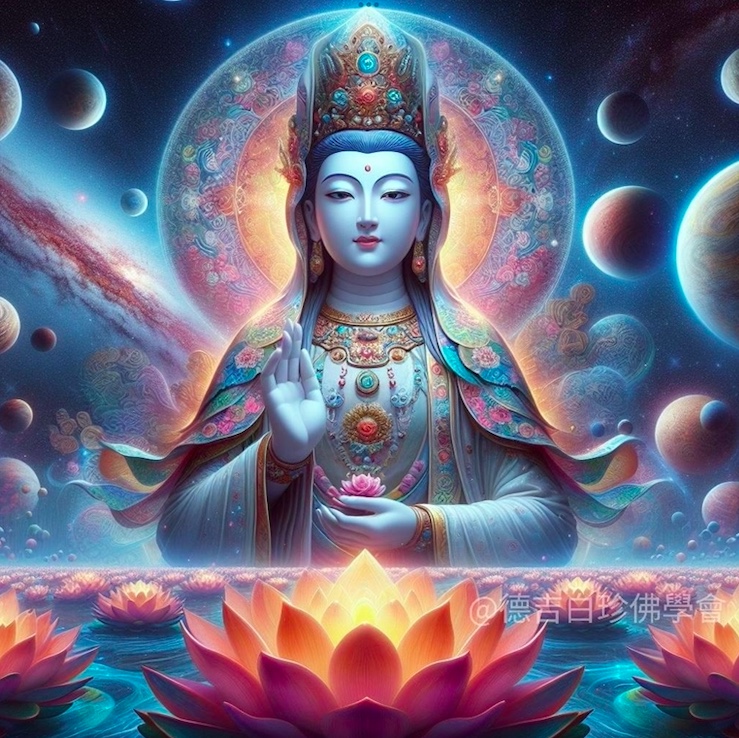
In the Universal Gate chapter of the Lotus Sutra, the Buddha tells the world that Avalokitesvara Bodhisattva will manifest in various forms and save sentient beings according to their different karmic conditions. Any worldly being in danger will be delivered instantly upon calling her name. Therefore, Guanyin has been worshipped and revered by all classes of people. As a compassionate divinity with countless virtues and merits, she is endowed with transcendental power. The Bodhisattva excels in skillful means, allowing the Bodhisattva to appear in whatever form is needed by sentient beings.
After hearing my story, Lu Shaohua seemed to understand something and expressed a willingness to explore Buddhism.
On the morning of April 29, two Christians, accompanied by their families, came to our Tantric Buddhist Center. After everything was prepared, the blessing ceremony began. As we chanted the Heart Sutra, I heard intermittent crying from the crowd.
After the ceremony, I noticed tears still on their faces, but their complexions looked much better than when they first arrived. I asked them, “Did you all cry? How do you feel?” Wei Wenwen said, “I really enjoyed listening to the Heart Sutra. I felt very comfortable and happy here, and I didn’t want to leave.” Lu Shaohua also said, “As soon as I heard it, I couldn’t help but cry. I don’t know why, but it felt like meeting a family member.”
From that moment on, the three Christians—Wei Wenwen, Huang Youyou, and Lu Shaohua—began to listen to the extraordinary Dharma teachings of Namo Dorje Chang Buddha III. Through listening to the Dharma, they understood some principles of karma, realized the impermanence of life, and the illusory nature of dreams and bubbles. They expressed their determination to stop killing, to practice releasing living beings, and to diligently study and practice Buddhism. They even took home Buddha statues to venerate and vowed to take refuge in Buddhism.
Although Buddhism is the teaching of perfect liberation, Christianity is also a good teaching. When Christians shed tears upon hearing Buddhist scriptures and find peace in reciting the Buddha’s name, it indicates their inherent karmic connection to Buddhism. The differences in religious beliefs among sentient beings arise from their various karmic roots and blessings accumulated over countless eons. All good teachings should coexist harmoniously and tolerate each other without rejection, as true good teachings all aim to free sentient beings from suffering and bring them happiness.