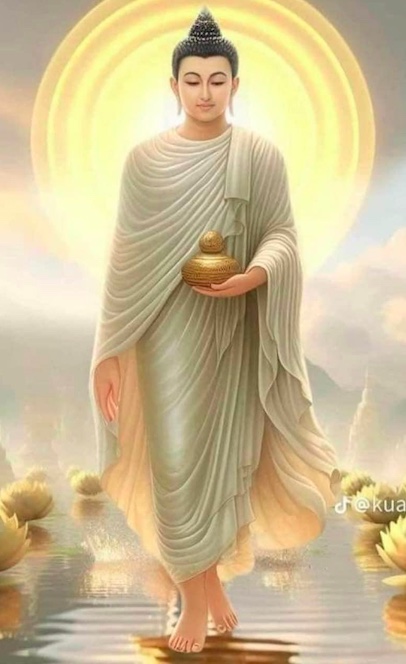
How to Face Unfounded Accusations and Grievances — A Lesson from the Buddha

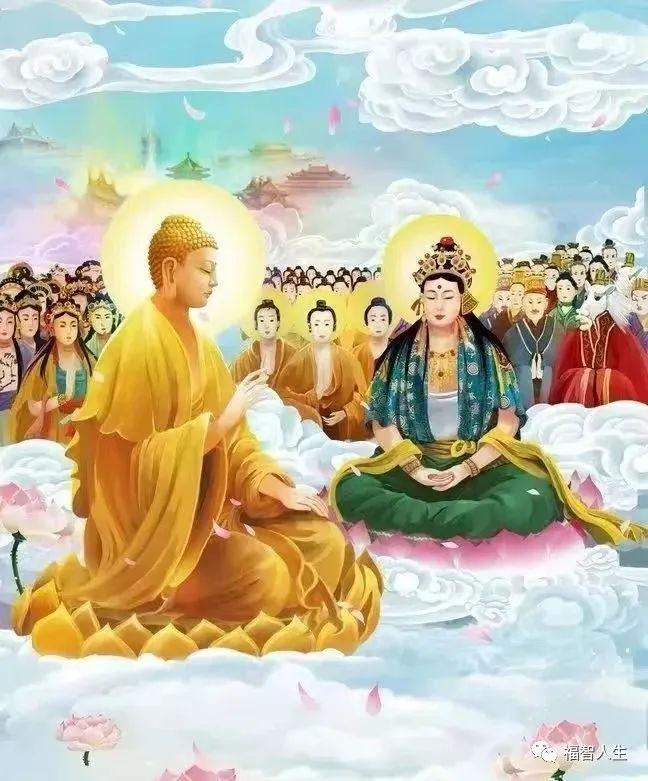
More than 2,500 years ago, when Shakyamuni Buddha walked the earth, even He—an enlightened being of supreme virtue—was not immune to slander and false accusations. Yet, through profound wisdom and boundless compassion, the Buddha addressed these challenges with grace, setting an eternal example for all beings on how to face adversity.

One such episode is recorded in the sutras and remains deeply relevant in our modern world, where misunderstandings and grievances often escalate due to fear, anger, or ego.


One morning in Jetavana Monastery, as the Buddha and his monks were preparing to go on their daily alms round, a group of royal guards suddenly stormed in. They announced that they were under orders to search the monastery grounds for a female corpse.

The monks were shocked. Venerable Baddiya inquired further and discovered that the deceased was Sundari, a young woman known for her recent attendance at the Buddha’s teachings. She belonged to a large sect in the city of Savatthi.

Despite the monks’ firm belief that no such thing could happen in their peaceful community, the guards began their search. To the horror of all present, Sundari’s body was found hastily buried in a shallow pit—shockingly close to the Buddha’s own residence.


The body was taken away, and almost immediately, members of Sundari’s sect began parading through the streets of Savatthi, wailing and pointing fingers. They accused the monks—disciples of the Buddha—of rape and murder. Their shouts pierced the hearts of the city’s residents:

“Is this what compassion looks like? Is this the kindness preached by the monks of the Sakya clan?”

Faith began to waver. The once-revered monks were now questioned and ridiculed. Even devout followers hesitated. Doubts crept in like shadows.

But amidst this storm of falsehood, the Buddha remained calm. He instructed his disciples:

“Do not be disturbed. Do not feel shame for what you have not done. As long as we uphold the Dharma, the truth will reveal itself.”
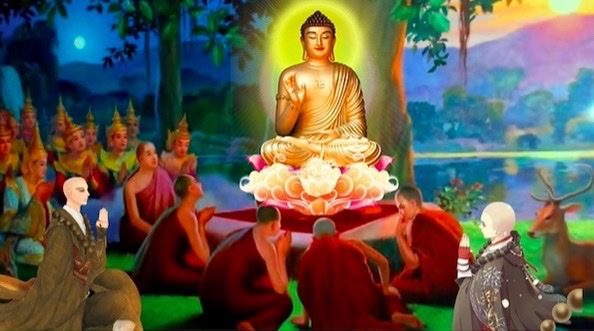

Compassionate Action and the Power of Truth

While the Buddha taught patience, some of his lay supporters took discreet action. Visakha, a wise and generous patroness of the Sangha, consulted with Sariputta, one of the Buddha’s chief disciples. Together, they enlisted the help of Prince Jeta and hired a private investigator to uncover the truth.

Within seven days, the real story surfaced. Two men, drunk and arguing over their ill-gotten gains, confessed: they had been paid by Sundari’s sect leader to murder her and bury the body near the monastery—an act designed solely to discredit the Buddha and his followers.

The culprits were arrested. The truth was undeniable. King Pasenadi, deeply moved and ashamed that such injustice had occurred, visited Jetavana to publicly reaffirm his trust in the Sangha.

Yet the Buddha, ever compassionate, requested the king not to seek vengeance. He said:

“As long as jealousy and hatred exist in the human heart, such misdeeds will continue. Let us rise above them, not descend to their level.”

The people of Savatthi, now enlightened by the truth, restored their faith in the Buddha and the monastic community. What began as a moment of crisis ended as a testament to the strength of integrity and the enduring power of compassion.

This story serves as a profound reminder: when facing unjust accusations, our greatest protection lies in truth, patience, and inner peace.

We cannot control the words or actions of others, but we can choose how we respond. If we hold fast to our principles, walk the path with sincerity, and act from compassion rather than reaction, the light of truth will inevitably shine through the darkness of misunderstanding.
Link:https://peacelilysite.com/2025/05/23/how-to-face-unfounded-accusations-and-grievances-a-lesson-from-the-buddha/

A Serene Masterpiece: The Water-Moon Guanyin at the Nelson-Atkins Museum

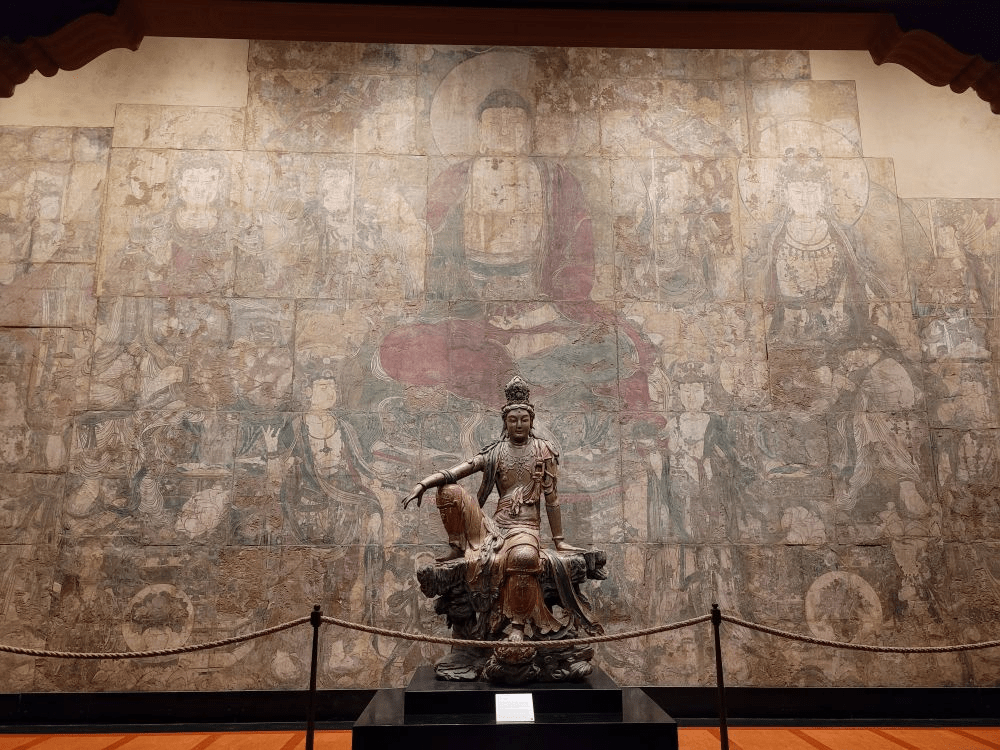
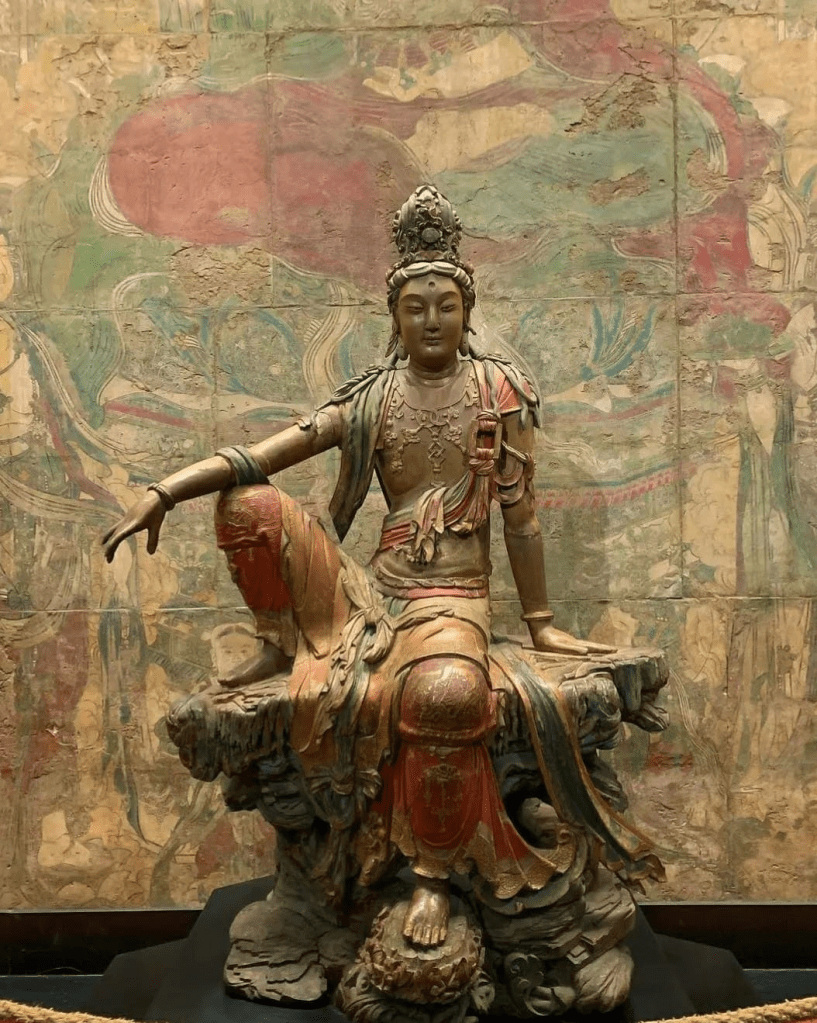
Tucked within the tranquil halls of the Nelson-Atkins Museum of Art stands a breathtaking wooden sculpture of Water-Moon Guanyin from the Liao Dynasty—a work hailed as “the most magnificent surviving sculpture in China” and “a triumph of religion and aesthetics.” It has also been honored by the media as “one of the thirty finest works held in American public institutions.”

Officially labeled by the museum as “Guanyin of the Southern Sea,” this statue rises to an impressive height of 2.4 meters. Aside from the right forearm, the entire figure—including its base—was masterfully carved from a single block of wood. Dating back to the 11th or 12th century (Liao or Jin Dynasty), the sculpture has been remarkably well-preserved over the centuries.

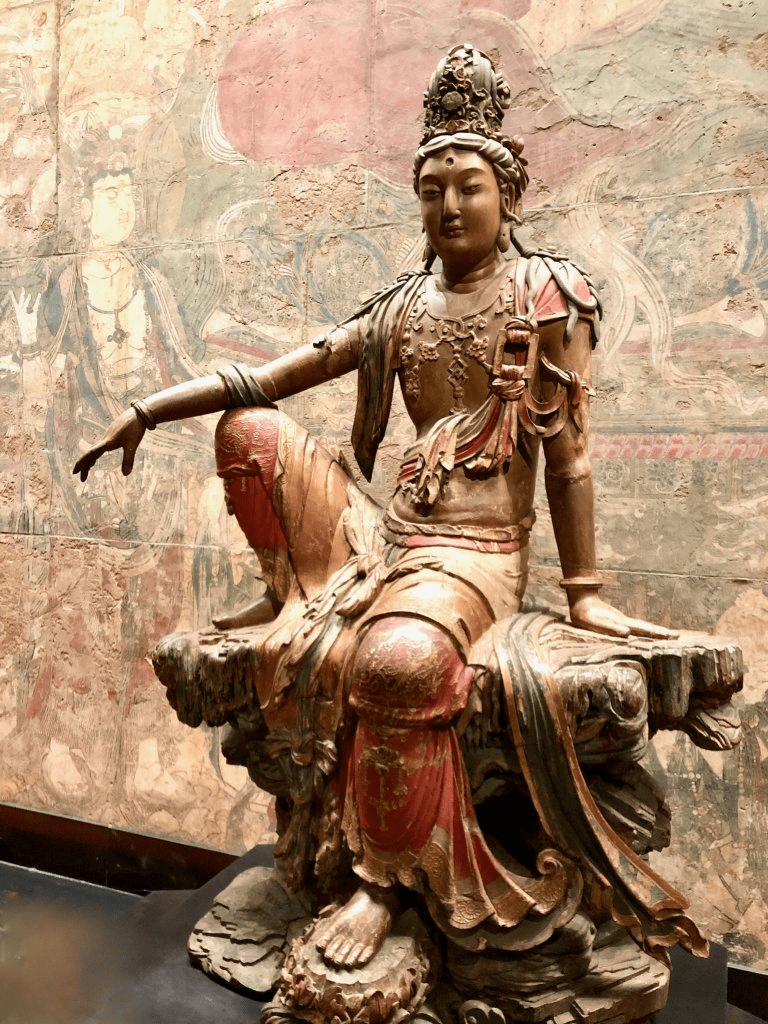
This Guanyin is an extraordinary example of religious artistry. Her face is gently sculpted with refined features—serene, graceful, and quietly majestic. Adorned with a jeweled crown, her eyes are softly closed, gazing downward in meditation and compassion. The statue’s pose reflects the elegance and wisdom traditionally associated with the feminine form, especially in the flowing hand gestures—while still retaining some subtle masculine traits in the upper body, a nod to Guanyin’s transcendent nature.

In classic iconography, Water-Moon Guanyin is often portrayed seated on a rock or lotus throne, gazing compassionately at the world. In this sculpture, she sits with one leg bent and the other gracefully draped downward. Her right arm rests lightly on her knee, fingers gently curved, as she gazes diagonally downward with a calm smile—evoking the image of the moon reflected in water. This visual metaphor powerfully symbolizes a core Buddhist teaching: the illusion of form and the essence of emptiness.

Every aspect of the statue—the proportions, the flowing posture, the tranquil expression—conveys a sense of effortless grace, inner freedom, and compassionate presence. It is a piece that invites quiet reflection, stirring something deep within the soul of the viewer.

The Legend Behind the Water-Moon Guanyin

The form of Water-Moon Guanyin, also known as “Auspicious Water Guanyin” or “Auspicious Water Bodhisattva,” is one of the most beloved among the thirty-three manifestations of Guanyin in Chinese Buddhist tradition. Interestingly, the name “Water-Moon” does not come from early Buddhist scriptures, but rather from Chinese folklore—born of the fusion between Buddhism and indigenous Chinese culture.

According to legend, Guanyin once appeared in Suzhou during a time of war, where she witnessed the brutal slaughter of civilians by the Jin army. Out of great compassion, she transformed into a beautiful woman, built a ritual platform, and began chanting sutras to deliver the souls of the dead. When her recitation was complete, someone among the crowd recognized her divine aura and asked to see her true form.

The Bodhisattva pointed to the riverbank. There, reflected in the still waters, was the image of a radiant full moon, within which her sacred figure appeared—graceful and ethereal. Among the witnesses was a talented artist named Qiu Zijing, who quickly sketched the vision. As his painting circulated, this image came to be known and venerated as the Water-Moon Guanyin.

A Space Worthy of the Divine

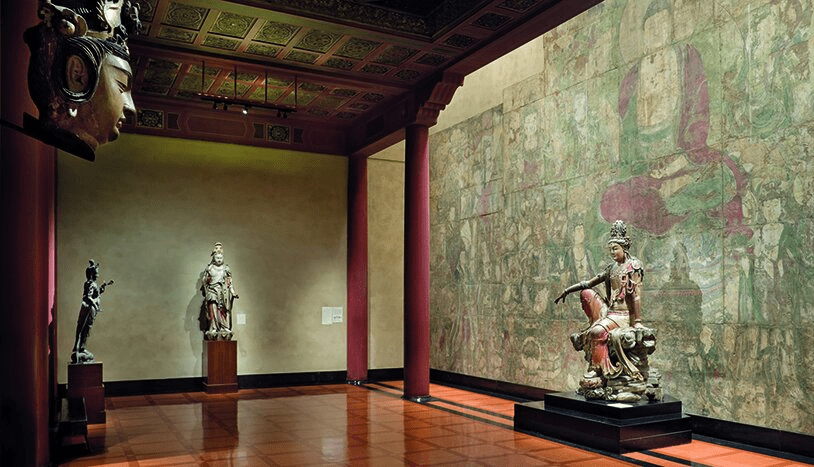
To properly honor this extraordinary statue, the Nelson-Atkins Museum created an expansive Chinese Temple Gallery. Behind Guanyin stands a Yuan Dynasty mural titled “Assembly of the Radiant Buddha,” originally from Guangsheng Temple in Shanxi Province. Above hangs a carved Ming Dynasty coffered ceiling adorned with dragons, while in front, finely carved lattice doors from a Qing Dynasty official’s residence in Beijing complete the immersive setting.

This harmonious environment allows visitors to experience the sculpture not just as a museum piece, but as a living expression of faith, beauty, and timeless spiritual insight.

https://www.orientations.com.hk/highlights/creating-spaces-for-asian-art-c-t-loo-and-the-nelson-atkins-museum-of-art

https://www.orientations.com.hk/highlights/creating-spaces-for-asian-art-c-t-loo-and-the-nelson-atkins-museum-of-art

The Water-Moon Guanyin at the Nelson-Atkins Museum is more than an ancient sculpture—it is a sacred embodiment of compassion, artistry, and transcultural storytelling. Whether viewed through the lens of religion, history, or aesthetics, it stands as a serene reminder of the enduring power of beauty to transcend time and touch the human spirit.

Link:https://peacelilysite.com/2025/05/21/a-serene-masterpiece-the-water-moon-guanyin-at-the-nelson-atkins-museum/

Embracing Buddha’s Grace: Bathing Ritual and Blessings at Hua Zang Si Temple

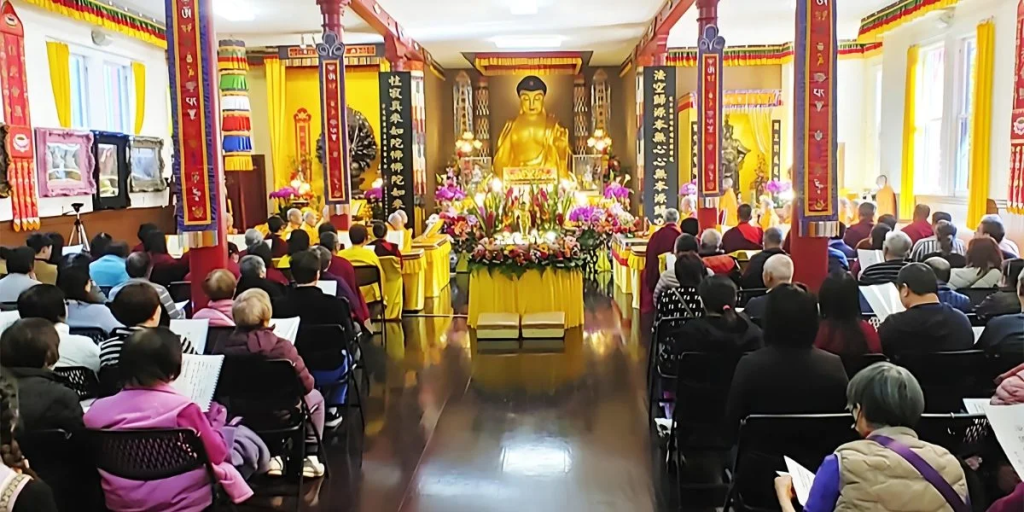
Photo Courtesy: Catherine Song | Hua Zang Si temple‘s serene atmosphere fostered reverence as attendees honored Shakyamuni Buddha’s Holy Birthday.

San Francisco, CA – On Sunday, May 4, 2025 (Sunday) – Hua Zang Si, a renowned Buddhist temple in San Francisco, solemnly hosted the Bathing the Buddha Dharma Assembly, welcoming local residents and visitors from diverse cultural and religious backgrounds. This sacred gathering commemorated the Holy Birthday of Shakyamuni Buddha, the World-Honored One, offering attendees a profound spiritual experience.

Organized by the World Buddhism Association Headquarters (W.B.A.H.), Hua Zang Si, and Sanger Mission, the event offered profound spiritual enrichment and served as a harmonious celebration that united the community in shared reverence and joy.

Under the guidance of Abbess of Hua Zang Si Temple, Ruzun Ruohui, the ceremony commenced in the temple’s majestic Grand Hall, where attendees chanted “The Heart Sutra” and the “Bathing the Buddha Verse” in unison, seeking blessings, wisdom, and spiritual purification. At the Bathing the Buddha Pavilion, participants held ritual ladles and poured fragrant water over the statue of the infant Prince Siddharta Gautama — later known as Shakyamuni Buddha —accompanied by heartfelt prayers: 

“Today, I bathe the Buddha with a wholeheartedly pious, seeking blessings and wisdom from the Buddha. May I and all sentient beings be free from obstacles and together attain the realization of the Pure Land.”

The rituals serve as a reminder of Buddha’s profound teachings on mindfulness and self-cultivation, inspiring all individuals—regardless of their beliefs—to cultivate compassion, reflect on their actions, and strive for a harmonious and meaningful life. Blessings were offered for all sentient beings to be freed from defilements and burdens, fostering a compassionate force to bring harmony and stability to society. The merit of this ceremony was dedicated to alleviating global disasters and pandemics, ending conflicts, bringing happiness to all living beings, and a prosperous and peaceful nation.

Attendees poured fragrant water over the infant Prince Siddhartha Gautama statue with ritual ladles, seeking blessings and wisdom from the Buddha.

Photo Courtesy: Catherine Song | Attendees poured fragrant water over the infant Prince Siddhartha Gautama statue with ritual ladles, seeking blessings and wisdom from the Buddha.

According to Buddhist scriptures, following the birth of Prince Siddhartha Gautama, nine dragons poured streams of fragrant water to bathe Him—which later became a tradition upheld globally in commemoration of His holy birth. The “Sutra on the Merits Accrued from Bathing the Buddha” details the blessings associated with this sacred practice, including health, longevity, spiritual fulfillment, and familial harmony. The ceremony concluded with the distribution of fragrant water to devotees, filling them with immense joy and spiritual bliss.

Founded on December 26, 2004, in San Francisco’s Mission District, Hua Zang Si has become a prominent center for authentic Buddhist teachings, guided by the teachings of H.H. Dorje Chang Buddha III and Shakyamuni Buddha. Throughout the year, the temple hosts Blessing Dharma Assemblies, providing a welcoming and inclusive space for individuals to engage with the profound teachings of Buddhism.

In addition to its spiritual mission, Hua Zang Si remains deeply committed to humanitarian efforts. Over the years, the temple has organized Lunar New Year celebrations at nursing homes, assisted with hospital relocations, provided meals to those affected by disasters, and conducted charity sales to support underserved populations. Recent initiatives have included fundraising for animal rescue centers, assisting low-income families, donating to local food banks, and delivering essential supplies to wildfire-affected areas. Hua Zang Si continues to embody the principles of compassion, unity, and service, fostering hope and harmony throughout the community.

Published by Steven S.

Source: https://sanfranciscopost.com/embracing-buddhas-grace-bathing-ritual-and-blessings-at-hua-zang-si-temple/?fbclid=IwY2xjawKPV_NleHRuA2FlbQIxMQBicmlkETFQNWRCRTBnOWhjWUV1b0tXAR54_T2CfqiC7ESWyBMWYopxXjWgyDB4grJBTJJgDtVF_VQUWoJJfOaVvGqKNA_aem_vVRFOtQI45KmXlNOVZNkSw

The Subtle Truth of Karma: Only a Buddha Sees It All

During the time of Namo Shakyamuni Buddha, there was an old man who heard that by renouncing the worldly life and practicing cultivation, one could be free from suffering, attain happiness, and achieve liberation and ease. Filled with joy, he went to the monastic dwelling, hoping to take refuge under the Buddha.

When the old man arrived at the monastery, he learned that the Buddha had already gone out to teach and transform beings. He thought to himself, “Although the World-Honored One is not here, I’ve heard that Venerable Shariputra is foremost in wisdom—why not ask him to allow me to become a monk?”

Shariputra silently observed the old man to see whether he had the necessary virtuous roots. After careful contemplation, he discovered that this person, in this life and even through countless past kalpas, lacked sufficient virtuous roots and blessings.

When the other monks heard that even the most wise Venerable Shariputra had declined him, they said, “If even Venerable Shariputra will not accept you, you must have some grave shortcomings. How can we possibly let you enter monastic life? You’d better leave.”

The old man felt deeply ashamed and heartbroken. Through tear-filled eyes, he suddenly felt an incredibly gentle hand caressing his head, as tenderly as a loving parent would touch their child. The figure before him radiated a pure and gentle light—it was none other than the Buddha, beloved and revered by all.

The Buddha compassionately asked the old man why he was crying. The old man replied, “I wish to renounce the worldly life, learn the Buddha’s teachings, and cultivate the path, but the monks all refused my request. They said my causes and conditions are not yet sufficient, so I feel very sad.”

“Who said that you lack the causes and conditions to become a monk?” the Buddha asked.

The old man replied, “It was Venerable Shariputra, who is foremost in wisdom.”

The Buddha then turned to ask Venerable Shariputra. Shariputra answered, “World-Honored One, I observed his past life causes and conditions and found that he truly does not have even the slightest virtuous root.”

The Buddha said to Shariputra, “You must not think this way. This person’s virtuous roots are extremely subtle. A long, long time ago, in an eon far in the past, there was a poor man who went into the deep mountains to gather firewood. He encountered a tiger, and in his panic and terror, he cried out, ‘Namo Buddha!’ That one utterance of the Buddha’s name planted the seed for his future aspiration to learn the Dharma and attain liberation. That poor man is the old man in this life. Because the seed of his virtuous root has now matured, he has the conditions to renounce the world and cultivate the path.”

So the old man was ordained under the Buddha’s guidance and received personal instruction from the Buddha himself. Through continuous diligence and effort in his cultivation, he ultimately attained corresponding realization and achievement.

In the Dharma discourses of Namo Dorje Chang Buddha III, there is also a story (a gong’an, or spiritual case) that was told. Once, while Namo Shakyamuni Buddha was expounding the Dharma, seven tall beings suddenly appeared. These were exceptionally tall figures who entered and immediately prostrated before the Buddha, saying:

“Oh Buddha! Great Holy One! You have liberated us—we are deeply, deeply grateful!”

At that moment, Maitreya Bodhisattva saw them and thought: “How could these people be disciples of the Buddha? They’re clearly not!” Maitreya Bodhisattva, known for his incredible abilities to see into countless past and future kalpas, believed they were lying and said:

“Why are you speaking falsehoods? You must not lie! You are clearly not disciples of the Buddha!”

Hearing this, the seven tall beings had no choice but to explain: “We became his disciples in past lifetimes. We are disciples of the World-Honored One. If you don’t believe us, ask the Buddha.”

So Maitreya Bodhisattva turned to the Buddha and said: “Rare and wondrous World-Honored One, can you tell us—are these people truly your disciples?”

The Buddha replied: “They have not spoken falsely.”

From this story, we can understand that even a Bodhisattva of equal enlightenment like Maitreya could not perceive the subtle karmic causes and conditions of these seven beings. This shows just how profoundly deep and inconceivably subtle the true nature of karma is—only a Buddha of unsurpassed, perfect enlightenment can fully understand it.

In fact, there are many similar gong’an (spiritual cases). On one occasion, Namo Shakyamuni Buddha was transmitting the Dharma to a tall person who had been that way since beginningless kalpas. When the Buddha designated a particular yidam (personal deity) to guide him, the yidam refused. The Buddha asked, “Why won’t you teach him?”

The yidam replied, “This person has serious problems. He lacks virtuous roots.”

The Buddha asked, “How do you know?”

The yidam said, “As soon as you pointed to him, I immediately observed his karmic history over many kalpas. He has no virtuous roots and is incapable of learning the Dharma—he’ll only turn into a bad person.”

The Buddha said, “Let’s ask Manjushri Bodhisattva.”

Manjushri then said, “This person does have virtuous roots. In the previous kalpa known as the Worthy Eon (Xian Jie), he was a crab. At that time, he committed many evil acts—catching and eating shrimp and other crabs. But later, he encountered the Dharma in the Dragon Palace and repented his sins. From that moment, he vowed to become vegetarian and made a great aspiration: from that moment until beginningless time, he would never again harm any living being. Gradually, through the force of that vow, he was reborn as a human in this lifetime. So, he does indeed possess wholesome karma.”

At that point, Namo Shakyamuni Buddha said to Manjushri Bodhisattva, “You should take the yidam to witness that past life.”

The yidam then said to the Buddha, “There’s no need. Since a Bodhisattva has verified it, and what the Buddha says is to be followed without question, I’ll abide by it. I simply didn’t see that part before—my cultivation is still shallow, and I feel deeply ashamed.”

Thereafter, the yidam vowed to accept the person as a disciple.

From this, we can see that only the enlightened state of a Buddha can, in a single thought, fully perceive the true reality of all beings’ karmic causes and effects.
Therefore, to cultivate and learn the Buddha’s teachings, one must begin with understanding karma—cause and effect—as it is the very root and essence of the Dharma.

As Namo Dorje Chang Buddha III has taught:
One must know that all phenomena are governed by causality. With good causes, you receive good retributions. Good retributions yield good fruits. Good fruits enable you to receive the true Dharma. Relying on the Dharma, you can achieve perfect good fortune and wisdom. Then you can step into the state of accomplishment, break away from the sufferings that living beings experience, cease transmigrating in the cycle of birth and death, and accomplish the perfect enlightenment of a Buddha!

We should uphold the precepts of Buddhism, develop firm faith in karma, and never err in understanding cause and effect. Only through proper and lawful cultivation can we transform our karma, perfect our blessings and wisdom, ultimately see through and fully realize karma, and attain the sacred path of bodhi enlightenment.

Link:https://peacelilysite.com/2025/05/08/the-subtle-truth-of-karma-only-a-buddha-sees-it-all/

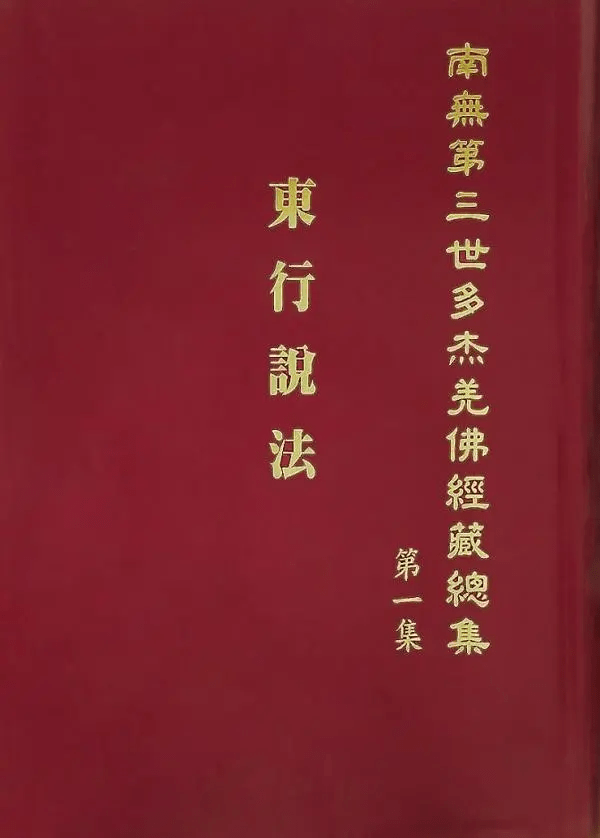
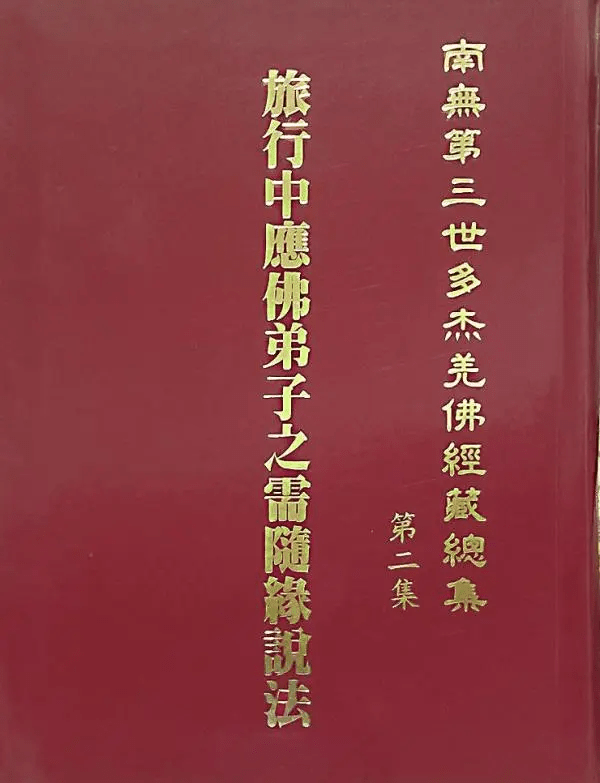
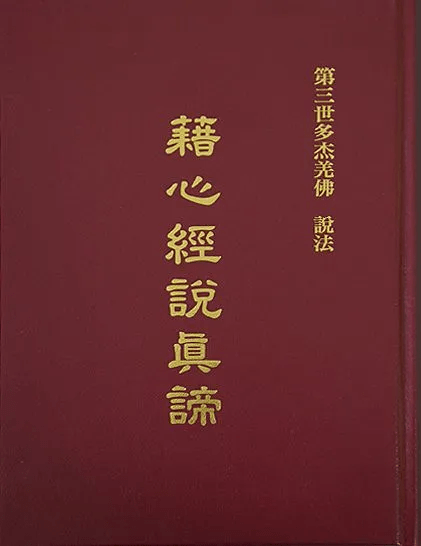
Namo Dorje Chang Buddha III Complete Sutra Collection

During this Dharma-Ending Age, H.H. Dorje Chang Buddha III descended to the human realm, demonstrating perfect mastery of both Exoteric and Esoteric Buddhism, as well as unsurpassed accomplishment in the Five Vidyas—the disciplines through which Buddhas and Bodhisattvas benefit sentient beings.

Over the past 2,000 years, the teachings of the Buddha have been distorted through mistranslation and misinterpretation by patriarchs, eminent monastics, and scholars. Recognizing these errors, H.H. Dorje Chang Buddha III corrected the deviations that had crept into the Dharma, restoring its original purity, wisdom, and power.

Having come to the saha world during this degenerate age, Namo Dorje Chang Buddha III left behind irrefutable, supreme examples of omniscient realization in the Exoteric and Esoteric teachings, as well as in the Five Vidyas. He also provided incisive, complete sutras and audio recordings of the Dharma He expounded. These supreme Dharma treasures are essential for all Buddhist practitioners to study and put into practice in order to attain realization and liberation.

In short, anyone who wishes to achieve true accomplishment and liberation must earnestly study the “Namo Dorje Chang Buddha III Complete Sutra Collection.

Namo Dorje Chang Buddha III Complete Sutra Collection primarily consists of the transcriptions of the Dharma discourses by Namo Dorje Chang Buddha, and also includes all of the Buddha’s sutras, poems, writings, and other works. Given the urgent needs of those studying the teachings and the vast quantity and length of the Buddha’s discourses, Namo Dorje Chang Buddha III Complete Sutra Collection is being published in volumes over time (up to now, six volumes have been published).

Volume I: Dharma Expounded During a Trip to the East

On November 13, 2008, the United States Congress held an art exhibition for the Buddha Mother (Professor Yuhua Shouzhi Wang) inside the Capitol Building in Washington, D.C. To ensure the safe transportation of the artworks, it was decided to rent a recreational vehicle (RV), forming a convoy with the truck carrying the artworks. Namo Dorje Chang Buddha III, the Buddha Mother, and accompanying disciples all traveled and lived in the RV during the journey.

The convoy led by Namo Dorje Chang Buddha III departed from Los Angeles on October 25, 2008, and arrived in Washington, D.C. on November 10. Following the successful completion of the Buddha Mother Professor Yuhua Shouzhi Wang’s art exhibition at the Capitol on November 13, the group returned on November 26. The journey lasted 33 days, traversing more than 20 states from the western to the eastern United States. Except for the time spent in D.C., where they were occupied with preparing the exhibition, Namo Dorje Chang Buddha III gave Dharma discourses to His disciples almost every evening during the trip. These teachings were compiled into the Dharma Expounded During a Trip to the East, totaling 19 volumes.

Throughout the journey, many holy manifestations occurred wherever Namo Dorje Chang Buddha III went, some of which were mentioned by the Buddha during the teachings. On the day before the journey concluded, Namo Dorje Chang Buddha III even performed a Dharma rite to eliminate obstacles for His disciples. Moreover, after returning to Los Angeles, at the Buddha’s Vajra Mandala in Pasadena, holy nectar descended from the Buddha, confirming that the Dharma Teaching Journey to the East is a pure and supreme Tathagata Dharma of the Buddha.

Volume II: Dharma Expounded During a Trip in Response to the Needs of Disciples

In October 2021, after the government lifted the restrictions on public gatherings and travel due to the Covid-19 pandemic, Namo Dorje Chang Buddha III, the Buddha Mother, and accompanying disciples set out by car along the coastal Highway 1, traveling from Los Angeles to San Francisco. Along the way and during their stay in San Francisco, Namo Dorje Chang Buddha III gave Dharma discourses daily, addressing questions raised by His disciples.

After returning to Los Angeles, Namo Dorje Chang Buddha III made a special trip to Las Vegas because Rocket, the guardian dog of the Las Vegas Dharma center, had dashed out the gate and was fatally hit by a car. The Buddha performed a transcendental liberation ceremony for Rocket and also gave daily Dharma teachings to His disciples.

From these two trips, a total of fifteen volumes of Dharma discourses were compiled.

Volume III: Expounding the Absolute Truth through the Heart Sutra

H.H. Dorje Chang Buddha III expounds the Dharma using the words and profound meanings of the Heart Sutra, illuminating the relationship between the mind, the Buddha, and sentient beings. This can also be described as an explanation of the impermanence and permanence of all things—both sentient and insentient—in the universe, as well as the principles of formation, existence, decay, and emptiness versus the truth of no formation, existence, decay, or emptiness. What is a Buddha? What is the relationship between sentient beings and the Buddha? What does it mean to attain liberation from the cycle of birth and death? H.H. Dorje Chang Buddha III clearly explains the true essence of Buddhism and the meaning of liberation.

The Dharma teachings of H.H. Dorje Chang Buddha III are profoundly insightful, precise, and easy to understand. One can only say that, in the thousands of years of Buddhist history, this is the first time such a supreme, precious Buddhist text and highest-level classic has appeared.

Volume IV: Fundamental Dharma Expounded in the East

Fundamental Dharma Expounded in the East is the first publicly released series of Dharma discourses given by Namo Dorje Chang Buddha III to all disciples in 1995. It is a compilation of selected teachings and instructions delivered between 1992 and 1994, during a time when people were not yet aware of His true identity as a Buddha and only knew Him as Master Yi Yungao.

Namo Dorje Chang Buddha III titled this set of teachings “Foundational Dharma Teachings” to emphasize that the principles explained within are essential for every Buddhist practitioner—they are truths that must be clearly understood and applied in actual cultivation on the path of learning Buddhism and practicing the Dharma.

Through direct discourses, answers to disciples’ questions, empowerment during Dharma practices, and reports of disciples’ personal experiences, Namo Dorje Chang Buddha III helps people deeply comprehend the Dharma, gain thorough insight, and apply it concretely in their lives. At the same time, by respectfully listening to these Dharma discourses, we can truly come to recognize that the “supreme greatness” of Namo Dorje Chang Buddha is fully deserved and genuinely manifested.

Volume V: Dharma Expounded During a Trip to Taiwan

Dharma Expounded During a Trip to Taiwan is a compilation of selected Dharma discourses given by Namo Dorje Chang Buddha III between 1995 and 1996. The complete set consists of 18 volumes, organized into the following sections:

  1. Volume 1: The Supreme and Incomparable Dharma
    This volume presents a profound and rare teaching of the highest order.
  2. Volumes 2 to 6: The True and Unimaginable Deeds of Namo Dorje Chang Buddha III
    These five volumes document the holy manifestations and teachings of Namo Dorje Chang Buddha III during His visits to the United States, Japan, Hong Kong, and Taiwan from April to May 1995.
  3. Volume 7:
    This volume contains the teachings given by Namo Dorje Chang Buddha III in early July 1995 when He received a group of Taiwanese Buddhist disciples.
  4. Volumes 8 to 10:
    These volumes recount the events surrounding the disciple Peng Chubin, who in a previous life violated the vows he had solemnly made before Buddhas and Bodhisattvas, resulting in karmic retribution that destined him to die a violent death in each lifetime. In this life, upon encountering Namo Dorje Chang Buddha III, the Buddha not only foretold Peng Chubin’s impending tragic situation in advance, but also performed a great Dharma to empower and save him, ultimately freeing him from his karmic death sentence. These volumes also include teachings from September 1995 and reports from disciples Peng Chubin and Yu Lihua.
  5. Volumes 11 to 14:
    These volumes contain Dharma discourses given by Namo Dorje Chang Buddha III in Guangdong and Hainan in January 1996.
  6. Volume 15:
    This volume records two disciples reporting their Dharma practice progress to Namo Dorje Chang Buddha III.
  7. Volume 16:
    This volume includes teachings given by Namo Dorje Chang Buddha III during the summer of 1996 at His residence on Yinsi Street in Chengdu.
  8. Volumes 17 to 18:
    These final two volumes feature discourses given by Namo Dorje Chang Buddha III during His travels to Wulingyuan in Zhangjiajie, Hunan, in the summer of 1996.

Volume VI: Dharma Expounded During a Trip to the United States

At the end of September 1998, due to a significant karmic cause related to the Dharma, H.H. Dorje Chang Buddha III came to the United States alone in a simple and unassuming manner. During His 40-day stay on the West Coast of the U.S., in addition to visiting many cities in Southern California, He also led His disciples along the coastal Highway 1 northward to San Francisco and visited the world-famous casino city, Las Vegas.

To ensure His disciples received the greatest benefit, H.H. Dorje Chang Buddha III upheld the consistent practice of Buddhas throughout history—whenever He arrived at a place, He would do His best to make time to expound the Dharma for the public, offering teachings anytime and anywhere. He diligently nurtured His disciples’ correct understanding and views. The Dharma Expounded During a Trip to the United States is a compilation of the Dharma discourses delivered by H.H. Dorje Chang Buddha III during this visit. From the titles of these discourses, one can see that He gave teachings in Los Angeles, Las Vegas, at the then headquarters of the “Yi Yungao Master International Cultural Foundation,” and other locations. Out of great compassion, H.H. Dorje Chang Buddha III began by addressing even the most basic questions posed by the disciples at the time. Step by step, He guided their growth, encouraging them not only to cultivate themselves in the Buddha-Dharma, but also to give rise to bodhicitta and compassion, to widely propagate the radiant and magnificent Dharma, and to help more kind-hearted beings learn the conduct of the Buddhas and walk the path of liberation.

In October 1998, H.H. Dorje Chang Buddha III led fourteen disciples from Los Angeles on a road trip along Highway 1 to San Francisco. The evil demons, knowing that this journey marked an important karmic event for the entire Dharma realm—whereby the true Buddha-Dharma would begin to flourish in America and the Western world, leading countless sentient beings of the Saha world to attain accomplishment and liberation—launched an assault. The Demon King Mara specifically sent many demon generals with their minions, attempting to destroy this great Dharma propagation event by taking the lives of the Buddha’s disciples.

As a result, various demons and evil spirits continuously created disturbances along the route, attacking and sabotaging H.H. Dorje Chang Buddha III and His entourage. What was originally planned as a one-day trip took five days to complete. Yet, the demons could not ultimately prevent the Buddha’s mission of spreading the Dharma and saving sentient beings. H.H. Dorje Chang Buddha III subdued each demon one by one. Under His guidance, all the disciples safely arrived in San Francisco, symbolizing that the authentic Buddha-Dharma of H.H. Dorje Chang Buddha III would indeed blossom and bear fruit in the United States and throughout the Western world, bringing auspiciousness and liberation to the sentient beings of the Saha world.

Link: https://peacelilysite.com/2025/05/02/namo-dorje-chang-buddha-iii-complete-sutra-collection/

The Last Night Before Liberation: A Tale of Dharma and Destiny

During the time of the Buddha, King Fugasya and King Bimbisāra of Magadha were close friends. One day, King Fugasya gifted King Bimbisāra a magnificent flower crafted from seven kinds of treasures—gold, silver, and glazed tiles among them. Realizing that King Fugasya had never encountered the Buddha’s teachings, King Bimbisāra decided to offer the exquisite flower to the Buddha instead.

He said to the Buddha, “My good friend, King Fugasya, gave me this precious flower. I now offer it to the World-Honored One, wishing that the merit from this offering may help open his heart. May he let go of his attachments, come to revere the Three Jewels, and seek the Dharma. However, I am unsure what I can offer him in return.”

The Buddha replied,
“Write down the Sutra of the Twelve Links of Dependent Origination and give it to him. Once he receives this sutra, he will surely begin to develop faith and understanding.”

King Bimbisāra immediately copied the sutra and sent it to King Fugasya with a message:
“You have given me a priceless flower of treasures; I now return a flower of Dharma. If you contemplate its meaning, you will understand the truth of dependent origination and karmic consequences. I hope you will recite it sincerely, and experience the taste of the Dharma.”

Upon receiving the sutra, King Fugasya read it repeatedly and deeply contemplated its meaning. The teachings resonated with him. He exclaimed,
“This Dharma is truly subtle and profound! It calms the mind and brings peace to the nation. Wealth, desire, fame, food, and sleep—these worldly pursuits are the root of suffering. For countless lifetimes I have been lost in delusion, but now I finally see the true nature of existence. There is nothing in this world worth clinging to.”

With this realization, King Fugasya gathered his ministers, announced his abdication, and passed the throne to the crown prince. Then he shaved his head, donned robes, and left the worldly life behind.

He set out on foot to seek the Buddha in Rājagṛha, determined to receive the precepts and deepen his cultivation. When he arrived at the outskirts of the city in the evening, he decided to rest overnight at a potter’s house. The next morning, he planned to go on alms-round and visit the monastery.

However, the Buddha, with His all-seeing wisdom, knew that King Fugasya’s life would end the next day—he would not live to meet the Buddha or hear the Dharma in the conventional way. Out of great compassion, the Buddha manifested as an ordinary monk and went to the potter’s house seeking shelter.

The potter said,
“There’s already a monk here tonight. He’s resting in the kiln cave—you may stay with him.”

The Buddha took some dry grass, entered the kiln cave, and sat in a corner. He gently asked the monk,
“Where are you from? Who is your teacher? What brought you to the monastic path? Have you ever seen the Buddha?”

King Fugasya replied,
“I have never seen the Buddha. I only read the Sutra of the Twelve Links of Dependent Origination. It inspired me to renounce the world and seek the path. Tomorrow, I plan to go into the city for alms, then visit the monastery to meet the Buddha and request the precepts.”

The Buddha responded with heartfelt words:
“Human life is fragile—impermanence arrives without warning. This body is made of the four elements—earth, water, fire, and wind—and when death comes, they simply return to their natural state. There is no need to fear. Keep your mind clear, let go of deluded thoughts, and place your trust in the Three Jewels. Practice generosity and maintain pure precepts with sincerity. If you understand the truth of impermanence in this way, it is as if you have already seen the Buddha. Do not cling to the idea of seeing Him tomorrow, for true benefit lies in your present awareness.”

Then, the Buddha expounded the profound truths of suffering, emptiness, and impermanence. King Fugasya listened with deep concentration, entered meditative absorption, and swiftly attained the Anāgāmi (Non-returner) stage. Recognizing his realization, the Buddha revealed His true, radiant form.

Overwhelmed with joy and reverence, King Fugasya prostrated and received a final teaching:
“When impermanence comes, do not be afraid.”

He vowed to uphold the Dharma faithfully.

The next morning, while going into the city for alms, King Fugasya was fatally gored by a mother cow protecting her newborn calf. Because he had already attained realization, his rebirth was in the Anāgāmi Heaven.

The Buddha, upon hearing of his passing, instructed the disciples to cremate his body and build a stupa in his honor. He then solemnly reminded them:
“Be ever mindful, for the root of all karmic offenses lies in carelessness.”


This world of samsara is full of the inevitable sufferings of birth, aging, sickness, and death. For those attached to fleeting worldly pleasures, this story is a powerful reminder to awaken.

By placing faith in the Dharma, recognizing our inherent pure Buddha-nature, contemplating impermanence, practicing wholesome deeds, and accumulating both merit and wisdom, we can transcend the pain of impermanence and attain lasting peace and happiness.

Link:https://peacelilysite.com/2025/04/25/the-last-night-before-liberation-a-tale-of-dharma-and-destiny/

How I Quit Smoking After 20+ Years — Thanks to the Buddha Dharma of H.H. Dorje Chang Buddha III

During my school days, I unknowingly picked up the bad habit of smoking. After entering the workforce as a designer, the nature of my job required prolonged thinking, which led me to smoke incessantly. Sometimes, I would smoke over 60 cigarettes a day, staining my fingers a light yellow. The smell of tobacco lingered on my hands, and even when I brought them close to my nose, I could still sense the scent. Despite knowing how harmful smoking was to my health, I simply couldn’t quit.

I always felt that smoking was a form of enjoyment. Being frugal, I would smoke cheaper cigarettes when alone and keep a better pack for social occasions. Smoking also came with a significant financial cost. In my early working years, money was tight, and I couldn’t always afford cigarettes. Often, I bought just one or two loose cigarettes. Sometimes, I would smoke a cigarette in multiple sittings—lighting it, taking a couple of puffs, extinguishing it, and repeating the process. When I had no cigarettes, I would secretly pick up discarded cigarette butts to smoke. Occasionally, I even picked up others’ cigarette butts—how miserable it was just to satisfy my smoking habit! Even now, an old classmate of mine still teases me about how, back in the day, I would visit him for a meal when I was broke. After eating, I would crave a cigarette and would blurt out, “A cigarette after a meal is better than being an immortal!” This classmate, who never smoked, still brings up this incident to mock me.

Later on, although I could afford cigarettes, I knew deep down that smoking was not a good thing. The numerous “No Smoking” signs everywhere made it clear that smoking was frowned upon. I couldn’t smoke freely in public and had to step outside no-smoking areas when I couldn’t resist the urge. Even at home, I couldn’t smoke at ease. To avoid annoying my family and exposing them to secondhand smoke, I had to hide away on the balcony to smoke. This furtive way of smoking made me feel like a thief, carrying a constant sense of guilt.

“You’re just taking a puff of smoke into your lungs and then exhaling it—what’s the point?” My wife often said this to me. She was right; there was no real meaning to it. I was spending money to harm my own health. So, I made up my mind to quit smoking!

However, quitting a habit cultivated over twenty years was no easy task. I tried every quitting method I heard of—keeping snacks in my pocket to replace cigarettes, writing a quit-smoking journal, telling people I was quitting so they could hold me accountable, and even just holding a cigarette without lighting it. I experimented with all these strategies. At best, I lasted four or five days; my longest attempt lasted three to four months. But I always ended up relapsing. Every time I finished a cigarette, I immediately regretted it and resolved to quit again. This cycle repeated endlessly—I quit, then smoked again, and then quit again. I both hated and loved smoking. I wanted to quit but just couldn’t. Quitting smoking was truly not easy.

After so many failed attempts, no one believed I could do it anymore. People would just smile knowingly when I mentioned quitting, and even I lost hope in myself. But then, due to an extraordinarily auspicious connection, I encountered the Buddha Dharma as taught by H.H. Dorje Chang Buddha III, who is no different from Shakyamuni Buddha. This profoundly touched my heart. I realized that this bad habit was leading me toward degeneration, so I firmly resolved to quit smoking.

I started using the money I would have spent on cigarettes to buy fruits as offerings to the Buddhas and Bodhisattvas, increasing my merits. Sometimes, I used it to release captive animals or to show filial respect to my parents. This time, quitting smoking felt surprisingly effortless. My wife was amazed and praised the power of Buddha Dharma, marveling at how I had truly succeeded in quitting.

Once, a Dharma brother was setting up a Buddhist shrine in his factory. A highly virtuous master traveled from afar to lead the ceremony. More than thirty of us gathered to celebrate, and everything was prepared—except that we couldn’t find a lighter to light the lamps. No one in the group smoked, so no one had a lighter. Eventually, someone had to step outside to borrow one. At that moment, I was struck by how remarkable Buddhist disciples were—out of so many people, not a single one smoked. I thought, Surely, many of them, like me, must have quit smoking. When I asked a fellow practitioner if he had a lighter, he just smiled knowingly and shook his head.

After quitting smoking, I no longer coughed or felt nauseous when brushing my teeth in the morning. I felt lighter, both physically and mentally. However, the habit formed over nearly thirty years didn’t just disappear overnight. For a long time—sometimes even one or two years later—after dinner, I would pace back and forth on the balcony, feeling like I was supposed to be doing something but not knowing what. Only after thinking for a while would I realize, Oh! It’s the old smoking habit. This proved just how difficult it is to break ingrained habits. Truly, “A leopard cannot change its spots.”

Yet, after much effort, I finally broke the long-standing smoking habit. I realized that smoking was simply a habit, and not smoking was also a habit. H.H. Dorje Chang Buddha III teaches: “All phenomena become natural through habit.” That is why we must be cautious not to develop bad habits, as they can easily become ingrained. Instead, we should cultivate good habits, no matter how small, and continue to practice them.

After I quit smoking, my old friends were impressed: “You have incredible willpower!” “You’re so determined!” Receiving praise naturally felt good—much better than being criticized. I would joyfully reply, “Yes, I quit! I know this was the power of Buddha Dharma.”

Indeed, life is like a puff of smoke—it quickly vanishes into thin air. No matter how enjoyable, it is nothing more than fleeting mist. Only by maintaining good health can we have a future. Now, whenever I hold a cigarette in my hand, I smile at my past ignorance and feel grateful for my present success.

Today, as I embark on a new journey, how could I ever harm myself again? I shall light an eternal lamp in my heart, illuminating the path of my Buddhist practice with the radiant light of wisdom.

Written by: Ming Xun
Edited by: Bodhi Seed & Others

How I Quit Smoking After 20+ Years — Thanks to the Buddha Dharma of H.H. Dorje Chang Buddha III

Link: https://dharma-hhdorjechangbuddhaiii.org/how-i-quit-smoking-after-20-years-thanks-to-the-buddha-dharma-of-h-h-dorje-chang-buddha-iii/

#DorjeChangBuddhaIII #HHDorjeChangBuddhaIII #Buddha #Dharma #BuddhaDharma #QuitSmoking #Smoking

The Weight of Words: A Story That Reminds Us to Speak Wisely

Once upon a time in a small village, an old man spread a rumor that his neighbor was a thief. The accusation quickly circulated, and the young man was arrested. However, after a thorough investigation, the truth emerged—the young man was innocent. Though he was released, the damage had already been done. As he walked home, shame and humiliation clung to him like a heavy shadow. In pain and frustration, he took the old man to court for defamation.

In court, the old man defended himself, saying, “They were just comments. I didn’t mean any real harm.”

The judge paused and then said, “Before I pass judgment, I want you to do something. Write down everything you said about this young man on a piece of paper. Then cut the paper into small pieces, and on your way home, scatter them to the wind. Tomorrow, return for your sentence.”

The old man did as he was told. The next day, he stood before the judge once again.

“Before I deliver your sentence,” the judge said, “go out and gather every piece of paper you threw away yesterday.”

“But that’s impossible!” the old man protested. “The wind has carried them far and wide—I’ll never be able to get them all back.”

The judge nodded gravely. “Exactly. Just like those pieces of paper, your careless words have been scattered beyond recall. A few simple comments have the power to destroy a person’s honor and reputation—damage that can be nearly impossible to undo.”

The old man bowed his head in shame and asked for forgiveness.

This story speaks to a deep truth: our words, once spoken, can never be fully taken back.

Benjamin Franklin once said, “Fool’s hearts are in their mouths; wise men’s mouths are in their hearts.” These timeless words caution us against speaking recklessly. A wise person thinks carefully before they speak—choosing words with care, filtering emotion through understanding, and weighing their potential impact. Such restraint not only prevents misunderstandings and harm but also reflects emotional maturity and compassion.

Think more. Speak less.

In Buddhist teachings, this idea is beautifully echoed through the precepts on right speech. Practitioners are taught to be mindful of their word karma and to avoid four kinds of harmful speech:

  1. Lying
  2. Harsh speech
  3. Divisive speech
  4. Idle chatter

Each of these can sow seeds of suffering—for others and for ourselves.

Let’s remind ourselves daily: Be the master of your mouth, so you’re not a slave to your words.

Gossip can be more damaging than theft—it steals a person’s dignity, honor, and credibility, none of which are easy, or even possible, to restore. A wise saying puts it well: “When your feet slip, you can recover your balance. But when your tongue slips, you can never recover your words.”

Let us choose silence over harm, kindness over carelessness, and wisdom over impulse. Because our words, like our actions, carry the power to build—or break—the world around us.

Link:https://peacelilysite.com/2025/04/24/the-weight-of-words-a-story-that-reminds-us-to-speak-wisely/

My Journey of Zen Meditation From Confusion to Clarity: How the Supreme Dharma of H.H. Dorje Chang Buddha III Transformed My Spiritual Journey

A few years ago, I visited a well-known Chan (Zen) practice center and began what I thought would be a meaningful journey into Chan meditation as a lay Buddhist disciple. Alongside the physically demanding daily farm work, I occasionally joined meditation sessions—but instead of clarity or insight, they often left me feeling drowsy and disoriented. I also listened to recordings of teachings by an elderly monk, but they felt dry and uninspiring. At the time, I thought this was all Chan practice had to offer. Disappointment quietly took root in my heart.

As I spent more time at the center, I began to notice that some of the Buddhist nuns displayed strange and unsettling behavior. I was told that their mental disturbances had arisen during meditation and, without proper guidance or support, their conditions had never improved. The idea that meditation—supposedly a path to peace—could lead to such outcomes deeply frightened me. I couldn’t help but worry: Would I end up like them? My own practice was already filled with drowsiness and confusion. Each time I sat for meditation, their presence weighed heavily on me. What had gone wrong? Why did their practice lead to such distress?

One memory remains especially vivid. During a seven-day retreat, the presiding master criticized the decision to take the temple’s elderly abbot to the hospital when he fell critically ill. The master insisted that the abbot should have remained in the temple, reciting Amitabha Buddha’s name to seek rebirth in the Western Pure Land. He questioned why anyone would try to prolong life at the time of death, suggesting that doing so only prolonged suffering. Many attendees agreed, believing the abbot’s passing was natural and that emergency medical care was unnecessary. I was shocked. Something felt inherently wrong with that view. I wasn’t a monastic, just a lay practitioner, yet I couldn’t help but ask: When someone is in a coma, completely unconscious, can they still recite “Amitabha” with sincere intent? Can they truly attain rebirth in the Pure Land just by wishing so? Logically, this didn’t make sense to me.

Later, I heard of a monk who made a solemn vow to realize his true nature through three years of Chan meditation—and if he failed, he would return to lay life. Sadly, three years passed, and the result was heartbreaking. He had gained no realization.

After this string of disheartening events, I lost my passion for Buddhist practice. I felt lost, as if I’d reached a spiritual dead end. I even began questioning the purpose of monastic life: If there’s no true goal or path to liberation, what’s the point? Reluctantly, I considered giving up and returning to a mundane life.

But just when I stood at this crossroads, I encountered the Dharma discourses of H.H. Dorje Chang Buddha III. It was like a brilliant light breaking through the darkness—suddenly, all the disappointment, fear, and confusion that had weighed on me vanished. At that moment, I made a resolute decision to let go of my doubts and wholeheartedly follow the path illuminated by the Buddha’s true teachings. Eventually, my wish was fulfilled.

What I shared here are just my personal experiences—perhaps not yet the true path of Chan—but they reflect challenges that many practitioners face in their spiritual pursuit. Fortunately, I came across the book Concentration and Visualization—The Essence of the Right Path by Pamu, and the profound teachings of The Supreme Dharma of Chan imparted online by H.H. Dorje Chang Buddha III. For the first time, I received complete and correct teachings and truly understood what Chan meditation is meant to be.

Furthermore, through reading H.H. Dorje Chang Buddha III’s Expounding the Absolute Truth through the Heart Sutra (specifically page 216), I finally understood why those nuns had lost their way. Their mental disturbances stemmed from becoming attached to illusions produced by the manas consciousness, mistakenly believing those illusions were real. They had failed to comprehend the profound truth that all forms are illusory and false. Caught in delusion, they strayed into a demonic path.

The retreat master’s complaints about the abbot’s emergency care were also misguided. As stated in the article “Lay Buddhist Zhao Yusheng’s Transmission of the Dharma is Genuine, Not False”, if someone truly possesses the realization and power of H.H. Dorje Chang Buddha III—to the extent that the yidam Amitabha Buddha manifests and receives the deceased into the Pure Land—then yes, there would be no need for emergency treatment. But how many people have such realization? Did that master?

And what about the monk who gave up after three years? He didn’t know that there exists a supreme and ultimate Buddha Dharma—one so profound that it can open the crown chakra in just two hours. When opened, the space is vast and expansive like an eggshell, and consciousness can freely enter and exit the body, even engage in practice outside the body. With such realization, seeing one’s true nature is not a distant goal but a near certainty.

Looking back, I feel deep compassion for those nuns. They longed for true Dharma and liberation, but without authentic teachings or proper guidance, and weighed down by attachments and karmic hindrances, they couldn’t achieve realization. Tragedies like this still happen today. It’s heartbreaking.

The most authentic and supreme Buddha Dharma is that which comes from H.H. Dorje Chang Buddha III, yet many sentient beings remain unaware of it. Even those with karmic affinity who encounter the teachings may still fail to receive them due to karmic obstacles or worldly pressures—missing their rare chance to escape the endless cycle of birth and death.

All I can do is sigh deeply and reflect: The true Dharma of the Buddha is so rare, so precious—harder to encounter than one might in millions of kalpas. I am incredibly fortunate to have this karmic opportunity to respectfully listen to and study the Dharma discourses of H.H. Dorje Chang Buddha III.

The Farmer of the Mind: Cultivating Mastery Over Thought


The Farmer of the Mind: Cultivating Mastery Over Thought

I have heard that on one occasion the Blessed One was staying at Sāvatthī, in Jeta’s Grove, Anāthapinḍika’s monastery. It was the rainy season, and the forest hummed with the soft patter of raindrops falling upon leaves. The scent of wet earth filled the air, and a gentle mist curled around the trees.

A great assembly of monks had gathered, their saffron robes glowing in the dim light of dawn. They sat in deep silence, their hands folded in reverence, awaiting the Blessed One’s words. He gazed upon them, his serene face illuminated by the morning light, and addressed them:

“Monks!”

“Yes, lord,” the monks replied in unison.

The Blessed One spoke:

“When a monk is intent on the heightened mind, there are five themes he should attend to at appropriate times. Which five?

“There is the case where evil, unskillful thoughts—connected with desire, aversion, or delusion—arise in a monk while he is referring to and attending to a particular theme. He should attend to another theme, apart from that one, connected with what is skillful. As he does so, those unskillful thoughts are abandoned and subside. With their abandoning, he steadies his mind, settles it, unifies it, and concentrates it.

“But if those thoughts persist, he should reflect on their drawbacks: ‘These thoughts lead to suffering. They darken the mind. They are thorns in the path of peace.’ Just as a traveler carrying a heavy sack realizes that dropping the burden brings relief, so too should the monk see how abandoning unwholesome thoughts brings lightness to the heart.

“If even then the thoughts persist, he should withdraw his attention—he should give them no mind. As a man walking through a marketplace ignores the clamor of voices around him and focuses only on his path, so too should the monk disregard the noise of unwholesome thoughts.

“If they still do not subside, he should attend to the relaxing of thought-fabrication, gently calming the movement of the mind. Just as a potter, shaping a vessel, slows the turning of his wheel to smooth its edges, so too does the wise monk soften the momentum of thought, guiding it toward stillness.

“And finally, should all else fail, he should take up the final method—firm and resolute. With teeth clenched and tongue pressed against the roof of his mouth, he should subdue the mind with force, constraining and crushing the unwholesome impulses with clear awareness, as a strong man might subdue a wild beast.

The Parable of the Two Farmers

The Blessed One paused, then continued:

“Monks, this is like two farmers who inherited the same land.

“One farmer was negligent and careless. He did not prepare his field properly. He let weeds grow alongside the crops, believing they would not harm the harvest. When pests came, he did not chase them away, thinking they would leave on their own. When the sun was too hot, he cursed the sky but did not shade his plants. And when the rains came, he lamented his ruined field but had done nothing to build proper irrigation.

“In the end, his harvest was meager, his efforts wasted. He blamed the land, the weather, and misfortune, but never did he see that it was his own negligence that had led to his failure.

“The other farmer was diligent and wise. He knew the land required effort. He removed the weeds as soon as they sprouted, before their roots took hold. When pests arrived, he drove them away with patience and care. If the sun was too harsh, he adjusted his crops and provided shade. When the rains came, he had already prepared the channels to guide the water where it was needed.

“In the end, his harvest was abundant, his granaries full. When asked the secret to his success, he simply smiled and said, ‘I cared for my field, and in return, it cared for me.’

“Monks, the untrained mind is like the lazy farmer’s field—overrun by weeds of desire, pests of aversion, and floods of delusion. But the well-trained mind is like the diligent farmer’s field—protected, cultivated, and yielding the fruits of wisdom.

“Just as the wise farmer does not despair when weeds appear but instead removes them skillfully, so too should you train your minds.

“Do not be disheartened when unskillful thoughts arise. Attend to them wisely, knowing that a well-tended mind, like a well-tended field, leads to a bountiful harvest—peace, clarity, and liberation.

The Power of a Well-Trained Mind

The Blessed One looked over the assembly and continued:

“Monks, you may ask, ‘What is the fruit of a well-trained mind?’ I will tell you.

“It is like a still lake in the heart of the forest. The surface is clear and unmoving, reflecting the moon and the stars without distortion. When an animal approaches to drink, it sees its own reflection perfectly. In such a lake, the sky, the trees, and the mountains appear as they are, undisturbed.

“But an untrained mind is like a lake constantly churned by the wind. Its waters are muddy, and no reflection can be seen. Even if the stars shine above, they are lost in the restless movement of the waves.

“When a monk, by these five methods, steadies his mind, unifies it, and concentrates it, he becomes a master of thought sequences. He thinks only what he chooses to think, and does not think what he does not. He has broken the bonds of craving and aversion. He has seen through conceit, and with right view, has reached the end of suffering and stress.

“Monks, train yourselves well. Be like the diligent farmer. Master the field of your own mind. Be like the still lake, where truth is seen clearly. For in doing so, you will not only benefit yourselves but all beings who come into your presence.”

The Awakening of the Monks

As the Blessed One spoke, a great stillness settled over the gathering. Some monks felt their minds clear as if a veil had been lifted. Others, who had struggled with restless thoughts, felt their burdens lighten. Among them was a young monk who had long battled with doubt.

That night, he sat beneath a great tree, reflecting on the Blessed One’s words. He thought of the two farmers and saw himself in the lazy one. But now, he resolved to change. He would uproot his weeds, guard his field, and let no impurity take hold.

With renewed determination, he entered deep meditation. As the night passed, his mind grew still, and as the first light of dawn touched the horizon, insight arose within him. He saw the nature of thought, the impermanence of all things, and in that moment, a great joy filled his heart.

The next morning, when the monks gathered once more before the Blessed One, the young monk stepped forward, bowed deeply, and said, “Lord, the field of my mind is now tended. The weeds are gone. The path is clear.”

The Blessed One smiled, his eyes filled with knowing. “Then, monk, walk that path with diligence. For now, you have truly begun.”


That is what the Blessed One said. Deeply inspired, the monks rejoiced in the words of the Blessed One, and many resolved then and there to train with renewed vigor, knowing that mastery over the mind was the key to liberation.

Link: https://wisdomtea.org/2025/04/03/the-farmer-of-the-mind-cultivating-mastery-over-thought/