Peace Pilgrim once said, “If you knew how powerful your mind is, you would never think a negative thought.” That quote stayed with me, but I didn’t fully understand its truth until I experienced it for myself—right in my own backyard.
At one point, we lived in a house with a large backyard that inspired me to plant organic vegetables. I imagined harvesting fresh, healthy produce and enjoying the process of nurturing life from the soil. Eager and hopeful, I bought a few small tomato plants from Home Depot and began tending to them daily. Watching them grow brought me joy and anticipation—I could almost taste the sweet, juicy tomatoes I dreamed of.
But as the plants began to bloom and bear fruit, trouble arrived. Large, green caterpillars appeared overnight, chewing through leaves and fruit, threatening to destroy the entire garden. My husband was furious and would crush them on sight. Wanting to find a gentler solution, I turned to friends for advice. One of them recommended a non-toxic spray from an organic farm store. It worked like a glue, blocking the insect’s skin so they couldn’t breathe and would suffocate to death.
When I heard that, I felt a sharp, suffocating sensation through my own skin. I couldn’t do it. I couldn’t kill them—no matter how many tomatoes I might lose. These were living beings. Their lives mattered too. I decided then and there: I would not harm them.
And then, something remarkable happened.
The very next morning, my husband came to me in astonishment. “All the caterpillars are gone,” he said. “And there aren’t even any dead ones.” I went out to the garden. He was right. The insects had vanished without a trace.
Was it just a coincidence? I don’t believe so. I believe they sensed my compassion. I believe the power of a sincere, non-harming mind created a shift in energy that led to a quiet, unseen miracle.
Later, after I began studying Buddhism, I came to understand this experience on a deeper level. Through the Dharma transmitted by H.H. Dorje Chang Buddha III, I learned the true meaning of the precept of “Not Killing.”
This teaching awakened a deeper sense of responsibility in me. I now strive to regard the suffering of all beings as my own, and I earnestly wish for every living being—my parents of infinite past lives—to live in harmony and peace.
I sincerely pray that all beings may enjoy happiness, good health, and abundant fortune. I constantly beseech all Buddhas and Bodhisattvas to bless them, to help them escape suffering, to encounter and practice the true Buddha-dharma, and ultimately to attain liberation from the cycle of birth and death.
This is not just a story about gardening. It is a story about the incredible power of our minds—and even more so, our hearts. When we choose compassion over destruction, mindfulness over impulse, miracles can happen.
Let kindness guide you. Let the power of your mind awaken something beautiful—not just in your life, but in the lives of all beings around you.
Longxing Temple, also known as the Great Buddha Temple, is one of China’s oldest, largest, and best-preserved Buddhist temples. This extraordinary complex is not only a sacred site but also a magnificent testament to the architectural genius and spiritual devotion of ancient China.
Located at No. 109 Zhongshan East Road in Zhengding County, Shijiazhuang, Hebei Province, Longxing Temple sprawls across an impressive 82,500 square meters.
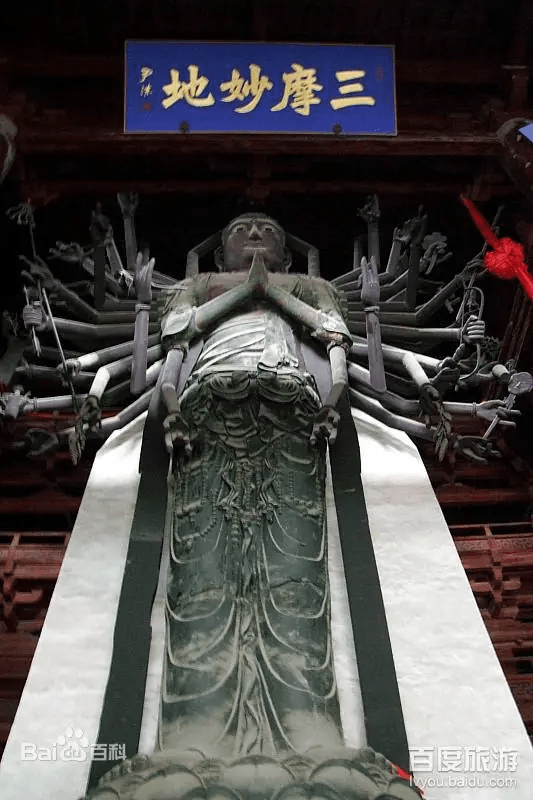
Originally established in 586 CE during the Sui Dynasty under the name Longcang Temple, it was later renamed Longxing Temple during the Tang Dynasty. In 971 CE, Emperor Taizu of the Northern Song Dynasty issued an edict to cast an enormous bronze Thousand-Armed Avalokiteshvara Bodhisattva and build the splendid Hall of Great Compassion to house it.
This marked the beginning of large-scale expansion, culminating in a grand Song Dynasty architectural complex centered on the hall. Through the Jin, Yuan, and Ming Dynasties, the temple saw continued renovation and growth. In the Qing Dynasty, both Kangxi and Qianlong Emperors decreed extensive rebuilding, shaping the temple’s current layout:
The eastern section served as monks’ quarters
The central axis hosted Buddhist ceremonies
The western area functioned as the imperial palace quarters
In 1710, Emperor Kangxi personally inscribed the name “Longxing Temple,” an honor that reflects its enduring importance.
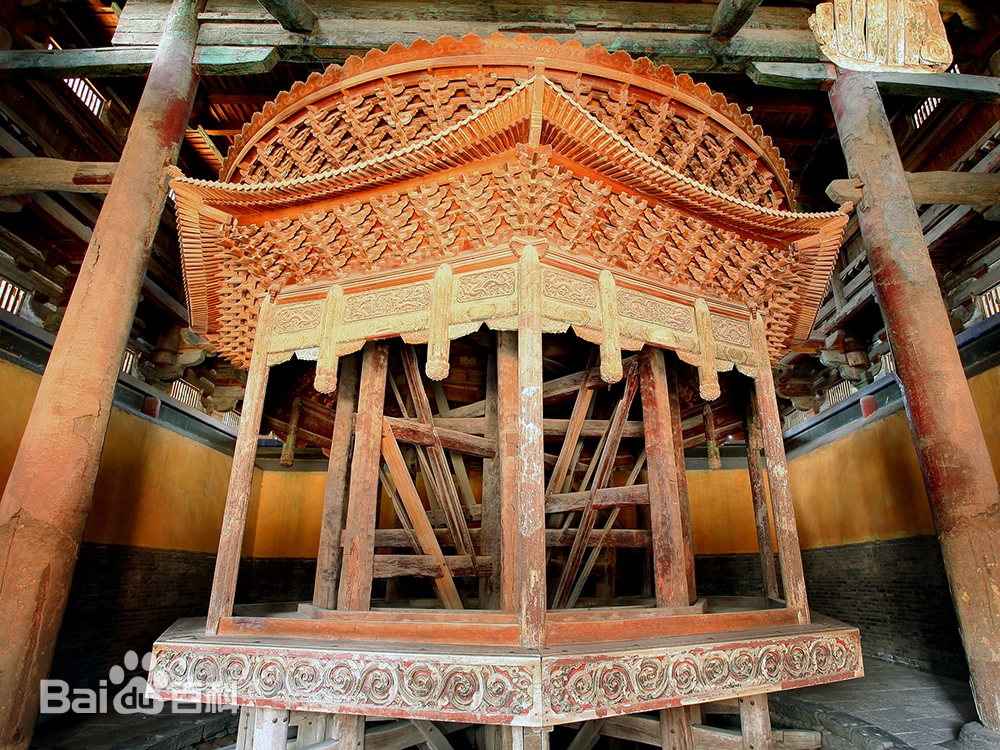
Today, visitors can trace a north–south axis that passes through a series of majestic structures: the Hall of Heavenly Kings, Mani Hall, the Ordination Altar, the Revolving Sutra Library, and more than a dozen other halls and pavilions. The complex is celebrated as a textbook example of ancient Chinese Buddhist temple design.
Recognized among China’s ten most famous temples, Longxing Temple was declared a Major National Historical and Cultural Site in 1961 and later designated a National AAAA Tourist Attraction.
Highlights Not to Miss
Hall of Heavenly Kings
First built in the Northern Song Dynasty, this is the oldest surviving structure of its kind within the temple. Even after a major renovation in 1780, its main timber frame remains original.
Above the entrance, plaques bearing the calligraphy of the Kangxi Emperor read:
“Imperially Established Longxing Temple” “Hall of Heavenly Kings”
Inside stands the famous Big-Bellied Maitreya Buddha, a Jin Dynasty wood carving over 800 years old. Thoroughly localized in Chinese style, this smiling figure derives from the legendary monk Qici, known for his benevolence and laughter.
On either side stand the Four Great Heavenly Kings, each symbolizing auspicious natural forces:
Wind (Southern King, with a sword)
Harmony (Eastern King, with a lute)
Rain (Northern King, with a precious umbrella)
Compliance (Western King, with a coiled snake)
Together, they express the blessing of abundant harvests and national peace.
Mani Hall
Built in 1052, Mani Hall has an unusual cross-shaped floor plan created by four gabled annexes extending from its square central chamber.
Inside, five golden clay Buddha statues preside over the altar, with Shakyamuni Buddha at the center.
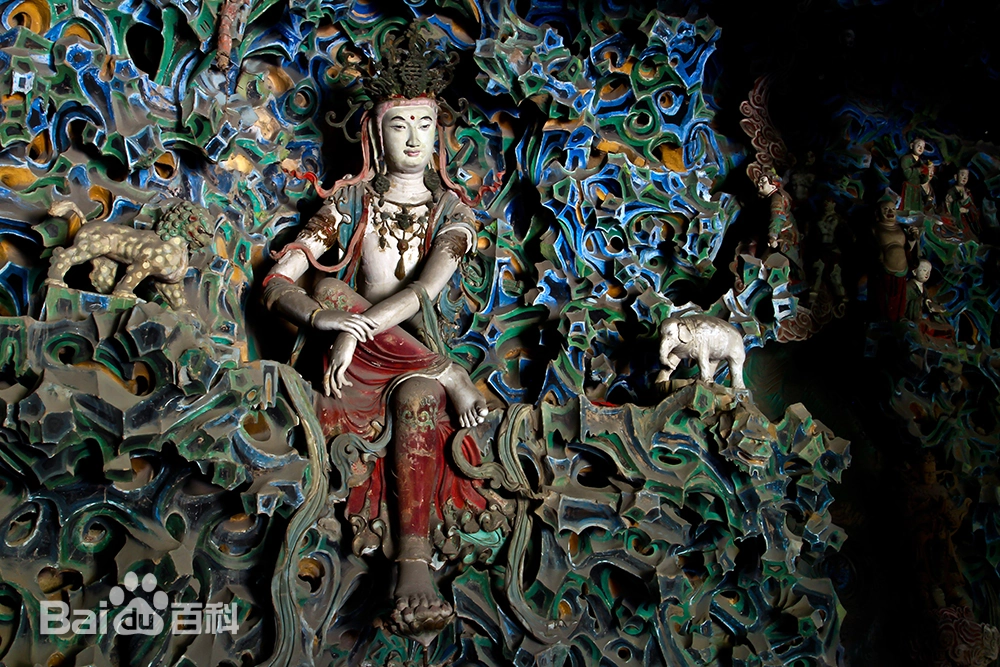
The hall’s north wall showcases a breathtaking polychrome relief nearly 16 meters long, depicting swirling clouds, celestial beings, and Avalokiteshvara stepping onto a lotus—symbolizing the entrance to the Western Pure Land.
At the heart of this scene sits the Backward-Facing Avalokiteshvara, so named because she faces north instead of south. Far from a supernatural image, this Avalokiteshvara appears as a serene, youthful woman with an expression so vivid and gentle it moves all who gaze upon her.
Visitors often remark:
“How beautiful—how extraordinary! She sits so naturally, one leg casually crossed, her eyes meeting yours wherever you stand. Her smile is as enigmatic as the Mona Lisa—truly ‘The Most Beautiful Avalokiteshvara.’”
Ordination Altar
Reserved for the most important temples, the Ordination Altar was where monks received their vows.
Inside the altar stands a unique double-sided bronze Buddha statue. Facing south is Amitabha Buddha, and facing north is Medicine Buddha. The two figures share a single body, seated back to back in lotus posture.
The statues are depicted in full lotus position, wearing five-leaf crowns, with round, gentle faces. Their necks are adorned with necklaces and their arms with bangles, while flowing sashes drape gracefully from their shoulders. Amitabha’s hands form the meditation mudra, while Medicine Buddha’s hands display the gesture of compassion.
Their expressions are serene and tranquil, exuding a quiet dignity and solemn beauty in their elegant simplicity.
Longteng Garden
To the northeast lies Longteng Garden, a Ming and Qing–style garden combining cultural heritage and tranquil scenery.
Here you’ll find:
Northern Dynasties stone statues
A Jin Dynasty scripture pillar
A Yuan Dynasty mural tomb
The Ming Dynasty Longquan Well Pavilion
The “Three Generations of Vice Ministers” stone archway
Meandering through its pavilions, terraces, and lush paths feels like stepping into a living scroll of history.
Cultural Traditions
Imperial Buddhist Ceremony Performance
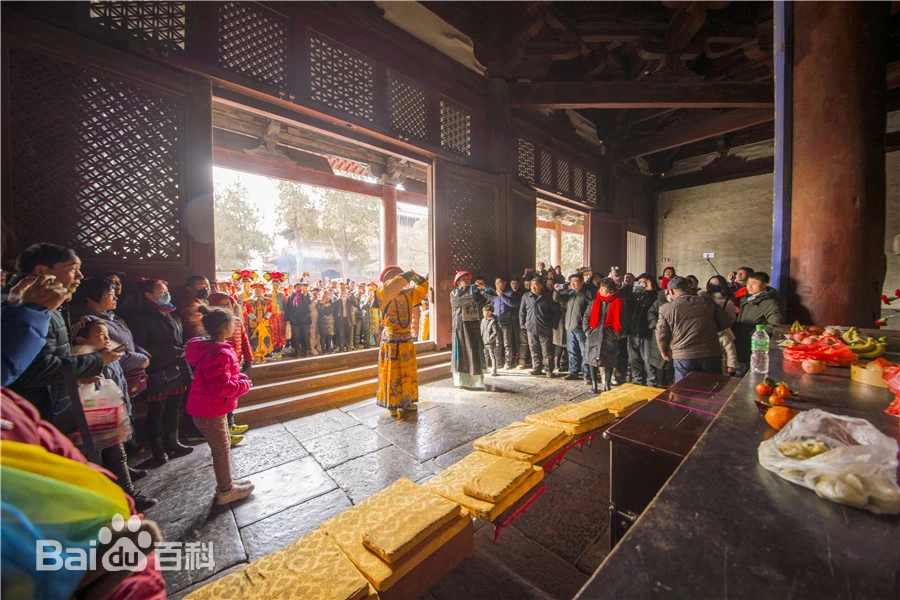
Zhengding’s Longxing Temple is an imperial temple that was visited and funded for repairs by emperors over many dynasties. According to The Chronicles of Longxing Temple, in the 49th year of Emperor Kangxi’s reign (1710 CE), the emperor ordered funds to be allocated from the national treasury to restore Longxing Temple. After the renovations were completed, Emperor Kangxi personally came to pay homage and bestowed 19 inscribed plaques, including one reading “Longxing Temple Constructed by Imperial Decree,” all handwritten by himself.
At the end of 2011, drawing on historical records, the Cultural Heritage Office re-created the Grand Imperial Buddhist Ceremony, reenacting the scene of Emperor Kangxi’s arrival at Longxing Temple, the local officials welcoming the imperial entourage, and the emperor bestowing plaques, offering incense, and performing rituals to honor the Buddha.
Thousand-Armed Avalokiteshvara Performance
Inside the Great Compassion Pavilion of Zhengding’s Longxing Temple stands a bronze statue of the Thousand-Armed, Thousand-Eyed Avalokiteshvara, measuring 21.3 meters in height. Cast in the 4th year of the Kaibao era of the Northern Song Dynasty (971 CE), this towering bronze figure is remarkable both for its immense size and its exquisite craftsmanship.
It is the tallest and oldest ancient bronze Buddha statue of its kind in the world. It is not only a symbol of Longxing Temple but also an emblem of the ancient city of Zhengding.
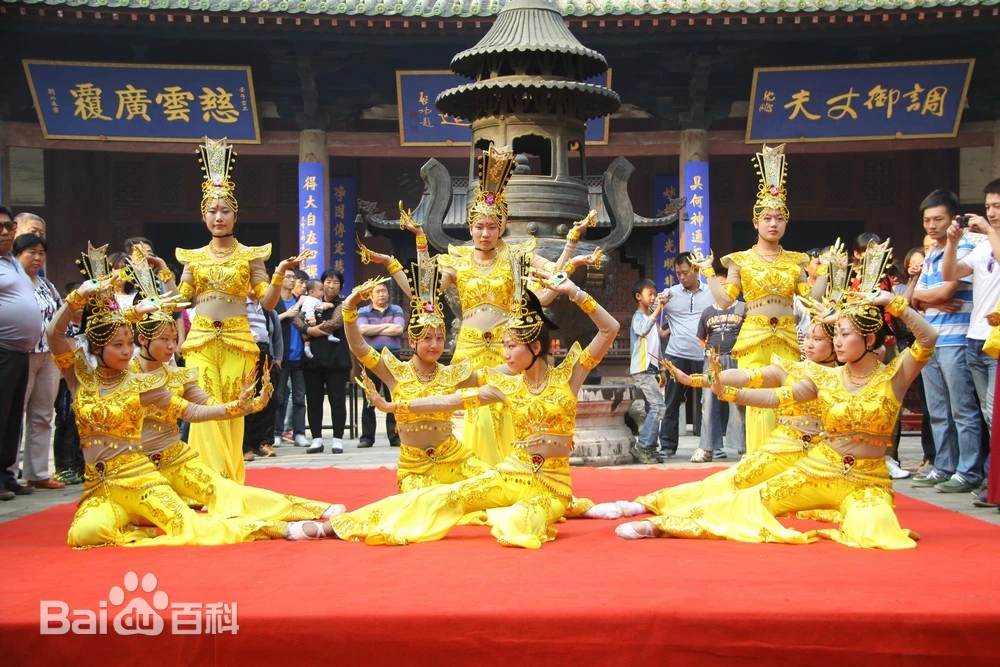
The Thousand-Armed Avalokiteshvara Performance features graceful melodies and captivating dance that vividly convey the divine presence and compassion of the bodhisattva.
Longxing Temple is more than a historical monument—it is a living symbol of Chinese Buddhist art, architecture, and spirituality. Whether you come for quiet reflection, cultural discovery, or simply to stand before centuries of devotion, this magnificent temple will leave a lasting impression on your heart.
Modern scientists suggest there may be multidimensional spacetime. The world we perceive in our daily lives consists of three dimensions of space—length, width, and height—plus one dimension of time, forming what we call four-dimensional spacetime.
For most people, it is nearly impossible to imagine what multidimensional space could be like. Even scientists struggle to describe how such realms might appear.
Yet once, while I was reading a Buddhist sutra, I felt as though I glimpsed something of this mysterious idea.
In the Vimalakirti Sutra, it is recorded that Manjushri Bodhisattva led 8,000 bodhisattvas, five hundred arhats, and countless heavenly beings to visit the ailing lay master Vimalakirti.
Vimalakirti lived in a small chamber. He invited everyone to enter. Miraculously, they all went inside, but the room did not grow any larger. No one felt crowded or obstructed, and everyone saw Vimalakirti sitting directly before them.
Manjushri and Vimalakirti engaged in profound dialogue about the Dharma. Later, Vimalakirti displayed astonishing spiritual powers, bringing seats, exquisite foods, and treasures from distant worlds into that same room.
It was absolutely astonishing—like witnessing the seamless merging of multiple dimensions.
Throughout Buddhist history, many great masters have demonstrated abilities that seem to transcend space and time.
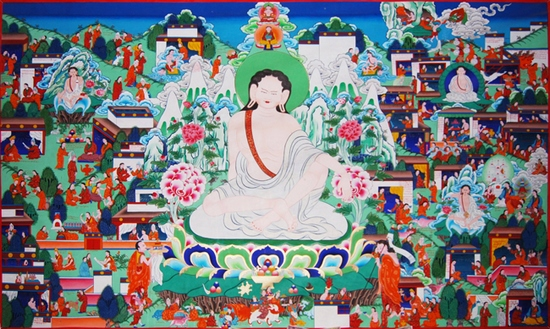
For example, there is the story of Milarepa, Tibet’s most renowned yogi. When he was welcoming his disciple Rechungpa back from India—where Rechungpa had traveled to collect scriptures—an incredible event took place.
Rechungpa carried the scriptures on his back as he crossed the vast grasslands. When he saw Milarepa waiting for him, he was overjoyed. Eagerly, he described how he had met the great master Tilopa. With visible pride, he declared:
“In the past, Tilopa did not transmit this Dharma to Master Marpa, but now he has passed it on to me!”
His words brimmed with arrogance.
As they walked together, Milarepa noticed a broken yak horn on the ground and asked Rechungpa to pick it up. Rechungpa couldn’t see the point and made excuses not to touch it. Silently, Milarepa bent down, picked it up himself, and carried it along.
Suddenly, the sky darkened. Thunder boomed, lightning flashed, and hailstones the size of eggs pounded them mercilessly. Rechungpa was battered and bruised.
When the storm finally ended, he looked around—Milarepa had vanished. Alarmed, he began calling out.
Then, Milarepa’s calm voice rose from the little yak horn at his feet:
“Why are you so flustered? Come in here and take shelter.”
Rechungpa stared in disbelief. The opening of the horn was barely larger than a fist. How could he possibly fit inside?
He bent down to look, and to his amazement, he saw an endless green meadow within—stretching as far as the eye could see. Milarepa sat serenely in meditation.
But no matter what he tried, Rechungpa could not enter.
In that instant, all his pride dissolved. Humility and awe took its place.
Milarepa finally emerged and said with a gentle smile, “Did you see? My little yak horn turned out to be quite useful after all.”
Even in our time, extraordinary manifestations still occur.
H.H. Dorje Chang Buddha III has demonstrated countless inconceivable displays of supreme Buddha Dharma.
Ruzun Ruo Hui, the abbess of Hua Zang Si (in San Francisco) shared one remarkable example in Interviews with Buddhist Disciples (Episode 78).
Around 1995, about a dozen people were gathered together in a room, respectfully listening to the recorded Dharma discourse Expounding the Absolute Truth through the Heart Sutra.
Halfway through, the entire house vanished. All the walls and structures simply disappeared, and everyone found themselves sitting under the open sky.
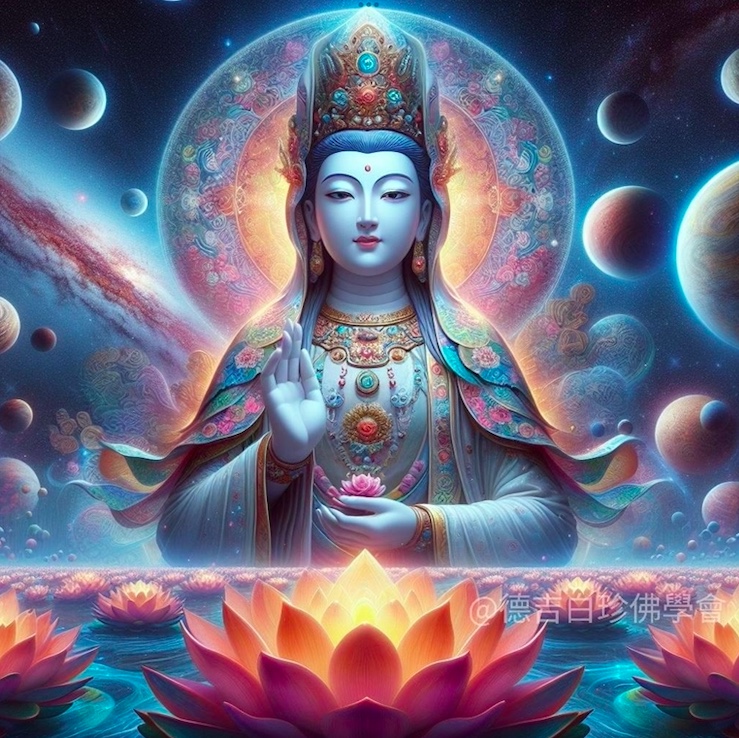
Above them, Avalokiteshvara Bodhisattva appeared, standing in the air, radiating boundless light while auspicious clouds billowed around.
For nearly an hour, Avalokiteshvara remained visible, bestowing blessings. No sounds of the street—no passing cars or footsteps—could be heard. The only sound was the voice of H.H. Dorje Chang Buddha III expounding the Dharma.
It was clear that everyone present had entered another dimension altogether.
Moments like these show us that the universe is far more profound than what our senses can grasp.
I believe Buddhism is deeply scientific—not superstition. Just because today’s scientists cannot yet explain these phenomena does not mean they are unscientific.
On the contrary, Buddhist wisdom offers an entirely different lens through which to explore reality. It can inspire modern science to uncover new methods and fresh insights to understand the universe’s deepest mysteries.
If we open our hearts and minds, perhaps Buddhist teachings will one day help humanity discover shortcuts to truths that today seem unimaginable.
My friend Wendy used to be very emotional and overly cautious. But in recent years, she has undergone an astonishing transformation.
One day, when we met up, she shared a story that showed me just how much she has changed.
At the end of last year, Wendy finally decided to buy her daughter-in-law the new car she had dreamed of for so long. The whole family welcomed the New Year with excitement and joy.
That day, her daughter-in-law drove the car out to register it, while Wendy stayed home reading stories to her granddaughter.
Not long after, the phone rang. On the other end, her daughter-in-law’s voice trembled with panic:
“While turning, I got hit by a truck going straight. The entire front bumper is smashed. It’s all our fault. Mom, I’m too scared to come home—your son is going to be furious.”
Wendy replied calmly, “As long as you’re okay, that’s what matters. Just come home.”
A while later, her son returned from work. Before he could react, Wendy sent her granddaughter over to ask him to tell her a story about a carpenter.
He couldn’t resist her pleading eyes and began reading in an animated voice:
“There was a kind-hearted carpenter who, though already old, still had no house and couldn’t find a wife. His elderly mother was terribly worried. Finally, a young woman agreed to marry him—but only if he could provide a home.
So the carpenter worked tirelessly, chopping and hammering for two months until he built a beautiful wooden house. One day, while he was out, a fire broke out next door and burned his house to the ground.
People thought he would collapse in despair, but instead, he searched through the charred remains. Everyone was puzzled—what could he possibly be looking for? At last, he found an unburned axe and exclaimed with relief, ‘I finally found you!’
People thought he must be crazy—his house was gone, and he was happy just to find an axe? The carpenter said, ‘As long as I’m here and I have my axe, why would I worry about not having a house?’”
Just then, the daughter-in-law slipped quietly back into the house, looking like a child who had done something wrong.
When her son learned what had happened, he exploded:
“You’re such a spendthrift! No brains at all! So careless—on the very first day, you wrecked a car worth hundreds of thousands!”
Wendy looked at her son calmly and asked:
“Are you done yet? The car is already damaged—will shouting fix it?
Just a minute ago, you were telling your daughter that as long as you have an axe, you can build another house. Now you’ve turned into a chameleon—how will you teach her in the future?
What’s more important: people or cars? A damaged car can be repaired or replaced. But if something had happened to your wife, this family would be over.
It’s the New Year. What matters most is that we are safe, healthy, and together. Everything else is just material. You should be grateful she came home without a scratch. So many people are facing life-and-death partings right now. Be content.”
Her son made a face and joked, “Mom, ever since you started practicing Buddhism, you’ve changed. You’re always siding with your daughter-in-law—have you forgotten you have a son? I feel like I’m adopted!”
Wendy rolled her eyes at him, and the whole family burst into laughter as they sat down to dinner.
Later, Wendy told me that after studying Buddhism, she finally understood how to let go of the suffering that comes from clinging to the self and how to transform afflictions into wisdom.
I watched in amazement as what could have been a chaotic family argument dissolved effortlessly in her hands. In the end, everyone was able to celebrate the New Year in peace and joy.
Life will always bring troubles and joys. A grateful and content mindset makes happiness bloom everywhere, while a lack of appreciation can turn even good fortune into heartache.
Hearing Wendy’s story reminded me how powerful a positive mindset can be in times of conflict. I hope more families can draw on the wisdom of the Dharma to transform challenges into understanding, live long lives free from illness, and enjoy peace, prosperity, and lasting happiness.
When I was a child, I heard a folk story that has stayed with me ever since.
One day, King Yama summoned two little spirits and said to them:
“I will let you be reborn as humans. One of you will be someone who always has things to give to others. The other will be someone who often receives things from others. It’s up to you—choose the kind of person you wish to become.”
As soon as Ghost A heard this, he dropped to his knees, clasped his hands, and pleaded earnestly:
“Your Majesty Yama! I beg you—please let me be the one who can receive things from others!”
Ghost B stood quietly for a moment, thinking it over. Finally, he said:
“Since my companion wishes to be the one who receives, I will choose to be the one who gives to others.”
King Yama struck his desk with a resounding clap and pronounced his judgment:
“I decree that Ghost A will be reborn as a beggar, so he may always ask others for help. Ghost B will be reborn into a wealthy family, so he may frequently give and support those in need.”
The two little spirits were stunned into silence.
This story reveals a truth many people overlook: in our world, most would rather take from others, believing that giving is a kind of loss. Yet the modern Buddhist master, Master Hongyi, once said:
“I don’t know exactly what makes a noble person, but I believe someone who is willing to suffer a loss in all things surely is one. I don’t know exactly what makes a petty person, but someone who always seeks an advantage must be one.”
In reality, a person with a grateful heart who is willing to share joy with others will discover even greater joy—because they can find happiness in the happiness of others.
The spirit of Buddhism elevates the practice of giving and receiving to its highest form. H.H. Dorje Chang Buddha III made this profound vow:
“All karmic offenses and sins created by sentient beings, I will bear. All the virtuous deeds and merits I have cultivated, I will give entirely to you.”
H.H. Dorje Chang Buddha III wishes to give all good things to sentient beings and to take upon Himself all their suffering and negativity.
Everything He thinks in His mind, speaks with His mouth, and does with His body is dedicated to one purpose: eradicating selfish attachment, relieving the suffering of all beings, bringing them happiness, and increasing their blessings and wisdom.
May our world be filled with kindness and peace. May all beings everywhere be safe, auspicious, and free from suffering.
The Buddha once taught at the Jeta Grove in Anathapindika’s Park in the kingdom of Shravasti. At that time, there lived a wealthy elder whose fortune was immeasurable. He had five intelligent daughters but no sons. Upon his passing, the law dictated that if no male heir existed, the family estate would be seized by the state. However, the elder’s wife was pregnant. His daughters humbly petitioned the king to delay the confiscation until the child was born.
Not long after, a baby boy was born. Yet to everyone’s shock, the child was severely deformed—he had no eyes, ears, tongue, hands, or feet, only male genitals. Despite this, the king acknowledged him as the rightful heir, saving the family’s wealth. The boy was named Mantuipili.
Puzzled by this karmic outcome, an elder approached the Buddha and asked, “Why would a child be born into such wealth, yet with such tragic physical deformities?”
The Buddha then revealed a powerful story from a distant past:
In a previous life, there were two noble brothers: Dhanavasita, the elder, and Shilavasita, the younger. Dhanavasita was known for his honesty and generosity from a young age. He gave freely to the poor and upheld moral integrity. Because of his character, the king appointed him as a judge, and people trusted his word above all else. At that time, written debt contracts were unnecessary—a judge’s witness sufficed.
One day, a merchant preparing for a sea voyage borrowed a large sum from Shilavasita. Bringing his young son and the money, Shilavasita went to Dhanavasita and asked, “Brother, this merchant has borrowed money. Please bear witness. If anything happens to me, ensure my son receives what is owed.”
Dhanavasita agreed. Soon after, Shilavasita passed away. The merchant’s ship was wrecked in a storm, and he barely survived, returning empty-handed. Out of compassion, Shilavasita’s son decided not to demand repayment while the merchant was destitute.
Years later, the merchant sailed again and returned wealthy. Believing the boy had forgotten or was too kind to collect the debt, the merchant decided to test him. He paraded into the city riding a jeweled horse, dressed in luxurious robes. Seeing this, the boy sent someone to request the repayment.
The merchant, seeking to avoid repayment, schemed to silence the judge. He offered a precious gem worth 100,000 silver coins to Dhanavasita’s wife, asking her to persuade the judge not to testify. She warned, “My husband is a man of virtue, but I’ll try.”
That evening, she told the judge. Dhanavasita was unwavering: “I was made a judge because of my honesty. I cannot speak even a single false word.” She returned the gem.
The merchant returned with a gem worth 200,000 silver coins, and the wife—overcome by greed—accepted. That night, she again tried to persuade her husband. He refused once more, saying, “If I lie, I will lose all honor in this life and suffer in future lives.”
In desperation, the wife threatened, “If you don’t comply, I’ll kill our child and take my own life!” Dhanavasita was heartbroken. He agonized: “If I refuse, I lose my child. If I agree, I lose my integrity and invite endless suffering.”
Overwhelmed, he gave in.
The merchant, emboldened, paraded through the streets again—this time on a jewel-adorned elephant. The boy approached him: “It’s time to repay the debt.”
Feigning confusion, the merchant said, “What debt? Who witnessed this?” The boy replied, “My father and I gave you the money, and my uncle, the judge, was the witness.” The two went before the judge. The boy recounted the event. To his shock, the judge responded, “I know nothing of this matter.” The boy cried out, “Uncle! You saw it with your own eyes and agreed to witness it. How can you deny this?” The judge replied coldly, “That never happened.”
In deep pain, the boy exclaimed, “You were trusted for your integrity and chosen to judge others. If you betray your own nephew, how many others have suffered injustice? The truth will be known in time.”
The Buddha then turned to the elder and said: “Do you know who that judge was? He is now the deformed child, Mantuipili. Because he uttered just one false word, he fell into the great hell realms and endured tremendous suffering. For five hundred lifetimes, he was born with severe deformities. Yet due to his past acts of generosity, he continued to be born into wealthy families.
This is the law of karma. Good and evil never cancel each other out—each brings its own result, no matter how long it takes.
Therefore, practice diligently. Guard your body, speech, and mind. Never create evil karma lightly.”
This profound tale offers a timeless lesson. A single dishonest act can result in unimaginable suffering, even over lifetimes. On the other hand, a heart inclined toward generosity continues to yield blessings, regardless of outer form.
Buddhism teaches us to live with integrity, mindfulness, and compassion—not only for the peace of this life, but for the well-being of lives to come.
H.H. Dorje Chang Buddha III Wan Ko Yeshe Norbu Holiest Tathagata is truly a Great Medicine King in this world. I speak not from hearsay, but from my own firsthand experience—His Holiness saved my life twice.
The First Miracle: A Life-Threatening Fall
The first incident occurred in 1994. One afternoon, I went to inspect a construction site. I stepped onto a sturdy board about 7 to 8 meters (23 to 26 feet) above the ground, commonly used for workers carrying heavy materials. As I walked across it, I suddenly felt an unseen force push me—I lost balance and fell.
My vision blurred; stars filled my eyes, and the world spun around me. I couldn’t see clearly and knew something was seriously wrong. In that critical moment, I began to recite the names of my Buddha Master, H.H. Dorje Chang Buddha III, and Avalokiteshvara Bodhisattva. I clung to their names with unwavering faith.
Soon, my mind became clearer, and I asked to be taken to my Buddha Master, the only one I believed could save me. When I arrived, I was in unbearable pain and couldn’t straighten my back. The Buddha Master immediately performed a dharma to bless me and then instructed others to take me to the Eighth Orthopedics Hospital.
X-rays revealed a serious fracture: my shoulder blade was broken into two pieces, with a gap the width of a finger. The broken bone was pressing into my lung, making breathing difficult. The doctors said I would need round-the-clock care from 18 people in three shifts for 21 days. Even with that, they warned, I would likely be permanently disabled.
But I had unwavering faith in the power of the Buddha Dharma. I quietly left the hospital without telling the doctors. The next morning, to my amazement, I could raise the injured arm. I immediately went to the Buddha Master’s residence to prostrate in gratitude. His Holiness told me to return to the hospital for another checkup.
The doctors were stunned. They had searched for me the previous night, assuming I had died. But the X-ray told a different story—the two broken pieces of my shoulder blade had fused perfectly, with no visible crack. I only felt a slight discomfort. I attended my company’s annual meeting the very next day and never needed any medication. Within a week, my arm had fully recovered and remains normal to this day.
The Second Miracle: On the Brink of Death
The second life-saving miracle happened on April 22, 2002. That afternoon, I was rushed to the emergency room at Sichuan Medical University Hospital due to a major obstruction in my cerebellum. My blood pressure was over 200, and my blood was so thick that it could barely be drawn.
The doctors believed I wouldn’t survive the night. They didn’t even admit me to a ward, but placed me on a bed in the hallway, fulfilling only a humanitarian gesture. My condition was critical: I had double vision, severe dizziness, and vomiting. I was issued five terminally ill notices. Two other patients in the hallway, both in better condition than me, died within a day.
In that dark hour, I knew only one hope remained—my Buddha Master. I silently and continuously recited His Holiness’s name, praying for his blessings. That night, my fellow disciples informed the Buddha Master, who was across the Pacific Ocean. His Holiness called and said with great compassion, “Don’t worry. I will bless you. I will now teach you a dharma. You will recover in three to five days.”
I followed the practice, and within three days—actually three days minus two hours—a true miracle unfolded. I stood up by myself and walked to the bathroom without assistance. My recovery progressed rapidly, and I was discharged from the hospital in just three weeks.
The doctors were baffled. Other patients whispered in disbelief, “Wasn’t he supposed to die? How is he already up and walking?” A doctoral research team from the university even followed up on my case for over two years. Despite their expertise, they were unable to explain my recovery using medical science. They simply called it a medical miracle.
A Life of Gratitude and Devotion
I have faced death twice—and both times, I was saved by the compassion and dharma power of my beloved Buddha Master, H.H. Dorje Chang Buddha III. His Holiness is not only the incarnation of an ancient Buddha, but truly a Great Medicine King who heals the body, mind, and soul.
As a humble and shame-filled practitioner who cannot even overcome my own karma, I make this vow before the world: I will forever follow my Buddha Master and cultivate the authentic and correct Buddha-dharma He teaches. I will strive to attain liberation from the cycle of birth and death, enlighten myself and others, and do my part to save sentient beings.
The two experiences I’ve shared are entirely true. If I have fabricated even one word, may I descend into Vajra Hell. If what I’ve said is genuine, may all the merit be dedicated to my most honored Buddha Master, H.H. Dorje Chang Buddha III. May His Holiness continue to turn the dharma wheel, remain in this world for countless kalpas, and bring salvation to innumerable living beings.
With deepest gratitude, Buddhist disciple Yihui Hengxing April 28, 2006
Dharma Master Yongding was a direct disciple of H.H. Dorje Chang Buddha III, personally taught by His Holiness. A monk of true cultivation and realization, Dharma Master Yongding lived a life of noble deeds and profound spiritual accomplishments. He embodied the virtues of the ancient enlightened monks—pure in conduct, boundless in compassion, and unwavering in his commitment to benefiting all sentient beings.
Before becoming a monk, Dharma Master Yongding was known as Li Xiangchen, a kind-hearted and widely respected man from Dayi County in Sichuan Province. His compassion and moral character were already legendary even in his youth.
During a catastrophic drought, in Li Xiangchen‘s hometown, one the region hadn’t seen in a hundred years—Buddhist and Daoist masters prayed for rain for months, but to no avail. Not a single drop of water could be found.
Then, one night, two villagers had the same dream. A divine being told them that only with the signature of a man named Li Xiangchen could rain be summoned. The two searched everywhere and eventually found him. After they delivered his signed name to the altar and burned the paper, a torrential rain fell instantly, ending the long drought. The event left villagers in awe and firmly established Li Xiangchen’s reputation as a man of virtue and divine affinity.
During China’s devastating three-year famine in the 1960s, emergency food rations were being distributed. When officials asked Li how much his household needed, he replied that his family still had food and didn’t need any. His wife, stunned by this answer, brought the official to their home. There, they found only two catties (a little over two pounds) of rice left.
When asked why he had lied, Li quietly responded,
“So many people are starving. I just can’t bring myself to eat while others go hungry. I only feel at peace if everyone can survive this together.” His selflessness deeply moved everyone who heard his words.
In another act of compassion, while working at the Jin Dongzi Reservoir where laborers received rice rations, Li Xiangchen gave all his rice to his struggling friend Pei Yinchang, who was raising two young children. When Pei noticed that Li was growing increasingly frail, he begged him to keep some rice for himself. Li refused.
Pei later visited the reservoir to learn how Li was surviving. The workers there told him, “Mr. Li survives by digging wild roots and vegetables to make porridge. No one knows what happened to his rice.” Pei was stunned and moved to tears.
Later on, Li Xiangchen began studying Buddhism under a master. He observed the precepts with great discipline and practiced with a heart of sincerity and humility. His compassion became so palpable that even animals responded to it.
One day, while walking down a mountain, a vicious dog leapt at him. Calmly, he said:“Go ahead and bite me. This is a matter of karmic cause and effect.” As the dog neared, just two or three feet away, it suddenly stopped, yelped, tucked its tail, and ran away.
After becoming a Buddhist, Li Xiangchen adopted a vegetarian lifestyle. On one occasion, his master encouraged him to eat a little meat because he appeared thin and weak. But Li simply smiled and ate only plain rice.
When asked later why he didn’t follow his master’s advice, he replied:
“Please tell my master: First, I deeply respect Him, but I carry heavy karmic debts and dare not eat meat. Second, if gaining the Dharma and achieving liberation requires me to disregard the lives of sentient beings, then I would rather not attain liberation—I’d rather fall into hell. Third, I cannot harm others just to benefit myself. If I did, I would no longer be a true practitioner.”
His integrity and compassion deeply touched his master, who later transmitted to him the sacred practice of the Four-Armed Avalokiteshvara (Chenrezig). Through dedicated practice, he reached a level of spiritual realization said to rival the great Milarepa himself.
In 1990, when his karmic conditions ripened, Li Xiangchen became a disciple of Namo Dorje Chang Buddha III. His Holiness personally expounded to him the profound meaning of Prajna (transcendent wisdom). As a result, he awakened great wisdom and thoroughly realized the state of Prajna.
His attainments became unfathomably profound. He could connect with Buddhas and Bodhisattvas and had deep spiritual communion with heavenly realms.
When the Dayi County government began construction of the Master Yi Yungao (H.H. Dorje Chang Buddha III) Museum in 1994, Dharma Master Yongding consulted with the Heavenly Emperor about the upcoming three months of weather. Every day, he wrote forecasts in the worksite dining hall—and for three full months, not a single forecast was wrong.
On another occasion, with a mere wave of his hand, he split a tree trunk a kilometer away. The tree was so thick it would take two people to encircle it. Witnesses were astounded.
Dharma Master Yongding lived by the principle that the Dharma must be obtained through a pure and selfless heart, without the slightest trace of falsehood. He placed the interests of all living beings before his own and upheld the precepts with unwavering resolve.
He was a true practitioner of great compassion, an exemplar of moral discipline, and a living model for all Buddhist disciples. His life reminds us that genuine realization comes not from words, but from the way we live, love, and serve others.
Namo Yuhua Shouzhi Wang Holy Mother the Great Mahasattva!
Namo all Buddhas in the ten directions, Vajra Beings, Bodhisattvas, Sky-goers, and Dharma Protectors!
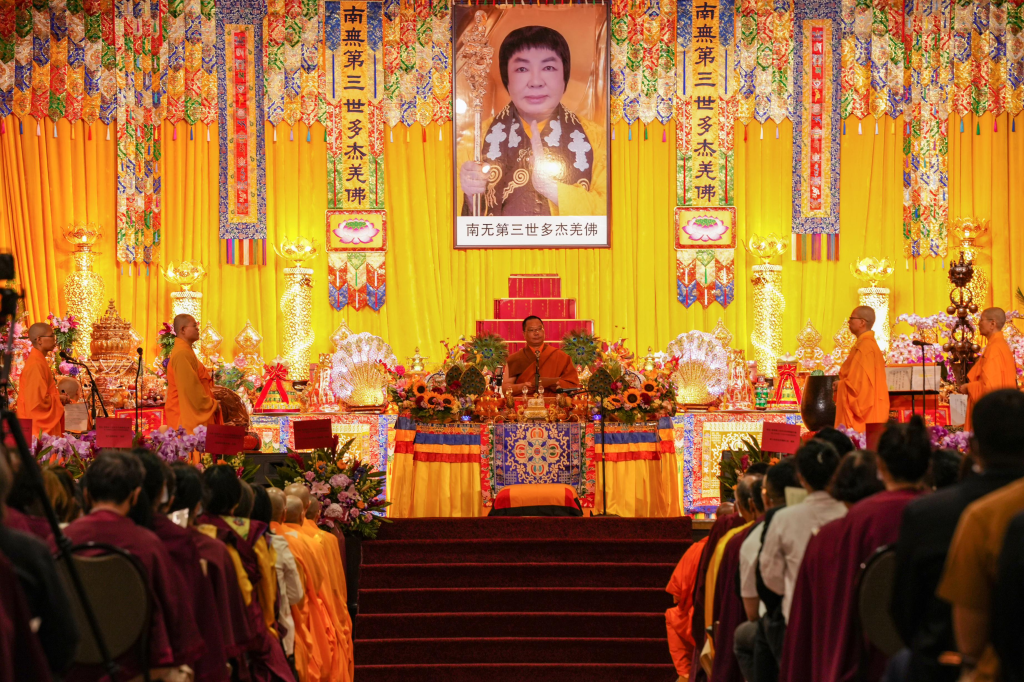
Buddhist disciples from all over the world have once again gathered here. We give thanks and pay respects to Namo Dorje Chang Buddha III. We learn the “Namo Dorje Chang Buddha III Complete Sutra Collection,” which is the Dharma treasure that Namo Dorje Chang Buddha III bestowed upon humanity. We commemorate the Holy Birthday of Namo Dorje Chang Buddha III annually.
During this Dharma ending age, in which true Dharma diminishes, and evil forces prevail, it has been our tremendous good fortune to encounter the magnificent Namo Dorje Chang Buddha III, and learn the true Buddha Dharma that enable us to attain liberation from cyclical birth and death. Whatever questions arise in the course of learning from Buddha and practicing cultivation, we can find all the answers elucidated in the Dharmas expounded by Namo Dorje Chang Buddha III. These Dharmas are available in audio recordings and in published books. As a living being with utmost humility, I will share some of my experiences for everyone’s reference.
First: As Buddhist disciples, our goal is not to seek worldly fame or fortune. Our fundamental goal is to attain liberation! At any time and place, we must remember this goal and resolutely not deviate from it.
The Buddha taught us repeatedly that in order to attain liberation, we must start by cultivating our conduct. Practicing cultivation includes strictly abiding by the precepts and maintaining correct knowledge and views. Precepts are stipulated by the Buddhas. Correct knowledge and views can only come from the Buddhas: In the present era, you can only find them in the audio recordings of the Dharmas expounded by Namo Dorje Chang Buddha III. These Dharmas have been and will continue to be published in the “Namo Dorje Chang Buddha III Complete Sutra Collection.”
To attain liberation, we must also practice Dharma. Namo Dorje Chang Buddha III transmitted many Dharmas to us. These Dharma treasures are rafts that enable us to attain liberation. We must practice Dharma persistently and effortfully.
Second: As Buddhist disciples, our goal is to become arhats, Bodhisattvas, and eventually attain Buddhahood. Therefore, now that we are in our cultivation stage, we must be “sincere and truthful to Buddha, pious to Buddha Dharma, compassionate to living beings, and honest with ourselves.” It is by being sincere and truthful to Buddha that we can receive teachings. It is by being pious to Buddha Dharma that we can practice persistently and effortfully. It is by being compassionate to living beings that we can help them rather than hurt them. It is by being honest with ourselves that we can truly practice cultivation and accumulate merit.
Third: As Buddhist disciples, we must clearly understand and believe in causality. The Buddha’s descent into this world, and the Buddha’s entering Parinirvana were due to the shared karma and causality of all living beings. The arrival of the Dharma ending age was due to the shared karma and causality of all living beings. Yet our own causality is enabling us to learn from Buddha and practice cultivation to attain accomplishment and liberation!
As long as we respectfully listen to audio recordings of the Dharmas expounded by Namo Dorje Chang Buddha III; sincerely study the “Namo Dorje Chang Buddha III Complete Sutra Collection”; reflect upon our own conduct at all times; repent of our own sins; strictly abide by the precepts; matter-of-factly practice cultivation; diligently practice Dharma; propagate the Sutras of Namo Dorje Chang Buddha III; uphold and protect the teachings of Namo Dorje Chang Buddha III and Namo Shakyamuni Buddha; do all kinds of good deeds; and not do any bad deeds, then we will definitely attain liberation!
Not only are we going to attain liberation, but we must also propagate the magnificent true Buddha Dharma, so that more people may encounter and learn the Dharma expounded by Namo Dorje Chang Buddha III, and from which they can achieve perfect good fortune and wisdom, and attain liberation from cyclical birth and death!
Wishing that all congregants here today and all living beings fulfill their beneficent wishes, have good fortune and wisdom, and attain great liberation and accomplishment! Wishing that all countries be strong and prosperous, and all living beings safe and happy! May peace be on earth and may auspiciousness be with all living beings!
Once again, let us pay obeisance!
Namo Dorje Chang Buddha III!
Namo Shakyamuni Buddha!
Namo Yuhua Shouzhi Wang Holy Mother the Great Mahasattva! Namo all Buddhas in the ten directions, Vajra Beings, Bodhisattvas, Sky-goers, and Dharma Protectors!
The Enigma of Existence: Exploring Life After Death
The concept of life after death has intrigued humanity for centuries. Different cultures, philosophies, and religions have provided varying explanations, yet the mystery remains. Is there life after death, or does consciousness simply cease to exist when the body dies? In this article, we explore some of the most prominent beliefs and theories surrounding the enigma of existence after death, seeking to understand this profound question from multiple perspectives.
What Are the Most Common Beliefs About Life After Death?
Throughout history, many cultures and religions have proposed theories about life after death. Religious scholars suggest that the idea of an afterlife serves to give people comfort and meaning in the face of mortality. Christianity, Islam, Hinduism, and Buddhism all have distinct views on the afterlife, each offering unique insights into the question of what happens after death.
In Christianity, for example, life after death is often seen as either eternal life in heaven or eternal separation from God in hell. Researchers point out that many Christians believe that the soul lives on after the body dies, and that salvation or damnation is determined by one’s actions during their lifetime.
In Hinduism, the concept of reincarnation is central. According to this belief, the soul is reborn in a new body after death, and the circumstances of the new life are determined by the actions (karma) of the previous life. Philosophers argue that this cycle of death and rebirth is a form of spiritual evolution, with the ultimate goal being moksha, or liberation from the cycle of reincarnation.
Buddhism also supports the idea of reincarnation, but with an emphasis on achieving enlightenment to break free from the cycle of rebirth. Experts note that Buddhism teaches that attachment to the self is the source of suffering, and liberation occurs when one transcends the ego and achieves nirvana.
Scientific Views on Life After Death
From a scientific standpoint, the question of life after death is more complex. The majority of scientists assert that there is no empirical evidence to support the idea that consciousness survives after death. Neuroscientists argue that consciousness is a product of brain activity, and when the brain ceases to function, so does consciousness.
There are notable phenomena that have intrigued researchers. Medical professionals have documented instances of near-death experiences (NDEs), where individuals report vivid sensations, such as a sense of floating above their body, moving through a tunnel, or encountering deceased loved ones. While these experiences are often interpreted by some as evidence of life after death, psychologists suggest that they may be explained by the brain’s reaction to trauma, oxygen deprivation, or the release of chemicals like DMT.
While science cannot definitively answer the question of what happens after death, these experiences have raised questions about the nature of consciousness and whether it is entirely tied to the brain. The debate continues, and more research is needed to explore the mysteries of the human mind.
Near-Death Experiences: Are They Evidence of Life After Death?
Near-death experiences (NDEs) have become a focal point in discussions about life after death. People who have experienced NDEs often describe sensations of peace, floating outside their body, or meeting beings of light. Some researchers hypothesize that these experiences are the result of a brain in distress, attempting to make sense of its impending shutdown.
Many individuals who have experienced NDEs report feeling profound transformations in their lives afterward, including a greater sense of purpose or reduced fear of death. Experts in the field of psychology and consciousness studies suggest that these transformations could point to an experience beyond the physical brain, offering a glimpse into an afterlife.
The question remains: do these experiences represent glimpses into an afterlife, or are they simply a product of the brain’s complex workings during moments of trauma? The scientific community continues to study these occurrences, and while answers remain elusive, the personal testimonies of those who have undergone NDEs continue to fuel interest in the idea of life after death.
What Philosophical Theories Are There About Life After Death?
In addition to religious and scientific perspectives, philosophical theories about life after death explore the nature of existence and consciousness. Philosophers have long debated whether consciousness is purely a physical phenomenon or if it could exist independently of the body.
One of the most famous theories comes from the philosopher René Descartes, who posited that the mind and body are separate entities. According to Descartes’ dualism, the mind (or soul) can exist independently of the body and could potentially continue after death. Modern philosophers who follow dualistic thinking often suggest that consciousness may not be confined to the brain and could persist beyond the body’s death.
On the other hand, materialist philosophers argue that consciousness is entirely dependent on the brain, and once the brain ceases to function, consciousness ceases as well. These contrasting viewpoints continue to shape the ongoing philosophical discussion on the nature of life after death.
Can Science and Religion Coexist in Understanding Life After Death?
While science and religion often present differing views on life after death, some thinkers suggest that they need not be mutually exclusive. Interdisciplinary experts argue that the two perspectives can coexist, offering a fuller understanding of the mystery. Religion provides spiritual and moral frameworks for understanding the afterlife, while science explores the empirical, physical aspects of life and death.
In recent years, there has been a growing interest in integrating scientific and spiritual perspectives on consciousness. Some researchers are exploring the idea that consciousness might exist beyond the brain, and that this may have implications for understanding life after death. Scholars in the field of consciousness studies have suggested that more research is needed to bridge the gap between spiritual and scientific explanations of existence after death.
The enigma of life after death remains unsolved. Whether through religious beliefs, scientific inquiry, or philosophical speculation, humanity continues to seek answers to this profound question, driven by the desire to understand what happens after we take our final breath.