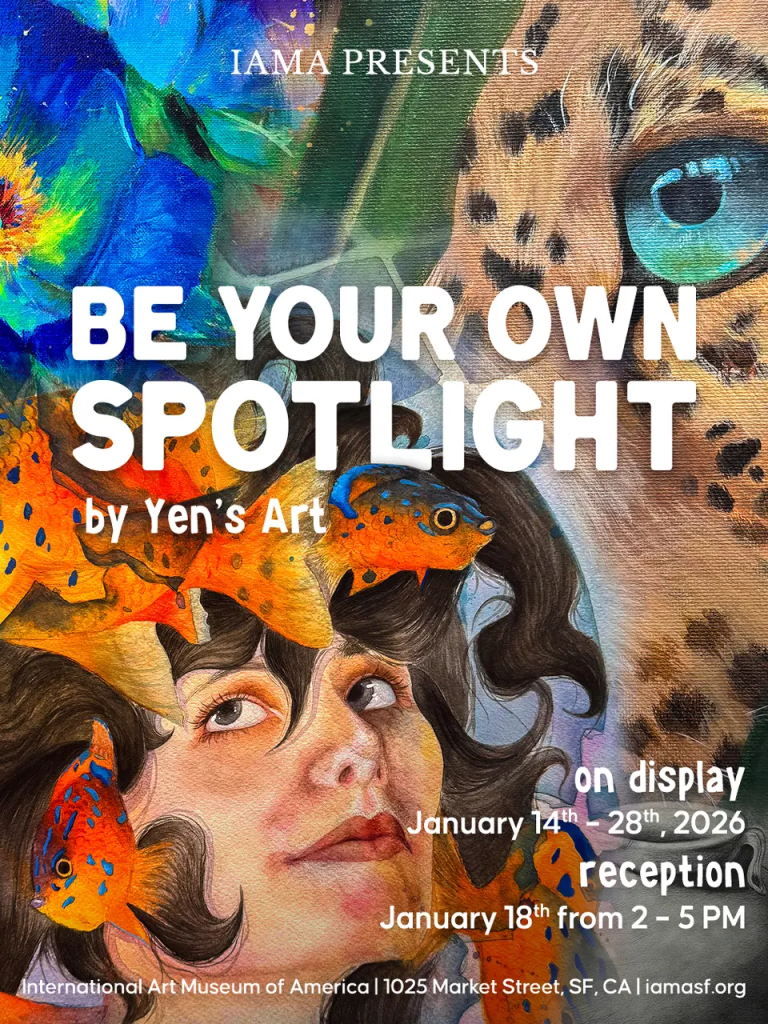
IAMA presents Be Your Own Spotlight by Yen’s Art Studio
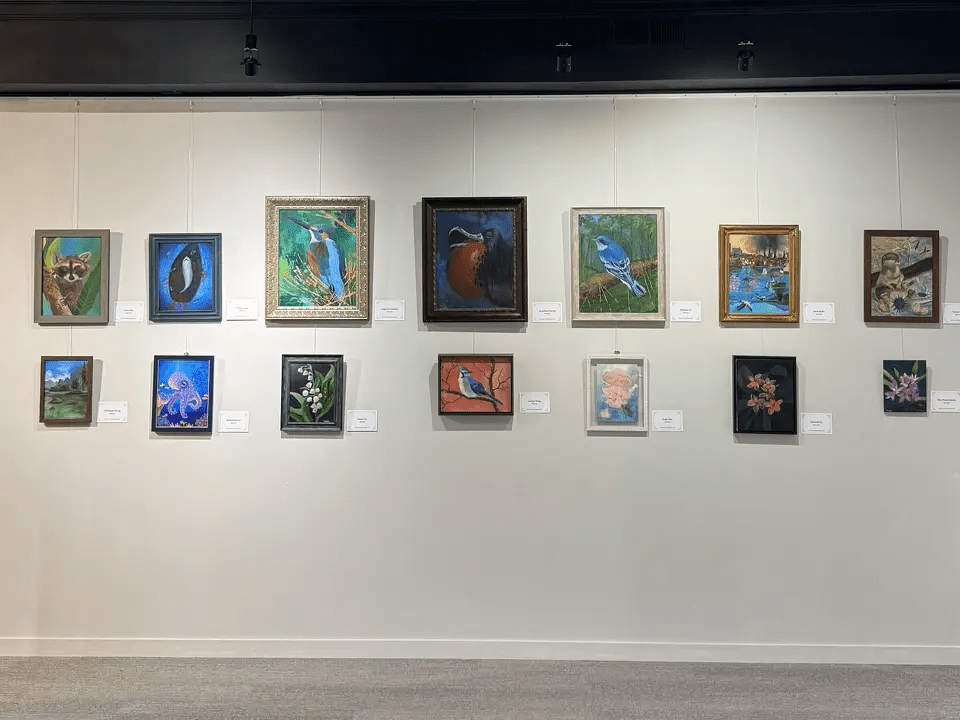
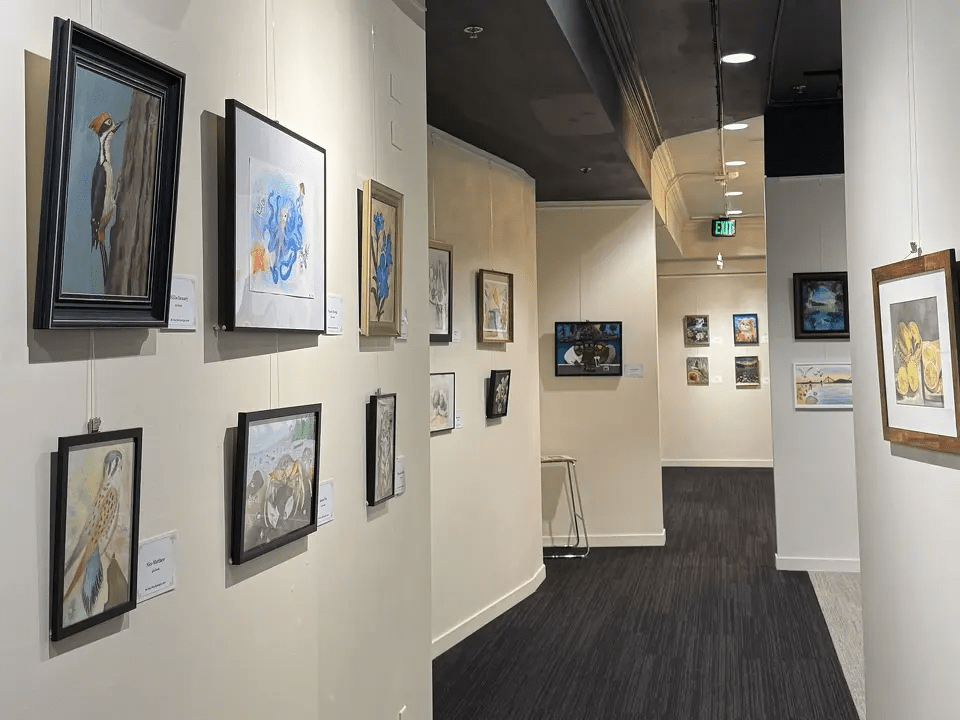
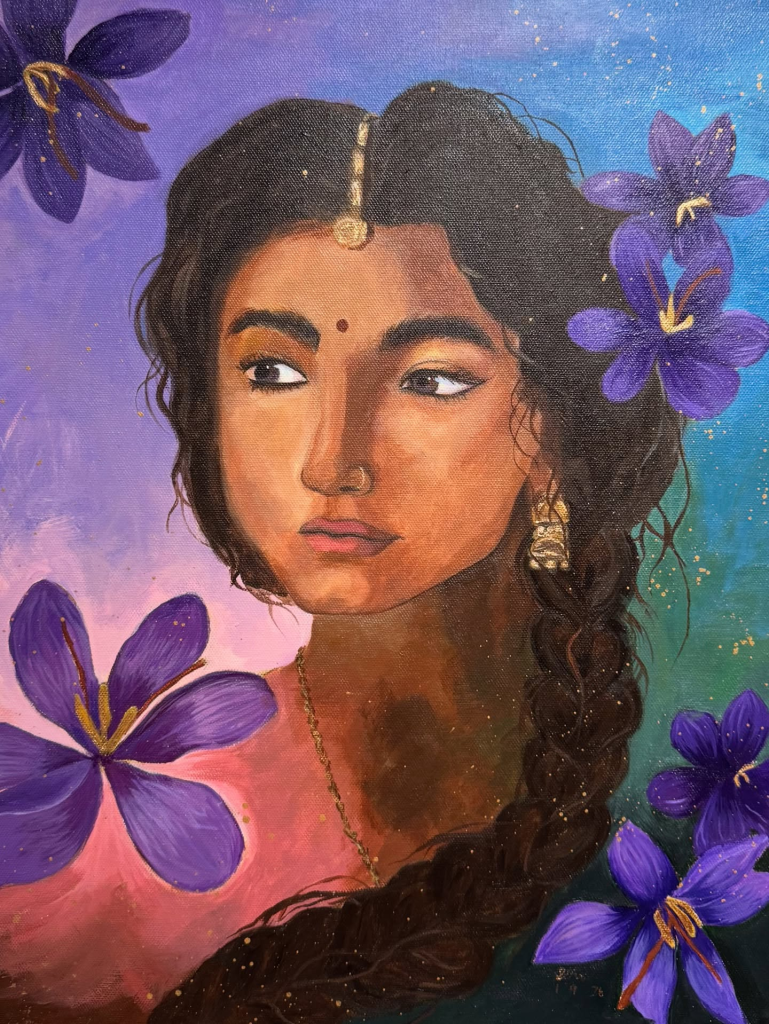
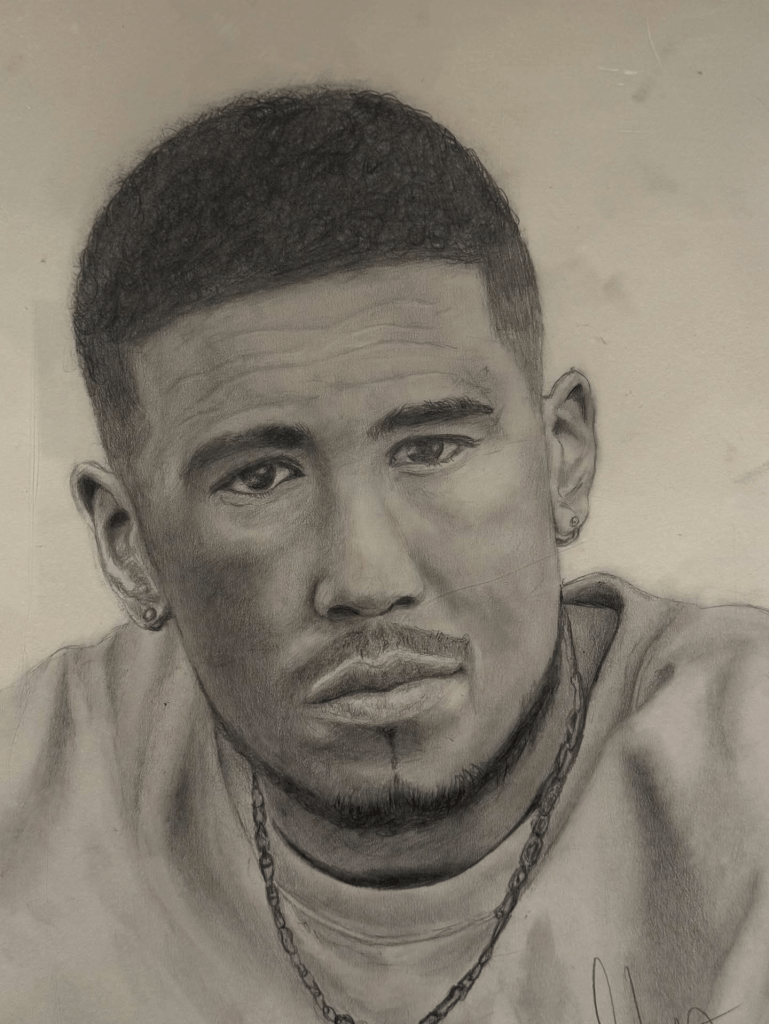
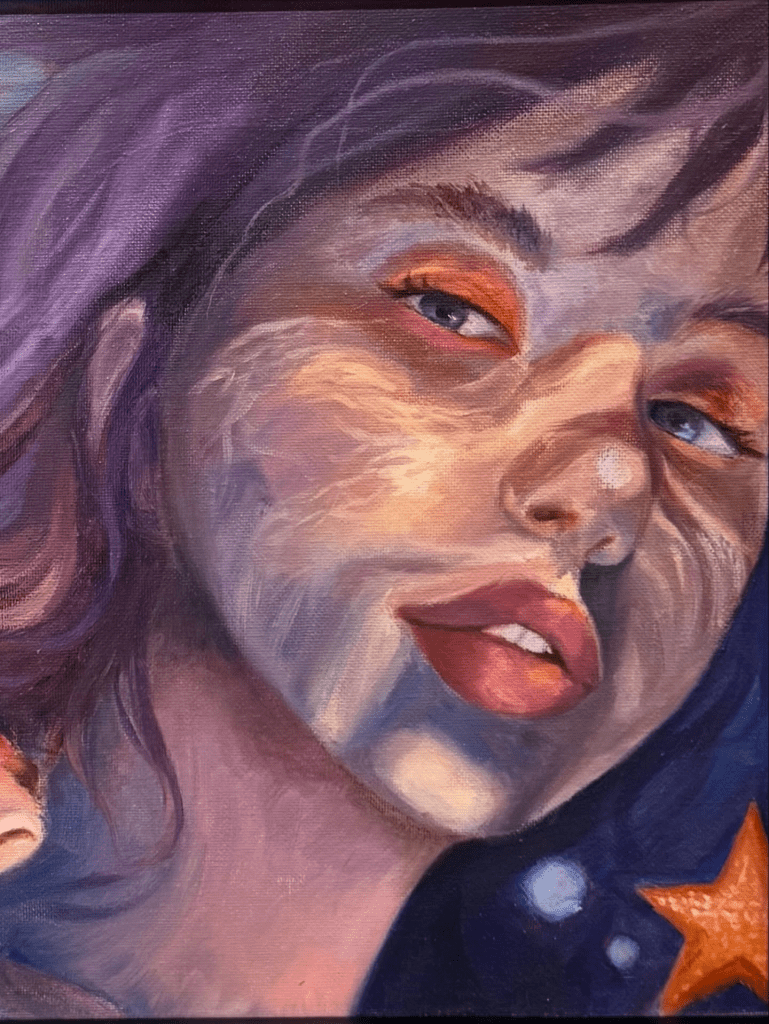
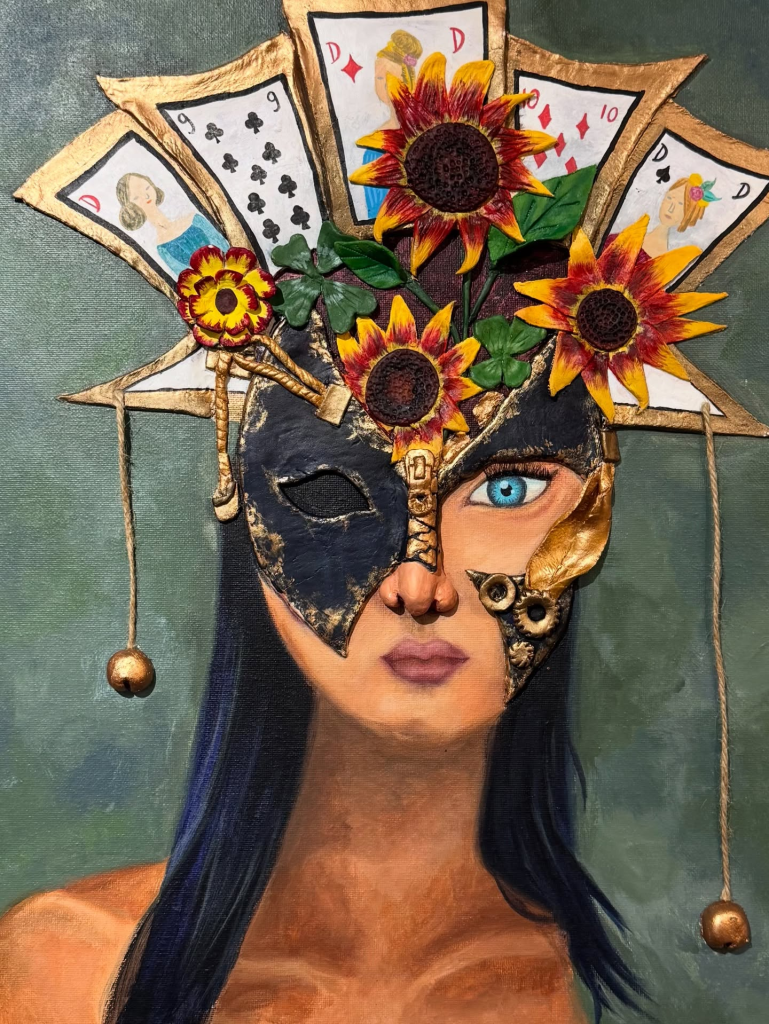
Walking into Be Your Own Spotlight, presented by Yen’s Art Studio, at IAMA (The international Art Museum of America), I didn’t feel like I was entering a typical student art exhibition. Instead, it felt more like stepping into 150 honest conversations—each one visual, brave, and deeply personal.
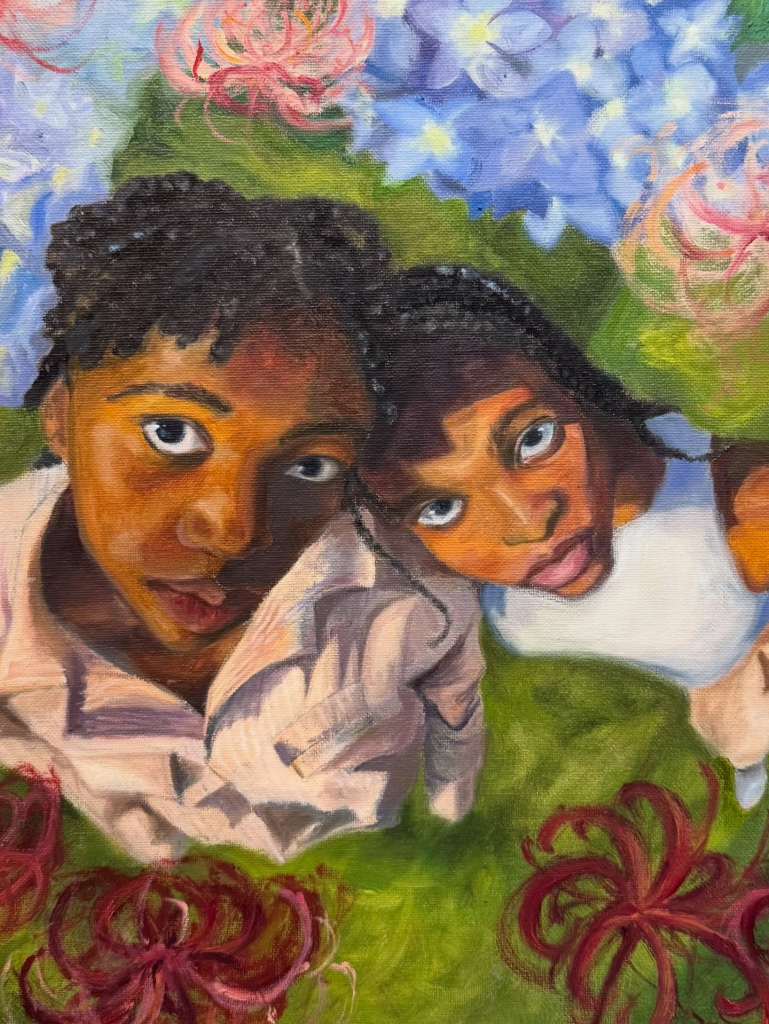
The exhibition features 150 outstanding works by young students, created across a wide range of mediums—acrylic, watercolor, pencil, and mixed media. But what moved me most was not the variety of techniques; it was the sense that every piece quietly declared: this is who I am right now.
These students are not just learning how to paint or draw. They are learning how to trust their voices, how to take up space, and how to stand behind what they create. Their works reflect growth, self-discovery, and the joy—and sometimes uncertainty—of becoming. Whether you are a parent, an educator, a collector, or simply someone searching for inspiration, this exhibition offers something meaningful to feel, not just something pleasant to see.
As I moved through the gallery, I was delighted by the sheer range of imagination: striking portraits, fantastical worlds, playful animals in sunglasses, thoughtful reflections on global issues, and moments of pure joy. The diversity of themes reminded me of a beautiful truth that Yen’s Art Studio expresses so well: “In the world of art, there are no boundaries of age or race. Children’s artwork can reach—and sometimes surpass—the technical ability and creative understanding typically associated with adults.”
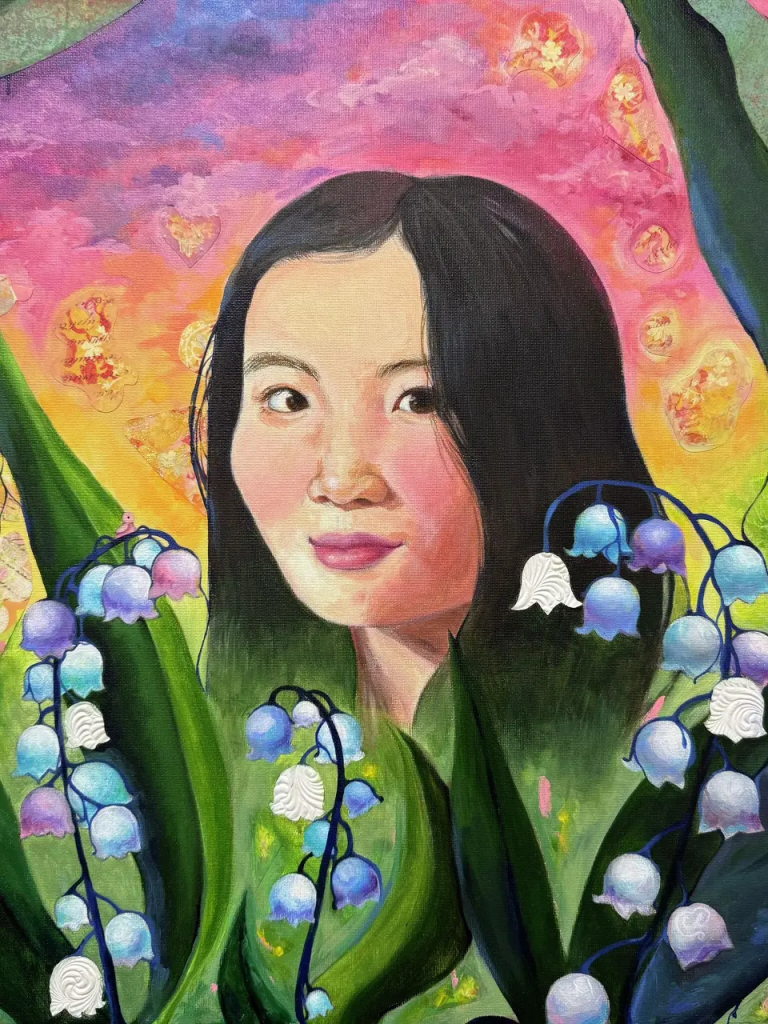
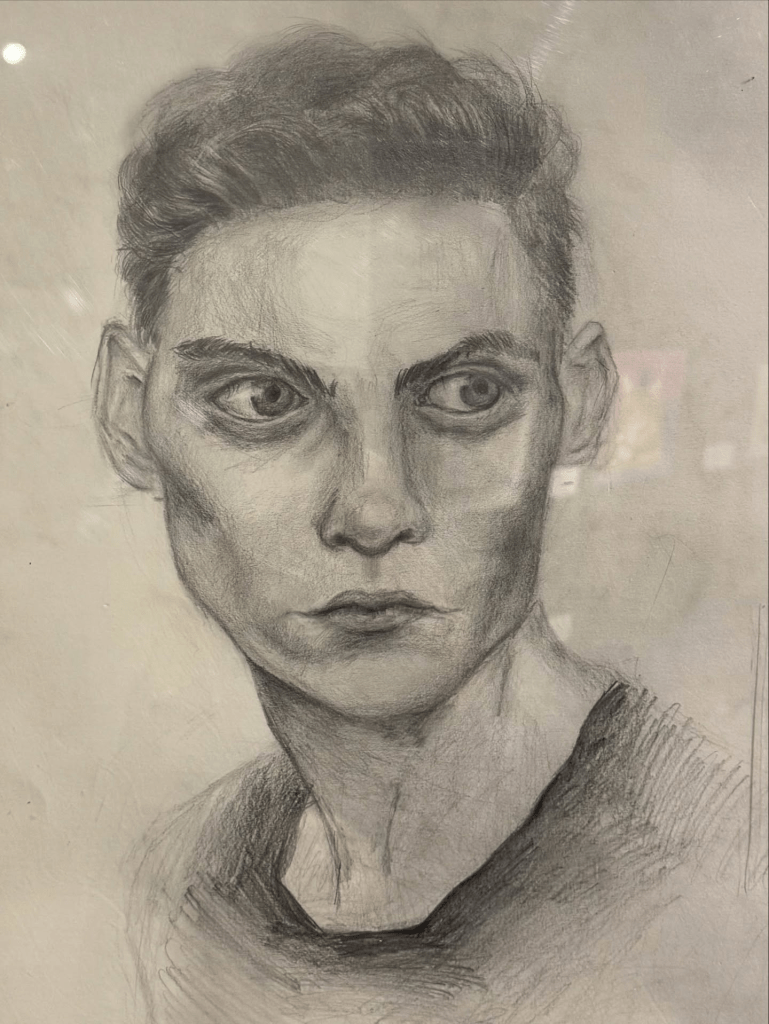
One piece that stayed with me was a self-portrait by 8th-grade student Cynthia Liu. It stood out not only for its technical sensitivity, but for its emotional depth. Cynthia is known for her perfectionist nature, something many of us—artists or not—can relate to. Her work quietly reflects a universal truth: no artwork is ever truly finished. Without a clear endpoint, a piece can be revised endlessly, sometimes at the cost of the original vision.
Self-Portrait by Cynthia Liu, 8th grade Yen’s Art Studio
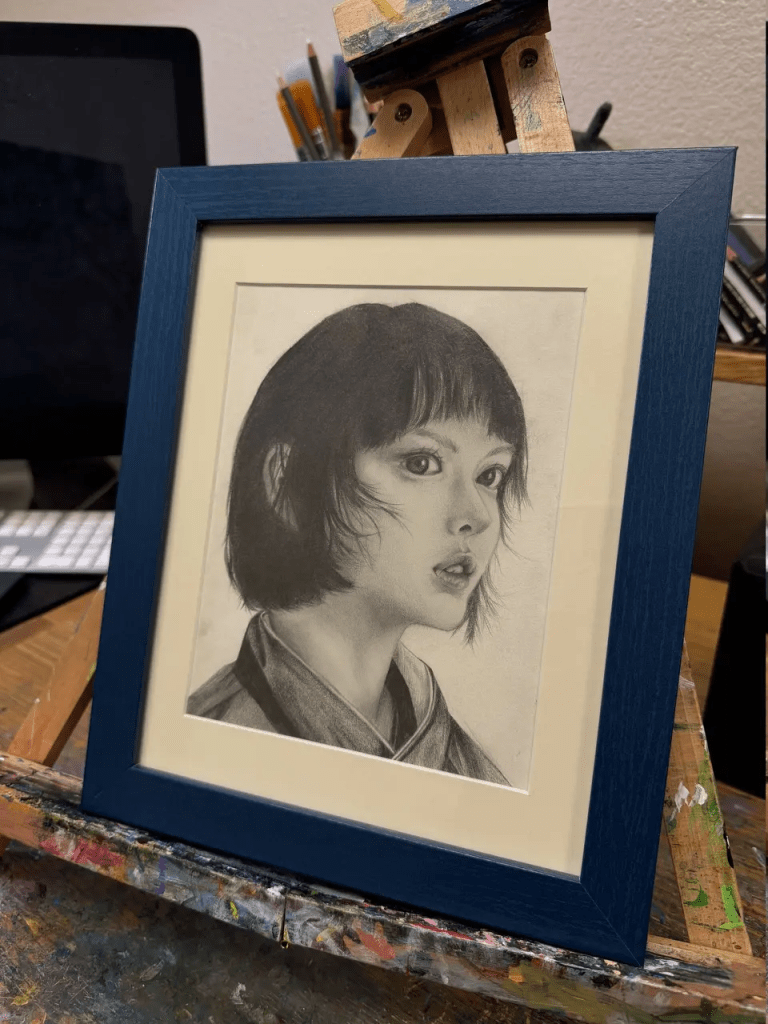
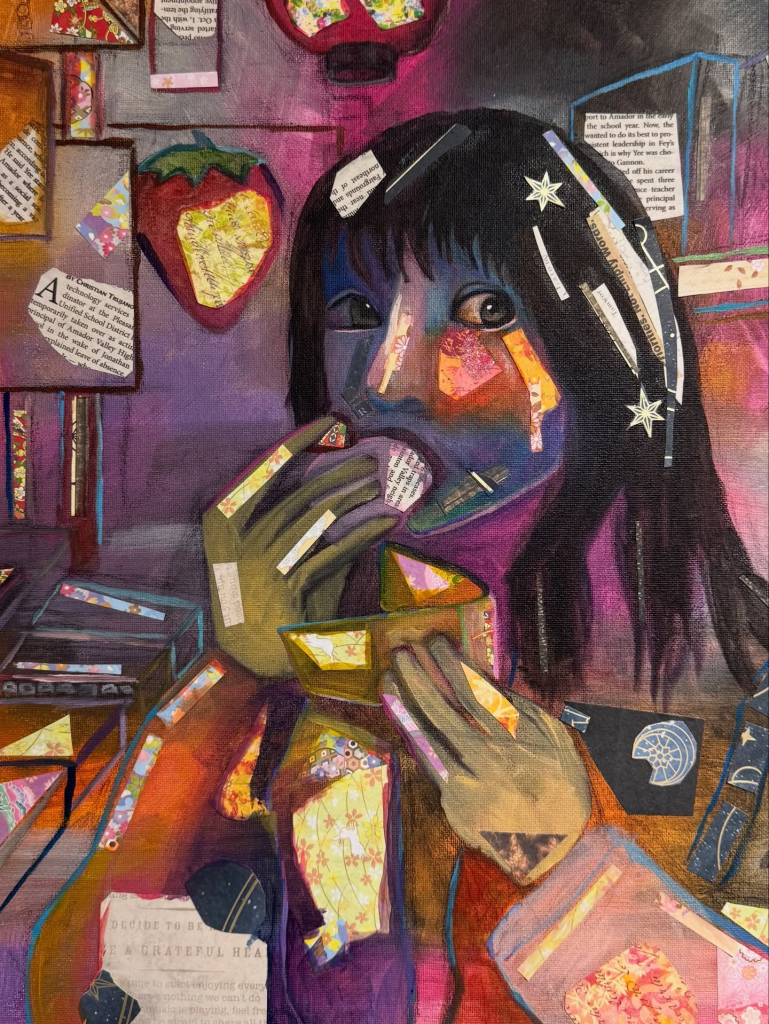
Hanni from Newjeans by Sophie Sun, 9th grade. Yen’s Art Studio
Another story that deeply touched me was Sophie’s. Once a shy student who nearly gave up on art altogether, she found her way back through the creative process at the studio. Through painting, Sophie rediscovered calmness, confidence, and inner strength—one of the most meaningful transformations I learned about in this exhibition. Her journey reflects the studio’s commitment not only to technical excellence, but to nurturing the inner lives of its students.
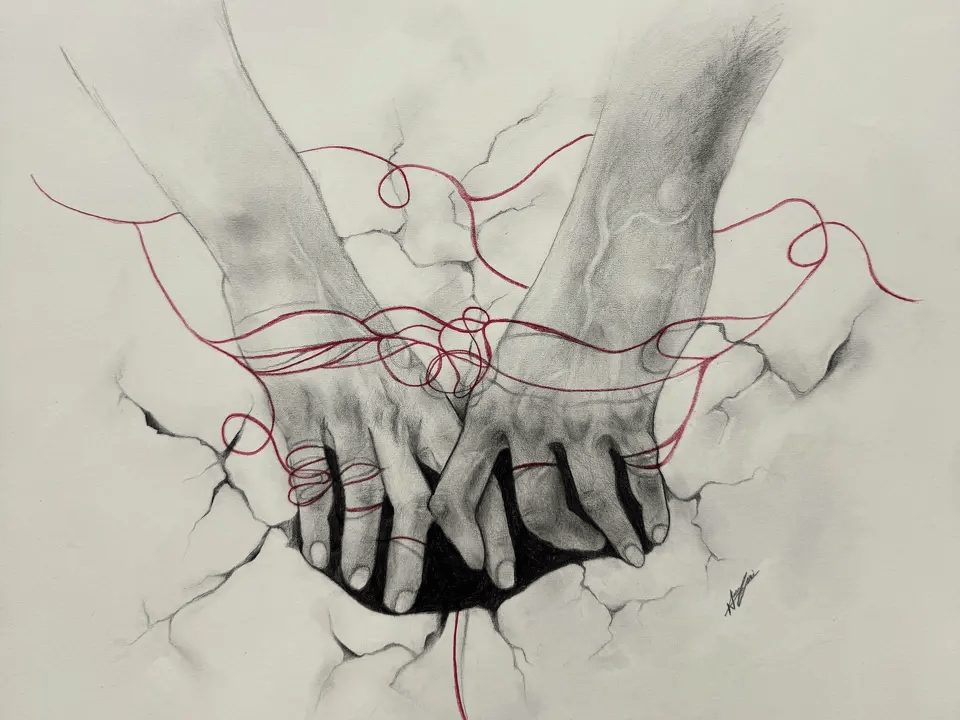
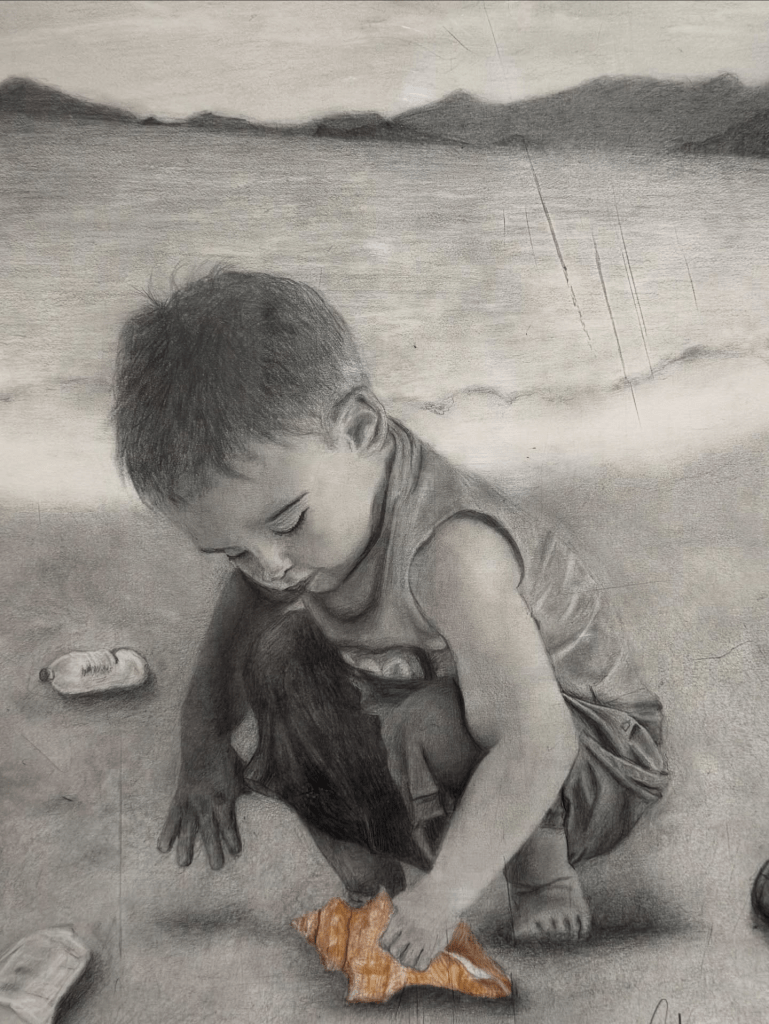
Lovers by Nova Cui, 9th grade Yen’s Art Studio
Among the more than 150 works, one painting stood out to me for its quiet presence rather than immediate visual impact. Created by Nova, a student dedicated to becoming a professional ballet dancer, the piece carries a sense of discipline, restraint, and inner resolve. Acknowledging the intensity of her dance training, her art education focused less on technical display and more on observation, sensitivity, and emotional understanding.
Her painting reveals genuine emotion and determination, qualities she will undoubtedly carry into her future as a dancer, where movement and art meet as a shared language of expression.
Be Your Own Spotlight is ultimately not just about showcasing talent. It is about honoring courage—especially the quiet kind. It reminds us that every young artist is learning not only how to create, but how to believe in themselves. And as viewers, we are fortunate to witness these moments of bravery, growth, and becoming.
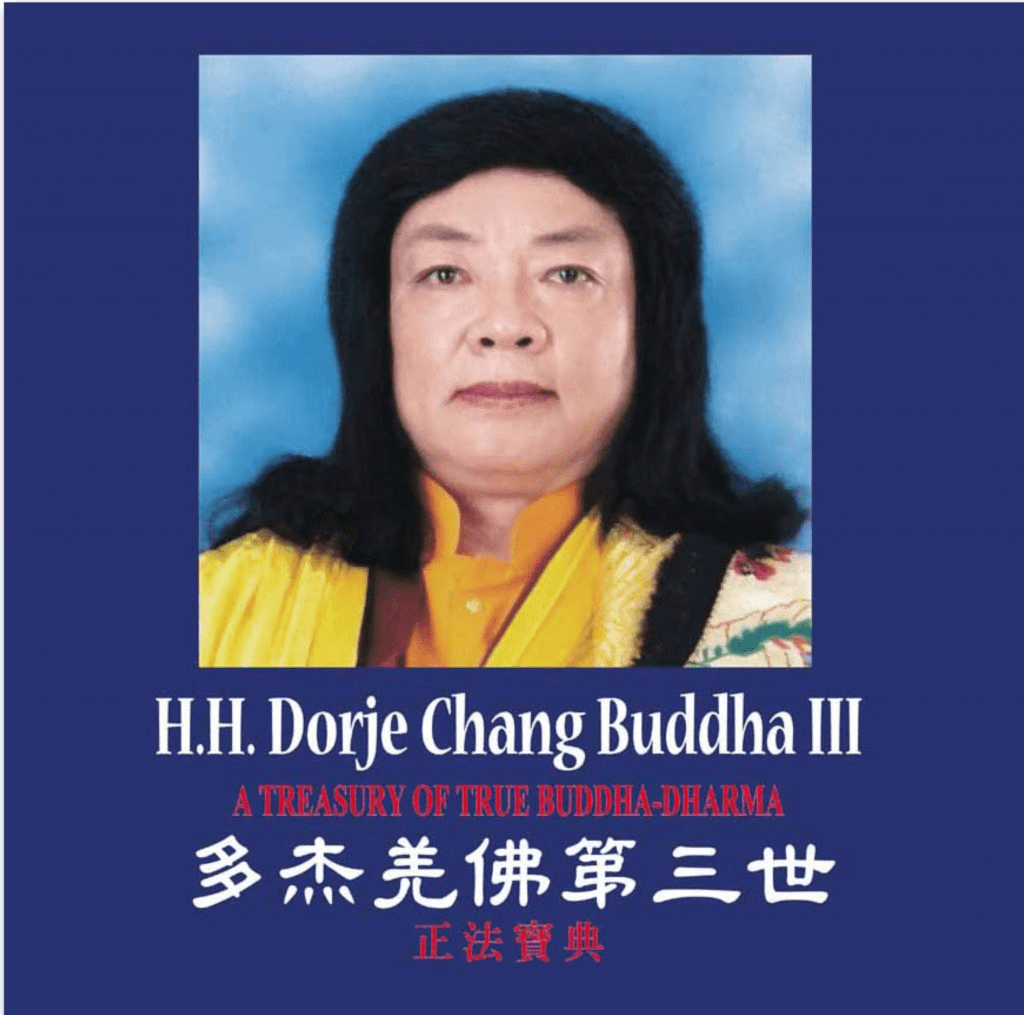
Don’t miss the museum’s permanent exhibition, where world-class artworks offer far more than visual beauty. Here, art becomes a quiet refuge—inviting tranquility, reflection, and a subtle elevation of the spirit. Especially moving are the paintings by H.H. Dorje Chang Buddha III, whose works gently awaken the mind, soothe the heart, and leave the soul deeply inspired long after you depart.
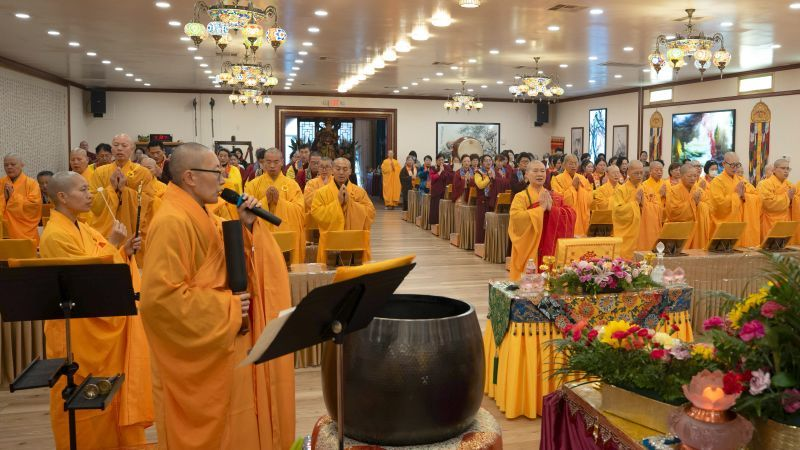
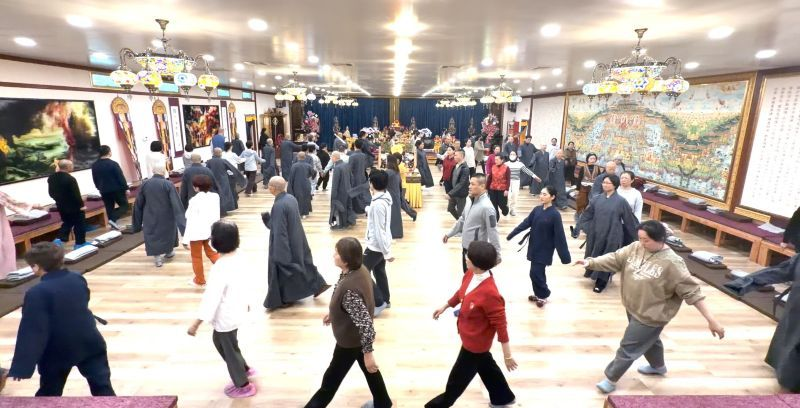
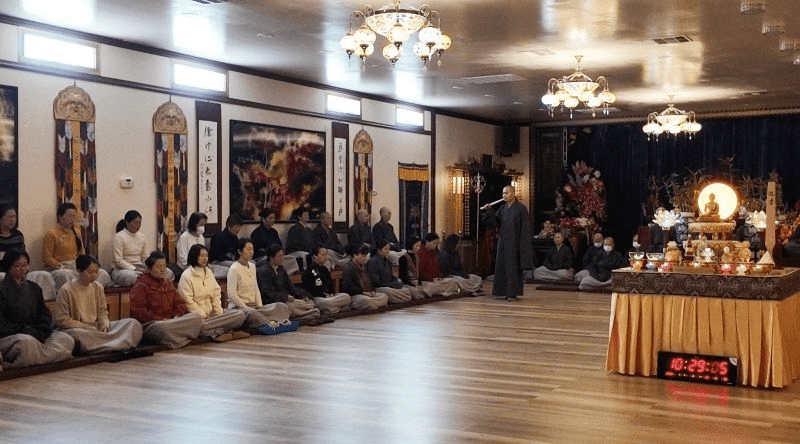
From January 4 to January 13, the Las Vegas Charity Temple solemnly hosted a ten-day “Grand Prayer Dharma Assembly for Reverently Listening to the Dharma Discourse of Namo Dorje Chang Buddha III and Celebrating the Sacred Birthday of Namo Amitabha Buddha.”
The assembly respectfully invited Venerable Shih Zhèng Dá, Vice Chairman of the World Buddhism Headquarters, to preside over the ceremonies. Under his compassionate guidance, participants reverently listened to the Dharma Discourse of Namo Dorje Chang Buddha III and took part in a series of profound and auspicious events, including:
The Prayer Dharma Assembly in Celebration of Namo Amitabha Buddha’s Birthday
The Great Compassion Avalokiteshvara Blessing Dharma Assembly
The Universal Deliverance and Requiem Dharma Assembly for the Deceased
A One-Day Chan (Zen) Retreat
Group cultivation of the Vajra Yoga Perfected Practice
Acts of compassion such as life release, charitable donations, and aid for the poor
High-ranking monastics, rinpoches, respected community leaders, and devoted lay practitioners from across the United States, Canada, Thailand, Hong Kong, Taiwan, and other regions gathered to participate in this rare and殊勝 (supremely auspicious) event.
The Vast Resonance of the Buddha’s Voice, Blessing All Beings
At 9:00 a.m. on January 4, the Dharma Assembly for Reverently Listening to the Supreme Dharma Discourse of Namo Dorje Chang Buddha III officially commenced.
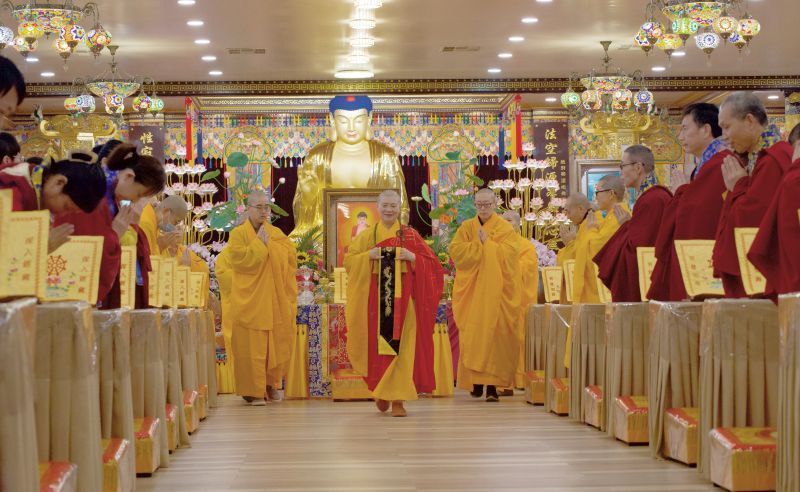
At the center of the mandala in the Grand Hall stood the sacred text “Explaining the Ultimate Truth through the Heart Sutra”, expounded by Namo Dorje Chang Buddha III. The altar was adorned with fresh flowers, the Eight Auspicious Offerings, colorful banners, incense, and lamps—radiating solemnity and auspiciousness.
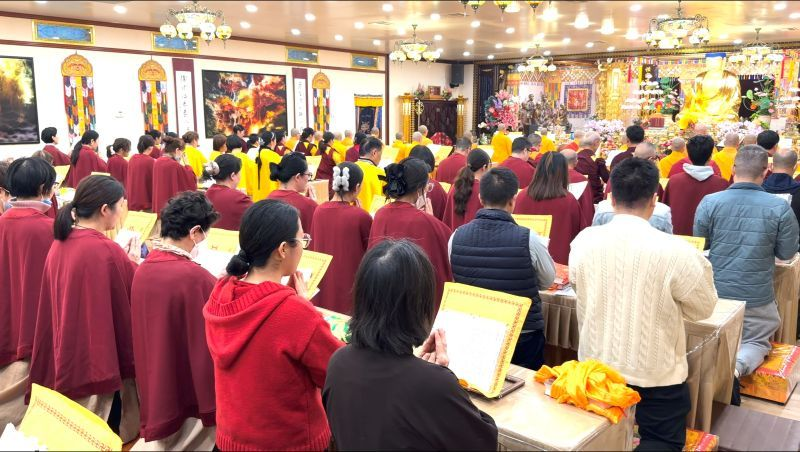
Led by Venerable Zhèng Dá, dozens of monastics, rinpoches, and over a hundred distinguished guests and devotees respectfully welcomed the Buddha’s Dharma Discourse into the hall. Reverently listening to the Dharma Discourse of Namo Dorje Chang Buddha III formed the spiritual heart of the entire ten-day assembly and was complemented by in-depth study of the Collected Canon of Namo Dorje Chang Buddha III.
Venerable Zhèng Dá emphasized that true cultivation must follow the Buddha’s teachings through listening, contemplating, and practicing, integrating the Dharma into every detail of daily life. He encouraged participants to unite practice and understanding, allowing wisdom to arise naturally through consistent application.
After listening to the Buddha’s Dharma Discourse, many participants shared profound insights and transformative experiences. With sincere vows, they resolved to practice according to the Buddha’s teachings— refraining from all evil, practicing all good, and benefiting all beings— while jointly praying for world peace, national harmony, favorable weather, and the health and happiness of all sentient beings, so that wisdom and blessings may increase together.
Cultivating Body, Speech, and Mind—Receiving Great Benefit
During the assembly, Venerable Zhèng Dá also led group cultivation of the Vajra Yoga Perfected Practice and presided over the Great Compassion Avalokiteshvara Blessing Dharma Assembly. Many participants felt profound responses, sensing the compassionate presence of Namo Avalokiteshvara Bodhisattva at the mandala. Some experienced relief from illness, inner peace, and extraordinary joy.
The One-Day Chan Retreat was guided according to the Great Chan Meditation Practice transmitted by Namo Dorje Chang Buddha III. After completing ten meditation sessions, many participants reported physical healing, improved energy flow, enhanced concentration, and deep mental clarity. Some even experienced sacred meditative states without attachment, while the entire assembly was filled with the joy of Chan and Dharma bliss.
On January 13, as the Dharma listening sessions reached completion, participants engaged in a closing Dharma debate. The fourfold assembly divided into two groups, formulating questions and arguments based on Buddhist logic and authentic Dharma principles. Through reasoned discussion and lively exchange, participants demonstrated how daily cultivation leads to flexible understanding, deep insight, and genuine realization.
Releasing Life, Protecting Life—Dedicating All Merit Universally
This ten-day New Year Grand Prayer Dharma Assembly concluded in perfect auspiciousness. Acts of compassion—including life release and charitable donations to disaster-stricken areas—were carried out in succession, bringing the event to a wholesome and complete close.
Though more than ten days of intensive Dharma listening and group cultivation seemed to pass in an instant, the joy of the Dharma lingered in every heart. Participants made renewed vows to cultivate diligently, uphold the Buddha’s teachings, and bring benefit and happiness to all beings.
May the true Dharma of the Buddha spread throughout the world, may sentient beings enjoy long life and increasing blessings, may the winds and rains come in harmony, harvests be abundant, may nations prosper, and may lasting world peace prevail.
(This post is translated and adapted from a news report on 2026/01/15, originally published by the Las Vegas Chinese News Network. Translation by Linda Chang. For the original Chinese article, please see here.)
Unveiling the mystical realization state of esoteric Buddha-dharma—a true account of a grand assembly of esoteric Buddha-dharma
People think of Tibetan Buddhism in general as a far-away culture full of mystery. Especially when patriarchs from various sects manifested mystical phenomena and supernatural powers, people become curious about esoteric Buddha dharma.
Based on the descriptions of some lamas, there are various examinations for Buddhist practitioners in Tibet. One’s proficiency of Buddhism is examined by means of different scales of dialectical debates. The one who passes thousands of debates and is in first place is called Lharampa geshe. The ones in second place and third place are called geshes. Only after completion of tens of thousands of dialectical debates can geshes enter schools of Esoteric Buddhism to learn esoteric dharma.
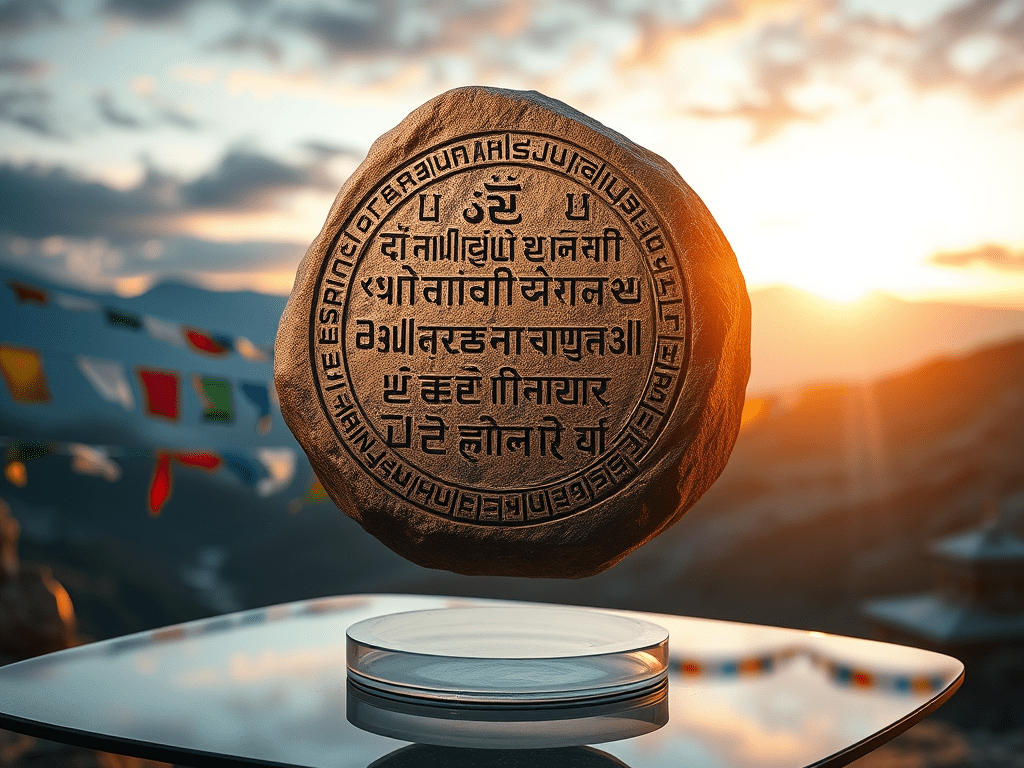
These lamas said that esoteric dharma emphasizes states of realization. In Esoteric Buddhism schools, mani stones are usually used to evaluate practitioners’ levels of realization. There are two types of mani stones.
The first type is stones that are inscribed with mantras by ordinary people and placed in mani stone mounds. This type of mani stone does not contain dharma power.
The second type is stones that are inscribed by great patriarchs from lineages of Tibetan Buddhism after practicing dharma. These stones are inscribed with images of Buddhas or seed syllables of mantras. They are placed in mani stone mounds to be used as empowerment to eliminate disasters and obstacles. The most important function of this type of mani stone with power is to test and measure levels of self-cultivation.
According to some accounts, only practitioners who have attained states of realization through self-cultivation are able to practice dharma that causes mani stones to move at a distance. Mani stones move in different ways: some move slowly, while others walk or fly. Ordinary people cannot make them move at all, no matter how much force they use or how many people recite mantras at the same time. These stories have added an element of mystery and significance to Tibetan esoteric dharma.
Recently, the reporter had the honor of attending a grand assembly in the United States where various states of realization were revealed. Attendees included great lamas and ordinary lamas from Tibet, as well as great dharma masters and ordinary dharma masters of Exoteric Buddhism.
The mantras recited included the Great Compassion Mantra, the Green Tara Heart Mantra, and the mantra of Vajrakila (Dorje Phurba). Some dharma masters were unable to cause the mani stone to move even after a prolonged period of practicing dharma. Several Exoteric Buddhist dharma masters recited mantras in unison and, across space, caused a 150-gram mani stone on a glass table to move. A great dharma master and a female lama were able to make a mani stone at a distance move as soon as they chanted mantras combined with mudras.
While the attendees marveled at these sights, a great female lama from Tibet arrived. Before the testing, she requested that the person videotaping not capture her face. She said that she was a self-cultivator who wished to attain liberation and realization, and that she did not intend to manifest Buddha-dharma to show off her powers. Soon after, something stunning happened.
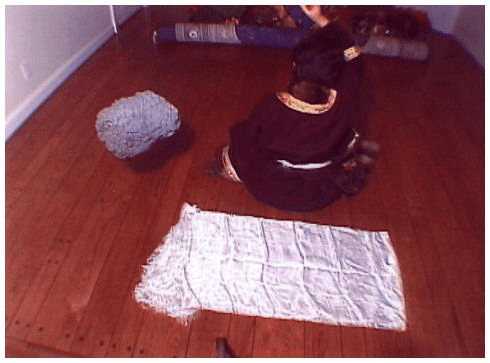
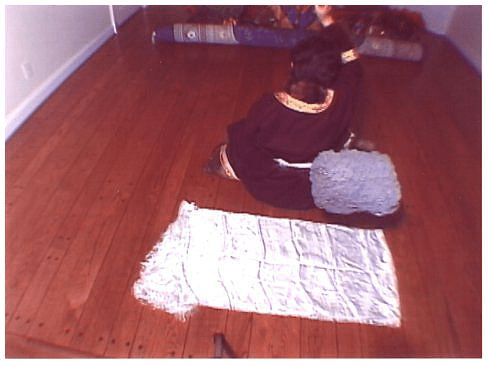
As soon as she recited mantras, a ninety-eight-pound stalactite stone surprisingly rose from the ground and circulated in the air following her hand gestures. This mani stone with supernatural powers stopped and trembled after rising into the air.
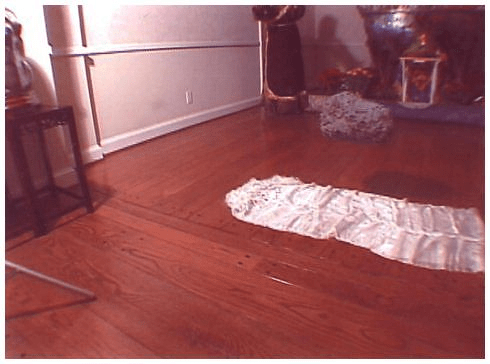
What was even more astonishing was that when the female lama sat on the wooden floor, the mani stone moved from behind her to the front in a split second. Witnesses felt that the ninety-eight-pound mani stone had moved in the blink of an eye, at such speed that it seemed to pass through her body.
Then the mani stone circled the great female lama twice, following her finger gestures. It moved up and down while trembling as it circled. When the mani stone moved to her back the second time, her index finger—forming a mudra above her head—pointed downward, and the stone immediately descended. Following the direction of her fingers, it paused briefly and then dropped onto the wooden floor with a heavy thump. The weight of the stone was evident, and it would be difficult to imagine such a scene without witnessing it firsthand.
The most famous gigantic stalactite mani stone, Duo Qie Xu from Tibet, was also included in the assembly. It weighs approximately 430 pounds, equivalent to about 200 kilograms, and was shipped from Tibet to the United States. It revealed great supernatural powers during the assembly.
The gigantic mani stone Duo Qie Xu is not an ordinary stone. It is a mani stone with a distinct identity, similar to the famous Cuiyu Cabbage (a renowned jade carving from the Qing Dynasty displayed at the National Palace Museum in Taipei). Most Tibetan Buddhist practitioners are familiar with Duo Qie Xu. During the testing involving Duo Qie Xu, even more incredible phenomena occurred.
When the great Tibetan female lama was about to test her powers on Duo Qie Xu, she again requested that her face not be captured on camera, for the same reasons as before. The video recordings were intended solely as keepsakes for those present and were not to be used for any form of promotion. Her strict adherence to the precepts deeply moved those in attendance.
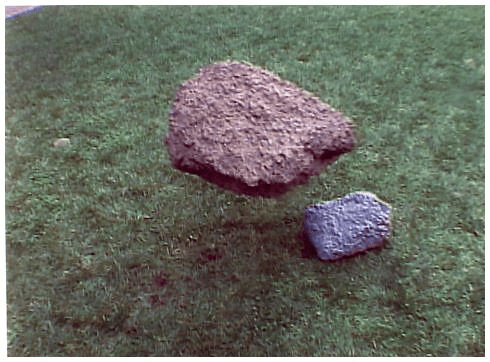
Then something extraordinary happened. The 430-pound Duo Qie Xu followed the hand gestures of the great Tibetan female lama, trembling as it rose from the lawn and flew into the air. The crowd was awestruck and suddenly felt the lawn move like ocean waves. Rooftops and trees also appeared to move simultaneously.
The mani stone flying in the air then returned and suddenly fell from a height of three feet above the ground, making a large dent in the lawn. Such an occurrence—normally found only in fiction—unfolded in real life. The lamas and dharma masters present stated that this holy feat demonstrated the magnificence and authenticity of Buddha-dharma, through which all things can be accomplished, including the transformation of mountains and oceans.
At the Exposing Buddha Statues to the Sun Dharma Assembly held at Chiang Kai-shek Memorial Hall in Taipei on January 13, 2002, there was a mound of stones inscribed with mantras from Lapuleng Temple in Gansu. It was a Mani Stone Mound consisting of mani stones.
Buddhism appears to be very dominant in some countries in Southeast Asia. However, many Buddhists there always regard “Arhat” as the highest status of accomplishment in Buddhism. To them, Bodhisattvas who are often mentioned in Mahayana sutras such as Manjushri Bodhisattva and Kuan Yin Bodhisattva are simply not comparable to Arhats. That is why during the past thousands of years Mahayana Buddhism has never been able to propagate and spread widely in those regions. Of course, such a situation is due to karmic conditions of the living beings.
I am going to talk about a couple living in Thailand with family roots there for generations. The husband’s last name is Deng and the wife’s last name is Wang. Due to their hard working, honesty, and leading a plain and simple family life, they have long become well-known people with prominent fame in the business circle in Thailand. Meanwhile, they respectfully worship the Three Jewels, support the sangha, and engage in charities. Therefore, they are also praised by everyone as great and kind benefactors in the community. Though they possess deep root of kindness, due to the influence from some deviated views in the tradition of the Lessor Vehicle, they were unable to elevate their level of cultivation to enter deeply into the essence of the dharma principles contained in Mahayana. It was only until one day in 2004 when the karmic condition of their good fortune became mature. On that day, they were introduced by their friend to an opportunity of listening respectfully to the recorded dharma discourses expounded by H.H. Dorje Chang Buddha III. Only at that time, did they greatly awaken to the fact that true Buddha-dharma is so extensive, broad, precious, and profound.
The dharma expounded by H.H. Dorje Chang Buddha III is perfect and unimpeded, presenting the wonderful truth of true-suchness openly and widely. Mr. and Mrs. Deng admired wholeheartedly. They also deeply realized that the innumerable eminent monks and great virtuous ones that they had visited and consulted before in Thailand and Burma were so tiny, low, and insignificant with their shortcomings easily seen in comparison to H.H. Dorje Chang Buddha III. Though he was very busy in his business undertaking, Mr. Deng still flew across the Pacific Ocean often to beseech teachings from H.H. Dorje Chang Buddha III and spared no effort in the actions of propagating and spreading the true dharma of the Tathagata. However, deep in the couples’ mind through so many years, there was always an untied knot which was, “Are there really Bodhisattvas?”
One day, the couples finally summed up their courage and begged H.H. Dorje Chang Buddha III while kneeling on the ground, “Great Buddha Master, are there really Bodhisattvas? Can we ask for seeing Bodhisattvas?”
H.H. Dorje Chang Buddha III said expressionlessly, “When the karmic condition is mature, I will satisfy your wish.”
Time elapsed day by day. Long after that, they figured that H.H. Dorje Chang Buddha III had forgotten what they had asked for long ago and thus dared not mention it again. Furthermore, what if Bodhisattvas did not come even when invited?
Later, they had a chat with several fellow brothers who are rinpoches one day. Only then did they learn that the house that H.H. Dorje Chang Buddha III was living in was badly out of repair. Even the office space was just a small space next to a restroom and narrow stairs. Furthermore, the office desk was actually a very small table! They were greatly astounded after hearing the brothers’ descriptions! What was even more implausible to them was the fact that H.H. Dorje Chang Buddha III worked with His own hands to create artworks, not only to make the living but also help His disciples with their resources of cultivation as well as contribute to disaster relief efforts and benefit people.
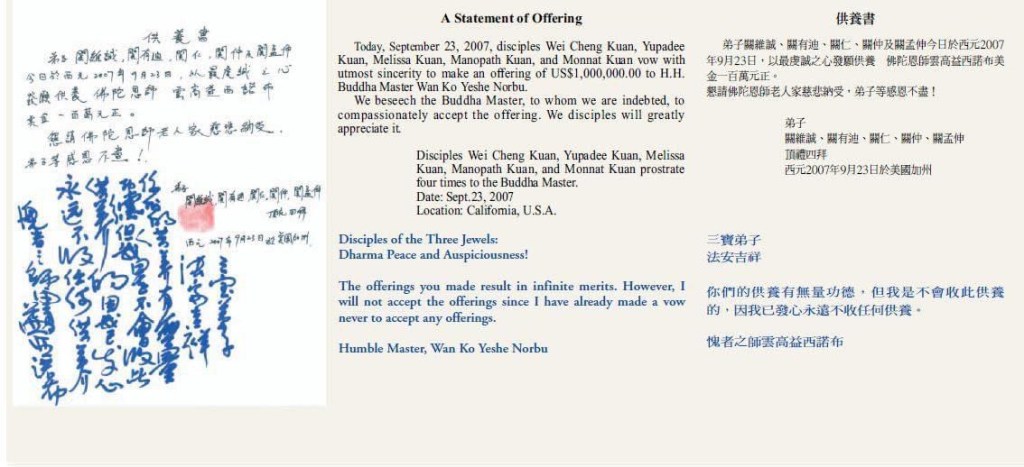
The couples were deeply moved. They immediately made a decision to present a stock holding valued at 2.5 million US dollars as an offering to H.H. Dorje Chang Buddha III. However, H.H. Dorje Chang Buddha III said, “I have already said that I will only benefit living beings and will not accept any offerings. Therefore, I will not accept your offering.”
Although they begged very hard and repeatedly, H.H. Dorje Chang Buddha III was not persuaded at all and firmly refused to accept even a penny from that offering. Without any other choice, they could only transfer that stock holding entirely to the World Buddhism Association Headquarters.
H.H. Dorje Chang Buddha III was to determine their karmic conditions. Observing their piousness toward their Master, diligent cultivation and practice, and selflessly benefiting living beings, they truly have established undeniable merit of Bodhi. Therefore, His Holiness the Buddha decided to fulfill the wish they had for many years.
On the magnificent and auspicious day when His Holiness the Buddha was going to transmit the inner-tantric initiation, Laypersons Mr. and Mrs. Deng came to the open-air mandala at the holy site. The sky was completely clear without any cloud on that day. With beautiful green lawn, breeze blowing from time to time, singing and winging of bees and birds in the background, varieties of flowers contesting for beauty, and charming and attractive branches and shoots in the trees, the whole court was covered with splendid colors in addition to jade green.
Sitting on the Vajra dharma throne, H.H. Dorje Chang Buddha III said to the human and non-human disciples in the mandala, “I practice the dharma this time to invite and invoke a Bodhisattva for these two laypersons with their last names being Deng and Wang respectively. I do not have confidence! If it accidentally turns out to be successful, that would be due to the merit of Disciple Deng and Disciple Wang. However, you must absolutely pray and beseech with the most pious heart.”
Shortly after the discourse, H.H. Dorje Chang Buddha III immediately practiced the dharma. In less than 20 minutes, suddenly a beam of golden light flashed in the sky above. Next, countless light rays were emitted. A Vajra Bodhisattva with a height of about 16 feet suddenly appeared. The Bodhisattva was adorned with pearls necklace and looked extremely solemn and majestic, stepping on a lotus flower shape auspicious clouds of rainbow colors. In a few strides, the Bodhisattva descended into the mandala, standing in front of Mr. Deng and Mrs. Wang with a smile.
While they two were still stunned and astounded, the Bodhisattva took out the holy substance to empower them. With a finger snap, a five-colored light ray flew into the mouth of each of them. The taste was utmost delicious without comparison. They both felt relaxed and uninhibited throughout the body. An auspicious state manifested over the entire mandala at the holy site. Only then did the Vajra Bodhisattva merge into the brightness in the sky and disappear.
While everyone was still deeply enjoying the dharma joy and calming lightness occurring just moments ago, Mr. and Mrs. Deng excitedly described the personal feelings and experience that just happened to them, with hand gestures as they spoke. They two were extremely moved and bowed repeatedly to H.H. Dorje Chang Buddha III.
They saw a Bodhisattva! They truly saw a real Bodhisattva descending before them to meet with them! This is not a dream state and much less an illusory image. Though several years have passed, what really made us awaken is: Then, who is the Master who is living right before us and whom we follow closely to learn from? Good heavens! Have you forgotten? He is the supreme teacher of Bodhisattvas and Mahasattvas in the ten directions and even of all Buddhas! He is really the genuine incarnation of the holiest ancient Buddha in the dharma realm – Dorje Chang Buddha!
How fortunate living beings in the current dharma-ending era are to be able to meet this opportunity of H.H.Dorje Chang Buddha III descending to this earthly world. This is the great matter indicating the maturing of good fortune stemming from the karmic conditions since the beginning-less time. I sincerely, wholeheartedly, and eagerly hope that sentient beings in the six realms of the three spheres can all hear the dharma expounded by H.H. Dorje Chang Buddha III, to attain in the current lifetime perfect good fortune and wisdom, freedom from birth and death, holy status of liberation, and realization of great enlightenment!
(Reported by the Taiwan Times) On September 5, 2015, an unprecedented dharma assembly of “Determining the Status of a Buddha by the Dharma of Jin Gang Fa Man Ze Jue (Jin Gang Fa Man Ze Jue is a dharma in Tibetan Esoteric Buddhism for determining the result sought through selection)” was held in the United States of America with the attendance of several dozens of venerable ones, dharma kings and rinpoches, who are from Tibetan Esoteric Buddhism, and dharma masters. The dharma practice was led by Great Rinpoche Wang Zha from Tibet, who once practiced in solitary retreat for 46 years in Tibet and has the realization of Golden Button Grade 3 (having three Sun-Moon wheels) in Buddha-dharma. The decisions by the Dharma of Jin Gang Fa Man Ze Jue determined that Sakyamuni Buddha is a true Buddha, H.H. Dorje Chang Buddha III is a true Buddha, and Master Hui Neng, the sixth patriarch of the Ch’an (Zen) School, was not a Buddha but was the incarnation of a great Bodhisattva.
At what level is a dharma assembly of determination by the Dharma of Jin Gang Fa Man Ze Jue? According to the explanation provided by the United International World Buddhism Association Headquarters (UIWBAH) who sponsored the two sessions of the dharma assembly to determine the status of a Buddha, the Dharma of Jin Gang Fa Man Ze Jue is one of the holy supreme great dharmas and can be used to determine the true or false status of any holy being. In this world, this dharma and the Dharma of Forecasting the Future (announcing events that will happen in the future ahead of time) are the co-champions among the dharmas of decision by selection. The dharma ranked next is the holy inner-tantric dharma of “Bai Fa Ming Men Hei Guan Ze Jue (a dharma specifically used to determine the correct or wrong result).” The next lower dharma is the dharma of dropping divine pieces to receive divine instruction, which is at the inner-tantric level. Then, there are lower, outer-tantric dharmas of lot-drawing from a golden vase, rotating a tsampa ball, watching a sacred lake to see the result, and others. This Dharma of Jin Gang Fa Man Ze Jue and the Dharma of Forecasting the Future are the highest dharmas among dharmas of decision by selection to determine the status of either “another person” or “self.” This dharma can only be possessed and commanded by holy ones at the level of great Mahasattvas or higher. Therefore, no great dharma king or venerable one who is not an extremely great holy one can hold and practice this dharma. Even great dharma kings and great venerable ones at the level of Jiao Zun who have the ability of performing inner-tantric initiations do not have the qualification to hold and practice this dharma. Mo Zhi Jiao Zun said, “Although I have just entered the door of holding and performing inner-tantric initiations, I have not touched even the edge of the Dharma of Jin Gang Fa Man Ze Jue. Only a holy one who has the realization of performing holy inner-tantric initiations that are close to the level of state practice can perform the Dharma of Jin Gang Fa Man Ze Jue. Otherwise, one is merely dreaming and far away from doing it.”
Why was this dharma assembly held to determine the status of a Buddha by the Dharma of Jin Gang Fa Man Ze Jue? According to a writing describing the fact by the UIWBAH, the karmic condition rose from the fact that many Buddhists in the world wished to respectfully beseech the contrasting photos of H.H. Dorje Chang Buddha III showing His returning from an aged appearance to a youthful person three years ago. However, H.H. Dorje Chang Buddha III did not agree to that. He thought that these were just ordinary photos and were meaningless for people to have. The discussion lasted three years to 2015. The UIWBAH finally got the agreement from H.H. Dorje Chang Buddha III. His Holiness the Buddha donated the two photos of His to the UIWBAH free of charge with a requirement that the UIWBAH can only sell the photo at a low price to those who wish to get it and must not profit from selling the photo. At the end of October of 2015, the UIWBAH published the contrasting photos of H.H. Dorje Chang Buddha III showing His returning from an aged appearance to a youthful person to the world. This provided people with auspicious and magnificent feelings and abundant joy of Buddha-dharma.
Unfortunately, H.H. Dorje Chang Buddha III wrote a note for the photos and demanded it to be printed at the lower part of the photo sheet. The note mainly stated that He is an ordinary person like everyone else, He is not a holy person, He has no advantage over other people, He does not know the dharma of returning from an aged appearance to a youthful person, and what people saw was a temporary phenomenon due to a medicine given by an elder virtuous one. On the other hand, UIWBAH stated that many people witnessed the real fact that Wang Zha Shang Zun, who is an outstanding one among great dharma kings, publicly practiced a dharma of empowerment. After a short period of a little over 10 minutes, an elder person whose age was over 60 changed into an appearance of a person who was about 30 years old. Wang Zha Shang Zun used this demonstration to show the fact that the dharma of returning from an aged appearance to a youthful person does exist within the realm of Buddha-dharma. Wang Zha Shang Zun said, “My Buddha Master is the universe. I am only a small piece of stone. Even I can empower a cultivator to return from an aged appearance to a youthful person temporarily. H.H. Dorje Chang Buddha III’s realization is millions of times higher than mine. Can you believe that the Buddha Master is an ordinary person?”
Although Wang Zha Shang Zun made the above proof, the speech by His Holiness the Buddha saying that He is an ordinary person just like everyone else made many Buddhist disciples in the world, whose good roots and intelligence are not strong enough, hesitate and be at a loss. They are unsure, with pressure on their mind. All can tell that, in terms of science and causality, how can there exists any miraculous medicine that can completely change a person’s facial features in a short period of a little over 10 minutes? Furthermore, three years have already passed and there is still not even one winkle in H.H. Dorje Chang Buddha III’s face. The skin and flesh on His face are clean and tender with a light ruddy complexion. His appearance is extremely beautiful, handsome, and majestic. Other than a Buddha, how can a Bodhisattva have such extremely beautiful magnificence and how can any medicine create such an effect? Additionally, H.H. Dorje Chang Buddha III’s accomplishments of perfect mastery in both exoteric Buddhism and esoteric Buddhism and at the acme of the Five Vidyasare unmatched and incomparable by any holy one throughout the history of Buddhism. Not even one can be found from looking through history, searching the internet, and exhaustive investigations! How could H.H. Dorje Chang Buddha III not have advantage over others? Ordinary people do not bear any remote resemblance to H.H. Dorje Chang Buddha III. Then, how could H.H. Dorje Chang Buddha III be an ordinary person? On the other hand, should we not listen to His Holiness the Buddha’s speech? Therefore, unintelligent and deluded people feel muddle-headed and do not know what is right.
Considering this situation of cultivators being pressured, the UIWBAH had discussions and decided to provide Buddhists a correct conclusion. For the sake of benefiting living beings, an action that may not respect His Holiness the Buddha has to be taken. Wang Zha Shang Zun, an extremely great holy one at the level of Golden Button Grade 3 or higher, took the lead to practice the Dharma of Jin Gang Fa Man Ze Jue to determine fundamentally whether the Buddha’s status is true or false. Many cultivators wish to know the situation of the dharma assembly that determined the Buddha’s status by the Dharma of Jin Gang Fa Man Ze Jue. The following is a report on that dharma assembly:
On September 5, 2015, the historic grand dharma assembly to determine the status of the Buddha using the Dharma of Jin Gang Fa Man Ze Jue began in a solemn and majestic scene. Wang Zha Shang Zun’s holy arrival was welcomed by Great Holy and Virtuous One Mo Zhi Jiao Zun, Chairman of the UIWBAH Dharma King Gar Tongstan, UIWBAH’s Secretary General Kai Chu Ru Zun, Chief Abbot of the International Buddhism Sangha Association Dharma Master Zhengda, Great Rinpoche Akou Lamo, and several dozens of eminent monks, rinpoches, and dharma masters who were to serve as observing witnesses. They held palms together to greet each other and were seated on the dharma rostrum.
To be fair, the decision by selection was first conducted to verify the status of Sakyamuni Buddha. The beseeching dharma document wrote, “We respectfully beseech a verification from the decision by selection. If Sakyamuni Buddha is truly a Buddha, a crown made by strands of hair will be put on the head. If not, there will be no crown.” First, a portrait of Sakyamuni Buddha was laid on an ordinary four-legged flat table of dark-brown color. Then, a pinch of sand from the Ganges River with the color of light camel wool was picked up and put on the portrait at a spot of hair at the top of the Buddha’s head. Wang Zha Shang Zun began to practice the dharma at a dharma rostrum which was about 13 feet away from the table. After the ritual of knocking the wood fish, ringing the bell, waving the Vajra, performing mudras, and chanting mantras, twelve documents written on yellow papers were burnt. All observing witnesses saw with their own eyes that the sand placed at the spot of hair at the top of the Buddha’s head began to disperse with inconceivable changes. Every grain of sand seemed to be alive. All sand grains moved individually with miraculous transformations to form a crown made of strands of hair, which very naturally and wonderfully stood up above the top of Sakyamuni Buddha’s head. A scene of adding a crown of strands of hair to the Buddha’s top-knot was manifested, proving that Sakyamuni Buddha is a true Buddha.
Immediately after and on the same table, the decision by selection was conducted for H.H. Dorje Chang Buddha III. The beseeching dharma document wrote, “We respectfully beseech a verification from the decision by selection. If H.H. Dorje Chang Buddha III is the incarnation of the primordial Sambhogakaya-Buddha Dorje Chang Buddha, a crown made by strands of hair will be put on the head. If not, there will be no crown.” Wang Zha Shang Zun practiced the dharma following exactly the same ritual as before. After the twelve documents were burnt, the sand of the Ganges River with the color of light camel wool that had been flatly put on the spot of hair at the top of H.H. Dorje Chang Buddha III’s head suddenly had the miraculous transformation of being elevated upward. Sand grains connected with each other to form strands of hair standing in the air. The strands of hair then automatically formed a crown of hair. A 3-dimensional crown was put on the head of H.H. Dorje Chang Buddha III in the portrait, proving that H.H. Dorje Chang Buddha III is a true Buddha coming to the world!
The last decision by selection was to verify whether the Sixth Patriarch Master Hui Neng was a Buddha’s nirmanakaya (meaning emanated body). The beseeching dharma document wrote, “We respectfully beseech a verification from the decision by selection. If the Sixth Patriarch Master Hui Neng is a Buddha’s nirmanakaya, a crown made by strands of hair will be put on the head. If not, there will be no crown.” As before, Wang Zha Shang Zun practiced the dharma following the same ritual and the twelve documents were burnt. Everyone saw that the sand of the Ganges River with the color of light camel wool placed at the top of Patriarch Master Hui Neng’s head had no movement or change at all. Therefore, the conclusion was that Patriarch Master Hui Neng was not a Buddha’s nirmanakaya. So a lower-level status had to be verified by the decision by selection, i.e. to determine whether Patriarch Master Hui Neng was an incarnation of a great Bodhisattva or not. The beseeching dharma document wrote, “We respectfully beseech a verification from the decision by selection. If the Sixth Patriarch Master Hui Neng is an incarnation of a great Bodhisattva, a crown made by strands of hair will be put on the head. If he was not at the level of a Bodhisattva, there will be no crown.” After Wang Zha Shang Zun practiced the dharma, a dharma crown was put on Master Hui Neng’s head. Sand grains formed a crown of hair. However, because Patriarch Master Hui Neng was not a Buddha or a Bodhisattva with universal or wonderful enlightenment, as stipulated by the dharma, the crown of hair did not stand up into the air and become a 3-dimensional crown, but was formed on a flat plane. However, it was very naturally structured and absolutely not something that can be made by humans.
The two sessions of the dharma assembly lasted more than five hours. To show the magnificence and extremely truthful nature of the crowning process through determination by the Dharma of Jin Gang Fa Man Ze Jue, each of the venerable ones, dharma kings, rinpoches, great dharma masters, dharma masters, great laypersons, and others attending the dharma assembly took a test to crown the visage using the sand from the Ganges River. As it turned out, none of the holy and virtuous ones present who are at the levels of Golden Button Grade 2, Golden Button Grade 1, and Blue Button Grade 3 were able to crown the Buddha’s portrait with sand from the Ganges River. There was no manifestation of power of Buddha-dharma to cause miraculous changes. This proved that the great dharma of Jin Gang Fa Man Ze Jue can only be practiced by extremely great holy and virtuous ones at the level of Golden Button Grade 3 or higher. No one else possesses the realization to practice the dharma successfully.
Wang Zha Shang Zun was very dissatisfied with himself for the first session. He said that his cultivationwas shallow and lacked merit and virtue and that his own karmic forces caused him not to practice this dharma of decision by selection perfectly. The reality was that a few people in the observing crowd had their karmic forces become visible during the dharma assembly. They caused disturbance in the Buddha hall when they could not control their excitement upon seeing holy states. They shouted loudly and pushed others. Such disrespect toward the holy dharma kept the outcome from being completely perfect. For this reason, Wang Zha Shang Zun decided to hold a second session of the dharma assembly. Before the second dharma assembly started, Dharma King Gar Tongstan made the rules on behalf of Wang Zha Shang Zun. He announced that onlookers could get closer to watch but no one was allowed to speak loudly or push others. All must have the mind focusing on being respectful before moving closer. Then Wang Zha Shang Zun practiced the dharma. The second dharma assembly had a perfect success with extremely magnificent manifestations, proving again that Sakyamuni Buddha is a true Buddha and H.H. Dorje Chang Buddha III is the incarnation of the primordial Sambhogakaya-Buddha Dorje Chang Buddha. In the process, the sand of the Ganges River of the light camel wool color placed at the top of the head exhibited unimaginably miraculous transformation. A lose-hair crown changed into a head-covering crown and a thick-hair crown changed into a thin-hair crown. The strands of hair gathered or separated as required at different places to knit into a naturally perfect crown. Every sand grain had its own independent life. Some walked extremely fast; some wandered around casually; some followed twisted paths; some traveled past the boundary and then came back; and some climbed from the bottom to the top. The sand grains followed each other one by one to form strands of hair that stood into the air without falling. Eventually, a knot was formed to create a perfect crown for the Sambhogakaya-Buddha. Then, Wang Zha Shang Zun snapped a finger to perform a mudra and the strands of hair fell into a pile of sand with no trace left of the crown. Wang Zha Shang Zun issued a dharma decree to distribute the sand of the Ganges River (which became Vajra Sand after the dharma was performed) to all who were present. Every attendee received a share of the Vajra Sand that manifested the holy crown worn by the genuine incarnation of the Buddha.
The situation at the time was that the dharma was practiced with the same table, at the same position, following the same ritual, and using the same sand of the Ganges River. However, the three hair crowns created were completely different. There was one Bodhisattva two-dimensional crown and there were two Buddha hair crowns that were three-dimensional and stood into the air. The latter two were also different from each other in terms of shape and structure.
All attendees on the dharma assembly on that day took an oath to testify for the above reported true facts, “We all attended the dharma assembly for determining the status of the Buddha by the Dharma of Jin Gang Fa Man Ze Jue as practiced by Wang Zha Shang Zun. We clearly understand and believe in the law of cause and effect. What was stated above is true and without any false statement. If we lied to deceive people, we not only will not become accomplished but also will descend into the three lower realms to undergo extremely miserable suffering. If what was stated above is all true, we wish and pray that all living beings be able to learn the true dharma of the Tathagata from H.H. Dorje Chang Buddha III and Sakyamuni Buddha, attain perfect good fortune and wisdom, and become accomplished and liberated to benefit countless living beings.”
(Translated from a news report in Chinese published by Taiwan Times)
Recently, I watched a short video that stayed with me far longer than I expected.
The scene took place in a small shop in Pakistan. A robber walked in, grabbed money and a phone, and prepared to leave. Sitting beside the shop owner was a little girl. She looked at the robber calmly, without screaming or hiding, and gently offered him the lollipop she was holding.
For a brief moment, everything seemed to stop.
The robber froze. He looked at the child, then slowly put the money and phone back down. Before leaving, he leaned over and kissed her on the forehead.
I don’t know whether the girl acted out of fear, nervousness, or pure instinct. But her simple, innocent gesture touched something deeply human in him. Perhaps, in that fleeting moment, his life took a different turn.
What moved me most was this realization: Even those who appear hardened or dangerous may still carry a seed of kindness within them. And sometimes, it only takes the smallest act to awaken it.
A single lollipop opened a door in the human heart.
Lately, I’ve been noticing more and more of these quiet sparks of goodness appearing around the world.
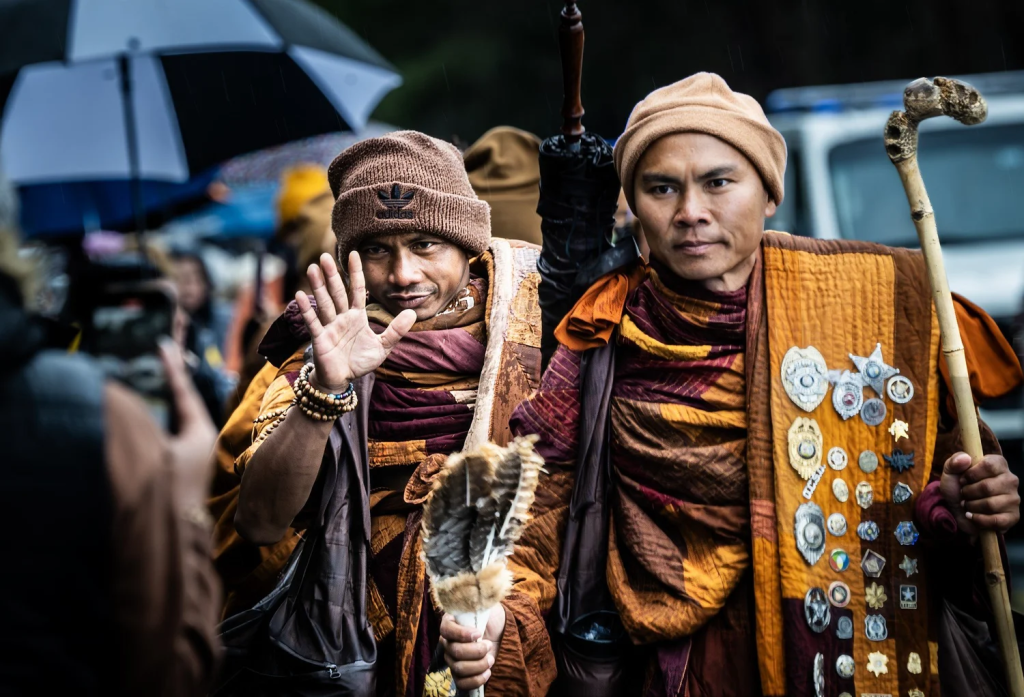
In the United States, a group of Buddhist monks has been walking on foot, praying for peace. Without slogans or confrontation, they offer presence, humility, and sincerity. Their journey has inspired many people to reflect on peace in a deeper way, and countless strangers have stepped forward to support them.
Guided by the teachings of Namo Dorje Chang Buddha III, and with deep respect for the great mercy and loving-kindness through which Buddhas and Bodhisattvas benefit all living beings, the World Buddhism Association Headquarters (W.B.A.H.), Holy Miracles Temple (at Pasadena CA) and Sanger Mission sincerely to carry out Charitable Acts to Benefit Our Community Together: 2026 Food and Goods Drive, to collectively plant goodness. All donations will be sent to support local food banks, homeless shelters, and animal shelters in the Los Angeles area.
I also read about Jon Stewart, who announced an extraordinary donation of $116 million to help address homelessness across the United States—providing housing and dignity to people who have long been forgotten by society. It was a reminder that compassion, when paired with courage, can bring real and lasting change.
And then there is the story that expanded my sense of hope even further.
Johan Eliasch, a Swedish billionaire, acquired approximately 400,000 acres of the Amazon rainforest by purchasing the company that held its logging rights. Instead of continuing operations for profit, he immediately halted all logging activities.
Just like that, the chainsaws stopped.
That vast stretch of forest was allowed to remain intact—continuing to absorb carbon, protect biodiversity, and sustain one of the planet’s most vital ecosystems. His action demonstrated something profound: that private ownership, when guided by conscience, can become a powerful force for environmental protection.
This act of kindness may not be immediately seen by everyone, yet it will have a profound impact on the Earth’s ecological balance—and it is, in its own quiet way, safeguarding a future our children and grandchildren will still be able to breathe in.
From a child offering a lollipop… to a monk walking for peace… to a philanthropist sheltering the homeless… to a forest saved from destruction—
These acts may differ in scale, but they arise from the same source: the human longing to protect, to heal, and to do what is right.
In Buddhist teachings, compassion is not passive emotion—it is action. It is wisdom expressed through kindness.
As a new year begins, I sincerely hope we will witness more of these compassionate and righteous choices—choices that quietly warm the world.
May we walk together, letting kindness extinguish the fires of war, allowing love to dissolve hatred and conflict, and using compassion to heal sorrow, fear, and pain.
The world does not change all at once. But every gentle act—no matter how small—adds light.
And sometimes, that light begins with something as simple as a child’s open hand.
In the southwestern suburbs of Xining, where the air grows thin and the spirit grows light, stands one of the most significant sites in the Buddhist world: Kumbum Monastery.
Known in Tibetan as Kumbum Jampa Ling, meaning “A Supreme Temple of a Hundred Thousand Lion’s Roar Buddha Images,” this sprawling complex is far more than just a collection of buildings. It is a living monument to Lama Tsongkhapa, the revered founder of the Gelug (Yellow Hat) sect of Tibetan Buddhism.
The Legend of the Golden Tree
Unlike many temples built to house statues, Kumbum was built to house a pagoda.
Legend tells us that Tsongkhapa was born here in 1357. When his mother cut his umbilical cord, drops of blood fell to the earth, and from that spot grew a miraculous sandalwood tree—the “Tree of Great Merit.” It is said this tree had 100,000 leaves, each bearing a natural image of the Buddha.
Years later, when Tsongkhapa was studying in Tibet, his mother sent a letter begging him to return. He replied that he could not leave his studies, but sent a self-portrait and a “Lion’s Roar” image, instructing her to build a pagoda over his birthplace. “Seeing this pagoda,” he promised, “is the same as seeing me.” In 1379, the Julian Pagoda was built, forming the sacred heart of what would become Kumbum Monastery.
Kumbum is world-renowned for its harmonious blend of traditional Tibetan and Chinese Han architectural styles.
1. The Eight Pagodas of Buddha Shakyamuni
Greeting visitors in the front square are eight gleaming white pagodas. Built in 1776, they commemorate the eight great merits and virtues of Buddha Shakyamuni. Each stands 6.4 meters tall, decorated with delicate Sanskrit scriptures and guardian lions, serving as a powerful symbol of the monastery’s spiritual authority.
2. The Grand Golden Tiled Hall
This is the soul of the monastery. With its gilded copper roof and emerald glazed-tile walls, the hall radiates a celestial glow. Inside, you will find an 11-meter-tall golden tower wrapped in white sandalwood and encrusted with jewels. At its peak sits a statue of Tsongkhapa. For pilgrims, meeting this tower is considered a direct meeting with the Master himself.
3. The Main Assembly Hall
Spanning nearly 2,000 square meters, this is the center of monastic life. Under a flat roof adorned with gilded bronze bells and “Aquarius” vases, hundreds of monks gather to recite sutras. The interior is a sensory masterpiece of colorful streamers and intricate carvings.
Dhammapala Hall
The “Three Artistic Wonders” of Kumbum
Kumbum is celebrated throughout Asia for its “Three Arts,” which represent the peak of Tibetan craftsmanship and devotion.
I. Vivid Yak Butter Sculptures
In the freezing depths of winter, when fresh flowers were unavailable for offerings, monks began carving flowers from yak butter. This evolved into a sophisticated art form. In the Yak Butter Sculpture Hall, you can see entire landscapes, pavilions, and deities crafted with impossible detail. To keep the butter from melting while they work, monks must dip their hands in ice water—a true testament to their endurance and faith.
II. Imaginative Barbola (Embroidered Appliqué)
Barbola is a unique form of 3D silk embroidery. By layering silk and cotton, artists create raised patterns that give the figures of Buddhas and animals a lifelike, three-dimensional appearance. The “Sixteen Disciples of Buddha” housed in the Main Assembly Hall are considered national treasures.
III. Exquisite Murals
The walls of Kumbum are alive with color. Using special mineral pigments that remain vibrant for centuries, these murals depict the life of Shakyamuni and scenes from the sutras. During the Sutra-viewing Festival, a massive 30-meter-long Buddha scroll is unfurled on the hillside, a breathtaking sight known as the “Great Buddha Exhibition.”
Kumbum Monastery hosts four major Dharma assemblies annually, held during the first, fourth, sixth, and ninth months of the lunar calendar. These gatherings are a blend of traditional festivals and grand religious events unique to the monastery. During these times, the temple comes alive with sacred activities, including monastic debates, mask dances, and sutra chanting.
A highlight of these fairs is the Cham Dance, where monks wear ornate masks and vibrant costumes, using dramatic gestures to express profound Buddhist teachings to the rhythm of cymbals and suonas (traditional horns). One of the most awe-inspiring sights is the Giant Thangka Unveiling, where a massive, delicate image of Tsongkhapa is unfurled down the mountainside. For the faithful, witnessing this Thangka is considered a direct and holy encounter with the Master himself.
Thangka Exhibition during the Buddha Festival
In July 2006, this sacred temple issued its formal recognition and congratulations to H.H. Dorje Chang Buddha III
United International World Buddhism Association Headquarters:
Under auspicious circumstances, we were happy to learn of the publication of A Treasury of True Buddha-Dharma—Complete Proficiency in Exoteric and Esoteric Buddhism and Perfect Mastery of the Five Vidyas about the Buddha Vajradhara, H.H. Master Yangwo Wan Ko Yeshe Norbu. His Holiness’s outstanding accomplishments are unprecedented. We respectfully send this letter of congratulations and joyfully offer our praise.
His actions and mind are pure, and His good fortune and wisdom are limitless. He benefits myriad living beings, and His willpower never tires. His powerful virtue is widespread, and His appearance is completely dignified. He truly abides in peace and His accomplishments are perfect!
Qinghai Skuvbum Monastery An auspicious day in July of 2006
Below is the original copy of the recognition letter in Chinese:
A Buddha Truly Recognized as Such in Accordance with the Dharma
The people on both sides of H.H. Dorje Chang Buddha III on this page are the highest present-day dharma kings and regent dharma kings from various Buddhist sects or are famous rinpoches. It is they who wrote recognitions, corroborations, or congratulations to H.H. Dorje Chang Buddha III.
H.H. Dorje Chang Buddha III is the first Buddha on earth to have received such a large number of recognitions, corroborations, and congratulations and to have been recognized as having the highest status! No other Rinpoche on earth has ever received even one third of the number of recognitions, corroborations, and congratulations from great dharma kings, regent dharma kings, etc. that H.H. Dorje Chang Buddha III has received. H.H. Dorje Chang Buddha III has singlehandedly manifested accomplishments in thirty large categories involving all of the Five Vidyas, thereby establishing the highest record of accomplishment in the history of Buddhism in this world.
Certain evil people have slandered H.H. Dorje Chang Buddha III as having conferred upon Himself the status of H.H. Dorje Chang Buddha III, and they have thereby guided Buddhist practitioners toward evil. In order to protect the wisdom roots of living beings, H.H. Dorje Chang Buddha III makes the following vow of truth: “If those recognitions, corroborations, and congratulations that follow did not come from the dharma kings, regent dharma kings, and rinpoches whose photographs appear on this page of from their temples and/ or are not copies of the original texts but rather are my fabrications with forged signatures – if even one such case exists – then i should descend into hell without the possibility of ever leaving hell. If those recognitions, corroborations, and congratulations were written or typed by them as well as signed and/ or stamped by them, the merit of this truth will bring to everyone wonderful blessings and wisdom! Vow Maker- Dorje Chang Buddha III“
FATHER OF MEDICINE, FERRYBOATS, BRIDGES, AND OPERAS IN TIBET IN A PREVIOUS LIFE: H.E. DHARMA KING TANGTONG GYALPO
H.E. Tangtong Gyalpo is a greatly accomplished person within Tibetan esoteric Buddhism who attained the rainbow body. In a prior life in Tibet, he was the supreme dharma king of the four main sects esoteric Buddhism. He is a great Bodhisattva known and respected by one and all in Tibet. He is also a person of great holiness who has made huge contributions to the Tibetan people. It was this great Bodhisattva who was the father of medicine, ferryboats, bridges, and operas in Tibet. To this day, Tibetan temples and families continue to worship H.E. Tangtong Gyalpo Bodhisattva.
H.E. the 16th Tangtong Gyalpo Bodhisattva (Thangtrul Rinpoche) took birth in Bhutan. His physical appearance resembles that of Guru Padmasambhava. Even when he sleeps, his eyes remain open. During a Dharma Assembly that took place in 2005 at Hua Zang Si in San Francisco, he entered a supernatural state of samadhi in which he saw H.H. Dorje Chang Buddha. H.E. Tangtong Gyalpo said to H.H. Dorje Chang Buddha III that he had received teachings directly from Guru Padmasambhava. He also said that he specially came to formally acknowledge H.H. Dorje Chang Buddha III as his Master and to request the highest dharma in order to save living beings. H.H. Dorje Chang Buddha III immediately accepted H.E. Tangtong Gyalpo as one of his disciples who is on the level of a great venerable one and performed an initiation for him. H.E. Tangtong Gyalpo organized many rinpoches to practice the Kuan Yin Dharma one billion times as an offering to the treasure book about H.H. Dorje Chang Buddha III. He also sent his written congratulations stating that the magnificence of H.H. Dorje Chang Buddha III is supreme and that no other holy being in history can compare with this master of the Buddhas.
H.E. Dharma King Tangtong Gyalpo, the Father of Medicine, Ferryboats, Bridges, and Operas in Tibet in a previous life, acknowledged H.H. Dorje Chang Buddha III (H.H. Dharma King Wan Ko Yeshe Norbu) as his Master, who is unanimously recognized by great holy beings as the true incarnation of Dorje Chang Buddha, the Master of the Five Buddhas, having manifested complete mastery of exoteric and esoteric Buddhism and the Five Vidyas.
During a Dharma Assembly held by the International Buddhism Sangha Association at the Hua Zang Si temple in San Francisco, I saw the awe-inspiring and peerless powers and realization of the Master. Bodhi nectar went through the walls of the bowl unhindered as it left and entered the bowl. That nectar can make a person’s body change involuntarily in an instant. H.H. Dharma King Wan Ko Yeshe Norbu bestowed upon me that holy bowl. H.H. Dharma King Sakya Trizin; Dharma King Omniscience Jamyang Lungdok Gyaltsen; Lama palchug Ugyen Sherab; Dharma King Renzeng Nima; the Eastern Tibetan Dharma King of the Nyingma sect, Renqing Rongbo Barongbo Rinpoche; the Green Jewel Crown karmapa, Dharma King Jiezong; and other great, holy and virtuous beings who are on the levels of Buddhas and Mahasattvas unanimously acknowledge that H.H. Wan Ko Yeshe Norbu is the true incarnation of Dorje Chang Buddha, the Master of the Five Buddhas, and has for the first time in the history of Buddhism in the human realm truly manifested complete proficiency in exoteric and esoteric Buddhism and perfect mastery of the Five Vidyas. This is a goal of Buddhism that all other Buddhists have not been able to achieve. This goal has finally been achieved by H.H. Master Wan Ko Yeshe Norbu. This is an honor to Buddhism and a blessing to living beings.
May the seven types of Buddhist disciples hear the true dharma taught by H.H. Great Dharma King Wan Ko Yeshe Norbu, and may they soon realize enlightenment!
This ancient Buddhist narrative reveals a timeless truth: the value of spiritual wisdom far outweighs any material wealth. It is a powerful reminder to cherish the opportunity to hear and practice the true teachings.
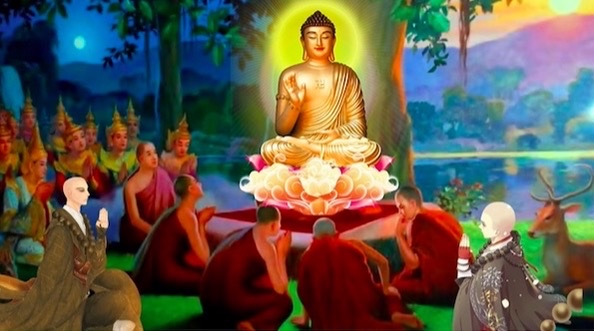
The story begins with the aunt of Shakyamuni Buddha. Out of deep love and devotion, she wove a magnificent robe for him, intricately threaded with gold. It was a labor of heart, an offering fit for an enlightened one.
Yet when she presented it, the Buddha gently advised her to give the robe instead to the entire monastic community—the Sangha.
This puzzled her. The garment was made especially for him. Why give it away?
The Buddha explained with compassion:
“The Field of Merit provided by the Sangha is vast and boundless. Offer it to them, and the virtue you gain will be immeasurable. To give to the Sangha is to give to me.”
Moved by this wisdom, she offered the robe to the monks. Out of humility, none dared to accept it—except Bodhisattva Maitreya, the future Buddha.
Wearing the golden robe, Maitreya went into the city to receive alms. His majestic presence, radiant in that resplendent garment, astonished the townspeople. They were mesmerized—so much so that they forgot to offer him food.
Among them was a master bead-stringer. Captivated, he invited Maitreya to his home for a meal. Afterward, he requested a Dharma discourse.
The artisan listened with such joy and absorption that he forgot everything—including an urgent commission from a wealthy patron who had paid him generously to craft a wedding ornament worth one hundred thousand coins.
When the client’s messengers arrived repeatedly to collect the finished piece, they found him entirely engrossed in listening to the teachings. Enraged, the wealthy man demanded back his jewels and the full down payment.
The artisan’s wife was devastated. Facing such a financial loss, she scolded him bitterly:
“By simply finishing that order, you would have earned a great fortune. Instead, you threw it all away listening to philosophy!”
The artisan felt a wave of regret wash over him.
Sensing this inner turmoil, Maitreya gently asked, “Will you come with me to the monastery?”
The artisan nodded.
Back at the monastery, Maitreya posed a question to the venerable Arhats:
“Which carries greater merit: listening to the Dharma with a joyful heart, or earning a great fortune?”
One by one, the senior monks affirmed that nothing can compare to the merit of hearing the true teachings.
Venerable Kaundinya declared:
“Receiving ten thousand pounds of gold cannot compare to offering even a single bowl of food to a virtuous practitioner. And listening to the Dharma with pure faith—even for a moment—surpasses that merit by hundreds of millions of times.”
Four other Arhats repeated this profound truth.
Finally, Maitreya asked Venerable Aniruddha why this was so.
Aniruddha replied:
“In a past life, I offered just one bowl of food to a Pratyekabuddha. Because of that single offering, for ninety-one world cycles I was reborn as a Heavenly Emperor and a human King, enjoying peace and prosperity. In this life, I was born into the same clan as the Buddha, and came into this world with a natural treasure field forty li wide.”
Hearing this, the bead-stringer felt his regret dissolve. Joy filled his heart. He understood the treasure he had received was far beyond the hundred thousand coins he had lost.
This ancient story is far more than a tale. It invites us to reflect deeply on the power of the Dharma.
Listening to the Truth is not merely an intellectual exercise. It opens the heart. It awakens wisdom. It strengthens the willpower needed to transform our deepest flaws and afflictions.
Material wealth is limited and fleeting. The merit gained from receiving the Dharma is limitless, enduring, and life-changing.
And yet the opportunity to listen does not always come easily. Conditions shift. Circumstances change. None of us can guarantee the next moment of life, much less another chance to sit peacefully and hear teachings that can liberate us from suffering.
When the causes and conditions ripen—when the Dharma reaches our ears—we must listen wholeheartedly.
We must not assume tomorrow will come. We must not assume our hearts are already pure. We must not assume we know enough.
The greatest freedom comes only when we break the cycle of birth and death and attain effortless liberation. Every moment of listening, every spark of understanding, moves us closer to that awakening.
This story encourages us to treasure every opportunity to hear the teachings, to recognize that spiritual wisdom is the greatest wealth of all, and to remember that even a moment of true Dharma listening can bring blessings far beyond the measure of gold.
In this Dharma-ending age, we are truly blessed that an ancient Buddha has come into our world to reveal the authentic, uncorrupted Dharma. The recorded discourses of H.H. Dorje Chang Buddha III guide practitioners through a clear and progressive path of cultivation, offering incisive teachings that encompass the essence of the twelve divisions of the Tripitaka and the ten divisions of the esoteric scriptures. Nothing is diluted or lost—each teaching preserves the profound meaning of both the exoteric and esoteric Dharma. These discourses illuminate an extraordinary range of topics, from the principles of the Trikaya and the Four Wisdoms of a Buddha to the supreme vajra Dharma of the highest division. They reveal the true realization of the Great Perfection of Ultimate Wisdom, and through the Xian Liang Buddha Wisdom Great Perfection Dharma, disciples may even personally witness the rainbow-body state on the very day the Dharma is transmitted. In both theory and practice, the teachings of H.H. Dorje Chang Buddha III stand complete, perfect, and unparalleled—an immeasurable blessing in this age of fading Dharma.
The moment I heard that I would be going with Venerable Dharma Teacher Long Hui to Los Angeles, unspeakable joy arose in my heart. On the way to Los Angeles, a rainbow suddenly emerged from the drizzling sky, emitting beautiful lights of various colors. A white celestial crane seen in the distance flew near and landed at the side of the freeway gazing at us, as if paying us respect. All of these signs expressed auspicious blessings. I strongly sensed that what I had wished for so long was about to come true.
A notice arrived in the afternoon of December 28th. From Venerable Dharma Teacher Long Hui’s somewhat tense facial expression, I could tell this must be the time for me to pay my respects and visit the Buddha Master. Just as expected, when we stepped into the mandala, I saw H.H. Dorje Chang Buddha III Wan Ko Yeshe Norbu Holiest Tathagata sitting upright on the dharma platform. His Holiness appeared so dignified and had an expression of loving-kindness. As I sincerely prostrated myself to H.H. Dorje Chang Buddha III, all I heard was the cordial voice of His Holiness telling everyone to come sit toward the front. I sat beside Venerable Dharma Teacher Long Hui. Dharma Teacher Jue Hui and Dharma Teacher Ruo Hui also sat with us.
Venerable Dharma Teacher Long Hui reported to the Buddha Master regarding the Buddhist chanting work that had taken place at Hua Zang Si over the past two months. Next, the Buddha Master called my name: “Fa Hai, proceed with what you want to say.” Without knowing why, my mind went totally blank. I felt that my entire body was soaking in a kind of freshness. I remained kneeling with a very straight back, as if I had entered a state of meditation. At this time, I only heard the Buddha Master say, “It is all right. Just speak directly!” Yet, I still could not speak and was silent for another eight or nine minutes. I could sense that the Buddha Master was patiently waiting. Finally, a sound floated out of my mouth: “My karmic affinity with the Buddha Master should have begun ten years ago. Because I could not come to America, I was not able to visit His Holiness. I finally got a visa last year. Only this year did I have the opportunity to visit Hua Zang Si, where I respectfully listened to recorded dharma teachings of the Buddha Master. For more than one straight month, I have listened to the recorded dharma discourses without the slightest sense of tiredness.
This has been the most beneficial and rewarding time of my entire life. The beneficial effects I have experienced can never be expressed in words. I bring my body, speech, and mind to respectfully visit the Buddha Master at this time. Today, I would like to specially request a great dharma from H.H. Dorje Chang Buddha III. I would not hesitate to leap into boiling water or walk on fire in order to obtain this great dharma. I am willing to undergo any test in order to obtain such dharma. I am even willing to sacrifice my own life. It might sound like I am exaggerating, but I truly can do such things.”
Perhaps because I was too nervous or focused, I unexpectedly was not able to express exactly what I meant to say. However, I silently told myself that the Buddha Master definitely understands what I am trying to express and what dharma I am requesting. I still remember that I fasted for a full 21 days in the Philippines in order to obtain this great dharma. This is because I am very aware that in this world only H.H. Dorje Chang Buddha III can accomplish this task and announce to the world this great dharma in order to demonstrate the brightness of Buddha and enable the correct dharma to exist in this world forever.
At first, the Buddha Master did not answer my request directly but gave us a profound and important discourse. Only afterward did I realize that this discourse was actually the beginning of His Holiness’s response to my question. His Holiness specifically pointed out the various kinds of confusion and mistakes that have appeared within Buddhism in this current Dharma Ending Age. Some Buddhist sutras contain serious mistakes. What is even more serious is that there are some so-called eminent monks and great virtuous beings who, due to their erroneous understanding and views, seriously misguide others when giving discourses on the dharma. What is even sadder is that believers who do not understand the truth still fanatically follow them and prostrate to them in worship. H.H. Dorje Chang Buddha III does all He can to correct these heretical ideas and views. However, being limited by the karma of living beings, H.H. Dorje Chang Buddha III feels that it is very difficult to change the current situation despite His wish to do so. The Buddha Master gave some examples of these heretical ways within both esoteric Buddhism and exoteric Buddhism. These very worrisome examples left me not knowing whether to laugh or cry.
After finishing the discourse, the Buddha Master said to me directly, “Fa Hai, you did not say what great dharma you want to request. Let me say it for you. The dharma you want to request is to film a movie of the Buddha. There really is no one else besides me who can do this because I completely understand the teachings of the Buddha. I can write the script. This movie must be filmed. The only thing is that the karmic conditions this year are not quite mature enough because the script needs to be written and actors need to be found, especially actors who are qualified. As for funding, as long as there is a script, there will be people who will sponsor and invest. Besides, the movie of the Buddha will not be filmed as one undivided whole but will be divided into a series of 100 parts or episodes. Perhaps this is really the right channel. After all, the influence of a book is limited as it reaches fewer people than a movie, which has much more of an international impact. In addition, when we do this, many problems might be solved. We might even be able to build several temples this way!” At this moment, I understood that the discourse just given by H.H. Wan Ko Yeshe Norbu Holiest Tathagata on the current chaotic situation within Buddhism illustrated that it is impossible for anyone else to write in a script the authentic doctrines of the Buddha.
Listening to this point, I was really shocked in my heart. I used to pay respect and visit many eminent monks and great virtuous beings. I requested from them great dharma. None of them knew what this great dharma in my mind was that I wanted to request. H.H. Dorje Chang Buddha III is truly magnificent. I did not reveal in the slightest what great dharma I wanted to request. Nonetheless, what His Holiness stated was the exact great dharma in my mind that I wanted to request.
His Holiness then said, “Fa Hai, when you come back from mainland China, I will transmit to you dharma according to the formal rituals of Tibetan esoteric Buddhism. You still have some negative karma. At that time, I will perform an initiation for you and eliminate your karmic hindrances. You will see.” I was totally engulfed in the joy of the dharma. The Buddha Master further said, “On your way here, the rainbow and the celestial crane you saw augured that your future undertakings will be bright. However, behind the brightness lurks darkness, and there are twists and turns on the path. We will soon face some attacks and slander, although those who commit the slander will all end up losing. When A Treasury of True Buddha-Dharma is published, no force can obstruct or destroy us because what is in that book are facts.” The Buddha Master finished by saying, “The movie of the Buddha definitely has to be filmed. You see, Fa Hai, your wishes have all been fulfilled. How fortunate you are!”
Actually, there are no words that can express my happiness. There are also no words that can express my gratitude toward H.H. Dorje Chang Buddha III.
I only want to respectfully offer to the Dorje Chang Buddha III my most beautiful spirit, my most beautiful melody, my most beautiful singing voice, and my best wishes. May all those who hear this beautiful melody and singing voice be happy.
I would like to express my special thanks to an anonymous person who ten years ago sent me an express mail package in which a yellow silk scarf was wrapped around the book The Fruits of Pious Devotion and CD’s that had a picture of H.H. Dorje Chang Buddha III on their covers. It is because of this present that seeds planted ten years ago have borne fruit in the form of my taking refuge in the His Holiness as my Buddha Master and in the form of my witnessing the magnificence of the Buddha-dharma.
Everything I described above is true. I am a Buddhist nun. I accept the karmic responsibility for my words. If what I have stated is false, I will descend into the Vajra Hell. If what I have stated is true, I would like to dedicate the resulting merit to all living beings in the dharma realm so that they will soon realize enlightenment.
Respectfully written by disciple Fa Hai Shi December 30, 2006
The above account was written by Fa Hai Shi. We three humble Buddhist nuns provide the following testimonials.
Encountering an Unusual Occurrence
Basically, whenever people pay their respects and visit H.H. Dorje Chang Buddha III Wan Ko Yeshe Norbu Holiest Tathagata, they make good use of their short meeting time by posing prepared questions or by requesting the transmission of dharma. Some groups have really made the best use of their time by requesting answers to problems that have arisen.
From left to right: Ruo Hui Shih, Long Hui Shih, and Jue Hui Shih
However, there was one particular occasion in the afternoon of December 28, 2006 when a dharma teacher from the Philippines, Fa Hai, came to the mandala from thousands of miles away. This was the first time she was granted an audience with H.H. Dorje Chang Buddha III. When H.H. Dorje Chang Buddha III asked her what question she had, I saw that Buddhist nun take a deep breath. She then unexpectedly remained silent as she stared at the Buddha Master with open eyes, sometimes lowering her head. Perhaps all of this was due to nervousness or other factors. At this time, the Buddha Master also did not speak. Seconds and then minutes passed by in silence. Then, that dharma teacher sighed once more and straightened her back, still looking at the Great Dharma King without uttering a sound. Strangely, Dorje Chang Buddha III also remained silent. A moment later, she sighed for the third time but still did not reply to the Buddha Master. The duration of this silence lasted more than eight minutes. This kind of situation had never happened before.
Finally, the dharma teacher spoke. She said she had come with a wish to request a great dharma. If her wish to obtain this great dharma were fulfilled, she said she would dedicate her life to the Buddha-dharma and living beings, even if it meant sacrificing her life. After uttering such words, she again fell into silence without mentioning what dharma she wished to request.
At this time, Dorje Chang Buddha III said, “Do not say anymore. I will give you a discourse.” The Buddha Master pointed out what request was in the mind of this Buddhist nun. That discourse not only enabled us disciples who were there to once again witness the supernatural powers of H.H. Dorje Chang Buddha III, it also enabled us to understand precious dharma principles.
Because I took Dharma Teacher Fa Hai to pay her respects to H.H. Wan Ko Yeshe Norbu Holiest Tathagata, I was there and personally witnessed everything that happened. Everything I described above is true. If what I have stated above contains false words, may I never become accomplished in the dharma. If what I have stated above is true, I dedicate the resulting merit to all living beings so that they may soon hear the correct dharma and soon attain liberation and accomplishment.
Buddhist disciple Long Hui Shih
I was present at the time. I hereby confirm that what is stated above is true. If what is stated above is false, I am willing to descend into hell and experience negative karmic retribution. If everything stated above is true, I dedicate the resulting merit to all living beings so that they may soon hear the correct dharma and soon realize enlightenment.
Buddhist disciple, Jue Hui Shih
Everything stated above is true. If what is stated above contains false words, I will not become accomplished in the dharma and will become impoverished and miserable. If what is stated above is true, I wish to dedicate the resulting merit to all living beings so that they may always see Buddha and attain liberation.
Buddhist disciple, Ruo Hui Shih
(This is a complete translation of the Chinese text that follows originally written and signed by Fa Hai Shih, Long Hui Shih, Jue Hui Shih, and Ruo Hui Shih.)