What if your risk of heart disease isn’t just about diet or exercise—but about that small light you leave on at night?
A recent study published in JAMA Network Open, conducted by researchers from Harvard Medical School and Flinders University, has uncovered a striking connection between nighttime light exposure and cardiovascular health.
Their findings are both surprising—and a little unsettling.
According to the study, being exposed to light while sleeping can increase the risk of cardiovascular diseases—such as heart disease and stroke—by nearly 50%.
What’s even more important is this:
The risk isn’t simply due to “not getting enough sleep.”
Instead, the real issue lies deeper—in the disruption of your circadian rhythm, the internal biological clock that quietly regulates nearly every function in your body.
For most of human history, our bodies evolved in a simple rhythm:
Bright sunlight during the day
Complete darkness at night
But modern life has turned that pattern upside down.
During the day, many of us work indoors under lighting as dim as 400 lux—far less than even a cloudy outdoor day, which can reach 10,000 lux or more.
At night, instead of darkness, we surround ourselves with:
Streetlights filtering through windows
Glowing phone screens
The soft flicker of televisions
This constant, low-level light may seem harmless. But between midnight and early morning, it quietly sends confusing signals to your brain, effectively resetting your internal clock at the worst possible time.
The research team analyzed wearable device data from nearly 90,000 participants in the UK Biobank and followed them for up to 9.5 years.
The results showed a clear and concerning pattern:
Compared to those who slept in the darkest environments, people exposed to even small amounts of light at night had a 20% higher risk of heart disease
Those in the top 10% of nighttime light exposure saw their risk rise by a staggering 47%
This wasn’t a vague trend—it was a consistent, step-by-step increase in risk.
Perhaps the most striking finding is that this risk appears to be independent of other lifestyle factors.
That means:
Even if you don’t smoke
Even if you exercise regularly
Even if you eat a healthy diet
…sleeping in a room that isn’t truly dark may still place additional strain on your heart.
The good news?
This is one of the easiest health risks to fix.
You don’t need expensive treatments or drastic lifestyle changes. Sometimes, protecting your heart begins with something incredibly simple:
Turn off unnecessary lights
Reduce screen exposure before bed
Invest in blackout curtains
Create a sleep environment as close to complete darkness as possible
In fact, buying a proper set of blackout curtains might be one of the most cost-effective investments you make for your health this year.
Because compared to changing your genetics or giving up every unhealthy craving…
Flipping a switch is surprisingly easy.
In a world full of complex health advice, it’s easy to overlook the small things.
But sometimes, it’s the quietest habits—the unnoticed glow in the corner of your room—that carry the greatest impact.
Tonight, before you go to sleep, take a moment to look around.
In our culture, success is often seen as the ultimate destination—the long-awaited moment when effort finally blossoms into happiness. We are taught to dream, to strive, and to believe that once we reach our goals, fulfillment will naturally follow. Yet, both modern science and lived experience are beginning to tell a more nuanced story.
In recent years, research in neuroscience and psychology has revealed a quiet paradox: achieving our most cherished goals does not always bring lasting happiness. The brain’s reward system, driven by dopamine, is designed primarily for anticipation rather than arrival. It fuels the excitement of pursuit—the late nights, the hopeful striving, the vision of what could be. But once the goal is reached, that surge of motivation fades, and the emotional intensity often drops.
At the same time, psychologists describe a phenomenon known as hedonic adaptation—our tendency to quickly return to a baseline level of happiness even after major positive events. The dream job becomes routine. The long-awaited achievement becomes part of everyday life. What once felt extraordinary quietly becomes ordinary.
For some, this transition is subtle. For others, it can feel like an unexpected emptiness—a sense of “What now?” after the finish line has been crossed.
But this discovery is not discouraging. In fact, it is deeply illuminating.
It reminds us that the human mind is intricate, and happiness is more than just accomplishment. Success, by itself, is not designed to sustain joy—it is only one part of a much larger inner landscape.
True fulfillment begins when we understand this hidden pattern and learn to work with it, rather than against it.
A meaningful life is not built solely on reaching goals, but on what those goals serve. When ambition is guided by purpose—when our efforts contribute to something beyond personal gain—success no longer feels like an ending. Instead, it becomes a doorway.
This is why acts of kindness, compassion, and contribution carry such enduring power. Unlike fleeting achievements, they create a sense of connection and meaning that the mind does not easily adapt away from. They anchor us in something deeper than momentary reward.
Imagine a different way of living:
A life where ambition and inner well-being are not in conflict, but in harmony. A life where achieving a dream does not leave a void, but opens a new horizon of purpose. A life where each success is not a final destination, but a step toward greater understanding, compassion, and joy.
By understanding the brain’s hidden responses, we gain the ability to design such a life. We begin to see that fulfillment is not something waiting at the end of achievement—it is something woven into the journey itself.
In this light, success becomes more than personal victory. It becomes an opportunity to deepen meaning, to expand the heart, and to align our outer accomplishments with our inner growth.
Perhaps lasting happiness has never been about reaching the summit.
Perhaps it is about learning how to walk the path—with awareness, purpose, and a quiet, enduring sense of joy.
In the rush of daily life, it’s easy for the mind to gravitate toward what is missing, stressful, or unresolved. Our attention naturally scans for problems—an ability that once helped our ancestors survive. Yet this same tendency can also make modern life feel heavier than it needs to be.
What if something as simple as practicing gratitude could gently reshape the way our minds experience the world?
Psychological research suggests that it can.
One influential study by Robert A. Emmons and Michael E. McCullough, published in the Journal of Personality and Social Psychology, explored exactly this question in their paper “Counting Blessings Versus Burdens: An Experimental Investigation of Gratitude and Subjective Well-Being in Daily Life.”
Their findings offer a fascinating glimpse into how small shifts in attention can create meaningful changes in emotional well-being.
In their study, participants were divided into different groups and asked to keep brief weekly records:
One group listed things they were grateful for.
Another group recorded daily hassles or difficulties.
A third group tracked neutral life events.
After several weeks, a clear pattern emerged.
Those who regularly wrote down what they were grateful for reported:
Higher levels of optimism
Greater life satisfaction
More positive emotional states
Even better physical well-being, including fewer physical complaints
Interestingly, participants in the gratitude group were also more likely to help others and engage in prosocial behavior.
The practice did not eliminate life’s difficulties. Instead, it subtly shifted the mind’s orientation—from scanning for burdens to noticing sources of support, meaning, and connection.
In other words, gratitude works not by denying reality, but by expanding what we notice within it.
The brain is remarkably adaptive. Neuroscience often refers to this capacity as neuroplasticity—the ability of neural pathways to strengthen through repeated patterns of thought and attention.
When we repeatedly focus on worries, the brain becomes efficient at worrying.
When we repeatedly notice blessings, the brain becomes better at recognizing goodness in everyday life.
Gratitude, then, can be understood as a kind of mental training. It gradually teaches the mind to hold a wider view of experience—one that includes not only challenges, but also resources, kindness, beauty, and moments of quiet grace.
The research suggests that gratitude does not require elaborate rituals. Even small, consistent practices can make a difference.
Here are a few simple ways to begin.
1. Keep a “Three Blessings” Journal
At the end of the day, write down three things you are grateful for.
They don’t have to be dramatic or extraordinary.
They might be:
A helpful conversation
A good meal
A quiet moment of rest
A problem that turned out better than expected
The key is consistency. Over time, this practice gently trains attention toward appreciation.
2. Ask “What Went Well Today?”
Instead of ending the day reviewing only unfinished tasks, pause and reflect:
What went well today?
This small shift reframes the day from a list of obligations into a landscape that also contains successes and kindness.
3. Express Gratitude to Someone
Research on gratitude often finds that expressing appreciation strengthens relationships.
Send a message, write a note, or simply say thank you in a sincere way.
Gratitude is not only an internal experience—it is also a social emotion that deepens connection.
4. Notice the Ordinary
Some of the most powerful gratitude moments come from ordinary experiences:
Warm sunlight through a window
The taste of morning tea
The reliability of a friend
When we slow down enough to notice these small gifts, everyday life begins to feel richer.
It’s important to emphasize that gratitude is not about pretending life is perfect.
Difficulties, uncertainty, and loss are part of the human experience.
Gratitude simply invites us to widen the frame of attention—to see that even within imperfect circumstances, moments of goodness continue to exist.
By learning to notice them, we cultivate a more balanced and resilient inner life.
The idea behind “counting blessings” may sound simple, even old-fashioned.
Yet research continues to show that this small shift in attention can ripple outward—affecting mood, relationships, and overall well-being.
Perhaps the most beautiful part of gratitude is its accessibility.
It requires no special equipment, no complicated training.
Just a moment of pause… and a willingness to notice what is already here.
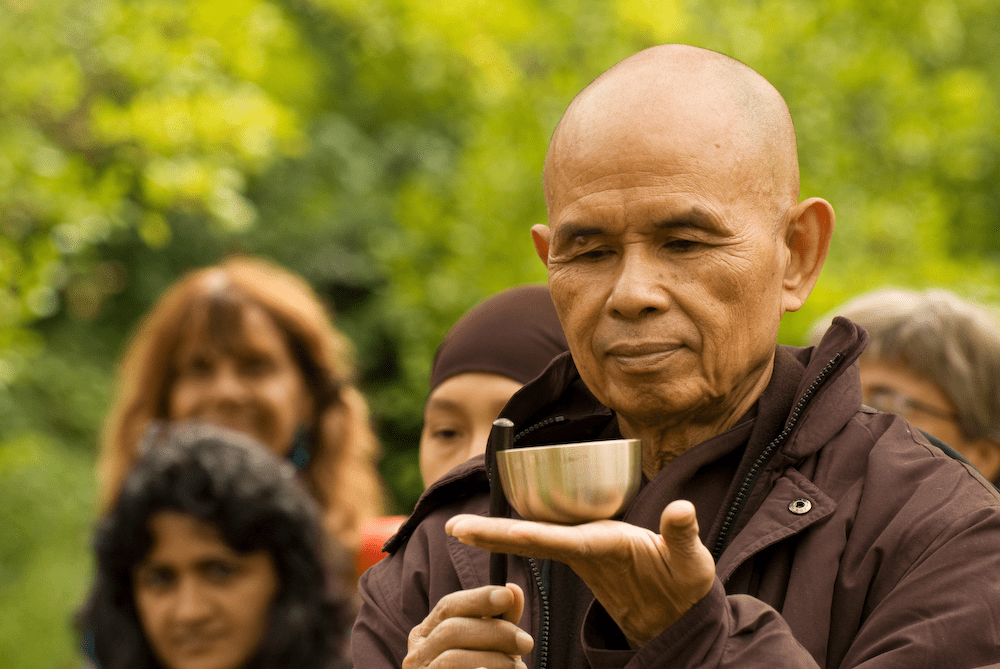
In a world that often feels fragmented and fast-paced, many of us are searching for a compass—a way to live that feels both grounded and deeply ethical. Thich Nhat Hanh, the beloved Zen Master and founder of the Plum Village tradition, offered exactly that through the Five Mindfulness Trainings.
These aren’t rigid “commandments” or a list of “don’ts.” Instead, they are a modern, proactive framework for cultivating peace, protecting life, and nurturing happiness within ourselves and the world.
At their core, the trainings are a reinterpretation of traditional Buddhist precepts, designed for our modern, interconnected lives.
Reverence for Life This training is an invitation to cultivate compassion. It’s about more than just avoiding harm; it’s about actively protecting life and practicing nonviolence toward ourselves, our neighbors, and the natural world.
True Happiness We often chase wealth or fame, thinking they are the keys to joy. This training reminds us that true happiness is found in generosity and the ability to be content in the present moment. It encourages us to live simply and avoid exploiting others.
True Love In our relationships, integrity is everything. This training emphasizes responsibility and ensures that our most intimate connections are grounded in deep love, commitment, and respect for the harmony of families.
Loving Speech and Deep Listening Communication is a powerful tool for healing. By practicing deep listening without judgment and using speech that inspires hope and reconciliation, we can move mountains of misunderstanding and alleviate the suffering of those around us.
Nourishment and Healing What we “consume” isn’t just food. It’s the media we watch, the conversations we have, and the substances we use. This training focuses on mindful consumption to protect our mental and physical well-being from toxins and despair.
The beauty of the Five Mindfulness Trainings lies in how they address the complexities of the 21st century.
Interbeing: They are rooted in the understanding that we are not separate entities. What happens to the Earth happens to us. When we heal ourselves, we heal the world.
Universal Ethics: While born from Buddhist wisdom, these trainings are non-sectarian. They are accessible to anyone, regardless of their religious or spiritual background.
Transformation over Rules: This is an ongoing practice. The goal isn’t “perfection” but a continuous, mindful process of shifting our focus from self-interest to collective well-being.
Sangha (Community) Support: We don’t have to do this alone. These trainings are often practiced within a Sangha, a community of friends who support each other in staying mindful and compassionate.
The Five Mindfulness Trainings are a gift—a map that leads us back to our best selves. By embracing these guidelines, we contribute to a collective awakening, one mindful breath and one compassionate action at a time.
“The Five Mindfulness Trainings are the most concrete way to practice mindfulness. They show us how to live our lives in a way that brings peace and happiness to ourselves and to others.” — Thich Nhat Hanh
Creating Your Own “Micro Forest Bathing” in the City
Not everyone lives in a place like Santa Cruz, surrounded by forests and winding mountain trails. Most of us live in cities—enclosed by traffic, fast-paced workdays, concrete buildings, and endless schedules. It can feel as though nature is far away, almost out of reach.
But the truth is, we don’t need to escape deep into the mountains to reconnect with nature. Even in the heart of the city, we can create our own “Micro Forest Bathing” moments.
At its core, forest bathing has never been about a specific location. It is about slowing down and reconnecting with nature through all our senses. When we shift our attention, the city reveals many small places where we can breathe again and feel gently held by the natural world.
Here are a few simple and practical ways to experience the healing presence of nature—right where you are.
1. Find a Small Green Oasis
Even the busiest city has pockets of quiet greenery: a neighborhood park, a cluster of trees, a riverside path, a campus corner, or a small community garden.
The place doesn’t need to be grand. A couple of trees, a patch of grass, or a few flowering bushes are enough to soften the heart.
What matters is not the size of the space—but whether you allow yourself to pause.
2. Walk in the Spirit of Forest Bathing
Whether you’re in a city park or walking along a tree-lined street, you can bring the rhythm of forest bathing into your steps:
Slow your pace
Notice the color of the leaves
Feel the temperature of the wind against your face
Watch how sunlight filters through branches and falls on the ground
Listen for birds, even if there are only one or two
Gently touch the bark of a tree
When you do this, the city softens—and your mind grows quiet.
3. Create Your Own “Green Route”
You can weave nature into your daily routine in small, intentional ways:
Choose a street with more trees on your commute
Take a five-minute walk in a nearby park during breaks
Stroll through your neighborhood after dinner and notice changes in plants and seasons
With time, this route becomes your personal path of restoration—a place where your mind learns to rest.
4. Bring a Mini Forest Into Your Home
Even without stepping outside, you can invite nature indoors:
Keep a few easy-to-care-for plants (ferns, ivy, or monstera work beautifully)
Open your windows to let in light, air, and natural sounds
Light a wood-based scent such as sandalwood or cedar
Play gentle forest soundscapes in the background, sip a cup of tea, imagine yourself being embraced by the forest—the steady presence of trees around you, the earthy scent of soil, the calm rhythm of nature moving without urgency. Let your shoulders soften. Let your breath deepen.
Even a small touch of green can soften emotions and calm the nervous system.
5. Practice “Green Meditation”
Sit near a plant or by a window. Do nothing except observe:
The sheen of leaves
The movement of light and shadow
The patterns in stems and veins
Breathe slowly.
Five minutes of this will calm your mind far more deeply than ten minutes of scrolling on your phone.
6. Let Nature Become a Habit
Forest bathing is not something we do once in a while—it is a way of staying connected to life itself. You might:
Take a weekly green walk
Spend three minutes a day looking at the sky
Touch a tree when you feel overwhelmed
Sit quietly in a park when stress builds
Even a few minutes of this mindful pause can soothe the nervous system, quiet the mind, and restore inner balance. Sometimes, the forest we need most is the one we allow ourselves to enter inwardly.
These small acts, repeated gently, become powerful sources of renewal.
Whether you live near a forest, by the ocean, or in the center of a city, nature is always there, patiently waiting—for you to breathe, to slow down, and to be healed.
And when you finally grow still enough, you may discover this quiet truth:
Even within the city, the forest is never truly absent. 🌿
It is fairly easy to see that society defines us by our relationship status, with those being in committed relationships having more status than those who are single. Friends, family, culture, society, TV, and, even Facebook posts, all tell us that we should be part of a couple.
If I’m honest, I have to admit that I bought into this hook, line and sinker; from the age of fourteen on, there was always a guy in my life. Like most people, having a relationship was of utmost importance, and, as a result, I often compromised other areas of my life. If I wasn’t in some sort of relationship, I felt empty inside, which only reinforced the hunt for Mr. Right.
I was on a perpetual roller coaster ride of seeking, finding, questioning and ultimately, letting go. There was a great deal of heartache and pain on the downside of this endless relationship ride, resulting in two failed marriages, and I don’t know how many “dead-end” relationships.
Sacred Singlehood
Biologically, we need partnership in order to procreate and keep the species going, but with 7 billion people on the planet, I don’t believe this is still the motivation for “needing to be” in a relationship. If we are truthful, our drive to be in relationships is more about personal habit, societal pressure and, yes, the dreaded fear of being alone topping this list.
Many of us even stay in relationships, well past their expiration date, because we think that we won’t find someone “better” and because we are growing older, we are even more afraid to risk being alone.
About ten years ago, I did something I thought I would never do. After a tumultuous break-up, I made a conscious choice to be single. At first, it was quite difficult being single; my relationship-addicted mind still searched for potential partners, but the greater part of me said, “No, not now.” It took me about a year to make peace with being single but even longer to discover the treasures of what I have come to call “Sacred Singlehood.”
Now, this isn’t an advertisement to choose singlehood over couple-hood. I certainly don’t know what is best for anyone, other than myself, but, this is an invitation to give yourself permission to consider who you might be (or become) all by yourself – without a partner.
What if it was okay to be alone, and, at least, for a little while, you gave up the search?
Whether you are experiencing a break-up, thinking about ending a relationship, or searching for that new one, consider that the relationship that you most desire, and the one that can bring you the most joy and fulfillment is with yourself.
Maybe you want a good reason for being single; well, how about two?
Being Single: Reason #1
Become Empowered, Explore Opportunities and Create an Amazing Life!
If you go from being in a relationship to mourning the end of a relationship to looking for a new relationship, where is the time and space for self-exploration?
Having the courage to be single allows you to create sacred space where you get to know yourself and you become your own best friend; from this space of growing confidence and security, you can go past your comfort zone, explore new ideas, travel to interesting places, create masterpieces, develop spiritual connection, take care of your body and mind, and maybe, even heal or strengthen relationships with your children, siblings, parents or friends.
Imagine giving yourself the time and space for emotional, mental, physical and spiritual healing or alignment. This might mean healing beliefs that don’t support you, claiming your unconditional worth and stepping into your intrinsic power. How wise and powerful might you become on a solo journey?
I can’t tell you what would have unfolded in these past ten years, if I had been in a relationship, but, I can tell you that during these sacred years, I experienced tremendous personal growth, spiritual awakening and creative inspiration that resulted in the publishing of several books. As I uncovered who I really am, and I discovered my self-made place in the world, I fell in love with me. Equally as important, my relationship with each of children drastically improved; because there was no longer someone else in the mix trying to influence my radical parenting style, I was free to parent in my own unique way. For this reason alone, my choice to be single was phenomenal.
When you give yourself the gift of being single, it can be the most sacred experience of your life.
Being Single: Reason #2
Meet Your Soul Mate by becoming the perfect partner for your perfect partner.
What if you took the time to really get to know yourself in order to become the person who can attract your ideal mate? Consider that any partner that you attract before you grow into your best self is very different than the partner you will attract from your highest and best self. Mr. Right can’t show up, if you are not yet Ms. Right and vice versa.
Law of Attraction Maybe we keep meeting the “wrong person” because we don’t measure up to our wants and desires in a partner. In other words, if you desire a partner who is open, honest and communicative, you must be open, honest and communicative. If you desire a partner who is in great shape, spontaneous and adventurous, you must be in great shape, spontaneous and adventurous.
In the quest for your perfect partner, you must be his/her perfect partner. This means that in order to attract your ideal mate, you must really know yourself and be true to your dreams and desires.
It is helpful to make a list of the qualities and attributes that you desire in a partner and rate yourself accordingly. If you don’t score high in each of those same qualities/attributes, according to the law of attraction, you are not yet a perfect match.
In order for the law of attraction to work in relationships, you must become that which you desire in another. Instead of jumping into a new relationship, imagine taking the time to develop these desired qualities and attributes, so that you can become the perfect partner for your perfect partner.
Heal Emotional Wounds If you keep ending up in relationships where you feel abandoned, misunderstood or unappreciated, chances are, there are some emotional wounds that require healing. If you want to be in an emotionally healthy relationship, you must be emotionally healthy. Being single offers you the time and energy required to heal past wounds, allowing you to align with an emotionally healthy partner.
Afraid of Being Alone I am going to guess that your perfect partner isn’t afraid of being alone, so, if you want to meet him/her, it is probably necessary to heal any fears of being alone – because, no doubt, you will attract potential partners who align with your fears. This means that if you are afraid of being alone, you will attract someone who is also afraid of being alone, or you will attract someone who will trigger your fear of being alone. If you do not want to attract a relationship based on this fear, it is essential that you fearlessly embrace singlehood.
Filling that Empty Space Many of us desire a partner to fill the empty space, but it never works because the only one who can ever fill your empty space is you. Being single allows you the opportunity to find yourself and experience fulfillment. Once you fill that space with yourself, you will be a perfect match for a man/woman who is whole, conscious and empowered.
The Desire for Love Okay, it’s normal to desire a relationship so that we feel loved, but, oftentimes, our relationships leave us feeling unloved. If you want to experience love in a relationship, it is important to take time alone in order to learn to love yourself unconditionally. Your unconditional self-love has the power to attract a partner who also loves him/herself unconditionally and together you can experience unconditional love for each other. This is the foundation for the loving relationship you seek.
Whether you are looking to find yourself or you are seeking a soul mate, being single may hold the answers.
The Point of Sacred Singlehood
The point of Sacred Singlehood is not to be single forever, unless that is what you choose, but, rather to become the highest version of you, who is emotionally secure, confident and free to express uninhibited authenticity, and, then, if you choose to share your life with another, you can attract your ideal partner, who is also consciously authentic, and together you can experience an enlightened paradigm of partnership that is truly amazing.
There is something so beautiful and transformative about being single, and, if I had missed it, I might have missed myself entirely. I am so grateful to my past self for making the courageous decision, and sticking to it.
Whatever your reasons to explore being single, Sacred Singlehood offers a Golden Opportunity where you can become the Real You and create the life you most desire.
About the Author:
As a Conscious Creation Coach since 1997, Nanice teaches mastery level manifestation skills, and, as a result, her powerful coaching style is often referred to as the “Nanice Effect.” Bridging the gap from imagination to realization, Nanice coaches people to live their true dreams. Nanice is the author of several inspirational books including, “Is There a White Elephant in Your Way? – a comprehensive guidebook to awakening and self-empowerment.” Sign up for Nanice’s Free 7 Part Awakening Series. To find out more, please visit www.Nanice.com.
You might not realize it, but this is the true power of prayer—it’s not just asking for blessings; it is awakening an internal system within you that says, “I can keep going.”
Every sincere moment of prayer leaves an imprint on the mind. This is not spiritual poetry or wishful thinking; it is a pattern repeatedly observed through MRI scans, neuroimaging, and psychological research. Each second spent in focused, quiet prayer is an opportunity to “turn on a light” in the brain—helping us become steadier, clearer, and more resilient.
Scientists were once skeptical. But the evidence surprised them.
When a person enters a state of deep, focused prayer, activity in the prefrontal cortex increases. This is the part of the brain responsible for attention, judgment, emotional regulation, and self-control—the “driver’s seat” of the mind. Prayer helps us return to that seat, especially when life feels overwhelming.
At the same time, activity in the amygdala—the brain’s alarm system—tends to decrease. This region governs fear, anxiety, and the fight-or-flight response. When it is overstimulated, we feel tense, reactive, and out of control. Prayer appears to gently quiet this system, creating inner space to breathe, reflect, and choose more wisely.
This is not merely a mental effect—it is a physical response of the nervous system.
Research also suggests that heartfelt prayer—prayer infused with sincerity and emotion—is especially powerful. Compared to mechanical repetition, it more strongly activates brain regions associated with language, empathy, connection, and self-awareness, including the temporoparietal junction, anterior cingulate cortex, and medial prefrontal cortex. These areas shape how we relate to ourselves, to others, and to life itself.
In simple terms, honest prayer becomes a process of emotional clearing and inner reorganization.
When practiced regularly, these brain responses do something remarkable: they form new neural pathways. Like carving a well-worn trail through a forest, prayer creates a reliable inner path—a place of stability we can return to during moments of fear, grief, or confusion. The more often we walk this path, the easier it becomes to find our way back to calm.
Prayer is not the same as meditation. While both reduce stress and sharpen focus, prayer carries an added element: relationship. Prayer involves trust, dialogue, and the felt sense that we are not alone. This activates neural systems related to connection, attachment, and belonging—deep human needs that meditation alone does not always engage.
This may explain why, at the edge of emotional collapse, a simple, sincere prayer can sometimes bring someone back from the brink. The problem may not disappear—but the mind, heart, and body momentarily realign. A quiet strength returns. I can get through this.
What Prayer Does—Inside and Out
Activates the Prefrontal Cortex Strengthens clarity, emotional balance, and self-control.
Calms the Amygdala Lowers fear and stress responses, restoring inner quiet.
Builds Emotional Resilience Repeated prayer forms neural pathways that support stability over time.
Fosters Connection and Trust Engages social and emotional brain systems through relationship and sincerity.
Sincere prayer may be one of the most gentle, natural, and powerful “built-in reset systems” we possess.
So when was the last time you prayed—not out of habit, but from the heart? Have you ever noticed how your body softened afterward, how tension quietly released?
That wasn’t imagination. That was your mind and nervous system responding to something deeply human—and deeply real.
We spend so much of our lives chasing happiness. We look for it in career promotions, new gadgets, or the perfect vacation. Yet the joy we seek often feels fleeting. What if the real secret sauce to a happy life isn’t something you buy or achieve—but something you give?
In her widely shared TEDx talk, “How to Be Happy Every Day: It Will Change the World,” Jacqueline Way offers a beautifully simple, yet world-altering insight: doing one small good deed each day can transform your brain, your life, and ultimately, the world.
The Science Behind the “Helper’s High”
Jacqueline’s message isn’t just uplifting—it’s grounded in science. When we perform acts of kindness, our bodies respond in powerful ways.
Giving triggers the release of a natural blend of “happiness chemicals”:
Dopamine, which creates feelings of reward and joy
Oxytocin, often called the “love hormone,” which reduces stress and supports heart health
Serotonin, which stabilizes mood and promotes a sense of calm and well-being
In other words, when you give, you’re not just helping someone else—you are literally rewiring your brain for happiness.
At the heart of Jacqueline Way’s message is a practice so simple it’s easy to overlook:
Do one little good thing every day.
It doesn’t need to be dramatic or time-consuming. A good deed might look like:
Offering a sincere smile or kind word
Helping a neighbor with a small task
Picking up litter along your path
Donating items you no longer use
Listening fully to someone who needs to be heard
What matters most is intention. When kindness becomes a daily habit rather than an occasional gesture, happiness stops being accidental—it becomes natural.
A single act of kindness never ends with the giver. It travels outward. One person’s generosity inspires another. Slowly and quietly, hearts soften, trust grows, and perspectives shift.
Jacqueline Way reminds us that changing the world doesn’t require grand gestures or heroic efforts. It begins with ordinary people choosing compassion in everyday moments. When kindness becomes a way of life, happiness expands—not only within us, but all around us.
How to Start Your Own Happiness Practice
If you’re longing for more joy and connection, you don’t have to wait for the “right” moment. You can begin today. Here are three simple ways to practice the daily give:
1. Look for the Micro-Give Kindness doesn’t require money or planning. Hold the door open, write a thoughtful message, or leave a positive review for a local business.
2. Make It a Family Habit Inspired by Jacqueline and her son, turn giving into a shared ritual. Ask at dinner, “What was your give today?” It nurtures empathy and helps everyone focus on the good.
3. Notice the Shift Pause and observe how you feel after giving. That warmth in your chest? That quiet lift in your mood? That’s happiness growing in real time.
Jacqueline Way reminds us that we are not powerless in the face of the world’s challenges. Each of us carries the ability to make life kinder, lighter, and more meaningful—one day at a time.
When you choose to give, you stop chasing happiness and start creating it.
And when enough of us do that, every day, the world truly begins to change.
Did you know that your brain may need you to take a walk even more than your body does?
We often think of walking as something we do for physical fitness—burning calories, loosening stiff muscles. Yet neuroscience now confirms something ancient wisdom has always known: when the body moves gently and steadily, the mind awakens.
Regular walking—nothing intense, just consistent and mindful steps—nourishes the hippocampus, the part of the brain responsible for memory and learning. With increased blood flow and oxygen, this delicate region doesn’t merely function better; over time, it can actually grow stronger, softening the slow erosion of age.
Decades of MRI research reveal that people who engage in moderate movement—brisk walking, cycling, climbing stairs—experience measurable growth in the hippocampus. An average increase of just two percent may sound small, but in the language of the brain, it is profound. It can offset one to two years of natural cognitive aging.
In simple terms: thirty minutes of walking a day gently turns back the clock for the mind.
But beyond the science, something quieter is taking place.
When we walk, the brain relaxes its grip. A subtle nourishment—BDNF, often called the brain’s “fertilizer”—is released, protecting existing neural pathways and encouraging new connections to form. Thoughts become clearer. Memory steadies. Emotions settle into a more balanced rhythm.
This is why walking feels different from sitting.
As the body moves, the mind loosens. As the breath finds its rhythm, thoughts begin to untangle.
Walking brings the brain into a rare state—awake, yet unforced. It is here that insights arise without being pursued, where worries soften and lose their sharp edges.
Many people sense this intuitively, without knowing the science. They think more clearly when they walk. They feel calmer. They see situations with greater perspective.
Stillness has its place. But too much stillness, without movement, becomes stagnation.
Long hours of sitting dull not only the body, but also memory, emotional resilience, and mental clarity. The mind grows heavy, foggy, restless. Gentle movement restores what stillness alone cannot.
And the beauty of walking is its simplicity.
No gym. No equipment. No performance.
Just steps.
A short walk in the morning light. A few mindful minutes between tasks. A slow walk beneath trees. Choosing stairs over elevators. Sun on the face. Breath in motion.
These small, ordinary moments—when repeated—quietly care for the brain and the heart.
Walking is not exercise in the usual sense. It is a form of listening.
With each step, the mind is gently awakened. With each step, inner noise softens.
You may not be going anywhere special. Yet something within you becomes clearer, lighter, more alive.
So today, walk.
Not to achieve. Not to improve.
Just to return— to the simple intelligence of movement, and to a mind that remembers how to be at ease.
Listening to your body can be something as simple as going to bed when you are tired, stop eating before you are overstuffed, or releasing a yoga posture when you’ve gone beyond your edge. It can also involve more serious things, like preventing your stress levels from exploding into chest pain by saying no, averting an acute pain situation or chronic disease by knowing when to slow down, and respond to pain or discomfort in your body.
For me, theessence of yoga is about listening to your body, mind and emotions and honouring where they are at, because this changes from day to day, hour to hour, minute to minute. This listening may involve noticing how your body feels in a particular pose-are your muscles tight, are you feeling a sense of release? How is your breath-do you notice times when you are holding it or breathing faster than you should? How are your emotions-what’s coming up for you; sadness, anger, impatience, or boredom?
I learn so much about myself while on my yoga mat. Through stillness, movement and breath, I have increased awareness of where I’m holding muscle tension and how my nervous system is doing. This mindfulness helps me move through negative emotions, practice self-compassion and often find sweetness underneath the negativity.
Our body and emotions are always communicating, and sometimes it’s very subtle, and unfortunately, we often ignore it. This has happened to me twice in the last year, and honestly, I should have known better. In the spring, during the first lockdown – (what # are we at now?) I continued with my weight workout because my gym was closed. I used light weights and after a few weeks felt they were too light and increased the amount. I started to notice an occasional throbbing pain in my left triceps. I ignored this and continued to ignore it, not making the connection that the heavier weights were taxing my muscles. One night I was awoken by the most excruciating pain, exactly where I felt the original throbbing pain, and it was radiating up to my neck and down to my wrist. Luckily, I was able to see my physiotherapist and chiropractor for treatment, and they felt the pain was connected to an aggravated radial nerve. My doctor prescribed me an anti-inflammatory, and I felt better after the first treatment; however, it took several months until I fully recovered.
You think this would have been a massive wake up call for me to pay attention to subtle changes in my body-the whispers. Nope. Since the recent lockdown, state of emergency, whatever we’re at these days, I committed to going for a long walk or hike every single day because my spirit needed this connection to nature. After a few longer hikes of 2-3 hours through a local conservation area, I noticed a pain in my right glute. It wasn’t severe pain and didn’t last long, so it was easy to brush off. However, it did happen at least 4-5 times, and I completely ignored it, and just over a week ago, I paid for this BIG TIME!!!!
After an active day on January 15th, I noticed a pain in my right hip flexor, went to bed, but didn’t stay long because the pain became too intense. By Saturday afternoon the pain had increased with a vengeance, and I didn’t sleep on Saturday night and woke my husband up at 3 am on Sunday informing him that he had to take me to emergency because I was in that much pain. At the ER they ruled out a few things and thought that diagnosis was piriformis syndrome-irritation of the piriformis muscle. They suggested rest, anti-inflammatories, extra-strength Tylenol and physiotherapy to get back on track. The pain wasn’t being managed, and on Tuesday morning, I had to go to the ER once again because the pain became so severe that I couldn’t walk. This time they focused on pain management and gave me morphine via IV and a script. The pain subsided, and I was able to walk and go home.
By this time, I hadn’t slept for 4 nights and saw my physiotherapist for the first time. He performed a full assessment and didn’t think I had piriformis syndrome and felt that my joint and muscles were functioning well. He thought that I might have overdone it with my hikes and aggravated some muscles and nerves.
I continued with the pain management meds and physiotherapy, and last Saturday afternoon, I noticed that the pain had left entirely. I haven’t had any pain since and still have no idea what caused it, but have some ideas. I believe that my enthusiastic hikes irritated the muscles and nerves in my right hip, and I had plenty of warning that something was up.
I’m so grateful to be pain-free and have the most profound compassion and empathy for anyone dealing with chronic pain. I honestly don’t know how anyone deals with it.
I don’t want to go through something like this again, and I’ve learned my lesson about the importance of listening to my body, not just on my yoga mat, but always.
Our body, breath and emotions are always communicating to us and sending us messages. They usually start as little whispers, and if you don’t pay attention, your body will yell at you loud and clear and force you to listen.
Off the yoga mat, it’s essential to take time throughout your day to slow down, be still and tune in. How does your body feel? Do an emotional check-in. Honour your body, and give it the attention and nurturing that it deserves. Trust your body, its’ wisdom and healing abilities.