The Art of Graceful Living: Lessons from Yang Jiang on Simplicity and Inner Peace

Yang Jiang, my favorite contemporary female writer, lived a life intertwined with the turbulence of her times, yet she remained as pure and free as a cloud in the sky. Her works not only reveal the beauty of literature but also inspire us on how to maintain inner peace and composure amidst the chaos of the world.

Yang Jiang’s translation of the poem, “I compete with no one, and I disdain competing with anyone; I warm my hands by the fire of life, and when it dims, I am ready to go,” reflects her entire life. In her quiet dignity and grace, she transformed the hardships of life into something serene and beautiful, never letting bitterness take root.

Her unassuming nature is perhaps her most remarkable quality. While many chase after fame and recognition, Yang Jiang focused purely on her love for knowledge. Her reading, writing, and translation work were not for the sake of recognition, but for the joy of learning. In her essay “The Invisibility Cloak,” she explains that humility is the best protection in a complicated world. By not seeking heights, one doesn’t fear falling; by avoiding ambition, one retains a sense of innocence and inner calm. Yang Jiang embodied this wisdom throughout her life. During the Cultural Revolution, when she was assigned the humbling task of cleaning toilets, she used the opportunity to find freedom in adversity, relishing the quiet moments to read and reflect.

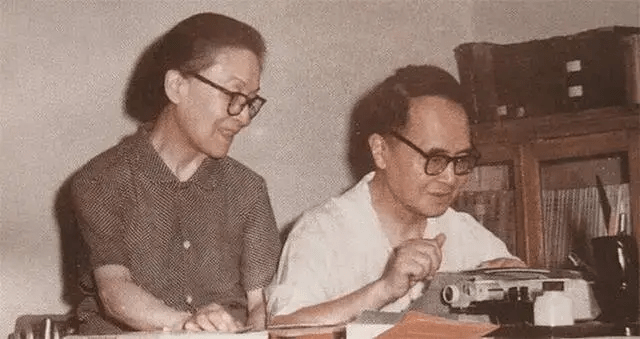
Yang Jiang and her husband Qian ZhongShu

“Simple living and a noble soul are the highest realms of life,” she once said. This was not just a belief but a guiding principle for Yang Jiang. She valued her time deeply, distancing herself from superficial socializing and instead focusing on self-cultivation. Together with her husband, Qian Zhongshu, they shared a simple, intellectual life, each respecting the other’s need for space and quiet to work. After her husband’s passing, Yang Jiang withdrew even further from the world, spending her days immersed in writing and editing.

At the age of 92, Yang Jiang published her essay collection We Three, which received widespread acclaim. Even at the age of 103, she was still active in compiling and publishing The Complete Works of Yang Jiang, a reflection of her lifelong dedication to literature.

It was her ability to remove herself from the distractions of life that allowed her to create works of such lasting value.

Her translation of the eight-volume Don Quixote, once the best-selling Chinese version, drew criticism at one point as a “negative example.” Many writers rushed to her defense, but Yang Jiang responded with characteristic humility: “I sincerely declare that I am a humble translator. I have revised my translation over and over, and still feel it’s not good enough. I hope the experts will offer their guidance.” Her modesty and openness to improvement reflect the calm confidence she carried throughout her life.

In her book Walking on the Edge of Life, she wrote, “We once yearned for the waves of fate, only to realize in the end that the most beautiful scenery in life is the inner calm and composure.” This sentence captures the essence of her wisdom. She knew that, amid the noise and complexity of the outside world, it is the peace we cultivate within that is the most precious.

Yang Jiang rarely wore makeup, preferring to show her natural face to the world. This was not just about simplicity in appearance but about a deeper confidence and acceptance of her true self. She believed that external beauty was far less important than the richness of one’s inner life. As she wisely said, “A woman’s greatest strength is not how beautifully she dresses, but the ability to make herself happy no matter what happens.”

Through her life, Yang Jiang has shown us that even in the face of life’s greatest challenges, it is possible to maintain elegance and beauty by nurturing simplicity and inner richness. Her wisdom and grace continue to inspire us to live with quiet strength, away from the distractions of the world, focused on what truly matters.

Link: https://peacelilysite.com/2024/10/03/the-art-of-graceful-living-lessons-from-yang-jiang-on-simplicity-and-inner-peace/

#YangJiang #QianZhongShu #WeThree #WalkingontheEdgeofLife #InnerPeace #Wisdom #Simplicity

The Old Boat and the Journey Within: Lessons from the Buddha on Cultivation and Liberation

During the Buddha’s lifetime, there was a time when he was teaching on the far side of a river. Eager to hear his wisdom, many monks wished to cross the river, but there was only one boat available. The boatman warned them, “My boat is very old, and with so many of you on board, it could be dangerous!” Yet, in their eagerness to reach the Buddha, the monks ignored the boatman’s caution and all climbed aboard. Reluctantly, the boatman set sail.

As they reached the middle of the river, the monks noticed water seeping into the bottom of the boat, and panic began to spread. The boatman calmly said, “I told you this boat is old, but you didn’t listen. Now, if you can’t stay calm, the boat will sink even faster.”

Upon hearing this, the monks stilled themselves and did not dare move. Thankfully, the boatman’s experience guided them safely to the other shore.

When the monks arrived and recounted the incident to the Buddha, he offered this teaching: “When you were in the boat, you feared for your safety. But in daily life, you fail to realize that danger is ever-present. Many people worry about the uncertainty of the future, yet neglect the most important thing — being mindful of the present moment. Focus on this life, this moment. Pay attention to your thoughts and purify your mind of the five poisons: greed, anger, ignorance, pride, and doubt.”

The Buddha continued, “Our bodies are like that old, leaky boat. We must reduce its burden, and the heaviest load is the weight of greed, anger, ignorance, pride, and doubt. Just like in the boat, if we don’t repair our minds and lighten our burdens, we risk sinking. Only by addressing these burdens can we safely reach the other shore.”

“Do not be preoccupied with the thought of being reborn in the Western Pure Land in your next life. Instead, focus on your present condition. Are you free from afflictions in this very moment? Do you act with an open heart? Can you humble yourself in the eyes of others? These are the true questions we must face in life.”

The contemporary Buddha H.H. Dorje Chang Buddha III  has also imparted timeless wisdom on cultivation. His Holiness teaches that true cultivation stems from the depths of your heart, from your bodhicitta — the awakened mind of compassion. Be genuinely friendly and loving to your spouse, your brothers, and your sisters. Foster harmony with your friends, act cooperatively with others, and extend care and help to all sentient beings. Apply the Four Limitless States of Mind — loving-kindness, compassion, joy, and equanimity — and cultivate bodhicitta in every action. Constantly reflect on yourself: How do you treat others with your words? With your thoughts? With your actions?

The conduct of Buddhas and great Bodhisattvas is marked by complete disregard for personal gain. When interests conflict, they give way to others, willingly taking fewer benefits or even none. You must remind yourself, “When others harm or slander me, I will not be disturbed. Even to those who harm me, I will wish them well, sincerely hoping for their happiness. Furthermore, I will take practical steps to help them, even offering financial aid — without letting them know that I am doing so.”

By living in accordance with these teachings, we become holy ones at the causal stage. Without a doubt, such cultivation leads to the perfection of wisdom and virtue. Achieving liberation and accomplishment becomes as simple as turning over one’s hand!

Link:https://peacelilysite.com/2024/09/19/the-old-boat-and-the-journey-within-lessons-from-the-buddha-on-cultivation-and-liberation/

#HHDorjeChangBuddhaIII #DorjeChangBuddhaIII #DorjeChangBuddha #ShakymuniBuddha

#WhatisCultivation #Compassion #Kindness #Liberation

People who stay joyful in their 70s and beyond usually adopt these 9 daily habits

Photo by RDNE Stock project on Pexels.com

by Lachlan Brown | July 18, 2024, from GlobalEnglishEditing

There’s a significant contrast between simply aging and aging joyfully.

This difference often boils down to habits. While some folks let the years weigh them down, others seem to dance through their 70s and beyond with a smile on their face.

Those who age joyfully are not just lucky. They adopt certain daily habits that keep them buoyant and full of life.

I’ve noticed that there are some key habits that these joyful individuals share. And, if you’re anything like me, you’ll want to know what these habits are.

Ahead are nine daily habits typically adopted by those who stay joyful in their 70s and beyond.

1) They embrace change

When it comes to aging joyfully, adaptability is key.

Those in their 70s and beyond who continue to thrive are often those who have mastered the art of embracing change.

Whether it’s technology, changing family dynamics or shifts in their physical capabilities, they don’t resist. Instead, they adapt and learn.

It’s a simple concept, but not always easy to follow. Change can be daunting. It can be uncomfortable. But it’s also inevitable.

The trick to embracing change lies in shifting your perspective. Instead of viewing change as a threat, view it as an opportunity for growth and new experiences.

The secret? Stay open-minded, stay curious and never stop learning.

This simple daily habit of embracing change can make a world of difference in your outlook on life as you age. It keeps you stimulated, engaged and, most importantly, joyful.

Photo by Andrea Piacquadio on Pexels.com

2) They practice gratitude

One thing I’ve noticed about those who stay joyful in their later years is their capacity for gratitude.

Let me share a personal example. My grandmother, in her 80s, has a daily habit of expressing gratitude. Every morning, she sits by her window with a cup of tea and lists out loud the things she’s thankful for.

Sometimes it’s big things like family and health, sometimes it’s small things like a beautiful sunrise or the sound of birds chirping. The size of the blessing doesn’t matter; what matters is the act of acknowledging it.

I’ve seen how this simple practice has shaped her perspective on life. She focuses on the positive, and this focus radiates joy.

Practicing daily gratitude, I’ve learned from her, is an accessible habit anyone can adopt to age more joyfully.

3) They stay socially active

Contrary to the popular perception of aging as a lonely process, many who remain joyful in their later years do so by maintaining a vibrant social life.

Research in the field of gerontology suggests that social interactions play a crucial role in our mental health and overall well-being as we age.

Staying socially active doesn’t necessarily mean attending grand parties or being constantly on the move. It can be as simple as regular phone calls with a friend, participating in community events, or volunteering for a cause close to your heart.

The key is to stay connected with the world around you. This not only keeps you mentally stimulated but also provides a sense of belonging and purpose, all of which contribute to a joyful mindset.

4) They keep moving

Photo by Marcus Aurelius on Pexels.com

Physical activity is another common habit among those who age joyfully.

They understand the value of keeping their bodies moving. It might be a daily walk around the neighborhood, a yoga class, or even gardening in the backyard. The type of activity doesn’t matter as much as the consistency of being active.

Staying physically active has multiple benefits. It keeps you fit, improves your mood by releasing endorphins (the ‘feel-good’ hormones), and can even enhance cognitive function.

So if you want to join the ranks of those aging joyfully, don’t underestimate the power of movement. Make it a point to stay active and your body, as well as your mind, will thank you for it.

5) They nurture their hobbies

Folks who age with joy tend to have a passion or hobby that they keep alive.

Be it painting, dancing, knitting, or even bird watching, they understand the importance of doing something that brings them genuine happiness. This isn’t about productivity or achievement; it’s about enjoyment.

Having a hobby provides a sense of purpose, keeps the mind engaged, and offers a great way to unwind and relax. It’s a personal space that brings contentment and fulfilment.

So, if there’s something you’ve always wanted to try or an old passion you’ve left behind, now might be the perfect time to pick it up again. It could become your key to aging joyfully.

6) They prioritize relationships

The golden years can be truly golden when filled with meaningful relationships. Those who age joyfully often prioritize their relationships, understanding the deep happiness and comfort that comes from loving and being loved. They make time for their family and friends, cherishing the shared laughs, stories, and even the quiet moments of companionship.

They know that life is filled with ups and downs, and having someone by your side through it all makes the journey more beautiful. These relationships provide emotional security, a sense of belonging, and help to keep loneliness at bay.

Remember, it’s not about having a large number of acquaintances but nurturing a few relationships that are close to your heart. As you age, these bonds can become your greatest source of joy.

7) They practice mindfulness

I’ve seen the power of mindfulness in action. My father, now in his late 70s, has a habit of spending a few minutes every day in quiet reflection.

This isn’t about religious beliefs or meditation practices; it’s about taking a moment to be present, to acknowledge and accept the way things are, without trying to change anything.

On particularly challenging days, he says these moments of mindfulness help him handle stress better, bring clarity to his thoughts, and cultivate a calm demeanor.

By being in the present moment, we can appreciate the beauty of life as it unfolds, even with its imperfections. This sense of acceptance and peace can be a powerful tool for staying joyful as we age.

8) They maintain a balanced diet

Food plays a critical role in our overall well-being, and this is especially true as we age. Those who age joyfully are often mindful of what they eat. They understand that a balanced diet is not just about maintaining physical health, but also about ensuring mental well-being.

They opt for nutritious foods that boost energy levels, enhance mood, and support cognitive function. This doesn’t mean they never indulge in their favorite treats; instead, they aim for a balance that serves both their health and their taste buds.

Eating right can help you feel your best and keep you energized, both of which contribute to a joyful outlook on life.

9) They keep a positive mindset

Above all, those who age joyfully understand the power of a positive mindset.They choose to focus on the good in their lives and in the world around them. They believe in the potential for happiness each new day brings, no matter what challenges it might also carry.

A positive mindset isn’t about ignoring life’s difficulties. It’s about choosing to see beyond them, to find hope and joy even in the hardest of times.

This habit, more than any other, shapes their experience of life as they age. It’s what keeps them resilient, hopeful, and most importantly, joyful.

At the heart of aging joyfully lies a fundamental choice we all have the power to make.

The choice to embrace change, to express gratitude, to stay socially and physically active. The choice to nurture hobbies, prioritize relationships, practice mindfulness, maintain a balanced diet and, above all, keep a positive mindset.

It’s these choices, these daily habits that shape our experience of life as we age. They are the threads that weave together the fabric of a joyful existence in our later years.

Link:https://peacelilysite.com/2024/07/23/people-who-stay-joyful-in-their-70s-and-beyond-usually-adopt-these-9-daily-habits/

Source: https://geediting.com/author/lachlanhackspirit-com/

The Monkey Trap: A Lesson in Letting Go

African indigenous hunters have a unique method for catching monkeys.

First, they find a hole just big enough for a monkey’s hand. They place food that monkeys like inside the hole. When a monkey passes by and sees the food, it reaches in to grab it. With its hand full of food, the monkey’s hand gets stuck in the hole. Most monkeys won’t let go of the food and instead try to pull it out from different angles.

When the hunters arrive, the monkey is still struggling and trapped, making it easy for the hunters to catch it.

Many people’s anxiety and suffering stem from holding on to too many things and being unwilling to let go, which prevents them from truly obtaining what they need.

In reality, letting go appropriately allows us to broaden our horizons, take time to adjust ourselves, and better engage in our current work.

The Young Man and the Zen Master: A Lesson in Detachment

Once upon a time, a young man visited a Zen temple to seek guidance from an old Zen master. On his way, he witnessed an interesting sight and decided to test the master. Upon arriving at the temple, he and the master chatted over tea. Suddenly, the young man asked, “What does ‘going round and round’ mean?”

“It’s because the rope hasn’t been cut,” the Zen master replied casually.

The young man was stunned and amazed. He said, “Master, I am surprised that you knew! Today, on my way here, I saw a cow tied to a tree. The cow wanted to go far to graze, but because the rope was through its nose, it kept going round and round, twisting itself without being able to break free. It was quite amusing. I thought that since you hadn’t seen it, you wouldn’t be able to answer. But you answered correctly right away.”

The Zen master laughed and said, “You asked about an event, and I answered with a principle. You asked about a cow tied by a rope and unable to break free; I answered about the mind being entangled by worldly matters and unable to find liberation. One principle can explain many situations.

“A kite, no matter how high it flies, cannot soar into the vast sky because it is tethered by a string. Similarly, what often binds us in life, preventing us from being free? A single win or loss can exhaust us; a gain or loss can cause us great anguish; an exam can keep us tossing and turning; a relationship can tie us in knots.

“For power and money, we run around in circles; for fame and desire, we are constantly entangled. Fame is a rope, desire is a rope, profit is a rope; the attachments and temptations of the world are all ropes. So the Zen master said, ‘All beings are like that cow, bound by many ropes of worries and sufferings, unable to achieve liberation throughout life and death.'”

The Wisdom of Living in the Present

A young monk once asked an old monk, “Master, what did you do when you were young?”

The master replied, “I chopped wood, fetched water, and cooked.”

The young monk asked, “And what do you do now that you’ve attained enlightenment?”

The master said, “I still fetch water, chop wood, and cook.”

The young monk, puzzled, asked, “What’s the difference? It seems like you haven’t made any progress in your entire life.”

The old monk explained, “You’re wrong. There is progress. When I was young, I would think about fetching water while chopping wood, and think about cooking while fetching water. Now that I am enlightened, when I chop wood, I chop wood; when I fetch water, I fetch water; and when I cook, I cook.”

Reflecting on myself, I often feel that I need to do something else while eating to avoid “wasting time.” So, I like to chat with others, watch TV, or think about other things while eating. No wonder I sometimes feel like “I don’t even know what I just ate.”

Enjoying the time spent eating and treating each bite with attention, I savor the sweetness of the rice, the freshness of the vegetables, and the richness of the soup. The world on my taste buds is indeed wonderful, bringing much joy to everyday life.

While walking, I now instinctively let my phone rest and focus on walking, feeling my feet propel my body, enjoying the natural comfort of the breeze, smelling the flowers, hearing the birds, and seeing the colorful flowers, green leaves, and various passersby. The scenery is infinitely beautiful, something I rarely appreciated before. Missing out and becoming numb was inevitable.

This series of practices has gradually cultivated the quality of “focus” in me. I increasingly embrace the concept of “living in the moment.” Of course, I know this is just the beginning; focus is a lifelong practice.

Link: https://peacelilysite.com/2024/05/30/the-monkey-trap-a-lesson-in-letting-go/

Source: https://gospelexpress.id/2023/01/20/%E6%9D%BE%E6%89%8B%E6%94%BE%E4%B8%8B/, http://his.newdu.com/m/view.php?aid=358718https://www.sohu.com/a/240312612_761892

When I say I’m a Buddhist

Professor Richard Gombrich, who dedicated 40 years of his life to studying Buddhism and Pali language at Oxford University, shares his understanding of Buddhism.

When I say I’m a Buddhist, it doesn’t mean I’m purer and nicer than others. But it means I have too much ignorance and mental defilement to remove. I need Buddhas’ wisdom.

When I say I’m a Buddhist, it doesn’t mean I have more wisdom than others. But it means I have been occupied by too much arrogance. I need to learn to be humble and to develop a broader perspective.

When I say I’m a Buddhist, it is not because I am better or worse than others, but because I understand all beings are equal.

When I say I’m a Buddhist, I know I only love those to my taste, but Buddha loves even people he does not like, guiding them to be full of wisdom and compassion. That’s why I choose to follow Buddha’s teachings!

When I say I’m a Buddhist, it is not with the goal of getting what’s in my interest. But for letting go of my personal clinging to all worldly desires.

When I say I am a Buddhist, it is not because I pursue a smooth life. But for the calm acceptance of impermanence, and be calm and confident like a king in any adverse circumstances.

When I say I am a Buddhist, I do not mean to manipulate others with the motivation of self-interest. But with good use of wisdom, to benefit self and others while being empathetic to all sentient beings.

When I say I am a Buddhist, it is not because I want to escape from the world and pursue nothingness. But to know everyday life is within Dharma, and to live in the present is to practice.When I say I am a Buddhist, it does not mean that my life will no longer experience setbacks.

But with the Dharma, setbacks are transformed into a cause for my growth.

When I say I am a Buddhist, my heart is filled with endless gratitude. Just thinking I was born as a human and have the ability to practice in this life, with the opportunity to meet wise teachers and hear the Buddha’s teachings, I am deeply moved by this unbelievable karmic affinity.

When I say I am a Buddhist, it is not because there is a God outside of me. But that I find the true Buddha-nature of my own heart.

Link:https://peacelilysite.com/2024/05/16/when-i-say-im-a-buddhist/

Source: https://buddhistbugs.blogspot.com/2018/07/when-i-say-im-buddhist.html

Enlightened Discourse: Exploring Love, Compassion, and Impermanence

One time, Shakyamuni Buddha and King Prasenajit engaged in a profound and comprehensive discussion about love and compassion.

“Master Gautama,” King Prasenajit began, “some people say you taught them not to love. They argue that the more you advocate for love, the more pain and sorrow there is. Though I can discern a grain of truth in this, I’ve always harbored a bit of unease about that perspective. Life without love feels devoid of meaning. Please enlighten me on this matter.”

The Buddha regarded the King with kindness and responded, “Your Majesty, that’s an insightful question, one from which many can benefit. Love, indeed, manifests in various forms, each requiring careful examination. While love is indispensable in life, it must not be rooted in lust, obsession, or prejudice. There is another form of love urgently needed in life. This entails love and compassion, or great kindness and great compassion. What people commonly perceive as love is often confined to mutual affection among family members and citizens. However, such love, tethered to notions of ‘me’ and ‘mine,’ fosters attachment and separation.”

“People primarily yearn to love those within their immediate circle—parents, spouses, children, grandchildren, relatives, and fellow citizens,” he elaborated. “However, love imbued with partiality breeds bias, leading to indifference or discrimination toward those outside one’s circle. Attachment and separation, therefore, perpetuate suffering for oneself and others.”

“The love that humanity truly craves is one rooted in love and compassion,” the Buddha emphasized. “Great kindness and compassion extend universally to all beings, transcending distinctions of ‘mine’ and ‘not mine.’ Devoid of attachment, they bring about happiness and alleviate suffering.”

“In great kindness and compassion, there lies no trace of differentiation,” he concluded. “They serve as the path to liberation from distress.”

The King bowed his head in thought. “I have a family and a country to take care of,” he said. “If I don’t love my family and my country, how can I take care of them? Please clarify this for me.”

The Buddha reassured him, saying, “Of course, you should love your family and your people, but your love can extend beyond them. Your present limited love can be transformed into an all-embracing love, and the young people of this country will become your sons and daughters. This is the true meaning of compassion.”

The King asked again, “This is something that can actually be done, especially where you live. It’s much easier. What about young people in other countries?”

The Buddha replied, “Though they are not in your country, that doesn’t stop you from thinking about the youth of other countries, just as you treat your own children. You love your people; that’s no reason why you can’t love other people.”

The King said, “But when they’re not under my jurisdiction, how can I show my love for them?”

The Buddha looked at the King and spoke, “The prosperity and security of a nation should not be gained at the expense of the weakness and turmoil of other countries. Your Majesty, lasting peace relies on the cooperation of all nations moving towards the common good. Kaushambi Salo will remain safe if you strive for it. You do not wish for your young men to perish on the battlefield; therefore, you must aid in stabilizing other nations. For genuine peace, foreign and economic policies must be guided by compassion. While you prioritize the well-being of your own people, you must also extend love and care to neighboring kingdoms such as Magadha, Gashi, Vitiha, Shakya, and Khalil.”

The King exclaimed with enthusiasm, “Wonderful! This is profound! Your words deeply resonate with me. Surely, you possess true enlightenment! I promise to ponder your teachings diligently and understand their wisdom thoroughly. However, I have a simple question for you. General love, as you mentioned, often involves separation, desire, and attachment, leading to sorrow and misery. But how can one love without desire or attachment? How can I, for example, love my children without succumbing to worry and pain?”

“In the path of enlightenment, love cannot exist without understanding,” the Buddha continued. “Love is born out of understanding. You cannot truly love someone unless you know them. Couples who are unfamiliar with each other will struggle to foster love. Similarly, parents and children who lack understanding of each other will find it challenging to cultivate love. If you desire the happiness of the one you love, you must make an effort to comprehend their concerns and aspirations. True love stems from this understanding. Conversely, if you merely seek to impose your own desires onto them, disregarding their needs, it is not genuine love but rather a desire for control and self-gratification. When everyone experiences peace, happiness, and joy, you will also come to understand these states. This is the essence of love on the path of awareness.”

The King, profoundly touched, conveyed his gratitude, stating, “I am truly grateful for the profound wisdom you have shared with me. However, I still find myself grappling with a lingering question. You assert that love rooted in attachment leads to pain and turmoil, while compassionate love brings peace and happiness. Although I perceive compassionate love as altruistic and selfless, I still harbor concerns that it may entail suffering.”

“Compassion is indeed the fruit of understanding,” the Buddha replied. “To tread the path of awareness is to bear witness to the reality of life—a reality characterized by impermanence. In everything, there exists no eternal or individual self. One day, all of this will be behind us.”

“When one comprehends the impermanence of existence, their perspective becomes tranquil and harmonious,” he continued. “The presence of impermanence does not disturb their mind and body; hence, the poignant feeling induced by compassion is unparalleled in its bitterness. Yet, the anguish of compassion serves to fortify one’s resolve.”

Moved deeply by the teachings, the King of Persia realized that no spiritual teacher or Brahmin priest had ever succeeded in opening his heart to such profound understanding. He considered the presence of the Buddha as a divine blessing bestowed upon the country. Filled with reverence, he expressed his wish to become a disciple of the Buddha.

Link:https://peacelilysite.com/2024/05/02/enlightened-discourse-exploring-love-compassion-and-impermanence/

Source: Old Path White Clouds A life story of the Buddha by Thich Nhat Hanh

Ananda and the Untouchable

A Buddhist Story of Loving Kindness

By Martin Goodson

One day Ananda, the Buddha’s assistant, approached a well to have a drink.  A woman, a member of the untouchable caste, was drawing water and Ananda asked her for some.  The woman was surprised that she had been asked to give anything to a monk as the caste laws stated that anything given by one who is considered unclean would also be unclean.  However, Ananda persisted and eventually she gave in and gave him a drink.

The woman was so moved by this experience which had never happened before that she felt a strong affection for Ananda and made up her mind to serve him.  Thus, she went to the Buddha and asked if she might be Ananda’s assistant. 

  The Buddha asked her why she wanted to do this.  She told him.  The Buddha replied that what she had fallen in love with was not Ananda but his kindness.  Also, that this kindness was present in her own heart and that if she were to cultivate it within  she would be able to serve both kings and queens.

This is a lovely story about the power of goodwill or ‘metta’ to affect the heart. The Buddha taught that the most important element of any act is the motivation behind it.  All of us are capable of ‘doing the right thing’ but this is not really enough; the motivation behind the action determines the outcome.  A common Buddhist practice is the practice of acquiring merit in order to ensure a good future re-birth.  This is akin to the old Christian view of doing good so as to go to heaven after death.  However, if I am doing good solely for the outcome to myself then the act is already flawed.  What is more it shows itself to others in time.  We all know the stereotype of the do-gooder who is so caught up in bringing about some future good that he ignores whether or not the other person requires help in this way.  The problem with trying to do good for others when in fact I am looking for something for myself is that I fail to see what it is that others really do need right now. Both self-concern and regard for others are two very different way of seeing the same situation.  

When the heart has for a moment forgotten ‘I’ and ‘my concerns’, and this does happen more often than realised, then it opens up and reflects the situation.  What is more, not only does it see clearly,  but, because it is a human heart, it responds with the warmth of humanity.  This happens, not because it wants anything, but because it is its nature to do so.  Humans have the capacity to put themselves in the other’s shoes and thus respond without intending something just for myself.  This is also reflected in Jesus Christ’s admonition to ‘Love thy neighbour as thyself’.  In other words, by forgetting myself I forget the separation from others too.  Thus, a true ‘fellow feeling’ is born and this is the root of metta and of compassion .

Link:https://peacelilysite.com/2024/04/26/ananda-and-the-untouchable/

Source: https://www.thezengateway.com/practice/ananda-and-the-untouchable

Karma cannot be Seen or Touched. Does It Really Exist?

What is karma?

Karma, in Sanskrit known as ‘karma,’ is the creator of deeds of body, speech, and mind, producing both good and evil without forgetting. It is also like the causes created by the three activities, which manifest as their results.

The force of karma leads to the consequences of suffering or happiness based on its nature, whether good or evil. Therefore, there is also the doctrine of karma and its consequences. Karma accumulated in the past is referred to as past karma; karma in the present is referred to as present karma.

The law of karma is a special instance of the law of cause and effect, according to which all our actions of body, speech and mind are causes and all our experiences are their effects. Certainly, perhaps some people might ask, “This ‘karma’ you speak of, I can neither see it nor touch it. Does it really exist?”

The law of karma explains why each individual has a unique mental disposition, a unique physical appearance and unique experiences. These are the various effects of the countless actions that each individual has performed in the past. We cannot find any two people who have created exactly the same history of actions throughout their past lives, and so we cannot find two people with identical states of mind, identical experiences or identical physical appearances. Each person has different individual karma. Some people enjoy good health while others are constantly ill. Some people are seen as very beautiful while others are seen as very ugly. Some people have a happy disposition that is easily pleased while others have a sour disposition and are rarely delighted by anything. Some people easily understand the meaning of spiritual teachings while others find them difficult and obscure.

Master Milarepa’s Story

Master Milarepa was renowned for his profound spiritual practice amidst the snowy plateaus of Tibet.

In his youth, Milarepa engaged in regrettable actions that resulted in negative karma. He resorted to sorcery, causing a house to collapse and resulting in the deaths of 35 people, including his adversaries. Additionally, he summoned hailstorms that devastated his uncle’s crops and the entire village.

There are accounts of Master Milarepa experiencing the consequences of his actions. In the later stages of spreading the Dharma for the benefit of all beings, a monk observed the reverence and admiration directed towards Venerable Milarepa by the crowd. Although outwardly respectful, the monk harbored intense jealousy and disdain, viewing the Venerable as understanding nothing and merely a hypocritical, arrogant, and conceited individual.

Once when the Venerable Milarepa fell seriously ill, this monk, pretending to be concerned, went to visit him and said:

“A great master like you who has attained enlightenment should not be so gravely ill, yet here you are sick! If there were a way to share this illness, to distribute some of it among your disciples. If there were a method to transfer it, for example, I could share some of it, but unfortunately, there seems to be no solution. What can be done?”

The Venerable smiled gently and replied, “I should not be ill by nature, but illness is beyond my control.”

The monk continued, “If only I knew the cause of your illness. I suppose no reason can be found? If it could be transferred, I would willingly take on some of it.”

The Venerable responded, “I could indeed share some of this illness with you, but you would not withstand it even for a moment. Therefore, it’s better not to transfer it.”

The monk thought to himself that perhaps the illness couldn’t be transferred, so he persisted more earnestly, saying, “Please, in any case, transfer the illness onto me!”

The Venerable then said, “Very well, but you will not bear it.”

Subsequently, the Venerable transferred the illness onto the door of the silent room, causing the door to creak and shake as if it were about to collapse. Despite this display, the monk remained skeptical, wondering if it was all an illusion, and he once again requested, “This is truly extraordinary! Please transfer it onto me.”

The Venerable agreed, warning him, “You will not endure it.”

He then withdrew the illness from the door and transferred it onto the monk. Instantly, the monk collapsed in pain, unable to move, breathe, or nearly fainting. Seeing this, the Venerable quickly withdrew the illness back, telling the monk, “I only transferred half of the illness to you.”

At that moment, the monk felt profound remorse and sincerely placed the Venerable’s feet on his forehead, tears streaming down in genuine emotion…

Thus, in the realm of karma, distinctions of wealth, poverty, status, or identity dissolve; there are only individuals confronting the unfiltered repercussions of their actions, whether virtuous or malevolent. Like an ever-present shadow, karma unfailingly trails behind, and when it matures, one experiences the consequences firsthand, feeling both its warmth and coldness.

Every action we perform leaves an imprint, or potentiality, on our very subtle mind, and each imprint eventually gives rise to its own effect. Our mind is like a field, and performing actions is like sowing seeds in that field. Virtuous actions sow seeds of future happiness and non-virtuous actions sow seeds of future suffering. These seeds remain dormant in our mind until the conditions for them to ripen occur, and then they produce their effect. In some cases, this can happen many lifetimes after the original action was performed.

The compassionate teachings of the contemporary Buddha, H.H. Dorje Chang Buddha III, instruct us to accumulate wholesome karma and avoid unwholesome karma; through practice, we can transform causes and effects. Only in this way can we allow our good karma to ripen first, keep evil deeds at bay, break free from the bondage of karmic forces, and truly escape the ocean of suffering. The supreme practice method taught by the Buddha, in “What is cultivation“, when followed diligently, brings boundless benefits.

Therefore, only through genuine repentance from the heart and earnest adherence to the teachings, can we eliminate karmic obstacles and allow the fruits of our wholesome actions to mature swiftly. Conversely, if we do not follow this path, we will only confirm the truth of the saying “We can’t take anything with us, only karma accompanies us,” and thus cycle endlessly in samsara.

Link:https://peacelilysite.com/2024/04/25/karma-cannot-be-seen-or-touched-does-it-really-exist/

#DorjeChangBuddhaIII #HHDorjeChangBuddhaIII#DorjeChangBuddha#MasterMilarepa #Buddhism #Karma #causeandeffect

The Miraculous Event Experienced Around the Buddha

Rinpoche’s Life Saved by His Holiness Dorje Chang Buddha III

By Zhaxi Zhuoma, January 20, 2006

At early year 2006, I found that my strength was leaving my body. I had tried various alternative medical treatments, but it seemed that I was loosing energy every day. When a friend gave me a thermometer, I started taking my temperature and found that my body temperature was constantly at around 95 degrees—way below normal. I just felt that my life force was leaving me and that one by one all my body functions were beginning to shut down. I had watched my elderly father die several years earlier and knew that was what happened in the death process, so I became convinced that I was about to die.

I am fortunate to be able to see the H.H.  Dorje Chang Buddha III fairly often, but he is so busy, I did not want to bother him with my problems. I figured that if this was my time to go, I would go. If not I would stay. I am 65 years old and ready. His Holiness had told me that as soon as he was finished with a particular project, he would take care of my problems. Since I have seen His Holiness help many of his disciples and how they have miraculously become well or heal after receiving the Buddha Master’s blessing, I was not too concerned. I had also seen the Buddha Master help people who were not even Buddhists go to the Western Paradise. Whether I lived or died, it would be ok. Either way I had faith in my vajra master and knew he would take care of me.

One afternoon, I could not bear to stay with the Buddha Master any longer. I simply had to go home and rest. As I was paying my respects to leave, His Holiness looked at me and stopped what He was doing and asked what was wrong. I told him how I was very, very tired and wanted to get some rest.

The Buddha Master said, “No, wait. I will help you.” His Holiness was very busy right then and in the middle of doing some very important matters, but the Buddha Master stopped and went into the next room and when He came back, His Holiness said that He would practice a particular dharma for me. What I did not know until later, because it was not translated at the time (I do not understand Chinese), was that His Holiness told the other disciples who were there, that I was in a very dangerous state. In hindsight, I should have suspected as much, since the Buddha Master was so very busy and it was His Holiness who volunteered to help me. I did not even ask. His Holiness told those present that my chakras had almost completely shut down and, if He could not reactivate them by transferring his energy to me, I might as well go home and prepare to die. They should contact my relatives to prepare for my funeral. I know the disciples had suddenly gathered around us and looked very serious, but that often happened when the Buddha Master transmitted any dharma, so I was not alarmed. The first few times the Buddha Master tried to open my chakras, nothing happened. His Holiness practiced the dharma and recited many mantras. I felt nothing. He then told the other disciples (and they told me afterwards) that He could try one more time and if that did not work I was a goner. Some of the disciples thought at first that the Buddha Master was joking, but by now they realized how serious the matter was. All this time the Buddha Master was very jolly and since I knew no better, I was not frightened. Then His Holiness did another dharma and, while reciting a secret mantra, he was able to transfer his energy to me. It was like being hit by a lightening bolt. POW! I can’t say it was painful, but it was certainly overwhelming!

His Holiness showed us how He could turn this transfer of energy on and off. I would feel the energy, then I would not. The Buddha Master had complete control over this process. It was amazing. The Buddha Master was very happy. I knew from his reaction that His Holiness had healed me. His Holiness said my chakras were now functioning and open and “That was what I have been waiting for. This is the last step you needed to receive the Dharma. Now I can teach you.” Over the past few years the Buddha Master had given me many initiations and empowerments to remove my negative karma and prepare me for receiving the esoteric dharma.

Of course I was ecstatic. I went home and slept for a very long time. I woke up feeling that my entire body had been run over by a semi. Every cell in my body ached, but I could tell my energy or life force was back. This very understandable “cell fatigue” only lasted a few days. When I remembered to take my temperature again it was back to normal. I have had extraordinary energy ever since. I normally only sleep a few hours a night and feel great! My Buddha Master is truly magnificent. The healing powers of His Holiness are amazing. The Buddha Master has attained perfection in all of the Five Vidyas and the Buddha-dharma! I am very, very grateful for the kindness and compassion of my Buddha Master. Amitabha!

Rinpoche’s Life Saved by His Holiness Dorje Chang Buddha III

Link:https://peacelilysite.com/2024/04/04/the-miraculous-event-experienced-around-the-buddha/

#DorjeChangBuddhaIII#HHDorjeChangBuddhaIII#ZhaxiZhuomaRinpoche#BuddhaDharma

A Journey into the Spiritual Realm

Have you ever stumbled upon a book that instantly captivates your attention, drawing you into its pages with an irresistible allure? That’s precisely what happened to me when I discovered the Chinese version of “The Boy Who Saw True.” From the moment I started reading, I was completely enthralled.

At the heart of this remarkable book is a young boy from England, born into privilege yet endowed with an extraordinary gift. Raised in a family where literature was cherished, he inherited his father’s passion for reading, immersing himself in books far beyond his tender years. Despite his mother’s attempts to steer him away from certain subjects, his determination to explore the literary world only grew stronger, infusing his writings with a delightful blend of wit and charm that is uniquely his own.

But what truly sets this young boy apart is his “third eye” – an innate ability to see truths hidden from ordinary sight. In his diary, he meticulously chronicles the myriad of peculiar phenomena he encounters in the spiritual realm. From envisioning himself as a monk in a secluded cave, imparting ancient Buddhist teachings to his disciples, to glimpsing his past life as a revered priest in ancient Egypt, seduced by the allure of worldly power – each revelation is as astonishing as it is profound, offering profound insights into the mysteries of human nature and the cosmic order.

Despite facing skepticism and misunderstanding from those around him, the boy’s unwavering insight into the spiritual realm remains unquestionable. His experiences, both mysterious and mesmerizing, serve as a beacon of inspiration, igniting a fervent curiosity in readers eager to unlock the secrets of the universe.

The author’s integrity shines through every page, as he never seeks to exploit his psychic abilities for personal gain. It’s this steadfast commitment to truth and authenticity that makes his diary a rare and precious gem, entrusted to the world by the esteemed editor, Mr. Cyril Scott, after the author’s passing.

What makes “The Boy Who Saw True” truly exceptional is its exploration of the spiritual realm through the innocent eyes of a child. Unlike other metaphysical books, it eschews complex theories in favor of a refreshingly simple and humorous narrative style, making it accessible to readers of all ages.

As I delved deeper into its pages, I couldn’t help but feel a profound sense of wonder and enlightenment. This book is more than just a literary masterpiece – it’s a journey of self-discovery and spiritual awakening that transcends the boundaries of time and space.

In conclusion, “The Boy Who Saw True” invites readers to embark on a transformative voyage into the unknown, where the boundaries between reality and imagination blur, and the truth reveals itself in the most unexpected of places. It’s a reminder that our lives are but a small part of a vast and wondrous universe, waiting to be explored and embraced with open hearts and minds.

Link:https://peacelilysite.com/2024/03/29/a-journey-into-the-spiritual-realm/