Have you ever stumbled upon a book that instantly captivates your attention, drawing you into its pages with an irresistible allure? That’s precisely what happened to me when I discovered the Chinese version of “The Boy Who Saw True.” From the moment I started reading, I was completely enthralled.
At the heart of this remarkable book is a young boy from England, born into privilege yet endowed with an extraordinary gift. Raised in a family where literature was cherished, he inherited his father’s passion for reading, immersing himself in books far beyond his tender years. Despite his mother’s attempts to steer him away from certain subjects, his determination to explore the literary world only grew stronger, infusing his writings with a delightful blend of wit and charm that is uniquely his own.
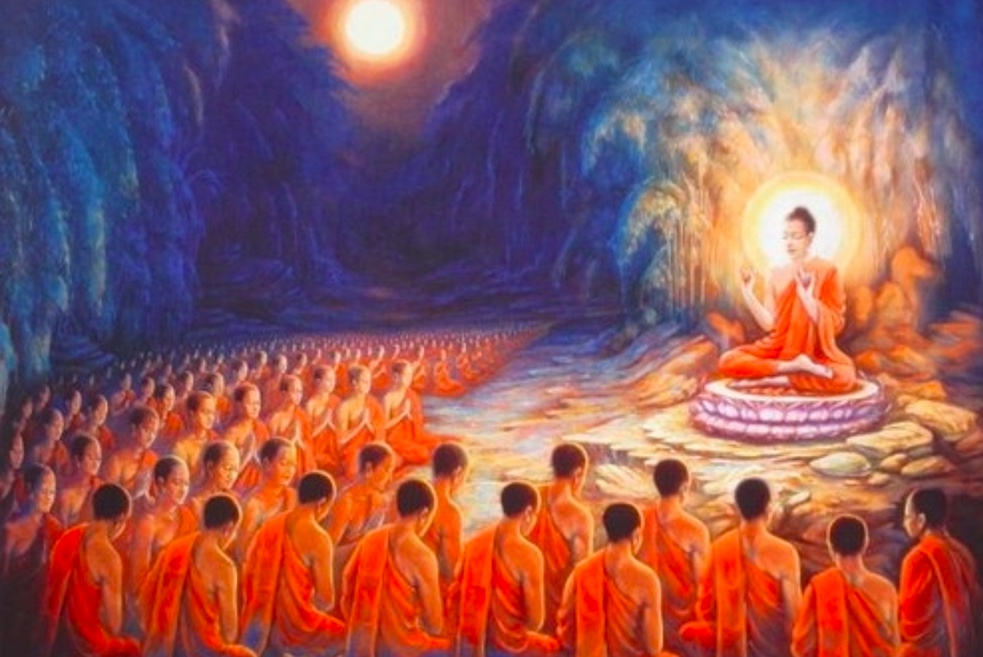
But what truly sets this young boy apart is his “third eye” – an innate ability to see truths hidden from ordinary sight. In his diary, he meticulously chronicles the myriad of peculiar phenomena he encounters in the spiritual realm. From envisioning himself as a monk in a secluded cave, imparting ancient Buddhist teachings to his disciples, to glimpsing his past life as a revered priest in ancient Egypt, seduced by the allure of worldly power – each revelation is as astonishing as it is profound, offering profound insights into the mysteries of human nature and the cosmic order.
Despite facing skepticism and misunderstanding from those around him, the boy’s unwavering insight into the spiritual realm remains unquestionable. His experiences, both mysterious and mesmerizing, serve as a beacon of inspiration, igniting a fervent curiosity in readers eager to unlock the secrets of the universe.
The author’s integrity shines through every page, as he never seeks to exploit his psychic abilities for personal gain. It’s this steadfast commitment to truth and authenticity that makes his diary a rare and precious gem, entrusted to the world by the esteemed editor, Mr. Cyril Scott, after the author’s passing.
What makes “The Boy Who Saw True” truly exceptional is its exploration of the spiritual realm through the innocent eyes of a child. Unlike other metaphysical books, it eschews complex theories in favor of a refreshingly simple and humorous narrative style, making it accessible to readers of all ages.
As I delved deeper into its pages, I couldn’t help but feel a profound sense of wonder and enlightenment. This book is more than just a literary masterpiece – it’s a journey of self-discovery and spiritual awakening that transcends the boundaries of time and space.
In conclusion, “The Boy Who Saw True” invites readers to embark on a transformative voyage into the unknown, where the boundaries between reality and imagination blur, and the truth reveals itself in the most unexpected of places. It’s a reminder that our lives are but a small part of a vast and wondrous universe, waiting to be explored and embraced with open hearts and minds.
King Ajatasattu, in order to seize the throne, murdered his own father, King Bimbisara. Afterwards, he felt constant pain and fear in his mind and body, seeking help from various physicians and religious experts but to no avail. Finally, at the urging of a monk named Jivaka, he went to seek the Buddha.
At that time, the Buddha was residing in a grove with a thousand monks. King Ajatasattu entered the assembly hall and saw a thousand monks sitting peacefully around the Buddha, not even the sound of rustling robes could be heard. King Ajatasattu had only briefly encountered the Buddha before, as he had never attended any of the Buddha’s teachings with his father. The Buddha invited them to sit down, and after bowing, the king said, “World-Honored One, I remember hearing you speak when I was young in the palace. Now I have a question for you: what practice can lead thousands of people to renounce worldly life and seek enlightenment?”
The Buddha asked if he had asked the same question to other teachers. King Ajatasattu said he had asked many different teachers, including Devadatta, but had never received a satisfactory answer. The Buddha said, “Your Majesty, tonight the Tathagata will explain to you the fruits of the true Dharma, some of which can be enjoyed in the present and some of which can be harvested in the future. You do not need to seek lofty answers; you just need to see clearly the mango you hold in your hand. Your Majesty, let me give you an analogy: a servant who obeys his master’s every command from morning till night. One day, he asks himself, ‘Why should I willingly be enslaved by my master?’ This servant decides to renounce his servitude and become a monk. He lives a life of celibacy, diligence, and mindfulness, eating only one meal a day, practicing walking and sitting meditation. His demeanor exudes peace and dignity in his actions and speech; he becomes a virtuous and respected monk. Although you know he was once a servant, when you see him now, would you say to him, ‘Come here, boy, I want you to serve me from morning till night, obeying all my orders’?”
King Ajatasattu said, “Certainly not, World-Honored One. I would never speak to him in such a manner. I would respectfully bow to him, offer him food, and ensure he receives the legal protections due to a monk.”
The Buddha said, “Your Majesty, this is the first fruit of the monk’s practice: he has liberated himself from prejudices of race, society, and class, and he has regained the dignity of being a human being.”
The Buddha continued, “Your Majesty, a person’s dignity is just the first fruit. A monk who observes the two hundred and fifty precepts can reside in a state of tranquility. Those who do not observe precepts are more prone to stray from the path; they may commit sins such as deception, intoxication, adultery, theft, or even murder. Such actions bring terrible punishments to their bodies and minds, and they may face severe penalties when caught. A monk who observes the precepts of non-killing, non-stealing, chastity, truthfulness, abstinence from intoxicants, and over two hundred other precepts finds it easier to live a psychologically freer life than ordinary people. This is another fruit that can be enjoyed in the present.
The Buddha continued, “Your Majesty, a monk possesses only three robes and an alms bowl. He never fears robbery nor needs to guard against thieves at night. He can sleep under a tree without worry. The freedom released from fear is the greatest joy. This is another fruit attained through practice. A monk’s life is very simple; although he eats only one meal a day, the food in his bowl comes from thousands of different households. He does not pursue fame or profit; he only uses what he truly needs, seeking nothing else. Dwelling in such unfettered freedom is a fruit that can be enjoyed at this moment.
King Ajatasattu said, “Truly remarkable, World-Honored One! Please continue.”
The Buddha said, “Your Majesty, if you understand how to cultivate mindfulness and contemplation of breathing, you can experience the joy of those who walk the path of practice. That is the bliss of meditation. A monk observes the six senses to overcome the five hindrances of desire, anger, delusion, sloth, and doubt. He attentively observes the breath to create joy nourishing body and mind, which helps him progress on the path to enlightenment. The pleasure derived from sensory experiences cannot compare with the joy obtained through meditation. The joy of meditation permeates body and mind, dispelling all anxieties, sorrows, and grief, allowing the practitioner to experience the true wonder of life. Your Majesty, this is one of the most important fruits of practice that can be enjoyed at this moment.”
The Buddha continued, “Your Majesty, because a monk consistently maintains mindfulness and adheres to the precepts, he can develop right concentration and insight into all phenomena. Through this insight, he sees the impermanent and selfless nature of all phenomena, thus no longer being bound by worldly affairs. He can then sever all entanglements of afflictions such as greed, anger, desire, sloth, doubt, attachment to views, speculative views, distorted views, and mistaking wrong views for right ones. After cutting off all these entanglements, the monk can attain liberation and freedom.”
“Your Majesty, liberation is true happiness and one of the greatest fruits of practice. Some of the monks sitting here tonight have already attained this fruit. Your Majesty, this is a fruit that can be realized in this very life.”
King Ajatasattu exclaimed, “Excellent, World-Honored One! I hope you can say more.”
The Buddha said, “Your Majesty, by illuminating the true nature of all phenomena, a monk knows that all phenomena are neither born nor extinguished, neither defiled nor pure, neither increasing nor decreasing, neither one nor many, neither coming nor going. With this understanding, a monk no longer discriminates; he regards all phenomena with equanimity, without hindrance. He rides the waves of birth and death to rescue sentient beings from the sea of suffering. He introduces sentient beings to the Great Way, allowing them to taste the joy of liberation. Your Majesty, helping others to break free from the maze of greed, anger, and delusion is the greatest joy. This joy extends from the present into the future as the supreme fruit of practice.
Your Majesty, in all his interactions, a monk never forgets the responsibility to guide others towards virtue and liberation. Monks do not engage in politics; they only contribute to the peace, morality, and happiness of society. The fruits of practice are not only for the benefit of monks; they are also the legacy that can be inherited by the people of the country.
The king stood up, sincerely clasping his hands together. He said, “Most Honored Teacher! World-Honored One! With your simple words, you have enlightened me, showing me the true value of the Dharma. World-Honored One, you have helped me rebuild what was shattered, revealed what was concealed. You have guided me back to the right path in my confusion, turning darkness into light. I beseech you, World-Honored One, to accept me as your disciple, just as you accepted my parents in the past.”
The king prostrated himself before the Buddha, who nodded in acceptance. He asked venerable Shariputra to teach king Ajatasattu the Three Refuges.
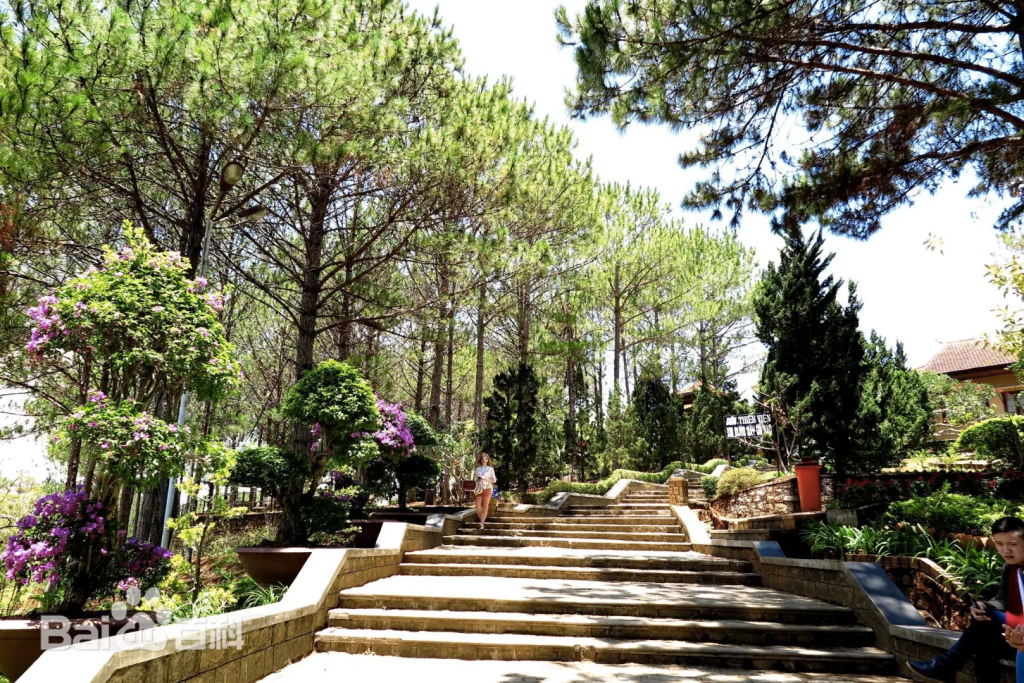
The meeting between the Buddha and King Ajatasattu was beneficial for all present, greatly alleviating the king’s mental torment. That night, he dreamt of his father smiling at him, healing all the wounds of the past. The king’s disposition completely changed, bringing infinite joy to his subjects. From then on, the king often visited the Buddha privately, no longer arriving on an elephant and without any guards. He climbed the meticulously carved stone steps up the mountain as his father had done in the past. In these conversations, King Ajatasattu confessed his innermost thoughts to the Buddha and repented for his past sins. The Buddha regarded him as his own son and advised the king to associate with virtuous people.
Painting is the artist’s pursuit of passion, and the artist’s spiritual realm and artistic insight determine the quality of the work. H.H. Dorje Chang Buddha III once said, “Every artist must tread the path of learning from the past while innovating for the future. Learning from the past embodies tradition, while innovation demands the fusion of Eastern and Western art, philosophy, aesthetics, and literature into a unified whole. This entails grasping the true essence, understanding the inner and outer spirit of the subject, navigating the transitions between the internal and external, the virtual and the real, and infusing rhythm into one’s creations. The result is a work that flows freely, exudes power, and embodies both familiarity and uniqueness. It conceals craftsmanship while remaining wild yet disciplined, possessing a distinct personality and charm. Upon reaching this stage, one can embark on the pursuit of egolessness and the true essence of emptiness and colorlessness. This journey leads to a profound, rich, elevated, and vibrant artistic realm that offers people the joy of beauty. With such mastery, Chinese painting can take a significant leap forward and ultimately stand as a world-class masterpiece.”
Let’s appreciate two masterpieces painted by H.H. Dorje Chang Buddha III and gain deep insights into innovation rooted in tradition.
Ancient Style Emergence
The landscape painting “Ancient Style Emergence” captivates viewers at first sight with its unique style and transcendent meaning. The simple and unadorned lines depict rugged cliffs, hills, forests, and cottages. Layers of ink washes render the rocks thick and the mountain mists hazy. The clustering mountains and overlapping peaks evoke the ancient charm of Yuan dynasty landscape paintings while also embodying a contemporary innocence. Beneath the moistened ink, clouds flicker and smoke swirls. The tree crowns, mountain shadows, and distant peaks are rendered in a nearly pale ink-like gray-green hue, creating a rich and deep landscape. The sunlit sides of the hills and rocks are lightly tinted with a bright ochre, resembling vermillion, which contrasts vividly with the large areas of gray-green, lending the painting a magnificent and ancient beauty.
The pristine and dust-free atmosphere depicted in the painting stands in stark contrast to the noisy scenes of the mundane world, perhaps serving as a reminder for viewers to awaken to the beauty of life.
The brushstrokes in the painting are highly calligraphic, lively, and modern, diverging significantly from traditional landscape depictions. It represents a landscape of the heart, created purely through brush and ink.
While lacking the specific forms of traditional paintings that one can wander and inhabit, it possesses a more authentic and dynamic charm of modern art, particularly evident in its abstract qualities, which resonate deeply with contemporary audiences.
This landscape painting is created by H.H. Dorje Chang Buddha III, characterized by its straightforward and lively brushwork, as well as its modern sensibility.
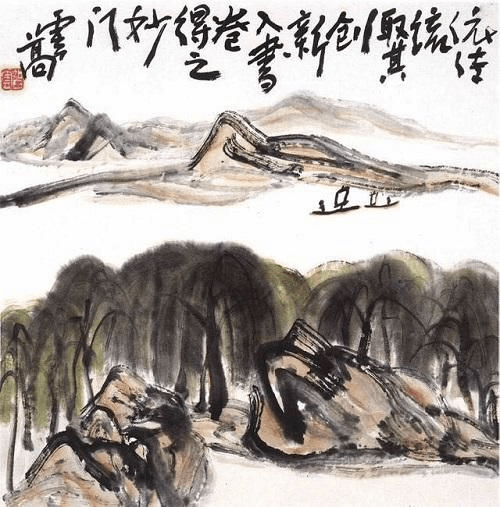
Setting Sail to the East
“Setting Sail to the East,” this painting employs thirsty brush and light ink, with free and bold strokes, abandoning the meticulousness of carving. Horizontal and vertical brushstrokes appear to be dragging mud and water, yet they possess the strength to carry a heavy weight. The brushwork is seasoned and heavy, yet balanced between reality and illusion.
In the foreground, there is a poetic dense willow forest, where two stubborn rocks seem to be “nodding” to each other, engaged in intimate conversation, perhaps narrating the endless past and future of the mundane world. In the middle ground, there are two simple small boats, leisurely passing through the river, seemingly minimalist yet imbuing the scene with a rich humanistic atmosphere. In the distance, distant mountains are depicted with dry brush and thirsty ink, subtly rendered with a watery light ochre, evoking the elegant beauty of classical Chinese paintings, reminiscent of the dry autumn wind and the moist spring rain, yet with a strong modern painting atmosphere.
This is a masterpiece of landscape painting with profound underlying themes and innovative imagery. Its lofty style, deep meaning, grand momentum, and charming spirit all stem from H.H. Dorje Chang Buddha III’s profound philosophical thoughts and masterful brushwork. The inscription on the painting reads: “Drawing on tradition for innovation, entering the wonderful realm of the written scroll.” The brushwork is arranged in a skillful and coherent manner, serving as the backbone of the painting and the soul of the entire composition.
The term “vivid charm” embodies the artistic realm of the calligrapher and painter. H.H. Dorje Chang Buddha III‘s landscape painting art transcends the ordinary and mundane, achieving a level of artistry that is beyond compare, with a spiritual realm that has become a benchmark in contemporary painting art.
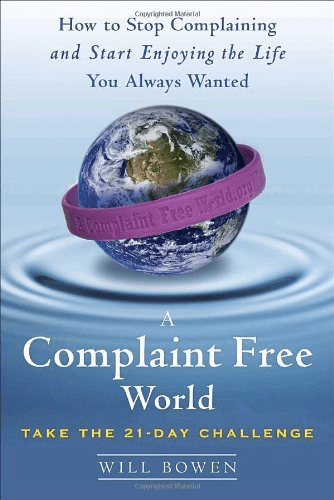
In a world often overshadowed by negativity, encountering a book that challenges us to break free from the habit of complaining is like a breath of fresh air. “The World Without Complaint” by Well Bowen offers an insightful perspective on the harmful effects of constant complaints and provides practical strategies for fostering a mindset of gratitude and positivity.
We read because we crave insight, resonance, guidance, and growth. Have you ever found yourself caught in a cycle of complaints about the world, life, family, friends, or even strangers? Today, let’s explore some notes from “The World Without Complaint.” This bestselling book has reached readers in 80 countries, urging us to consider how a single book and a simple wristband can transform us from habitual complainers into ambassadors of positivity.
The Marvel of the Wristband Have you ever participated in a lunchtime gripe session with colleagues or friends, only to find that venting seems to worsen your stress? It’s as if complaining adds fuel to the fire of our worries. The truth is, many of us are oblivious to our own negative attitudes and behaviors. While others may perceive the negativity in our speech, we often fail to recognize it ourselves. But can we change? Absolutely! By wearing the No Complaining wristband and committing to a 21-day challenge, we can become more aware of our complaints, their frequency, and ultimately, how to stop them.
The Secret to a Dream Life The tool: The No Complaining wristband (or any accessory that reminds you to stay positive, like a fitness tracker). The secret: Consistency. As you practice the 21-day challenge and swap the wristband between your hands, you’ll start paying closer attention to your words and actions. This seemingly insignificant wristband becomes a beacon, helping you identify and release negative emotions you may not have been aware of before.
How to Use the Wristband
Wear the wristband on one wrist to start your 21-day journey.
When you catch yourself complaining, criticizing, gossiping, or being sarcastic, switch the wristband to the other hand and start over. Each time you switch, you reset your 21-day journey.
Keep going.
The Key to Success
Move the wristband with each complaint.
Keep track of your progress.
Focus on your own wristband; don’t worry about others’.
Don’t outsmart yourself.
Unconscious Incompetence Complaining not only distracts us from our true desires but can also harm our health and relationships. Changing just one percent of the world’s population can create a ripple effect of positivity that uplifts everyone. Complaints never attract what we desire; instead, they reinforce what we don’t want. Our thoughts shape our lives, so let’s be fully present, steadfast, and strive to be better versions of ourselves.
Conscious Competence
Smile, breathe, take it slow. Our words have power. Changing what we say can change our lives.
Criticism and sarcasm are rarely productive. Focus on constructive feedback and encouragement.
Plant seeds of positivity in your interactions. Inspire others by embodying the change you wish to see.
Transform your mindset from one of complaint to one of gratitude. Every moment is an opportunity to create the life you desire.
Unconscious Competence
Transform your tools and methods into personal logic and theory.
The best time to plant a tree was ten years ago. The second-best time is now. Believe in your ability to change, and the solutions to all your problems will follow.
Complaining is more than just a fleeting expression of dissatisfaction; it’s a habit that can poison our minds and relationships. Continuously focusing on what’s wrong or lacking in our lives not only perpetuates a cycle of negativity but also reinforces feelings of helplessness and victimhood. Complaining can strain our relationships, as constant negativity can push others away and create a toxic environment.
Moreover, the energy we invest in complaining could be better utilized to find solutions to our problems or to appreciate the blessings we already have. Dwelling on complaints keeps us stuck in a state of discontentment, hindering personal growth and preventing us from fully embracing life’s joys.
Training Yourself to Avoid Complaints Breaking the habit of complaining requires conscious effort and dedication. Bowen’s book offers practical techniques and exercises to help readers rewire their brains and cultivate a more positive outlook. From mindfulness practices to gratitude journaling, the book provides actionable steps to shift our focus from complaints to appreciation.
One effective strategy is to practice mindfulness and become more aware of our thoughts and emotions. By recognizing the patterns of negativity that lead to complaints, we can interrupt the cycle and choose a more constructive response. Additionally, cultivating a habit of gratitude can help us reframe our perspective and find joy in even the smallest blessings.
The Benefits of Embracing Positivity Choosing not to complain has numerous benefits that extend beyond our personal well-being. By adopting a positive mindset, we become more resilient in the face of challenges and better equipped to navigate life’s ups and downs. Our relationships thrive in an environment of positivity, fostering deeper connections and mutual support.
Furthermore, a world without complaints has the potential to spark positive change on a larger scale. Imagine if just one percent of the population committed to refraining from complaints— the ripple effects would be profound. Communities would be filled with kindness and compassion, and collective efforts toward solving problems would be more effective and harmonious.
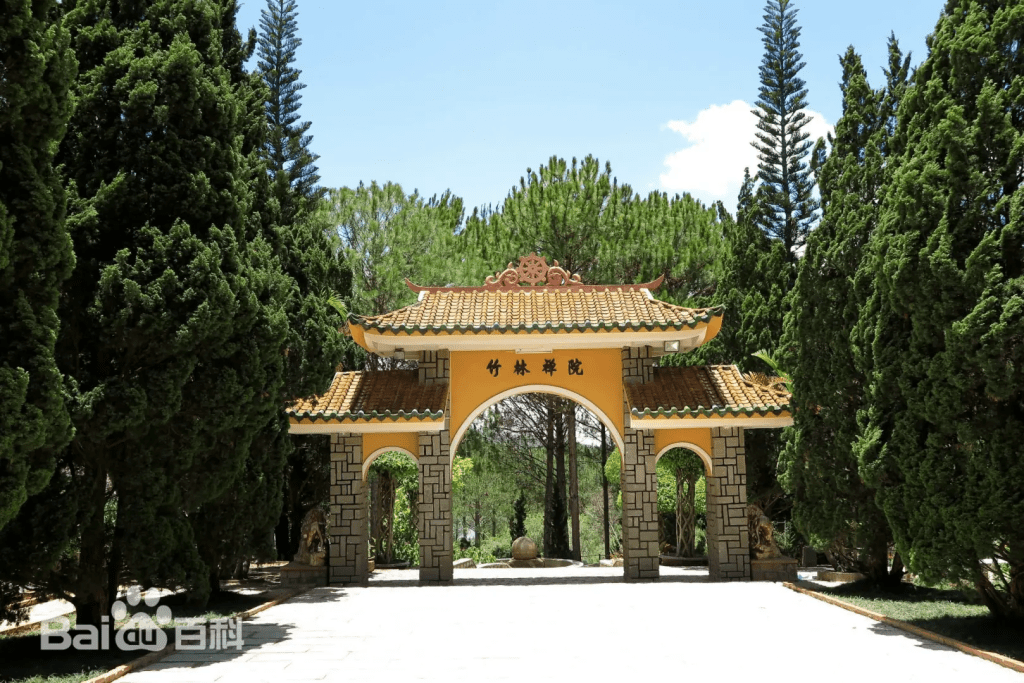
Standing on Fuyung Mountain Road in Tsuen Wan, Hong Kong, Zhulin Temple (also known as Chuk Lam Sim Yuen) proudly upholds the lineage of the Linji School of Zen Buddhism. Rooted in tradition, the temple seamlessly integrates teachings from the Tiantai and Pure Land traditions, thereby spreading the Buddha’s wisdom far and wide. Nestled within the heart of the Fragrant Harbour, it fosters a unique spiritual atmosphere known as the “Bamboo Grove Family Style,” where the Dharma is generously shared, benefiting both locals and visitors alike, serving as a haven for Buddhist study and practice.
Encompassing an expansive area exceeding 400,000 square feet, Zhulin Temple commands a serene and majestic presence, making it one of the largest and most beautiful temples in Hong Kong. Its origins trace back to 1928 when the founding master, prompted by three visionary dreams from Bodhisattva Ksitigarbha, embarked on the mission to erect a temple on Fuyung Mountain. Inspired by unwavering Bodhi resolve, six devoted followers generously donated funds to procure the land and construct the temple. Drawing inspiration from the architectural marvels of ancient Chinese mountain temples, the Pagoda Hall was completed on October 23, 1932, housing the largest statue of Ksitigarbha Bodhisattva on a lotus throne in Hong Kong. Thus, Zhulin Temple was formally inaugurated, marking the beginning of its sacred journey to illuminate sentient beings.
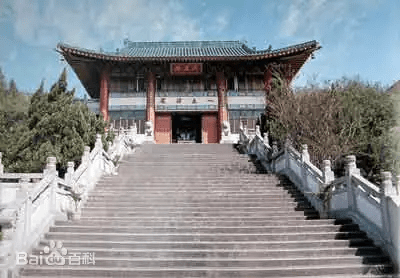
The architectural layout of Zhulin Temple embraces a harmonious three-section courtyard design. Upon crossing the mountain gate, visitors are greeted by the monastery’s serene courtyard garden, offering a space for worshippers to procure incense, candles, flowers, and fruits for offerings. Ascending the steps leads to the grand Hall of Heavenly Kings, where the jovial Maitreya Buddha stands at the central entrance, extending a warm welcome to all. Within the hall, the Four Heavenly Kings stand guard, with the central altar adorned by Bodhisattva Virūpākṣa, safeguarding the monastery under the benevolent gaze of Maitreya Buddha.
steps leads to the Grand Hall of Heavenly Kings,
Maitreya Bodhisattva
Further beyond lies a spacious courtyard flanked by a bell tower and drum tower. Ascending the stairs unveils the majestic Grand Hall, where the Triple Gem (Amitābha Buddha, Śākyamuni Buddha, and Bhaiṣajyaguru Buddha) resides on the central altar, accompanied by eighteen Arhats on either side. Adorning the rear of the Triple Gem altar is a depiction of the transformative scene from the Avalokiteśvara Sūtra, illustrating the manifestation of Avalokiteśvara Bodhisattva.
Bell Tower and Drum Tower
The Grand Hall
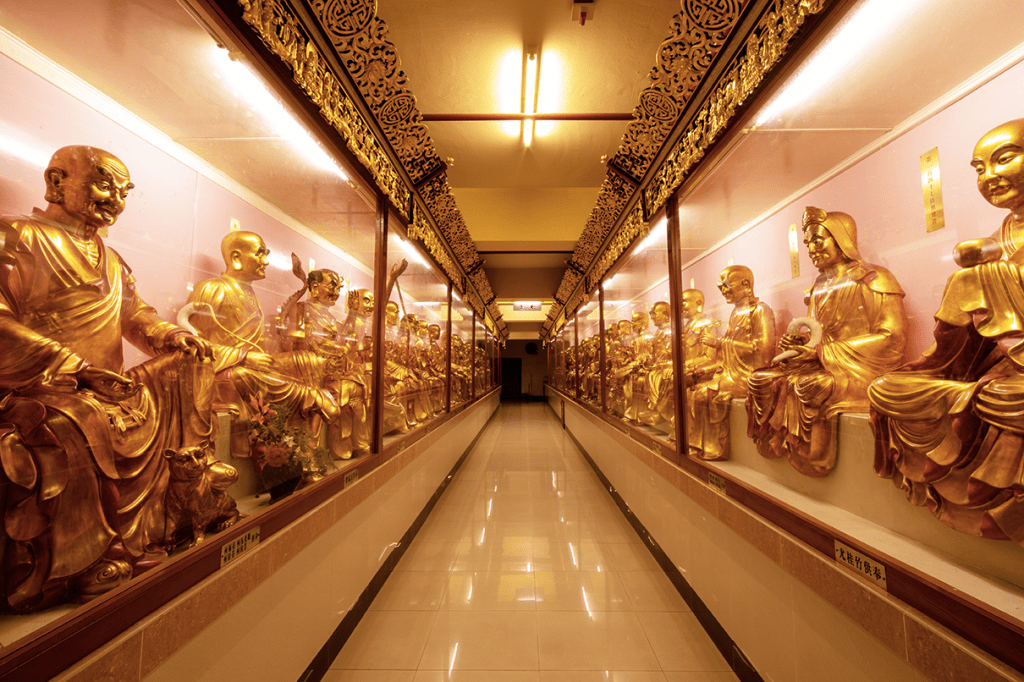
Adjacent to the main hall, worshippers find solace in a pavilion, while the Guan Yin Hall and Jade Buddha Hall flank its sides. Upstairs, the Pagoda Hall, now known as the Ksitigarbha Hall, stands adjacent to the Ancestral Hall and the Kitchen. Surrounding the monastery are additional halls including the Five Hundred Arhats Hall, the Dharma Hall, the Chan Hall, and the Scripture Repository, nestled along the outskirts and mountain slopes.
Guan Yin Hall
Ksitigarbha Hall
Five Hundred Arhats Hall
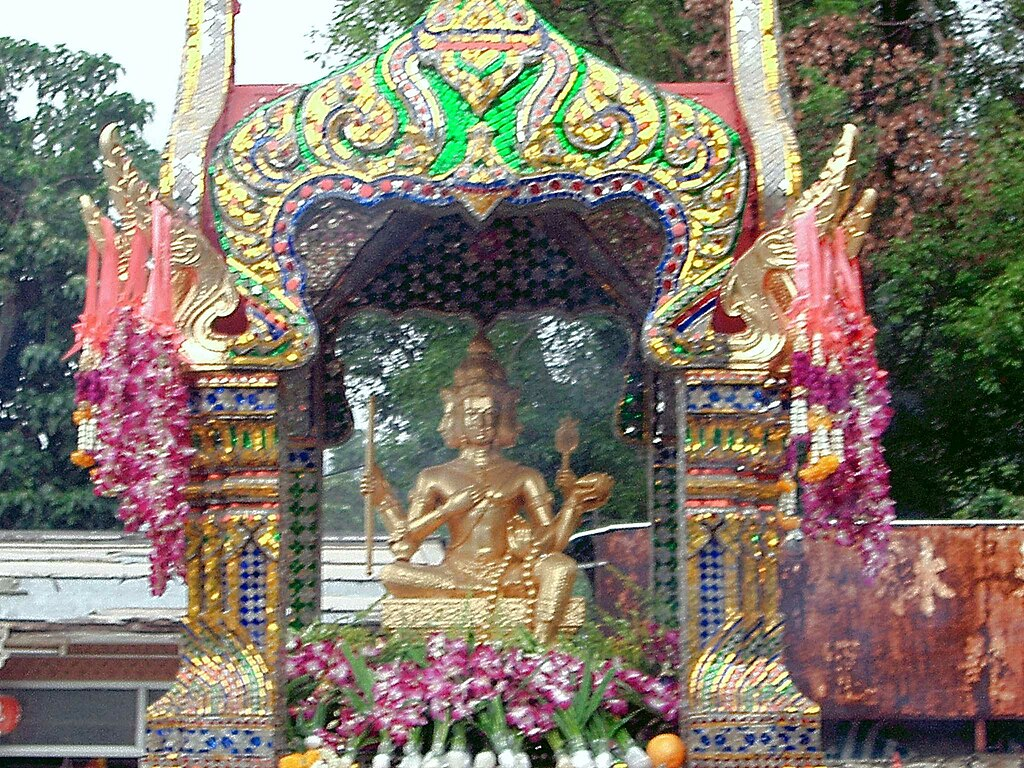
Four faced Buddha Statue 由Hkgalbert – 自己的作品,公有领域,https://commons.wikimedia.org/w/index.php?curid=9932768
Throughout its century-long history, Zhulin Temple has been overseen by five abbots. Notably, the fourth Abbot Master YiZhao emerged as an eminent monk of his time. Venerable Dharma Master Yizhao (1927-2013), born in Guangdong, China, embarked on his spiritual journey by joining Zhulin Zen Monastery in Hong Kong in 1940, formally becoming a monastic in 1941.
Under the guidance of Master Xuyun, he received the transmission of Viyana at Nanhua Temple in 1944, subsequently inheriting the Linji (Rinzai) Dharma lineage and becoming its 44th holder. Establishing the Guyan Pure Monastery in 1952, he later returned to Zhulin Temple to assist in its renovation, eventually assuming the role of abbot. He peacefully passed away in 2013, leaving behind a legacy of enlightenment and compassion.
Master YiZhao (left) and Master XuYun (right) were together at KaiYuan Temple in ChaoZhou, GuangDong , in 1946
Venerable Dharma Master Yizhao, the successor to H.E. Dharma Master Xuyun, exemplifies profound virtue within contemporary Zen Buddhism. Having attained the supreme state of Bodhi, he relinquished all ties to further reincarnation long ago. Inspired by the compassionate vow of Ksitigarbha Bodhisattva, he pledged “As long as there is any living being in the earthly realm, I vow not to become a Buddha.” Renowned as the nirmanakaya of Ksitigarbha Bodhisattva, he received the Amrit Empowerment Initiation from H.H. Dorje Chang Buddha III, lauded as an exceptional monk who ardently upholds precepts.
In June 2000, Venerable Dharma Master Yizhao seized the opportunity to participate in the Buddhas Bestowing Nectar Dharma Assembly presided over by H.H. Dorje Chang Buddha III. (The very left in the photo is Master Yizhao)
Zhulin Temple stands as a testament to beauty and sanctity, inviting visitors to immerse themselves in Buddhist culture, prayers, and blessings, offering a profound spiritual experience.
In the tranquil setting of one afternoon, Sariputra and Maudhara, the first disciples of the Shakyamuni Buddha, introduce an ascetic named Tigaro to the profound teachings of enlightenment. Little did they know that this encounter would unveil a tapestry of insights and narratives, offering timeless wisdom that transcends doctrines and narrow beliefs.
Upon meeting the Buddha, Tigaro’s skepticism manifests through his query: “What exactly is your doctrine?” His disdain for theories is palpable as he voices his disbelief. However, the Buddha, with a serene countenance, responds with an unexpected question, challenging Tigaro’s perspective: “Then you don’t believe yourself? What about those who don’t believe in any theory? Do you believe in unbeliefism?” This exchange sets the stage for an enlightening discourse on the nature of truth and belief.
With a calm and understanding demeanor, the Buddha delves into his teachings, addressing the perils of rigid doctrines. He elucidates how attachment to perceived truths stifles freedom and engenders conflict. Through poignant storytelling, exemplified by the narrative of a young widower and his son, the Buddha illustrates the consequences of attachment and false perceptions.
In the heartrending tale, a young widower cherishes his 5-year-old son deeply. However, tragedy strikes when one day the father must depart on business, leaving his son alone. Bandits ravage the village on that very day, and upon his return, the widower discovers his home burned and his son presumed dead. Overwhelmed by grief, he cremates what he believes to be his son’s remains and carries the ashes with him daily, a poignant symbol of his attachment.
A month later, the son miraculously returns, only to find his father clinging to the ashes. Despite his son’s pleas and knocking on the door, the widower, consumed by his attachment to his perceived reality, remains oblivious. In a heartbreaking moment, the son departs once more, unable to break through his father’s delusion. The narrative poignantly illustrates the impermanence of existence and the tragedy of clinging to false perceptions.
The essence of Buddha’s teachings transcends philosophical abstraction. Rooted in direct experience and empirical truth, Buddhism offers a profound understanding of oneself and the world. The Buddha invites practitioners to explore the depths of their minds, guiding them toward liberation from suffering.
The Buddha employs a metaphorical finger pointing to the moon to elucidate the nature of his teachings. He emphasizes that his teachings serve as a guide, directing attention toward ultimate truth rather than being the truth itself. This analogy underscores the importance of experiencing reality directly, beyond the confines of doctrinal interpretations.
As Tigaro seeks guidance on overcoming painful feelings, the Buddha imparts practical wisdom. He elucidates the nature of feelings and their origins, offering a pathway to transcend suffering through awareness and understanding.
In the presence of disciples such as Sariputra and Maudhara, the Buddha’s teachings resonate as a beacon of wisdom and self-discovery. The narrative serves as an invitation to embark on a journey beyond doctrines and limiting beliefs, toward a profound understanding of reality. In embracing the impermanence of existence and cultivating awareness, individuals can unlock the profound truth that lies within—an eternal truth accessible to all who seek it with an open heart.
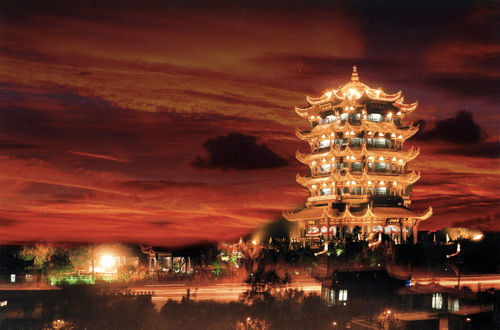
Perched majestically atop Snake Mountain, Yellow Crane Tower stands as a beacon of cultural significance in Wuhan, Hubei Province, rivaling the fame of Yueyang Tower in Hunan Province and Tengwang Pavilion in Jiangxi Province. With origins tracing back to the Three Kingdoms period in 223 A.D., this architectural marvel is more than just a sightseeing spot; it’s a testament to China’s rich history and enduring legacy.
Rising 51.4 meters into the sky, Yellow Crane Tower’s five floors house a treasure trove of murals, couplets, and cultural relics, each floor a testament to centuries of artistry and inspiration. The tower is not an isolated structure; it is surrounded by auxiliary buildings, including pagodas, memorial arches, and pavilions, which add to its grandeur and mystique.
Throughout history, Yellow Crane Tower has attracted luminaries from all walks of life, drawn by its ethereal beauty and historical resonance. Poets and writers, including the esteemed Cui Hao, have penned timeless works inspired by the tower’s allure. Cui Hao’s masterpiece, “Yellow Crane Tower,” resonates across generations, immortalizing the tower’s mystique in poetic verse.
Legend intertwines with reality in the tale of Yellow Crane Tower’s origins, where an act of kindness transforms a humble innkeeper’s life forever. The story unfolds in the ancient city of Wuhan, where a benevolent innkeeper named Old Xin encountered a shabbily dressed customer. Unperturbed by the visitor’s destitution, Mr. Xin welcomed him daily, offering him a glass of wine without expecting payment.
For six months, the mysterious customer continued to frequent the inn, accumulating a debt that Old Xin graciously overlooked. One day, the indebted visitor revealed his true identity as a magical being. He presented a drawing of a yellow crane, which came to life as he played a flute and sang. The enchanted crane danced along with the music, captivating the onlookers and turning the inn into a spectacle.
This magical partnership continued for ten years, bringing wealth and prosperity to Mr. Xin. When the mysterious customer returned one day, Old Xin, overwhelmed with gratitude, offered to support him in any way possible. However, the magical visitor had no material desires. Instead, he played a few tunes on his flute, and white clouds descended from the sky, carrying the drawing of the crane. With a graceful ascent, the customer mounted the crane and soared into the sky, leaving behind a tale imbued with traditional Chinese wisdom—kindness is a virtue that will always be repaid.
To express his gratitude and immortalize this magical encounter, Mr. Xin erected a tower on the spot and named it the “Yellow Crane Tower.”
Despite enduring centuries of upheaval and destruction, Yellow Crane Tower stands resolute, a symbol of resilience and cultural continuity. From its inception during the Three Kingdoms to its reconstruction in modern times, the tower has weathered the storms of history, emerging stronger with each passing era.
The tower’s architectural splendor is matched only by its cultural significance. Each floor tells a story, from legends of ancient cranes to the poetry of Tang Dynasty luminaries. Visitors are treated to panoramic views of the Yangtze River and Wuhan cityscape, offering a glimpse into China’s past and present.
It stands 51.4 meters (about 168 feet) high and has five floors
Around the main tower there are many other buildings, including the Sheng Xiang Pagoda and the temple gate. Each storey is decorated with traditional upturned eaves, but each one has a different style. The ground floor is a tall, wide hall. The midmost caisson ceiling stands over 10 meters high. On the front wall is a huge ceramic mural painting of a white cloud and a yellow crane. A pair of 7-meter-long inscribed tablets hang on the posts on both sides. The front wall of the second floor holds a marble inscription of Tang Dynasty poet Yan Baojin’s ‘Note on the Yellow Crane Tower’. On each side of it are mural paintings. One is ‘The Town that Sun Quan Built’. It describes the history of the Yellow Crane Tower and Wuchang town. The other is ‘Zhou Yu Made a Feast’, which tells the story of the Three Kingdoms celebrity’s visit to the tower.
With yellow upturned eaves, each floor seems to have been designed to resemble a yellow crane spreading its wings to fly.
As visitors explore Yellow Crane Tower, they encounter a journey through time and culture. Each floor is a testament to China’s literary and artistic heritage, inviting travelers to immerse themselves in centuries of tradition and innovation.
Outside the tower, bronze cranes stand sentinel, silent witnesses to the ebb and flow of history. Memorial gateways and pavilions beckon travelers to explore further, inviting them to partake in the tower’s timeless legacy.
Yellow Crane Tower is more than just a scenic spot; it’s a living testament to China’s cultural resilience and artistic ingenuity. As visitors stand atop its lofty heights, they are reminded of the enduring power of human creativity and the timeless allure of the written word.
In the heart of Wuhan, Yellow Crane Tower stands as a testament to the enduring spirit of China’s cultural heritage. Its towering presence serves as a beacon of inspiration for generations to come, inviting travelers from near and far to embark on a journey through time, tradition, and a touch of enchantment.
In the intricate tapestry of life, the tragedy often unfolds in the untimely aging of our bodies and the delayed acquisition of wisdom. The relentless pace of time is keenly felt as we advance in age, and it appears to quicken its stride. Acknowledging the finite and precious nature of life, the imperative emerges to use time judiciously, ensuring it doesn’t slip away in vain. Wisdom, a product of experience, demands the investment of time to mature.
Many traverse their youthful years without a profound understanding of life or the ability to make sound decisions. These capabilities tend to evolve slowly, sculpted by the crucible of life and work experiences. Regrettably, just as individuals amass the wisdom to navigate life effectively, the opportune moments for significant changes might have already slipped through their grasp.
To avert the arrival of wisdom too late, one must treasure time, actively seek learning and growth opportunities, and expedite wisdom acquisition through continuous learning, reflection, and introspection. Making sagacious choices early in life becomes a shield against future regrets.
The aforementioned philosophy mirrors Franklin D. Roosevelt’s contemplation and insight into life, urging individuals to proactively plan and reflect on their lives from a young age. Striving for the wisdom that typically takes years to acquire allows for the optimal utilization of limited time, resulting in a more fulfilling and meaningful life.
Persuasion: Appealing to Interests Over Reason
In the realm of persuasion, appealing to interests often outshines the use of reason alone. The driving force behind human behavior lies in the pursuit of benefits and the avoidance of harm. To sway others convincingly, it is crucial to showcase the tangible or intangible benefits they stand to gain by adopting a suggestion. This pragmatic approach surpasses relying solely on logic and rational arguments.
Rooted in fundamental psychological principles of human decision-making, individuals tend to weigh their interests and benefits when making choices. Clearly illustrating how adopting a suggestion directly or indirectly benefits them—such as saving time, reducing costs, improving health, or increasing happiness—makes the suggestion more likely to be accepted.
While rational thinking plays a pivotal role in decision-making, emotions profoundly influence human choices. Emphasizing how a suggestion meets others’ needs, desires, or alleviates their pain can evoke emotions and enhance the persuasiveness of the argument.
The call to appeal to interests doesn’t negate the importance of logic and reason in persuasion. Rather, it recognizes that addressing individuals’ interests alongside rational thinking fosters emotional resonance, increasing the likelihood of persuasive success.
Combining the demonstration of benefits with sound reasoning can comprehensively influence the audience’s decision-making process. Yet, the essence lies in the reminder that, in persuading others, emphasis should be placed on making them see the direct benefits of following the advice. Such appeals are more attractive and compelling, urging action.
Words of Wisdom: Thoughtful Speech and Lifelong Learning
“Fool’s hearts are in their mouths; wise men’s mouths are in their hearts.” This timeless advice urges against reckless or thoughtless speech, stemming from the eagerness to express ideas without due consideration. A wise person contemplates before speaking, filtering thoughts and emotions before choosing words. This not only avoids misunderstandings and conflicts but also reflects maturity and wisdom.
Thinking more and speaking less is the mantra. Caution with words prevents reckless speech. Investing in knowledge, unlike wealth, provides lasting returns. Allocating resources to personal growth and wisdom yields valuable returns. While wealth can be stolen or lost, knowledge gained through learning becomes an everlasting asset, guiding individuals to make wise decisions and achieve success.
Investing time, money, and energy in education and learning ensures acquired knowledge becomes an intrinsic part of oneself—a secure and irrevocable asset. Returns from self-improvement far exceed material wealth accumulation.
Stages of Life: Wisdom’s Evolution
At twenty, willpower dominates; at thirty, wit takes control; at forty, judgment prevails. Different life stages exhibit distinct psychological and competency characteristics. The twenties are often driven by willpower, with decisions based on impulses and passion. By thirty, adaptability and mechanisms take precedence, with accumulated experience guiding creative problem-solving. Wit becomes crucial for survival and success. By forty, decisions are grounded in mature judgment, informed by rich experiences.
Judgment becomes the key ability for this age group—guiding individuals to make rational and long-term decisions in complex environments. Mental development undergoes changes with age, and active learning and adaptation should be encouraged at every stage. Utilizing each period’s characteristics to achieve personal potential and goals is the key.
Continuous Growth: The Lifelong Pursuit
In the journey of life, successful individuals strive for daily self-improvement. Failures, on the other hand, repeat the same patterns daily. The distinction between success and failure lies in continuous self-improvement versus stagnation.
Some individuals stagnate in the early stages of life, and while physically alive, they lack true meaning and vitality. The essence of life isn’t solely in its length but in its depth and quality. Lifelong learning, continuous self-improvement, and exploration are crucial to maintaining vitality and meaning. Regardless of life stage, the pursuit of growth and change is paramount, avoiding premature spiritual death and infusing life with vibrancy and progress.
Positive Communication: The Power of Praise
“I won’t say anything negative about anyone; I’ll only speak positively about everyone I know.” Focusing on people’s strengths rather than weaknesses builds and maintains good relationships. Choosing to selectively share opinions about others, even if aware of their shortcomings, promotes a positive atmosphere.
This practice avoids hurting others’ self-esteem, reduces conflicts, and fosters a positive environment. Commending others’ strengths and achievements makes them feel respected and recognized, enhancing relationships and intimacy. Praise motivates individuals, opens their hearts, and fosters a positive and constructive attitude in interpersonal relationships.
By concentrating on others’ strengths and offering sincere praise, a harmonious social environment is cultivated, and deeper connections are formed. This approach applies not only to personal relationships but also to interactions in the workplace and public life.
Thoughtful Debate: Constructive Communication
Debating and refuting in interpersonal communication can have potential negative impacts, particularly when this behavior becomes habitual. Even if one proves their point in an argument, victories may lack substantive value, potentially sacrificing relationships. People value being respected and understood more than being persuaded or defeated.
Adopting an open and constructive attitude in communication, listening, respecting others’ viewpoints, and seeking understanding fosters healthy relationships. This approach prioritizes effective communication over the pursuit of victory in every argument.
Practical Wisdom: Testing Thoughts Through Action
Thoughts lead to actions, and actions have consequences. The true test of thoughts lies in observing the effects of the behavior they guide. Judging the value of a thought is most effectively done by observing the practical effects of the behavior it influences. Actions guided by positive thoughts, leading to personal growth and societal improvement, are considered valuable and correct.
The effectiveness of thoughts and beliefs is best evaluated by their application in real life, focusing on outcomes rather than theoretical consistency. A results-oriented approach encourages critical thinking based on actual consequences, promoting self-awareness and a practical mindset.
Navigating Contradictions: Empathy and Self-Reflection
In a world where fools and cowards coexist, Franklin’s observation highlights the contradiction in human behavior. People often find enough courage and wisdom to endure others’ misfortunes and mind others’ business. This contradiction emphasizes the need for self-improvement rather than excessive intervention in others’ lives.
“Love thy neighbor, but do not tear down your fence” underscores the importance of maintaining good social relations while respecting personal boundaries and privacy. Balancing relationships while preserving personal independence and dignity fosters both community welfare and personal growth.
Overcoming Poverty: The Power of Mindset
“Poverty itself is not frightening; what is truly frightening is the mindset that believes one is destined to be poor or bound to die poor.” The real danger lies in negative thought patterns perceiving oneself as inevitably poor. Poverty is a changeable condition, and individuals can improve their situations through effort, education, and innovation.
Rejecting the acceptance of poverty as an unchangeable fate and believing in the ability to alter life circumstances fosters optimism. Maintaining a positive mindset provides the motivation to seek change, find opportunities, and achieve personal growth and success.
Benjamin Franklin’s Timeless Wisdom
Franklin’s thoughts and quotes encompass various facets of life, offering lessons in personal growth, interpersonal relationships, professional ethics, and social responsibility. His profound insights and pragmatic philosophy remain relevant, providing guidance on how to balance personal development with social responsibility, navigate complex relationships, and approach life’s challenges with a positive attitude.
As we absorb Franklin’s wisdom, we gain not only a deeper understanding of human nature and social phenomena but also a blueprint for a more fulfilling and meaningful life. Franklin’s legacy endures as a beacon of practical wisdom, encouraging us to embrace continuous learning, cultivate positive relationships, and face life’s journey with resilience and optimism.
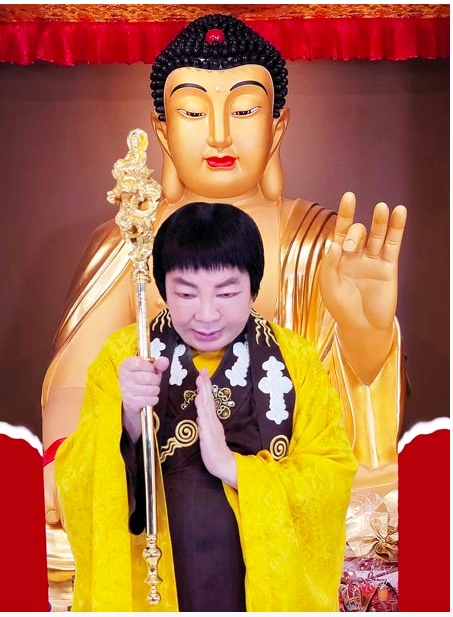
Among all Buddhas in the Dharma realm, Dorje Chang Buddha is the Primordial Buddha, the first Buddha with form, and the only Supreme Lord of Buddhism throughout the entire universe. Dorje Chang Buddha propagated Dharma throughout the universe, hence, all other Buddhas and Great Mahasattvas learned Dorje Chang Buddha’s Dharma and cultivation to attain holy state and liberation, and eventually became Buddhas and Great Bodhisattvas. Dorje Chang Buddha is the primordial ancestor of all Buddhas and Bodhisattvas. Samantabhadra, the Dharmakaya from which Dorje Chang Buddha perfectly manifested, is the Tathagata that has no form at all. The words and deeds of Dorje Chang Buddha are the compass and guiding principles of cultivation for all ordinary and holy beings in the universe.
To help Shakyamuni Buddha, Namo Dorje Chang Buddha II —Venerable Virmalakirti—applied His supreme wisdom and limitless supernormal power to edify Hinayana Arhats who then advanced themselves and eventually became Mahayana Bodhisattvas who helped living beings attain liberation. And, innumerable living beings attained liberationby learning the teachings of Venerable Virmalakirti.
After coming to the sahā world with the Buddha level enlightenment of the Primordial Sambhogakaya Buddha, His Holiness Dorje Chang Buddha III established countless number one records in the world, every one of which was for the sake of benefiting living beings. At a very young age, He saved others without any regard to His own life and was honored with the title “Young Hero.” As He grew older, His Holiness Dorje Chang Buddha III applied His inherent Healing Vidya to heal the sick, purely on a voluntary basis. More than 500 patients used to seek His help every day. His Holiness Dorje Chang Buddha III never accepted one penny from them. Plaques and pennants with words of gratitude sent by the recovered piled up in the Buddha’s house.
As His Holiness Dorje Chang Buddha III continued to benefit living beings on a larger scale, the Central Newsreels and Documentary Studio of China produced a documentary, “One Who Is Dedicated to Advance Himself,” about His life and work. The film was shown nationwide.
In 1987, the highly respected young His Holiness Dorje Chang Buddha III was named Chairman of the Chinese Painting Research Association of the National Commission of China for UNESCO. Honorary chairpersons of the Association included Liao Jingdan 廖井丹, Li Wenqing 李文清, Lü Ji 呂驥, Yuan Xiaoyuan 袁曉園, Wu Zhangshu 吳丈蜀, Qian Juntao 錢君匋, Xie Zhiliu 謝稚柳, and others. Advisors to the Association included Luo Zhanglong 羅章龍, Zhang Kejia 臧克家, and so forth.
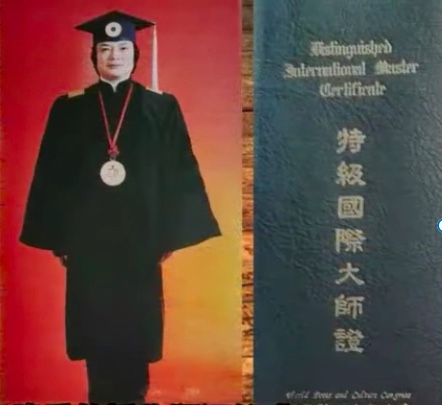
In 1992, His Holiness Dorje Chang Buddha III was accorded the “Art Maestro of the East” title. In 1994, during the fourth conference of the World Poets and Culture Congress held in Hungary, 5,612 experts and scholars unanimously voted to confer the “Preeminent Distinguished International Master” title, which was a Head of State level honor, to His Holiness Dorje Chang Buddha III.
The conferment certificate was signed by Juan Antonio Samaranch, the then President of the International Olympic Committee. In the same year, the Museum of Master Yi Yungao officially opened in Dayi 大邑, the hometown of His Holiness Dorje Chang Buddha III in Sichuan. That was the first memorial museum in China, or even in the world, being built by a government for a living person.
In 1995, when His Holiness Dorje Chang Buddha III went from Mainland China to visit Taiwan for the first time, Taiwanese people spontaneously gave His Holiness Dorje Chang Buddha III an overwhelmingly ceremonious welcome. More than 20,000 people went to the airport to greet and pay respect to His Holiness Dorje Chang Buddha III. A motorcade of more than 1,700 cars followed the lead of police motorcycles to escort His Holiness Dorje Chang Buddha III from the airport to the hotel. That became the largest welcoming event in human history. Within the short three weeks that His Holiness Dorje Chang Buddha III stayed in Taiwan, General Chiang Wei-kuo 蔣緯國, former Secretary-General of the Taiwan National Security Council, and many other high level government officials formally requested to become disciples of His Holiness Dorje Chang Buddha III. They expressed that they wanted to truly emulate the noble morality, humanistic ethics, thoughts, and deeds of His Holiness Dorje Chang Buddha III.
After His Holiness Dorje Chang Buddha III moved to the United States, His noble morality and unparalleled achievements won the love and admiration of the American people from all walks of life. In 2002, His Holiness Dorje Chang Buddha III was presented with the “Presidential Gold Medal” by the Commissioner to the President’s Advisory Commission on Asian Americans, on behalf of President Bush.
In 2003, the Organization of American States, composing of 34 countries including the United States, Canada, and Mexico,organized the Master Wan Ko Yee Yun Sculpture Exhibition in Washington D.C. at the Capitol of the United States.
The Master Wan Ko Yee Yun Sculpture Exhibition was also held at the Congressional Office Building. That was the first time the U.S. Congress held an art exhibition in their Congressional Office Building. Visitors expressed their praises in the guest book, exclaiming that the exhibition was “unprecedented,” and that the artworks were “treasures brought to the human realm by God.”
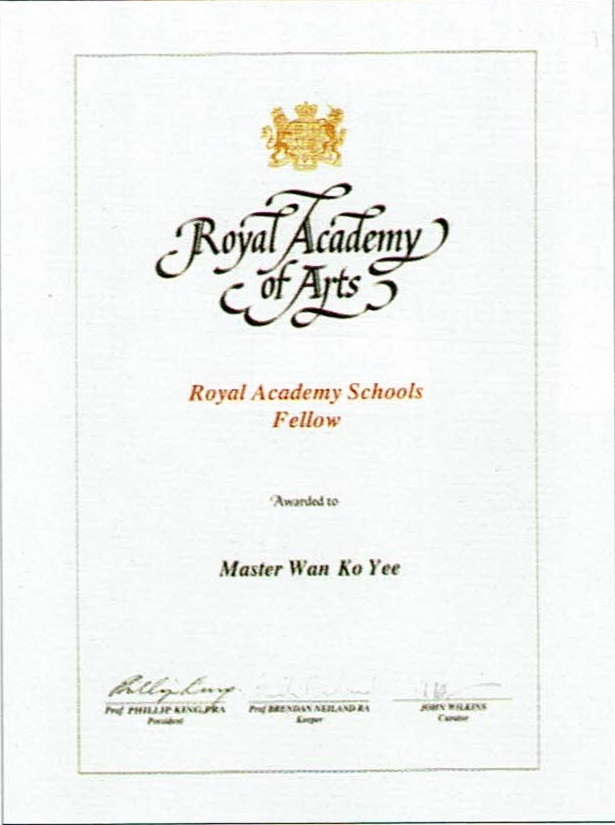
In 2004, His Holiness Dorje Chang Buddha III was named “Fellow” of the Royal Academy of Arts in the U.K.. Professor Phillip King, President of the Royal Academicians of the Royal Academy of Arts, presented the certificate to His Holiness Dorje Chang Buddha III at the British Embassy in Washington D.C., capital of the United States. The Cultural Attaché of the British Embassy personally attended the ceremony. Professor Phillip King stated that His Holiness Dorje Chang Buddha III was the first artist ever accorded this title in their renowned academy’s more than 200-year history.
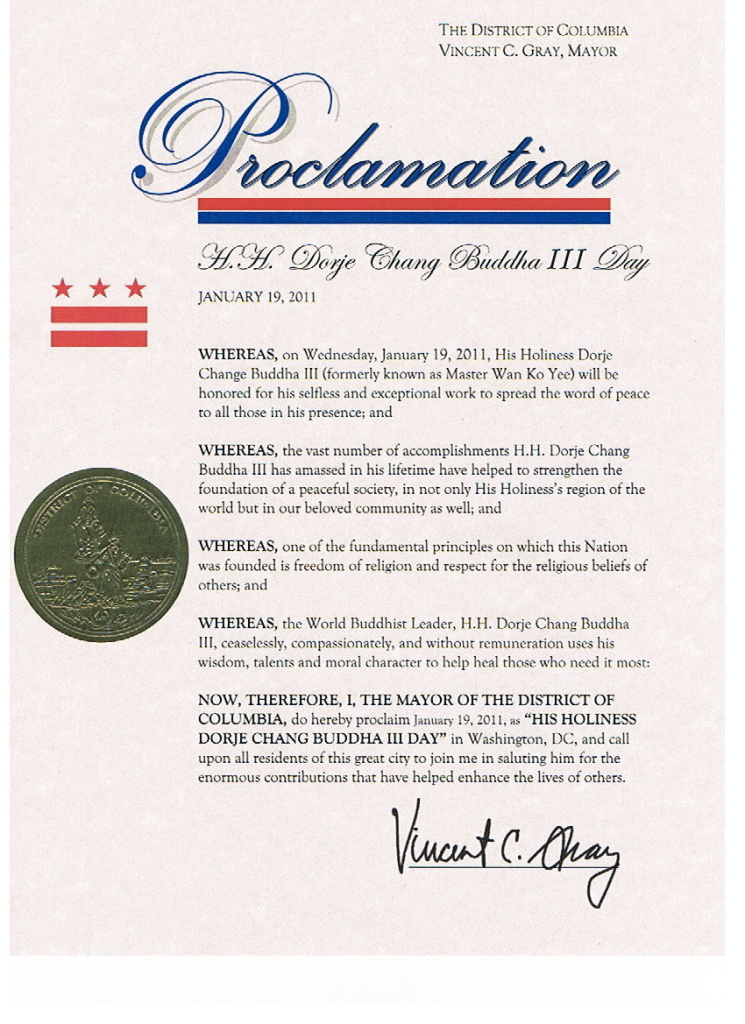
The mayor of the U.S. capital Washington D.C.pronounced January 19, 2011 as “His Holiness Dorje Chang Buddha III Day” and called on people to salute to His Holiness Dorje Chang Buddha III.
His Holiness Dorje Chang Buddha III was also accorded the “King Legacy Award for International Service & Leadership” by An International Salute to The Life and Legacy of Dr. Martin Luther King, Jr.. Dozens of great honors have also been presented to His Holiness Dorje Chang Buddha III by U.S. senators, members of the House of Representatives, governors, and governments of all levels.
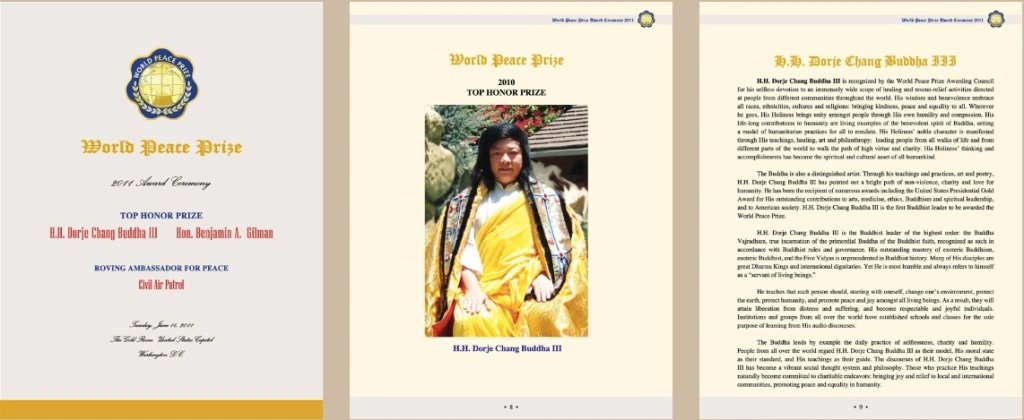
More remarkably exceptional, Namo Dorje Chang Buddha III was awarded the 2010 World Peace Prize Top Honor Prize, presented to Him at the United States Congress on June 14, 2011 at the U.S. Capitol. On occasions of the holy birthday of His Holiness Dorje Chang Buddha III, the U.S. Congress has held ceremonies to raise the national flag to celebrate, and President Trump and President Biden have sent personal congratulations.
In 2018, the World Peace Prize Awarding Council and the World Peace Prize Religious Leader Title Awarding Council resolved that His Holiness Dorje Chang Buddha III was the Pope of Buddhism of this world and decided to present the Pope of Buddhism Scepter to Him. Namo Dorje Chang Buddha III, however, did not accept the Scepter, but returned it instead. In September 2020, the World Peace Prize Awarding Council and the World Peace Prize Religious Leader Title Awarding Council made a joint resolution that solemnly stated, “The title, status, and authority of the Pope of Buddhism belong only to His Holiness Dorje Chang Buddha III and cannot be exercised by anyone else. This is a permanent and unalterable determination!” The two Councils also entrusted the World Buddhism Association Headquarters to present the Pope of Buddhism Scepter on their behalf to His Holiness Dorje Chang Buddha III.
Upon coming to this world, His Holiness Dorje Chang Buddha III immediately started teaching and saving living beings. He has always called Himself a “nameless cultivator.” His Holiness Dorje Chang Buddha III voluntarily served living beings and did not accept any offerings. One incident clearly shows how Namo Dorje Chang Buddha III taught and saved living beings selflessly. At the Heart Sutra Mandala on Xinhua West Road, Chengdu, Dharma Master Guozhang 果章法師 once recounted to some people that when he received initiation from His Holiness Dorje Chang Buddha III on Paoma Mountain 跑馬山, His Holiness the Buddha was only two and a half years old! After the identity of Namo Dorje Chang Buddha III being the true incarnation of the Primordial Buddha was formally recognized by Dharma kings, regent Dharma kings, and great rinpoches of major Buddhist sects in written congratulations and corroboration letters, His Holiness Dorje Chang Buddha III continued, as always, to teach and save living beings solely on a voluntary basis, and whole-heartedly devoted Himself to serving living beings. Whenever people made offerings to His Holiness Dorje Chang Buddha III, whether they were big or small offerings, in amounts as little as one dollar or as large as a few million US dollars, in the form of 37 acres of land in the city of San Francisco, or even a planeload or a shipload of gold, Namo Dorje Chang Buddha III categorically refused to accept. His Holiness Dorje Chang Buddha III was whole-heartedly dedicated to serving living beings voluntarily.
In the many years that His Holiness Dorje Chang Buddha III was propagating Dharma to save living beings, He imparted more than 2,000 Dharma Discourses in response to living beings’ levels and karmic conditions. Not only did His Holiness Dorje Chang Buddha III reveal the truth about humanity and the universe, He also elucidated the truths relevant to various stages of practices, from elementary to profound accomplishment levels.
Those Dharma Discourses were audio-recorded, and some of which such as What Is Cultivation 什麽叫修行, Sutra on Understanding and Realizing Definitive Truth 了義經, Imparting the Absolute Truth Through the Heart Sutra 藉心經說真諦, and Learning from Buddha 學佛, have been published into books.
In restoring Buddhist texts to their original meaning, His Holiness Dorje Chang Buddha III pointed out that the morning and evening chants used in Buddhist temples nowadays had been tampered with by the descendants of Mara, and those texts are filled with evil views and fallacies. Namo Dorje Chang Buddha III has corrected many errors made by patriarchs and translators in their interpretations of Dharma principles, and directly revealed the chaotic phenomena in Buddhism during this Dharma Ending Era. His Holiness Dorje Chang Buddha III pointed out the path that everyone who wants to attain liberation must take: That is to build our foundation on practicing cultivation. After cultivating ourselves well, we can then learn Dharma, and naturally attain liberation and accomplishment. The correct truths and Dharmas imparted by His Holiness Dorje Chang Buddha III enable listeners to develop their wisdom and good fortune, to help each other, care about each other, and be compassionate to all living beings.
In different countries, Namo Dorje Chang Buddha III has performed great Dharmas including Holy Amrita Bestowed by Buddhas 佛降甘露, Xianliang Great Perfection 現量大圓滿, Holy Fire Offering 勝義火供, Vajra Faman Determination by Holy Selection 金剛法曼擇決, Hayagrīva Raja Water Mandala Bead Divination 馬頭明王水壇珠卦, Determination by Holy Selection on the Regression or Progression on the Bodhi Path 菩提道損減增益法, Guaranteed Delivery to Buddha Land Dharma 保送法, Vajra Array 金剛陣, and Eight Wind Array 八風陣, all of which manifested authentic holy states, enabling living beings to see with their own eyes that Buddha Dharmas are scientific, have veritable power, and absolutely are not just empty talk or theory. More importantly, Namo Dorje Chang Buddha III has brought The Supreme and Unsurpassable Mahamudra of Liberation to living beings in the sahā world, showing humanity the shortcut to attaining liberation. The Supreme and Unsurpassable Mahamudra of Liberation is the highest Dharma that Dorje Chang Buddha transmitted to Amitabha Buddha as well as Buddhas and Great Bodhisattvas in the ten directions during their cultivation stage.
In The Supreme and Unsurpassable Mahamudra of Liberation, His Holiness Dorje Chang Buddha III has made the biggest and highest vow in the entire Dharma realm, “I bear all the sinful karma for living beings, I give living beings all the good karma and merit that I have planted.” Namo Dorje Chang Buddha III has actualized the greatest and holiest vow, sacrificed His life to save the lives of numerous living beings, and returned to the Sambhogakaya Buddha Land!
The unprecedented records established by Namo Dorje Chang Buddha III in this world:
Namo Dorje Chang Buddha III was, historically, the first Buddha to have received the largest, unprecedented number of status-recognition and congratulatory letters by top level great Dharma kings and rinpoches.
Namo Dorje Chang Buddha III was recognized with the highest status in history: an Ancient Buddha.
Namo Dorje Chang Buddha III is the first Ancient Buddha who manifested perfect mastery in Exoteric and Esoteric Buddhism, and perfection of the Five Vidyas. No one else has been able to accomplish the same in the past few thousand years.
Namo Dorje Chang Buddha III manifested Buddha-level wisdom in the creation of Yun Sculpture, which nobody has been able to replicate. Historically, this is the first art form that cannot be replicated.
Namo Dorje Chang Buddha III is the first Ancient Buddha throughout history who only benefited others but did not accept any offerings.
Namo Dorje Chang Buddha III is, historically, the first Ancient Buddha who manifested the most holy miracles.
Namo Dorje Chang Buddha III is, historically, the only Buddha who could offer the kind of Buddha Dharma that enables disciples to attain liberation within two hours: Xianliang Great Perfection, the quickest path to successfully enter the Buddha Land.
Namo Dorje Chang Buddha III had the largest number of disciples who attained accomplishments; for example: Dharma King Daxila of the Tsalpa Kagyu Sect attained the rainbow body; respected layperson Wang Lingze 王靈澤 and Dharma King Gar Tongstan attained freedom from death and rebirth and passed away in a sitting meditative pose; Dharma Master Puguan 普觀法師 and Elder Monk Wuming 悟明長老 attained incorruptible flesh bodies; the Elder Monk Yizhao 意昭老和尚 vowed to return to the sahā world to save living beings; and many others.
Namo Dorje Chang Buddha III has transmitted Dharma to disciples and invoked Avalokiteshvara Bodhisattva to come at a specific time to take the disciple to the Buddha Land; even non-Buddhists saw with their own eyes when the disciple Zhao Yusheng 趙玉勝 was taken away by Avalokiteshvara Bodhisattva. Some disciples, such as Hou Yushan 侯欲善 and Lin Liu Hui-Hsiu 林劉惠秀, were able to visit the World of Ultimate Bliss, then return to the human world before ascending at a specific time to the Buddha Land. The above listed are just a few examples of the numerous Buddhist disciples who followed Namo Dorje Chang Buddha III and attained liberation.
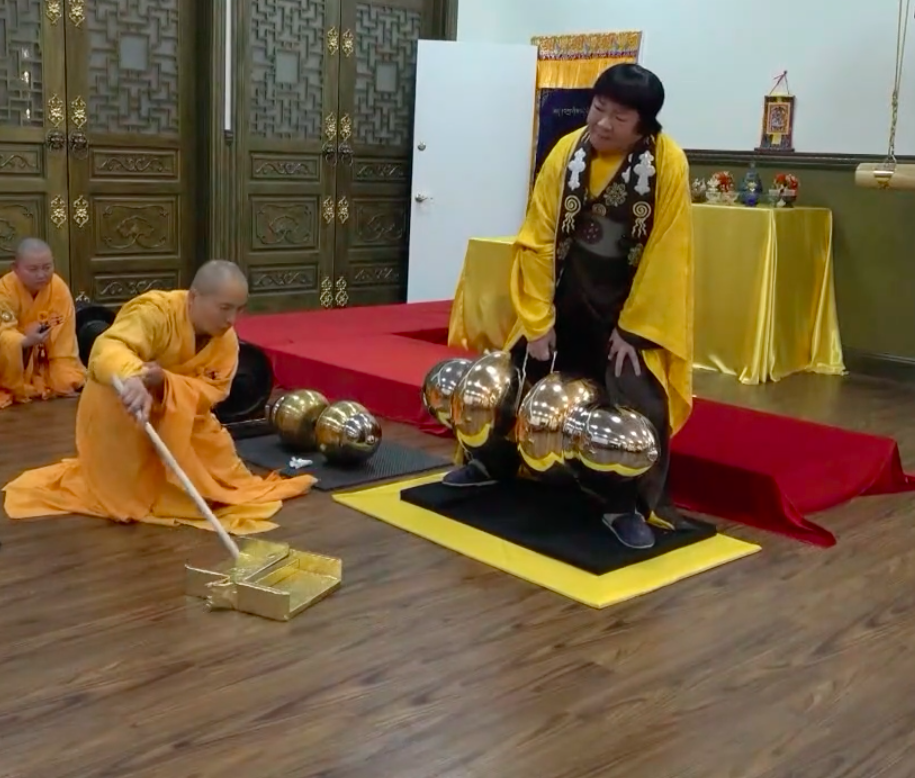
Namo Dorje Chang Buddha III possessed Buddha-level physical constitution and physical strength that are unmatched in the world. Just about a little more than a month ago, on December 23, 2021, at the Holy Miracles Temple, His Holiness Dorje Chang Buddha III lifted the Supreme Holy Vajra Pestle that weighs 437.2 pounds, by using just four fingers to hook on to the Pestle, lifted it up, and held it for more than 13 seconds, surpassing His own base weight standard by 72 levels. Taizun Poshan Waxiang 破山瓦象太尊 asserted: “In this world, from the ancient past up to now, and even before Maitreya Bodhisattva attain Buddhahood, no ordinary or holy being will be able to lift the Buddha Pestle that Namo Dorje Chang Buddha III lifted, surpassing His own base weigh standard by 72 levels!”
The morality of Namo Dorje Chang Buddha III is so noble, His accomplishments so great, and the holy miracles He performed so numerous that it is impossible for us to list them all. What was listed above was just a drop in the ocean. If we were to tell you about all the magnificent feats of His Holiness Dorje Chang Buddha III, it would take more than ten days and ten nights. The magnificent greatness of Namo Dorje Chang Buddha III is not limited to His well-respected humanistic ethics, His noble personality and morality, His erudition, His distinguished accomplishments, His selfless compassion toward humanity and all living beings, and His passion in teaching and actualizing the practice of Buddha Dharma.Through altruistic endeavors, His Holiness Dorje Chang Buddha III truthfully, sincerely, and persistently actualized the principle of compassion, and He diligently worked toward the development of world peace. Many people are moved and motivated by His Holiness Dorje Chang Buddha III. Many people in this world aspire to Namo Dorje Chang Buddha III as their model, referencing His state of morality as their standard, and using His teachings as guidance to elevate their own morality and to benefit living beings. In doing so, not only have they fulfilled happiness in their lives, but many of them have ascended to the Buddha Land, attained freedom from death and rebirth, or attained even higher states of realization and accomplishments.
More importantly, Namo Dorje Chang Buddha III pointed out a bright path for humanity to stay far away from violence, a path that leads to benevolence and loving kindness, successful endeavors, happy families, peace in humanity, and prosperity in societies. Throughout different countries and regions in the world, more and more people of different ethnicities and cultures are actively learning and following the teachings of Namo Dorje Chang Buddha III to cultivate themselves and benefit living beings. Consequently, they have greatly elevated the level of morality in society, advanced human civilization, motivating more and more people in this world to become good, kind, and ethical people, and enabling the world to become an auspicious and green planet. These are the tremendous and inexhaustible contributions that Namo Dorje Chang Buddha III has brought to all human and other sentient beings in this world, so they may increase their happiness.
Eben Alexander, a distinguished neurosurgeon, once firmly embraced the philosophy of Epicurus, believing in the finality of death and positing that there is nothing beyond our mortal existence. However, his own extraordinary encounter shattered these convictions, launching him into a profound journey that defied conventional understanding. In his compelling book, “Proof of Heaven,” Alexander shares a narrative that not only transformed his perceptions but also prompted contemplation on the very essence of existence.
As a highly esteemed figure in the medical community, Alexander boasted impeccable credentials, marked by significant contributions to neurosurgery and numerous academic accomplishments. His trajectory took an unexpected turn when he confronted bacterial meningitis caused by a rare strain of E. coli. With his neocortex, the seat of consciousness, succumbing to the illness, survival seemed improbable.
Against all odds, Alexander emerged from a seven-day coma with a surprising declaration: “All is well.” His miraculous recovery, confounding medical experts, extended beyond the physical realm. He vividly recounts a journey into a realm of ineffable beauty, profound understanding, and divine love—an experience that transcended his compromised brain function.
The title of Alexander’s book, “Proof of Heaven,” encapsulates the essence of his revelation. Through his firsthand account, supported by corroborating testimony, he challenges the notion that consciousness is solely a product of neural activity. His inexplicable recovery stands as a testament to the mysteries that lie beyond our comprehension, prompting profound reconsideration of life and death.
In the ethereal realms that Eben Alexander traversed during his coma-induced journey, he vividly described scenes of unparalleled beauty and awe. His narrative delves into luminous landscapes with vibrant colors and radiant light, transcending the limitations of earthly perception. Alexander spoke of meadows adorned with blossoms emitting melodies, a symphony of sound intertwined with vibrant hues that danced harmoniously.
Moving through this celestial expanse, Alexander encountered entities of immense love and wisdom, beings emanating a profound sense of interconnectedness and understanding. He described interactions with ethereal guides who communicated not through conventional language but through a telepathic exchange of pure emotions and intentions. These guides, he noted, possessed a divine knowledge surpassing the comprehension of the earthly mind.
Furthermore, Alexander shared experiences of traversing a vast, intricate network of interconnected realms, each layer revealing higher levels of consciousness and spiritual understanding. He conveyed encounters with deceased loved ones and souls radiating unconditional love, contributing to an overwhelming sense of peace and acceptance.
Colleagues attested to Alexander’s astonishing recovery, leaving the medical community baffled about the disease’s origin and subsequent recovery. Infectious diseases specialist Scott Wade, in an appendix, described the recovery as “truly remarkable.”
The crux of Alexander’s narrative lies in the title of his book, revealing his journey to a realm of hyper-real beauty, understanding, and divine love—a journey that occurred without the active participation of his brain. This challenges the notion that consciousness is solely a product of brain activity and provides compelling evidence for the existence of an afterlife.
In his book, Alexander also described what compelled him to return to the earthly world. He recounted seeing his son’s sad face and sincere prayer for Alexander to come back and be a father again. Alexander realized that taking care of family is a crucial responsibility on Earth.
Despite skepticism and criticism, the integrity of Alexander’s character and the veracity of his accounts remain steadfast, prompting broader questions about the limitations of empirical science in explaining transcendent phenomena.
Contemplating the implications of Alexander’s revelation compels us to ponder transformative potential across diverse fields of inquiry. What paradigm shifts would occur if the hypothesis of an afterlife were embraced within disciplines such as psychology, sociology, literature, and philosophy? How might our perceptions of reality and human experience be redefined in light of such profound revelations?
For many, Alexander’s journey offers a profound shift in perspective—a redirection of focus from the fear of death to the complexities of earthly existence. His account underscores the interconnectedness of the human experience, suggesting that the struggles and choices we face in this life hold profound significance.
Alexander’s account prompts contemplation on the relationship between the earthly realm and the divine. While he suggests that Heaven supports and holds us invisibly, it is equally plausible to consider that Heaven depends on us. Earth, with its struggles and challenges, becomes the consequential place where the battle between good and evil unfolds, shaping our choices and influencing realms beyond.
In essence, Eben Alexander’s odyssey transcends the boundaries of conventional understanding, beckoning us to explore the uncharted territories of consciousness and existence. Whether embraced as irrefutable proof or contemplated as a profound allegory, his journey serves as a catalyst for introspection, challenging us to reconsider the fundamental questions that define our humanity. As we navigate the mysteries of life and death, perhaps we are reminded that the ultimate truth lies not solely in the destination but in the journey itself.


























 Peace LiLy