How to Eat Healthy as a Vegetarian

How to Eat Healthy as a Vegetarian: A Complete Guide to Balanced Plant-Based Nutrition

Choosing a vegetarian lifestyle can be deeply meaningful — whether for health, compassion, the environment, or spiritual reasons. But simply cutting out meat does not automatically make a diet healthy. To feel energized, strong, and nourished, vegetarians need to understand how to balance nutrients, diversify foods, and support the body with wholesome meals.

This guide explains exactly how to eat healthy as a vegetarian, whether you are new to this lifestyle or wanting to improve your current eating habits.

1. Focus on Whole, Minimally Processed Foods

A healthy vegetarian diet begins with whole foods that deliver essential nutrients without excess sugar or artificial additives.

Include plenty of:

Tofu, tempeh, or other soy products

Fresh fruits

Vegetables of all colors

Whole grains (brown rice, quinoa, oats, barley)

Beans, lentils, and legumes

Nuts and seeds

Focus on Whole, Minimally Processed Foods

Whole foods provide fiber, vitamins, minerals, and plant compounds that support long-term health.

2. Prioritize Plant-Based Protein

Protein is essential for muscles, energy, hormones, and immune function. Vegetarians can easily meet their needs by mixing different protein sources throughout the day.

Healthy vegetarian proteins include:

Eggs*
(*for ovo-lacto vegetarians)

Lentils

Chickpeas

Black beans and kidney beans

Tofu and tempeh

Edamame

Greek yogurt*

Prioritize Plant-Based Protein

Combining proteins with whole grains, such as beans with brown rice, creates a complete amino acid profile.

3. Ensure Adequate Iron Intake

Vegetarians need to be mindful of iron because plant-based iron (non-heme iron) is absorbed less efficiently.

Adequate Iron Intake

Great vegetarian iron sources:

Iron-fortified cereals

Spinach, kale, and dark leafy greens

Lentils and chickpeas

Pumpkin seeds

Blackstrap molasses

Tip: Eat iron-rich foods with vitamin C (citrus, tomatoes, berries) to boost absorption naturally.

4. Don’t Forget Vitamin B12

Vitamin B12 is critical for nerve health and energy, but it is mainly found in animal products. Most vegetarians should include:

Vitamin B12

B12-fortified plant milks

Nutritional yeast with added B12

B12 supplements (if needed)

Even small deficiencies can cause fatigue, so this nutrient is important.

5. Get Enough Calcium and Vitamin D

Healthy bones require a steady supply of both.

Calcium and Vitamin D

Vegetarian sources of calcium:

Bok choy

Fortified plant milks

Tofu made with calcium sulfate

Almonds

Broccoli

Sources of vitamin D

Sources of vitamin D:

Sunshine exposure

Fortified plant milks

Supplements if recommended

6. Include Healthy Fats

Healthy fats support brain function, hormones, and skin health.

Add these into your meals:

Avocado

Nuts (walnuts, almonds, cashews)

Seeds (chia, flax, hemp)

Olive oil

These also help your body absorb fat-soluble vitamins like A, D, E, and K.

7. Build Balanced Meals

To eat healthy as a vegetarian, structure your plate for optimal nutrition:

½ vegetables (raw or cooked)

¼ plant protein (lentils, tofu, beans)

¼ whole grains (quinoa, brown rice, whole wheat pasta)

Add a portion of healthy fats on the side

This offers the perfect balance of fiber, protein, and energy.

8. Limit Highly Processed Vegetarian Foods

Limit Highly Processed Vegetarian Foods

Just because a food is “vegetarian” does not mean it’s healthy.

Limit:

  • Fake meats with long ingredient lists
  • Fried foods
  • Sugary cereals
  • Instant noodles
  • Vegetarian junk food

Choose naturally nutritious options most of the time.

9. Stay Hydrated

Vegetarians often consume more fiber, so hydration becomes even more important for digestion and energy.

Stay Hydrated

Aim for: 6–8 cups of water a day

Herbal tea or fruit-infused water as alternatives

10. Listen to Your Body

Every person’s digestive system and nutrient needs are different. Pay attention to how specific foods make you feel.

Ask yourself:

  • Does this meal give me energy?
  • Am I eating enough protein?
  • Do I feel satisfied after eating?

Mindful eating helps you adjust your diet to your body’s needs.

Eating Healthy as a Vegetarian Is Simple and Rewarding

Eating healthy as a vegetarian becomes effortless when you focus on whole foods, balanced meals, and key nutrients like protein, iron, B12, and healthy fats. With a mindful approach, a vegetarian lifestyle can provide excellent energy, vitality, and long-term wellness, while reflecting compassion and sustainability.

#VegetarianDiet #HealthyEating #PlantBased #VegetarianTips #NutritionGuide #HealthyLifestyle #MindfulEating #BalancedDiet #VegetarianMeals #Wellness
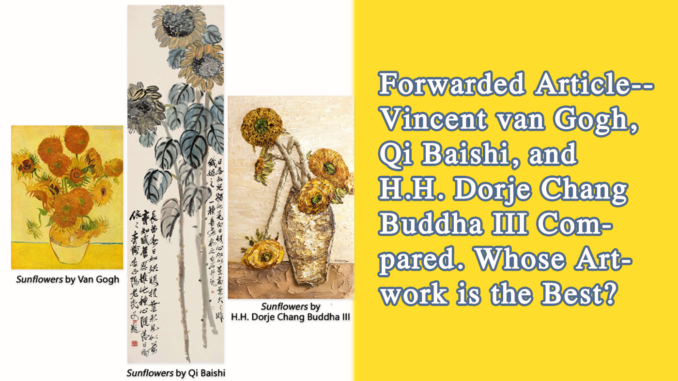
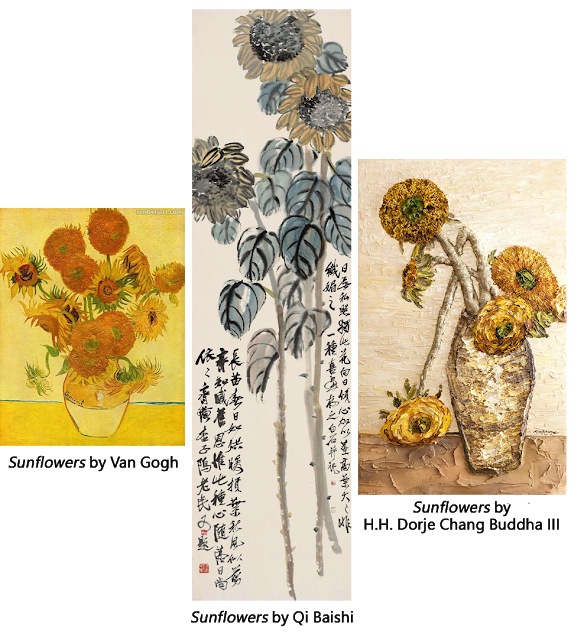
Vincent van Gogh, Qi Baishi, and H.H. Dorje Chang Buddha III Compared. Whose Artwork is the Best?

Forwarded Article-- Vincent van Gogh, Qi Baishi, and H.H. Dorje Chang Buddha III Compared. Whose Artwork is the Best?

Vincent van Gogh, Qi Baishi, and H.H. Dorje Chang Buddha III Compared. Whose Artwork is the Best?

Please see below the answer of whose work is the best amongVincent van Gogh, Qi Baishi, and H.H. Dorje Chang Buddha III

I have spent more than 60 years of my professional life in the field of painting. During the many decades of practice and experiences, I have come to know many famous painters. That is especially the case since I became the Head Consultant for authenticating paintings and calligraphy at the National Museum of China in Beijing. As an appraiser and authentication officer of paintings and calligraphy, the bulk of my work is to verify the authenticity of Eastern and Western paintings. I have reviewed tens of thousands of famous paintings, especially the rare and precious works of the maestro Vincent van Gogh of the Netherlands, and those of the champion of Eastern paintings, Qi Baishi of China.

Both Van Gogh and Qi Baishi were great world-renowned masters in art. One represented the apex of Western art and the other was a master of an extreme class in the field of Eastern paintings. Both artists had drawn from the essence of the classical traditions of their respective cultures. They created new styles of art and new ways of seeing the universe. They broke new grounds and became pioneers of new eras, each becoming a creative guru of his time, developing a distinct style of his own and leading new trends that inspired later generations. Their works reflect the different essences of the Eastern and Western traditions. To what extent can their works influence the artistic civilization of the world? What kind of artistry did they achieve that made them upright monuments in art history and admired by so many people?

Vincent van Gogh, Qi Baishi, and H.H. Dorje Chang Buddha III Compared. Whose Artwork is the Best?

Some art critics compared the works of Van Gogh and Qi Baishi to see which of them reached a higher level of accomplishment. They concluded that both have their own merit, both are undefeated champions in the art and both reached the pinnacle of artistry. Recently, some art critics also brought up the oil painting Sunflowers and the ink-wash painting Sunflowers, both created by H.H. Dorje Chang Buddha III, and gave them rave reviews. They went on to compare the works by Vincent van Gogh and Qi Baishi with the works by H.H. Dorje Chang Buddha III, trying to establish which of the three artists is the champion of the champions. The result of comparing the works by Van Gogh, Qi Baishi and H.H Dorje Chang Buddha III is tremendously inspiring.

Ever since the Renaissance, Western artists had placed emphases on rational analysis and the realist portrayal of forms. They used light, texture and details to present the realistic, three-dimensional perspective. A few centuries later, Van Gogh rejected the monotony of such use of light and shadow and the realistic portrayal of figures.  He pioneered the movement of impressionism that suited him well by applying a mix of colorful, brilliant, splendid and vigorous brushstrokes. He became a great master of his time and his name was forever etched onto the monument of Western civilization and art.

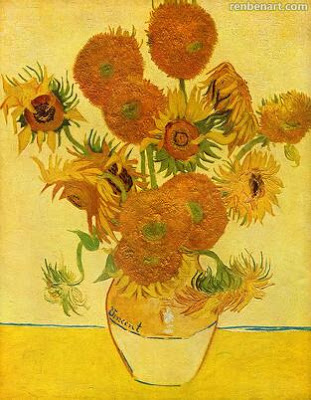
Whenever people think of Van Gogh, they think of his unique character, the sparkles in his eyes that emit lightning, his vigor and his incessant pursuit of inspiration in art without any regard to external hardships. Van Gogh was an artist by birth. He was of exceptional confidence and was somewhat neurotic. Having such traits, he pursued the art that he loved without any reservation or hesitation. He loved his works and regarded everything else with disdain. He preferred to be a loner in the world and did not care to make acquaintance of other painters of his time. His works are full of luminous colors, the brushstrokes are like rising winds and racing clouds in the sky. In his art, he depicted pasture, figures, flowers and other subject matters with brisk colors. Every brushstroke was transformed from his inner emotions. Such emotions were fully and colorfully captured in his Self-Portrait as well as in the transcendental Sunflowers that he painted. These works contain an animated spirit that is deeply moving.

From Van Gogh’s artistic spirit and intent, we can detect that he was profoundly knowledgeable about Chinese ink-wash paintings. Precisely because of this, while depicting forms and applying colors, he employed the skills of using the center tip of the brush and parallel brushstrokes. His Still Life with Bible was created with parallel brushstrokes. In his Self-Portrait, he portrayed his face filled with lines and plaques that are extraordinary. It is not hard for us to discover that he drew inspirations from the substance and essence of Chinese painting in those brushstrokes. That is why Van Gogh is such a distinguished, unparalleled artist of his time and his works are superior to those by the other Western oil painters such as Cezanne, Gauguin or Picasso of the same era.

Van Gogh’s artistic style was closely linked not only to Chinese civilization in the East, but also to the classical Renaissance art, Pointillism, German Expressionism, and Impressionism in the West. Toward the end of his life, he came into oneness with the universe and immersed himself in a carefree state of mind to “follow wherever nature might lead.” As such, he was no longer aware of his own existence. In his mind, there was only the art and the universe. “Following where the nature may lead” is the essence of the ideology of the Chinese philosopher Laozi. Van Gogh cut off his ear with a knife. He lost himself completely in painting. That was his unspoken resentment and rejection of the unfair treatment imposed on him by the society.

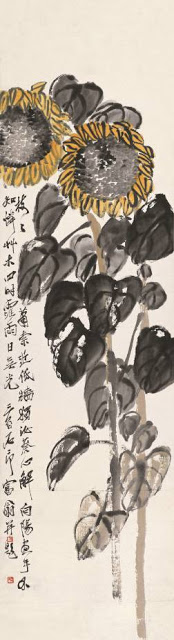
Qi Baishi was profoundly knowledgeable about impressionist, fauvist, and realist paintings. By adopting the essence of Western painting and incorporating the traditional spirit of Eastern art, he developed his unique style and became the master of Chinese painting of the twentieth century. His brushstrokes were solid and poised, evincing a sense of power that went all the way through the paper. Using sheep-hair brushes, he elicited calligraphic skills to create his paintings. Qi Baishi’s lines are bold and robust, embodying a forceful spirit that can move mountains. At the same time, these lines are flexible, sturdy and round, with similar qualities to the lines of wire-drawing. His compositions emerged naturally from the spontaneous movement of the brushes. Such compositions are accompanied by vigorous calligraphy resembling the strength, power and fluidity of stone inscriptions.

The artistic concept of spontaneously “following where nature may lead” is precisely derived from Laozi’s philosophy and the artistic civilization of the Chinese ethnicity. Qi Baishi favored the use of white space in his paintings. The white space in black-and-white Chinese ink-wash paintings is considered a solid color. Ink can be differentiated in nine shades (or five shades according to ancient Chinese text.) That is to say, the white of the paper per se and the black of the ink are all considered as colors. There is a sense of meticulous precision in the artworks by Qi Baishi. He depicted insects such as grasshoppers, mantises and butterflies in meticulous and vividly colorful ways. In some of his artworks, the artist was able to express his ideas by putting down just a few brushstrokes without any conscious intent, while arriving at a state of oblivion of his own existence.  Anything depicted by his brushes was vivid and vibrant, with the subject matter coming alive on the paper. There is an aura that moves our heart and soul. All in all, Qi Baishi’s paintings were executed with a confident brushwork that naturally achieved a kind of childlike charm.
Recently, some people compared the works by Van Gogh and Qi Baishi with the works by H.H. Dorje Chang Buddha III to see whose works are more superior and outstanding, or will have a broader and more far-reaching influence on later generations. I have viewed quite a lot of the artworks by Van Gogh, Qi Baishi and H.H. Dorje Chang Buddha III. I started the study and appreciation of the paintings by Qi Baishi under the enlightening guidance of my teacher when I was 9, and when I was 14, I began to study and appreciate the works by Van Gogh. It has since been several decades!

At the same time, since I have admired the art of H.H. Dorje Chang Buddha III for a long time, to satisfy my desire and wishes I flew from New York to San Francisco to visit the International Art Museum of America, and to Los Angeles to visit the H.H. Dorje Chang Buddha III Cultural and Art Museum in order to see their collections. I was profoundly impressed by the architecture of both museums which is grand and dignified. Both museums have a collection of the authentic works by H.H. Dorje Chang Buddha III. There are various artworks that are created with different kinds of material. Some are bold and forthright, some are charmingly meticulous and astounding. The oeuvre is not made up of just one single style.

Yet, the only artwork that was not available for viewing is the Sunflowers painted by H.H Dorje Chang Buddha III. When I hear that some art critics are comparing the works by Van Gogh and Qi Baishi with the works by H.H. Dorje Chang Buddha III, I naturally feel, from my experience of having studied the works by Van Gogh and Qi Baishi for a number of decades, that although their artistry are similar in levels, it is possible to say who is the best if we are just to compare the sunflowers painted by the three artists, when we include in the compositions, colors, brushwork, lines, vitality, spirit and so on. With all these elements in consideration, it is possible to do the comparison and conclude who painted the best, or in other words, whose works can bring the most joy and delight to people, or whose art will be most influential to the philosophy, artistic concept and entire civilization of this world.

Therefore, without any ambiguity, we concluded. In terms of character and morality, Van Gogh would be the last of the three. In terms of level of skills, Qi Baishi would also be ahead of Van Gogh, who is, however, already the cream of the crop in western civilization. Being the Buddha living in the current century, H.H. Dorje Chang Buddha III saves living beings with great loving compassion. He is not embodied in an ordinary being. Needless to say, the level of cultivation of the Buddha is superior to that of Van Gogh and Qi Baishi. In terms of creativity and painting skills, how can any ordinary being even hold a candle to the Buddha? In this way, the comparison result is immediately determined.

When those art critics carried out the detailed research of the Sunflowers by Van Gogh and Qi Baishi as well as H.H. Dorje Chang Buddha III, they copied the artworks by all three artists. After copying the works by Van Gogh and Qi Baishi, they felt deeply that through hands-on practice, they indeed gained more understanding of their works. It would not be easy but not so difficult either for one to really reach their artistic level. As for the Sunflowers by H.H. Dorje Chang Buddha III, they found it rather difficult to copy.  Even though they tried many times, they had a hard time just copying the form, let alone the spirit.

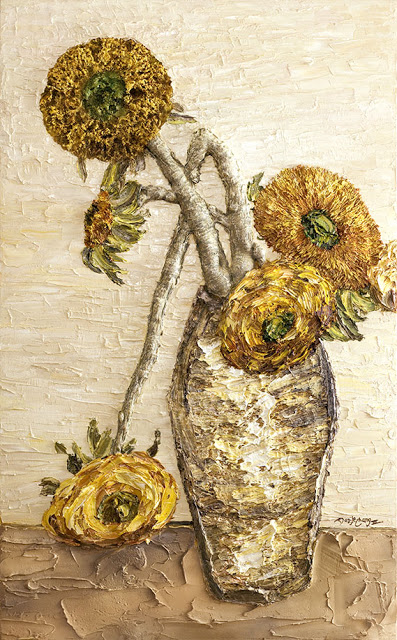
The Sunflowers by H.H. Dorje Chang Buddha III clearly show the artist’s solid foundation and prolific skills in the Eastern and Western painting traditions. They comprise the essences in both traditions and display a brushwork, sentiment and colors that are one of a kind. The color tones and brushstrokes are rich, dense, soothing and elegant. Lively brushwork paints an animated charm that is whole, evincing a miraculous and expansive spirit and aura as well as a strong vitality. As for the Sunflowers oil painting in which H.H. Dorje Chang Buddha III depicted some flowers inside a vase, the artistry is extraordinary and full of variations; the composition is simple yet abstruse. The flowers are natural and gracious, such that they give an impression of unpredictability, reaching a state of oneness with the universe and emanating a sharp animated spirit.

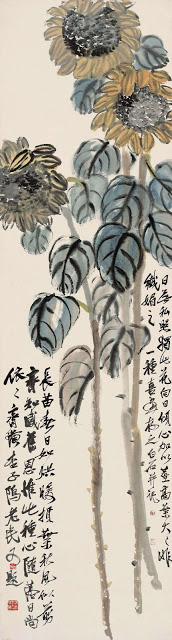
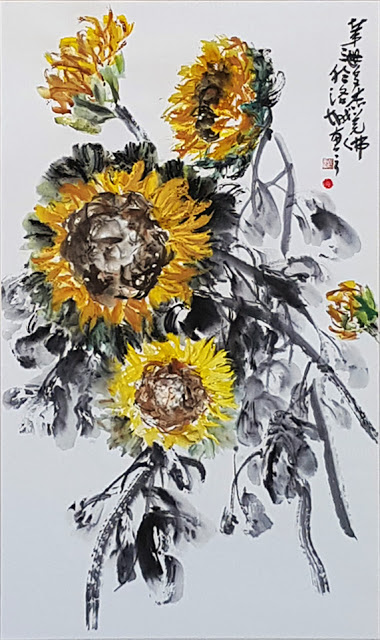
The ink-wash painting Sunflowers by H.H. Dorje Chang Buddha III has an uninhibited, natural, and spontaneous brushwork that is dense, bold, and robust, but also elegant and agile. It exhibits a charm that is like stone and bronze inscriptions. Overall, the whole painting manifests a harmonious and moving imagery, naturally emanating a lively vivaciousness and a carefree, spirited aura.

In comparing the works by Van Gogh of the Western civilization, Qi Baishi of the Eastern culture, and H.H. Dorje Chang Buddha III, we can see the artists are distinguished in their unique own ways owing to their different cultures. However, only the artist who can continue to influence the world two to three hundred years from now will be the everlasting monument.  There is a saying, “Talents emerge in every era and they all will each have 500 years of fame!”  For people of the present day, the one whose work you like the best would be the one that is the most extraordinary!

Please see the contrast of six paintings below:

Sunflowers by Van Gogh (1)
Sunflowers by Van Gogh (2)
Sunflowers by Qi Baishi (1)
Ink-wash Painting Sunflowers by H.H. Dorje Chang Buddha III
Oil Painting Sunflowers by H.H. Dorje Chang Buddha III

Jiguang Lin

October 26, 2018

Vincent van Gogh, Qi Baishi, and H.H. Dorje Chang Buddha III Compared. Whose Artwork is the Best?

Link: https://dharma-hhdorjechangbuddhaiii.org/vincent-van-gogh-qi-baishi-and-h-h-dorje-chang-buddha-iii-compared-whose-artwork-is-the-best/

#DorjeChangBuddhaIII #VincentVanGogh #QiBaishi #Art #ArtComparison #MasterArtists #ChinesePainting #WesternArt #ArtHistory #HighValueArt

Museum Celebrates Unprecedented “A Rock of Horizontal Charm” Display with Complimentary Admission

West Covina, CA (PRWEB) June 01, 2017

The H.H. Dorje Chang Buddha III Cultural and Art Museum is pleased to announce its exhibition of “A Rock of Horizontal Charm“, a masterpiece of Yun Sculpture that embodies the spirit of art in a truly dis-tinctive way. In honor of this extraordinary form of art, the museum is offering free admission to the public for a limited time.

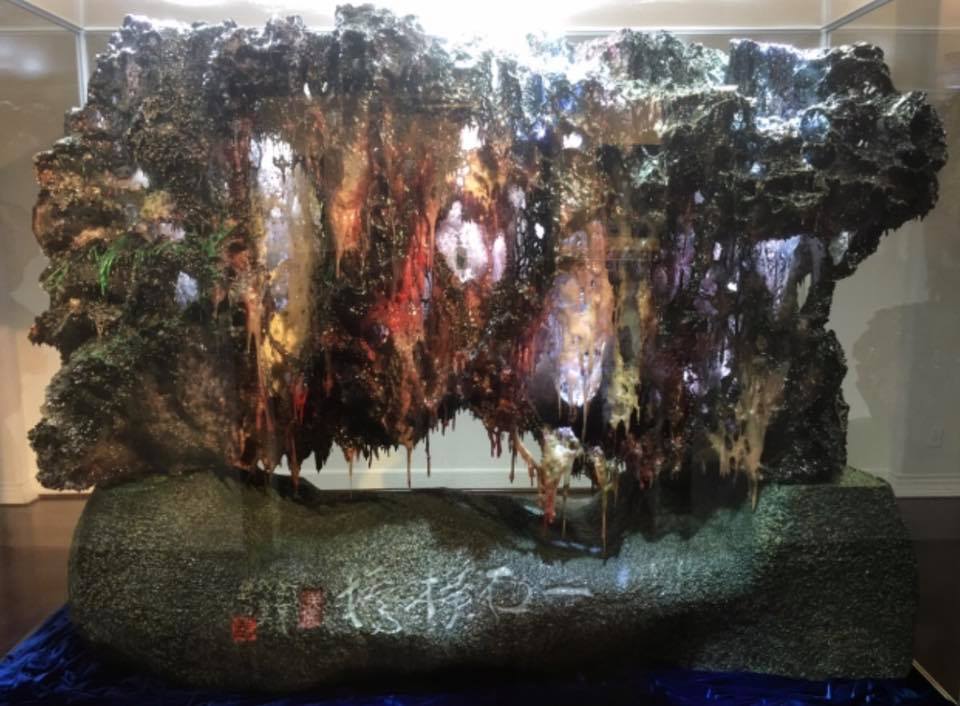
“A Rock of Horizontal Charm” was created by the world-renowned and internationally-revered highest leader of Buddhism, H. H. Dorje Chang Buddha III. The Yun Sculpture is a piece of original artwork that expresses a unique set of qualities. Various art experts and professors who have viewed the sculpture art say it has surpassed natural beauty and represents a level of perfection that extends well beyond what can be described as superb craftsmanship or inspired artistry.

The H.H. Dorje Chang Buddha III Cultural and Art Museum is exhibiting A Rock of Horizontal Charm, an unparalleled masterpiece of Yun Sculpture. For a limited time, visitors can receive free admission to the museum and witness the unsurpassed natural beauty of the superb sculpture art first hand.

When viewed from different angles, the Yun Sculpture’s colors, structure, and atmosphere change completely, inexhaustibly transforming in unpredictable ways. Furthermore, it possesses multidimen-sional spatial structures that are complex yet delicate and intricate, and exquisite to the utmost. In addi-tion, its colors—kaleidoscopic and majestic, yet mature and assured—manifest a supernatural, visionary beauty. “A Rock of Horizontal Charm“, alone, is so endlessly variegated that it provides thousands of beautiful vistas.

The astounding beauty of this amazing sculpture art goes far beyond mere words. Therefore, it is no surprise that it has distinguished itself as the “emperor” of the four great Yun Sculptures. In fact, the creation of “A Rock of Horizontal Charm“ is considered to be a miracle in human history because no craftsman in the ancient or modern world—or even high technology—has been able to devise such ex-traordinary works of divine art. Consequently, this original artwork has been designated a “peerless treasure” that cannot be replicated, and the museum has named the room in which it is being displayed, Peerless Treasure.

“Even the “He Shi Bi (the Jade Disc of He) “, recorded in history as a treasure of monumental value, does not fit the title of ‘peerless treasure,’ since it is completely replicable—and if it can be replicated, it is not unique; if it is not unique, it is not peerless,” states the museum’s website. “In fact, any master sculptor’s magnum opus can be recreated; thus, only “A Rock of Horizontal Charm“ is the true peerless treasure.”

Despite an invitation to create an identical replica Yun Sculpture for a $50 million prize, no human sculpture master or technology has successfully duplicated “A Rock of Horizontal Charm“. From this, one can see how H.H. Dorje Chang Buddha lll’s artistic level has far exceeded the summit of sculptural art in human history.

The exhibit featuring “A Rock of Horizontal Charm“ will allow visitors to experience the divine charm of H.H. Dorje Chang Buddha lll’s original artwork in person. The unreplicatable sculpture exudes an inex-plicable amalgamation of color, motion, energy and spirit. “A Rock of Horizontal Charm“ has transcend-ed the category of highest human sculptural attainment and entered into the enjoyments of a mystical world.

Located in Covina in East Los Angeles, the H.H. Dorje Chang Buddha III Cultural and Art Museum is housed in a building with a 117-year history. The structure was renovated in 2014 and transformed into the cultural and art museum that occupies the space today. Since then, the museum’s world-class, un-matched treasures have attracted a steady stream of culture and art lovers from around the globe.

The mission of the cultural and art museum is to promote the exceptional accomplishments of an Amer-ican with outstanding talent—H.H. Dorje Chang Buddha III—by displaying his achievements in culture, literature, philosophy, art, science, technology, and other fields. Visitors to the museum can learn about the noble ethics and morality of H.H. Dorje Chang Buddha III and the holy character of this magnificent, selfless Buddha who altruistically contributes to society through his vast achievements and who advances world peace as well as the happiness of people. In addition, visitors can be guided by the teachings of H.H. Dorje Chang Buddha III and model themselves after him to elevate their own moral character and benefit the public.

For more information about “A Rock of Horizontal Charm“ or the cultural and art museum, visithttp://www.hhdcb3cam.org or call (626) 281-6378.

About H.H. Dorje Chang Buddha III
H.H. Dorje Chang Buddha III has been recognized by the most highly realized practitioners of Buddhism as the third incarnation of the original Buddha, Dorje Chang Buddha. His accomplishments transcend religion, healing and art. As the first in history to manifest real accomplishments in the five vidyas, He meets the highest standard of Buddhism. He is recognized for his devotion to a wide scope of cultural and religious activities, which enrich the lives of people from communities throughout the world. His Holiness has mastered 16 unique painting styles or schools, representing an unprecedented pioneering achievement in the history of art. Additionally, He is the pioneer of a new class of artwork that cannot be duplicated by any living being: Yun Sculpture. Experts predict that His paintings and sculptures will become increasingly valuable.

For the original version on PRWeb visit: http://www.prweb.com/releases/2017/06/prweb14390138.htm 

Link: https://dharma-hhdorjechangbuddhaiii.org/museum-celebrates-unprecedented-a-rock-of-horizontal-charm-display-with-complimentary-admission/

#DorjeChangBuddhaIII #HHDorjeChangBuddhaIIICulturalandArtMuseum #YunSculpture #RockOfHorizontalCharm #Art #ArtExhibition #SpiritualSculpture #ArtMuseum #SacredArt #PeerlessTreasure

A Tiny Jar from Paris: Discovering the Magic of Fleur de Sel

One of my friends recently brought me a small jar of fleur de sel from Paris. The moment she placed it in my hands, I felt as if she had gifted me a tiny, savory treasure. The name alone sounds poetic—“flower of salt.” Inside the jar, the delicate crystals look almost like snowflakes, glistening with quiet beauty.

But what exactly is fleur de sel? How is this luxurious salt made, and how should we use it in our kitchens? I dove in to learn more, and the story behind this precious salt turned out to be even more fascinating than I imagined.

Fleur de sel is a rare, hand-harvested sea salt that forms as a fragile, paper-thin crust on the surface of shallow salt ponds. Only a tiny fraction of the season’s salt forms this way, and each flake must be skimmed off by hand. That’s why chefs adore it—and why it carries a premium price.

(Photo: Difference between fleur de sel (left) and coarse salt (right) from the salterns of Guérande)

It stands apart for several reasons:

  • Soft, delicate flakes that retain a hint of natural moisture, giving it a gentle crunch.
  • A bright, clean, oceanic flavor with subtle mineral complexity.
  • Production limited to traditional salt marshes such as Guérande and Camargue in France, Castro Marim in Portugal, and a few other artisanal regions.

Every crystal is a tiny work of nature.

The Poetic Name — And Clearing Up the Myth

The literal translation of fleur de sel is “flower of salt.” The name comes from how the crystals appear—like tiny blossoms floating on the surface of seawater.

Some people imagine the salt being collected from dew on flowers, but the “flower” is simply a lovely metaphor for the delicate form of the salt flakes.

The traditional process is slow, gentle, and deeply connected to the rhythms of nature.

  1. Seawater is channeled into shallow salt pans.
  2. Under warm sun, light winds, and the right humidity, thin crystals begin to bloom on the surface.
  3. Skilled salt harvesters—paludiers in France—skim the crystals by hand using long wooden tools to keep the flakes intact.
  4. The fragile salt is carefully dried and packed to preserve its structure.

In classic salt marshes like Guérande, daily yields may be only about a kilogram per pond. No wonder it’s considered the “caviar of sea salts.”

Because fleur de sel is unrefined and minimally processed, it contains tiny amounts of trace minerals like magnesium and calcium, which contribute to its nuanced flavor.

However, these minerals exist in very small quantities. It’s best to think of fleur de sel as a way to elevate flavor, not as a health supplement. Like all salts, it should be used in moderation—just with a lot more joy.

How to Spot Good Fleur de Sel

  • Check the origin. Guérande is the most famous and most protected.
  • Look at the texture. The flakes should be delicate and slightly moist—not powdery.
  • Be aware of price. Very cheap fleur de sel is often not genuine.

How to Use Fleur de Sel — Tips from Chefs

Fleur de sel is a finishing salt. Heat will dissolve its texture, so it’s meant to be added at the very end.

Here are some delicious ways to use it:

Classic uses

  • Seared steak: Sprinkle over sliced steak for a gentle crunch and bright pop of flavor.
  • Roasted vegetables: A final pinch on asparagus, beets, or potatoes is transformative.
  • Chocolate & caramel: Fleur de sel + dark chocolate = pure joy.
  • Fresh tomatoes or salads: Add just before serving to highlight freshness.
  • Bread and olive oil: Scatter a few flakes on warm bread or stir into good olive oil.

Pro tips

  • Use it sparingly—a little goes a long way.
  • Never cook it into a dish; always add right before serving.
  • Store in a small glass or porcelain container to preserve its texture and smell.

Fleur de sel is especially lovely with:

  • Steak and grilled meats
  • Oysters, scallops, and simple grilled fish
  • Dark chocolate, brownies, ganache, caramels
  • Roasted root vegetables or leafy greens

Think of it as a tiny spotlight that brings out the best in each ingredient.

To me, this little jar from Paris is more than seasoning—it’s a reminder to pause and taste life with intention. Here are two simple ways I enjoyed it right away:

Sprinkled a tiny pinch of fleur de sel on top of a simple steak. That soft crunch and bright lift of flavor felt like a chef’s touch at home.

A square of dark chocolate topped with just three or four crystals created the most heavenly sweet-salty contrast.

Fleur de sel isn’t about using more salt—it’s about using better salt. It’s a finishing touch that invites you to slow down, savor, and appreciate the beauty hidden in small details… even in something as simple as a pinch of salt from a friend.

If you have a jar tucked away, open it. Let those tiny flakes make an ordinary meal sing.

Link:https://peacelilysite.com/2025/11/28/a-tiny-jar-from-paris-discovering-the-magic-of-fleur-de-sel/

Source: https://en.wikipedia.org/wiki/Fleur_de_sel

Attended Meditation Retreat-Benevolence Temple, Las Vegas

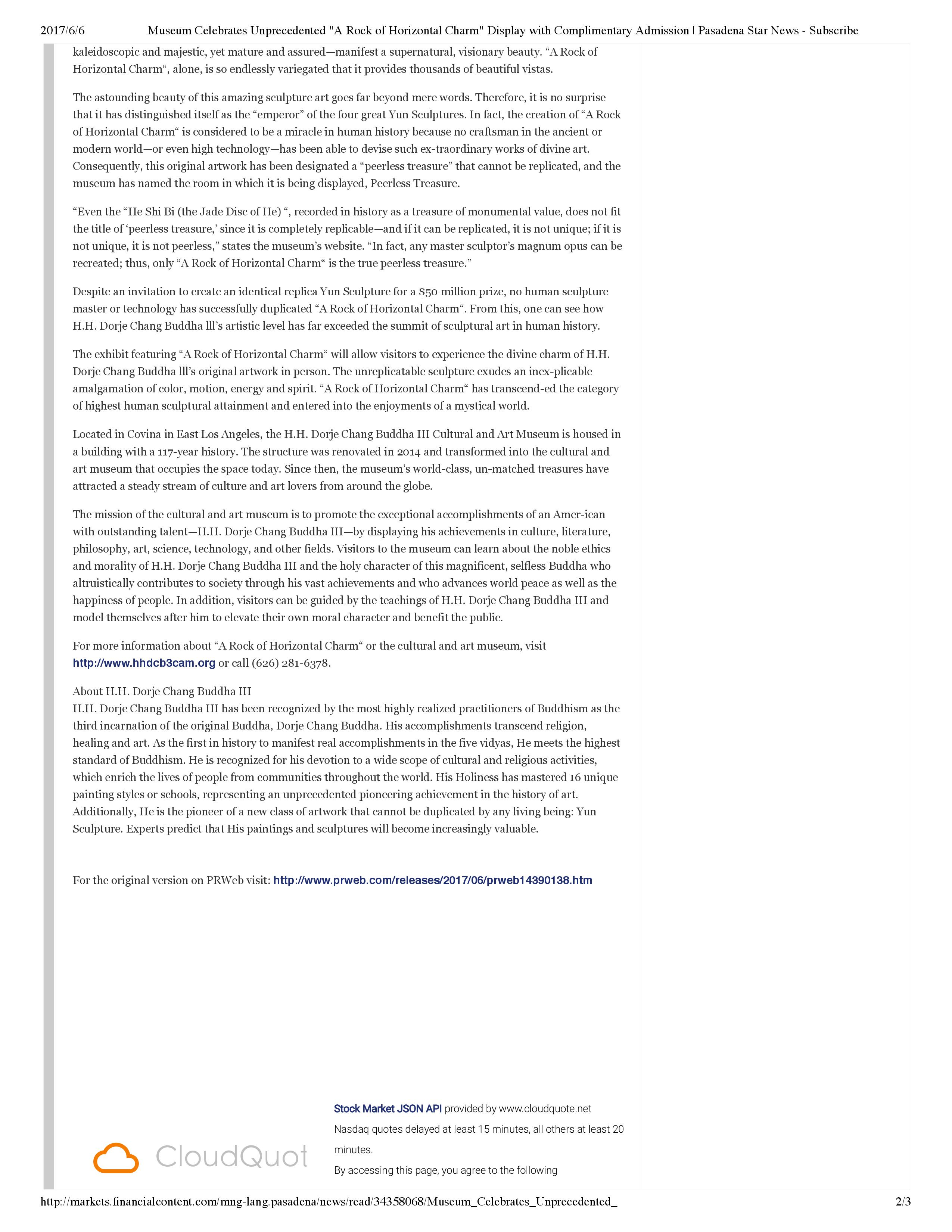
Photo of Shakyamuni Buddha at Benevolence Temple, Las Vegas, Nevada.
Shakyamuni Buddha at Benevolence Temple, Las Vegas, Nevada.

On November 13 and 14, The Benevolence and Pure Cultivation Temples in Las Vegas, Nevada conducted a special Zen Meditation Retreat for English (and Chinese) speakers that taught, demonstrated, and finally allowed all who attended to participate in their form of meditation. This Ru Lai Zheng Fa (Tathagata True Dharma) method features the Great Dharma of Zen Practice by H.H. Dorje Chang Buddha III and the traditional methods followed in ancient China that combined fast walking or moving meditation with silent sitting meditation. Although His Holiness transmitted three mantras that enhance the experience, alternatives are also provided for anyone wishing to participate who has not received them.

Photo of Kuan Yin Bodhisattva shrine at the Benevolence Temple.
Kuan Yin Bodhisattva shrine at the Benevolence Temple.

The first day gave us a tour of the beautiful hidden Benevolence Temple and the experience of what it took for the monastics and lay people of that temple and their companion Pure Cultivation Temple to transform their central Grand Buddha Hall into a Meditation Hall. They would normally do their meditation in a private smaller hall, but this space was created to accommodate the 43 who attended the actual retreat. The afternoon consisted of training for the experience, which we all enjoyed the following day. The second day was the actual Meditation Retreat. It consisted of ten sessions—five fast walking or moving and five sitting sessions. It also included a delicious breakfast, lunch, and evening meal in the nun’s dining hall plus snacks during the morning and afternoon sessions in the Meditation Hall. Everything was conducted in silence except for the bells, gongs, and instructions from Venerable Fa Chao, the abbot of the Pure Cultivation Temple who led the event, and an occasional crack of the cudgel to start each moving session and monitor the sitting sessions.

Grand Buddha Hall at the Benevolence Temple before converting it into a Meditation Hall for the retreat.
Photo of Removing desks and benches at Benevolence Temple to create Meditation Hall.
Removing desks and benches at Benevolence Temple to create Meditation Hall.
Photo of Constructing a new altar for the Meditation Retreat at Benevolence Temple.
Constructing a new altar for the Meditation Retreat at Benevolence Temple.
Photo of Waiting for sitting meditation instruction at Benevolence Temple.
Waiting for sitting meditation instruction at Benevolence Temple.
Photo of Altar with Cudgels during moving meditation.
Altar with Cudgels during moving meditation.
Photo of walking meditation stopped.
Walking meditation.

Link:https://www.zhaxizhuoma.org/attended-meditation-retreat-benevolence-temple-las-vegas/

2025 Medicine Buddha Holy Birthday Dharma Assembly in San Francisco Hua Zang Si

The Medicine Buddha is a great teacher who purifies all obstacles and brings healing to the world. When the Medicine Buddha was practicing the Bodhisattva path in past lives, he made twelve great vows to relieve the suffering of sentient beings and bring them happiness including curing physical disabilities, relieving poverty, providing material needs, guiding those astray, and liberating prisoners. He is associated with a pure land in the East called Vaiḍūryanirbhāsa, or “Pure Lapis Lazuli”.

On the 29th day of the ninth lunar month, Buddhist disciples worldwide honor the birthday of Bhaisajyaguru Buddha, known as the Medicine Buddha or the Great Medicine King. He is also referred to as the Buddha of Twelve Great Vows, embodying deep compassion and healing. Presiding over the Pure Land of Lapis Lazuli Light in the East, the Medicine Buddha has inspired countless practitioners with his transformative teachings and boundless compassion.

Hua Zang Si, a Buddhist temple in the Mission District of San Francisco, California, held a Namo Medicine Buddha Holy Birthday Dharma Assembly on November 16, 2025. The next scheduled Dharma assembly will be the Namo Amitabha Buddha Dharma Assembly to be held on December 28, 9:30 am.

Link:https://peacelilysite.com/2025/11/27/2025-medicine-buddha-holy-birthday-dharma-assembly-in-san-francisco-hua-zang-si/

The True Holy Vajra Pill and My Buddha Master

The True Holy Vajra Pill and My Buddha Master

The True Holy Vajra Pill and My Buddha Master

In Tibetan esoteric dharma, there are five types of precious pills. They are the Nectar Pill, the Long Life Pill, the Great Precious Pill, the Vajra Pill and the Supreme Precious Pill. Actually, these five types of pills are made from nectar bestowed by different Buddhas. There are also red pills and black pills made with Chinese herbs after the herbs are empowered through mantras, such as the red pills and white pills made by H.E. Tangtong Gyalpo. The Long Life Pill has the empowering effect of extending one’s lifespan. The Great Precious Pill can further one’s accomplishment in the dharma. The Vajra Pill can help dispel demons and increase longevity and good fortune. The Supreme Precious Pill can ensure accomplishment in the dharma. The five types of pills are crystallization of merit produced from the power of Buddha-dharma and the empowerment of Buddhas and Bodhisattvas. Basically, all great rinpoches have what they call precious pills. But most of them are of the ordinary type, not the holy precious type of pills. Holy precious pills and ordinary ones are two totally different concepts. I personally saw Nectar Pills made from nectar bestowed by Buddhas. I also personally saw true Vajra Pills and heard them chant mantras.

Certain famous rinpoches and dharma kings from the highest temples in Tibet have said that the Buddha-dharma that can enable a vajra pill to fly has not been seen in this world in three hundred years. This is a fact. There was a crazy yogi named Be Wa Ba who could manifest such power hundreds of years ago, but according to these respected rinpoches and dharma kings who have had contact with all of the well known dharma kings of recent times, this dharma had disappeared from this world.

I follow my Buddha Master, H.H. Dorje Chang Buddha III Wan Ko Yeshe Norbu Holiest Tathagata, and am constantly by His Holiness’s side. Therefore, I have experienced many magnificent and real manifestations of Buddha-dharma. Now I will tell everyone about my experience of the true Vajra Pill. When the holy vajra mantra and mudra are practiced, the Vajra Pill will jump and even transform into rainbow light and soar into the sky. I have also heard the Vajra Pill dance and chant mantras. I watched other people listen to the Vajra Pill sing songs.

I vow that the events reported here are true and happened as reported. If not, I am willing to bear the karmic retribution of the hell realms.

Amazing supernatural events preceded my first experience with the karmic affinity of the Vajra Pill. This happened in April, 2003. I traveled from San Francisco to Los Angeles to see H.H. Wan Ko Yeshe Norbu. During the trip I suddenly saw a colorful and large rainbow light appear in the sky. The rainbow completely surrounded the sun. There were also Sanskrit symbols in the sky. Just as the rainbow was fading from sight, I was able to take a picture of the bottom half of this light by focusing the camera below the sun. A dignified Buddha–Dorje Chang Buddha–appeared in the middle of the rainbow. This Buddha became my Buddha master, H.H. Wan Ko Yeshe Norbu, who was wearing a red robe and was sitting in the middle of the rainbow. The scene was awesome and extremely wonderful. The rainbow light appeared in the sky for several hours.

When I arrived, I was fortunate to immediately see my Buddha Master. A great lama obtained three true Vajra Pills and had respectfully given them to H.H. Wan Ko Yeshe Norbu Holiest Tathagata as an offering. The Buddha Master bestowed me with two of them. Unexpectedly the Vajra Pills in my hand started to jump. At that time the Vajra Pills jumped in my hand just as if they were alive. They not only jumped but one of them started to circle around and left my hand. It transformed into a dazzling bright red light and soared into the sky. At that time, I saw that the Buddha Master, who sat far away on the dais, had become a blue Buddha Vajradhara. The blue light was shining bright. The scene was very dignified. I was greatly astonished. This is when I first saw the true Vajra Pill and the true identity of my Buddha Master.

There was a very virtuous disciple who came from Australia. Because of a question I had asked H.H.Wan Ko Yeshe Norbu Holiest Tathagata about a dharma matter concerning mysterious power, the Holiest Tathagata said to me, “Bring your Vajra Pill to empower this disciple.” I took out the Vajra Pill. In order to prevent the Vajra Pill from escaping, this great layperson personally put the Vajra Pill in a small cup and sealed the cup with a piece of paper. The disciple put the cup to his ear and moved 15-20 feet away from the Holiest Tathagata. Several of us were sitting on the floor around H.H. Wan Ko Yeshe Norbu Holiest Tathagata. Then everyone started to chant mantras and practice dharma. Soon the Vajra Pill began to chant and sing Buddhist songs. This layperson was very moved. It is hard to believe that a tiny pill can actually sing Buddhist songs, but I have heard this myself. Actually, I did not hear Buddhist songs, but clearly heard the chanting of holy mantras. The sound came from this tiny BB sized pill that I personally held to my ear. It is truly unbelievable. In this world within the supreme Vajra Division of Esoteric Buddhism the Vajra Pill truly can be categorized into ordinary types and holy types. The Vajra Pill in my hand was living proof of the holy type.

Today I sincerely tell everyone my personal experience. My Buddha Master, H.H. Dorje Chang Buddha III Wan Ko Yeshe Norbu Holiest Tathagata is the supreme and highest Buddha. May all living beings have the good fortune to hear, learn, and practice the true Buddha-dharma and quickly attain enlightenment.

I, Buddhist disciple Zhaxi Zhuoma, sincerely vow and clearly write down these events to prove the existence of the true Buddha-dharma in the world today.

(The Chinese translation of this text follows.)

The True Holy Vajra Pill and My Buddha Master

Source: H.H. Dorje Chang Buddha III — A Treasury of True Buddha-Dharma, pp. 157–159.

Link:https://hhdorjechangbuddhaiiidharma.com/2025/11/24/the-true-holy-vajra-pill-and-my-buddha-master/

#DorjeChangBuddhaIII #DorjeChangBuddha #MasterWanKoYee #HolyVajraPill #BuddhaDharma #TrueDharma #BuddhistStories #DharmaBlessings #BuddhistCultivation #VajraPractice #BuddhistFaith #TheVirtueofHHDorjeChangBuddhaIIIandHolyOccurrences

Why Spiritual Cultivation Matters More Than Ever in a Rapidly Advancing World

In recent years, I’ve often found myself reflecting on the pace of our modern world. Everywhere we look, technology advances with breathtaking speed—AI systems that learn in seconds, devices that connect continents instantly, and scientific breakthroughs that would have been unimaginable a generation ago.

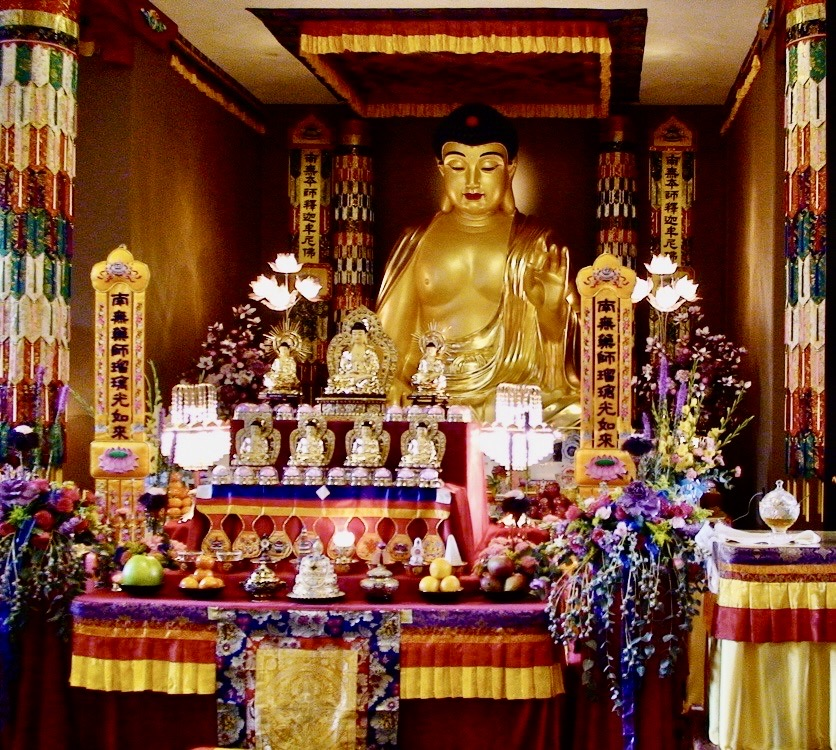
And yet, despite all this progress, people still feel anxious, divided, and spiritually adrift. It was during one of these reflections that I came across a profound message from French philosopher Henri Bergson, winner of the 1927 Nobel Prize in Literature. His words, spoken nearly a century ago, resonated deeply with me:

“An increase in the material means at the disposal of humanity may even present dangers unless it is accompanied by a corresponding spiritual effort.”

This single sentence contains a timeless truth.

The Wisdom of Henri Bergson: Progress Requires Balance

When Bergson delivered his Nobel Prize banquet speech in 1928, he had witnessed the sweeping transformations brought by steam power, electricity, and industrialization. Many believed that these innovations would naturally lead to a better, more harmonious world.

But Bergson saw with clarity that outer progress alone is not enough. Without cultivating our inner world—our morality, our compassion, our spiritual understanding—technology can deepen misunderstandings and widen divisions.

How true this remains today.

The Modern Paradox: Hyper-Connection, Inner Disconnection

We live in a time of extraordinary access and convenience:

  • We can video chat across the planet, yet many feel more isolated than ever.
  • We scroll endlessly through social media, yet our hearts grow restless and overwhelmed.
  • We generate more data in a day than ancient civilizations produced in centuries, yet wisdom feels increasingly rare.

Technology connects our devices, but only spiritual cultivation connects our hearts.

Why Spiritual Effort Is Essential Today

1. It grounds us amid the noise.

With information constantly flooding our minds, spiritual practice helps us regain clarity and stay anchored in truth.

2. It builds our inner resilience.

Life will always bring challenges. Meditation, reflection, and ethical living strengthen the mind and heart to navigate them with wisdom.

3. It cultivates compassion in a divided world.

True peace comes not from advanced systems but from understanding, patience, and kindness—qualities only nurtured through spiritual effort.

4. It reminds us of our shared purpose.

Spiritual insight dissolves boundaries, allowing us to see one another not as competitors but as fellow travelers on the path of life.

Bergson’s warning pierces straight into the heart of our time:

If humanity’s material power grows faster than its moral and spiritual maturity, danger follows.
But when the two rise together, society finds harmony.

This is not just a philosophical idea—it is a blueprint for a peaceful, sustainable future. Whether through meditation, prayer, study, service, or simple acts of kindness, each of us has the power to elevate our inner life.

Our modern world celebrates speed, innovation, and efficiency. But the deeper question is: Do these advances help us become better human beings?

If spiritual cultivation becomes the guiding compass of our progress, then technology becomes a tool for upliftment rather than turmoil.

As we look toward the future, may we remember:

  • Our machines may evolve, but our hearts must evolve too.
  • Our knowledge may expand, but our wisdom must deepen.
  • Our world may grow louder, but our inner clarity must grow stronger.

Only then can humanity advance not just outwardly, but inwardly—toward peace, wisdom, and true connection.

Link:https://peacelilysite.com/2025/11/25/why-spiritual-cultivation-matters-more-than-ever-in-a-rapidly-advancing-world/

How the United States Strongman (USS) Built a National Community of Everyday Athletes Through Shared Purpose

Lyssanoel Frater Contributor

United States Strongman (USS) began in 2014 with a simple but powerful vision: create opportunities for athletes to test their strength in an environment that feels fair, safe, and genuinely supportive. President and Owner Willie Wessels has shaped the organization around a philosophy he repeats often: “for athletes, by athletes.” It is the principle that guides every decision, from event approvals to gym affiliations to the culture athletes encounter when they show up on competition day.

With various events held annually across the country, USS has grown into a national platform for competitors of all levels. “The mission has remained the same from day one,” Wessels says. “We want people to have a place where they can work toward their goals and know the event has been organized with their best interests in mind.” Each competition is required to meet safety and quality standards that Wessels personally reviews, giving athletes confidence that every show has been thoughtfully planned.

According to Wessels, Strongman itself is a diverse sport, blending both functional and traditional strength movements. USS events showcase everything from tire flips and stone lifts to sandbag carries and log presses. Each venue brings its own personality; some competitions take place at independent gyms, some at community centers, and others at local businesses that open their doors for a day of strength, cheering crowds, and grassroots community spirit. “You might see an event in a gym parking lot one week and then a full setup inside a large venue the next,” Wessels says. “What matters is that athletes walk in and feel excited and safe.”

Willie Wessels, Founder and CEO of USS
(Image Credit: William Wessels)

USS also supports athletes through its membership structure, which provides access to certified events and ensures the competitions they enter meet established standards. The membership system also connects competitors to pathways leading toward national and international opportunities. 

Under his leadership, the organization has become known for celebrating participation as much as podium finishes. Athletes within USS come from every background imaginable: teachers, healthcare workers, factory workers, engineers, and even complete beginners who discovered the sport by chance. “Strongman is not just for a certain type of person,” Wessels says. “It’s for anyone who wants to challenge themselves.” For many, it can become a place where physical strength intersects with self-confidence, camaraderie, and discipline.

This community-first mindset reflects Wessels’ personal history. At 62, he has spent more than three decades coaching, teaching, and supporting athletes. Before launching USS, he was a longtime health and physical education teacher, a career he describes with warmth. “Working with students taught me patience, humility, and how to meet people where they are,” he says. His passion for building strength, physical and personal, was shaped early on by his mother, whose commitment to education left a lasting mark. “She went back to school at 39 and earned her bachelor’s, two master’s degrees, and her PhD,” he says. “She showed me what persistence looks like.”

Wessels earned the title of North American Strongman in 2002, a moment that inspired many and deepened his belief in giving athletes a place to pursue their potential. Wessels’ own perseverance was profoundly tested when he was diagnosed with leukemia in 2003. Despite a prognosis that offered only a brief window of survival, he continued coaching and competing while undergoing years of treatment. “I just kept showing up,” he says. “Coaching kept me grounded.” 

His personal journey is woven into the foundation of USS. What began as a vision to make the sport more accessible has grown into a movement supported by hundreds of competitions and a network of affiliated gyms across the U.S. Looking ahead, Wessels sees continuous expansion as a natural progression of the sport’s momentum. He noted that participation is rising among both men and women, and the spectrum of athletes continues to widen. 

Wessels says the future of USS will always be guided by the same principles that shaped it from the beginning: fairness, safety, and genuine support. What drives him now is the same thing that drove him as a teacher, a coach, and an athlete: watching people discover what they are capable of.

“At the end of the day, this is not just about lifting weights,” Wessels says. “It’s about showing people they are stronger than they think, on the field and in life.” It’s a belief that has helped build United States Strongman into a national community grounded in resilience, respect, and purpose, and one that continues to grow with every athlete who steps onto the competition floor.

Link:https://www.usatoday.com/story/special/contributor-content/2025/11/20/how-the-united-states-strongman-uss-built-a-national-community-of-everyday-athletes-through-shared-p/87373169007/

The Supreme Buddha Dharma

Every Buddhist practitioner longs for achievement and liberation.
Hearing the true Buddha-Dharma is the key.
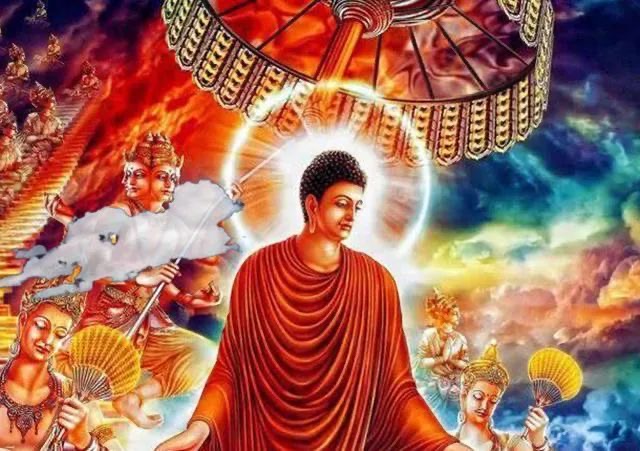
The following article is a genuine account written by a monastic bhikshu Huihai (慧海) who personally listened to the Dharma teachings of H.H. Dorje Chang Buddha III.

In this life, I am able to encounter my supreme and unsurpassable Buddha Master—this truly is the greatest blessing I have accumulated through many lives and countless eons!

The Buddha Master’s genuine and pure teachings, in the turbulent waves of today’s chaotic era, are the vessel that carries sentient beings to the shore of liberation. The Buddha Master’s profound and skillful instructions transcend religion, directly point to mind-transmission, accord with conditions and the Dharma-realm, and enlighten sentient beings to step onto the path of awakening.

As a disciple, whenever I am in the presence of the Buddha Master, my heart always feels immeasurably moved, deeply experiencing the holiness and greatness of the Buddha’s virtue

I remember it was in early September of 2005 that I had an audience with the Buddha Master. The Buddha Master said: “In the history of Tibet and the Han region, there were many practitioners who cultivated many Dharma methods, yet achieved very little in their entire lifetime. Only in their old age did they realize that they had seldom listened to true Dharma, which caused them not to understand the Buddha-principles, and thus they walked a deviated path.

Most of the ancestral masters through generations, most of the Buddhas and Bodhisattvas of the past, attained great accomplishment precisely because they listened to Dharma. Therefore, listening to Dharma is extremely important. Now, in this degenerate era, there is truly far too much false Dharma. You must listen to Dharma more, listen more to the Dharma I teach. Only by clearly understanding the Dharma sounds, learning the true Buddha-Dharma, and deeply applying it in actual practice, can the problem of birth and death be resolved. This is the most important, most important thing!”

I knelt and prostrated to the Buddha Master and said: “Your disciple is very grateful for the Buddha Master’s teachings, and I hope all sentient beings may hear and receive the Buddha’s Dharma sound and learn the true Buddha-Dharma.”

The Buddha Master sat for a moment and then went into the room. Several senior brothers and sisters happened to come out, each with joyful expressions on their faces. I asked them curiously: “I see all of you beaming with smiles—what joyful thing has happened?”

One senior brother said: “We just respectfully listened to a recording of a most supreme Dharma-sound.”

I said: “No wonder you are filled with Dharma joy. May I listen to this Dharma-sound recording?” The senior brother said: “This is a rarely accessible Dharma-sound. Permission must be requested before you can listen.”

At that moment, the Buddha Master came out from the room. I quickly reported: “I request Buddha Master’s permission—may I listen to that Dharma-sound recording?”

The Buddha Master smiled and said to me: “Of course you may. You certainly may listen. If even you, a monastic, cannot listen, then who else could?” I joyfully placed my palms together and prostrated to my kind Master, saying: “Thank you, Buddha Master.”


I went to the altar to pay respect to the Buddha, offered a khata and offerings, performed the pre-Dharma-listening rituals, and began to attentively and reverently listen to the Dharma. The Dharma-teaching that the Buddha Master expounded in the recording was unprecedented—unmatched in its sublimity.

Upon hearing this Dharma, I received tremendous blessing power; suddenly my obstructions opened, joy surged within me, like a spontaneous celestial empowerment pouring down, nectar filling me completely. The karmic forces of beginningless time all became like illusions. Such a supreme Dharma—how could it not be something that is difficult to encounter even in hundreds of thousands of eons?


What sentient beings find hard to see, I now see; what sentient beings have not heard, I have now heard. How could beings burdened by countless karmas possibly comprehend its wondrous principles?
After leaving the altar, I saw the Buddha Master and immediately knelt down in gratitude.

I said excitedly: “Buddha Master! How could this merely be a teaching or a Dharma-sound? This is fundamentally a great Dharma—an unsurpassable great Dharma!”

The Buddha Master looked at me and smiled: “Excellent! You received the blessing of Buddhas and Bodhisattvas and understood the Dharma I taught.”

I continued: “Buddha Master, this Dharma truly leaps directly and suddenly into the Tathāgata’s state! And truly, it requires no effort—you can attain it instantly.”
The Buddha Master said: “Indeed so.”

I further said: “This Dharma is truly magnificent. Indeed, everyone can practice it, but ordinary people will not understand it and will only regard it as an ordinary teaching.”

The Buddha Master said: “This is even easier than realizing mind and seeing one’s nature. Even those who realize mind and see their nature may not attain this state.”

My Buddha Master—the Supreme Protector, H.H. Dorje Chang Buddha III—expounds Dharma by observing sentient beings’ karmic conditions through the complete Buddha-wisdom. Every teaching is given for the liberation of Buddhist disciples and future beings. The Dharma principles revealed are tailored to each person’s capacity, deep yet simple. Though spoken casually, they unfailingly accord with the profound truths of the Buddhist Tripiṭaka and esoteric scriptures. Moreover, many penetrating and unique Dharma principles are not found in any sutras—they arise directly from the Buddha Master’s innate enlightened realization.


Since I drew close to the Buddha Master and respectfully listened to the Buddha Master’s Dharma-sounds, I have finally gained a complete understanding of the Tathāgata’s perfect and true teachings. The benefits I have received are far too many to express in words—far surpassing everything I had learned in Buddhism over the past decades.

Because Buddhist sutras have been transmitted in the world—especially after translation—they inevitably contain mistranslations or misinterpretations. Moreover, the classical literary language used in the scriptures is truly difficult for modern readers accustomed to vernacular style. The numerous technical terms in the sutras also pose a challenge for beginners entering the Buddhist path.

The Dharma-sounds taught by H.H. Dorje Chang Buddha III are the authentic Tathāgata true Dharma, explained through modern language and analogies, expressing principles in accordance with intrinsic nature, unfolding the stages of realization, and enlightening the ignorant. Those who listen can easily learn pure Buddha-Dharma and establish correct understanding and correct views. Therefore, it is most suitable for every practitioner in today’s world to rely on and cultivate.

The Dharma-sounds spoken by H.H. Dorje Chang Buddha III are a bright lamp illuminating the path of cultivation. They are the supreme Dharma-treasure that enables sentient beings to become Arhats, enables Arhats to become Bodhisattvas, and enables Bodhisattvas to become Buddhas—to attain accomplishment, liberation, realization, and sainthood.


I often feel this: whenever the Buddha Master expounds Dharma with perfect, lion-like sound, the Dharma-voice flows throughout the boundless space; humans and non-humans all receive its benefit; the Dharma assembly at Vulture Peak seems as if it has never dispersed—

Before my eyes it is as if scenes from ancient times appear again: the Buddha teaching under the Bodhi tree, when Bodhisattva-Mahāsattvas, monks, nuns, laymen, laywomen, along with heavenly beings, nāgas, humans, and non-humans—countless multitudes—surrounded Him, making offerings, honoring, respecting, and praising. Heavenly mandārava flowers rained down, scattering over the Buddha and the assembly…

In this degenerate age, as a disciple of the Buddha, I feel fortunate to have this rare Dharma affinity, able to personally hear the Dharma before the Buddha and practice the true Dharma. I sincerely pray:

May the Dharma Wheel of the supreme and great H.H. Dorje Chang Buddha III always turn, and may He abide in this world forever.

May all beings in the Dharma-realm hear the Dharma-sounds spoken by H.H. Dorje Chang Buddha III, increase in blessings and wisdom, forever leave all suffering and obtain happiness, and together realize Bodhi.


Disciple of the Buddha — Huihai

For the original Chinese speech, please click here. This English translation is by Linda Chang and is provided for reference only.

Link:https://peacelilysite.com/2025/11/21/the-supreme-buddha-dharma/