The Body Listens to How We Live

A mage casting a spell to levitate books in a grand circular library filled with glowing crystals

The Life We Live Beneath Our Genes

Sometimes, when illness runs through a family for generations, people quietly carry a hidden fear in their hearts.

“My parents had this disease.”
“My grandparents suffered from it too.”
“Perhaps one day, it will happen to me as well.”

For a long time, science itself seemed to support this worry. We were taught that our genes determined much of our future, as though our health had already been written into the body from the very beginning.

But modern research is beginning to reveal a more hopeful and more compassionate understanding of human life.

In recent years, scientists studying the field of epigenetics have discovered that while our DNA sequence remains largely unchanged, the body possesses another powerful system — the epigenome — that helps regulate how genes behave.

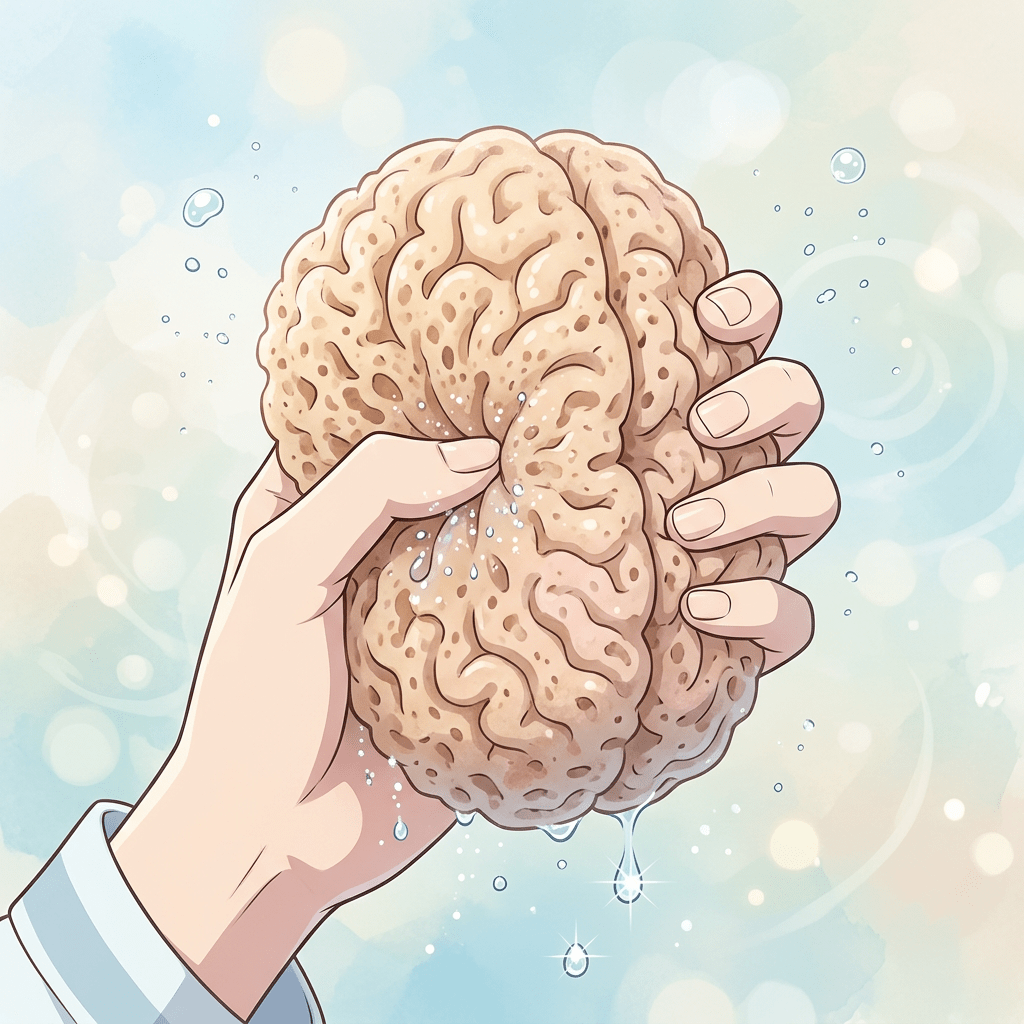
If the genome is like the body’s library of instructions, the epigenome acts more like the librarian, helping decide which pages are opened, which are closed, and which instructions are emphasized or quieted.

This process does not change the genetic code itself. Instead, it involves tiny chemical markers that attach to DNA and surrounding proteins. These markers can influence whether certain genes become more active or less active over time.

Two of the best-known mechanisms are called DNA methylation and histone modification.

DNA methylation occurs when small chemical groups attach to certain regions of DNA, often reducing the activity of nearby genes. Histone modification affects how tightly DNA is wrapped around proteins called histones. When DNA is tightly packed, genes become harder for the body to “read.” When it loosens, those genes may become more active.

What makes this discovery so fascinating is that the epigenome is not completely fixed. It responds continuously to life itself.

DNA double helix surrounded by icons representing exercise, relaxation, nutrition, positive relationships, quality sleep, and stress management for strong immunity
Healthy lifestyle choices positively impact your genes and overall health.

Researchers have found that factors such as nutrition, sleep, stress, exercise, pollution, smoking, emotional health, and even social environment may influence epigenetic patterns over time.

In other words, our bodies are listening to how we live.

This does not mean we can control everything, nor does it mean genetics no longer matter. Some inherited conditions remain powerful and complex. But epigenetics suggests that biology is not simply destiny. The environment we create within and around ourselves may help shape how certain genetic tendencies are expressed.

This is both humbling and deeply encouraging.

It reminds us that health is not built in one dramatic moment.
It is shaped quietly through small choices repeated day after day.

A simple home-cooked meal.
A daily walk.
Enough sleep.
Fresh air and sunlight.
Learning to calm the mind instead of living in constant stress and tension.

These habits may seem ordinary, but science increasingly suggests they can influence the body in profound ways over time.

Modern life often pushes people toward speed, overstimulation, and exhaustion. Many live under continuous pressure, with minds that rarely rest and bodies that rarely recover. Yet the human nervous system was never designed for endless stress.

One of the most hopeful messages from epigenetics is that positive change may still matter greatly, even when there is a family history of disease.

A person may inherit certain risks, but risk is not always certainty.

Good habits cannot guarantee perfect health, but they may help support the body, reduce vulnerability, and improve resilience across a lifetime.

Perhaps this is why simple living has always carried quiet wisdom.

Eat more naturally.
Sleep more deeply.
Move the body regularly.
Reduce unnecessary stress.
Live with greater balance and peace.

The body responds not only to medicine, but also to the way we live every day.

And maybe that is one of the most beautiful discoveries modern science is beginning to confirm:

Our genes may shape the beginning of our story,
but our daily lives continue helping to shape what comes next.

Link:https://peacelilysite.com/2026/05/09/the-body-listens-to-how-we-live/

When Noise Becomes Blindness

Wizard at desk surrounded by books, scrolls, potions, and magical screens displaying symbols and star constellations

The most dangerous thing is not that we are surrounded by falsehood, but that we slowly lose our desire to seek what is true.

In 1906, Hannah Arendt was born into a world that would soon reveal both the brilliance and the fragility of human society. She later witnessed how a highly educated and cultured nation could slowly lose its clarity, drifting into confusion and darkness.

In her important work, The Origins of Totalitarianism, she reflected on a troubling question:
How do people lose their ability to see what is right in front of them?

Her answer was not simple, but one part stands out quietly and powerfully—when truth becomes unstable, people begin to lose their ability to think clearly.

Today, we may not live in the same world she did, but in some ways, her observations feel closer than ever.

Every day, information rushes toward us from all directions. News, opinions, arguments, videos, headlines—especially on platforms like Facebook, X, and TikTok. Everything moves quickly. Everything competes for attention.

At first, we try to follow.
We read. We watch. We react.

But slowly, something changes.

The more we see, the less certain we feel.
The more voices we hear, the harder it becomes to know which one is true.
Contradictions pile up. Emotions rise. Clarity fades.

And without noticing it, we grow tired.

Not physically tired—but mentally tired.

When the mind is tired, it stops asking questions.
It stops examining.
It stops distinguishing.

We begin to accept things without really understanding them.
Or we reject everything, thinking, “Maybe nothing is true anyway.”

This is a quiet kind of blindness.

Not because we cannot see,
but because we no longer take the time to look carefully.

In her later essay, Truth and Politics, Arendt warned that when truth is constantly distorted, it does more than mislead—it weakens our trust in truth itself. And when that trust fades, something deeper begins to erode: our sense of judgment, responsibility, and even compassion.

This is not a distant problem.
It is something we face every day.

So what can we do?

Perhaps the answer is simpler than we expect, but not easier.

We pause.

We step back from the noise, even for a moment.
We resist the urge to react immediately.
We allow ourselves time to think.

Not quick thinking,
but careful thinking.

We ask:
Is this true?
What is the source?
Am I reacting, or am I understanding?

And just as importantly, we question even the ideas we already agree with.

Real thinking is not comfortable.
It requires patience.
It requires honesty.
Sometimes, it requires us to admit we were wrong.

But this quiet effort is what keeps the mind alive.

In a world filled with endless information, the greatest danger is not that we are misinformed.
It is that we stop thinking altogether.

So, in the midst of all the noise, we can choose something different.

To slow down.
To look carefully.
To think clearly.

And in doing so, we begin to see again.

#OriginsofTotalitarianism#HannahArendt #Germany #TruthandPolitics #Philosophy

Link:https://peacelilysite.com/2026/05/05/when-noise-becomes-blindness/

Seeing a World Within Emptiness — An Appreciation of a Lively and Serene Ink Painting

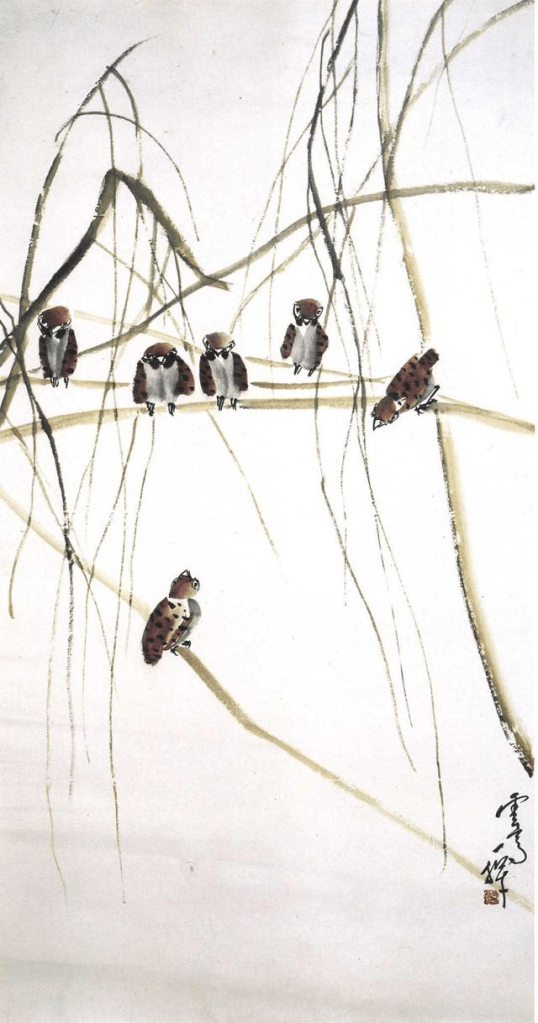
Myna Birds Drunk Among the Willows by H.H. Dorje Chang Buddha III

Some paintings do not rely on complexity to move us. With only a few deliberate strokes, they unfold a world full of life. This fresh and tranquil ink painting is one such work. Quiet and unassuming, it reveals a profound artistic tension and depth within simplicity and stillness.

The composition is anchored by three strong yet supple ink lines. Their texture is rich and full, their force penetrating the paper. They resemble trees, yet are not trees—more like structural forms that divide the flat surface into a grid of interwoven spaces. Within these spaces, branches stretch and intersect, while willow-like lines sway gently, creating a rhythmic sense of motion.

What is most remarkable, however, lies in what is not painted.

The empty spaces are far from void; they are charged with meaning. In these areas of intentional absence, the viewer’s imagination is invited to wander. As the saying goes, “where nothing is painted, there lies the true realm of the painting.” The composition, in its entirety, feels almost like a montage—a sequence of visual moments carefully arranged. From this minimal structure emerges a surprisingly rich and intriguing visual experience.

Bringing the scene to life are several mynah birds, rendered in bold, expressive ink. These small creatures become the focal point of the painting.

They are divided into three groups, each occupying different sections of the grid. In a small triangular space near the top, three birds gather closely together. The density of life within such a confined area creates an immediate visual tension. In contrast, a large quadrilateral space in the lower middle is occupied by just a single bird, as if it has claimed the entire openness for itself—perhaps even becoming the quiet center of the composition.

Then there is a particularly playful detail: a bird in the upper right seems to occupy the intersection of four spaces at once. Though not placed at the center, it establishes its own presence, as if declaring that even at the edge, one can still become a focal point.

These birds preen their feathers, tilt their heads, hum softly, and seem to communicate with one another. Bathed in a sense of freshness, they revel in the gentle beauty of spring, fully immersed in a life of ease and freedom. The entire painting begins to resemble a small, self-contained paradise.

This delightful and imaginative work is created by H.H. Dorje Chang Buddha III. Art, at its highest level, is not merely a display of technique—it is a reflection of the inner world. A truly great work reveals the artist’s state of mind and spiritual depth.

In this painting, what we witness is not only mastery of brush and ink, but also a sense of calm, freedom, and purity—a state of being that transcends complexity and returns to essence.

The diverse artistic creations of H.H. Dorje Chang Buddha III stand as enduring treasures of human civilization. And this seemingly simple piece gently reminds us:

In a world of endless complexity, true beauty often resides in simplicity—
and true freedom may be found in the space between what is left unpainted.

LinK:https://peacelilysite.com/2026/05/04/seeing-a-world-within-emptiness-an-appreciation-of-a-lively-and-serene-ink-painting/

Your Aura is a Map of Your Soul: The Ancient Chinese Wisdom of “Xiang You Xin Sheng”

A Turn of Thought, A Turn of Fate — A Story of Conscience and Choice

Ever wonder if people can ‘sense’ what you’re thinking? In Chinese culture, we call this ‘Xiang You Xin Sheng.’ It’s the idea that your aura is a mirror of your soul. I found this traditional story particularly striking today, as it shows how changing your mind is the ultimate way to change your luck.

In Chinese culture, there is an ancient proverb: “Xiang You Xin Sheng” (相由心生). While it literally translates to “one’s appearance is born from the heart,” its wisdom goes far deeper than physical beauty.

In this context, “Xiang” (相) refers to much more than just the face; it encompasses one’s “aura,” “vibe,” or the invisible energy one radiates to the world. The teaching suggests that our persistent thoughts eventually sculpt our features and our presence, and this shift in our “countenance” often signals a pivotal turn in our destiny.

There is a traditional story that perfectly illustrates this profound connection between thought, aura, and fate.

Long ago, a wealthy man with no children of his own adopted a young orphan. He raised the boy as his own flesh and blood, providing him with a fine education and teaching him the intricacies of business and integrity. As the boy grew into a young man, he became exceptionally handsome and capable. To any observer, he was the clear heir to a vast fortune.

However, the human heart can be like a dark, fathomless pond. In moments of solitude, a shadow began to creep into the young man’s mind: “Since all of this will eventually be mine, why shouldn’t I have it sooner?”

At first, this thought was a mere spark. But over time, it began to smolder. It subtly changed his “Xiang”—his once-clear eyes grew clouded with a trace of calculation, and his once-welcoming aura took on a subtle edge of coldness.

One day, a guest skilled in the ancient art of physiognomy (face reading) visited the house. After observing the young man, the guest whispered to the father: “This young man’s spirit is darkened. There is a hidden greed between his brows. He may harbor betrayal in his heart; you must be on your guard.”

The young man happened to overhear this from behind a wall. In that moment, he felt as though he had been struck by lightning. He wasn’t angry at being insulted; he was terrified of being seen. He realized that his inner “vibe” had betrayed him—the “thief” in his heart had indeed been lurking there for a long time.

“My father has treated me with the kindness of a mountain, yet I covet his life and wealth. How am I different from a beast?” he thought. This intense shame acted like a mirror, reflecting the stains on his soul. In that instant, he made the most important decision of his life: he would cut off his greed, leave his comfortable home, and find his true, clean self again.

He bid farewell to his father and set out to make his own way. Not long after, while traveling a lonely path, he found a heavy pouch filled with gold and silver—enough wealth to change a man’s life instantly.

In the silence of the wilderness, with no one watching, the old greed flickered for a second. But he immediately remembered the shame and the awakening he had experienced. Instead of taking the pouch, he waited. He stood his ground from noon until dusk, until a frantic traveler appeared, searching in despair for his lost property.

Young man giving a bag labeled GOLD to an elderly woman crying with gratitude

When the young man returned the wealth, the owner was moved to tears. Impressed by such rare integrity, the traveler used his influence to recommend the young man for a prestigious and honorable career. From that point on, the young man no longer relied on an inheritance. Through his own hard work and “righteous spirit,” he built a life of genuine dignity and peace.

Years later, when people spoke of him, they saw a man with a gentle face and a clear, peaceful aura. The gloom of his youth had vanished. He finally understood that what changed his fate wasn’t the bag of gold or the new job; it was the moment he chose to face his own inner ugliness and personally extinguish the fire of greed.

The turning points in our lives rarely happen during grand, public moments. They happen in the silent depths of the heart. One thought can lead a person into an abyss; one shift in thought can lead them back to the light.

We cannot guarantee that we will never harbor a dark thought, but we can choose—the moment we become aware of it—not to follow where it leads.

As the old wisdom teaches: Good and evil exist within a single thought. And destiny? It often waits at the corner of that very same thought, ready to turn your life in a whole new direction.

#Mindfulness #AsianCulture #SelfImprovement #ChineseWisdom#AsianPhilosophy #TraditionalCulture#Chinesestories #Chinesetraditionalconcepts

Link:https://peacelilysite.com/2026/05/04/your-aura-is-a-map-of-your-soul-the-ancient-chinese-wisdom-of-xiang-you-xin-sheng/