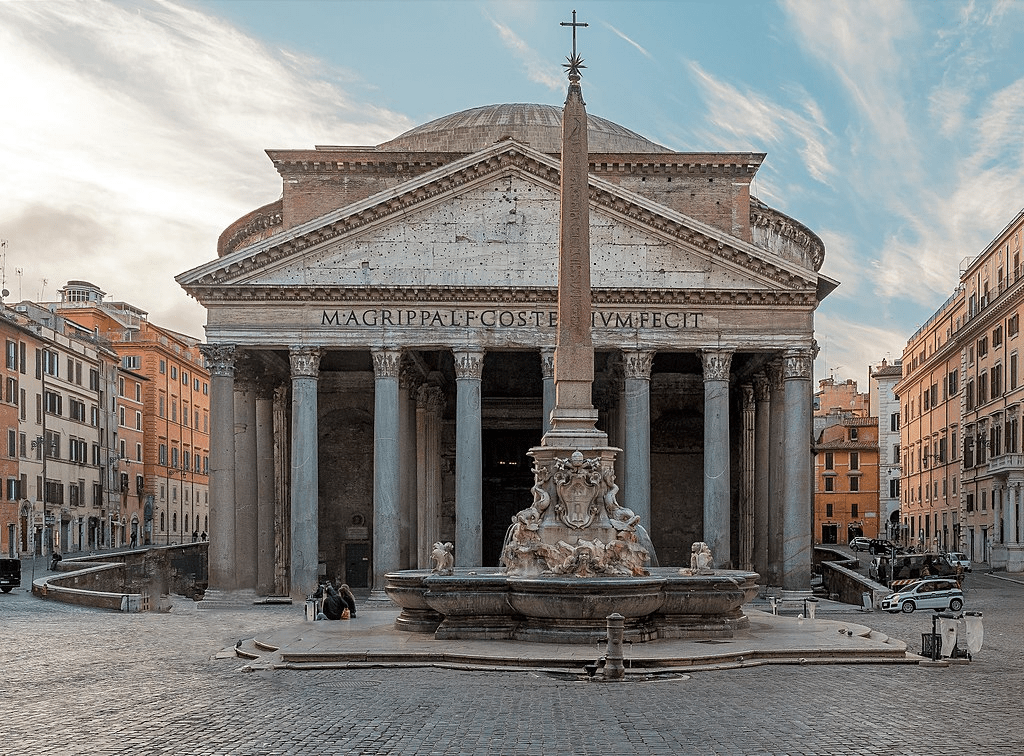
Have you ever stood before the Pantheon in Rome or looked up at the towering aqueducts from ancient times and thought: “How are these structures—built over 2,000 years ago—still standing strong, while modern buildings crack, rust, and collapse in just a few decades?”
It’s not a miracle. It’s ancient wisdom and material science far ahead of its time.
Unlike the Portland cement we use today, ancient Roman concrete was made with volcanic ash (pozzolana), lime, water, and volcanic rock. This special mix triggered a chemical reaction known as the pozzolanic reaction, which formed a remarkably stable and durable material.
This volcanic ash came from regions like Campi Flegrei near Naples, rich in silica and alumina. When mixed with lime and water, it formed bonds that strengthened over time—rather than weakened.
🌊 Stronger with Time—Even Underwater
Even more amazing? Roman concrete exposed to sea water didn’t erode—it grew stronger. Scientists discovered that seawater reacted with the volcanic materials to create a rare mineral called tobermorite, which reinforced the concrete’s internal structure.
This is why many ancient Roman ports and sea walls still stand intact after 2,000 years—even without modern rebar or waterproofing.
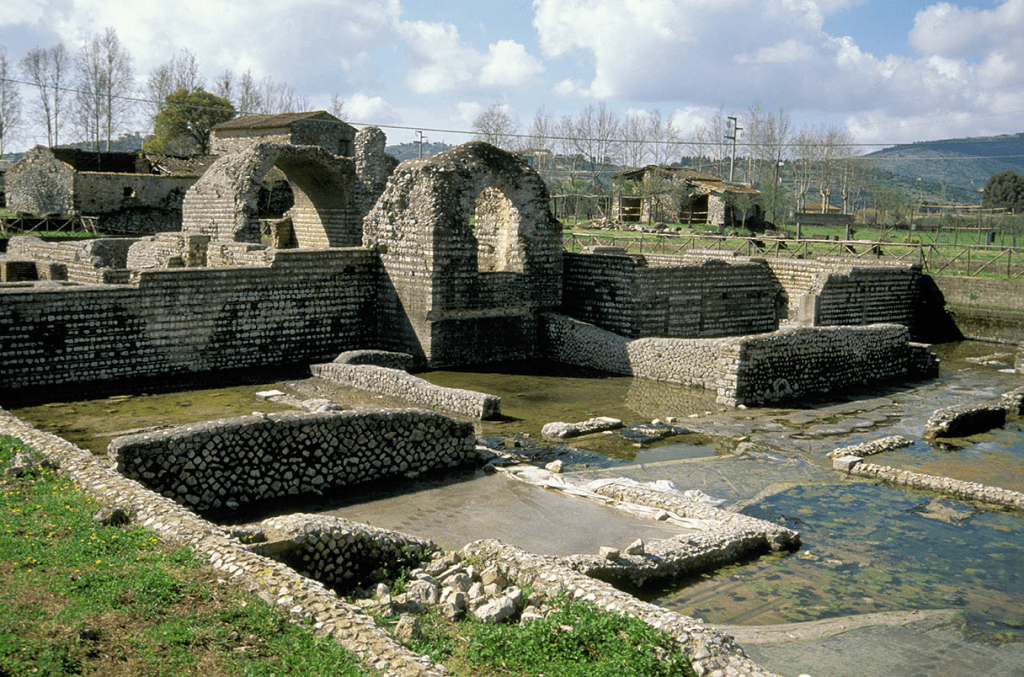
Ruins in Privernum, near Rome, where researchers collected ancient concrete samples from a bordering city wallREDA & CO srl/Alamy
🔧 Self-Healing Capabilities
Roman concrete even had a kind of “self-healing” ability. When small cracks formed, water seeping into the cracks would trigger new chemical reactions, filling the gaps with more binding minerals and sealing the damage naturally.
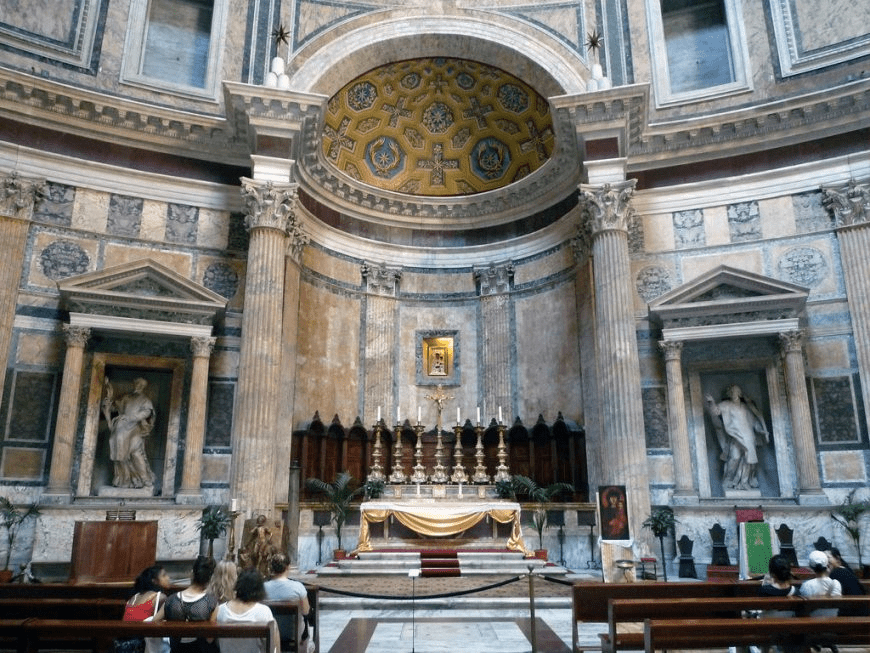
No wonder structures like the Pantheon’s massive unreinforced concrete dome—still the largest in the world—have stood strong for two millennia.
Today’s concrete (Portland cement) is fast to produce and easy to use—but it’s not built to last. It’s vulnerable to carbonization, water infiltration, and the corrosion of internal steel reinforcements. Many modern buildings begin to deteriorate in as little as 50 to 100 years.
What’s more, many structures are built with thinner supports and cheaper materials to cut costs and speed up construction—further sacrificing long-term durability.
Ancient Roman builders weren’t just engineers—they were environmental designers who worked with nature rather than against it. Their materials were local, natural, and synergistic. They designed for longevity, not just appearance or convenience.
Modern architecture, for all its technological advancements, could learn a powerful lesson: Durability is a form of sustainability.
We often assume that more advanced technology means better quality. But perhaps what truly makes a structure strong isn’t just engineering—it’s wisdom, respect for nature, and a mindset rooted in harmony and longevity.
If we embrace these ancient insights, maybe our future buildings won’t just house us—they’ll endure for generations.
In Exoteric Buddhism, there is a revered title for a special kind of master known as the Dharma King. In this Dharma-ending age, it is exceedingly rare and difficult to encounter a true Dharma King. According to the Vajrayana Buddhist scripture Vajra Secret Determination (Vajra Mi Jian), a Dharma King is the Sovereign of All Dharmas. A genuine Dharma King is either a Buddha or a great Bodhisattva who has attained at least the Twelfth Bhumi and has reincarnated into this world. Such a being must possess the twofold qualities of worldly and transcendental virtues.
Worldly Virtues
Worldly, or inner-worldly, virtues include mastery of both Exoteric and Esoteric Buddhist teachings, as well as perfection in the Five Vidyās:
Mastery of Exoteric and Esoteric Teachings means thorough understanding of the Tripitaka—the Sutras, Vinaya, and Abhidharma—as well as complete proficiency in all Esoteric (Tantric) practices, including the cultivation of the Three Secrets (body, speech, and mind).
Perfection in the Five Vidyās The five vidyas are the silpakarmasthanavidya (craftsmanship vidya), the cikitsvidya (healing vidya), the sabdavidya (sound vidya), the hetuvidya (causality or Buddhist logic vidya), and the adhyatmavidya (inner realization vidya). Actually, the Five Vidyas are not that narrow. Everything in the universe can be classified into five aspects of brightness and darkness. To develop everything that is good in the universe and that benefits living beings is classified as bright. That which confuses and is bad is classified as dark.
These Five Sciences must be fully and flawlessly accomplished.
Transcendental Virtues
Transcendental, or other-worldly, virtues refer to mastery of the Five Secret Inner Empowerments, which are revealed through the exhibition of supernatural powers within a tantric mandala. These five supreme empowerments are:
Vase Empowerment by Golden Urn Divination (Dharmapāla Division)
Vajra Samādhi Empowerment (Yidam Division)
Auspicious Selection Empowerment (Yidam Division)
Dharma Wheel Supreme Empowerment (exclusive to a Dharma King)
Buddha-Bestowed Nectar Empowerment – the highest empowerment that signifies direct and non-dual communication with the Buddhas
Additionally, a true Dharma King must possess the Dharma King Dharma Wheel, a sacred object bestowed directly by the Buddha from the sky (the void). Though it appears similar to a coin in shape, the Dharma Wheel is imbued with extraordinary power. It can walk, dance, speak, and sing, and it can manifest supreme Dharma powers through the true Dharma King.
The following is a firsthand account from Zhaxi Zhuoma Rinpoche, describing how she received the Dharma Wheel Initiation from H.H. Dorje Chang Buddha III.
Although this was a high level inner tantric initiation and as such cannot be publicly discussed or shared with others in detail, an exception was made to allow me to briefly tell others of my experience so that they can learn of the true power of the magnificent Buddha-dharma. A ritual was performed for me to remove certain negative karma that served as an obstacle to my achievement of liberation. After the dharma protecting deities arrived and the the Buddha-dharma was practiced, the Vajra Dharma Wheel quickly exhibited samadhi. Very quickly, I screamed–the impact was very intense, but in that same moment I also realized the truth of the Buddha-dharma. Although there was intense feeling–greater than anything I had ever experienced before–there was also no-feeling. I realized the emptiness of that magical experience while at the same time experiencing it. It was explained that this experience was a precursor to the realization of the dharmakaya.
I understood how my Buddha Master and other enlightened beings could accomplish their amazing feats. Although there are no words to adequately describe this experience, it was a glimpse of the dharmakaya–the truth of the universe! This is what is meant by “form is emptiness, and emptiness is form.” Living in this pure state, if only for a moment and through the power of my Buddha Master, I understood that the dharmakaya is everywhere. There was no place that is not the dharmakaya. This is what enlightened beings experience or realize at all times; as a result, they can do anything! All things are inherently empty and at the same time contain the potentiality of all things! This realization exists while living in this mundane world…….and, it exists for all sentient beings! We all have the inherent nature of a Buddha.
The initiation caused me not only to eliminate certain obstacles, but also reinforced my resolve to practice and help others to learn the true Buddha-dharma. I understood the necessity of obtaining inner tantric initiations from a true vajra master if one wants to achieve enlightenment in this lifetime! Only a true vajra master can summon the dharma protecting deities and communicate directly with the Buddhas and Bodhisattvas to perform this sort of powerful ritual! Only a true vajra master can manifest the awesome power of the true Buddha-dharma. My master, H.H. Dorje Chang Buddha III, is such a master!
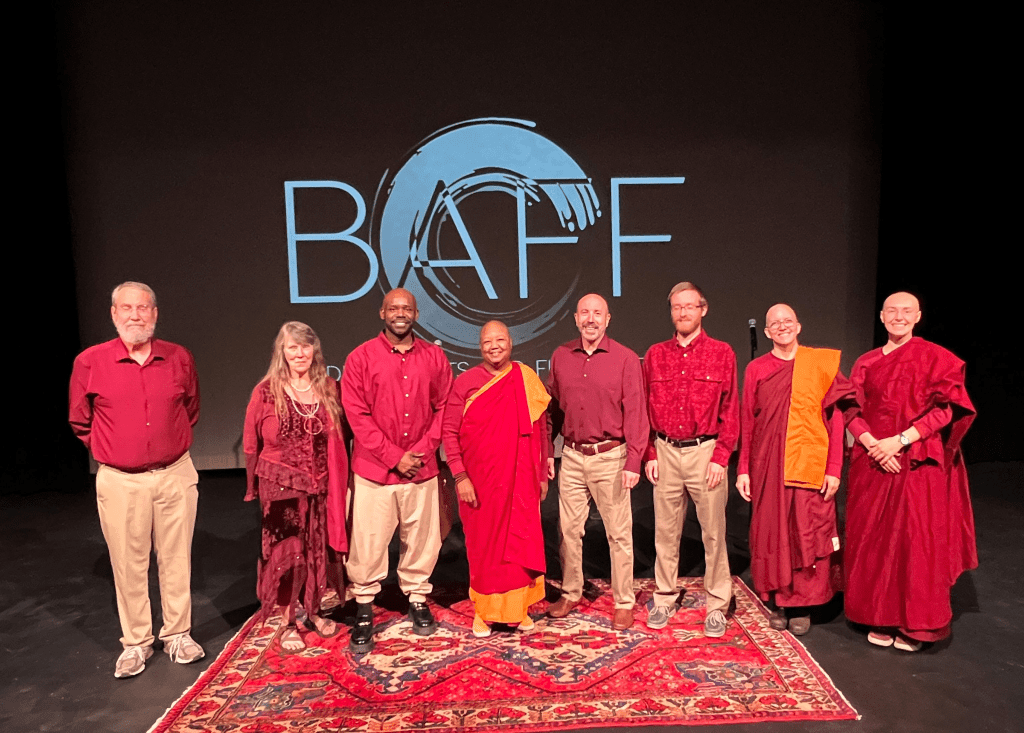
I’m thrilled to share that Bodhi Fest, a Buddhist Arts and Film Festival hosted by Heartwood Refuge, will take place at the Asheville Community Theater on August 16, 2025!
This inspiring event—the very first annual Bodhi Fest—promises to be a day of illumination, joy, and connection. Through films, workshops, music, art, and community, it will explore the uplifting qualities of the human spirit, from serene solitude to ecstatic joy.
The program will feature:
Buddhist films with Q&A sessions
Short films
A dance workshop
A songwriting workshop
Live musical performances
Plus, crafts, art, and food from Buddhist sanghas, local artists, and vendors, showcased in the front lobby throughout the day.
I truly hope this wonderful celebration of creativity and Dharma will deepen the understanding of Buddhism and bring more peace and joy to the hearts of people in America.
May Bodhi Fest shine with wisdom and compassion! 🌿🎶🎬
Enjoy immersion in activities that provoke insight and lift the spirit.
My name is Li Xueping, and this is a story about love, faith, and the incredible blessings that come from practicing true Buddhism. It is a story that centers around my mother, Yang Yanshu, a gentle and kind-hearted woman who is now over ninety years old. Despite her age, she continues to inspire us with her warmth, frugality, and deep devotion to her family.
My mother has been a Buddhist for many years. Though she is illiterate, she memorized and recites the Heart Sutra daily with great sincerity. In our home, we’ve always honored Namo Guanshiyin Bodhisattva, and her faith has been a quiet but powerful force in our lives.
In October 2003, my sister and I accompanied our mother to listen to the Dharma discourses of Namo Dorje Chang Buddha III for fourteen consecutive days. During that time, my mother experienced a profound transformation—both physically and mentally. She was radiant with Dharma joy and gained deep faith in the supreme teachings. From then on, she diligently listened to discourses, practiced Buddhism daily, and her health remained remarkably stable. It was clear to us: the blessings of true Dharma had uplifted her life.
In June 2017, our lives were shaken when my mother was diagnosed with cervical cancer at a reputable hospital. She was in her eighties at the time, and the news was devastating. We decided against surgery and opted for conservative treatment with traditional Chinese medicine to minimize her suffering.
My siblings and I turned entirely to Buddhist practice. We recited The Supreme and Unsurpassable Mahamudra of Liberation, performed lamp offerings, and conducted life-releasing ceremonies. My mother, too, chanted Buddha’s names with devotion and repented for past wrongdoings. She often reflected with remorse: “I regret killing so many chickens in the past just for food. I committed great wrongs by taking lives.”
We knew from the Buddha’s teachings that killing brings severe karmic consequences, and while our efforts could not undo the past, we hoped to ease her suffering through sincere repentance and practice.
Wanting to seek deeper help, I applied for a U.S. visa and, in September 2017, traveled to the United States to personally report my mother’s situation to the great Namo Dorje Chang Buddha III. The Buddha responded with immense compassion: “I will perform a Dharma practice to bless her.”
I will never forget that moment. The Buddha, who treats all beings with equal kindness regardless of wealth or status, blessed my mother. Monastic disciples also provided her with precious Black Treasure Pills. Miraculously, her pain vanished, her complexion became rosy, and she regained peace and strength. The power of true Dharma had once again revealed itself.
An Unexpected Crisis and a Miraculous Return
In June 2018, while I was visiting my daughter in Belgium, I received an urgent call—my mother was critically ill. We feared I might not see her again. I flew back as quickly as possible, praying for blessings throughout the journey. When I arrived home, I was astonished—my mother had survived.
My sister later told me that just before losing consciousness, my mother cried out:
“Namo Guanshiyin Bodhisattva, save me!”
Soon after, the ambulance arrived and took her to the hospital. After seven days of treatment, she was miraculously revived.
Shortly after, I faced a difficult decision. I had already planned to attend the Dharma Assembly Honoring the Holy Birthday of Namo Dorje Chang Buddha III in the United States. With my mother still recovering, and family responsibilities weighing on me, I hesitated. My husband even called me “unfilial” for wanting to leave.
But deep in my heart, I knew: this was the most important aspiration of my life. I prayed silently, asking for the Buddha’s blessings to keep my mother safe during my absence.
I attended the Great Life-Releasing Dharma Assembly at the H.H. Dorje Chang Buddha III Culture and Art Museum on June 21, 2018, and the next day, the rare and magnificent Holy Heavenly Lake Dharma Assembly. Surrounded by thousands of disciples from around the world, we chanted the holy name of the Buddha in unison. It was a moment of unimaginable spiritual joy.
On June 25, I had the honor of meeting Namo Dorje Chang Buddha III once again. I tearfully reported my mother’s condition, and the Buddha, in His great compassion, smiled and said, “Haha, good!” That moment filled me with peace and hope.
When I returned home, I found my mother in excellent condition. Despite her diagnosis, she had never experienced unbearable pain, never lost her spirit, and continued her daily Buddhist recitations as usual. During Chinese New Year, even our relatives remarked in amazement: “She doesn’t look like someone with cancer at all!”
Her strength, peace, and recovery were nothing short of miraculous. We owe everything to the compassionate blessings of Namo Dorje Chang Buddha III, the Buddhas and Bodhisattvas of the ten directions, and the authentic Tathagata Dharma.
Through this journey, I have come to understand the impermanence of life, the inescapability of karma, and the painful cycle of birth, aging, sickness, and death. No one can escape their karmic debts. But through true Buddhist practice—guided by the teachings of Namo Dorje Chang Buddha III—we can walk a path toward healing, liberation, and lasting peace.
May all beings awaken to the true Dharma, cherish the opportunity to learn from a living Buddha, and attain the freedom of body and mind through genuine practice.
In a world increasingly dominated by artificial intelligence and digital innovation, Dr. Jeff Walker, a retired neurosurgeon turned philanthropist, is on a mission to “keep the humans in the humanities.” His Walker’s Rising Stars Scholarship Program, launched in 2003 in partnership with the Pinellas Education Foundation in Florida, has awarded over $970,000 to high school students excelling in Dance, Instrumental, Theater, Visual Arts, and Vocal Performance.
Now, with a bold vision to expand the program nationally, Walker is poised to reshape arts education across the United States: “I want this to expand to cover the whole country and change arts education in high school and college,” says Walker, who has made it his mission to provide free education for all.
Walker’s inspiration—rooted in personal tragedy, a love for the arts, and a deep commitment to education—drives a movement that empowers young artists to pursue their dreams without the crushing weight of student debt.
His path to philanthropy was anything but conventional. A Duke-trained neurosurgeon who performed over 10,000 operations and established a major trauma center in Florida, Walker’s career was defined by precision and impact.
Yet his drive to give back stems from a deeply personal experience at age five. “I had a tragic event, a near-drowning incident,” he recalls. His best friend didn’t know how to swim. Influenced by childhood media and misunderstanding the risks, he pushed him into the water. The outcome was devastating: his friend drowned, and Walker nearly did too. “I felt so guilty, blocked it out for 15 years,” he says. “I think I tried to overcompensate by helping people. It was something that took an incredibly long time for me to forgive myself for.”
This tragedy instilled a lifelong mission to serve others—first through medicine and later through philanthropy. His medical journey began under the influence of his father, a dentist and university chairman, and his mother. “I scrubbed in on over 200 open-heart operations,” he says. But it was in medical school that he discovered neurosurgery, drawn to the brain as “what you are.” He completed his residency at Duke by 1985, laying the foundation for a career that blended science with service.
Walker’s love for the arts, though not as a performer, also shaped his vision: “I played the piano when I was younger, very methodical, classical music,” he shares. A humbling moment came at 15 when a friend played a Beatles song effortlessly, revealing Walker’s limitations. “I couldn’t do that at all,” he admits.
Yet, this experience underscored his belief in the arts as a universal force: “Every culture has their own dance, songs, music, symphonies, operas—the arts are a unifying factor,” he says. “There’s so much diversity in America today, and this brings everyone together.”
In 2003, Walker channeled his passion for education and the arts into the Walker’s Rising Stars Scholarship Program, partnering with the Pinellas Education Foundation to support local high school students. The program, which awards scholarships for arts education, is a vibrant celebration of talent, culminating in an annual event at the Mahaffey Theater.
“The kids get there at noon, we have lunch, they audition during the day, and then put on a show at night—three-minute acts, five categories, with the county jazz band. Families are cheering, it’s super fun,” he says.
The program’s impact transcends financial support. After the show, students gather backstage, hugging and celebrating. “They’re all aspiring artists, and you can feel the love,” Walker says.
As a father of four and grandfather of eight, Walker connects deeply with the pride parents feel at these events. “You’ve taken these kids to music, art, dance lessons for years, and to see them on stage as young adults—the pride and love bounce off the walls.”
The scholarships address the broader student loan crisis, which Walker views as a significant burden on young people. “Every dollar is $1 the family doesn’t have to spend on education,” he says.
Beyond financial relief, the program instills confidence and recognition. “It’s not easy to get on that stage, knowing hundreds of kids are vying for that spot,” Walker says. “The confidence they get is key.”
He recalls a student letter that captures the program’s transformative power: “She wrote, ‘I was going to go to St. Pete College, but after winning this, I’m going to Manhattan School of Art.’ It’s a life-changing event.”
Walker estimates that the program changes “about half the kids’ lives,” with alumni achieving remarkable success. “They’re making a living in the arts,” he says proudly.
Walker’s inspiration for Rising Stars is grounded in his belief in education as a pathway to opportunity: “As a Duke-trained neurosurgeon, I went to school a long time, and I owe everything I have to my education,” he states. “In the end, when you look back on your life, it’s not what you get, it’s what you give.”
This philosophy fuels his commitment to expanding arts education, particularly in public schools. “Education is the way out,” he says. “Through hard work and education, I still believe in the American Dream—you can be anything.”
Walker also recognizes the challenges the arts face in an increasingly digital age. He trademarked the phrase “keep the humans in the humanities” to emphasize the need for genuine human creativity. “How do you combat that? You create a generation of talented singers, dancers, actors,” he explains. The program reinforces human expression and creativity during a time when automation is on the rise.
Now, Walker has announced the national expansion of Rising Stars, choosing the prestigious Sundance Film Festival to unveil his plan. His goal: establish 1,000 program sites, each supported by a $4 million endowment that yields 5% annually to fund 25,000 students each year. “After four years, that’s 100,000 Rising Stars in college—enough to transform arts programs,” he calculates.
The national rollout will replicate the local model, with auditions and performances administered through public school districts and education foundations. “Everything goes through the school district, the teachers,” Walker says, highlighting a grassroots approach. Local events will feed into regional, state, and national competitions—potentially televised to amplify awareness and participation.
“This will bring every community together to support their young people,” he says, envisioning the program as a unifying force during divisive times.
Walker also sees the initiative as a response to the underfunding of arts education. “In high school, the arts are underfunded,” he notes. “Everybody’s talking STEM these days, but an education in the arts is very difficult.”
The program aims to uplift students pursuing creative careers, helping them gain recognition, validation, and the resources they need to thrive. “This program tells them, ‘You’re a great singer, artist, you’ve got talent,’” Walker says. “It gives them the confidence to pursue their dreams.”
Scaling Rising Stars nationwide presents challenges, but Walker remains focused: “As a Duke-trained neurosurgeon, I didn’t get here by luck. We have a plan.”
He’s connecting with artists’ unions and entertainment professionals to grow the network of supporters. To aid in funding, Walker has even developed a travel toothbrush—with proceeds directed toward scholarships—and is exploring other creative avenues to generate resources. “This is a generational project,” he says. “If you can’t get the generation behind it, it’s not going to happen.”
Walker’s long-term goal is free college education for students in the arts—including room and board. “I envision a future where Rising Stars have their own dorms, live and perform together, support each other,” he says. “If a student’s parent gets sick and they can’t afford school, let’s have a concert to raise money so they don’t drop out.”
For Walker, the legacy is not about awards but impact: “In 2035, if every Oscar, Emmy, or Tony category has a Rising Star, that’d make me happy,” he says.
What brings him joy is the personal fulfillment: “At first, I thought it was about sitting in the front row, hearing nice things,” he reflects. “But it makes me happy inside. I’m a good person, and this brings fulfillment, self-satisfaction, and love for myself.”
As Walker’s Rising Stars prepares to take the national stage, it stands as a powerful testament to one man’s belief in the power of art, education, and human connection to change lives and strengthen communities.
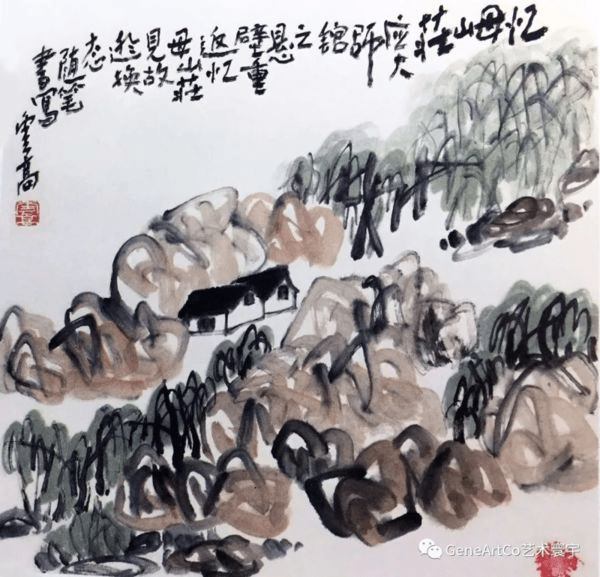
This is a deeply moving landscape painting by H.H.Dorje Chang Buddha III, marked by smooth, flowing brushwork and a natural rhythm. The undulating crimson cliffs seem to rise freely from the artist’s heart, while the vigorous lines brim with vitality and strength. Ink strokes form the skeletal structure of the mountains and rocks, while delicate willows hang softly across the scene, adding a quiet touch of green serenity. The overall palette is vivid but never garish, exuding a warm and nostalgic atmosphere.
In the painting, two thatched cottages nestle beside the mountains and water. Their deep-set doors and silent windows seem to hold untold, quiet stories. It was under these eaves, by these doors, that a loving mother once stood—sending her children off into the world with silent heartache, and waiting countless times in patient hope for their return. That wordless farewell, those tears of longing, have gently seeped into the fabric of time. Among all human emotions, none is greater than a mother’s love. Our memory of that love stirs an innate sense of gratitude—a sacred emotion that transcends the ordinary.
This work embodies the style known as the “Childlike Native School”, which embraces the beauty of rural life through the innocence of a child’s heart. Though the brushstrokes appear naïve and spontaneous, they conceal great depth and mastery. The painting style is free and unrestrained, exuding both boldness and tenderness. The soft, flowing lines connect seamlessly—like a mother’s love, endlessly enduring, gentle yet firm. Its simple composition holds rich emotional meaning and invites the viewer’s imagination to wander. The scene pulses with a childlike liveliness that fills the heart with joy.
The painting’s pure and innocent imagery evokes a return to the carefree days of childhood. No matter where you are, simply gazing at this piece can bring the scene and its emotions vividly before your eyes, awakening the deepest tenderness and longing in your soul.
In creating Mountain Village with Memories of Mother, the artist approached the work with the pure heart of a child, yet painted with the maturity and finesse of a seasoned master. The brush technique draws from traditional Chinese calligraphy—guided by the wrist, powered by the arm—each stroke flowing naturally with graceful spontaneity. This painting was not created for show or technical display, but as a sincere outpouring of emotion and inspiration. Every application of ink and color arises from genuine feeling.
What is art? At its essence, art is the ability to immediately evoke inner peace, comfort, joy, or spiritual fulfillment in the viewer. But where does this feeling come from? Is it merely the subject matter or visual beauty of the work? Certainly not. A painting does not become great simply because it looks pleasing.
In the context of Chinese painting, the true heart of art lies in a quality called “spiritual resonance” (shen yun). It is vivid, yet elusive—a mysterious charm and subtle power that cannot be described with words. It is born when the artist’s personal cultivation, emotional depth, and spiritual awareness infuse the work, allowing spirit and technique to merge. The result is an artistic vitality that transcends mere form.
Only when viewers are moved by this spiritual resonance do they begin to explore the painting’s formal elements—its composition, color palette, brush technique, balance between painting and calligraphy, and the portrayal of the subject in both spirit and form. While these aspects matter, they ultimately serve a deeper, more profound experience.
In Chinese art, the true value of a painting—its ability to soothe the soul—does not depend on technical skill alone. It lies in whether the work can touch the heart and stir the spirit. Mountain Village with Memories of Mother beautifully embodies this artistic spirit. Every brushstroke gently stirs the viewer’s emotions, evoking tender memories and inviting the soul to linger in its serene beauty.
This exceptional work is housed in the permanent collection of the International Art Museum of America, located in San Francisco—a fitting home for a piece that speaks a universal language of love, nostalgia, and spiritual beauty.
Peace Pilgrim once said, “If you knew how powerful your mind is, you would never think a negative thought.” That quote stayed with me, but I didn’t fully understand its truth until I experienced it for myself—right in my own backyard.
At one point, we lived in a house with a large backyard that inspired me to plant organic vegetables. I imagined harvesting fresh, healthy produce and enjoying the process of nurturing life from the soil. Eager and hopeful, I bought a few small tomato plants from Home Depot and began tending to them daily. Watching them grow brought me joy and anticipation—I could almost taste the sweet, juicy tomatoes I dreamed of.
But as the plants began to bloom and bear fruit, trouble arrived. Large, green caterpillars appeared overnight, chewing through leaves and fruit, threatening to destroy the entire garden. My husband was furious and would crush them on sight. Wanting to find a gentler solution, I turned to friends for advice. One of them recommended a non-toxic spray from an organic farm store. It worked like a glue, blocking the insect’s skin so they couldn’t breathe and would suffocate to death.
When I heard that, I felt a sharp, suffocating sensation through my own skin. I couldn’t do it. I couldn’t kill them—no matter how many tomatoes I might lose. These were living beings. Their lives mattered too. I decided then and there: I would not harm them.
And then, something remarkable happened.
The very next morning, my husband came to me in astonishment. “All the caterpillars are gone,” he said. “And there aren’t even any dead ones.” I went out to the garden. He was right. The insects had vanished without a trace.
Was it just a coincidence? I don’t believe so. I believe they sensed my compassion. I believe the power of a sincere, non-harming mind created a shift in energy that led to a quiet, unseen miracle.
Later, after I began studying Buddhism, I came to understand this experience on a deeper level. Through the Dharma transmitted by H.H. Dorje Chang Buddha III, I learned the true meaning of the precept of “Not Killing.”
This teaching awakened a deeper sense of responsibility in me. I now strive to regard the suffering of all beings as my own, and I earnestly wish for every living being—my parents of infinite past lives—to live in harmony and peace.
I sincerely pray that all beings may enjoy happiness, good health, and abundant fortune. I constantly beseech all Buddhas and Bodhisattvas to bless them, to help them escape suffering, to encounter and practice the true Buddha-dharma, and ultimately to attain liberation from the cycle of birth and death.
This is not just a story about gardening. It is a story about the incredible power of our minds—and even more so, our hearts. When we choose compassion over destruction, mindfulness over impulse, miracles can happen.
Let kindness guide you. Let the power of your mind awaken something beautiful—not just in your life, but in the lives of all beings around you.
In 1985, a drunken promise set a young woman on a path that would change not only her life, but the fate of an entire desert.
At just 19 years old, Yin Yuzhen was forced to marry Bai Wanxiang, a man living deep in China’s Mu Us Desert.
On her wedding night, while Bai lay down early to rest, Yin Yuzhen sat awake until dawn, her eyes red from weeping. When she looked out from her tiny dugout home, she saw nothing but endless waves of yellow sand stretching to the horizon. She felt as if her life had ended before it began.
Her new home was a four-square-meter pit carved into a sand dune. To enter, she had to stoop under a doorway so low it nearly grazed her back. Inside, there was nothing but a bed of dry twigs and straw.
Her husband was four years older and came from a family who had battled the desert for generations. Years earlier, Yin’s father had been saved by Bai’s father when a sandstorm left him lost in the dunes. Grateful, the men became sworn brothers, and in a haze of alcohol, her father vowed to give his daughter to the Bai family. Though he regretted it once sober, he felt bound to keep his word.
Life was brutal. There was no electricity or running water. Summers scorched and winters froze. They survived on millet, wild plants, and the occasional scavenged animal carcass. For forty days after her wedding, Yin Yuzhen saw no one but her husband—until, at last, a wandering herder passed by.
The isolation was unbearable. In her loneliness, she would cover footprints in the sand with a basin, pretending someone was still there.
Seven times she tried to flee, and seven times she became lost in the swirling sand. Once, she walked for two days and nights, only to find herself back where she started. That was when she realized the desert was not going to let her go.
At her lowest point, she contemplated ending her life. But in that moment, she remembered her mother’s tearful face the day she left home—and she stepped back from the edge. If she couldn’t escape, she decided, she would have to find a way to survive.
Hope arrived in the form of two poplar saplings she brought home from a visit to her parents. Miraculously, one took root. That little sprig of green whispered a possibility: maybe the desert wasn’t completely invincible.
In 1986, Yin Yuzhen made a bold choice. She sold their only “three-legged sheep”—a wounded animal that was still precious—and used the money to buy 600 young trees.
That spring, she and Bai planted each sapling in the sand around their cellar.
The challenges were immediate. Every day, they walked kilometers to fetch water. Under the searing sun, most of the saplings withered. By summer’s end, fewer than 100 remained. But for Yin Yuzhen, that was enough to keep going.
From then on, reclaiming the desert became her life’s purpose. Bai took work wherever he could to buy more trees, while she stayed behind to plant, water, and protect them.
Every morning she rose at 4 a.m. and worked until late into the night.
Through years of trial and error, she devised a three-layer planting method: shrubs to anchor the sand, trees to form a windbreak, and fruit trees to sustain their livelihood. This innovation transformed survival rates.
But the desert kept testing her resolve.
In 1989, a monstrous sandstorm struck while they were returning with new saplings. The wind tore the trees from their cart and buried them. Yin Yuzhen clung to their ox’s tail, stumbling forward in the blinding grit. When they finally reached home, she didn’t rest—she planted every surviving sapling that same night.
Setbacks never stopped coming.
They flattened kilometers of sand to make water channels, only to watch them swallowed again and again.
She went into premature labor from exhaustion. He developed pneumonia. But neither ever quit.
For the first ten years, the progress was almost invisible. The trees grew painfully slowly, and the dunes kept advancing. Still, she believed that if she didn’t give up, someday the desert would yield.
In the fifteenth year, signs of hope appeared. The dunes near their home began to stabilize. The wind softened. Small animals returned.
After twenty years, their desolate hollow had transformed into an oasis that drew neighbors to settle nearby.
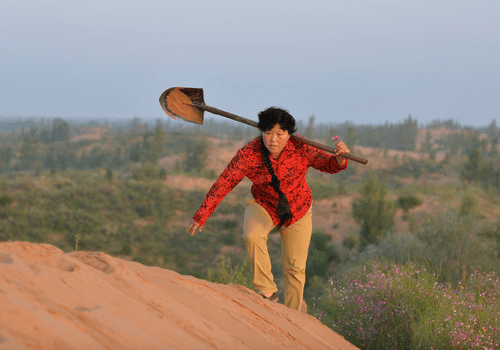
Today, after thirty-six years of relentless labor, Yin Yuzhen and Bai Wanxiang have reclaimed more than 70,000 acres of desert.
They have planted over 20 million trees—forming a vast green barrier against the sands.
Their perseverance has inspired 84 families to join in the mission, proving that even the harshest landscapes can be transformed.
Yin Yuzhen’s story has captured global attention. She has won over 100 honors, including “National Model Worker” and “Green China Person of the Year.” She was the first Chinese woman nominated for the Nobel Peace Prize, and the United Nations has praised her work as a model of ecological restoration.
What began as a forced marriage became the catalyst for a transformation no one imagined possible.
The young bride who wept in despair became a legend—China’s Desert-Conquering Queen.
Standing in her thriving “green kingdom,” she often reflects on her journey from hopelessness to triumph.
“At first, I only wanted to survive,” she says. “Later, it became my life’s mission.”
Today, the cellar where she once had to crawl inside has been replaced by a bright brick house surrounded by orchards and forests. That place—once a symbol of despair—has become a destination where people come to learn, to marvel, and to be inspired.
Yin Yuzhen’s life is a powerful reminder that in the most unforgiving environments, the strongest life force can grow.
One woman’s 36-year battle against the desert ended in a victory of green.
What if your thoughts and emotions were not just fleeting states of mind, but actual energy frequencies that shape your physical health and the world around you?
Dr. David R. Hawkins, a renowned American psychiatrist and spiritual teacher, spent decades studying human consciousness and developed a revolutionary model known as the Map of Consciousness. His work, presented in the best-selling books Power vs. Force and Letting Go, offers profound insight into how our energy levels—shaped by our emotions, beliefs, and spiritual awareness—directly impact our health and happiness.
🧠 The Energy Scale That Maps Our Inner World
Hawkins created a logarithmic scale of consciousness, ranging from 1 to 1000, where each level reflects a specific emotional and spiritual frequency. These levels are not abstract—they can be measured through kinesiology (muscle testing) and are believed to influence not only individual wellbeing but also global consciousness.
Here’s a simplified breakdown:
Level
Emotion/State
Effect on Health
20–100
Shame, Guilt, Apathy, Fear
Weakens body and immune system
200
Courage (Turning Point)
Threshold into empowering, healing energy
300–400
Willingness, Acceptance
Enhances emotional resilience and balance
500
Love, Compassion
Promotes deep healing and joy
600–700+
Peace, Enlightenment
Spiritual transcendence and lasting vitality
Hawkins emphasized that 200 is the critical dividing line. Below this threshold, people are ruled by fear, anger, or despair—states that are energetically draining and often linked to physical illness. Above 200, individuals begin to reclaim their personal power, align with truth, and tap into energies that support healing, vitality, and inner peace.
Dr. David R. Hawkins, stated that many people fall ill because they lack love and are filled only with pain and despair. When a person’s vibrational frequency is below 200, they are more prone to illness.
Dr. Hawkins, who interacted with many patients daily, said that he could tell why a person was sick just by looking at them—because he couldn’t find even a trace of love in them. Instead, their entire being was enveloped in pain and despair, living in a state dominated by negative thoughts.
According to Hawkins, many people fall ill not because of viruses or external factors alone, but because their emotional vibration is too low. When we live in fear, hold grudges, dwell in guilt, or resist life, our frequency drops—and the body, being energy-sensitive, responds with imbalance and dis-ease.
Chronic stress, suppressed anger, and emotional numbness are not just psychological burdens—they create an environment where illness can thrive.
If a person’s vibrational frequency is above 200, they are less likely to become ill. In contrast, emotions like anger, constantly blaming others, and harboring resentment consume a great deal of energy.
💖 Love, Faith, and Healing: The Power of High Frequency
Dr. David R. Hawkins observed that when Nobel Peace Prize laureate Mother Teresa appeared at the award ceremony, the atmosphere in the entire venue became remarkably elevated. The vibrational frequency of the space rose significantly, and her powerful presence allowed everyone there to tangibly feel her energy. In her presence, no one harbored negative thoughts.
According to Dr. Hawkins, when a person with a high vibrational frequency enters a space, they uplift everything around them—people, emotions, and even the environment itself. In contrast, someone who is filled with negative thoughts not only harms their own well-being but also disrupts the energetic field of their surroundings.
From a medical standpoint, Dr. Hawkins found the power of thought to be truly extraordinary. Through millions of tests and global surveys conducted across different races and cultures, he discovered that the impact of human consciousness was consistent and universal.
🌿 How to Raise Your Energy Level and Stay Healthy
You don’t need to be a spiritual master to benefit from Hawkins’ insights. Simple, daily practices can help you maintain a high vibrational state and support your health:
Practice Gratitude Start and end each day reflecting on what you are thankful for. Gratitude is a natural vibration lifter.
Choose Forgiveness Over Resentment Let go of past hurts. Forgiveness is not for others—it’s a gift you give yourself to release energetic baggage.
Meditate or Pray Daily Quieting the mind and focusing on divine compassion, love, or light raises your frequency significantly.
Speak with Kindness and Honesty Truthfulness and compassion are energetically aligned with the higher levels of consciousness.
Surround Yourself with Uplifting Influences Avoid negative media, toxic relationships, or environments that lower your energy. Choose art, nature, music, and people who inspire joy.
Invoke Higher Consciousness Repeating sacred names—such as “Amitabha Buddha,” “Guanyin,” or “Jesus Christ”—with pure faith has been shown to uplift energy and bring healing calm.
✨ The Ultimate Wellness Is a Shift in Consciousness
Dr. David Hawkins teaches us that wellness begins from within. By raising our consciousness, choosing love over fear, and aligning with truth and compassion, we can live not only healthier lives—but more joyful, meaningful ones.
Your mind is more powerful than you think. And your heart—when opened fully—has the power to heal not just your body, but the world around you.
“What you are looking for is what is looking.” — David R. Hawkins
Longxing Temple, also known as the Great Buddha Temple, is one of China’s oldest, largest, and best-preserved Buddhist temples. This extraordinary complex is not only a sacred site but also a magnificent testament to the architectural genius and spiritual devotion of ancient China.
Located at No. 109 Zhongshan East Road in Zhengding County, Shijiazhuang, Hebei Province, Longxing Temple sprawls across an impressive 82,500 square meters.
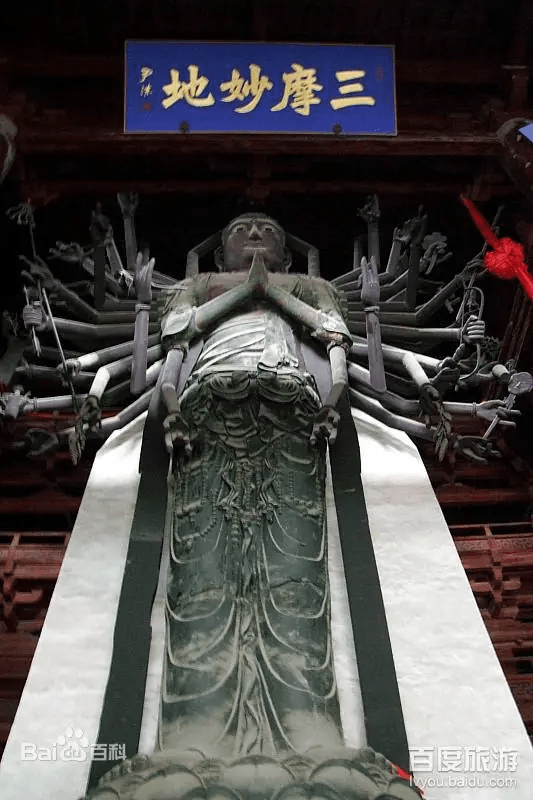
Originally established in 586 CE during the Sui Dynasty under the name Longcang Temple, it was later renamed Longxing Temple during the Tang Dynasty. In 971 CE, Emperor Taizu of the Northern Song Dynasty issued an edict to cast an enormous bronze Thousand-Armed Avalokiteshvara Bodhisattva and build the splendid Hall of Great Compassion to house it.
This marked the beginning of large-scale expansion, culminating in a grand Song Dynasty architectural complex centered on the hall. Through the Jin, Yuan, and Ming Dynasties, the temple saw continued renovation and growth. In the Qing Dynasty, both Kangxi and Qianlong Emperors decreed extensive rebuilding, shaping the temple’s current layout:
The eastern section served as monks’ quarters
The central axis hosted Buddhist ceremonies
The western area functioned as the imperial palace quarters
In 1710, Emperor Kangxi personally inscribed the name “Longxing Temple,” an honor that reflects its enduring importance.
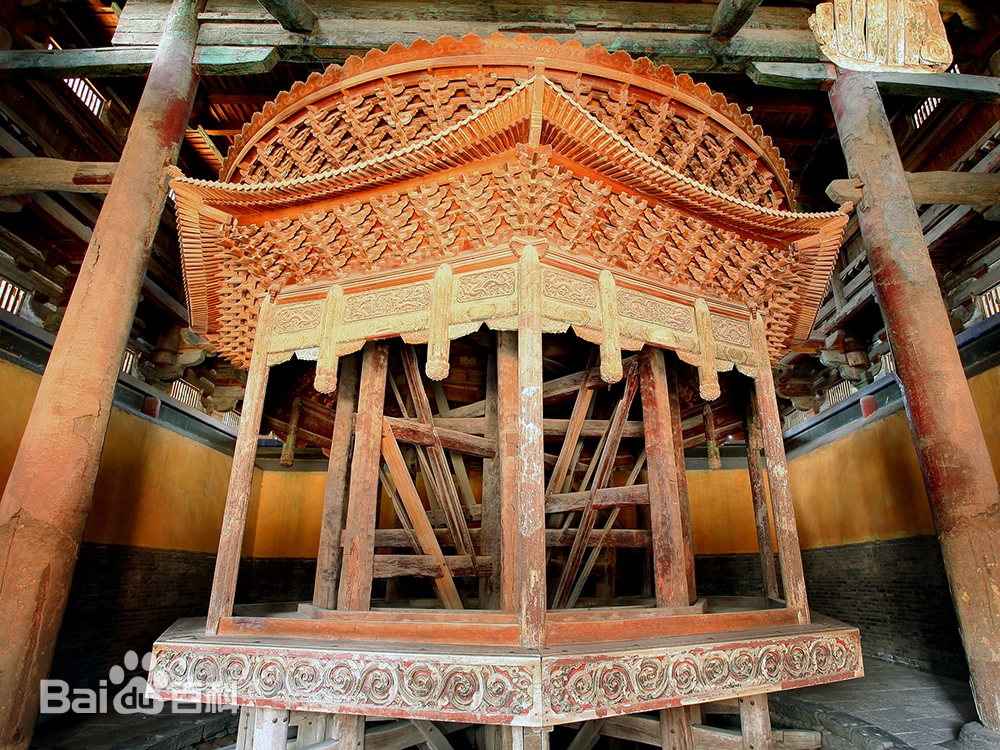
Today, visitors can trace a north–south axis that passes through a series of majestic structures: the Hall of Heavenly Kings, Mani Hall, the Ordination Altar, the Revolving Sutra Library, and more than a dozen other halls and pavilions. The complex is celebrated as a textbook example of ancient Chinese Buddhist temple design.
Recognized among China’s ten most famous temples, Longxing Temple was declared a Major National Historical and Cultural Site in 1961 and later designated a National AAAA Tourist Attraction.
Highlights Not to Miss
Hall of Heavenly Kings
First built in the Northern Song Dynasty, this is the oldest surviving structure of its kind within the temple. Even after a major renovation in 1780, its main timber frame remains original.
Above the entrance, plaques bearing the calligraphy of the Kangxi Emperor read:
“Imperially Established Longxing Temple” “Hall of Heavenly Kings”
Inside stands the famous Big-Bellied Maitreya Buddha, a Jin Dynasty wood carving over 800 years old. Thoroughly localized in Chinese style, this smiling figure derives from the legendary monk Qici, known for his benevolence and laughter.
On either side stand the Four Great Heavenly Kings, each symbolizing auspicious natural forces:
Wind (Southern King, with a sword)
Harmony (Eastern King, with a lute)
Rain (Northern King, with a precious umbrella)
Compliance (Western King, with a coiled snake)
Together, they express the blessing of abundant harvests and national peace.
Mani Hall
Built in 1052, Mani Hall has an unusual cross-shaped floor plan created by four gabled annexes extending from its square central chamber.
Inside, five golden clay Buddha statues preside over the altar, with Shakyamuni Buddha at the center.
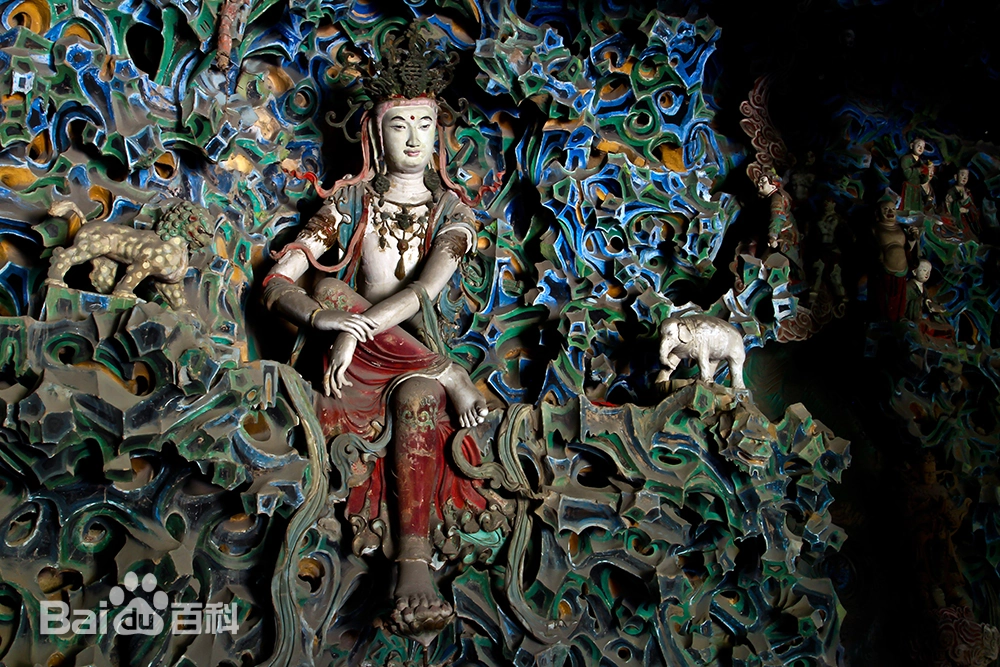
The hall’s north wall showcases a breathtaking polychrome relief nearly 16 meters long, depicting swirling clouds, celestial beings, and Avalokiteshvara stepping onto a lotus—symbolizing the entrance to the Western Pure Land.
At the heart of this scene sits the Backward-Facing Avalokiteshvara, so named because she faces north instead of south. Far from a supernatural image, this Avalokiteshvara appears as a serene, youthful woman with an expression so vivid and gentle it moves all who gaze upon her.
Visitors often remark:
“How beautiful—how extraordinary! She sits so naturally, one leg casually crossed, her eyes meeting yours wherever you stand. Her smile is as enigmatic as the Mona Lisa—truly ‘The Most Beautiful Avalokiteshvara.’”
Ordination Altar
Reserved for the most important temples, the Ordination Altar was where monks received their vows.
Inside the altar stands a unique double-sided bronze Buddha statue. Facing south is Amitabha Buddha, and facing north is Medicine Buddha. The two figures share a single body, seated back to back in lotus posture.
The statues are depicted in full lotus position, wearing five-leaf crowns, with round, gentle faces. Their necks are adorned with necklaces and their arms with bangles, while flowing sashes drape gracefully from their shoulders. Amitabha’s hands form the meditation mudra, while Medicine Buddha’s hands display the gesture of compassion.
Their expressions are serene and tranquil, exuding a quiet dignity and solemn beauty in their elegant simplicity.
Longteng Garden
To the northeast lies Longteng Garden, a Ming and Qing–style garden combining cultural heritage and tranquil scenery.
Here you’ll find:
Northern Dynasties stone statues
A Jin Dynasty scripture pillar
A Yuan Dynasty mural tomb
The Ming Dynasty Longquan Well Pavilion
The “Three Generations of Vice Ministers” stone archway
Meandering through its pavilions, terraces, and lush paths feels like stepping into a living scroll of history.
Cultural Traditions
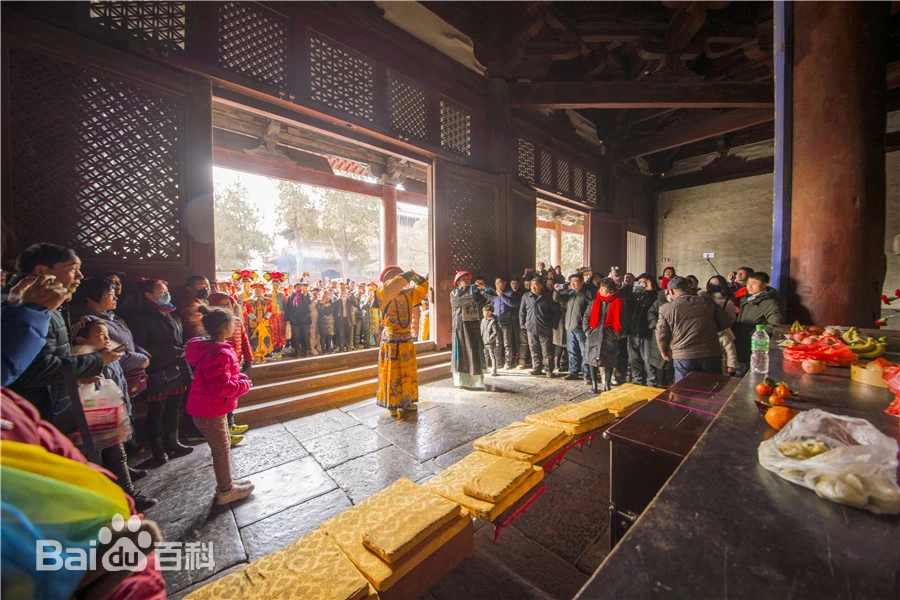
Imperial Buddhist Ceremony Performance
Zhengding’s Longxing Temple is an imperial temple that was visited and funded for repairs by emperors over many dynasties. According to The Chronicles of Longxing Temple, in the 49th year of Emperor Kangxi’s reign (1710 CE), the emperor ordered funds to be allocated from the national treasury to restore Longxing Temple. After the renovations were completed, Emperor Kangxi personally came to pay homage and bestowed 19 inscribed plaques, including one reading “Longxing Temple Constructed by Imperial Decree,” all handwritten by himself.
At the end of 2011, drawing on historical records, the Cultural Heritage Office re-created the Grand Imperial Buddhist Ceremony, reenacting the scene of Emperor Kangxi’s arrival at Longxing Temple, the local officials welcoming the imperial entourage, and the emperor bestowing plaques, offering incense, and performing rituals to honor the Buddha.
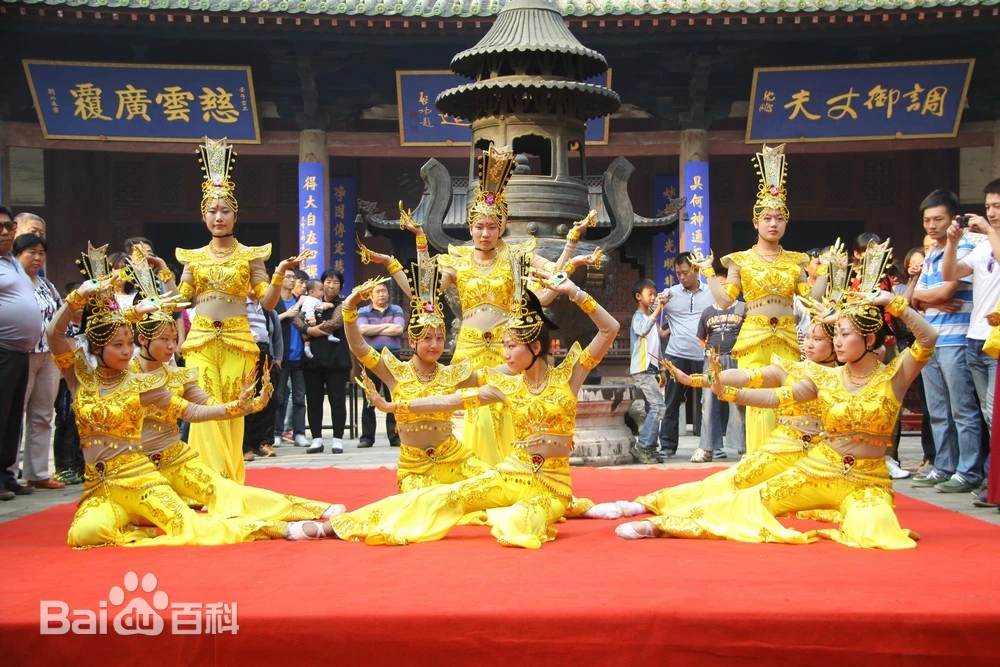
Thousand-Armed Avalokiteshvara Performance
Inside the Great Compassion Pavilion of Zhengding’s Longxing Temple stands a bronze statue of the Thousand-Armed, Thousand-Eyed Avalokiteshvara, measuring 21.3 meters in height. Cast in the 4th year of the Kaibao era of the Northern Song Dynasty (971 CE), this towering bronze figure is remarkable both for its immense size and its exquisite craftsmanship.
It is the tallest and oldest ancient bronze Buddha statue of its kind in the world. It is not only a symbol of Longxing Temple but also an emblem of the ancient city of Zhengding.
The Thousand-Armed Avalokiteshvara Performance features graceful melodies and captivating dance that vividly convey the divine presence and compassion of the bodhisattva.
Longxing Temple is more than a historical monument—it is a living symbol of Chinese Buddhist art, architecture, and spirituality. Whether you come for quiet reflection, cultural discovery, or simply to stand before centuries of devotion, this magnificent temple will leave a lasting impression on your heart.
























 Peace LiLy