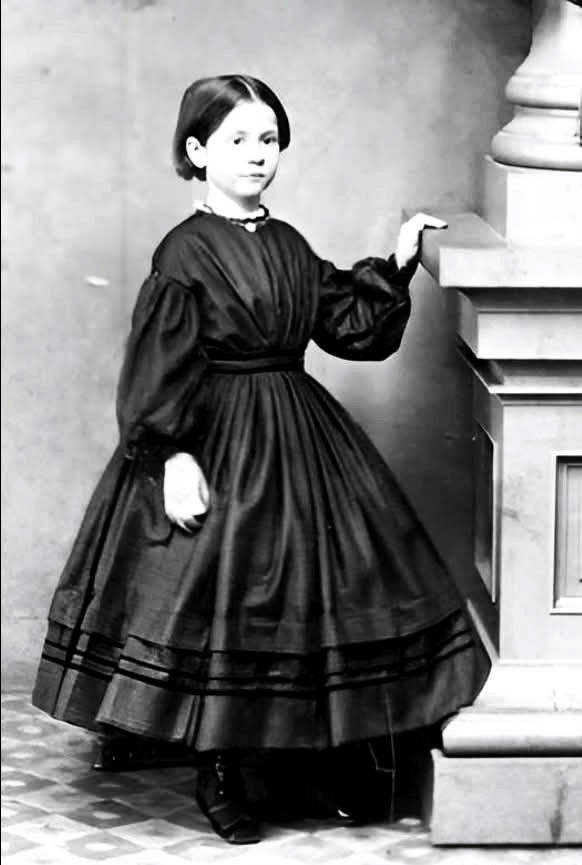
A fifteen-year-old girl who had three hours, a law book, and the unwavering conviction that her sister’s life was not for sale

From : Gistreel Lifestyle. Liberia Online

She was eight years old when her father gambled her away in a card game.
Her older sister had three hours to win her back before the debt collector came.

Deadwood, Dakota Territory. 1877.
A place where law came slow, danger came fast, and survival belonged to the ruthless.

Thomas Garrett had lost everything—his mining stake, his wages, his self-respect—and now, in a drunken haze at the Gem Saloon, he’d lost something far worse:

his daughter.

The man who won her was Bullock—
not the sheriff, but a labor trafficker who “supplied” children to mining camps.
Kids as young as six spent twelve-hour days sorting ore until their lungs failed or their fingers gave out.
Most didn’t live past fourteen.

Thomas signed the paper without hesitation.
Bullock would collect little Emma at noon.

When fifteen-year-old Sarah came home from the laundry and learned what her father had done, she didn’t cry.
Didn’t scream.
Didn’t fall apart.

She simply asked, “When?”

“Tomorrow. Noon.”

Three hours until dawn.
Three hours to save her sister.

And Sarah had something her father never had:

clarity.

She knew Bullock.

Everyone did.
A cruel man who hid behind paperwork and respectability.

He’d made her father sign a contract—
which meant it could be challenged.

And Deadwood had something else:

A new federal judge who’d publicly declared that parents could not use their children to pay debts.

Sarah didn’t sleep.
She didn’t blink.

At dawn she was already standing in the courthouse, breathless, determined.

The clerk tried to dismiss her—
fifteen-year-old girls didn’t talk law.

But Sarah did.

Because before drink ruined him, her father had been a clerk…
and she’d read every law book he left lying around.

She laid out the case with the precision of a trained lawyer:

The contract violated territorial labor laws.

It constituted debt bondage of a minor.

Thomas Garrett was legally incapacitated due to intoxication.

The clerk stared. Then nodded.

He woke the judge.

Judge Isaac Parker—who would one day be known as the “Hanging Judge”—read the contract, listened to Sarah, and did something extraordinary:

He issued an emergency injunction, blocking the transfer and summoning both Bullock and Thomas Garrett to court that afternoon.

When Bullock arrived at the Garrett cabin at noon, two men at his back, he found Sarah waiting on the porch.

Not shaking.

Not pleading.

Holding a federal court order in her hand.

Bullock turned red with fury but wasn’t stupid enough to defy a judge.

At the hearing, Judge Parker didn’t hesitate.

He voided the contract.
Declared it an illegal attempt to traffic a minor.
Warned Bullock that any further attempt to collect “payment” would end with him in chains.

Then he turned to Thomas Garrett.

A father who gambled his children away forfeits the right to be a father.

Parker stripped him of parental rights and—
in a move that shocked the entire Dakota Territory—
appointed fifteen-year-old Sarah as her sister’s legal guardian.

But victory didn’t fill their stomachs.

Sarah now had an eight-year-old to raise,
no money,
no home,
and only her laundry work to survive.

What she did next became legend.

She went to five different businesswomen in Deadwood—
laundry owners, seamstresses, boarding house keepers—
and proposed a deal:

“I’ll work for reduced wages.
You house and feed my sister and me.
I’ll take the hardest jobs and the longest hours.”

Four said no.

The fifth—
a widow named Martha Bullock (no relation to the trafficker)—
said yes.

For the next three years, Sarah worked sixteen-hour days.
Emma went to school—
Sarah insisted on it.

She saved every coin.

By 1880, she’d saved enough to lease a small building and open her own laundry.

By 1882, she owned it.

She employed six women.
Paid fair wages.
Offered housing to those in need.

Emma, thirteen, kept the books.

When Emma turned eighteen, Sarah paid—
entirely from her business profits—
for her to attend normal school and become a teacher.

Emma later became a school principal
and one of the fiercest advocates for child labor reform in the state.

Sarah never married.

“I raised one child already,” she’d say with a half-smile.
“Did a better job than most with half the resources.”

She ran her business until 1910, providing work for over a hundred women across three decades.

Emma retired as the first female superintendent in her county.

When Sarah died in 1923, her obituary mentioned her “successful business career.”

Emma told the real story:

A fifteen-year-old girl who had three hours, a law book, and the unwavering conviction that her sister’s life was not for sale.

Judge Parker later said:

“Justice isn’t only about punishing the guilty.
Sometimes it’s about recognizing competence where no one else looks for it.”

The line between tragedy and triumph is thin.
Sometimes it’s nothing more than a teenage girl
who refuses to accept that her sister can be traded like poker chips—

and who’s smart enough to find the one legal lever that can stop it.

Sarah Garrett didn’t have money.
Didn’t have weapons.
Didn’t have allies.

She had time running out.
A mind trained by desperation.
And love hard enough to fight the world.

And that was enough.

Source: https://www.facebook.com/photo.php?fbid=866624929388914&set=a.764395932945148&type=3&mibextid=wwXIfr
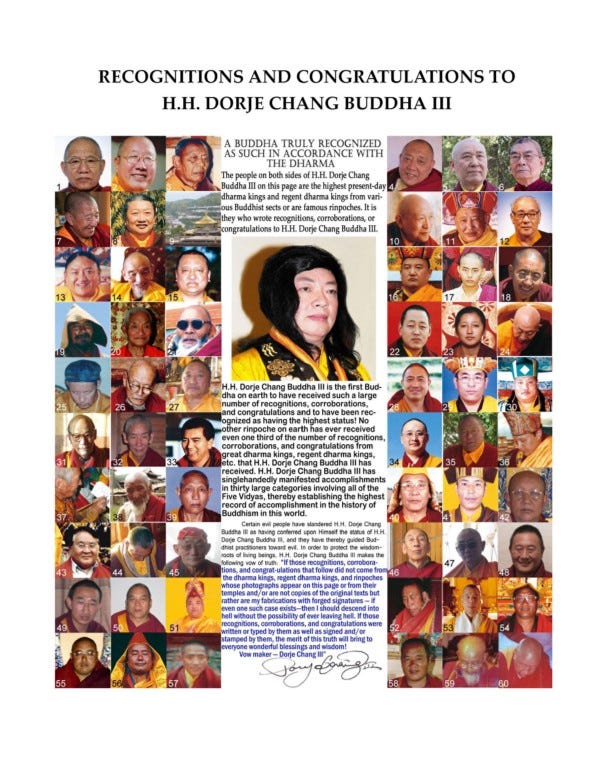
The Recognition of H.H. Dorje Chang Buddha III: Does a Buddha Need to Be Recognized?


The Recognition of H.H. Dorje Chang Buddha III: Does a Buddha Need to Be Recognized?

The Recognition of H.H. Dorje Chang Buddha III: Does a Buddha Need to Be Recognized?

Worldwide Recognition of H.H. Dorje Chang Buddha III by Eminent Buddhist Leaders

Recognitions and Congratulations to H.H. Dorje Chang Buddha III

When over a hundred great Dharma Kings, Regents, and Rinpoches from various Buddhist traditions throughout the world lawfully recognized, in accordance with Buddhist precepts, that Namo H.H. Dorje Chang Buddha III is the reincarnation of the ancient Buddha, Buddhist disciples around the globe rejoiced in celebration. The descent of Namo H.H. Dorje Chang Buddha III brings to the beings of this Dharma-ending age the correct and unerring True Dharma of the Tathagata that leads to liberation from the cycle of birth and death. How fortunate living beings are to personally hear the teachings of the Buddha — there is now hope for attaining enlightenment in this very lifetime!

Online Slander and Misunderstanding of H.H. Dorje Chang Buddha III’s Holy State

However, some people on the internet refuse to face the legitimate recognitions, the holy realization, and the perfect mastery of the Five Vidyās and teachings of H.H. Dorje Chang Buddha III with reason or correct understanding. Instead, they fabricate rumors, spread insults, slander, defamation, and false accusations — maliciously twisting facts, inventing lies, and making baseless claims. They use vulgar words, forge fake documents, false notices, and false statements, and even create distorted images and mocking content — doing everything they can to attack H.H. Dorje Chang Buddha III. Through their own words and actions, they merely expose their ignorance and lack of virtue.

Some say, “A Buddha or Bodhisattva is realized through practice, not by ‘recognition.’” “Shakyamuni Buddha didn’t need a certificate of recognition.” But their purpose is clear — to stop more people from learning the true Buddha Dharma and attaining liberation!

So, does a Buddha need recognition when descending into the world?

A Practice for the Benefit of Sentient Beings.

A Buddha is one of unsurpassed, perfect enlightenment and complete wisdom. The reason one is a Buddha lies in their realization and enlightenment — not because of any recognition by others. No matter how great a Dharma King, Regent, or Rinpoche may be, their level of realization is far inferior to that of a Buddha; thus, any recognition they offer to a Buddha would be, in essence, just a piece of paper of no value to the Buddha.

However, because sentient beings in this world often lack the wisdom to discern between true and false saints, between genuine Buddha Dharma and false teachings that imitate Buddhism, they may easily be misled by superficial appearances and deviant views. Therefore, for the benefit of sentient beings, by following the Buddhist tradition of formal recognition, those virtuous masters issued such recognitions that help people give rise to faith and thus be saved. This is an act of right knowledge and right view.

The Example of Master Padmasambhava and the Importance of Recognition

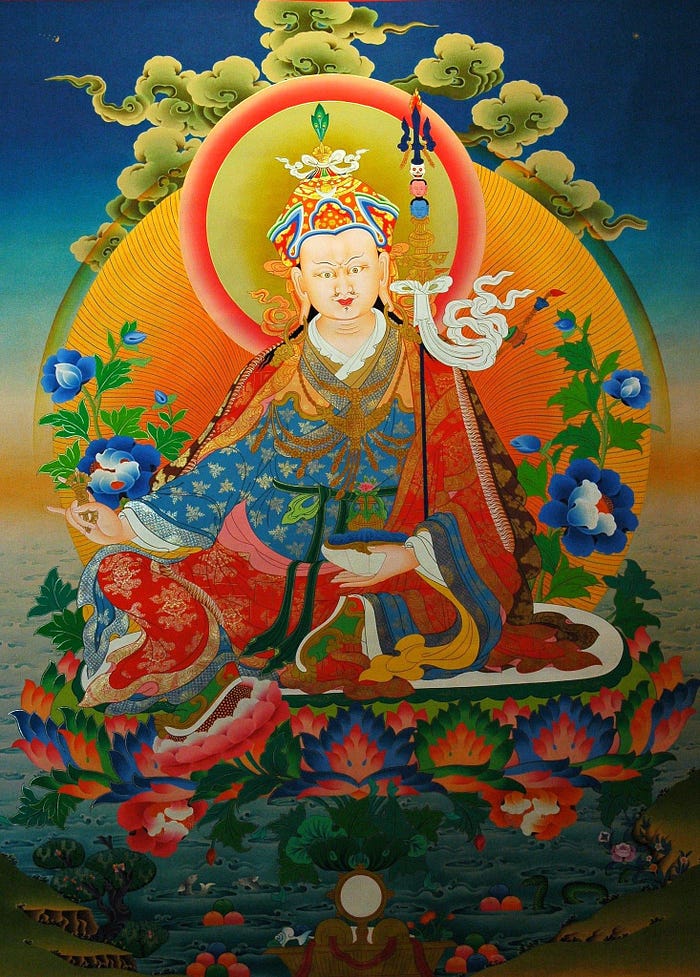
Master Padmasambhava

When Master Padmasambhava first went to Tibet to propagate the Dharma, he was not greeted with respectful welcoming crowds. Instead, the Tibetan people were terrified and shouted, “Quick! Drive out this sorcerer who performs strange magic without lineage transmission! Do not let him deceive us with his witchcraft!” They even lifted him up and threw him into a muddy pit. Later, Master Padmasambhava returned to India and asked two renowned masters to write letters of recognition. Only then did Buddhism begin to flourish in Tibet. In fact, those two masters later became Master Padmasambhava’s disciples.

Therefore, when Buddhas or Bodhisattvas reincarnate and manifest again in this world, undergoing recognition according to Buddhist rules is not for their own sake, but for the sake of helping sentient beings generate faith and thereby be liberated.

The Supreme Conduct and Realization of H.H. Dorje Chang Buddha III

Indeed, the realization and attainment of a Buddha or Bodhisattva come from their own cultivation and enlightenment. The realization, virtue, and attainment of all Buddhas and Bodhisattvas are the manifestation of their supreme enlightenment. The pure and flawless conduct of Namo H.H. Dorje Chang Buddha III, His mastery of both exoteric and esoteric teachings, His perfect command of the Five Vidyās, and His countless acts of liberating sentient beings — all fully demonstrate the enlightenment and realization of a true Buddha!

Therefore, I sincerely advise those who slander: repent sincerely before the Buddhas and Bodhisattvas, or karmic retribution will not spare you! At the same time, I compassionately remind all who truly wish to learn and practice Buddhism: we live in the Dharma ending age, when confusion prevails, and the nature of the demonic offspring is to destroy the Dharma and obstruct sentient beings from learning the true path. Kind-hearted beings, please open your eyes of wisdom, discern the true from the false, and do not be deceived by demonic forces — lest you miss the supreme Dharma opportunity that can bring you liberation from birth and death in this very lifetime!

Source: https://dharma-hhdorjechangbuddhaiii.org/the-recognition-of-h-h-dorje-chang-buddha-iii-does-a-buddha-need-to-be-recognized/

Link: https://hhdorjechangbuddhaiiidharma.com/2025/11/17/the-recognition-of-h-h-dorje-chang-buddha-iii-does-a-buddha-need-to-be-recognized/

#DorjeChangBuddhaIII #HHDorjeChangBuddhaIII #DorjeChangBuddha #TrueDharma #Buddhism #Vajradhara #LivingBuddha #BuddhistWisdom #BuddhaRecognition #ModernBuddhism

The Cause of War and the Law of Karma

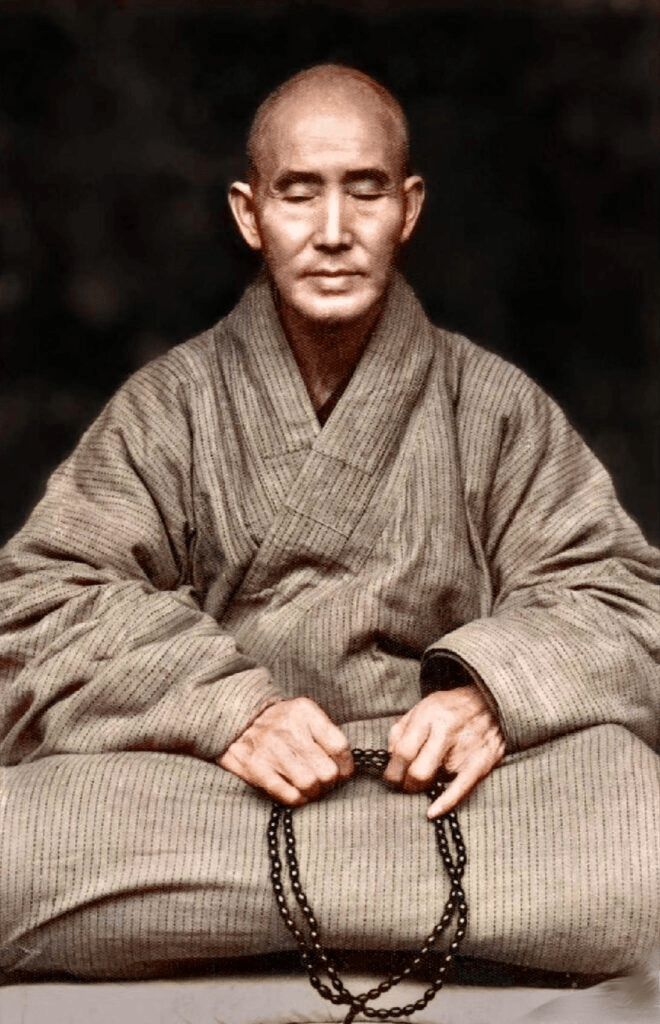
Xu (Hsu) Yun (1840-1959), Patriarch of Wei Yang, Lin Ji, Fa Yan, Cao Dong, and Yu Men Chan Schools

A teaching by the Great Zen Master Xuyun, delivered in 1947 at a middle school

In 1947, shortly after Japan’s surrender and withdrawal from China, the great Zen Master Xuyun (Empty Cloud) gave a profound speech at a middle school. The nation was still recovering from the devastation of war, and hearts were heavy with both relief and sorrow. With deep compassion, Master Xuyun used the timeless wisdom of the Buddha to explain the law of cause and effect (karma) — reminding people that wars do not arise by chance, but are the result of humanity’s collective actions.

He taught that true peace cannot be achieved through force or politics alone. Only by transforming our hearts and purifying our minds through virtue, compassion, and the practice of Buddhist teachings can we bring real and lasting peace to the world.

War does not arise by chance — it is the collective karma of all beings that brings it forth.

Dear friends, during the years of occupation, we endured immense suffering under the enemy’s oppression — our lives were steeped in water and fire, hardship and pain. Now that our nation has regained its light, we should feel endless gratitude and reflection. We must understand that the outbreak of war is not accidental; it is the result of the shared karma created by all individuals.

The ancient masters said, “If you wish to know the causes of your past lives, look at what you are experiencing in this life. If you wish to know the results of your future lives, look at what you are doing now.”
They also said, “Even after hundreds or thousands of eons, the karma one has created will not disappear. When the conditions ripen, the results will be experienced by oneself.”

When people lose their moral compass and commit all kinds of evil, they plant the seeds for calamities such as war, floods, fires, and famine. If we wish to change the will of Heaven and eliminate disasters, we must begin by transforming human hearts — by restoring virtue and morality. When everyone practices the Five Precepts and the Ten Good Deeds, cultivates upright minds and pure conduct, and lives with benevolence, trust, and righteousness, then the hearts of men and the will of Heaven will naturally align.

But if people persist in wrongdoing and refuse to repent, how can hostility and suffering ever be dissolved? The Buddha said, “The sea of suffering has no end, but when one turns around, there is the shore.” This means awakening from delusion and returning to goodness — the essential path to liberation.

We must truly believe in the law of cause and effect. It is not fiction but reality. If everyone understood that good deeds bring good results, and evil deeds bring suffering — that when one plants melons, one harvests melons; when one plants beans, one harvests beans — then no one would dare to act against conscience or break the law. Out of great compassion for all beings, Shakyamuni Buddha renounced his royal life and underwent arduous practice to save the world from ignorance and suffering.

If we understand the principle of cause and effect and wish to avoid future suffering, we must now create good causes. The hardships we experience today are the results of past evil actions. Therefore, we should now sow good seeds, and in time, we will naturally reap good fruits.

The scriptures speak of “Anuttara-samyak-sambodhi,” meaning “unsurpassed perfect enlightenment.” In its essence, it transcends the distinction of self and others — there is no “you” and “me.” But this state must be cultivated from one’s own heart. If our minds remain filled with greed, anger, and ignorance, unable to abandon all evil and practice all good, the barriers of self and ego become like iron mountains, preventing us from reaching the Pure Land or true harmony. This is the most crucial point — one we must all remember well.

The Sanskrit word “Buddha” means “the Awakened One.” Enlightenment has three aspects: awakening oneself, awakening others, and perfecting both understanding and conduct.

To awaken oneself is to realize that all experiences of good and evil, joy and suffering, arise from cause and effect. Once a person truly understands this, delusion fades, the four attachments dissolve, and one becomes enlightened.

To awaken others means recognizing that all living beings — whether born from the womb, from eggs, from moisture, or by transformation — all possess Buddha nature. They are called “sentient beings” only because they are deluded and unaware. We should therefore cherish and respect ourselves, and in keeping with the Buddha’s great vow of compassion and universal salvation, share these truths with others, guiding them out of the sea of suffering.

As stated in the Śūraṅgama Sūtra: “Regard all men as your fathers and all women as your mothers.” If we cultivate such deep reverence and love, especially for widows, orphans, and those who are lonely or destitute, and show them kindness and compassion through giving and aid, we can realize true equality and the ideal of great harmony.

To perfect both understanding and conduct means to live according to the Buddha’s teachings and precepts until one’s virtue and merit are complete. After the Buddha’s passing, he left behind the Three Baskets of Scriptures — Sutra, Vinaya, and Abhidharma — as our priceless raft to cross the sea of suffering. All the rules and precepts should be faithfully practiced. When one fulfills them completely, that is the perfection of wisdom and conduct.

Thus, the Buddha is the awakened one, while sentient beings are the deluded. The distinction between delusion and enlightenment marks the boundary between beings and Buddhas. To turn away from delusion and return to truth — that is awakening, and that is Buddhahood.

To further illustrate the law of karma, there is a story from one of Shakyamuni Buddha’s past lives.

Long ago, in the city of Rajagaha, there was a fishing village with a large pond. One year, a great drought struck, and the pond began to dry up. The villagers caught and ate almost all the fish, until only one giant fish remained, which was finally killed and eaten. Only one eight-year-old boy refused to eat the fish; he simply watched and laughed.

In his later life as the Buddha, King Prasenajit of Kosala, a devoted follower of the Buddha, married a princess of the Shakya clan, and they had a son named King Virudhaka. After ascending the throne, Virudhaka led his army to attack the Shakya capital of Kapilavastu and slaughtered all its inhabitants.

During that time, the Buddha suffered a severe headache for three days. His disciples begged him to use his powers to save the Shakya people, but he refused. Even when Maudgalyayana repeatedly pleaded, the Buddha said no. Maudgalyayana tried to rescue some survivors with his alms bowl, but when he put it down, all he found was a pool of blood.

When the disciples asked why, the Buddha revealed the cause: in a past life, during a great drought in Rajagaha, the villagers had killed and eaten the fish in that pond. The giant fish was reborn as King Virudhaka, and the villagers were reborn as the Shakyas who were killed. The young boy who merely watched and laughed was reborn as Shakyamuni Buddha himself. Because this karma had matured, the outcome was unchangeable.

The Buddha fully understood this karmic connection and taught it to his disciples as a warning. Chan Master Yuan Yun wrote in verse:

“For hundreds of years, the soup in your bowl
Is filled with deep hatred, hard to dissolve.
If you wish to know why wars arise,
Listen to the cries from the butcher’s gate at midnight.”

Reflect on this story and recite the verse, and you will awaken to the true causes of war and violence — and learn to guard your conduct with mindfulness.

If we wish to transform the world and move toward true harmony, everything must begin with our hearts. Students should study diligently, yet never forget the greater mission of saving the world. And the first step to saving the world is saving the heart — correcting one’s own wrong thoughts and firmly believing in the law of cause and effect, avoiding all evil paths.

By cultivating sincerity, righteousness, self-discipline, and harmony within the family, one can extend peace to the nation and the world. If all the people of every country sincerely believe in karma and practice the Eight Virtues and Ten Precepts, then oppression, violence, and wars will cease to arise. True peace, equality, and the Pure Land of Great Harmony will appear, free from the Five Defilements and all suffering.

For the original Chinese speech, please click here. This English translation is by Linda Chang and is provided for reference only.

Link:https://peacelilysite.com/2025/11/07/the-cause-of-war-and-the-law-of-karma/

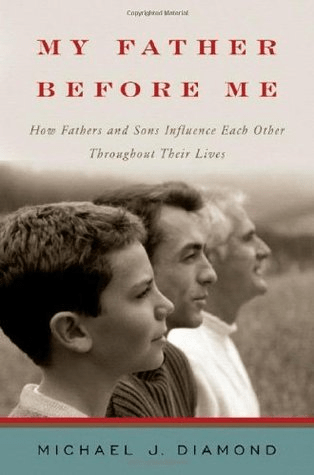
My Father Before Me — The Unspoken Bond Between Fathers and Sons

There are few relationships as powerful—and as quietly transformative—as the one between a father and a son. Yet in modern life, it’s often overlooked. We talk about mothers and children, but the emotional depth between fathers and sons remains one of the least explored terrains of the human heart.

In My Father Before Me: How Fathers and Sons Influence Each Other Throughout Their Lives, psychoanalyst Michael J. Diamond takes us into that emotional landscape with remarkable sensitivity. Through vivid stories, psychological insight, and tender reflection, he reveals how fathers and sons shape, challenge, and heal each other across a lifetime.

Most people think of fatherhood as a one-directional journey: the father influences the son. But Diamond turns that idea around. He shows that the father–son relationship is mutual, not hierarchical.

A father helps mold his son—but the son also transforms the father. Each becomes a mirror for the other’s hopes, fears, and hidden strengths.

Diamond writes about how fatherhood can awaken parts of a man he never knew existed. When a son is born, the father doesn’t just gain a child—he also gains a deeper understanding of himself. The baby’s presence demands patience, tenderness, and emotional openness. In nurturing another, the father learns to nurture himself.

Moments That Change Everything

Diamond fills the book with moving, relatable stories that show this mutual transformation.

One story tells of a man who, having grown up with a distant father, vows to be emotionally present for his own son. Yet when his son enters adolescence and begins to push back, the man feels rejected and hurt—just as he once felt with his own father. Through reflection, he realizes that this is his chance to break the cycle: to stay connected even when it’s uncomfortable. In doing so, both he and his son begin to heal wounds that stretch back generations.

In another example, a father describes watching his young son struggle to build a toy tower. His first instinct is to step in and fix it, but he resists. Instead, he watches quietly, offering small words of encouragement. When the tower finally stands, he sees not just his son’s triumph—but his own growth in learning to let go.

These moments, Diamond suggests, are not small. They are the foundation of how love, trust, and resilience are built between generations.

The Phases of the Father–Son Journey

Diamond explores how this relationship evolves through every stage of life:

  • Early Childhood: The father is a protector and guide, introducing the child to the outside world. But he also begins to sense his son’s individuality—someone both familiar and mysterious.
  • Adolescence: As the son seeks independence, conflict can arise. Here the father’s challenge is to stay connected without controlling—to allow the son to become his own person.
  • Adulthood: When the son grows up, both men must renegotiate their roles. Often, the adult son begins to understand his father with new empathy, and the father learns to accept his son as an equal.
  • Later Years: In time, roles may reverse—the son becomes the caregiver, the listener, the one offering strength. This reversal, Diamond suggests, completes the circle of life.

Through each phase, fathers and sons are constantly exchanging something precious: understanding, forgiveness, and love.

Redefining Masculinity

A core theme in My Father Before Me is emotional honesty. Diamond challenges old stereotypes of men as stoic and distant. True masculinity, he argues, is not about dominance or silence—it’s about being open, authentic, and emotionally present.

When a father shows vulnerability, it doesn’t make him weak—it makes him real. And when a son witnesses that authenticity, he learns that being a man means embracing both strength and tenderness.

In one memorable story, a son recalls seeing his father cry for the first time—after the death of the grandfather. “That day,” he says, “I stopped fearing emotion. I realized that love and grief are part of the same heart.”

A Relationship That Never Stops Evolving

Even when fathers and sons grow older, the dialogue between them continues. Diamond describes adult sons helping aging fathers find meaning and dignity in later life. Some reconcile after years of distance. Others simply learn to say what was once left unsaid: “I love you,” “I understand you,” or even “I forgive you.”

These late-life moments, he writes, can be profoundly healing. They remind us that it is never too late to reach across the years—to understand, to listen, and to love.

A Mirror for All of Us

Whether you’re a father, a son, or simply someone reflecting on your family history, My Father Before Me offers both insight and comfort. It reminds us that every father carries the echoes of his own father within him—and that every son, in turn, shapes what fatherhood will mean for the next generation.

Ultimately, Diamond’s message is one of hope: that through empathy, self-awareness, and courage, fathers and sons can support each other’s growth, forgive each other’s shortcomings, and honor the love that lies beneath it all.

Link:https://peacelilysite.com/2025/10/29/my-father-before-me-the-unspoken-bond-between-fathers-and-sons/

The Lesson of the Apple: How a Mother’s Words Shape a Child’s Life

“A mother’s words can build a child—or break one.”

Recently, while reading a Chinese book on child education, I came across a story that deeply touched my heart. It perfectly illustrates how a mother’s attitude and behavior can influence a child’s entire life. I’d love to share this story with all mothers, as a gentle reminder of the quiet power we hold in shaping our children’s hearts and minds.


🍏 Two Letters, Two Lives

A famous American psychologist once conducted a fascinating study on the lifelong effects of early education. He selected 50 successful people from various fields—leaders, professionals, innovators—and 50 people with criminal records. He wrote to each of them, asking the same question:

“What influence did your mother have on you?”

Two of the replies left a lasting impression on him.
One came from a prominent White House official, the other from a prison inmate.
Surprisingly, both men spoke about the same childhood memory—their mother dividing apples.


🍎 The Prisoner’s Story: The Day He Learned to Lie

The prisoner wrote:

“When I was a child, my mother once brought home several apples—red, green, big, and small.
I immediately wanted the biggest, reddest one. Before I could speak, my little brother shouted, ‘I want the big one!’

My mother frowned and scolded him: ‘A good boy should learn to give the best to others.’

I quickly changed my words and said, ‘Mom, I’ll take the smallest one. Let my brother have the big one.’

My mother smiled proudly, kissed me on the cheek, and rewarded me with the biggest, reddest apple.”

He ended his letter with heartbreakingly honest words:

“That day, I learned that lying could bring rewards.
Later, I learned to cheat, to steal, to fight—anything to get what I wanted.
Today, I am in prison because of the lesson I learned that day.”

🍏 The White House Official’s Story: The Value of Effort

The second letter came from a White House official:

“When I was young, my mother brought home several apples, all different sizes. My brothers and I argued over who would get the biggest one.

Mother held up the largest apple and said, ‘Everyone wants the best, and that’s normal. So let’s have a little contest: I’ll divide the lawn into three sections. Whoever trims their section the fastest and neatest gets the big apple.’

We raced to finish, and I won the apple.”

He continued:

“From that day on, my mother taught us this simple but powerful truth:
If you want the best, you must earn it.

Everything good in our home had to be earned through effort and fairness. She lived by this principle herself. That’s how I learned discipline, persistence, and integrity—lessons that shaped my entire life.”

🌱 A Mother’s Words Are Seeds in a Child’s Heart

Both mothers divided apples.
Both children learned a lesson.
But one learned deception—while the other learned effort.

A mother’s reaction in a single moment, her tone of voice, or even a casual reward can plant seeds deep in a child’s heart.
Those seeds may grow into honesty and strength—or into cunning and selfishness.

Children mirror their mothers.
The way a mother faces life—whether with truth or pretense, effort or avoidance—becomes the way her child faces the world.

Education doesn’t always happen in grand lessons or classrooms.
Sometimes, it happens in small, everyday choices—like how we divide an apple, handle conflict, or teach fairness.

A wise mother uses love and insight to guide her child to understand that:

  • Honesty is more precious than cunning,
  • Effort is more reliable than shortcuts,
  • Sharing brings deeper joy than possessing.

These values, taught through simple acts, become the foundation of a child’s character.

Photo by Ivan Samkov on Pexels.com

A mother’s way of teaching doesn’t just shape a child’s childhood—it molds their destiny.
Every look, every word, every reaction writes silently into a child’s heart the story of who they will become.

May all mothers guide their children with both love and wisdom,
so that the lessons we leave behind are those of kindness, courage, and truth.

Because sometimes, all it takes is one apple—and one mother’s choice—to change a life forever.

Link:https://peacelilysite.com/2025/10/27/the-lesson-of-the-apple-how-a-mothers-words-shape-a-childs-life/

From Despair to a New Life: How Vegetarianism and the Dharma Gave Me a Second Chance

In 2019, my world collapsed. I was diagnosed with cholangiocarcinoma—one of the most aggressive and deadly cancers—at a middle-to-late stage. After a consultation with several medical experts, I was told that even if I underwent surgery, I would only have three or four months left to live. To survive six or seven months would be nothing short of a miracle.

Following the doctors’ advice, I went through surgery. Afterward, however, I made the conscious decision to forgo all other cancer treatments. I knew I had medical insurance that could cover much of the cost, but I questioned whether aggressive treatments would truly give me dignity and quality of life in my final days. Chemotherapy, radiation, and similar methods often do more harm than good, damaging the organs and leaving patients to die not from the cancer itself, but from the effects of over-treatment.

I also thought about something else: if my time was truly so short, I wanted to preserve my remaining healthy organs so that they could be donated to those in need.

When I returned home from the hospital, my health declined rapidly. Every day I lay in bed in pain, but I did not allow myself to sink into despair. Instead, I chose gratitude. I was grateful that when I opened my eyes, I could see the rising sun outside my window. Grateful for each breath of fresh air. Grateful simply for being alive in that moment.

Still, I asked myself: Was my life really destined to end in just a few short months? The answer within me was a resounding No. I wanted to create a miracle.

What gave me this strength was my son. My sudden illness had devastated him, and I could feel how my suffering dragged him into deep sadness. At that moment, I told myself I must rise up—for him, so that he would still have a mother, and also for other patients enduring the same pain, to show them that hope is possible. If doctors had already declared that I had no chance, why not prove with my own body how powerful the human spirit can be? Why not find a way to live with dignity, with quality, and with the least burden?

And then, something incredible happened.

In April 2020, my husband prepared a feast for me with all kinds of fish and meat. Strangely, the moment I looked at it, I felt an overwhelming discomfort in my heart. That very day, I decided to give up meat completely. From then on, I have been a vegetarian, and I know this will remain with me for the rest of my life.

Less than a month later, it was time for my medical review. To my surprise, all my test results had improved dramatically. Even though that same month I experienced the heartbreaking loss of my father, my condition did not worsen. At first, my family opposed my vegetarian choice, but as they watched my health improve, they slowly came to accept it. This only strengthened my resolve. Three months later, the test results were even better. Along with vegetarianism, I began exercising moderately each day and keeping a positive mindset. After six months, all my medical indicators had returned to normal.

Today, apart from being a little weaker in stamina compared to before, I am doing very well. When patients or their families reach out to me online and ask how I got better, I tell them honestly: “A positive mindset + positive energy + vegetarian diet + moderate exercise.”

But vegetarianism gave me more than just a second chance at life. It opened the door for me to encounter the true Dharma.

One day at a banquet, my vegetarianism led me to meet a Dharma sister who had followed H.H. Dorje Chang Buddha III for many years. She introduced me to Buddhism, giving me the precious opportunity to listen to the Dharma discourses of the Buddha. Through studying the Dharma, I came to understand the law of cause and effect and the deeper meaning of being vegetarian. I realized that it is not merely about food, but about repenting for the harm I once caused to living beings, cultivating compassion for all sentient life, and seeking self-redemption through transforming karma.

I am no longer just a “pure vegetarian” who avoids even milk and eggs. I have become a practitioner who genuinely cherishes and protects all beings. My heart has grown softer, kinder, and more compassionate.

Gratitude fills me every day—gratitude to vegetarianism, which pulled me back from the edge of death; gratitude to the Dharma, which allowed me to encounter the true teachings of the Tathagata; gratitude for the miracles that have appeared throughout my life whenever I was in despair. That is why my online name is “After Darkness, Light.”

Looking back, many people used to say, “How could such a good person like you get this disease?” I once thought I was a good person too. But was I really? Before learning the Dharma, I would kill mosquitoes, flies, and ants without hesitation. I once had an abortion. Only after learning the true Dharma did I realize how heavy those karmic debts were. And what about my past lives? How much more karma have I carried forward?

Now, I understand: the suffering I faced in this life is not unfair—it is the natural result of my past actions. But how fortunate I am, despite all of this, to have encountered the true Dharma and to have a holy teacher guiding me. This is an incredible blessing, one I owe entirely to the compassion of the Buddhas and Bodhisattvas of the ten directions.

The reason I am writing this article is because, in a Buddhist study group of more than 400 people, I saw so many “requests for dedication” every day and so much suffering. I felt most of them don’t have the correct view and concepts of Buddhism. That made me want to share my experience, in hopes it may help others. In those lists of dedication requests, I saw too much misfortune and pain—patients with terminal illnesses, those crying out in agony, those with depression and anxiety, those struck by sudden misfortunes, and so on. It made me deeply sad: sentient beings suffer so much! People in this life fall ill or face hardships of all kinds, but these are all karmic consequences ripened from the many unwholesome deeds done over countless lifetimes or in this very life. Each of us must have deep faith in cause and effect. We must understand that sickness and adversity are manifestations of our own karma, and also warnings—opportunities for us to repent and correct our wrongs.

“There is no one else to rely on but ourselves.” What magic cure exists in this world? The only true cure is repentance and cultivation! For patients who request dedication, whether they themselves, their families, or their friends, if they wish for a miracle or at least some relief, then apart from avoiding over-treatment, the only way is for the patient themselves to give rise to deep repentance and truly reform. Therefore, we must learn Buddhism, follow the teachings of the Buddhas and Bodhisattvas: commit no evil, practice all that is good, strictly uphold the precepts, and follow the teachings in our practice.

All that I have written here is based on my own personal experience and feelings. As for the Dharma itself, the standard must always be the teachings personally expounded by H.H. Dorje Chang Buddha III.

Link:https://peacelilysite.com/2025/08/20/from-despair-to-a-new-life-how-vegetarianism-and-the-dharma-gave-me-a-second-chance/

Source: https://mp.weixin.qq.com/s/AmK9EoE_axAUP1xLGP-Jiw

The Story of the Characteristics of Swords [AsilakkhaÏa-Jātaka]

126. The Story of the Characteristics of Swords [AsilakkhaÏa-Jātaka]

At one time Buddha was living in Jetavanārāma. At that time the king of Kosala had a Brahmin who could tell whether a sword was lucky by smelling it. When smiths would bring their swords, if they had given bribes, he said, “It is good.” To those who did not give bribes, he said to them, “It is bad.” All in the course of time knew the deceptive nature of this man. Knowing his nature, one smith made a sword and making it very sharp, put it in a sheath filled with hot chili powder. He brought it to the king. The king summoned the Brahmin and requested him to tell them the goodness or badness of the sword.

The Brahmin, in accord with the order of the king, took the sword out from the sheath and placing it near his nose tried to smell it. Immediately, before he could say anything, the chili powder smelled by him caused him to sneeze. He could not remove the sword from his nose quickly enough, so when he sneezed, the sword cut off the tip of his nose. This story spread everywhere and eventually it reached even the monks in the preaching hall.

One day in the preaching hall of Jetavanārāma the assembled monks were speaking about this. When the Buddha visited there, the monks paid respect to the Buddha.

The Buddha asked, “Oh monks, what were you discussing before I came here?” Then the monks related the story of the Brahmin who smelled swords for the king of Kosala. Buddha said, “Not only today this man faced this mishap, but also in the past he faced the same fate.” The monks requested the Buddha to disclose the past story. The Buddha spoke then the past story:

At one time, a king called Brahmadatta ruled in Benares. He had a fortune-telling Brahmin who by smelling swords could tell their goodness or badness. He took bribes from the sword smiths. He condemned the work of those smiths who had not given bribes because they had not given him bribes.

Once a certain trickster smith made a good sword and made it well sharpened. He applied hot chili powder to it and took it to the king. The king summoned the Brahmin to examine the sword. As it was covered with hot chili powder, when he smelled it, he sneezed before he was able to remove the sword from his nose. The tip of his nose was cut off, and he was ashamed because of this. The king became very sad because of this and requested his craftsmen to make a fake tip for the Brahmin’s nose with wax. And the Brahmin again asked to work for the king.

At this time the king had a nephew at his palace, and also his daughter. The two of them since they were very young, had grown up together. When they got older, they fell in love with each other. The king did not know this secret love. The king and his ministers one day discussed the marriage of the princess. The king said, “I will give my daughter to a prince of another kingdom.  If I do so, I will gain two new supporters, the prince and his father, to defend my kingdom.” Since then, the princess was not allowed to see the nephew with whom she had grown up so as to try to prevent them from falling in love. This strengthened their love for one another. And the nephew wanted to marry the princess as they both were now grown up.

The nephew therefore made a stratagem to marry the princess. He met the servant woman of the princess and gave her a bribe of a thousand gold coins. He requested her to keep the princess away for one day from the palace so that he could get to her. The woman said, “Do not worry. I will do it. I will take responsibility for that.”

Thinking of a stratagem, she went to the king and said, “Your lordship, your daughter is under the influence of an evil spirit. She is becoming unlucky and emaciated. Therefore, we will have to remove the evil spirit from her body.” The king asked, “What can we do for that?” The woman said, “In such-and-such a place there is a certain cemetery. There you need to make a stage. Keep a corpse on top of it, and cover it placing a bed over the dead body. We will place the princess on the bed and bathe her. Then the evil spirit will leave her.”

Hearing this, the king ordered her to do all these things and gave her all she had requested. She then undertook the task. She also tied some dried chili powder in a cloth, and she hid it near the bed so the nephew would be able to take it. She requested the nephew to go there and lie under the bed as the dead body. She explained to the nephew how to carry this off. The woman said to the caretakers, “When I come to the cemetery and wash the princess, the dead body will sneeze two or three times, come out from under the bed, and seize and devour the first one whom he sees. Therefore, be warned. Run away.” This was also mentioned to the nephew and princess, and the nephew was told, “When the caretakers run away, take the princess out of the cemetery, and after taking a bath with her, go wherever you like.”

On the day they set to have the service, the nephew went early and lay down under the bed she had prepared. The woman mentioned again to all the caretakers in the cemetery, “When the dead body sneezes, you will have to be ready for the death of the first one he seizes.” When, as she said, the nephew started to sneeze, all the caretakers laying their weapons down beside them, ran away from the cemetery screaming loudly. The retinue and other dignitaries who had come to witness this also all ran away.

When the nephew came out from under the bed, he took the princess, took a good bath, and went to his house with her. Hearing this news, the king became happy and he gave his daughter to the nephew.

Finalizing this story the Buddha said, “At that time the fortune-telling Brahmin who was skilled in sniffing swords was this fortune-telling Brahmin of today. The nephew prince of the king of Benares was I who am the Buddha.”

The moral: “What causes a loss for one person, may cause a gain for someone else.”

126. The Story of the Characteristics of Swords [AsilakkhaÏa-Jātaka]

Link: https://hhdorjechangbuddhaiiiinfo.com/2025/08/05/126-the-story-of-the-characteristics-of-swords-asilakkhaia-jataka/

#Buddhisttalesforyoungandold #Buddhiststories #storiesforkids #moralstories #Buddha #Jatakastories #PansiyaPanasJataka #JatakaTalesofSakyamuniBuddha #JatakaTales #SakyamuniBuddha’sPast

The True Measure of Wealth: A Life of Kindness and Spiritual Uplift

In life, wealth is not measured solely by what we own. True richness lies in the harmony between material comfort and inner peace. Across every social and economic class, we meet people who radiate kindness and resilience—and others who, despite outward success, feel spiritually empty.

Let’s explore four types of people through the lens of both outer wealth and inner fulfillment.


1. The Poor Among the Poor

Struggling both financially and spiritually.

Imagine someone living in a rundown apartment, surviving paycheck to paycheck. The hardship of their material life is evident—but the deeper burden lies within. Stress, anxiety, and hopelessness weigh heavily on their heart.

Perhaps their past holds trauma, loss, or abandonment. With little support or healing, bitterness takes root. Trust feels dangerous. Joy seems unreachable. They may withdraw or act out, living not only in material scarcity but also emotional desolation.

This is a soul in need of compassion, connection, and light—a reminder that true poverty is not just economic, but also spiritual.


2. The Spiritually Rich in Modest Circumstances

Materially humble, yet inwardly joyful.

Now envision someone of limited means, yet abundant in heart. Their home may be small, their income meager—but their spirit shines. They greet life with gratitude, take joy in the sunrise, the warmth of a shared meal, the laughter of a friend.

They live by faith or a strong set of values. They give generously, even when they have little. Their kindness is sincere, their joy resilient. They find meaning in helping others and walk through life with dignity and grace.

Yan Hui, one of Confucius’s most cherished students, is a timeless example. Confucius admired Yan Hui for his ability to remain joyful despite poverty, exclaiming:
“How virtuous Hui is! With just a bowl of rice and a ladle of water in a humble alley, others could not endure such hardship, yet Hui never let go of his joy. How virtuous Hui is!”

His life shows us that true wealth comes from within.


3. The Restless Among the Rich

Surrounded by luxury, yet inwardly unfulfilled.

This person owns much—prestigious homes, expensive cars, elite status. But their heart feels hollow. They may look successful, yet their joy is shallow and fleeting.

They chase more: more titles, more possessions, more recognition—but the emptiness remains. Relationships feel strained. Peace eludes them. Their days are filled with doing, but not being. They struggle to find meaning.

Despite all they have, they feel poor in spirit. What they truly long for is connection, authenticity, and inner peace.


4. The Truly Abundant

Blessed with both material wealth and spiritual fullness.

Finally, imagine someone who has both outer success and a heart full of wisdom and compassion. Their generosity extends beyond money to love, time, and care. Their worth isn’t measured by what they own, but by the good they do.

They uplift others, listen deeply, and lead with humility. They use their resources to heal, not to boast. When they fall, they grow. When others suffer, they respond with empathy.

Their life radiates meaning because it is guided by the heart. They show us what true abundance looks like.


Prince Siddhartha is the ultimate role model. Born into luxury, he had everything—nobility, intelligence, beauty, and unmatched talent in both scholarship and martial arts. Yet, he realized that worldly pleasures are fleeting illusions.

Compelled by compassion, he renounced his royal life to seek a path of liberation for all beings trapped in the cycle of birth and death. Through profound wisdom and practice, he attained complete enlightenment and became the Buddha—a being of perfect wisdom and boundless compassion.

His life teaches us that the richest journey is one that leads to awakening and selfless love.


So, What Is True Wealth?

True wealth is not just what we possess—but who we are.
You can have little and still be truly rich.
You can have much and still feel deeply poor.

In the end, the real measure of success is not our bank account, but how much kindness we carry—and how we uplift others through it.

Let us not chase only riches.
Let us seek a full heart.
Let us build lives that inspire, comfort, and heal.

Are you walking a path of kindness and uplift?

Link: https://peacelilysite.com/2025/07/25/the-true-measure-of-wealth-a-life-of-kindness-and-spiritual-uplift/

The Power of a Good Mindset in Times of Conflict

My friend Wendy used to be very emotional and overly cautious. But in recent years, she has undergone an astonishing transformation.

One day, when we met up, she shared a story that showed me just how much she has changed.

At the end of last year, Wendy finally decided to buy her daughter-in-law the new car she had dreamed of for so long. The whole family welcomed the New Year with excitement and joy.

That day, her daughter-in-law drove the car out to register it, while Wendy stayed home reading stories to her granddaughter.

Not long after, the phone rang. On the other end, her daughter-in-law’s voice trembled with panic:

“While turning, I got hit by a truck going straight. The entire front bumper is smashed. It’s all our fault. Mom, I’m too scared to come home—your son is going to be furious.”

Wendy replied calmly, “As long as you’re okay, that’s what matters. Just come home.”

A while later, her son returned from work. Before he could react, Wendy sent her granddaughter over to ask him to tell her a story about a carpenter.

He couldn’t resist her pleading eyes and began reading in an animated voice:

“There was a kind-hearted carpenter who, though already old, still had no house and couldn’t find a wife. His elderly mother was terribly worried. Finally, a young woman agreed to marry him—but only if he could provide a home.

So the carpenter worked tirelessly, chopping and hammering for two months until he built a beautiful wooden house. One day, while he was out, a fire broke out next door and burned his house to the ground.

People thought he would collapse in despair, but instead, he searched through the charred remains. Everyone was puzzled—what could he possibly be looking for? At last, he found an unburned axe and exclaimed with relief, ‘I finally found you!’

People thought he must be crazy—his house was gone, and he was happy just to find an axe? The carpenter said, ‘As long as I’m here and I have my axe, why would I worry about not having a house?’”

Just then, the daughter-in-law slipped quietly back into the house, looking like a child who had done something wrong.

When her son learned what had happened, he exploded:

“You’re such a spendthrift! No brains at all! So careless—on the very first day, you wrecked a car worth hundreds of thousands!”

Wendy looked at her son calmly and asked:

“Are you done yet? The car is already damaged—will shouting fix it?

Just a minute ago, you were telling your daughter that as long as you have an axe, you can build another house. Now you’ve turned into a chameleon—how will you teach her in the future?

What’s more important: people or cars? A damaged car can be repaired or replaced. But if something had happened to your wife, this family would be over.

It’s the New Year. What matters most is that we are safe, healthy, and together. Everything else is just material. You should be grateful she came home without a scratch. So many people are facing life-and-death partings right now. Be content.”

Her son made a face and joked, “Mom, ever since you started practicing Buddhism, you’ve changed. You’re always siding with your daughter-in-law—have you forgotten you have a son? I feel like I’m adopted!”

Wendy rolled her eyes at him, and the whole family burst into laughter as they sat down to dinner.

Later, Wendy told me that after studying Buddhism, she finally understood how to let go of the suffering that comes from clinging to the self and how to transform afflictions into wisdom.

I watched in amazement as what could have been a chaotic family argument dissolved effortlessly in her hands. In the end, everyone was able to celebrate the New Year in peace and joy.

Life will always bring troubles and joys. A grateful and content mindset makes happiness bloom everywhere, while a lack of appreciation can turn even good fortune into heartache.

Hearing Wendy’s story reminded me how powerful a positive mindset can be in times of conflict. I hope more families can draw on the wisdom of the Dharma to transform challenges into understanding, live long lives free from illness, and enjoy peace, prosperity, and lasting happiness.

Link:https://peacelilysite.com/2025/07/01/the-power-of-a-good-mindset-in-times-of-conflict/

The Choice Between Giving and Receiving

When I was a child, I heard a folk story that has stayed with me ever since.

One day, King Yama summoned two little spirits and said to them:

“I will let you be reborn as humans. One of you will be someone who always has things to give to others. The other will be someone who often receives things from others. It’s up to you—choose the kind of person you wish to become.”

As soon as Ghost A heard this, he dropped to his knees, clasped his hands, and pleaded earnestly:

“Your Majesty Yama! I beg you—please let me be the one who can receive things from others!”

Ghost B stood quietly for a moment, thinking it over. Finally, he said:

“Since my companion wishes to be the one who receives, I will choose to be the one who gives to others.”

King Yama struck his desk with a resounding clap and pronounced his judgment:

“I decree that Ghost A will be reborn as a beggar, so he may always ask others for help. Ghost B will be reborn into a wealthy family, so he may frequently give and support those in need.”

The two little spirits were stunned into silence.

This story reveals a truth many people overlook: in our world, most would rather take from others, believing that giving is a kind of loss. Yet the modern Buddhist master, Master Hongyi, once said:

“I don’t know exactly what makes a noble person, but I believe someone who is willing to suffer a loss in all things surely is one. I don’t know exactly what makes a petty person, but someone who always seeks an advantage must be one.”

In reality, a person with a grateful heart who is willing to share joy with others will discover even greater joy—because they can find happiness in the happiness of others.

The spirit of Buddhism elevates the practice of giving and receiving to its highest form. H.H. Dorje Chang Buddha III made this profound vow:

“All karmic offenses and sins created by sentient beings, I will bear.
All the virtuous deeds and merits I have cultivated, I will give entirely to you.”

H.H. Dorje Chang Buddha III wishes to give all good things to sentient beings and to take upon Himself all their suffering and negativity.

Everything He thinks in His mind, speaks with His mouth, and does with His body is dedicated to one purpose: eradicating selfish attachment, relieving the suffering of all beings, bringing them happiness, and increasing their blessings and wisdom.

May our world be filled with kindness and peace. May all beings everywhere be safe, auspicious, and free from suffering.

Link:https://peacelilysite.com/2025/06/27/the-choice-between-giving-and-receiving/