H.H. Dorje Chang Buddha III: Teaching People to Attain Wisdom Through Compassion, Especially in These Uncertain Times

One recognition certificate from a sect can make the status of a rinpoche, while being recognized as the reincarnation of a Buddha requires confirmation from multiple Dharma kings of all different sects.

Generally, when a rinpoche reaches significant status, they are also recognized by more than one of the eminent monastics. H.H. Dorje Chang Buddha III, who has been recognized by over 100 Dharma kings, regent Dharma kings, great rinpoches, and top leaders of various Buddhist sects, is the first person in Buddhist history to receive this many recognitions.

It is the belief of all of these powerful individuals that H.H. Dorje Chang Buddha III is the true reincarnation of the Primordial Buddha, Dorje Chang Buddha. For over 1,000 years, this system has been used by numerous sects in order to recognize their reincarnated Buddhist practitioners.

Based on Buddhist principles, a “Buddha” has attained the supreme level of wisdom and enlightenment, and there is no one above a Buddha. So it goes without saying that a Buddha is the highest leader in the world when it comes to that religion and culture. That makes H.H. Dorje Chang Buddha III the highest leader of Buddhism in today’s world.
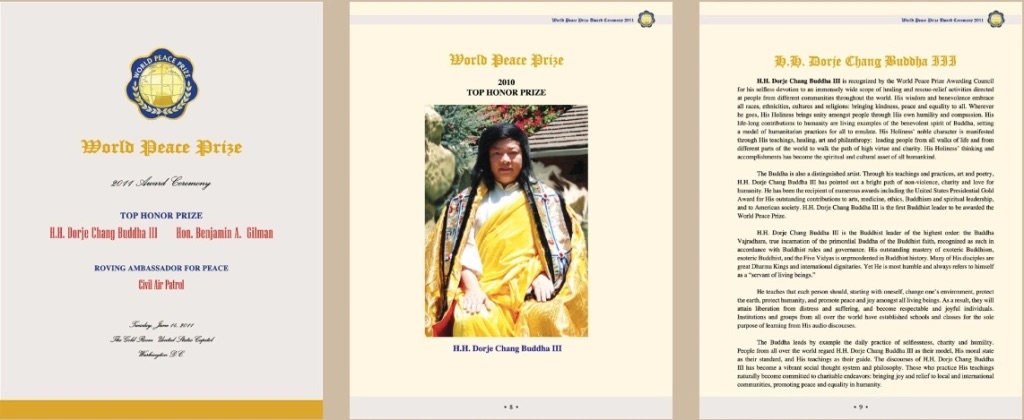
Building on the Foundation of Compassion

As H.H. Dorje Chang Buddha III works with others and makes his way in the world, he remains unaffected by awards and fame, and by those who would seek to slander him. His goal is only to contribute to the world, and to teach Buddhism to people, so the world can have more peace and happiness in it.

The cultivation of Buddha Dharma is what H.H. Dorje Chang Buddha III focuses on, rather than his standing and status as the reincarnation of a Buddha. Buddhist teachings are based on causality, peace, harmony, and compassion, and these are the main tenets that H.H. Dorje Chang Buddha III lives by. As he shares his compassion with others, he is able to change lives.

At the very beginning of the COVID-19 pandemic outbreak, His Holiness Dorje Chang Buddha III took the lead, donating equipment and materials for personal protection. This equipment for fighting the pandemic was donated to police departments, hospitals, and other public service institutions. His Holiness the Buddha also told people publicly:

“The emergence of the pandemic is a result from causality. Throughout the history of mankind and society, there have been occurrences of many pandemics of different types and forms. The COVID-19 pandemic is a type of contagious plaque, which is just infection through popular contact.

The symptoms would transform based on the changes in one’s physical conditions and the climate and spread to others. But people will also generate antibodies in response. However, this disease is not going to become extinct. Yet vaccines can provide very significant protecting effects to people.

Therefore, all of you should not be under pressure or become worried. Rather, all should follow the exhortation of the government and obey the government regulations.

Have yourself vaccinated. That will protect yourself and also others. Furthermore, the pandemic will not cause a closure to people. In the end, it will be opened up everywhere because our country will not allow closure to happen, and the world will not allow closure to happen.”

Living simply and focusing on humility rather than material rewards, he has never been concerned with his own well-being. He lives for the service and well-being of others, and to teach them the Buddha Dharma that will bring them enlightenment and liberation.

The more people who have this understanding, the more people will continue to show that understanding to others, to help others and to benefit society. This can cause a ripple effect of peace and harmony, which will spread far and wide through his teachings and the information he passes along to people around the globe.
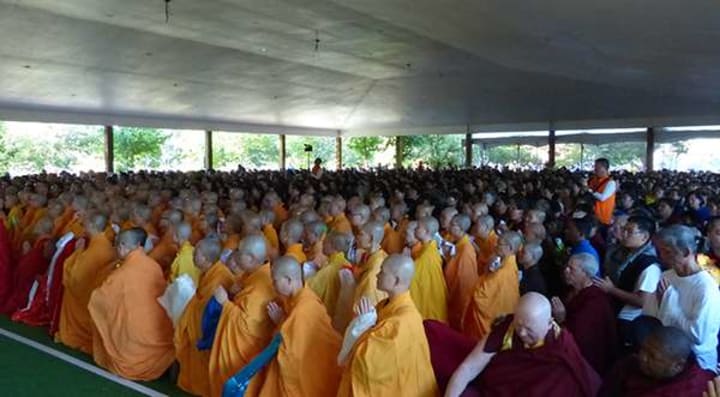
Celebrated as a Scholar, an Artist, and a Healer

From a very early age, H.H. Dorje Chang Buddha III has been seen as extremely talented in a number of areas of life. Even as a child, he had wisdom beyond his years and talents that were strong and unexpected. Documentaries were made about his artistic abilities, and people came from far and wide to learn Buddha Dharma from him.

That occurred even before he was officially recognized as he is today. It is the belief of Buddhists that H.H. Dorje Chang Buddha III holds supreme knowledge of the universe.

Others have spent their entire lives seeking the wisdom and understanding H.H. Dorje Chang Buddha III has, but it seems as though he was born with it. His Holiness has taught many Buddhist leaders, holy gurus, Buddhist practitioners, and people from every walk of life who seek out his wisdom.

Whether people have questions about Buddhism, need mental or physical healing, or want a deeper understanding of life, H.H. Dorje Chang Buddha III will not turn them away. As the sutra said that a Buddha is the king of healing, he helped more than 300 people in one day during his time in China.

Born in China, he was quickly recognized there as having abilities well beyond his years. His artwork was exhibited in Taiwan, and he was named to the presidency of The Chinese Painting Research Association in Beijing in 1987. He has met with dignitaries from all over the world, including many in China before he moved to the United States.

When he visited Taiwan in 1995, it was not just dignitaries and important people he met with, but people from all over the area who lined up at his hotel to seek his help and guidance.

All throughout the day and night, the Buddha helped people without resting. H.H. Dorje Chang Buddha III does not turn any of them away from the help they were seeking and the guidance they wanted and needed from the Buddha.

He has remained selfless and compassionate, helping those who are distressed, elderly, poor, or sick and infirm, as well as any injured or stray animals he finds during his travels. No one and nothing are turned away from the Buddha’s help.

Subjected to Defamation and Injustice

Throughout his life, H.H. Dorje Chang Buddha III has been subjected to injustice, and had his name defamed and slandered. Two years after he came to the United States, the Guangdong Shenzhen Public Security Bureau in China made a case against him and charged him with defrauding someone during a property sale.

But even the person who was named in the case came forward and said that it had not happened. The Buddha also had no record of ever owning the property, or of anyone else transferring it to him.

The case lingered for years, even going so far as getting INTERPOL involved and asking that they issue Red Notices for the arrest of H.H. Dorje Chang Buddha III. After an investigation in China, thirteen legal experts came together and stated that the case was incorrect and fabricated, and that it was not accurate at all. INTERPOL’s investigation showed the same conclusion.

Eventually, China requested INTERPOL to withdraw the Red Notices against the Buddha, and in November 2009 INTERPOL wrote to His Holiness the Buddha that the Red Notices against him had been canceled. But all through the years when he was being defamed and investigated, he never said a word about it.

He made no public statement about the case, nor did he try to clear his name in any way. When he was asked to show the INTERPOL letter he received, he also chose not to do that.

The reason that Shenzhen Public Security Bureau made the case against the Buddha, is because Shenzhen Public Security Bureau illegally took more than 700 paintings from the house the Buddha resided in.

These were paintings that were created by him during past decades. But he never said anything. In order to keep these paintings, the public security agents still tried to slander the Buddha through the internet, and continued to make claims that he was guilty.

If they stated his innocence, they would have to acknowledge their own crimes, including the made-up case and the stolen paintings from the Buddha and his disciple.

Finally, in 2019, due to mounting requests from the Buddhist community and its leaders, H.H. Dorje Chang Buddha III agreed to make the INTERPOL letter public. The World Buddhism Association Headquarters made the letter public and issued a statement as well.

That allowed those who were faithful to Buddhism all around the world see the truth of the facts in the case, and put their fears and concerns to rest. During the entire time, H.H. Dorje Chang Buddha III never said anything negative about his accusers.

The Most Dignified Buddha Treats Himself As Humanity’s Servant

Ever since the founding of Buddhism, it has been common practice for Buddhist disciples to make offerings to their teachers and masters. But H.H. Dorje Chang Buddha III has vowed never to accept offerings, and to do everything out of love and compassion, without any requirements for compensation. He serves people only on a voluntary basis and will never take something in return for his services.

His compassion for the people who have helped him, those who have tried to harm him, and the world in general, seems to be unwavering. H.H. Dorje Chang Buddha III is committed to his teachings, and understands that the care and compassion he displays to the world is what matters.

From the art he creates to the people who come to him for healing, everything and everyone is treated with care. This is the way it has been done for more than 2,500 years, and H.H. Dorje Chang Buddha III carries on the tradition.

By focusing on the situations of other people, instead of his own, the Buddha is able to show that he values the world and everyone in it, and that other people should do the same. It is only through serving others and having compassion for them that people can truly reach an enlightened state of joy and happiness.

While not necessarily easy to do in modern society, H.H. Dorje Chang Buddha III has been focused on the value of this accomplishment since he came to this world, and remains committed to it today.

During his life in China, and now that he lives in the United States, he has frequently been offered millions and even tens of millions of dollars in offerings.

He has never taken even a dollar of it, and has always turned it away. Some disciples have written about how they have wanted to give offerings, but that the Buddha would not accept them. Although he is always modest and says that he is humanity’s servant, we know that he is the most dignified Buddha in the world.

Link:https://peacelilysite.com/2025/10/24/h-h-dorje-chang-buddha-iii-teaching-people-to-attain-wisdom-through-compassion-especially-in-these-uncertain-times/

source: https://vocal.media/journal/h-h-dorje-chang-buddha-iii-teaching-people-to-attain-wisdom-through-compassion-especially-in-these-uncertain-times

The Thousand-Year Wonder: Fengguo Temple and Its Eternal Great Hall

Hidden in the quiet county of Yixian in northern China, Fengguo Temple has stood for over a thousand years as a living testament to ancient Chinese wisdom and spiritual devotion. Its magnificent Mahavira Hall, the largest single-story wooden structure of its time, houses seven colossal clay Buddhas that have miraculously survived the centuries. This temple is not only an architectural marvel but also a sacred symbol of harmony, resilience, and faith that continues to inspire all who visit.

A Thousand Years of Faith and Architecture

Beyond the Shanhai Pass, in the northern part of Jinzhou City, Liaoning Province, stands the quiet county of Yixian, home to one of China’s most magnificent ancient temples — Fengguo Temple. This remarkable site, founded over a millennium ago, is not only a masterpiece of Liao Dynasty Buddhist architecture but also a living testament to the extraordinary ingenuity of ancient Chinese builders and the enduring power of faith.

In 2020, Fengguo Temple celebrated its thousandth anniversary. Through a thousand years of wind, snow, wars, and earthquakes, its grand Mahavira Hall still stands tall — a miracle in both architecture and spirituality.


The Majestic Great Hall

The heart of Fengguo Temple is its Mahavira Hall (Great Buddha Hall), one of the Eight Great Structures of the Liao Dynasty. Built in 1020 CE, it measures 49.5 meters wide, 26.6 meters deep, and 19.9 meters high, covering an area of 1,317 square meters. Standing on a 3.2-meter-high platform, the hall is the largest single-story wooden structure of ancient China — magnificent, solemn, and breathtaking.

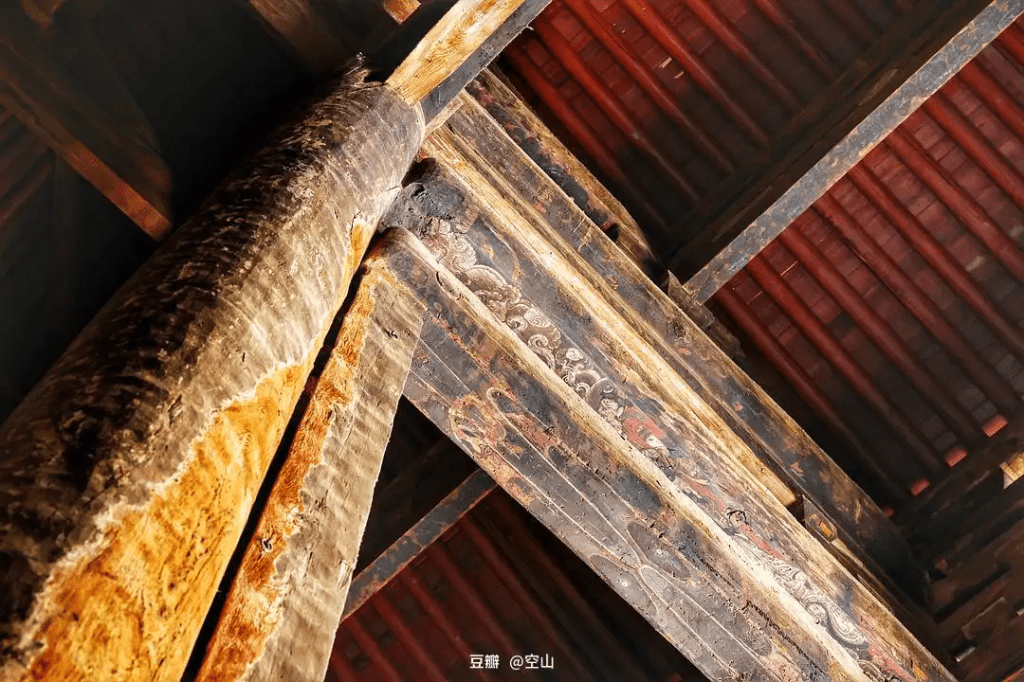
Ingeniously designed, the hall uses a “reduced-column” method to maximize interior space while maintaining perfect stability. Ancient builders applied advanced techniques known as “side-foot” and “rising beam”, ensuring the building’s balance and graceful proportions. The massive bracket sets under the eaves are bold yet refined, exuding strength and elegance.

Thanks to its precise structural mechanics, the Great Hall has remained perfectly upright for a thousand years, without any sign of warping or tilting — an unparalleled achievement in the history of wooden architecture.


The Seven Buddhas: Eternal Clay Sculptures

Inside the Great Hall, seven colossal clay Buddha statues, each about nine meters tall, sit side by side upon a brick platform. From east to west, they are:
Kashyapa Buddha, Krakucchanda Buddha, Sikhin Buddha, Vipashyin Buddha, Visvabhu Buddha, Kanakamuni Buddha, and Shakyamuni Buddha.

These are the “Seven Buddhas of the Past” mentioned in Buddhist scriptures, symbolizing the eternal cycle of enlightenment in our world. Each Buddha exudes solemn dignity, with serene expressions and graceful postures, reflecting the Liao Dynasty’s continuation of Tang-style Buddhist artistry. Two bodhisattvas stand beside each Buddha, adding vitality and compassion to this sacred tableau.

This magnificent ensemble is the oldest and largest group of colored clay Buddha statues in the world. Despite being made of fragile clay, they have miraculously survived for over a thousand years, their colors still soft and luminous. This endurance is nothing short of a miracle — a union of artistic mastery and the blessings of faith.

The Legend of the Buddha Catching a Shell

During the Liaoshen Campaign in the late 1940s, Yixian became a battlefield. Amid the chaos, a shell pierced through the roof of the Great Hall and fell directly into the right hand of the Shakyamuni Buddha statue. Miraculously, the shell did not explode.

Locals still tell this story as “The Buddha Caught the Shell with His Hand.” Whether fact or legend, it adds an aura of mystery and divine protection to the temple’s long history — as if the Buddhas themselves were silently safeguarding their sacred home.

The Flying Devas of Liao

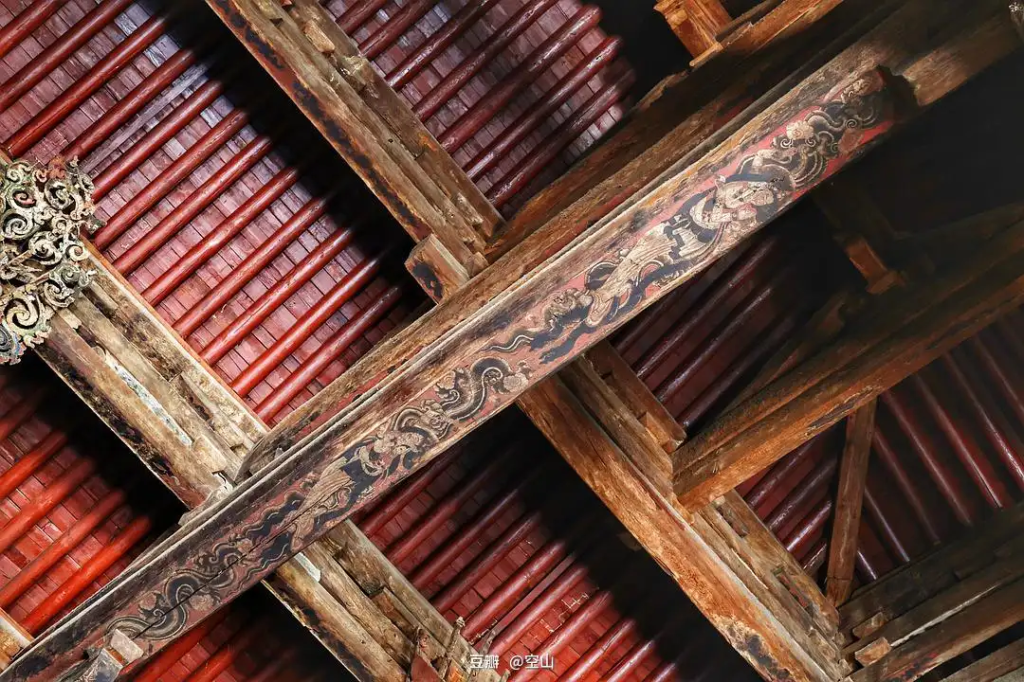
The beams and rafters inside the Great Hall are adorned with over 4,000 square meters of original Liao Dynasty murals. Among them, the heavenly maidens — the Flying Devas — are the most enchanting. With radiant faces and flowing ribbons, they drift gracefully through clouds, offering flowers and fruits to the Seven Buddhas below.

Their movement contrasts beautifully with the Buddhas’ stillness, creating a breathtaking scene of divine harmony and devotion. The surrounding walls also preserve Yuan and Ming dynasty murals depicting ten Buddhas, eight Bodhisattvas, and the Eleven-Faced Avalokiteshvara, adding even more layers of spiritual and artistic richness to this timeless sanctuary.


A Thousand Years of Wonder

Standing before this majestic hall — a wooden structure that has endured a millennium — and gazing upon the clay Buddhas whose serene faces have survived a thousand winters, one cannot help but wonder:

How can a wooden palace withstand ten centuries of storms and wars? How can clay sculptures remain whole and radiant after a thousand years?

Is it the wisdom of the ancients? The strength of art? Or the blessing of the Dharma itself?

Perhaps the answer lies within every beam, every brushstroke, and every tranquil smile of the Buddhas.

May the Buddhas and Bodhisattvas bless all beings with peace, compassion, and happiness.
Namo Amitabha.

Link:https://peacelilysite.com/2025/10/23/the-thousand-year-wonder-fengguo-temple-and-its-eternal-great-hall/

Source: https://www.hzfxy.net/detail_1020_10154.html, https://zhuanlan.zhihu.com/p/721178084

A Miracle in Pleasanton: How a Police Car Accident Became a Lesson in Karma and Protection

On the evening of May 31, 2013, an ordinary family outing turned into a life-changing experience that revealed to me the power of karma, faith, and divine protection.

That spring, my two daughters had just returned home from their colleges on the East Coast for summer vacation. We were all joyful to be reunited as a family. After dinner that evening, my husband, Yiao-Tee, and our daughters decided to take a short walk to the nearby Walmart in Pleasanton, California, to buy a watch battery.

It was around 9 p.m. when we stepped out of the store. My husband and daughters walked a few meters ahead, while I followed behind them on the pedestrian walkway. Suddenly, a police car pulled out of a parking space.

The officer inside noticed my daughters walking past his vehicle and, focusing on them, momentarily forgot that he was still driving. In that instant, he failed to see me. By the time he realized I was there, it was too late—
the police car struck me squarely. Screams broke out around us as I was thrown into the air and landed heavily on the ground.

When the officer got out of his vehicle, his first reaction was to blame me, claiming I had suddenly stepped in front of his car. My husband and daughters immediately refuted this. They knew I would never rush recklessly in front of a moving vehicle.

Eyewitnesses later confirmed that the impact had lifted me several feet into the air. Yet, against all odds, I was conscious and could move. An ambulance soon arrived and rushed me to the emergency room.

After thorough examinations and X-rays, the doctor and nurses were astonished.
They told me, almost in unison, that my survival was nothing short of a miracle.

There were no broken bones, no internal injuries, not even minor scrapes. Only a light swelling and redness on my left thigh showed any sign of trauma. The next day, I received acupuncture and laser treatment—and even went to work as usual. My daily life was completely unaffected.

When I reflect on that night, I recall no sensation of pain or impact. My mind had gone blank. Yet, very subtly, I felt as though someone had caught me and gently placed me back on the ground.

That feeling was profound and beyond words.

I have always worn the Vajra Thread given to me by my master when I took Refuge. I believe wholeheartedly that the compassionate empowerment of H.H. Dorje Chang Buddha III and the blessings of Buddhas and Bodhisattvas protected me from harm.

While I was physically unharmed, the aftermath was not easy. The police department initially refused to accept responsibility. They attempted to shift the blame to Walmart, claiming the store had not provided adequate pedestrian markings. As a result, they also refused to cover the nearly ten thousand dollars in ambulance and medical expenses.

It was only through Walmart’s surveillance footage, which captured the entire incident, that the truth could be verified.

I reported the situation to my master, explaining how I had been struck by a car yet walked away without injury.

Then, three months later, a call came from the police department’s insurance representative:
they would cover all the expenses in full.

In that moment, my heart overflowed with gratitude—to the Buddhas and Bodhisattvas for their protection, and to H.H. Dorje Chang Buddha III for His compassion and empowerment.

This experience deepened my faith and strengthened my resolve to cultivate diligently. Our whole family now listens to the Buddha Dharma of H.H. Dorje Chang Buddha III and practices accordingly.

Through continued study and sincere cultivation, we have found that every aspect of our lives—career, health, and even our children’s educational paths—has been smooth and filled with blessings.

Inspired by this miracle, our family established a Dharma Listening Center to share the authentic Buddha Dharma of H.H. Dorje Chang Buddha III, so that others may also receive the same blessings of wisdom and protection.

From the bottom of my heart, I express my deepest gratitude to H.H. Dorje Chang Buddha III, the Pope of Buddhism, for expounding the supreme and authentic Buddha Dharma.

I also bow in reverence to all Buddhas and Bodhisattvas for their compassionate protection. This experience reminded me of an unshakable truth:
the law of cause and effect never errs.

This accident was no coincidence—it was the ripening of past karmic causes. Yet, through sincere cultivation and the accumulation of merits, even serious calamities can be transformed.

This event has forever affirmed my faith in the Buddha’s teachings.
If we believe in the law of cause and effect, remain steadfast in our cultivation, and dedicate ourselves to doing good and spreading the true Dharma, every bit of merit will bring us peace and blessings.

When one lives in alignment with the Buddha Dharma, miracles are not extraordinary—they are the natural expression of divine compassion.

Link:https://peacelilysite.com/2025/10/22/a-miracle-in-pleasanton-how-a-police-car-accident-became-a-lesson-in-karma-and-protection/

Why did The Eminent Master Qing Ding Acknowledge H.H. Dorje Chang Buddha III as His Master?


Early Life and Ordination of Dharma Master Qing Ding

Dharma Master Qing Ding was originally named Zheng QuanShan. He was born in 1903 from a well-known large family that had the Buddhist faith for many generations. He started to read and chant Buddhist sutras at the age of 7 and received basic knowledge about Buddhism from his father.

In 1939, when Zheng Quan Shan was 36, he was the major-general director of the Advanced Party, Government, and Military Training Corp of China’s Nationalist Government. While working in Chongqing, he often spent his leisure time to go to Ciyun Temple nearby to listen to Dharma Master Cheng Yi’s expositions of Buddhist sutras and Buddha-dharma.

Under the introduction and guidance of Dharma Master Cheng Yi, Zheng Quanshan was ordained as a monk in 1941 at Ciyun Temple in Chongqing and received his dharma name “Qing Ding.” During the same year, Dharma Master Qing Ding received the complete set of monastic precepts at Zhaojue Temple in Chengdu.

Dharma Master Qing Ding (Disciple of H.H. Dorje Chang Buddha III)
Dharma Master Qing Ding(Disciple of H.H. Dorje Chang Buddha III)

Zhaojue Temple in Chengdu.
Zhaojue Temple in Chengdu

Following Dharma Master Neng Hai and Attaining Lineage

Dharma Master Neng Hai

After receiving the precepts, Dharma Master Qing Ding also became a disciple of  Dharma Master Neng Hai, who was a famous eminent monk in modern Chinese history. He learned the Yidam dharma of  Yamantaka Vajra from Dharma Master Neng Hai.

After Dharma Master Neng Hai had entered nirvana, Dharma master Qing Ding succeeded Dharma Master Neng Hai’s lineage and became a dharma king and leader of the Gelug Sect of esoteric Buddhism. Dharma Master Qing Ding’s dharma power and virtue majestically astounded the world. He once manifested great supernormal powers at a demon-subduing dharma assembly and changed his own appearance into that of Ksitigarbha Bodhisattva.

The Supreme Encounter

However, at the high age of 90, he paid homage to acknowledge a young tremendous holy virtuous person as his master. Who is this young tremendous holy virtuous person? Why did Dharma Master Qing Ding acknowledge Him as his master?

This young tremendous holy virtuous person is His Holiness Dorje Chang Buddha IIIDharma Master Qing Ding observed from his state of realization that this young person is the genuine incarnation of Dorje Chang Buddha the primordial Sambhogakaya of the dharma sphere. He seized this magnificent karmic condition that is difficult to encounter in millions of eons.

Acknowledging H.H. Dorje Chang Buddha III as His Master

Dharma Master Qing Ding acknowledged H.H. Dorje Chang Buddha III as his master and beseeched for Buddha-dharma.
Dharma Master Qing Ding acknowledged H.H. Dorje Chang Buddha III as his master and beseeched for Buddha-dharma.

A Dharma brother supported Dharma Master Qing Ding and said to H.H. Dorje Chang Buddha III, “Master, Great Monk Qing Ding of zhaojue Temple came today to pay homage to become your disciple and beseech for Buddha-dharma.”

H.H. Dorje Chang Buddha III: “Okay, go ahead. You can just do four prostrations according to the four refuges. Monk Qing Ding, your are my disciple from now on. Since you are my disciple, you should act in accord with my conduct, and cultivate yourself earnestly according to my method. Sit on the seating cushion.”

(Sitting at the side was Yang Wen who worked at Chengdu No. 2 Hospital and came with Dharma Master Qing Ding. Helping Dharma Master Qing Ding from behind was the lead attendant of H.H. Dorje Chang Buddha III.)

H.H. Dorje Chang Buddha III: “I will transmit my Buddha-dharma to Great Monk Qing Ding. I hope that you will definitely abide by the religious policies, continue your advancement, and be a good monk.”

Receiving the Inner-Tantric Initiation

Master Qing Ding acknowledged H.H. Dorje Chang buddha III as his master and beseeched for Buddha-dharma. He beseeched H.H. Dorje Chang Buddha III to confer make-up inner- tantric initiation of the Yidam dharma of Yamantaka Vajra.

It turned out that when Dharma Master Qing Ding beseeched and learned the Yidam dharma of Yamantaka Vajra from Dharma Master Neng Hai, he did not receive an inner- tantric initiation. This was because although Dharma Master Neng Hai had received an inner- tantric initiation himself, he did not have the ability to confer an inner- tantric initiation to his disciple, Dharma Master Qing Ding.

The Profound Importance of Inner-Tantric Initiation

Why is an inner- tantric initiation so important? The effect of an inner-tantric initiation is that the master transmitting the dharma invites the Yidam of the dharma to be transmitted to come to the site. The Yidam will then accept the disciple in person. Therefore, as long as the disciple engages in self- cultivation in accord with the dharma, liberation from birth and death is guaranteed with a one- hundred- percent certainty.

H.H. Dorje Chang Buddha III conferred an inner- tantric initiation of the Yidam dharma of Yamantaka Vajra to Dharma Master Qing Ding. That made up what Dharma Master Qing Ding lacked and fulfilled the wish that he cherished for many years.

Why did The Eminent Master Qing Ding Acknowledge H.H. Dorje Chang Buddha III as His Master?

Video Link: https://www.youtube.com/watch?v=-L0P9wJ7KkI&feature=youtu.be

Link:https://hhdorjechangbuddhaiiidharma.com/2025/10/12/why-did-the-eminent-master-qing-ding-acknowledge-h-h-dorje-chang-buddha-iii-as-his-master/

#DorjeChangBuddhaIII #HHDorjeChangBuddhaIII #DorjeChangBuddha #MasterWanKoYee #MasterYiYunGao #DharmaMasterQingDing #DorjeChangBuddhaDisciple #InnerTantricInitiation #ChineseBuddhism #GelugEsotericLineage #LineageTransmission #BuddhistKarmaConnection #TrueBuddhaIncarnation #Karma

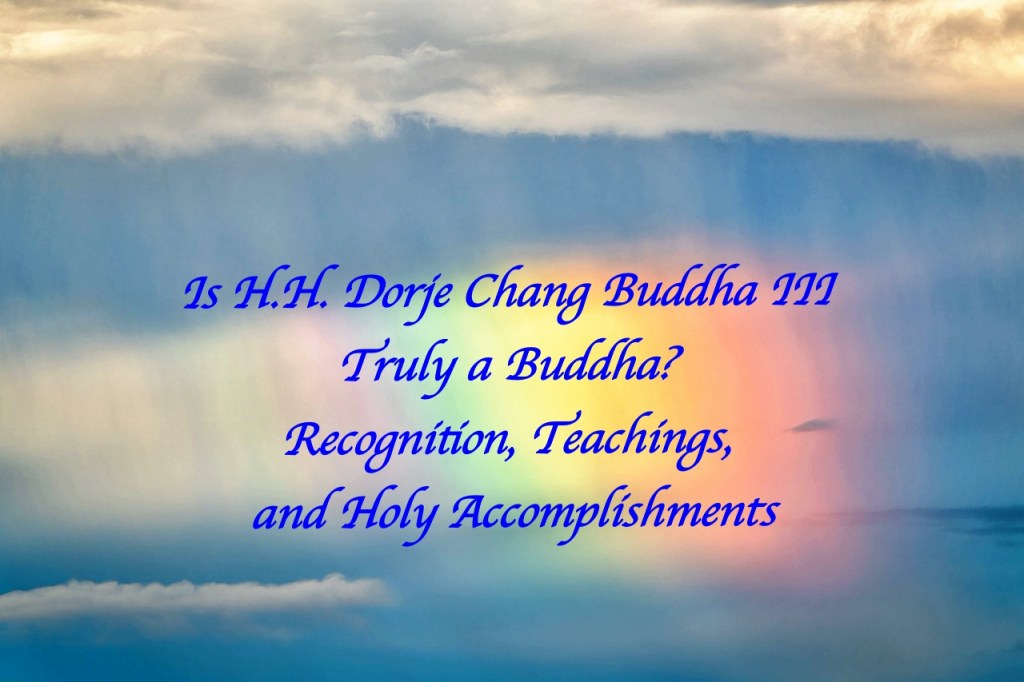
Is H.H. Dorje Chang Buddha III Truly a Buddha? Recognition, Teachings, and Holy Accomplishments

Is H.H. Dorje Chang Buddha III Truly a Buddha? Recognition, Teachings, and Holy Accomplishments


Nowadays, some heretical individuals on the internet are spreading slander. They are fabricating lies such as claiming to be a living Buddha in order to exploit followers. Many people may begin to wonder: Is H.H. Dorje Chang Buddha III truly a Buddha?

The Purpose of a Buddha’s Appearance in the World

In reality, when a Buddha comes into this world, it is to let sentient beings hear the true dharma. The purpose is to liberate from samsara and attain great accomplishment — not to prove that they are a Buddha! If you believe in Him, He is a Buddha; if you do not believe in Him, He is still a Buddha. This is just like the ignorant people who sought evidence that Namo Shakyamuni Buddha was a Buddha — they spent their whole lives doubting. Meanwhile, Namo Shakyamuni Buddha’s disciples focused on listening to the teachings. They were practicing according to them. Each attained great supernatural powers and liberation. Those burdened with doubts, even until death, were still questioning, “Was He truly a Buddha?”

Universal Recognition Across All Buddhist Sects

The Pope of Buddhism H.H. Dorje Chang Buddha III
The Pope of Buddhism H.H. Dorje Chang Buddha III

H.H. Dorje Chang Buddha III is the true incarnation of the Primordial Sambhogakaya Buddha, Dorje Chang Buddha. The status of His Holiness the Buddha is universally recognized by leaders, Dharma Kings, Regent Dharma Kings, and eminent Rinpoches representing all major Tibetan Buddhist sects, through the issuance of official recognition documents. He was unanimously recognized and affirmed as a Buddha, not as belonging exclusively to any single sect. If it were merely a Dharma King or Living Buddha of a particular sect, recognition would be confined to that sect. It would not be endorsed by leaders and regent Dharma Kings across all schools. The recognition of H.H. Dorje Chang Buddha III is equivalent to how Namo Shakyamuni Buddha is venerated by all sects — Namo Shakyamuni Buddha does not belong to any one school but is the Buddha of the entirety of Buddhism.

Recognitions-Congratulations-to-H.H.-Dorje-Chang-Buddha-III.

Humility of H.H. Dorje Chang Buddha III

Since coming into this world, H.H. Dorje Chang Buddha III has manifested unparalleled Buddha wisdom. Even though H.H. Dorje Chang Buddha III knew that He was indeed Dorje Chang Buddha III, He always described Himself as a humble and ashamed person. He never once declared that He was a Buddha. This is evident from the many dharma discourses and audio teachings He has given and spread worldwide over the years. Only after He was formally recognized by the “Three Masters and Ten Witnesses” with written certifications and congratulatory endorsements did H.H. Dorje Chang Buddha III acknowledge this identity.

H.H. Dorje Chang Buddha III’s Teachings Are No Different from Shakyamuni Buddha’s Dharma

The teachings of Namo Shakyamuni Buddha and the teachings of H.H. Dorje Chang Buddha III are no different. They are in complete interpenetration without obstruction. Just as Namo Shakyamuni Buddha’s disciples in ancient times attained supernatural powers and great accomplishment, the holy achievements of disciples under H.H. Dorje Chang Buddha III are likewise numerous and undeniable.

Holy Accomplishments of Disciples Under H.H. Dorje Chang Buddha III

This is also why leaders of many sects have sought profound dharmas from H.H. Dorje Chang Buddha III, thereby attaining great accomplishment. To name a few well-known accomplished figures:

  • Elder Puguan of Kaihua Temple at Misty Mountain, the first station of Southern Transmission Buddhism in China, and 13th-generation Patriarch of Golden Summit, Mount Emei — his holy body remained incorrupt.
  • Elder Zhang Wangtingguo — attained accomplishment of freedom in life and death at age 109; eleven days after parinirvana, fresh blood still flowed from his body like that of a living person.
  • Elder Yinhai — after passing away, his holy body transformed into a vajra body as hard as stone, an unprecedented holy manifestation in Buddhist history.
  • Great Master Desi Rinpoche of the Sherpa lineage — attained rainbow body accomplishment.
  • Dharma Master Tonghui — accomplished the state of Golden Arhat, his holy body remaining incorrupt, now enshrined in gold.
  • Dharma Master Yongding — possessed vast supernatural powers, traversing freely through the Three Realms.
  • Elder Wuming — worldly spiritual leader of exoteric Buddhism — holy body remained incorrupt.
  • Elder Yizhao of Hong Kong’s Zhulin Chan Temple, Dharma heir of the Venerable Master Hsu Yun — also attained great accomplishment.

Additionally, Lobsang Zhenzhu, who mastered the Tripitaka and was champion of the entire Buddhist debate system, achieving the highest Lharampa Geshe degree, also studied dharma under H.H. Dorje Chang Buddha III.

In conclusion, no amount of slander or doubt can obscure the truth. The dharma teachings of H.H. Dorje Chang Buddha III, together with the undeniable holy accomplishments of His disciples, stand as living testimony to the authenticity of the Buddha-dharma. Just as Namo Shakyamuni Buddha was not confined to any sect but was the Buddha of all Buddhism, so too is H.H. Dorje Chang Buddha III universally recognized by Dharma Kings, Regent Dharma Kings, and eminent Rinpoches from every major sect. His Holiness has never sought to prove His own Buddhahood. Instead, He has selflessly devoted His life to guiding sentient beings toward liberation and accomplishment. For those with faith, the truth is luminous and undeniable: H.H. Dorje Chang Buddha III is indeed a true Buddha, manifesting in this world to bring sentient beings onto the path of liberation and enlightenment.

Source: https://dharma-hhdorjechangbuddhaiii.org/h-h-dorje-chang-buddha-iii-truly-a-buddha-recognition-teachings-and-holy-accomplishments/

Link: https://hhdorjechangbuddhaiiidharma.com/2025/10/19/is-h-h-dorje-chang-buddha-iii-truly-a-buddha-recognition-teachings-and-holy-accomplishments/

#HHDorjeChangBuddhaIII #DorjeChangBuddhaIII #DorjeChangbudda #ShakyamuniBuddhaTeachings #TrueBuddhaRecognition #LivingBuddhaControversy #TibetanBuddhismRecognition #DharmaKingsRecognition #RinpochesRecognition #TrueDharma #HolyAccomplishments #UniversalRecognitionOfBuddha #ShakyamuniBuddhaScriptures #compassion

To see the Love in all beings is to Awaken the Compassion in ourselves

The Tears of a Mother Fox

This is a true story, personally recounted by a monk.

He said that before he became a monk, he was a hunter, specializing in capturing foxes. One day, he caught a large fox as soon as he left home. After skinning it for its valuable fur, he left the animal—still barely alive—hidden in the grass.

By evening, when the hunter returned to retrieve the fox, it was gone. Looking more carefully, he noticed faint traces of blood on the ground, leading toward a small cave nearby.

Peering inside, he was stunned by what he saw: the fox, in excruciating pain and skinned alive, had struggled back to its den. Why?

When the hunter dragged out the now lifeless body, he discovered two tiny, blind cubs tightly suckling their dead mother’s withered breast.

The sight struck him to his very core. Never before had he realized that animals, too, share the same bonds of maternal love as humans. Even in her dying moments, the mother fox had thought only of feeding her children, afraid they would go hungry. At that realization, an overwhelming wave of grief, shame, and remorse consumed him. He was devastated, unable to forgive himself.

From that moment, he laid down his weapons, abandoned hunting, and chose the path of monastic life.

Many years later, whenever this monk recalled that experience, his eyes would still well up with tears.

The Selfless Leap: A Lesson from the Bharal

There are moments in life when a single experience reshapes the way we see the world forever. The extraordinary sacrifice of animals that opened a hunter’s heart and made him vow never again to take a life.

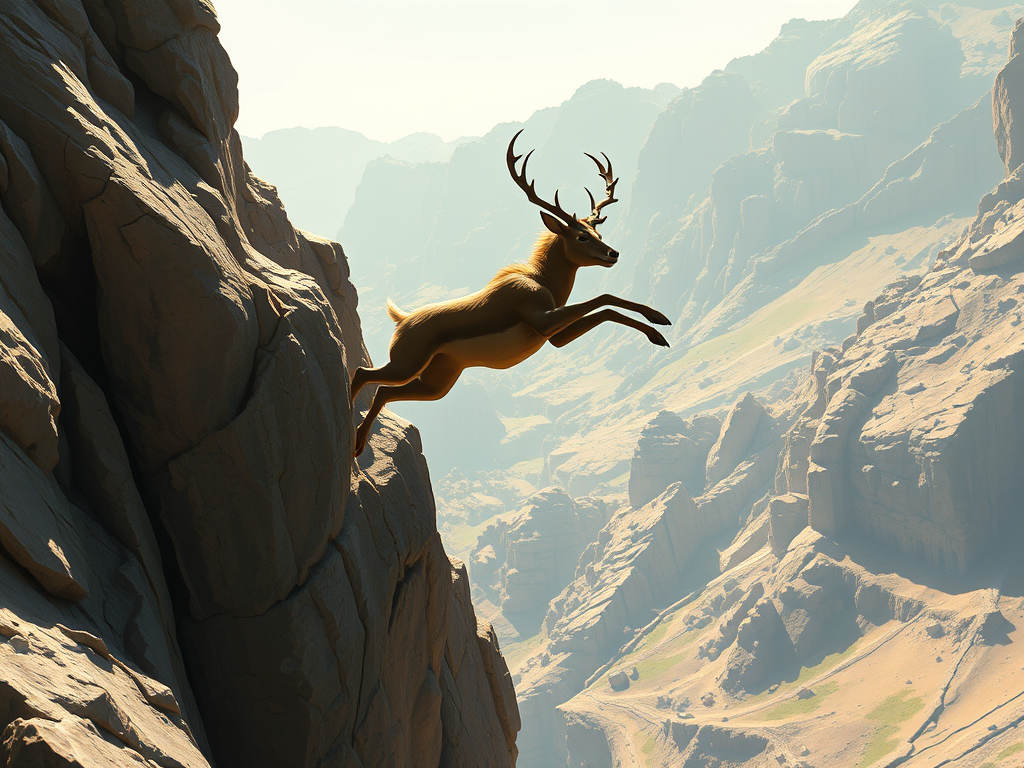
It happened during a hunt many years ago. Our party had driven a herd of more than sixty bharal—also known as blue sheep—to the edge of a cliff on Mount Bulang. The plan was cruel but simple: trap them on the precipice, and force them to fall to their deaths so we wouldn’t waste bullets.

The herd panicked, but then something astonishing happened. At the sound of a cry from a large male, the bharal divided themselves into two groups—young and old. Out of the elders stepped a weathered male, his horns broken, his face lined with age. He bleated once, and a half-grown bharal emerged from the younger group to join him.

Together they approached the cliff’s edge, then charged forward. The young one leapt first, soaring into the abyss, but it quickly began to fall. At that very moment, the old male followed, placing himself directly beneath the younger in midair. The youth’s hooves struck the elder’s back, using it as a springboard for a second leap. Miraculously, it landed safely on the opposite cliff.

The old one, having given all he had, plummeted to his death.

And then, pair after pair followed. The sky above the gorge was filled with arcs of courage—each elder laying down its life so a younger one might live. By the end, countless old bharal lay broken on the rocks, but the youth had crossed to safety.

I was stunned beyond words. At the edge of extinction, this herd had discovered a way to save itself—by sacrificing half to preserve half. But what shook me even more was not the strategy itself, but the spirit behind it. These elders did not resist, did not hesitate. They walked calmly toward death, offering their bodies so their children might have a future.

In that moment, my heart broke open. I realized that animals, too, embody wisdom, love, and a willingness to sacrifice that rivals, and perhaps even surpasses, our own. I could no longer see them as mere prey. That day, I made a vow: I would never again take life.

✨ The story of the bharal is more than just a tale of survival. It is a mirror for us as human beings. Would we, when faced with the survival of our families, communities, or world, have the courage to lay ourselves down for the next generation? Would we live not only for ourselves, but for those who come after us?

The bharal taught me that true strength is not in holding on, but in letting go—for love. And from that lesson, my heart turned toward compassion.

Link:https://peacelilysite.com/2025/09/12/to-see-the-love-in-all-beings-is-to-awaken-the-compassion-in-ourselves/

The World’s Largest Buddhist Temple: Borobudur, Indonesia

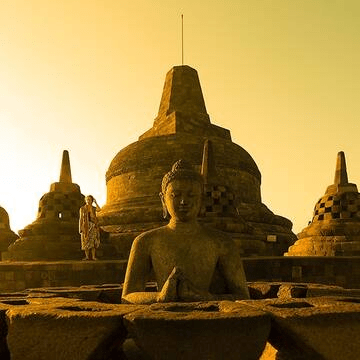
In the heart of Central Java’s fertile Kedu Valley, embraced by volcanic peaks and emerald landscapes, rises a monument unlike any other—Borobudur, the world’s largest Buddhist temple and a UNESCO World Heritage Site. Built more than 1,200 years ago, this colossal stone mountain is not just an architectural wonder, but a spiritual journey carved in stone.

A Monument Born of Devotion

Borobudur was constructed in the 8th and 9th centuries under the Sailendra Dynasty. Without a drop of mortar, two million volcanic stone blocks were precisely interlocked like a massive puzzle, forming a structure that has endured centuries of nature’s tests. From above, its shape is breathtaking—a giant mandala, the sacred geometric symbol of the Buddhist cosmos.

The temple rises in three tiers, each representing one of the realms of Buddhist cosmology:

  • Kamadhatu – The Realm of Desire: The base, adorned with reliefs that portray the karmic law and the cycle of birth and death.
  • Rupadhatu – The Realm of Form: Five square terraces lined with intricate reliefs and 504 serene Buddha statues.
  • Arupadhatu – The Realm of Formlessness: Three circular platforms crowned with 72 bell-shaped stupas, each sheltering a meditating Buddha. At the summit stands the great central stupa, symbolizing ultimate enlightenment.

A Living Story in Stone

Walking through Borobudur is like entering a vast storybook. The temple’s bas-reliefs, stretching across 2,500 square meters, are the most complete ensemble of Buddhist reliefs in the world. They illustrate tales from the life of Shakyamuni Buddha, Jataka stories, and profound teachings, guiding pilgrims step by step upward—from worldly desires to spiritual liberation.
Buried, Forgotten, and Found Again

Despite its grandeur, Borobudur fell silent between the 10th and 14th centuries, likely due to political shifts and the spread of Islam in Java. Nature reclaimed it—volcanic ash and thick jungle hid the monument from the world’s eyes. For centuries, it slumbered, until 1814, when Sir Thomas Stamford Raffles, the British governor of Java, was informed of a “buried hill.” Excavations revealed not a hill, but a hidden treasure of human devotion.

From Restoration to Reverence

In the 20th century, Borobudur was painstakingly restored with UNESCO’s support, safeguarding its stones against further decay. In 1991, it was declared a World Heritage Site, recognized as both a cultural and spiritual masterpiece.

Today, Borobudur is not just a monument of the past—it is alive with faith. Each year, thousands of Buddhists from across Indonesia and beyond gather here for Vesak Day, celebrating the birth, enlightenment, and passing of the Buddha under the full moon. Lanterns rise into the night sky, echoing the timeless aspiration for wisdom and compassion.

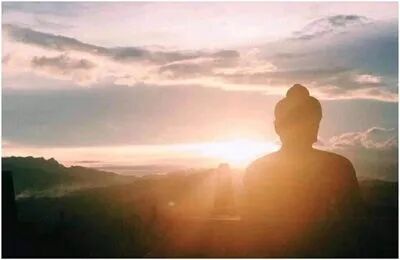
Borobudur is more than stone, stupas, and statues. It is a meditation frozen in time, a pilgrimage for both the feet and the heart. For travelers, standing atop Borobudur at sunrise—watching the mist lift from the valley as the first rays of light kiss the central stupa—is an experience beyond words.

This temple is not just Indonesia’s pride; it is humanity’s shared treasure, reminding us of the enduring power of faith, art, and the human spirit.

Travel Guide: Planning Your Visit

If Borobudur is on your travel list, here are some helpful tips:

📍 Location

  • Situated in Magelang, Central Java, about 25 miles (40 km) northwest of Yogyakarta.
  • Easily accessible by car, bus, or organized tour from Yogyakarta (1–1.5 hours).

🕰 Best Time to Visit

  • Sunrise tours are especially popular. Watching the first light illuminate the misty valley and stupas is unforgettable.
  • The dry season (April–October) offers clearer skies and comfortable weather.

🎟 Tickets

  • General admission is separate for local and international visitors.
  • Sunrise access often requires booking through official operators.
  • Combination tickets are available if you also wish to visit Prambanan Temple, another UNESCO site nearby.

👟 What to Bring

  • Comfortable walking shoes (you’ll be climbing many steps).
  • A hat, sunscreen, and water—the tropical sun can be intense.
  • A respectful outfit: shoulders and knees covered, as Borobudur is a sacred site.

🛕 Nearby Attractions

  • Prambanan Temple – A magnificent Hindu temple complex about an hour away.
  • Mendut Temple – A smaller Buddhist temple with a giant Buddha statue, often part of the Vesak procession.
  • Yogyakarta City – Known for its royal palace, batik art, and vibrant street food scene.

Link: https://peacelilysite.com/2025/09/12/the-worlds-largest-buddhist-temple-borobudur-indonesia/

5 Morning Affirmations to Begin Your Day with Peace and Strength

This morning, I stumbled upon a truly inspiring video—one that I feel compelled to share. It’s about something simple yet deeply powerful: the words we choose to tell ourselves at the start of each day.

The video introduces five morning affirmations—phrases rooted in mindfulness, gratitude, and self-compassion. These words are not just reminders; they are seeds we plant in our hearts. By repeating them daily, we can replace anxiety with calm, transform doubt into confidence, and begin our day already centered in peace.

Here are the affirmations:

  1. I am here, I am alive. This moment is enough.
  2. Nothing outside me can disturb my peace unless I let it.
  3. I will treat myself with kindness, not judgment.
  4. Everything I need is already within me.
  5. Let me be the cause of peace today.

These may seem like simple sentences, yet they carry thousands of years of wisdom. Buddhist teachings remind us that the mind shapes our reality. When we begin each day with thoughts of peace, compassion, and self-respect, we set the tone for everything that follows.

What I love most is the last affirmation: “Let me be the cause of peace today.” Imagine the ripple effect if each of us carried this intention into our daily lives—peace would not just be something we seek, but something we create and share.

The words we tell ourselves each morning truly have the power to shape a lifetime of peace and wisdom.

✨ I wish everyone who watches this video peace, clarity, and growth on their journey. May these affirmations bring light to your mornings and strength to your days.

🌸 Why not give it a try? For the next seven mornings, say these affirmations to yourself before you start your day. Notice how they shift your mood, your focus, and even the way you interact with others. If you feel inspired, share your experience—it might just encourage someone else to begin their own journey of mindful mornings.

Link: https://peacelilysite.com/2025/09/12/5-morning-affirmations-to-begin-your-day-with-peace-and-strength/

When a Runner Met a Stray: A Friendship That Crossed Deserts and Hearts

You would never imagine that an ordinary stray dog from China could become a spiritual icon for people all over the world. Its story was written into a book, translated into 20 languages, and sold globally. Hollywood even bought the film rights, and one day it will be made into a movie. Countless celebrities and business leaders have posed for photos with it, and even the Queen of England once held it in her arms.

So what made this little dog so extraordinary? Everything began with what seemed like a random “accident.”

It was the summer of 2016 in Xinjiang, during a grueling ultra-marathon held once every three years. The main character of the story, British athlete Dion Leonard, was among the participants. Under the scorching sun—temperatures soaring above 40°C—runners had to trek 300 kilometers across desert and Gobi terrain. It was a challenge that tested both physical strength and willpower.

To conserve energy, Dion carried only a little bread and water. After walking all day, he finally stopped to rest for the night. That’s when a starving stray dog approached him, wagging its tail with all its might. Moved by the little dog’s cuteness, Dion shared some of his precious food.

He didn’t know it then, but that small act of kindness tied their destinies together. From the next day onward, the dog refused to leave his side. That’s when Dion realized it had no owner. Since the race was long and lonely, he welcomed this unexpected companion.

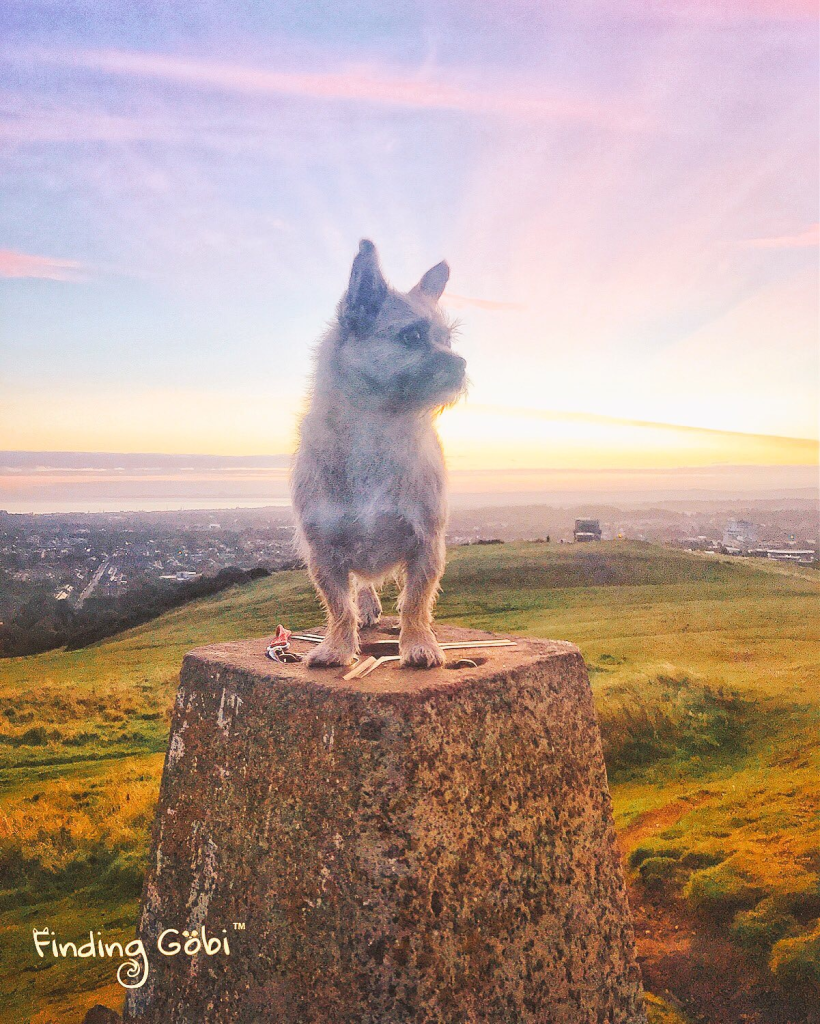
Day after day, the dog kept up with Dion. Whenever exhaustion hit him, just looking at the panting, tail-wagging little dog filled him with strength again. “If this tiny creature has the endurance to keep going, then so must I,” Dion thought. He named the dog Gobi, after the desert where they met. They shared food by day and huddled together by night. Through hardship, man and dog forged a bond of deep friendship.

Can you imagine—a stray dog becoming a global hero, its story turned into a bestselling book and a movie? That’s exactly what happened.

But during the race, Gobi could only run 150 kilometers before collapsing from exhaustion in the scorching desert. The organizers rescued and treated the little dog, who then waited faithfully at the finish line each day for Dion to return. Without Gobi, Dion felt alone again—but now he had something to fight for. His longing to see his companion pushed him to finish the final 150 kilometers in just three days, earning him a silver medal—the best result of his career. But instead of basking in the honor, his first joy was reuniting with Gobi.

The race organizers were so moved by their bond that they even awarded Gobi her own silver medal. Dion, who had once lost a beloved dog years earlier, felt this meeting was destiny. He resolved to adopt Gobi and bring her home to the UK.

From a stray with no future, Gobi suddenly became a beloved star dog, cherished by a marathon champion. Dion spared a lot of effort and about several thousand dollars to secure the adoption, leaving Gobi in a friend’s care in Xinjiang while he flew back to the UK to handle the paperwork. But just when everything was ready and Dion was eagerly awaiting Gobi’s arrival, disaster struck—Gobi went missing.

Panicked, Dion flew back to China and printed thousands of flyers to search for his companion. By then, their story had already gone viral. Media outlets reported it widely, and Gobi became a symbol of hope, inspiring people everywhere. When word spread that the famous little dog was lost, locals poured into the streets to help search, forming teams day and night, while countless netizens spread the news online.

Dion chased down every lead, refusing to give up. Finally, following a clue that others thought worthless, he found Gobi—injured and weary, but alive. The little dog had clearly suffered, but this time, Dion promised, she would never be alone again.

This reunion made Gobi even more famous. After full medical care and recovery, Dion finally brought her home to Scotland.

To honor their extraordinary bond, Dion turned from athlete to author, writing Finding Gobi. The book became an international sensation, translated into 20 languages and sold worldwide. Hollywood bought the rights to make it into a film. Together, Dion and Gobi traveled the globe, giving talks, meeting celebrities, and even winning the “Most Inspiring Animal Award.” Gobi’s journey reached its peak when the Queen of England herself held her in her arms.

What began with a stray dog’s trust and loyalty turned into a man’s promise and responsibility—together creating a heartwarming story that touched the whole world. Gobi found a loving home, Dion discovered renewed strength and joy, and both became better versions of themselves.

Link: https://peacelilysite.com/2025/09/11/when-a-runner-met-a-stray-a-friendship-that-crossed-deserts-and-hearts/

Finding the Rose Among the Thorns

In this unstable world, it sometimes feels as if my heart is on a rollercoaster whenever I turn on the TV or scroll through the news. Fear, anger, and uncertainty seem to dominate the headlines. Yet a few days ago, I came across a powerful teaching from Hopi Indian Chief White Eagle that lifted my spirit and gave me a new way of looking at things.

He said:

“This moment humanity is experiencing can be seen as a door or a hole. The decision to fall in the hole or walk through the door is up to you. If you consume the news 24 hours a day, with negative energy, constantly nervous, with pessimism, you will fall into this hole.

But if you take the opportunity to look at yourself, to rethink life and death, to take care of yourself and others, then you will walk through the portal.

Take care of your home, take care of your body. Connect with your spiritual home. When you take care of yourself, you take care of everyone at the same time.

…Resistance is resistance through joy! You have the right to be strong and positive. And there’s no other way to do it than to maintain a beautiful, happy, bright posture.

When we cross the threshold, we have a new worldview because we faced our fears and difficulties. This is all you can do now:

– Serenity in the storm

– Keep calm, pray everyday

– Make a habit of meeting the sacred everyday.

…Show resistance through art, joy, trust and love.”

These words made me pause and reflect. They reminded me that no matter how chaotic the outside world may appear, the choice of how we respond rests within us. We can drown in fear, or we can step through the door into growth, healing, and a deeper connection with life.

The truth is, this world is neither purely rosy nor entirely thorny. A rose, soft and fragrant, blooms on a stem covered with sharp thorns. The beauty does not erase the thorns, and the thorns do not diminish the rose. Both exist together.

An optimist may see only the rose, while a pessimist sees only the thorns. But a realist recognizes that life is always both—the blessings and the hardships, the joys and the sorrows. Wisdom is learning to admire the rose without being blinded by it, and respecting the thorns without being wounded by them.

Chief White Eagle’s message is a reminder that resilience comes not from denial or despair, but from balance—from facing reality with serenity, caring for ourselves and others, and finding joy even amid trials. When we do this, we not only endure the storm—we walk through the door into a brighter, more compassionate world.
Link: https://peacelilysite.com/2025/09/10/finding-the-rose-among-the-thorns/