Why did The Eminent Master Qing Ding Acknowledge H.H. Dorje Chang Buddha III as His Master?


Early Life and Ordination of Dharma Master Qing Ding

Dharma Master Qing Ding was originally named Zheng QuanShan. He was born in 1903 from a well-known large family that had the Buddhist faith for many generations. He started to read and chant Buddhist sutras at the age of 7 and received basic knowledge about Buddhism from his father.

In 1939, when Zheng Quan Shan was 36, he was the major-general director of the Advanced Party, Government, and Military Training Corp of China’s Nationalist Government. While working in Chongqing, he often spent his leisure time to go to Ciyun Temple nearby to listen to Dharma Master Cheng Yi’s expositions of Buddhist sutras and Buddha-dharma.

Under the introduction and guidance of Dharma Master Cheng Yi, Zheng Quanshan was ordained as a monk in 1941 at Ciyun Temple in Chongqing and received his dharma name “Qing Ding.” During the same year, Dharma Master Qing Ding received the complete set of monastic precepts at Zhaojue Temple in Chengdu.

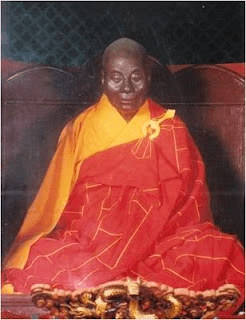
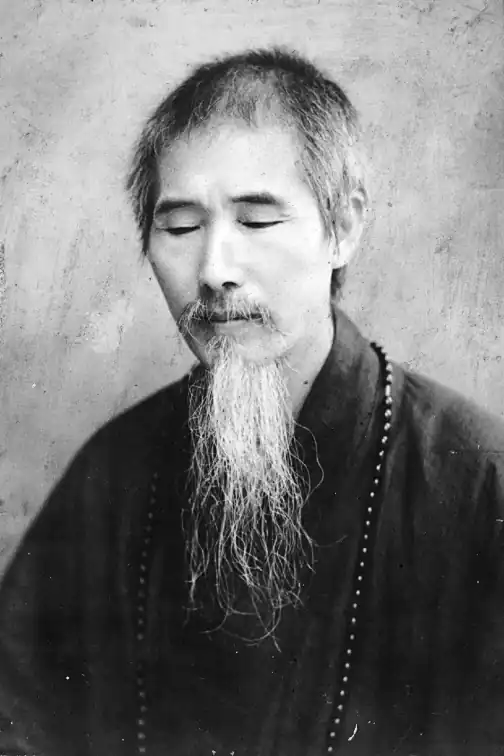
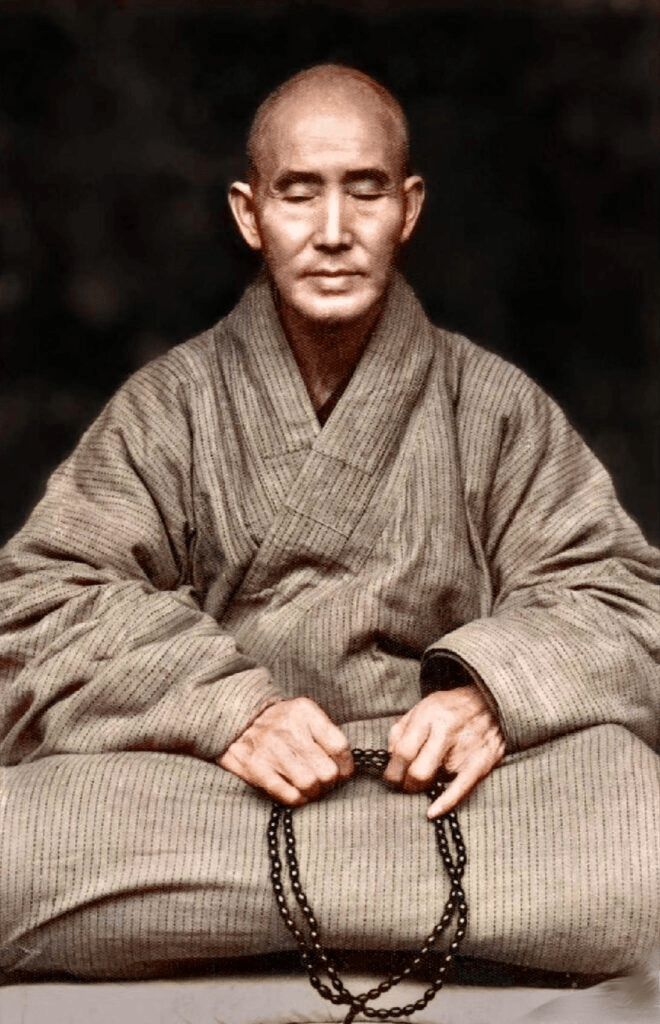
Dharma Master Qing Ding (Disciple of H.H. Dorje Chang Buddha III)
Dharma Master Qing Ding(Disciple of H.H. Dorje Chang Buddha III)

Zhaojue Temple in Chengdu.
Zhaojue Temple in Chengdu

Following Dharma Master Neng Hai and Attaining Lineage

Dharma Master Neng Hai

After receiving the precepts, Dharma Master Qing Ding also became a disciple of  Dharma Master Neng Hai, who was a famous eminent monk in modern Chinese history. He learned the Yidam dharma of  Yamantaka Vajra from Dharma Master Neng Hai.

After Dharma Master Neng Hai had entered nirvana, Dharma master Qing Ding succeeded Dharma Master Neng Hai’s lineage and became a dharma king and leader of the Gelug Sect of esoteric Buddhism. Dharma Master Qing Ding’s dharma power and virtue majestically astounded the world. He once manifested great supernormal powers at a demon-subduing dharma assembly and changed his own appearance into that of Ksitigarbha Bodhisattva.

The Supreme Encounter

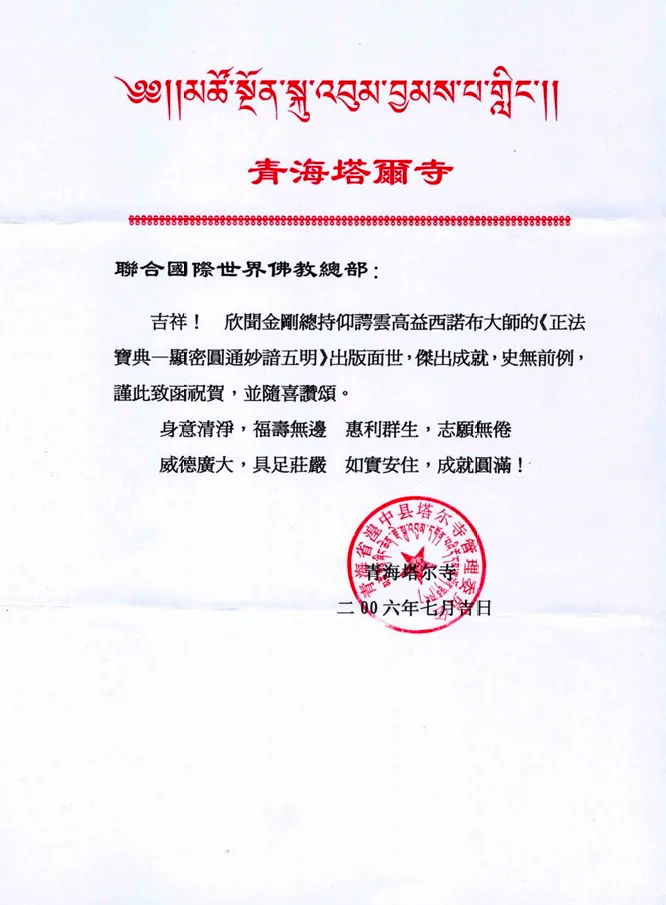
However, at the high age of 90, he paid homage to acknowledge a young tremendous holy virtuous person as his master. Who is this young tremendous holy virtuous person? Why did Dharma Master Qing Ding acknowledge Him as his master?

This young tremendous holy virtuous person is His Holiness Dorje Chang Buddha IIIDharma Master Qing Ding observed from his state of realization that this young person is the genuine incarnation of Dorje Chang Buddha the primordial Sambhogakaya of the dharma sphere. He seized this magnificent karmic condition that is difficult to encounter in millions of eons.

Acknowledging H.H. Dorje Chang Buddha III as His Master

Dharma Master Qing Ding acknowledged H.H. Dorje Chang Buddha III as his master and beseeched for Buddha-dharma.
Dharma Master Qing Ding acknowledged H.H. Dorje Chang Buddha III as his master and beseeched for Buddha-dharma.

A Dharma brother supported Dharma Master Qing Ding and said to H.H. Dorje Chang Buddha III, “Master, Great Monk Qing Ding of zhaojue Temple came today to pay homage to become your disciple and beseech for Buddha-dharma.”

H.H. Dorje Chang Buddha III: “Okay, go ahead. You can just do four prostrations according to the four refuges. Monk Qing Ding, your are my disciple from now on. Since you are my disciple, you should act in accord with my conduct, and cultivate yourself earnestly according to my method. Sit on the seating cushion.”

(Sitting at the side was Yang Wen who worked at Chengdu No. 2 Hospital and came with Dharma Master Qing Ding. Helping Dharma Master Qing Ding from behind was the lead attendant of H.H. Dorje Chang Buddha III.)

H.H. Dorje Chang Buddha III: “I will transmit my Buddha-dharma to Great Monk Qing Ding. I hope that you will definitely abide by the religious policies, continue your advancement, and be a good monk.”

Receiving the Inner-Tantric Initiation

Master Qing Ding acknowledged H.H. Dorje Chang buddha III as his master and beseeched for Buddha-dharma. He beseeched H.H. Dorje Chang Buddha III to confer make-up inner- tantric initiation of the Yidam dharma of Yamantaka Vajra.

It turned out that when Dharma Master Qing Ding beseeched and learned the Yidam dharma of Yamantaka Vajra from Dharma Master Neng Hai, he did not receive an inner- tantric initiation. This was because although Dharma Master Neng Hai had received an inner- tantric initiation himself, he did not have the ability to confer an inner- tantric initiation to his disciple, Dharma Master Qing Ding.

The Profound Importance of Inner-Tantric Initiation

Why is an inner- tantric initiation so important? The effect of an inner-tantric initiation is that the master transmitting the dharma invites the Yidam of the dharma to be transmitted to come to the site. The Yidam will then accept the disciple in person. Therefore, as long as the disciple engages in self- cultivation in accord with the dharma, liberation from birth and death is guaranteed with a one- hundred- percent certainty.

H.H. Dorje Chang Buddha III conferred an inner- tantric initiation of the Yidam dharma of Yamantaka Vajra to Dharma Master Qing Ding. That made up what Dharma Master Qing Ding lacked and fulfilled the wish that he cherished for many years.

Why did The Eminent Master Qing Ding Acknowledge H.H. Dorje Chang Buddha III as His Master?

Video Link: https://www.youtube.com/watch?v=-L0P9wJ7KkI&feature=youtu.be

Link:https://hhdorjechangbuddhaiiidharma.com/2025/10/12/why-did-the-eminent-master-qing-ding-acknowledge-h-h-dorje-chang-buddha-iii-as-his-master/

#DorjeChangBuddhaIII #HHDorjeChangBuddhaIII #DorjeChangBuddha #MasterWanKoYee #MasterYiYunGao #DharmaMasterQingDing #DorjeChangBuddhaDisciple #InnerTantricInitiation #ChineseBuddhism #GelugEsotericLineage #LineageTransmission #BuddhistKarmaConnection #TrueBuddhaIncarnation #Karma

Louise Hay: From Pain to Healing, From Healing to Helping the World

There are some people whose presence feels like sunlight—warm, gentle, and full of hope. Louise Hay was one of them. An internationally renowned spiritual teacher, best-selling author, and pioneer of the self-help movement, she inspired millions of people around the world to believe in their own healing power. Her landmark book You Can Heal Your Life has sold over 50 million copies in 35 countries, translated into 29 languages, and for many, it sits by the bedside as a trusted guide through life’s storms.

To the world, Louise Hay seemed perfect—healthy, elegant, wise, always radiating grace. Her teachings lifted countless people out of despair, helped them restore their health, and gave them courage to live again. Media across the globe lovingly called her “the closest person to a saint.”

But what made Louise extraordinary was not that her life was flawless—it was that she transformed the deepest wounds into the greatest gifts. Behind her radiant presence was a childhood filled with suffering, abuse, and neglect. It was from that very pain that she forged the wisdom that changed the lives of millions.

1. Falling Amid Misfortune

When Louise was just 18 months old, her parents divorced, abruptly ending her once-happy family life.

At that time, women had little social standing. After the divorce, her mother could only work as a maid to survive, while Louise was sent to live in foster care.

At age five, her mother remarried in the hope of giving Louise a complete home. But this marked the beginning of her nightmare.

Louise was raped by a neighbor, abused and assaulted by her stepfather, and subjected to violence and sexual exploitation. These experiences left her with deep wounds and a lack of self-worth. In her teenage years, as long as a man showed her the slightest kindness, she would give herself to him. By the age of sixteen, she had already given birth to a daughter.

Her childhood was filled with tragedy, and her youth with self-destruction. Those early wounds shaped her into someone who did not know how to love herself.

Yet later in life, Louise chose not to remain trapped in resentment or regret. She said, “No little boy is born a predator, and no little girl is born a victim. These are learned behaviors shaped by childhood experiences.”

2. Awakening and Transformation

In her forties, Louise was diagnosed with cancer. That moment became her wake-up call. She realized how little she had cared for her own body, and she resolved to change.

Instead of following the conventional treatment suggested by her doctors, she turned to what she called “holistic healing.” Within six months, her cancer had disappeared.

Holistic healing, as Louise practiced it, meant changing destructive thought patterns and adopting healthier eating habits. She stopped mourning her unhappy past and stopped blaming her parents. Instead, she came to understand their own painful childhoods.

During her recovery, she ate mostly sprouts and simple natural foods, avoiding processed products entirely. She also trained her mind daily—using positive affirmations, choosing not to let negative emotions dominate her, and seeing every situation through a more uplifting perspective.

Her life changed completely. She documented her experiences and insights in books, which went on to inspire millions and transform countless lives.

3. You Can Choose Your Own Destiny

There are many in this world who have been hurt or are still suffering. Their stories move us deeply.

But as an old Chinese saying goes, “Those who seem pitiable often have traits that make them vulnerable.” In truth, much of life’s suffering continues because, consciously or unconsciously, we allow it. And the root often lies in our formative years.

Take, for example, teenage pregnancies. While news headlines may highlight shocking cases, the majority stem not from coercion but from lack of self-respect or proper knowledge. Similarly, many women trapped in abusive relationships remain because they lack self-worth and the courage to leave.

We cannot rewrite our childhoods, but we can shape our adult lives. As Louise Hay wrote in You Can Heal Your Life: Mindfulness Edition:

“Every negative message you received as a child can be transformed into a positive affirmation.”

If you had an unhappy past, stop feeding yourself negative words. Begin telling yourself: I am worthy of love. I am needed. I have many strengths. I can live the life I choose.

And if doubt still lingers, look at Louise Hay’s journey. Few have endured the kind of suffering she did—yet she lived a life admired and envied by many. If she could, why not you?

In the infinity of life where I am, all is perfect, whole, and complete.

Life Is Really Very Simple. What We Give Out, We Get Back.  What we think about ourselves becomes the truth for us. I believe that everyone, myself included, is responsible for everything in our lives, the best and the worst. Every thought we think is creating our future. Each one of us creates our experiences by our thoughts and our feelings. The thoughts we think and the words we speak create our experiences.”

Her books may be called “chicken soup for the soul,” but isn’t that exactly what we need sometimes? A warm voice reminding us that we are enough, that healing is possible, and that life can be beautiful again.

You Can Heal Your Life walks us through every stage of existence—childhood pain, love’s struggles, career challenges, health worries, aging, and even the fear of death. Louise’s message is simple but powerful: change your beliefs, and you will change your life.

This “chicken soup” has comforted millions, given them strength, and helped them step into new beginnings.


💖 A Gentle Reminder

If you feel lost, unworthy, or stuck in a cycle of pain—Louise’s story is a light in the darkness. Her life teaches us that healing begins not from the outside, but from within.

No obstacle is too great. No past is too broken. Deep within each of us lies an infinite potential waiting to bloom. When we dare to change our thoughts and love ourselves, life unfolds in colors we never imagined.

Believe it: just like Louise Hay, you too can heal your life—and create a future filled with peace, love, and joy.

Here is the link for the E-book.

Link:https://peacelilysite.com/2025/09/03/louise-hay-from-pain-to-healing-from-healing-to-helping-the-world/

Beyond Form: Entering the Dreamlike Realm of Chinese Painting

Sometimes beauty finds us when we least expect it—appearing like a sudden blossom of color in an ordinary moment, stopping us in our tracks and opening our hearts to wonder.

I happened to come across two traditional Chinese paintings online, both dominated by bright pink, and was utterly astonished. I couldn’t help but study them carefully. In Chinese painting, it is rare to see large areas of pink used as the main color, since it often risks appearing vulgar. Yet in the works of H.H. Dorje Chang Buddha III, there is not the slightest trace of vulgarity. On the contrary, they radiate grandeur and magnificence, and the artist’s confident mastery of color bursts forth boldly from the canvas.

The above piece in particular was painted with a heart as pure and untainted as that of a child. Within the seemingly naïve brushstrokes lies immense skill and mastery. The style is free and natural, bold and unrestrained yet still gentle. Its simple composition is infused with deep emotion and imagination, brimming with the vitality of childlike wonder that uplifts the viewer’s spirit.

A few pink houses stand in the scene, behind which several pink fruit trees sway delicately. Ink outlines give the houses their structure, while the softly hanging trees add a tender rhythm to the picture. The artist’s unique technique and extraordinary control of color are truly breathtaking. The inscription on the work further enhances its spiritual resonance:

“Brilliant colors, vivid yet dignified; consummate skill that reveals the heart of a child.”

Indeed, this is a rare and outstanding masterpiece of Chinese painting.

This masterpiece is a freehand splash-ink landscape, where the brush moves with effortless freedom. Layer upon layer of crimson cliffs rise as though born from the artist’s own heart—lines powerful, vigorous, and full of life. Ink strokes carve the very bones of mountains and rocks, each one natural, unrestrained, yet perfectly balanced. Broad washes of pink suffuse the scene, creating an ethereal, dreamlike realm that lingers between presence and absence, as if belonging to an immortal world. To gaze upon this painting is to step into another dimension—where the heart gradually settles into stillness and begins to sense the hidden rhythms of the cosmos.

This painting was not created to showcase skill or to dazzle the eye, but as a natural outpouring of inspiration and emotion. Both ink and color arise directly from the pure stirrings of the artist’s heart.

Here, the true essence of Chinese painting—shen yun (spiritual resonance)—is revealed in its fullest clarity. The inscription makes the artist’s intent unmistakable: “With effortless spontaneity, illusion transforms into nature; in the fleeting and ethereal, the hand finds its way.” The purpose is not simply to depict form, but to open a gateway into a spiritual realm that transcends the material.

Shen yun is at once vivid and elusive—an ineffable charm, a subtle spiritual force that cannot be captured in words. It flows from the painter’s inner cultivation and profound state of mind. When spirit and technique merge seamlessly, the work attains a power far beyond outward appearance.

It is only when the viewer is touched by this shen yun that the formal elements of the painting—the structure of its composition, the interplay of colors, the rhythm of the brush, the unity of poetry and image, the harmony of form and spirit—truly come alive. These elements are essential, of course, but they are not the destination. They are the pathway to something deeper, pointing always toward a higher, transcendent experience.

These two paintings are rare gems of Chinese art, that surprise, inspire, and open a doorway to beauty both profound and pure.

Link:https://peacelilysite.com/2025/08/29/beyond-form-entering-the-dreamlike-realm-of-chinese-painting/

You’ll Never Guess Why He Survived”?

At late Qing Dynasty, during the reign of Emperor Guangxu, there was a true story that took place:

Mr. Jia from Jiangsu worked for a foreign trading company in the Shanghai concession. He had earned the deep trust of his employer. Just before the Dragon Boat Festival, his boss sent him south of the city to collect debts. With a leather money pouch in hand, Mr. Jia set off.

The collections went smoothly, and by noon he had received more than 1,800 silver dollars. After walking and talking all morning, he was parched and exhausted. Passing by the famous Shiliupu teahouse, he hurried inside for a quick cup of tea before rushing back to deliver the money and finally rest.

When he returned to the company, he suddenly realized—the leather pouch was gone. Thunderstruck, drenched in sweat, and nearly fainting, he could not explain himself clearly in his panic.

Seeing his flustered state, the boss grew suspicious, believing Jia might be dishonest. He harshly rebuked him for betraying trust, warning that if the money was not returned quickly, Jia would be handed over to the authorities.

At that time, 1,800 silver dollars was a fortune—enough for a person to live on comfortably for a lifetime if carefully spent. How could Mr. Jia ever repay such a sum? With his reputation and life on the line, he felt utterly ruined and broke down in despair.

Meanwhile, in another part of the concession, a merchant from Pudong, surnamed Yi, had recently lost all his money in business. Discouraged, he bought a boat ticket for that very afternoon to return home across the river.

With time to spare before boarding, Mr. Yi also went to Shiliupu teahouse, intending to sip tea slowly while pondering his uncertain future.

By coincidence, just as Mr. Jia had hurried out, Mr. Yi walked in. As he sat down, he noticed a small leather pouch left on a chair. He paid it little mind at first and began drinking tea.

After some time, no one came to claim it. Curious, he lifted it and felt its weight. Opening it, he nearly dropped it in shock—inside was a fortune in gleaming silver coins!

At first he was overwhelmed with joy. Such a windfall could end his misfortune and secure a comfortable life. But then he thought: No, money belongs to its rightful owner. If I keep it, the loser may be ruined, disgraced, or even driven to death. The sin would be unbearable.

In those days, most decent people knew the saying: “Ill-gotten wealth must not be taken.” Mr. Yi resolved: Since fate placed this money in my hands, I have the responsibility to return it.

At lunchtime, only eight or nine guests remained in the teahouse. None appeared to be searching for lost money, so Yi, hungry as he was, decided to keep waiting.

By evening, as lamps were being lit, the teahouse emptied out—only Mr. Yi remained, watching the entrance intently.

Suddenly, he saw a pale, staggering man rush in, followed by two companions. It was Mr. Jia. As soon as he entered, Jia pointed at Yi’s table and cried, “There! That’s where I was sitting!” The three came straight toward Yi.

Yi smiled and asked, “Are you looking for a lost pouch?”

Jia stared in disbelief and nodded repeatedly. “I’ve been waiting for you,” Yi said, producing the leather pouch.

Overcome with relief, Jia trembled all over. “You are my savior! Without you, I would have hanged myself tonight!”

It turned out that when Jia had discovered the loss, he had begged to retrace his steps, though he knew recovery was unlikely. His boss, fearing he might flee, initially forbade it. After much pleading, the boss finally allowed him to go, but only under the close watch of two escorts, who were ordered to bring him back regardless of the outcome.

After exchanging names, Jia gratefully offered Yi a fifth of the money as a reward. Yi firmly refused. Jia lowered it to a tenth, then to a hundredth—Yi grew angry and sternly declined.

Flustered, Jia said, “Then at least let me treat you to a drink!” Yi still refused. Finally Jia pleaded, “If I cannot show gratitude, my conscience will not rest. Tomorrow morning, please allow me to host you at such-and-such tavern. I beg you to come—without fail.” Bowing deeply, he left.

The next morning, Yi did indeed appear. Jia was just about to bow in thanks when Yi quickly interrupted, saying:

“Actually, it is I who should thank you. If not for your lost pouch, I would not be alive today!”

Puzzled, Jia asked what he meant. Yi explained:

“Yesterday, I had bought a one o’clock boat ticket to return home. But because I waited in the teahouse to return your money, I missed the departure. When I finally returned to my lodging, I learned that the boat had capsized midway in a violent wave. All 23 passengers drowned. Had I boarded, I too would be dead. So you see, it was you who saved my life!”

The two men, overwhelmed, bowed to each other in tears.

Onlookers marveled, toasting the pair. They said Mr. Yi’s single good deed had saved not just Jia’s life, but his own as well.

The story did not end there. When Jia and his escorts returned and reported everything, the boss was astonished. “Such a virtuous man is rare indeed!” he exclaimed, insisting on meeting Yi.

The two met and felt an immediate bond. After a long conversation, the boss earnestly invited Yi to stay, offering him a high salary to manage accounts. Months later, he even married Yi into his family as a son-in-law. In time, the boss entrusted the entire business to him.

“Cause and effect of good and evil” is absolutely true, without the slightest mistake. Goodness nurtures more goodness, and goodness attracts goodness. To treat others with kindness is, in fact, to accumulate blessings and good fortune for oneself. A human life is not lived for just a fleeting moment. The speed of temporary gains or losses, the ups and downs of a single day, even honor or disgrace in the short term—none of these truly matter. Today’s kindness becomes tomorrow’s blessings. Today’s evil leads to tomorrow’s misfortune. Time is a great author, and it will always write the perfect answer.

Therefore, simply be a good person, and the future will be full of hope. Do good deeds, and the road ahead will surely be bright and promising.

Link:https://peacelilysite.com/2025/08/29/youll-never-guess-why-he-survived/

Zhijin Cave – The King of Karst Caves in China

Zhijin Cave, located in Zhijin County, Bijie City, Guizhou Province, is a high-altitude dry cave of great diversity, complexity, and scale. Inside, the karst formations are unique, vast, majestic, and breathtakingly exquisite, making it a dream destination for countless visitors.

Zhijin Cave, renowned as the “King of Karst Caves,” stands out among other famous karst caves such as Zhangjiajie’s Yellow Dragon Cave (about 100,000 sqm), Chongqing’s Furong Cave (about 37,000 sqm), and Guilin’s Reed Flute Cave (about 14,900 sqm) due to its unparalleled size and grandeur. Spanning over 700,000 square meters, Zhijin Cave is the largest of its kind, featuring 12 grand halls and 47 chambers, each adorned with unique and breathtaking formations. The cave’s largest chamber reaches an impressive width of 175 meters, while six of its halls exceed 10,000 square meters in area, highlighting its monumental scale.

The cave is adorned with a wide variety of karst formations, including stalactites, stalagmites, stone pillars, flowstones, and stone curtains. These formations come in unique shapes, resembling pagodas, plants, animals, and even mythical creatures, showcasing nature’s artistic craftsmanship.

Among its countless highlights, several are especially unforgettable:

  • The Overlord’s Helmet (“Ba Wang Kui”) – A 17-meter-tall stalagmite shaped like a warrior’s helmet, known as the crown jewel of Zhijin Cave. Lit by orange light and reflected in the pool below, it appears both majestic and lifelike, as if the legendary warlord Xiang Yu himself had left his helmet behind.
  • The Pillar of Heaven (“Qian Ceng Bao Ta”) – At the junction of the North and South Gates stands a towering stone column that seems to prop up the sky. Called the “Mainstay of the River,” it symbolizes strength, resilience, and the ability to stand tall in times of trial.
  • Mother-in-law and Daughter-in-law (“Po Xi Qing Shen”) – Two pine-shaped stalagmites, one stooped like an old woman and the other upright like her filial daughter-in-law massaging her back. The scene is tender, lifelike, and moving, embodying the Chinese virtue of filial piety.
  • The Lingxiao Palace – A stunning stone waterfall, one of the largest yet discovered, cascading magnificently from the ceiling. Around it stand stone banners, draperies, and a majestic hall of “stalagmite soldiers,” as if a grand palace had opened its doors for a celestial council.

  • Snow Pressing on the Green Pine (“Xue Ya Qing Song”) – A 20-meter-tall stalagmite shaped like a pine tree blanketed in snow, one of the cave’s signature sights. Its upright strength recalls Marshal Chen Yi’s famous poem: “Though snow weighs heavily on the pine, the pine stands tall and straight.” It symbolizes resilience, dignity, and unyielding spirit.

The spectacular karst landscapes of Zhijin Cave embody grandeur, vastness, and beauty beyond imagination. A tour through its endless halls, lasting over two hours, is an ever-unfolding journey of wonder—each chamber a new astonishment, each formation a marvel of nature.

It’s no surprise that Zhijin Cave is honored as the “King of Caves.” As the saying goes: “After Huangshan, no other mountains; beyond Zhijin Cave, no other caves.” The reputation is well deserved.

Practical Tips to Visit Zhijin Cave

Zhijin Cave is located in Guanzhai Miao Ethnic Village, Zhijin County, Bijie City, Guizhou Province. The cave is approximately 120 kilometers (75 miles) from Guiyang, the capital of Guizhou Province.

Bijie City has a total of 9 railway stations and 1 airport. 2 stations are located in Zhijin County, only serving normal trains. The closest high-speed rail station to Zhijin Cave is Qianxi Railway Station, about 45 km away.

Footwear: The cave has stairs and a small section of uneven paths, and the ground can be wet and slippery. Anti-slip footwear is recommended for safety and comfort.

Clothing: The cave maintains a constant temperature of 16°C (61°F). However, the humidity and cool air can make it feel chilly, so it’s best to carry a light jacket.

Food and Drinks: There are no dining options or shops within the cave, so it’s a good idea to bring your own snacks and drinks to stay energized during your visit. If you forget to bring snacks, there is a convenience store at the cave exit where you can purchase refreshments.

Link:https://peacelilysite.com/2025/08/28/zhijin-cave-the-king-of-karst-caves-in-china/

Source: https://www.chinadiscovery.com/guizhou/zhijin-cave.html

Nobel Prize Research Reminds Us: Don’t Stay Up Late!

When the 2017 Nobel Prize in Medicine was announced, many were surprised—it focused on something that touches all of us: our biological clock.

Three scientists—Jeffrey C. Hall, Michael Rosbash, and Michael W. Young—received the award for discovering how our bodies keep time at the molecular level. In simple terms, they revealed how our “internal clock” works, and why disrupting it can be so damaging to our health.

This clock silently manages almost everything in the body—when we feel sleepy or alert, our body temperature, hormone levels, and even how our cells repair themselves. But when we stay up too late, this delicate system is thrown off balance, and the consequences can be serious.

Their research found that:

  • Staying up late disrupts the body clock, paving the way for illness.
  • Lack of sleep can cause the brain to “eat itself”—astrocytes, specialized brain cells, begin devouring synapses.
  • If circadian-regulating genes fail, the risk of tumors increases.

The clear takeaway from this Nobel Prize-winning research? A familiar piece of advice: Don’t stay up late!

Yes, it’s something our parents, teachers, and elders have reminded us about countless times. But now, there’s a Nobel Prize—and 9 million Swedish kronor —to back it up.


Ancient Wisdom Meets Modern Science

Interestingly, the idea of the “body clock” isn’t new. Thousands of years ago, Traditional Chinese Medicine described how energy, or Qi, flows through the body in cycles. The 24-hour day was divided into twelve two-hour intervals, with each period linked to a specific organ system.

For example:

  • Between 1 a.m. and 3 a.m., the liver is at peak function, cleansing the blood and preparing the body for renewal.
  • From 3 a.m. onward, energy shifts to organs that support digestion and daily activity, such as the lungs, large intestine, and stomach.
  • By mid-afternoon, energy begins to flow inward again to support organs that restore and maintain the system, such as the kidneys and pericardium.

Understanding this Body-Energy Clock can help us better manage our sleep, meals, and mood. Modern science now echoes this ancient wisdom: align with your natural rhythms, and you’ll thrive.


The Role of Melatonin

Science also tells us about melatonin, often called the “sleep hormone.” Melatonin is vital for regulating the sleep-wake cycle. Levels begin to rise soon after darkness falls, peak between 2 a.m. and 4 a.m., and then gradually decline.

This explains why going to bed too late often leads to trouble falling asleep, and why sleep after 4 a.m. tends to be light and restless. For the best rest, it’s ideal to sleep between 11 p.m. and 4 a.m., when melatonin levels are highest and most restorative.


The Benefits of Sleeping Early and Rising Early

Research consistently shows that early sleepers and early risers enjoy powerful health benefits:

  • Better mental health: Early risers of all ages report more positive emotions and greater self-rated health.
  • Reduced risk of depression: A U.S. study found that going to bed just one hour earlier lowers depression risk by 23%.
  • Weight management: Staying up late disrupts hormones, leading to weight gain. Going to bed on time, combined with early rising and regular exercise, helps maintain a healthy weight.
  • Stronger immunity: Adequate sleep enhances immune function, reducing the risk of infections and chronic diseases such as heart disease, hypertension, diabetes, and stroke.
  • Sharper thinking: Early sleepers and early risers score 30% higher on word-association tests compared to night owls.

The message from both Nobel Prize-winning research and ancient health wisdom is clear: respect your biological clock.

Going to bed early and waking up early is not just about feeling more refreshed—it protects the brain, strengthens the body, improves mood, and may even add years to your life. So tonight, give yourself the gift of sleep—it’s worth more than 5 million!

Link:https://peacelilysite.com/2025/08/28/nobel-prize-research-reminds-us-dont-stay-up-late/

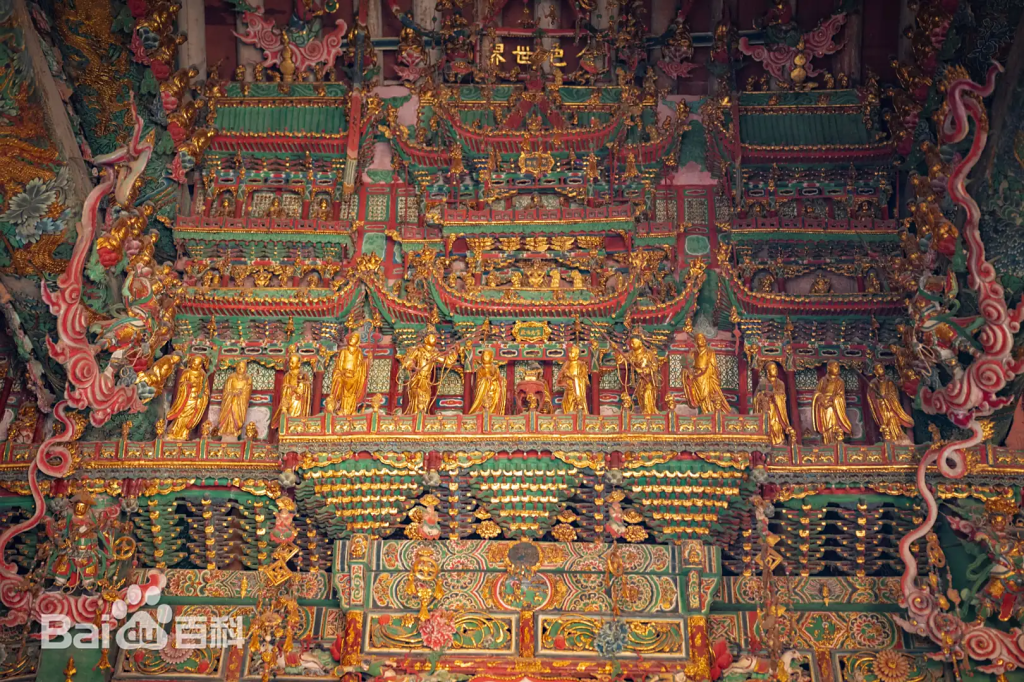
Guangsheng Temple — The Hidden Gem of Shanxi’s Ancient Treasures

Shanxi is often called the cradle of Chinese civilization, a province with one of the richest collections of cultural and historical relics. Guangsheng Temple is part of that story. First built during the Eastern Han Dynasty (25–220 CE), it is one of the earliest Buddhist temples in China. Over the centuries, it has endured wars, fires, and devastating earthquakes, yet it still stands, its beauty renewed through reconstructions in the Yuan (1271–1368) and Ming (1368–1644) dynasties.

The temple complex is composed of three main parts:

  • The Upper Monastery — home to its most famous landmark, the glazed pagoda.
  • The Lower Monastery — housing grand halls and statues.
  • The Water God Temple — known for its remarkable Yuan Dynasty murals.

Rising in the upper monastery is the Flying Rainbow Pagoda (Feihongta), an octagonal, 13-story glazed brick tower reaching 47.31 meters high. Built in 1527 during the Ming Dynasty, it’s an explosion of color in the sunlight. The walls and roofs are covered in multi-colored glazed tiles — deep emerald, golden yellow, sapphire blue, and rich purples — that glisten like jewels, casting rainbow-like reflections on sunny days.

Every tier of the pagoda is adorned with intricate glazed reliefs — Buddhas in serene meditation, fierce guardian kings, bodhisattvas in flowing robes, mythical beasts, and dragons coiled in eternal motion. Inside, the foundation hall houses a five-meter-tall bronze statue of Sakyamuni Buddha, radiating quiet majesty.

This pagoda is not only beautiful — it’s a survivor. It withstood the catastrophic 1556 Shaanxi earthquake and the 1695 Pingyang earthquake, both exceeding magnitude 8.0. Its resilience is as awe-inspiring as its artistry. In 2018, it was recognized by the London-based World Record Certification as the tallest multicolored glazed pagoda in the world.

Murals of the Yuan Dynasty — Life Painted in Color

The temple’s murals are a vivid window into the Yuan Dynasty. In the Water God Temple, nearly 200 square meters of wall space is alive with color: scenes of divine processions, farmers at work, musicians playing, and children at play. One remarkable panel shows “Cuíwán” (捶丸) — a sport similar to golf — offering a glimpse into pastimes of the Yuan era.

The mural on the gable wall of the Great Hall of Sakyamuni Buddha in the lower monastery is equally stunning, painted with an expressive style that blends religious devotion with snapshots of daily life. Researchers prize these works for their artistry and for the wealth of cultural detail they reveal — clothing, architecture, social customs — all preserved in pigment for more than 700 years.

The Zhaocheng Buddhist Canon — A Literary Treasure

In 1930, during restoration work, the temple revealed another extraordinary surprise—a cache of ancient relics now preserved in the Shanxi Museum. These included Buddhist scriptures, statues, and ritual objects, some dating back hundreds of years earlier. Printed during the Yuan Dynasty, this monumental project took 24 years and the collaboration of countless monks and artisans to engrave the wooden printing blocks. The texts preserve Buddhist thought, philosophy, and art from centuries ago, making them one of China’s most precious Buddhist literary relics.

The discovery deepened Guangsheng Temple’s reputation as one of the great guardians of China’s Buddhist heritage.

Today, whether you approach as a pilgrim, an art lover, or simply a traveler drawn by curiosity, the moment you first see the rainbow-like shimmer of the Glazed Pagoda through the mountain mist is unforgettable. It is not merely a structure—it is a bridge between centuries, a beacon of faith, and a reminder that beauty, once created with devotion, can endure against time itself.

Link: https://peacelilysite.com/2025/08/15/guangsheng-temple-the-hidden-gem-of-shanxis-ancient-treasures/

Source: http://shanxi.chinadaily.com.cn/2022-05/06/c_748899.htm?utm_source=chatgpt.com

Childlike Delight — A New Vision of the Owl

Owls have always fascinated me with their air of enigma. Creatures of the night, they rest in the shadows by day and emerge only after dusk, rarely granting humans more than a fleeting glimpse. Across cultures, they have inspired legends both wondrous and foreboding. In ancient Greece, the wise and fearless goddess Athena chose the owl as her emblem, making it an enduring symbol of wisdom. So revered was this bird that Greek coins bore Athena’s face on one side and the owl on the other. Yet, in other parts of the world, the owl has been shrouded in darker associations, seen as a harbinger of misfortune or an omen of ill will.

In Chinese culture, the owl’s symbolism is particularly layered—holding both shadows and light. In ancient times, owls were often viewed as inauspicious creatures, linked to misfortune, death, and the old saying, “When the night owl enters a home, it never comes without cause.” And yet, in certain cultural contexts, they also stand for wisdom, keen insight, and even mysterious, almost magical power.

A Chinese ink painting by H.H. Dorje Chang Buddha III

When most people picture an owl, they think of its round, unblinking eyes and penetrating gaze—features that can feel cold, even intimidating. But my perception shifted entirely when I encountered the Chinese ink painting Childlike Delight by H.H. Dorje Chang Buddha III.

This is no ordinary artwork. With the freehand grace of traditional Chinese brushwork infused with a touch of dreamlike realism, it bridges the poetic subtlety of Eastern art and the fresh, luminous clarity of Western modernism.

With just a few effortless strokes, the artist creates a whimsical, pure, and gently humorous world—a dreamscape that seems to invite the viewer into the peaceful slumber of childhood. The small owl, covered with delicate ink spots of varying sizes and shades, appears almost as if glimpsed through a soft morning mist. Look closely, and you might see the tender image of a sleepy child, finger to lips, caught in that sweet moment before surrendering to dreams.

This is not a literal portrayal of nature, but rather nature reflected through the artist’s own heart—capturing not merely the physical form of a creature, but its spirit, vitality, and essence.

Here, the owl is reborn—not as the ominous figure of superstition, but as a symbol of innocence, purity, and quiet wisdom. The artist’s compassionate and unblemished inner world radiates through the painting, gently cleansing the heart of the viewer until it feels as fresh and clear as morning dew.

Childlike Delight reminds us that we can close the sharp, competitive eyes of rivalry and open instead the eyes of kindness, innocence, and warmth—gifts that have the power to heal, to inspire, and to light the world.

Link:https://peacelilysite.com/2025/08/15/childlike-delight-a-new-vision-of-the-owl/

Dancing with Flames — The Yi Torch Festival

The air is warm and scented with pine smoke. In the distance, a line of golden lights winds its way down the mountainside, swaying and flickering like a living dragon. Drums beat in a steady rhythm, mingling with laughter and song. Children dash through the night clutching small torches, their faces glowing in the firelight. Elderly women hum old tunes, while young men and women steal glances beneath the shelter of bright yellow oil-paper umbrellas. This is not just a night—it is a living river of fire. You’ve just stepped into the Yi Torch Festival.

Every summer, when the moon of the sixth lunar month reaches its 24th day, the mountains and valleys of Yunnan, Guizhou, and Sichuan come alive with a sea of flickering light. This is the Yi Torch Festival, the grandest celebration of the Yi people and one of the most dazzling ethnic festivals in China.

The Yi, along with the Bai, Naxi, Jinuo, Lahu, and other ethnic groups, have celebrated this fiery tradition for centuries. For the Yi, fire is not just a source of warmth—it is a symbol of light, strength, and hope. The Torch Festival is their way of honoring fire, driving away evil, and praying for peace and abundant harvests.

On this special day, towering torches rise high in the center of each village, while every household lights their own smaller torches. As night falls, villagers carry these flames into the fields, circling the crops to symbolically chase away pests and misfortune, leaving behind protection and blessings.


The Torch Festival lasts three magical days and nights, each with its own unique charm.

Day One – Fire Worship
Morning preparations are lively, feasts are prepared, and wine and meat are offered to ancestors. At dusk, villagers gather at a site chosen by the elders. There, a sacred fire is lit using the ancient method of striking stones, and the flame is blessed by a bimo (Yi priest) chanting sacred verses. Then, torches made from mugwort are passed to each household. Children and elders alike carry them to the edges of fields, reenacting the old legend of Ashimo, the heroine who once used fire to drive away destructive insects.

Day Two – Playing with Fire
If Day One is solemn, Day Two is pure joy. Under the glow of the sacred flame, villagers gather for horse races, wrestling matches, bullfights, and singing contests. Young men compete like the legendary hero Atilaba, known for his courage and strength. Young women, dressed in vibrant handmade dresses and carrying delicate butter umbrellas, dance the graceful “Duoluohe” and Dati dances, just as Ashimo once did.
The highlight? A traditional beauty contest where elders select the most handsome man and the most beautiful woman of the year—chosen not only for looks, but also for kindness, bravery, and skill. As the night deepens, couples stroll by the streams and through the mountains, plucking moon lutes and jaw harps, their music and whispers floating into the starry sky.

Day Three – Sending Off the Fire
The final night is the festival’s grand finale. Villagers rush through the darkness carrying blazing torches, eventually gathering them into massive bonfires. Around these roaring flames, they sing, dance, and laugh until the stars fade and dawn arrives.


Beyond the rituals and dances, the Torch Festival is also a season of romance. Young men and women meet, flirt, and sometimes begin lifelong partnerships. According to tradition, a man may “steal” a token—such as a scarf or ornament—from the woman he loves as a sign of affection. For the rest of the night, they sing and dance together, expressing their feelings until sunrise.

In the end, the Torch Festival is more than just a cultural event—it is a living expression of the Yi people’s spirit: their love of life, reverence for nature, devotion to tradition, and unquenchable hope for the future. And as the last embers fade in the early morning light, the warmth of the flames lingers—both in the fields and in the hearts of the people.


If you’ve ever dreamed of seeing thousands of torches glowing like fire dragons weaving through the dark mountains, this is the place to be. The Yi Torch Festival is not only a feast for the eyes but also a journey into the beating heart of a culture that celebrates life in the glow of fire.


Video: https://fb.watch/BrJd5yhukt

Link:https://peacelilysite.com/2025/08/12/dancing-with-flames-the-yi-torch-festival/

Living with Wolves: A Wild Artist’s Journey of Love, Respect, and Coexistence

If you are willing to look with your heart, you will see starlight in a wolf’s eyes.

On this planet, humanity is not the only protagonist.
Every forest, every river, every creature shares the same sky and breath with us. True civilization is not the conquest of nature, but the choice to live in harmony with it.


Li Weiyi, a wildlife animator, has spent years drifting between forests and grasslands, sketching the fleeting emotions in an animal’s eyes and the untamed spirit in its movements. Her brush captures not just form, but soul. Gentle and perceptive, she treats animals as friends and believes, with unshakable conviction: all beings are equal.


The Call of the Grassland

In April 2010, she arrived in the vast Ruoergai grasslands of Sichuan. The wind bent the grass like waves, silver mountains gleamed under the sun, and the openness was almost intoxicating. But behind the beauty was a brutal truth—conflicts between humans and wildlife were pushing many animals toward tragedy.

Then she heard a story that broke her heart.
A male wolf, desperate to feed his mate who had just given birth, ventured into a human settlement in search of food. He was caught in a trap, killed by herders, and skinned. His mate waited for days before realizing he was gone. In grief, she ate poisoned bait and followed him in death, leaving six starving pups behind.

Li Weiyi resolved to find them. Days of searching through freezing wind and endless grass finally brought her to the den. Five pups had already died. The last survivor lay weak and trembling, barely breathing. When she whispered, it crawled toward her with eyes full of trust. At that moment, she became its only family.

She named him Green—for the color of the grasslands, for life, hope, and freedom.


Life Between a Woman and a Wolf

In Chengdu, Green grew into a curious, spirited companion. He swam instinctively the first time he fell into water, learned to press the TV remote with his paws, and loved wolf documentaries—howling whenever his kind appeared on screen.

But a wolf will always be a wolf. Green chewed through wires, stole raw meat from neighbors, and refused a leash with stubborn pride. On the streets, he walked with head held high, as if declaring to the world: I am a wolf, not a pet.

A walk with a stray dog ended in tragedy when the dog was hit by a car, sending Green into a panicked dash through traffic. Authorities warned Li Weiyi that Green could no longer live in the city.


Preparing for the Return

She briefly considered a zoo, but one look at an old wolf with dull eyes, torn ears, and walls scarred with escape attempts ended that thought. She sold her home, bought an off-road vehicle and a camera, and returned to the Ruoergai grasslands with Green to begin his rewilding.

There, he sparred with Tibetan mastiffs, relearned the fight for survival, and endured nights of hunger in temperatures as low as –15°C. Li Weiyi stayed by his side through it all, determined to awaken the wolf within him.


Parting and Return

One month later, Green’s howl was answered by a wild pack. He walked toward the mountains, pausing to look back, eyes filled with reluctance. Li Weiyi waved him on, tears blurring her vision, and he vanished into the snow.

He became a ruler of the grassland, fathering pups of his own—but three were killed by humans, a grim reminder that coexistence was still far away.

Two years later, she saw him again from a distance, carrying hares—her favorite food. He stood watching her, not approaching. He belonged to the wild now. His eyes held both sadness and something unspoken.

Li Weiyi began returning to the grassland each year to help wolves like Green survive. And in August 2020, after a decade of intertwined lives, Green ran back into her arms. She held him tightly, tears streaming—warmth, reunion, and harmony made flesh.


Li Weiyi turned her story into the book and film Back to the Wolf Pack. It ends with a haunting question:

“We can rescue a wolf, but can we change the fate of the entire pack?”


This is not only a question for wolves—it is a question for humanity. Every time we expand our territory, every time we place our wants above the needs of other life, we risk silencing the very voices that make this planet alive.

We are not the masters of the Earth. We are one part of a vast, breathing community of life.

In 2020, China’s first wild wolf sanctuary was established—a small but hopeful echo of Li Weiyi’s ten years of dedication. But the work is far from over.

If we truly wish for harmony with nature, it begins with a choice—to see, to care, and to act—before the howls fade forever.

Link: https://peacelilysite.com/2025/08/08/living-with-wolves-a-wild-artists-journey-of-love-respect-and-coexistence/

Source: https://www.sohu.com/a/355779509_99965884, https://m.thepaper.cn/newsDetail_forward_20560520