There is a story from the time of Gautama Buddha that beautifully reveals what true happiness really means.
After the Buddha renounced royal life and attained enlightenment, his son, Rahula, followed his path and became a monastic as well. Seeing both his son and grandson leave the palace, the king—concerned that the royal lineage would end—appointed a relative named Bhaddiya as the new ruler.
However, not long after ascending the throne, Bhaddiya witnessed the instability and danger that accompanied power. Before the kingdom was overtaken by enemies, he too chose to renounce worldly life and became a disciple of the Buddha.
From that point on, Bhaddiya devoted himself wholeheartedly to spiritual practice. Yet, something curious caught the attention of the other monks: every day, he would joyfully proclaim three times, “I am truly happy! I am truly happy! I am truly happy!”
Hearing this, some monks misunderstood him. They wondered if he was still attached to the pleasures of his former life as a king, and reported their concerns to the Buddha.
To clarify the truth, the Buddha gathered the community and gently asked Bhaddiya, “Do you still long for the happiness you once had as a king?”
Bhaddiya replied, “World-Honored One, I do not recall those pleasures at all.”
The Buddha then asked, “Then why do you proclaim your happiness three times each day? What is this happiness you speak of?”
Bhaddiya answered with sincerity:
“When I was a king, my palace was guarded day and night by layers of soldiers. Yet despite all that protection, my heart was never at peace. Every sound in the night startled me. I lived in constant fear—afraid of rebellion, invasion, and loss. I was surrounded by luxury, but I had no freedom, no true rest.
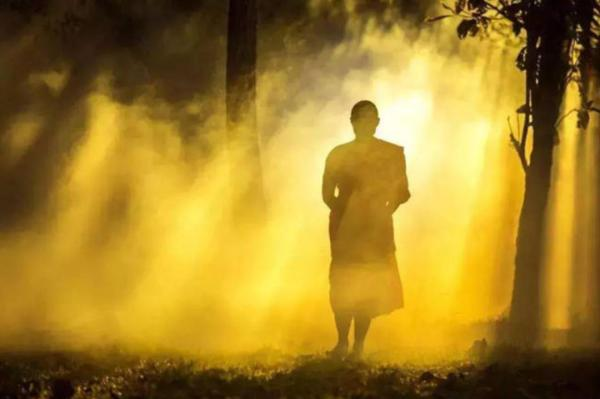
Now, as a monastic, I eat one simple meal a day. I sit beneath the open sky, resting under trees. I hear no anxious signals in the night, and I live in harmony with nature. My heart is free from worry, free from attachment. I have nothing, yet I lack nothing. This is my true happiness.
Out of gratitude for the Buddha, who showed me this path to freedom, I proclaim my joy each day.”
This story invites us to reconsider what happiness truly means.
Is happiness found in what we possess—or in what we are no longer bound by?
So often, we chase success, security, and recognition, believing they will bring us peace. Yet, like King Bhaddiya, we may find that the more we accumulate, the more we have to fear losing.
True happiness does not arise from external conditions, but from inner freedom— a mind unburdened, a heart at ease, and a life aligned with simplicity and clarity.
Perhaps real happiness begins not when we gain more, but when we finally learn to let go.
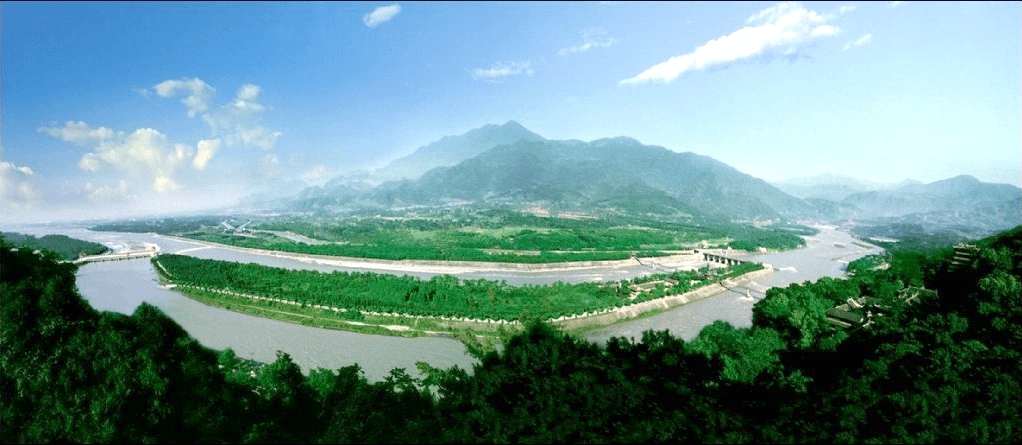
While many ancient wonders exist only as weathered ruins—silent witnesses to lost civilizations—Dujiangyan Irrigation System is something entirely different. It is not a relic of the past, but a living, breathing masterpiece.
Built around 256 BC by the visionary engineer Li Bing, this extraordinary irrigation system continues to do exactly what it was designed to do over two millennia ago: tame the waters of the Min River, prevent catastrophic floods, and nourish vast stretches of fertile land across the Chengdu Plain.
What makes Dujiangyan truly astonishing is not just its longevity—but its philosophy. It achieves perfect water control without a single dam.
Modern engineering often seeks to conquer nature with towering concrete barriers. Dujiangyan, by contrast, embodies a radically different idea: harmony over control.
Rather than blocking the river, the system gently guides it—using the river’s own energy to regulate itself through three elegantly designed components:
Yuzui (Fish’s Mouth Levee): A natural divider that splits the river into inner and outer channels.
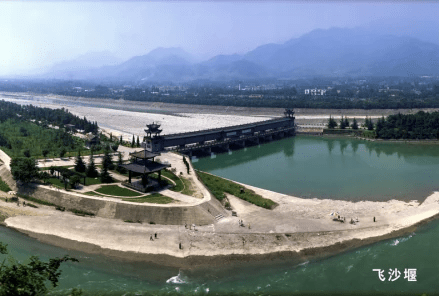
Feishayan (Flying Sands Weir): A clever spillway that uses the river’s force to flush away excess water and sediment.
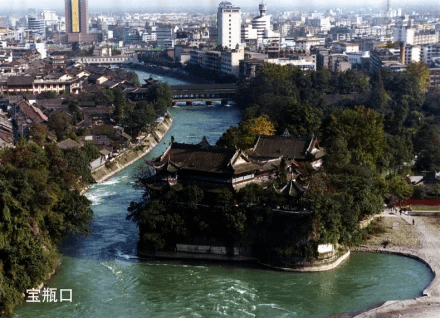
Baopingkou (Precious Bottle Neck): A narrow opening carved through the mountain, acting like a natural valve to control water flow.
Fish’s Mouth Levee
Flying Sands Weir
Baopingkou
Together, these elements form a system that feels less like machinery and more like a living organism—responsive, adaptive, and enduring.
The “Four-Six” Rule: Nature’s Invisible Hand
At the heart of Dujiangyan lies one of its most brilliant innovations: the Four-Six Divide (四六分水)—a subtle yet powerful hydraulic principle.
Through careful shaping of the riverbed, Li Bing created an automatic system that adjusts itself with the seasons:
In the dry spring months, the deeper Inner River naturally draws in about 60% of the water, ensuring that farmlands receive the nourishment they need.
During the summer floods, the wider Outer River takes over, diverting roughly 60% of the surging waters away from populated areas.
No gates. No sensors. No human intervention.
Just the quiet intelligence of design aligned with nature.
The result is nothing short of extraordinary: a self-regulating system that protects against both drought and disaster.
Why It Still Thrives After 2,200 Years
It is rare—almost unimaginable—for a piece of infrastructure this ancient to remain central to modern life. Yet Dujiangyan continues to serve as the lifeline of the Chengdu Plain.
Its enduring relevance lies in principles that feel strikingly modern:
Sustainability: Instead of fighting sediment buildup, the system uses the “Flying Sands” technique to naturally flush out the majority of silt, keeping waterways clear.
Ecological Harmony: Without a massive dam or reservoir, the river remains alive—fish migrate freely, and ecosystems flourish undisturbed.
Living Tradition: The annual practice of Zhuoshui—a deep cleaning of the riverbed—continues today, blending ancient ritual with contemporary science.
Li Bing’s guiding philosophy was deceptively simple: “Deepen the channel, keep the dykes low.”
Yet within these words lies a profound truth—one that extends far beyond water management.
By respecting the natural flow rather than resisting it, he created a system that has outlasted kingdoms, revolutions, and the passage of time itself.
Recognized today as a UNESCO World Heritage Site, Dujiangyan stands as a quiet but powerful reminder:
Sometimes, the most advanced solutions are not those that overpower nature—but those that understand it.
And perhaps, in a world still learning to balance progress with sustainability, this ancient marvel is not just a story of the past—but a guide for the future.
In our culture, success is often seen as the ultimate destination—the long-awaited moment when effort finally blossoms into happiness. We are taught to dream, to strive, and to believe that once we reach our goals, fulfillment will naturally follow. Yet, both modern science and lived experience are beginning to tell a more nuanced story.
In recent years, research in neuroscience and psychology has revealed a quiet paradox: achieving our most cherished goals does not always bring lasting happiness. The brain’s reward system, driven by dopamine, is designed primarily for anticipation rather than arrival. It fuels the excitement of pursuit—the late nights, the hopeful striving, the vision of what could be. But once the goal is reached, that surge of motivation fades, and the emotional intensity often drops.
At the same time, psychologists describe a phenomenon known as hedonic adaptation—our tendency to quickly return to a baseline level of happiness even after major positive events. The dream job becomes routine. The long-awaited achievement becomes part of everyday life. What once felt extraordinary quietly becomes ordinary.
For some, this transition is subtle. For others, it can feel like an unexpected emptiness—a sense of “What now?” after the finish line has been crossed.
But this discovery is not discouraging. In fact, it is deeply illuminating.
It reminds us that the human mind is intricate, and happiness is more than just accomplishment. Success, by itself, is not designed to sustain joy—it is only one part of a much larger inner landscape.
True fulfillment begins when we understand this hidden pattern and learn to work with it, rather than against it.
A meaningful life is not built solely on reaching goals, but on what those goals serve. When ambition is guided by purpose—when our efforts contribute to something beyond personal gain—success no longer feels like an ending. Instead, it becomes a doorway.
This is why acts of kindness, compassion, and contribution carry such enduring power. Unlike fleeting achievements, they create a sense of connection and meaning that the mind does not easily adapt away from. They anchor us in something deeper than momentary reward.
Imagine a different way of living:
A life where ambition and inner well-being are not in conflict, but in harmony. A life where achieving a dream does not leave a void, but opens a new horizon of purpose. A life where each success is not a final destination, but a step toward greater understanding, compassion, and joy.
By understanding the brain’s hidden responses, we gain the ability to design such a life. We begin to see that fulfillment is not something waiting at the end of achievement—it is something woven into the journey itself.
In this light, success becomes more than personal victory. It becomes an opportunity to deepen meaning, to expand the heart, and to align our outer accomplishments with our inner growth.
Perhaps lasting happiness has never been about reaching the summit.
Perhaps it is about learning how to walk the path—with awareness, purpose, and a quiet, enduring sense of joy.
In 1925, the lay practitioner Zhou Qunzheng made a pilgrimage to Mount Putuo together with Master Hongyi (弘一). At the Zhoushan pier, they encountered a monk. Upon learning that the monk was from the same hometown, Zhou asked him, “What inspired you to leave the household life and become a monk?”
The monk replied:
“I was originally a soldier. One day, I saw a shopkeeper’s wife sitting on the street, weeping. I asked her what had happened. She said a customer had come into her shop, bought something, and paid with three silver coins. After he left, she discovered that all three coins were counterfeit. She feared her husband would scold her, so she cried in distress.
I couldn’t bear to see her suffering, so I took out three genuine silver coins and offered to exchange them with her. She refused, but I insisted and eventually made the exchange.
Later, during a battle, a shell exploded right beside me. Shrapnel struck my chest, yet I was unharmed. When I looked closely, I realized that the three counterfeit coins in my pocket had saved my life—two had been pierced by the shrapnel, and one remained intact. It was because they shielded me that I survived without injury.
After that, I thought to myself: what meaning is there in spending the rest of my life amid gunfire and danger? So I chose to leave the worldly life and become a monk…”
Therefore, do not think that constantly encouraging others to do good deeds and accumulate virtue is merely empty, repetitive talk. Sometimes, you have no idea how much misfortune your blessings have already shielded you from.
Behind every day that you return home safely, how much of it is because “before blessings fully arrive, calamities have already been kept at a distance”?
To practice kindness and accumulate virtue—it is never too late.
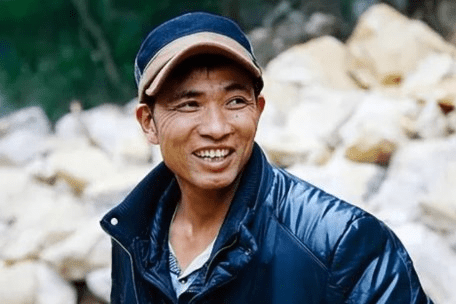
He built a road for others, and unknowingly paved one for himself
In 2014, in a remote village in Guangxi(广西)China, a 44-year-old man named Huang Yuanfeng was diagnosed with terminal liver cancer. Doctors told him the reality: without treatment, he might live only three months; with treatment, perhaps a few more years—but at the cost of his family’s entire savings of 170,000 yuan.
Most people would have chosen to fight for their own survival.
But Huang made a different decision.
Looking at the muddy, nearly impassable road in his village—a road that trapped children at home during rainy days and left crops to rot—he chose to spend all his savings not on treatment, but on building a road for everyone.
When the money ran short, he borrowed more from neighbors, making a solemn promise: “Even if I die, my son will repay you.”
Against all odds, the road was completed. It transformed the village, bringing in visitors, creating opportunities, and improving countless lives.
But what happened next was even more astonishing.
When Huang returned to the hospital for a check-up, his condition had not worsened—in fact, it had stabilized, even improved. What seemed like a certain end became an unexpected turning point.
His story carries a simple but powerful truth:
Kindness is never lost. The good you do for others may one day return to protect you—especially in life’s most dangerous moments.
In times when the world feels overwhelmed by conflict, division, and uncertainty, many people are searching for deeper answers about human consciousness and the true purpose of life. One thinker whose work has inspired millions to reflect on these questions is Gary Zukav, a writer and former physicist known for exploring the relationship between science, consciousness, and spiritual growth.
Zukav first gained recognition through his book The Dancing Wu Li Masters, which introduced complex ideas of modern physics to general readers. Later, his bestselling book The Seat of the Soul shifted the conversation toward a deeper exploration of human consciousness and spiritual evolution. In this work, Zukav proposes a powerful idea: humanity is undergoing a transformation from seeking external power to discovering authentic power—the power that arises from the soul.
His message can be summarized in three simple yet profound movements of the human spirit:
Humanity must move from fear to love
from control to compassion
from external power to inner wisdom
Although Zukav approached these ideas through the lens of psychology and consciousness, they resonate deeply with teachings that have existed for thousands of years within Buddhism.
In Buddhist teachings, the mind is the source of both suffering and liberation. According to Gautama Buddha, our thoughts, intentions, and actions shape our experience of the world. This principle is closely connected to the law of Karma, which teaches that every action—whether physical, verbal, or mental—creates corresponding results.
When people act from fear, anger, or greed, they plant seeds of suffering. When they act from compassion, generosity, and wisdom, they create causes for peace and happiness.
Seen in this light, Zukav’s idea of moving from external power to authentic power reflects a timeless Buddhist insight: true strength does not arise from domination or control, but from the transformation of the mind.
In the modern world, success is often measured by status, wealth, or influence. Yet Buddhism reminds us that these forms of external power are temporary and unstable.
The Buddha taught that genuine freedom comes from cultivating inner qualities such as:
compassion
mindfulness
wisdom
loving-kindness
When these qualities grow within us, our consciousness naturally changes. Instead of reacting with fear or anger, we begin to respond with understanding and care. This is the beginning of authentic power—the same inner power Zukav describes.
Zukav believes humanity is evolving toward a new level of awareness, where people become more conscious of their intentions and the effects of their actions. This idea echoes the Buddhist path of awakening, where individuals gradually develop greater awareness of their thoughts and emotions.
Each moment offers a choice: to act from fear or from love, from control or from compassion.
If enough people choose compassion, the collective consciousness of humanity can also change. In this sense, spiritual transformation is not only personal—it is also global.
A Gentle Reminder for Our Time
In a world often shaken by conflict and division, Zukav’s words serve as a gentle reminder that true change begins within the human heart.
Humanity must move from fear to love, from control to compassion, from external power to inner wisdom.
These movements are not only philosophical ideals; they are practical steps toward creating a more peaceful world. When we cultivate compassion and awareness in our own lives, we are already contributing to the transformation of human consciousness.
As the Buddha taught, peace in the world begins with peace in the mind. And when one heart awakens to compassion, it quietly lights the path for many others.
Throughout history, great spiritual teachers have reminded humanity that true strength does not come from violence, but from compassion. One of the most powerful voices for this truth was Mahatma Gandhi, whose philosophy of nonviolence transformed not only India’s independence movement but also the moral thinking of the modern world.
Gandhi believed deeply that responding to hatred with hatred only multiplies suffering. One of his most famous reminders is:
“An eye for an eye only ends up making the whole world blind.”
These words echo a truth that has been taught for thousands of years in Buddhist philosophy. The teachings of Gautama Buddha emphasize that violence and anger inevitably create more suffering through the universal law of cause and effect, often described as karma.
When people act with hatred, harmful consequences naturally follow. But when people act with compassion, patience, and kindness, they plant seeds of peace that can transform the future.
Gandhi understood this deeply. He once said:
“Non-violence is the greatest force at the disposal of mankind.”
At first glance, nonviolence may seem passive or weak. Yet both Gandhi and Buddhist teachings reveal the opposite: choosing compassion when faced with anger requires tremendous inner strength. It means resisting the instinct to retaliate and instead responding with wisdom and humanity.
Another powerful statement from Gandhi reminds us of this inner strength:
“The weak can never forgive. Forgiveness is the attribute of the strong.”
In Buddhist practice, forgiveness and compassion are essential qualities for spiritual growth. When we release anger and cultivate compassion, we stop feeding the cycle of negative karma. Instead, we create positive causes that lead to harmony and healing.
The world today often appears filled with conflict, division, and hostility. Yet the teachings of Gandhi and the Buddha remind us that lasting peace cannot be built through force. Peace grows from the transformation of the human heart.
Every act of kindness, every moment of patience, and every compassionate choice becomes a small but powerful step toward a more peaceful world.
Gandhi expressed this hopeful vision beautifully:
“Where there is love there is life.”
His words remind us that true change does not always come from power or domination. Often, it begins quietly—with compassion, moral courage, and the determination to do what is right.
When we choose compassion over anger, forgiveness over revenge, and wisdom over violence, we participate in a timeless spiritual truth: good causes create good results. In this way, every compassionate action becomes a seed of positive karma that can gradually transform both our own lives and the world around us.
And perhaps this is the deepest lesson shared by both Gandhi and the Buddha: compassion may appear gentle, but in the end, it is stronger than violence.
In recent days, my heart has been unsettled by the wars, conflicts, and endless scandals that seem to surround our world. In such turbulent times, the gentle wisdom of Gandhi becomes like a quiet lamp in the darkness, calming my mind and reminding me to return to inner peace.
I make a sincere vow to guard the peace within my own heart and not allow anger or despair to take root. Instead, I choose to pray for those who are suffering and to let the love and compassion within me flow outward. My voice may be small in this vast world, but I believe that every sincere prayer carries its own power, and the divine will surely hear it.
May the blessings of all the divine beings in the universe embrace this world. May compassion arise in human hearts, hatred dissolve, and may peace and harmony gently return to our shared home.
Nadia Murad: One Woman’s Courage Can Change the World
In a world often shaken by violence and injustice, the story of Nadia Murad reminds us that even in the darkest moments, the human spirit can rise with extraordinary courage.
Murad was born in a small Yazidi village in northern Iraq. Like many young women, she once dreamed of living a quiet and simple life. She hoped to open a beauty salon in her hometown and build a peaceful future with her family.
But in 2014, her life was shattered when the extremist group Islamic State of Iraq and Syria (ISIS) attacked her village. Many members of her family were killed, and she, along with thousands of Yazidi women and girls, was captured and subjected to unspeakable violence.
After months of captivity, Murad managed to escape. Her survival alone was extraordinary, but what she chose to do next required even greater courage.
Rather than remain silent, she decided to tell the world what had happened. Speaking before global leaders at the United Nations, she courageously shared her story and spoke on behalf of thousands of victims who could not speak for themselves.
As she once said:
“I want to be the last girl in the world with a story like mine.”
These simple but powerful words express her deepest mission—to ensure that no other woman or girl must endure the suffering she experienced.
Murad continued her advocacy for survivors of human trafficking and wartime sexual violence, calling on the world to pursue justice and accountability. Her bravery and determination were recognized globally when she was awarded the Nobel Peace Prize in 2018.
Yet Murad’s work has never been about personal recognition. Her goal has always been to restore dignity and hope to those whose lives have been torn apart by violence.
In another moving statement, she said:
“There is no greater honor than being able to speak on behalf of those who have been silenced.”
Her life demonstrates how even the deepest suffering can be transformed into compassion and purpose. Instead of allowing pain to define her, she chose to turn her experience into a force for justice and healing.
Murad also reminds the world that silence allows injustice to continue:
“If the world had listened earlier, perhaps this tragedy could have been avoided.”
Her words challenge us all—not only to listen, but to act.
Today, Nadia Murad’s voice has become a symbol of resilience, courage, and hope. From a small village in Iraq to the global stage, she has shown that one person’s courage can awaken the conscience of humanity. Her story is not only a testimony of survival—it is a call for compassion.
From a deeper spiritual perspective, her journey also reminds us of the universal law of cause and effect—what many traditions call karma. Violence, hatred, and cruelty create suffering that ripples across generations, while compassion, courage, and moral responsibility create healing and hope. When individuals like Nadia Murad choose truth over silence and compassion over hatred, they help restore moral balance in the world. Her courage encourages each of us to cultivate kindness, protect the vulnerable, and act with integrity in our own lives. In this way, even small acts of compassion can become powerful seeds of positive karma, helping to guide humanity toward a more peaceful and just future.
In the rush of daily life, it’s easy for the mind to gravitate toward what is missing, stressful, or unresolved. Our attention naturally scans for problems—an ability that once helped our ancestors survive. Yet this same tendency can also make modern life feel heavier than it needs to be.
What if something as simple as practicing gratitude could gently reshape the way our minds experience the world?
Psychological research suggests that it can.
One influential study by Robert A. Emmons and Michael E. McCullough, published in the Journal of Personality and Social Psychology, explored exactly this question in their paper “Counting Blessings Versus Burdens: An Experimental Investigation of Gratitude and Subjective Well-Being in Daily Life.”
Their findings offer a fascinating glimpse into how small shifts in attention can create meaningful changes in emotional well-being.
In their study, participants were divided into different groups and asked to keep brief weekly records:
One group listed things they were grateful for.
Another group recorded daily hassles or difficulties.
A third group tracked neutral life events.
After several weeks, a clear pattern emerged.
Those who regularly wrote down what they were grateful for reported:
Higher levels of optimism
Greater life satisfaction
More positive emotional states
Even better physical well-being, including fewer physical complaints
Interestingly, participants in the gratitude group were also more likely to help others and engage in prosocial behavior.
The practice did not eliminate life’s difficulties. Instead, it subtly shifted the mind’s orientation—from scanning for burdens to noticing sources of support, meaning, and connection.
In other words, gratitude works not by denying reality, but by expanding what we notice within it.
The brain is remarkably adaptive. Neuroscience often refers to this capacity as neuroplasticity—the ability of neural pathways to strengthen through repeated patterns of thought and attention.
When we repeatedly focus on worries, the brain becomes efficient at worrying.
When we repeatedly notice blessings, the brain becomes better at recognizing goodness in everyday life.
Gratitude, then, can be understood as a kind of mental training. It gradually teaches the mind to hold a wider view of experience—one that includes not only challenges, but also resources, kindness, beauty, and moments of quiet grace.
The research suggests that gratitude does not require elaborate rituals. Even small, consistent practices can make a difference.
Here are a few simple ways to begin.
1. Keep a “Three Blessings” Journal
At the end of the day, write down three things you are grateful for.
They don’t have to be dramatic or extraordinary.
They might be:
A helpful conversation
A good meal
A quiet moment of rest
A problem that turned out better than expected
The key is consistency. Over time, this practice gently trains attention toward appreciation.
2. Ask “What Went Well Today?”
Instead of ending the day reviewing only unfinished tasks, pause and reflect:
What went well today?
This small shift reframes the day from a list of obligations into a landscape that also contains successes and kindness.
3. Express Gratitude to Someone
Research on gratitude often finds that expressing appreciation strengthens relationships.
Send a message, write a note, or simply say thank you in a sincere way.
Gratitude is not only an internal experience—it is also a social emotion that deepens connection.
4. Notice the Ordinary
Some of the most powerful gratitude moments come from ordinary experiences:
Warm sunlight through a window
The taste of morning tea
The reliability of a friend
When we slow down enough to notice these small gifts, everyday life begins to feel richer.
It’s important to emphasize that gratitude is not about pretending life is perfect.
Difficulties, uncertainty, and loss are part of the human experience.
Gratitude simply invites us to widen the frame of attention—to see that even within imperfect circumstances, moments of goodness continue to exist.
By learning to notice them, we cultivate a more balanced and resilient inner life.
The idea behind “counting blessings” may sound simple, even old-fashioned.
Yet research continues to show that this small shift in attention can ripple outward—affecting mood, relationships, and overall well-being.
Perhaps the most beautiful part of gratitude is its accessibility.
It requires no special equipment, no complicated training.
Just a moment of pause… and a willingness to notice what is already here.
Through his brushwork, H.H. Dorje Chang Buddha III renders the subtle life cycle of a water bubble—its emergence, transformation, and eventual dissolution—with remarkable vitality. Though the medium is static, the painting evokes a striking sense of movement and immediacy. One almost senses the gentle drifting of bubbles across the surface, and even imagines the delicate sound that might accompany the instant when a bubble touches the ground and quietly disappears.
Beyond its visual beauty, the work carries a deeper contemplative resonance. In the fleeting rhythm of the bubbles, one cannot help but see a metaphor for the human condition. The trajectory of a bubble—from its brief formation to its silent vanishing—mirrors the arc of human life: birth, growth, aging, and departure. Life itself unfolds within the span of a breath, fragile and transient, reminding us of the importance of awareness and presence in each passing moment.
From an artistic perspective, the painting also demonstrates a remarkable command of impressionistic expression. The composition operates not only as a unified whole but also as a constellation of smaller visual worlds. Any isolated fragment of the canvas could stand independently as an exquisite impressionist study, rich in color, light, and atmosphere. This structural richness gives the work a dreamlike, almost illusory quality—where forms appear to emerge and dissolve within layers of color and movement.
In this way, the painting invites the viewer to linger, not merely to observe, but to reflect. It transforms a simple natural phenomenon into a meditation on impermanence, perception, and the delicate beauty of existence.
Click here to Wikitia page on H.H. Dorje Chang Buddha III that list major accomplishments and teachings with links.
When the Buddha was in Jetavanārāma, the king Ajātasattu was friendly with Devadatta. Even though unrighteous and sinful, Ajātasattu was pleased with him. He built for Devadatta a temple in Gayāsīsa, which he gave to him. And he assisted him by giving him all the necessary perquisites. In the meantime, following Devadatta’s words, he sent the elephant NāÀāgiri to kill the Buddha and he sent bowmen to shoot at the Buddha. Many bad things such as these were done by him. After that, his father who was a very righteous king and who was one who had attained the stream entrance state of mind [sotāpanna], was killed by him through the persuasion of Devadatta.
Later, he heard that Devadatta had died and had gone to hell sinking down through the earth. On hearing this, he became afraid for his life believing that if anything happened to Devadatta, no doubt it would happen to him, too. He was very much afraid day and night. He spent the daytime in the routine activities of his daily life. But at night, when he went to bed, he dreamed that he was falling through the earth that had opened up and was shooting forth the fires of hell. From this, he became even more afraid as if he were a chicken that had its neck twisted and had been thrown into the hot sun to die. In this way, he suffered day and night despite his royal luxuries.
He had a keen interest in questioning the Buddha about the dream he was having, but he was reluctant to express that interest to Jīvaka. One day he saw the moonlight bright as if it were daylight, and he said to his minister Jīvaka, “The moonlight is so clear that one can see the distance of forty- five arrow shots as if it were daytime. It is not good to waste our time by staying here. This night is pleasant, calm, attractive, and beautiful. Let us go to a good ascetic, to someone like that, to listen to the Dhamma. I have now such an intention. Do you know to whom we can go?” The other ministers who heard him started to mention the names of the various religious masters to whom they each paid obeisance. Most of them were NigaÏæha-s. One minister said, “There is the ascetic PūraÏa Kassapa. He is a Buddha. Let us go to see him.” Another minister said, “It would be good to go to the Buddha Makkhali Gosāla.” Another minister said, “Instead of going to him, let us go to the Buddha Ajita Keśakambala.” Then some other minister wanted to go to the Buddha Kakudha Kaccāyana. After, another said, “I think it would be good to go to the Buddha Sañjaya Belaææhiputta.” The sixth one said, “I suggest that more than any other Buddha, NigaÏæha Nāthaputta is the best one to whom to go.”
In this way, all the ministers said what they thought, mentioning various NigaÏæha-s, all of who were like children [with regard to spiritual advancement]. The king did not listen to them seriously, thinking, “No doubt Jīvaka will respond to my question.” But Jīvaka was silent.
Understanding his silence, the king addressed Jīvaka. He asked, “Jīvaka, these people are all praising their own Buddha-s whom each of them follows. Why do you not say something? Do you have no such a Buddha?”
Jīvaka heard this and got up from his seat. He paid respect toward the direction in which the Buddha was, and he recited the nine-fold virtuousness of the Buddha. He said, “Such a virtuous, omnipresent one is now living in my mango park followed by 1,800 monks. Therefore, I suggest that it would be good for your lordship to go there.”
On listening to him, the king said, “It is wonderful. Let us go there.” And he made arrangements to go there by elephants together with his retinue. He went to the Buddha in royal magnificence. He approached the Buddha’s residence and dismounted his elephant. He then came to the followers of the Buddha who were wearing neat and clean clothes, who had tranquil faculties, who all were seated still with arms and feet close to their bodies, and of whom not even one sneezed or coughed. He was very pleased by seeing this. First he paid his respects to the monks, and then to the Buddha. He sat down and said, “Sir, I would like to ask a question.” “Well, your lordship, ask your question.” Then the king said, “Venerable sir, what is the result that one can gain by being a monk?” The Buddha said the discourse called the Sāmaññaphala Sutta divided into two sections [bhāÏavāra-s] and into 500 points to be explained [grantha-s].23
After this preaching, Ajātasattu knelt down in the presence of the Buddha to pay his respect and said, “Revered sir, please excuse my wrong deeds that I have done out of ignorance.” Buddha accepted his apology, and the king went away.
Then the Buddha addressed the monks, saying, “Oh monks, this King Ajātasattu by being associated with a bad person both killed his father and at the same time ruined his chance for future salvation. If he did not do so, he would today be one who has entered into the stream entrance state of mind [sotāpanna].”
The next day, the monks assembled in the preaching hall were discussing how King Ajātasattu had lost his good fortune to become a Sotāpanna. The fully enlightened one entered the preaching hall then and asked the monks, “Oh monks, what were you discussing before I came here?” The monks mentioned the previous day’s incident. And the Buddha said, “Oh monks, not only in this life but even in the past, Ajātasattu by associating with evil ones created for himself misfortune.” The monks invited the Buddha to disclose the past story.
“At one time, when King Brahmadatta was ruling in Benares, the Enlightenment Being was born in a Brahmin family in that city. When he was grown, he went to a well- known teacher who used to teach in the city and began to study under him. After studying under him, he started to teach students on his own.
“While he was teaching students like this, he had a student named Sañjīvaka. He taught him a spell that could be used to bring the dead to life. And when they gain life, they can walk—but only a short distance. He did not teach him the spell to immobilize them if they come near.
“Once, that student went with a group of other students to fetch firewood from the forest. On their way, they saw a dead tiger on the ground. Sañjīvaka said to the other students, ‘Do you want to see my power? I will bring this tiger back to life.’ The other students said, ‘How can you bring a dead being back to life? It will never happen.’ Sañjīvaka said, ‘Just look at what I do.’ And he started to recite the spell. The other students said, ‘Who knows what will happen!’ And they climbed up trees.
“While Sañjīvaka was repeating the spell, he threw some pebbles toward the dead body of the tiger. When he was throwing the pebbles, the tiger started to get up. He came forward, and jumping up on the very person who was chanting the spell, he killed him. The tiger that had been brought back to life also fell dead at that spot.
“The other students collected the firewood and returned to where they were studying. They told the teacher what had happened. On hearing the news, the teacher said to the students, “It is not good to help an evil friend. If you do so, such is the result.” And he advised them to live generous and peaceful lives. He himself lived such a life, did many meritorious deeds, and acquired much merit. At the end of his life he died, and was born in heaven.
“Sañjīvaka was King Ajātasattu at that time. The teacher of Benares was I who have become the Buddha.” In this way, the Buddha ended the story of Sañjīva.
23 The Sāmaññaphala Sutta is to be found in the Dīghanikāya, but it is not divided there into two sections.






















 Peace LiLy