The Bell in the Horse’s Belly

The Buddhist concept of cause and effect (karma) is truly an unfathomable truth

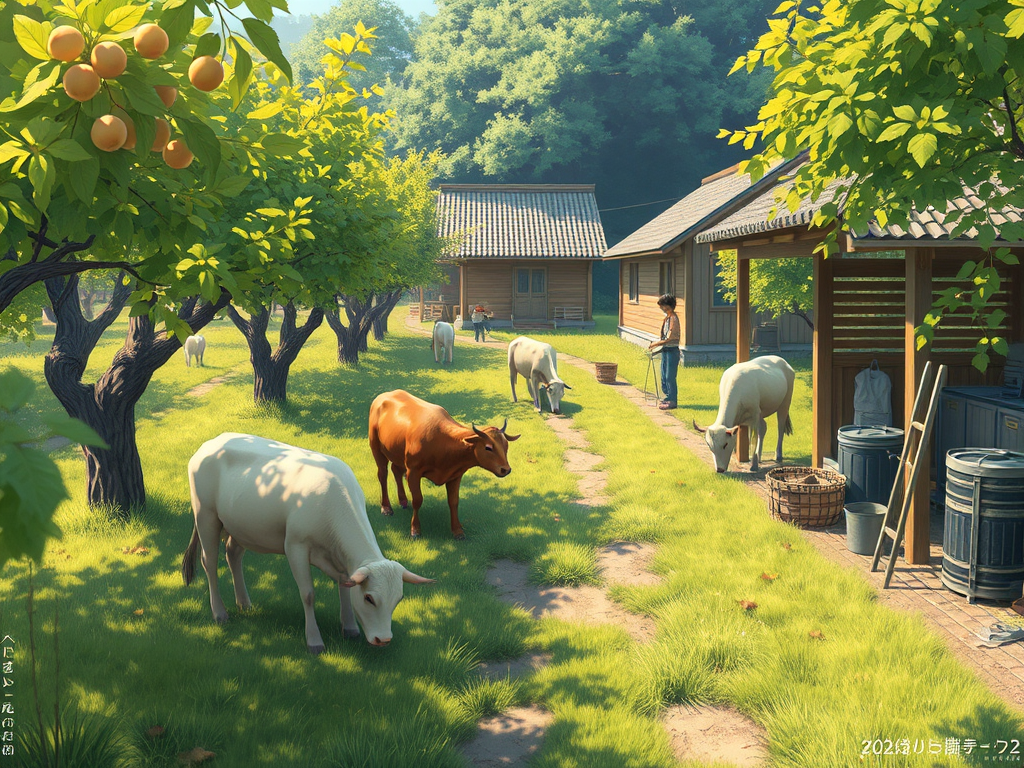
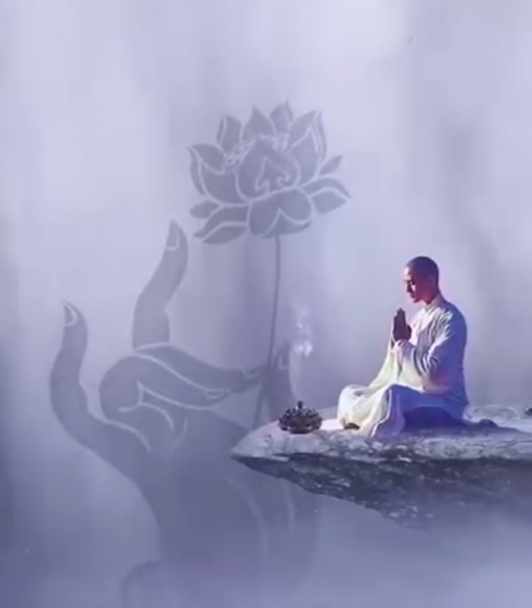
Long ago, deep in the mountains, there lived a Zen master named Wuguo(无果), a practitioner wholly devoted to meditation. For more than twenty years, he was supported by a humble mother and daughter who offered him food and daily necessities so he could cultivate the Way without distraction.

As the years passed, Master Wuguo reflected deeply on his practice. Although he had dedicated his life to meditation, he felt he had not yet realized his true nature. A quiet fear arose in his heart: If I have not awakened, how can I truly repay the kindness of these offerings?

Determined to resolve the great matter of life and death, he decided to leave the mountain to seek instruction from other masters.

When the mother and daughter heard of his departure, they asked him to stay a few more days. They wished to sew him a monastic robe for his journey. At home, the two women worked carefully, chanting the name of Amitabha Buddha with every stitch, their hearts filled with sincerity. When the robe was finished, they also wrapped four silver ingots to serve as his travel funds.

Master Wuguo accepted their offerings and prepared to leave the next morning.

That night, as he sat quietly in meditation, a vision appeared. A young man dressed in blue stood before him, holding a banner. Behind him came a procession playing music and carrying a magnificent lotus flower.

“Zen Master,” the youth said, “please ascend the Lotus Seat.”

Master Wuguo remained calm. He reflected inwardly: I am a Zen practitioner, cultivating meditative concentration. I have not practiced the Pure Land path. I should not become attached to visions. Even for a Pure Land practitioner, such an experience could be a delusion.

He ignored the vision.

Yet the youth returned again and again, urging him earnestly not to miss this rare opportunity. Finally, Master Wuguo picked up his small hand-bell (yinqing) and placed it on the lotus seat. Soon after, the youth and the entire procession vanished.

The next morning, as Master Wuguo prepared to depart, the mother and daughter hurried toward him in distress. Holding the hand-bell, they asked anxiously:

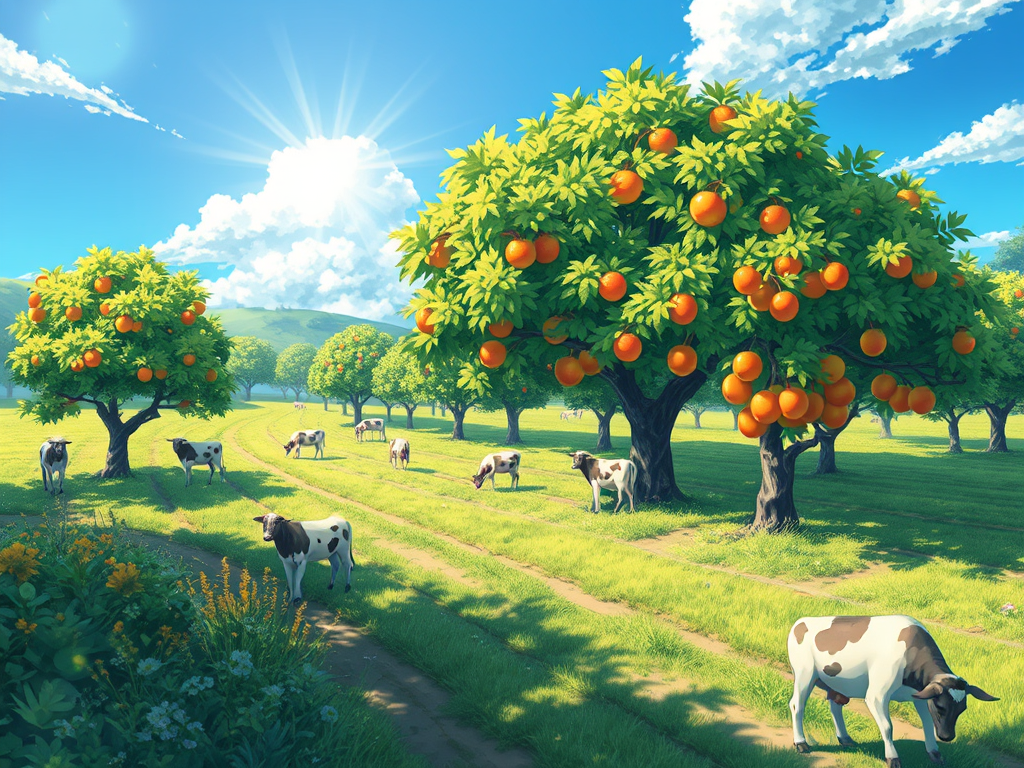
“Master, is this yours? Something very strange happened last night. Our mare gave birth to a stillborn foal. When the groom cut it open, he found this bell inside. We recognized it immediately and rushed to return it—but we cannot understand how it came from a horse’s belly.”

Upon hearing this, Master Wuguo broke into a cold sweat. Deeply shaken, he composed a verse:

One monastic robe, one sheet of hide;
Four silver ingots, four hooves inside.
Had this old monk lacked the power of Zen,
Your stable is where I would have been.

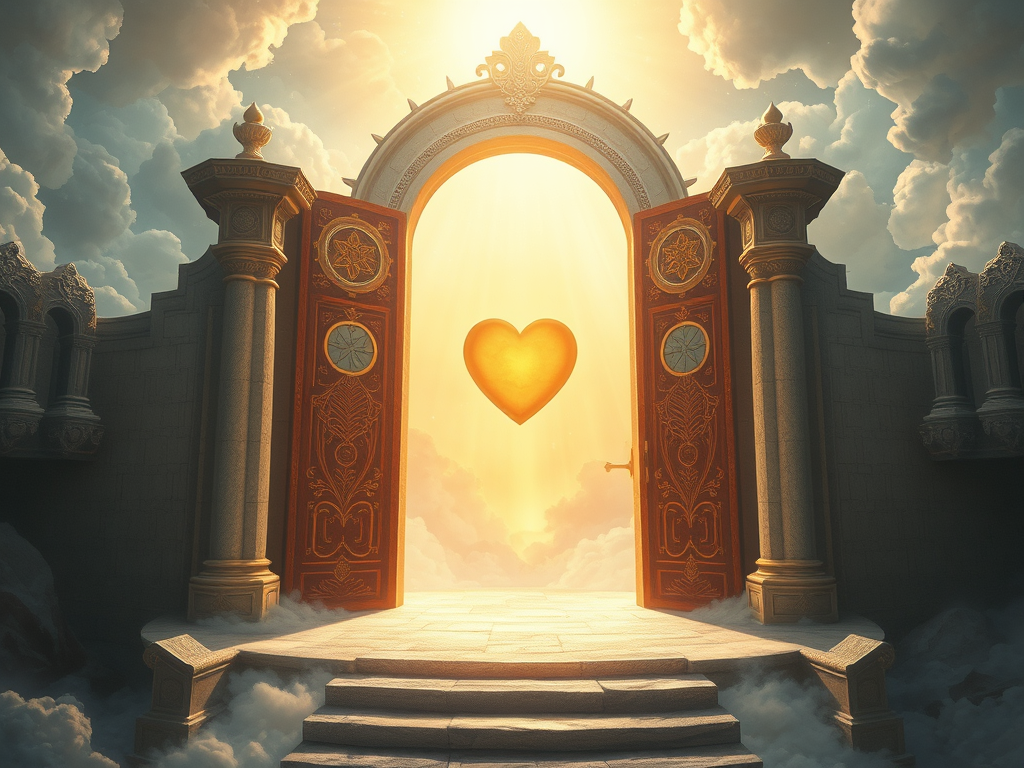
In that moment, he clearly understood the law of cause and effect. By accepting the robe and the silver, he had created a karmic debt. Had his mind been even slightly attached—to the vision, to the offerings, or to the idea of reward—he would have been reborn as a horse in that very household, laboring to repay what he had received.

Immediately, Master Wuguo returned the robe and the silver to the women and departed.

Because he did not cling to extraordinary visions, he escaped rebirth in the animal realm. An ordinary person, upon encountering such sights, would have grasped at them, fallen into delusion, and continued revolving in the cycle of rebirth.

This story reveals a profound truth: the realms are not distant places—they arise from the mind itself.

When the mind dwells in craving and greed, it becomes the realm of the Hungry Ghosts, endlessly desiring yet never satisfied.
When the mind dwells in anger and resentment, it becomes the Asura realm, filled with conflict and struggle.
When the mind is clouded by ignorance and confusion, it sinks into the Animal realm, driven by instinct and karmic habit.

In our daily lives, we often fixate on external things—lust, fame, wealth, comfort, indulgence—believing we cannot live without them. Yet we fail to see that all phenomena arise from causes and conditions. When conditions gather, things appear; when conditions disperse, they vanish. None possess a fixed or permanent essence.

Reflect carefully:
Is there anything in this world we can truly hold onto forever?

Since nothing produced by conditions can be owned, lasting happiness cannot be found through possession or attachment. True happiness arises from non-attachment, from seeking nothing and clinging to nothing. When the mind releases its grasp, it becomes light, clear, and free.

So we may ask ourselves:

Can we remain at peace amid changing emotions?
Can we stay calm in the face of conflict?
Can we remain unmoved by fame and profit?
And when the moment of death arrives, can our mind remain clear and mindful?

The law of cause and effect never errs.
What we cultivate in the mind today shapes the world we inhabit tomorrow.

Link:https://peacelilysite.com/2026/01/07/the-bell-in-the-horses-belly/

The Secret to Daily Happiness: Why Giving is the Ultimate Life Hack

Jacqueline Way and her son in 2010

We spend so much of our lives chasing happiness. We look for it in career promotions, new gadgets, or the perfect vacation. Yet the joy we seek often feels fleeting. What if the real secret sauce to a happy life isn’t something you buy or achieve—but something you give?

In her widely shared TEDx talk, “How to Be Happy Every Day: It Will Change the World,” Jacqueline Way offers a beautifully simple, yet world-altering insight: doing one small good deed each day can transform your brain, your life, and ultimately, the world.

The Science Behind the “Helper’s High”

Jacqueline’s message isn’t just uplifting—it’s grounded in science. When we perform acts of kindness, our bodies respond in powerful ways.

Giving triggers the release of a natural blend of “happiness chemicals”:

  • Dopamine, which creates feelings of reward and joy
  • Oxytocin, often called the “love hormone,” which reduces stress and supports heart health
  • Serotonin, which stabilizes mood and promotes a sense of calm and well-being

In other words, when you give, you’re not just helping someone else—you are literally rewiring your brain for happiness.

At the heart of Jacqueline Way’s message is a practice so simple it’s easy to overlook:

Do one little good thing every day.

It doesn’t need to be dramatic or time-consuming. A good deed might look like:

  • Offering a sincere smile or kind word
  • Helping a neighbor with a small task
  • Picking up litter along your path
  • Donating items you no longer use
  • Listening fully to someone who needs to be heard

What matters most is intention. When kindness becomes a daily habit rather than an occasional gesture, happiness stops being accidental—it becomes natural.

A single act of kindness never ends with the giver. It travels outward. One person’s generosity inspires another. Slowly and quietly, hearts soften, trust grows, and perspectives shift.

Jacqueline Way reminds us that changing the world doesn’t require grand gestures or heroic efforts. It begins with ordinary people choosing compassion in everyday moments. When kindness becomes a way of life, happiness expands—not only within us, but all around us.

How to Start Your Own Happiness Practice

If you’re longing for more joy and connection, you don’t have to wait for the “right” moment. You can begin today. Here are three simple ways to practice the daily give:

1. Look for the Micro-Give
Kindness doesn’t require money or planning. Hold the door open, write a thoughtful message, or leave a positive review for a local business.

2. Make It a Family Habit
Inspired by Jacqueline and her son, turn giving into a shared ritual. Ask at dinner, “What was your give today?” It nurtures empathy and helps everyone focus on the good.

3. Notice the Shift
Pause and observe how you feel after giving. That warmth in your chest? That quiet lift in your mood? That’s happiness growing in real time.

Jacqueline Way reminds us that we are not powerless in the face of the world’s challenges. Each of us carries the ability to make life kinder, lighter, and more meaningful—one day at a time.

When you choose to give, you stop chasing happiness and start creating it.

And when enough of us do that, every day, the world truly begins to change.

Link:https://peacelilysite.com/2026/01/02/the-secret-to-daily-happiness-why-giving-is-the-ultimate-life-hack/

A Delegation of Buddhist Town visited Bhutan

At the invitation of Rev. Chandima of the Sri Lanka Cultural and Educational Foundation, members of Buddhist Town joined a delegation to Bhutan to participate in the Global Peace Festival, held in celebration of the 70th birthday of the Fourth King of Bhutan. The trip was co-organized by the Buddhist Town Community Association, with participating organizations including Fa Chan Temple, Macang Yuan, Holy Vajrasana Temple, and the Canadian Institute of Buddhist Studies, among others. In total, 68 representatives took part in this meaningful event.

As part of the visit, the delegation donated 500 sets of essential baby supplies, offering prayers for happiness, health, and well-being for every family. The donation ceremony was attended by the Director of Bhutan’s Ministry of Health, who officially received the supplies. Following the ceremony, the donated items were distributed on-site to pregnant women and mothers with newborns by members of the delegation.

The delegation jointly sponsored the offering of 3,000 butter lamps and respectfully invited Master Shin Zhengda Jaozun to preside over the 3,000 Butter Lamp Offering Ceremony at Kyichu Lhakhang, one of the oldest temples in Paro. The prayers were dedicated to world peace, the removal of obstacles, the averting of disasters, and the flourishing and propagation of the True Buddha Dharma.

Kyichu Lhakhang is one of the 108 demon-subduing temples built by King Songtsen Gampo. Established in 638 CE, it stands as one of Bhutan’s most sacred and historically significant temples.

Dasho Passang Dorji, former Speaker of the National Assembly of Bhutan, formally welcomed the Buddhist Town delegation at Paro International Airport. Following the reception, the delegation embarked on an inspiring journey to visit sacred sites associated with Guru Padmasambhava and to learn how Zhabdrung Rinpoche further propagated and established Guru Padmasambhava’s lineage teachings throughout Bhutan.

During the journey, the delegation visited many major temples and sacred sites, including the Buddha Dordenma in Thimphu (21st century), Punakha Dzong (17th century), the Druk Wangyal Chortens—also known as the 108 Stupas (21st century), Chimi Lhakhang (15th century), Khewang Lhakhang (15th century), and Gangtey Monastery (17th century), among others.

The final highlight of the journey was the ascent to the legendary Taktsang Monastery (8th century), dramatically perched at an elevation of 3,100 meters above sea level. According to tradition, Guru Padmasambhava flew to this sacred site, where he subdued negative forces and later spread Buddhism throughout Bhutan, becoming the foundational figure of Bhutanese Buddhism.

By Original: Nina R from AfricaDerivative work: UnpetitproleX – Paro Taktsang, BhutanThis file was derived from: Paro Taktsang, Bhutan (49694480001).jpg, CC BY 2.0, https://commons.wikimedia.org/w/index.php?curid=163890881


With an elevation gain of more than 900 meters and steep mountain trails, the pilgrimage requires a 7–8 hour round-trip hike. Throughout the journey—visiting sacred sites, receiving blessings, paying homage to the Buddhas, and experiencing deep spiritual inspiration—the delegation was filled with immeasurable Dharma joy and boundless gratitude.

At every point along the path, it felt as though the land itself was gently reminding the delegation that all worldly phenomena are impermanent and ever-changing, and that only the true Dharma of the Buddha remains eternally unchanged.

Link: https://peacelilysite.com/2026/01/02/a-delegation-of-buddhist-town-visited-bhutan/

Source: https://lirp.cdn-website.com/9890f458/dms3rep/multi/opt/BT+Newsletter+EN+-+202511-1920w.png

Walking for Peace, Step by Step

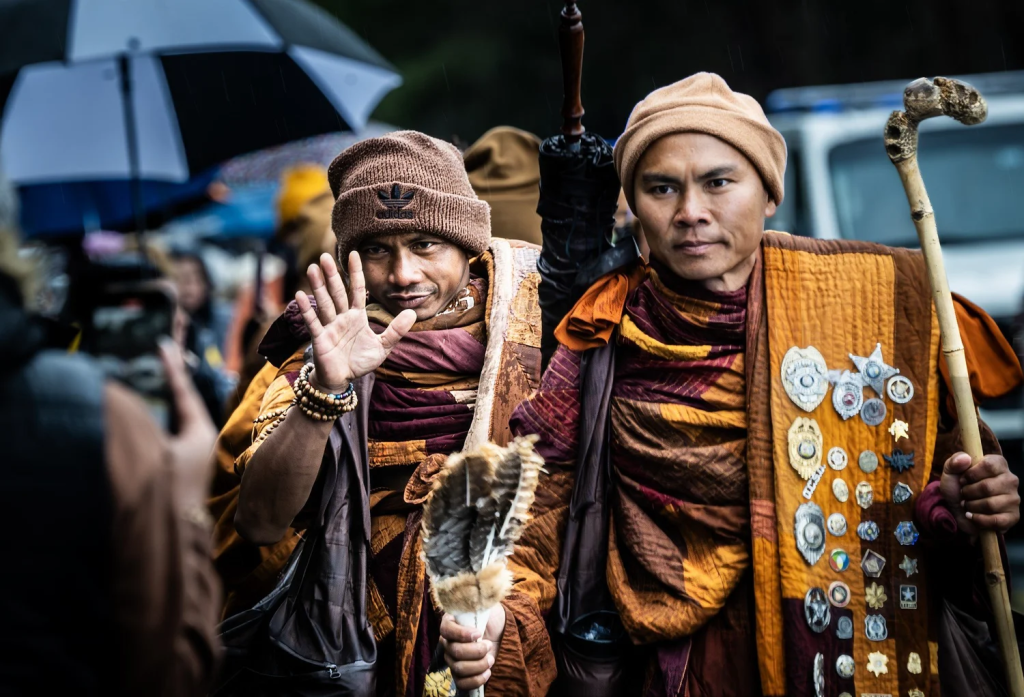
The Buddhist monks from the Huong Dao Vipassana Bhavana Center in Fort Worth, who are undertaking a 2,300 mile pilgrimage of Walk for Peace, arrive for a welcome ceremony at Hong Kong City Mall in Houston Friday, Nov. 14, 2025. Houston Chronicle/Hearst Newspapers via Getty Images

In a world that often feels rushed, divided, and relentlessly loud, there is something quietly revolutionary about the act of walking.

Recently, a group of Buddhist monks began a long, demanding pilgrimage across the United States. Their mission is simple yet profound: to promote peace. Their journey began in Fort Worth, Texas, on October 26. Since then, they have faced the literal “wear and tear” of the road, including a harrowing incident where two monks were injured after a truck struck their escort vehicle.

Yet, they did not stop.

With perseverance and a calm, unshakable resolve, the group of two dozen monks has reached Georgia. They are still moving, one step at a time, toward their final destination in Washington, D.C. Their pace is slow, deliberate, and intentional—and that may be exactly what our world needs right now.

Buddhism has a long history of “engaged mindfulness”—the idea that compassion isn’t just felt in meditation, but lived in the world. These monks are not just praying for peace; they are embodying it.

As they navigate highways and back roads, they offer a living reminder that peace isn’t a destination we reach once and for all. It is a practice. It is something we choose moment by moment, breath by breath, step by step.

Watching their progress brings me back to a book I read nearly 30 years ago: Peace Pilgrim.

I remember being deeply moved by her story—how she walked across countries carrying almost nothing, guided by the conviction that peace begins within the individual. At the time, I wished I could have met her in person, just to thank her for the way her simplicity and courage planted a seed in my heart.

Though she is gone, her spirit feels remarkably present today. I see her legacy in the orange robes of these monks as they crest the hills of the American South.

Monks rest at Hong Kong City Mall in Houston Friday, Nov. 14, 2025. Melissa Phillip/Houston Chronicle via Getty Images

Igniting Kindness, One Heart at a Time

There is something profoundly moving about a walking pilgrimage in the age of instant communication. There are no hashtags here. No viral outrage. Just human beings placing one foot in front of the other, trusting that their presence alone can soften the world.

And it works.

Along the way, the “ordinary” world reacts. Drivers slow down. Strangers stop to ask questions. People offer water, a meal, or a simple smile. In these small, unscripted exchanges, something gentle is awakened. We are reminded that beneath our political and social differences, we all share a basic human longing for safety, understanding, and harmony.

The monks may be the ones doing the walking, but the kindness they ignite along the way belongs to all of us. As they recently shared on their Facebook page:

“We do not walk alone. We walk together with every person whose heart has opened to peace, whose spirit has chosen kindness, whose daily life has become a garden where understanding grows.”

A group of Buddhist Monks and several hundred local community members take part in the Walk for Peace in Montgomery, Ala., on Tuesday December 23, 2025. The Monks are walking from Texas to Washington, D.C. to promote peace and compassion.

https://www.usatoday.com/picture-gallery/news/2025/12/23/buddhist-monk-walk-for-peace-passes-through-montgomery/87897028007/

Most of us cannot drop everything to walk across a continent. But all of us can “walk for peace” in the geography of our own lives.

  • We can pause before we react in anger.
  • We can choose compassion over the reflex of judgment.
  • We can listen more deeply than we speak.

Watching these monks continue their journey despite injury and uncertainty reminds me that peace isn’t achieved through grand, sweeping gestures. It is built patiently through humility and love.

Step by step.

May their walk remind us to slow down, to soften our hearts, and to keep moving—together—toward a more peaceful world.

Photos from https://www.nbcdfw.com/news/national-international/buddhist-monks-peace-walk-thousands-follow-on-social-media/3962302/ and https://www.usatoday.com/picture-gallery/news/2025/12/23/buddhist-monk-walk-for-peace-passes-through-montgomery/87897028007/

Link:https://peacelilysite.com/2026/01/01/walking-for-peace-step-by-step/

The Enlightened Woodcutter: The Story of Huineng, the Sixth Patriarch of Zen

In the annals of spiritual history, few figures are as revolutionary as Huineng (慧能), the Sixth Patriarch of Zen (Chan) Buddhism. His life story is a profound testament to the idea that enlightenment is not reserved for the elite or the scholarly, but is the inherent birthright of every human being.

Known for the iconic verse you mentioned—“Bodhi originally has no tree”—Huineng transformed Zen from a complex Indian philosophy into the direct, spontaneous practice we recognize today.

Huineng’s journey did not begin in a monastery. He was born into a poor family in 7th-century China and worked as an illiterate woodcutter to support his widowed mother.

His life changed in an instant when he overheard a traveler reciting the Diamond Sutra. Upon hearing the line, “Depending upon nothing, the mind arises,” Huineng experienced a sudden moment of clarity. This “sudden awakening” became the hallmark of his future teachings.

Driven by this experience, he traveled to the Dongshan Monastery to seek guidance from the Fifth Patriarch, Hongren.

Huineng’s status as an illiterate outsider meant he was initially assigned to the kitchen to hull rice. When the time came for the Fifth Patriarch to choose a successor, he asked his disciples to write a “mind-verse” to demonstrate their understanding.

The lead disciple, Shenxiu, wrote a verse emphasizing constant, diligent practice:

“The body is the Bodhi tree; the mind is like a bright mirror on a stand. Take care to wipe it always, and let no dust collect.”

Huineng, hearing the verse, realized it missed the ultimate truth of emptiness. He dictated his now-famous response to be written on the wall:

“Bodhi originally has no tree. The bright mirror on a stand is also not real. From the beginning, not a single thing exists. Where, then, can dust collect?”

Hongren recognized Huineng’s superior realization and secretly passed him the robe and bowl—the symbols of the Patriarchy—in the middle of the night, instructing him to go into hiding until the time was right to teach.

Huineng eventually emerged from hiding and began teaching at Nanhua Temple. His impact on Buddhism was so immense that his teachings were recorded in the Platform Sutra of the Sixth Patriarch. This is the only Buddhist scripture not spoken by a Buddha to be officially granted the title of a “Sutra.”

His major achievements include:

  • The Southern School of Zen: He founded the “Southern School,” which emphasizes “Sudden Enlightenment” (Dunwu) over gradual study.
  • Democratizing Wisdom: He taught that the “Buddha-nature” is present in everyone, regardless of literacy or social status.
  • The Foundation of Zen: Nearly all surviving Zen lineages (including Japanese Zen and Korean Seon) trace their ancestry back to Huineng.

A Living Legacy: The Whole-Body Relic

Perhaps the most miraculous aspect of Huineng’s story is his physical departure from this world. In 713 AD, Huineng entered Nirvana, but his body did not decay.

To this day, his whole-body relic (mummy) is enshrined and preserved at Nanhua Temple in Shaoguan, Guangdong Province. For over 1,300 years, devotees have traveled to the temple to pay respects to the Sixth Patriarch. His physical presence remains a powerful symbol of the “Diamond Body”—the incorruptible nature of a truly enlightened mind.

Huineng reminds us that we do not need to look outside ourselves for wisdom. As he famously taught, our original nature is pure, and enlightenment is simply the act of seeing through the “dust” to the emptiness that was there all along.

Link:https://peacelilysite.com/2025/12/25/the-enlightened-woodcutter-the-story-of-huineng-the-sixth-patriarch-of-zen/

Zhenru Chan Temple: Where Chan Practice Lives in Mountains and Daily Life

Zhenru Chan Temple is nestled on the southwestern slopes of Yunju Mountain in Jiangxi Province. Surrounded by peaks said to resemble unfolding lotus petals, the landscape is poetically described as “lotus peaks clustering around Huatai.” Huatai, the mountain’s central peak, anchors this natural harmony. Here, architecture, terrain, and spiritual intention merge seamlessly, creating a setting that feels both grounded and quietly transcendent.

Even before understanding its history, one senses that this is a place shaped not to dominate nature, but to listen to it.

The name Zhenru (真如) means “True Suchness”—a fundamental concept in Chan Buddhism that points to ultimate reality as it is, beyond words, labels, or conceptual thinking. It is not something to be grasped intellectually, but something to be directly experienced.

Founded during the Tang Dynasty (806–810), Zhenru Chan Temple is regarded as the cradle of the Caodong School of Chan Buddhism, which later spread to Japan as the Soto Zen tradition. Revered as one of China’s three great model Chan monasteries, the temple has long been a center for authentic practice. Though the present structures were rebuilt in the 1950s, they preserve the simplicity and elegance of traditional Chinese monastic architecture.

Chan in Action: Meditation and Farming as One Path

One of Zhenru Temple’s defining characteristics is its embodiment of the Chan principle that “agriculture and meditation are equally emphasized.” Monks here did not retreat from life; they engaged it fully.

Alongside meditation, monks cultivated tea fields and farmed the land. This was not merely practical—it was spiritual. Farming ensured self-sufficiency in the remote mountains, freeing the monastery from reliance on external donations. More importantly, working the soil was understood as a form of Chan practice: repetitive, mindful, intimate with the rhythms of nature.

In the Caodong tradition, there is no division between the sacred and the ordinary. Plowing a field is no less sacred than chanting a sutra. The monks alternated between sitting meditation and physical labor, living out the Chan maxim:

“A day without work is a day without food.”

This principle is traditionally attributed to the Tang-dynasty Chan master Baizhang Huaihai (720–814), a disciple of Mazu Daoyi and a key figure in establishing Chan monastic regulations. His teaching reminds us that awakening is not found apart from daily life, but revealed within it.

Master Xu Yun: Reviving the Living Dharma

Zhenru Chan Temple is also inseparably linked to Master Xu Yun (1840–1959), one of the most revered Chan masters of modern China, often described as a rare master who embodied and transmitted the lineages of five Chan schools in a single lifetime.

When Master Xu Yun arrived at Zhenru in the early 20th century, the temple lay largely in ruins. With unwavering resolve, he led an extensive restoration—rebuilding halls, pagodas, and monastic quarters with the support of disciples and lay donors. More than physical reconstruction, he revived strict monastic discipline and rigorous meditation practice, restoring the temple’s spiritual vitality.

Zhenru ultimately became the place where Master Xu Yun passed away, completing a life devoted to the Dharma.

Earlier in his life, Master Xu Yun experienced a profound awakening during intensive meditation at Gaomin Temple in Yangzhou at the age of fifty-six. In his autobiography, he described the experience with clarity and restraint:

“In the purity of my single-mindedness, I forgot my body entirely. After twenty days, my illness disappeared. From that moment on, my practice continued day and night without interruption… One evening after meditation, I opened my eyes and saw a brightness like broad daylight, in which everything inside and outside the monastery was clearly visible.”

Yet what makes his account especially powerful is what followed. Master Xu Yun did not cling to the experience. He recognized it as a mental state—not an ultimate attainment—and continued his investigation with humility and perseverance, asking relentlessly:

“Who is mindful of the Buddha?”

Later, he commemorated a moment of deep insight triggered by the simple sound of a teacup breaking in the Chan hall, capturing Chan’s direct and unadorned wisdom in a verse:

A cup fell to the ground,
The sound rang clear and sharp.
Space itself shattered—
The restless mind came to rest.

This is primarily a video demonstration of the moving meditation practiced at Zhen Ru Chan Temple. 

Zhenru Chan Temple is more than a historical site. It is a living reminder that Chan practice is not confined to silence or retreat, but woven into how we walk, work, and meet the ordinary moments of life.

Here, mountains teach stillness.
Labor teaches humility.
Meditation teaches clarity.

And together, they point quietly back to true suchness—not somewhere else, but right where we are.

Click here for more details about Gaomin Temple Chan meditation

Link:https://peacelilysite.com/2025/12/19/zhenru-chan-temple-where-chan-practice-lives-in-mountains-and-daily-life/

Your Brain Needs You to Take a Walk—Even More Than You Think

Did you know that your brain may need you to take a walk even more than your body does?

We often think of walking as something we do for physical fitness—burning calories, loosening stiff muscles. Yet neuroscience now confirms something ancient wisdom has always known: when the body moves gently and steadily, the mind awakens.

Regular walking—nothing intense, just consistent and mindful steps—nourishes the hippocampus, the part of the brain responsible for memory and learning. With increased blood flow and oxygen, this delicate region doesn’t merely function better; over time, it can actually grow stronger, softening the slow erosion of age.

Decades of MRI research reveal that people who engage in moderate movement—brisk walking, cycling, climbing stairs—experience measurable growth in the hippocampus. An average increase of just two percent may sound small, but in the language of the brain, it is profound. It can offset one to two years of natural cognitive aging.

In simple terms: thirty minutes of walking a day gently turns back the clock for the mind.

But beyond the science, something quieter is taking place.

When we walk, the brain relaxes its grip. A subtle nourishment—BDNF, often called the brain’s “fertilizer”—is released, protecting existing neural pathways and encouraging new connections to form. Thoughts become clearer. Memory steadies. Emotions settle into a more balanced rhythm.

This is why walking feels different from sitting.

As the body moves, the mind loosens.
As the breath finds its rhythm, thoughts begin to untangle.

Walking brings the brain into a rare state—awake, yet unforced.
It is here that insights arise without being pursued,
where worries soften and lose their sharp edges.

Many people sense this intuitively, without knowing the science. They think more clearly when they walk. They feel calmer. They see situations with greater perspective.

Stillness has its place.
But too much stillness, without movement, becomes stagnation.

Long hours of sitting dull not only the body, but also memory, emotional resilience, and mental clarity. The mind grows heavy, foggy, restless. Gentle movement restores what stillness alone cannot.

And the beauty of walking is its simplicity.

No gym.
No equipment.
No performance.

Just steps.

A short walk in the morning light.
A few mindful minutes between tasks.
A slow walk beneath trees.
Choosing stairs over elevators.
Sun on the face.
Breath in motion.

These small, ordinary moments—when repeated—quietly care for the brain and the heart.

Walking is not exercise in the usual sense.
It is a form of listening.

With each step, the mind is gently awakened.
With each step, inner noise softens.

You may not be going anywhere special.
Yet something within you becomes clearer, lighter, more alive.

So today, walk.

Not to achieve.
Not to improve.

Just to return—
to the simple intelligence of movement,
and to a mind that remembers how to be at ease.

Link:https://peacelilysite.com/2025/12/19/your-brain-needs-you-to-take-a-walk-even-more-than-you-think/

Xiaoxitian Temple: A Masterpiece Carved into the Mountain

Xiaoxitian, originally known as Qianfo’an (The Hermitage of a Thousand Buddhas), was founded in the second year of the Chongzhen reign of the Ming Dynasty (1629). It stands atop Phoenix Mountain, about one kilometer west of Xixian County in Linfen, Shanxi Province.

Built entirely in harmony with the mountain, the temple unfolds in layers, as if it had grown naturally from the slope itself. Stone steps lead visitors upward, passing through courtyards divided by arched cave-like gateways. The upper, middle, and front courtyards are connected yet distinct, creating a spatial rhythm that is winding, intimate, and quietly profound. As one walks through the complex, footsteps instinctively slow, and time itself seems to soften.

The architecture of Xiaoxitian is restrained rather than ostentatious, yet its mastery reveals itself everywhere. Painted beams are elegant and dignified, and many of the halls are ingeniously built as two-story structures, creating a rich sense of vertical space within the limited mountain terrain. The bell and drum towers stand in stillness, inviting the imagination to wander back to an age when morning bells and evening drums echoed through the valley.

Stepping into the Mahavira Hall is a moment of sudden awe. Nearly the entire interior is filled with suspended polychrome sculptures—more than 1,900 figures, layered from floor to ceiling. From towering Buddhas over three meters high to figures no larger than a thumb, the sculptures are densely arranged yet never chaotic, solemn yet vibrantly alive. In that instant, one understands why Xiaoxitian is revered as the “Museum of Chinese Hanging Sculpture Art.”

Unlike many Buddhist temples that draw attention primarily to their principal Buddhas, the Mahavira Hall at Xiaoxitian is celebrated for the immersive world it creates as a whole. At its core stand the Medicine Buddha, Amitabha, Shakyamuni, Vairocana, and Maitreya, but surrounding them unfolds an entire celestial realm: the Ten Great Disciples, six young novices, the Ten Wisdom Kings, the Six Desire Heavens, and countless heavenly musicians dancing through the air.

Most unforgettable are the celestial musicians suspended within the tiered “sky pavilions” above the altars. Their figures are light and graceful, sleeves flowing as if caught in an eternal breeze, frozen in a moment of unending heavenly music. Some play the pipa, others hold flutes, while some seem to dance midair. One pipa-playing figure, leaning slightly forward with fingers poised on the strings, radiates such focus and elegance that one can almost hear the melody drifting across centuries.

Looking up toward the roof, the tri-colored glazed chiwen ornaments—yellow, green, and blue—gleam softly in the light. Their refined brilliance reflects the unmistakable aesthetic of the Ming Dynasty. Here, architecture, sculpture, and color merge seamlessly, and one forgets that this is a mountain temple at all. It feels instead like stepping into a floating Buddha realm, suspended between earth and sky.

That these sculptures have survived nearly four hundred years in such vivid detail inspires deep reverence. They represent not only the pinnacle of craftsmanship, but also a profound devotion—to faith, to beauty, and to a harmonious vision of the cosmos.

Perhaps what truly moves the heart at Xiaoxitian is not only the astonishing number of its hanging sculptures or the rare Ming Yongle Northern Buddhist Canon once preserved here, but something more enduring: a spiritual presence that has remained vibrant across centuries. It quietly reminds us that beyond the noise of the modern world, there still exists a place of serenity and dignity—carefully upheld by time itself.

Link:https://peacelilysite.com/2025/12/17/xiaoxitian-temple-a-masterpiece-carved-into-the-mountain/

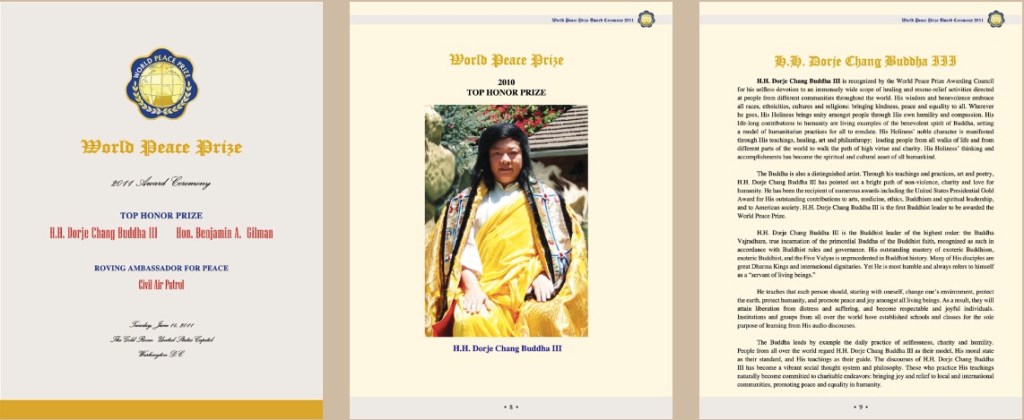
Recognitions & Congratulations to H.H. Dorje Chang Buddha III from Father of Medicine, Ferryboats, Bridges, and Operas in Tibet in a Previous Life: H.E. Dharma King Tangtong Gyalpo

Recognitions and Congratulations to H.H. Dorje Chang Buddha III from Father of Medicine, Ferryboats, Bridges, and Operas in Tibet in a Previous Life: H.E. Dharma King Tangtong Gyalpo

Recognitions-Congratulations-to-H.H.-Dorje-Chang-Buddha-III.

A Buddha Truly Recognized as Such in Accordance with the Dharma

The people on both sides of H.H. Dorje Chang Buddha III on this page are the highest present-day dharma kings and regent dharma kings from various Buddhist sects or are famous rinpoches. It is they who wrote recognitions, corroborations, or congratulations to H.H. Dorje Chang Buddha III.

H.H. Dorje Chang Buddha III is the first Buddha on earth to have received such a large number of recognitions, corroborations, and congratulations and to have been recognized as having the highest status! No other Rinpoche on earth has ever received even one third of the number of recognitions, corroborations, and congratulations from great dharma kings, regent dharma kings, etc. that H.H. Dorje Chang Buddha III has received. H.H. Dorje Chang Buddha III has singlehandedly manifested accomplishments in thirty large categories involving all of the Five Vidyas, thereby establishing the highest record of accomplishment in the history of Buddhism in this world.

Certain evil people have slandered H.H. Dorje Chang Buddha III as having conferred upon Himself the status of H.H. Dorje Chang Buddha III, and they have thereby guided Buddhist practitioners toward evil. In order to protect the wisdom roots of living beings, H.H. Dorje Chang Buddha III makes the following vow of truth: If those recognitions, corroborations, and congratulations that follow did not come from the dharma kings, regent dharma kings, and rinpoches whose photographs appear on this page of from their temples and/ or are not copies of the original texts but rather are my fabrications with forged signatures – if even one such case exists – then i should descend into hell without the possibility of ever leaving hell. If those recognitions, corroborations, and congratulations were written or typed by them as well as signed and/ or stamped by them, the merit of this truth will bring to everyone wonderful blessings and wisdom! Vow Maker- Dorje Chang Buddha III

  • FATHER OF MEDICINE, FERRYBOATS, BRIDGES, AND OPERAS IN TIBET IN A PREVIOUS LIFE: H.E. DHARMA KING TANGTONG GYALPO

H.E. Tangtong Gyalpo is a greatly accomplished person within Tibetan esoteric Buddhism who attained the rainbow body. In a prior life in Tibet, he was the supreme dharma king of the four main sects esoteric Buddhism. He is a great Bodhisattva known and respected by one and all in Tibet. He is also a person of great holiness who has made huge contributions to the Tibetan people. It was this great Bodhisattva who was the father of medicine, ferryboats, bridges, and operas in Tibet. To this day, Tibetan temples and families continue to worship H.E. Tangtong Gyalpo Bodhisattva.


H.E. the 16th Tangtong Gyalpo Bodhisattva (Thangtrul Rinpoche) took birth in Bhutan. His physical appearance resembles that of Guru Padmasambhava. Even when he sleeps, his eyes remain open. During a Dharma Assembly that took place in 2005 at Hua Zang Si in San Francisco, he entered a supernatural state of samadhi in which he saw H.H. Dorje Chang Buddha. H.E. Tangtong Gyalpo said to H.H. Dorje Chang Buddha III that he had received teachings directly from Guru Padmasambhava. He also said that he specially came to formally acknowledge H.H. Dorje Chang Buddha III as his Master and to request the highest dharma in order to save living beings. H.H. Dorje Chang Buddha III immediately accepted H.E. Tangtong Gyalpo as one of his disciples who is on the level of a great venerable one and performed an initiation for him. H.E. Tangtong Gyalpo organized many rinpoches to practice the Kuan Yin Dharma one billion times as an offering to the treasure book about H.H. Dorje Chang Buddha III. He also sent his written congratulations stating that the magnificence of H.H. Dorje Chang Buddha III is supreme and that no other holy being in history can compare with this master of the Buddhas.

H.E. Dharma King Tangtong Gyalpo, the Father of Medicine, Ferryboats, Bridges, and Operas in Tibet in a previous life, acknowledged H.H. Dorje Chang Buddha III (H.H. Dharma King Wan Ko Yeshe Norbu) as his Master, who is unanimously recognized by great holy beings as the true incarnation of Dorje Chang Buddha, the Master of the Five Buddhas, having manifested complete mastery of exoteric and esoteric Buddhism and the Five Vidyas.
H.E. Dharma King Tangtong Gyalpo, the Father of Medicine, Ferryboats, Bridges, and Operas in Tibet in a previous life, acknowledged H.H. Dorje Chang Buddha III (H.H. Dharma King Wan Ko Yeshe Norbu) as his Master, who is unanimously recognized by great holy beings as the true incarnation of Dorje Chang Buddha, the Master of the Five Buddhas, having manifested complete mastery of exoteric and esoteric Buddhism and the Five Vidyas.
Recognition and Congratulation to H.H. Dorje Chang Buddha III from H.E. Dharma King Tangtong Gyalpo

United International World Buddhism Association Headquarters:

Please convey my respects to H.H. Master Wan Ko Yeshe Norbu!

During a Dharma Assembly held by the International Buddhism Sangha Association at the Hua Zang Si temple in San Francisco, I saw the awe-inspiring and peerless powers and realization of the Master. Bodhi nectar went through the walls of the bowl unhindered as it left and entered the bowl. That nectar can make a person’s body change involuntarily in an instant. H.H. Dharma King Wan Ko Yeshe Norbu bestowed upon me that holy bowl. H.H. Dharma King Sakya Trizin; Dharma King Omniscience Jamyang Lungdok Gyaltsen; Lama palchug Ugyen Sherab; Dharma King Renzeng Nima; the Eastern Tibetan Dharma King of the Nyingma sect, Renqing Rongbo Barongbo Rinpoche; the Green Jewel Crown karmapa, Dharma King Jiezong; and other great, holy and virtuous beings who are on the levels of Buddhas and Mahasattvas unanimously acknowledge that H.H. Wan Ko Yeshe Norbu is the true incarnation of Dorje Chang Buddha, the Master of the Five Buddhas, and has for the first time in the history of Buddhism in the human realm truly manifested complete proficiency in exoteric and esoteric Buddhism and perfect mastery of the Five Vidyas. This is a goal of Buddhism that all other Buddhists have not been able to achieve. This goal has finally been achieved by H.H. Master Wan Ko Yeshe Norbu. This is an honor to Buddhism and a blessing to living beings.

May the seven types of Buddhist disciples hear the true dharma taught by H.H. Great Dharma King Wan Ko Yeshe Norbu, and may they soon realize enlightenment!

I respectfully offer my congratulations!

The 16th Khangtrul Rinpoche
Dec 26,2006

Learn more about H.H. Dorje Chang Buddha III

Discover more recognitions and congratulatory letters to H.H. Dorje Chang Buddha III

Click here to DOWNLOAD the PDF File

Link: https://dharma-hhdorjechangbuddhaiii.org/recognitions-and-congratulations-to-h-h-dorje-chang-buddha-iii-from-father-of-medicine-ferryboats-bridges-and-operas-in-tibet-in-a-previous-life-h-e-dharma-king-tangtong-gyalpo/

#DorjeChangBuddhaIII #WanKoYesheNorbu #MasterWanKoYee #TangtongGyalpo #TibetanBuddhism #FiveVidyas #EsotericBuddhism #BuddhistRecognition #Mahasattva #DharmaKing #HuaZangSi

Healing in the Mountains: How Hiking and Forest Bathing Restore the Soul

I have always loved being close to nature, and one of my greatest joys is walking through the forest. Living in Santa Cruz, I am surrounded by beautiful woods and mountain trails. Each time I wander beneath the trees and along winding paths, I arrive at the end feeling lighter, calmer, and deeply refreshed—as if my body and mind have been fully recharged.

I once came across an interesting idea:
Mountains are places where we gain energy, which is why after hiking, we often feel alert and invigorated. Water, on the other hand, carries energy away. This may explain why spending long hours by the ocean or a lake can leave us feeling tired. Yet water also washes away emotional heaviness. When we feel sad, restless, or overwhelmed, a walk by the sea often brings a sense of release and ease.

Energy is constantly flowing through nature. We are simply quiet participants, allowing the natural world to gently adjust our inner frequency.

Discovering “Forest Bathing”

Recently, I was delighted to learn that the Japanese have a word that perfectly describes this healing experience: forest bathing.

In Japanese, it is called shinrin-yoku:

  • Shinrin means forest
  • Yoku means bathing

Together, shinrin-yoku means “bathing in the forest,” or allowing our entire being to absorb the atmosphere of the woods. As early as 1982, Japan officially incorporated forest bathing into its national public health program as a form of preventive and therapeutic care.

Suddenly, I realized that every breath I took in the forest had always been quietly nourishing me.

Japanese researchers have conducted extensive studies on forest bathing and found remarkable benefits for overall well-being. Research shows that forest bathing can:

  • Reduce stress
  • Strengthen the immune system
  • Lower blood pressure
  • Support recovery after illness or injury
  • Improve mood and concentration

For me personally, its most immediate effect is simple yet profound—it quickly lowers stress and brings my heart back to a place of calm.

Forest bathing is very different from running or brisk walking. It is not about exercise or distance; it is about presence. The key is to slow down and fully engage all your senses:

  • Touch the bark of trees—rough or smooth
  • Watch sunlight dance through layers of leaves
  • Breathe in the scent of earth and greenery
  • Listen to the wind moving through branches
  • Find a place to sit and feel your connection with the ground

In the past, most of my hikes were intense, goal-driven, almost like completing a task. Since practicing forest bathing, I now schedule at least one slow, mindful walk each week. By slowing down, I have discovered beauty I once overlooked—and I can’t help but smile at how much I missed before.

There is a subtle yet powerful presence in the forest. It does not announce itself, yet it gently soothes the heart.

Perhaps it is the oxygen released by the trees.
Perhaps it is the steady, unhurried rhythm of the forest.
Or perhaps it is simply that, among the trees, we can finally hear our own breath again.

When we walk in the forest, there is nothing we need to accomplish. Nothing to force. Nature naturally helps our hearts soften, open, and grow brighter.

If you feel tired, anxious, or lost in the busyness of everyday life, I invite you to find a nearby mountain trail and give yourself the gift of forest bathing.

Let nature, in its quiet way, remind you:
You are doing your best—and you deserve to be healed. 🌲

Link:https://peacelilysite.com/2025/12/12/healing-in-the-mountains-how-hiking-and-forest-bathing-restore-the-soul/