How Abraham Lincoln’s words remind us that perseverance begins within.
“Always bear in mind that your own resolution to succeed is more important than any other.” — Abraham Lincoln
Abraham Lincoln is remembered not only as one of America’s greatest presidents but also as a timeless symbol of perseverance, moral strength, and inner conviction. His life was marked by hardship and failure, yet through every setback, Lincoln never lost sight of his determination to rise above circumstance and serve a higher purpose.
Born in a humble log cabin in Kentucky in 1809, Lincoln’s path was anything but easy. He had little formal education, often studying by firelight after long days of farm work. Throughout his early years, he faced financial difficulties, career failures, and deep personal losses — including the death of his beloved mother and, later, two of his children.
He failed in business, lost several elections, and faced harsh criticism from both supporters and opponents. Yet each time, he stood back up. His perseverance was not fueled by ego or ambition, but by a steadfast belief in purpose — the belief that doing what is right matters more than comfort or success.
Lincoln’s life reminds us that greatness is not born of ease, but of endurance.
“Your Own Resolution Is More Important Than Any Other”
When Lincoln spoke these words, he wasn’t offering mere encouragement — he was revealing a universal truth about the power of inner determination.
In life, we will always face opinions, expectations, and pressures from the world around us. People may doubt us, situations may discourage us, and even our own fears may whisper that we are not enough. But Lincoln reminds us: what truly determines our path is not what others think, but what we resolve to do.
Our resolution — that unwavering inner decision to keep moving forward — becomes the compass that guides us through storms.
It is what pushes a student to keep learning after failing an exam, an artist to keep creating despite rejection, or a parent to keep loving and protecting despite exhaustion. It is what allows ordinary people to do extraordinary things.
In today’s world of instant gratification and constant comparison, Lincoln’s wisdom feels more relevant than ever. We often measure ourselves by the world’s standards — success, wealth, recognition — and forget that true strength comes from within.
When we cultivate resolution, we learn to stand firm in uncertainty. We begin to trust our purpose more than our fears. We stop seeking validation from others, and start building quiet confidence from persistence and integrity.
Lincoln’s life teaches us that no matter how dark the moment, perseverance can bring light. His story shows that success is not defined by how often we win, but by how often we rise after falling.
To live by Lincoln’s words is to live with courage — not the absence of fear, but the determination to act despite it. It means believing in our capacity to grow, to change, and to make a difference, no matter how small our beginnings.
When challenges arise — whether in our work, relationships, or personal goals — we can remind ourselves of Lincoln’s steady faith in resolution. The world may test us, but as long as we hold our own conviction close, we will find a way forward.
Lincoln’s words have always spoken deeply to me. Whenever I face uncertainty or moments of self-doubt, I remind myself of his quiet strength — how he stood tall not because life was kind, but because his heart was steady.
His quote, “Your own resolution to succeed is more important than any other,” reminds me that motivation is not something we wait for — it is something we choose, moment by moment. And in choosing it, we slowly build the courage to move forward again, with hope and purpose.
Lately, I’ve noticed how many people — friends, colleagues, even myself at times — feel drained and uninspired. We wake up tired, scroll through our phones for quick hits of excitement, yet still feel empty inside. It’s as if our inner engine has lost its spark. But according to a 2025 review published in Trends in Neurosciences, there’s a scientific reason behind this: our brain’s dopamine release system may be getting stuck.
That could explain why so many of us today feel unmotivated or emotionally flat, even when life seems to be “going fine.”
Dopamine: Not Just the “Happy Chemical”
We often call dopamine the molecule of happiness, but that’s only part of the story. In reality, dopamine isn’t what makes you happy — it’s what gets you moving toward happiness.
Dopamine creates a sense of anticipation — that spark of “I want to try,” the energy that propels us to start something new. Whether you’re preparing for an exam, signing up for a new class, cleaning your room, or going for a run — it’s not satisfaction that moves you, but dopamine giving you direction and desire.
Think of dopamine as your internal GPS, guiding you toward what feels meaningful, hopeful, and worth pursuing.
Dopamine doesn’t just “fire” from one neuron to another like a light switch. Recent discoveries show that the brain also uses something called “volume transmission” — a gradual release process, more like a sprinkler or diffuser that spreads dopamine through nearby areas, affecting your overall state of mind.
This helps explain a familiar modern phenomenon: why short videos or instant rewards feel thrilling for a second — yet leave us empty moments later. Meanwhile, the slow joys — exercising regularly, nurturing a hobby, cooking, gardening, or spending time with loved ones — bring calm, sustainable satisfaction.
Fast stimulation burns us out. Slow joy builds us up.
When the System Breaks Down, The Brain “Runs Out of FuelSeveral key proteins, such as VMAT2, SV2C, and α-synuclein, regulate how dopamine is stored and released. They work like the warehouse managers of your brain, deciding when and how much dopamine to release, and whether there’s enough supply to restock.
When this system falters, it doesn’t just cause movement issues like Parkinson’s disease — it also leads to emotional flatness, loss of motivation, chronic fatigue, and social withdrawal.
This isn’t weakness or laziness. It’s your brain signaling that it’s running low on essential fuel.
Three Ways to Help Your Brain’s Motivation System Restart
1. Practice “Slow Joy” — Reconnect with Steady Dopamine Flow Reduce dependence on instant stimuli like scrolling through social media or bingeing short videos. These quick hits train your brain to expect constant flashes of excitement.
Instead, rediscover activities that bring gentle, lasting satisfaction: cooking, reading, painting, walking, gardening. These are the true dopamine recharge stations of life.
2. Move Regularly — Activate Your Natural Dopamine Circuit Moderate exercise — brisk walking, jogging, squats — done three times a week for 10–30 minutes can powerfully stimulate healthy dopamine pathways. You don’t have to push to exhaustion; what matters is rhythm and consistency. Your brain thrives on the expectation of movement, not punishment.
3. Nourish the System — Sleep, Nutrition, and Antioxidants Sleep is when your brain restores neurotransmitters and regenerates vesicles for dopamine storage. A lack of rest is like leaving your mental warehouse in chaos.
Eating antioxidant-rich foods such as berries, dark leafy greens, olive oil, and omega-3s helps reduce oxidative stress and support brain health. Simple, consistent habits are the quiet repair crew your dopamine system needs.
Real vitality isn’t a burst of fireworks — it’s a steady inner light that guides us through our days. Dopamine’s true gift isn’t the thrill of reward, but the strength to keep going.
When we gently adjust our daily rhythm, we can regain focus and energy without needing excessive caffeine or quick fixes. We can once again feel that grounded sense of, I’m back on my path. From “Chasing Highs” to “Finding Rhythm.”
The Truth About Drugs and False Freedom
Recently, we’ve seen more tragic news about drug-related crimes. This makes it even more urgent to talk about dopamine honestly.
Drugs artificially force the brain’s “stimulation gate” wide open — creating a short-lived high while devastating the system meant to sustain real joy. People chasing that artificial rush often lose direction, harming themselves and others.
Drugs don’t create happiness — they destroy the very system that makes it possible. That’s not freedom; it’s captivity disguised as pleasure.
When you feel tired, unmotivated, or emotionally numb, remember this: You’re not lazy. You’re not broken. Your brain simply needs care, rhythm, and nourishment.
We don’t need to be blinding LED lights burning out too soon. We can be warm, steady lamps — quietly lighting our own path and bringing comfort to those around us.
Reference: Redefining dopaminergic synapses beyond the classical paradigm, Trends in Neurosciences, 2025
At that moment, I felt as if I were rising from a cold, dark ocean or walking out of a long nightmare tunnel. The light before my eyes was so dazzling that it took me a while to recognize the blurred figures within it. Sitting beside me was my spouse, and standing there smiling was my daughter. As for myself—I was lying on a hospital bed.
My mind was completely blank. It felt as if my memory had been wiped clean; nothing remained but confusion and a faint, awkward sense of unease. I anxiously searched through my thoughts but found only helplessness and fear— until a familiar melody began to echo clearly in my mind — the holy name of H.H. Dorje Chang Buddha III, resonating like a chant from deep within my heart.
Gradually, my terrified heart began to calm. The holy name persisted—unyielding and unwavering—repeating again and again, washing over my pale and fragile memory. I thought to myself, This must be what people call a “near-death experience.”
My spouse and daughter helped piece together the fragments of my missing story.
We live in Shandong. I had come to Shenzhen to help my daughter take care of her child. One day, without any warning, I suddenly collapsed in silence. My family rushed me to the hospital, where I was diagnosed with a cerebral hemorrhage. The surgery was completed successfully. Upon hearing the news, my spouse immediately flew from Shandong to Shenzhen.
They continued to fill in the missing pieces of my story:
I had just taken refuge in May 2016 to become a Buddhist disciple. However, before I could properly begin my Buddhist studies, I went to Shenzhen in June 2017 to help my daughter. Fellow practitioners in Shandong kindly connected me with disciples in Shenzhen and encouraged me not to give up my practice.
Listening to the Dharma Discourses of H.H. Dorje Chang Buddha III
After arriving in Shenzhen, I actively reached out to my daughter’s neighbors, hoping to introduce them to Buddhism. My daughter and son-in-law supported me wholeheartedly; they even drove me and several neighbors to a Dharma center in Shenzhen to listen to the Dharma discourses of H.H. Dorje Chang Buddha III. Because that place was quite far, a Dharma sister later introduced me to another practitioner’s home nearby where I could listen to the teachings. Though we hadn’t known each other before, we grew close through our shared faith—everyone cared deeply about my practice and my health.
When I regained consciousness, I couldn’t remember anything from before. Strangely, the only thing that remained clear and loud in my mind was the sacred name:
Namo Dorje Chang Buddha III.
In the same hospital ward, other patients with similar conditions were not as fortunate. Many were left partially paralyzed, unable to walk steadily or care for themselves. Life had become fragile—so easily shattered.
Phrases like “Life is impermanent” and “Like a dream, like an illusion” surfaced in my mind. I was deeply afraid that I, too, would become disabled and burden my family. But thankfully, although surgery had taken part of my memory, my mind remained clear enough to hold onto that one holy name:
Like a beam of light, that name illuminated the dark and uncertain path ahead.
Miraculously Blessed by Buddha
That single remaining memory gave me unwavering faith. I believed the Buddhas and Bodhisattvas were blessing me, allowing me to survive and turn a great disaster into something small.
I felt truly blessed to have entered the Buddhist path and firmly believed that the Buddhas and Bodhisattvas would not abandon me. As long as I kept believing and continued to study diligently, I would recover—because I still had much to do. I wanted to help more people enter the Dharma and listen to the true teachings of the Tathāgata. Holding that faith in my heart, I kept reciting the only words I could still remember: Namo Dorje Chang Buddha III — again and again, without pause. Then, a miracle happened. I gradually recovered. About twenty days later, the doctor told me I could be discharged from the hospital.
The doctor said that in all his years of medical practice, he had never seen such a recovery. Patients with my condition almost always had some form of disability—but I could walk freely, with no trace of impairment.
After returning home to Shandong, I could even ride an electric bike to attend Dharma listening sessions and play ball again. My memory of the Dharma I had learned before also came back, and I rejoined my wonderful spiritual family with deep gratitude.
Awakening to Impermanence Through the Teachings of H.H. Dorje Chang Buddha III
After going through this life-and-death experience, I truly understood the impermanence of life. Now, whenever I listen to the Dharma discourses on Impermanence from my Buddha Master, I feel their truth penetrate deep into my heart. Every compassionate teaching from the Buddha Master is like nectar—healing medicine that saves lives.
Fellow practitioners, when illness strikes, we can only accept our karma; no matter how anxious our loved ones may be, there is little they can do. Yet when our bodies are healthy, we often waste our precious time in confusion, unaware that the chain of impermanence could seize us at any moment.
Do not waste this rare and precious opportunity to encounter the true Dharma of H.H. Dorje Chang Buddha III!
Cherish your blessings, study the Dharma diligently, and cultivate sincerely.
Liberation from life and death is attainable in this very lifetime!
In 1947, shortly after Japan’s surrender and withdrawal from China, the great Zen Master Xuyun (Empty Cloud) gave a profound speech at a middle school. The nation was still recovering from the devastation of war, and hearts were heavy with both relief and sorrow. With deep compassion, Master Xuyun used the timeless wisdom of the Buddha to explain the law of cause and effect (karma) — reminding people that wars do not arise by chance, but are the result of humanity’s collective actions.
He taught that true peace cannot be achieved through force or politics alone. Only by transforming our hearts and purifying our minds through virtue, compassion, and the practice of Buddhist teachings can we bring real and lasting peace to the world.
War does not arise by chance — it is the collective karma of all beings that brings it forth.
Dear friends, during the years of occupation, we endured immense suffering under the enemy’s oppression — our lives were steeped in water and fire, hardship and pain. Now that our nation has regained its light, we should feel endless gratitude and reflection. We must understand that the outbreak of war is not accidental; it is the result of the shared karma created by all individuals.
The ancient masters said, “If you wish to know the causes of your past lives, look at what you are experiencing in this life. If you wish to know the results of your future lives, look at what you are doing now.” They also said, “Even after hundreds or thousands of eons, the karma one has created will not disappear. When the conditions ripen, the results will be experienced by oneself.”
When people lose their moral compass and commit all kinds of evil, they plant the seeds for calamities such as war, floods, fires, and famine. If we wish to change the will of Heaven and eliminate disasters, we must begin by transforming human hearts — by restoring virtue and morality. When everyone practices the Five Precepts and the Ten Good Deeds, cultivates upright minds and pure conduct, and lives with benevolence, trust, and righteousness, then the hearts of men and the will of Heaven will naturally align.
But if people persist in wrongdoing and refuse to repent, how can hostility and suffering ever be dissolved? The Buddha said, “The sea of suffering has no end, but when one turns around, there is the shore.” This means awakening from delusion and returning to goodness — the essential path to liberation.
We must truly believe in the law of cause and effect. It is not fiction but reality. If everyone understood that good deeds bring good results, and evil deeds bring suffering — that when one plants melons, one harvests melons; when one plants beans, one harvests beans — then no one would dare to act against conscience or break the law. Out of great compassion for all beings, Shakyamuni Buddha renounced his royal life and underwent arduous practice to save the world from ignorance and suffering.
If we understand the principle of cause and effect and wish to avoid future suffering, we must now create good causes. The hardships we experience today are the results of past evil actions. Therefore, we should now sow good seeds, and in time, we will naturally reap good fruits.
The scriptures speak of “Anuttara-samyak-sambodhi,” meaning “unsurpassed perfect enlightenment.” In its essence, it transcends the distinction of self and others — there is no “you” and “me.” But this state must be cultivated from one’s own heart. If our minds remain filled with greed, anger, and ignorance, unable to abandon all evil and practice all good, the barriers of self and ego become like iron mountains, preventing us from reaching the Pure Land or true harmony. This is the most crucial point — one we must all remember well.
The Sanskrit word “Buddha” means “the Awakened One.” Enlightenment has three aspects: awakening oneself, awakening others, and perfecting both understanding and conduct.
To awaken oneself is to realize that all experiences of good and evil, joy and suffering, arise from cause and effect. Once a person truly understands this, delusion fades, the four attachments dissolve, and one becomes enlightened.
To awaken others means recognizing that all living beings — whether born from the womb, from eggs, from moisture, or by transformation — all possess Buddha nature. They are called “sentient beings” only because they are deluded and unaware. We should therefore cherish and respect ourselves, and in keeping with the Buddha’s great vow of compassion and universal salvation, share these truths with others, guiding them out of the sea of suffering.
As stated in the Śūraṅgama Sūtra: “Regard all men as your fathers and all women as your mothers.” If we cultivate such deep reverence and love, especially for widows, orphans, and those who are lonely or destitute, and show them kindness and compassion through giving and aid, we can realize true equality and the ideal of great harmony.
To perfect both understanding and conduct means to live according to the Buddha’s teachings and precepts until one’s virtue and merit are complete. After the Buddha’s passing, he left behind the Three Baskets of Scriptures — Sutra, Vinaya, and Abhidharma — as our priceless raft to cross the sea of suffering. All the rules and precepts should be faithfully practiced. When one fulfills them completely, that is the perfection of wisdom and conduct.
Thus, the Buddha is the awakened one, while sentient beings are the deluded. The distinction between delusion and enlightenment marks the boundary between beings and Buddhas. To turn away from delusion and return to truth — that is awakening, and that is Buddhahood.
To further illustrate the law of karma, there is a story from one of Shakyamuni Buddha’s past lives.
Long ago, in the city of Rajagaha, there was a fishing village with a large pond. One year, a great drought struck, and the pond began to dry up. The villagers caught and ate almost all the fish, until only one giant fish remained, which was finally killed and eaten. Only one eight-year-old boy refused to eat the fish; he simply watched and laughed.
In his later life as the Buddha, King Prasenajit of Kosala, a devoted follower of the Buddha, married a princess of the Shakya clan, and they had a son named King Virudhaka. After ascending the throne, Virudhaka led his army to attack the Shakya capital of Kapilavastu and slaughtered all its inhabitants.
During that time, the Buddha suffered a severe headache for three days. His disciples begged him to use his powers to save the Shakya people, but he refused. Even when Maudgalyayana repeatedly pleaded, the Buddha said no. Maudgalyayana tried to rescue some survivors with his alms bowl, but when he put it down, all he found was a pool of blood.
When the disciples asked why, the Buddha revealed the cause: in a past life, during a great drought in Rajagaha, the villagers had killed and eaten the fish in that pond. The giant fish was reborn as King Virudhaka, and the villagers were reborn as the Shakyas who were killed. The young boy who merely watched and laughed was reborn as Shakyamuni Buddha himself. Because this karma had matured, the outcome was unchangeable.
The Buddha fully understood this karmic connection and taught it to his disciples as a warning. Chan Master Yuan Yun wrote in verse:
“For hundreds of years, the soup in your bowl Is filled with deep hatred, hard to dissolve. If you wish to know why wars arise, Listen to the cries from the butcher’s gate at midnight.”
Reflect on this story and recite the verse, and you will awaken to the true causes of war and violence — and learn to guard your conduct with mindfulness.
If we wish to transform the world and move toward true harmony, everything must begin with our hearts. Students should study diligently, yet never forget the greater mission of saving the world. And the first step to saving the world is saving the heart — correcting one’s own wrong thoughts and firmly believing in the law of cause and effect, avoiding all evil paths.
By cultivating sincerity, righteousness, self-discipline, and harmony within the family, one can extend peace to the nation and the world. If all the people of every country sincerely believe in karma and practice the Eight Virtues and Ten Precepts, then oppression, violence, and wars will cease to arise. True peace, equality, and the Pure Land of Great Harmony will appear, free from the Five Defilements and all suffering.
For the original Chinese speech, please click here. This English translation is by Linda Chang and is provided for reference only.
“There are two things in this world one should never look at directly: the sun, and the human heart.” —Higashino Keigo
I recently came across this story online, and it deeply moved me. It reminded me that trust and kindness are fragile treasures—once broken, they are hard to mend. I would like to share this wisdom with everyone who reads my blog, especially in times when misunderstandings and suspicion can so easily damage the relationships we cherish most.
Once, there was a newly married couple deeply in love, inseparable and affectionate. But the wife began to doubt her husband’s loyalty. Her suspicion grew stronger each day until she asked her best friend to “test” her husband’s faithfulness.
To her shock, the two fell in love with each other. What started as a test ended in betrayal. In the end, the marriage was destroyed—not by infidelity itself, but by mistrust and the reckless act of testing love.
🧬 The Scientist Who Refused to Test
Finsen, the world-renowned Danish medical scientist and Nobel laureate, once chose a young man named Harry as his successor.
Some colleagues worried that Harry might not endure the long, tedious years of research. Finsen’s assistant suggested testing him by having a wealthy friend offer him a high-paying job to see whether Harry would stay or leave.
But Finsen firmly rejected the idea, saying:
“Never stand on a moral high ground to look down on others, and never test human nature. Harry was born in poverty and naturally desires financial security. If we place him between an easy, well-paid job and the hardship of research but expect him to choose sacrifice, we are demanding him to be a saint. That would be unfair.”
Years later, Harry became one of Denmark’s most respected medical scientists. When he learned that Finsen had refused to test him, he wept and said:
“If my mentor had tested my integrity with a lucrative offer, I would likely have failed. At that time, my mother was ill and my younger siblings depended on me for their schooling. If Finsen had set that test for me, there would be no me as I am today.”
🌿 The Truth About Human Nature
Indeed, ordinary people are not saints—everyone has weaknesses. If we constantly test others—our spouse’s loyalty, our friends’ sincerity, or our coworkers’ honesty—we will often end up with disappointment and broken trust.
In the first story, had the wife trusted her husband instead of testing him, the marriage might have survived.
Finsen understood that human nature is fragile. True wisdom lies not in setting traps to measure others’ virtue, but in tolerating uncertainty with compassion.
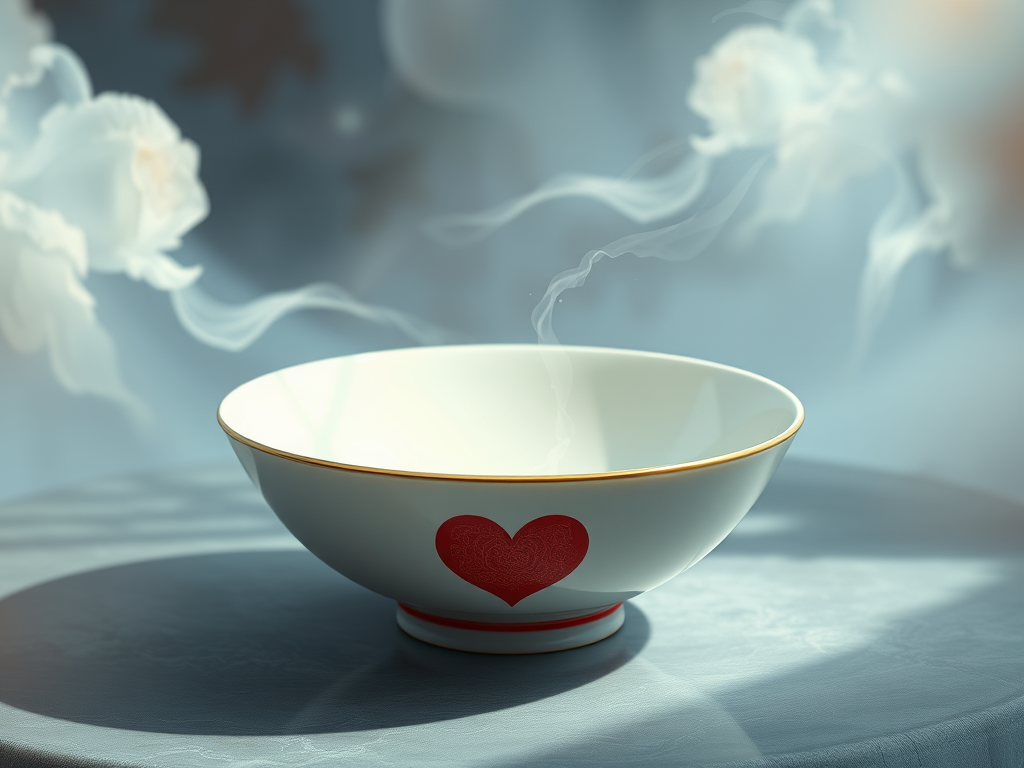
Testing human nature is like striking a porcelain bowl—it will only reveal its fragility by breaking it. Trust, on the other hand, is like holding that bowl gently in your hands—preserving its wholeness, beauty, and purpose.
In life, love, and friendship, may we learn to trust with kindness and lead with understanding. After all, it is not the test that reveals the truth of a heart, but the grace with which we choose not to test it.
This book by H.H. Dorje Chang Buddha III was released in Chinese in 2014 but is not yet available in English. It is based on a series of very famous discourses given in China in 1992, using the text, meaning, and principles of the Heart Sutra to transmit Dharma. It clearly explains the relationships between mind, Buddha, and living beings. It tells everyone what the absolute truth of Buddha-dharma and liberation is. Several years ago, His Holiness told a number of Western disciples that this is the only book you need to read to understand emptiness and become enlightened. This text is for acquiring prajna or transcendental wisdom, although it also teaches the importance of cultivating character.
To stress how important this holy book is, we must remember that just before the Buddha left this world His Holiness told us that “. . . At all times, we must think about bringing auspiciousness, serenity, happiness, and peace to living beings and to the world, to the extent of giving our all and even our lives. I have already brought true Buddha Dharma to this world. Everyone who practices in accordance with The Supreme and Unsurpassable Mahamudra of Liberation and Expounding the Absolute Truth Through the Heart Sutra will surely attain liberation. That’s all. I wish all living beings happiness.”
Venerable Master Puguan’s Reflection After Listening to Expounding the Absolute Truth Through the Heart Sutra
Below is the heartfelt reflection of Venerable Master Puguan, the abbot of Kaihua Monastery on Mount Wuzhong—the first site of Southern Transmission Buddhism and the thirteenth-generation patriarch of Mount Emei—after listening to the Dharma discourses of Expounding the Absolute Truth Through the Heart Sutra spoken by H.H. Dorje Chang Buddha III.
Venerable Master Puguan said:
“No matter what words I use today, they cannot fully express the supreme joy and wonder in my heart. My most magnificent and compassionate Buddha Master, the Great Dharma King Yangwo, once visited Mount Wuzhong in person. At that time, my junior Dharma brother, Dharma Master Guozhang, and I were on the third day of a Zen retreat with the four assemblies of disciples when suddenly the Dharma protector came and told me, ‘The greatest holy being has arrived! He is wearing white clothes. Quickly cancel the Chan session and lead everyone to greet Him with full ceremony!’
Dharma Master Guozhang also received the same message—that the highest Holy One had come. We immediately announced to all disciples that the Zen session was to be stopped, and we prepared the ceremonial welcome with drums and bells. Indeed, about ten minutes later, a group of dozens of people arrived at the foot of the mountain—it was my revered Master, the Great Dharma King Yangwo (H.H. Dorje Chang Buddha III).
When I supported my Master while walking toward the Bright Moon Pool, He gently took hold of my hand instead and said, ‘I am younger than you; you should not support me. It is I who should support you, the elder.’
At that moment, I felt deeply ashamed. How could a disciple ever deserve to be supported by his Master, the Great Dharma King?
Now, after listening to Expounding the Absolute Truth Through the Heart Sutra, I finally realize that what my Master said back then was the very expression of ultimate truth! We practitioners must rely on our Master’s steadfast guidance, never letting go of His compassionate hand, until we are led to the pure Buddha-land of ultimate Nirvana. How could we ever imagine supporting our Master?
Having repeatedly listened to this Dharma discourse, I can only say that my Master has explained the very essence of all 600 volumes of the Prajnaparamita Sutras and the two essential provisions of precepts and practice. The Dharma He expounded is so profound that the deep will see its depth and the shallow will see its shallowness—it is wondrous beyond description, extraordinary within the ordinary. In truth, it is the supreme teaching of the ultimate truth since the beginning of time.
After listening to this unparalleled Dharma spoken by my Buddha Master, I was instantly and completely awakened—the bottom of the bucket had fallen out! Unfortunately, my age has deprived me of the condition to attain rainbow-body ascension, but I rejoice that I have realized the state of indestructible flesh body. After my parinirvana, this body can serve as evidence to the world that my Great Dharma King, my Buddha Master, is truly the Dharma King who unites all Buddhas of the ten directions.
When I think back on my earlier misunderstandings, I feel deeply ashamed. I once mistakenly believed that only Tibetan Esoteric Buddhism possessed the Great Dharma that enables enlightenment within one lifetime. Now that I have attained realization, I truly understand that the authentic Dharma of the Tathagata transcends all schools and sects.
In fact, the true Buddha Dharma is a wondrous treasure existing independently of any tradition. It is neither exclusive to nor absent from any particular school—because genuine Dharma is not governed by sects but by Buddhas and Bodhisattvas themselves. Wherever a Buddha or Bodhisattva manifests as a teacher, that school naturally possesses the Great Dharma.
When I recall my past cultivation at the Golden Summit of Mount Emei, I can only remain speechless in humility. Today, immersed in the bliss of Dharma joy, I can only pray:
May all Buddhas bless that the great karmic conditions of the Tathagata ripen soon. May all sentient beings swiftly hear the teachings of my Buddha Master—the Mother of All Buddhas’ Dharmas, Expounding the Absolute Truth Through the Heart Sutra— so that their blessings and wisdom may swiftly and perfectly flourish, attaining Bodhi and liberation in this very life, and achieving freedom from life and death!
Namo Amitabha Buddha! Namo Avalokiteshvara Bodhisattva!
Note: In 1998, Master Pu Guan passed away while in meditation, having attained mastery over his life and death. Remarkably, even eight years after his passing, his remains rest within a stupa, preserved in the meditation posture without any signs of decay.
The above is the English translation of Venerable Master Pu Guan’s Dharma discourse, rendered into English by Linda Chang. The original Chinese version is provided below.
What’s the first image that comes to mind when you think of Yoga?
It’s not uncommon for this image to consist of individuals contorting their bodies into impossible positions that are more appropriate for the Cirque du Soleil. There is nothing wrong with some of these breathtaking images, and I love looking at them because I’m in awe of the strength, grace, practice, and determination it takes to hold these postures. My issue with these images flooding social media is that these postures are not possible for most individuals (including me) and the models are usually young, white, beautiful, slim women. This makes it hard to connect to Yoga’s rich Indian history or how it is a practice that is for EVERYONE regardless of age, body type or ability.
In the last few decades, Yoga has become a billion-dollar business. When I started attending yoga studios in Toronto in the early 1990s, there were only 2 studios, and now there is a studio every 3 blocks. There are “yoga teacher rock stars” and businesses that make high-end yoga gear. I’m glad that Yoga has become so popular because this beautiful healing practice impacts more people. However, I believe this commercialism and competitiveness have diluted the teachings and appropriates this ancient practice in some situations.
There is evidence that Yoga existed in India as far back as 500 BC with roots in Hinduism, Buddhism, Jainism and other religions. Sanskrit is the sacred language of Hinduism, classical Hindu philosophy, and other historical religious texts. The word ‘Yoga‘ is derived from the Sanskrit root ‘Yuj’, meaning ‘to join’ or ‘to yoke’ or ‘to unite-union of mind, body and spirit.
As a yoga teacher and student, I want my students to be familiar with Yoga’s roots and understand that what happens on the mat is more than just stretching and holding postures. This union of mind, body and spirit, happens while practicing the asanas-Sanskrit word for postures. A regular practice will increase flexibility, strength and mobility, and while you are holding the postures, you are practicing pranayama-breath control, meditation, and mindfulness. This holistic practice is how transformation happens and the “union” builds a healthier, more agile body, calms the nervous system, teaches presence, and provides us with tools that we can use off the mat.
Yoga has a rich philosophical history that includes sacred and treasured texts: The Vedas, The Upanishads, The Bhagavad Gita and Pantanjali’s Sutras.
Pantanjali was an Indian sage and thought to be the author of the Yoga Sutras, which is a classical yoga text on yoga theory and practice. According to his teachings, there are 8 components to Yoga:
1. Yamas-attitudes towards environments.
2. Niyamas-attitude towards ourselves
3. Asana-yoga postures
4. Pranayama-breath control and breathing exercises
5. Pratyahar-withdrawal of senses
6. Dharana-concentration
7. Dhyana-meditation
8. Samadi-complete integration
One of the most compelling benefits of Yoga is stress reduction. It’s inspiring to see how it has helped individuals recover from trauma, PTSD, depression, and anxiety.
Enjoy the stretching and postures, and know that you are also calming your mind and relaxing your body. Instead of thinking of Yoga as work out, think of it as a work in.
There are few relationships as powerful—and as quietly transformative—as the one between a father and a son. Yet in modern life, it’s often overlooked. We talk about mothers and children, but the emotional depth between fathers and sons remains one of the least explored terrains of the human heart.
In My Father Before Me: How Fathers and Sons Influence Each Other Throughout Their Lives, psychoanalyst Michael J. Diamond takes us into that emotional landscape with remarkable sensitivity. Through vivid stories, psychological insight, and tender reflection, he reveals how fathers and sons shape, challenge, and heal each other across a lifetime.
Most people think of fatherhood as a one-directional journey: the father influences the son. But Diamond turns that idea around. He shows that the father–son relationship is mutual, not hierarchical.
A father helps mold his son—but the son also transforms the father. Each becomes a mirror for the other’s hopes, fears, and hidden strengths.
Diamond writes about how fatherhood can awaken parts of a man he never knew existed. When a son is born, the father doesn’t just gain a child—he also gains a deeper understanding of himself. The baby’s presence demands patience, tenderness, and emotional openness. In nurturing another, the father learns to nurture himself.
Moments That Change Everything
Diamond fills the book with moving, relatable stories that show this mutual transformation.
One story tells of a man who, having grown up with a distant father, vows to be emotionally present for his own son. Yet when his son enters adolescence and begins to push back, the man feels rejected and hurt—just as he once felt with his own father. Through reflection, he realizes that this is his chance to break the cycle: to stay connected even when it’s uncomfortable. In doing so, both he and his son begin to heal wounds that stretch back generations.
In another example, a father describes watching his young son struggle to build a toy tower. His first instinct is to step in and fix it, but he resists. Instead, he watches quietly, offering small words of encouragement. When the tower finally stands, he sees not just his son’s triumph—but his own growth in learning to let go.
These moments, Diamond suggests, are not small. They are the foundation of how love, trust, and resilience are built between generations.
The Phases of the Father–Son Journey
Diamond explores how this relationship evolves through every stage of life:
Early Childhood: The father is a protector and guide, introducing the child to the outside world. But he also begins to sense his son’s individuality—someone both familiar and mysterious.
Adolescence: As the son seeks independence, conflict can arise. Here the father’s challenge is to stay connected without controlling—to allow the son to become his own person.
Adulthood: When the son grows up, both men must renegotiate their roles. Often, the adult son begins to understand his father with new empathy, and the father learns to accept his son as an equal.
Later Years: In time, roles may reverse—the son becomes the caregiver, the listener, the one offering strength. This reversal, Diamond suggests, completes the circle of life.
Through each phase, fathers and sons are constantly exchanging something precious: understanding, forgiveness, and love.
Redefining Masculinity
A core theme in My Father Before Me is emotional honesty. Diamond challenges old stereotypes of men as stoic and distant. True masculinity, he argues, is not about dominance or silence—it’s about being open, authentic, and emotionally present.
When a father shows vulnerability, it doesn’t make him weak—it makes him real. And when a son witnesses that authenticity, he learns that being a man means embracing both strength and tenderness.
In one memorable story, a son recalls seeing his father cry for the first time—after the death of the grandfather. “That day,” he says, “I stopped fearing emotion. I realized that love and grief are part of the same heart.”
A Relationship That Never Stops Evolving
Even when fathers and sons grow older, the dialogue between them continues. Diamond describes adult sons helping aging fathers find meaning and dignity in later life. Some reconcile after years of distance. Others simply learn to say what was once left unsaid: “I love you,”“I understand you,” or even “I forgive you.”
These late-life moments, he writes, can be profoundly healing. They remind us that it is never too late to reach across the years—to understand, to listen, and to love.
A Mirror for All of Us
Whether you’re a father, a son, or simply someone reflecting on your family history, My Father Before Me offers both insight and comfort. It reminds us that every father carries the echoes of his own father within him—and that every son, in turn, shapes what fatherhood will mean for the next generation.
Ultimately, Diamond’s message is one of hope: that through empathy, self-awareness, and courage, fathers and sons can support each other’s growth, forgive each other’s shortcomings, and honor the love that lies beneath it all.
“A mother’s words can build a child—or break one.”
Recently, while reading a Chinese book on child education, I came across a story that deeply touched my heart. It perfectly illustrates how a mother’s attitude and behavior can influence a child’s entire life. I’d love to share this story with all mothers, as a gentle reminder of the quiet power we hold in shaping our children’s hearts and minds.
🍏 Two Letters, Two Lives
A famous American psychologist once conducted a fascinating study on the lifelong effects of early education. He selected 50 successful people from various fields—leaders, professionals, innovators—and 50 people with criminal records. He wrote to each of them, asking the same question:
“What influence did your mother have on you?”
Two of the replies left a lasting impression on him. One came from a prominent White House official, the other from a prison inmate. Surprisingly, both men spoke about the same childhood memory—their mother dividing apples.
🍎 The Prisoner’s Story: The Day He Learned to Lie
The prisoner wrote:
“When I was a child, my mother once brought home several apples—red, green, big, and small. I immediately wanted the biggest, reddest one. Before I could speak, my little brother shouted, ‘I want the big one!’
My mother frowned and scolded him: ‘A good boy should learn to give the best to others.’
I quickly changed my words and said, ‘Mom, I’ll take the smallest one. Let my brother have the big one.’
My mother smiled proudly, kissed me on the cheek, and rewarded me with the biggest, reddest apple.”
He ended his letter with heartbreakingly honest words:
“That day, I learned that lying could bring rewards. Later, I learned to cheat, to steal, to fight—anything to get what I wanted. Today, I am in prison because of the lesson I learned that day.”
🍏 The White House Official’s Story: The Value of Effort
The second letter came from a White House official:
“When I was young, my mother brought home several apples, all different sizes. My brothers and I argued over who would get the biggest one.
Mother held up the largest apple and said, ‘Everyone wants the best, and that’s normal. So let’s have a little contest: I’ll divide the lawn into three sections. Whoever trims their section the fastest and neatest gets the big apple.’
We raced to finish, and I won the apple.”
He continued:
“From that day on, my mother taught us this simple but powerful truth: If you want the best, you must earn it.
Everything good in our home had to be earned through effort and fairness. She lived by this principle herself. That’s how I learned discipline, persistence, and integrity—lessons that shaped my entire life.”
🌱 A Mother’s Words Are Seeds in a Child’s Heart
Both mothers divided apples. Both children learned a lesson. But one learned deception—while the other learned effort.
A mother’s reaction in a single moment, her tone of voice, or even a casual reward can plant seeds deep in a child’s heart. Those seeds may grow into honesty and strength—or into cunning and selfishness.
Children mirror their mothers. The way a mother faces life—whether with truth or pretense, effort or avoidance—becomes the way her child faces the world.
Education doesn’t always happen in grand lessons or classrooms. Sometimes, it happens in small, everyday choices—like how we divide an apple, handle conflict, or teach fairness.
A wise mother uses love and insight to guide her child to understand that:
Honesty is more precious than cunning,
Effort is more reliable than shortcuts,
Sharing brings deeper joy than possessing.
These values, taught through simple acts, become the foundation of a child’s character.
A mother’s way of teaching doesn’t just shape a child’s childhood—it molds their destiny. Every look, every word, every reaction writes silently into a child’s heart the story of who they will become.
May all mothers guide their children with both love and wisdom, so that the lessons we leave behind are those of kindness, courage, and truth.
Because sometimes, all it takes is one apple—and one mother’s choice—to change a life forever.
On the evening of May 31, 2013, an ordinary family outing turned into a life-changing experience that revealed to me the power of karma, faith, and divine protection.
That spring, my two daughters had just returned home from their colleges on the East Coast for summer vacation. We were all joyful to be reunited as a family. After dinner that evening, my husband, Yiao-Tee, and our daughters decided to take a short walk to the nearby Walmart in Pleasanton, California, to buy a watch battery.
It was around 9 p.m. when we stepped out of the store. My husband and daughters walked a few meters ahead, while I followed behind them on the pedestrian walkway. Suddenly, a police car pulled out of a parking space.
The officer inside noticed my daughters walking past his vehicle and, focusing on them, momentarily forgot that he was still driving. In that instant, he failed to see me. By the time he realized I was there, it was too late— the police car struck me squarely. Screams broke out around us as I was thrown into the air and landed heavily on the ground.
When the officer got out of his vehicle, his first reaction was to blame me, claiming I had suddenly stepped in front of his car. My husband and daughters immediately refuted this. They knew I would never rush recklessly in front of a moving vehicle.
Eyewitnesses later confirmed that the impact had lifted me several feet into the air. Yet, against all odds, I was conscious and could move. An ambulance soon arrived and rushed me to the emergency room.
After thorough examinations and X-rays, the doctor and nurses were astonished. They told me, almost in unison, that my survival was nothing short of a miracle.
There were no broken bones, no internal injuries, not even minor scrapes. Only a light swelling and redness on my left thigh showed any sign of trauma. The next day, I received acupuncture and laser treatment—and even went to work as usual. My daily life was completely unaffected.
When I reflect on that night, I recall no sensation of pain or impact. My mind had gone blank. Yet, very subtly, I felt as though someone had caught me and gently placed me back on the ground.
That feeling was profound and beyond words.
I have always worn the Vajra Thread given to me by my master when I took Refuge. I believe wholeheartedly that the compassionate empowerment of H.H. Dorje Chang Buddha III and the blessings of Buddhas and Bodhisattvas protected me from harm.
While I was physically unharmed, the aftermath was not easy. The police department initially refused to accept responsibility. They attempted to shift the blame to Walmart, claiming the store had not provided adequate pedestrian markings. As a result, they also refused to cover the nearly ten thousand dollars in ambulance and medical expenses.
It was only through Walmart’s surveillance footage, which captured the entire incident, that the truth could be verified.
I reported the situation to my master, explaining how I had been struck by a car yet walked away without injury.
Then, three months later, a call came from the police department’s insurance representative: they would cover all the expenses in full.
In that moment, my heart overflowed with gratitude—to the Buddhas and Bodhisattvas for their protection, and to H.H. Dorje Chang Buddha III for His compassion and empowerment.
This experience deepened my faith and strengthened my resolve to cultivate diligently. Our whole family now listens to the Buddha Dharma of H.H. Dorje Chang Buddha III and practices accordingly.
Through continued study and sincere cultivation, we have found that every aspect of our lives—career, health, and even our children’s educational paths—has been smooth and filled with blessings.
Inspired by this miracle, our family established a Dharma Listening Center to share the authentic Buddha Dharma of H.H. Dorje Chang Buddha III, so that others may also receive the same blessings of wisdom and protection.
From the bottom of my heart, I express my deepest gratitude to H.H. Dorje Chang Buddha III, the Pope of Buddhism, for expounding the supreme and authentic Buddha Dharma.
I also bow in reverence to all Buddhas and Bodhisattvas for their compassionate protection. This experience reminded me of an unshakable truth: the law of cause and effect never errs.
This accident was no coincidence—it was the ripening of past karmic causes. Yet, through sincere cultivation and the accumulation of merits, even serious calamities can be transformed.
This event has forever affirmed my faith in the Buddha’s teachings. If we believe in the law of cause and effect, remain steadfast in our cultivation, and dedicate ourselves to doing good and spreading the true Dharma, every bit of merit will bring us peace and blessings.
When one lives in alignment with the Buddha Dharma, miracles are not extraordinary—they are the natural expression of divine compassion.





















 Peace LiLy