The Art of Disconnecting: Why Strategic Solitude and Meditation Are Your Ultimate Superpowers

Glowing figure meditating on a floating island surrounded by ethereal spirits and cosmic energy.

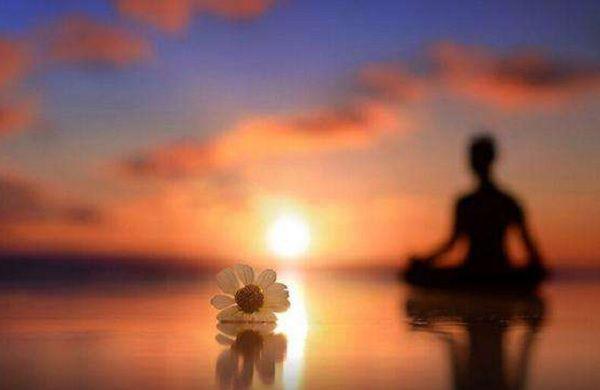
In a world where our pockets buzz every three seconds and notifications constantly hijack our attention, when was the last time you sat quietly with yourself?

We live under the collective illusion that hyper-connectivity equals success. We say “yes” to every social gathering, push ourselves to be extroverted at work, and wear our busyness like a badge of honor. But have you ever noticed the profound sense of emptiness and exhaustion that creeps in after the crowd disperses?
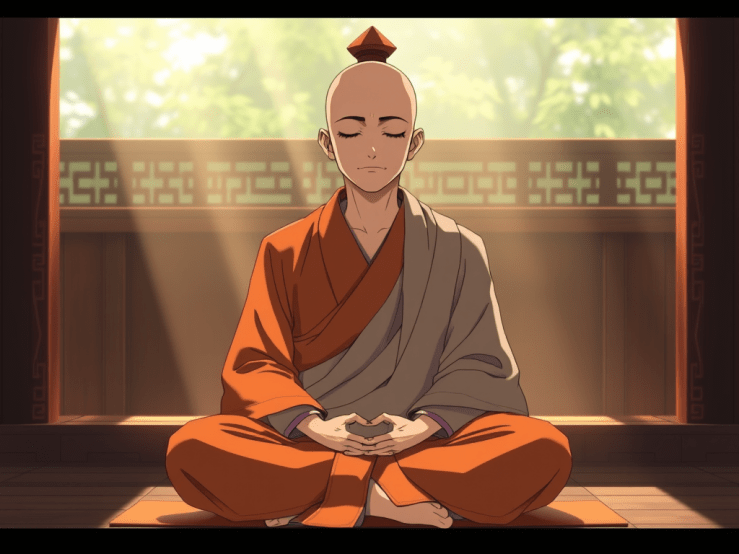
The truth is, modern society doesn’t have a connection deficit. We have a solitude deficit. What we truly lack is the courage to intentionally step away, embrace quietness, and meditate.

For millennia, humans have recognized the sacred link between solitude and mental clarity. From Eastern Zen practices to Western monastic traditions, sages have echoed the same truth: To understand the nature of reality and find your true self, you must first learn to be alone.

Today, cutting-edge neuroscience is finally catching up to this ancient wisdom, revealing what happens to our brains when we unplug:

  • The Myth of “Social Rest”: When we are around others, our brains automatically activate a “social tracking” network to read facial expressions, body language, and social cues. It’s a vital human instinct, but it’s also a constant source of cognitive drain.
  • True Neurological Recovery: It is only when we are genuinely alone that the brain can drop its social armor, deactivate its defense mechanisms, and enter a state of true restorative rest.

We’ve been conditioned to view daydreaming or doing “nothing” as a waste of time. Science proves the exact opposite. When you eliminate external stimuli and let your mind wander freely, your brain kicks into its Default Mode Network (DMN) to perform critical maintenance:

Neon glowing brain with interconnected circuit lines and digital icons above a futuristic city

Heightened Empathy: Introspection allows us to process complex emotions, ultimately increasing our capacity for empathy and strengthening our relationships with others.

Enhanced Memory Consolidation: An untethered mind actively processes experiences, transforming short-term data into long-term memories.

This brings us to a fascinating psychological paradox: Intentionally choosing solitude actually supercharges our focus when we return to the world. Allowing your mind to drift during quiet moments is the secret weapon to maintaining long-term, high-level productivity.

In her groundbreaking book Quiet: The Power of Introverts in a World That Can’t Stop Talking, Susan Cain champions the profound impact of “deliberate, productive solitude.”

Modern corporate culture loves to worship the myth of the brainstorming session, pushing the narrative that creativity only sparks in noisy, collaborative open offices. But Cain challenges this notion head-on:

“Cultivating true creativity requires sustained focus and deep, uninterrupted concentration.”

As social creatures, we are incredibly susceptible to peer influence. When we stay in a crowd, we unconsciously compromise, absorbing the collective opinions, biases, and aesthetic preferences of the group.

To pioneer a truly original concept, build a unique philosophy, or discover your authentic voice, you must walk away from the crowd—at least for a little while.

You don’t need to move to a cabin in the woods to reap these benefits. You can reclaim your mental sovereignty right now through micro-habits of meditation and intentional solitude:

1. The 10-Minute Daily Digital Fast

Find a quiet corner, switch your phone to airplane mode, and spend ten minutes focusing solely on your breath. This isn’t about achieving spiritual enlightenment; it is simply about taking your brain “offline” and halting the constant evaluation of the outside world.

2. Schedule a Non-Negotiable “Date with Yourself”

Block out one to two hours every week on your calendar. Go to a café alone, take a solo walk in nature, or read a book without checking your phone. Learn to politely decline low-value social obligations and invest that time into the most important person in your life: you.
In a world that refuses to be quiet, solitude is not isolation, and meditation is not an escape.

They are the highest forms of modern self-discipline. They are the ultimate antidotes to chaos, allowing us to preserve our sanity, sharpen our focus, and unlock our deepest creative potential.

The next time you choose silence over noise, remember: you aren’t missing out on the world. You are simply meeting a more creative, fulfilled, and powerful version of yourself.


Link:https://peacelilysite.com/2026/07/16/the-art-of-disconnecting-why-strategic-solitude-and-meditation-are-your-ultimate-superpowers/

The surprising truth about loneliness

By Claudia Hammond profile image

By Claudia Hammond

The reality of feeling alone is not what many people think. Claudia Hammond, who instigated a survey called the BBC Loneliness Experiment, explores five counterintuitive findings.

About the results

The findings in this article are based on an online survey of 55,000 people from around the world, called the BBC Loneliness Experiment. It was created by academics at three British universities in collaboration with Wellcome Collection.

1. Younger people feel lonelier than older people

When you picture someone who’s lonely, the stereotype is often an older person who lives alone and hardly sees anyone. Indeed, in the BBC Loneliness Experiment, 27% of over 75s said they often or very often feel lonely. This is higher than in some surveys, but because the survey was online we had a self-selecting sample and might have attracted more people who feel lonely.

Yet the differences between age groups are striking. Levels of loneliness were actually highest among 16-24 year olds, with 40% saying they often or very often feel lonely.

This begs the question of why so many young people say they feel lonely. Perhaps they are more prepared to admit to feelings of loneliness than older people who might feel they need to stress their independence. But it was noticeable that when everyone was asked at which point in their life they’d felt lonely, even retrospectively the most common answer people gave was when they were young adults.

Tired scholar with hands on head reading an old book by candlelight

So it’s not necessarily modern life that’s making young people feel lonelier, but factors associated with being young itself. Although we might think of the ages of 16-24 as a time of new freedom to have fun, leaving school and having more control over your life, it’s also a time of transition – moving away from home, starting college, starting a new job – all of which take you away from the friends you’ve grown up with. At the same time people are trying to work out who they are and where they fit into the world.

In addition to this, people aren’t accustomed to these feelings of loneliness and haven’t yet had the experience to know that they often pass, or to the chance to find ways to cope with those feelings, such as distracting themselves or looking for company.  

2. 41% of people think loneliness can be positive

This finding fits in with the ideas of people such as the late neuroscientist John Cacioppo, who believed that we evolved to experience loneliness because it can be useful, even though it’s so unpleasant. Humans have survived through forming co-operative groups. If people feel they are excluded from a group then feelings of loneliness might drive them to connect with people, finding new friends or rekindling old relationships.

The problem is that it can become chronic, with a serious impact on well-being and maybe even on health.

Feelings of chronic loneliness are associated with an increased risk of depression a year later. It was striking that in the survey, although 41% of all the participants said loneliness could be positive, this rate dropped to 31% in those who told us they often feel lonely. Loneliness can be so miserable and distressing, that when it’s long-lasting it can be hard to see any positive side.   

3. People who feel lonely have social skills that are no better or worse than average

Sometimes it’s assumed that people feel lonely because they’ve found it hard to make friends and help with improving social skills would make a difference. This isn’t what we found. A key element of social interaction is the ability to tell what other people are feeling, so that you can adjust your responses accordingly. Perhaps they’re worried about something or you’ve accidentally offended them.

One way of measuring this skill is to give people a series of full faces or even just pairs of eyes to assess how good they are at working out which emotion people are experiencing. There was no difference between the average scores of the people who often felt lonely and the people who didn’t.  There were differences in scores on neuroticism, so perhaps it’s the anxiety provoked by social situations that can make them harder to cope with if you feel lonely, rather than social skills.

4. Winter is no lonelier than any other time of year

Getty Images People report loneliness in all seasons, not just winter (Credit: Getty Images)
People report loneliness in all seasons, not just winter (Credit: Getty Images)

In the run-up to Christmas, you often see campaigns from charities who help the elderly featuring picture of isolated old people. It’s a day of the year that’s all about gathering with your loved ones to celebrate, so the idea of facing the day alone is something a lot of people would dread. British comedian Sarah Millican runs a very successful #joinin campaign on Twitter on Christmas Day so that people who feel lonely can chat to each other. And if you live in the northern hemisphere then Christmas also falls in the middle of winter when days are shortest and people stay in more, leaving you even more isolated if you feel lonely.

But we found that for many who feel lonely, winter is no worse than any other time of year. We asked people to tell us the time of year and the time of day when they felt loneliest. More than two thirds of people said winter was no lonelier than any other time of year. The minority of people who did say one particular time of year is lonelier chose winter, but a few even chose summer. At Christmas, many people go to great lengths to ensure that everyone is included, inviting friends over if they know they might be alone. But in summer if everyone else goes on holiday, you might be the one feeling left behind. So perhaps we should start wondering whether other people might be lonely all year round, instead of just at Christmas.  

5. People who often feel lonely have higher levels of empathy than everyone else

In the survey two kinds of empathy were measured. One was empathy for people’s physical pain – how sorry you feel for someone who has accidentally slammed their hand in a door, picked up a scalding frying pan or been stung by a wasp. The other was how much empathy you have for other people’s social pain – for someone who’s been bullied at school, not invited to a party or dumped by their partner.  

There was no difference in empathy for physical pain between the people who felt more or less lonely. But the people who said they often or very often felt lonely scored higher on average for empathy for social pain. Maybe because they have experienced for themselves what it feels like to be left out, they empathise more with other people who find themselves in the same situation.

Link:https://peacelilysite.com/2026/07/13/the-surprising-truth-about-loneliness/

Source: https://www.bbc.com/ukchina/trad/vert-fut-45930977

The Quiet Path of My Father

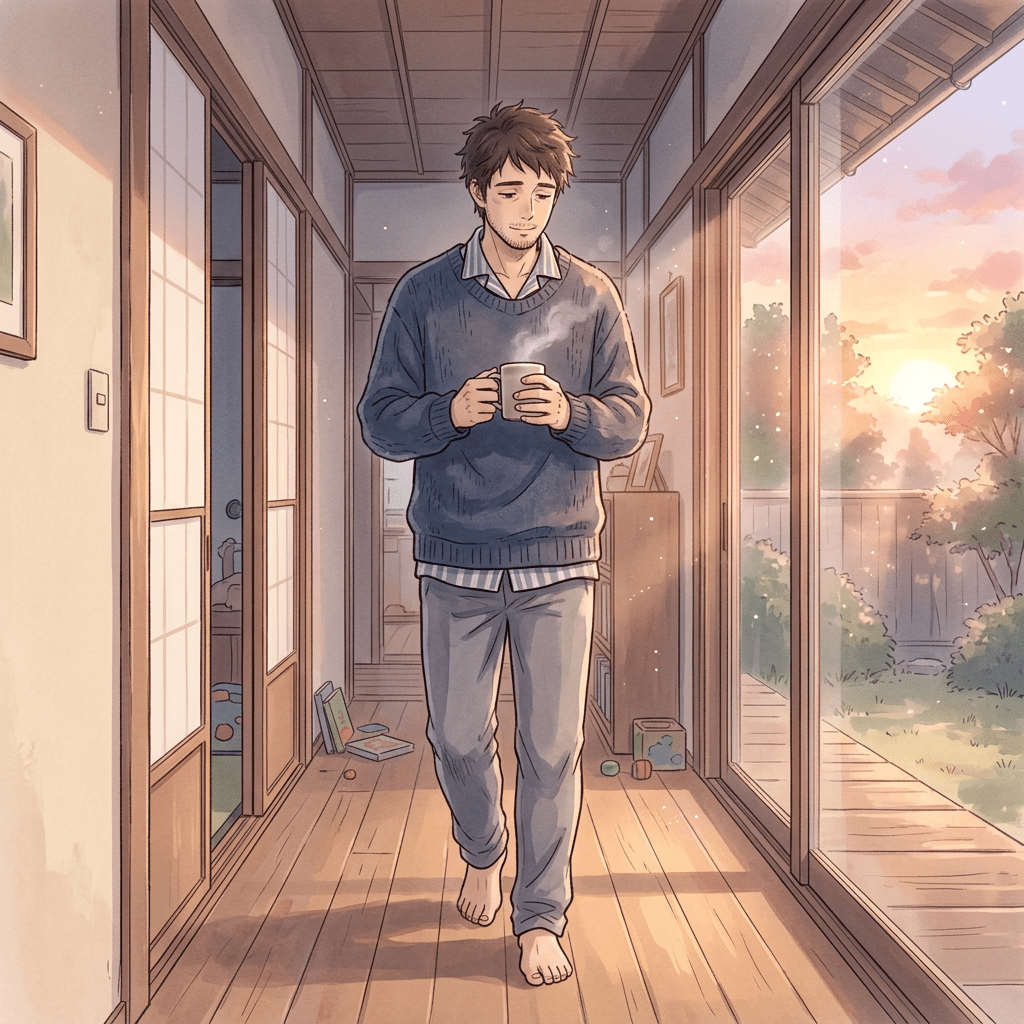
Man walking barefoot indoors holding steaming coffee cup at sunrise

The children always remembered the way their father moved through the house in the early morning — not rushing, not dragging, but walking with a quiet steadiness, as if each step were placed with intention. The soft shuffle of his feet, the gentle clearing of his throat, the way he paused at the doorway to look at the sky before beginning the day — all of it felt like a small ceremony, a reminder that life was something to be met with presence.

He never taught them compassion through words. He taught it through the way he lived.

When a neighbor’s roof began to leak during the winter rains, he didn’t sigh or complain about the inconvenience. He simply gathered his tools, wiped the mist from his glasses, and said, “Come with me. Let’s see how we can help.” The children watched him climb the ladder slowly, carefully, as if he were ascending a sacred path. The cold wind tugged at his jacket, the shingles were slick beneath his hands, but he worked with a calm focus that made the moment feel almost holy. When he patched the leak and the dripping finally stopped, he smiled — not because he wanted praise, but because someone’s burden had become lighter.

Man sweating while fixing car engine with tools, children looking concerned

Another time, when an elderly man’s car refused to start in the heat of summer, their father knelt beside the engine with the same tenderness he used when holding a newborn. The children stood nearby, watching the sweat bead on his forehead as he listened to the engine’s uneven breaths. “Machines speak too,” he told them softly. “You just have to listen with patience.” When the engine finally roared back to life, the old man’s eyes filled with relief. Their father simply nodded, wiped his hands on a rag, and whispered, “May your road be smooth.”

The children didn’t understand it then, but he was teaching them the Dharma in the language of everyday life. He was showing them how to see suffering without turning away, how to offer help without expecting anything in return, how to move through the world with a heart that stayed open even when life was heavy.

As they grew older, they began to feel the weight of those lessons in their own bones.

One became a teacher who stayed after school to help students who felt invisible. She remembered the way her father listened — fully, without judgment — and she tried to offer her students that same refuge. Another became a nurse who held trembling hands in the quiet hours of the night. He remembered how his father breathed slowly, steadily, even when the work was hard, and he learned to be a calm presence for others. The youngest created a community program that helped families rebuild their lives. She remembered the way her father patched roofs and revived engines, and she understood that healing often begins with the smallest acts of care.

They didn’t choose these paths because their father told them to. They chose them because they had lived their whole lives watching him turn compassion into action, moment by moment, breath by breath.

Years passed. The children grew into adults who carried their father’s teachings in the way they spoke, the way they listened, the way they offered themselves to the world. And their father, now older, watched them with a quiet pride that softened his eyes.

On Father’s Day, they gathered around him. His hair had turned silver, his hands were rough from decades of work, but his presence was still steady — like a lantern that had guided them through every dark season.

“Dad,” the eldest said, her voice trembling, “everything we do… everything we’ve become… it’s because of you.”

He shook his head gently, the way he always did when he felt gratitude but didn’t want praise.

“I only showed you the path,” he whispered. “You walked it yourselves.”

But the children knew the truth.

He had given them more than shelter. More than guidance. More than love.

He had given them a way of seeing the world — a way rooted in compassion, patience, and the belief that every act of kindness sends ripples far beyond what the eye can see.

And as they sat with him that Father’s Day, surrounded by the warmth of everything he had nurtured, they realized something too:

The seeds he planted had grown into a forest — a living testament to the quiet, powerful love of a father who taught not through words, but through the gentle, unwavering example of a life lived with an open heart.

A man with two children walking on a forest path glowing mushrooms lighting the way

Link: https://wisdomtea.org/2026/06/18/the-quiet-path-of-my-father/

Moving Beyond Blame: How Looking Inward Transformed My Daily Life

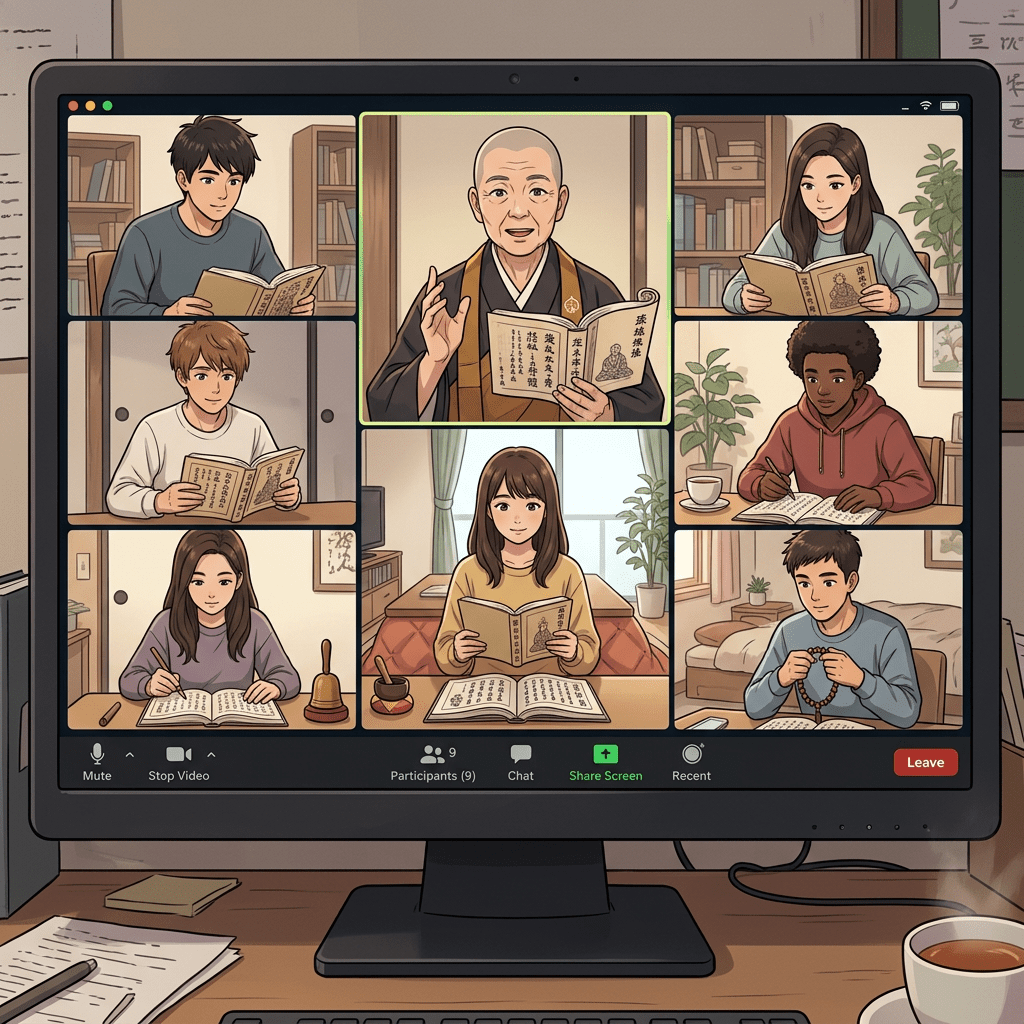
Eight participants and an instructor reading and meditating on a video conference call

Recently, I joined an online Buddhist study group where we have been deeply immersing ourselves in learning the Sutra by H.H. Dorje Chang Buddha III. This experience has changed my life dramatically. As I began dedicating more intentional time to reading and listening to the Sutra, I noticed a powerful shift in my daily habits. I finally found the strength to break away from the mindless habit of scrolling through screens, freeing up the space and energy to exercise regularly. By simply replacing digital distraction with spiritual study and physical movement, I already feel significantly happier and healthier.

As I continue this journey, I often find myself reflecting on how these profound teachings apply to the ordinary, messy moments of everyday life. It is easy to study a principle conceptually, but the true cultivation begins when we bring it off the page and into our interactions with the world.

One teaching from the Sutra that has particularly influenced me—and completely shifted my perspective—is the vital importance of examining myself before focusing on the shortcomings of others.

In daily life, our default reaction to friction is often outward-facing. When someone cuts us off in traffic, misunderstands our intentions, or speaks with an edge in their voice, the ego immediately jumps to defend itself. It points a finger at the other person’s impatience, rudeness, or flaws.

However, the teachings of H.H. Dorje Chang Buddha III remind us that external circumstances are merely mirrors reflecting our own internal state. True cultivation requires us to break this habit of looking outward and instead turn our gaze fiercely and honestly inward.

Now, whenever I encounter misunderstandings, disagreements, or situations that test my patience, I pause. Before I speak, react, or allow resentment to build, I try to ask myself these four grounding questions:

  • Have I truly looked inward first? Am I seeing this situation clearly, or am I viewing it through the distorted lens of my own biases and expectations?
  • Is there something I need to improve in myself? Instead of demanding that the other person change, what flaw, impatience, or lack of skill in my own conduct needs addressing?
  • Am I responding with compassion and wisdom? Is my energy coming from a place of genuine care for the other person’s well-being, or is it coming from a desire to be “right”?
  • What attachment or habit might I be overlooking? What underlying ego-attachment—whether to my reputation, my comfort, or my pride—is causing me to feel triggered right now?

Although it is not always easy—and requires constant mindfulness—this practice has been quietly transformative. It acts as a circuit breaker for negative emotions. By shifting the focus from “what they did wrong” to “how I can grow,” I have found myself becoming genuinely more patient, more deeply understanding of others’ hidden struggles, and far less reactive to life’s daily irritations.

Cultivation is not about achieving perfection overnight; it is about making the consistent choice to choose wisdom over ego, one interaction at a time.

Link:https://peacelilysite.com/2026/06/12/moving-beyond-blame-how-looking-inward-transformed-my-daily-life/

When Noise Becomes Blindness

Wizard at desk surrounded by books, scrolls, potions, and magical screens displaying symbols and star constellations

The most dangerous thing is not that we are surrounded by falsehood, but that we slowly lose our desire to seek what is true.

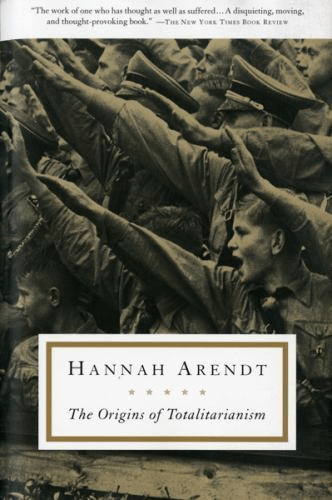
In 1906, Hannah Arendt was born into a world that would soon reveal both the brilliance and the fragility of human society. She later witnessed how a highly educated and cultured nation could slowly lose its clarity, drifting into confusion and darkness.

In her important work, The Origins of Totalitarianism, she reflected on a troubling question:
How do people lose their ability to see what is right in front of them?

Her answer was not simple, but one part stands out quietly and powerfully—when truth becomes unstable, people begin to lose their ability to think clearly.

Today, we may not live in the same world she did, but in some ways, her observations feel closer than ever.

Every day, information rushes toward us from all directions. News, opinions, arguments, videos, headlines—especially on platforms like Facebook, X, and TikTok. Everything moves quickly. Everything competes for attention.

At first, we try to follow.
We read. We watch. We react.

But slowly, something changes.

The more we see, the less certain we feel.
The more voices we hear, the harder it becomes to know which one is true.
Contradictions pile up. Emotions rise. Clarity fades.

And without noticing it, we grow tired.

Not physically tired—but mentally tired.

When the mind is tired, it stops asking questions.
It stops examining.
It stops distinguishing.

We begin to accept things without really understanding them.
Or we reject everything, thinking, “Maybe nothing is true anyway.”

This is a quiet kind of blindness.

Not because we cannot see,
but because we no longer take the time to look carefully.

In her later essay, Truth and Politics, Arendt warned that when truth is constantly distorted, it does more than mislead—it weakens our trust in truth itself. And when that trust fades, something deeper begins to erode: our sense of judgment, responsibility, and even compassion.

This is not a distant problem.
It is something we face every day.

So what can we do?

Perhaps the answer is simpler than we expect, but not easier.

We pause.

We step back from the noise, even for a moment.
We resist the urge to react immediately.
We allow ourselves time to think.

Not quick thinking,
but careful thinking.

We ask:
Is this true?
What is the source?
Am I reacting, or am I understanding?

And just as importantly, we question even the ideas we already agree with.

Real thinking is not comfortable.
It requires patience.
It requires honesty.
Sometimes, it requires us to admit we were wrong.

But this quiet effort is what keeps the mind alive.

In a world filled with endless information, the greatest danger is not that we are misinformed.
It is that we stop thinking altogether.

So, in the midst of all the noise, we can choose something different.

To slow down.
To look carefully.
To think clearly.

And in doing so, we begin to see again.

#OriginsofTotalitarianism#HannahArendt #Germany #TruthandPolitics #Philosophy

Link:https://peacelilysite.com/2026/05/05/when-noise-becomes-blindness/

No One to Blame: Understanding the Root of Anger

When Anger Has Nowhere to Stay

In our daily lives, anger often appears without invitation. A single word, a small inconvenience, or an unmet expectation can stir something deep within us. Before we realize it, the mind is no longer calm, and the heart feels as though it is burning.

There was once a woman who had a very bad temper. She often got angry over small things. Afterward, she would regret it. She knew her anger hurt others, and she truly wanted to change. But when anger came, she felt she could not control it.

One day, a friend told her, “There is a wise monk nearby. Maybe he can help you.”
So she decided to go.

When she met the monk, she told him everything—how easily she lost her temper, how much pain it caused, and how helpless she felt. She hoped he would give her some advice.

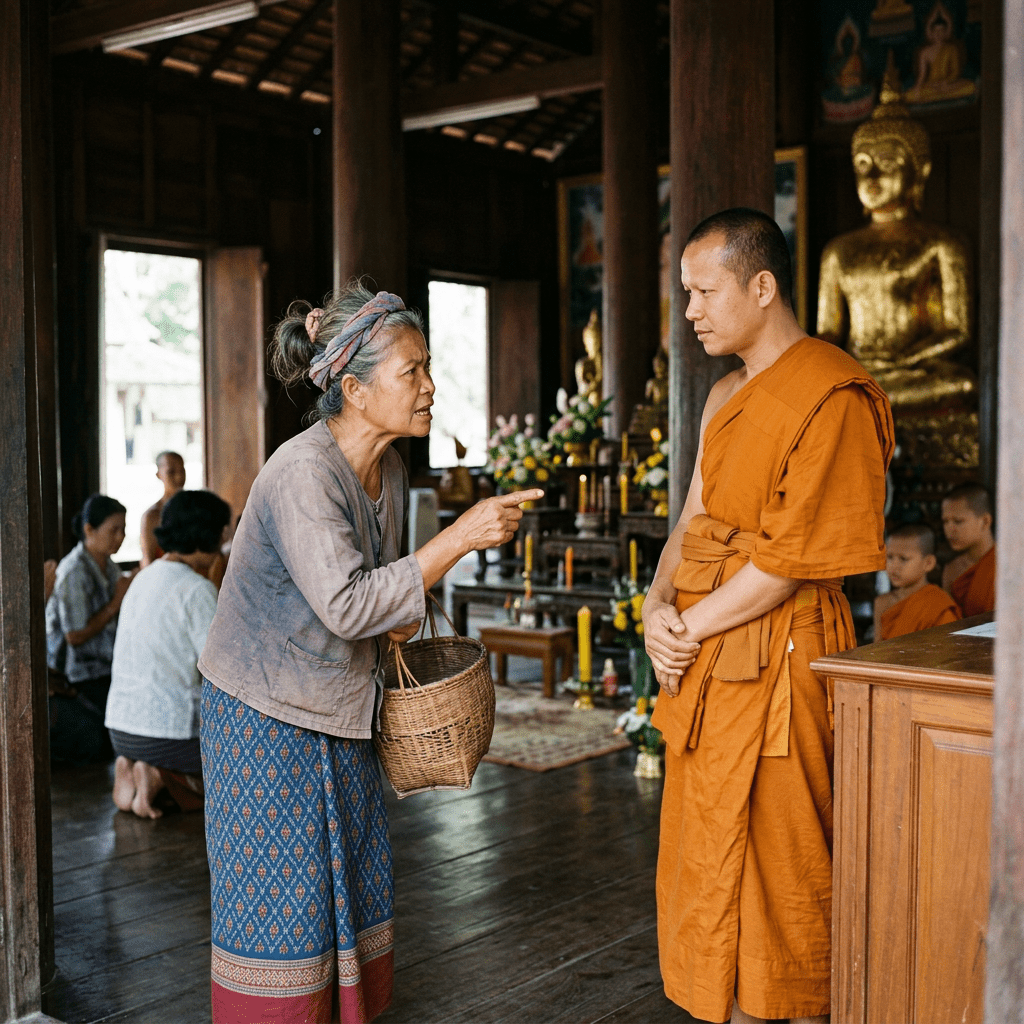
Elder woman talking to a Buddhist monk inside a temple with statues and worshippers in the background

The monk listened quietly. When she finished, he said nothing. He simply led her to a small room, stepped outside, and closed the door.

Soon she realized—the door was locked.

At first, she was confused. Then she became angry.

“I came here for help, and he locks me in?” she thought.

The room was dark and cold. The more she thought about it, the angrier she became. She started shouting, knocking on the door, and scolding the monk loudly.

But there was no answer.

No matter how much she shouted, the monk did not respond.

After a long time, she became tired. Her voice grew quiet.

Then the monk asked from outside, “Are you still angry?”

She said, “I’m angry at myself! Why did I come here?”

The monk replied, “If you cannot forgive yourself, how will you forgive others?” Then he left.

The room became quiet again.

After some time, the monk returned and asked, “Are you still angry?”

She said, “No, I’m not angry anymore.”

“Why?” he asked.

She said, “What’s the use of being angry? I’m still stuck in this dark, cold room.”

Her anger had weakened, but it was still there.

Later, when the monk asked again, she said, “I’m not angry anymore, because you are not worth my anger.”

The monk said, “The root of your anger is still there. You have not let it go.”

His words stayed in her mind.

After a long silence, she asked, “Can you tell me—what is anger?”

This time, the monk came to the door. He did not speak. He simply poured the tea in his cup onto the ground.

The woman watched quietly.

Suddenly, she understood.

“If I do not get angry, where does anger come from?” she thought.
“If my mind is clear, what is there to be angry about?”

At that moment, she saw the truth: anger does not come from others. It comes from our own mind.

From the teaching of Gautama Buddha, we learn that anger arises when the mind is not open—when we hold on too tightly to our own thoughts, feelings, and expectations.

If we do not hold onto anger, it cannot stay.

In our daily life, anger often feels very real. We think others cause it. But if we look carefully, we see that it begins inside us.

When anger comes, we can pause and ask:
Why am I reacting this way?
What am I holding onto?
Can I let it go?

If we become more patient, more tolerant, and more willing to step back, anger will slowly lose its power.

Letting go of anger does not make us weak. It frees us.

When we put down the fire in our heart, we will see that things are not as bad as we thought. Other people are not as terrible as we imagined.

In the end, the lesson is simple:

If we do not create anger, it has nowhere to stay.

Link:https://peacelilysite.com/2026/04/21/no-one-to-blame-understanding-the-root-of-anger/

The Doctor Who Chose Compassion Over Wealth

A quiet light in a noisy world

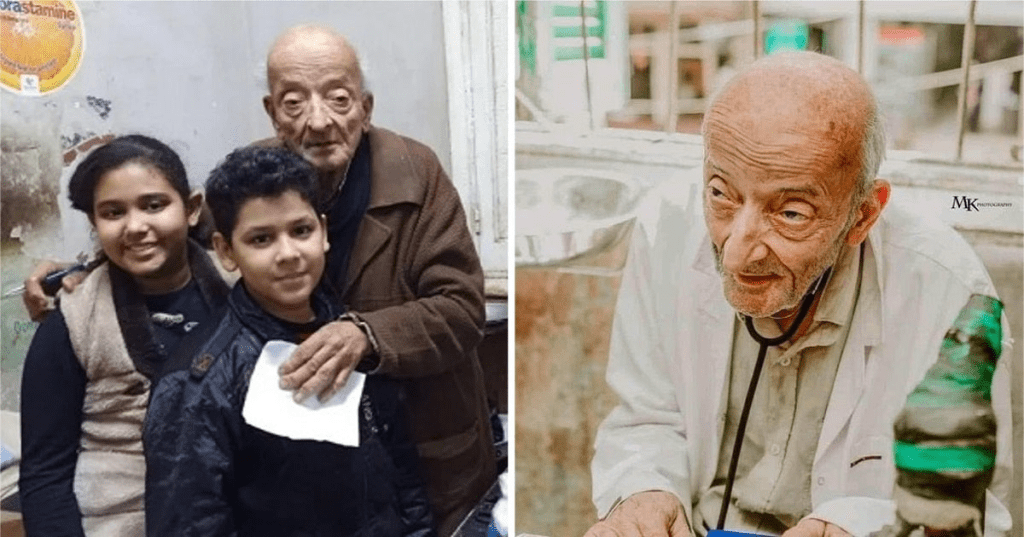
In a modest clinic in Tanta, there once sat a doctor whose life quietly redefined the meaning of success. His name was Mohamed Mashally, but to thousands of ordinary people, he was simply known as the doctor who would never turn them away.

For more than half a century, Dr. Mashally devoted himself to serving those who had nowhere else to go. While many pursue medicine as a path toward status or financial security, he chose a different road—one shaped by compassion, humility, and an unwavering sense of responsibility to others.

His clinic was simple, almost unremarkable. Yet outside its doors, long lines would form each day. Patients came not only because his fees were extraordinarily low—sometimes less than the cost of a meal—but because they knew they would be treated with dignity. And for those who could not pay at all, he quietly asked for nothing.

Behind this life of selfless service was a moment of deep sorrow that transformed his heart. Early in his career, Dr. Mashally treated a young boy suffering from diabetes. The child’s family could not afford the medicine he needed. When the boy passed away, it left a lasting imprint on the young doctor’s soul. From that day forward, he made a silent vow: no one should lose their life simply because they are poor.

And so, he began a lifelong practice of giving.

He worked long hours each day, often seeing patient after patient without rest. Opportunities came—offers to move to wealthier places, chances to build a more comfortable life—but he declined them all. He believed that his place was among those who needed him most.

Even when people, moved by his story, tried to offer him financial help, he would gently refuse. “Give it to the poor,” he would say. For him, kindness was not something to be redirected—it was something to be lived.

In a world often driven by gain and recognition, Dr. Mashally remained rooted in something deeper. He did not seek fame, yet his story spread across countries. He did not chase wealth, yet he became rich in something far more enduring—the gratitude of countless lives he touched.

When he passed away in 2020, many mourned not just a doctor, but a rare kind of human being—one who embodied the quiet truth that compassion, when practiced sincerely, becomes a force that transforms the world.

His life leaves us with a gentle but profound question:

What does it mean to truly succeed?

Perhaps success is not found in how much we accumulate, but in how much we are willing to give. Not in recognition, but in sincerity. Not in grand gestures, but in the small, consistent acts of care that ripple outward in ways we may never fully see.

Like a lamp that asks for no reward, yet brings light to all who pass by, Dr. Mashally’s life reminds us that each of us, in our own way, has the ability to ease suffering and bring warmth into the lives of others.

And sometimes, the greatest legacy we can leave behind is simply this:

That because we lived, someone else suffered a little less.

Link:https://peacelilysite.com/2026/04/20/the-doctor-who-chose-compassion-over-wealth/

Beyond Achievement: Designing a Life Where Success Deepens Joy

In our culture, success is often seen as the ultimate destination—the long-awaited moment when effort finally blossoms into happiness. We are taught to dream, to strive, and to believe that once we reach our goals, fulfillment will naturally follow. Yet, both modern science and lived experience are beginning to tell a more nuanced story.

In recent years, research in neuroscience and psychology has revealed a quiet paradox: achieving our most cherished goals does not always bring lasting happiness. The brain’s reward system, driven by dopamine, is designed primarily for anticipation rather than arrival. It fuels the excitement of pursuit—the late nights, the hopeful striving, the vision of what could be. But once the goal is reached, that surge of motivation fades, and the emotional intensity often drops.

At the same time, psychologists describe a phenomenon known as hedonic adaptation—our tendency to quickly return to a baseline level of happiness even after major positive events. The dream job becomes routine. The long-awaited achievement becomes part of everyday life. What once felt extraordinary quietly becomes ordinary.

For some, this transition is subtle. For others, it can feel like an unexpected emptiness—a sense of “What now?” after the finish line has been crossed.

But this discovery is not discouraging. In fact, it is deeply illuminating.

It reminds us that the human mind is intricate, and happiness is more than just accomplishment. Success, by itself, is not designed to sustain joy—it is only one part of a much larger inner landscape.

True fulfillment begins when we understand this hidden pattern and learn to work with it, rather than against it.

A meaningful life is not built solely on reaching goals, but on what those goals serve. When ambition is guided by purpose—when our efforts contribute to something beyond personal gain—success no longer feels like an ending. Instead, it becomes a doorway.

This is why acts of kindness, compassion, and contribution carry such enduring power. Unlike fleeting achievements, they create a sense of connection and meaning that the mind does not easily adapt away from. They anchor us in something deeper than momentary reward.

Imagine a different way of living:

A life where ambition and inner well-being are not in conflict, but in harmony.
A life where achieving a dream does not leave a void, but opens a new horizon of purpose.
A life where each success is not a final destination, but a step toward greater understanding, compassion, and joy.

By understanding the brain’s hidden responses, we gain the ability to design such a life. We begin to see that fulfillment is not something waiting at the end of achievement—it is something woven into the journey itself.

In this light, success becomes more than personal victory. It becomes an opportunity to deepen meaning, to expand the heart, and to align our outer accomplishments with our inner growth.

Perhaps lasting happiness has never been about reaching the summit.

Perhaps it is about learning how to walk the path—with awareness, purpose, and a quiet, enduring sense of joy.

Link:https://peacelilysite.com/2026/03/19/beyond-achievement-designing-a-life-where-success-deepens-joy/

A Hopeful Skeptic

By Jamil Zaki

According to an ancient myth, hope arrived on earth as part of a curse. Prometheus stole fire from the gods, and Zeus avenged the theft with a “gift.” He commanded Hephaestus to mold the first woman, Pandora, and presented her to Prometheus’s brother. Pandora, in turn, was given a clay jar—which Zeus told her never to open. Curiosity got the better of her, she lifted the lid, and out flew all the world’s ills: sickness and famine for our bodies, spite and envy for our minds, war for our cities. Realizing her mistake, Pandora slammed the jar shut, leaving only hope trapped inside.

But what was it doing there in the first place, alongside our miseries? Some people believe hope was the jar’s only good, and trapping it further doomed us. Others think it fits in perfectly with the other curses. The philosopher Friedrich Nietzsche called hope “the most evil of evils because it prolongs man’s torment.” You might agree. Hope has been typecast as delusional and even toxic—causing people to ignore their problems and the world’s.

Scientists think of hope differently. The psychologist Richard Lazarus wrote, “To hope is to believe that something positive, which does not presently apply to one’s life, could still materialize.” In other words, hope is a response to problems, not an evasion of them. If optimism tells us things will get better, hope tells us they could. Optimism is idealistic; hope is practical. It gives people a glimpse of a better world and pushes them to fight for it.

Any of us can practice hope. [My friend] Emile did. He saw the same world most of us do, but instead of retreating into cynicism, he chose to work for peace, build community, and live his principles. To me and many who knew him, Emile’s positivity seemed supernatural. Temperament, experience, will, or some alchemy of all three graced him with a mind and a heart many of us could learn from. Through dozens of tearful, grateful conversations, I gained a deeper understanding of who Emile was and how he got that way. Emile pursued peace the way doctors pursue healing. If illnesses are aberrations in the body’s function, Emile saw conflict and cruelty as diseases of social health. He and his colleagues diagnosed the triggers that inspire hatred, and then designed psychological treatments to reduce conflict and build compassion.

One powerful tool he used to fight cynicism was skepticism: a reluctance to believe claims without evidence. Cynicism and skepticism are often confused for each other, but they couldn’t be more different. Cynicism is a lack of faith in people; skepticism is a lack of faith in our assumptions. Cynics imagine humanity is awful; skeptics gather information about who they can trust. They hold on to beliefs lightly and learn quickly. Emile was a hopeful skeptic, combining his love of humanity with a precise, curious mind.

This mindset presents us with an alternative to cynicism. As a culture, we are so focused on greed, hatred, and dishonesty that humanity has become criminally underrated. In study after study, most people fail to realize how generous, trustworthy, and open-minded others really are. The average person underestimates the average person.

If you’re anything like the average person, this hides some good news: People are probably better than you think. By leaning into skepticism—paying close attention rather than jumping to conclusions—you might discover pleasant surprises everywhere. As research makes clear, hope is not a naive way of approaching the world. It is an accurate response to the best data available. This is a sort of hope even cynics can embrace, and a chance to escape the mental traps that have ensnared so many of us.

Cynicism often boils down to a lack of good evidence. Being less cynical, then, is simply a matter of noticing more precisely. I hope we can witness the good in others and work toward the world most of us want. The cynical voice inside each of us claims that we already know everything about people. But humanity is far more beautiful and complex than a cynic imagines, the future far more mysterious than they know. Cynicism is a dirty pair of glasses more of us put on each year. But we can take them off. We might be astonished by what we find.

Link:https://peacelilysite.com/2026/02/28/a-hopeful-skeptic/

Source: https://www.awakin.org/v2/read/search.php

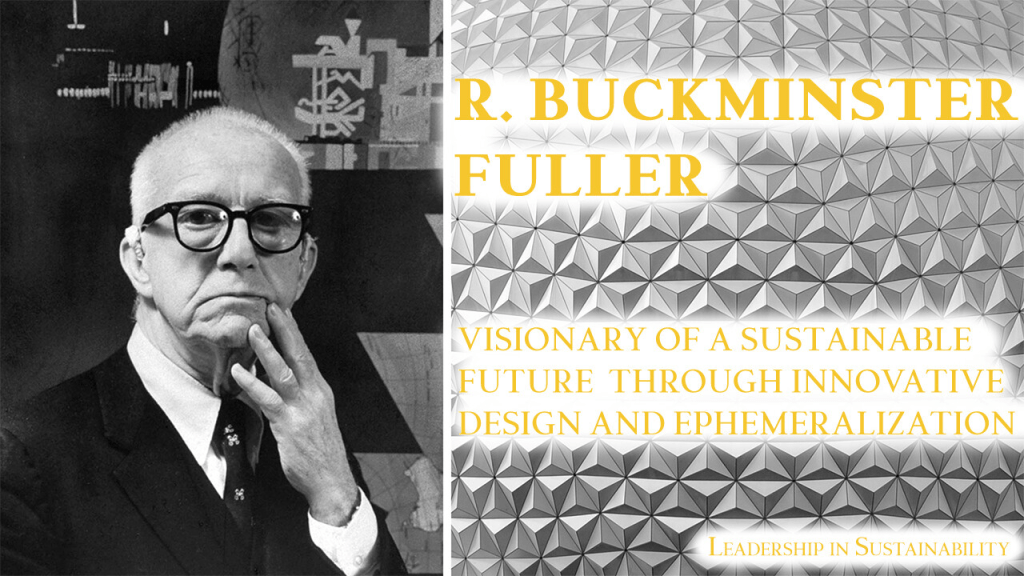
Building a World That Works for Everyone

Inspired by Buckminster Fuller

“It is now highly feasible to take care of everybody on Earth at a ‘higher standard of living’ than any have ever known. It no longer has to be you or me. Selfishness is unnecessary and henceforth unrationalizable as mandated by survival.”
— Buckminster Fuller

These words, spoken decades ago, feel more relevant today than ever before.

We live in a time of extraordinary technological advancement. We can communicate instantly across continents. We can grow food more efficiently than at any other time in history. We have the scientific knowledge and global infrastructure necessary to ensure that every human being has access to clean water, nourishment, shelter, education, and healthcare.

And yet, division persists. Scarcity thinking dominates. Nations compete. Individuals hoard. Systems prioritize profit over people.

Buckminster Fuller saw clearly what many still struggle to accept: the world already has enough. The issue is not capacity—it is consciousness.

For centuries, humanity operated under survival-based thinking. Resources seemed limited. Expansion required conquest. Security demanded competition. But Fuller argued that we have entered a new era—an era where cooperation is not only morally preferable, but practically possible.

Today, it is technologically feasible to care for everyone on Earth. Renewable energy can power entire regions. Regenerative agriculture can restore depleted soil. Global collaboration can solve complex problems faster than any single nation working alone.

What prevents us from realizing this potential is not a lack of tools—it is a lack of shared vision.

To build a world that works for everyone, we must shift from isolation to interconnection.

Every action we take ripples outward. The food we purchase affects farmers and ecosystems. The words we speak shape emotional climates. The values we teach our children become the architecture of tomorrow’s society.

A conscious world begins with conscious individuals.

It begins when we recognize that no one truly thrives while others suffer. It begins when we see that compassion is not weakness—it is intelligent design for humanity’s future.

Fuller’s statement—“It no longer has to be you or me”—is revolutionary. For much of history, survival appeared to demand winners and losers. But in a globally connected civilization, that paradigm is outdated.

Environmental collapse in one region affects the whole planet. Economic instability spreads across borders. Violence anywhere diminishes humanity everywhere.

Likewise, innovation anywhere uplifts humanity everywhere. Kindness anywhere restores hope everywhere.

The future no longer belongs to competition alone. It belongs to collaboration.

Our mission to cultivate a more conscious, interconnected world is not idealistic—it is realistic.

It asks us to:

  • Think beyond personal gain.
  • Support systems that uplift the many, not just the few.
  • Practice compassion in daily life.
  • Align innovation with wisdom.
  • Remember that humanity shares one home.

The tools are here. The knowledge is here. The opportunity is here.

What remains is our collective choice.

Will we cling to outdated models of fear and separation?
Or will we step into the maturity of cooperation and shared flourishing?

Buckminster Fuller believed humanity was capable of making that leap. The question now is whether we are ready to live up to that possibility.

The future is not something that happens to us.
It is something we consciously create—together.

Link:https://peacelilysite.com/2026/02/26/building-a-world-that-works-for-everyone/