At forty-six, Esther Duflo becomes the youngest Nobel Economic Prize recipient in history, and only the second woman to receive the honor. Yet her greatest achievement is not the prize—it is the hope her work brings to the world.
For generations, poverty has felt like an unmovable mountain. Governments spent billions. Experts debated endlessly. Grand theories came and went. And still, suffering remained.
But Duflo chose a different path.
She asked a quiet, powerful question: What if we truly tried to understand—and truly tried to help?
Instead of guessing, she turned to science. She went into villages, listened to people, and tested real solutions with care and humility. One question at a time. One life at a time.
Do children attend school more if given simple support? Can small incentives save lives through increased vaccinations? What actually helps families build a better future?
And through this patient work, a profound truth emerged:
People living in poverty are not the problem. The lack of opportunity is.
When given even small, thoughtful support, lives begin to change. Children stay in school. Families grow healthier. Hope quietly returns.
Through the Abdul Latif Jameel Poverty Action Lab, these small, proven solutions have already reached hundreds of millions of people across the world.
This is the message her work offers us:
Poverty is not a permanent condition. It is not beyond our reach. It is something we can change.
Not through one dramatic act, but through countless small acts of wisdom, guided by evidence and grounded in compassion.
Like tending a garden, each seed matters. Each careful step matters. And over time, transformation becomes inevitable.
In her Nobel speech, Duflo reminded the world that this work is not about one person—it is about all of us. It is a shared responsibility, a collective opportunity to reduce suffering and uplift human dignity.
From a deeper perspective, this truth resonates with timeless wisdom: When we act with compassion and clarity, we create causes for a better world. When we ignore suffering, we allow it to continue.
Ending poverty is not only an economic challenge. It is a moral calling.
Today, we no longer have to ask, “Is it possible?” We know that it is.
The real question is:
Will we choose to care enough, persist enough, and work together long enough to make it happen?
Because if we do, a world free from extreme poverty is not just a dream—
The return of H.H. Dorje Chang Buddha III, Yun Gao Yixi Nuo Bu, to this world is widely recognized. His supreme moral virtue and mastery of the Five Vidyas are unparalleled—there is no second holy being who can be compared to Him. This is something well known to many.
As for the extraordinary spiritual states that people often find astonishing, such manifestations occur frequently in His presence. Those of us who have served closely around H.H. Dorje Chang Buddha III have witnessed so much that, over time, we have almost grown accustomed to these sacred phenomena—perhaps even somewhat numb to them.
However, the two events I wish to share here are not significant simply because I personally experienced them. Rather, they are directly connected to the karmic blessings of all sentient beings in this world.
The First Event: A Mysterious Earthquake
The first incident took place on the afternoon of July 30, 1999, at around 4:00 PM.
Due to changing circumstances, H.H. Dorje Chang Buddha III decided to leave China. At that time, the departure could not be made public, so I was the only one accompanying Him. We stood outside the South Entrance of Meijing Building in Luohu District, Shenzhen, waiting for a car to take Him to the airport.
Suddenly, I felt my body shake. Behind me, the thirty-story building began to sway. Even the heavy streetlights fixed onto the granite base rattled loudly, their glass covers clattering continuously for dozens of seconds.
I immediately realized that the earth was trembling—an earthquake. Yet my heart felt heavy, and I remained silent.
After a moment, H.H. Dorje Chang Buddha III asked calmly, “Was that the earth shaking?”
I simply replied, “Yes.”
His expression remained composed. He clearly understood that the buildings would not collapse, for this was no ordinary earthquake—it arose from a profound karmic cause connected to the Dharma.
According to the scriptures, the earth trembles only when a Buddha descends into the world or enters parinirvana. At that time, however, I did not fully comprehend the deeper significance of what had occurred.
Only later did I come to realize: beings in the Western world were about to receive great blessings—they would have the opportunity to encounter the true Dharma.
The Second Event: A Manifestation Beyond Imagination
The second event occurred on the very day I first paid homage to H.H. Dorje Chang Buddha III.
Beginning that day, a grand Dharma assembly was held over many consecutive days. During this assembly, H.H. Dorje Chang Buddha III expounded profound teachings, including “Debates Between Monastics and Laypeople” and “What I Have Seen and Reflected Upon,” addressing beings of different capacities and karmic conditions.
Before the teachings began, an elderly practitioner, Huang Huibang, shared his personal experience of receiving blessings from the Buddha that very day.
Huang Huibang was a highly respected figure in China, formerly serving as Vice Chairman of the Jiangxi Buddhist Association, and was often referred to as the “Living Buddha of Jiangxi.”
From a young age, while studying in Japan, he encountered Buddhism and devoted himself wholeheartedly to its practice. For over seventy years, he maintained a vegetarian lifestyle and rarely parted from the scriptures. His lifelong dedication and sincerity were deeply moving.
Even at nearly ninety years old, he traveled alone to Tibet in search of the Dharma. The revered master Jigme Phuntsok was profoundly touched by his devotion and told him:
“Your roots of virtue are exceedingly deep. You should go and study higher Dharma under H.H. Dorje Chang Buddha III.”
He then informed him where to find the Buddha.
Huang Huibang recounted that on that day, he personally partook of sacred offerings bestowed through H.H. Dorje Chang Buddha III. He was also told that his wish could be fulfilled—that he could behold a Buddha.
Yet at the moment when this was about to happen, Huang Huibang hesitated and said he would rather see a Dharma protector instead.
At that instant, H.H. Dorje Chang Buddha III casually called out.
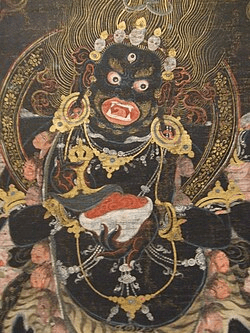
Mahakala Vaja Protector
Suddenly, a Dharma protector appeared out of thin air—towering like an iron pillar, clad in black armor, with a thunderous roar. The sheer presence overwhelmed Huang Huibang, and he fell backward onto the ground before he could react. (A recording of Huang Huibang recounting this event exists.)
One may ask: who could summon such a being with a single call?
Only a Buddha possesses such majestic power and virtue.
A Solemn Affirmation
These two events are entirely true.
If I have spoken falsely to deceive others, may I bear all negative consequences. But if what I have shared is true, then may all be auspicious, and may all beings have the opportunity to hear the true Dharma of H.H. Dorje Chang Buddha III, increasing in both merit and wisdom, and ultimately attaining liberation.
Disciple of the Buddha: Longzhi Danbei Nima November 15, 2007
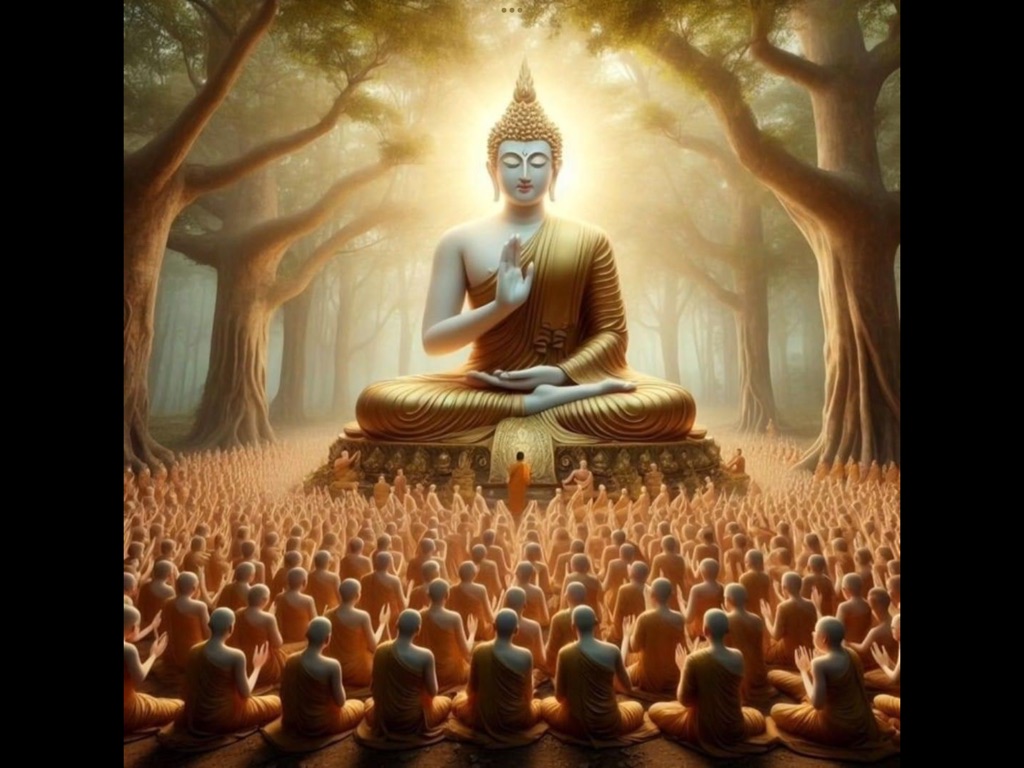
During the time of Shakyamuni Buddha, there was a day when the Buddha was giving teachings to his disciples. In the middle of the discourse, he suddenly turned to Ananda and said:
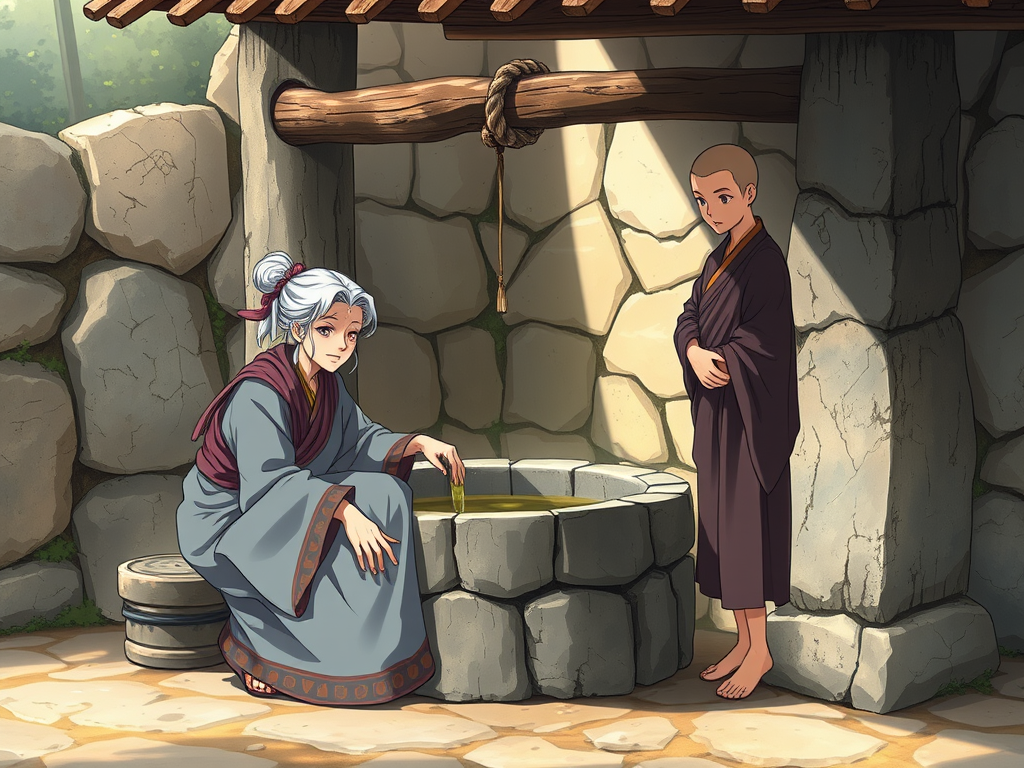
“Take a bucket and go to a small village about five miles ahead. There, you will find an elderly woman washing clothes by a well. Ask her for a bucket of water—and remember to be polite and kind.”
Ananda respectfully nodded and set off with confidence. Such a simple task, he thought. Surely, it would be completed without difficulty.
When Ananda arrived at the village, he indeed found a gray-haired elderly woman by the well. With sincerity and respect, he bowed and said:
“Dear elder, may I please have a bucket of water?”
To his surprise, the woman looked up at him with irritation. Her expression hardened, and she replied sharply:
“No! This well is only for the people of this village. Outsiders are not allowed to use it!”
No matter how politely Ananda pleaded, she refused. Helpless, he returned empty-handed.
Back before the Buddha, Ananda recounted everything that had happened. The Buddha simply nodded and asked him to sit down. Then he turned to another disciple—Sariputra—and gave him the same instruction.
A Completely Different Outcome
Sariputra walked the same path and arrived at the same village. The same elderly woman was still there, washing clothes by the well.
He approached her with equal politeness:
“Dear elder, may I ask for a bucket of water?”
This time, something remarkable happened.
The woman looked up—and her face lit up with warmth and joy, as if she had just met a long-lost relative.
“Of course! Of course!” she said happily. “Come, let me draw the water for you.”
Not only did she fill a bucket for him, but she also insisted he wait. She hurried home and brought back some food, urging him to take it along for his journey.
Sariputra returned with a full bucket—and a heart full of wonder.
The disciples were puzzled. How could the same request, from two equally respectful monks, lead to such completely different outcomes?
They turned to the Buddha and asked for an explanation.
The Buddha revealed:
“In a distant past life, this elderly woman had been reborn as a mouse. One day, she died by the roadside, her body exposed under the burning sun.
At that time, Ananda was a traveling merchant. When he saw the dead mouse, he felt disgust and turned away, covering his nose as he passed.
Sariputra, on the other hand, was a scholar on his way to an important examination. When he saw the same mouse, he felt compassion. He gently covered the body with some earth, offering it a small act of dignity.
After countless lifetimes, the causes they planted ripened into the results you see today.”
This story reveals a profound truth:
Even the smallest thought—whether of kindness or indifference—can plant seeds that shape our future.
Ananda did not commit a great wrong; he simply turned away in aversion. Sariputra did not perform a grand act; he simply offered a moment of compassion. Yet the results, across time, were vastly different.
If such a small moment can create such powerful consequences, how much more impact do our daily actions have?
Every word we speak, every thought we nurture, every action we take—these are all seeds of karma.
To harm others is to plant suffering for ourselves. To act with kindness is to cultivate blessings we may one day receive.
In our daily lives, we may not notice the immediate results of our actions. But the law of cause and effect is always at work—quietly, patiently, unfailingly.
So let us remember:
Avoid harming others
Practice kindness whenever possible
Build connections rooted in goodwill
Because even a single moment of compassion… may one day return to us as unexpected grace.
There is a story from the time of Gautama Buddha that beautifully reveals what true happiness really means.
After the Buddha renounced royal life and attained enlightenment, his son, Rahula, followed his path and became a monastic as well. Seeing both his son and grandson leave the palace, the king—concerned that the royal lineage would end—appointed a relative named Bhaddiya as the new ruler.
However, not long after ascending the throne, Bhaddiya witnessed the instability and danger that accompanied power. Before the kingdom was overtaken by enemies, he too chose to renounce worldly life and became a disciple of the Buddha.
From that point on, Bhaddiya devoted himself wholeheartedly to spiritual practice. Yet, something curious caught the attention of the other monks: every day, he would joyfully proclaim three times, “I am truly happy! I am truly happy! I am truly happy!”
Hearing this, some monks misunderstood him. They wondered if he was still attached to the pleasures of his former life as a king, and reported their concerns to the Buddha.
To clarify the truth, the Buddha gathered the community and gently asked Bhaddiya, “Do you still long for the happiness you once had as a king?”
Bhaddiya replied, “World-Honored One, I do not recall those pleasures at all.”
The Buddha then asked, “Then why do you proclaim your happiness three times each day? What is this happiness you speak of?”
Bhaddiya answered with sincerity:
“When I was a king, my palace was guarded day and night by layers of soldiers. Yet despite all that protection, my heart was never at peace. Every sound in the night startled me. I lived in constant fear—afraid of rebellion, invasion, and loss. I was surrounded by luxury, but I had no freedom, no true rest.
Now, as a monastic, I eat one simple meal a day. I sit beneath the open sky, resting under trees. I hear no anxious signals in the night, and I live in harmony with nature. My heart is free from worry, free from attachment. I have nothing, yet I lack nothing. This is my true happiness.
Out of gratitude for the Buddha, who showed me this path to freedom, I proclaim my joy each day.”
This story invites us to reconsider what happiness truly means.
Is happiness found in what we possess—or in what we are no longer bound by?
So often, we chase success, security, and recognition, believing they will bring us peace. Yet, like King Bhaddiya, we may find that the more we accumulate, the more we have to fear losing.
True happiness does not arise from external conditions, but from inner freedom— a mind unburdened, a heart at ease, and a life aligned with simplicity and clarity.
Perhaps real happiness begins not when we gain more, but when we finally learn to let go.
In 1925, the lay practitioner Zhou Qunzheng made a pilgrimage to Mount Putuo together with Master Hongyi (弘一). At the Zhoushan pier, they encountered a monk. Upon learning that the monk was from the same hometown, Zhou asked him, “What inspired you to leave the household life and become a monk?”
The monk replied:
“I was originally a soldier. One day, I saw a shopkeeper’s wife sitting on the street, weeping. I asked her what had happened. She said a customer had come into her shop, bought something, and paid with three silver coins. After he left, she discovered that all three coins were counterfeit. She feared her husband would scold her, so she cried in distress.
I couldn’t bear to see her suffering, so I took out three genuine silver coins and offered to exchange them with her. She refused, but I insisted and eventually made the exchange.
Later, during a battle, a shell exploded right beside me. Shrapnel struck my chest, yet I was unharmed. When I looked closely, I realized that the three counterfeit coins in my pocket had saved my life—two had been pierced by the shrapnel, and one remained intact. It was because they shielded me that I survived without injury.
After that, I thought to myself: what meaning is there in spending the rest of my life amid gunfire and danger? So I chose to leave the worldly life and become a monk…”
Therefore, do not think that constantly encouraging others to do good deeds and accumulate virtue is merely empty, repetitive talk. Sometimes, you have no idea how much misfortune your blessings have already shielded you from.
Behind every day that you return home safely, how much of it is because “before blessings fully arrive, calamities have already been kept at a distance”?
To practice kindness and accumulate virtue—it is never too late.
He built a road for others, and unknowingly paved one for himself
In 2014, in a remote village in Guangxi(广西)China, a 44-year-old man named Huang Yuanfeng was diagnosed with terminal liver cancer. Doctors told him the reality: without treatment, he might live only three months; with treatment, perhaps a few more years—but at the cost of his family’s entire savings of 170,000 yuan.
Most people would have chosen to fight for their own survival.
But Huang made a different decision.
Looking at the muddy, nearly impassable road in his village—a road that trapped children at home during rainy days and left crops to rot—he chose to spend all his savings not on treatment, but on building a road for everyone.
When the money ran short, he borrowed more from neighbors, making a solemn promise: “Even if I die, my son will repay you.”
Against all odds, the road was completed. It transformed the village, bringing in visitors, creating opportunities, and improving countless lives.
But what happened next was even more astonishing.
When Huang returned to the hospital for a check-up, his condition had not worsened—in fact, it had stabilized, even improved. What seemed like a certain end became an unexpected turning point.
His story carries a simple but powerful truth:
Kindness is never lost. The good you do for others may one day return to protect you—especially in life’s most dangerous moments.
Chinese characters are more than just written symbols—they are small works of art shaped by thousands of years of history. Each character carries meaning, imagery, and often a quiet sense of poetry. A single word can evoke light, wind, mountains, or virtue. When these characters come together to form a person’s name, they become something even more meaningful: a reflection of family hopes, cultural heritage, and the beauty of language itself.
A name often carries the very first blessing from parents and the hopes a family places upon the future.
Imagine traveling back in time to ancient China. If you walked up to Liu Bei (刘备)and casually called him “Liu Bei,” he might pause in surprise—or even consider it somewhat impolite. In traditional Chinese culture, a name was never just a label. It was a symbol of lineage and family, a part of life’s rituals, and perhaps the first gentle poem parents wrote for their child.
A name may consist of only a few characters, yet within it often lies thousands of years of cultural tradition and human warmth.
Surnames and Clan Names: An Ancient Way of Asking “Who Am I?”
Today, we simply combine a surname and given name to form what we call a “full name.” But in ancient China, particularly before the Qin dynasty, “xing” (姓) and “shi” (氏) were two different concepts.
The surname (xing) was primarily used to distinguish marriage relations. The earliest Chinese surnames—such as Ji, Jiang, Si, and Ying—often contained the “female” radical in their characters. This reflected the legacy of a matrilineal society. The principle was simple: people with the same surname were considered to share blood ties, so marriage between them was forbidden.
The clan name (shi), on the other hand, represented social status. Only those who held land, titles, or significant achievements were granted a clan name. In other words, the surname represented lineage, while the clan name reflected rank and honor.
A fascinating example is the famous reformer Shang Yang (商殃) of the Warring States period. He was not originally called “Shang Yang.” His ancestral surname was Ji, and his clan name was Gongsun because he descended from the royal family of the State of Wei. Early in life he was known as Gongsun Yang. Later, after helping transform the State of Qin through sweeping reforms, he was granted the territory of Shang and the title “Lord of Shang.” From then on, people began calling him Shang Yang.
Looking back at history, one might smile at an interesting truth: In ancient times, many people changed their names not to hide who they were—but because life had elevated them to a new chapter.
The Courtesy Name: A Rite of Adulthood
In ancient China, a person often had more than one name. In addition to their given name (ming), they also received a courtesy name (zi).
The given name was mostly used within the family, especially by elders. The courtesy name, however, was the name used in society by peers and acquaintances.
Receiving a courtesy name meant that a person had reached adulthood and should be treated with respect.
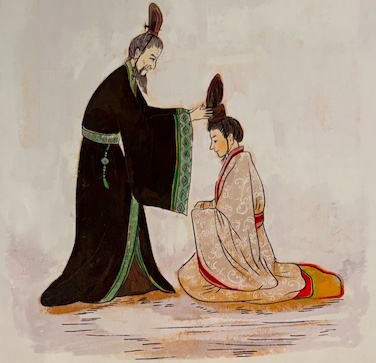
For men, this moment came at the age of twenty during the “capping ceremony” (冠礼). In this solemn ritual, elders placed a ceremonial cap on the young man and bestowed upon him his courtesy name. From that day forward, he was no longer the boy running through village fields with childhood nicknames like “Little Dog” or “Iron Egg,” but a recognized adult in society.
For women, adulthood was marked by the hairpin ceremony (笄礼) at around fifteen. After this ceremony, a young woman could wear her hair pinned up with a hairpin, signifying that she had reached marriageable age.
This is where the classical phrase “waiting in the boudoir for one’s courtesy name” (待字闺中) comes from—describing a young woman who has received her courtesy name and awaits the next chapter of life.
These rituals made the transition into adulthood both solemn and graceful.
Chinese culture often reveals its subtle wisdom in the relationship between a person’s given name and courtesy name.
The great strategist Zhuge Liang (诸葛亮)was known by the courtesy name Kongming(孔明). The character Liang means “bright,” and Ming also means “light” or “clarity.” Together they form a beautiful echo—brightness upon brightness.
The legendary general Zhao Yun (赵云)had the courtesy name Zilong(子龙). Ancient Chinese sayings describe the natural harmony between elements: “Clouds follow the dragon, and the wind follows the tiger.” With “cloud” in his given name and “dragon” in his courtesy name, the combination evokes an image of heroic power moving through the skies.
Then there is the great Song dynasty writer Su Shi(苏轼), whose courtesy name was Zizhan(子瞻). The character Shi refers to a horizontal bar at the front of an ancient carriage—something modest in appearance yet essential for support. Zhan means “to look forward into the distance.” One suggests quiet steadiness; the other, far-reaching vision. Together they reflect the balance of humility and aspiration in his life.
Through these pairings, we can glimpse the hopes of parents and elders, as well as the refined and poetic sensibilities of traditional Chinese culture.
Of course, not every ancient name was elegant or poetic. Some carried a touch of everyday humor.
The ruler Duke Cheng of Jin was said to have the name Heitun(黑臀), meaning “Black Hips,” supposedly because he had a dark birthmark on his body.
Another ruler, Duke Zhuang of Zheng, was named Wusheng(晤生), meaning “born with difficulty,” referring to a difficult birth.
If children today were given such names, they might have a few serious conversations with their parents!
On the other hand, some names sounded incredibly powerful. The king King Wu of Qin was named Ying Dang. In ancient Chinese, the character “Dang” suggested sweeping across lands and conquering territories—a name filled with ambition and authority.
Sometimes a name was lofty and ceremonial; sometimes it simply reflected the humor of daily life.
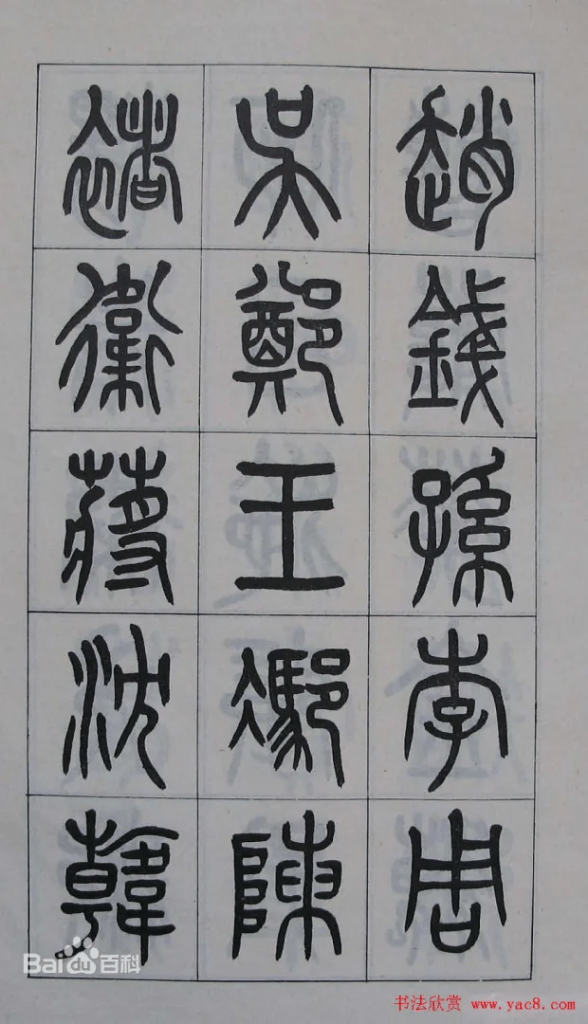
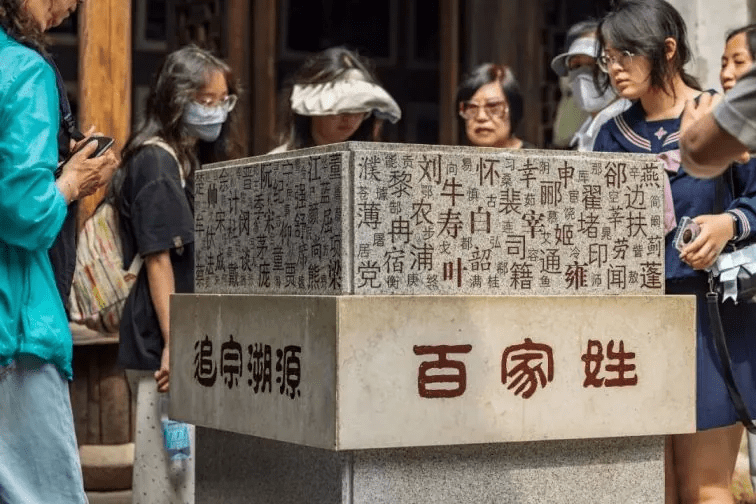
From ancient tribal totems to the familiar Hundred Family Surnames, Chinese names carry thousands of years of cultural memory.
Today, we no longer perform capping ceremonies or hairpin ceremonies, and few people receive courtesy names. Yet when a new child enters the world, parents still open dictionaries, carefully weighing every sound and every meaning before choosing a name.
In that moment, tradition quietly continues.
As an old Chinese poem says:
“A heart’s great aspirations may remain unopened, yet spring winds return again and again in dreams.”
A name may consist of only a few characters, but it carries a family’s blessing, the imprint of history, and the gentlest hopes for the future.
It is the very first gift a person receives in life.
In times when the world feels overwhelmed by conflict, division, and uncertainty, many people are searching for deeper answers about human consciousness and the true purpose of life. One thinker whose work has inspired millions to reflect on these questions is Gary Zukav, a writer and former physicist known for exploring the relationship between science, consciousness, and spiritual growth.
Zukav first gained recognition through his book The Dancing Wu Li Masters, which introduced complex ideas of modern physics to general readers. Later, his bestselling book The Seat of the Soul shifted the conversation toward a deeper exploration of human consciousness and spiritual evolution. In this work, Zukav proposes a powerful idea: humanity is undergoing a transformation from seeking external power to discovering authentic power—the power that arises from the soul.
His message can be summarized in three simple yet profound movements of the human spirit:
Humanity must move from fear to love
from control to compassion
from external power to inner wisdom
Although Zukav approached these ideas through the lens of psychology and consciousness, they resonate deeply with teachings that have existed for thousands of years within Buddhism.
In Buddhist teachings, the mind is the source of both suffering and liberation. According to Gautama Buddha, our thoughts, intentions, and actions shape our experience of the world. This principle is closely connected to the law of Karma, which teaches that every action—whether physical, verbal, or mental—creates corresponding results.
When people act from fear, anger, or greed, they plant seeds of suffering. When they act from compassion, generosity, and wisdom, they create causes for peace and happiness.
Seen in this light, Zukav’s idea of moving from external power to authentic power reflects a timeless Buddhist insight: true strength does not arise from domination or control, but from the transformation of the mind.
In the modern world, success is often measured by status, wealth, or influence. Yet Buddhism reminds us that these forms of external power are temporary and unstable.
The Buddha taught that genuine freedom comes from cultivating inner qualities such as:
compassion
mindfulness
wisdom
loving-kindness
When these qualities grow within us, our consciousness naturally changes. Instead of reacting with fear or anger, we begin to respond with understanding and care. This is the beginning of authentic power—the same inner power Zukav describes.
Zukav believes humanity is evolving toward a new level of awareness, where people become more conscious of their intentions and the effects of their actions. This idea echoes the Buddhist path of awakening, where individuals gradually develop greater awareness of their thoughts and emotions.
Each moment offers a choice: to act from fear or from love, from control or from compassion.
If enough people choose compassion, the collective consciousness of humanity can also change. In this sense, spiritual transformation is not only personal—it is also global.
A Gentle Reminder for Our Time
In a world often shaken by conflict and division, Zukav’s words serve as a gentle reminder that true change begins within the human heart.
Humanity must move from fear to love, from control to compassion, from external power to inner wisdom.
These movements are not only philosophical ideals; they are practical steps toward creating a more peaceful world. When we cultivate compassion and awareness in our own lives, we are already contributing to the transformation of human consciousness.
As the Buddha taught, peace in the world begins with peace in the mind. And when one heart awakens to compassion, it quietly lights the path for many others.
Throughout history, great spiritual teachers have reminded humanity that true strength does not come from violence, but from compassion. One of the most powerful voices for this truth was Mahatma Gandhi, whose philosophy of nonviolence transformed not only India’s independence movement but also the moral thinking of the modern world.
Gandhi believed deeply that responding to hatred with hatred only multiplies suffering. One of his most famous reminders is:
“An eye for an eye only ends up making the whole world blind.”
These words echo a truth that has been taught for thousands of years in Buddhist philosophy. The teachings of Gautama Buddha emphasize that violence and anger inevitably create more suffering through the universal law of cause and effect, often described as karma.
When people act with hatred, harmful consequences naturally follow. But when people act with compassion, patience, and kindness, they plant seeds of peace that can transform the future.
Gandhi understood this deeply. He once said:
“Non-violence is the greatest force at the disposal of mankind.”
At first glance, nonviolence may seem passive or weak. Yet both Gandhi and Buddhist teachings reveal the opposite: choosing compassion when faced with anger requires tremendous inner strength. It means resisting the instinct to retaliate and instead responding with wisdom and humanity.
Another powerful statement from Gandhi reminds us of this inner strength:
“The weak can never forgive. Forgiveness is the attribute of the strong.”
In Buddhist practice, forgiveness and compassion are essential qualities for spiritual growth. When we release anger and cultivate compassion, we stop feeding the cycle of negative karma. Instead, we create positive causes that lead to harmony and healing.
The world today often appears filled with conflict, division, and hostility. Yet the teachings of Gandhi and the Buddha remind us that lasting peace cannot be built through force. Peace grows from the transformation of the human heart.
Every act of kindness, every moment of patience, and every compassionate choice becomes a small but powerful step toward a more peaceful world.
Gandhi expressed this hopeful vision beautifully:
“Where there is love there is life.”
His words remind us that true change does not always come from power or domination. Often, it begins quietly—with compassion, moral courage, and the determination to do what is right.
When we choose compassion over anger, forgiveness over revenge, and wisdom over violence, we participate in a timeless spiritual truth: good causes create good results. In this way, every compassionate action becomes a seed of positive karma that can gradually transform both our own lives and the world around us.
And perhaps this is the deepest lesson shared by both Gandhi and the Buddha: compassion may appear gentle, but in the end, it is stronger than violence.
In recent days, my heart has been unsettled by the wars, conflicts, and endless scandals that seem to surround our world. In such turbulent times, the gentle wisdom of Gandhi becomes like a quiet lamp in the darkness, calming my mind and reminding me to return to inner peace.
I make a sincere vow to guard the peace within my own heart and not allow anger or despair to take root. Instead, I choose to pray for those who are suffering and to let the love and compassion within me flow outward. My voice may be small in this vast world, but I believe that every sincere prayer carries its own power, and the divine will surely hear it.
May the blessings of all the divine beings in the universe embrace this world. May compassion arise in human hearts, hatred dissolve, and may peace and harmony gently return to our shared home.
Through his brushwork, H.H. Dorje Chang Buddha III renders the subtle life cycle of a water bubble—its emergence, transformation, and eventual dissolution—with remarkable vitality. Though the medium is static, the painting evokes a striking sense of movement and immediacy. One almost senses the gentle drifting of bubbles across the surface, and even imagines the delicate sound that might accompany the instant when a bubble touches the ground and quietly disappears.
Beyond its visual beauty, the work carries a deeper contemplative resonance. In the fleeting rhythm of the bubbles, one cannot help but see a metaphor for the human condition. The trajectory of a bubble—from its brief formation to its silent vanishing—mirrors the arc of human life: birth, growth, aging, and departure. Life itself unfolds within the span of a breath, fragile and transient, reminding us of the importance of awareness and presence in each passing moment.
From an artistic perspective, the painting also demonstrates a remarkable command of impressionistic expression. The composition operates not only as a unified whole but also as a constellation of smaller visual worlds. Any isolated fragment of the canvas could stand independently as an exquisite impressionist study, rich in color, light, and atmosphere. This structural richness gives the work a dreamlike, almost illusory quality—where forms appear to emerge and dissolve within layers of color and movement.
In this way, the painting invites the viewer to linger, not merely to observe, but to reflect. It transforms a simple natural phenomenon into a meditation on impermanence, perception, and the delicate beauty of existence.
Click here to Wikitia page on H.H. Dorje Chang Buddha III that list major accomplishments and teachings with links.
When the Buddha was in Jetavanārāma, the king Ajātasattu was friendly with Devadatta. Even though unrighteous and sinful, Ajātasattu was pleased with him. He built for Devadatta a temple in Gayāsīsa, which he gave to him. And he assisted him by giving him all the necessary perquisites. In the meantime, following Devadatta’s words, he sent the elephant NāÀāgiri to kill the Buddha and he sent bowmen to shoot at the Buddha. Many bad things such as these were done by him. After that, his father who was a very righteous king and who was one who had attained the stream entrance state of mind [sotāpanna], was killed by him through the persuasion of Devadatta.
Later, he heard that Devadatta had died and had gone to hell sinking down through the earth. On hearing this, he became afraid for his life believing that if anything happened to Devadatta, no doubt it would happen to him, too. He was very much afraid day and night. He spent the daytime in the routine activities of his daily life. But at night, when he went to bed, he dreamed that he was falling through the earth that had opened up and was shooting forth the fires of hell. From this, he became even more afraid as if he were a chicken that had its neck twisted and had been thrown into the hot sun to die. In this way, he suffered day and night despite his royal luxuries.
He had a keen interest in questioning the Buddha about the dream he was having, but he was reluctant to express that interest to Jīvaka. One day he saw the moonlight bright as if it were daylight, and he said to his minister Jīvaka, “The moonlight is so clear that one can see the distance of forty- five arrow shots as if it were daytime. It is not good to waste our time by staying here. This night is pleasant, calm, attractive, and beautiful. Let us go to a good ascetic, to someone like that, to listen to the Dhamma. I have now such an intention. Do you know to whom we can go?” The other ministers who heard him started to mention the names of the various religious masters to whom they each paid obeisance. Most of them were NigaÏæha-s. One minister said, “There is the ascetic PūraÏa Kassapa. He is a Buddha. Let us go to see him.” Another minister said, “It would be good to go to the Buddha Makkhali Gosāla.” Another minister said, “Instead of going to him, let us go to the Buddha Ajita Keśakambala.” Then some other minister wanted to go to the Buddha Kakudha Kaccāyana. After, another said, “I think it would be good to go to the Buddha Sañjaya Belaææhiputta.” The sixth one said, “I suggest that more than any other Buddha, NigaÏæha Nāthaputta is the best one to whom to go.”
In this way, all the ministers said what they thought, mentioning various NigaÏæha-s, all of who were like children [with regard to spiritual advancement]. The king did not listen to them seriously, thinking, “No doubt Jīvaka will respond to my question.” But Jīvaka was silent.
Understanding his silence, the king addressed Jīvaka. He asked, “Jīvaka, these people are all praising their own Buddha-s whom each of them follows. Why do you not say something? Do you have no such a Buddha?”
Jīvaka heard this and got up from his seat. He paid respect toward the direction in which the Buddha was, and he recited the nine-fold virtuousness of the Buddha. He said, “Such a virtuous, omnipresent one is now living in my mango park followed by 1,800 monks. Therefore, I suggest that it would be good for your lordship to go there.”
On listening to him, the king said, “It is wonderful. Let us go there.” And he made arrangements to go there by elephants together with his retinue. He went to the Buddha in royal magnificence. He approached the Buddha’s residence and dismounted his elephant. He then came to the followers of the Buddha who were wearing neat and clean clothes, who had tranquil faculties, who all were seated still with arms and feet close to their bodies, and of whom not even one sneezed or coughed. He was very pleased by seeing this. First he paid his respects to the monks, and then to the Buddha. He sat down and said, “Sir, I would like to ask a question.” “Well, your lordship, ask your question.” Then the king said, “Venerable sir, what is the result that one can gain by being a monk?” The Buddha said the discourse called the Sāmaññaphala Sutta divided into two sections [bhāÏavāra-s] and into 500 points to be explained [grantha-s].23
After this preaching, Ajātasattu knelt down in the presence of the Buddha to pay his respect and said, “Revered sir, please excuse my wrong deeds that I have done out of ignorance.” Buddha accepted his apology, and the king went away.
Then the Buddha addressed the monks, saying, “Oh monks, this King Ajātasattu by being associated with a bad person both killed his father and at the same time ruined his chance for future salvation. If he did not do so, he would today be one who has entered into the stream entrance state of mind [sotāpanna].”
The next day, the monks assembled in the preaching hall were discussing how King Ajātasattu had lost his good fortune to become a Sotāpanna. The fully enlightened one entered the preaching hall then and asked the monks, “Oh monks, what were you discussing before I came here?” The monks mentioned the previous day’s incident. And the Buddha said, “Oh monks, not only in this life but even in the past, Ajātasattu by associating with evil ones created for himself misfortune.” The monks invited the Buddha to disclose the past story.
“At one time, when King Brahmadatta was ruling in Benares, the Enlightenment Being was born in a Brahmin family in that city. When he was grown, he went to a well- known teacher who used to teach in the city and began to study under him. After studying under him, he started to teach students on his own.
“While he was teaching students like this, he had a student named Sañjīvaka. He taught him a spell that could be used to bring the dead to life. And when they gain life, they can walk—but only a short distance. He did not teach him the spell to immobilize them if they come near.
“Once, that student went with a group of other students to fetch firewood from the forest. On their way, they saw a dead tiger on the ground. Sañjīvaka said to the other students, ‘Do you want to see my power? I will bring this tiger back to life.’ The other students said, ‘How can you bring a dead being back to life? It will never happen.’ Sañjīvaka said, ‘Just look at what I do.’ And he started to recite the spell. The other students said, ‘Who knows what will happen!’ And they climbed up trees.
“While Sañjīvaka was repeating the spell, he threw some pebbles toward the dead body of the tiger. When he was throwing the pebbles, the tiger started to get up. He came forward, and jumping up on the very person who was chanting the spell, he killed him. The tiger that had been brought back to life also fell dead at that spot.
“The other students collected the firewood and returned to where they were studying. They told the teacher what had happened. On hearing the news, the teacher said to the students, “It is not good to help an evil friend. If you do so, such is the result.” And he advised them to live generous and peaceful lives. He himself lived such a life, did many meritorious deeds, and acquired much merit. At the end of his life he died, and was born in heaven.
“Sañjīvaka was King Ajātasattu at that time. The teacher of Benares was I who have become the Buddha.” In this way, the Buddha ended the story of Sañjīva.
23 The Sāmaññaphala Sutta is to be found in the Dīghanikāya, but it is not divided there into two sections.