Why Ancient Roman Buildings Still Stand—And Modern Ones Don’t

Have you ever stood before the Pantheon in Rome or looked up at the towering aqueducts from ancient times and thought:
“How are these structures—built over 2,000 years ago—still standing strong, while modern buildings crack, rust, and collapse in just a few decades?”

It’s not a miracle. It’s ancient wisdom and material science far ahead of its time.
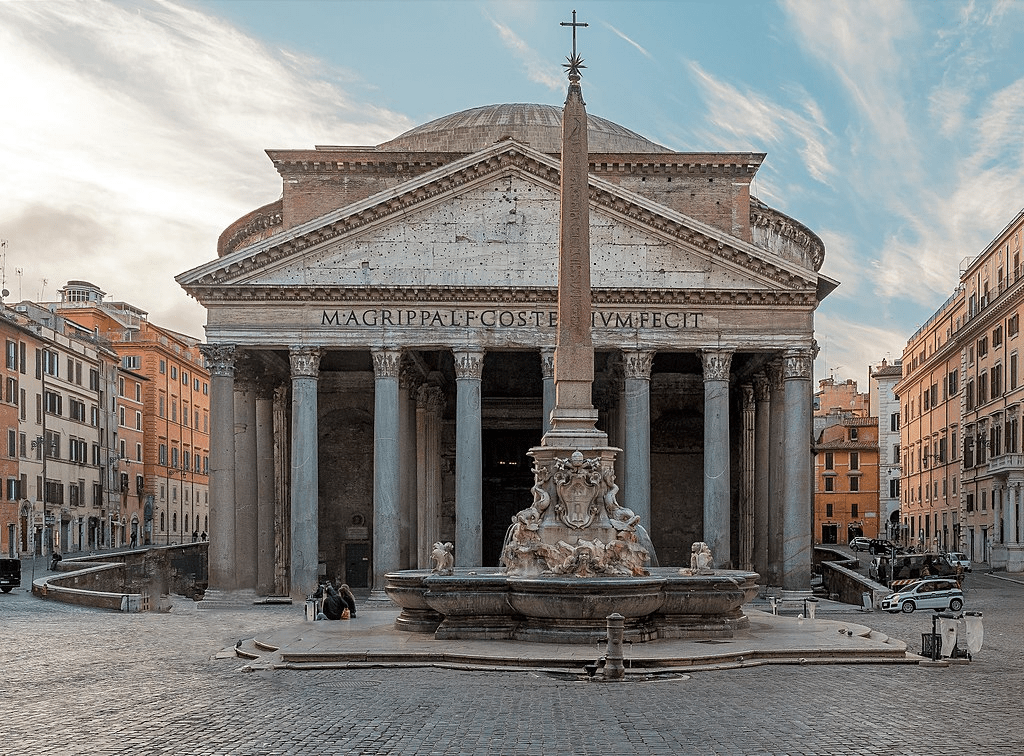
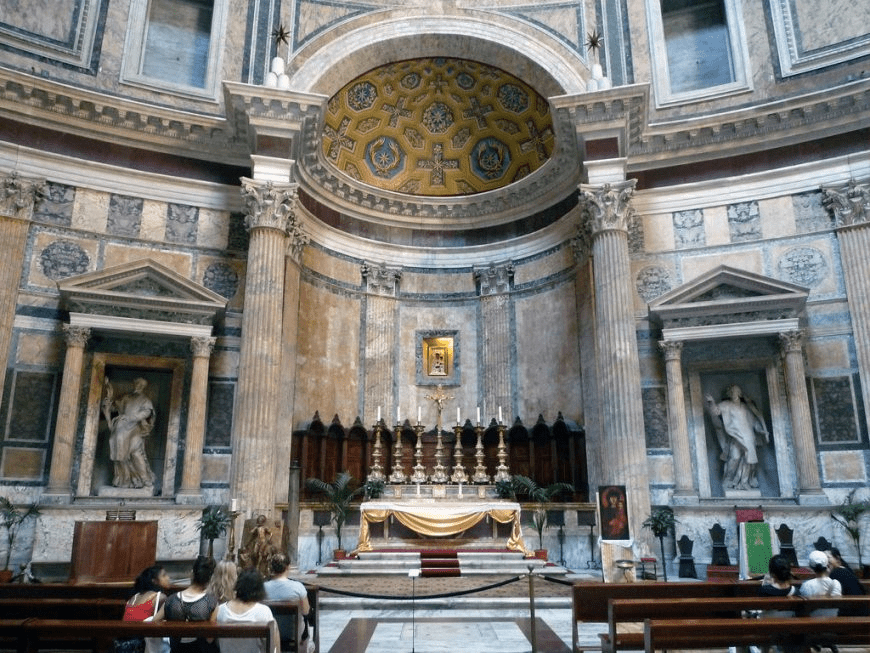
By Rabax63 – File:Pantheon_Rom_1.jpg, CC BY-SA 4.0, https://commons.wikimedia.org/w/index.php?curid=87626466

Pantheon, Rome, c. 125 C.E. (photo: Darren Puttock, CC BY-NC-ND 2.0)

Sanctae Mariae Rotundae (photo: Steven Zucker, CC BY-NC-SA 2.0)

🏛 The Secret of Roman Concrete

Unlike the Portland cement we use today, ancient Roman concrete was made with volcanic ash (pozzolana), lime, water, and volcanic rock. This special mix triggered a chemical reaction known as the pozzolanic reaction, which formed a remarkably stable and durable material.

This volcanic ash came from regions like Campi Flegrei near Naples, rich in silica and alumina. When mixed with lime and water, it formed bonds that strengthened over time—rather than weakened.


🌊 Stronger with Time—Even Underwater

Even more amazing? Roman concrete exposed to sea water didn’t erode—it grew stronger. Scientists discovered that seawater reacted with the volcanic materials to create a rare mineral called tobermorite, which reinforced the concrete’s internal structure.

This is why many ancient Roman ports and sea walls still stand intact after 2,000 years—even without modern rebar or waterproofing.
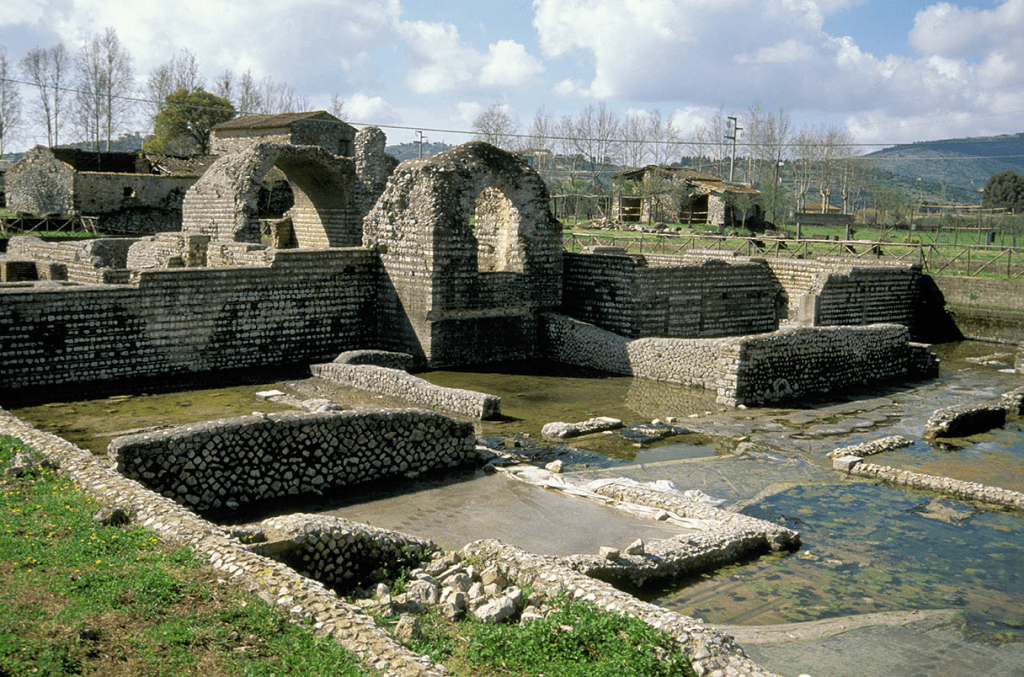
Ruins in Privernum, near Rome, where researchers collected ancient concrete samples from a bordering city wallREDA & CO srl/Alamy


🔧 Self-Healing Capabilities

Roman concrete even had a kind of “self-healing” ability. When small cracks formed, water seeping into the cracks would trigger new chemical reactions, filling the gaps with more binding minerals and sealing the damage naturally.

No wonder structures like the Pantheon’s massive unreinforced concrete dome—still the largest in the world—have stood strong for two millennia.

Today’s concrete (Portland cement) is fast to produce and easy to use—but it’s not built to last. It’s vulnerable to carbonization, water infiltration, and the corrosion of internal steel reinforcements. Many modern buildings begin to deteriorate in as little as 50 to 100 years.

What’s more, many structures are built with thinner supports and cheaper materials to cut costs and speed up construction—further sacrificing long-term durability.

Ancient Roman builders weren’t just engineers—they were environmental designers who worked with nature rather than against it. Their materials were local, natural, and synergistic. They designed for longevity, not just appearance or convenience.

Modern architecture, for all its technological advancements, could learn a powerful lesson:
Durability is a form of sustainability.


We often assume that more advanced technology means better quality. But perhaps what truly makes a structure strong isn’t just engineering—it’s wisdom, respect for nature, and a mindset rooted in harmony and longevity.

If we embrace these ancient insights, maybe our future buildings won’t just house us—they’ll endure for generations.

Link:https://peacelilysite.com/2025/07/21/why-ancient-roman-buildings-still-stand-and-modern-ones-dont/

Dharma King and Dharma Wheel Initiation

In Exoteric Buddhism, there is a revered title for a special kind of master known as the Dharma King. In this Dharma-ending age, it is exceedingly rare and difficult to encounter a true Dharma King. According to the Vajrayana Buddhist scripture Vajra Secret Determination (Vajra Mi Jian), a Dharma King is the Sovereign of All Dharmas. A genuine Dharma King is either a Buddha or a great Bodhisattva who has attained at least the Twelfth Bhumi and has reincarnated into this world. Such a being must possess the twofold qualities of worldly and transcendental virtues.

Worldly Virtues

Worldly, or inner-worldly, virtues include mastery of both Exoteric and Esoteric Buddhist teachings, as well as perfection in the Five Vidyās:

  • Mastery of Exoteric and Esoteric Teachings means thorough understanding of the Tripitaka—the Sutras, Vinaya, and Abhidharma—as well as complete proficiency in all Esoteric (Tantric) practices, including the cultivation of the Three Secrets (body, speech, and mind).
  • Perfection in the Five Vidyās The five vidyas are the silpakarmasthanavidya (craftsmanship vidya), the cikitsvidya (healing vidya), the sabdavidya (sound vidya), the hetuvidya (causality or Buddhist logic vidya), and the adhyatmavidya (inner realization vidya). Actually, the Five Vidyas are not that narrow. Everything in the universe can be classified into five aspects of brightness and darkness. To develop everything that is good in the universe and that benefits living beings is classified as bright. That which confuses and is bad is classified as dark. 

These Five Sciences must be fully and flawlessly accomplished.

Transcendental Virtues

Transcendental, or other-worldly, virtues refer to mastery of the Five Secret Inner Empowerments, which are revealed through the exhibition of supernatural powers within a tantric mandala. These five supreme empowerments are:

  1. Vase Empowerment by Golden Urn Divination (Dharmapāla Division)
  2. Vajra Samādhi Empowerment (Yidam Division)
  3. Auspicious Selection Empowerment (Yidam Division)
  4. Dharma Wheel Supreme Empowerment (exclusive to a Dharma King)
  5. Buddha-Bestowed Nectar Empowerment – the highest empowerment that signifies direct and non-dual communication with the Buddhas

Additionally, a true Dharma King must possess the Dharma King Dharma Wheel, a sacred object bestowed directly by the Buddha from the sky (the void). Though it appears similar to a coin in shape, the Dharma Wheel is imbued with extraordinary power. It can walk, dance, speak, and sing, and it can manifest supreme Dharma powers through the true Dharma King.

The following is a firsthand account from Zhaxi Zhuoma Rinpoche, describing how she received the Dharma Wheel Initiation from H.H. Dorje Chang Buddha III.

Although this was a high level inner tantric initiation and as such cannot be publicly discussed or shared with others in detail, an exception was made to allow me to briefly tell others of my experience so that they can learn of the true power of the magnificent Buddha-dharma. A ritual was performed for me to remove certain negative karma that served as an obstacle to my achievement of liberation. After the dharma protecting deities arrived and the the Buddha-dharma was practiced, the Vajra Dharma Wheel quickly exhibited samadhi. Very quickly, I screamed–the impact was very intense, but in that same moment I also realized the truth of the Buddha-dharma. Although there was intense feeling–greater than anything I had ever experienced before–there was also no-feeling. I realized the emptiness of that magical experience while at the same time experiencing it. It was explained that this experience was a precursor to the realization of the dharmakaya.

I understood how my Buddha Master and other enlightened beings could accomplish their amazing feats. Although there are no words to adequately describe this experience, it was a glimpse of the dharmakaya–the truth of the universe! This is what is meant by “form is emptiness, and emptiness is form.” Living in this pure state, if only for a moment and through the power of my Buddha Master, I understood that the dharmakaya is everywhere. There was no place that is not the dharmakaya. This is what enlightened beings experience or realize at all times; as a result, they can do anything! All things are inherently empty and at the same time contain the potentiality of all things! This realization exists while living in this mundane world…….and, it exists for all sentient beings! We all have the inherent nature of a Buddha.

The initiation caused me not only to eliminate certain obstacles, but also reinforced my resolve to practice and help others to learn the true Buddha-dharma. I understood the necessity of obtaining inner tantric initiations from a true vajra master if one wants to achieve enlightenment in this lifetime! Only a true vajra master can summon the dharma protecting deities and communicate directly with the Buddhas and Bodhisattvas to perform this sort of powerful ritual! Only a true vajra master can manifest the awesome power of the true Buddha-dharma. My master, H.H. Dorje Chang Buddha III, is such a master! 

Link:https://peacelilysite.com/2025/07/18/dharma-king-and-dharma-wheel-initiation/

Source: https://www.zhaxizhuoma.org/i-received-the-holy-dharma-wheel-initiation/

The Blessings of Faith: A Daughter’s Journey Through Her Mother’s Illness

My name is Li Xueping, and this is a story about love, faith, and the incredible blessings that come from practicing true Buddhism. It is a story that centers around my mother, Yang Yanshu, a gentle and kind-hearted woman who is now over ninety years old. Despite her age, she continues to inspire us with her warmth, frugality, and deep devotion to her family.

My mother has been a Buddhist for many years. Though she is illiterate, she memorized and recites the Heart Sutra daily with great sincerity. In our home, we’ve always honored Namo Guanshiyin Bodhisattva, and her faith has been a quiet but powerful force in our lives.

In October 2003, my sister and I accompanied our mother to listen to the Dharma discourses of Namo Dorje Chang Buddha III for fourteen consecutive days. During that time, my mother experienced a profound transformation—both physically and mentally. She was radiant with Dharma joy and gained deep faith in the supreme teachings. From then on, she diligently listened to discourses, practiced Buddhism daily, and her health remained remarkably stable. It was clear to us: the blessings of true Dharma had uplifted her life.

In June 2017, our lives were shaken when my mother was diagnosed with cervical cancer at a reputable hospital. She was in her eighties at the time, and the news was devastating. We decided against surgery and opted for conservative treatment with traditional Chinese medicine to minimize her suffering.

My siblings and I turned entirely to Buddhist practice. We recited The Supreme and Unsurpassable Mahamudra of Liberation, performed lamp offerings, and conducted life-releasing ceremonies. My mother, too, chanted Buddha’s names with devotion and repented for past wrongdoings. She often reflected with remorse: “I regret killing so many chickens in the past just for food. I committed great wrongs by taking lives.”

We knew from the Buddha’s teachings that killing brings severe karmic consequences, and while our efforts could not undo the past, we hoped to ease her suffering through sincere repentance and practice.

Wanting to seek deeper help, I applied for a U.S. visa and, in September 2017, traveled to the United States to personally report my mother’s situation to the great Namo Dorje Chang Buddha III. The Buddha responded with immense compassion: “I will perform a Dharma practice to bless her.”

I will never forget that moment. The Buddha, who treats all beings with equal kindness regardless of wealth or status, blessed my mother. Monastic disciples also provided her with precious Black Treasure Pills. Miraculously, her pain vanished, her complexion became rosy, and she regained peace and strength. The power of true Dharma had once again revealed itself.

An Unexpected Crisis and a Miraculous Return

In June 2018, while I was visiting my daughter in Belgium, I received an urgent call—my mother was critically ill. We feared I might not see her again. I flew back as quickly as possible, praying for blessings throughout the journey.
When I arrived home, I was astonished—my mother had survived.

My sister later told me that just before losing consciousness, my mother cried out:

“Namo Guanshiyin Bodhisattva, save me!”

Soon after, the ambulance arrived and took her to the hospital. After seven days of treatment, she was miraculously revived.

Shortly after, I faced a difficult decision. I had already planned to attend the Dharma Assembly Honoring the Holy Birthday of Namo Dorje Chang Buddha III in the United States. With my mother still recovering, and family responsibilities weighing on me, I hesitated. My husband even called me “unfilial” for wanting to leave.

But deep in my heart, I knew: this was the most important aspiration of my life. I prayed silently, asking for the Buddha’s blessings to keep my mother safe during my absence.

I attended the Great Life-Releasing Dharma Assembly at the H.H. Dorje Chang Buddha III Culture and Art Museum on June 21, 2018, and the next day, the rare and magnificent Holy Heavenly Lake Dharma Assembly. Surrounded by thousands of disciples from around the world, we chanted the holy name of the Buddha in unison. It was a moment of unimaginable spiritual joy.

On June 25, I had the honor of meeting Namo Dorje Chang Buddha III once again. I tearfully reported my mother’s condition, and the Buddha, in His great compassion, smiled and said, “Haha, good!”
That moment filled me with peace and hope.

When I returned home, I found my mother in excellent condition. Despite her diagnosis, she had never experienced unbearable pain, never lost her spirit, and continued her daily Buddhist recitations as usual. During Chinese New Year, even our relatives remarked in amazement: “She doesn’t look like someone with cancer at all!”

Her strength, peace, and recovery were nothing short of miraculous. We owe everything to the compassionate blessings of Namo Dorje Chang Buddha III, the Buddhas and Bodhisattvas of the ten directions, and the authentic Tathagata Dharma.

Through this journey, I have come to understand the impermanence of life, the inescapability of karma, and the painful cycle of birth, aging, sickness, and death. No one can escape their karmic debts. But through true Buddhist practice—guided by the teachings of Namo Dorje Chang Buddha III—we can walk a path toward healing, liberation, and lasting peace.

May all beings awaken to the true Dharma, cherish the opportunity to learn from a living Buddha, and attain the freedom of body and mind through genuine practice.

Link:https://peacelilysite.com/2025/07/15/the-blessings-of-faith-a-daughters-journey-through-her-mothers-illness/

Source: https://dharma-hhdorjechangbuddhaiii.org/a-mother-in-her-nineties-overcomes-the-pain-of-cancer-through-the-blessings-of-the-h-h-dorje-chang-buddha-iii/

#DorjeChangBuddhaIII #HHDorjeChangBuddhaIII #Buddha #Dharma

The Power of the Mind: A Lesson from the Garden

Peace Pilgrim once said, “If you knew how powerful your mind is, you would never think a negative thought.” That quote stayed with me, but I didn’t fully understand its truth until I experienced it for myself—right in my own backyard.

At one point, we lived in a house with a large backyard that inspired me to plant organic vegetables. I imagined harvesting fresh, healthy produce and enjoying the process of nurturing life from the soil. Eager and hopeful, I bought a few small tomato plants from Home Depot and began tending to them daily. Watching them grow brought me joy and anticipation—I could almost taste the sweet, juicy tomatoes I dreamed of.

But as the plants began to bloom and bear fruit, trouble arrived. Large, green caterpillars appeared overnight, chewing through leaves and fruit, threatening to destroy the entire garden. My husband was furious and would crush them on sight. Wanting to find a gentler solution, I turned to friends for advice. One of them recommended a non-toxic spray from an organic farm store. It worked like a glue, blocking the insect’s skin so they couldn’t breathe and would suffocate to death.

When I heard that, I felt a sharp, suffocating sensation through my own skin. I couldn’t do it. I couldn’t kill them—no matter how many tomatoes I might lose. These were living beings. Their lives mattered too. I decided then and there: I would not harm them.

And then, something remarkable happened.

The very next morning, my husband came to me in astonishment. “All the caterpillars are gone,” he said. “And there aren’t even any dead ones.” I went out to the garden. He was right. The insects had vanished without a trace.

Was it just a coincidence? I don’t believe so. I believe they sensed my compassion. I believe the power of a sincere, non-harming mind created a shift in energy that led to a quiet, unseen miracle.

Later, after I began studying Buddhism, I came to understand this experience on a deeper level. Through the Dharma transmitted by H.H. Dorje Chang Buddha III, I learned the true meaning of the precept of “Not Killing.”

This teaching awakened a deeper sense of responsibility in me. I now strive to regard the suffering of all beings as my own, and I earnestly wish for every living being—my parents of infinite past lives—to live in harmony and peace.

I sincerely pray that all beings may enjoy happiness, good health, and abundant fortune. I constantly beseech all Buddhas and Bodhisattvas to bless them, to help them escape suffering, to encounter and practice the true Buddha-dharma, and ultimately to attain liberation from the cycle of birth and death.


This is not just a story about gardening. It is a story about the incredible power of our minds—and even more so, our hearts. When we choose compassion over destruction, mindfulness over impulse, miracles can happen.

Let kindness guide you. Let the power of your mind awaken something beautiful—not just in your life, but in the lives of all beings around you.

Link:https://peacelilysite.com/2025/07/11/the-power-of-the-mind-a-lesson-from-the-garden/

Vibrations of the Soul: How Dr. David Hawkins’ Energy Scale Reveals the Secret to Health and Happiness

What if your thoughts and emotions were not just fleeting states of mind, but actual energy frequencies that shape your physical health and the world around you?

Dr. David R. Hawkins, a renowned American psychiatrist and spiritual teacher, spent decades studying human consciousness and developed a revolutionary model known as the Map of Consciousness. His work, presented in the best-selling books Power vs. Force and Letting Go, offers profound insight into how our energy levels—shaped by our emotions, beliefs, and spiritual awareness—directly impact our health and happiness.


🧠 The Energy Scale That Maps Our Inner World

Hawkins created a logarithmic scale of consciousness, ranging from 1 to 1000, where each level reflects a specific emotional and spiritual frequency. These levels are not abstract—they can be measured through kinesiology (muscle testing) and are believed to influence not only individual wellbeing but also global consciousness.

Here’s a simplified breakdown:

LevelEmotion/StateEffect on Health
20–100Shame, Guilt, Apathy, FearWeakens body and immune system
200Courage (Turning Point)Threshold into empowering, healing energy
300–400Willingness, AcceptanceEnhances emotional resilience and balance
500Love, CompassionPromotes deep healing and joy
600–700+Peace, EnlightenmentSpiritual transcendence and lasting vitality

Hawkins emphasized that 200 is the critical dividing line. Below this threshold, people are ruled by fear, anger, or despair—states that are energetically draining and often linked to physical illness. Above 200, individuals begin to reclaim their personal power, align with truth, and tap into energies that support healing, vitality, and inner peace.


Dr. David R. Hawkins, stated that many people fall ill because they lack love and are filled only with pain and despair. When a person’s vibrational frequency is below 200, they are more prone to illness.

Dr. Hawkins, who interacted with many patients daily, said that he could tell why a person was sick just by looking at them—because he couldn’t find even a trace of love in them. Instead, their entire being was enveloped in pain and despair, living in a state dominated by negative thoughts.

According to Hawkins, many people fall ill not because of viruses or external factors alone, but because their emotional vibration is too low. When we live in fear, hold grudges, dwell in guilt, or resist life, our frequency drops—and the body, being energy-sensitive, responds with imbalance and dis-ease.

Chronic stress, suppressed anger, and emotional numbness are not just psychological burdens—they create an environment where illness can thrive.

If a person’s vibrational frequency is above 200, they are less likely to become ill. In contrast, emotions like anger, constantly blaming others, and harboring resentment consume a great deal of energy.


💖 Love, Faith, and Healing: The Power of High Frequency

Dr. David R. Hawkins observed that when Nobel Peace Prize laureate Mother Teresa appeared at the award ceremony, the atmosphere in the entire venue became remarkably elevated. The vibrational frequency of the space rose significantly, and her powerful presence allowed everyone there to tangibly feel her energy. In her presence, no one harbored negative thoughts.

According to Dr. Hawkins, when a person with a high vibrational frequency enters a space, they uplift everything around them—people, emotions, and even the environment itself. In contrast, someone who is filled with negative thoughts not only harms their own well-being but also disrupts the energetic field of their surroundings.

From a medical standpoint, Dr. Hawkins found the power of thought to be truly extraordinary. Through millions of tests and global surveys conducted across different races and cultures, he discovered that the impact of human consciousness was consistent and universal.


🌿 How to Raise Your Energy Level and Stay Healthy

You don’t need to be a spiritual master to benefit from Hawkins’ insights. Simple, daily practices can help you maintain a high vibrational state and support your health:

  1. Practice Gratitude
    Start and end each day reflecting on what you are thankful for. Gratitude is a natural vibration lifter.
  2. Choose Forgiveness Over Resentment
    Let go of past hurts. Forgiveness is not for others—it’s a gift you give yourself to release energetic baggage.
  3. Meditate or Pray Daily
    Quieting the mind and focusing on divine compassion, love, or light raises your frequency significantly.
  4. Speak with Kindness and Honesty
    Truthfulness and compassion are energetically aligned with the higher levels of consciousness.
  5. Surround Yourself with Uplifting Influences
    Avoid negative media, toxic relationships, or environments that lower your energy. Choose art, nature, music, and people who inspire joy.
  6. Invoke Higher Consciousness
    Repeating sacred names—such as “Amitabha Buddha,” “Guanyin,” or “Jesus Christ”—with pure faith has been shown to uplift energy and bring healing calm.


✨ The Ultimate Wellness Is a Shift in Consciousness

Dr. David Hawkins teaches us that wellness begins from within. By raising our consciousness, choosing love over fear, and aligning with truth and compassion, we can live not only healthier lives—but more joyful, meaningful ones.

Your mind is more powerful than you think. And your heart—when opened fully—has the power to heal not just your body, but the world around you.


“What you are looking for is what is looking.” — David R. Hawkins

Link:https://peacelilysite.com/2025/07/08/vibrations-of-the-soul-how-dr-david-hawkins-energy-scale-reveals-the-secret-to-health-and-happiness/

Buddhism, Multidimensional Space, and the Science of Consciousness

Modern scientists suggest there may be multidimensional spacetime. The world we perceive in our daily lives consists of three dimensions of space—length, width, and height—plus one dimension of time, forming what we call four-dimensional spacetime.

For most people, it is nearly impossible to imagine what multidimensional space could be like. Even scientists struggle to describe how such realms might appear.

Yet once, while I was reading a Buddhist sutra, I felt as though I glimpsed something of this mysterious idea.

In the Vimalakirti Sutra, it is recorded that Manjushri Bodhisattva led 8,000 bodhisattvas, five hundred arhats, and countless heavenly beings to visit the ailing lay master Vimalakirti.

Vimalakirti lived in a small chamber. He invited everyone to enter. Miraculously, they all went inside, but the room did not grow any larger. No one felt crowded or obstructed, and everyone saw Vimalakirti sitting directly before them.

Manjushri and Vimalakirti engaged in profound dialogue about the Dharma. Later, Vimalakirti displayed astonishing spiritual powers, bringing seats, exquisite foods, and treasures from distant worlds into that same room.

It was absolutely astonishing—like witnessing the seamless merging of multiple dimensions.

Throughout Buddhist history, many great masters have demonstrated abilities that seem to transcend space and time.

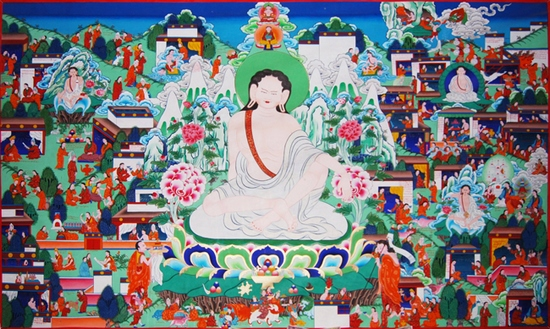
For example, there is the story of Milarepa, Tibet’s most renowned yogi. When he was welcoming his disciple Rechungpa back from India—where Rechungpa had traveled to collect scriptures—an incredible event took place.

Rechungpa carried the scriptures on his back as he crossed the vast grasslands. When he saw Milarepa waiting for him, he was overjoyed. Eagerly, he described how he had met the great master Tilopa. With visible pride, he declared:

“In the past, Tilopa did not transmit this Dharma to Master Marpa, but now he has passed it on to me!”

His words brimmed with arrogance.

As they walked together, Milarepa noticed a broken yak horn on the ground and asked Rechungpa to pick it up. Rechungpa couldn’t see the point and made excuses not to touch it. Silently, Milarepa bent down, picked it up himself, and carried it along.

Suddenly, the sky darkened. Thunder boomed, lightning flashed, and hailstones the size of eggs pounded them mercilessly. Rechungpa was battered and bruised.

When the storm finally ended, he looked around—Milarepa had vanished. Alarmed, he began calling out.

Then, Milarepa’s calm voice rose from the little yak horn at his feet:

“Why are you so flustered? Come in here and take shelter.”

Rechungpa stared in disbelief. The opening of the horn was barely larger than a fist. How could he possibly fit inside?

He bent down to look, and to his amazement, he saw an endless green meadow within—stretching as far as the eye could see. Milarepa sat serenely in meditation.

But no matter what he tried, Rechungpa could not enter.

In that instant, all his pride dissolved. Humility and awe took its place.

Milarepa finally emerged and said with a gentle smile, “Did you see? My little yak horn turned out to be quite useful after all.”

Even in our time, extraordinary manifestations still occur.

H.H. Dorje Chang Buddha III has demonstrated countless inconceivable displays of supreme Buddha Dharma.

Ruzun Ruo Hui, the abbess of Hua Zang Si (in San Francisco) shared one remarkable example in Interviews with Buddhist Disciples (Episode 78).

Around 1995, about a dozen people were gathered together in a room, respectfully listening to the recorded Dharma discourse Expounding the Absolute Truth through the Heart Sutra.

Halfway through, the entire house vanished. All the walls and structures simply disappeared, and everyone found themselves sitting under the open sky.

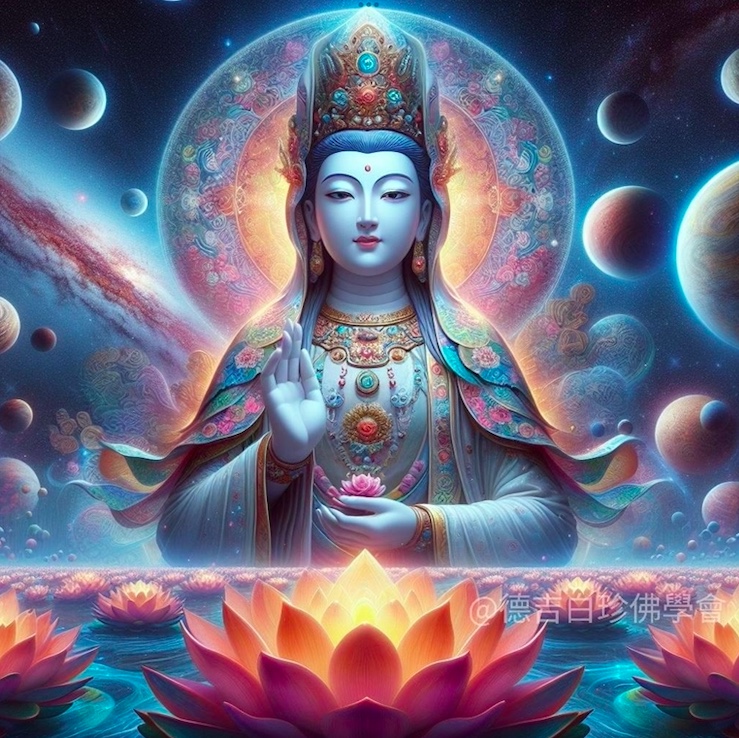
Above them, Avalokiteshvara Bodhisattva appeared, standing in the air, radiating boundless light while auspicious clouds billowed around.

For nearly an hour, Avalokiteshvara remained visible, bestowing blessings. No sounds of the street—no passing cars or footsteps—could be heard. The only sound was the voice of H.H. Dorje Chang Buddha III expounding the Dharma.

It was clear that everyone present had entered another dimension altogether.

Moments like these show us that the universe is far more profound than what our senses can grasp.

I believe Buddhism is deeply scientific—not superstition. Just because today’s scientists cannot yet explain these phenomena does not mean they are unscientific.

On the contrary, Buddhist wisdom offers an entirely different lens through which to explore reality. It can inspire modern science to uncover new methods and fresh insights to understand the universe’s deepest mysteries.

If we open our hearts and minds, perhaps Buddhist teachings will one day help humanity discover shortcuts to truths that today seem unimaginable.

Link:https://peacelilysite.com/2025/07/03/buddhism-multidimensional-space-and-the-science-of-consciousness/

The Power of a Good Mindset in Times of Conflict

My friend Wendy used to be very emotional and overly cautious. But in recent years, she has undergone an astonishing transformation.

One day, when we met up, she shared a story that showed me just how much she has changed.

At the end of last year, Wendy finally decided to buy her daughter-in-law the new car she had dreamed of for so long. The whole family welcomed the New Year with excitement and joy.

That day, her daughter-in-law drove the car out to register it, while Wendy stayed home reading stories to her granddaughter.

Not long after, the phone rang. On the other end, her daughter-in-law’s voice trembled with panic:

“While turning, I got hit by a truck going straight. The entire front bumper is smashed. It’s all our fault. Mom, I’m too scared to come home—your son is going to be furious.”

Wendy replied calmly, “As long as you’re okay, that’s what matters. Just come home.”

A while later, her son returned from work. Before he could react, Wendy sent her granddaughter over to ask him to tell her a story about a carpenter.

He couldn’t resist her pleading eyes and began reading in an animated voice:

“There was a kind-hearted carpenter who, though already old, still had no house and couldn’t find a wife. His elderly mother was terribly worried. Finally, a young woman agreed to marry him—but only if he could provide a home.

So the carpenter worked tirelessly, chopping and hammering for two months until he built a beautiful wooden house. One day, while he was out, a fire broke out next door and burned his house to the ground.

People thought he would collapse in despair, but instead, he searched through the charred remains. Everyone was puzzled—what could he possibly be looking for? At last, he found an unburned axe and exclaimed with relief, ‘I finally found you!’

People thought he must be crazy—his house was gone, and he was happy just to find an axe? The carpenter said, ‘As long as I’m here and I have my axe, why would I worry about not having a house?’”

Just then, the daughter-in-law slipped quietly back into the house, looking like a child who had done something wrong.

When her son learned what had happened, he exploded:

“You’re such a spendthrift! No brains at all! So careless—on the very first day, you wrecked a car worth hundreds of thousands!”

Wendy looked at her son calmly and asked:

“Are you done yet? The car is already damaged—will shouting fix it?

Just a minute ago, you were telling your daughter that as long as you have an axe, you can build another house. Now you’ve turned into a chameleon—how will you teach her in the future?

What’s more important: people or cars? A damaged car can be repaired or replaced. But if something had happened to your wife, this family would be over.

It’s the New Year. What matters most is that we are safe, healthy, and together. Everything else is just material. You should be grateful she came home without a scratch. So many people are facing life-and-death partings right now. Be content.”

Her son made a face and joked, “Mom, ever since you started practicing Buddhism, you’ve changed. You’re always siding with your daughter-in-law—have you forgotten you have a son? I feel like I’m adopted!”

Wendy rolled her eyes at him, and the whole family burst into laughter as they sat down to dinner.

Later, Wendy told me that after studying Buddhism, she finally understood how to let go of the suffering that comes from clinging to the self and how to transform afflictions into wisdom.

I watched in amazement as what could have been a chaotic family argument dissolved effortlessly in her hands. In the end, everyone was able to celebrate the New Year in peace and joy.

Life will always bring troubles and joys. A grateful and content mindset makes happiness bloom everywhere, while a lack of appreciation can turn even good fortune into heartache.

Hearing Wendy’s story reminded me how powerful a positive mindset can be in times of conflict. I hope more families can draw on the wisdom of the Dharma to transform challenges into understanding, live long lives free from illness, and enjoy peace, prosperity, and lasting happiness.

Link:https://peacelilysite.com/2025/07/01/the-power-of-a-good-mindset-in-times-of-conflict/

The Choice Between Giving and Receiving

When I was a child, I heard a folk story that has stayed with me ever since.

One day, King Yama summoned two little spirits and said to them:

“I will let you be reborn as humans. One of you will be someone who always has things to give to others. The other will be someone who often receives things from others. It’s up to you—choose the kind of person you wish to become.”

As soon as Ghost A heard this, he dropped to his knees, clasped his hands, and pleaded earnestly:

“Your Majesty Yama! I beg you—please let me be the one who can receive things from others!”

Ghost B stood quietly for a moment, thinking it over. Finally, he said:

“Since my companion wishes to be the one who receives, I will choose to be the one who gives to others.”

King Yama struck his desk with a resounding clap and pronounced his judgment:

“I decree that Ghost A will be reborn as a beggar, so he may always ask others for help. Ghost B will be reborn into a wealthy family, so he may frequently give and support those in need.”

The two little spirits were stunned into silence.

This story reveals a truth many people overlook: in our world, most would rather take from others, believing that giving is a kind of loss. Yet the modern Buddhist master, Master Hongyi, once said:

“I don’t know exactly what makes a noble person, but I believe someone who is willing to suffer a loss in all things surely is one. I don’t know exactly what makes a petty person, but someone who always seeks an advantage must be one.”

In reality, a person with a grateful heart who is willing to share joy with others will discover even greater joy—because they can find happiness in the happiness of others.

The spirit of Buddhism elevates the practice of giving and receiving to its highest form. H.H. Dorje Chang Buddha III made this profound vow:

“All karmic offenses and sins created by sentient beings, I will bear.
All the virtuous deeds and merits I have cultivated, I will give entirely to you.”

H.H. Dorje Chang Buddha III wishes to give all good things to sentient beings and to take upon Himself all their suffering and negativity.

Everything He thinks in His mind, speaks with His mouth, and does with His body is dedicated to one purpose: eradicating selfish attachment, relieving the suffering of all beings, bringing them happiness, and increasing their blessings and wisdom.

May our world be filled with kindness and peace. May all beings everywhere be safe, auspicious, and free from suffering.

Link:https://peacelilysite.com/2025/06/27/the-choice-between-giving-and-receiving/


The Mirror of the Heart: A Lesson from a Single Father

A single father had just lost his job. All day, he wandered the streets, clinging to the hope that he might find work. But as the sun set, he returned home empty-handed.

Defeated and exhausted, he stepped into a small tavern, spent his very last coin, and finally stumbled back to his modest home.

That evening, he discovered that his son’s grades had slipped. He didn’t say a word. Instead, he shot the boy a harsh glare before collapsing into bed without another thought.

The next morning, out of habit, he opened his diary and wrote:

March 7, Tuesday.
This is the worst day ever. Lost my job, out of money, no work to be found, and my son is a disappointment. A day of utter discouragement.

After his son left for school, he happened to notice the boy’s diary lying open on the table. Curious, he began to read:

March 6, Monday.
Today, on my way to school, I helped a blind man cross the street. I was so happy. My grades weren’t good this time. I told Dad, and he didn’t scold me. He looked at me with such deep affection. I felt so encouraged. I’m determined to study hard so I won’t let him down.

Affection? the father thought, bewildered. I was glaring at him in frustration. How could he have seen that as love?

He turned another page:

March 5, Sunday.
The old grandpa next door is playing the violin better and better. He’s so old but still practices so diligently. I really want to learn from him.

His heart sank as he flipped to his own entry from that same day:

March 5, Sunday.
That annoying old man next door is playing that wretched violin again. On my only day off, he won’t even let me sleep in peace. So hateful—I wish I could smash that stupid instrument.

In that moment, the father felt the weight of shame press him down onto the bed. He was in his fifties, yet his spirit had been broken by hardship—his mindset darker and more defeated than that of his young child.

He realized, with painful clarity, that he had been looking at life through a lens clouded by bitterness. And that lens had distorted everything.

Deeply remorseful, he resolved to learn from his son—to face every trial with acceptance and gratitude instead of resentment. He knew he could no longer wear the mask of anger while searching for work. No matter how difficult life became, he would choose a sunnier disposition.

And when your mindset changes, everything changes.

The very next day, he found a suitable job. He began to meet life’s challenges with a heart full of gratitude.

Life is like a mirror: when you smile at it, it smiles back. When you cry, it weeps with you.

The human heart is also a mirror, reflecting the world within us. It reveals whether we carry kindness or bitterness, whether we live in light or in darkness.

With a single thought, we can create heaven or hell. Everything depends on whether we imprison or liberate our own hearts.

In the end, we are the creators of our own destiny.

Link: https://peacelilysite.com/2025/06/27/the-mirror-of-the-heart-a-lesson-from-a-single-father/

Wealth Without Integrity: A Cautionary Tale from the Buddha

The Buddha once taught at the Jeta Grove in Anathapindika’s Park in the kingdom of Shravasti. At that time, there lived a wealthy elder whose fortune was immeasurable. He had five intelligent daughters but no sons. Upon his passing, the law dictated that if no male heir existed, the family estate would be seized by the state. However, the elder’s wife was pregnant. His daughters humbly petitioned the king to delay the confiscation until the child was born.

Not long after, a baby boy was born. Yet to everyone’s shock, the child was severely deformed—he had no eyes, ears, tongue, hands, or feet, only male genitals. Despite this, the king acknowledged him as the rightful heir, saving the family’s wealth. The boy was named Mantuipili.

Puzzled by this karmic outcome, an elder approached the Buddha and asked, “Why would a child be born into such wealth, yet with such tragic physical deformities?”

The Buddha then revealed a powerful story from a distant past:


In a previous life, there were two noble brothers: Dhanavasita, the elder, and Shilavasita, the younger. Dhanavasita was known for his honesty and generosity from a young age. He gave freely to the poor and upheld moral integrity. Because of his character, the king appointed him as a judge, and people trusted his word above all else. At that time, written debt contracts were unnecessary—a judge’s witness sufficed.

One day, a merchant preparing for a sea voyage borrowed a large sum from Shilavasita. Bringing his young son and the money, Shilavasita went to Dhanavasita and asked, “Brother, this merchant has borrowed money. Please bear witness. If anything happens to me, ensure my son receives what is owed.”

Dhanavasita agreed. Soon after, Shilavasita passed away. The merchant’s ship was wrecked in a storm, and he barely survived, returning empty-handed. Out of compassion, Shilavasita’s son decided not to demand repayment while the merchant was destitute.

Years later, the merchant sailed again and returned wealthy. Believing the boy had forgotten or was too kind to collect the debt, the merchant decided to test him. He paraded into the city riding a jeweled horse, dressed in luxurious robes. Seeing this, the boy sent someone to request the repayment.

The merchant, seeking to avoid repayment, schemed to silence the judge. He offered a precious gem worth 100,000 silver coins to Dhanavasita’s wife, asking her to persuade the judge not to testify. She warned, “My husband is a man of virtue, but I’ll try.”

That evening, she told the judge. Dhanavasita was unwavering: “I was made a judge because of my honesty. I cannot speak even a single false word.” She returned the gem.

The merchant returned with a gem worth 200,000 silver coins, and the wife—overcome by greed—accepted. That night, she again tried to persuade her husband. He refused once more, saying, “If I lie, I will lose all honor in this life and suffer in future lives.”

In desperation, the wife threatened, “If you don’t comply, I’ll kill our child and take my own life!” Dhanavasita was heartbroken. He agonized: “If I refuse, I lose my child. If I agree, I lose my integrity and invite endless suffering.”

Overwhelmed, he gave in.


The merchant, emboldened, paraded through the streets again—this time on a jewel-adorned elephant. The boy approached him: “It’s time to repay the debt.”

Feigning confusion, the merchant said, “What debt? Who witnessed this?”
The boy replied, “My father and I gave you the money, and my uncle, the judge, was the witness.”
The two went before the judge. The boy recounted the event.
To his shock, the judge responded, “I know nothing of this matter.”
The boy cried out, “Uncle! You saw it with your own eyes and agreed to witness it. How can you deny this?”
The judge replied coldly, “That never happened.”

In deep pain, the boy exclaimed, “You were trusted for your integrity and chosen to judge others. If you betray your own nephew, how many others have suffered injustice? The truth will be known in time.”


The Buddha then turned to the elder and said: “Do you know who that judge was? He is now the deformed child, Mantuipili. Because he uttered just one false word, he fell into the great hell realms and endured tremendous suffering. For five hundred lifetimes, he was born with severe deformities. Yet due to his past acts of generosity, he continued to be born into wealthy families.

This is the law of karma. Good and evil never cancel each other out—each brings its own result, no matter how long it takes.

Therefore, practice diligently. Guard your body, speech, and mind. Never create evil karma lightly.”


This profound tale offers a timeless lesson. A single dishonest act can result in unimaginable suffering, even over lifetimes. On the other hand, a heart inclined toward generosity continues to yield blessings, regardless of outer form.

Buddhism teaches us to live with integrity, mindfulness, and compassion—not only for the peace of this life, but for the well-being of lives to come.

link: https://peacelilysite.com/2025/06/25/wealth-without-integrity-a-cautionary-tale-from-the-buddha/