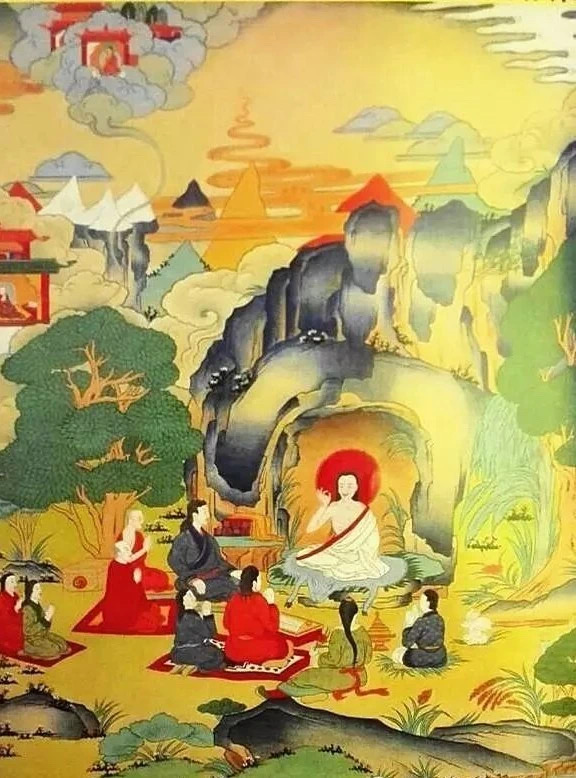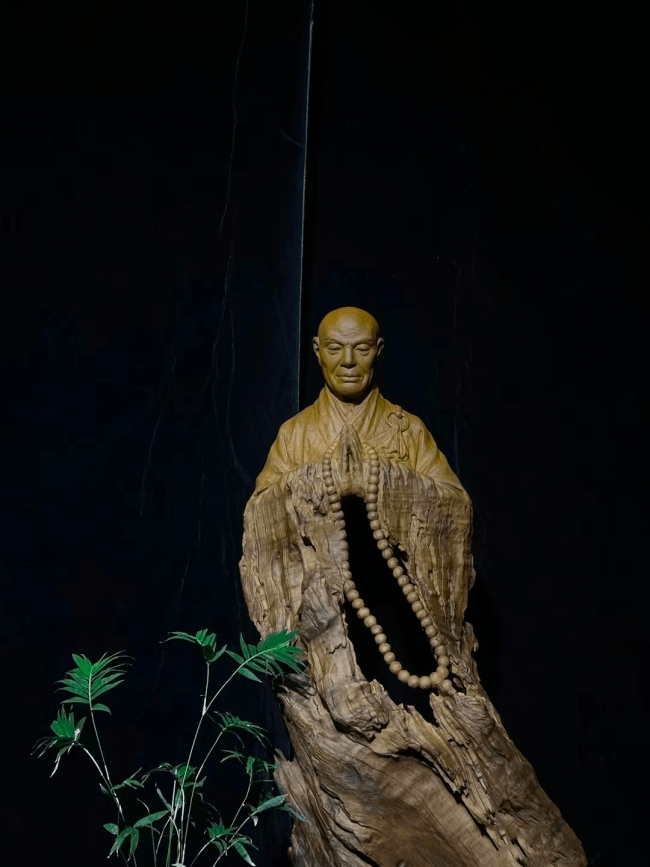
The Enlightened Woodcutter: The Story of Huineng, the Sixth Patriarch of Zen

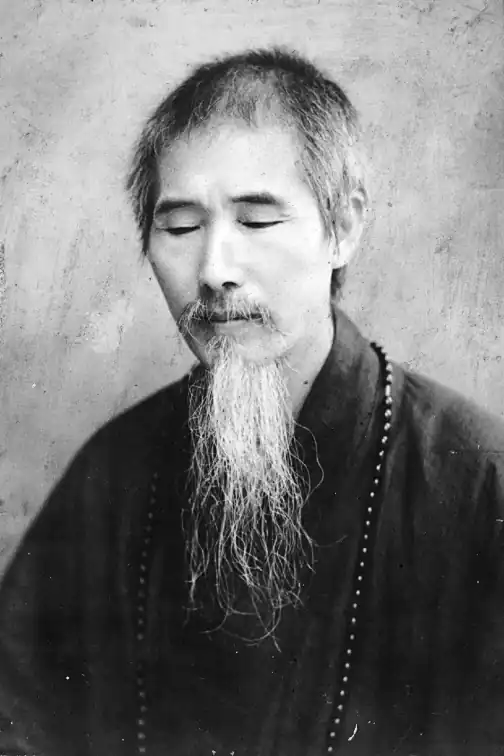
In the annals of spiritual history, few figures are as revolutionary as Huineng (慧能), the Sixth Patriarch of Zen (Chan) Buddhism. His life story is a profound testament to the idea that enlightenment is not reserved for the elite or the scholarly, but is the inherent birthright of every human being.

Known for the iconic verse you mentioned—“Bodhi originally has no tree”—Huineng transformed Zen from a complex Indian philosophy into the direct, spontaneous practice we recognize today.

Huineng’s journey did not begin in a monastery. He was born into a poor family in 7th-century China and worked as an illiterate woodcutter to support his widowed mother.

His life changed in an instant when he overheard a traveler reciting the Diamond Sutra. Upon hearing the line, “Depending upon nothing, the mind arises,” Huineng experienced a sudden moment of clarity. This “sudden awakening” became the hallmark of his future teachings.

Driven by this experience, he traveled to the Dongshan Monastery to seek guidance from the Fifth Patriarch, Hongren.
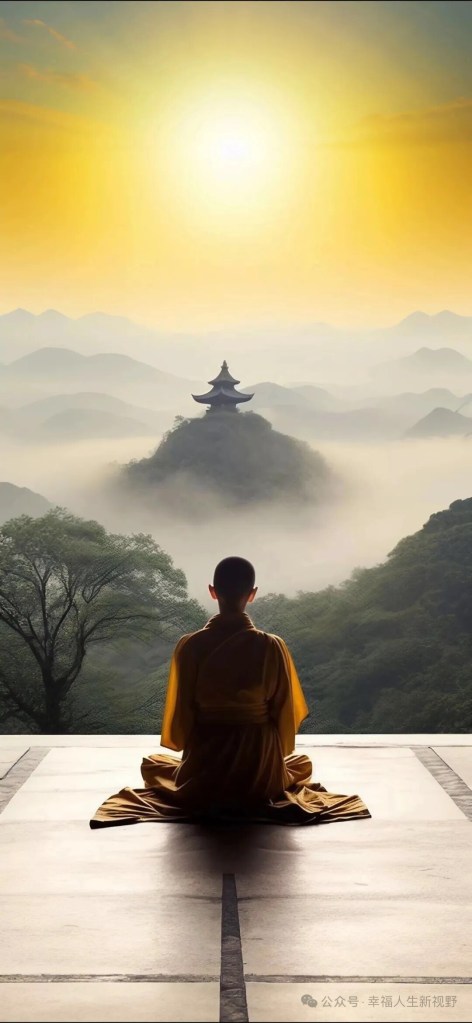
Huineng’s status as an illiterate outsider meant he was initially assigned to the kitchen to hull rice. When the time came for the Fifth Patriarch to choose a successor, he asked his disciples to write a “mind-verse” to demonstrate their understanding.

The lead disciple, Shenxiu, wrote a verse emphasizing constant, diligent practice:

“The body is the Bodhi tree; the mind is like a bright mirror on a stand. Take care to wipe it always, and let no dust collect.”

Huineng, hearing the verse, realized it missed the ultimate truth of emptiness. He dictated his now-famous response to be written on the wall:

“Bodhi originally has no tree. The bright mirror on a stand is also not real. From the beginning, not a single thing exists. Where, then, can dust collect?”

Hongren recognized Huineng’s superior realization and secretly passed him the robe and bowl—the symbols of the Patriarchy—in the middle of the night, instructing him to go into hiding until the time was right to teach.

Huineng eventually emerged from hiding and began teaching at Nanhua Temple. His impact on Buddhism was so immense that his teachings were recorded in the Platform Sutra of the Sixth Patriarch. This is the only Buddhist scripture not spoken by a Buddha to be officially granted the title of a “Sutra.”

His major achievements include:

  • The Southern School of Zen: He founded the “Southern School,” which emphasizes “Sudden Enlightenment” (Dunwu) over gradual study.
  • Democratizing Wisdom: He taught that the “Buddha-nature” is present in everyone, regardless of literacy or social status.
  • The Foundation of Zen: Nearly all surviving Zen lineages (including Japanese Zen and Korean Seon) trace their ancestry back to Huineng.

A Living Legacy: The Whole-Body Relic
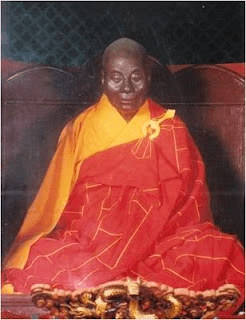
Perhaps the most miraculous aspect of Huineng’s story is his physical departure from this world. In 713 AD, Huineng entered Nirvana, but his body did not decay.

To this day, his whole-body relic (mummy) is enshrined and preserved at Nanhua Temple in Shaoguan, Guangdong Province. For over 1,300 years, devotees have traveled to the temple to pay respects to the Sixth Patriarch. His physical presence remains a powerful symbol of the “Diamond Body”—the incorruptible nature of a truly enlightened mind.

Huineng reminds us that we do not need to look outside ourselves for wisdom. As he famously taught, our original nature is pure, and enlightenment is simply the act of seeing through the “dust” to the emptiness that was there all along.
Link:https://peacelilysite.com/2025/12/25/the-enlightened-woodcutter-the-story-of-huineng-the-sixth-patriarch-of-zen/

Four Major Buddhist Organizations Jointly Hold Dharma Assembly in Southern California to Celebrate the Holy Birthday of Amitabha Buddha

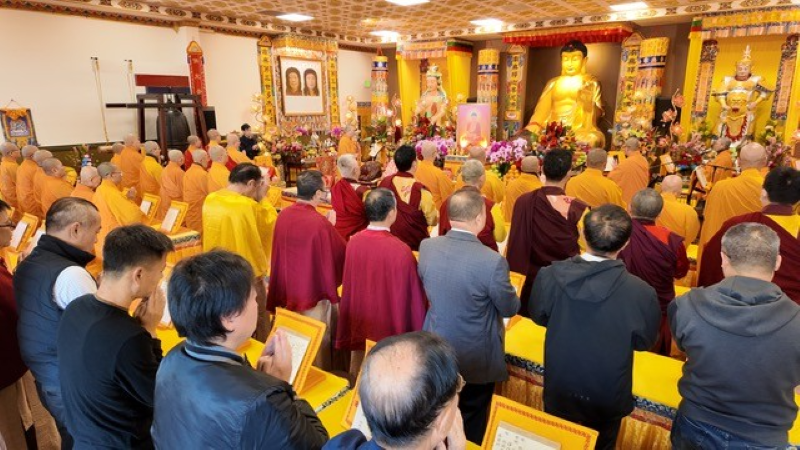
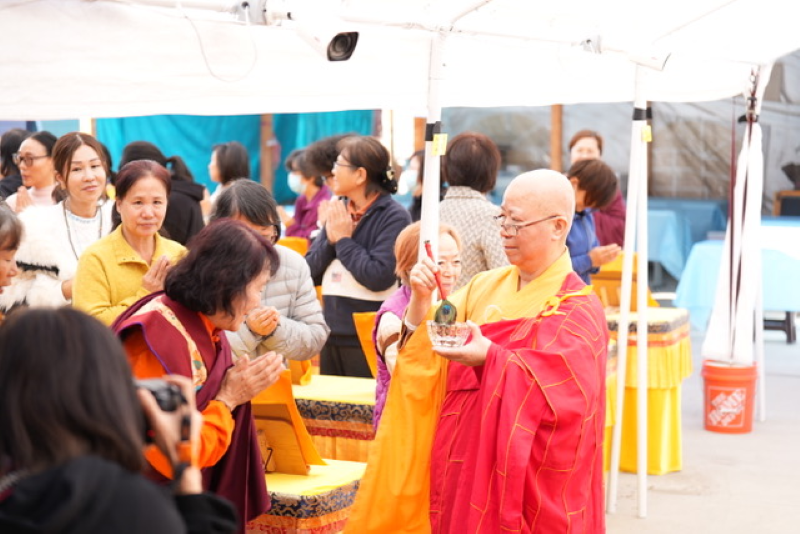
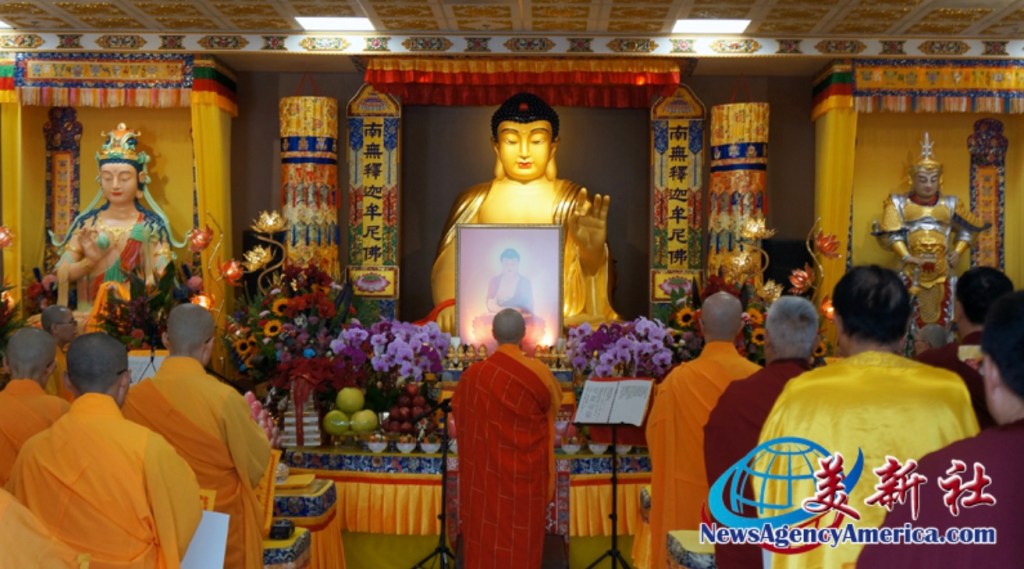
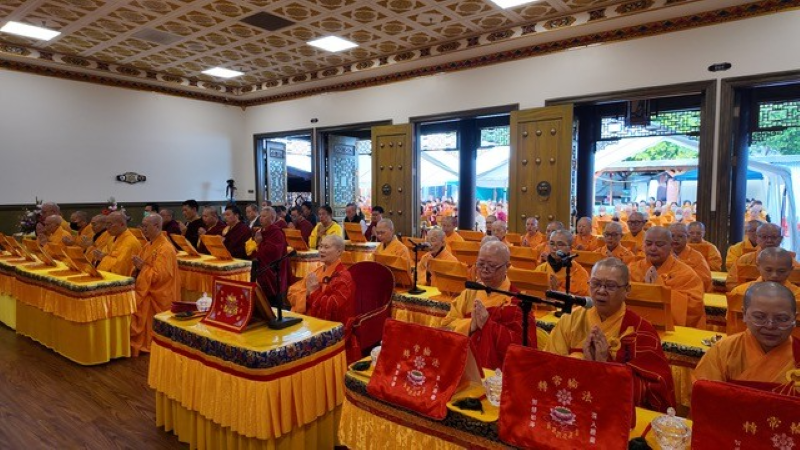
PASADENA, CA — Four major Buddhist organizations—the World Buddhism Association Headquarters (W.B.A.H.), Holy Miracles Temple, Hongfa Temple, and Sanger Mission—recently held a joint Dharma Assembly at the Grand Hall of Holy Miracles Temple in Pasadena to celebrate the Holy Birthday of Namo Amitabha Buddha, the Lord of the Western World of Ultimate Bliss.

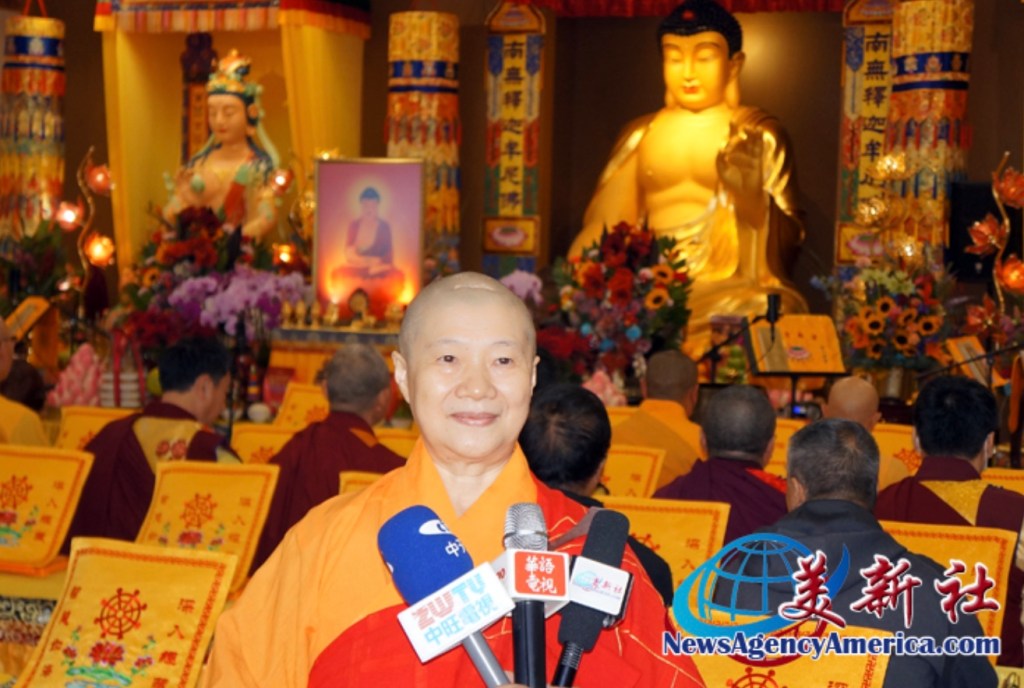
The assembly was presided over by Venerable Dharma Teacher Zhengda, Vice Chair of the W.B.A.H. and a Holy Virtuous One of Gold Button Grade II. Hundreds of devotees from across California and overseas attended the ceremony.

The assembly officially commenced at 10:00 AM. Inside the Grand Hall, the sounds of bells, drums, and rhythmic chanting filled the air, creating a solemn and serene atmosphere. Led by Venerable Dharma Teacher Zhengda and Venerable Ruohui, Abbot of Hua Zang Si and Hongfa Temple (a Holy Virtuous One of Gold Button Grade I), the monastics and Rinpoches guided the congregation in prostrations and the sincere recitation of the Amitabha Sutra.

Following the recitation, a Grand Offering was performed. Incense, flowers, lamps, fresh fruit, and various offerings were presented before the Buddha. With pure and respectful hearts, the faithful prayed for all sentient beings to be free from suffering and attain happiness. The organizers stated that beyond celebrating the Holy Birthday, the merits of the sutra chanting and offerings were dedicated to world peace, the cessation of war, social harmony, and the longevity, health, and spiritual growth of all beings.

The Compassionate Vows of Amitabha Buddha

According to Buddhist scriptures, Namo Amitabha Buddha is the “Amitabha Buddha of the West” among the Five Dhyani Buddhas and is a disciple of the primordial Buddha, Namo Dorje Chang Buddha. During his past cultivation, Amitabha Buddha made 48 Great Vows to deliver sentient beings from the sea of suffering to the Pure Land. Upon the perfection of his vows and attainment of Buddhahood, he established the pure and majestic Western World of Ultimate Bliss. He is currently the Lord of that realm and the Head of the Lotus Section of the Vajrayana teachings.

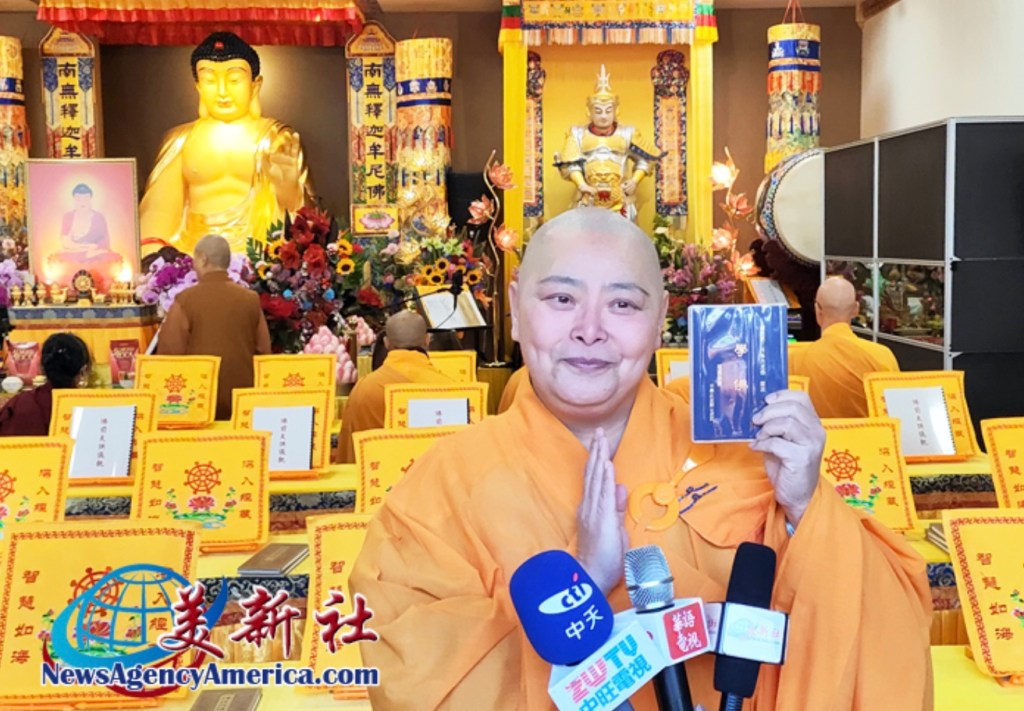
During an interview, Venerable Dharma Teacher Zhengda remarked:

“Today, we gathered to recite the Amitabha Sutra and pray for blessings. The devotees showed great sincerity in their chanting and repentance, expressing deep gratitude for Amitabha Buddha’s salvation. We should emulate the vast compassion of Amitabha Buddha and all Buddhas of the ten directions. We pray that Namo H.H. Dorje Chang Buddha III, Namo Amitabha Buddha, and all Buddhas and Bodhisattvas bless the world with peace and prosperity, protecting all beings from disaster.”

Bhikkhuni Zhengqin of Hongfa Temple shared her reflections on cultivation, noting that after facing many hardships in life, studying the true Buddha Dharma provided her with inner peace. She highlighted the book Learning from Buddha as a “treasured guide” that offers clear direction for practitioners.

Another attendee, Ms. Wu Guangling, shared that over ten years of practice have taught her to face life’s challenges with equanimity. She quoted an ancient virtuous saying to describe her mindset: “Face negative karmic effects with composure, while planting good causes as if treading on thin ice.”

Jon, a first-time attendee, was moved by the experience:

“Seeing everyone chanting so sincerely was impressive. I’ve never chanted with so many people before, and I hope to have the chance to attend such an assembly again.”

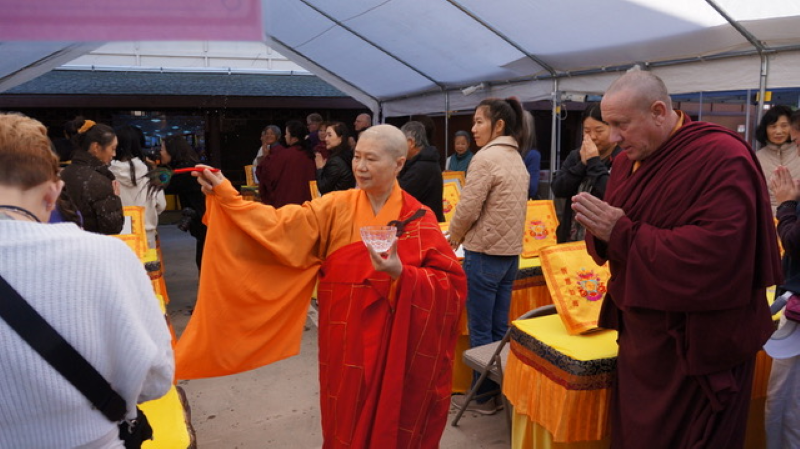
As the assembly concluded, the monastics sprinkled holy water over the crowd, blessing them with longevity and wisdom. The organizers noted that the event not only allowed the faithful to draw closer to the Dharma but also united the community in a spirit of goodness. The W.B.A.H. expressed gratitude to all participants and encouraged everyone to integrate the Buddha’s teachings into their daily lives to contribute to social harmony and world peace.

Link:https://peacelilysite.com/2025/12/25/four-major-buddhist-organizations-jointly-hold-dharma-assembly-in-southern-california-to-celebrate-the-holy-birthday-of-amitabha-buddha/

Soure:https://www.lvcnn.com/mobile/news.php?id=53336&fbclid=IwY2xjawO6-fVleHRuA2FlbQIxMABicmlkETBLOUppYVFtakJTdTVQZ2lCc3J0YwZhcHBfaWQQMjIyMDM5MTc4ODIwMDg5MgABHhvg1fwXl2bM0R8XeGCWLQm7es3AZjeWAyKNXi_bwvFPJIFkkusyhiVWMvHU_aem_8XmEedReeBUhmcCtsr1weg

Zhenru Chan Temple: Where Chan Practice Lives in Mountains and Daily Life

Zhenru Chan Temple is nestled on the southwestern slopes of Yunju Mountain in Jiangxi Province. Surrounded by peaks said to resemble unfolding lotus petals, the landscape is poetically described as “lotus peaks clustering around Huatai.” Huatai, the mountain’s central peak, anchors this natural harmony. Here, architecture, terrain, and spiritual intention merge seamlessly, creating a setting that feels both grounded and quietly transcendent.

Even before understanding its history, one senses that this is a place shaped not to dominate nature, but to listen to it.

The name Zhenru (真如) means “True Suchness”—a fundamental concept in Chan Buddhism that points to ultimate reality as it is, beyond words, labels, or conceptual thinking. It is not something to be grasped intellectually, but something to be directly experienced.

Founded during the Tang Dynasty (806–810), Zhenru Chan Temple is regarded as the cradle of the Caodong School of Chan Buddhism, which later spread to Japan as the Soto Zen tradition. Revered as one of China’s three great model Chan monasteries, the temple has long been a center for authentic practice. Though the present structures were rebuilt in the 1950s, they preserve the simplicity and elegance of traditional Chinese monastic architecture.

Chan in Action: Meditation and Farming as One Path

One of Zhenru Temple’s defining characteristics is its embodiment of the Chan principle that “agriculture and meditation are equally emphasized.” Monks here did not retreat from life; they engaged it fully.

Alongside meditation, monks cultivated tea fields and farmed the land. This was not merely practical—it was spiritual. Farming ensured self-sufficiency in the remote mountains, freeing the monastery from reliance on external donations. More importantly, working the soil was understood as a form of Chan practice: repetitive, mindful, intimate with the rhythms of nature.

In the Caodong tradition, there is no division between the sacred and the ordinary. Plowing a field is no less sacred than chanting a sutra. The monks alternated between sitting meditation and physical labor, living out the Chan maxim:

“A day without work is a day without food.”

This principle is traditionally attributed to the Tang-dynasty Chan master Baizhang Huaihai (720–814), a disciple of Mazu Daoyi and a key figure in establishing Chan monastic regulations. His teaching reminds us that awakening is not found apart from daily life, but revealed within it.

Master Xu Yun: Reviving the Living Dharma

Zhenru Chan Temple is also inseparably linked to Master Xu Yun (1840–1959), one of the most revered Chan masters of modern China, often described as a rare master who embodied and transmitted the lineages of five Chan schools in a single lifetime.

When Master Xu Yun arrived at Zhenru in the early 20th century, the temple lay largely in ruins. With unwavering resolve, he led an extensive restoration—rebuilding halls, pagodas, and monastic quarters with the support of disciples and lay donors. More than physical reconstruction, he revived strict monastic discipline and rigorous meditation practice, restoring the temple’s spiritual vitality.

Zhenru ultimately became the place where Master Xu Yun passed away, completing a life devoted to the Dharma.

Earlier in his life, Master Xu Yun experienced a profound awakening during intensive meditation at Gaomin Temple in Yangzhou at the age of fifty-six. In his autobiography, he described the experience with clarity and restraint:

“In the purity of my single-mindedness, I forgot my body entirely. After twenty days, my illness disappeared. From that moment on, my practice continued day and night without interruption… One evening after meditation, I opened my eyes and saw a brightness like broad daylight, in which everything inside and outside the monastery was clearly visible.”

Yet what makes his account especially powerful is what followed. Master Xu Yun did not cling to the experience. He recognized it as a mental state—not an ultimate attainment—and continued his investigation with humility and perseverance, asking relentlessly:

“Who is mindful of the Buddha?”

Later, he commemorated a moment of deep insight triggered by the simple sound of a teacup breaking in the Chan hall, capturing Chan’s direct and unadorned wisdom in a verse:

A cup fell to the ground,
The sound rang clear and sharp.
Space itself shattered—
The restless mind came to rest.

This is primarily a video demonstration of the moving meditation practiced at Zhen Ru Chan Temple. 

Zhenru Chan Temple is more than a historical site. It is a living reminder that Chan practice is not confined to silence or retreat, but woven into how we walk, work, and meet the ordinary moments of life.

Here, mountains teach stillness.
Labor teaches humility.
Meditation teaches clarity.

And together, they point quietly back to true suchness—not somewhere else, but right where we are.

Click here for more details about Gaomin Temple Chan meditation

Link:https://peacelilysite.com/2025/12/19/zhenru-chan-temple-where-chan-practice-lives-in-mountains-and-daily-life/

Your Brain Needs You to Take a Walk—Even More Than You Think

Did you know that your brain may need you to take a walk even more than your body does?

We often think of walking as something we do for physical fitness—burning calories, loosening stiff muscles. Yet neuroscience now confirms something ancient wisdom has always known: when the body moves gently and steadily, the mind awakens.

Regular walking—nothing intense, just consistent and mindful steps—nourishes the hippocampus, the part of the brain responsible for memory and learning. With increased blood flow and oxygen, this delicate region doesn’t merely function better; over time, it can actually grow stronger, softening the slow erosion of age.

Decades of MRI research reveal that people who engage in moderate movement—brisk walking, cycling, climbing stairs—experience measurable growth in the hippocampus. An average increase of just two percent may sound small, but in the language of the brain, it is profound. It can offset one to two years of natural cognitive aging.

In simple terms: thirty minutes of walking a day gently turns back the clock for the mind.

But beyond the science, something quieter is taking place.

When we walk, the brain relaxes its grip. A subtle nourishment—BDNF, often called the brain’s “fertilizer”—is released, protecting existing neural pathways and encouraging new connections to form. Thoughts become clearer. Memory steadies. Emotions settle into a more balanced rhythm.

This is why walking feels different from sitting.

As the body moves, the mind loosens.
As the breath finds its rhythm, thoughts begin to untangle.

Walking brings the brain into a rare state—awake, yet unforced.
It is here that insights arise without being pursued,
where worries soften and lose their sharp edges.

Many people sense this intuitively, without knowing the science. They think more clearly when they walk. They feel calmer. They see situations with greater perspective.

Stillness has its place.
But too much stillness, without movement, becomes stagnation.

Long hours of sitting dull not only the body, but also memory, emotional resilience, and mental clarity. The mind grows heavy, foggy, restless. Gentle movement restores what stillness alone cannot.

And the beauty of walking is its simplicity.

No gym.
No equipment.
No performance.

Just steps.

A short walk in the morning light.
A few mindful minutes between tasks.
A slow walk beneath trees.
Choosing stairs over elevators.
Sun on the face.
Breath in motion.

These small, ordinary moments—when repeated—quietly care for the brain and the heart.

Walking is not exercise in the usual sense.
It is a form of listening.

With each step, the mind is gently awakened.
With each step, inner noise softens.

You may not be going anywhere special.
Yet something within you becomes clearer, lighter, more alive.

So today, walk.

Not to achieve.
Not to improve.

Just to return—
to the simple intelligence of movement,
and to a mind that remembers how to be at ease.

Link:https://peacelilysite.com/2025/12/19/your-brain-needs-you-to-take-a-walk-even-more-than-you-think/

Xiaoxitian Temple: A Masterpiece Carved into the Mountain

Xiaoxitian, originally known as Qianfo’an (The Hermitage of a Thousand Buddhas), was founded in the second year of the Chongzhen reign of the Ming Dynasty (1629). It stands atop Phoenix Mountain, about one kilometer west of Xixian County in Linfen, Shanxi Province.

Built entirely in harmony with the mountain, the temple unfolds in layers, as if it had grown naturally from the slope itself. Stone steps lead visitors upward, passing through courtyards divided by arched cave-like gateways. The upper, middle, and front courtyards are connected yet distinct, creating a spatial rhythm that is winding, intimate, and quietly profound. As one walks through the complex, footsteps instinctively slow, and time itself seems to soften.

The architecture of Xiaoxitian is restrained rather than ostentatious, yet its mastery reveals itself everywhere. Painted beams are elegant and dignified, and many of the halls are ingeniously built as two-story structures, creating a rich sense of vertical space within the limited mountain terrain. The bell and drum towers stand in stillness, inviting the imagination to wander back to an age when morning bells and evening drums echoed through the valley.

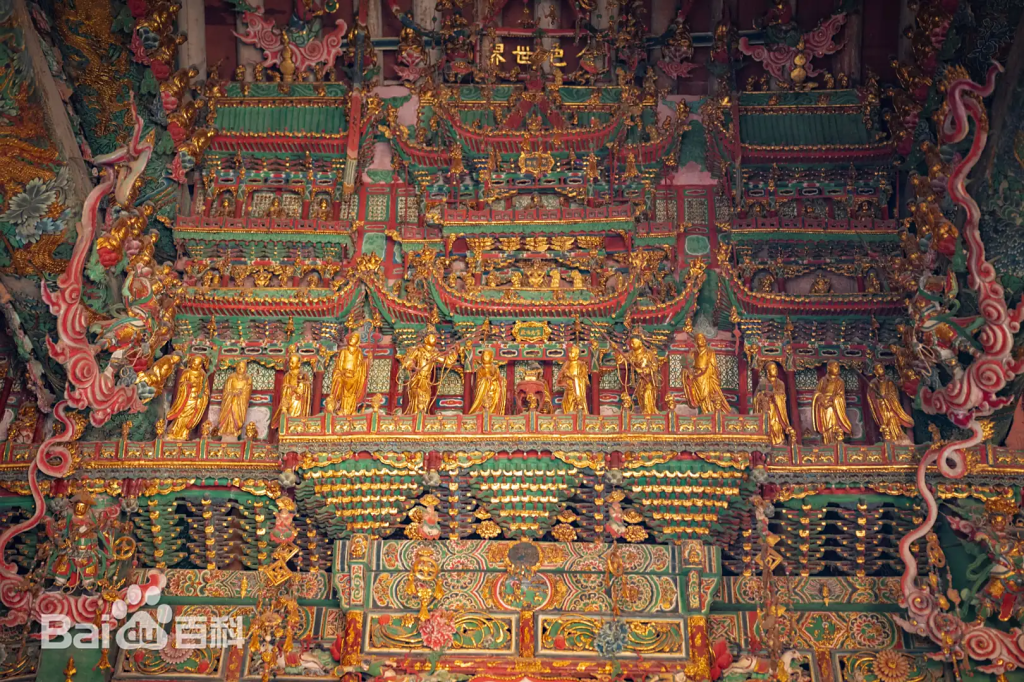
Stepping into the Mahavira Hall is a moment of sudden awe. Nearly the entire interior is filled with suspended polychrome sculptures—more than 1,900 figures, layered from floor to ceiling. From towering Buddhas over three meters high to figures no larger than a thumb, the sculptures are densely arranged yet never chaotic, solemn yet vibrantly alive. In that instant, one understands why Xiaoxitian is revered as the “Museum of Chinese Hanging Sculpture Art.”

Unlike many Buddhist temples that draw attention primarily to their principal Buddhas, the Mahavira Hall at Xiaoxitian is celebrated for the immersive world it creates as a whole. At its core stand the Medicine Buddha, Amitabha, Shakyamuni, Vairocana, and Maitreya, but surrounding them unfolds an entire celestial realm: the Ten Great Disciples, six young novices, the Ten Wisdom Kings, the Six Desire Heavens, and countless heavenly musicians dancing through the air.

Most unforgettable are the celestial musicians suspended within the tiered “sky pavilions” above the altars. Their figures are light and graceful, sleeves flowing as if caught in an eternal breeze, frozen in a moment of unending heavenly music. Some play the pipa, others hold flutes, while some seem to dance midair. One pipa-playing figure, leaning slightly forward with fingers poised on the strings, radiates such focus and elegance that one can almost hear the melody drifting across centuries.

Looking up toward the roof, the tri-colored glazed chiwen ornaments—yellow, green, and blue—gleam softly in the light. Their refined brilliance reflects the unmistakable aesthetic of the Ming Dynasty. Here, architecture, sculpture, and color merge seamlessly, and one forgets that this is a mountain temple at all. It feels instead like stepping into a floating Buddha realm, suspended between earth and sky.

That these sculptures have survived nearly four hundred years in such vivid detail inspires deep reverence. They represent not only the pinnacle of craftsmanship, but also a profound devotion—to faith, to beauty, and to a harmonious vision of the cosmos.

Perhaps what truly moves the heart at Xiaoxitian is not only the astonishing number of its hanging sculptures or the rare Ming Yongle Northern Buddhist Canon once preserved here, but something more enduring: a spiritual presence that has remained vibrant across centuries. It quietly reminds us that beyond the noise of the modern world, there still exists a place of serenity and dignity—carefully upheld by time itself.

Link:https://peacelilysite.com/2025/12/17/xiaoxitian-temple-a-masterpiece-carved-into-the-mountain/

Recognitions & Congratulations to H.H. Dorje Chang Buddha III from Father of Medicine, Ferryboats, Bridges, and Operas in Tibet in a Previous Life: H.E. Dharma King Tangtong Gyalpo

Recognitions and Congratulations to H.H. Dorje Chang Buddha III from Father of Medicine, Ferryboats, Bridges, and Operas in Tibet in a Previous Life: H.E. Dharma King Tangtong Gyalpo

Recognitions-Congratulations-to-H.H.-Dorje-Chang-Buddha-III.

A Buddha Truly Recognized as Such in Accordance with the Dharma

The people on both sides of H.H. Dorje Chang Buddha III on this page are the highest present-day dharma kings and regent dharma kings from various Buddhist sects or are famous rinpoches. It is they who wrote recognitions, corroborations, or congratulations to H.H. Dorje Chang Buddha III.

H.H. Dorje Chang Buddha III is the first Buddha on earth to have received such a large number of recognitions, corroborations, and congratulations and to have been recognized as having the highest status! No other Rinpoche on earth has ever received even one third of the number of recognitions, corroborations, and congratulations from great dharma kings, regent dharma kings, etc. that H.H. Dorje Chang Buddha III has received. H.H. Dorje Chang Buddha III has singlehandedly manifested accomplishments in thirty large categories involving all of the Five Vidyas, thereby establishing the highest record of accomplishment in the history of Buddhism in this world.

Certain evil people have slandered H.H. Dorje Chang Buddha III as having conferred upon Himself the status of H.H. Dorje Chang Buddha III, and they have thereby guided Buddhist practitioners toward evil. In order to protect the wisdom roots of living beings, H.H. Dorje Chang Buddha III makes the following vow of truth: If those recognitions, corroborations, and congratulations that follow did not come from the dharma kings, regent dharma kings, and rinpoches whose photographs appear on this page of from their temples and/ or are not copies of the original texts but rather are my fabrications with forged signatures – if even one such case exists – then i should descend into hell without the possibility of ever leaving hell. If those recognitions, corroborations, and congratulations were written or typed by them as well as signed and/ or stamped by them, the merit of this truth will bring to everyone wonderful blessings and wisdom! Vow Maker- Dorje Chang Buddha III

  • FATHER OF MEDICINE, FERRYBOATS, BRIDGES, AND OPERAS IN TIBET IN A PREVIOUS LIFE: H.E. DHARMA KING TANGTONG GYALPO

H.E. Tangtong Gyalpo is a greatly accomplished person within Tibetan esoteric Buddhism who attained the rainbow body. In a prior life in Tibet, he was the supreme dharma king of the four main sects esoteric Buddhism. He is a great Bodhisattva known and respected by one and all in Tibet. He is also a person of great holiness who has made huge contributions to the Tibetan people. It was this great Bodhisattva who was the father of medicine, ferryboats, bridges, and operas in Tibet. To this day, Tibetan temples and families continue to worship H.E. Tangtong Gyalpo Bodhisattva.


H.E. the 16th Tangtong Gyalpo Bodhisattva (Thangtrul Rinpoche) took birth in Bhutan. His physical appearance resembles that of Guru Padmasambhava. Even when he sleeps, his eyes remain open. During a Dharma Assembly that took place in 2005 at Hua Zang Si in San Francisco, he entered a supernatural state of samadhi in which he saw H.H. Dorje Chang Buddha. H.E. Tangtong Gyalpo said to H.H. Dorje Chang Buddha III that he had received teachings directly from Guru Padmasambhava. He also said that he specially came to formally acknowledge H.H. Dorje Chang Buddha III as his Master and to request the highest dharma in order to save living beings. H.H. Dorje Chang Buddha III immediately accepted H.E. Tangtong Gyalpo as one of his disciples who is on the level of a great venerable one and performed an initiation for him. H.E. Tangtong Gyalpo organized many rinpoches to practice the Kuan Yin Dharma one billion times as an offering to the treasure book about H.H. Dorje Chang Buddha III. He also sent his written congratulations stating that the magnificence of H.H. Dorje Chang Buddha III is supreme and that no other holy being in history can compare with this master of the Buddhas.

H.E. Dharma King Tangtong Gyalpo, the Father of Medicine, Ferryboats, Bridges, and Operas in Tibet in a previous life, acknowledged H.H. Dorje Chang Buddha III (H.H. Dharma King Wan Ko Yeshe Norbu) as his Master, who is unanimously recognized by great holy beings as the true incarnation of Dorje Chang Buddha, the Master of the Five Buddhas, having manifested complete mastery of exoteric and esoteric Buddhism and the Five Vidyas.
H.E. Dharma King Tangtong Gyalpo, the Father of Medicine, Ferryboats, Bridges, and Operas in Tibet in a previous life, acknowledged H.H. Dorje Chang Buddha III (H.H. Dharma King Wan Ko Yeshe Norbu) as his Master, who is unanimously recognized by great holy beings as the true incarnation of Dorje Chang Buddha, the Master of the Five Buddhas, having manifested complete mastery of exoteric and esoteric Buddhism and the Five Vidyas.
Recognition and Congratulation to H.H. Dorje Chang Buddha III from H.E. Dharma King Tangtong Gyalpo

United International World Buddhism Association Headquarters:

Please convey my respects to H.H. Master Wan Ko Yeshe Norbu!

During a Dharma Assembly held by the International Buddhism Sangha Association at the Hua Zang Si temple in San Francisco, I saw the awe-inspiring and peerless powers and realization of the Master. Bodhi nectar went through the walls of the bowl unhindered as it left and entered the bowl. That nectar can make a person’s body change involuntarily in an instant. H.H. Dharma King Wan Ko Yeshe Norbu bestowed upon me that holy bowl. H.H. Dharma King Sakya Trizin; Dharma King Omniscience Jamyang Lungdok Gyaltsen; Lama palchug Ugyen Sherab; Dharma King Renzeng Nima; the Eastern Tibetan Dharma King of the Nyingma sect, Renqing Rongbo Barongbo Rinpoche; the Green Jewel Crown karmapa, Dharma King Jiezong; and other great, holy and virtuous beings who are on the levels of Buddhas and Mahasattvas unanimously acknowledge that H.H. Wan Ko Yeshe Norbu is the true incarnation of Dorje Chang Buddha, the Master of the Five Buddhas, and has for the first time in the history of Buddhism in the human realm truly manifested complete proficiency in exoteric and esoteric Buddhism and perfect mastery of the Five Vidyas. This is a goal of Buddhism that all other Buddhists have not been able to achieve. This goal has finally been achieved by H.H. Master Wan Ko Yeshe Norbu. This is an honor to Buddhism and a blessing to living beings.

May the seven types of Buddhist disciples hear the true dharma taught by H.H. Great Dharma King Wan Ko Yeshe Norbu, and may they soon realize enlightenment!

I respectfully offer my congratulations!

The 16th Khangtrul Rinpoche
Dec 26,2006

Learn more about H.H. Dorje Chang Buddha III

Discover more recognitions and congratulatory letters to H.H. Dorje Chang Buddha III

Click here to DOWNLOAD the PDF File

Link: https://dharma-hhdorjechangbuddhaiii.org/recognitions-and-congratulations-to-h-h-dorje-chang-buddha-iii-from-father-of-medicine-ferryboats-bridges-and-operas-in-tibet-in-a-previous-life-h-e-dharma-king-tangtong-gyalpo/

#DorjeChangBuddhaIII #WanKoYesheNorbu #MasterWanKoYee #TangtongGyalpo #TibetanBuddhism #FiveVidyas #EsotericBuddhism #BuddhistRecognition #Mahasattva #DharmaKing #HuaZangSi

Healing in the Mountains: How Hiking and Forest Bathing Restore the Soul

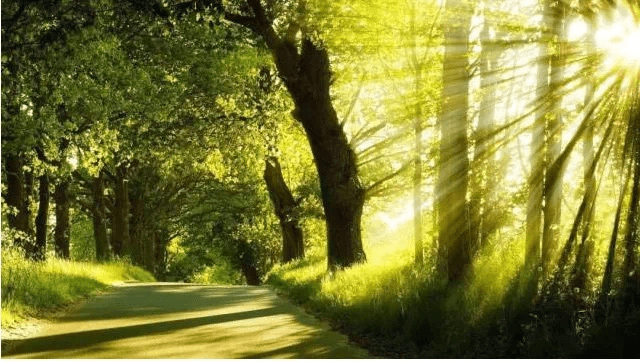
I have always loved being close to nature, and one of my greatest joys is walking through the forest. Living in Santa Cruz, I am surrounded by beautiful woods and mountain trails. Each time I wander beneath the trees and along winding paths, I arrive at the end feeling lighter, calmer, and deeply refreshed—as if my body and mind have been fully recharged.

I once came across an interesting idea:
Mountains are places where we gain energy, which is why after hiking, we often feel alert and invigorated. Water, on the other hand, carries energy away. This may explain why spending long hours by the ocean or a lake can leave us feeling tired. Yet water also washes away emotional heaviness. When we feel sad, restless, or overwhelmed, a walk by the sea often brings a sense of release and ease.

Energy is constantly flowing through nature. We are simply quiet participants, allowing the natural world to gently adjust our inner frequency.

Discovering “Forest Bathing”

Recently, I was delighted to learn that the Japanese have a word that perfectly describes this healing experience: forest bathing.

In Japanese, it is called shinrin-yoku:

  • Shinrin means forest
  • Yoku means bathing

Together, shinrin-yoku means “bathing in the forest,” or allowing our entire being to absorb the atmosphere of the woods. As early as 1982, Japan officially incorporated forest bathing into its national public health program as a form of preventive and therapeutic care.

Suddenly, I realized that every breath I took in the forest had always been quietly nourishing me.

Japanese researchers have conducted extensive studies on forest bathing and found remarkable benefits for overall well-being. Research shows that forest bathing can:

  • Reduce stress
  • Strengthen the immune system
  • Lower blood pressure
  • Support recovery after illness or injury
  • Improve mood and concentration

For me personally, its most immediate effect is simple yet profound—it quickly lowers stress and brings my heart back to a place of calm.

Forest bathing is very different from running or brisk walking. It is not about exercise or distance; it is about presence. The key is to slow down and fully engage all your senses:

  • Touch the bark of trees—rough or smooth
  • Watch sunlight dance through layers of leaves
  • Breathe in the scent of earth and greenery
  • Listen to the wind moving through branches
  • Find a place to sit and feel your connection with the ground

In the past, most of my hikes were intense, goal-driven, almost like completing a task. Since practicing forest bathing, I now schedule at least one slow, mindful walk each week. By slowing down, I have discovered beauty I once overlooked—and I can’t help but smile at how much I missed before.

There is a subtle yet powerful presence in the forest. It does not announce itself, yet it gently soothes the heart.

Perhaps it is the oxygen released by the trees.
Perhaps it is the steady, unhurried rhythm of the forest.
Or perhaps it is simply that, among the trees, we can finally hear our own breath again.

When we walk in the forest, there is nothing we need to accomplish. Nothing to force. Nature naturally helps our hearts soften, open, and grow brighter.

If you feel tired, anxious, or lost in the busyness of everyday life, I invite you to find a nearby mountain trail and give yourself the gift of forest bathing.

Let nature, in its quiet way, remind you:
You are doing your best—and you deserve to be healed. 🌲

Link:https://peacelilysite.com/2025/12/12/healing-in-the-mountains-how-hiking-and-forest-bathing-restore-the-soul/

Listening to the Dharma: A Treasure Greater Than Gold

This ancient Buddhist narrative reveals a timeless truth: the value of spiritual wisdom far outweighs any material wealth. It is a powerful reminder to cherish the opportunity to hear and practice the true teachings.

The story begins with the aunt of Shakyamuni Buddha. Out of deep love and devotion, she wove a magnificent robe for him, intricately threaded with gold. It was a labor of heart, an offering fit for an enlightened one.

Yet when she presented it, the Buddha gently advised her to give the robe instead to the entire monastic community—the Sangha.

This puzzled her. The garment was made especially for him. Why give it away?

The Buddha explained with compassion:

“The Field of Merit provided by the Sangha is vast and boundless. Offer it to them, and the virtue you gain will be immeasurable. To give to the Sangha is to give to me.”

Moved by this wisdom, she offered the robe to the monks. Out of humility, none dared to accept it—except Bodhisattva Maitreya, the future Buddha.

Wearing the golden robe, Maitreya went into the city to receive alms. His majestic presence, radiant in that resplendent garment, astonished the townspeople. They were mesmerized—so much so that they forgot to offer him food.

Among them was a master bead-stringer. Captivated, he invited Maitreya to his home for a meal. Afterward, he requested a Dharma discourse.

The artisan listened with such joy and absorption that he forgot everything—including an urgent commission from a wealthy patron who had paid him generously to craft a wedding ornament worth one hundred thousand coins.

When the client’s messengers arrived repeatedly to collect the finished piece, they found him entirely engrossed in listening to the teachings. Enraged, the wealthy man demanded back his jewels and the full down payment.

The artisan’s wife was devastated. Facing such a financial loss, she scolded him bitterly:

“By simply finishing that order, you would have earned a great fortune. Instead, you threw it all away listening to philosophy!”

The artisan felt a wave of regret wash over him.

Sensing this inner turmoil, Maitreya gently asked, “Will you come with me to the monastery?”

The artisan nodded.

Back at the monastery, Maitreya posed a question to the venerable Arhats:

“Which carries greater merit: listening to the Dharma with a joyful heart, or earning a great fortune?”

One by one, the senior monks affirmed that nothing can compare to the merit of hearing the true teachings.

Venerable Kaundinya declared:

“Receiving ten thousand pounds of gold cannot compare to offering even a single bowl of food to a virtuous practitioner. And listening to the Dharma with pure faith—even for a moment—surpasses that merit by hundreds of millions of times.”

Four other Arhats repeated this profound truth.

Finally, Maitreya asked Venerable Aniruddha why this was so.

Aniruddha replied:

“In a past life, I offered just one bowl of food to a Pratyekabuddha. Because of that single offering, for ninety-one world cycles I was reborn as a Heavenly Emperor and a human King, enjoying peace and prosperity. In this life, I was born into the same clan as the Buddha, and came into this world with a natural treasure field forty li wide.”

Hearing this, the bead-stringer felt his regret dissolve. Joy filled his heart. He understood the treasure he had received was far beyond the hundred thousand coins he had lost.

This ancient story is far more than a tale. It invites us to reflect deeply on the power of the Dharma.

Listening to the Truth is not merely an intellectual exercise.
It opens the heart.
It awakens wisdom.
It strengthens the willpower needed to transform our deepest flaws and afflictions.

Material wealth is limited and fleeting.
The merit gained from receiving the Dharma is limitless, enduring, and life-changing.

And yet the opportunity to listen does not always come easily. Conditions shift. Circumstances change. None of us can guarantee the next moment of life, much less another chance to sit peacefully and hear teachings that can liberate us from suffering.

When the causes and conditions ripen—when the Dharma reaches our ears—we must listen wholeheartedly.

We must not assume tomorrow will come.
We must not assume our hearts are already pure.
We must not assume we know enough.

The greatest freedom comes only when we break the cycle of birth and death and attain effortless liberation. Every moment of listening, every spark of understanding, moves us closer to that awakening.

This story encourages us to treasure every opportunity to hear the teachings, to recognize that spiritual wisdom is the greatest wealth of all, and to remember that even a moment of true Dharma listening can bring blessings far beyond the measure of gold.

In this Dharma-ending age, we are truly blessed that an ancient Buddha has come into our world to reveal the authentic, uncorrupted Dharma. The recorded discourses of H.H. Dorje Chang Buddha III guide practitioners through a clear and progressive path of cultivation, offering incisive teachings that encompass the essence of the twelve divisions of the Tripitaka and the ten divisions of the esoteric scriptures. Nothing is diluted or lost—each teaching preserves the profound meaning of both the exoteric and esoteric Dharma. These discourses illuminate an extraordinary range of topics, from the principles of the Trikaya and the Four Wisdoms of a Buddha to the supreme vajra Dharma of the highest division. They reveal the true realization of the Great Perfection of Ultimate Wisdom, and through the Xian Liang Buddha Wisdom Great Perfection Dharma, disciples may even personally witness the rainbow-body state on the very day the Dharma is transmitted. In both theory and practice, the teachings of H.H. Dorje Chang Buddha III stand complete, perfect, and unparalleled—an immeasurable blessing in this age of fading Dharma.

Search https://huazangsi.org/en/ for more information

Link:https://peacelilysite.com/2025/12/12/listening-to-the-dharma-a-treasure-greater-than-gold/

Source: https://www.zhchan.com/7071.html

𝕸𝖊𝖒𝖊𝖓𝖙𝖔 𝕸𝖔𝖗𝖎

𝔏𝔦𝔳𝔢 𝔈𝔞𝔠𝔥 𝔇𝔞𝔶 𝔴𝔦𝔱𝔥 𝔓𝔲𝔯𝔭𝔬𝔰𝔢

By 𝐑𝐌𝐒

The hourglass of every life is filled with grains of sand

And through the narrow neck of time our memories all land

Each grain a special yesteryear each grain a dream that’s passed

Lifelong castles built with care in hopes that they would last

Our trips around the dazzling sun are all too precious few

Whether they count twenty-one or even ninety-two

So live your life with purpose and seize each fleeting day

And heed the Good Book’s verses before life slips away

When all of today’s tomorrows have turned to yesterdays

And you add up the joys and sorrows that you faced along the way

In pursuit of life’s bright rainbows and the dreams you dared to dream

The brilliant shooting star shows beyond the moonlit beams

Don’t lose sight of the treasures from which you’d never part

The things that can’t be measured except within your heart

That offer your life meaning and lasting legacy

Your inspiration for dreaming for all the world to see

And as you bid this world adieu and say your last goodbyes

Get showered with the “I love yous” and head toward Heaven’s prize

Take a look around you and count yourself as blessed

For all that you’ve held onto that’s brought you happiness

Your life on Earth will carry on within the hearts and souls

Of the many lives you’ve met along this long and rocky road

From mountains high to ocean shores your journey here is done

So let your wings toward Heaven soar to that home beyond the sun!

“The years of our life are . . . soon gone, and we fly away . . . So teach us to number our days that we may get a heart of wisdom.” ~~ Psalm 90:10, 12 (ESV)

“Let us prepare our minds as if we’d come to the very end of life. Let us postpone nothing. Let us balance life’s books each day.” ~~ Seneca (First Century)

Link:https://peacelilysite.com/2025/12/12/%f0%9d%95%b8%f0%9d%96%8a%f0%9d%96%92%f0%9d%96%8a%f0%9d%96%93%f0%9d%96%99%f0%9d%96%94-%f0%9d%95%b8%f0%9d%96%94%f0%9d%96%97%f0%9d%96%8e/

Source:https://vocal.media/poets/memento-mori-bm2th0nqo

The Buddhist Precepts

By Barbara O’Brien

Most religions have moral and ethical rules and commandments. Buddhism has Precepts, but it’s important to understand that the Buddhist Precepts are not a list of rules to follow.

In some religions, moral laws are believed to have come from God, and breaking those laws is a sin or transgression against God. But Buddhism doesn’t have a God, and the Precepts are not commandments. However, that doesn’t exactly mean they’re optional, either.

The Pali word most often translated as “morality” is sila, but sila has many connotations that go beyond the English word “morality.” It can refer to inner virtue such as kindness and truthfulness as well as the activity of those virtues in the world. It can also refer to the discipline of acting in a moral way. However, sila is best understood as a kind of harmony.

Being in Harmony

The Theravadin teacher Bikkhu Bodhi wrote,

“The Buddhist texts explain that sila has the characteristic of harmonizing our actions of body and speech. Sila harmonizes our actions by bringing them into accord with our own true interests, with the well-being of others, and with universal laws. Actions contrary to sila lead to a state of self-division marked by guilt, anxiety, and remorse. But the observance of the principles of sila heals this division, bringing our inner faculties together into a balanced and centered state of unity.” (“Going for Refuge and Taking the Precepts “)

It is said that the Precepts describe the way an enlightened being naturally lives. At the same time, the discipline of upholding the Precepts is part of the path to enlightenment. As we begin to work with the Precepts we find ourselves “breaking” or defiling them over and over. We can think of this as something like falling off a bicycle, and we can either beat ourselves up about falling—which is disharmonious—or we can get back on the bicycle and start pedaling again.

The Zen teacher Chozen Bays said, “We just keep on working, we are patient with ourselves, and on and on it goes. Little by little our life comes more into alignment with the wisdom that gives rise to the precepts. As our minds get clearer and clearer, it’s not even a matter of breaking or maintaining the precepts; automatically they are maintained.”

The Five Precepts

Buddhists don’t have just one set of Precepts. Depending on which list you consult, you might hear there are three, five, ten, or sixteen Precepts. Monastic orders have longer lists.

The most basic list of Precepts is called in Pali the pañcasila, or “five precepts.” In Theravada Buddhism, these Five Precepts are the basic precepts for lay Buddhists.

Not killing
Not stealing
Not misusing sex
Not lying
Not abusing intoxicants

A more literal translation from the Pali for each of these would be “I undertake to observe the precept to abstain from [killing, stealing, misusing sex, lying, abusing intoxicants].” It’s important to understand that in maintaining the Precepts one is training oneself to behave as a buddha would behave. It’s not just a matter of following or not following rules.

The Ten Grand Precepts

Mahayana Buddhists generally follow a list of Ten Precepts that are found in a Mahayana Sutra called the Brahmajala or Brahma Net Sutra (not to be confused with a Pali sutra of the same name):

  1. Not killing
  2. Not stealing
  3. Not misusing sex
  4. Not lying
  5. Not abusing intoxicants
  6. Not talking about others’ errors and faults
  7. Not elevating oneself and blaming others
  8. Not being stingy
  9. Not being angry
  10. Not speaking ill of the Three Treasures

The Three Pure Precepts

Some Mahayana Buddhists also vow to uphold the Three Pure Precepts, which are associated with walking the path of a bodhisattva. These are:

  1. To do no evil
  2. To do good
  3. To save all beings

The Pali words usually translated as “good” and “evil” are kusala and akusala. These words can also be translated “skillful” and “unskillful,” which takes us back to the idea of training. Very basically, “skillful” action takes oneself and others closer to enlightenment, and “unskillful” action leads away from enlightenment.

To “save all beings” is the bodhisattva’s vow to bring all beings to enlightenment.

The Sixteen Bodhisattva Precepts

You will sometimes hear of the Bodhisatva Precepts or the Sixteen Bodhisattva Vows. Most of the time, this refers to the Ten Grand Precepts and Three Pure Precepts, plus the Three Refuges:

I take refuge in the Buddha.
I take refuge in the Dharma.
I take refuge in the Sangha.

The Eightfold Path

To fully understand how the Precepts are part of the Buddhist path, begin with the Four Noble Truths. The Fourth Truth is that liberation is possible through the Eightfold Path. The Precepts are connected to the “ethical conduct” part of the Path—Right Speech, Right Action and Right Livelihood.

Source: https://www.learnreligions.com/the-buddhist-precepts-450107