Namo Dorje Chang Buddha III Complete Sutra Collection

During this Dharma-Ending Age, H.H. Dorje Chang Buddha III descended to the human realm, demonstrating perfect mastery of both Exoteric and Esoteric Buddhism, as well as unsurpassed accomplishment in the Five Vidyas—the disciplines through which Buddhas and Bodhisattvas benefit sentient beings.

Over the past 2,000 years, the teachings of the Buddha have been distorted through mistranslation and misinterpretation by patriarchs, eminent monastics, and scholars. Recognizing these errors, H.H. Dorje Chang Buddha III corrected the deviations that had crept into the Dharma, restoring its original purity, wisdom, and power.

Having come to the saha world during this degenerate age, Namo Dorje Chang Buddha III left behind irrefutable, supreme examples of omniscient realization in the Exoteric and Esoteric teachings, as well as in the Five Vidyas. He also provided incisive, complete sutras and audio recordings of the Dharma He expounded. These supreme Dharma treasures are essential for all Buddhist practitioners to study and put into practice in order to attain realization and liberation.

In short, anyone who wishes to achieve true accomplishment and liberation must earnestly study the “Namo Dorje Chang Buddha III Complete Sutra Collection.

Namo Dorje Chang Buddha III Complete Sutra Collection primarily consists of the transcriptions of the Dharma discourses by Namo Dorje Chang Buddha, and also includes all of the Buddha’s sutras, poems, writings, and other works. Given the urgent needs of those studying the teachings and the vast quantity and length of the Buddha’s discourses, Namo Dorje Chang Buddha III Complete Sutra Collection is being published in volumes over time (up to now, six volumes have been published).

Volume I: Dharma Expounded During a Trip to the East
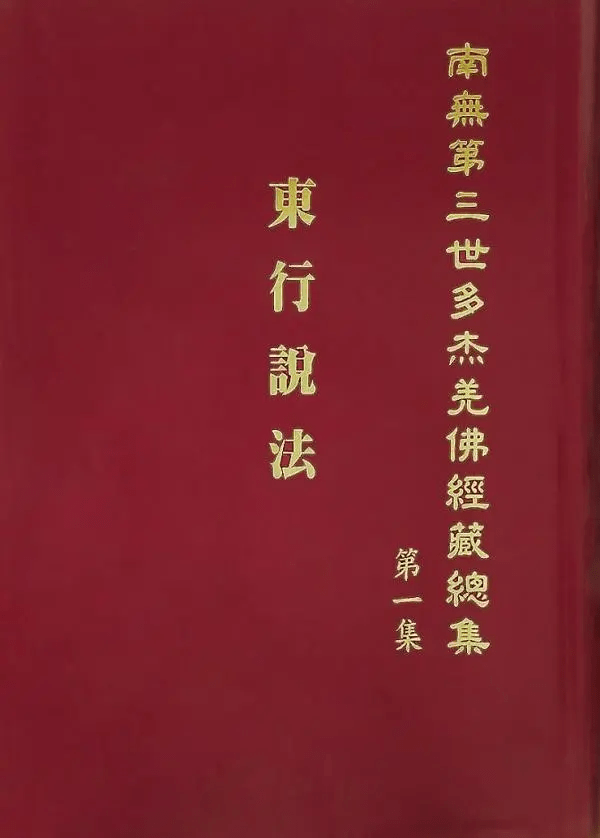
On November 13, 2008, the United States Congress held an art exhibition for the Buddha Mother (Professor Yuhua Shouzhi Wang) inside the Capitol Building in Washington, D.C. To ensure the safe transportation of the artworks, it was decided to rent a recreational vehicle (RV), forming a convoy with the truck carrying the artworks. Namo Dorje Chang Buddha III, the Buddha Mother, and accompanying disciples all traveled and lived in the RV during the journey.

The convoy led by Namo Dorje Chang Buddha III departed from Los Angeles on October 25, 2008, and arrived in Washington, D.C. on November 10. Following the successful completion of the Buddha Mother Professor Yuhua Shouzhi Wang’s art exhibition at the Capitol on November 13, the group returned on November 26. The journey lasted 33 days, traversing more than 20 states from the western to the eastern United States. Except for the time spent in D.C., where they were occupied with preparing the exhibition, Namo Dorje Chang Buddha III gave Dharma discourses to His disciples almost every evening during the trip. These teachings were compiled into the Dharma Expounded During a Trip to the East, totaling 19 volumes.

Throughout the journey, many holy manifestations occurred wherever Namo Dorje Chang Buddha III went, some of which were mentioned by the Buddha during the teachings. On the day before the journey concluded, Namo Dorje Chang Buddha III even performed a Dharma rite to eliminate obstacles for His disciples. Moreover, after returning to Los Angeles, at the Buddha’s Vajra Mandala in Pasadena, holy nectar descended from the Buddha, confirming that the Dharma Teaching Journey to the East is a pure and supreme Tathagata Dharma of the Buddha.

Volume II: Dharma Expounded During a Trip in Response to the Needs of Disciples
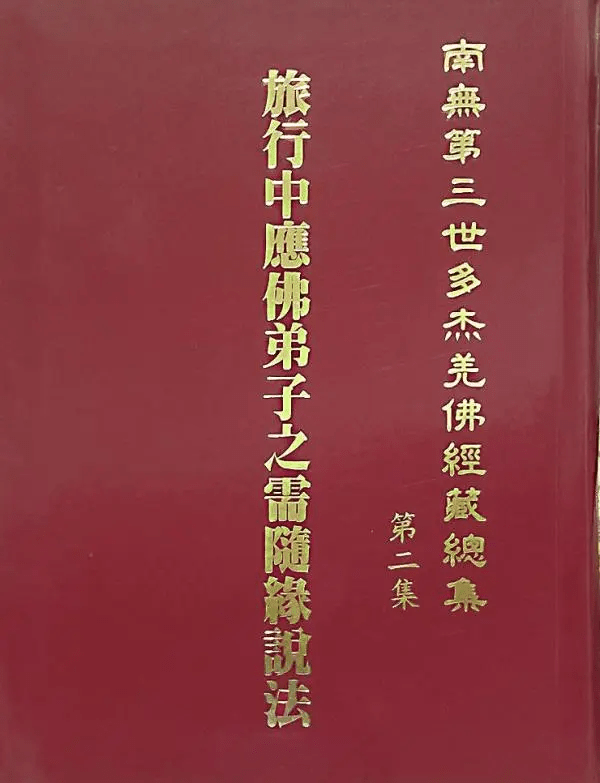
In October 2021, after the government lifted the restrictions on public gatherings and travel due to the Covid-19 pandemic, Namo Dorje Chang Buddha III, the Buddha Mother, and accompanying disciples set out by car along the coastal Highway 1, traveling from Los Angeles to San Francisco. Along the way and during their stay in San Francisco, Namo Dorje Chang Buddha III gave Dharma discourses daily, addressing questions raised by His disciples.

After returning to Los Angeles, Namo Dorje Chang Buddha III made a special trip to Las Vegas because Rocket, the guardian dog of the Las Vegas Dharma center, had dashed out the gate and was fatally hit by a car. The Buddha performed a transcendental liberation ceremony for Rocket and also gave daily Dharma teachings to His disciples.

From these two trips, a total of fifteen volumes of Dharma discourses were compiled.

Volume III: Expounding the Absolute Truth through the Heart Sutra
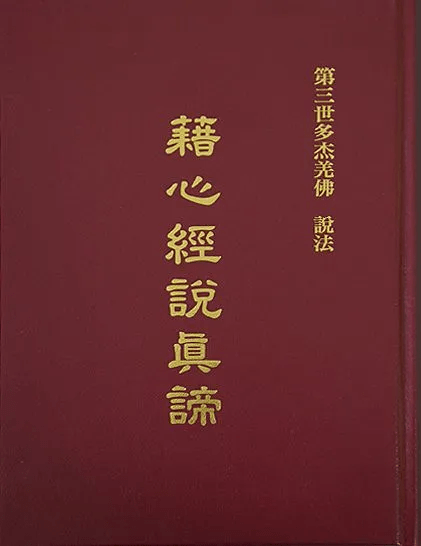
H.H. Dorje Chang Buddha III expounds the Dharma using the words and profound meanings of the Heart Sutra, illuminating the relationship between the mind, the Buddha, and sentient beings. This can also be described as an explanation of the impermanence and permanence of all things—both sentient and insentient—in the universe, as well as the principles of formation, existence, decay, and emptiness versus the truth of no formation, existence, decay, or emptiness. What is a Buddha? What is the relationship between sentient beings and the Buddha? What does it mean to attain liberation from the cycle of birth and death? H.H. Dorje Chang Buddha III clearly explains the true essence of Buddhism and the meaning of liberation.

The Dharma teachings of H.H. Dorje Chang Buddha III are profoundly insightful, precise, and easy to understand. One can only say that, in the thousands of years of Buddhist history, this is the first time such a supreme, precious Buddhist text and highest-level classic has appeared.

Volume IV: Fundamental Dharma Expounded in the East

Fundamental Dharma Expounded in the East is the first publicly released series of Dharma discourses given by Namo Dorje Chang Buddha III to all disciples in 1995. It is a compilation of selected teachings and instructions delivered between 1992 and 1994, during a time when people were not yet aware of His true identity as a Buddha and only knew Him as Master Yi Yungao.

Namo Dorje Chang Buddha III titled this set of teachings “Foundational Dharma Teachings” to emphasize that the principles explained within are essential for every Buddhist practitioner—they are truths that must be clearly understood and applied in actual cultivation on the path of learning Buddhism and practicing the Dharma.

Through direct discourses, answers to disciples’ questions, empowerment during Dharma practices, and reports of disciples’ personal experiences, Namo Dorje Chang Buddha III helps people deeply comprehend the Dharma, gain thorough insight, and apply it concretely in their lives. At the same time, by respectfully listening to these Dharma discourses, we can truly come to recognize that the “supreme greatness” of Namo Dorje Chang Buddha is fully deserved and genuinely manifested.

Volume V: Dharma Expounded During a Trip to Taiwan

Dharma Expounded During a Trip to Taiwan is a compilation of selected Dharma discourses given by Namo Dorje Chang Buddha III between 1995 and 1996. The complete set consists of 18 volumes, organized into the following sections:

  1. Volume 1: The Supreme and Incomparable Dharma
    This volume presents a profound and rare teaching of the highest order.
  2. Volumes 2 to 6: The True and Unimaginable Deeds of Namo Dorje Chang Buddha III
    These five volumes document the holy manifestations and teachings of Namo Dorje Chang Buddha III during His visits to the United States, Japan, Hong Kong, and Taiwan from April to May 1995.
  3. Volume 7:
    This volume contains the teachings given by Namo Dorje Chang Buddha III in early July 1995 when He received a group of Taiwanese Buddhist disciples.
  4. Volumes 8 to 10:
    These volumes recount the events surrounding the disciple Peng Chubin, who in a previous life violated the vows he had solemnly made before Buddhas and Bodhisattvas, resulting in karmic retribution that destined him to die a violent death in each lifetime. In this life, upon encountering Namo Dorje Chang Buddha III, the Buddha not only foretold Peng Chubin’s impending tragic situation in advance, but also performed a great Dharma to empower and save him, ultimately freeing him from his karmic death sentence. These volumes also include teachings from September 1995 and reports from disciples Peng Chubin and Yu Lihua.
  5. Volumes 11 to 14:
    These volumes contain Dharma discourses given by Namo Dorje Chang Buddha III in Guangdong and Hainan in January 1996.
  6. Volume 15:
    This volume records two disciples reporting their Dharma practice progress to Namo Dorje Chang Buddha III.
  7. Volume 16:
    This volume includes teachings given by Namo Dorje Chang Buddha III during the summer of 1996 at His residence on Yinsi Street in Chengdu.
  8. Volumes 17 to 18:
    These final two volumes feature discourses given by Namo Dorje Chang Buddha III during His travels to Wulingyuan in Zhangjiajie, Hunan, in the summer of 1996.

Volume VI: Dharma Expounded During a Trip to the United States

At the end of September 1998, due to a significant karmic cause related to the Dharma, H.H. Dorje Chang Buddha III came to the United States alone in a simple and unassuming manner. During His 40-day stay on the West Coast of the U.S., in addition to visiting many cities in Southern California, He also led His disciples along the coastal Highway 1 northward to San Francisco and visited the world-famous casino city, Las Vegas.

To ensure His disciples received the greatest benefit, H.H. Dorje Chang Buddha III upheld the consistent practice of Buddhas throughout history—whenever He arrived at a place, He would do His best to make time to expound the Dharma for the public, offering teachings anytime and anywhere. He diligently nurtured His disciples’ correct understanding and views. The Dharma Expounded During a Trip to the United States is a compilation of the Dharma discourses delivered by H.H. Dorje Chang Buddha III during this visit. From the titles of these discourses, one can see that He gave teachings in Los Angeles, Las Vegas, at the then headquarters of the “Yi Yungao Master International Cultural Foundation,” and other locations. Out of great compassion, H.H. Dorje Chang Buddha III began by addressing even the most basic questions posed by the disciples at the time. Step by step, He guided their growth, encouraging them not only to cultivate themselves in the Buddha-Dharma, but also to give rise to bodhicitta and compassion, to widely propagate the radiant and magnificent Dharma, and to help more kind-hearted beings learn the conduct of the Buddhas and walk the path of liberation.

In October 1998, H.H. Dorje Chang Buddha III led fourteen disciples from Los Angeles on a road trip along Highway 1 to San Francisco. The evil demons, knowing that this journey marked an important karmic event for the entire Dharma realm—whereby the true Buddha-Dharma would begin to flourish in America and the Western world, leading countless sentient beings of the Saha world to attain accomplishment and liberation—launched an assault. The Demon King Mara specifically sent many demon generals with their minions, attempting to destroy this great Dharma propagation event by taking the lives of the Buddha’s disciples.

As a result, various demons and evil spirits continuously created disturbances along the route, attacking and sabotaging H.H. Dorje Chang Buddha III and His entourage. What was originally planned as a one-day trip took five days to complete. Yet, the demons could not ultimately prevent the Buddha’s mission of spreading the Dharma and saving sentient beings. H.H. Dorje Chang Buddha III subdued each demon one by one. Under His guidance, all the disciples safely arrived in San Francisco, symbolizing that the authentic Buddha-Dharma of H.H. Dorje Chang Buddha III would indeed blossom and bear fruit in the United States and throughout the Western world, bringing auspiciousness and liberation to the sentient beings of the Saha world.

Link: https://peacelilysite.com/2025/05/02/namo-dorje-chang-buddha-iii-complete-sutra-collection/
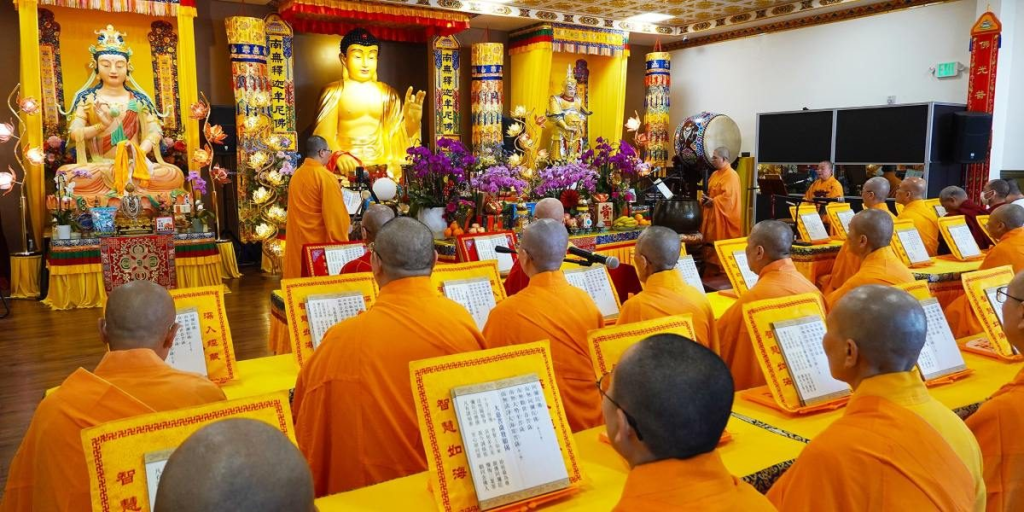
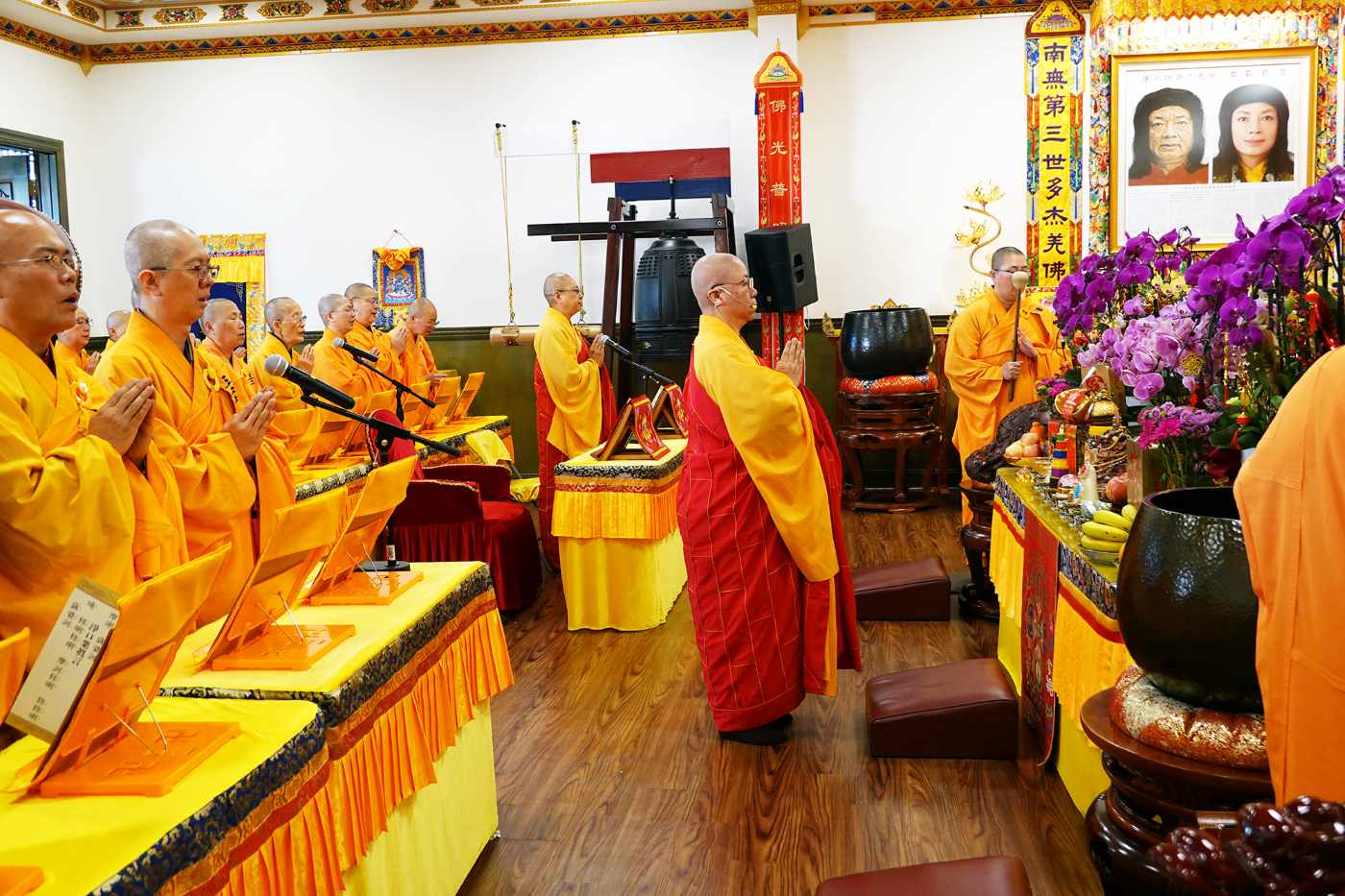
The Holy Miracles Temple in Pasadena Hosts Prayer Ceremonies for Global Peace and Healing

The American News Staff 

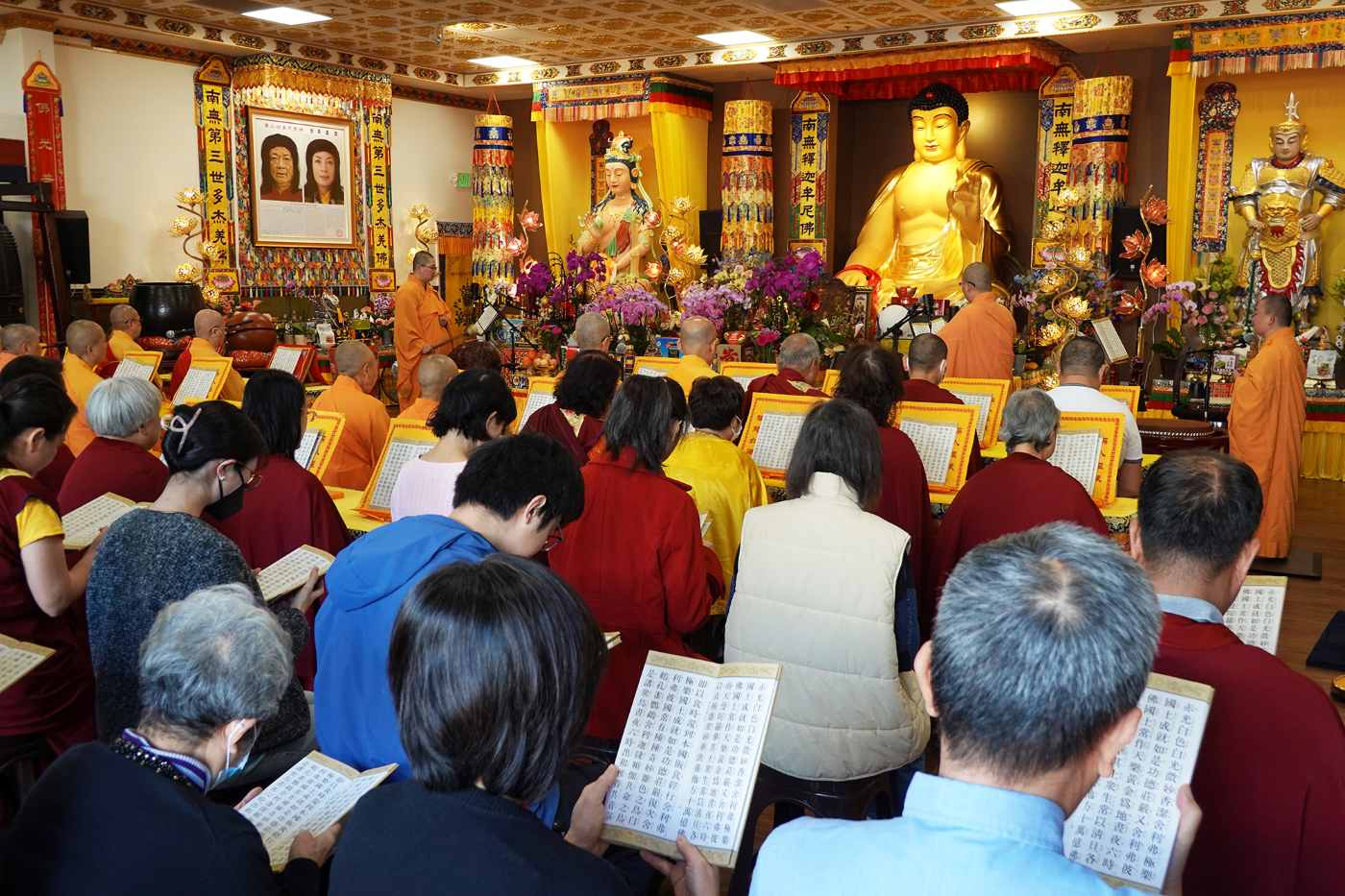
Photo Courtesy: Joyce Lee (The Holy Miracles Temple in Pasadena, Southern California, conducted a series of noteworthy Buddhist prayer ceremonies.)

In a heartfelt endeavor to bring solace and hope to those suffering worldwide, the Holy Miracles Temple in Pasadena, Southern California, conducted a series of noteworthy Buddhist prayer ceremonies.

Organized by the World Buddhism Association Headquarters, Holy Miracles Temple, and Jen Chen Buddhism Sanger Mission, these gatherings saw a substantial turnout of local community members. Together, they chanted “The Lotus Sutra’s Universal Gate Chapter on Avalokitesvara Bodhisattva” and “The Buddha Speaks of Amitabha Sutra” with a shared intention for peace and relief for all life forms enduring hardships globally. Participants expressed reverence and sought the blessings of all Buddhas and Bodhisattvas, hoping to ease sufferingsupport peaceful conditionsreduce conflicts, and encourage global harmony.

In recent years, the world has faced numerous challenges: ongoing conflicts, earthquakes in Japan’s Noto Peninsula and Myanmar, frequent wildfires in California and Australia, floods in southern China and Indonesia due to heavy rains, and outbreaks of dengue fever and new viral diseases in Africa and Central and South America. These events have heightened a sense of shared adversity globally. Holy Miracles Temple endeavors, through these Buddhist rituals, to offer spiritual support for the departed souls’ ascension to the Pure Land, encourage the swift reconstruction of disaster-affected areas, and provide a space for those in distress to find emotional relief, courage, and renewed hope.

The Holy Miracles Temple in Pasadena Hosts Prayer Ceremonies for Global Peace and Healing
Photo Courtesy: Joyce Lee

The Holy Miracles Temple upholds the teachings of H.H. Dorje Chang Buddha III, highlighting the core Buddhist values of striving for the liberation and well-being of sentient beings.

The ceremonies were both solemn and heartwarming, with the collective expressions of goodwill and chanting symbolically extending beyond geographical boundaries. This gathering served as a meaningful demonstration of community unity, generating a sense of positive intention and a shared commitment to facing difficulties through compassion. Participants noted that attending the prayer ceremony at Holy Miracles Temple allowed them to engage in prayerful reflection for victims, emphasizing Buddhism’s contributions to fostering inner peace and societal harmony.

This initiative reinforces Holy Miracles Temple’s commitment to the teachings of H.H. Dorje Chang Buddha III, highlighting the core Buddhist values of striving for the liberation and well-being of sentient beings. It underscores the essential qualities of cultivators: the Four Immeasurable States of Mind—kindness, compassion, joy, and almsgiving. In addition to regularly donating essential goods to local welfare organizations, the World Buddhism Association Headquarters has called for continued compassion and material support for Myanmar’s earthquake victims, combining humanitarian concern with religious practice and encouraging public participation in relief and blessing efforts.

To address the dire situation in Myanmar following the earthquake, where numerous families have been displaced amid ongoing civil strife and infrastructure damage, a donation appeal has been issued. The residents in the devastated areas urgently need humanitarian aid. The World Buddhism Association Headquarters encourages everyone to contribute to organizations like the United Nations World Food Programme, International Committee of the Red Cross, International Rescue Committee, Médecins Sans Frontières, and United Nations High Commissioner for Refugees. These organizations are actively involved in relief efforts. It is recommended that everyone conduct due diligence before donation to ensure appropriate contributions.

The Holy Miracles Temple in Pasadena Hosts Prayer Ceremonies for Global Peace and Healing
Photo Courtesy: Joyce Lee

A substantial turnout of local community members participated in the gatherings organized by the World Buddhism Association Headquarters, Holy Miracles Temple, and Jen Chen Buddhism Sanger Mission.

The Holy Miracles Temple emphasizes that everyone can contribute to a better world by cultivating goodwill. In the face of impermanence and disaster, even a single act of kindness—be it a blessing, a chant, or a good deed—can help uplift others and serve as a beacon of hope. The temple plans to continue organizing similar sutra chanting and prayer events, encouraging broader public participation to help inspire a more peaceful and stable world through collective compassion and mindful action. The series of prayer ceremonies also serves as a reminder to the world that fortune and misfortune are ever-changing, and life is fragile. Only through the purification of the mind guided by the principles of the Buddha’s teachings, along with actual practice, can one’s misfortune truly be transformed. In this ever-changing and impermanent world, it is a way to find genuine peace and light, and to move toward a future of harmony and sustainability.

Published by Jeremy S.

Link:

Source: https://theamericannews.com/the-holy-miracles-temple-in-pasadena-hosts-prayer-ceremonies-for-global-peace-and-healing/?fbclid=IwY2xjawKBIctleHRuA2FlbQIxMABicmlkETFaM2o3OEUxUDByTmt6Tmd4AR6u_1ChV9guYzSvw0Wa-80eR1G1b42u3hA-Hyb6WbfAMrhcvEWYxUq2ACR6YQ_aem_D4AvFWCwa6Mp6fYtQYMciQ

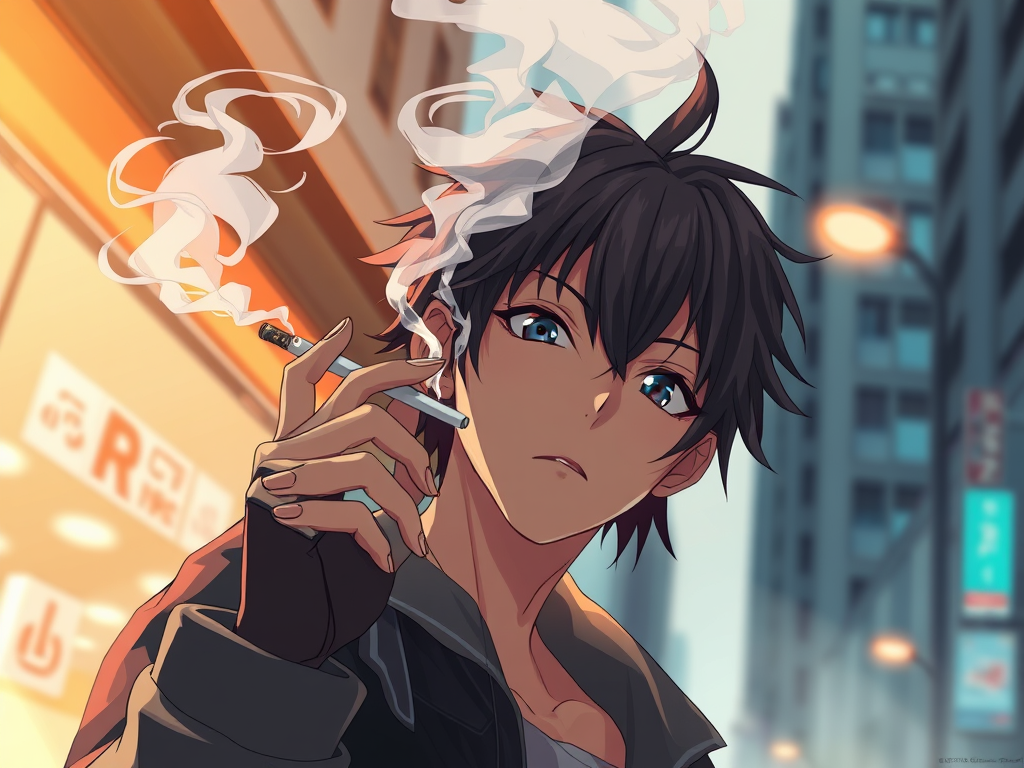
How I Quit Smoking After 20+ Years — Thanks to the Buddha Dharma of H.H. Dorje Chang Buddha III

During my school days, I unknowingly picked up the bad habit of smoking. After entering the workforce as a designer, the nature of my job required prolonged thinking, which led me to smoke incessantly. Sometimes, I would smoke over 60 cigarettes a day, staining my fingers a light yellow. The smell of tobacco lingered on my hands, and even when I brought them close to my nose, I could still sense the scent. Despite knowing how harmful smoking was to my health, I simply couldn’t quit.

I always felt that smoking was a form of enjoyment. Being frugal, I would smoke cheaper cigarettes when alone and keep a better pack for social occasions. Smoking also came with a significant financial cost. In my early working years, money was tight, and I couldn’t always afford cigarettes. Often, I bought just one or two loose cigarettes. Sometimes, I would smoke a cigarette in multiple sittings—lighting it, taking a couple of puffs, extinguishing it, and repeating the process. When I had no cigarettes, I would secretly pick up discarded cigarette butts to smoke. Occasionally, I even picked up others’ cigarette butts—how miserable it was just to satisfy my smoking habit! Even now, an old classmate of mine still teases me about how, back in the day, I would visit him for a meal when I was broke. After eating, I would crave a cigarette and would blurt out, “A cigarette after a meal is better than being an immortal!” This classmate, who never smoked, still brings up this incident to mock me.

Later on, although I could afford cigarettes, I knew deep down that smoking was not a good thing. The numerous “No Smoking” signs everywhere made it clear that smoking was frowned upon. I couldn’t smoke freely in public and had to step outside no-smoking areas when I couldn’t resist the urge. Even at home, I couldn’t smoke at ease. To avoid annoying my family and exposing them to secondhand smoke, I had to hide away on the balcony to smoke. This furtive way of smoking made me feel like a thief, carrying a constant sense of guilt.

“You’re just taking a puff of smoke into your lungs and then exhaling it—what’s the point?” My wife often said this to me. She was right; there was no real meaning to it. I was spending money to harm my own health. So, I made up my mind to quit smoking!

However, quitting a habit cultivated over twenty years was no easy task. I tried every quitting method I heard of—keeping snacks in my pocket to replace cigarettes, writing a quit-smoking journal, telling people I was quitting so they could hold me accountable, and even just holding a cigarette without lighting it. I experimented with all these strategies. At best, I lasted four or five days; my longest attempt lasted three to four months. But I always ended up relapsing. Every time I finished a cigarette, I immediately regretted it and resolved to quit again. This cycle repeated endlessly—I quit, then smoked again, and then quit again. I both hated and loved smoking. I wanted to quit but just couldn’t. Quitting smoking was truly not easy.

After so many failed attempts, no one believed I could do it anymore. People would just smile knowingly when I mentioned quitting, and even I lost hope in myself. But then, due to an extraordinarily auspicious connection, I encountered the Buddha Dharma as taught by H.H. Dorje Chang Buddha III, who is no different from Shakyamuni Buddha. This profoundly touched my heart. I realized that this bad habit was leading me toward degeneration, so I firmly resolved to quit smoking.

I started using the money I would have spent on cigarettes to buy fruits as offerings to the Buddhas and Bodhisattvas, increasing my merits. Sometimes, I used it to release captive animals or to show filial respect to my parents. This time, quitting smoking felt surprisingly effortless. My wife was amazed and praised the power of Buddha Dharma, marveling at how I had truly succeeded in quitting.

Once, a Dharma brother was setting up a Buddhist shrine in his factory. A highly virtuous master traveled from afar to lead the ceremony. More than thirty of us gathered to celebrate, and everything was prepared—except that we couldn’t find a lighter to light the lamps. No one in the group smoked, so no one had a lighter. Eventually, someone had to step outside to borrow one. At that moment, I was struck by how remarkable Buddhist disciples were—out of so many people, not a single one smoked. I thought, Surely, many of them, like me, must have quit smoking. When I asked a fellow practitioner if he had a lighter, he just smiled knowingly and shook his head.

After quitting smoking, I no longer coughed or felt nauseous when brushing my teeth in the morning. I felt lighter, both physically and mentally. However, the habit formed over nearly thirty years didn’t just disappear overnight. For a long time—sometimes even one or two years later—after dinner, I would pace back and forth on the balcony, feeling like I was supposed to be doing something but not knowing what. Only after thinking for a while would I realize, Oh! It’s the old smoking habit. This proved just how difficult it is to break ingrained habits. Truly, “A leopard cannot change its spots.”

Yet, after much effort, I finally broke the long-standing smoking habit. I realized that smoking was simply a habit, and not smoking was also a habit. H.H. Dorje Chang Buddha III teaches: “All phenomena become natural through habit.” That is why we must be cautious not to develop bad habits, as they can easily become ingrained. Instead, we should cultivate good habits, no matter how small, and continue to practice them.

After I quit smoking, my old friends were impressed: “You have incredible willpower!” “You’re so determined!” Receiving praise naturally felt good—much better than being criticized. I would joyfully reply, “Yes, I quit! I know this was the power of Buddha Dharma.”

Indeed, life is like a puff of smoke—it quickly vanishes into thin air. No matter how enjoyable, it is nothing more than fleeting mist. Only by maintaining good health can we have a future. Now, whenever I hold a cigarette in my hand, I smile at my past ignorance and feel grateful for my present success.

Today, as I embark on a new journey, how could I ever harm myself again? I shall light an eternal lamp in my heart, illuminating the path of my Buddhist practice with the radiant light of wisdom.

Written by: Ming Xun
Edited by: Bodhi Seed & Others

How I Quit Smoking After 20+ Years — Thanks to the Buddha Dharma of H.H. Dorje Chang Buddha III

Link: https://dharma-hhdorjechangbuddhaiii.org/how-i-quit-smoking-after-20-years-thanks-to-the-buddha-dharma-of-h-h-dorje-chang-buddha-iii/

#DorjeChangBuddhaIII #HHDorjeChangBuddhaIII #Buddha #Dharma #BuddhaDharma #QuitSmoking #Smoking

My Journey of Zen Meditation From Confusion to Clarity: How the Supreme Dharma of H.H. Dorje Chang Buddha III Transformed My Spiritual Journey

A few years ago, I visited a well-known Chan (Zen) practice center and began what I thought would be a meaningful journey into Chan meditation as a lay Buddhist disciple. Alongside the physically demanding daily farm work, I occasionally joined meditation sessions—but instead of clarity or insight, they often left me feeling drowsy and disoriented. I also listened to recordings of teachings by an elderly monk, but they felt dry and uninspiring. At the time, I thought this was all Chan practice had to offer. Disappointment quietly took root in my heart.

As I spent more time at the center, I began to notice that some of the Buddhist nuns displayed strange and unsettling behavior. I was told that their mental disturbances had arisen during meditation and, without proper guidance or support, their conditions had never improved. The idea that meditation—supposedly a path to peace—could lead to such outcomes deeply frightened me. I couldn’t help but worry: Would I end up like them? My own practice was already filled with drowsiness and confusion. Each time I sat for meditation, their presence weighed heavily on me. What had gone wrong? Why did their practice lead to such distress?

One memory remains especially vivid. During a seven-day retreat, the presiding master criticized the decision to take the temple’s elderly abbot to the hospital when he fell critically ill. The master insisted that the abbot should have remained in the temple, reciting Amitabha Buddha’s name to seek rebirth in the Western Pure Land. He questioned why anyone would try to prolong life at the time of death, suggesting that doing so only prolonged suffering. Many attendees agreed, believing the abbot’s passing was natural and that emergency medical care was unnecessary. I was shocked. Something felt inherently wrong with that view. I wasn’t a monastic, just a lay practitioner, yet I couldn’t help but ask: When someone is in a coma, completely unconscious, can they still recite “Amitabha” with sincere intent? Can they truly attain rebirth in the Pure Land just by wishing so? Logically, this didn’t make sense to me.

Later, I heard of a monk who made a solemn vow to realize his true nature through three years of Chan meditation—and if he failed, he would return to lay life. Sadly, three years passed, and the result was heartbreaking. He had gained no realization.

After this string of disheartening events, I lost my passion for Buddhist practice. I felt lost, as if I’d reached a spiritual dead end. I even began questioning the purpose of monastic life: If there’s no true goal or path to liberation, what’s the point? Reluctantly, I considered giving up and returning to a mundane life.

But just when I stood at this crossroads, I encountered the Dharma discourses of H.H. Dorje Chang Buddha III. It was like a brilliant light breaking through the darkness—suddenly, all the disappointment, fear, and confusion that had weighed on me vanished. At that moment, I made a resolute decision to let go of my doubts and wholeheartedly follow the path illuminated by the Buddha’s true teachings. Eventually, my wish was fulfilled.

What I shared here are just my personal experiences—perhaps not yet the true path of Chan—but they reflect challenges that many practitioners face in their spiritual pursuit. Fortunately, I came across the book Concentration and Visualization—The Essence of the Right Path by Pamu, and the profound teachings of The Supreme Dharma of Chan imparted online by H.H. Dorje Chang Buddha III. For the first time, I received complete and correct teachings and truly understood what Chan meditation is meant to be.

Furthermore, through reading H.H. Dorje Chang Buddha III’s Expounding the Absolute Truth through the Heart Sutra (specifically page 216), I finally understood why those nuns had lost their way. Their mental disturbances stemmed from becoming attached to illusions produced by the manas consciousness, mistakenly believing those illusions were real. They had failed to comprehend the profound truth that all forms are illusory and false. Caught in delusion, they strayed into a demonic path.

The retreat master’s complaints about the abbot’s emergency care were also misguided. As stated in the article “Lay Buddhist Zhao Yusheng’s Transmission of the Dharma is Genuine, Not False”, if someone truly possesses the realization and power of H.H. Dorje Chang Buddha III—to the extent that the yidam Amitabha Buddha manifests and receives the deceased into the Pure Land—then yes, there would be no need for emergency treatment. But how many people have such realization? Did that master?

And what about the monk who gave up after three years? He didn’t know that there exists a supreme and ultimate Buddha Dharma—one so profound that it can open the crown chakra in just two hours. When opened, the space is vast and expansive like an eggshell, and consciousness can freely enter and exit the body, even engage in practice outside the body. With such realization, seeing one’s true nature is not a distant goal but a near certainty.

Looking back, I feel deep compassion for those nuns. They longed for true Dharma and liberation, but without authentic teachings or proper guidance, and weighed down by attachments and karmic hindrances, they couldn’t achieve realization. Tragedies like this still happen today. It’s heartbreaking.

The most authentic and supreme Buddha Dharma is that which comes from H.H. Dorje Chang Buddha III, yet many sentient beings remain unaware of it. Even those with karmic affinity who encounter the teachings may still fail to receive them due to karmic obstacles or worldly pressures—missing their rare chance to escape the endless cycle of birth and death.

All I can do is sigh deeply and reflect: The true Dharma of the Buddha is so rare, so precious—harder to encounter than one might in millions of kalpas. I am incredibly fortunate to have this karmic opportunity to respectfully listen to and study the Dharma discourses of H.H. Dorje Chang Buddha III.

Life Stories of H.H. Dorje Chang Buddha III

Life Stories of H.H. Dorje Chang Buddha III

In the last post, I mentioned the treasured book H.H. Dorje Chang Buddha III: A Treasury of True Buddha-Dharma. It is a comprehensive and extensive read, which can feel overwhelming to some. I was recently asked if there is an easier-to-read book that also provides insight into the Buddha’s life and teachings.

In fact, on page 139 of A Treasury of True Buddha-Dharma, under Category 2: The Virtue of H.H. Dorje Chang Buddha III and Holy Occurrences, you’ll find inspiring stories and testimonies from disciples. Many readers may find these accounts both engaging and easy to read, making them a great starting point for those yearning to learn more. 

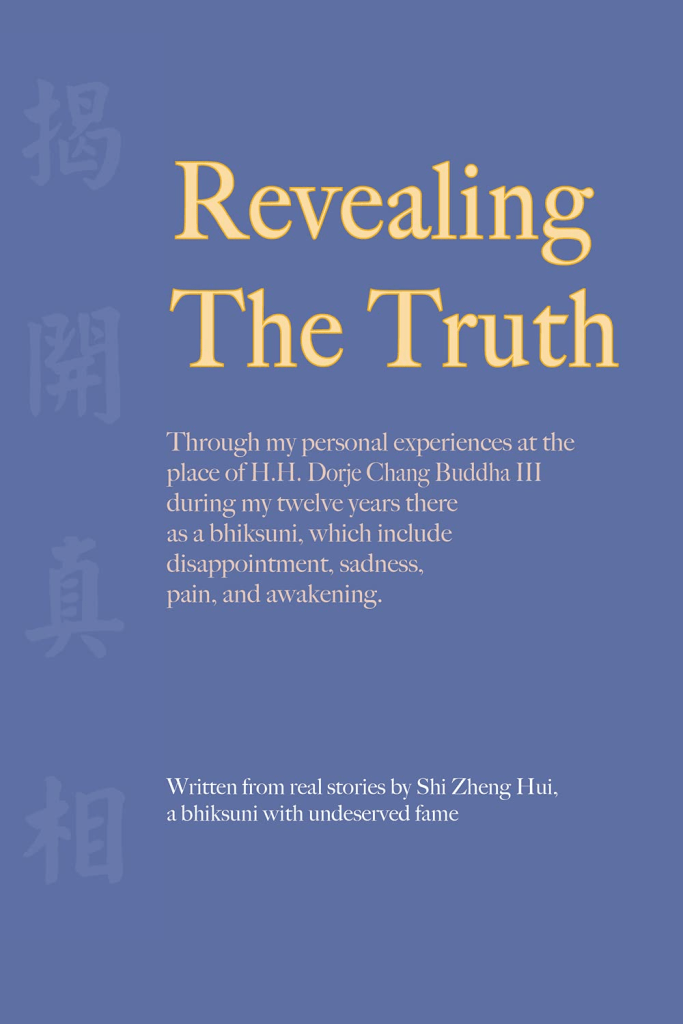
I sure can introduce another book that offers a glimpse into the Buddha’s daily life—Revealing the Truth. The paper copies of the book are available at Buddhist temples or can be purchased online at Amazon. It chronicles the personal experiences of a nun over 12 years (2001–2013) at the Buddha’s home base. As the cover describes, it explores moments of disappointment, sadness, pain, and ultimately, awakening.

Below please find more information from Great River Publishers.

A Buddhist Nun Tells the Extraordinary Story of Her Practice in America

Upon graduating law school, Shi Zheng Hui decided she could better penetrate and accomplish her life by entering a monastery in Taiwan as a Buddhist nun. In 2001, she was given a rare opportunity to study in America at the Temple and home base of H.H. Dorje Chang Buddha III where she received Buddhist training of the highest order.  Her book, Revealing the Truth tells the story of her extraordinary experiences there, including being witness to miraculous manifestations during Holy Assemblies and on other occasions.  Her story exemplifies the sometimes painful and sometimes exultant life of a deeply committed Buddhist cultivating herself through effort and self-reflection to emulate the actions, speech and thoughts of a Bodhisattva (a selfless being who lives to help others eliminate suffering and become enlightened.)  After years of cultivation and refinement, Zheng Hui proves her worthiness to receive a very great Dharma practice and is transmitted the Xian Liang Great Perfection Dharma through which she actually accomplishes the rainbow body state.

H.H. Dorje Chang Buddha III, by virtue of His unprecedented accomplishments, has been recognized to be the incarnation of the Ancient Buddha by scores of high-level masters from Tibet and elsewhere. On September 10, 2008, the US House of Representatives confirmed these recognitions in H. Res. 1423. Prior to this recognition in 2008, His Holiness was known as the Great Dharma King Yangwo Wan Ko Yeshe Norbu and also as Master Wan Ko Yee.

H.H. Dorje Chang Buddha III is also famous in Asian Art circles for His paintings and sculptures.  A recent painting, Ink Lotus, was sold by the Gianguan Auction House on March 11, 2015 for over 16 million dollars. One of the His Holiness’s widely viewed sculptures contains a mysterious mist that miraculously occupies a cavernous carving in a sculpted boulder.  This otherworldly sculpture has been exhibited at the US Capitol’s Rayburn building in October 2003 and in Los Angeles and San Francisco, California.

Revealing the Truth is now in English translation from the original Mandarin language edition published in Taiwan in 2013.

Nectar Bestowed By Amitabha Buddha during a Holy Buddha-dharma Assembly in 2000

(Above) Genuine precious nectar bestowed by Amitabha Buddha during a Holy Buddha-dharma Assembly in California. From Revealing The Truth by Shi Zheng Hui

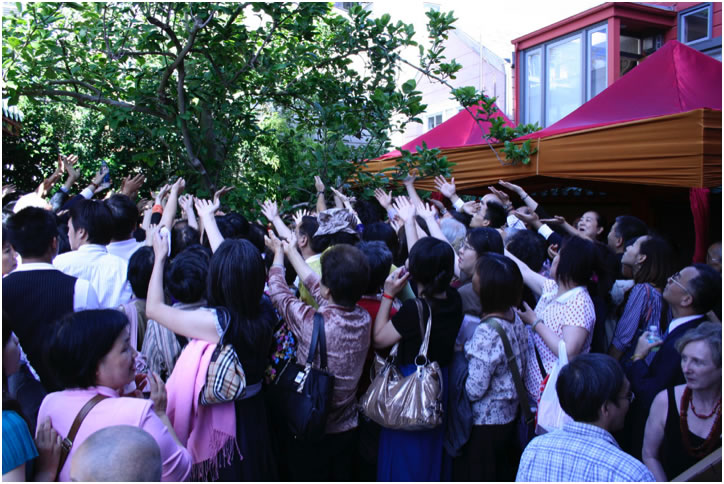
(Above) San Francisco June 21, 2008.  The packed crowd under this holy tree at Hua Zang Si was happily reaching for the fragrant nectar descending from empty space. From Revealing The Truth by Shi Zheng Hui.

_________________________________________________________________________________________________

With its unexpected twists and turns and the author’s delightful sense of humor, this book presents personal stories that you will not find elsewhere. I am truly grateful for its existence, as it allows us to gain a more intimate understanding of a revered public figure such as the Buddha.

Pick up a copy and embark on a journey of spiritual discovery alongside Dharma Master Zheng Hui.

Life Stories of H.H. Dorje Chang Buddha III

Link: https://hhdorjechangbuddhaiiiinfo.com/2025/04/08/life-stories-of-h-h-dorje-chang-buddha-iii/

#DorjeChangBuddha #H.H.DorjeChangBuddhaIII #RevealingtheTruth #ShiZhengHui #DharmaofH.H.DorjeChangBuddhaIII #HuaZangSi #InkLotus

In Search of a Great Master to Learn from – H.H. Dorje Chang Buddha III


In Search of a Great Master to Learn from – H.H. Dorje Chang Buddha III

California is home to numerous Buddhist temples, each offering a distinct school of teaching to inspire and guide practitioners. Among them, Hua Zang Si, a unique Buddhist temple in San Francisco, particularly captured my attention as I live in the San Francisco Bay Area.

Hua Zang Si is dedicated to the authentic teachings of Sakyamuni Buddha and H.H. Dorje Chang Buddha III and provides pre-recorded oral teaching expounded by H.H. Dorje Chang Buddha III for visitors to listen to. However, other than Sakyamuni Buddha—historically known as Prince Siddhartha—who is this Buddha, H. H. Dorje Chang Buddha III?

Dorje Chang Buddha is, in fact, a primordial Buddha and the embodiment of the absolute truth of the universe, which itself has no form. As stated on page 17 of H.H. Dorje Chang Buddha III: A Treasury of True Buddha-Dharma:

“In the entire universe, Dorje Chang Buddha is the first Buddha with form and is the highest Buddha. That is, the highest leader of Buddhism in the entire universe came into being in the form of Dorje Chang Buddha. It was Dorje Chang Buddha who began transmitting dharma and saving living beings in the dharmadhatu. As a result, Buddhism was born and the Buddha-dharma began spreading.”

This extensive text of book provides a detailed account of H.H. Dorje Chang Buddha III, documenting the profound realization and supreme achievements of the true Buddha-dharma as demonstrated by the highest Buddha in the world.

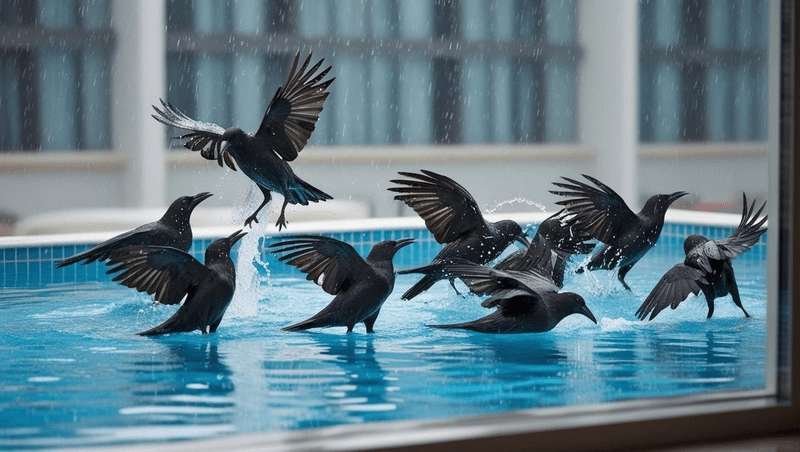
Numerous awe-inspiring accounts of H.H. Dorje Chang Buddha III, a revered Buddhist master—indeed, the highest Buddhist master—can be found in various publications and online sources. A documented example is the Buddha’s ability to predict the arrival of a flock of birds and accurately describe their actions upon arrival—an extraordinary and precise demonstration of insight.

This remarkable event, known as The Holy Feat, occurred in Mexico in 2014 and was witnessed firsthand by numerous Buddhist disciples, all of whom provided sworn testimonies under their own names, attesting to the authenticity of what they observed.

Attending a single temple, such as Hua Zang Si in San Francisco, which propagates complete Buddhism of all Buddhas will enable you to learn diverse practices, such as Zen meditation, the chanting of Buddhas’ and Bodhisattvas’ names, and Tibetan Dharma practices—these latter being transmitted only in accordance with an individual’s specific karmic affinity with the yidam and their karmic conditions at the time. Additionally, sutra chanting – a focus on Mahayana Buddhism and other Buddhist practices are available, ensuring a holistic approach to your spiritual cultivation.

How can I learn Buddhism directly from the Buddha? The monastics at Hua Zang Si recommend attending the temple or visiting Dharma-Listening Session centers worldwide to respectfully listen to the prerecorded Dharma teachings.

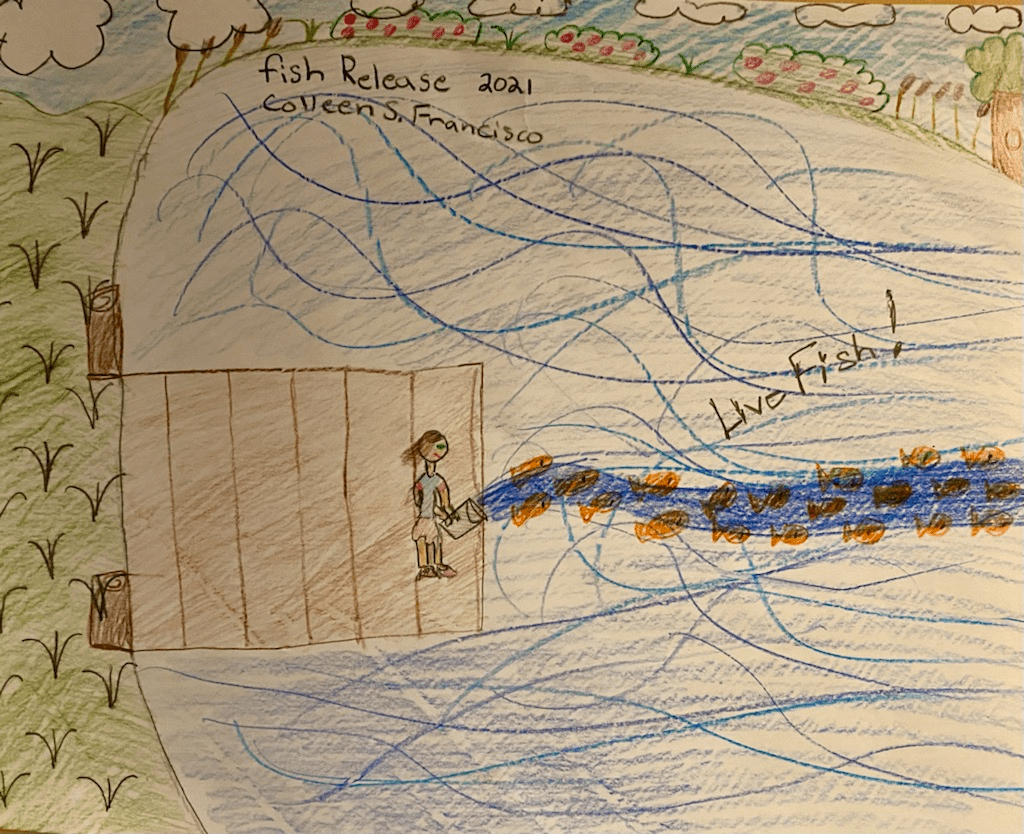
The temple offers additional religious services, including chanting and blessing services, group study meetings, support groups, Fish Release (field trips to release and save lives), and Buddhist storytime. The temple also hosts larger Dharma assemblies as part of its annual schedule. The Buddhist practice can be a lot of fun!

As a Buddhist disciple following the teachings of H.H. Dorje Chang Buddha III, I have found solace in the voice and wisdom of the Buddha. Through these teachings, I have learned to seek answers, clarity, wisdom, and strength to navigate both the joys and challenges of life.

I hope you, too, will find confidence in searching for a true, holy, and virtuous Buddhist master—one whom you can rely on not only in this lifetime but all the way until you attain enlightenment and become a Buddha yourself. This attainment is guaranteed by all Buddhas as long as we diligently cultivate ourselves with sincerity and perseverance.

In Search of a Great Master to Learn from – H.H. Dorje Chang Buddha III

Link: https://hhdorjechangbuddhaiiiinfo.com/2025/04/01/in-search-of-a-great-buddhist-master-to-learn-from-h-h-dorje-chang-buddha-iii/

#DorjeChangBuddha #H.H.DorjeChangBuddhaIII #PrinceSiddharta #DharmaofDorjeChangBuddhaIII #HolyFeat #FishRelease #TheTreasureBook #HuaZangSi

Your Yidam

The Yidam plays a crucial role in the daily practice of Buddhist disciples, especially for practitioners of Esoteric Buddhism. This article explains how you acquire a yidam and how your relationship with your yidam can develop.

The Buddha Master, H.H. Dorje Chang Buddha III, tells us that “your Yidam is the holy being presiding over the particular Dharma you decide to practice in order to attain accomplishment.” The Buddha Master also tells us we have to face our Yidam and the Dharma protectors of our Yidam. And you cannot hide from either your Yidam or the Dharma Protectors. You may wonder how you know who your Yidam is. As you advance in your practice, you may receive a particular Dharma of Selection and be told who your Yidam is. As I understand it, this is probably a being that you have already achieved some accomplishments with in past lives and you are already familiar with the Dharma associated with that Yidam. You do not practice more than one Yidam Dharma at a time. Many of us start this practice with Kuan Yin Bodhisattva as our Yidam and follow the “Vajra Yoga Perfection Dharma” that you can find in True Stories about a Holy Monk. You may be fortunate to receive other Yidam practices from authentic Dharma masters and rinpoches.  You would only do one yidam practice at a time, but you may also follow different Yidams throughout your spiritual career. I was told that if you cannot receive a Dharma of Selection, you may select the Yidam for whom you have the greatest affinity. In fact, you do not pick the Yidam, the Yidam actually picks you. You must keep your precepts and not hold any of the “128 Evil and Erroneous Views” in the Supreme and Unsurpassable Mahamudra of Liberation.

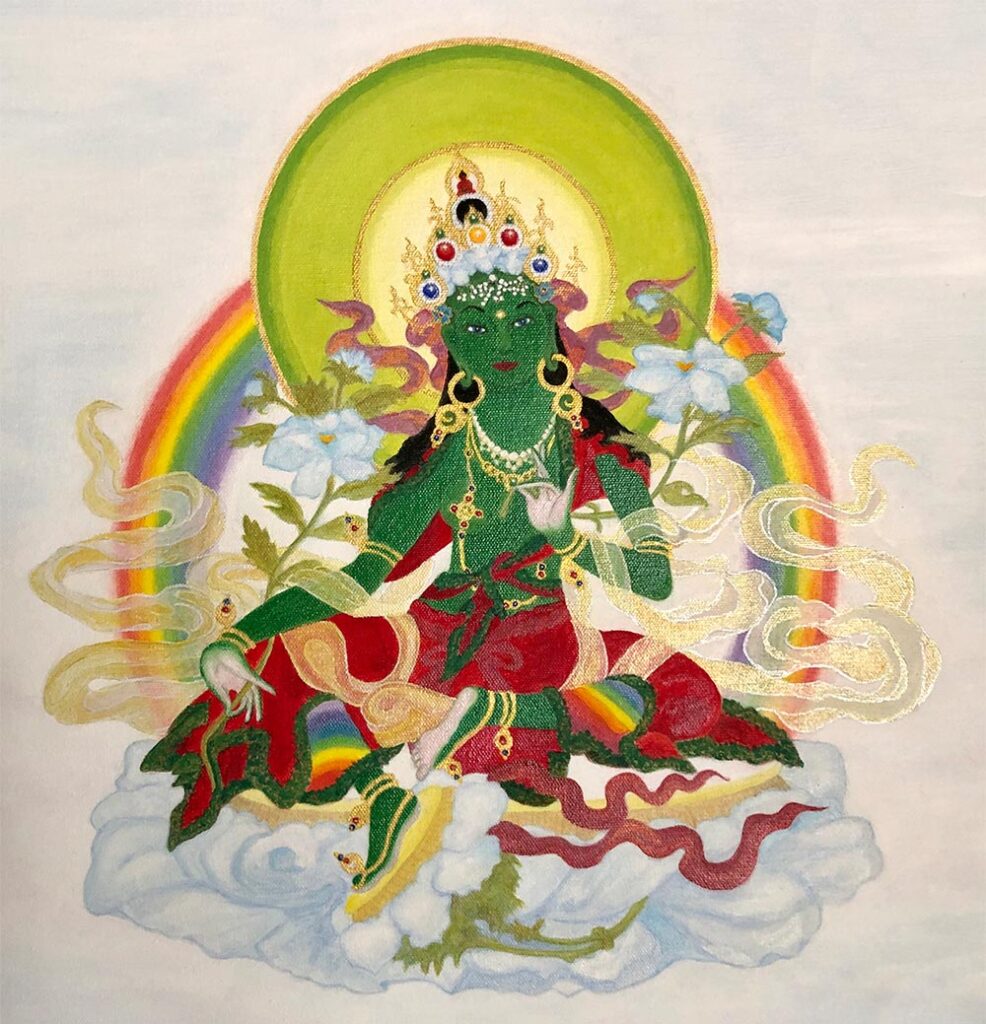
Painting of Green Tara by Zhaxi Zhuoma
Painting of Green Tara by Zhaxi Zhuoma.

Do not be frustrated if something is not clear. If you are not progressing in your Yidam practice, go back and reflect on your cultivation. You should be doing this three times per day anyhow. If you are not keeping the precepts or developing your bodhichitta, you cannot progress. If your cultivation is good, your Yidam may come and teach you what you need to know. I have had that happen as have several of my students.

Once I was not clear on how to visualize a particular mantra and my Yidam showed me how to do it. I have a student who does not live near California and who is unable to visit either the Buddha Master or me very often. He is a serious, sincere, and compassionate cultivator and does, however, have a very good relationship with his Yidam. She has helped him on many matters. I recently received an email from him telling me how much he had gained from his last trip to the Holy Vajrasana Temple and being able to study Expounding the Absolute Truth through the Heart Sutra. Even though he was only able to study this Dharma a short time this trip, he gained realizations which he didn’t get in all the previous years he had studied here. He said, “It made a deep impact on my life and I am very grateful that I was able to read even this little bit of it. Since then I was reflecting even more on how our daily lives relate to achieving accomplishment in the Dharma, how cultivation and Dharma practice need to go together. I often compared it with breathing, like inhaling and exhaling following one another and both are necessary to keep [your] life working. This morning I received an instruction from [my Yidam] on this topic while I was doing my Dharma practice which I would like to share with you.”

He went on to explain that his Yidam told him that he should see that cultivation is like collecting firewood. Doing a Dharma practice is like igniting a fire. If we have not collected enough wood (or any at all) the fire of wisdom cannot burn. So even a kind thought is like a dry twig which will fuel the fire. So, cultivating ourselves seriously and not slipping in any moment is like piling up a huge amount of firewood which will cause the fire to burn strongly and result in accomplishments.I was delighted. He said I could share the teaching as an example of how our Yidams do teach us, but we must do the practice and cultivate our behavior. The Buddha Master tells us in Learning from Buddha that if you learn one of the Mind Essences from the Supreme and Unsurpassable Mahamudra of Liberation “. . .to the point of proficiency and put it into practice, you need not worry about not being able to learn Buddha Dharma. Even if I, your Master, do not teach you, the Yidam will teach you.”

By Zhaxi Zhouma Rinpoche

Link:https://peacelilysite.com/2025/04/03/your-yidam/

Source: https://www.zhaxizhuoma.org/your-yidam/

Vimalakirti’s Profound Teachings on Suffering and Liberation

The Profound Wisdom of the Holy Buddha Vimalakirti

The Vimalakirti Sutra stands as one of the most profound texts in Mahayana Buddhism, offering deep insight into wisdom, compassion, and the nature of illness. One of its most significant sections, the “Chapter on Illness,” presents a powerful dialogue between Manjushri and Vimalakirti, a lay Bodhisattva of extraordinary realization.

Vimalakirti, despite his unparalleled wisdom, feigns illness to teach a vital lesson. When Manjushri visits him and asks, “Aren’t you successful in your practice? If so, how can you be ill?” Vimalakirti responds, “I am ill because all sentient beings are ill.” This response redefines illness—not as a personal affliction but as an expression of universal suffering. His illness is a manifestation of his boundless compassion, mirroring the pain of all beings so that he may guide them toward liberation.

Manjushri Bodhisattva and other disciples visiting H.H. Vimalakirti

The dialogue between Vimalakirti and Manjushri unfolds into a deeper contemplation on suffering. When asked when his illness will be cured, Vimalakirti replies, “When the last sentient being is free from illness, then my illness will be cured.” This statement embodies the heart of Mahayana Buddhism—the vow to attain enlightenment not for oneself alone but for all beings. His words resonate with the self-sacrificial love found in other spiritual traditions, such as Jesus Christ’s willingness to bear humanity’s suffering.

Vimalakirti further explains, “From ignorance comes love, and thus my illness arises.” He reveals that suffering stems from attachment—attachment to family, possessions, ambitions, and even spiritual practice. Such attachments cloud the mind, giving rise to suffering. True liberation, he teaches, comes from transcending these attachments through wisdom and compassion.

The holy and venerable Vimalakirti is unique in Buddhist history, as he was an ancient Buddha who chose to manifest as a layperson rather than an ordained monk. During the time of Shakyamuni Buddha, he played a crucial role in teaching monastics and Bodhisattvas who struggled to develop Mahayana bodhicitta. His unparalleled wisdom and skillful means helped bridge the gap between monastic and lay practitioners, proving that profound realization is not limited to those in monastic robes.

In reality, Vimalakirti was the incarnation of the supreme Buddha Dorje Chang (Vajradhara), the primordial Buddha and master of all Buddhas. Yet, instead of taking a leadership role that might have caused sectarian divisions, he humbly chose to serve as a Bodhisattva assisting Shakyamuni Buddha. His teachings, recorded in the Vimalakirti-nirdesa Sutra, are regarded as sutras in their own right, carrying the weight of authentic Buddha-dharma.

The depth of Vimalakirti’s wisdom was so vast that even the most accomplished Bodhisattvas hesitated to engage him in dialogue. When Shakyamuni Buddha asked Maitreya Bodhisattva to inquire about Vimalakirti’s health, Maitreya declined, admitting that Vimalakirti had once humbled him with his superior insight. Ultimately, only Manjushri, the ancient Buddha and master of the seven Buddhas, dared to engage Vimalakirti in discourse.

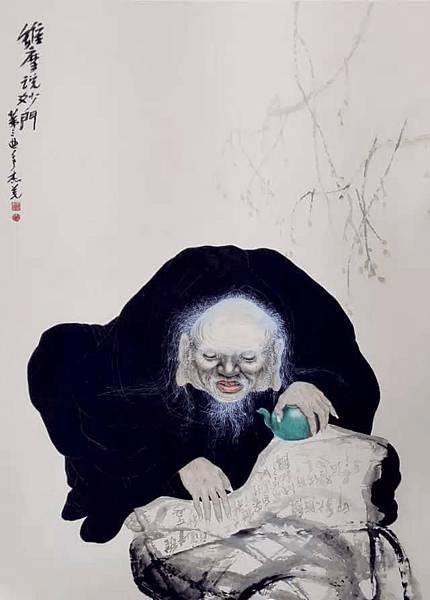
Chinese Ink painting Holy Master Vimalakirti by H.H. Dorje Chang Buddha III

Vimalakirti’s teachings were not limited to words alone—he also demonstrated his supreme realization through extraordinary miracles. In one instance, he used his boundless supernatural powers to bring the entire Buddha-land of Abhirati, including the Immovable Buddha (Aksobhya), into the human realm. Even the Immovable Buddha himself declared, “I did not do this; it was through the supernatural powers of Vimalakirti.” Such feats reveal that Vimalakirti’s realization surpassed that of all Bodhisattvas and was equal to that of Shakyamuni Buddha himself.

Shakyamuni Buddha himself affirmed the extraordinary status of Vimalakirti, stating, “One who makes offerings to that holy being should know that this is making offerings to the Buddhas. One who transcribes this sutra or keeps it in a room should know that the Tathagata exists in that room.” These words confirm that Vimalakirti was, in essence, a Buddha.

His teachings continue to inspire practitioners today, offering a profound perspective on suffering, wisdom, and compassion. His willingness to manifest illness as a teaching tool, his unparalleled debates with great Bodhisattvas, and his supernatural demonstrations all serve as timeless lessons in the path to enlightenment.

Link:https://peacelilysite.com/2025/03/28/vimalakirtis-profound-teachings-on-suffering-and-liberation/

The Power Of The Holy Vajra Needle

My name is Guang-Fen Fu. Since I was young, I have been physically weak and often ill. When I became an adult, my mother told me, “Daughter! You have had a weak constitution since you were young. Go and learn medicine. This will be good for your health, and you will not become weary through exerting too much physical strength.”

        In 1958, I began following a teacher to learn traditional Chinese medicine. Because my illnesses resulted from the power of karma accumulated through many lifetimes and eons, my illnesses did not decrease as my knowledge of medicine and my experience in practicing medicine grew. Disease constantly followed me wherever I went.

        In 1978 and the following few years, I suffered from a gastric ulcer in which most of my stomach hemorrhaged. During that time, I also discharged blood when going to the bathroom and vomited blood. In 1981, I had no choice but to undergo surgery to cut out most of my stomach. My health was even worse after the surgery. My food intake lessened, my face became pale, I spoke without any vigor, my spirit was weak, my movements were slow, and I often could not go to work.

        As a result of the care and assistance given to me by a friend, in 1987, I met my respected Buddha Master, H.H. Dorje Chang Buddha III Wan Ko Yeshe Norbu Holiest Tathagata. When His Holiness learned of my suffering from illness and my strained financial circumstances, His Holiness showed immense compassion and concern. His Holiness treated me with the holy vajra needle. H.H. Buddha Master asked me to show His Holiness the acupuncture point on my foot called Zu San Li. My respected Buddha Master then squatted down and applied that needle to me. After the needle was applied, my respected Buddha Master then said, “Pay attention! I will now apply my dharma power.”

        When my respected Buddha Master put his hands into a mudra before me, I immediately began to feel numbness, swelling, and pain. My whole body emitted heat, and I was slightly perspiring. When my respected Buddha Master heard me repeatedly scream in pain, His Holiness released his hands from that mudra. I instantly felt that the numbness, swelling, and pain I had just experienced had disappeared. The only thing I felt was a relaxed and comfortable feeling that my body had never before experienced. My respected Buddha Master then said, “This needle was used to open your energy channels and chakras. You are too anemic.”

        I had not yet become a Buddhist or learned Buddhism at that time. My respected Buddha Master treated me and all other living beings as his own family members, equally lending them a helping hand out of great compassion. In 1988, I knew that I wanted to convert to and learn Buddhism in order to leave suffering, attain happiness, and walk the path leading to accomplishment in the dharma and liberation from the cycle of reincarnation.

        After following H.H. Buddha Master, my health has improved day by day; my complexion is ruddy, my spirit is clear, my voice is resonant, and I walk with vigor. I gradually understood just how magnificent H.H. Buddha Master is. I also came to comprehend the realness of Buddha Dharma gradually. Those who see me now say, “You have totally changed in the last two years. You don’t look so frail as you did before.” What they found most difficult to believe is that I returned from my trip to the plateaus of Tibet and Qinghai, which are places that lack oxygen without any adverse health effects.

        Because I received H.H. Buddha Master’s teachings and empowerment, I advanced in the area of medicine. I took a countywide test and was the first to receive a certificate of qualification as a traditional Chinese medicine doctor. I took provincial and municipal tests and obtained certificates qualifying me as a “doctor-in-charge” who practices traditional Chinese medicine. The hospital put a sign up for me that read “expert outpatient service.” My patients have increased day by day. I have cured patients near and far of their difficult and complicated illnesses. As a result, I have a bit of fame in the local area where I live. Everything that I have is due to the teachings and empowerment that the Buddha Master bestowed upon me after I began learning Buddhism. The kindness and grace H.H. Buddha Master conferred upon me are as enormous as a mountain. Each and every bit of his kindness and grace is indelibly etched in my heart.

        I remember one day around the year 1989. Zi-Fang Liu, a disciple of my respected Buddha Master, went to the home of my respected Buddha Master in the Nanxin District of Xindu. She beseeched my respected Buddha Master to save her. She said that her illness had lasted many years, was acutely painful, and was about to collapse. She had been to all of the major hospitals in China and had spent a lot of money, all to no avail. I saw that her complexion was unnaturally dark and that her whole body was rigid. She constantly complained about her unbearable pain.

        Then, she suddenly fell to the ground and did not get up. She looked ghastly pale. My respected Buddha Master immediately treated her with the holy vajra needle in order to empower her. Because she was in a state of shock, she did not have any reaction when the needle was applied. After a short while, Sister Liu regained consciousness, stood up, and stated she was no longer in pain.

        Every time I saw the wonders of my respected Buddha Master’s holy vajra needle, I had an even greater desire to learn how to apply that holy needle. One day I said to my respected Buddha Master, “Respected Buddha Master, teach me how to apply that amazing needle so that I may cure more patients.” My respected Buddha Master said in a soft voice, “Guang-Fen, your powers are insufficient. Let’s put that matter aside for the time being.” One time I saw Hsi Jao Ken Ten Rinpoche, who is from Taiwan, also ask my respected Buddha Master to teach him how to apply that amazing needle. My respected Buddha Master replied, “Your powers are insufficient. Let’s put that matter aside for the time being.”

        I later learned that the source of the effectiveness of the holy vajra needle is my respected Buddha Master’s state of realization and virtue and the power of his merit. With a holy mind of enlightenment and great compassion, His Holiness assists living beings with physical illnesses, psychological illnesses, and living beings suffering due to the power of karma. Furthermore, His Holiness constantly and compassionately empowers living beings through his teachings, thereby enabling them to extricate themselves from suffering and find the key to curing and preventing disease.

        I have followed H.H. Buddha Master for more than ten years. I, Guang-Fen, have evolved from a person who did not understand anything about learning Buddhism and self-cultivation to a Buddhist disciple striving to integrate wisdom, compassion, and skillful means and a person striving to be selfless. Based upon empowerment from my respected Master’s practice and from the lineage of great masters throughout generations, a type of merit of the fruit of Buddhahood exerts its influence, causing Buddhist disciples to walk the path toward liberation and accomplishment in the dharma. With the incomparable kindness and empowerment of my respected Buddha Master, Buddhist disciples give rise to bodhicitta and strive to enlighten themselves and others. The compassion, care, and protection my respected Buddha Master bestows upon his disciples and all living beings cannot be described in words. To know what I am saying, you have to experience it yourself.

        I sincerely feel that the kindness and grace shown to me by my Buddha Master are difficult to repay. All I can do is resolve to be a disciple of the Buddha in all my future lives and devoutly and respectfully turn to and rely upon the eternal Buddha Master. Only a Buddha Master can lead Buddhist disciples out of the bitter sea of reincarnation and lead them toward liberation, accomplishment in the dharma, ending of the cycle of birth and death, becoming a Buddha, saving other living beings, undertaking the cause of the Buddhas and Bodhisattvas, and repaying the kindness of the Buddhas.

        This year I have passed sixty-five years of age. What I have written above is my own true personal experience. I have not lied. If what I wrote above contains lies, I am willing to descend into the Avici Hell (hell of uninterrupted suffering). If what I wrote above is true, I offer the merit of this writing to my magnificent Buddha Master, who is like my father and mother. I also dedicate such merit to all of my vajra Brothers and Sisters so that they attain enlightenment soon and to all sentient beings on the six paths of reincarnation. Amitabha!

Written and respectfully submitted by a Buddhist disciple,
Guang-Fen Fu

April 16, 2006

(This is a complete translation of the Chinese text that was initially written and signed by Guang-Fen Fu.)

The “Banqi” Style: A Masterpiece of Artistic Innovation

Going to a Faraway School in the Mountains
《山間遠學》


Artist: H.H. Dorje Chang Buddha III
H.H.第三世多杰羌佛
Style: Banqi(版氣派)

This exquisite painting, rendered in the unique “Banqi” style, captures a touching scene of children from mountain villages on their way to school. Unlike city children, these young students must trek across rugged terrain—climbing mountains, crossing ravines—day after day to pursue their education. Their journey is filled with challenges, yet their unwavering determination and thirst for knowledge shine through. This artwork serves as a tribute to their resilience, reminding us all of the value of education and the perseverance required to achieve greatness.

A Revolutionary Artistic Technique

What makes this painting extraordinary is its unconventional brushwork, which blends the bold energy of ink-wash painting with the refined precision of engraving. Every stroke, whether light or dark, delicate or bold, exudes an artistic charm that is both fluid and structured. The layering of ink and color creates depth, while the intricate texture gives the illusion of an engraved plate print, despite being entirely painted by hand. The brushwork is dynamic—lines seem to break and reconnect, mimicking the traditional elegance of carved stone seals. This interplay between spontaneity and meticulous control infuses the painting with life, movement, and a profound sense of authenticity.

What Is the “Banqi” Style?

The “Banqi” style is a rare and fascinating artistic approach that combines the visual impact of printmaking with the expressive freedom of brush painting. While these works resemble engravings at first glance, they are, in fact, purely ink-wash paintings—imbued with an effortless yet profound beauty that is both natural and lively. Beneath their structured appearance lies a deep, inexhaustible charm, where each stroke carries an essence of tradition, innovation, and artistic mastery.

Through this masterpiece, we witness not only a compelling story of perseverance but also a groundbreaking artistic vision—one that harmonizes the precision of engraving with the fluid grace of brush painting. It is a celebration of both form and spirit, a true testament to the boundless possibilities of art.

This beautiful artwork is part of the permanent exhibition at the International Art Museum of America, located in downtown San Francisco.

Link:https://peacelilysite.com/2025/03/21/the-banqi-style-a-masterpiece-of-artistic-innovation/