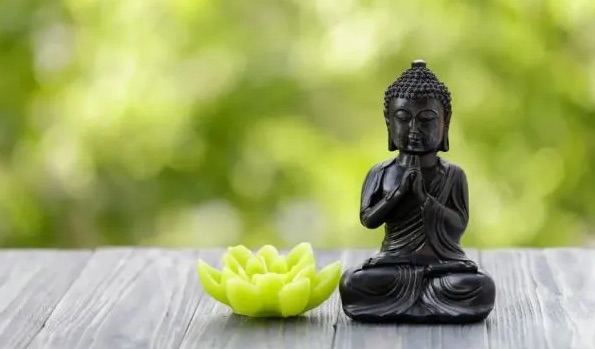
Why You Feel Better After You Pray: The Science Behind the “Quiet Heart”

You might not realize it, but this is the true power of prayer—it’s not just asking for blessings; it is awakening an internal system within you that says, “I can keep going.”

Every sincere moment of prayer leaves an imprint on the mind. This is not spiritual poetry or wishful thinking; it is a pattern repeatedly observed through MRI scans, neuroimaging, and psychological research. Each second spent in focused, quiet prayer is an opportunity to “turn on a light” in the brain—helping us become steadier, clearer, and more resilient.

Scientists were once skeptical. But the evidence surprised them.

When a person enters a state of deep, focused prayer, activity in the prefrontal cortex increases. This is the part of the brain responsible for attention, judgment, emotional regulation, and self-control—the “driver’s seat” of the mind. Prayer helps us return to that seat, especially when life feels overwhelming.

At the same time, activity in the amygdala—the brain’s alarm system—tends to decrease. This region governs fear, anxiety, and the fight-or-flight response. When it is overstimulated, we feel tense, reactive, and out of control. Prayer appears to gently quiet this system, creating inner space to breathe, reflect, and choose more wisely.

This is not merely a mental effect—it is a physical response of the nervous system.

Research also suggests that heartfelt prayer—prayer infused with sincerity and emotion—is especially powerful. Compared to mechanical repetition, it more strongly activates brain regions associated with language, empathy, connection, and self-awareness, including the temporoparietal junction, anterior cingulate cortex, and medial prefrontal cortex. These areas shape how we relate to ourselves, to others, and to life itself.

In simple terms, honest prayer becomes a process of emotional clearing and inner reorganization.

When practiced regularly, these brain responses do something remarkable: they form new neural pathways. Like carving a well-worn trail through a forest, prayer creates a reliable inner path—a place of stability we can return to during moments of fear, grief, or confusion. The more often we walk this path, the easier it becomes to find our way back to calm.

Prayer is not the same as meditation. While both reduce stress and sharpen focus, prayer carries an added element: relationship. Prayer involves trust, dialogue, and the felt sense that we are not alone. This activates neural systems related to connection, attachment, and belonging—deep human needs that meditation alone does not always engage.

This may explain why, at the edge of emotional collapse, a simple, sincere prayer can sometimes bring someone back from the brink. The problem may not disappear—but the mind, heart, and body momentarily realign. A quiet strength returns. I can get through this.

What Prayer Does—Inside and Out

  • Activates the Prefrontal Cortex
    Strengthens clarity, emotional balance, and self-control.
  • Calms the Amygdala
    Lowers fear and stress responses, restoring inner quiet.
  • Builds Emotional Resilience
    Repeated prayer forms neural pathways that support stability over time.
  • Fosters Connection and Trust
    Engages social and emotional brain systems through relationship and sincerity.

Sincere prayer may be one of the most gentle, natural, and powerful “built-in reset systems” we possess.

So when was the last time you prayed—not out of habit, but from the heart?
Have you ever noticed how your body softened afterward, how tension quietly released?

That wasn’t imagination.
That was your mind and nervous system responding to something deeply human—and deeply real.

Link:https://peacelilysite.com/2026/01/09/why-you-feel-better-after-you-pray-the-science-behind-the-quiet-heart/

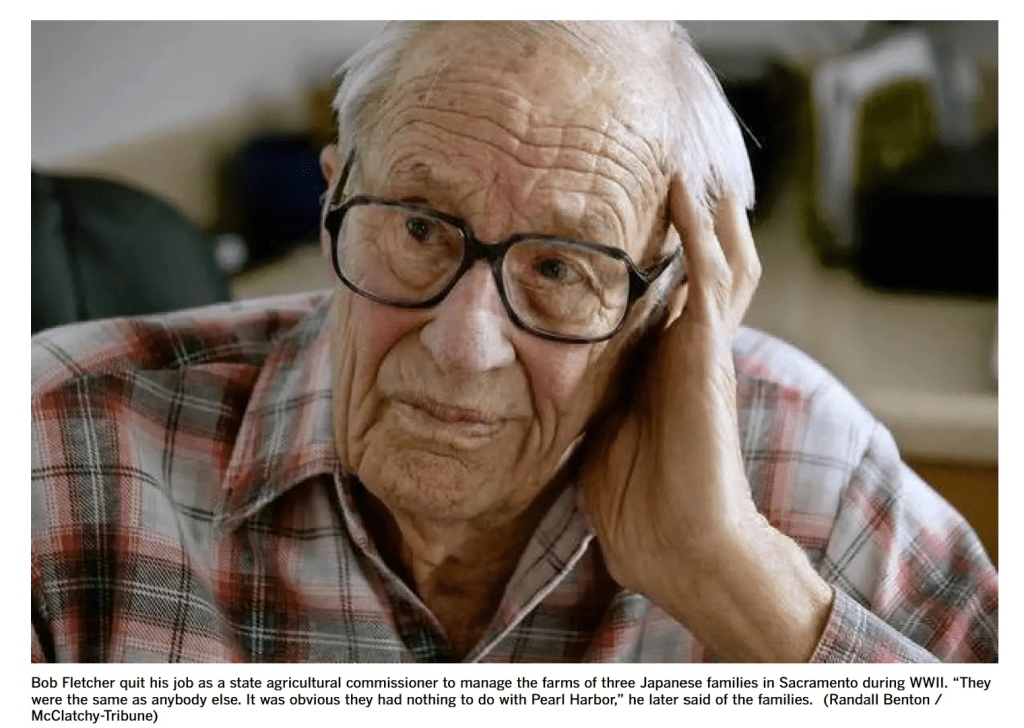
The Man Who Saved 90 Acres: Why Bob Fletcher’s Integrity Still Matters Today

In the middle of a storm, most people look for shelter. But a rare few choose to stand in the rain to keep someone else’s home from washing away.

In 1942, the United States was a place of fear and suspicion. Following the attack on Pearl Harbor, Executive Order 9066 forced thousands of Japanese-American citizens into internment camps. They were given just days to pack what they could carry, leaving behind their businesses, their homes, and their life’s work.

In Florin, California, most people looked away as their neighbors were taken. But an agricultural inspector named Bob Fletcher did something different. He stepped forward.

Note 1

Bob Fletcher was 31 years old when his neighbors—the Tsukamoto, Nitta, and Okamoto families—were ordered to leave. They were strawberry and grape farmers who faced losing everything to foreclosure.

They asked Bob if he would manage their farms while they were gone. Bob didn’t just say yes; he quit his stable job with the state to become a full-time farmer for people who weren’t even allowed to be there.

For three years, Bob worked 18-hour days. He managed 90 acres of flame tokay grapes across three different farms.

The Cost of Doing the Right Thing

Doing the “right thing” is rarely easy. Bob wasn’t seen as a hero by his community at the time. He was called names, shunned by neighbors, and at one point, someone even fired a shot into the barn where he was working.

But Bob had a quiet, iron-clad integrity. He lived in the migrant bunkhouses rather than the families’ main homes. He paid their mortgages, their taxes, and their bills. When the families finally returned in 1945, they didn’t return to ruins—they returned to thriving farms and a bank account full of the profits Bob had saved for them.

Bob Fletcher lived to be 101 years old. For decades, he deflected praise, often saying:

“I don’t know about being a hero. I just did what I thought was right.”

His life leaves us with enduring lessons:

Integrity is a verb.
It is not what we believe in private, but what we practice when no one is watching—and when it costs us something.

One person is enough.
Bob couldn’t stop a national injustice, but he saved three families. Sometimes protecting one corner of the world is exactly what we are called to do.

Moral courage is quiet.
It doesn’t announce itself. Sometimes it looks like long days, dirty hands, and the refusal to surrender compassion to fear.

We may not be living through a world war, but we all face moments where it is easier to go along with the crowd than to stand up for a neighbor. Bob Fletcher’s life asks us: Who are we looking out for? What are we willing to protect?

Link:https://peacelilysite.com/2026/01/05/the-man-who-saved-90-acres-why-bob-fletchers-integrity-still-matters-today/

Note 1 : Photo By Unknown Author – Original publication: LegacyImmediate source: https://www.legacy.com/us/obituaries/sacbee/name/robert-fletcher-obituary?id=11367093, Fair use, https://en.wikipedia.org/w/index.php?curid=69402868

Walking for Peace, Step by Step

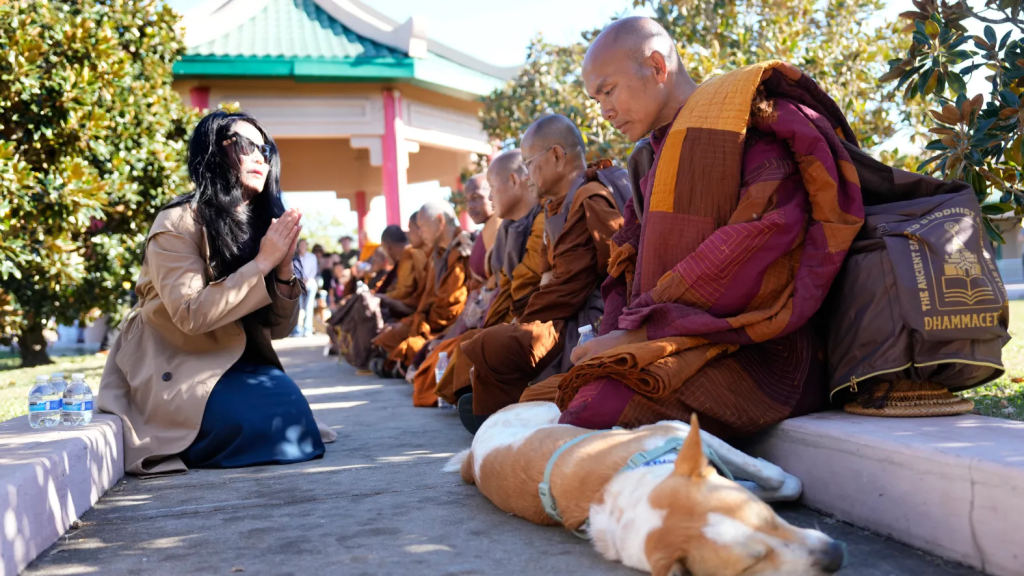
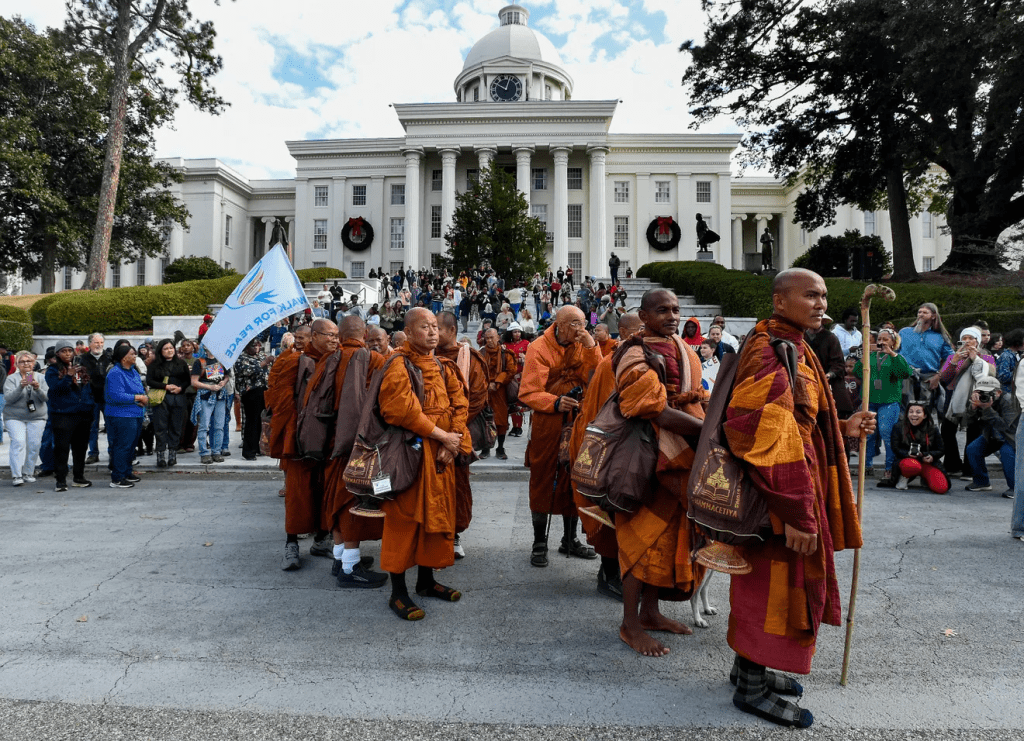
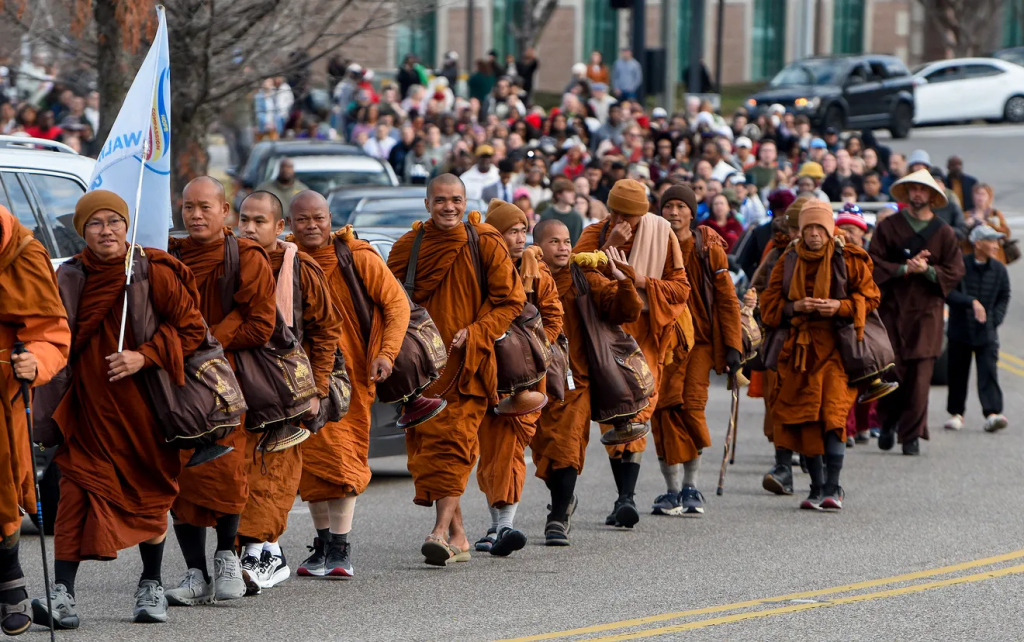
The Buddhist monks from the Huong Dao Vipassana Bhavana Center in Fort Worth, who are undertaking a 2,300 mile pilgrimage of Walk for Peace, arrive for a welcome ceremony at Hong Kong City Mall in Houston Friday, Nov. 14, 2025. Houston Chronicle/Hearst Newspapers via Getty Images

In a world that often feels rushed, divided, and relentlessly loud, there is something quietly revolutionary about the act of walking.

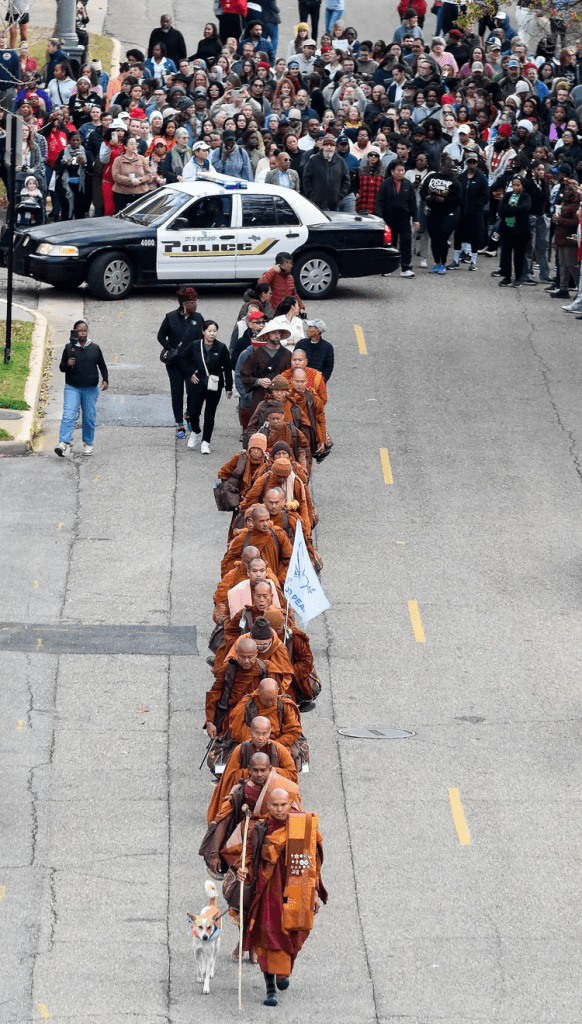
Recently, a group of Buddhist monks began a long, demanding pilgrimage across the United States. Their mission is simple yet profound: to promote peace. Their journey began in Fort Worth, Texas, on October 26. Since then, they have faced the literal “wear and tear” of the road, including a harrowing incident where two monks were injured after a truck struck their escort vehicle.

Yet, they did not stop.

With perseverance and a calm, unshakable resolve, the group of two dozen monks has reached Georgia. They are still moving, one step at a time, toward their final destination in Washington, D.C. Their pace is slow, deliberate, and intentional—and that may be exactly what our world needs right now.

Buddhism has a long history of “engaged mindfulness”—the idea that compassion isn’t just felt in meditation, but lived in the world. These monks are not just praying for peace; they are embodying it.

As they navigate highways and back roads, they offer a living reminder that peace isn’t a destination we reach once and for all. It is a practice. It is something we choose moment by moment, breath by breath, step by step.

Watching their progress brings me back to a book I read nearly 30 years ago: Peace Pilgrim.

I remember being deeply moved by her story—how she walked across countries carrying almost nothing, guided by the conviction that peace begins within the individual. At the time, I wished I could have met her in person, just to thank her for the way her simplicity and courage planted a seed in my heart.

Though she is gone, her spirit feels remarkably present today. I see her legacy in the orange robes of these monks as they crest the hills of the American South.

Monks rest at Hong Kong City Mall in Houston Friday, Nov. 14, 2025. Melissa Phillip/Houston Chronicle via Getty Images

Igniting Kindness, One Heart at a Time

There is something profoundly moving about a walking pilgrimage in the age of instant communication. There are no hashtags here. No viral outrage. Just human beings placing one foot in front of the other, trusting that their presence alone can soften the world.

And it works.

Along the way, the “ordinary” world reacts. Drivers slow down. Strangers stop to ask questions. People offer water, a meal, or a simple smile. In these small, unscripted exchanges, something gentle is awakened. We are reminded that beneath our political and social differences, we all share a basic human longing for safety, understanding, and harmony.

The monks may be the ones doing the walking, but the kindness they ignite along the way belongs to all of us. As they recently shared on their Facebook page:

“We do not walk alone. We walk together with every person whose heart has opened to peace, whose spirit has chosen kindness, whose daily life has become a garden where understanding grows.”

A group of Buddhist Monks and several hundred local community members take part in the Walk for Peace in Montgomery, Ala., on Tuesday December 23, 2025. The Monks are walking from Texas to Washington, D.C. to promote peace and compassion.

https://www.usatoday.com/picture-gallery/news/2025/12/23/buddhist-monk-walk-for-peace-passes-through-montgomery/87897028007/

Most of us cannot drop everything to walk across a continent. But all of us can “walk for peace” in the geography of our own lives.

  • We can pause before we react in anger.
  • We can choose compassion over the reflex of judgment.
  • We can listen more deeply than we speak.

Watching these monks continue their journey despite injury and uncertainty reminds me that peace isn’t achieved through grand, sweeping gestures. It is built patiently through humility and love.

Step by step.

May their walk remind us to slow down, to soften our hearts, and to keep moving—together—toward a more peaceful world.

Photos from https://www.nbcdfw.com/news/national-international/buddhist-monks-peace-walk-thousands-follow-on-social-media/3962302/ and https://www.usatoday.com/picture-gallery/news/2025/12/23/buddhist-monk-walk-for-peace-passes-through-montgomery/87897028007/

Link:https://peacelilysite.com/2026/01/01/walking-for-peace-step-by-step/

Xiaoxitian Temple: A Masterpiece Carved into the Mountain

Xiaoxitian, originally known as Qianfo’an (The Hermitage of a Thousand Buddhas), was founded in the second year of the Chongzhen reign of the Ming Dynasty (1629). It stands atop Phoenix Mountain, about one kilometer west of Xixian County in Linfen, Shanxi Province.

Built entirely in harmony with the mountain, the temple unfolds in layers, as if it had grown naturally from the slope itself. Stone steps lead visitors upward, passing through courtyards divided by arched cave-like gateways. The upper, middle, and front courtyards are connected yet distinct, creating a spatial rhythm that is winding, intimate, and quietly profound. As one walks through the complex, footsteps instinctively slow, and time itself seems to soften.

The architecture of Xiaoxitian is restrained rather than ostentatious, yet its mastery reveals itself everywhere. Painted beams are elegant and dignified, and many of the halls are ingeniously built as two-story structures, creating a rich sense of vertical space within the limited mountain terrain. The bell and drum towers stand in stillness, inviting the imagination to wander back to an age when morning bells and evening drums echoed through the valley.

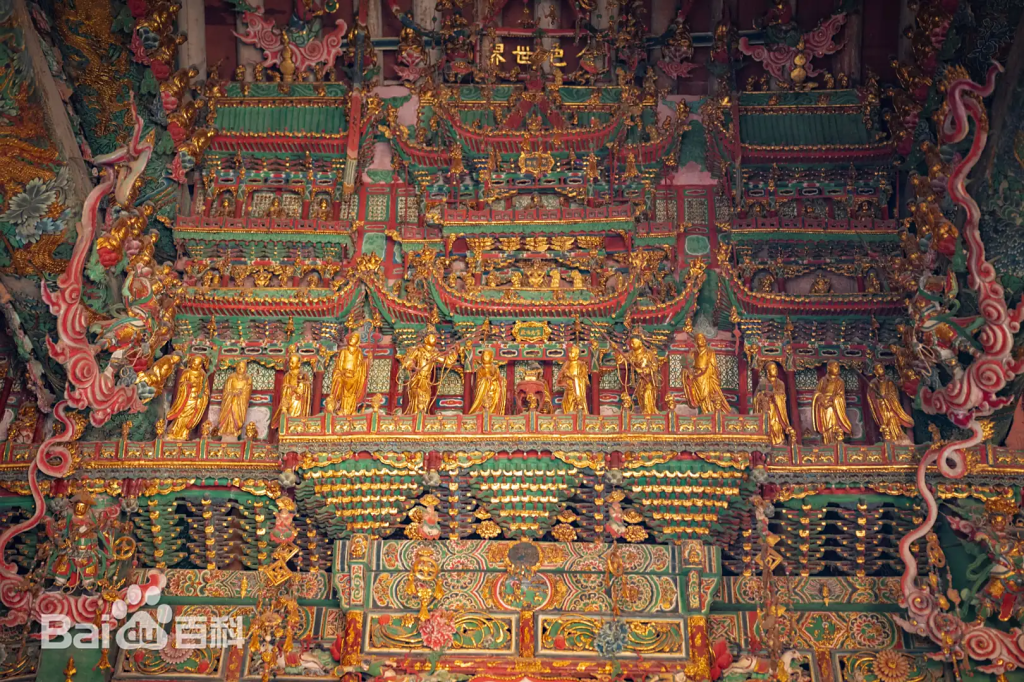
Stepping into the Mahavira Hall is a moment of sudden awe. Nearly the entire interior is filled with suspended polychrome sculptures—more than 1,900 figures, layered from floor to ceiling. From towering Buddhas over three meters high to figures no larger than a thumb, the sculptures are densely arranged yet never chaotic, solemn yet vibrantly alive. In that instant, one understands why Xiaoxitian is revered as the “Museum of Chinese Hanging Sculpture Art.”

Unlike many Buddhist temples that draw attention primarily to their principal Buddhas, the Mahavira Hall at Xiaoxitian is celebrated for the immersive world it creates as a whole. At its core stand the Medicine Buddha, Amitabha, Shakyamuni, Vairocana, and Maitreya, but surrounding them unfolds an entire celestial realm: the Ten Great Disciples, six young novices, the Ten Wisdom Kings, the Six Desire Heavens, and countless heavenly musicians dancing through the air.

Most unforgettable are the celestial musicians suspended within the tiered “sky pavilions” above the altars. Their figures are light and graceful, sleeves flowing as if caught in an eternal breeze, frozen in a moment of unending heavenly music. Some play the pipa, others hold flutes, while some seem to dance midair. One pipa-playing figure, leaning slightly forward with fingers poised on the strings, radiates such focus and elegance that one can almost hear the melody drifting across centuries.

Looking up toward the roof, the tri-colored glazed chiwen ornaments—yellow, green, and blue—gleam softly in the light. Their refined brilliance reflects the unmistakable aesthetic of the Ming Dynasty. Here, architecture, sculpture, and color merge seamlessly, and one forgets that this is a mountain temple at all. It feels instead like stepping into a floating Buddha realm, suspended between earth and sky.

That these sculptures have survived nearly four hundred years in such vivid detail inspires deep reverence. They represent not only the pinnacle of craftsmanship, but also a profound devotion—to faith, to beauty, and to a harmonious vision of the cosmos.

Perhaps what truly moves the heart at Xiaoxitian is not only the astonishing number of its hanging sculptures or the rare Ming Yongle Northern Buddhist Canon once preserved here, but something more enduring: a spiritual presence that has remained vibrant across centuries. It quietly reminds us that beyond the noise of the modern world, there still exists a place of serenity and dignity—carefully upheld by time itself.

Link:https://peacelilysite.com/2025/12/17/xiaoxitian-temple-a-masterpiece-carved-into-the-mountain/

A fifteen-year-old girl who had three hours, a law book, and the unwavering conviction that her sister’s life was not for sale

From : Gistreel Lifestyle. Liberia Online

She was eight years old when her father gambled her away in a card game.
Her older sister had three hours to win her back before the debt collector came.

Deadwood, Dakota Territory. 1877.
A place where law came slow, danger came fast, and survival belonged to the ruthless.

Thomas Garrett had lost everything—his mining stake, his wages, his self-respect—and now, in a drunken haze at the Gem Saloon, he’d lost something far worse:

his daughter.

The man who won her was Bullock—
not the sheriff, but a labor trafficker who “supplied” children to mining camps.
Kids as young as six spent twelve-hour days sorting ore until their lungs failed or their fingers gave out.
Most didn’t live past fourteen.

Thomas signed the paper without hesitation.
Bullock would collect little Emma at noon.

When fifteen-year-old Sarah came home from the laundry and learned what her father had done, she didn’t cry.
Didn’t scream.
Didn’t fall apart.

She simply asked, “When?”

“Tomorrow. Noon.”

Three hours until dawn.
Three hours to save her sister.

And Sarah had something her father never had:

clarity.

She knew Bullock.

Everyone did.
A cruel man who hid behind paperwork and respectability.

He’d made her father sign a contract—
which meant it could be challenged.

And Deadwood had something else:

A new federal judge who’d publicly declared that parents could not use their children to pay debts.

Sarah didn’t sleep.
She didn’t blink.

At dawn she was already standing in the courthouse, breathless, determined.

The clerk tried to dismiss her—
fifteen-year-old girls didn’t talk law.

But Sarah did.

Because before drink ruined him, her father had been a clerk…
and she’d read every law book he left lying around.

She laid out the case with the precision of a trained lawyer:

The contract violated territorial labor laws.

It constituted debt bondage of a minor.

Thomas Garrett was legally incapacitated due to intoxication.

The clerk stared. Then nodded.

He woke the judge.

Judge Isaac Parker—who would one day be known as the “Hanging Judge”—read the contract, listened to Sarah, and did something extraordinary:

He issued an emergency injunction, blocking the transfer and summoning both Bullock and Thomas Garrett to court that afternoon.

When Bullock arrived at the Garrett cabin at noon, two men at his back, he found Sarah waiting on the porch.

Not shaking.

Not pleading.

Holding a federal court order in her hand.

Bullock turned red with fury but wasn’t stupid enough to defy a judge.

At the hearing, Judge Parker didn’t hesitate.

He voided the contract.
Declared it an illegal attempt to traffic a minor.
Warned Bullock that any further attempt to collect “payment” would end with him in chains.

Then he turned to Thomas Garrett.

A father who gambled his children away forfeits the right to be a father.

Parker stripped him of parental rights and—
in a move that shocked the entire Dakota Territory—
appointed fifteen-year-old Sarah as her sister’s legal guardian.

But victory didn’t fill their stomachs.

Sarah now had an eight-year-old to raise,
no money,
no home,
and only her laundry work to survive.

What she did next became legend.

She went to five different businesswomen in Deadwood—
laundry owners, seamstresses, boarding house keepers—
and proposed a deal:

“I’ll work for reduced wages.
You house and feed my sister and me.
I’ll take the hardest jobs and the longest hours.”

Four said no.

The fifth—
a widow named Martha Bullock (no relation to the trafficker)—
said yes.

For the next three years, Sarah worked sixteen-hour days.
Emma went to school—
Sarah insisted on it.

She saved every coin.

By 1880, she’d saved enough to lease a small building and open her own laundry.

By 1882, she owned it.

She employed six women.
Paid fair wages.
Offered housing to those in need.

Emma, thirteen, kept the books.

When Emma turned eighteen, Sarah paid—
entirely from her business profits—
for her to attend normal school and become a teacher.

Emma later became a school principal
and one of the fiercest advocates for child labor reform in the state.

Sarah never married.

“I raised one child already,” she’d say with a half-smile.
“Did a better job than most with half the resources.”

She ran her business until 1910, providing work for over a hundred women across three decades.

Emma retired as the first female superintendent in her county.

When Sarah died in 1923, her obituary mentioned her “successful business career.”

Emma told the real story:

A fifteen-year-old girl who had three hours, a law book, and the unwavering conviction that her sister’s life was not for sale.

Judge Parker later said:

“Justice isn’t only about punishing the guilty.
Sometimes it’s about recognizing competence where no one else looks for it.”

The line between tragedy and triumph is thin.
Sometimes it’s nothing more than a teenage girl
who refuses to accept that her sister can be traded like poker chips—

and who’s smart enough to find the one legal lever that can stop it.

Sarah Garrett didn’t have money.
Didn’t have weapons.
Didn’t have allies.

She had time running out.
A mind trained by desperation.
And love hard enough to fight the world.

And that was enough.

Source: https://www.facebook.com/photo.php?fbid=866624929388914&set=a.764395932945148&type=3&mibextid=wwXIfr

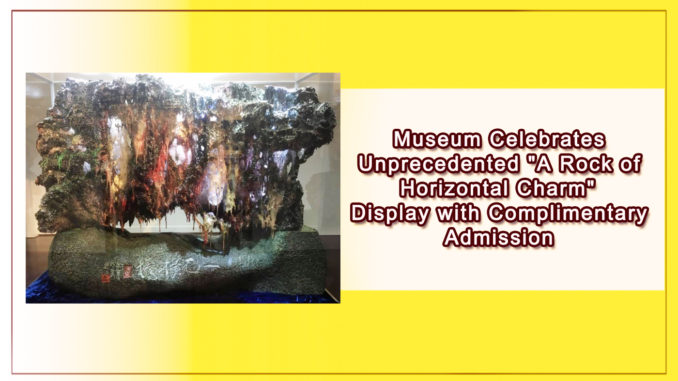
Museum Celebrates Unprecedented “A Rock of Horizontal Charm” Display with Complimentary Admission

West Covina, CA (PRWEB) June 01, 2017

The H.H. Dorje Chang Buddha III Cultural and Art Museum is pleased to announce its exhibition of “A Rock of Horizontal Charm“, a masterpiece of Yun Sculpture that embodies the spirit of art in a truly dis-tinctive way. In honor of this extraordinary form of art, the museum is offering free admission to the public for a limited time.

“A Rock of Horizontal Charm” was created by the world-renowned and internationally-revered highest leader of Buddhism, H. H. Dorje Chang Buddha III. The Yun Sculpture is a piece of original artwork that expresses a unique set of qualities. Various art experts and professors who have viewed the sculpture art say it has surpassed natural beauty and represents a level of perfection that extends well beyond what can be described as superb craftsmanship or inspired artistry.

The H.H. Dorje Chang Buddha III Cultural and Art Museum is exhibiting A Rock of Horizontal Charm, an unparalleled masterpiece of Yun Sculpture. For a limited time, visitors can receive free admission to the museum and witness the unsurpassed natural beauty of the superb sculpture art first hand.
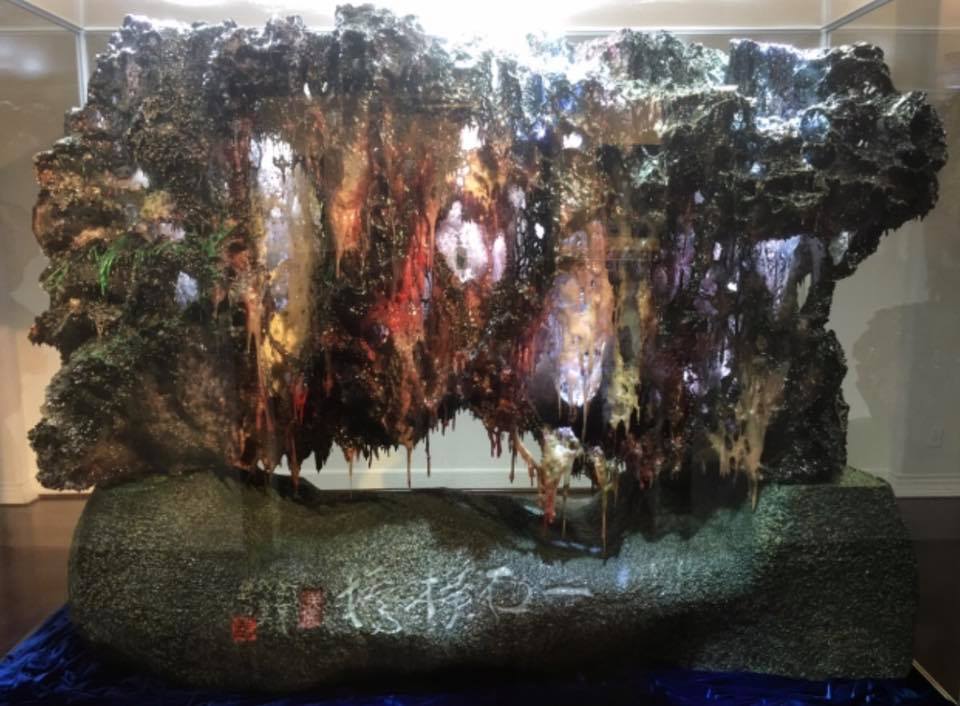
When viewed from different angles, the Yun Sculpture’s colors, structure, and atmosphere change completely, inexhaustibly transforming in unpredictable ways. Furthermore, it possesses multidimen-sional spatial structures that are complex yet delicate and intricate, and exquisite to the utmost. In addi-tion, its colors—kaleidoscopic and majestic, yet mature and assured—manifest a supernatural, visionary beauty. “A Rock of Horizontal Charm“, alone, is so endlessly variegated that it provides thousands of beautiful vistas.

The astounding beauty of this amazing sculpture art goes far beyond mere words. Therefore, it is no surprise that it has distinguished itself as the “emperor” of the four great Yun Sculptures. In fact, the creation of “A Rock of Horizontal Charm“ is considered to be a miracle in human history because no craftsman in the ancient or modern world—or even high technology—has been able to devise such ex-traordinary works of divine art. Consequently, this original artwork has been designated a “peerless treasure” that cannot be replicated, and the museum has named the room in which it is being displayed, Peerless Treasure.
“Even the “He Shi Bi (the Jade Disc of He) “, recorded in history as a treasure of monumental value, does not fit the title of ‘peerless treasure,’ since it is completely replicable—and if it can be replicated, it is not unique; if it is not unique, it is not peerless,” states the museum’s website. “In fact, any master sculptor’s magnum opus can be recreated; thus, only “A Rock of Horizontal Charm“ is the true peerless treasure.”

Despite an invitation to create an identical replica Yun Sculpture for a $50 million prize, no human sculpture master or technology has successfully duplicated “A Rock of Horizontal Charm“. From this, one can see how H.H. Dorje Chang Buddha lll’s artistic level has far exceeded the summit of sculptural art in human history.

The exhibit featuring “A Rock of Horizontal Charm“ will allow visitors to experience the divine charm of H.H. Dorje Chang Buddha lll’s original artwork in person. The unreplicatable sculpture exudes an inex-plicable amalgamation of color, motion, energy and spirit. “A Rock of Horizontal Charm“ has transcend-ed the category of highest human sculptural attainment and entered into the enjoyments of a mystical world.

Located in Covina in East Los Angeles, the H.H. Dorje Chang Buddha III Cultural and Art Museum is housed in a building with a 117-year history. The structure was renovated in 2014 and transformed into the cultural and art museum that occupies the space today. Since then, the museum’s world-class, un-matched treasures have attracted a steady stream of culture and art lovers from around the globe.

The mission of the cultural and art museum is to promote the exceptional accomplishments of an Amer-ican with outstanding talent—H.H. Dorje Chang Buddha III—by displaying his achievements in culture, literature, philosophy, art, science, technology, and other fields. Visitors to the museum can learn about the noble ethics and morality of H.H. Dorje Chang Buddha III and the holy character of this magnificent, selfless Buddha who altruistically contributes to society through his vast achievements and who advances world peace as well as the happiness of people. In addition, visitors can be guided by the teachings of H.H. Dorje Chang Buddha III and model themselves after him to elevate their own moral character and benefit the public.

For more information about “A Rock of Horizontal Charm“ or the cultural and art museum, visithttp://www.hhdcb3cam.org or call (626) 281-6378.

About H.H. Dorje Chang Buddha III
H.H. Dorje Chang Buddha III has been recognized by the most highly realized practitioners of Buddhism as the third incarnation of the original Buddha, Dorje Chang Buddha. His accomplishments transcend religion, healing and art. As the first in history to manifest real accomplishments in the five vidyas, He meets the highest standard of Buddhism. He is recognized for his devotion to a wide scope of cultural and religious activities, which enrich the lives of people from communities throughout the world. His Holiness has mastered 16 unique painting styles or schools, representing an unprecedented pioneering achievement in the history of art. Additionally, He is the pioneer of a new class of artwork that cannot be duplicated by any living being: Yun Sculpture. Experts predict that His paintings and sculptures will become increasingly valuable.

For the original version on PRWeb visit: http://www.prweb.com/releases/2017/06/prweb14390138.htm 

Link: https://dharma-hhdorjechangbuddhaiii.org/museum-celebrates-unprecedented-a-rock-of-horizontal-charm-display-with-complimentary-admission/

#DorjeChangBuddhaIII #HHDorjeChangBuddhaIIICulturalandArtMuseum #YunSculpture #RockOfHorizontalCharm #Art #ArtExhibition #SpiritualSculpture #ArtMuseum #SacredArt #PeerlessTreasure

Miao New Year: A Grand Celebration of Harvest, Heritage, and Harmony

Among China’s many vibrant ethnic cultures, few festivals shine as brilliantly as the Miao New Year — the most important and joyous celebration of the Miao people.
It marks the end of a year’s hard work and the beginning of a season filled with gratitude, reunion, and hope.

Since ancient times, the Miao people have followed their own lunar calendar, considering the tenth month of the traditional Chinese lunar year as the beginning of a new year. In Leishan County of Guizhou Province, the Miao New Year usually falls on the Mao Day during the first half of the tenth lunar month, which is roughly equivalent to Chinese New Year’s Eve. The festivities typically last from three to nine days, turning the Miao villages into a sea of song, dance, and laughter.

The Miao New Year carries deep layers of meaning. It is not only a celebration of the harvest but also a time to honor their ancestors and deities, and to commemorate Chi You, the legendary ancestor of the Miao people who perished in tribal wars over five thousand years ago. Through ceremonies and offerings to nature — sacred trees, bamboo groves, rocks, and wells — the Miao express their respect and gratitude toward the forces that sustain life.

In the valleys of the Qingshui River and Duliu River in Guizhou, the Miao New Year is the highlight of the year.
The Miao calendar differs from the Han Chinese lunar calendar, and the beginning of the Miao year is determined through communal discussions so that different villages celebrate at different times. This ensures that every year, one village becomes the center of a grand regional celebration, while neighboring communities come to join in.

After the autumn harvest and the completion of farm work, the Miao New Year marks both an ending and a joyful beginning. During the festival, villagers visit relatives and friends, slaughter pigs, make sticky rice cakes, worship their ancestors, share reunion feasts, and exchange cups of homemade rice wine.

Traditional activities include bullfighting, bird fighting, and singing contests, each bringing a unique charm to the celebration. One village’s festivities flow seamlessly into another’s, creating a continuous wave of joy that sometimes lasts until the early spring “Drum-Turning Festival” in February.

The Grand Parade and Thrilling Bullfights


The opening day of the Miao New Year is marked by a spectacular parade. People from the eight main Miao branches put on their most elaborate traditional attire — shimmering silver headdresses, embroidered costumes, and ornaments that glisten in the sun. Through music and dance, they showcase their unique local traditions and the living heritage of Miao culture, offering visitors from across China and beyond an unforgettable feast of color and rhythm.

Among the most popular events is the bullfighting competition, a traditional custom symbolizing courage and vitality. Two strong water buffaloes face off, locking horns in a contest of strength and spirit. Thousands gather around the arena to cheer, and the air is electric with excitement. With generous prizes for the winners, the event attracts participants and spectators from far and wide, adding a thrilling edge to the festive atmosphere.

The Long Table Banquet: Sharing Joy, Building Connection

If there’s one experience that perfectly embodies the hospitality of the Miao people, it’s the Long Table Banquet.
This grand feast, dating back to ancient times, is more than just a meal — it’s a powerful symbol of unity, friendship, and celebration.

In Danzhai County’s Wanda Town, whenever guests arrive from afar, locals line the streets with long tables stretching as far as the eye can see. Each table is filled with Miao specialties such as smoked pork, sour fish soup, and sticky rice. Hundreds of people sit together, strangers becoming friends over shared food, laughter, and conversation.

The air fills with the tangy aroma of sour soup and the joyful clinking of cups. Everyone, regardless of origin or language, becomes part of one big family — a living expression of the Miao New Year’s spirit: warmth, generosity, and togetherness.

The Miao New Year is far more than a festive occasion — it is a heartfelt tribute to life, nature, and ancestry.
Through its rituals, music, and communal joy, it reflects the Miao people’s enduring gratitude for the land, their reverence for their roots, and their love of harmony.

As the lush hills echo with the sound of lusheng flutes and the silver ornaments sparkle under the sun, one realizes that the Miao New Year is not only the celebration of a people — it is a celebration of humanity itself, reminding us all of the beauty of connection, gratitude, and joy.

Link:https://peacelilysite.com/2025/11/14/miao-new-year-a-grand-celebration-of-harvest-heritage-and-harmony/

Your Own Resolution: Living Lincoln’s Legacy Today

How Abraham Lincoln’s words remind us that perseverance begins within.

Always bear in mind that your own resolution to succeed is more important than any other.
Abraham Lincoln

Abraham Lincoln is remembered not only as one of America’s greatest presidents but also as a timeless symbol of perseverance, moral strength, and inner conviction. His life was marked by hardship and failure, yet through every setback, Lincoln never lost sight of his determination to rise above circumstance and serve a higher purpose.

Born in a humble log cabin in Kentucky in 1809, Lincoln’s path was anything but easy. He had little formal education, often studying by firelight after long days of farm work. Throughout his early years, he faced financial difficulties, career failures, and deep personal losses — including the death of his beloved mother and, later, two of his children.

He failed in business, lost several elections, and faced harsh criticism from both supporters and opponents. Yet each time, he stood back up. His perseverance was not fueled by ego or ambition, but by a steadfast belief in purpose — the belief that doing what is right matters more than comfort or success.

Lincoln’s life reminds us that greatness is not born of ease, but of endurance.

“Your Own Resolution Is More Important Than Any Other”

When Lincoln spoke these words, he wasn’t offering mere encouragement — he was revealing a universal truth about the power of inner determination.

In life, we will always face opinions, expectations, and pressures from the world around us. People may doubt us, situations may discourage us, and even our own fears may whisper that we are not enough.
But Lincoln reminds us: what truly determines our path is not what others think, but what we resolve to do.

Our resolution — that unwavering inner decision to keep moving forward — becomes the compass that guides us through storms.

It is what pushes a student to keep learning after failing an exam, an artist to keep creating despite rejection, or a parent to keep loving and protecting despite exhaustion. It is what allows ordinary people to do extraordinary things.

In today’s world of instant gratification and constant comparison, Lincoln’s wisdom feels more relevant than ever.
We often measure ourselves by the world’s standards — success, wealth, recognition — and forget that true strength comes from within.

When we cultivate resolution, we learn to stand firm in uncertainty.
We begin to trust our purpose more than our fears.
We stop seeking validation from others, and start building quiet confidence from persistence and integrity.

Lincoln’s life teaches us that no matter how dark the moment, perseverance can bring light.
His story shows that success is not defined by how often we win, but by how often we rise after falling.

To live by Lincoln’s words is to live with courage — not the absence of fear, but the determination to act despite it.
It means believing in our capacity to grow, to change, and to make a difference, no matter how small our beginnings.

When challenges arise — whether in our work, relationships, or personal goals — we can remind ourselves of Lincoln’s steady faith in resolution.
The world may test us, but as long as we hold our own conviction close, we will find a way forward.

Lincoln’s words have always spoken deeply to me.
Whenever I face uncertainty or moments of self-doubt, I remind myself of his quiet strength — how he stood tall not because life was kind, but because his heart was steady.

His quote, “Your own resolution to succeed is more important than any other,” reminds me that motivation is not something we wait for — it is something we choose, moment by moment.
And in choosing it, we slowly build the courage to move forward again, with hope and purpose.

Link:https://peacelilysite.com/2025/11/13/your-own-resolution-living-lincolns-legacy-today/

The Thousand-Year Wonder: Fengguo Temple and Its Eternal Great Hall

Hidden in the quiet county of Yixian in northern China, Fengguo Temple has stood for over a thousand years as a living testament to ancient Chinese wisdom and spiritual devotion. Its magnificent Mahavira Hall, the largest single-story wooden structure of its time, houses seven colossal clay Buddhas that have miraculously survived the centuries. This temple is not only an architectural marvel but also a sacred symbol of harmony, resilience, and faith that continues to inspire all who visit.

A Thousand Years of Faith and Architecture

Beyond the Shanhai Pass, in the northern part of Jinzhou City, Liaoning Province, stands the quiet county of Yixian, home to one of China’s most magnificent ancient temples — Fengguo Temple. This remarkable site, founded over a millennium ago, is not only a masterpiece of Liao Dynasty Buddhist architecture but also a living testament to the extraordinary ingenuity of ancient Chinese builders and the enduring power of faith.

In 2020, Fengguo Temple celebrated its thousandth anniversary. Through a thousand years of wind, snow, wars, and earthquakes, its grand Mahavira Hall still stands tall — a miracle in both architecture and spirituality.


The Majestic Great Hall

The heart of Fengguo Temple is its Mahavira Hall (Great Buddha Hall), one of the Eight Great Structures of the Liao Dynasty. Built in 1020 CE, it measures 49.5 meters wide, 26.6 meters deep, and 19.9 meters high, covering an area of 1,317 square meters. Standing on a 3.2-meter-high platform, the hall is the largest single-story wooden structure of ancient China — magnificent, solemn, and breathtaking.

Ingeniously designed, the hall uses a “reduced-column” method to maximize interior space while maintaining perfect stability. Ancient builders applied advanced techniques known as “side-foot” and “rising beam”, ensuring the building’s balance and graceful proportions. The massive bracket sets under the eaves are bold yet refined, exuding strength and elegance.

Thanks to its precise structural mechanics, the Great Hall has remained perfectly upright for a thousand years, without any sign of warping or tilting — an unparalleled achievement in the history of wooden architecture.


The Seven Buddhas: Eternal Clay Sculptures

Inside the Great Hall, seven colossal clay Buddha statues, each about nine meters tall, sit side by side upon a brick platform. From east to west, they are:
Kashyapa Buddha, Krakucchanda Buddha, Sikhin Buddha, Vipashyin Buddha, Visvabhu Buddha, Kanakamuni Buddha, and Shakyamuni Buddha.

These are the “Seven Buddhas of the Past” mentioned in Buddhist scriptures, symbolizing the eternal cycle of enlightenment in our world. Each Buddha exudes solemn dignity, with serene expressions and graceful postures, reflecting the Liao Dynasty’s continuation of Tang-style Buddhist artistry. Two bodhisattvas stand beside each Buddha, adding vitality and compassion to this sacred tableau.

This magnificent ensemble is the oldest and largest group of colored clay Buddha statues in the world. Despite being made of fragile clay, they have miraculously survived for over a thousand years, their colors still soft and luminous. This endurance is nothing short of a miracle — a union of artistic mastery and the blessings of faith.

The Legend of the Buddha Catching a Shell

During the Liaoshen Campaign in the late 1940s, Yixian became a battlefield. Amid the chaos, a shell pierced through the roof of the Great Hall and fell directly into the right hand of the Shakyamuni Buddha statue. Miraculously, the shell did not explode.

Locals still tell this story as “The Buddha Caught the Shell with His Hand.” Whether fact or legend, it adds an aura of mystery and divine protection to the temple’s long history — as if the Buddhas themselves were silently safeguarding their sacred home.

The Flying Devas of Liao

The beams and rafters inside the Great Hall are adorned with over 4,000 square meters of original Liao Dynasty murals. Among them, the heavenly maidens — the Flying Devas — are the most enchanting. With radiant faces and flowing ribbons, they drift gracefully through clouds, offering flowers and fruits to the Seven Buddhas below.

Their movement contrasts beautifully with the Buddhas’ stillness, creating a breathtaking scene of divine harmony and devotion. The surrounding walls also preserve Yuan and Ming dynasty murals depicting ten Buddhas, eight Bodhisattvas, and the Eleven-Faced Avalokiteshvara, adding even more layers of spiritual and artistic richness to this timeless sanctuary.


A Thousand Years of Wonder

Standing before this majestic hall — a wooden structure that has endured a millennium — and gazing upon the clay Buddhas whose serene faces have survived a thousand winters, one cannot help but wonder:

How can a wooden palace withstand ten centuries of storms and wars? How can clay sculptures remain whole and radiant after a thousand years?

Is it the wisdom of the ancients? The strength of art? Or the blessing of the Dharma itself?

Perhaps the answer lies within every beam, every brushstroke, and every tranquil smile of the Buddhas.

May the Buddhas and Bodhisattvas bless all beings with peace, compassion, and happiness.
Namo Amitabha.

Link:https://peacelilysite.com/2025/10/23/the-thousand-year-wonder-fengguo-temple-and-its-eternal-great-hall/

Source: https://www.hzfxy.net/detail_1020_10154.html, https://zhuanlan.zhihu.com/p/721178084

The World’s Largest Buddhist Temple: Borobudur, Indonesia

In the heart of Central Java’s fertile Kedu Valley, embraced by volcanic peaks and emerald landscapes, rises a monument unlike any other—Borobudur, the world’s largest Buddhist temple and a UNESCO World Heritage Site. Built more than 1,200 years ago, this colossal stone mountain is not just an architectural wonder, but a spiritual journey carved in stone.

A Monument Born of Devotion

Borobudur was constructed in the 8th and 9th centuries under the Sailendra Dynasty. Without a drop of mortar, two million volcanic stone blocks were precisely interlocked like a massive puzzle, forming a structure that has endured centuries of nature’s tests. From above, its shape is breathtaking—a giant mandala, the sacred geometric symbol of the Buddhist cosmos.

The temple rises in three tiers, each representing one of the realms of Buddhist cosmology:

  • Kamadhatu – The Realm of Desire: The base, adorned with reliefs that portray the karmic law and the cycle of birth and death.
  • Rupadhatu – The Realm of Form: Five square terraces lined with intricate reliefs and 504 serene Buddha statues.
  • Arupadhatu – The Realm of Formlessness: Three circular platforms crowned with 72 bell-shaped stupas, each sheltering a meditating Buddha. At the summit stands the great central stupa, symbolizing ultimate enlightenment.

A Living Story in Stone

Walking through Borobudur is like entering a vast storybook. The temple’s bas-reliefs, stretching across 2,500 square meters, are the most complete ensemble of Buddhist reliefs in the world. They illustrate tales from the life of Shakyamuni Buddha, Jataka stories, and profound teachings, guiding pilgrims step by step upward—from worldly desires to spiritual liberation.

Buried, Forgotten, and Found Again

Despite its grandeur, Borobudur fell silent between the 10th and 14th centuries, likely due to political shifts and the spread of Islam in Java. Nature reclaimed it—volcanic ash and thick jungle hid the monument from the world’s eyes. For centuries, it slumbered, until 1814, when Sir Thomas Stamford Raffles, the British governor of Java, was informed of a “buried hill.” Excavations revealed not a hill, but a hidden treasure of human devotion.

From Restoration to Reverence

In the 20th century, Borobudur was painstakingly restored with UNESCO’s support, safeguarding its stones against further decay. In 1991, it was declared a World Heritage Site, recognized as both a cultural and spiritual masterpiece.

Today, Borobudur is not just a monument of the past—it is alive with faith. Each year, thousands of Buddhists from across Indonesia and beyond gather here for Vesak Day, celebrating the birth, enlightenment, and passing of the Buddha under the full moon. Lanterns rise into the night sky, echoing the timeless aspiration for wisdom and compassion.

Borobudur is more than stone, stupas, and statues. It is a meditation frozen in time, a pilgrimage for both the feet and the heart. For travelers, standing atop Borobudur at sunrise—watching the mist lift from the valley as the first rays of light kiss the central stupa—is an experience beyond words.

This temple is not just Indonesia’s pride; it is humanity’s shared treasure, reminding us of the enduring power of faith, art, and the human spirit.

Travel Guide: Planning Your Visit

If Borobudur is on your travel list, here are some helpful tips:

📍 Location

  • Situated in Magelang, Central Java, about 25 miles (40 km) northwest of Yogyakarta.
  • Easily accessible by car, bus, or organized tour from Yogyakarta (1–1.5 hours).

🕰 Best Time to Visit

  • Sunrise tours are especially popular. Watching the first light illuminate the misty valley and stupas is unforgettable.
  • The dry season (April–October) offers clearer skies and comfortable weather.

🎟 Tickets

  • General admission is separate for local and international visitors.
  • Sunrise access often requires booking through official operators.
  • Combination tickets are available if you also wish to visit Prambanan Temple, another UNESCO site nearby.

👟 What to Bring

  • Comfortable walking shoes (you’ll be climbing many steps).
  • A hat, sunscreen, and water—the tropical sun can be intense.
  • A respectful outfit: shoulders and knees covered, as Borobudur is a sacred site.

🛕 Nearby Attractions

  • Prambanan Temple – A magnificent Hindu temple complex about an hour away.
  • Mendut Temple – A smaller Buddhist temple with a giant Buddha statue, often part of the Vesak procession.
  • Yogyakarta City – Known for its royal palace, batik art, and vibrant street food scene.

Link: https://peacelilysite.com/2025/09/12/the-worlds-largest-buddhist-temple-borobudur-indonesia/