
The world is vast and full of wonders—astonishing and rare phenomena that defy the imagination. One such marvel lies in Brazil: a desert with white sand dunes, turquoise and blue-green lagoons so clear you can see the bottom, filled with fish and shrimp, and set against the backdrop of breathtaking sunsets. This place seems like a paradise on Earth. It’s called Lençóis Maranhenses National Park, often hailed as “the most beautiful desert in the world.”
Unlike typical deserts, this one is dotted with thousands of lagoons formed during the rainy season, creating an extraordinary landscape of white dunes and vivid blue lakes—a natural masterpiece that amazes all who see it. You may have been lucky enough to visit, or perhaps not, and maybe you’ll never get the chance to go. But today, I’m bringing this distant beauty to you. Even if you never travel 80,000 miles around the globe, you can still enjoy the most spectacular visual experience.
A Celestial Land on Earth — The Desert of a Thousand Lakes
When people think of deserts, they often picture vast, lifeless stretches of yellow sand under a scorching sun. Water is scarce in deserts, and the sight of numerous lakes teeming with aquatic life is almost unheard of. Yet, such a magical place does exist on Earth—a place where endless deserts and crystal-clear water coexist. In this desolate land, fish and shrimp thrive. Aptly named the “Desert of a Thousand Lakes,” it is the wettest desert in the world and will completely change your perception of what a desert can be.
Located in Maranhão state in northern Brazil, just east of São José Bay and bordering the Atlantic Ocean, this desert spans 1,500 square kilometers. Despite its abundant rainfall, it has little vegetation, making it a rare desert landscape in northern South America. Scattered across the white sea of sand are countless lagoons of various sizes and colors. Fish and crabs can be seen swimming in the water, and the location is perfect for watching the sunset. Immersed in this surreal landscape, one visitor said: “So eerily beautiful, it’s breathtaking.”
How the Desert Lakes Are Formed
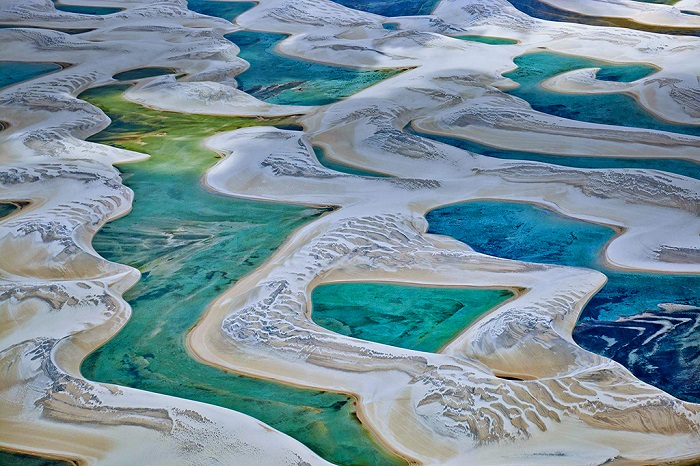
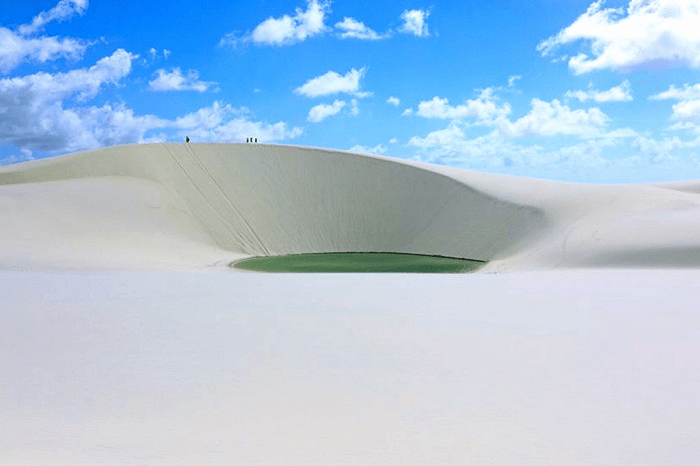
During the rainy season, valleys between dunes fill with rainwater, creating temporary lagoons that can reach depths of up to 3 meters. Every year, thousands of tourists from around the world flock here to witness this rare phenomenon. The white dunes and turquoise lagoons interlace like a massive piece of emerald from afar. Sparkling fish swim in the clear waters, while shepherds lead flocks over tall dunes and fishermen head out to sea under star-filled skies.
As the rainy season ends, the equatorial heat begins to evaporate the water. The lagoons can lose up to a meter of water per month, and during the dry season, they vanish completely, leaving only dry sand. Yet the dry season has its own unique beauty, with shimmering white waves of sand stretching to the horizon. From above, the crescent-shaped dunes resemble giant, sun-bleached linen sheets—hence the name “Lençóis Maranhenses,” meaning “sheets of Maranhão” in Portuguese.
This unique landscape is the result of geography and weather. With an annual rainfall of 1,600 mm—300 times more than the Sahara—rainwater is trapped beneath the sand by an impermeable rock layer, forming lagoons in shades of blue, green, and black. Nearby rivers carry heavy sediment, which is deposited at their mouths. In the dry season, strong coastal winds blow the dry sand inland, gradually creating this desert over time.

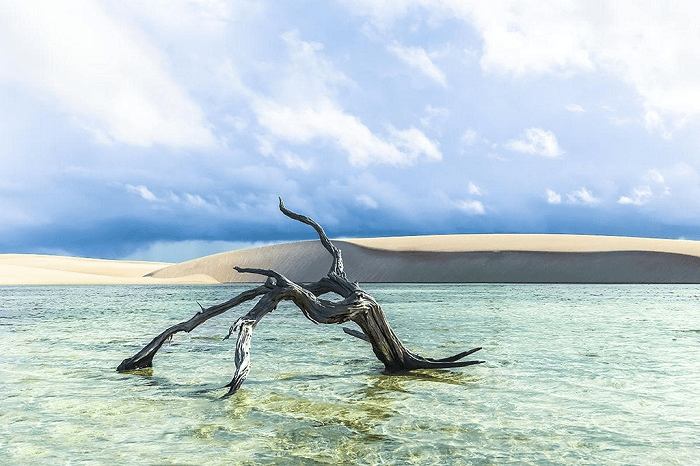
Situated along Brazil’s northeastern coast, Lençóis Maranhenses benefits from the country’s high rainfall, thanks to the world’s largest tropical rainforest. This abundance of water gives rise to the unique scenery that makes it the most beautiful desert on Earth.
Originally called Lençóis Maranhenses, the desert is now more popularly known as the “Desert of a Thousand Lakes” and has been designated as a national park. Covering over 1,500 square kilometers, it stretches 50 kilometers inland from the dunes to the beach. The landscape is so striking that it captivates every visitor. In this place, where you would expect lifeless sand, there is water, fish, and thriving life. It’s a dream for photographers—every snapshot is like a cinematic masterpiece. You can hike with a backpack, camp, and swim in the lake that catches your eye. As the sun sets, the colorful clouds create a scene of pure magic.
A popular way to explore is by helicopter, which offers a 35-minute aerial tour across the desert. However, this misses the chance for a close-up experience. The best way is still to go in person.
From the state capital São Luís, it takes about 5 hours by car to reach Barreirinhas, the town closest to the desert. There are four daily bus services despite the high number of tourists. Barreirinhas is the main gateway into the heart of the desert.
We chose to enter the desert by water and exit by land. Riding a speedboat, we stopped at various scenic spots along the way. At a small town dock, we sampled a local fruit wine made from simply fermented mixed fruits—refreshing and unique, only $2 per glass.
At the desert’s edge, mangroves thrive, home to crabs, clams, and birds. The white sand dunes and blue lagoons make this place seem like paradise. It’s perhaps the world’s most surreal desert—where extremes meet: desert and lake, dry and wet. From afar, the landscape looks like a massive jade in white and green.


Nature’s Secrets of the Desert
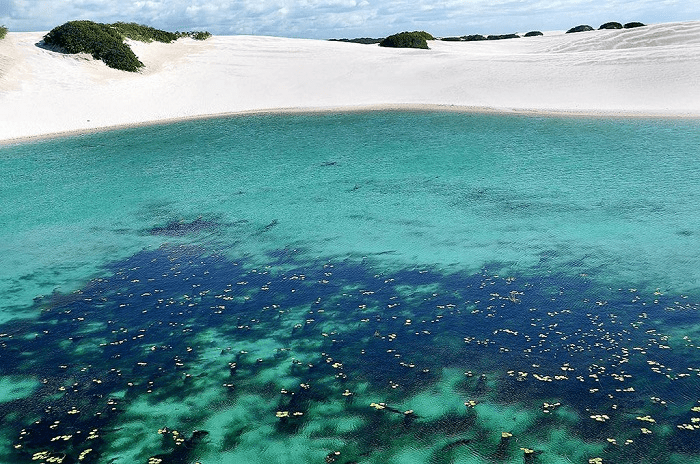
From January to June, heavy rainstorms occur almost daily. Instead of soaking into the sand, the rainwater collects in valleys between the dunes. These clear, sky-colored lagoons can appear bright blue, turquoise, or even golden at sunset. Teeming with fish and shrimp, people come here to fish, swim, or just enjoy the view.
Vegetation is sparse, as the sand has buried most of it over millennia. Under intense sun, surface temperatures can reach 80°C. The local name “Lençóis Maranhenses” captures the look of the dunes—like stretched, sun-dried linen sheets.
A Paradise of Adventure and Beauty
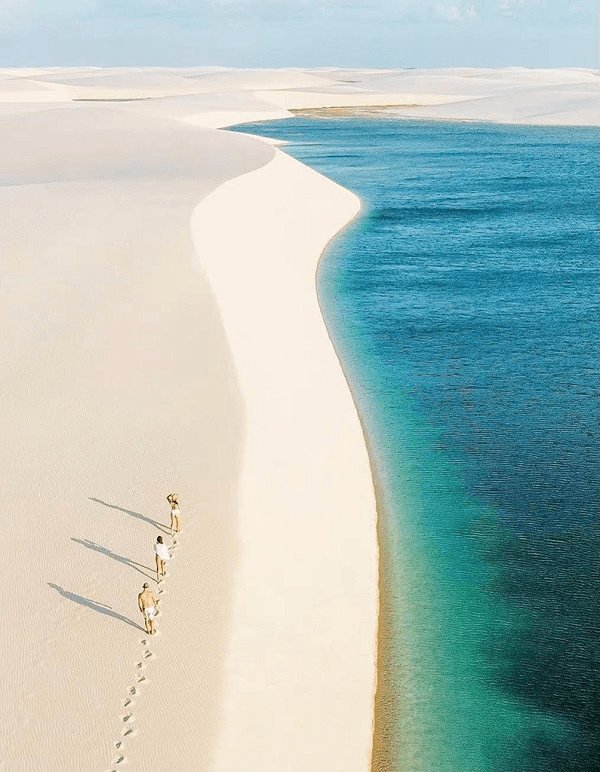
Thousands of lakes with different shapes and depths dot the desert, each reflecting a different color—deep blue, light green, or even reddish-brown when covered in algae. Locals give the lakes poetic names like Blue Lake, Love Lake, and Lake of Hope, reflecting their dreams and sentiments.
The most popular lakes, Blue Lake and Green Lake, are near Barreirinhas. Known locally as the “big sheet” and “small sheet,” Blue Lake is the largest, deepest, and most vibrant—and full of fish and crabs. Swimming here is not only refreshing but also offers a playful interaction with the aquatic life.
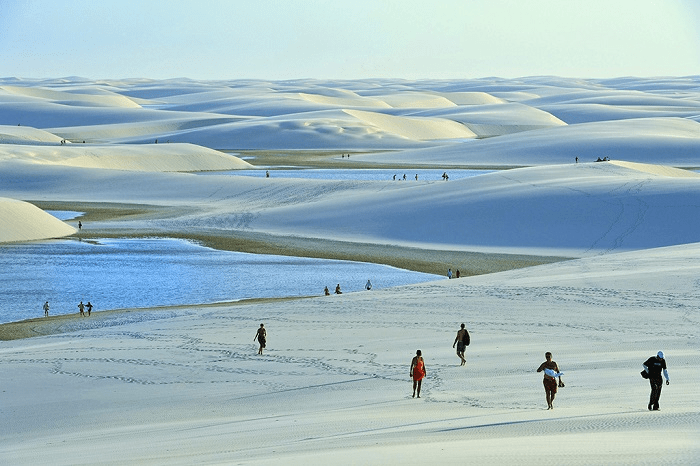
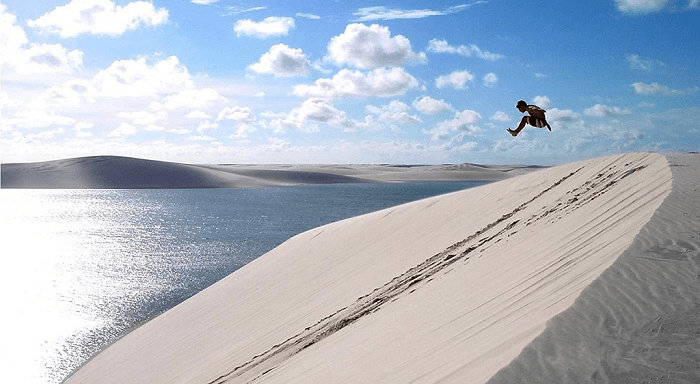
By day, the desert becomes a massive water park. You can pose for stunning photos, go on desert hikes, ride off-road jeeps with guides, or climb a dune and race down for thrills. You can even enjoy natural water slides and rafting in lake channels.
At peak water levels, adrenaline-seekers come here for kite surfing—an extreme sport powered by large kites that’s challenging but exhilarating. As dusk falls, the desert becomes a living oil painting.


Aerial Views and Jungle Adventures
For a different perspective, take a helicopter tour (about $130 USD per person) to see the lunar landscape of crescent dunes from the sky. It truly looks like linen sheets blowing in the wind.
Besides the lakes and dunes, you can explore nearby rainforests by boat, visit playful monkeys, climb lighthouses for panoramic views, or ride ATVs across the dunes, sip fresh coconuts, and savor uniquely flavored Brazilian grilled shrimp.
Final Thoughts
The Desert of a Thousand Lakes is a once-in-a-lifetime experience. During the rainy season, it transforms into an otherworldly wonder, where desert and water form a surreal harmony. But this miracle lasts only a few months each year—June and July are the best times to visit, as the lagoons are at their fullest before they begin to evaporate with the arrival of the dry season.
This desert defies logic and reshapes your understanding of the Earth. If you ever have the chance to go, don’t hesitate. It’s not just a journey—it’s a revelation.

 Peace LiLy