In 1984, a therapist in Hawaii achieved remarkable results over three years, healing mentally ill patients at the Hawaii State Hospital without resorting to clinical counseling or medication. Reviewing their records, he repeatedly recited four phrases to “clear” himself: “I’m sorry, please forgive me, thank you, I love you.”
This extraordinary tale intrigued Mr. Vitale, inspiring him to seek out this extraordinary therapist and learn from him. Vitale discovered that Dr. Hew Len employed these four sentences as part of a traditional Hawaiian healing technique known as “Hooponopono,” which translates to “to correct, to clear, to make right” in Hawaiian.
This method not only restored the health of mentally ill patients but also miraculously cured a woman who had suffered from asthma for 50 years overnight. Can four sentences really resolve all problems? Smooth out everything?
These four affirmations have the power to clear all negative energy, balance emotions, and enable you to return to the divine state of “zero limits” (a state of returning to zero, also known as emptiness in Buddhist philosophy, where nothing exists, and anything is possible). By embracing these four phrases, you can face your life more freely and elegantly, leading to health, wealth, and joy.
By approaching each day with an unrestricted perspective, repeating these four sentences concerning your mind, subconscious, experiences, people, and encountered problems with a sincere, repentant, and grateful heart, you will learn to love yourself, forgive yourself, and appreciate yourself. This practice will lead you to live a more fulfilling, wise, and abundant life.
Let us not only refrain from complaining but also say, “I love you!”
What is the Zero Limits method?
It’s straightforward—just four sentences: “I’m sorry, please forgive me, thank you, I love you.”
What do these four sentences represent? In simple terms:
“I’m sorry”: Acknowledge 100% responsibility for what has happened (because everything is created by oneself).
“Thank you”: Express gratitude, show trust, and believe that all problems will be resolved in the best way for everyone involved.
“I love you”: Invoke the power of divinity to clear related memories and heal all wounds.
Although these four sentences in Ho’oponopono therapy are simple, they encompass profound states and meanings. This is a convenient method that can be used at any time during our spiritual growth journey, transcending various spiritual practices.
How to use this method? It’s straightforward—whenever you encounter a problem, simply keep repeating these sentences (there’s no need to rush into belief or doubt; give it a try).
Fundamental Theory of Zero Limits:
You are not aware of what is happening.
Whether consciously or unconsciously, it is impossible to be aware of everything happening within and around you. At this very moment, your body and brain are self-adjusting without your conscious awareness. Countless invisible signals are transmitted through the air, from radio waves to thoughts and consciousness. All of this occurs unconsciously, and your consciousness is not aware of nor in control of this process. This is why you can think positively but still face challenges. In essence, you must understand that your consciousness is not the true creator of everything.
You cannot control everything
If you are unaware of what is happening, you certainly cannot control it. Believing that the world follows your commands is merely a manifestation of satisfying the desires of the ego. Since your ego cannot completely comprehend what is happening in the world, allowing the ego to decide what is best for you is obviously unwise. You can make choices, but you cannot control. You can use your consciousness to choose what you want to experience, but you must also learn to let go and not worry about how or when it will happen; surrender is the key.
You can heal everything that happens.
Regardless of what appears in your life and how it comes about, it requires healing. Because it is now within your perception, if you can feel it, you can heal it. If you see it in others and it troubles you, you must heal it. You may not understand why it appeared in your life or how it happened, but you can let go now. As you have become aware of it, the more you heal, the simpler it becomes to manifest your desires. By releasing blocked energy, you allow this energy to be used for other things.
You must take 100% responsibility for everything you experience.
The events in your life are not your fault, but they are your responsibility. This responsibility includes everything said, done, and thought, as well as everything said, done, and thought by others appearing in your life. If you take 100% responsibility for everything in your life, then when others have problems, those problems also become yours. In short, you cannot blame anyone or anything for your current situation. All you can do is take responsibility, accept it, embrace it, and love it. The deeper you heal, the more connected you become to the source of life.
The ticket to the state of Zero Limits is saying “I love you.”
To overcome the bottleneck of understanding, to obtain a pass from healing to manifestation, is that simple phrase “I love you.” Saying “I love you” to divinity clears everything within you, allowing you to experience the miracle of “Zero Limits.” The key is to love all things: love the excess fat, love the hidden pain, love the troublesome issues, love children with problems, or love neighbors and partners—in short, love everything. Love transforms and releases blocked energy, and by saying “I love you,” you can experience the power of divinity, just like saying “Open sesame.”
Inspiration is more important than thought.
Thoughts are toys of the mind, while inspiration is a directive from divinity. From a certain point onward, you will surrender and learn to listen instead of begging and waiting. Thought is an attempt by the ego to control life from a limited perspective, while inspiration is a reception of messages from divinity and taking action. Thought yields results, while inspiration produces miracles.
Even if you are not sure what is happening, you can still solve problems.
A part of the purpose of survival is to solve problems. To solve problems, you must first understand: Who am I? Who is actually in charge? The consciousness thinks that intellect is the problem solver, capable of controlling what happens, what one experiences, and when. However, in reality, decisions are made before the consciousness decides, and intellect is unaware of this. If it is not intellect or consciousness, then who is in charge?
It is your subconscious. The subconscious is dominated by replayed memories, and it imitates, repeats, and resonates with these memories. The actions, understanding, feelings, and decisions of the subconscious are entirely dictated by memory. Similarly, consciousness operates through replayed memories without awareness. Therefore, replayed memories dominate everything the subconscious and consciousness experience.
The subconscious is the repository of accumulated memories since the beginning. It constantly replays past memories, and the power of choice that consciousness possesses is the power to choose. Both the subconscious and consciousness do not create their own thoughts, feelings, or actions; rather, their experiences resonate with replayed memories and inspirations.
To solve problems, it is crucial to understand that the physical body and the world itself are not the issue; the problem lies in the replayed memories within the subconscious.
The universe comes from nothing and will return to nothing. The universe begins at zero and ends at zero.
In the realm of healing and spirituality, few names shine as brightly as that of Bert Hellinger. His profound insights, therapeutic approach, and the timeless poem “I Allow” have touched countless lives, offering a path towards inner transformation and emotional well-being. In this blog post, we’ll delve into the life and teachings of Bert Hellinger, exploring the power of “I Allow” and the enduring impact he has had on individuals seeking healing and spiritual growth.
Born in Germany in 1925, Bert Hellinger’s journey into the realm of healing and spirituality was marked by an insatiable curiosity and a deep commitment to understanding the human psyche. After pursuing studies in philosophy, theology, and pedagogy, he worked as a priest, psychotherapist, and teacher. His diverse experiences provided the fertile ground for the development of his unique therapeutic approach, known as Family Constellations or Systemic Constellations.
At the heart of Bert Hellinger’s teachings lies the powerful and transformative poem, “I Allow.” This simple yet profound declaration serves as a guiding principle for healing and spiritual growth. It invites individuals to surrender to the flow of life, embracing its joys and challenges with open arms. “I Allow” is a reminder that true healing and transformation can occur when we release resistance and accept the present moment as it is.
I allow anything to happen, I allow it, things start like this, develop like this, and end like this because I know that all things are caused by the combination of fate and everything happens, if I think it should be another way May hurt, but myself the only thing I can do is allow
I allow someone to be who he is and I allow him to think this way and judge me and treat me this way because I know he is who he is and he is right if I think he should be otherwise A look that hurts, just myself the only thing I can do is allow
I allow my thoughts like this I allow each thought to exist, let it exist, let it disappear because I know that the thought itself is meaningless and has nothing to do with me It should come and go, if I think it should not The only thing I can do is allow myself to be hurt by such thoughts.
I allow my emotions to arise I allow each emotion to happen and let it go, because I know that emotions are just physical sensations that are neither good nor bad The more I resist, the stronger I feel Emotional hurt like this shouldn’t happen , just myself the only thing I can do is allow
I allow it to be what I am I allow it to be what I do I do what I do because I know what it looks like on the outside, it’s just a build up of me The real me, I’m smart enough If I think it should be something else Hurt, just myself the only thing I can do is allow
I know that I am here for the experience of life in the present moment and the only thing I have to do in each present moment is to fully allow to fully experience fully to enjoy seeing, just watching
Bert Hellinger’s pioneering work in Family Constellations has touched lives around the world. This therapeutic modality explores the intricate web of family dynamics, uncovering hidden dynamics and unresolved issues that may be causing emotional pain and suffering. Through the process of constellations, individuals gain profound insights into their family system and are offered the opportunity to heal deep-seated wounds, fostering greater harmony and well-being.
In China, there is a widely embraced old proverb that states, “A family that accumulates goodness will have blessings left over, while a family that accumulates wrongdoing will have misfortunes left over.” There are also sayings such as “Ancestral accumulation of virtues brings blessings to descendants,” all of which underscore the profound and far-reaching influence of the family. I believe that these sayings may offer insight into the reasons behind hereditary diseases within a family.
I find that his work beautifully integrates elements of ancient Eastern culture and wisdom. It has greatly enhanced my understanding of the fundamental Buddhist law of “Cause and Effect.” In Buddhist teachings, it is believed that individuals with common karmic conditions tend to live in the same groups, regions, and time periods.
Furthermore, in Buddhism, it is held that the causes of illness in one’s life stem from external natural factors such as wind, rain, cold, heat, bacteria, viruses, emotions, and so forth. Additionally, it is believed to be a consequence of one’s own karmic imprints accumulated over countless lifetimes. To attain good health and prevent illness, addressing the root causes is essential. According to Buddhist principles, this entails repenting for one’s past wrongdoings, actively engaging in self-cultivation, and earnestly practicing true Buddhism to transform one’s karmic outcomes, ultimately leading to a life characterized by health, happiness, and liberation.
Choosing forgiveness makes it easier to forget pain
A scientific study published on May 21, 2014, in the journal ‘Psychological Science’ found that people who choose to forgive are more likely to forget the details of past hurts. This is because the act of forgiveness triggers a mechanism that helps in forgetting painful memories.
Researchers from the University of St. Andrews in the United Kingdom had 30 participants read content describing various scenarios, including severe harm to others and theft. They then asked each participant to rate the extent of harm caused by each behavior and to consider how likely they would be to forgive the perpetrator if they were the victim.
Two weeks later, the same group of participants read the same content, but this time it was color-coded, with some portions in red and others in green. Researchers instructed participants to recall the content in green while avoiding thinking about the red portions.
Dr. Saima Noreen, the lead author of the paper, explained that participants who initially chose to “forgive” had difficulty recalling the details when they later tried to remember the events. In contrast, those who initially chose “not to forgive,” even when instructed not to recall the details during the experiment, still had vivid memories.
The research findings suggest that when people make the decision to “forgive,” the brain activates a forgetting mechanism that helps them forget painful memories that were once detrimental to them. While achieving true forgiveness may still be challenging at times, simply choosing forgiveness can make it easier to forget those memories.
Dr. Noreen stated, “The relationship between forgiveness and forgetting is bidirectional and becomes more complex over time. Over the long term, we have known that forgiving others has positive effects on personal health.”
The Lifelong Disasters of Unforgiveness
In recent years, researchers have conducted numerous experiments to explore the relationship between ‘forgiveness’ and health. They have discovered that forgiveness, as a psychological activity, can improve cardiovascular function, reduce chronic pain, alleviate stress, and enhance the quality of life. It is indeed a potent remedy for maintaining good health.
On the other hand, individuals who harbor unresolved conflicts and refuse to forgive often experience constant psychological tension. The inner turmoil, when left unresolved, can lead to heightened brain and nervous system activity. This can result in nervous tension, blood vessel constriction, elevated blood pressure, gastrointestinal spasms, and inhibited digestive secretions, thereby increasing the risk of heart disease, mental health issues, and other ailments.
Practical life experiences have also demonstrated that individuals who react impulsively and are unable to forgive others tend to escalate minor issues into major conflicts, intensifying contradictions, and causing long-term consequences for themselves.”
In the book Midnight Conversations in Medicine (醫山夜話)compiled from real-life cases, the chapter titled “Financial Ruin Caused by Unforgiveness” narrates the life catastrophe resulting from “unforgiveness.”
In the story, the patient’s name is Rui, who sought treatment at a Traditional Chinese Medicine clinic for Parkinson’s Disease. In Chinese medicine, Parkinson’s Disease is referred to as “tremor paralysis.” Rui had been suffering from this condition for nearly three years, experiencing tremors in both of her hands. She often struggled to eat because of her severe tremors, with her food falling to the ground before reaching her mouth. After a period of treatment with traditional Chinese medicine, her condition showed little improvement, with symptoms frequently recurring. Perplexed, the Chinese medicine practitioner inquired about her life, leading Rui to recount the events that had unfolded:
“My husband and I run a container shipping company for ships. We own a villa on an island, sharing a private road with our neighbors. On the island, it’s just our two families. Due to the poor condition of the road, we proposed that both families contribute money to repair it. However, our neighbors opposed the idea, so we had to foot the bill for repairs ourselves. Unfortunately, the workers we hired were careless and dumped the road repair stones in the middle of the road, causing inconvenience to our neighbors’ traffic. They suspected that we did this out of spite and sealed off a gate that belonged to their property but was more convenient and closer to our home. This meant that we had to take a much longer route to get home.
“My husband, in his anger, turned off the main water valve. We had installed the water system first, and to save money, they connected their water supply from ours. Turning off the valve cut off their water source. This infuriated them, and they retaliated by pouring cement and piling stones on our driveway, completely blocking our way home. And so, over a mere 2,000 yuan road repair cost, we became bitter enemies. What’s even more unbearable is that both sides hired lawyers, and this legal dispute has been going on for nearly three years, costing us a whopping 2 million yuan in legal fees. During these three years, we couldn’t go home, and they couldn’t live there either. Now our conflict has escalated to a life-and-death struggle. The house cannot be sold due to the unresolved lawsuit, it’s uninhabitable, and it needs repairs…”
As Rui continued her narrative, she became increasingly emotional, her hands trembling, her face turning red, and her emotions nearly reaching the breaking point. The Chinese medicine practitioner realized the underlying cause of her recurring illness was rooted in her inability to forgive.
Psychologists have found that when people can view conflicts from the other person’s perspective, there are significant physiological changes. Both heart rate and blood pressure decrease, there is less frowning, and skin conductance (a measure of sympathetic nervous system activity) also decreases – all of which are good indicators of the sympathetic nervous system functioning.
Religions also emphasize the practice of forgiveness. In Christianity, it is taught that forgiveness towards others is essential for God to forgive one’s own sins. Buddhism, on the other hand, encourages a comprehensive approach to forgiveness. In the core process of self-cultivation, true Buddhist practitioners are guided to embrace the Four Limitless States of Mind, which encompass virtues such as Equanimity, Loving Kindness, Compassion, and Sympathetic Joy.
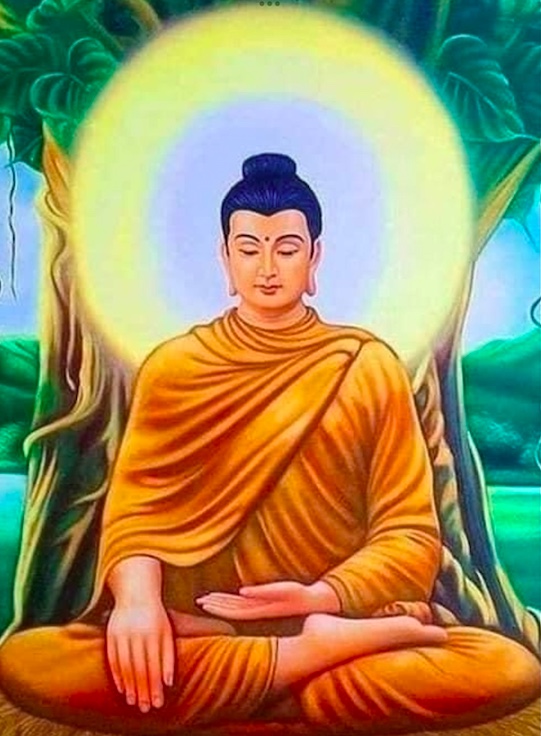
A profound illustration of forgiveness is exemplified by the contemporary Buddha, H.H. Dorje Chang Buddha III,. One of His Holiness’ disciples, Hongxi Fazang, engaged in numerous defamatory actions against H.H. Dorje Chang Buddha III, through social media and within Buddhist temples. Later, he came to realize the gravity of his actions and was overwhelmed with remorse. Desiring to return to the guidance of the Buddha Master, he sought reconciliation.
Remarkably, the profoundly compassionate Buddha welcomed him back as a disciple with the same love and teachings as before. When other disciples found it hard to believe Hongxi Fazang’s return, His Holiness simply said, “If I don’t forgive him, who can?” The following video showcases Hongxi Fazang’s heartfelt repentance and deep gratitude towards H.H. Dorje Chang Buddha III, at the Holy Miracle Temple.
During my high school and college years, amidst the pressures of academics and the challenges of growing up, one name stood out as a constant source of laughter and profound insight into life – Charlie Chaplin. Beyond the laughter, Chaplin possessed a deep insight into the human condition. His films often depicted the struggles of the working class, the hardships of life, and the pursuit of happiness. Through his art, he conveyed powerful messages about empathy, resilience, and the importance of finding joy in the little things.
Little did I know then that the man behind the iconic Tramp character was not just an actor but also a writer, filmmaker, and a brilliant mind. One particular creation of his, the poem “As I Began To Love Myself,” has left an indelible mark on my heart, providing me with invaluable wisdom on how to live a better life.
“As I Began To Love Myself”
As I began to love myself I found that anguish and emotional suffering are only warning signs that I was living against my own truth.
Today, I know, this is “AUTHENTICITY”.
As I began to love myself I understood how much it can offend somebody As I try to force my desires on this person, even though I knew the time was not right and the person was not ready for it, and even though this person was me.
Today I call it “RESPECT”.
As I began to love myself I stopped craving for a different life, and I could see that everything that surrounded me was inviting me to grow.
Today I call it “Maturity”.
Today I call it “SELF-CONFIDENCE”.
As I began to love myself I quit stealing my own time, and I stopped designing huge projects for the future. Today, I only do what brings me joy and happiness, things I love to do and that make my heart cheer, and I do them in my own way and in my own rhythm.
Today I call it “SIMPLICITY”.
As I began to love myself I freed myself of anything that is no good for my health – food, people, things, situations, and everything that drew me down and away from myself.
At first, I called this attitude a healthy egoism.
Today I know it is “LOVE OF ONESELF”.
As I began to love myself I quit trying to always be right, and ever since I was wrong less of the time.
Today I discovered that is “MODESTY”.
As I began to love myself I refused to go on living in the past and worrying about the future. Now, I only live for the moment, where everything is happening.
Today I live each day, day by day, and I call it “FULFILLMENT”.
As I began to love myself I recognized that my mind can disturb me and it can make me sick. But as I connected it to my heart, my mind became a valuable ally.
Today I call this connection “WISDOM OF THE HEART”.
We no longer need to fear arguments, confrontations or any kind of problems with ourselves or others. Even stars collide, and out of their crashing, new worlds are born.
Today I know “THAT IS LIFE”!
Charlie Chaplin, the man who made us laugh and ponder life’s complexities, continues to inspire and guide us through his timeless wisdom. His poem, “As I Began To Love Myself,” encapsulates valuable life lessons about authenticity, respect, maturity, self-confidence, simplicity, love of oneself, modesty, fulfillment, and the wisdom of the heart. As we remember this iconic figure, let us carry his insights with us on our journey towards a better and more meaningful life, just as he did for me during my high school and college years. Charlie Chaplin wasn’t just an entertainer; he was a philosopher whose words and actions continue to resonate with us all.
For over 75 years, Harvard’s Grant and Glueck study has tracked the physical and emotional well-being of two populations: 456 poor men growing up in Boston from 1939 to 2014 (the Grant Study), and 268 male graduates from Harvard’s classes of 1939-1944 (the Glueck study).
Due to the length of the research period, this has required multiple generations of researchers. Since before WWII, they’ve diligently analyzed blood samples, conducted brain scans (once they became available), and pored over self-reported surveys, as well as actual interactions with these men, to compile the findings.
The conclusion? According to Robert Waldinger, director of the Harvard Study of Adult Development, one thing surpasses all the rest in terms of importance:
“The clearest message that we get from this 75-year study is this: Good relationships keep us happier and healthier. Period.”
Not how much is in your 401(k). Not how many conferences you spoke at–or keynoted. Not how many blog posts you wrote or how many followers you had or how many tech companies you worked for or how much power you wielded there or how much you vested at each.
No, the biggest predictor of your happiness and fulfillment overall in life is, basically, love.
Specifically, the study demonstrates that having someone to rely on helps your nervous system relax, helps your brain stay healthier for longer, and reduces both emotional as well as physical pain.
The data is also very clear that those who feel lonely are more likely to see their physical health decline earlier and die younger.
“It’s not just the number of friends you have, and it’s not whether or not you’re in a committed relationship,” says Waldinger. “It’s the quality of your close relationships that matters.”
What that means is this: It doesn’t matter whether you have a huge group of friends and go out every weekend or if you’re in a “perfect” romantic relationship (as if those exist). It’s the quality of the relationships–how much vulnerability and depth exists within them; how safe you feel sharing with one another; the extent to which you can relax and be seen for who you truly are, and truly see another.
According to George Vaillant, the Harvard psychiatrist who directed the study from 1972 to 2004, there are two foundational elements to this: “One is love. The other is finding a way of coping with life that does not push love away.”
“When the study began, nobody cared about empathy or attachment. But the key to healthy aging is relationships, relationships, relationships. ” — George Vaillant
Thus, if you’ve found love (in the form of a relationship, let’s say) but you undergo a trauma like losing a job, losing a parent, or losing a child, and you don’t deal with that trauma, you could end up “coping” in a way that pushes love away.
This is a very good reminder to prioritize not only connection but your own capacity to process emotions and stress. If you’re struggling, get a good therapist. Join a support group. Invest in a workshop. Get a grief counselor. Take personal growth seriously so you are available for connection.
Because the data is clear that, in the end, you could have all the money you’ve ever wanted, a successful career, and be in good physical health, but without loving relationships, you won’t be happy.
The next time you’re scrolling through Facebook instead of being present at the table with your significant other, or you’re considering staying late at the office instead of getting together with your close friend, or you catch yourself working on a Saturday instead of going to the farmer’s market with your sister, consider making a different choice.
“Relationships are messy and they’re complicated,” acknowledges Waldinger. But he’s adamant in his research-backed assessment:
From a young age, many of us were taught by our parents about the importance of cultivating good habits. Whether it was going to bed early, exercising regularly, or refraining from negative behaviors, these habits were instilled in us with the belief that they would pave the way for success and a fulfilling life. Charles Duhigg, in his influential book “The Power of Habit,” sheds light on the mechanisms of habit formation and transformation. Drawing from scientific discoveries and captivating narratives, Duhigg offers fresh insights into human nature’s capacity for profound change. In addition, religious teachings, such as those found in Buddhism, also emphasize the significance of good habits in leading a virtuous and enlightened life.
“The Power of Habit” explores the scientific foundations behind habit formation. Duhigg introduces the concept of the habit loop, consisting of cues, routines, and rewards, which shape our behaviors and become deeply ingrained in our lives. By comprehending this loop, we gain a better understanding of how habits are formed and how they can be consciously modified or replaced.
Duhigg highlights the power of keystone habits, pivotal behaviors that have the potential to ignite positive transformations in various aspects of our lives. Through real-life examples, such as the habits of Olympic swimmer Michael Phelps, Starbucks CEO Howard Schultz, and civil-rights icon Martin Luther King Jr., the book demonstrates how cultivating keystone habits can lead to remarkable achievements. These habits act as catalysts, triggering a chain reaction of positive changes in other areas of our lives.
In Buddhism, there is a strong emphasis on discipline and the cultivation of good habits. Buddhist monks and nuns follow a set of precepts—more than 200 rules—that guide their daily lives. These precepts serve as a framework for moral conduct, urging practitioners to refrain from harmful behaviors and cultivate virtuous habits. By adhering to these precepts, disciples develop good habits in all aspects of life, fostering mindfulness, compassion, and ethical behavior.
In the pre-recorded Dharma discourse delivered by H.H. Dorje Chang Buddha III, His Holiness expounded on the profound concept that habits can become second nature, highlighting the transformative potential of consistent practice. Through consistent meditation, individuals develop a habit of introspection and mindfulness, leading to increased concentration and ultimately enlightenment. Similarly, the habit of performing good deeds accumulates positive merits, shaping one’s character and promoting spiritual growth.
“The Power of Habit” by Charles Duhigg reveals the malleability of habits and their potential for transformative change. By understanding the science behind habit formation and exploring keystone habits, individuals can consciously shape their behaviors and make positive changes in their lives. Additionally, Buddhism provides valuable insights into the significance of good habits in fostering moral conduct and spiritual development. By embracing these teachings, we can harness the power of habits to lead more fulfilling, successful, and enlightened lives.
Life often presents us with challenges and setbacks that can seem insurmountable. It’s easy to get caught up in excuses and let these obstacles hold us back. However, the story of Jim Thorpe, a Native American athlete who overcame tremendous adversity, serves as a powerful reminder that we have the ability to rise above any circumstance and achieve greatness.
In the early morning hours of his competitions at the 1912 Olympics, Jim Thorpe faced a daunting setback – his shoes were stolen. Left with no other options, he scoured the area and stumbled upon two discarded shoes in a garbage can. However, fate seemed determined to test his resolve as one of the shoes was too big. Undeterred, Jim wore an extra sock to compensate for the ill-fitting shoe. This incident alone showcases Jim’s unwavering determination and refusal to let circumstances dictate his success.
Jim Thorpe at the 1912 Olympics. Note the mismatched track shoes. Thorpe’s shoes went missing from his duffel before his track events, and he had to scrounge replacements. One was lent by a fellow competitor, and one he found in the trash. Photo courtesy of Robert Wheeler and Flo Ridlon
Despite the odds stacked against him, Jim Thorpe refused to succumb to self-pity or give in to excuses. He understood that life doesn’t always play fair, but it is our response to these challenges that truly defines us. With a steely resolve, he stepped onto the track and field, determined to give his best despite the circumstances. And that’s precisely what he did.
Against all expectations, Jim Thorpe not only competed but excelled in the 1912 Olympics. He won two gold medals that day, showcasing his exceptional athletic prowess and mental fortitude. Jim’s story resonates deeply as a symbol of resilience, inspiring us to look beyond our own limitations and strive for greatness, no matter the obstacles we face.
Jim Thorpe’s journey teaches us an invaluable lesson – we have the power to choose our response to life’s challenges. It’s easy to make excuses and let setbacks define us, but true growth and success come from pushing past those excuses. Whether it’s stolen shoes, failed relationships, or health issues, we can choose to rise above them and keep moving forward.
We often find ourselves caught between reasons and results. Jim Thorpe’s story emphasizes that we cannot have both. By embracing a results-oriented mindset, we shift our focus from dwelling on the reasons why things aren’t going our way to actively pursuing the outcomes we desire. It’s through action and perseverance that we create our own opportunities for success.
As we face the challenges that life throws at us, let us remember the incredible story of Jim Thorpe. His resilience, determination, and refusal to be held back by excuses serve as a powerful reminder that we have the ability to overcome any obstacle and achieve our goals. Instead of resigning ourselves to the unfairness of life, let’s choose to live with no regrets, push through our limitations, and continue running our race. Embrace the spirit of Jim Thorpe and strive for the gold in all aspects of your life.
Life has a way of presenting us with unexpected situations, challenging our beliefs and testing our patience. In a world where instant gratification is often sought after, we sometimes forget the value of patience and the wisdom of waiting for life’s answers. A thought-provoking encounter between a traveler and an old lady by the river teaches us the importance of embracing life’s mysteries and being grateful for every experience.
Imagine a tired traveler standing beside a vast river, witnessing an old lady desperately in need of help to cross. Overcoming his own exhaustion, the traveler selflessly aids her in crossing the river. However, his act of kindness is met with disappointment when the old lady hurriedly departs without expressing gratitude. Regret fills the traveler’s heart, and he questions the worth of his effort without a simple “thank you.”
Hours later, just as the traveler’s energy reaches its lowest point, a young man catches up to him. To the traveler’s surprise, the young man expresses gratitude for helping his grandmother and presents him with dried food and a horse as tokens of appreciation. The traveler realizes that the old lady’s departure was not an act of ingratitude but a testament to the unpredictability of life’s unfolding. Sometimes, the answers we seek are not immediate; we must wait patiently to hear the echoes of our actions.
Life is often compared to a tapestry, woven with threads of joy and sorrow, success and failure. Similarly, the years are likened to giant trees, and life itself is the little birds that fly in and out. Adversity may cause our dreams and achievements to fade like bubbles, but in those moments of despair, we must shift our perspective. By embracing the belief that “everything is the best arrangement,” we can find solace and trust in life’s unfolding mysteries.
When faced with the bitter winds and rains of life, it may seem unbearable to our hearts. However, if we persevere and patiently wait, life will reward our efforts. Good times may not immediately emerge, but with steadfast dedication, they will gradually find their way to us. Life’s returns are not always immediate, but by staying hopeful and diligent, we open ourselves to the possibility of unforeseen surprises and positive transformations.
Instead of becoming upset or frustrated with life’s twists and turns, let us cast our eyes towards the horizon of life. Let us resist the urge to resort to self-pity or blame, and instead, cultivate gratitude for every encounter and experience. By maintaining an optimistic outlook, striving for personal growth, and believing in the inherent goodness of the universe, we create a space for blessings to manifest.
Life’s journey is filled with unpredictable encounters, and not all answers are readily available to us. Through the tale of the traveler and the old lady, we are reminded of the power of patience and the importance of gratitude. Remember, “everything is the best arrangement.” By embracing this belief, staying hopeful, and expressing gratitude for life’s encounters, we can navigate the twists and turns with a sense of peace and contentment. So let us be grateful for the wisdom gained from reading this article and cherish the beauty of life’s unfolding mysteries.
I believe many individuals have pondered the following questions deep within their hearts: Why do people exist? Do we live solely for money, status, fame, family, loved ones, or children?
People find meaning in life through various purposes and aspirations. However, what if none of these conventional motivations were present? Would life still hold significance?
To shed light on this existential inquiry, we turn to the profound insights of Mr. Inamori. This article serves as a synthesis of Mr. Inamori’s books, namely “The Art of Living,” “Embracing the Heart: A Path to Fulfillment,” “Mastering Thought: A Guide to Clarity,” and “The Entrepreneurial Spirit.” These collective works offer invaluable wisdom and would like to share with you here.
What constitutes life
The Essence of Life
Life can be defined as the amalgamation of destiny and cause. Personally, I began my journey as a technician, delving into research and development of new ceramics. At the age of 27, I founded Kyocera Corporation, which has flourished for over half a century.
Throughout this period, I contemplated the meaning of life and gradually formulated my own perspective. In fact, I embraced this outlook on life and followed my own unique path.
What, then, is the essence of life? Irrespective of whether we are aware or ignorant of this concept, our attitude and life’s trajectory will diverge significantly.
Therefore, it becomes crucial for us to grasp the true essence of life.
After much contemplation, I arrived at the following conclusion:
Each person’s life is akin to a tapestry interwoven by the warp of destiny and the weft of the law of karma.
Essentially, life is influenced by invisible forces, represented by two significant hands. The first is known as destiny.
Every individual enters this world with their own destiny. While the intricacies of fate remain enigmatic, our lives are guided or influenced by its presence.
Although some may object, I firmly believe that the existence of destiny is an undeniable reality.
We are, indeed, subject to a destiny that surpasses our personal will and desires. It disregards our joys, sorrows, and tribulations, akin to a ceaseless river that wraps around us and flows relentlessly towards the sea.
But are we entirely powerless in the face of fate? This is not the case either. An invisible force also exists within our lives, known as the “law of karma.”
The law of karma posits that good causes and deeds lead to favorable outcomes, while evil causes and deeds result in negative repercussions. In essence, our thoughts generate “causes,” not to mention the resentment, grievances, and fleeting thoughts that manifest. These causes bear fruit.
As Buddha Shakyamuni said, “Cause and effect”—causes never remain stagnant; every cause gives rise to an effect. Reflecting on our careers, karma represents the causal link. If a cause exists, there will be consequences.
In summary, cultivating virtuous thoughts, performing good deeds, and reaping positive outcomes while harboring negative thoughts, engaging in malevolent actions, and facing adverse retribution—this is the essence of the law of karma.
Hence, our lives primarily consist of two fundamental elements: “destiny and the law of karma,” while other factors hold comparatively less significance.
Understanding the Law of Cause and Effect: Shaping our Lives
Understanding the law of cause and effect empowers us to alter the course of our lives. Destiny serves as the warp, the law of karma as the weft, and together, they weave the fabric of our existence.
Life extends beyond the boundaries set by destiny, owing to the influence of the force of causality. Conversely, good deeds may not always yield immediate positive outcomes due to the interference of destiny.
Here lies a crucial point—the law of karma possesses greater potency than the law of destiny.
Furthermore, a mechanical relationship exists between these two forces that govern our lives. The force of cause and effect somewhat surpasses the force of destiny.
Consequently, we can harness the law of karma and potentially transform our predetermined destiny.
Therefore, nurturing virtuous thoughts has the power to alter our destiny’s trajectory and bring about positive change. Despite being subject to the control of destiny, we possess the ability to shape our fate through virtuous thinking and conduct.
3. Life motto: Don’t worry about the result, because the cause and effect must be reported.
In the law of karma, the correlation between cause and effect does not always manifest immediately, which often makes it difficult for us to fully comprehend this principle.
We may wonder why someone continues to suffer despite having done numerous good deeds. On the other hand, there are individuals with exceptional character who consistently engage in acts of kindness, yet they unfortunately endure illnesses. Similarly, there are people who engage in malicious actions and seem to lead contented lives with harmonious families, which can be puzzling to outsiders. These situations are not uncommon and contribute to our tendency to overlook the law of karma.
The reason behind delayed outcomes in accordance with the law of karma remains unknown, but there is undeniably a time lag. In my personal experience, the fruition of karma can be arduous to discern. However, if we extend our perspective to encompass a span of 20 or 30 years, there are no exceptions.
Thus, while immediate results may be elusive within a three to five-year timeframe, considering an individual’s life and observing the course of 20 or 30 years, the correlation between good thoughts, good deeds, and positive outcomes becomes evident. Likewise, evil thoughts and actions inevitably yield negative consequences. This understanding is apparent to all.
When we extend our viewpoint to a 30-year span, we recognize that the wicked do not perpetually prosper, and the virtuous are not eternally plagued. Ultimately, the virtuous find happiness. In the context of 30 years, everything seems to align favorably.
The connection between cause and effect can be likened to an equal sign—they are so intricately matched that it could be described as “remarkable.” Although this may not be immediately evident in the short term, over the long run, good causes lead to positive outcomes, while evil causes result in negative consequences. Karma proves to be accurate.
Therefore, the principle of cause and effect must be acknowledged, but it requires time for the outcomes to manifest. It is important to remember not to become anxious or impatient due to the lack of immediate visible effects.
Second, what is the meaning of life? Why do people live?
What is the meaning and purpose of life? This fundamental question demands a direct response.
In my perspective, the purpose of life is to enrich the mind and nurture the soul.
As inhabitants of this world, we are often consumed by desires and ensnared by them. It can be seen as an inherent aspect of human nature.
If we allow this nature to take control, we will be endlessly pursuing wealth, status, and fame, while indulging in fleeting pleasures.
Of course, life necessitates the fulfillment of basic needs such as food, clothing, and financial resources for leisure activities. I acknowledge that these requirements cannot be denied.
However, all of these worldly pursuits are confined to the present life, and they hold no significance in the next life. Matters of this world must be settled and completed within its confines. If anything within life is immortal, it is the “soul.”
When death approaches, all the status, reputation, and material possessions that we have accumulated will be relinquished, and we will embark on a new journey solely with our “soul.”
Hence, if someone were to ask me, “Why were you born into this world?”
I would unequivocally respond, “To ensure that my soul is purer in death than in life, or to carry a more beautiful and noble soul to meet death.”
We arrive in this world, experiencing the tumultuous impact of various circumstances, tasting the pains and joys of existence, and enduring moments of happiness and sadness until our final breath. Throughout this journey, we tirelessly and perseveringly strive.
The very process of life itself resembles sandpaper, refining and tempering the soul. Through this tempering, individuals elevate their character, cultivate their spirit, and depart from this world with a soul of higher stature than when they entered it.
I believe this is the purpose of life, and no other objective surpasses it.
Today should surpass yesterday, and tomorrow should surpass today. Each day, we exert sincere efforts, engage in unwavering work, take resolute action, and earnestly cultivate ourselves. It is within this process that the purpose and value of our lives are reflected.
More often than not, life brings us unhappiness. At times, we even resent the deities and divine beings, questioning why we must endure so much suffering. However, it is precisely these tribulations that temper our souls and elevate our character.
We should regard suffering as both a test and an opportunity, and we need to embrace this perspective.
Only individuals who perceive tests as opportunities can illuminate their limited lives.
The so-called “present world” is a period bestowed upon us by a higher power to refine our character, and it serves as a crucible for honing our souls.
The meaning and value of life lie in expanding the mind and fortifying the soul. To put it simply, that is the essence.
3. How should we face the turbulent life?
The life we lead is intricately woven with fate and the law of karma, which Shakyamuni Buddha referred to as “all things impermanent.”
Sakyamuni saw through the interplay of various factors, both positive and negative, in life and taught us that “life is characterized by suffering, and all actions are impermanent.”
Consider the aspect of health, for instance. While one may enjoy good health today, tomorrow could bring illness and confinement. The same holds true for business endeavors. Today may be smooth, but unforeseen challenges may arise tomorrow.
The phenomena we witness in the world around us are not constant or stable, as Sakyamuni described them to be “the impermanence of all things.”
“Lines” refer to all phenomena, which cannot be preserved indefinitely. Life is characterized by turbulence and fickleness.
Everything is impermanent, constantly changing, and new trials will continue to emerge. Hence, Shakyamuni also stated that “life is suffering.”
The concept of “pain due to impermanence” implies that life is a succession of suffering caused by impermanence.
In light of this, how should we approach life? What attitude should we adopt? It is these choices that ultimately determine the course of our lives.
Regardless of the fate we encounter, we must respond with a heart filled with gratitude. Good and bad experiences are intertwined, alternating throughout our lives.
Therefore, whether circumstances are favorable or unfavorable, bright or gloomy, we should express gratitude. Not only during moments of good fortune but even in the face of disaster, we should say thank you and demonstrate gratitude.
After all, I am still alive, and I have been granted the opportunity to live well. Hence, I should be grateful for this blessing.
I often remind myself internally that by practicing gratitude, I can improve my mindset and take the initial steps towards happiness.
However, putting this into action is easier said than done. It is challenging for individuals to reach a level where they can express gratitude regardless of whether the sun is shining or the rain is pouring.
When faced with adversity, expecting oneself to practice gratitude and express appreciation can feel unrealistic. Instead, the natural response might be, “Why am I so unlucky?” This inclination towards resentment is perhaps inherent to human nature.
So, when things go well and luck is on our side, does gratitude arise spontaneously? Not necessarily.
“Good fortune! I deserve this; it is rightfully mine.” People often tend to think in this manner. “How can this benefit be enough?” The desire for more lingers.
As people collectively succumb to greed and forget gratitude, they inadvertently distance themselves from fortune.
“We should be thankful for whatever happens.” This principle should be firmly ingrained in our minds through rational thinking.
Even if we don’t genuinely feel grateful, we should continuously remind ourselves to say “Thank you!” It is crucial to cultivate such a mindset.
Difficulties that arise serve as opportunities for growth, and for that, I should be grateful. When good fortune arrives, it becomes even more precious, and expressing gratitude becomes imperative. Always be prepared to say “Thank you!” and consciously reserve space in your heart for gratitude.
Approaching life with this mentality is of utmost importance.
Fourth, to live a happy life lies in these six practices
So, how can we train our minds to achieve these goals?
In Buddhism, there is a practice method called the “six paramitas,” also known as the “six ways.” These paramitas include “diligence,” which refers to hard work.
I sincerely hope that everyone can transform their destiny and lead a better life by practicing this concept of diligence in six aspects. The first rule is to “put in as much effort as anyone else.”
This means working diligently towards our goals and objectives. It is the fundamental aspect of diligence.
The second rule is to “remain humble and guard against arrogance.”
Take the example of Kazuo Inamori, who achieved great success as a business operator. However, his success was not an inevitable outcome. It could have been achieved by anyone—A, B, or C. Inamori Kazuo was simply given this talent by chance.
It is important to adopt a mindset of humility and recognize that the world needs individuals with specific talents. God has bestowed upon us certain talents by chance.
Therefore, we should never become arrogant or let success make us indomitable. Thinking that “I have talent and a sharp mind, which is why I established this company,” is absolutely wrong.
Ancient Chinese classics also emphasize similar teachings. Those who will achieve great things in the future shine with the virtue of modesty.
In other words, those who succeed are humble and possess high moral character. Those who continue to grow are individuals who have been humble from a young age, rather than those who seek attention.
I would like to share a famous saying: “Only the humble are blessed.” Those who lack humility are not qualified for happiness because they are unable to grasp it.
To achieve happiness, one must always maintain humility. Those who will excel in their careers in the future are those who remain humble.
The third rule is to “introspect every day.” It means reflecting on our self-centeredness and selfishness, and making a conscious effort to eliminate these qualities. This introspection is crucial, and we must engage in it daily.
Cultivating gratitude every day is of utmost importance. It is essential to have a mindset that allows us to experience happiness at any moment. And what is a mind that can experience happiness at any time? It is a contented heart.
People who can experience happiness are those who are contented. I have already discussed the importance of gratitude, so I won’t elaborate further.
The fifth aspect of diligence is to “accumulate good deeds and embrace altruism.” It means contributing to society and the world. This concept is of utmost importance and has been emphasized throughout.
Lastly, the sixth rule is to “let go of emotional troubles.”
This means not worrying excessively or being troubled by emotions. Although we should consider the impermanence of the world, it is unnecessary to worry or be anxious.
Unpleasant things happen every day, and they happen frequently. There is no need to worry or be troubled by them.
When faced with failure, we must let go of it completely and focus on the future. This point is crucial.
Some people constantly worry about not receiving orders or fear going out of business, thinking, “If this continues, we won’t be able to pay our employees.” I want to tell you that this is not the right mindset.
By harboring such concerns, the company will only deteriorate further. Instead, we should think, “Since we have reached this point, let’s work hard rather than worry about going out of business.”
So, I say, “Don’t worry, don’t be troubled.” When we think in this way, we can remain calm and keep our minds free.
To be precise, practicing these six principles is a rational approach to exploring our true selves, which is also a path towards enlightenment. It is not merely an ascetic practice, a routine, or a daily meditation practice, but rather a practice that can be comprehended through reasoning.
However, it is important to note that casual attempts once or twice will not yield significant results. Consistency is key. By staying committed and practicing these principles every day, your destiny will undergo a dramatic transformation.
By persistently adhering to these six points, everything will gradually align in a harmonious direction, leading to an undeniable improvement in your destiny. Even in the face of various challenges you may be encountering now, they will eventually dissipate.
Nonetheless, the utmost importance lies in practicing the first rule: “Effort as much as anyone else.” Merely considering the latter points without wholehearted dedication and diligence will render your efforts fruitless.
In the vast universe, there exists a law or will that propels everything towards happiness. As long as we consistently practice the six principles with diligence and liberate our true selves within our hearts, everything will progress smoothly.
With unwavering commitment, your true self will be revealed. This true self can be seen as an embodiment of the universal law itself. Once you break free from the confines of your old self, you can embark on a path toward a joyous existence.
Every individual has the potential for a positive destiny and the ability to lead a happy life. However, happiness cannot be achieved without putting in sufficient effort.
Therefore, I urge you to recognize the significance of the “six diligence” and put them into action. By doing so, you will pave the way for a fulfilling and contented life.
Life often presents us with a mix of challenges, ranging from personal struggles to family issues and health problems. It can be overwhelming, especially for a young boy, as he opens up to his Grandma about everything going wrong. However, through a simple baking analogy, Grandma imparts a profound lesson about the nature of adversity and the importance of trust and faith in difficult times.
In the midst of school problems, family issues, and serious health concerns within the family, the little boy finds solace in confiding in his Grandma. He shares his frustrations, expressing how everything seems to be going wrong in his life. Unfazed by the boy’s grievances, Grandma calmly continues her task of baking a cake. Recognizing the boy’s need for a snack, she offers him various individual ingredients used in baking, such as cooking oil, raw eggs, flour, and baking soda. The boy’s disgusted reactions reflect his belief that these items are unpleasant to consume on their own. In response to the boy’s repulsion, Grandma imparts a valuable lesson. She explains that while these ingredients may taste unpleasant individually, when combined in the right amounts and manner, they create a delicious cake. She further extends the analogy to the way God works in our lives.
Grandma draws a parallel between the ingredients in baking and the challenges we face in life. Just as the ingredients, when mixed together, create something wonderful, God works in mysterious ways to bring about goodness from our trials. While we may question why we endure difficult times, Grandma encourages us to trust in God’s divine plan.
Life’s challenges may seem overwhelming and bitter when viewed in isolation. However, Grandma’s wisdom reminds us that even the most difficult circumstances can serve a purpose and lead to positive outcomes. By placing our trust in God’s guidance, we can find meaning, growth, and resilience amidst the adversities we encounter.
The story of the little boy and his Grandma’s cake-baking analogy provides a powerful reminder of the transformative potential hidden within life’s challenges. Like the ingredients in a cake, our trials and tribulations may appear unappealing when viewed individually. However, with faith and trust, we can embrace the belief that God’s hand is at work, orchestrating events in our lives for a greater purpose.
By embracing faith, trust, and resilience, we can find hope, strength, and a renewed sense of purpose, even in the face of adversity.