Ancient Buddha relics returned to India

A joyous day for our cultural heritage! It would make every Indian proud that the sacred Piprahwa relics of Bhagwan Buddha have come home after 127 long years. These sacred relics highlight India’s close association with Bhagwan Buddha and his noble teachings. It also illustrates our commitment to preserving and protecting different aspects of our glorious culture. #VikasBhiVirasatBhi Source: https://x.com/narendramodi/status/1950483627323670760

The following article was published by the BBC News, Soutik Biswas, July 31, 2025:

Auction house Sotheby’s has returned a set of sacred jewels believed to be linked to the Buddha’s remains in India, after facing mounting pressure from the Indian government and global Buddhist leaders.

The Piprahwa Gems – described by archaeologists as one of the most astonishing finds of the modern era – were due to be auctioned in Hong Kong in May. But the sale was called off following diplomatic intervention and threats of legal action from Delhi.

The Mumbai-based conglomerate Godrej Industries Group has acquired the jewels, Sotheby’s said.

Sotheby’s said it was “delighted” to facilitate the return, following two months of negotiations involving the owner, the new buyer and the Indian government. The relics will now go on permanent public display in India, the auction house said.

Photo of William Claxton Peppé, an English estate manager, excavated the stupa and found the jewels. courtesy of the Peppé family.
William Claxton Peppé, an English estate manager, excavated the stupa and found the jewels. courtesy of the Peppé family.

Indian Prime Minister Narendra Modi announced the return on Wednesday, calling it a “proud and joyous moment” and a victory for the country’s cultural heritage. The relics, he said on X, were coming home after 127 years.

Godrej Industries Group, the buyer of the jewels, serves over 1.1 billion consumers worldwide across sectors including consumer goods, real estate, agriculture, finance, and chemicals, according to its website. Many of its products are household names in India.

“We are deeply honoured to contribute to this historic moment. The Piprahwa gems are not just artifacts – they are timeless symbols of peace, compassion, and the shared heritage of humanity,” Pirojsha Godrej, Executive Vice Chairperson of Godrej Industries Group, was quoted as saying in a government press statement.

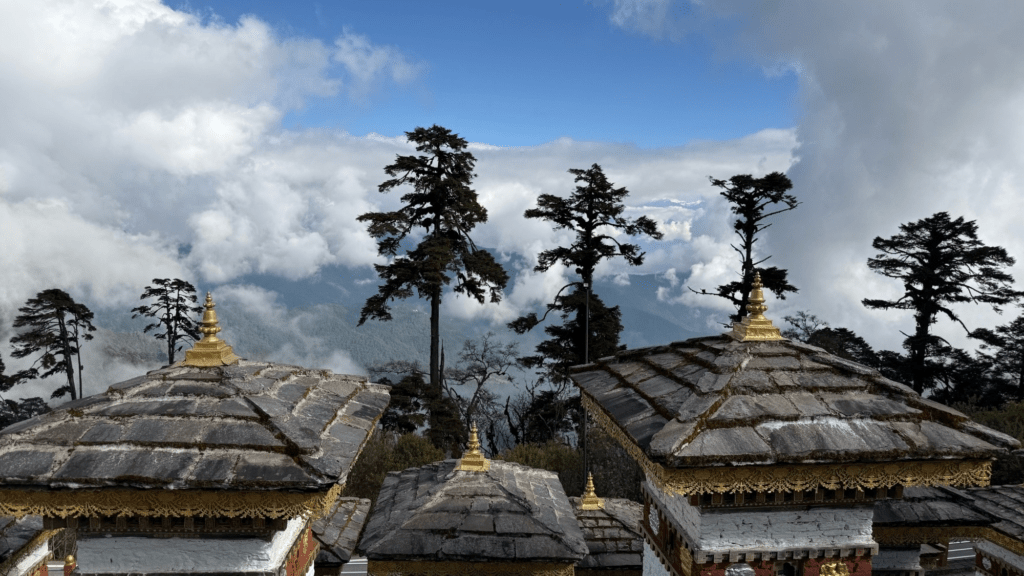
Unearthed in 1898 by English estate manager William Claxton Peppé from a stupa in Piprahwa in northern India, near the Buddha’s birthplace, the cache included nearly 1,800 pearls, rubies, sapphires and gold sheets – buried alongside bone fragments identified by an inscribed urn as belonging to the Buddha himself.

Photo of The jewels were unearthed from this stupa in Piprahwa, northern India in 1898, Icon Films.
The jewels were unearthed from this stupa in Piprahwa, northern India in 1898, Icon Films.

Peppé eventually handed most of the gems, relics and reliquaries to the colonial Indian government: the bone relics went to the Buddhist King of Siam (Rama V). Five relic urns, a stone chest and most other relics were sent to the Indian Museum in Kolkata – then the Imperial Museum of Calcutta.

Photo of Four containers made of steatite (a type of stone) and one made of rock crystal were found inside a sandstone box at the Piprahwa stupa, courtesy of Peppe family.
Four containers made of steatite (a type of stone) and one made of rock crystal were found inside a sandstone box at the Piprahwa stupa, courtesy of Peppe family.

For over a century, the rest of the dazzling jewels remained largely hidden in a British private collection.

A set of 300 gems held by the Peppé family was publicly displayed at Sotheby’s Hong Kong in February and May. Over the past six years, the gems have appeared in major exhibitions, including The Met in 2023. The family has also launched a website to share their research.

Historians consider the relics the shared heritage of the Buddha’s Sakya clan and Buddhists worldwide. The bone fragments have since been distributed to countries like Thailand, Sri Lanka, and Myanmar, where they remain objects of veneration.

Photo of The jewels are considered among the most extraordinary archaeological finds of all time, courtesy of Sotheby's.
The jewels are considered among the most extraordinary archaeological finds of all time, courtesy of Sotheby’s.

The planned sale of the Buddha relics by Sotheby’s in Hong Kong had sparked widespread ethical concerns, with scholars and Buddhist leaders questioning whether sacred objects – especially those linked to human remains – should be treated as commodities.

Critics challenged the seller’s authority to auction the relics, while defenders said a transparent sale was the fairest way to transfer custody. For many Buddhists, the jewels are inseparable from the sacred remains and meant to be venerated, not sold.

“Are the relics of the Buddha a commodity that can be treated like a work of art to be sold on the market?” Naman Ahuja, a Delhi-based art historian, had told the BBC in May. “And since they aren’t, how is the seller ethically authorised to auction them?

“Since the seller is termed the ‘custodian’, I would like to ask – custodian on whose behalf? Does custodianship permit them now to sell these relics?”

Chris Peppé, great-grandson of William, had told the BBC in May that the family looked into donating the relics, but all options presented problems and an auction seemed the “fairest and most transparent way to transfer these relics to Buddhists”.

He said that in all the monasteries he had visited “no Buddhists regard these as corporeal relics”.

“A few Buddhist academics at Western universities have recently offered a convoluted, fact-defying logic whereby they may be regarded as such. It’s an academic construct that is not shared by Buddhists in general who are familiar with the details of the find,” he said.

On 7 May, Sotheby’s postponed the auction of the jewels following media reports and concerns raised by the Indian government, citing the need for further discussions. A week later, it confirmed ongoing talks with India to find a mutually agreeable resolution.

This week, confirming the return of the jewels, Sotheby’s said it was “grateful to the Peppé family for having safeguarded the gems and for having worked with us – and with the Government of India – in good faith to achieve this historic outcome”.

Link:https://peacelilysite.com/2025/09/05/ancient-buddha-relics-returned-to-india/

You’ll Never Guess Why He Survived”?

At late Qing Dynasty, during the reign of Emperor Guangxu, there was a true story that took place:

Mr. Jia from Jiangsu worked for a foreign trading company in the Shanghai concession. He had earned the deep trust of his employer. Just before the Dragon Boat Festival, his boss sent him south of the city to collect debts. With a leather money pouch in hand, Mr. Jia set off.

The collections went smoothly, and by noon he had received more than 1,800 silver dollars. After walking and talking all morning, he was parched and exhausted. Passing by the famous Shiliupu teahouse, he hurried inside for a quick cup of tea before rushing back to deliver the money and finally rest.

When he returned to the company, he suddenly realized—the leather pouch was gone. Thunderstruck, drenched in sweat, and nearly fainting, he could not explain himself clearly in his panic.

Seeing his flustered state, the boss grew suspicious, believing Jia might be dishonest. He harshly rebuked him for betraying trust, warning that if the money was not returned quickly, Jia would be handed over to the authorities.

At that time, 1,800 silver dollars was a fortune—enough for a person to live on comfortably for a lifetime if carefully spent. How could Mr. Jia ever repay such a sum? With his reputation and life on the line, he felt utterly ruined and broke down in despair.

Meanwhile, in another part of the concession, a merchant from Pudong, surnamed Yi, had recently lost all his money in business. Discouraged, he bought a boat ticket for that very afternoon to return home across the river.

With time to spare before boarding, Mr. Yi also went to Shiliupu teahouse, intending to sip tea slowly while pondering his uncertain future.

By coincidence, just as Mr. Jia had hurried out, Mr. Yi walked in. As he sat down, he noticed a small leather pouch left on a chair. He paid it little mind at first and began drinking tea.

After some time, no one came to claim it. Curious, he lifted it and felt its weight. Opening it, he nearly dropped it in shock—inside was a fortune in gleaming silver coins!

At first he was overwhelmed with joy. Such a windfall could end his misfortune and secure a comfortable life. But then he thought: No, money belongs to its rightful owner. If I keep it, the loser may be ruined, disgraced, or even driven to death. The sin would be unbearable.

In those days, most decent people knew the saying: “Ill-gotten wealth must not be taken.” Mr. Yi resolved: Since fate placed this money in my hands, I have the responsibility to return it.

At lunchtime, only eight or nine guests remained in the teahouse. None appeared to be searching for lost money, so Yi, hungry as he was, decided to keep waiting.

By evening, as lamps were being lit, the teahouse emptied out—only Mr. Yi remained, watching the entrance intently.

Suddenly, he saw a pale, staggering man rush in, followed by two companions. It was Mr. Jia. As soon as he entered, Jia pointed at Yi’s table and cried, “There! That’s where I was sitting!” The three came straight toward Yi.

Yi smiled and asked, “Are you looking for a lost pouch?”

Jia stared in disbelief and nodded repeatedly. “I’ve been waiting for you,” Yi said, producing the leather pouch.

Overcome with relief, Jia trembled all over. “You are my savior! Without you, I would have hanged myself tonight!”

It turned out that when Jia had discovered the loss, he had begged to retrace his steps, though he knew recovery was unlikely. His boss, fearing he might flee, initially forbade it. After much pleading, the boss finally allowed him to go, but only under the close watch of two escorts, who were ordered to bring him back regardless of the outcome.

After exchanging names, Jia gratefully offered Yi a fifth of the money as a reward. Yi firmly refused. Jia lowered it to a tenth, then to a hundredth—Yi grew angry and sternly declined.

Flustered, Jia said, “Then at least let me treat you to a drink!” Yi still refused. Finally Jia pleaded, “If I cannot show gratitude, my conscience will not rest. Tomorrow morning, please allow me to host you at such-and-such tavern. I beg you to come—without fail.” Bowing deeply, he left.

The next morning, Yi did indeed appear. Jia was just about to bow in thanks when Yi quickly interrupted, saying:

“Actually, it is I who should thank you. If not for your lost pouch, I would not be alive today!”

Puzzled, Jia asked what he meant. Yi explained:

“Yesterday, I had bought a one o’clock boat ticket to return home. But because I waited in the teahouse to return your money, I missed the departure. When I finally returned to my lodging, I learned that the boat had capsized midway in a violent wave. All 23 passengers drowned. Had I boarded, I too would be dead. So you see, it was you who saved my life!”

The two men, overwhelmed, bowed to each other in tears.

Onlookers marveled, toasting the pair. They said Mr. Yi’s single good deed had saved not just Jia’s life, but his own as well.

The story did not end there. When Jia and his escorts returned and reported everything, the boss was astonished. “Such a virtuous man is rare indeed!” he exclaimed, insisting on meeting Yi.

The two met and felt an immediate bond. After a long conversation, the boss earnestly invited Yi to stay, offering him a high salary to manage accounts. Months later, he even married Yi into his family as a son-in-law. In time, the boss entrusted the entire business to him.

“Cause and effect of good and evil” is absolutely true, without the slightest mistake. Goodness nurtures more goodness, and goodness attracts goodness. To treat others with kindness is, in fact, to accumulate blessings and good fortune for oneself. A human life is not lived for just a fleeting moment. The speed of temporary gains or losses, the ups and downs of a single day, even honor or disgrace in the short term—none of these truly matter. Today’s kindness becomes tomorrow’s blessings. Today’s evil leads to tomorrow’s misfortune. Time is a great author, and it will always write the perfect answer.

Therefore, simply be a good person, and the future will be full of hope. Do good deeds, and the road ahead will surely be bright and promising.

Link:https://peacelilysite.com/2025/08/29/youll-never-guess-why-he-survived/

Nobel Prize Research Reminds Us: Don’t Stay Up Late!

When the 2017 Nobel Prize in Medicine was announced, many were surprised—it focused on something that touches all of us: our biological clock.

Three scientists—Jeffrey C. Hall, Michael Rosbash, and Michael W. Young—received the award for discovering how our bodies keep time at the molecular level. In simple terms, they revealed how our “internal clock” works, and why disrupting it can be so damaging to our health.

This clock silently manages almost everything in the body—when we feel sleepy or alert, our body temperature, hormone levels, and even how our cells repair themselves. But when we stay up too late, this delicate system is thrown off balance, and the consequences can be serious.

Their research found that:

  • Staying up late disrupts the body clock, paving the way for illness.
  • Lack of sleep can cause the brain to “eat itself”—astrocytes, specialized brain cells, begin devouring synapses.
  • If circadian-regulating genes fail, the risk of tumors increases.

The clear takeaway from this Nobel Prize-winning research? A familiar piece of advice: Don’t stay up late!

Yes, it’s something our parents, teachers, and elders have reminded us about countless times. But now, there’s a Nobel Prize—and 9 million Swedish kronor —to back it up.


Ancient Wisdom Meets Modern Science

Interestingly, the idea of the “body clock” isn’t new. Thousands of years ago, Traditional Chinese Medicine described how energy, or Qi, flows through the body in cycles. The 24-hour day was divided into twelve two-hour intervals, with each period linked to a specific organ system.

For example:

  • Between 1 a.m. and 3 a.m., the liver is at peak function, cleansing the blood and preparing the body for renewal.
  • From 3 a.m. onward, energy shifts to organs that support digestion and daily activity, such as the lungs, large intestine, and stomach.
  • By mid-afternoon, energy begins to flow inward again to support organs that restore and maintain the system, such as the kidneys and pericardium.

Understanding this Body-Energy Clock can help us better manage our sleep, meals, and mood. Modern science now echoes this ancient wisdom: align with your natural rhythms, and you’ll thrive.


The Role of Melatonin

Science also tells us about melatonin, often called the “sleep hormone.” Melatonin is vital for regulating the sleep-wake cycle. Levels begin to rise soon after darkness falls, peak between 2 a.m. and 4 a.m., and then gradually decline.

This explains why going to bed too late often leads to trouble falling asleep, and why sleep after 4 a.m. tends to be light and restless. For the best rest, it’s ideal to sleep between 11 p.m. and 4 a.m., when melatonin levels are highest and most restorative.


The Benefits of Sleeping Early and Rising Early

Research consistently shows that early sleepers and early risers enjoy powerful health benefits:

  • Better mental health: Early risers of all ages report more positive emotions and greater self-rated health.
  • Reduced risk of depression: A U.S. study found that going to bed just one hour earlier lowers depression risk by 23%.
  • Weight management: Staying up late disrupts hormones, leading to weight gain. Going to bed on time, combined with early rising and regular exercise, helps maintain a healthy weight.
  • Stronger immunity: Adequate sleep enhances immune function, reducing the risk of infections and chronic diseases such as heart disease, hypertension, diabetes, and stroke.
  • Sharper thinking: Early sleepers and early risers score 30% higher on word-association tests compared to night owls.

The message from both Nobel Prize-winning research and ancient health wisdom is clear: respect your biological clock.

Going to bed early and waking up early is not just about feeling more refreshed—it protects the brain, strengthens the body, improves mood, and may even add years to your life. So tonight, give yourself the gift of sleep—it’s worth more than 5 million!

Link:https://peacelilysite.com/2025/08/28/nobel-prize-research-reminds-us-dont-stay-up-late/

The Story of the Characteristics of Swords [AsilakkhaÏa-Jātaka]

126. The Story of the Characteristics of Swords [AsilakkhaÏa-Jātaka]

At one time Buddha was living in Jetavanārāma. At that time the king of Kosala had a Brahmin who could tell whether a sword was lucky by smelling it. When smiths would bring their swords, if they had given bribes, he said, “It is good.” To those who did not give bribes, he said to them, “It is bad.” All in the course of time knew the deceptive nature of this man. Knowing his nature, one smith made a sword and making it very sharp, put it in a sheath filled with hot chili powder. He brought it to the king. The king summoned the Brahmin and requested him to tell them the goodness or badness of the sword.

The Brahmin, in accord with the order of the king, took the sword out from the sheath and placing it near his nose tried to smell it. Immediately, before he could say anything, the chili powder smelled by him caused him to sneeze. He could not remove the sword from his nose quickly enough, so when he sneezed, the sword cut off the tip of his nose. This story spread everywhere and eventually it reached even the monks in the preaching hall.

One day in the preaching hall of Jetavanārāma the assembled monks were speaking about this. When the Buddha visited there, the monks paid respect to the Buddha.

The Buddha asked, “Oh monks, what were you discussing before I came here?” Then the monks related the story of the Brahmin who smelled swords for the king of Kosala. Buddha said, “Not only today this man faced this mishap, but also in the past he faced the same fate.” The monks requested the Buddha to disclose the past story. The Buddha spoke then the past story:

At one time, a king called Brahmadatta ruled in Benares. He had a fortune-telling Brahmin who by smelling swords could tell their goodness or badness. He took bribes from the sword smiths. He condemned the work of those smiths who had not given bribes because they had not given him bribes.

Once a certain trickster smith made a good sword and made it well sharpened. He applied hot chili powder to it and took it to the king. The king summoned the Brahmin to examine the sword. As it was covered with hot chili powder, when he smelled it, he sneezed before he was able to remove the sword from his nose. The tip of his nose was cut off, and he was ashamed because of this. The king became very sad because of this and requested his craftsmen to make a fake tip for the Brahmin’s nose with wax. And the Brahmin again asked to work for the king.

At this time the king had a nephew at his palace, and also his daughter. The two of them since they were very young, had grown up together. When they got older, they fell in love with each other. The king did not know this secret love. The king and his ministers one day discussed the marriage of the princess. The king said, “I will give my daughter to a prince of another kingdom.  If I do so, I will gain two new supporters, the prince and his father, to defend my kingdom.” Since then, the princess was not allowed to see the nephew with whom she had grown up so as to try to prevent them from falling in love. This strengthened their love for one another. And the nephew wanted to marry the princess as they both were now grown up.

The nephew therefore made a stratagem to marry the princess. He met the servant woman of the princess and gave her a bribe of a thousand gold coins. He requested her to keep the princess away for one day from the palace so that he could get to her. The woman said, “Do not worry. I will do it. I will take responsibility for that.”

Thinking of a stratagem, she went to the king and said, “Your lordship, your daughter is under the influence of an evil spirit. She is becoming unlucky and emaciated. Therefore, we will have to remove the evil spirit from her body.” The king asked, “What can we do for that?” The woman said, “In such-and-such a place there is a certain cemetery. There you need to make a stage. Keep a corpse on top of it, and cover it placing a bed over the dead body. We will place the princess on the bed and bathe her. Then the evil spirit will leave her.”

Hearing this, the king ordered her to do all these things and gave her all she had requested. She then undertook the task. She also tied some dried chili powder in a cloth, and she hid it near the bed so the nephew would be able to take it. She requested the nephew to go there and lie under the bed as the dead body. She explained to the nephew how to carry this off. The woman said to the caretakers, “When I come to the cemetery and wash the princess, the dead body will sneeze two or three times, come out from under the bed, and seize and devour the first one whom he sees. Therefore, be warned. Run away.” This was also mentioned to the nephew and princess, and the nephew was told, “When the caretakers run away, take the princess out of the cemetery, and after taking a bath with her, go wherever you like.”

On the day they set to have the service, the nephew went early and lay down under the bed she had prepared. The woman mentioned again to all the caretakers in the cemetery, “When the dead body sneezes, you will have to be ready for the death of the first one he seizes.” When, as she said, the nephew started to sneeze, all the caretakers laying their weapons down beside them, ran away from the cemetery screaming loudly. The retinue and other dignitaries who had come to witness this also all ran away.

When the nephew came out from under the bed, he took the princess, took a good bath, and went to his house with her. Hearing this news, the king became happy and he gave his daughter to the nephew.

Finalizing this story the Buddha said, “At that time the fortune-telling Brahmin who was skilled in sniffing swords was this fortune-telling Brahmin of today. The nephew prince of the king of Benares was I who am the Buddha.”

The moral: “What causes a loss for one person, may cause a gain for someone else.”

126. The Story of the Characteristics of Swords [AsilakkhaÏa-Jātaka]

Link: https://hhdorjechangbuddhaiiiinfo.com/2025/08/05/126-the-story-of-the-characteristics-of-swords-asilakkhaia-jataka/

#Buddhisttalesforyoungandold #Buddhiststories #storiesforkids #moralstories #Buddha #Jatakastories #PansiyaPanasJataka #JatakaTalesofSakyamuniBuddha #JatakaTales #SakyamuniBuddha’sPast

Guangsheng Temple — The Hidden Gem of Shanxi’s Ancient Treasures

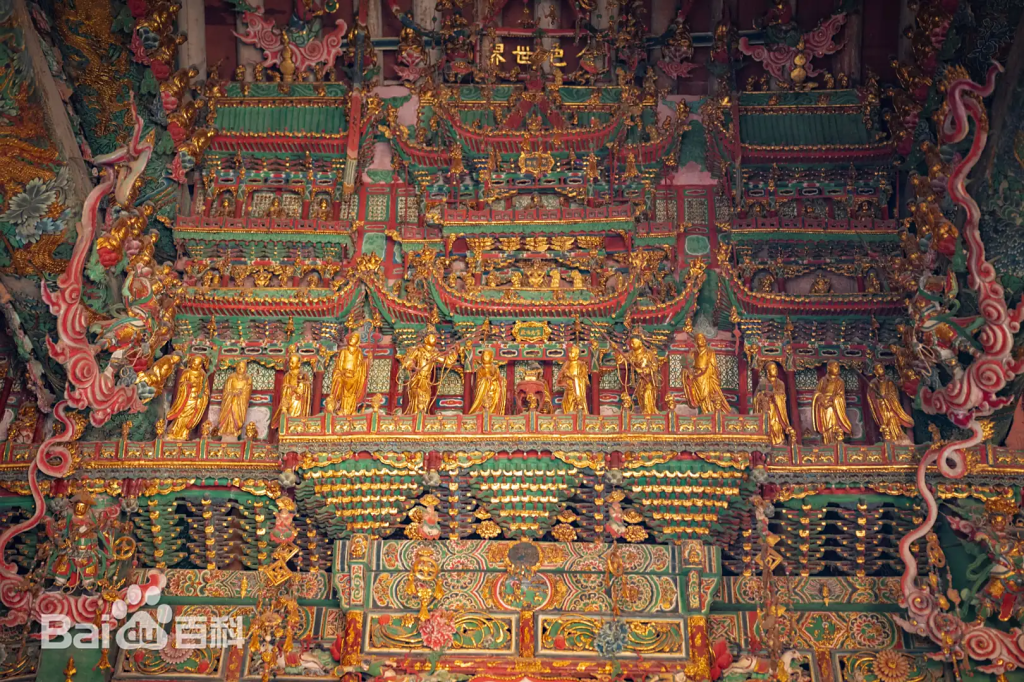
Shanxi is often called the cradle of Chinese civilization, a province with one of the richest collections of cultural and historical relics. Guangsheng Temple is part of that story. First built during the Eastern Han Dynasty (25–220 CE), it is one of the earliest Buddhist temples in China. Over the centuries, it has endured wars, fires, and devastating earthquakes, yet it still stands, its beauty renewed through reconstructions in the Yuan (1271–1368) and Ming (1368–1644) dynasties.

The temple complex is composed of three main parts:

  • The Upper Monastery — home to its most famous landmark, the glazed pagoda.
  • The Lower Monastery — housing grand halls and statues.
  • The Water God Temple — known for its remarkable Yuan Dynasty murals.

Rising in the upper monastery is the Flying Rainbow Pagoda (Feihongta), an octagonal, 13-story glazed brick tower reaching 47.31 meters high. Built in 1527 during the Ming Dynasty, it’s an explosion of color in the sunlight. The walls and roofs are covered in multi-colored glazed tiles — deep emerald, golden yellow, sapphire blue, and rich purples — that glisten like jewels, casting rainbow-like reflections on sunny days.

Every tier of the pagoda is adorned with intricate glazed reliefs — Buddhas in serene meditation, fierce guardian kings, bodhisattvas in flowing robes, mythical beasts, and dragons coiled in eternal motion. Inside, the foundation hall houses a five-meter-tall bronze statue of Sakyamuni Buddha, radiating quiet majesty.

This pagoda is not only beautiful — it’s a survivor. It withstood the catastrophic 1556 Shaanxi earthquake and the 1695 Pingyang earthquake, both exceeding magnitude 8.0. Its resilience is as awe-inspiring as its artistry. In 2018, it was recognized by the London-based World Record Certification as the tallest multicolored glazed pagoda in the world.

Murals of the Yuan Dynasty — Life Painted in Color

The temple’s murals are a vivid window into the Yuan Dynasty. In the Water God Temple, nearly 200 square meters of wall space is alive with color: scenes of divine processions, farmers at work, musicians playing, and children at play. One remarkable panel shows “Cuíwán” (捶丸) — a sport similar to golf — offering a glimpse into pastimes of the Yuan era.

The mural on the gable wall of the Great Hall of Sakyamuni Buddha in the lower monastery is equally stunning, painted with an expressive style that blends religious devotion with snapshots of daily life. Researchers prize these works for their artistry and for the wealth of cultural detail they reveal — clothing, architecture, social customs — all preserved in pigment for more than 700 years.

The Zhaocheng Buddhist Canon — A Literary Treasure

In 1930, during restoration work, the temple revealed another extraordinary surprise—a cache of ancient relics now preserved in the Shanxi Museum. These included Buddhist scriptures, statues, and ritual objects, some dating back hundreds of years earlier. Printed during the Yuan Dynasty, this monumental project took 24 years and the collaboration of countless monks and artisans to engrave the wooden printing blocks. The texts preserve Buddhist thought, philosophy, and art from centuries ago, making them one of China’s most precious Buddhist literary relics.

The discovery deepened Guangsheng Temple’s reputation as one of the great guardians of China’s Buddhist heritage.

Today, whether you approach as a pilgrim, an art lover, or simply a traveler drawn by curiosity, the moment you first see the rainbow-like shimmer of the Glazed Pagoda through the mountain mist is unforgettable. It is not merely a structure—it is a bridge between centuries, a beacon of faith, and a reminder that beauty, once created with devotion, can endure against time itself.

Link: https://peacelilysite.com/2025/08/15/guangsheng-temple-the-hidden-gem-of-shanxis-ancient-treasures/

Source: http://shanxi.chinadaily.com.cn/2022-05/06/c_748899.htm?utm_source=chatgpt.com

A Small Gift, A Big Dream: The Story Behind Temple University

Sometimes, the smallest gifts carry the greatest meaning—and plant the seeds for something extraordinary.

In the late 1800s in Philadelphia, a little girl named Hattie May Wiatt was heartbroken. She loved attending Sunday school at Grace Baptist Church, led by Reverend Russell H. Conwell, but the room was too small to hold all the children who wanted to come. Some Sundays, children were turned away for lack of space. Hattie dreamed of a bigger Sunday school where every child could learn and feel welcomed.

Determined to help, Hattie began saving what she could. Little by little, she set aside pennies, nickels, and dimes—eventually saving up 57 cents. It was a humble offering, but a heartfelt one. Sadly, Hattie became ill and passed away at just seven years old before she could see her dream come true.

After her passing, her mother brought the small purse of coins to Reverend Conwell, explaining Hattie’s wish. Deeply moved by the child’s devotion and generosity, Reverend Conwell shared Hattie’s story with his congregation. Her simple act of love touched hearts far and wide.

Inspired by her story, the congregation began to give. Donations poured in. That small sum of 57 cents became the spark that lit a fire. With the funds raised, Reverend Conwell purchased a house that would serve as the site for Sunday school classes. But the vision didn’t stop there.

That humble beginning became the foundation of Temple College, an institution built on the belief that education should be accessible to all. Over the years, it grew and evolved into Temple University, one of the leading public research universities in the United States today.

And it all began with one little girl and her 57 cents.


The Power of a Small Act

Hattie May Wiatt’s story is a powerful reminder that no contribution is too small when it comes from the heart. Her tiny savings became the cornerstone of an institution that has educated thousands and impacted countless lives. More than just a tale of generosity, it’s a lesson in faith, hope, and the incredible potential of selfless giving.

In a world where people often feel powerless to make a difference, Hattie’s story whispers a timeless truth: every effort matters. Every kind deed, no matter how small, can ripple outward and change the world.

Link:https://peacelilysite.com/2025/07/31/a-small-gift-a-big-dream-the-story-behind-temple-university/

Lingyan Temple: A Millennium of Buddhist Grace and Sculptural Treasures in the Heart of Mount Tai

Photo from Wikipedia

Located in the northwest of Mount Tai, Lingyan Temple was founded during the Eastern Jin Dynasty and boasts a history of over 1,600 years. It is regarded as one of the most important sacred sites of Chinese Buddhist culture. Since the Tang Dynasty, Lingyan Temple has enjoyed great renown, and together with Qixia Temple in Nanjing, Guoqing Temple on Mount Tiantai in Zhejiang, and Yuquan Temple in Dangyang, Hubei, it has been hailed as one of the “Four Great Temples of China.” The eminent monk Tang Xuanzang once resided here to translate Buddhist scriptures. From Emperor Gaozong of Tang onward, many emperors stopped to worship at this temple on their way to perform imperial rites at Mount Tai, a testament to its revered historical status.

Although I personally prefer the majestic beauty of untouched natural landscapes, I was deeply moved by the profound cultural and religious artistry of Lingyan Temple. Within the temple grounds, ancient trees such as Chinese wingnut, cypress, and banyan rise skyward, creating a tranquil and sacred atmosphere. As an integral part of the World Natural and Cultural Heritage site of Mount Tai, Lingyan Temple is especially renowned for its colored clay sculptures of Arhats, which hold a prominent place in the history of Chinese sculpture.

Stepping into the solemn Thousand Buddha Hall, one is struck by the breathtaking sight of the Arhat statues—40 lifelike clay figures arranged in a semicircle along the inner walls. Among them, 29 represent disciples of Shakyamuni and Indian masters such as Bodhidharma and Kumarajiva. The remaining 11 depict eminent Chinese monks, including Huiyuan, Huike, Huichong, and various abbots of Lingyan Temple. According to inscriptions and scholarly research, the original set consisted of 32 statues, first created in the third year of the Zhiping reign of Emperor Yingzong of the Song Dynasty (1066). Additional painting and sculpting were done in the first year of the Zhiyuan reign (1328) during the Yuan Dynasty. The Thousand Buddha Hall was renovated in the 15th year of the Wanli reign (1587) in the Ming Dynasty, at which time the number of Arhats was increased to 40. The final touch-up was completed in the 13th year of the Tongzhi reign (1874) of the Qing Dynasty.

Each statue stands about 1.6 meters tall and is seated on a waist-high brick pedestal roughly 80 centimeters in height, with the top of each statue rising 105 to 110 centimeters above the seat. The overall sculptural style is remarkably realistic, emphasizing the individuality and inner spirit of each figure: square faces, prominent noses, distinct facial features, and dynamic, textured robe patterns. The ancient artisans broke away from conventional, stylized Buddhist iconography and instead grounded their work in real life, endowing each Arhat with unique expressions and postures—some sit in meditation, others clasp their hands or hold staffs; some appear ragged and emaciated, while others exude noble dignity and elegance. Each figure is infused with spirit and personality, appearing almost alive, as if they might speak or move at any moment.

What’s even more astonishing is the meticulous attention to detail in both facial expressions and bodily movement, as well as the relationship between the robes and the human form. The flowing lines of the garments, the way the folds respond to motion, and the tactile quality of the fabric all reflect a masterful understanding of form and rhythm. One medical expert even remarked that, “Through the Arhats’ robes, one can perceive the ancients’ precise grasp of human anatomy.”

The Arhat sculptures at Lingyan Temple are not only masterpieces of religious art but also represent the pinnacle of ancient Chinese realistic sculpture. The renowned scholar Liang Qichao once visited the site and inscribed a stone tablet calling them “The finest sculptures in the land.” Famed art master Liu Haisu also praised them, writing: “The Arhats of Lingyan—first under heaven—vivid and lifelike, with flesh and spirit.”

Lingyan Temple is more than a place of worship—it is a living chronicle of Buddhist heritage carved from clay and shaped by the hands of genius. Whether you are a devout practitioner, a history enthusiast, or an art lover, a visit to Lingyan Temple will surely leave you moved by its rich cultural legacy and breathtaking artistic beauty.

Link:https://peacelilysite.com/2025/07/31/lingyan-temple-a-millennium-of-buddhist-grace-and-sculptural-treasures-in-the-heart-of-mount-tai/

Why Ancient Roman Buildings Still Stand—And Modern Ones Don’t

Have you ever stood before the Pantheon in Rome or looked up at the towering aqueducts from ancient times and thought:
“How are these structures—built over 2,000 years ago—still standing strong, while modern buildings crack, rust, and collapse in just a few decades?”

It’s not a miracle. It’s ancient wisdom and material science far ahead of its time.

By Rabax63 – File:Pantheon_Rom_1.jpg, CC BY-SA 4.0, https://commons.wikimedia.org/w/index.php?curid=87626466

Pantheon, Rome, c. 125 C.E. (photo: Darren Puttock, CC BY-NC-ND 2.0)

Sanctae Mariae Rotundae (photo: Steven Zucker, CC BY-NC-SA 2.0)

🏛 The Secret of Roman Concrete

Unlike the Portland cement we use today, ancient Roman concrete was made with volcanic ash (pozzolana), lime, water, and volcanic rock. This special mix triggered a chemical reaction known as the pozzolanic reaction, which formed a remarkably stable and durable material.

This volcanic ash came from regions like Campi Flegrei near Naples, rich in silica and alumina. When mixed with lime and water, it formed bonds that strengthened over time—rather than weakened.


🌊 Stronger with Time—Even Underwater

Even more amazing? Roman concrete exposed to sea water didn’t erode—it grew stronger. Scientists discovered that seawater reacted with the volcanic materials to create a rare mineral called tobermorite, which reinforced the concrete’s internal structure.

This is why many ancient Roman ports and sea walls still stand intact after 2,000 years—even without modern rebar or waterproofing.

Ruins in Privernum, near Rome, where researchers collected ancient concrete samples from a bordering city wallREDA & CO srl/Alamy


🔧 Self-Healing Capabilities

Roman concrete even had a kind of “self-healing” ability. When small cracks formed, water seeping into the cracks would trigger new chemical reactions, filling the gaps with more binding minerals and sealing the damage naturally.

No wonder structures like the Pantheon’s massive unreinforced concrete dome—still the largest in the world—have stood strong for two millennia.

Today’s concrete (Portland cement) is fast to produce and easy to use—but it’s not built to last. It’s vulnerable to carbonization, water infiltration, and the corrosion of internal steel reinforcements. Many modern buildings begin to deteriorate in as little as 50 to 100 years.

What’s more, many structures are built with thinner supports and cheaper materials to cut costs and speed up construction—further sacrificing long-term durability.

Ancient Roman builders weren’t just engineers—they were environmental designers who worked with nature rather than against it. Their materials were local, natural, and synergistic. They designed for longevity, not just appearance or convenience.

Modern architecture, for all its technological advancements, could learn a powerful lesson:
Durability is a form of sustainability.


We often assume that more advanced technology means better quality. But perhaps what truly makes a structure strong isn’t just engineering—it’s wisdom, respect for nature, and a mindset rooted in harmony and longevity.

If we embrace these ancient insights, maybe our future buildings won’t just house us—they’ll endure for generations.

Link:https://peacelilysite.com/2025/07/21/why-ancient-roman-buildings-still-stand-and-modern-ones-dont/

Buddhism, Multidimensional Space, and the Science of Consciousness

Modern scientists suggest there may be multidimensional spacetime. The world we perceive in our daily lives consists of three dimensions of space—length, width, and height—plus one dimension of time, forming what we call four-dimensional spacetime.

For most people, it is nearly impossible to imagine what multidimensional space could be like. Even scientists struggle to describe how such realms might appear.

Yet once, while I was reading a Buddhist sutra, I felt as though I glimpsed something of this mysterious idea.

In the Vimalakirti Sutra, it is recorded that Manjushri Bodhisattva led 8,000 bodhisattvas, five hundred arhats, and countless heavenly beings to visit the ailing lay master Vimalakirti.

Vimalakirti lived in a small chamber. He invited everyone to enter. Miraculously, they all went inside, but the room did not grow any larger. No one felt crowded or obstructed, and everyone saw Vimalakirti sitting directly before them.

Manjushri and Vimalakirti engaged in profound dialogue about the Dharma. Later, Vimalakirti displayed astonishing spiritual powers, bringing seats, exquisite foods, and treasures from distant worlds into that same room.
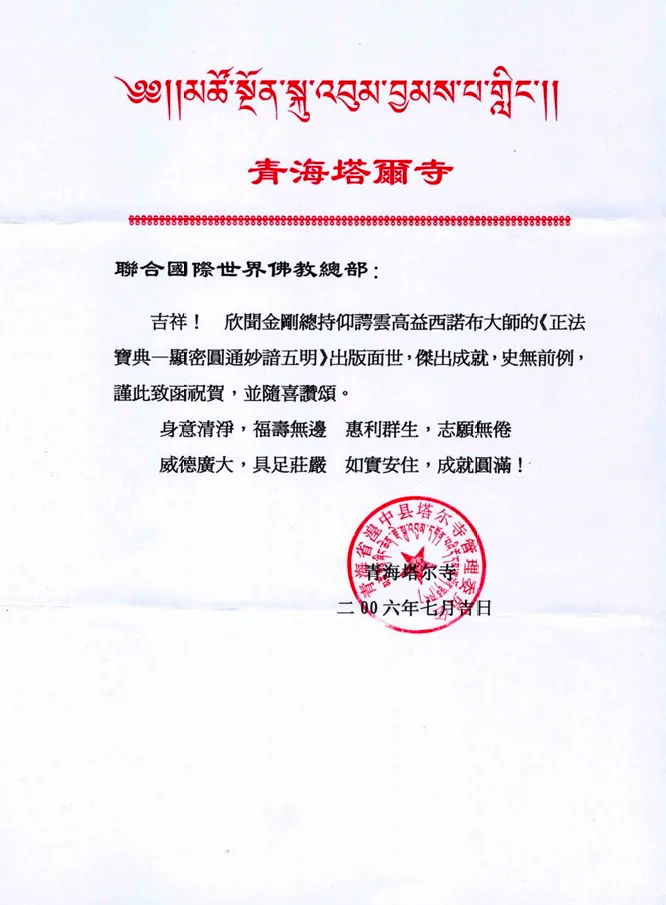
It was absolutely astonishing—like witnessing the seamless merging of multiple dimensions.

Throughout Buddhist history, many great masters have demonstrated abilities that seem to transcend space and time.

For example, there is the story of Milarepa, Tibet’s most renowned yogi. When he was welcoming his disciple Rechungpa back from India—where Rechungpa had traveled to collect scriptures—an incredible event took place.

Rechungpa carried the scriptures on his back as he crossed the vast grasslands. When he saw Milarepa waiting for him, he was overjoyed. Eagerly, he described how he had met the great master Tilopa. With visible pride, he declared:

“In the past, Tilopa did not transmit this Dharma to Master Marpa, but now he has passed it on to me!”

His words brimmed with arrogance.

As they walked together, Milarepa noticed a broken yak horn on the ground and asked Rechungpa to pick it up. Rechungpa couldn’t see the point and made excuses not to touch it. Silently, Milarepa bent down, picked it up himself, and carried it along.

Suddenly, the sky darkened. Thunder boomed, lightning flashed, and hailstones the size of eggs pounded them mercilessly. Rechungpa was battered and bruised.

When the storm finally ended, he looked around—Milarepa had vanished. Alarmed, he began calling out.

Then, Milarepa’s calm voice rose from the little yak horn at his feet:

“Why are you so flustered? Come in here and take shelter.”

Rechungpa stared in disbelief. The opening of the horn was barely larger than a fist. How could he possibly fit inside?

He bent down to look, and to his amazement, he saw an endless green meadow within—stretching as far as the eye could see. Milarepa sat serenely in meditation.

But no matter what he tried, Rechungpa could not enter.

In that instant, all his pride dissolved. Humility and awe took its place.

Milarepa finally emerged and said with a gentle smile, “Did you see? My little yak horn turned out to be quite useful after all.”

Even in our time, extraordinary manifestations still occur.

H.H. Dorje Chang Buddha III has demonstrated countless inconceivable displays of supreme Buddha Dharma.
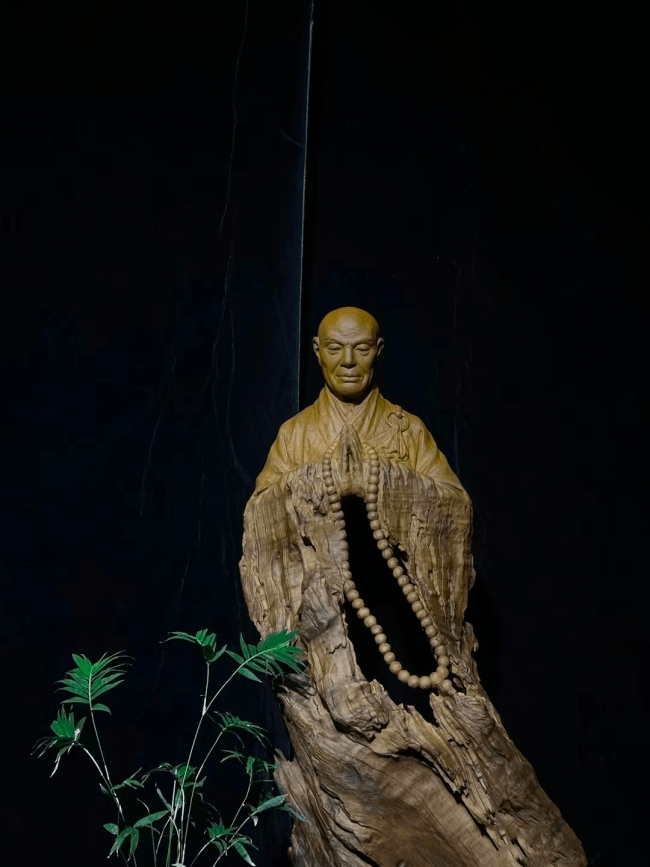
Ruzun Ruo Hui, the abbess of Hua Zang Si (in San Francisco) shared one remarkable example in Interviews with Buddhist Disciples (Episode 78).

Around 1995, about a dozen people were gathered together in a room, respectfully listening to the recorded Dharma discourse Expounding the Absolute Truth through the Heart Sutra.

Halfway through, the entire house vanished. All the walls and structures simply disappeared, and everyone found themselves sitting under the open sky.

Above them, Avalokiteshvara Bodhisattva appeared, standing in the air, radiating boundless light while auspicious clouds billowed around.

For nearly an hour, Avalokiteshvara remained visible, bestowing blessings. No sounds of the street—no passing cars or footsteps—could be heard. The only sound was the voice of H.H. Dorje Chang Buddha III expounding the Dharma.
It was clear that everyone present had entered another dimension altogether.

Moments like these show us that the universe is far more profound than what our senses can grasp.

I believe Buddhism is deeply scientific—not superstition. Just because today’s scientists cannot yet explain these phenomena does not mean they are unscientific.

On the contrary, Buddhist wisdom offers an entirely different lens through which to explore reality. It can inspire modern science to uncover new methods and fresh insights to understand the universe’s deepest mysteries.

If we open our hearts and minds, perhaps Buddhist teachings will one day help humanity discover shortcuts to truths that today seem unimaginable.

Link:https://peacelilysite.com/2025/07/03/buddhism-multidimensional-space-and-the-science-of-consciousness/

Wealth Without Integrity: A Cautionary Tale from the Buddha

The Buddha once taught at the Jeta Grove in Anathapindika’s Park in the kingdom of Shravasti. At that time, there lived a wealthy elder whose fortune was immeasurable. He had five intelligent daughters but no sons. Upon his passing, the law dictated that if no male heir existed, the family estate would be seized by the state. However, the elder’s wife was pregnant. His daughters humbly petitioned the king to delay the confiscation until the child was born.

Not long after, a baby boy was born. Yet to everyone’s shock, the child was severely deformed—he had no eyes, ears, tongue, hands, or feet, only male genitals. Despite this, the king acknowledged him as the rightful heir, saving the family’s wealth. The boy was named Mantuipili.

Puzzled by this karmic outcome, an elder approached the Buddha and asked, “Why would a child be born into such wealth, yet with such tragic physical deformities?”

The Buddha then revealed a powerful story from a distant past:


In a previous life, there were two noble brothers: Dhanavasita, the elder, and Shilavasita, the younger. Dhanavasita was known for his honesty and generosity from a young age. He gave freely to the poor and upheld moral integrity. Because of his character, the king appointed him as a judge, and people trusted his word above all else. At that time, written debt contracts were unnecessary—a judge’s witness sufficed.

One day, a merchant preparing for a sea voyage borrowed a large sum from Shilavasita. Bringing his young son and the money, Shilavasita went to Dhanavasita and asked, “Brother, this merchant has borrowed money. Please bear witness. If anything happens to me, ensure my son receives what is owed.”

Dhanavasita agreed. Soon after, Shilavasita passed away. The merchant’s ship was wrecked in a storm, and he barely survived, returning empty-handed. Out of compassion, Shilavasita’s son decided not to demand repayment while the merchant was destitute.

Years later, the merchant sailed again and returned wealthy. Believing the boy had forgotten or was too kind to collect the debt, the merchant decided to test him. He paraded into the city riding a jeweled horse, dressed in luxurious robes. Seeing this, the boy sent someone to request the repayment.

The merchant, seeking to avoid repayment, schemed to silence the judge. He offered a precious gem worth 100,000 silver coins to Dhanavasita’s wife, asking her to persuade the judge not to testify. She warned, “My husband is a man of virtue, but I’ll try.”

That evening, she told the judge. Dhanavasita was unwavering: “I was made a judge because of my honesty. I cannot speak even a single false word.” She returned the gem.

The merchant returned with a gem worth 200,000 silver coins, and the wife—overcome by greed—accepted. That night, she again tried to persuade her husband. He refused once more, saying, “If I lie, I will lose all honor in this life and suffer in future lives.”

In desperation, the wife threatened, “If you don’t comply, I’ll kill our child and take my own life!” Dhanavasita was heartbroken. He agonized: “If I refuse, I lose my child. If I agree, I lose my integrity and invite endless suffering.”

Overwhelmed, he gave in.


The merchant, emboldened, paraded through the streets again—this time on a jewel-adorned elephant. The boy approached him: “It’s time to repay the debt.”

Feigning confusion, the merchant said, “What debt? Who witnessed this?”
The boy replied, “My father and I gave you the money, and my uncle, the judge, was the witness.”
The two went before the judge. The boy recounted the event.
To his shock, the judge responded, “I know nothing of this matter.”
The boy cried out, “Uncle! You saw it with your own eyes and agreed to witness it. How can you deny this?”
The judge replied coldly, “That never happened.”

In deep pain, the boy exclaimed, “You were trusted for your integrity and chosen to judge others. If you betray your own nephew, how many others have suffered injustice? The truth will be known in time.”


The Buddha then turned to the elder and said: “Do you know who that judge was? He is now the deformed child, Mantuipili. Because he uttered just one false word, he fell into the great hell realms and endured tremendous suffering. For five hundred lifetimes, he was born with severe deformities. Yet due to his past acts of generosity, he continued to be born into wealthy families.

This is the law of karma. Good and evil never cancel each other out—each brings its own result, no matter how long it takes.
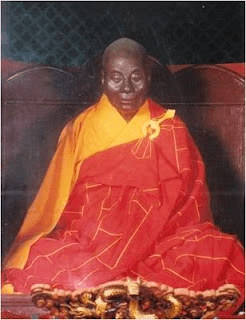
Therefore, practice diligently. Guard your body, speech, and mind. Never create evil karma lightly.”


This profound tale offers a timeless lesson. A single dishonest act can result in unimaginable suffering, even over lifetimes. On the other hand, a heart inclined toward generosity continues to yield blessings, regardless of outer form.

Buddhism teaches us to live with integrity, mindfulness, and compassion—not only for the peace of this life, but for the well-being of lives to come.

link: https://peacelilysite.com/2025/06/25/wealth-without-integrity-a-cautionary-tale-from-the-buddha/