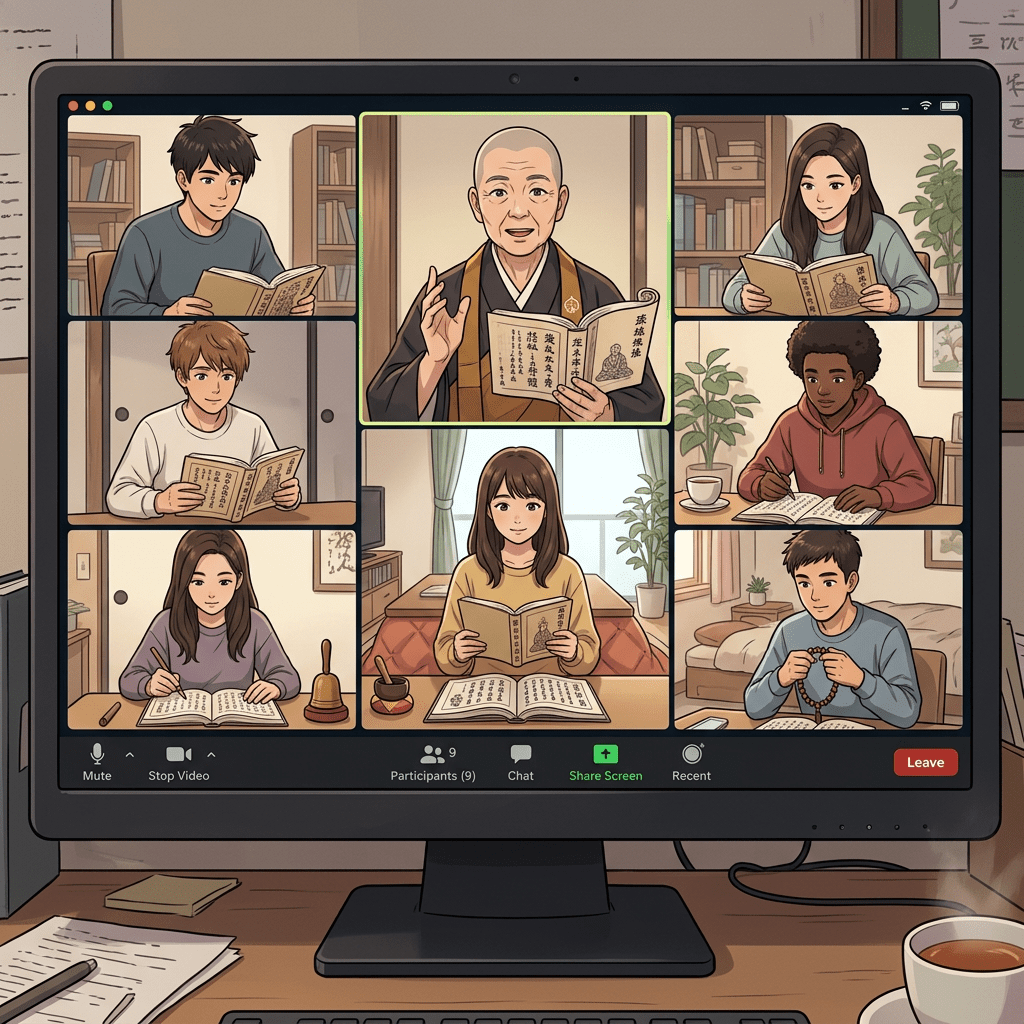
Recently, I joined an online Buddhist study group where we have been deeply immersing ourselves in learning the Sutra by H.H. Dorje Chang Buddha III. This experience has changed my life dramatically. As I began dedicating more intentional time to reading and listening to the Sutra, I noticed a powerful shift in my daily habits. I finally found the strength to break away from the mindless habit of scrolling through screens, freeing up the space and energy to exercise regularly. By simply replacing digital distraction with spiritual study and physical movement, I already feel significantly happier and healthier.
As I continue this journey, I often find myself reflecting on how these profound teachings apply to the ordinary, messy moments of everyday life. It is easy to study a principle conceptually, but the true cultivation begins when we bring it off the page and into our interactions with the world.
One teaching from the Sutra that has particularly influenced me—and completely shifted my perspective—is the vital importance of examining myself before focusing on the shortcomings of others.
In daily life, our default reaction to friction is often outward-facing. When someone cuts us off in traffic, misunderstands our intentions, or speaks with an edge in their voice, the ego immediately jumps to defend itself. It points a finger at the other person’s impatience, rudeness, or flaws.
However, the teachings of H.H. Dorje Chang Buddha III remind us that external circumstances are merely mirrors reflecting our own internal state. True cultivation requires us to break this habit of looking outward and instead turn our gaze fiercely and honestly inward.
Now, whenever I encounter misunderstandings, disagreements, or situations that test my patience, I pause. Before I speak, react, or allow resentment to build, I try to ask myself these four grounding questions:
- Have I truly looked inward first? Am I seeing this situation clearly, or am I viewing it through the distorted lens of my own biases and expectations?
- Is there something I need to improve in myself? Instead of demanding that the other person change, what flaw, impatience, or lack of skill in my own conduct needs addressing?
- Am I responding with compassion and wisdom? Is my energy coming from a place of genuine care for the other person’s well-being, or is it coming from a desire to be “right”?
- What attachment or habit might I be overlooking? What underlying ego-attachment—whether to my reputation, my comfort, or my pride—is causing me to feel triggered right now?

Although it is not always easy—and requires constant mindfulness—this practice has been quietly transformative. It acts as a circuit breaker for negative emotions. By shifting the focus from “what they did wrong” to “how I can grow,” I have found myself becoming genuinely more patient, more deeply understanding of others’ hidden struggles, and far less reactive to life’s daily irritations.
Cultivation is not about achieving perfection overnight; it is about making the consistent choice to choose wisdom over ego, one interaction at a time.

 Peace LiLy