Beyond the Truth: The Buddha’s Wisdom on Sacred Speech
In daily life, we frequently hear people defend sharp or hurtful remarks with a familiar defense: “I’m just speaking the truth.”
We often operate under the assumption that as long as our statements are factually accurate, we are justified in ignoring the timing, the setting, and the recipient’s emotional capacity. Yet in the Abhaya Sutta (Majjhima Nikaya 58) of the Pali Canon, the Buddha offers a radically different perspective on communication: the true value of speech extends far beyond mere factual accuracy.
The story begins with a trap. Nigantha Nataputta, leader of the Jains, sought to publicly corner the Buddha. He instructed Prince Abhaya to pose a carefully engineered dilemma:
“Would the Tathagata utter speech that is displeasing or disagreeable to others?”
It seemed like an inescapable box:
If the Buddha answered “Yes,” the prince would argue that he was no different from any ordinary person who hurls harsh words and causes distress.
If the Buddha answered “No,” the prince would counter by pointing to instances where the Buddha severely rebuked Devadatta—words that were undeniably painful for Devadatta to hear.
Confident in his trap, Nigantha Nataputta boasted that the question would stick in the Buddha’s throat like a barbed nut—impossible to swallow and impossible to spit out.
When Prince Abhaya hosted the Buddha for a meal the next day and posed the question, the Buddha quietly dismantled the binary trap: “There is no single, one-sided answer to this matter.”
The Buddha refused to play by a rigid, two-dimensional rule. Whether a Master speaks is never determined solely by whether the listener will find the words pleasant.
Having neutralized the debate tactic, the Buddha turned toward a young child sitting near the prince and offered a deeply human metaphor.
He asked the prince: “If this young child were to accidentally put a sharp piece of wood or a pebble into his mouth, what would you do?”
The prince replied without hesitation that he would immediately try to extract it. If necessary, he would hook his finger into the child’s mouth to drag it out—even if it meant causing pain or drawing blood—because the object had to come out.
When the Buddha asked why he would do such a thing, the prince’s answer was simple: “Because of compassion for the child.”
With this single image, the debate shifted entirely.
Some truths are uncomfortable to hear, much like removing a foreign object from a child’s mouth brings temporary pain. But the criterion for speaking is never immediate comfort; it is long-term welfare. A loving father reaches into his child’s mouth not to assert dominance, nor to punish, but because leaving the pebble inside causes far greater harm.
Through this parable, the Buddha established three essential checkpoints that every word must pass before it is spoken:
Truthfulness: Is it grounded in fact? Words that are false are never spoken.
Benefit: Is it genuinely useful? Even if a statement is 100% true, if it brings no constructive benefit to the listener, it remains unsaid.
Timeliness: Is this the right moment? Only when a statement is both true and beneficial will a wise speaker choose the appropriate time to speak it.
In the Buddha’s framework, truth is merely the entrance requirement. If a statement is factually correct but unhelpful, ill-timed, or purely divisive, silence is the highest wisdom.
Looking Inward: Winning vs. Healing
The contrast between the two parties in this sutta highlights two very different motivations for speaking:
The Debate Strategy: Designed to corner, crush, and silence the other person—driven by the desire to win.
The Buddha’s Response: Designed like a parent rescuing a child from danger—driven by the desire to heal.
This distinction invites us to examine our own hearts before we speak “harsh truths” or offer sharp criticism:
Are we speaking because we genuinely want to help the other person suffer less, or are we simply trying to prove ourselves right and dominate the conversation?
True goodwill allows for necessary firmness, but it must always rest upon the foundation of truth, benefit, and proper timing. Practicing the wisdom of Right Speech is not just about holding our tongue—it is about refining our intent, ensuring that every word we release carries gentle yet steadfast compassion.
What Type of Expert Is He? The Selling Price of His Painting “Majesty” Has Shocked the World
The Explanation of the Buddha’s Title – “H.H. Dorje Chang Buddha III”
On April 3, 2008, a solemn and dignified first-publishing ceremony of a fact-recording book entitled H.H. Dorje Chang Buddha III, which published jointly by the World Buddhism Publishing LLC and the World Dharma Voice, Inc., was held at the Library of the Congress of the United States. The book was also formally accepted into the collection of the Library of the Congress of the United States. Only since that time, did people in the world know that Master Wan Ko Yee, who had been broadly respected by the great masses and who had also been known as Great Dharma King Yangwo Yeshe Norbu, had been recognized by the world’s leaders, regent dharma kings, and great rinpoches of Buddhism through official documents as the third incarnation of Dorje Chang Buddha, who is the primordial Sambhogakaya Buddha of the universe. The Buddha’s name is H.H. Dorje Chang Buddha III. Since then, people began to address His Holiness the Buddha by “Namo[1] Dorje Chang Buddha III.” This is similar to the situation that Sakyamuni Buddha’s name was Prince Siddhartha Gotama before attaining Buddhahood. However, after Sakyamuni Buddha had attained Buddhahood, His title changed to “Namo Sakyamuni Buddha.” That is why we now address His Holiness the Buddha as “H.H. Dorje Chang Buddha III.”
In particular, on December 12, 2012, the Senate Resolution No. 614 of the United States Congress officially used “His Holiness” in the name addressing Dorje Chang Buddha III (That is to say, “H.H. Dorje Chang Buddha III.”) Since then, the title and status of H.H. Dorje Chang Buddha III has been definitive by nature. And, as a matter of fact, “Dorje Chang Buddha III” is a name used legally in governmental and official legislative documents. Therefore, the previously used respected name and titles such as “Wan Ko Yee,” Great Master, and Great Dharma King no longer exist.
However, the news below was published before the Buddha’s title of H.H. Dorje Chang Buddha III was publicly announced. At that time, people did not know about the true status of His Holiness the Buddha. Therefore, to respect the true history, we still kept the names used before the title of H.H. Dorje Chang Buddha III was legitimately determined in republishing this news. However, all must clearly know that the only legitimate name of His Holiness the Buddha is H.H. Dorje Chang Buddha III and all other names used before the legitimate determination no longer exist.
Los Angeles Asian Journal May 31, 2000
What Type of Expert Is He? The Selling Price of His Painting “Majesty” Has Shocked the World
Some people say that Master Wan Ko Yee (H.H. Dorje Chang Buddha III) is an expert in Buddhism. Some say that he is a great painter or a great singer. There are those who say that he is a great medical expert or a great ethicist. There are also those who say that he is a scientist. On May 28th, Unique Art Collections International Co., Ltd. auctioned Master Wan Ko Yee’s painting entitled “Majesty.” An art collector purchased this painting by way of competitive bid for a price of NT$64,950,000 (this equals U.S.$2,125,327.) People all over the world were shocked to hear of this purchase price.
Some people think that the paintings of Master Wan Ko Yee (H.H. Dorje Chang Buddha III) are Buddhist paintings and for this reason command such an extraordinarily high price. This viewpoint, which has been expressed to the media by certain people who do not understand art, is totally erroneous. In fact, Mr. Wan Ko Yee is a great artist whose paintings cannot be matched by anyone in this day and age. Eleven of his paintings were exhibited by China in an international art exhibition which took place in Philadelphia in 1978. The mainland Chinese government even built a huge art museum, the first of its kind in thehistory of China, in order to display more than two hundred of his paintings.
Master Wan Ko Yee (H.H. Dorje Chang Buddha III) is not only a famous and great artist, he is also a leader in the world of art. When he was twenty years old, he was the head of the Chinese Painting Research Division of the China Education, Science and Culture Organization. This is a high level organization within art circles in China and its leaders include people such as Chou Ying-Nan, Wu Zhang-Shu, Qian Jun-Tao, Xie Zhi-Liao, Liang Shu-Ming, Wan Lai-Ming and Cang Ke-Jia.
In the entire history of Chinese painting, no other painter was able to master the amount of artistic skills, the variety of different styles and the diversity of subject matter which Master Wan Ko Yee has mastered. Other painters could only exhibit two or three different artistic skills at the most. For example, Zhang, Da-Qian exhibited three different artistic skills: line painting, traditional painting and splash ink painting. However, Master Wan Ko Yee has completely mastered a few dozen different artistic skills. Master Wan Ko Yee can paint landscapes, people and other objects, animals, flowers, birds, fish and insects by using the meticulous brushwork style or by using the freehand brushword style. Whichever style he uses, his paintings are always elegant, grand, and full of life. One can get a glimpse of his artistic skills by looking through the huge book which contains a collection of his paintings.
In 1995, the Sichuan Daily News and the Chengdu Evening News each printed an advertisement on behalf of an auction house. This auction house wanted to buy the Master’s paintings for a price of R.M.B. 1,700 yuan per square inch. Master Wan Ko Yee’s skills have reached the highest level in the world when it comes to ink and wash paintings. Thus, in 1991, the World Poets and Culture Congress conferred upon him the title of “The world’s only Distinguished International Master.” This is the highest position possible and is on the same level of honor as a head of state.
Of course, the Master is also an ethicist. His books included Selected Philosophical Saying of Master Wan Ko Yee (H.H. Dorje Chang Buddha III) . He is a singer. There are fourteen tapes and CD’s containing his songs. The famous singer Zhang Huw-You is his student. He is a scientist. He developed two green teas called “Ba Wang Chun” and “Bi Yu Chun.” These are the best quality teas in the world. He is a medical expert who has cured countless people of a variety of different diseases. There were times when in one day, more than three hundred people had appointments to see the Master for treatment. The Master invented many new treatments for diseases, such as an extremely effective different experts? Why is it that this one person Master Wan Ko Yee (H.H. Dorje Chang Buddha III) , has combined skills of several different experts? The main reason is that he is a Great Dharma King Master of Buddhism. He has truly mastered the Five Knowledges spoken if in Buddhism. All of his skills mentioned above cover only part of the Five Knowledges which he has mastered. Instead of trying to describe what type of the expert he is, it would be better simply to say that he surpasses the word “expert.” He is a precious treasure who is a benefit to humanity. He is a Dharma King Master who is a rare gem in this world.
I have heard that on one occasion the Blessed One was staying at Savatthi, in Jeta’s Grove, Anathapindika’s monastery. There he addressed the monks, “Monks!”
“Yes, lord,” the monks replied.
The Blessed One said: “When a monk is intent on the heightened mind, there are five themes he should attend to at the appropriate times. Which five?
“There is the case where evil, unskillful thoughts — connected with desire, aversion, or delusion — arise in a monk while he is referring to and attending to a particular theme. He should attend to another theme, apart from that one, connected with what is skillful. When he is attending to this other theme, apart from that one, connected with what is skillful, then those evil, unskillful thoughts — connected with desire, aversion, or delusion — are abandoned and subside. With their abandoning, he steadies his mind right within, settles it, unifies it, and concentrates it. Just as a skilled carpenter or his apprentice would use a small peg to knock out, drive out, and pull out a large one; in the same way, if evil, unskillful thoughts — connected with desire, aversion, or delusion — arise in a monk while he is referring to and attending to a particular theme, he should attend to another theme, apart from that one, connected with what is skillful. When he is attending to this other theme, apart from that one, connected with what is skillful, then those evil, unskillful thoughts — connected with desire, aversion, or delusion — are abandoned and subside. With their abandoning, he steadies his mind right within, settles it, unifies it, and concentrates it.
“If evil, unskillful thoughts — connected with desire, aversion, or delusion — still arise in the monk while he is attending to this other theme, connected with what is skillful, he should scrutinize the drawbacks of those thoughts: ‘Truly, these thoughts of mine are unskillful, these thoughts of mine are blameworthy, these thoughts of mine result in stress.’ As he is scrutinizing the drawbacks of those thoughts, those evil, unskillful thoughts — connected with desire, aversion, or delusion — are abandoned and subside. With their abandoning, he steadies his mind right within, settles it, unifies it, and concentrates it. Just as a young woman — or man — fond of adornment, would be horrified, humiliated, and disgusted if the carcass of a snake or a dog or a human being were hung from her neck; in the same way, if evil, unskillful thoughts — connected with desire, aversion, or delusion — still arise in the monk while he is attending to this other theme, connected with what is skillful, he should scrutinize the drawbacks of those thoughts: ‘Truly, these thoughts of mine are unskillful, these thoughts of mine are blameworthy, these thoughts of mine result in stress.’ As he is scrutinizing the drawbacks of those thoughts, those evil, unskillful thoughts — connected with desire, aversion, or delusion — are abandoned and subside. With their abandoning, he steadies his mind right within, settles it, unifies it, and concentrates it.
“If evil, unskillful thoughts — connected with desire, aversion or delusion — still arise in the monk while he is scrutinizing the drawbacks of those thoughts, he should pay no mind and pay no attention to those thoughts. As he is paying no mind and paying no attention to them, those evil, unskillful thoughts are abandoned and subside. With their abandoning, he steadies his mind right within, settles it, unifies it, and concentrates it. Just as a man with good eyes, not wanting to see forms that had come into range, would close his eyes or look away; in the same way, if evil, unskillful thoughts — connected with desire, aversion or delusion — still arise in the monk while he is scrutinizing the drawbacks of those thoughts, he should pay no mind and pay no attention to those thoughts. As he is paying no mind and paying no attention to them, those evil, unskillful thoughts are abandoned and subside. With their abandoning, he steadies his mind right within, settles it, unifies it, and concentrates it.
“If evil, unskillful thoughts — connected with desire, aversion or delusion — still arise in the monk while he is paying no mind and paying no attention to those thoughts, he should attend to the relaxing of thought-fabrication with regard to those thoughts. As he is attending to the relaxing of thought-fabrication with regard to those thoughts, those evil, unskillful thoughts are abandoned and subside. With their abandoning, he steadies his mind right within, settles it, unifies it, and concentrates it. Just as the thought would occur to a man walking quickly, ‘Why am I walking quickly? Why don’t I walk slowly?’ So he walks slowly. The thought occurs to him, ‘Why am I walking slowly? Why don’t I stand?’ So he stands. The thought occurs to him, ‘Why am I standing? Why don’t I sit down?’ So he sits down. The thought occurs to him, ‘Why am I sitting? Why don’t I lie down?’ So he lies down. In this way, giving up the grosser posture, he takes up the more refined one. In the same way, if evil, unskillful thoughts — connected with desire, aversion or delusion — still arise in the monk while he is paying no mind and paying no attention to those thoughts, he should attend to the relaxing of thought-fabrication with regard to those thoughts. As he is attending to the relaxing of thought-fabrication with regard to those thoughts, those evil, unskillful thoughts are abandoned and subside. With their abandoning, he steadies his mind right within, settles it, unifies it, and concentrates it.
“If evil, unskillful thoughts — connected with desire, aversion or delusion — still arise in the monk while he is attending to the relaxing of thought-fabrication with regard to those thoughts, then — with his teeth clenched and his tongue pressed against the roof of his mouth — he should beat down, constrain, and crush his mind with his awareness. As — with his teeth clenched and his tongue pressed against the roof of his mouth — he is beating down, constraining, and crushing his mind with his awareness, those evil, unskillful thoughts are abandoned and subside. With their abandoning, he steadies his mind right within, settles it, unifies it, and concentrates it. Just as a strong man, seizing a weaker man by the head or the throat or the shoulders, would beat him down, constrain, and crush him; in the same way, if evil, unskillful thoughts — connected with desire, aversion or delusion — still arise in the monk while he is attending to the relaxing of thought-fabrication with regard to those thoughts, then — with his teeth clenched and his tongue pressed against the roof of his mouth — he should beat down, constrain, and crush his mind with his awareness. As — with his teeth clenched and his tongue pressed against the roof of his mouth — he is beating down, constraining, and crushing his mind with his awareness, those evil, unskillful thoughts are abandoned and subside. With their abandoning, he steadies his mind right within, settles it, unifies it, and concentrates it.
“Now when a monk… attending to another theme… scrutinizing the drawbacks of those thoughts… paying no mind and paying no attention to those thoughts… attending to the relaxing of thought-fabrication with regard to those thoughts… beating down, constraining and crushing his mind with his awareness… steadies his mind right within, settles it, unifies it and concentrates it: He is then called a monk with mastery over the ways of thought sequences. He thinks whatever thought he wants to, and doesn’t think whatever thought he doesn’t. He has severed craving, thrown off the fetters, and — through the right penetration of conceit — has made an end of suffering and stress.”
That is what the Blessed One said. Gratified, the monks delighted in the Blessed One’s words.
There are many people who learn Buddhism, but the reasons they enter Buddhism vary greatly. Some seek spiritual faith to give their hearts a sense of comfort and support. Some do so for their health, while others pray to the Buddhas and Bodhisattvas for a happy family or a successful career. Of course, there are also those who enter Buddhism because they genuinely wish to understand the principles of Buddha Dharma, free themselves from the suffering of reincarnation, and benefit both themselves and others. Although people may have different reasons and purposes for entering Buddhism, they all come with the intention of learning Buddhism.
So, what led me to Buddhism?
Before I entered Buddhism, I knew virtually nothing about Buddhism. Yet I had always considered myself a believer in Buddhism simply because I occasionally visited temples to pay respect to the Buddhas. At that time, the little understanding I had of Buddhism was mixed with superstition.
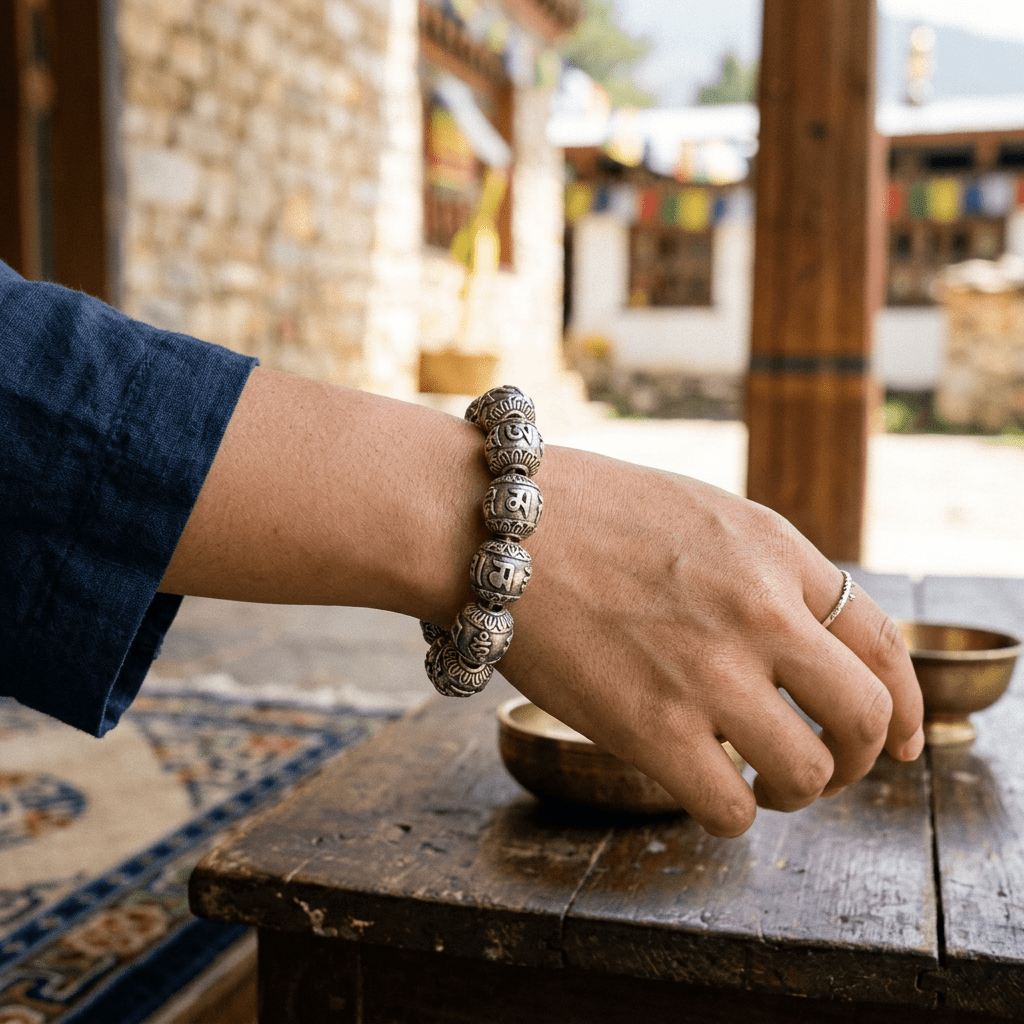
That changed in December 2017, when I traveled to Yunnan with some friends and bought a silver bracelet engraved with the Six-Syllable Great Bright Mantra.
After returning home, I searched online for information about the mantra, including how to recite it. That was when I first learned about reincarnation within the six realms and the different karmic consequences of good and evil deeds.
When I read descriptions of the suffering in the three lower realms, I was deeply shaken. I began thinking about the cats, dogs, mice, birds, fish, shrimp, flies, mosquitoes, and other living beings around us. They clearly possess awareness. If you strike or frighten them, they immediately try to escape. When I thought about the possibility that these beings could have been humans in previous lives who were subsequently reincarnated, I found it frightening. The thought of the hell realm and the realm of hungry ghosts was even more terrifying.
Then I thought about human existence itself, with all its worries and troubles, endless toil, deception, and conflict. It too seemed filled with suffering.
I felt deeply saddened and thought, How wonderful it would be if I could become a Buddha or Bodhisattva!
Right then, I made a decision: In this lifetime, I would earnestly learn Buddha Dharma and seek liberation. I did not want to continue revolving endlessly through the six realms of reincarnation, lifetime after lifetime. I did not want to simply drift through this existence. I wanted to end the cycle of birth and death and attain liberation.
And that was how my journey of learning Buddhism began.
Early the next morning, I went to the most renowned Buddhist temple in my area and asked where I could learn Buddha Dharma. As it happened, the temple offered Buddhist classes, so I enrolled immediately.
For some time afterward, I traveled back and forth between two large, historic, and well-known local temples. One identified with the Caodong school of Chan Buddhism, while the other followed the Tiantai school.
I attended classes on both days of every weekend. I recited the Heart Sutra, the Diamond Sutra, the Lotus Sutra, and the Amitabha Sutra, and participated in morning and evening services. Whenever I had time, I volunteered at the temples. I also listened to monastics at the temples and to various people regarded as eminent Buddhist masters online as they lectured on Buddhist sutras and teachings.
As I continued studying, however, many questions began to arise.
When I attended lectures on the Lotus Sutra, the masters at the temple were unable to explain many of the Dharma principles in depth. They simply copied passages from commentaries written by patriarchs and asked us to write them in our notebooks.
Whenever we asked what a particular Buddhist term meant or how we should understand a certain passage concerning Dharma principles, the masters would simply tell us, “Just write it down.” They were unable to provide a clear explanation.
I also listened online to a well-known Buddhist master lecture on the Heart Sutra and the Diamond Sutra. I listened carefully many times, yet the essential Dharma principles contained in those sutras still seemed obscure and confusing to me. I remained unable to truly understand prajna, emptiness, or the nature of our original state.
Then, in February 2018, a friend in Shenzhen learned that I was studying Buddhism and invited me to join a Buddhist study group organized by Dr. Xie, who worked in the medical field.
Dr. Xie frequently shared articles about the holy accomplishments of Namo H.H. Dorje Chang Buddha III.
I was astonished.
Could there really be a true Buddha living in this world?!
From the articles he shared, I read about numerous disciples of Namo H.H. Dorje Chang Buddha III who had attained accomplishments and liberation. I became deeply inspired and asked Dr. Xie:
“Doctor, are there books containing the H.H. Dorje Chang Budha’s teachings? Could you send me a few so that I can respectfully study them?”
Dr. Xie replied:
“Come and request them in person!”
The very next day, I bought a plane ticket and flew there.
Under Dr. Xie’s guidance, I went to the Buddhist practice center of a fellow practitioner who was a Rinpoche to listen to Dharma teachings.
It was a weekend, and many people had gathered to listen to the H.H. Dorje Chang Buddha III’s Dharma together. One recorded Dharma discourse was played twice.
The approachable and warm voice of Namo H.H. Dorje Chang Buddha III gave me an extraordinary feeling of closeness, almost like being reunited with a beloved family member after a long separation. The explanations were presented in such clear and accessible language that, to my surprise, even I could understand some of them!
I felt joyful and encouraged. During the group discussion afterward, I was even able to share a little of what I had understood.
After returning home, I flew there two more times to listen to Dharma teachings of H.H. Dorje Chang Buddha III. I also attended the Buddha Bathing Dharma Assembly in Hong Kong that May. Then, in June, I was fortunate enough to have an audience with Namo H.H. Dorje Chang Buddha III.
I will not elaborate here on the blessings I experienced. Instead, I would like to continue sharing my genuine experiences of learning Buddhism over these years.
After respectfully listening to the Dharma discourses of the Buddha, I came to understand many principles. In particular, I respectfully studied books in which the H.H. Dorje Chang Buddha III expounded prajna. The Buddha explained prajna in clear and accessible language and also taught us specific methods through which realization could be attained. He explained the relationship between cultivating oneself and practicing the Dharma and taught us how to cultivate ourselves.
These were things I had never learned at the local temples. Moreover, many of the questions that had previously puzzled me at those temples were answered through the Dharma discourses and writings of the H.H. Dorje Chang Buddha III.
At the same time, through studying the Dharma expounded by the H.H. Dorje Chang Buddha III, I came to understand that those who have not attained the level of a great Bodhisattva at the stage of non-retrogression or higher are not qualified to expound the Dharma, much less those so-called “eminent monks and virtuous masters” who possess no actual realization or accomplishment.
Without genuine realization, they either merely repeat the knowledge of others or recklessly expound teachings that can mislead practitioners. This can lead living beings toward erroneous views and misguided paths and may even sever their opportunities to develop wisdom and attain liberation.
Having previously experienced a form of Buddhism that consisted primarily of burning incense, paying respect to the Buddhas, reciting mantras and Buddha names, chanting sutras, and practicing Chan meditation—and having heard only superficial theories presented as Buddhist knowledge—I came to appreciate even more deeply just how difficult it is to encounter genuine Buddha Dharma.
The superficial theoretical knowledge taught by those so-called “eminent monks and virtuous masters” provides no genuine Buddha Dharma to practice, nor does it offer authentic inner-tantric initiations. Therefore, it cannot enable one to end the cycle of birth and death.
The difference between learning genuine Buddha Dharma and learning false or incomplete Buddha Dharma is truly beyond description.
I feel extraordinarily fortunate to have encountered genuine Buddha Dharma.
This is the story of how I entered Buddhism.
Dear friends, I do not know how you will feel after reading my story. Are you as fortunate as I have been?
If you are still going around in circles within a form of Buddhism that consists only of burning incense, paying respect to the Buddhas, reciting Buddha names, and chanting sutras—or if you are merely listening to lectures that sound plausible but do not convey the true Dharma—then quickly pray for the blessings of the Buddhas and Bodhisattvas so that you may soon encounter the true Dharma of the Tathagata.
Only by learning genuine Buddha Dharma can we receive the blessings of the Buddhas and Bodhisattvas and attain lasting happiness.
I also sincerely want to tell you this: How extraordinarily rare and precious it is for a Buddha to be living in this world. If you sincerely wish to learn Buddhism, you must not let such an opportunity pass you by. Otherwise, you may be left with profound regret and no opportunity to attain liberation.
In a world driven by metrics, social validation, and external applause, it is easy to mistake the platform we stand on for our own height.
A striking story from the Miscellaneous Parables Sutra (雜譬喻經) serves as a timeless reminder of what happens when we rely on borrowed support—and how genuine self-correction and gratitude can transform our lives.
The sutra tells of a monk expelled from his monastic community after committing a serious infraction. Cast out into the cold, he did not spend his solitude reflecting on his actions or feeling genuine remorse. Instead, he was consumed by anxiety, lamenting his lost veneration, the vanished daily offerings, and his ruined reputation.
During his aimless wandering, he encountered a ghost who was similarly miserable, having been banished by Vaisravana, the Heavenly Guardian King. Recognizing a shared plight, the ghost proposed a clever scheme:
“I am invisible to human eyes. I will lift you up and carry you on my back through the sky, creating the illusion that you are an enlightened saint who can fly. When the villagers marvel at your supernatural powers and shower you with rich offerings, we will split the rewards.”
The monk eagerly agreed to the trick.
When the villagers looked up and saw the monk floating effortlessly above their heads, they were stunned. Outraged at what they assumed was a grave mistake, they openly criticized the monastic community for exiling a “holy, enlightened master.” The villagers welcomed the monk back with grand celebrations, lavishing him with honor, luxury, and prestige.
Everyone marveled at how high he could fly, but not a single soul saw the invisible ghost holding him up from underneath.
The grand deception came to a sudden, tragic end. One day, while gliding majestically through the clouds above an admiring crowd, the ghost caught sight of Vaisravana’s celestial guards patrolling the sky. Panic-stricken, the ghost fled instantly to save itself, dropping the monk mid-air.
Deprived of his hidden foundation, the monk plummeted straight to the earth and died on impact. In a single heartbeat, the awe-inspiring elevation vanished, leaving behind only the stark reality of his fall.
This ancient parable holds profound lessons for navigating our modern lives:
1. Change Yourself; Don’t Fool Yourself with Tricks
When we make mistakes or face setbacks, our default ego response is often self-preservation: making excuses, masking weaknesses, or using superficial fixes to maintain a successful image.
The Trap: Relying on pretense or shortcuts creates an inherently fragile foundation. You might fool the world—and even convince yourself—for a short time, but unaddressed flaws will eventually lead to a catastrophic downfall.
The Wisdom: True strength demands radical self-honesty and sincere repentance. Growth begins the moment you stop managing impressions, admit your shortcomings, and commit to the quiet work of genuine internal reform.
2. Cultivate Deep Gratitude for Everyday Support
While the monk’s ghost was a force of deception, the story reminds us that no individual ever ascends entirely on their own strength.
The Reality: Our everyday accomplishments, safety, and comfort are upheld by a vast, unseen network: the dedication of our families, the collaboration of colleagues, societal infrastructure, and nature itself.
The Wisdom: Approach life with profound humility and gratitude. Recognizing that you are constantly sustained by the effort of others keeps the ego in check and prevents you from mistaking collective support for personal superiority.
3. Cultivate True Inner Substance Through Buddhist Practice
In Buddhism, spiritual practice (xūxíng) is not a performance designed to win public admiration, gain influence, or secure material comfort. Its core purpose is twofold: self-liberation (zìlì) and the compassionate liberation of others (lìtā).
The Practical Lesson: External applause, reputation, and titles are merely temporary, borrowed conditions. When life strips away all external privileges, your true capability is measured by your internal substance: your moral integrity, emotional stability, and capacity for wisdom under pressure.
Self-Liberation (Enduring Peace): Authentic practice focuses on purifying the mind from the “Three Poisons”—greed, anger, and ignorance. It is about understanding the nature of impermanence so that you are no longer a slave to praise, wealth, or worldly status. By upholding ethical precepts (Sīla) and cultivating deep mental stability (Samādhi), you gain the true ability to transcend the cycles of anxiety and suffering (Samsāra).
The Bodhisattva Path (Wisdom & Compassion): True practice extends outward through Bodhicitta—the boundless vow to help all sentient beings break free from their own pain. When your actions are driven by genuine wisdom (Prajñā) and selfless compassion, you build an unshakeable spiritual center that remains calm, composed, and helpful to others regardless of external circumstances.
When external validation fades and all borrowed support is withdrawn, what remains is your actual inner substance: your ethics, emotional stability, and capacity for wisdom.
When the applause fades and external support steps back, what internal foundation are you left standing on?
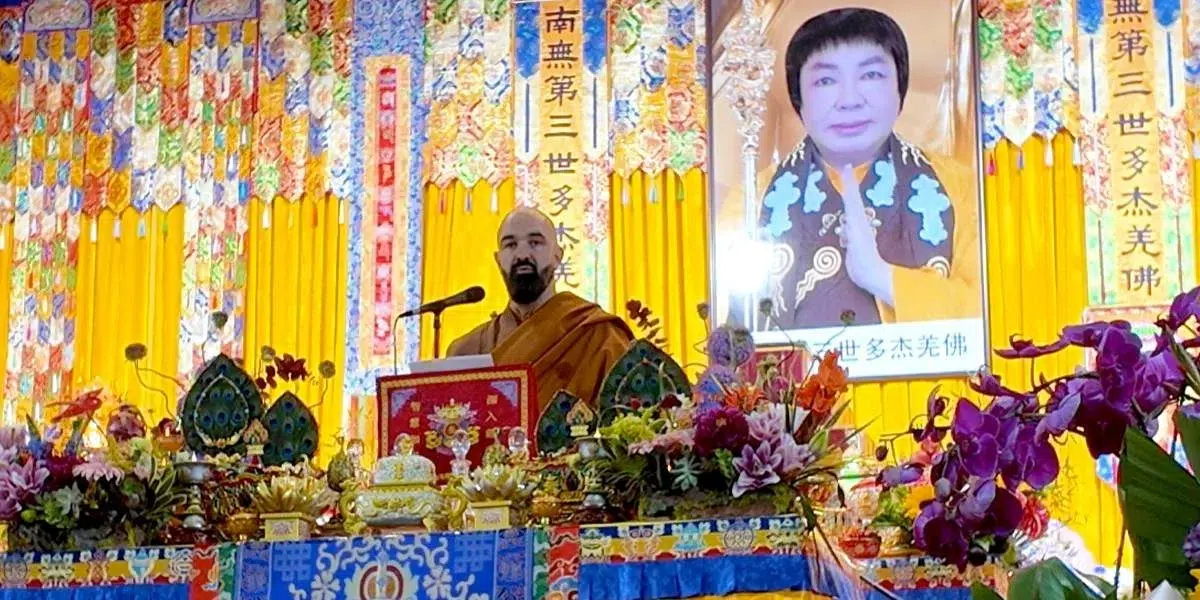
Photo Courtesy: Joyce Lee (Lotus Button Holy Guru Mozhi of the World Buddhism Association Headquarters delivered an opening speech at the Dharma Assembly)
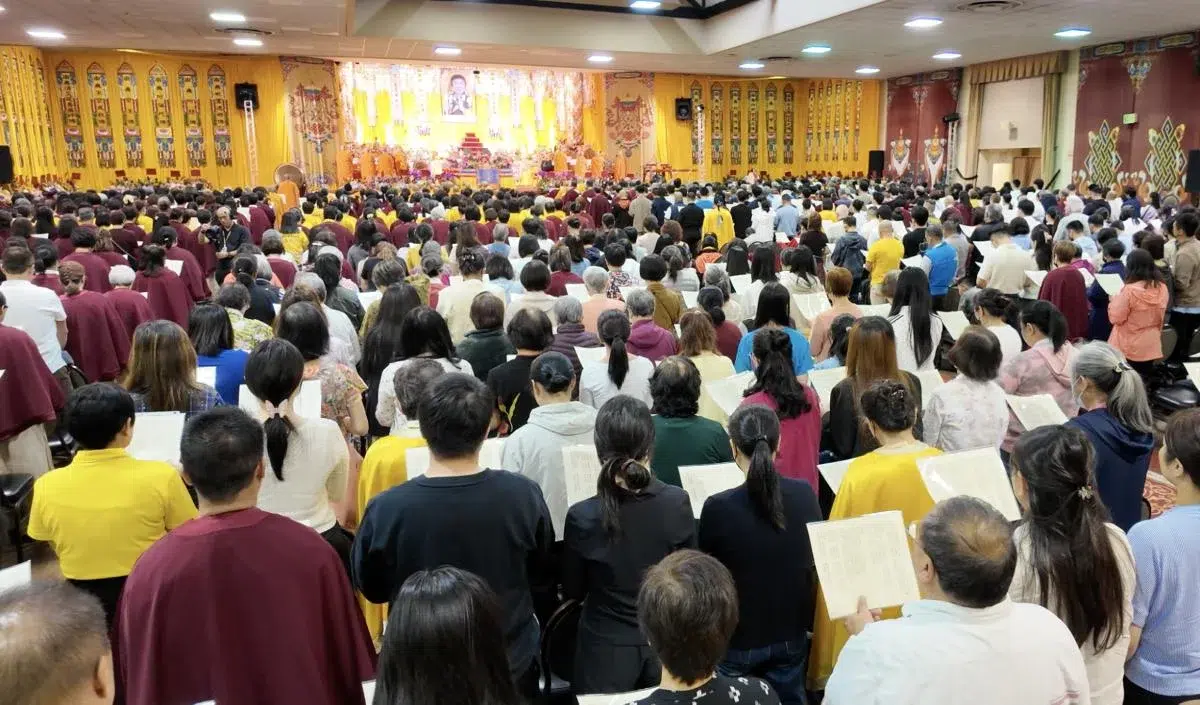
The Glendale Civic Auditorium became the center of an international Buddhist gathering as more than a thousand Dharma masters, rinpoches, and lay practitioners convened for a two-day Dharma Assembly honoring the Holy Birthday of H.H. Dorje Chang Buddha III. The event was jointly organized by the World Buddhism Association Headquarters, Holy Miracles Temple, Hua Zang Si, Benevolence Temple, and the Sanger Mission.
H.H. Dorje Chang Buddha III was recognized with the 2010 World Peace Prize Top-Honor Prize for humanitarian and peace-promoting contributions. Between 2023 and 2025, eleven volumes of the Namo Dorje Chang Buddha III Complete Sutra Collection were published, with four additional volumes released in 2026. The Sutra Collection encompasses the essence of the Tripitaka and esoteric Dharma, guiding practitioners toward liberation from the cycle of rebirth.
A Two-Day Assembly in Glendale
Photo Courtesy: Joyce Lee (More than a thousand Dharma masters, rinpoches, and lay practitioners convened for a two-day Dharma Assembly honoring the Holy Birthday of H.H. Dorje Chang Buddha III)
Lotus Button Holy Guru Mozhi of the World Buddhism Association Headquarters delivered an opening speech at the Dharma Assembly and emphasized that only right faith and correct views can keep practitioners from going astray in this Dharma-ending age. He urged Buddhists to rely on the Namo Dorje Chang Buddha III Complete Sutra Collection and to practice in accordance with the Dharma. He reminded attendees that while Buddhas and Bodhisattvas point living beings toward the path of liberation, genuine liberation ultimately depends upon one’s own practice and cultivation.
The Assembly has become an annual destination for Buddhist leaders, abbots, educators, and Buddhist practitioners from around the world to pay tribute to all the Buddhas and Bodhisattvas. It facilitates dialogue, learning, and collaboration across a range of Buddhist traditions, drawing participants who travel considerable distances to attend.
Commemorations Across the Country
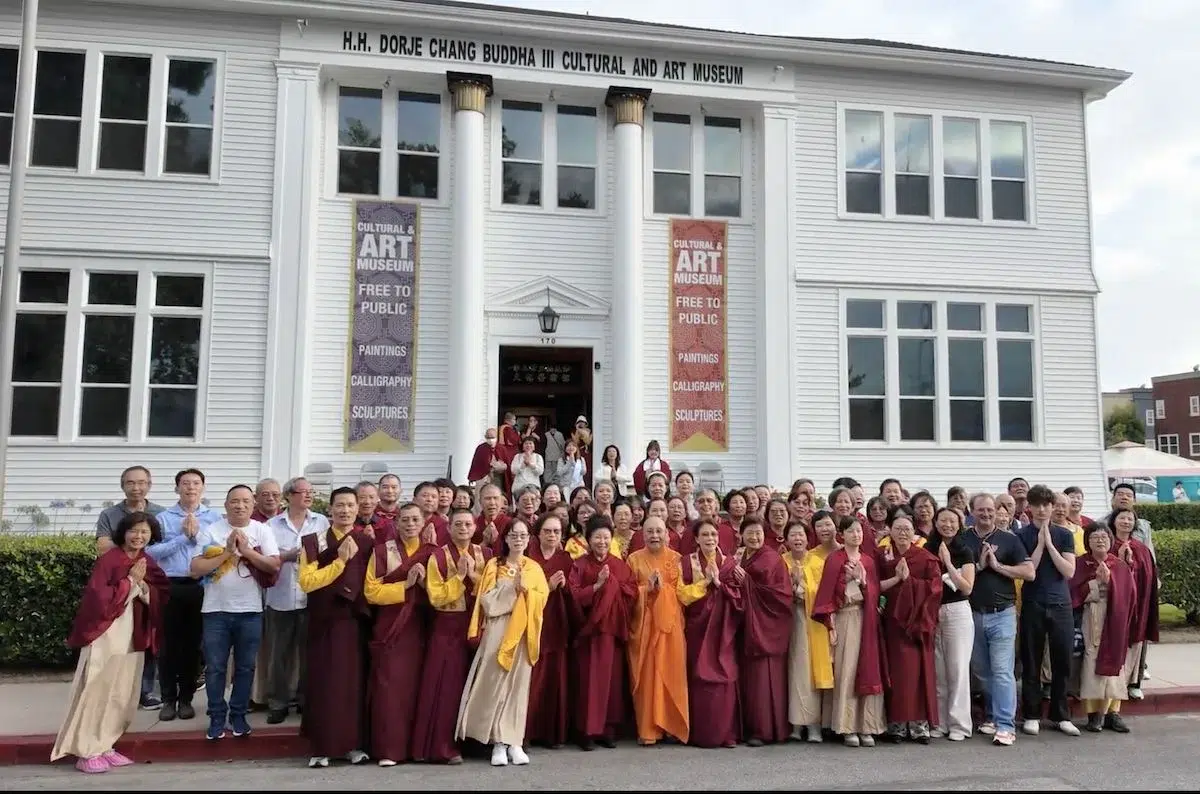
Photo Courtesy: Joyce Lee (The H.H. Dorje Chang Buddha III Cultural and Art Museum in Covina offered special Dharma listening programs and held a large-scale life-release ceremony)
Commemorative events honoring the Holy Birthday of H.H. Dorje Chang Buddha III were held across the United States. Hua Zang Si’s Southern California branch hosted an Avalokiteshvara Bodhisattva Great Compassionate Empowerment Dharma Assembly along with study sessions focused on The Supreme and Unsurpassable Mahamudra of Liberation. Macang Monastery in San Francisco marked its eighteenth anniversary and hosted a Dharma Assembly honoring the Holy Birthday. The Los Angeles Hua Zang Buddhist Institute conducted an incense offering ceremony and lotus lamp blessing service, while Benevolence Temple in Las Vegas organized a series of Dharma listening sessions.
The H.H. Dorje Chang Buddha III Cultural and Art Museum in Covina offered special Dharma listening programs and held a large-scale life-release ceremony at Marina del Rey. On the East Coast, practitioners in New York commemorated the occasion by displaying a tribute across three prominent Times Square billboards for seven days.
A Shared Aspiration for Peace
This nationwide commemoration served as both a celebration of the Holy Birthday of H.H. Dorje Chang Buddha III and a reflection of the enduring influence of His teachings. From the Dharma Assemblies in Glendale to life-release ceremonies, Dharma listening sessions, and community acts of compassion across cities, the events reflected a shared aspiration for peace and the welfare of all beings.
Buddhist practitioners describe His legacy as one that continues to guide them toward liberation and to encourage communities across America to embody compassion, wisdom, and unity. For those who gathered on the occasion, the commemorations offered a moment of reflection and a renewed sense of shared purpose.
After respectfully listening to the Dharma discourse “Focusing Primarily on Cultivating One’s Own Dharma and Conduct” imparted by Namo H.H. Dorje Chang Buddha III, I came to a profound realization: It is time to truly wake up!
I am deeply grateful for the blessings of all Buddhas and Bodhisattvas!
Although I had listened to this Dharma discourse before, it seemed to have left almost no impression on me. Just as my Buddha Master said, it went in one ear and out the other. As soon as I finished listening, I forgot what I had heard. The teachings neither entered my mind nor touched my heart. I am truly ashamed of myself.
After listening to this Dharma discourse again, I came to understand more deeply the preciousness of Buddha Dharma, the true meaning of liberation, and how I should make use of my limited lifetime.
First, we must understand that Buddha Dharma is extremely precious and difficult to encounter. Why? Because only Buddha Dharma can enable us to end the cycle of birth and death and transcend the six realms of samsara in which we now exist.
In the past, when Dharma Master Nenghai listened to Geshe Jangba expound the Dharma, he could hear only one sentence each day and had to make a round trip of about 25 miles. It took him half a year to finish listening to that Dharma teaching.
There are also many people who learn Buddhism by studying Buddhist scriptures. Because many scriptures are written in classical Chinese, their meanings can be very difficult to understand. Even when someone can understand the words, the scriptures were compiled by the Five Hundred Arhats based on their recollections of the Dharma expounded by Namo Shakyamuni Buddha. Therefore, deviations in the meaning of the Dharma could inevitably have occurred, and what was recorded may not fully convey the perfect Dharma meaning spoken by the Buddha.
Today, we are able to listen directly to the perfect Dharma teachings of unsurpassed, complete enlightenment expounded by my Buddha Master(H.H. Dorje Chang Buddha III). This is truly rare, precious, and extraordinarily auspicious!
When my Buddha Master (H.H. Dorje Chang Buddha III)expounds the Dharma, profound principles are explained in simple and accessible language, almost like having an everyday conversation. Deep principles of Buddha Dharma are presented to us clearly and understandably, enabling people of different levels of good roots to gain understanding according to their capacities.
Therefore, we must cherish every opportunity to listen to the Dharma!
Second, we must understand how swiftly impermanence can arrive. How much time do I really have left to waste? Impermanence can take my life at any moment, for death makes no distinction between the young and the old.
Since I have already encountered the true Dharma of H.H. Dorje Chang Buddha III, I must make good use of my time and genuinely cultivate myself according to the Dharma principles taught by my Buddha Master. I must integrate Buddha Dharma into my everyday life.
At every moment, I should recall the Dharma principles taught by H.H. Dorje Chang Buddha III and use them to examine my every word, action, and thought:
Do I truly have compassion?
Have I practiced patience and forbearance?
Have I let go of greed, anger, and ignorance?
Am I still entangled in worldly grievances and disputes over right and wrong?
Are the things I am doing bringing me step by step closer to accomplishment and liberation?
A human existence endowed with the freedoms and favorable conditions for learning the Dharma is difficult to obtain. Even more difficult is the opportunity to hear directly from H.H. Dorje Chang Buddha III the perfect Dharma teachings that enable living beings to end the cycle of birth and death!
All worldly phenomena are illusory and ultimately unreal. What, then, is there to cling to?
Isn’t that true?
The people and possessions I cherish most, everything I have worked so hard to obtain—I carefully protect them, constantly afraid that I might lose them. Joy, worry, and anxiety accompany me all the time.
But has this attachment really brought me happiness?
Is this truly the happiness I have always longed for?
Have I actually obtained it?
At the very moment I take my last breath, will any of these things still belong to me?
Therefore, I must clearly establish the true goal of my life: to end the cycle of birth and death and attain liberation.
On the path toward liberation, I must not keep looking around—admiring the scenery here one moment and envying someone else’s treasures the next. Doing so only delays my journey and wastes my precious life and time.
I must listen to the Dharma teachings frequently, and whenever I understand even one principle, I should put it into practice through my actions, speech, and thoughts—the three karmas.
I must constantly examine myself:
Have I let go of greed, anger, and ignorance?
Am I practicing the Six Paramitas and the myriad Bodhisattva practices?
I should begin with the people closest to me. It is in front of those closest to us that we remove our disguises and reveal our true selves. In those relationships, all our shortcomings are exposed most clearly.
I asked myself sincerely: Am I truly compassionate toward my family?
Suppose I have just finished mopping the floor, and suddenly a large footprint appears on the spotless surface. At that very instant, anger and irritation arise within me. I glare angrily at the person responsible, only to receive a casual response:
“Just wipe it again. What’s the big deal?”
Not only was my effort unappreciated, but I also felt that it had been disrespected. My anger immediately intensified, and I raised my voice:
“Why don’t you clean it yourself?”
Such a trivial incident exposed the selfishness within me.
First, my effort was not truly selfless. I expected praise and respect in return. Second, I lacked tolerance and understanding. When someone failed to respect the results of my labor, instead of responding with compassion and patience, I gave rise to anger and resentment.
At the root of the problem was my failure to truly understand the impermanence of all phenomena. I had failed to realize that I should be selfless, compassionate, and forbearing, and that I should do only those things that benefit others.
Instead, I had neglected what was truly important while clinging to things that offered no help whatsoever toward my accomplishment and liberation—my pride, my dignity, my boundaries, and so on.
It is truly time for me to wake up completely.
I must make full use of this limited lifetime, take my Buddha Master (H.H. Dorje Chang Buddha III) as my role model, establish unwavering faith, rely upon correct understanding and correct views, and diligently cultivate my own conduct and practice my own Dharma.
I will strive to end the cycle of birth and death and attain liberation as soon as possible.
In the brilliant expanse of Buddhist history, one name stands out with singular brilliance. He was not only the 12th Patriarch in the Zen lineage originating from ancient India, but also a literary genius who captured the hearts of a continent through the power of poetry and music: Aśvaghoṣa (known in Chinese tradition as Bodhisattva Horse-Nneigh).
This is the legendary story of how a once-arrogant Brahmin prodigy suffered a dramatic defeat in a battle of wits, entered the Buddhist monastic order, and ultimately became a towering master who galvanized the rise of Mahayana Buddhism.
Born into a noble Brahmin family in Eastern India, young Aśvaghoṣa possessed exceptional intelligence. He mastered classic texts, arts, and above all, the razor-sharp logic of public debate. In ancient India, intellectual debates were high-stakes events where the defeated party was expected to convert and become a disciple of the victor. Driven by youthful pride, Aśvaghoṣa swept through Central India, issuing a brazen challenge to the entire Buddhist community:
“If any monk can defeat me in debate, I will sever my own head in apology! But if no one dares face me, every monastery in this region must cease striking the ghanta—the traditional wooden blocks and bells used to assemble the sangha!”
Faced with his fierce logic and intimidating rhetoric, no local monk dared step forward. As a result, the once-vibrant monasteries fell silent. Morning gongs and evening bells ceased, and the public prestige of Buddhism plummeted.
Hearing of this crisis from Northern India, an venerable elder named Venerable Pārśva knew that if Aśvaghoṣa’s arrogance went unchecked, the true teachings of the Mahayana tradition would fail to flourish. Despite his advanced age, Pārśva traveled vast distances on foot to answer the challenge.
On the day of the grand debate, the arena was packed with the king, ministers, and tens of thousands of onlookers. Observing the frail, white-haired elder, the young prodigy felt immediate condescension. “Venerable monk,” Aśvaghoṣa asked arrogantly, “what shall be the stakes of our debate?” Pārśva calmly replied, “The loser shall become the disciple of the winner, shaving his head and following him for life.” Aśvaghoṣa readily agreed.
Aśvaghoṣa invited the elder to speak first. Pārśva uttered a single, deceptively simple statement of blessing:
“May the world enjoy peace, may the king live a long life, may the land be rich and joyful, and may all disasters cease.”
A hush fell over the crowd. Aśvaghoṣa froze.
By the rules of debate, Aśvaghoṣa was required to refute his opponent’s opening premise. Yet, Pārśva had stated a benevolent blessing for the country and its sovereign. If Aśvaghoṣa tried to refute it, he would violate public ethics, offend the reigning king present in the crowd, and bear the stigma of cursing his own land. But if he agreed with the statement, he could not break the argument, which meant instant defeat.
Aśvaghoṣa searched his mind, only to realize that his formidable logical framework was completely powerless against a statement rooted entirely in compassion, wisdom, and broad goodwill. Pale and humbled, he bowed deeply to the elder: “I have lost. Your wisdom is wrapped in profound compassion. I will honor my promise.” Pārśva had subdued Aśvaghoṣa’s pride not through heated argument, but through calm, unassailable composure. Aśvaghoṣa shaved his head on the spot and officially entered the Buddhist order.
Under the guidance of Pārśva and his successor Puṇyayaśas, Aśvaghoṣa displayed astonishing spiritual insight. He fully digested the Buddhist Canon (Tripitaka) and channeled his pre-existing artistic and literary talents into spreading the Dharma.
The origin of his name—Aśvaghoṣa, literally meaning “Horse’s Neigh”—is tied to a celebrated event. When King Kaniṣka of the Kushan Empire conquered Central India, he demanded indemnity. Instead of vast fortunes of gold or silver, the King requested only two treasures: the sacred Alms Bowl of the Buddha, and Master Aśvaghoṣa.
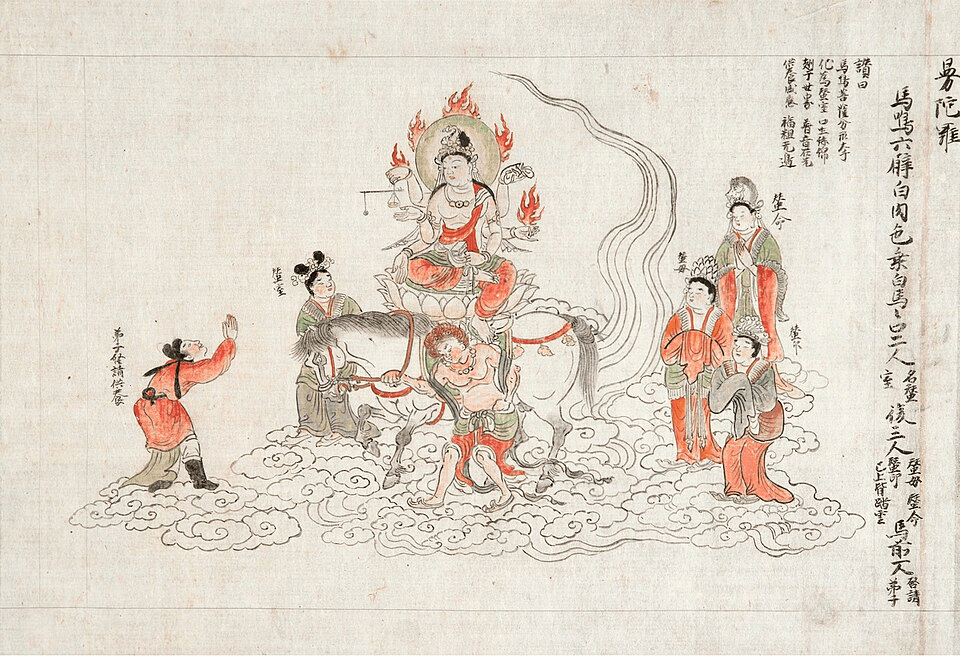
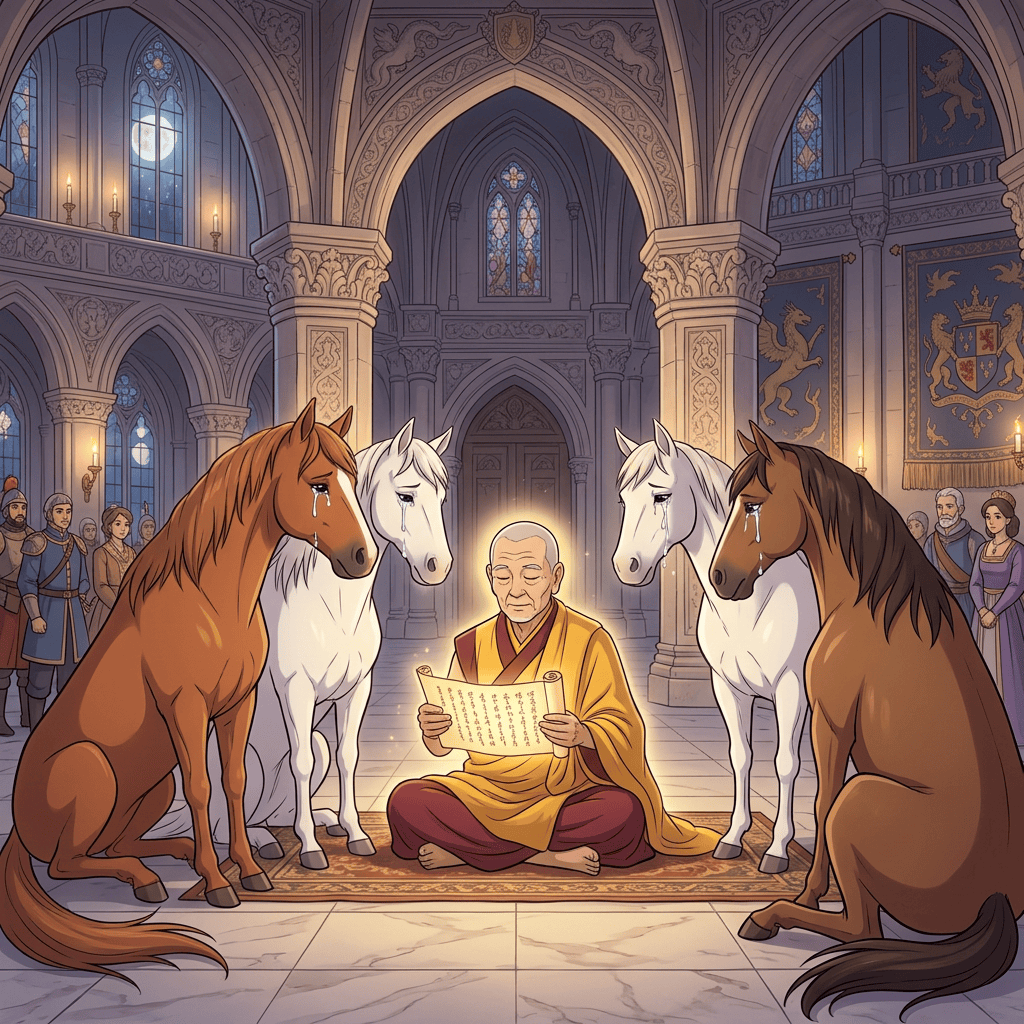
To demonstrate the master’s sublime virtue to skeptical court officials, the King conducted a test. Seven warhorses were locked away and starved of food and water for six straight days. On the seventh day, a crowd gathered. Fresh, sweet grass was placed right in front of the starving horses, while Aśvaghoṣa took the high seat to chant and preach the Dharma.
An astonishing scene unfolded: despite their intense hunger, the seven horses did not even lower their heads to eat. Instead, they stood transfixed, listening intently to the serene, compassionate melody of Aśvaghoṣa’s voice, eventually shedding tears of emotion. Moved by how his sacred chants could touch even the animal realm, the world reverently honored him as Aśvaghoṣa Bodhisattva.
Following King Kaniṣka north, Aśvaghoṣa reached the peak of his creative energy. Understanding that rigid dogma rarely moves the hearts of ordinary people, he pioneered the use of literature and music as tools for spiritual education.
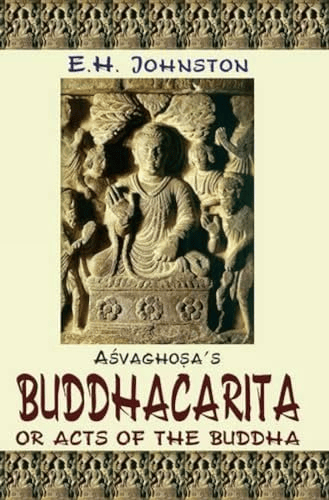
His greatest masterpiece, the Buddhacarita (Acts of the Buddha), is an epic narrative poem detailing the life of the Buddha from birth, renunciation, and enlightenment to his final Parinirvana. Characterized by elegant imagery and deep emotional resonance, it became a pinnacle of classical Sanskrit literature, introducing countless readers to the beauty of Buddhist philosophy. Furthermore, as the trusted spiritual mentor to King Kaniṣka, he played a central role in presiding over the Fourth Buddhist Council, solidifying the theoretical foundation of Mahayana Buddhism.
Aśvaghoṣa’s life is a timeless story of arrogance yielding to genuine wisdom. In his youth, he sought to conquer the world with sharp intellect, yet when confronted with true spiritual depth, he chose to surrender to compassion. By subduing his ego and dedicating his creative gifts to all living beings, he transformed from a defensive debater into a compassionate artist whose voice moved both human hearts and nature alike.
Sometimes, what suddenly wakes us up and brings clarity to our minds is not the sound of a temple bell. It can be something as ordinary as watching the countdown on a traffic light at an intersection.
That day, I was riding my scooter and stopped at a red light. I found myself staring at the numbers as they counted down, one second at a time…
Normally, those numbers simply tell us how many seconds we have to wait before moving on. But for some reason, at that moment, something gently struck me deep inside.
I suddenly realized: It wasn’t just the traffic light that was counting down. Our lives are counting down too.
Every time another second disappears from the display, one second of our own lives is gone as well.
We often talk about the Buddhist teaching of “impermanence.” We have heard countless times how swiftly life passes and how quickly circumstances can change. In His Dharma discourses, Namo H.H. Dorje Chang Buddha III has also compassionately reminded us time and again of how frightening impermanence can be and how it is constantly unfolding right before our eyes.
Yet this is simply how we human beings are. We may understand these teachings intellectually, but somehow they never seem to truly frighten us deep down.
We continue drifting through our days in a haze. We still lose our temper. We still tightly hold on to attachments, grudges, and conflicts that we cannot seem to let go of. We always think there is still plenty of time. We simply assume that when the sun rises tomorrow, we will still be here.
It often takes an ordinary, seemingly insignificant moment to suddenly wake us up:
From the day we were born, our lives have already been counting down.
Older generations often say that the frightening thing is not that we are slowly growing old, but that we do not even realize we are growing older day by day.
When today passes, one more day of our life is gone. When this second slips away, we will never be able to get it back again.
The Verse of Admonition by Samantabhadra Bodhisattva says:
“This day has already passed, and our lives have likewise diminished. Like fish in a shrinking pool of water, what joy can there be? We should diligently and vigorously cultivate ourselves, as urgently as if extinguishing a fire upon our heads. Be ever mindful of impermanence, and never give way to negligence.”
Every time I read this verse, it strikes me deeply.
Aren’t we just like fish in a pond whose water is slowly drying up? The water decreases day by day, yet we are still fighting fiercely with one another over a few pieces of fish food, completely forgetting that before long, when the water dries up, none of us can escape what follows.
When we look back carefully at all the noise and turmoil of this world—the pursuit of fame and personal gain, who wins and who loses—the things that once seemed unbearable, the things we thought we could never let go of, what do they amount to when we look back several years later?
They were little more than a dream from which we eventually awakened.
What truly matters in life has never been whether everything goes our way at this particular moment. What really matters is whether, during this lifetime, we have sincerely followed the Buddha’s teachings, whether we have earnestly cultivated ourselves, and whether we have worked toward freeing ourselves from the suffering of reincarnation.
If we can show others a little more compassion, then let us do so.
If we can lessen our attachments even a little, then let us loosen our grip.
If there is a good deed we can do today or a kind thought we can give rise to today, we should not put it off until tomorrow.
Because none of us knows what awaits us after the light turns green and we pass through this intersection.
At the next crossroads, will we simply continue along the familiar road we have traveled so many times before—or will we have reached the end of our journey in this life?
While we still have the strength, and while we still possess this precious human body, let us remind ourselves of this at every moment.
Do not wait until the light has gone out to regret having let this precious life pass by in vain.
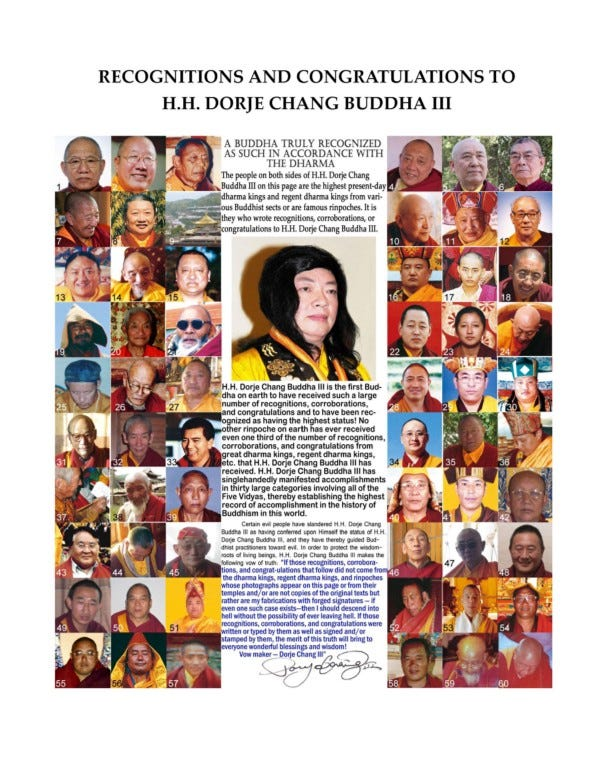
In Tibetan Buddhism, a single recognition certificate from a lineage or sect can establish the revered status of a Rinpoche. However, to be recognized as the genuine reincarnation of a Buddha requires formal confirmation from the grand Dharma Kings and supreme leaders across all different traditions.
Throughout Buddhist history, when a master reaches extraordinary spiritual attainment, they are acknowledged by multiple eminent monastics. Yet, H.H. Dorje Chang Buddha III stands unique: he has received formal recognition, corroboration, and congratulations from over 100 top Dharma Kings, Regent Dharma Kings, and leaders across every major Buddhist sect. He is the first person in recorded Buddhist history to receive such unanimous and overwhelming recognition.
These prominent spiritual leaders unanimously confirmed that H.H. Dorje Chang Buddha III is the physical reincarnation of the Primordial Buddha, Dorje Chang Buddha. Following a sacred tradition refined over more than a thousand years, this historic consensus points to a profound truth: as a Buddha embodies the ultimate height of wisdom, enlightenment, and spiritual perfection, H.H. Dorje Chang Buddha III represents the highest leader of Buddhism in our modern world.
Built on the Foundation of Compassion
Yet, for H.H. Dorje Chang Buddha III, titles, supreme status, and earthly accolades are secondary. Throughout his life, he has remained completely unaffected by global awards, fame, or even baseless slander. His primary focus has never been his exalted standing, but rather living out the heart of Buddha Dharma: causality, peace, harmony, and selfless compassion.
Rather than remaining on a pedestal, he steps into the world to quietly change lives through action:
Relief in Times of Crisis: In 2005, when Hurricane Katrina devastated the southern United States, H.H. Dorje Chang Buddha III donated 4.95 million original shares in a high-end art frame company—valued at $1.2 million—on behalf of his family to the United Relief Committee.
A Quiet Life of Service: Venerable Long Hui, former CEO of the United Relief Committee and previous abbess of Hua Zang Si Temple in San Francisco, once shared from her personal knowledge:“As the CEO of the United Relief Committee and the abbess of the temple, I must speak truthfully from my heart. In fact, the Master’s (H.H. Dorje Chang Buddha III) entire family consists of artists who rely on the income from their artistic creations to make a living. Yet for many years, they have consistently helped countless people, both inside and outside the temple. What I personally know of alone is substantial……”
Protecting Communities: At the onset of the COVID-19 pandemic, long before self-preservation became the norm, H.H. Dorje Chang Buddha III quietly led effort after effort, supplying crucial personal protective equipment (PPE) and supplies directly to local police departments, hospitals, and frontline institutions.
Living with utmost humility and simplicity, he has never sought material rewards or personal comfort. Instead, his life has been dedicated entirely to easing the suffering of others and sharing the pure Dharma that leads to genuine liberation.
A Touch that Ripples Across the World
True greatness is rarely found in loud titles or distant thrones. It is found in the quiet, steady warmth of a life offered entirely for the benefit of others.
When one person lights a lamp in the dark, its glow reaches far beyond the room where it stands. In the same way, every act of selfless giving, every teaching of peace, and every moment of unconditional compassion creates a gentle ripple across our shared world.
We may not all carry the grand weight of history or the honor of titles, but through his example, we are reminded of what truly matters: that the highest spiritual path is simply a heart wide enough to hold the world, hands willing to help without asking for anything in return, and a quiet commitment to leave every life we touch a little brighter than we found it.