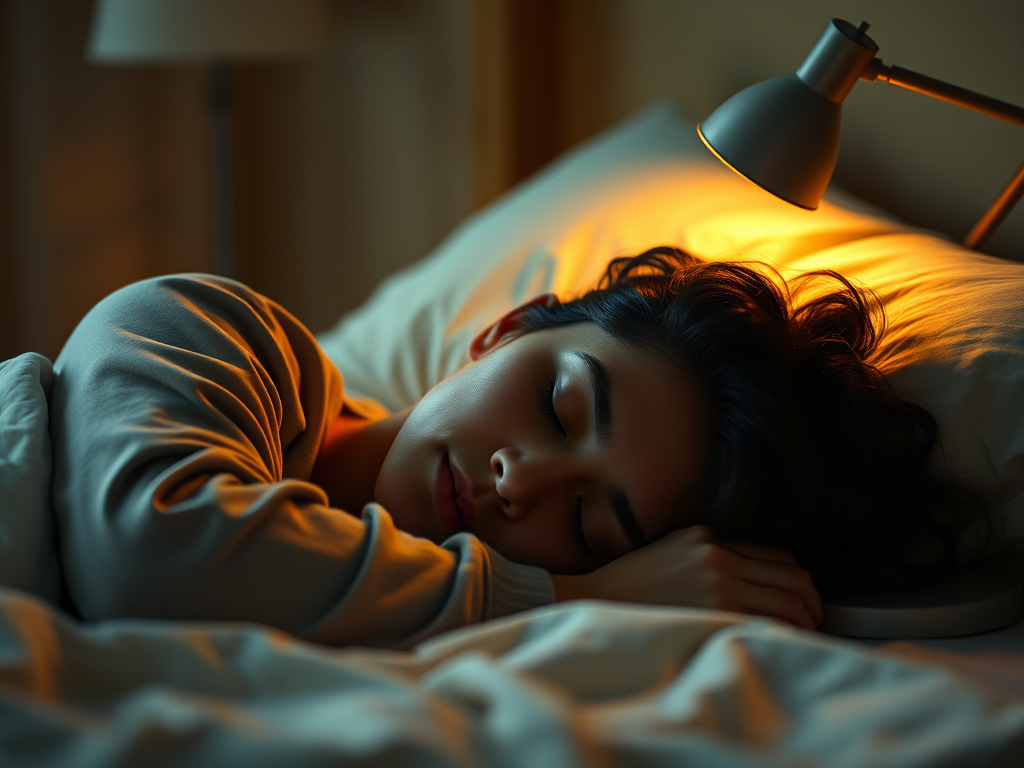
What if your risk of heart disease isn’t just about diet or exercise—but about that small light you leave on at night?
A recent study published in JAMA Network Open, conducted by researchers from Harvard Medical School and Flinders University, has uncovered a striking connection between nighttime light exposure and cardiovascular health.
Their findings are both surprising—and a little unsettling.
According to the study, being exposed to light while sleeping can increase the risk of cardiovascular diseases—such as heart disease and stroke—by nearly 50%.
What’s even more important is this:
The risk isn’t simply due to “not getting enough sleep.”
Instead, the real issue lies deeper—in the disruption of your circadian rhythm, the internal biological clock that quietly regulates nearly every function in your body.
For most of human history, our bodies evolved in a simple rhythm:
- Bright sunlight during the day
- Complete darkness at night
But modern life has turned that pattern upside down.
During the day, many of us work indoors under lighting as dim as 400 lux—far less than even a cloudy outdoor day, which can reach 10,000 lux or more.
At night, instead of darkness, we surround ourselves with:
- Streetlights filtering through windows
- Glowing phone screens
- The soft flicker of televisions
This constant, low-level light may seem harmless. But between midnight and early morning, it quietly sends confusing signals to your brain, effectively resetting your internal clock at the worst possible time.
The research team analyzed wearable device data from nearly 90,000 participants in the UK Biobank and followed them for up to 9.5 years.
The results showed a clear and concerning pattern:
- Compared to those who slept in the darkest environments,
people exposed to even small amounts of light at night had a 20% higher risk of heart disease - Those in the top 10% of nighttime light exposure saw their risk rise by a staggering 47%
This wasn’t a vague trend—it was a consistent, step-by-step increase in risk.
Perhaps the most striking finding is that this risk appears to be independent of other lifestyle factors.
That means:
- Even if you don’t smoke
- Even if you exercise regularly
- Even if you eat a healthy diet
…sleeping in a room that isn’t truly dark may still place additional strain on your heart.
The good news?
This is one of the easiest health risks to fix.
You don’t need expensive treatments or drastic lifestyle changes. Sometimes, protecting your heart begins with something incredibly simple:
- Turn off unnecessary lights
- Reduce screen exposure before bed
- Invest in blackout curtains
- Create a sleep environment as close to complete darkness as possible
In fact, buying a proper set of blackout curtains might be one of the most cost-effective investments you make for your health this year.
Because compared to changing your genetics or giving up every unhealthy craving…

Flipping a switch is surprisingly easy.
In a world full of complex health advice, it’s easy to overlook the small things.
But sometimes, it’s the quietest habits—the unnoticed glow in the corner of your room—that carry the greatest impact.
Tonight, before you go to sleep, take a moment to look around.
And maybe… turn off that light. 🌙
Link:https://peacelilysite.com/2026/03/27/the-light-you-forgot-to-turn-off-might-be-affecting-your-heart/

 Peace LiLy