
An Enchanting Blend of Natural Beauty, Festivals, Art, and Cuisine
Nestled between Hunan Province, Chongqing Municipality, and Hubei Province, the Grand Canyon Scenic Spot in Enshi, China, is the most picturesque stretch of the Qingjiang River Basin and is often hailed as one of the world’s most beautiful canyons. With its dramatic 10,000-meter cliff gallery, plunging waterfalls, soaring peaks, and a ravine stretching for miles, the canyon rivals even the grandeur of the Colorado Grand Canyon in the USA. Two key areas within the canyon, Qixing Village and Yunlong Ground Fissure, cover an expanse of 35.2 square kilometers and are open to the public. These areas are renowned for their diverse limestone karst formations, such as tiankeng (sinkholes), ground fissures, cliffs, fengcong (peak clusters), limestone pillars, caves, and underground rivers, making it a natural museum of geological wonders and a world-class tourist destination.

The Qixing Village Scenic Spot, considered the highlight of the Qingjiang Grand Fissure, includes the Small Pass, Medium Pass, and Large Pass. Along its 8.5-kilometer-long boardwalk, visitors can marvel at several famous landmarks, including the Peaks of Small Mountain Pass, Longmen Stone Forest, Yixiantian (a thin strip of sky), Precipice Corridor, Cloud Torch, Greeting Pine, Yizhuxiang (a stick of incense), Twin Towers, Yubi Peak, Yunv Peak, and Yuping Peak.
The U-shaped Yunlong Fissure, stretching 3,600 meters long and averaging 75 meters deep, is a stunning and unique karst formation. Within the fissure, waterfalls cascade dramatically down vertical drops, while outside, the fissure is surrounded by towering peaks and diverse landscapes. Notable waterfalls include Colorful Yellow Dragon Waterfall, Rainbow Waterfall, Yulong Waterfall, Ice Waterfall, and Mufu Waterfall.


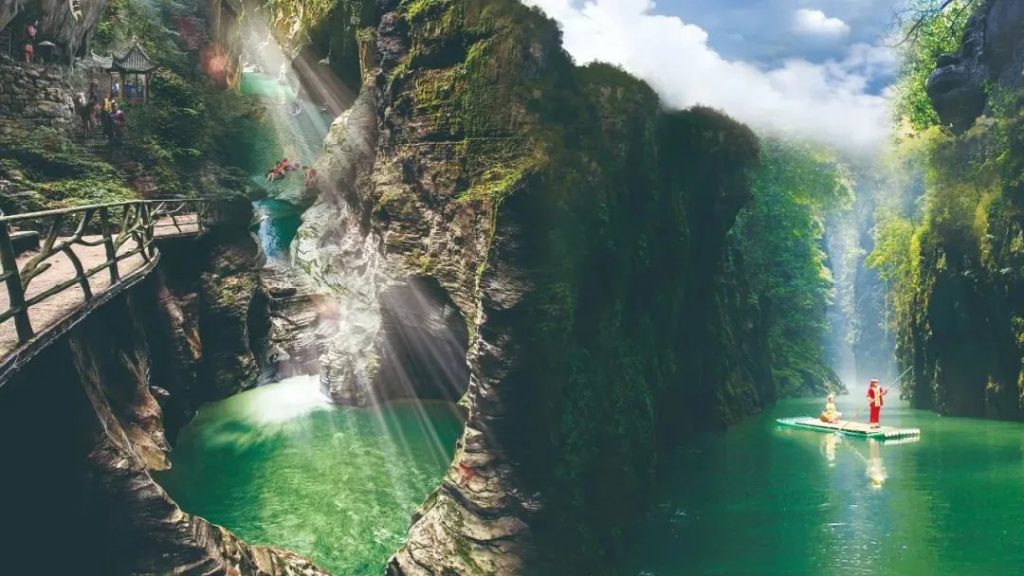
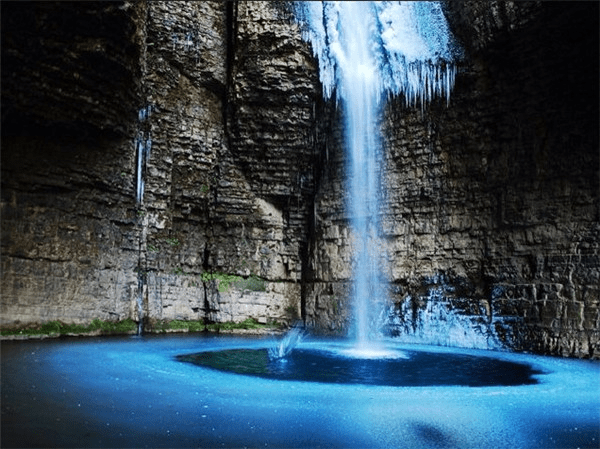
Though the mysterious and steep Enshi Grand Canyon was not discovered until 2004 by a joint Sino-French expedition, it quickly captured global attention. In April 2012, U.S. explorer Dean Potter set a world record by walking a 41-meter-long slackline without assistance at Yizhuxiang, further showcasing the awe-inspiring wonders of the Enshi Grand Canyon.
White clouds rise from the Qingjiang River, twisting and turning like a dragon soaring into the sky. The sight of these clouds drifting for miles, smooth and majestic, is truly a feast for the eyes.


The canyon is also home to a striking combination of precipices and peak clusters, a geological feature unique to this region. Peaks seem to rise out of cliffs or soar above them, creating a landscape that is unmatched anywhere else in the world.


Over 200 caves of various sizes dot the canyon and are connected by natural bridges. The interplay of water and sky creates a fantastical atmosphere, as if you have stepped into another world.
The Yunlong River Fissure is lined with rock formations and ancient greenery, with numerous waterfalls and streams cascading down either side. The sheer beauty of this natural wonder is both breathtaking and unforgettable.

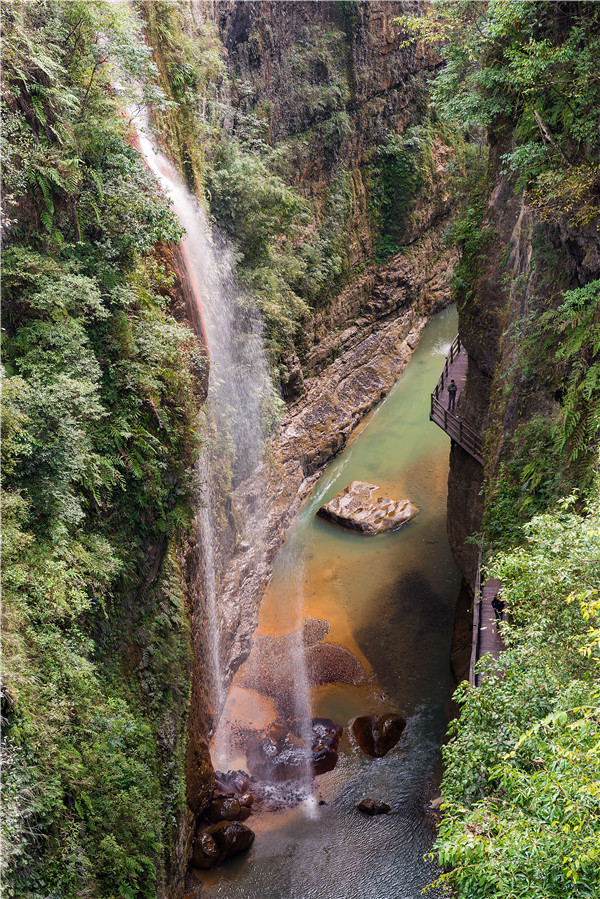
Tiankengs, or sinkholes, accompany the canyon’s underground river, which spans 50 kilometers, making it the longest underground river in the world. Along the river, 108 cenotes (natural sinkholes) create a truly spectacular sight.
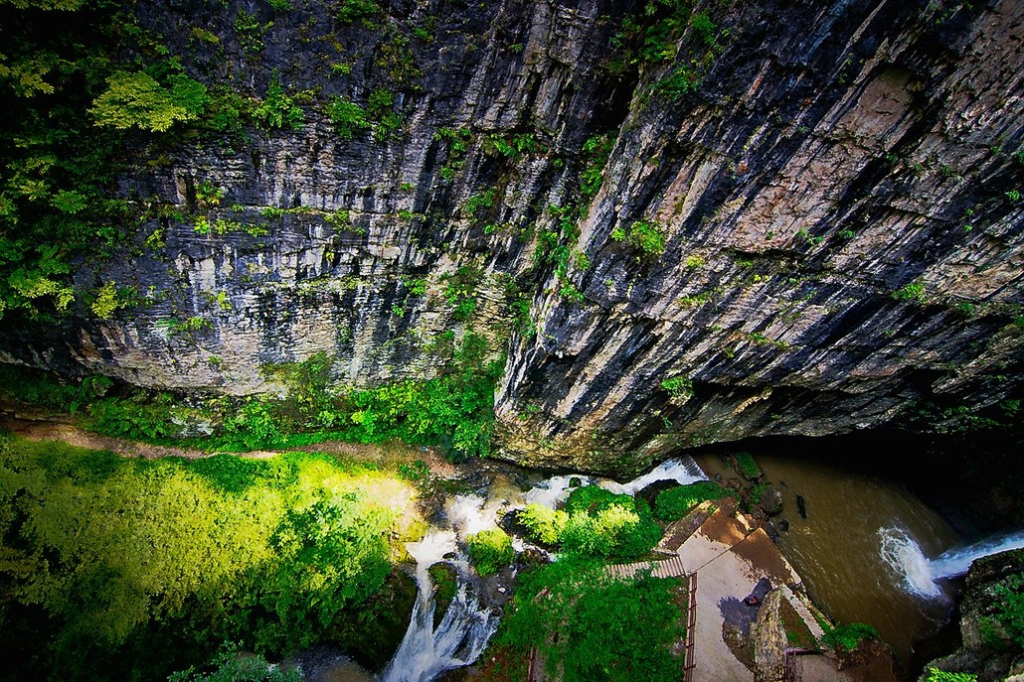

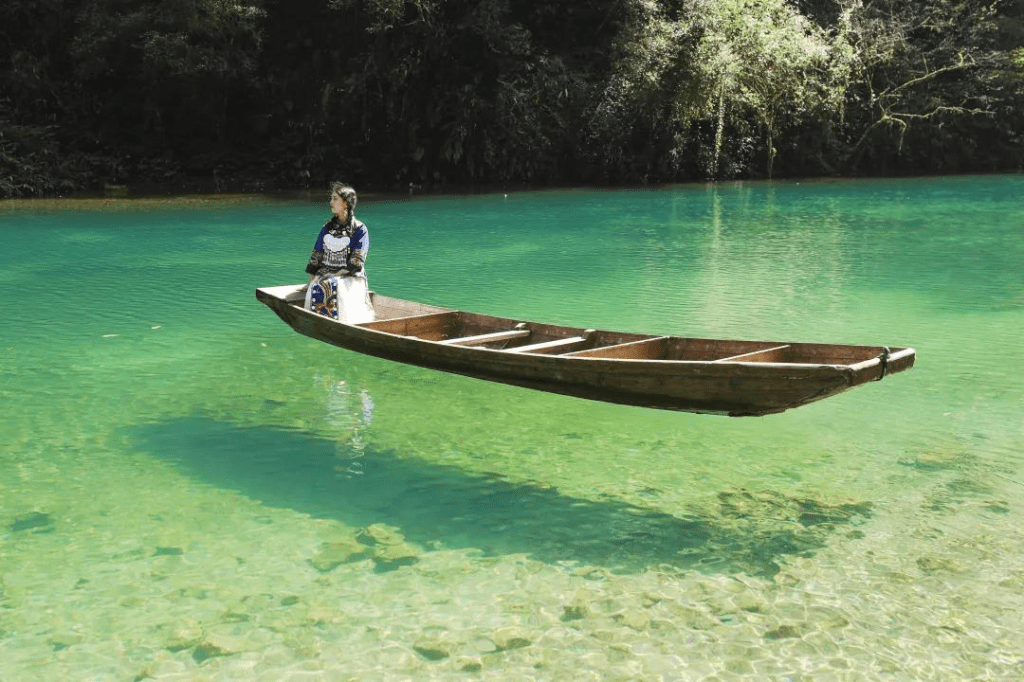
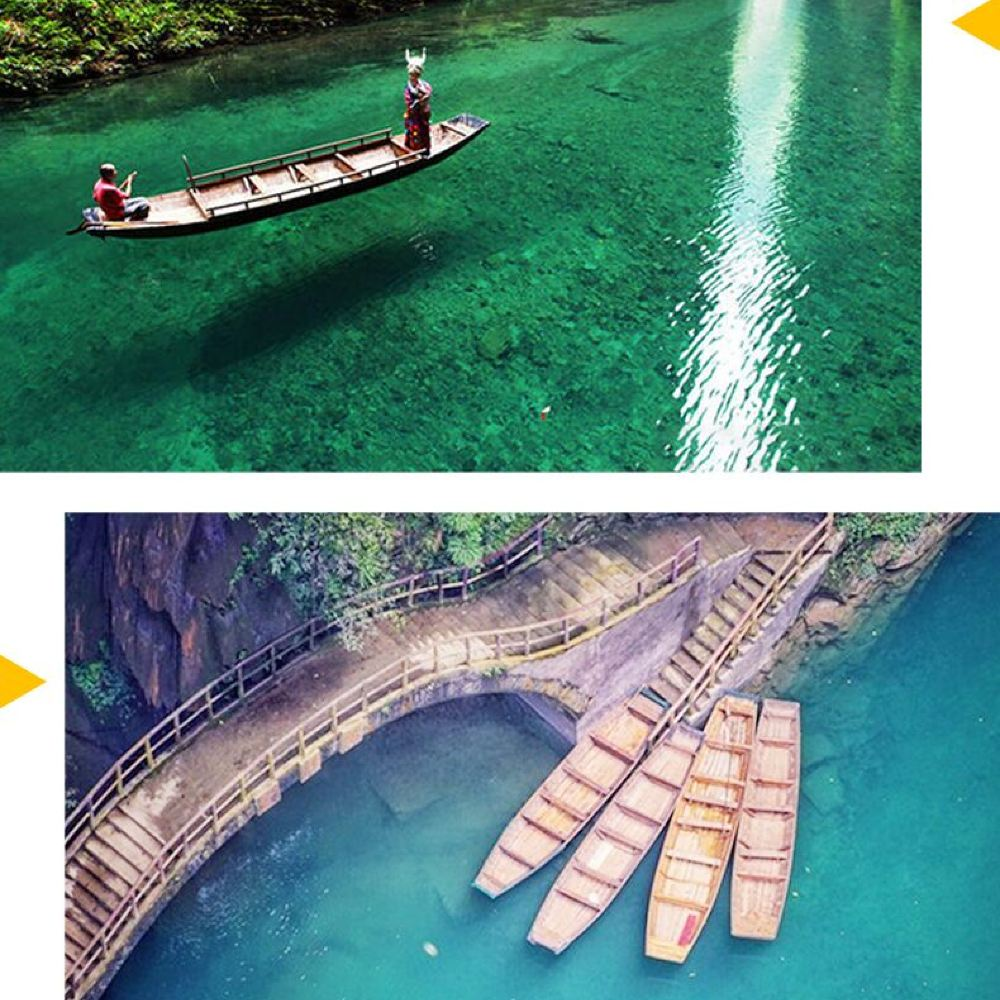
The waters of Pingshan Canyon are crystal clear, so clear they look drinkable. The boat seems to float in mid-air. As you ride in a small wooden boat and experience the sensation of floating, you see towering cliffs above and crystal-clear streams surrounding you below. Passing through narrow passages like “Yixiantian” (A Thread of Sky) and Moon Bridge, the only sounds are the gentle rush of water and the singing of birds. Gazing up at the sky from beneath these cliffs, there’s a deep sense of tranquility, as though you’re cut off from the world. The beauty of Pingshan Canyon is best captured by the lines: “Drunk, I know not whether the sky is in the water, but my boat is filled with clear dreams, pressing against the Milky Way.” To truly appreciate the splendor of Pingshan Canyon, you must come and experience it for yourself.

The Enshi Grand Canyon and its surrounding area are home to the vibrant Tujia Girls’ Festival, one of China’s most distinctive regional celebrations. This festival, unique to the Tujia people of Enshi, is more than just a marketplace gathering; it is a time-honored tradition where young women seek love on their own terms, often through the spirited exchange of songs in an antiphonal style. Dubbed the “Eastern Valentine’s Day,” it is a festival that symbolizes freedom and the pursuit of love.

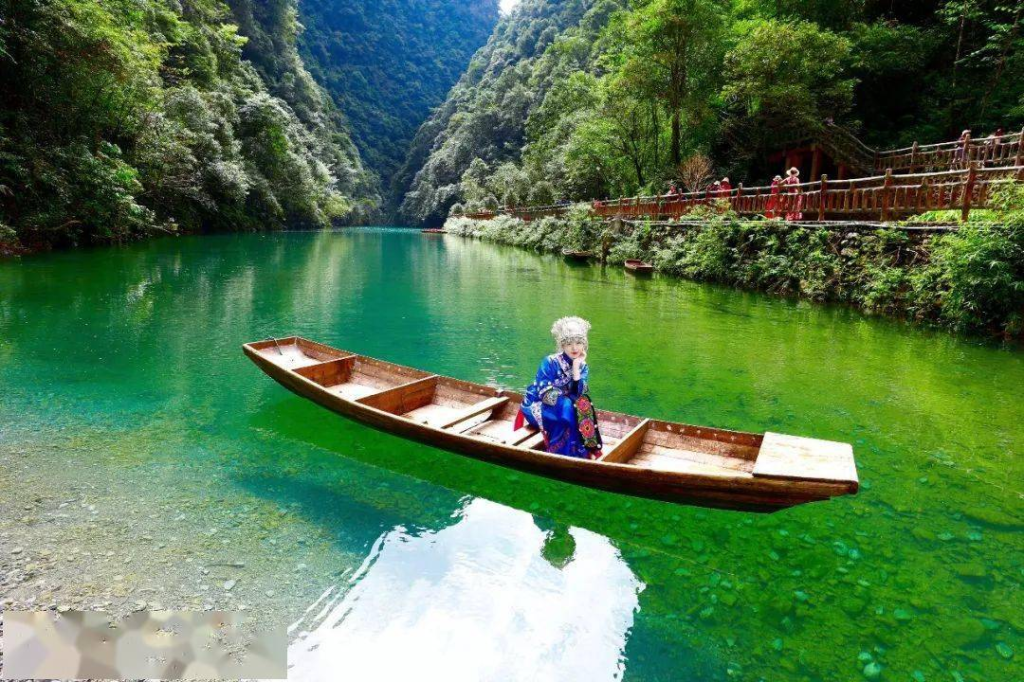
Another fascinating cultural treasure rooted in Tujia heritage is Western Rancap, known as the “Flower of Tujia.” This beautiful craft reflects the ingenuity and artistic skill of the Tujia people, with its striking use of contrasting colors and intricate patterns that blend realism with abstraction. Historically, Tujia girls would weave these colorful bedrolls—often referred to as “Tujia Colorful Bedrolls”—on a loom as part of their wedding preparations, a tradition steeped in love and artistry.
Enshi is not just a region rich in cultural festivals but also a town alive with the arts, particularly in song and dance. The Tujia and Miao minorities express their joyful spirit through various performances, including the dragon boat song, hand-swinging folk dance, nuo opera, lantern drama, and the lively Tujia daliuz. The Dragon Boat Song, originating in Enshi Prefecture, is a love song that reflects the character and customs of the Tujia people. Recognized by UNESCO as one of the world’s 25 most remarkable folk songs, it embodies the heart and soul of Tujia culture. Renowned Miao singer Song Zuying has performed this song at prestigious venues like the Golden Hall of Vienna and Lincoln Center for the Performing Arts, sparking global interest in the music of Enshi.


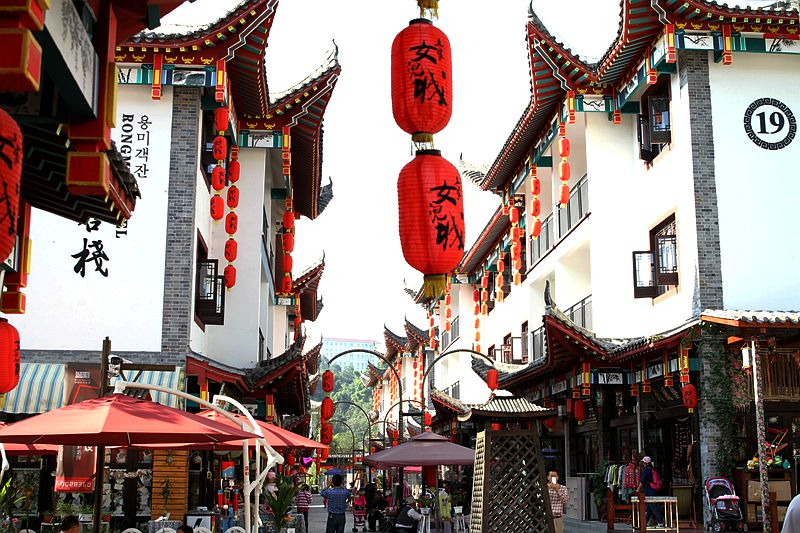

The Enshi Grand Canyon Theatre brings this vibrant culture to life through large-scale real-life performances set against the stunning backdrop of mountains and rivers. The stage, illuminated by the natural light of the sun or moon, captures the simple and romantic spirit of Tujia love, creating an unforgettable experience for the audience.
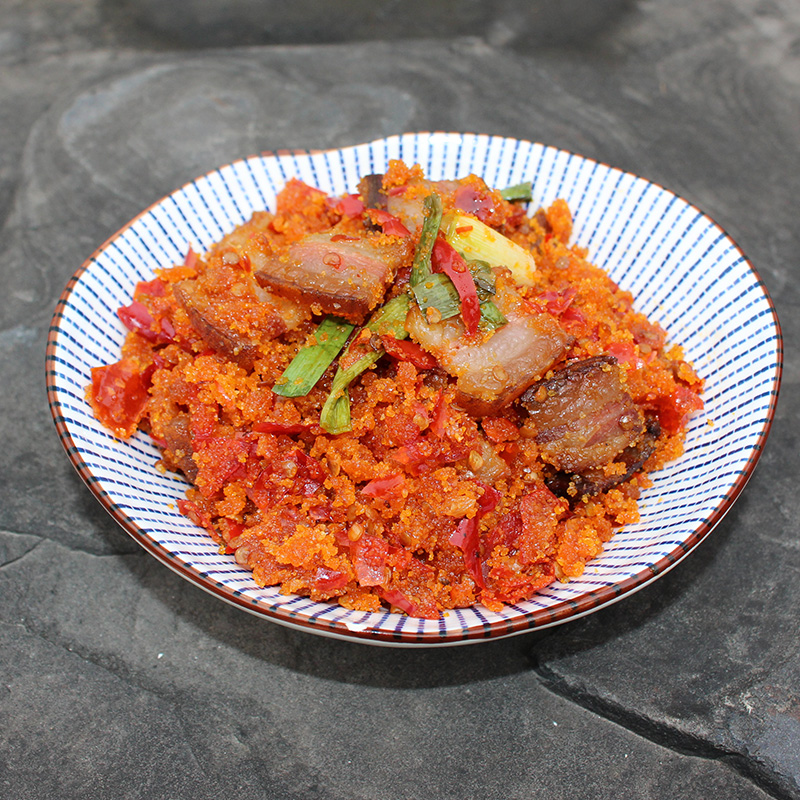
The distinctive geography of the Enshi Grand Canyon has also shaped its cuisine, which blends the spicy flavors of Sichuan with the salty heat of Hunan. Enshi’s local specialties, heavily influenced by the Tujia and Miao minorities, offer a tantalizing array of flavors that attract visitors from near and far. Dishes such as “Gege,” steamed with a mixture of fried Chinese pepper and other main ingredients, mini hot-pot “Hezha,” roasted preserved meats, stir-fried Guang pepper with a sour and spicy kick, and Tujia sesame cakes are must-tries for any traveler seeking to taste the region’s unique culinary heritage.

Enshi Grand Canyon stretches 108 km (67 miles) and covers over 300 sq. km (74,000 acres). Though it’s only 1.7 miles wide, its narrow length offers stunning views. In comparison, the American Grand Canyon is vastly larger at 1,218,560 acres, enough to fit sixteen Enshi Grand Canyons.
The main difference lies in the landscape: Enshi is lush and green, unlike the arid terrain of the American Grand Canyon. Despite its smaller size, Enshi packs in all the beauty and features of its American counterpart, making it an excellent spot for a day trip or longer visit.
Link:https://peacelilysite.com/2024/08/16/enshi-grand-canyon/
Source: https://www.artisan.com.tw/blog/blog_article.aspx?article=587, https://www.esdaxiagu.com/en/scenicspot.html, http://www.hubei.gov.cn/jmct/jcms/lyjq/hbwajq/202208/t20220826_4282051.shtml

 Peace LiLy