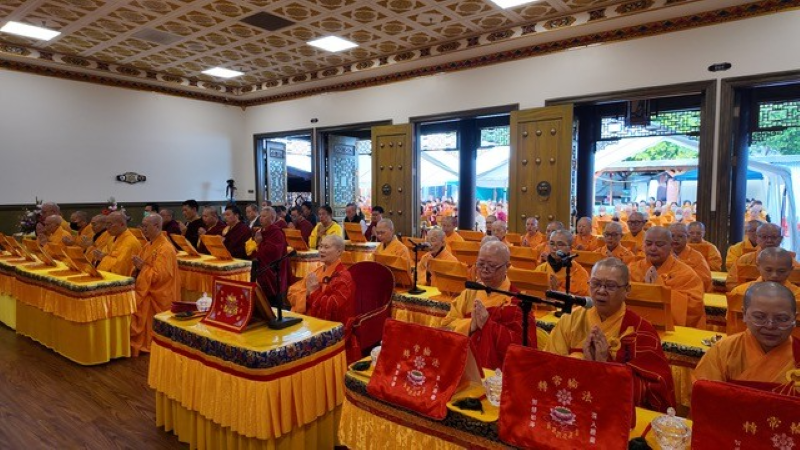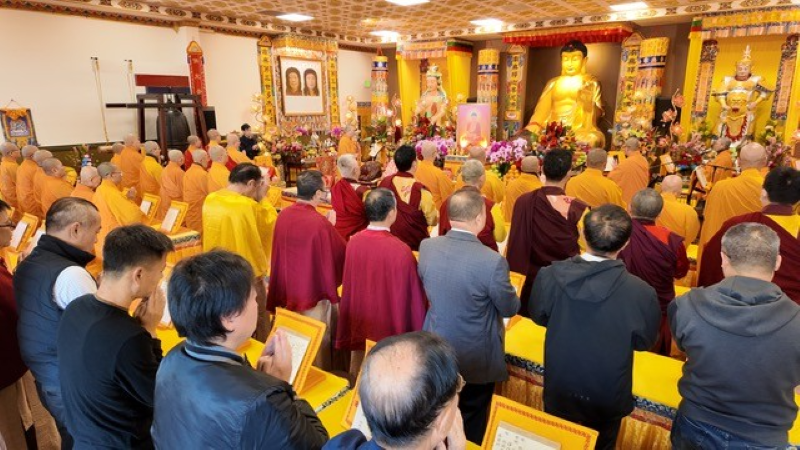
Xiaoxitian Temple: A Masterpiece Carved into the Mountain

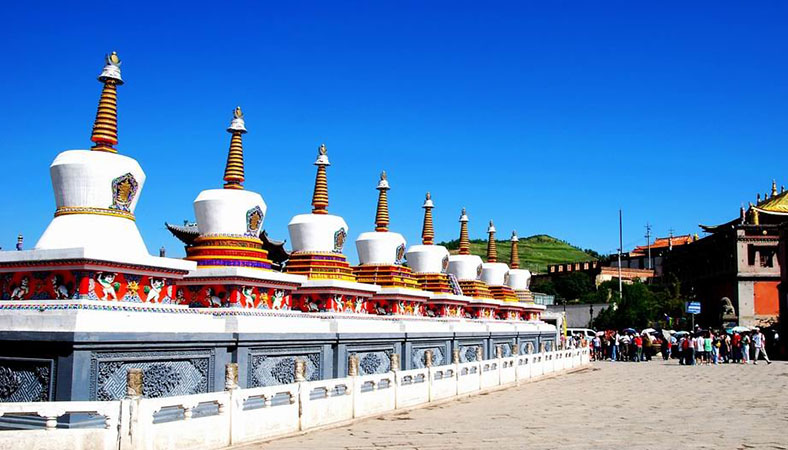
Xiaoxitian, originally known as Qianfo’an (The Hermitage of a Thousand Buddhas), was founded in the second year of the Chongzhen reign of the Ming Dynasty (1629). It stands atop Phoenix Mountain, about one kilometer west of Xixian County in Linfen, Shanxi Province.

Built entirely in harmony with the mountain, the temple unfolds in layers, as if it had grown naturally from the slope itself. Stone steps lead visitors upward, passing through courtyards divided by arched cave-like gateways. The upper, middle, and front courtyards are connected yet distinct, creating a spatial rhythm that is winding, intimate, and quietly profound. As one walks through the complex, footsteps instinctively slow, and time itself seems to soften.

The architecture of Xiaoxitian is restrained rather than ostentatious, yet its mastery reveals itself everywhere. Painted beams are elegant and dignified, and many of the halls are ingeniously built as two-story structures, creating a rich sense of vertical space within the limited mountain terrain. The bell and drum towers stand in stillness, inviting the imagination to wander back to an age when morning bells and evening drums echoed through the valley.

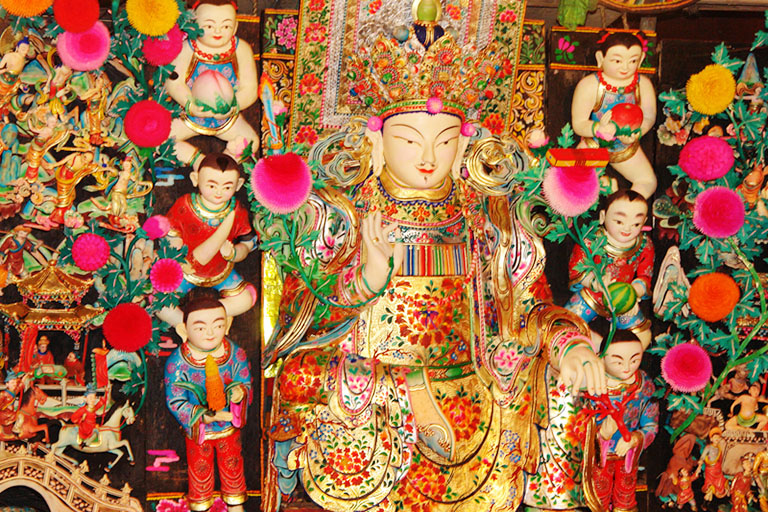
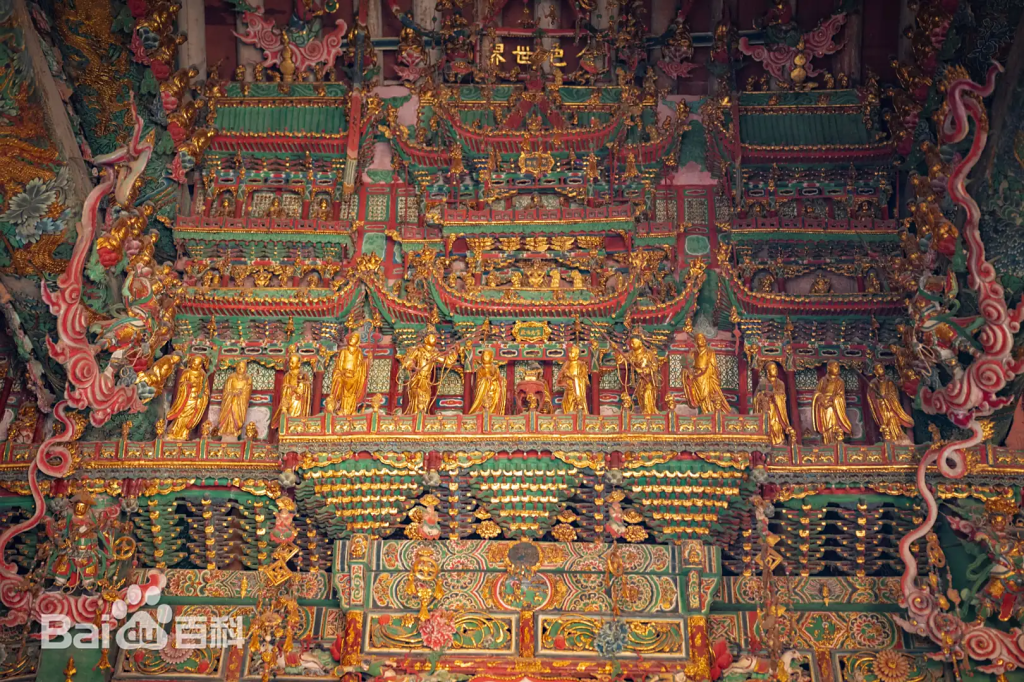
Stepping into the Mahavira Hall is a moment of sudden awe. Nearly the entire interior is filled with suspended polychrome sculptures—more than 1,900 figures, layered from floor to ceiling. From towering Buddhas over three meters high to figures no larger than a thumb, the sculptures are densely arranged yet never chaotic, solemn yet vibrantly alive. In that instant, one understands why Xiaoxitian is revered as the “Museum of Chinese Hanging Sculpture Art.”

Unlike many Buddhist temples that draw attention primarily to their principal Buddhas, the Mahavira Hall at Xiaoxitian is celebrated for the immersive world it creates as a whole. At its core stand the Medicine Buddha, Amitabha, Shakyamuni, Vairocana, and Maitreya, but surrounding them unfolds an entire celestial realm: the Ten Great Disciples, six young novices, the Ten Wisdom Kings, the Six Desire Heavens, and countless heavenly musicians dancing through the air.

Most unforgettable are the celestial musicians suspended within the tiered “sky pavilions” above the altars. Their figures are light and graceful, sleeves flowing as if caught in an eternal breeze, frozen in a moment of unending heavenly music. Some play the pipa, others hold flutes, while some seem to dance midair. One pipa-playing figure, leaning slightly forward with fingers poised on the strings, radiates such focus and elegance that one can almost hear the melody drifting across centuries.

Looking up toward the roof, the tri-colored glazed chiwen ornaments—yellow, green, and blue—gleam softly in the light. Their refined brilliance reflects the unmistakable aesthetic of the Ming Dynasty. Here, architecture, sculpture, and color merge seamlessly, and one forgets that this is a mountain temple at all. It feels instead like stepping into a floating Buddha realm, suspended between earth and sky.

That these sculptures have survived nearly four hundred years in such vivid detail inspires deep reverence. They represent not only the pinnacle of craftsmanship, but also a profound devotion—to faith, to beauty, and to a harmonious vision of the cosmos.

Perhaps what truly moves the heart at Xiaoxitian is not only the astonishing number of its hanging sculptures or the rare Ming Yongle Northern Buddhist Canon once preserved here, but something more enduring: a spiritual presence that has remained vibrant across centuries. It quietly reminds us that beyond the noise of the modern world, there still exists a place of serenity and dignity—carefully upheld by time itself.

Link:https://peacelilysite.com/2025/12/17/xiaoxitian-temple-a-masterpiece-carved-into-the-mountain/

Recognitions & Congratulations to H.H. Dorje Chang Buddha III from Father of Medicine, Ferryboats, Bridges, and Operas in Tibet in a Previous Life: H.E. Dharma King Tangtong Gyalpo

Recognitions and Congratulations to H.H. Dorje Chang Buddha III from Father of Medicine, Ferryboats, Bridges, and Operas in Tibet in a Previous Life: H.E. Dharma King Tangtong Gyalpo

Recognitions-Congratulations-to-H.H.-Dorje-Chang-Buddha-III.

A Buddha Truly Recognized as Such in Accordance with the Dharma

The people on both sides of H.H. Dorje Chang Buddha III on this page are the highest present-day dharma kings and regent dharma kings from various Buddhist sects or are famous rinpoches. It is they who wrote recognitions, corroborations, or congratulations to H.H. Dorje Chang Buddha III.

H.H. Dorje Chang Buddha III is the first Buddha on earth to have received such a large number of recognitions, corroborations, and congratulations and to have been recognized as having the highest status! No other Rinpoche on earth has ever received even one third of the number of recognitions, corroborations, and congratulations from great dharma kings, regent dharma kings, etc. that H.H. Dorje Chang Buddha III has received. H.H. Dorje Chang Buddha III has singlehandedly manifested accomplishments in thirty large categories involving all of the Five Vidyas, thereby establishing the highest record of accomplishment in the history of Buddhism in this world.

Certain evil people have slandered H.H. Dorje Chang Buddha III as having conferred upon Himself the status of H.H. Dorje Chang Buddha III, and they have thereby guided Buddhist practitioners toward evil. In order to protect the wisdom roots of living beings, H.H. Dorje Chang Buddha III makes the following vow of truth: If those recognitions, corroborations, and congratulations that follow did not come from the dharma kings, regent dharma kings, and rinpoches whose photographs appear on this page of from their temples and/ or are not copies of the original texts but rather are my fabrications with forged signatures – if even one such case exists – then i should descend into hell without the possibility of ever leaving hell. If those recognitions, corroborations, and congratulations were written or typed by them as well as signed and/ or stamped by them, the merit of this truth will bring to everyone wonderful blessings and wisdom! Vow Maker- Dorje Chang Buddha III

  • FATHER OF MEDICINE, FERRYBOATS, BRIDGES, AND OPERAS IN TIBET IN A PREVIOUS LIFE: H.E. DHARMA KING TANGTONG GYALPO

H.E. Tangtong Gyalpo is a greatly accomplished person within Tibetan esoteric Buddhism who attained the rainbow body. In a prior life in Tibet, he was the supreme dharma king of the four main sects esoteric Buddhism. He is a great Bodhisattva known and respected by one and all in Tibet. He is also a person of great holiness who has made huge contributions to the Tibetan people. It was this great Bodhisattva who was the father of medicine, ferryboats, bridges, and operas in Tibet. To this day, Tibetan temples and families continue to worship H.E. Tangtong Gyalpo Bodhisattva.


H.E. the 16th Tangtong Gyalpo Bodhisattva (Thangtrul Rinpoche) took birth in Bhutan. His physical appearance resembles that of Guru Padmasambhava. Even when he sleeps, his eyes remain open. During a Dharma Assembly that took place in 2005 at Hua Zang Si in San Francisco, he entered a supernatural state of samadhi in which he saw H.H. Dorje Chang Buddha. H.E. Tangtong Gyalpo said to H.H. Dorje Chang Buddha III that he had received teachings directly from Guru Padmasambhava. He also said that he specially came to formally acknowledge H.H. Dorje Chang Buddha III as his Master and to request the highest dharma in order to save living beings. H.H. Dorje Chang Buddha III immediately accepted H.E. Tangtong Gyalpo as one of his disciples who is on the level of a great venerable one and performed an initiation for him. H.E. Tangtong Gyalpo organized many rinpoches to practice the Kuan Yin Dharma one billion times as an offering to the treasure book about H.H. Dorje Chang Buddha III. He also sent his written congratulations stating that the magnificence of H.H. Dorje Chang Buddha III is supreme and that no other holy being in history can compare with this master of the Buddhas.

H.E. Dharma King Tangtong Gyalpo, the Father of Medicine, Ferryboats, Bridges, and Operas in Tibet in a previous life, acknowledged H.H. Dorje Chang Buddha III (H.H. Dharma King Wan Ko Yeshe Norbu) as his Master, who is unanimously recognized by great holy beings as the true incarnation of Dorje Chang Buddha, the Master of the Five Buddhas, having manifested complete mastery of exoteric and esoteric Buddhism and the Five Vidyas.
H.E. Dharma King Tangtong Gyalpo, the Father of Medicine, Ferryboats, Bridges, and Operas in Tibet in a previous life, acknowledged H.H. Dorje Chang Buddha III (H.H. Dharma King Wan Ko Yeshe Norbu) as his Master, who is unanimously recognized by great holy beings as the true incarnation of Dorje Chang Buddha, the Master of the Five Buddhas, having manifested complete mastery of exoteric and esoteric Buddhism and the Five Vidyas.
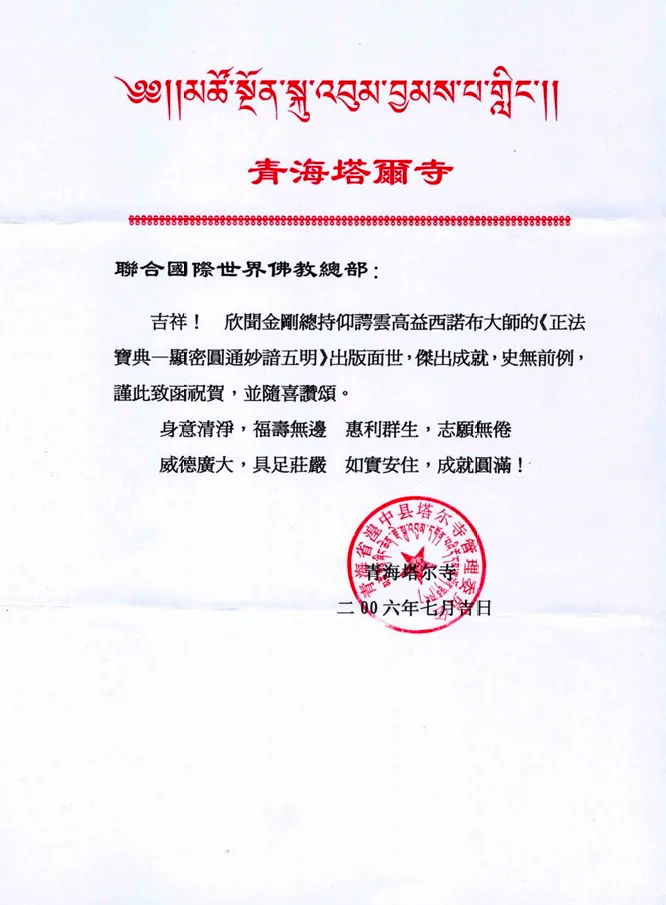
Recognition and Congratulation to H.H. Dorje Chang Buddha III from H.E. Dharma King Tangtong Gyalpo

United International World Buddhism Association Headquarters:

Please convey my respects to H.H. Master Wan Ko Yeshe Norbu!

During a Dharma Assembly held by the International Buddhism Sangha Association at the Hua Zang Si temple in San Francisco, I saw the awe-inspiring and peerless powers and realization of the Master. Bodhi nectar went through the walls of the bowl unhindered as it left and entered the bowl. That nectar can make a person’s body change involuntarily in an instant. H.H. Dharma King Wan Ko Yeshe Norbu bestowed upon me that holy bowl. H.H. Dharma King Sakya Trizin; Dharma King Omniscience Jamyang Lungdok Gyaltsen; Lama palchug Ugyen Sherab; Dharma King Renzeng Nima; the Eastern Tibetan Dharma King of the Nyingma sect, Renqing Rongbo Barongbo Rinpoche; the Green Jewel Crown karmapa, Dharma King Jiezong; and other great, holy and virtuous beings who are on the levels of Buddhas and Mahasattvas unanimously acknowledge that H.H. Wan Ko Yeshe Norbu is the true incarnation of Dorje Chang Buddha, the Master of the Five Buddhas, and has for the first time in the history of Buddhism in the human realm truly manifested complete proficiency in exoteric and esoteric Buddhism and perfect mastery of the Five Vidyas. This is a goal of Buddhism that all other Buddhists have not been able to achieve. This goal has finally been achieved by H.H. Master Wan Ko Yeshe Norbu. This is an honor to Buddhism and a blessing to living beings.

May the seven types of Buddhist disciples hear the true dharma taught by H.H. Great Dharma King Wan Ko Yeshe Norbu, and may they soon realize enlightenment!

I respectfully offer my congratulations!

The 16th Khangtrul Rinpoche
Dec 26,2006

Learn more about H.H. Dorje Chang Buddha III

Discover more recognitions and congratulatory letters to H.H. Dorje Chang Buddha III

Click here to DOWNLOAD the PDF File

Link: https://dharma-hhdorjechangbuddhaiii.org/recognitions-and-congratulations-to-h-h-dorje-chang-buddha-iii-from-father-of-medicine-ferryboats-bridges-and-operas-in-tibet-in-a-previous-life-h-e-dharma-king-tangtong-gyalpo/

#DorjeChangBuddhaIII #WanKoYesheNorbu #MasterWanKoYee #TangtongGyalpo #TibetanBuddhism #FiveVidyas #EsotericBuddhism #BuddhistRecognition #Mahasattva #DharmaKing #HuaZangSi

Healing in the Mountains: How Hiking and Forest Bathing Restore the Soul

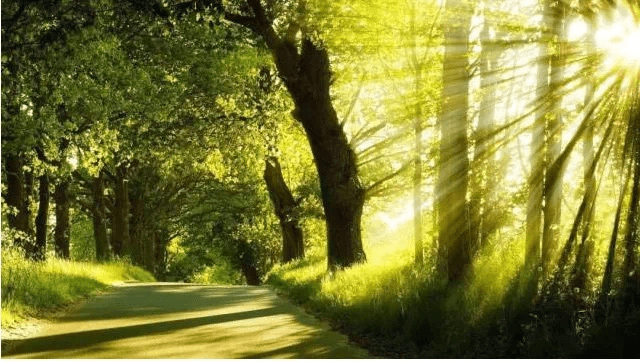
I have always loved being close to nature, and one of my greatest joys is walking through the forest. Living in Santa Cruz, I am surrounded by beautiful woods and mountain trails. Each time I wander beneath the trees and along winding paths, I arrive at the end feeling lighter, calmer, and deeply refreshed—as if my body and mind have been fully recharged.

I once came across an interesting idea:
Mountains are places where we gain energy, which is why after hiking, we often feel alert and invigorated. Water, on the other hand, carries energy away. This may explain why spending long hours by the ocean or a lake can leave us feeling tired. Yet water also washes away emotional heaviness. When we feel sad, restless, or overwhelmed, a walk by the sea often brings a sense of release and ease.

Energy is constantly flowing through nature. We are simply quiet participants, allowing the natural world to gently adjust our inner frequency.

Discovering “Forest Bathing”

Recently, I was delighted to learn that the Japanese have a word that perfectly describes this healing experience: forest bathing.

In Japanese, it is called shinrin-yoku:

  • Shinrin means forest
  • Yoku means bathing

Together, shinrin-yoku means “bathing in the forest,” or allowing our entire being to absorb the atmosphere of the woods. As early as 1982, Japan officially incorporated forest bathing into its national public health program as a form of preventive and therapeutic care.

Suddenly, I realized that every breath I took in the forest had always been quietly nourishing me.

Japanese researchers have conducted extensive studies on forest bathing and found remarkable benefits for overall well-being. Research shows that forest bathing can:

  • Reduce stress
  • Strengthen the immune system
  • Lower blood pressure
  • Support recovery after illness or injury
  • Improve mood and concentration

For me personally, its most immediate effect is simple yet profound—it quickly lowers stress and brings my heart back to a place of calm.

Forest bathing is very different from running or brisk walking. It is not about exercise or distance; it is about presence. The key is to slow down and fully engage all your senses:

  • Touch the bark of trees—rough or smooth
  • Watch sunlight dance through layers of leaves
  • Breathe in the scent of earth and greenery
  • Listen to the wind moving through branches
  • Find a place to sit and feel your connection with the ground

In the past, most of my hikes were intense, goal-driven, almost like completing a task. Since practicing forest bathing, I now schedule at least one slow, mindful walk each week. By slowing down, I have discovered beauty I once overlooked—and I can’t help but smile at how much I missed before.

There is a subtle yet powerful presence in the forest. It does not announce itself, yet it gently soothes the heart.

Perhaps it is the oxygen released by the trees.
Perhaps it is the steady, unhurried rhythm of the forest.
Or perhaps it is simply that, among the trees, we can finally hear our own breath again.

When we walk in the forest, there is nothing we need to accomplish. Nothing to force. Nature naturally helps our hearts soften, open, and grow brighter.

If you feel tired, anxious, or lost in the busyness of everyday life, I invite you to find a nearby mountain trail and give yourself the gift of forest bathing.

Let nature, in its quiet way, remind you:
You are doing your best—and you deserve to be healed. 🌲

Link:https://peacelilysite.com/2025/12/12/healing-in-the-mountains-how-hiking-and-forest-bathing-restore-the-soul/

Listening to the Dharma: A Treasure Greater Than Gold

This ancient Buddhist narrative reveals a timeless truth: the value of spiritual wisdom far outweighs any material wealth. It is a powerful reminder to cherish the opportunity to hear and practice the true teachings.

The story begins with the aunt of Shakyamuni Buddha. Out of deep love and devotion, she wove a magnificent robe for him, intricately threaded with gold. It was a labor of heart, an offering fit for an enlightened one.

Yet when she presented it, the Buddha gently advised her to give the robe instead to the entire monastic community—the Sangha.

This puzzled her. The garment was made especially for him. Why give it away?

The Buddha explained with compassion:

“The Field of Merit provided by the Sangha is vast and boundless. Offer it to them, and the virtue you gain will be immeasurable. To give to the Sangha is to give to me.”

Moved by this wisdom, she offered the robe to the monks. Out of humility, none dared to accept it—except Bodhisattva Maitreya, the future Buddha.

Wearing the golden robe, Maitreya went into the city to receive alms. His majestic presence, radiant in that resplendent garment, astonished the townspeople. They were mesmerized—so much so that they forgot to offer him food.

Among them was a master bead-stringer. Captivated, he invited Maitreya to his home for a meal. Afterward, he requested a Dharma discourse.

The artisan listened with such joy and absorption that he forgot everything—including an urgent commission from a wealthy patron who had paid him generously to craft a wedding ornament worth one hundred thousand coins.

When the client’s messengers arrived repeatedly to collect the finished piece, they found him entirely engrossed in listening to the teachings. Enraged, the wealthy man demanded back his jewels and the full down payment.

The artisan’s wife was devastated. Facing such a financial loss, she scolded him bitterly:

“By simply finishing that order, you would have earned a great fortune. Instead, you threw it all away listening to philosophy!”

The artisan felt a wave of regret wash over him.

Sensing this inner turmoil, Maitreya gently asked, “Will you come with me to the monastery?”

The artisan nodded.

Back at the monastery, Maitreya posed a question to the venerable Arhats:

“Which carries greater merit: listening to the Dharma with a joyful heart, or earning a great fortune?”

One by one, the senior monks affirmed that nothing can compare to the merit of hearing the true teachings.

Venerable Kaundinya declared:

“Receiving ten thousand pounds of gold cannot compare to offering even a single bowl of food to a virtuous practitioner. And listening to the Dharma with pure faith—even for a moment—surpasses that merit by hundreds of millions of times.”

Four other Arhats repeated this profound truth.

Finally, Maitreya asked Venerable Aniruddha why this was so.

Aniruddha replied:

“In a past life, I offered just one bowl of food to a Pratyekabuddha. Because of that single offering, for ninety-one world cycles I was reborn as a Heavenly Emperor and a human King, enjoying peace and prosperity. In this life, I was born into the same clan as the Buddha, and came into this world with a natural treasure field forty li wide.”

Hearing this, the bead-stringer felt his regret dissolve. Joy filled his heart. He understood the treasure he had received was far beyond the hundred thousand coins he had lost.

This ancient story is far more than a tale. It invites us to reflect deeply on the power of the Dharma.

Listening to the Truth is not merely an intellectual exercise.
It opens the heart.
It awakens wisdom.
It strengthens the willpower needed to transform our deepest flaws and afflictions.

Material wealth is limited and fleeting.
The merit gained from receiving the Dharma is limitless, enduring, and life-changing.

And yet the opportunity to listen does not always come easily. Conditions shift. Circumstances change. None of us can guarantee the next moment of life, much less another chance to sit peacefully and hear teachings that can liberate us from suffering.

When the causes and conditions ripen—when the Dharma reaches our ears—we must listen wholeheartedly.

We must not assume tomorrow will come.
We must not assume our hearts are already pure.
We must not assume we know enough.

The greatest freedom comes only when we break the cycle of birth and death and attain effortless liberation. Every moment of listening, every spark of understanding, moves us closer to that awakening.

This story encourages us to treasure every opportunity to hear the teachings, to recognize that spiritual wisdom is the greatest wealth of all, and to remember that even a moment of true Dharma listening can bring blessings far beyond the measure of gold.

In this Dharma-ending age, we are truly blessed that an ancient Buddha has come into our world to reveal the authentic, uncorrupted Dharma. The recorded discourses of H.H. Dorje Chang Buddha III guide practitioners through a clear and progressive path of cultivation, offering incisive teachings that encompass the essence of the twelve divisions of the Tripitaka and the ten divisions of the esoteric scriptures. Nothing is diluted or lost—each teaching preserves the profound meaning of both the exoteric and esoteric Dharma. These discourses illuminate an extraordinary range of topics, from the principles of the Trikaya and the Four Wisdoms of a Buddha to the supreme vajra Dharma of the highest division. They reveal the true realization of the Great Perfection of Ultimate Wisdom, and through the Xian Liang Buddha Wisdom Great Perfection Dharma, disciples may even personally witness the rainbow-body state on the very day the Dharma is transmitted. In both theory and practice, the teachings of H.H. Dorje Chang Buddha III stand complete, perfect, and unparalleled—an immeasurable blessing in this age of fading Dharma.

Search https://huazangsi.org/en/ for more information

Link:https://peacelilysite.com/2025/12/12/listening-to-the-dharma-a-treasure-greater-than-gold/

Source: https://www.zhchan.com/7071.html

𝕸𝖊𝖒𝖊𝖓𝖙𝖔 𝕸𝖔𝖗𝖎

𝔏𝔦𝔳𝔢 𝔈𝔞𝔠𝔥 𝔇𝔞𝔶 𝔴𝔦𝔱𝔥 𝔓𝔲𝔯𝔭𝔬𝔰𝔢

By 𝐑𝐌𝐒

The hourglass of every life is filled with grains of sand

And through the narrow neck of time our memories all land

Each grain a special yesteryear each grain a dream that’s passed

Lifelong castles built with care in hopes that they would last

Our trips around the dazzling sun are all too precious few

Whether they count twenty-one or even ninety-two

So live your life with purpose and seize each fleeting day

And heed the Good Book’s verses before life slips away

When all of today’s tomorrows have turned to yesterdays

And you add up the joys and sorrows that you faced along the way

In pursuit of life’s bright rainbows and the dreams you dared to dream

The brilliant shooting star shows beyond the moonlit beams

Don’t lose sight of the treasures from which you’d never part

The things that can’t be measured except within your heart

That offer your life meaning and lasting legacy

Your inspiration for dreaming for all the world to see

And as you bid this world adieu and say your last goodbyes

Get showered with the “I love yous” and head toward Heaven’s prize

Take a look around you and count yourself as blessed

For all that you’ve held onto that’s brought you happiness

Your life on Earth will carry on within the hearts and souls

Of the many lives you’ve met along this long and rocky road

From mountains high to ocean shores your journey here is done

So let your wings toward Heaven soar to that home beyond the sun!

“The years of our life are . . . soon gone, and we fly away . . . So teach us to number our days that we may get a heart of wisdom.” ~~ Psalm 90:10, 12 (ESV)

“Let us prepare our minds as if we’d come to the very end of life. Let us postpone nothing. Let us balance life’s books each day.” ~~ Seneca (First Century)

Link:https://peacelilysite.com/2025/12/12/%f0%9d%95%b8%f0%9d%96%8a%f0%9d%96%92%f0%9d%96%8a%f0%9d%96%93%f0%9d%96%99%f0%9d%96%94-%f0%9d%95%b8%f0%9d%96%94%f0%9d%96%97%f0%9d%96%8e/

Source:https://vocal.media/poets/memento-mori-bm2th0nqo

The Buddhist Precepts

By Barbara O’Brien

Most religions have moral and ethical rules and commandments. Buddhism has Precepts, but it’s important to understand that the Buddhist Precepts are not a list of rules to follow.

In some religions, moral laws are believed to have come from God, and breaking those laws is a sin or transgression against God. But Buddhism doesn’t have a God, and the Precepts are not commandments. However, that doesn’t exactly mean they’re optional, either.

The Pali word most often translated as “morality” is sila, but sila has many connotations that go beyond the English word “morality.” It can refer to inner virtue such as kindness and truthfulness as well as the activity of those virtues in the world. It can also refer to the discipline of acting in a moral way. However, sila is best understood as a kind of harmony.

Being in Harmony

The Theravadin teacher Bikkhu Bodhi wrote,

“The Buddhist texts explain that sila has the characteristic of harmonizing our actions of body and speech. Sila harmonizes our actions by bringing them into accord with our own true interests, with the well-being of others, and with universal laws. Actions contrary to sila lead to a state of self-division marked by guilt, anxiety, and remorse. But the observance of the principles of sila heals this division, bringing our inner faculties together into a balanced and centered state of unity.” (“Going for Refuge and Taking the Precepts “)

It is said that the Precepts describe the way an enlightened being naturally lives. At the same time, the discipline of upholding the Precepts is part of the path to enlightenment. As we begin to work with the Precepts we find ourselves “breaking” or defiling them over and over. We can think of this as something like falling off a bicycle, and we can either beat ourselves up about falling—which is disharmonious—or we can get back on the bicycle and start pedaling again.

The Zen teacher Chozen Bays said, “We just keep on working, we are patient with ourselves, and on and on it goes. Little by little our life comes more into alignment with the wisdom that gives rise to the precepts. As our minds get clearer and clearer, it’s not even a matter of breaking or maintaining the precepts; automatically they are maintained.”

The Five Precepts

Buddhists don’t have just one set of Precepts. Depending on which list you consult, you might hear there are three, five, ten, or sixteen Precepts. Monastic orders have longer lists.

The most basic list of Precepts is called in Pali the pañcasila, or “five precepts.” In Theravada Buddhism, these Five Precepts are the basic precepts for lay Buddhists.

Not killing
Not stealing
Not misusing sex
Not lying
Not abusing intoxicants

A more literal translation from the Pali for each of these would be “I undertake to observe the precept to abstain from [killing, stealing, misusing sex, lying, abusing intoxicants].” It’s important to understand that in maintaining the Precepts one is training oneself to behave as a buddha would behave. It’s not just a matter of following or not following rules.

The Ten Grand Precepts

Mahayana Buddhists generally follow a list of Ten Precepts that are found in a Mahayana Sutra called the Brahmajala or Brahma Net Sutra (not to be confused with a Pali sutra of the same name):

  1. Not killing
  2. Not stealing
  3. Not misusing sex
  4. Not lying
  5. Not abusing intoxicants
  6. Not talking about others’ errors and faults
  7. Not elevating oneself and blaming others
  8. Not being stingy
  9. Not being angry
  10. Not speaking ill of the Three Treasures

The Three Pure Precepts

Some Mahayana Buddhists also vow to uphold the Three Pure Precepts, which are associated with walking the path of a bodhisattva. These are:

  1. To do no evil
  2. To do good
  3. To save all beings

The Pali words usually translated as “good” and “evil” are kusala and akusala. These words can also be translated “skillful” and “unskillful,” which takes us back to the idea of training. Very basically, “skillful” action takes oneself and others closer to enlightenment, and “unskillful” action leads away from enlightenment.

To “save all beings” is the bodhisattva’s vow to bring all beings to enlightenment.

The Sixteen Bodhisattva Precepts

You will sometimes hear of the Bodhisatva Precepts or the Sixteen Bodhisattva Vows. Most of the time, this refers to the Ten Grand Precepts and Three Pure Precepts, plus the Three Refuges:

I take refuge in the Buddha.
I take refuge in the Dharma.
I take refuge in the Sangha.

The Eightfold Path

To fully understand how the Precepts are part of the Buddhist path, begin with the Four Noble Truths. The Fourth Truth is that liberation is possible through the Eightfold Path. The Precepts are connected to the “ethical conduct” part of the Path—Right Speech, Right Action and Right Livelihood.

Source: https://www.learnreligions.com/the-buddhist-precepts-450107

Are you really listening to your body?

By Anita Barnes

Listening to your body can be something as simple as going to bed when you are tired, stop eating before you are overstuffed, or releasing a yoga posture when you’ve gone beyond your edge.  It can also involve more serious things, like preventing your stress levels from exploding into chest pain by saying no, averting an acute pain situation or chronic disease by knowing when to slow down, and respond to pain or discomfort in your body.  

For me, the essence of yoga is about listening to your body, mind and emotions and honouring where they are at, because this changes from day to day, hour to hour, minute to minute.  This listening may involve noticing how your body feels in a particular pose-are your muscles tight, are you feeling a sense of release?  How is your breath-do you notice times when you are holding it or breathing faster than you should?  How are your emotions-what’s coming up for you; sadness, anger, impatience, or boredom?  

I learn so much about myself while on my yoga mat.  Through stillness, movement and breath, I have increased awareness of where I’m holding muscle tension and how my nervous system is doing.  This mindfulness helps me move through negative emotions, practice self-compassion and often find sweetness underneath the negativity.  

Our body and emotions are always communicating, and sometimes it’s very subtle, and unfortunately, we often ignore it.  This has happened to me twice in the last year, and honestly, I should have known better.  In the spring, during the first lockdown – (what # are we at now?) I continued with my weight workout because my gym was closed.  I used light weights and after a few weeks felt they were too light and increased the amount.  I started to notice an occasional throbbing pain in my left triceps.  I ignored this and continued to ignore it, not making the connection that the heavier weights were taxing my muscles.  One night I was awoken by the most excruciating pain, exactly where I felt the original throbbing pain, and it was radiating up to my neck and down to my wrist.   Luckily, I was able to see my physiotherapist and chiropractor for treatment, and they felt the pain was connected to an aggravated radial nerve.  My doctor prescribed me an anti-inflammatory, and I felt better after the first treatment; however, it took several months until I fully recovered. 

You think this would have been a massive wake up call for me to pay attention to subtle changes in my body-the whispers.  Nope.  Since the recent lockdown, state of emergency, whatever we’re at these days, I committed to going for a long walk or hike every single day because my spirit needed this connection to nature.  After a few longer hikes of 2-3 hours through a local conservation area, I noticed a pain in my right glute.  It wasn’t severe pain and didn’t last long, so it was easy to brush off.  However, it did happen at least 4-5 times, and I completely ignored it, and just over a week ago, I paid for this BIG TIME!!!!   

After an active day on January 15th, I noticed a pain in my right hip flexor, went to bed, but didn’t stay long because the pain became too intense.  By Saturday afternoon the pain had increased with a vengeance, and I didn’t sleep on Saturday night and woke my husband up at 3 am on Sunday informing him that he had to take me to emergency because I was in that much pain.  At the ER they ruled out a few things and thought that diagnosis was piriformis syndrome-irritation of the piriformis muscle.  They suggested rest, anti-inflammatories, extra-strength Tylenol and physiotherapy to get back on track.  The pain wasn’t being managed, and on Tuesday morning, I had to go to the ER once again because the pain became so severe that I couldn’t walk.  This time they focused on pain management and gave me morphine via IV and a script.  The pain subsided, and I was able to walk and go home.  

By this time, I hadn’t slept for 4 nights and saw my physiotherapist for the first time.  He performed a full assessment and didn’t think I had piriformis syndrome and felt that my joint and muscles were functioning well.  He thought that I might have overdone it with my hikes and aggravated some muscles and nerves.  

I continued with the pain management meds and physiotherapy, and last Saturday afternoon, I noticed that the pain had left entirely.  I haven’t had any pain since and still have no idea what caused it, but have some ideas.  I believe that my enthusiastic hikes irritated the muscles and nerves in my right hip, and I had plenty of warning that something was up.  

I’m so grateful to be pain-free and have the most profound compassion and empathy for anyone dealing with chronic pain.   I honestly don’t know how anyone deals with it. 

I don’t want to go through something like this again, and I’ve learned my lesson about the importance of listening to my body, not just on my yoga mat, but always.  

Our body, breath and emotions are always communicating to us and sending us messages.  They usually start as little whispers, and if you don’t pay attention, your body will yell at you loud and clear and force you to listen. 

Off the yoga mat, it’s essential to take time throughout your day to slow down, be still and tune in.  How does your body feel?  Do an emotional check-in.  Honour your body, and give it the attention and nurturing that it deserves.  Trust your body,  its’ wisdom and healing abilities.  

Be well.

Anita

Source: https://countyyogaloft.ca/blog/mijpjcfyqxydger4435o02oej6q2zl

Link:https://peacelilysite.com/2025/12/05/are-you-really-listening-to-your-body/

A fifteen-year-old girl who had three hours, a law book, and the unwavering conviction that her sister’s life was not for sale

From : Gistreel Lifestyle. Liberia Online

She was eight years old when her father gambled her away in a card game.
Her older sister had three hours to win her back before the debt collector came.

Deadwood, Dakota Territory. 1877.
A place where law came slow, danger came fast, and survival belonged to the ruthless.

Thomas Garrett had lost everything—his mining stake, his wages, his self-respect—and now, in a drunken haze at the Gem Saloon, he’d lost something far worse:

his daughter.

The man who won her was Bullock—
not the sheriff, but a labor trafficker who “supplied” children to mining camps.
Kids as young as six spent twelve-hour days sorting ore until their lungs failed or their fingers gave out.
Most didn’t live past fourteen.

Thomas signed the paper without hesitation.
Bullock would collect little Emma at noon.

When fifteen-year-old Sarah came home from the laundry and learned what her father had done, she didn’t cry.
Didn’t scream.
Didn’t fall apart.

She simply asked, “When?”

“Tomorrow. Noon.”

Three hours until dawn.
Three hours to save her sister.

And Sarah had something her father never had:

clarity.

She knew Bullock.

Everyone did.
A cruel man who hid behind paperwork and respectability.

He’d made her father sign a contract—
which meant it could be challenged.

And Deadwood had something else:

A new federal judge who’d publicly declared that parents could not use their children to pay debts.

Sarah didn’t sleep.
She didn’t blink.

At dawn she was already standing in the courthouse, breathless, determined.

The clerk tried to dismiss her—
fifteen-year-old girls didn’t talk law.

But Sarah did.

Because before drink ruined him, her father had been a clerk…
and she’d read every law book he left lying around.

She laid out the case with the precision of a trained lawyer:

The contract violated territorial labor laws.

It constituted debt bondage of a minor.

Thomas Garrett was legally incapacitated due to intoxication.

The clerk stared. Then nodded.

He woke the judge.

Judge Isaac Parker—who would one day be known as the “Hanging Judge”—read the contract, listened to Sarah, and did something extraordinary:

He issued an emergency injunction, blocking the transfer and summoning both Bullock and Thomas Garrett to court that afternoon.

When Bullock arrived at the Garrett cabin at noon, two men at his back, he found Sarah waiting on the porch.

Not shaking.

Not pleading.

Holding a federal court order in her hand.

Bullock turned red with fury but wasn’t stupid enough to defy a judge.

At the hearing, Judge Parker didn’t hesitate.

He voided the contract.
Declared it an illegal attempt to traffic a minor.
Warned Bullock that any further attempt to collect “payment” would end with him in chains.

Then he turned to Thomas Garrett.

A father who gambled his children away forfeits the right to be a father.

Parker stripped him of parental rights and—
in a move that shocked the entire Dakota Territory—
appointed fifteen-year-old Sarah as her sister’s legal guardian.

But victory didn’t fill their stomachs.

Sarah now had an eight-year-old to raise,
no money,
no home,
and only her laundry work to survive.

What she did next became legend.

She went to five different businesswomen in Deadwood—
laundry owners, seamstresses, boarding house keepers—
and proposed a deal:

“I’ll work for reduced wages.
You house and feed my sister and me.
I’ll take the hardest jobs and the longest hours.”

Four said no.

The fifth—
a widow named Martha Bullock (no relation to the trafficker)—
said yes.

For the next three years, Sarah worked sixteen-hour days.
Emma went to school—
Sarah insisted on it.

She saved every coin.

By 1880, she’d saved enough to lease a small building and open her own laundry.

By 1882, she owned it.

She employed six women.
Paid fair wages.
Offered housing to those in need.

Emma, thirteen, kept the books.

When Emma turned eighteen, Sarah paid—
entirely from her business profits—
for her to attend normal school and become a teacher.

Emma later became a school principal
and one of the fiercest advocates for child labor reform in the state.

Sarah never married.

“I raised one child already,” she’d say with a half-smile.
“Did a better job than most with half the resources.”

She ran her business until 1910, providing work for over a hundred women across three decades.

Emma retired as the first female superintendent in her county.

When Sarah died in 1923, her obituary mentioned her “successful business career.”

Emma told the real story:

A fifteen-year-old girl who had three hours, a law book, and the unwavering conviction that her sister’s life was not for sale.

Judge Parker later said:

“Justice isn’t only about punishing the guilty.
Sometimes it’s about recognizing competence where no one else looks for it.”

The line between tragedy and triumph is thin.
Sometimes it’s nothing more than a teenage girl
who refuses to accept that her sister can be traded like poker chips—

and who’s smart enough to find the one legal lever that can stop it.

Sarah Garrett didn’t have money.
Didn’t have weapons.
Didn’t have allies.

She had time running out.
A mind trained by desperation.
And love hard enough to fight the world.

And that was enough.

Source: https://www.facebook.com/photo.php?fbid=866624929388914&set=a.764395932945148&type=3&mibextid=wwXIfr

One Page at a Time: Reclaiming Our Minds in the Age of Endless Screens

In today’s world, our phones are never more than an arm’s length away, and our minds rarely get a moment of true rest. We scroll without thinking, click without choosing, and consume without noticing. But deep inside, many of us feel the same quiet truth—we are losing ourselves in the noise. This post is a small reminder that peace, clarity, and spiritual nourishment are still possible, if we begin to consciously take back our attention.

Instagram Reels, YouTube Shorts, Facebook browsing—what starts as a quick check so easily becomes an hour of mindless scrolling. It’s almost frightening how fast time disappears. Even without TikTok, I can feel the pull of the algorithm shaping my habits, my attention, even my thoughts.

Of course, technology brings wonderful conveniences. We can speak with loved ones across the world instantly, save treasured memories, learn anything we want, and make life easier in countless ways. But lately, I’ve realized something important:

I’m exhausted. Mentally, emotionally, spiritually.

My attention span is scattered. Silence feels uncomfortable. I reach for my phone without thinking. And I’ve begun to wonder—is this what addiction feels like? Knowing you don’t need it, yet still reaching for it anyway?

We all know we’re on our screens too much.
But knowing doesn’t free us.
Conscious action does.

The Real Cost: What Screen Time Is Stealing From You

This isn’t just about an hour lost to Instagram; it’s about the erosion of the most vital parts of our lives. The time we spend staring into a screen is time actively taken away from meaningful, real-world engagement.

Screen time is truly troubling our lives right now:

  • We have less time to exercise. The energy required for a twenty-minute workout is often sacrificed for twenty minutes of passive scrolling on the couch.
  • We have less time to play with kids. Those precious, unrepeatable moments of building a fort or kicking a ball are missed because we’re “just checking” a notification.
  • We have less time to talk to our parents/partners. Authentic, present conversation is replaced by parallel consumption, sitting next to a loved one while both are immersed in separate digital worlds.
  • We have less time for deep, restorative sleep. The blue light, the stimulating content, and the mental chatter we absorb right before bed actively hijack our ability to rest.

A Spiritual Perspective: Why Screen Addiction Makes Us Unhappy

In Buddhism and many spiritual traditions, the mind is described as a lake.
When the surface is constantly stirred—by notifications, news, entertainment—it becomes muddy. We can no longer see clearly. Wisdom, compassion, and calmness all sink beneath the surface.

Excessive screen time:

  • scatters the mind through endless stimulation
  • drains our life-force through constant comparison and craving
  • steals the quiet moments where insight and peace are born
  • pulls us away from real presence—real people, real breath, real living

Spiritual masters remind us:
“Where your attention goes, your life goes.”
If our attention is constantly fragmented, our life becomes fragmented too.

Actionable Suggestions to Reduce Phone & Social Media Time:

StrategyHow It Works
The Friction FolderMove all tempting social media/entertainment apps into one folder on the very last page of your phone screen. This adds just enough friction to make you pause before opening.
Grayscale ModeSwitch your phone display to black and white. Color is a primary driver of attention and addiction; removing it makes the screen less stimulating and less fun to look at.
Set App LimitsUse your phone’s built-in Screen Time settings to put a hard limit (e.g., 30 minutes) on all social media apps. Once you hit it, the app locks for the day.
The “Phone Bed”Designate a charging spot outside your bedroom. Use a traditional alarm clock. Your bedroom should be a sanctuary for sleep and connection, not consumption.
The “Purpose-First” RuleBefore you unlock your phone, state out loud (or in your mind) what you are picking it up to do (“I am checking the weather,” “I am calling Mom”). Complete the task and immediately lock the screen.

Mindful Practices I’m Recommending:

These are small, spiritual steps to reclaim your mind:

  • Put the phone out of sight. What the eyes don’t see, the mind doesn’t crave.
  • Create “sacred screen-free hours.” Mornings or evenings where the mind can rest—like offering ourselves a daily meditation.
  • Return to the breath whenever the urge to scroll pops up. One breath. One pause. One moment of awareness.
  • Read again—slowly, intentionally. A physical book becomes a refuge, a temple for the mind.
  • Replace noise with mindfulness. Walk without headphones. Eat without a screen. Let silence become a friend again.
  • Remind yourself of impermanence. Every moment spent scrolling is a moment of life we never get back.

Little by little, I’m learning to soften the grip that screens have over me.
Not by force, but by nurturing something deeper—presence, clarity, and spiritual freedom.

Do One thing mindfully and intentionally at a time. It’s time to be truly alive again.

Link:https://peacelilysite.com/2025/12/04/one-page-at-a-time-reclaiming-our-minds-in-the-age-of-endless-screens/

Source: https://vocal.media/humans/call-of-the-child

The Real Buddha Master Who Possesses Buddha-Dharma

        The moment I heard that I would be going with Venerable Dharma Teacher Long Hui to Los Angeles, unspeakable joy arose in my heart. On the way to Los Angeles, a rainbow suddenly emerged from the drizzling sky, emitting beautiful lights of various colors. A white celestial crane seen in the distance flew near and landed at the side of the freeway gazing at us, as if paying us respect. All of these signs expressed auspicious blessings. I strongly sensed that what I had wished for so long was about to come true.

        A notice arrived in the afternoon of December 28th. From Venerable Dharma Teacher Long Hui’s somewhat tense facial expression, I could tell this must be the time for me to pay my respects and visit the Buddha Master. Just as expected, when we stepped into the mandala, I saw H.H. Dorje Chang Buddha III Wan Ko Yeshe Norbu Holiest Tathagata sitting upright on the dharma platform. His Holiness appeared so dignified and had an expression of loving-kindness. As I sincerely prostrated myself to H.H. Dorje Chang Buddha III, all I heard was the cordial voice of His Holiness telling everyone to come sit toward the front. I sat beside Venerable Dharma Teacher Long Hui. Dharma Teacher Jue Hui and Dharma Teacher Ruo Hui also sat with us.

        Venerable Dharma Teacher Long Hui reported to the Buddha Master regarding the Buddhist chanting work that had taken place at Hua Zang Si over the past two months. Next, the Buddha Master called my name: “Fa Hai, proceed with what you want to say.” Without knowing why, my mind went totally blank. I felt that my entire body was soaking in a kind of freshness. I remained kneeling with a very straight back, as if I had entered a state of meditation. At this time, I only heard the Buddha Master say, “It is all right. Just speak directly!” Yet, I still could not speak and was silent for another eight or nine minutes. I could sense that the Buddha Master was patiently waiting. Finally, a sound floated out of my mouth: “My karmic affinity with the Buddha Master should have begun ten years ago. Because I could not come to America, I was not able to visit His Holiness. I finally got a visa last year. Only this year did I have the opportunity to visit Hua Zang Si, where I respectfully listened to recorded dharma teachings of the Buddha Master. For more than one straight month, I have listened to the recorded dharma discourses without the slightest sense of tiredness. 

        This has been the most beneficial and rewarding time of my entire life. The beneficial effects I have experienced can never be expressed in words. I bring my body, speech, and mind to respectfully visit the Buddha Master at this time. Today, I would like to specially request a great dharma from H.H. Dorje Chang Buddha III. I would not hesitate to leap into boiling water or walk on fire in order to obtain this great dharma. I am willing to undergo any test in order to obtain such dharma. I am even willing to sacrifice my own life. It might sound like I am exaggerating, but I truly can do such things.”

        Perhaps because I was too nervous or focused, I unexpectedly was not able to express exactly what I meant to say. However, I silently told myself that the Buddha Master definitely understands what I am trying to express and what dharma I am requesting. I still remember that I fasted for a full 21 days in the Philippines in order to obtain this great dharma. This is because I am very aware that in this world only H.H. Dorje Chang Buddha III can accomplish this task and announce to the world this great dharma in order to demonstrate the brightness of Buddha and enable the correct dharma to exist in this world forever.

        At first, the Buddha Master did not answer my request directly but gave us a profound and important discourse. Only afterward did I realize that this discourse was actually the beginning of His Holiness’s response to my question. His Holiness specifically pointed out the various kinds of confusion and mistakes that have appeared within Buddhism in this current Dharma Ending Age. Some Buddhist sutras contain serious mistakes. What is even more serious is that there are some so-called eminent monks and great virtuous beings who, due to their erroneous understanding and views, seriously misguide others when giving discourses on the dharma. What is even sadder is that believers who do not understand the truth still fanatically follow them and prostrate to them in worship. H.H. Dorje Chang Buddha III does all He can to correct these heretical ideas and views. However, being limited by the karma of living beings, H.H. Dorje Chang Buddha III feels that it is very difficult to change the current situation despite His wish to do so. The Buddha Master gave some examples of these heretical ways within both esoteric Buddhism and exoteric Buddhism. These very worrisome examples left me not knowing whether to laugh or cry.


After finishing the discourse, the Buddha Master said to me directly, “Fa Hai, you did not say what great dharma you want to request. Let me say it for you. The dharma you want to request is to film a movie of the Buddha. There really is no one else besides me who can do this because I completely understand the teachings of the Buddha. I can write the script. This movie must be filmed. The only thing is that the karmic conditions this year are not quite mature enough because the script needs to be written and actors need to be found, especially actors who are qualified. As for funding, as long as there is a script, there will be people who will sponsor and invest. Besides, the movie of the Buddha will not be filmed as one undivided whole but will be divided into a series of 100 parts or episodes. Perhaps this is really the right channel. After all, the influence of a book is limited as it reaches fewer people than a movie, which has much more of an international impact. In addition, when we do this, many problems might be solved. We might even be able to build several temples this way!” At this moment, I understood that the discourse just given by H.H. Wan Ko Yeshe Norbu Holiest Tathagata on the current chaotic situation within Buddhism illustrated that it is impossible for anyone else to write in a script the authentic doctrines of the Buddha.

        Listening to this point, I was really shocked in my heart. I used to pay respect and visit many eminent monks and great virtuous beings. I requested from them great dharma. None of them knew what this great dharma in my mind was that I wanted to request. H.H. Dorje Chang Buddha III is truly magnificent. I did not reveal in the slightest what great dharma I wanted to request. Nonetheless, what His Holiness stated was the exact great dharma in my mind that I wanted to request.

        His Holiness then said, “Fa Hai, when you come back from mainland China, I will transmit to you dharma according to the formal rituals of Tibetan esoteric Buddhism. You still have some negative karma. At that time, I will perform an initiation for you and eliminate your karmic hindrances. You will see.” I was totally engulfed in the joy of the dharma. The Buddha Master further said, “On your way here, the rainbow and the celestial crane you saw augured that your future undertakings will be bright. However, behind the brightness lurks darkness, and there are twists and turns on the path. We will soon face some attacks and slander, although those who commit the slander will all end up losing. When A Treasury of True Buddha-Dharma is published, no force can obstruct or destroy us because what is in that book are facts.” The Buddha Master finished by saying, “The movie of the Buddha definitely has to be filmed. You see, Fa Hai, your wishes have all been fulfilled. How fortunate you are!”

        Actually, there are no words that can express my happiness. There are also no words that can express my gratitude toward H.H. Dorje Chang Buddha III.

        I only want to respectfully offer to the Dorje Chang Buddha III my most beautiful spirit, my most beautiful melody, my most beautiful singing voice, and my best wishes. May all those who hear this beautiful melody and singing voice be happy. 

        I would like to express my special thanks to an anonymous person who ten years ago sent me an express mail package in which a yellow silk scarf was wrapped around the book The Fruits of Pious Devotion and CD’s that had a picture of H.H. Dorje Chang Buddha III on their covers. It is because of this present that seeds planted ten years ago have borne fruit in the form of my taking refuge in the His Holiness as my Buddha Master and in the form of my witnessing the magnificence of the Buddha-dharma. 

        Everything I described above is true. I am a Buddhist nun. I accept the karmic responsibility for my words. If what I have stated is false, I will descend into the Vajra Hell. If what I have stated is true, I would like to dedicate the resulting merit to all living beings in the dharma realm so that they will soon realize enlightenment. 

Respectfully written by disciple Fa Hai Shi 
December 30, 2006


The above account was written by Fa Hai Shi. We three humble Buddhist nuns provide the following testimonials.

Encountering an Unusual Occurrence

        Basically, whenever people pay their respects and visit H.H. Dorje Chang Buddha III Wan Ko Yeshe Norbu Holiest Tathagata, they make good use of their short meeting time by posing prepared questions or by requesting the transmission of dharma. Some groups have really made the best use of their time by requesting answers to problems that have arisen.

From left to right: Ruo Hui Shih, Long Hui Shih, and Jue Hui Shih

        However, there was one particular occasion in the afternoon of December 28, 2006 when a dharma teacher from the Philippines, Fa Hai, came to the mandala from thousands of miles away. This was the first time she was granted an audience with H.H. Dorje Chang Buddha III. When H.H. Dorje Chang Buddha III asked her what question she had, I saw that Buddhist nun take a deep breath. She then unexpectedly remained silent as she stared at the Buddha Master with open eyes, sometimes lowering her head. Perhaps all of this was due to nervousness or other factors. At this time, the Buddha Master also did not speak. Seconds and then minutes passed by in silence. Then, that dharma teacher sighed once more and straightened her back, still looking at the Great Dharma King without uttering a sound. Strangely, Dorje Chang Buddha III also remained silent. A moment later, she sighed for the third time but still did not reply to the Buddha Master. The duration of this silence lasted more than eight minutes. This kind of situation had never happened before.

        Finally, the dharma teacher spoke. She said she had come with a wish to request a great dharma. If her wish to obtain this great dharma were fulfilled, she said she would dedicate her life to the Buddha-dharma and living beings, even if it meant sacrificing her life. After uttering such words, she again fell into silence without mentioning what dharma she wished to request.

        At this time, Dorje Chang Buddha III said, “Do not say anymore. I will give you a discourse.” The Buddha Master pointed out what request was in the mind of this Buddhist nun. That discourse not only enabled us disciples who were there to once again witness the supernatural powers of H.H. Dorje Chang Buddha III, it also enabled us to understand precious dharma principles. 

        Because I took Dharma Teacher Fa Hai to pay her respects to H.H. Wan Ko Yeshe Norbu Holiest Tathagata, I was there and personally witnessed everything that happened. Everything I described above is true. If what I have stated above contains false words, may I never become accomplished in the dharma. If what I have stated above is true, I dedicate the resulting merit to all living beings so that they may soon hear the correct dharma and soon attain liberation and accomplishment. 

Buddhist disciple Long Hui Shih

        I was present at the time. I hereby confirm that what is stated above is true. If what is stated above is false, I am willing to descend into hell and experience negative karmic retribution. If everything stated above is true, I dedicate the resulting merit to all living beings so that they may soon hear the correct dharma and soon realize enlightenment. 

Buddhist disciple, Jue Hui Shih

        Everything stated above is true. If what is stated above contains false words, I will not become accomplished in the dharma and will become impoverished and miserable. If what is stated above is true, I wish to dedicate the resulting merit to all living beings so that they may always see Buddha and attain liberation. 

Buddhist disciple, Ruo Hui Shih

(This is a complete translation of the Chinese text that follows originally written and signed by Fa Hai Shih, Long Hui Shih, Jue Hui Shih, and Ruo Hui Shih.)

Reposted from《The Treasure Book H.H. Dorje Chang Buddha III》  p.172-175

Link:https://peacelilysite.com/2025/12/04/the-real-buddha-master-who-possesses-buddha-dharma/