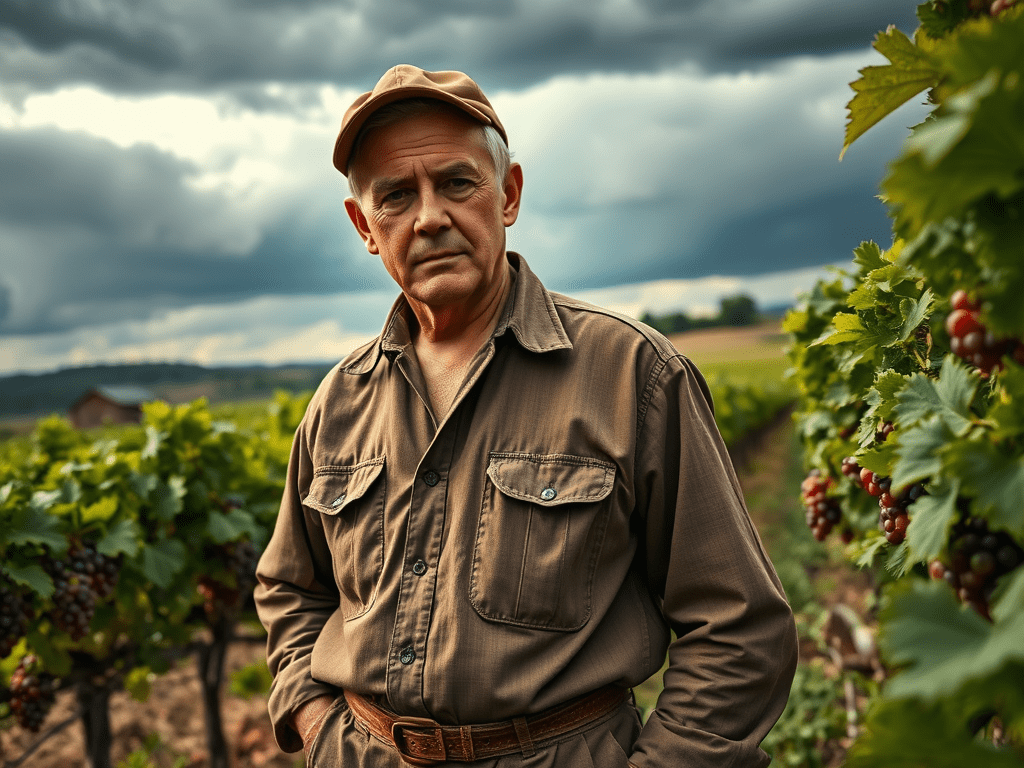
In the middle of a storm, most people look for shelter. But a rare few choose to stand in the rain to keep someone else’s home from washing away.
In 1942, the United States was a place of fear and suspicion. Following the attack on Pearl Harbor, Executive Order 9066 forced thousands of Japanese-American citizens into internment camps. They were given just days to pack what they could carry, leaving behind their businesses, their homes, and their life’s work.
In Florin, California, most people looked away as their neighbors were taken. But an agricultural inspector named Bob Fletcher did something different. He stepped forward.
Bob Fletcher was 31 years old when his neighbors—the Tsukamoto, Nitta, and Okamoto families—were ordered to leave. They were strawberry and grape farmers who faced losing everything to foreclosure.
They asked Bob if he would manage their farms while they were gone. Bob didn’t just say yes; he quit his stable job with the state to become a full-time farmer for people who weren’t even allowed to be there.
For three years, Bob worked 18-hour days. He managed 90 acres of flame tokay grapes across three different farms.
The Cost of Doing the Right Thing
Doing the “right thing” is rarely easy. Bob wasn’t seen as a hero by his community at the time. He was called names, shunned by neighbors, and at one point, someone even fired a shot into the barn where he was working.
But Bob had a quiet, iron-clad integrity. He lived in the migrant bunkhouses rather than the families’ main homes. He paid their mortgages, their taxes, and their bills. When the families finally returned in 1945, they didn’t return to ruins—they returned to thriving farms and a bank account full of the profits Bob had saved for them.
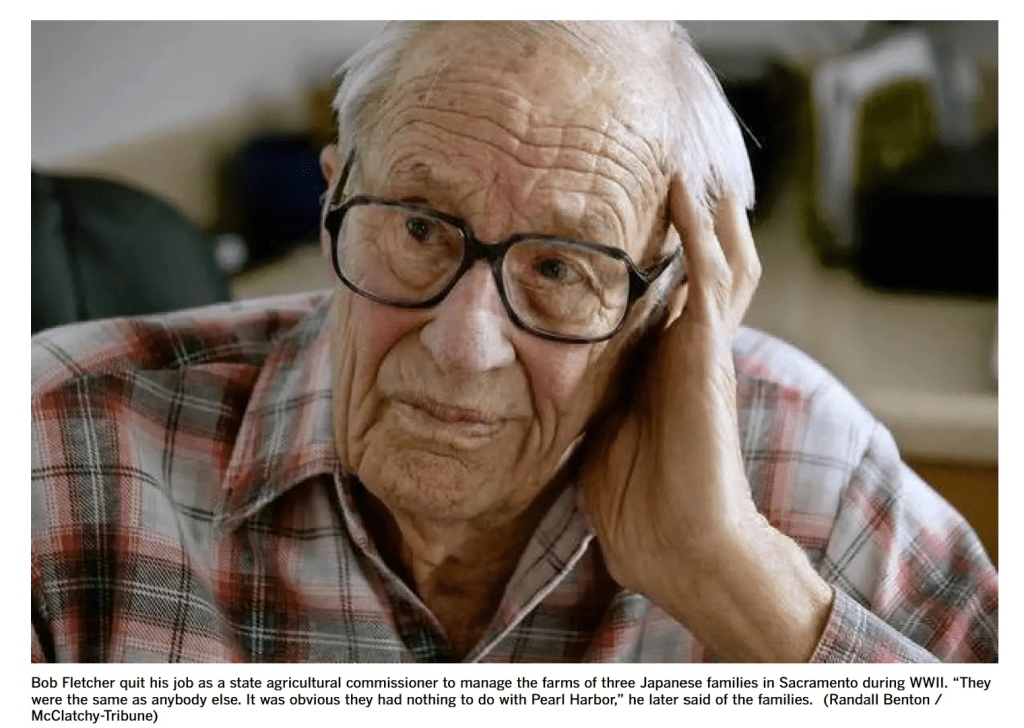
Bob Fletcher lived to be 101 years old. For decades, he deflected praise, often saying:
“I don’t know about being a hero. I just did what I thought was right.”
His life leaves us with enduring lessons:
Integrity is a verb.
It is not what we believe in private, but what we practice when no one is watching—and when it costs us something.
One person is enough.
Bob couldn’t stop a national injustice, but he saved three families. Sometimes protecting one corner of the world is exactly what we are called to do.
Moral courage is quiet.
It doesn’t announce itself. Sometimes it looks like long days, dirty hands, and the refusal to surrender compassion to fear.
We may not be living through a world war, but we all face moments where it is easier to go along with the crowd than to stand up for a neighbor. Bob Fletcher’s life asks us: Who are we looking out for? What are we willing to protect?
Note 1 : Photo By Unknown Author – Original publication: LegacyImmediate source: https://www.legacy.com/us/obituaries/sacbee/name/robert-fletcher-obituary?id=11367093, Fair use, https://en.wikipedia.org/w/index.php?curid=69402868

 Peace LiLy