
“Imagine a child’s brain as a garden. Every word you speak is like a drop of water nurturing growth.”
One cold winter morning in 1995 at a Chicago hospital, Dr. Dana Suskind, a cochlear implant surgeon, held the small hand of a boy who had just undergone surgery. Technically, the boy could now hear. Yet weeks passed, and he still didn’t speak a word. Dr. Suskind wondered—what was missing? She discovered that while technology could restore hearing, it could not replace something even more vital: the daily language environment a child grows up in. Without rich and loving conversation, the boy’s world remained silent in a deeper sense.
This experience led Dr. Suskind to research the profound role parents play in shaping their children’s language and cognitive development. She founded the Thirty Million Words (TMW) initiative, inspired by a groundbreaking 1995 study by child development researchers Betty Hart and Todd Risley. Hart and Risley discovered a striking reality: by the age of three, children from higher-income families had heard about thirty million more words than children from lower-income families.
From birth to age three, a child’s brain forms 1 million neural connections every second. Every conversation is brain-building—especially when it’s warm, eye-to-eye, and responsive.
Quantity matters—more words create more neural connections.
Quality matters more—it’s not just talking to a child, but engaging with them in responsive conversations.
Children who heard more words also experienced more encouraging interactions, richer vocabulary, and emotionally supportive tones from their parents. Meanwhile, children who heard fewer words were often exposed to more negative or directive language (“Stop that!” “Don’t do this!”) and fewer warm, conversational exchanges. By the time these children entered school, the gap had already set the stage for differences in learning, confidence, and future opportunities.

Dr. Suskind’s TMW initiative encourages parents to intentionally fill their children’s early years with abundant, meaningful, and loving conversation. She emphasizes the Three T’s:
- Tune In – Notice what your child is focused on and talk about it.
- Talk More – Use a rich variety of words to describe, explain, and explore the world together.
- Take Turns – Engage in back-and-forth conversation, even before your child can speak words.
For example:
- Instead of saying, “Don’t touch that!” try: “That’s sharp, sweetie. Let’s find something safer to play with.”
- Instead of a quick “Good job,” you might say: “I love how you stacked those blocks so high! You worked so carefully.”
- During a walk, point to things you see—“Look at that big red leaf!”—and let your child respond, even with just a gesture or sound.
But there’s another crucial element—how you speak. A gentle tone, warm facial expressions, and genuine interest create an emotional space where a child feels safe and valued. Neuroscience shows that when a child feels emotionally secure, their brain is more receptive to learning and language development.

Dr. Suskind’s work reminds us that parents are a child’s first and most influential teachers—not because of expensive toys or formal lessons, but because of the warmth, curiosity, and attention they share through conversation.
You don’t need a degree or a script. Your voice, attention, and curiosity are enough. Whether in the supermarket, on a walk, or during bedtime, every exchange plants seeds for your child’s future thinking, confidence, and empathy.
The goal isn’t to force constant chatter but to weave language naturally into your shared life—reading together before bed, singing songs in the car, talking about the day while cooking dinner. Over time, these small, daily moments accumulate into millions of words, building both vocabulary and a deep sense of connection.
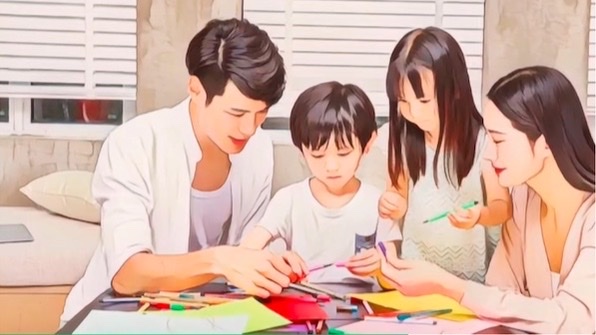
The Thirty Million Words message is clear: Every word you speak to your child is a gift that shapes their mind and heart.
Because one day, those little ears won’t just remember the words you spoke—they’ll carry the mindset, resilience, and love you planted with them.

 Peace LiLy