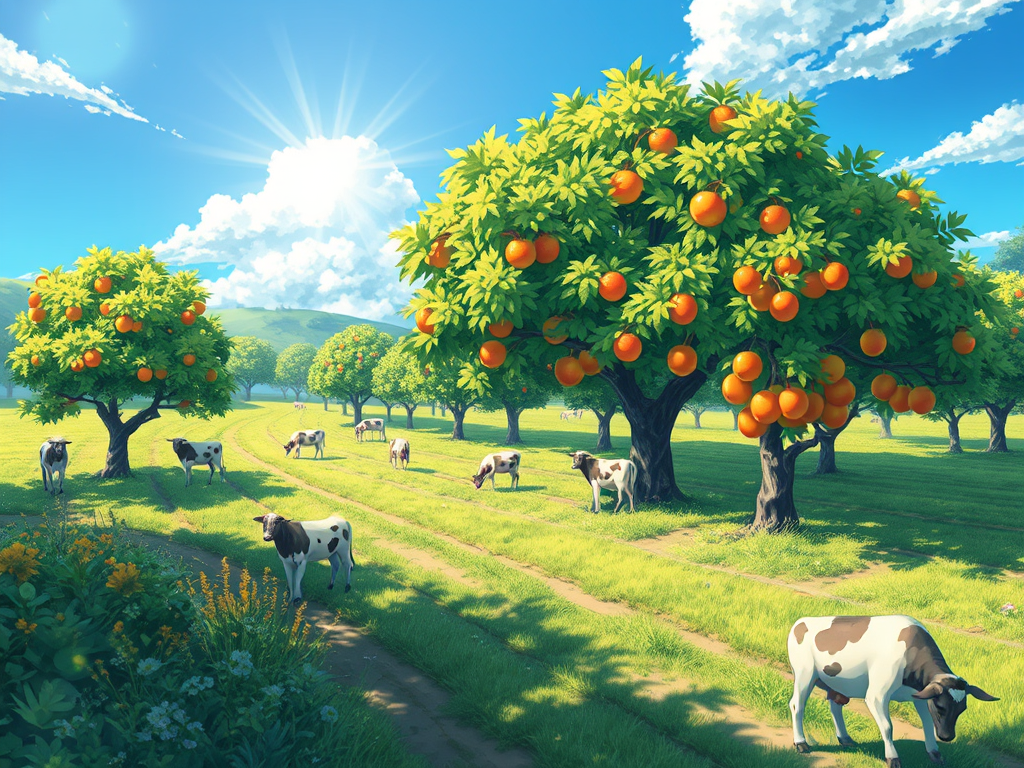
There was a time when fruit trees did not stand alone. Animals grazed beneath them. Nutrients cycled in place. Fallen fruit did not represent waste; it became feed. Manure did not represent disposal; it became fertility. Pest cycles were interrupted not only by intervention, but by interaction.
Then agriculture specialized.
Livestock and orchards separated. Nutrients began arriving in bags. Pest control came in formulated products. Management became cleaner, more legible, more optimized.
It also became more linear.
What we gained in control, we may have lost in biological depth.
From a systems perspective, an orchard is not simply a collection of perennial plants. It is a layered biological network: canopy, understory, soil microbiome, arthropods, vertebrates, fungi.
When livestock were integrated into orchards historically, they were not an accessory enterprise. They were functional components of nutrient cycling, disturbance regimes, and trophic interactions.
Consider the ecological functions grazing animals can perform:
- Nutrient redistribution: Manure and urine return nitrogen, phosphorus, potassium, and micronutrients in biologically active forms.
- Organic matter incorporation: Hoof action and plant residue trampling stimulate microbial decomposition.
- Pest and disease interruption: Consumption of fallen fruit can reduce overwintering sites for insects and pathogens.
- Vegetation management: Targeted grazing suppresses competitive groundcover while maintaining living roots.
These are not romantic ideas. They are biophysical processes.
When we removed animals, we did not eliminate these functions. We replaced them — typically with fossil-energy-dependent inputs and mechanical disturbance.
The system still performs the same tasks. It just performs them differently.
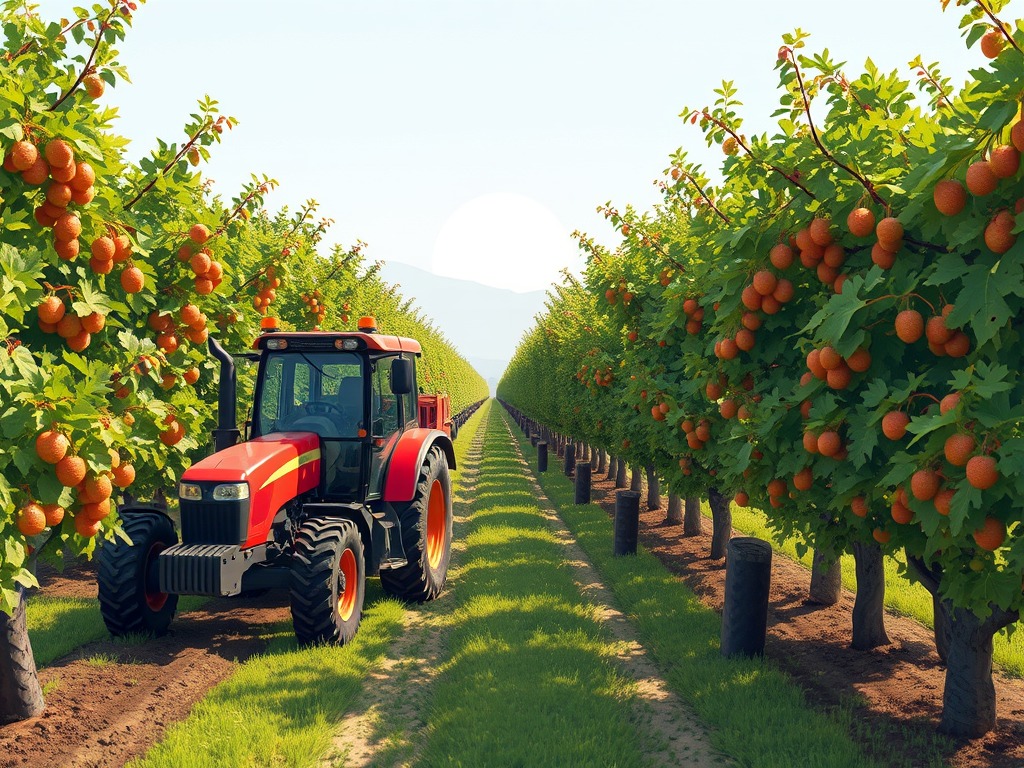
Modern orchard systems are remarkable in their productivity. Precision irrigation, fertigation, canopy management, rootstock optimization — these advances have dramatically increased yields per hectare.
But specialization also reduces functional redundancy — a core principle in ecological resilience theory.
In complex ecosystems, multiple organisms often perform overlapping roles. If one pathway fails, another compensates. This redundancy stabilizes the system under disturbance.
In simplified agricultural systems, functions are often concentrated:
- Fertility depends on external nutrient supply.
- Weed suppression depends on mechanical or chemical control.
- Pest management depends on targeted interventions.
- Revenue depends primarily on fruit yield.
When external inputs become more expensive or less reliable, or when climate volatility increases stress on tree physiology, the system has fewer internal buffers.
This is not a moral critique of modern agriculture. It is a structural observation.
Linear systems are efficient under stable conditions. Networked systems are resilient under variable conditions.
And we are entering an era defined by variability.
Rising temperature variability, altered precipitation patterns, and increased pest pressure are not hypothetical future risks — they are present design constraints.
Under these conditions, resilience becomes a measurable asset.
Integrated orchard grazing introduces additional biological actors into the system. That increases management complexity — but it also increases adaptive capacity.
Well-managed integration can:
- Increase soil carbon inputs and aggregation, improving water infiltration and retention.
- Enhance microbial diversity, which is linked to nutrient cycling efficiency and plant health.
- Diversify farm income streams, reducing economic exposure to single-crop failure.
- Reduce reliance on imported fertility and weed control inputs.
None of these effects are automatic. Poorly managed integration can cause compaction, tree damage, or nutrient imbalance.
The point is not that integration is inherently superior.
The point is that biological partnerships expand the design space.
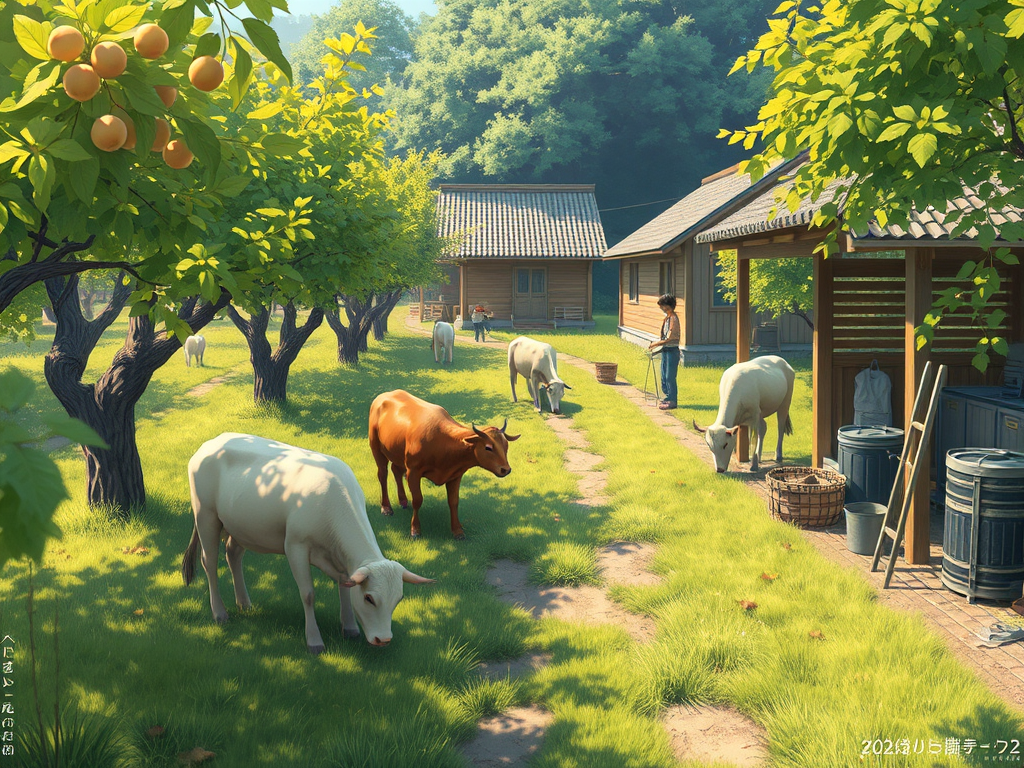
We now have tools that earlier farmers did not:
- Rotational grazing models informed by soil science.
- Electric fencing and mobile infrastructure.
- Precision nutrient monitoring.
- Data analytics to track soil carbon and productivity outcomes.
In this light, animals are not nostalgic additions. They are distributed biological processors — converting biomass into fertility, interrupting pest cycles, and activating soil life.
Complex systems are not messy by accident. They are structured networks of interaction.
The question is whether we are willing to design orchards as ecological networks again — not just as input-responsive production platforms.
That may require more than improved inputs.
It may require rebuilding functional relationships between trees, animals, soil organisms, and farmers.
Not because it is traditional.
But because complex systems absorb shocks that simplified systems cannot.
And resilience, increasingly, is the most valuable yield of all.

 Peace LiLy