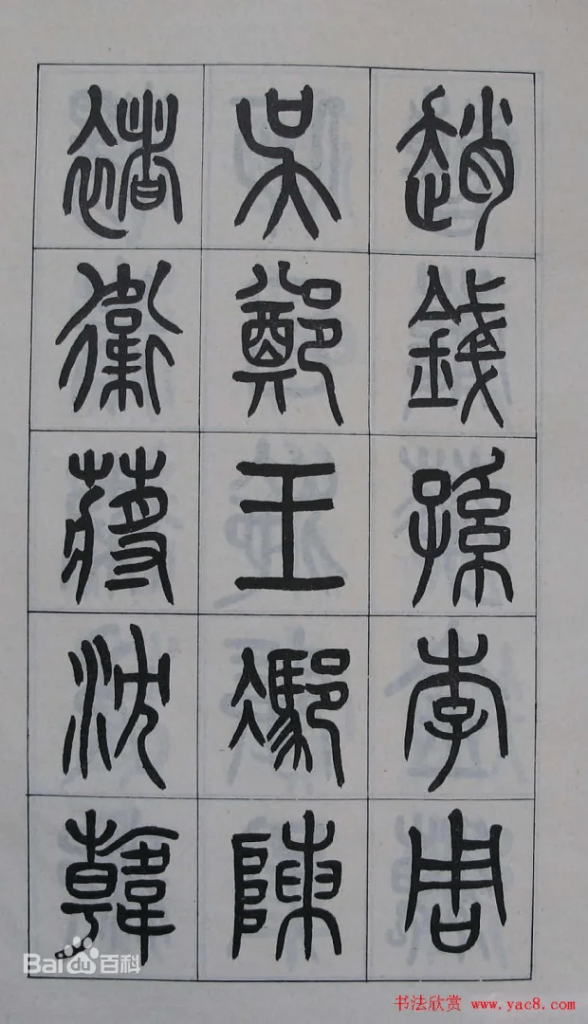
Chinese characters are more than just written symbols—they are small works of art shaped by thousands of years of history. Each character carries meaning, imagery, and often a quiet sense of poetry. A single word can evoke light, wind, mountains, or virtue. When these characters come together to form a person’s name, they become something even more meaningful: a reflection of family hopes, cultural heritage, and the beauty of language itself.
A name often carries the very first blessing from parents and the hopes a family places upon the future.
Imagine traveling back in time to ancient China. If you walked up to Liu Bei (刘备)and casually called him “Liu Bei,” he might pause in surprise—or even consider it somewhat impolite. In traditional Chinese culture, a name was never just a label. It was a symbol of lineage and family, a part of life’s rituals, and perhaps the first gentle poem parents wrote for their child.
A name may consist of only a few characters, yet within it often lies thousands of years of cultural tradition and human warmth.
Surnames and Clan Names: An Ancient Way of Asking “Who Am I?”
Today, we simply combine a surname and given name to form what we call a “full name.” But in ancient China, particularly before the Qin dynasty, “xing” (姓) and “shi” (氏) were two different concepts.
The surname (xing) was primarily used to distinguish marriage relations. The earliest Chinese surnames—such as Ji, Jiang, Si, and Ying—often contained the “female” radical in their characters. This reflected the legacy of a matrilineal society. The principle was simple: people with the same surname were considered to share blood ties, so marriage between them was forbidden.
The clan name (shi), on the other hand, represented social status. Only those who held land, titles, or significant achievements were granted a clan name. In other words, the surname represented lineage, while the clan name reflected rank and honor.
A fascinating example is the famous reformer Shang Yang (商殃) of the Warring States period. He was not originally called “Shang Yang.” His ancestral surname was Ji, and his clan name was Gongsun because he descended from the royal family of the State of Wei. Early in life he was known as Gongsun Yang. Later, after helping transform the State of Qin through sweeping reforms, he was granted the territory of Shang and the title “Lord of Shang.” From then on, people began calling him Shang Yang.
Looking back at history, one might smile at an interesting truth:
In ancient times, many people changed their names not to hide who they were—but because life had elevated them to a new chapter.
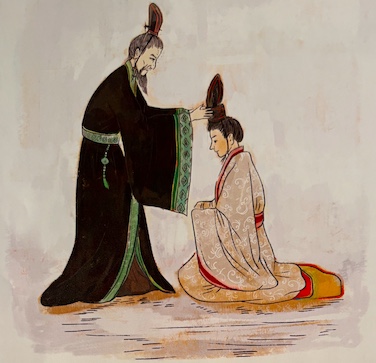
The Courtesy Name: A Rite of Adulthood
In ancient China, a person often had more than one name. In addition to their given name (ming), they also received a courtesy name (zi).
The given name was mostly used within the family, especially by elders. The courtesy name, however, was the name used in society by peers and acquaintances.
Receiving a courtesy name meant that a person had reached adulthood and should be treated with respect.
For men, this moment came at the age of twenty during the “capping ceremony” (冠礼). In this solemn ritual, elders placed a ceremonial cap on the young man and bestowed upon him his courtesy name. From that day forward, he was no longer the boy running through village fields with childhood nicknames like “Little Dog” or “Iron Egg,” but a recognized adult in society.
For women, adulthood was marked by the hairpin ceremony (笄礼) at around fifteen. After this ceremony, a young woman could wear her hair pinned up with a hairpin, signifying that she had reached marriageable age.
This is where the classical phrase “waiting in the boudoir for one’s courtesy name” (待字闺中) comes from—describing a young woman who has received her courtesy name and awaits the next chapter of life.
These rituals made the transition into adulthood both solemn and graceful.
Chinese culture often reveals its subtle wisdom in the relationship between a person’s given name and courtesy name.
The great strategist Zhuge Liang (诸葛亮)was known by the courtesy name Kongming(孔明).
The character Liang means “bright,” and Ming also means “light” or “clarity.” Together they form a beautiful echo—brightness upon brightness.
The legendary general Zhao Yun (赵云)had the courtesy name Zilong(子龙). Ancient Chinese sayings describe the natural harmony between elements: “Clouds follow the dragon, and the wind follows the tiger.” With “cloud” in his given name and “dragon” in his courtesy name, the combination evokes an image of heroic power moving through the skies.
Then there is the great Song dynasty writer Su Shi(苏轼), whose courtesy name was Zizhan(子瞻). The character Shi refers to a horizontal bar at the front of an ancient carriage—something modest in appearance yet essential for support. Zhan means “to look forward into the distance.” One suggests quiet steadiness; the other, far-reaching vision. Together they reflect the balance of humility and aspiration in his life.
Through these pairings, we can glimpse the hopes of parents and elders, as well as the refined and poetic sensibilities of traditional Chinese culture.
Of course, not every ancient name was elegant or poetic. Some carried a touch of everyday humor.
The ruler Duke Cheng of Jin was said to have the name Heitun(黑臀), meaning “Black Hips,” supposedly because he had a dark birthmark on his body.
Another ruler, Duke Zhuang of Zheng, was named Wusheng(晤生), meaning “born with difficulty,” referring to a difficult birth.
If children today were given such names, they might have a few serious conversations with their parents!
On the other hand, some names sounded incredibly powerful. The king King Wu of Qin was named Ying Dang. In ancient Chinese, the character “Dang” suggested sweeping across lands and conquering territories—a name filled with ambition and authority.
Sometimes a name was lofty and ceremonial; sometimes it simply reflected the humor of daily life.
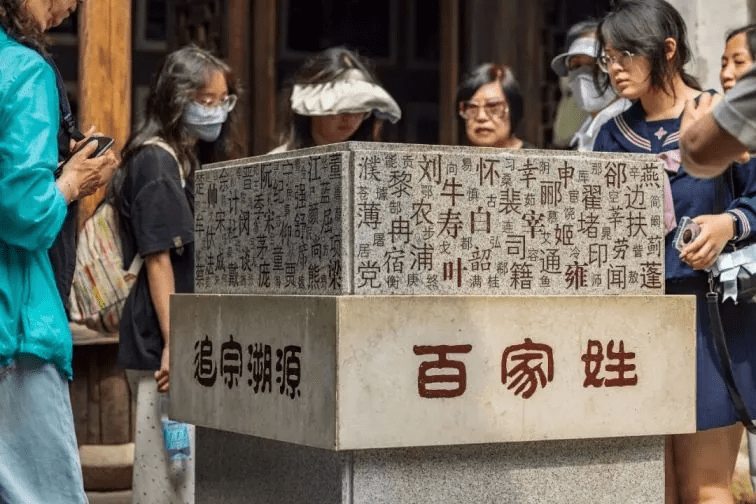
From ancient tribal totems to the familiar Hundred Family Surnames, Chinese names carry thousands of years of cultural memory.
Today, we no longer perform capping ceremonies or hairpin ceremonies, and few people receive courtesy names. Yet when a new child enters the world, parents still open dictionaries, carefully weighing every sound and every meaning before choosing a name.
In that moment, tradition quietly continues.
As an old Chinese poem says:
“A heart’s great aspirations may remain unopened,
yet spring winds return again and again in dreams.”
A name may consist of only a few characters, but it carries a family’s blessing, the imprint of history, and the gentlest hopes for the future.
It is the very first gift a person receives in life.
Link:https://peacelilysite.com/2026/03/15/the-poetry-hidden-in-chinese-names/

 Peace LiLy