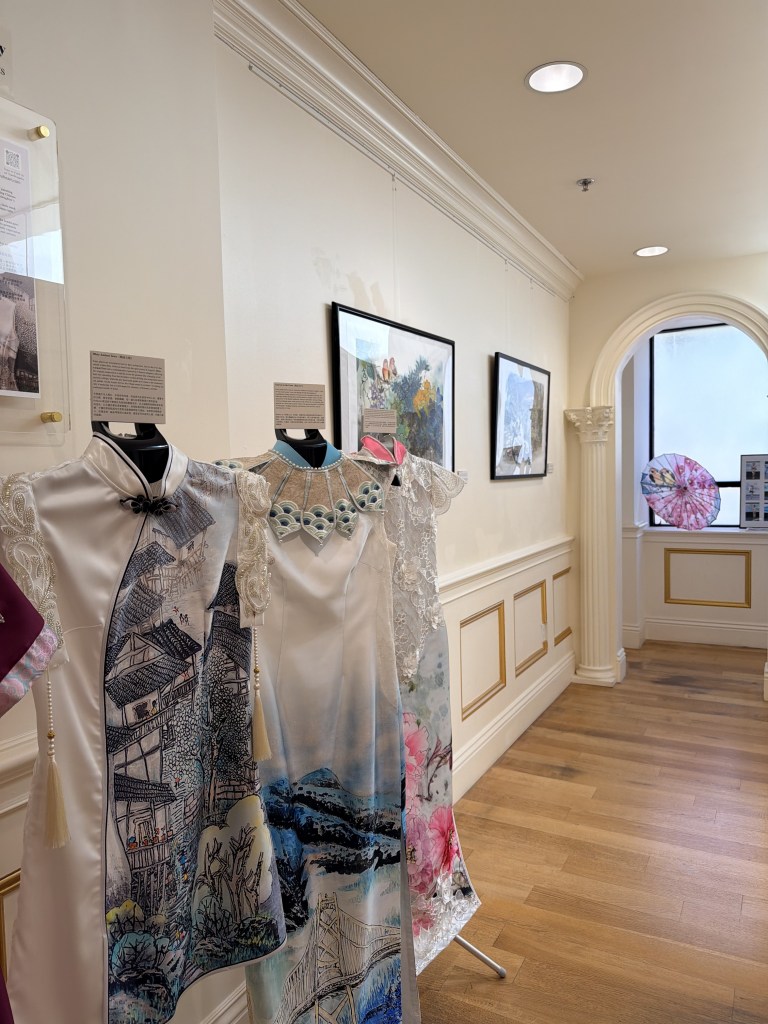
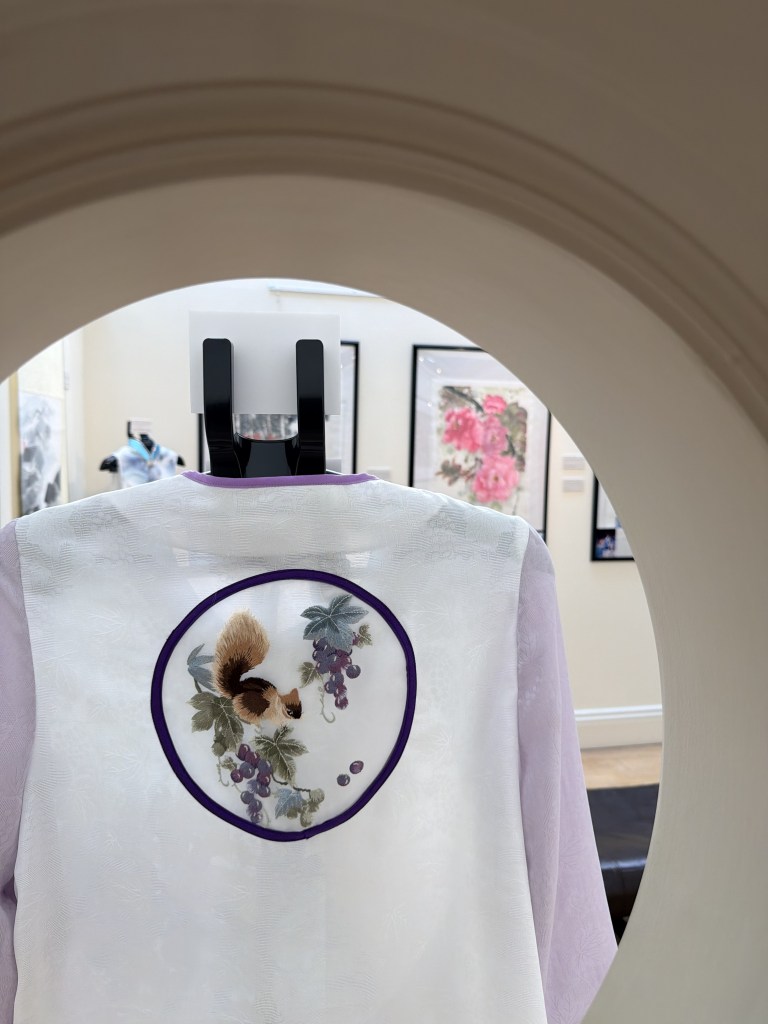
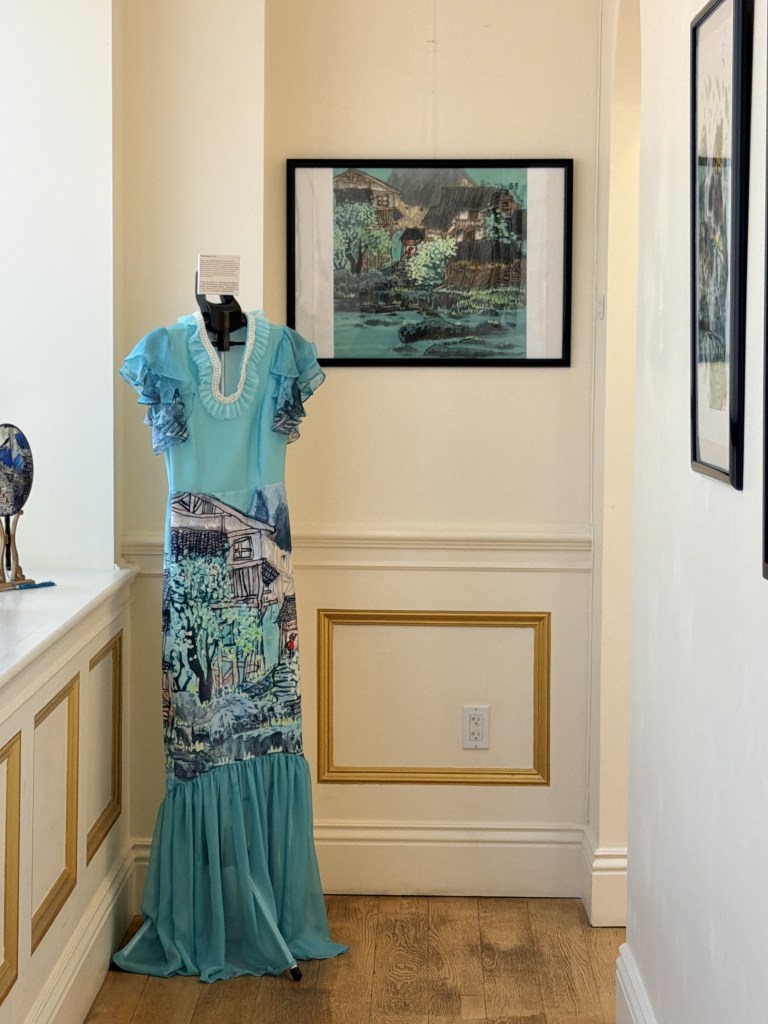
If you are looking for an inspiring cultural experience in San Francisco this summer, make sure to visit the International Art Museum of America. Their newest exhibition, Eastern Charm Awakens: Where Art Meets Silk, offers a breathtaking look at creativity, tradition, and the powerful bond between mother and daughter.
Exhibition Dates: July 18 – August 2, 2026
Location: International Art Museum of America, San Francisco
A Unique Mother-Daughter Collaboration
At the heart of Eastern Charm Awakens is a rare and extraordinary creative dialogue between Yuan Yuan (Rebecca) Xu and her daughter, Angela Tse.
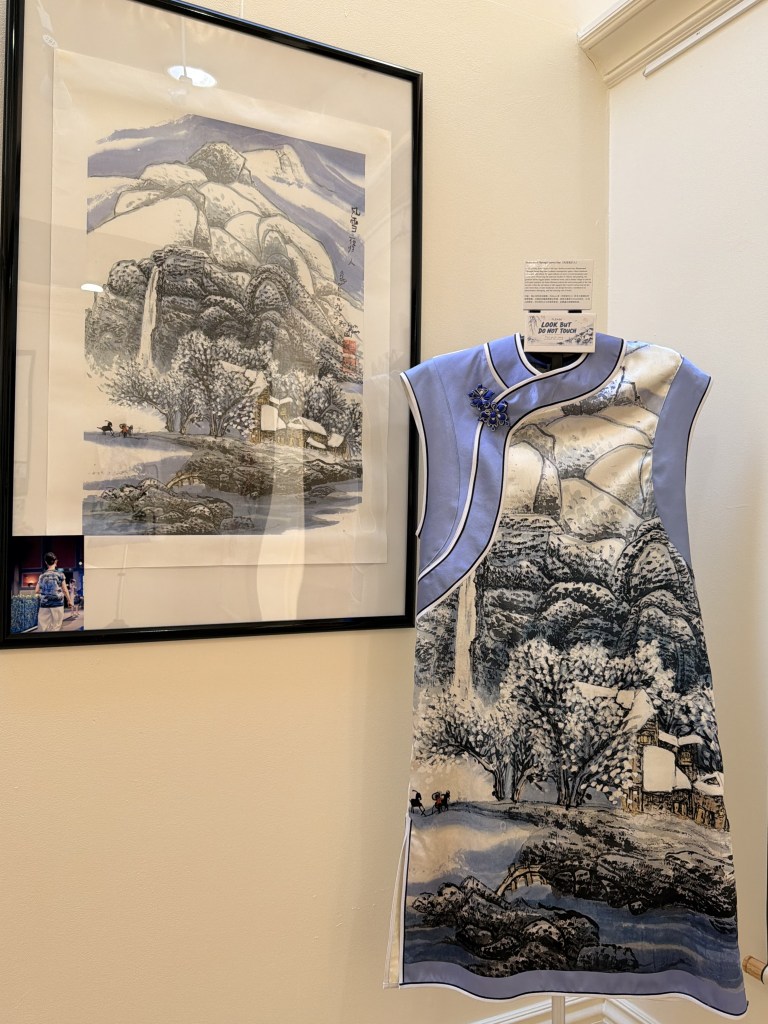
Despite being only 10 years old, Angela is an exceptional talent whose detailed Chinese brush paintings capture depth, beauty, and traditional technique far beyond her years. Inspired by her daughter’s artwork, Xu Yuan Yuan—a multitalented, interdisciplinary fashion designer—has translated Angela’s painted brushstrokes directly into intricate, wearable fashion.
Walking through the gallery, visitors are treated to a dynamic side-by-side experience:
Traditional Chinese Aesthetics: Angela’s fine brushwork grounds the exhibit in rich cultural heritage.
Contemporary Fashion: Yuan Yuan’s garments take elements, motifs, and colors from those paintings, turning two-dimensional art into fluid movement, luxurious textures, and living forms.
This seamless blend transforms static artwork into a tactile, lived experience—showing how ancient artistic traditions can continually inspire modern design.
Whether you are a lover of fine arts, fashion design, or simply looking to experience a touching story of intergenerational talent, Eastern Charm Awakens is not to be missed.
Be sure to stop by before August 2, 2026, to immerse yourself in this magical synthesis of silk, ink, and vision!
The International Art Museum of America has been named Best Museum and Best Art Gallery in SFGATE’s Best of Bay Area 2026, as well as a finalist for Best Event Space/Venue. The museum itself is well worth a visit anytime.
To every parent reading this whose heart is heavy—whether you are walking the path of raising a child with autism, navigating deep emotional distress, or feeling utterly helpless as you watch your child suffer—I want you to know: you are not alone, and there is always hope.
There was a time in my life when I believed my world was collapsing, and no human effort could fix it. My journey from sheer desperation to inner peace showed me the gentle, transformative power of compassion, self-reflection, and faith. I hope my story brings light into your heart today.
When my son entered his eighth-grade year, our home became a battleground. He was rebellious, deeply resistant to school, and consumed by anxiety. One day, after a fierce argument, I locked myself in the bathroom and cried uncontrollably. As a single mother who had sacrificed everything to raise him alone, working double duty as both mother and father, my heart felt completely broken. I wished so deeply that he would come to comfort me.
Instead, he burst through the door and shouted through his own pain, “Mom, how can you cry? I’m suffering ten thousand times more than you, and I haven’t even cried!”
I froze. My tears stopped, but my chest locked up in unbearable pain. From that moment on, my son withdrew from the world. He locked himself in his room, pulling the curtains tightly shut to block out even the daylight. He refused to go to school, refusing medication, counseling, or the advice of loved ones.
As a mother, I tried everything. I took him to doctors, changed his school, sought spiritual readings, and called on every relative he respected. Nothing worked. Despair swallowed me whole: Is my child beyond saving?
At my lowest point, a compassionate friend gently introduced me to Buddhist teachings. She encouraged me to pray for blessings, sincerely repent for my own shortcomings, and dedicate the merit of positive, wholesome deeds to my child.
At first, I held onto this like a lifeline. But my own mind was still full of attachment and anxiety. I was terrified of what colleagues would think, afraid for his future, and haunted by fear whenever I read news about youth mental health. My anxious energy radiated throughout our house. The tighter I tried to grasp and control my son’s life, the more suffocated he felt.
My friend gave me a piece of gentle wisdom that changed everything:
“Focus on your own practice first. Change your own heart, let go of attachment, and your child will naturally begin to change.”
I finally realized that my love had turned into a heavy chain of control and anxiety. True motherly love is not about clinging tightly; it is about learning to hold space with patience, grace, and compassion.
I decided to stop fixating on whether my son went to school each day. Instead, I turned inward. I surrendered my fears, practiced genuine repentance, performed acts of kindness (like freeing captive animals), and dedicated that peaceful energy to him. I replaced my anxiety with warmth and acceptance.
When my heart shifted, the atmosphere in our home softened.
Before his middle school graduation exams, when anxiety threatened to pull him down again, I invited him to join me at a temple blessing. Miraculously, he agreed. Coming home from that peaceful environment, it was as if a heavy weight had lifted from his spirit. He returned to school with a smile, passed his exams, was accepted into high school, and was even honored as an outstanding student during orientation.
Throughout his high school years, I kept up my practice of love, patience, and dedication. Step by step, my son walked out of the shadows of depression. He started working out, his personality became bright and warm, and he eventually graduated and proudly moved on to college.
A Note of Encouragement to Every Parent
Looking back at the years of tears, sleepless nights, and quiet breakdowns, I now see the deeper truth:
The greatest gift we can offer our children is our own peace. We cannot force a child’s mind to heal by pressure or fear. But when we cultivate a heart of unconditional love, patience, and virtue, we become a gentle light that illuminates their path.
Compassion dissolves fear. Buddhist teachings taught me that true strength comes from letting go of ego, practicing deep empathy, and trusting the natural unfolding of life.
To every parent caring for a child with special needs, neurodivergence, or deep mental distress: please do not give up hope. When earthly solutions feel exhausted, remember that a heart filled with sincere compassion and spiritual trust holds unimaginable power.
May you find peace within your own heart, and may that peace bring healing, light, and warmth into your home. You and your child are never truly walk alone.
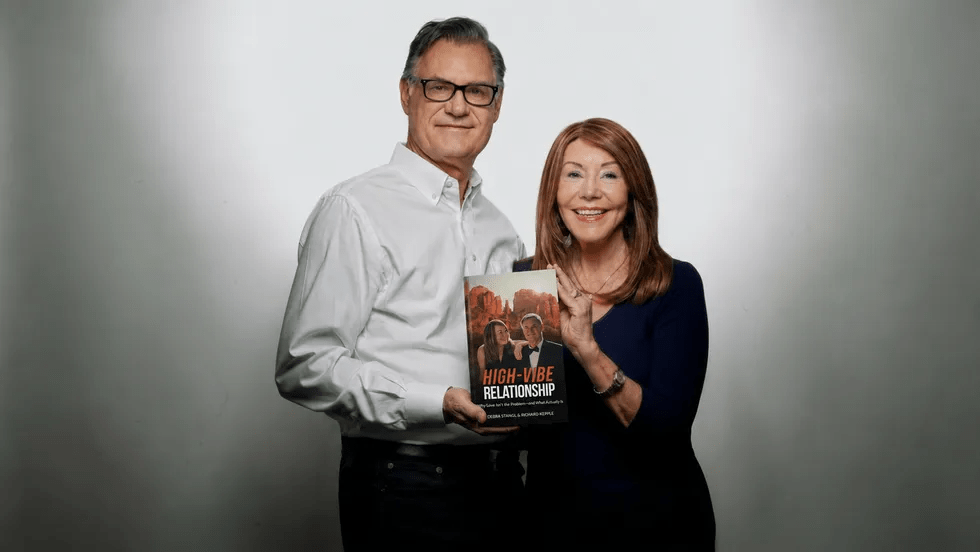
Debra Stangl and Richard Kepple understand that relationships are not failing because love is gone. For many, unresolved emotional wounds, nervous system patterns, and unmet emotional needs often lead people to unconsciously repeat unhealthy relationship patterns, which ultimately lead them down complex paths that silently sabotage the connection underneath the surface.
Debra spent 20 years as a divorce attorney before realizing that most people didn’t want a divorce, but instead, wanted the fighting and emotional pain to stop. As someone who witnessed people go through two or even three divorces over a period of several years, she realized that these people were marrying the same person over and over again—they just had a different name.
After a life-changing awakening in Sedona in 1999, Debra left her law career behind, and after immersing herself in her own healing and transformation, she founded Sedona Soul Adventures in 2002.
Richard transitioned from his previous work in Silicon Valley startups and technology, and a stroke reshaped his understanding of healing, relationships, and purpose.
Upon marrying in 2017, Debra and Richard combined their unique backgrounds in emotional healing, neuroscience, spirituality, and nervous system awareness to create their High-Vibe System™, which aims to reshape how couples understand what’s happening beneath their recurring conflicts.
As part of the High-Vibe System, Debra and Richard developed the Nurturing Needs framework to help couples understand not just how each person experiences love uniquely, but also what creates emotional safety and connection, along with what causes emotional shutdown and disconnection.
“People don’t just learn relationship theory; they experience transformation through real partnership,” the pair shares.
With work that is informed through their professional backgrounds, but also by the healing transformation within their own marriage, Debra and Richard aim to help people understand that conscious relationships require a commitment to ongoing healing, emotional honesty, vulnerability, and growth, which shapes the way people live not just their lives alone, but also with their partner.
Sedona Soul Adventures has been providing transformational retreats for individuals and couples for over two decades. With their team of over 50 Master Practitioners, they have helped thousands of individuals and couples heal from their emotional pain, reconnect deeply with themselves and their partners, and transform their lives and relationships.
Debra and Richard’s new book, High-Vibe Relationship, blends neuroscience, energy healing, and awareness to help couples and individuals get to the root of their problems, understand what fuels past traumas, and solve them in the present for a sustainable future.
“We believe people are not broken, and most relationships are not failing because love is gone,” the team shares. “More often, people are carrying unresolved emotional pain, nervous system patterns, protective behaviors, and unmet emotional needs – what we call ‘gunk’ – that quietly sabotages connection beneath the surface.”
A small act of kindness in my daughter’s classroom became the start of an extraordinary, life-changing journey.
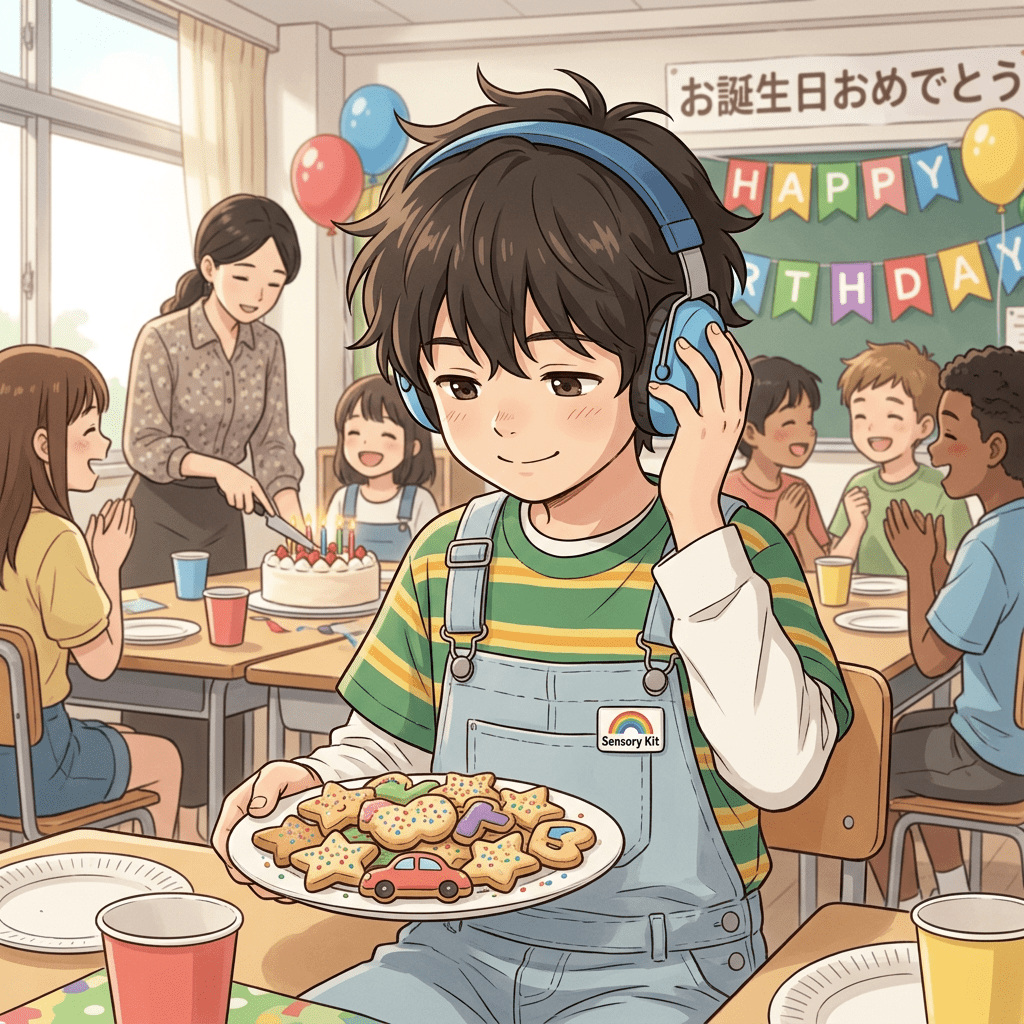
It all began on the day my daughter brought home birthday cookies shared by her classmate, Little Bi, who has autism. As a mother, looking at the food colorings listed on the ingredient label sparked a gentle concern in me, knowing how sensitive a special child’s nervous system can be to artificial additives. I passed along a friendly note through their teacher. I never imagined that this simple act of care would build a deep bridge between our two families.
When I first met Little Bi’s mother, I could feel the deep exhaustion and anxiety she was carrying. Five-year-old Little Bi lived inside his own quiet world and had never spoken a word. To help him, his parents had sought every medical opinion and explored every avenue available. Seeing a mother willing to try absolutely anything to reach her child touched my heart profoundly.
As a practicing Buddhist following the authentic teachings of H.H. Dorje Chang Buddha III, I have personally experienced the transformative power and blessings of the Dharma. Coupled with my professional background in medical nutrition, I believed that Little Bi’s path forward required caring for both his physical body and his spiritual well-being.
With deep empathy, I shared a three-part approach with his mother:
Building Faith and Receiving BlessingsI encouraged her to chant the Six-Syllable Mantra (Om Mani Padme Hum), recite the Sutra Spoken by the Buddha on the Healing of Diseases, and introduce blessed Holy Water from Dharma assemblies, allowing the child to grow enveloped in the compassionate vows of the Buddhas and Bodhisattvas.
Nutritional and Physical SupportFrom a nutritional science perspective, I suggested supplementing his diet with calcium, magnesium, and probiotics to help stabilize his gut health and nervous system.
Early Intervention and Creative OutletsCombining music therapy with psychological guidance to help unleash his hidden talents and foster communication.
During this period, I also dedicated the merits from my own recitation of the Water Repentance Sutra to Little Bi, praying that his obstacles would be cleared.
Through persistent effort, maternal devotion, and the compassionate blessings of the Buddhas and Bodhisattvas—including the Vajra Pole blessings during the New Year assembly—the seed we planted bloomed into something truly miraculous.
Recently, Little Bi’s mother reached out to me, her voice trembling with emotion: “Little Bi spoke!”
Not only did he clearly call out to his grandmother, but on Mother’s Day, he looked at his mom and uttered the words she had longed to hear for years: “I love you, Mom.”
In that single moment, years of heartache, tears, and exhaustion melted into pure gratitude. Even his early intervention therapists were amazed by his remarkable progress, highlighting his wonderful talent for music and reassuring his mother that his silence is now a thing of the past.
Little Bi’s amazing transformation reminded me of a profound truth: when we reach out with genuine compassion, we can illuminate even the darkest corners of another person’s world.
Practicing Buddhism is far more than reciting scriptures—it is about putting wisdom and compassion into practice in our daily lives. May this story bring warmth, comfort, and renewed hope to every parent navigating challenges with their children.
I would like to share with every mother who is hoping to conceive that there is an incredibly effective way to pray for a child—the Buddha Dharma.
My precious little one was born safely in December 2016, filling my heart with immense gratitude and happiness. I have always been in poor health. Before becoming pregnant with my daughter, I had experienced the heartbreaking loss of a child. At that time, I believed I might never be able to have children again.
Fortunately, I had already begun studying the Buddha Dharma about a year before that happened. During that period, I diligently listened to the Dharma discourses of Namo Dorje Chang Buddha III and sincerely recited the Universal Gateway of Guanyin Bodhisattva. I dedicated the merits to the child with whom I no longer had the karmic affinity, while also praying that all Buddhas and Bodhisattvas would bless me with a healthy child.
Then something truly miraculous happened. Just two months later, I became pregnant again.
During my pregnancy, I became even more diligent in listening to the Dharma and reciting the Universal Gateway of Guanyin Bodhisattva. Before each session, I would lovingly say to my baby:
“My dear little one, Mommy is about to listen to the Dharma and recite the Universal Gateway of Guanyin Bodhisattva. I invite you to join me so that we can learn together. May you grow up healthy, wise, and well-behaved. May all Buddhas and Bodhisattvas bless us.”
Truly, my child has grown up to be exceptionally intelligent.
While she was still in my womb, I would often communicate with her, saying:
“My little one, when it’s time for you to be born, please don’t let Mommy panic. Give Mommy enough time to prepare mentally. Also, please be born weighing between 2,900 and 3,200 grams—a healthy weight that will make delivery easier for Mommy.”
I have always been someone who is very afraid of pain. Although I eagerly looked forward to my baby’s arrival, I was also extremely anxious about childbirth. After every Dharma-listening session, I would dedicate the merits and pray that all Buddhas and Bodhisattvas would bless me, because I knew the pain of childbirth was beyond what most people could imagine. I also worried that labor might begin unexpectedly before I was prepared.
Even though I had made every preparation, I still felt somewhat nervous.
On my due date, I went directly to the hospital to be induced. That day, I arrived at the hospital calmly and without panic to give birth—an experience I will never forget.
The labor ward was filled with the anguished cries of other mothers in labor. Hearing their suffering brought tears to my eyes. My husband, who was by my side, could hardly eat a bite and quietly fought back tears himself. Their cries were so heart-rending that even those nearby could deeply feel the tremendous pain these mothers were enduring.
During the induction process, I felt only mild discomfort. After receiving the epidural anesthesia, I experienced almost no pain at all. Eventually, the nurse said to me:
“You’re fully dilated and ready to deliver! It’s time to go into the delivery room. Don’t you feel anything?”
I replied,
“Honestly, I don’t feel much at all—just a little pressure.”
At that moment, however, I became afraid that because I couldn’t really feel the contractions, I wouldn’t know how to push. I worried that I might not be able to deliver naturally and would end up needing a cesarean section. The fear I felt was difficult to describe.
Even so, I was probably the quietest mother in the entire labor ward.
Then, in the midst of my fear, I suddenly seemed to hear a voice saying:
“The more fearful you are, the more important it is to remain calm.”
I closed my eyes, visualized the compassionate holy image of the Buddha Master, and continuously recited:
As I was wheeled into the delivery room, another miracle occurred.
Less than ten minutes after entering the delivery room, my baby was born.
Throughout the entire delivery, I felt virtually no pain at all. It was nothing like the agonizing, hellish pain that many people describe.
Even one of the nurses assisting me remarked,
“How did she do that? Just a moment ago she didn’t even know how to push…”
(To this day, I still find it astonishing myself.)
Even more amazingly, my baby’s birth weight was exactly 3,000 grams—precisely what I had hoped for. She was born healthy and safe.
I am profoundly grateful for the compassionate blessings of the Buddha Master and all Buddhas and Bodhisattvas. The entire childbirth process went remarkably smoothly, and my daughter has grown up to be an easygoing and well-behaved child.
I deeply understand that everything I experienced was made possible through the compassionate blessings of the Buddha Master and all Buddhas and Bodhisattvas. The empowering strength of the Buddha Dharma was something I experienced personally—it was real, tangible, and unmistakable.
With the deepest gratitude to Namo Dorje Chang Buddha III and to all Buddhas and Bodhisattvas throughout the ten directions.
Have you ever caught yourself saying, “I wish I had done that when I was younger”?
It’s an easy trap to fall into. We tend to view adventure as a game for the young—something reserved for twenty-something backpackers or high-energy fitness influencers. We tell ourselves that as we age, our world is supposed to shrink. We swap out rugged trails for comfortable chairs and bold dreams for predictable routines.
But a spectacular new book, “Around the World in 80 Days at 82” by Ellie Hamby, Sandy Hazelip, and Elisa Petrini, completely shatters that illusion.
If you need a reminder that your best chapters haven’t been written yet, this is your wake-up call.
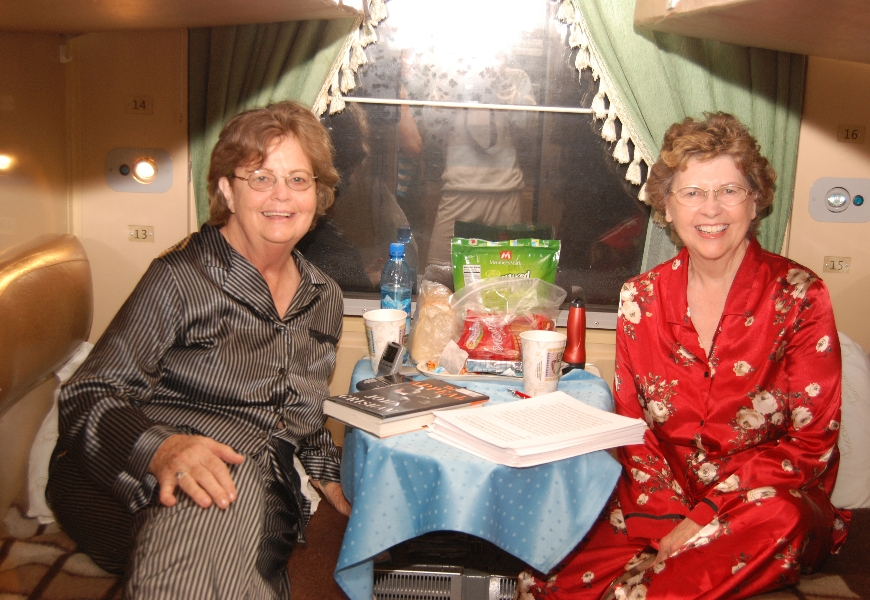
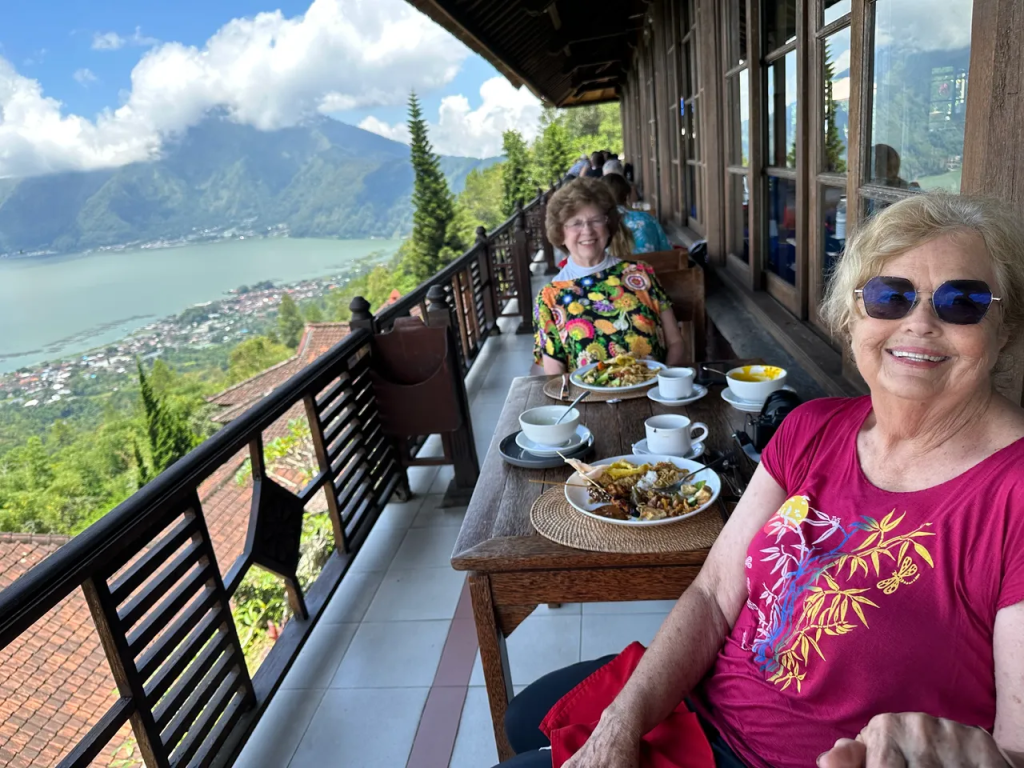
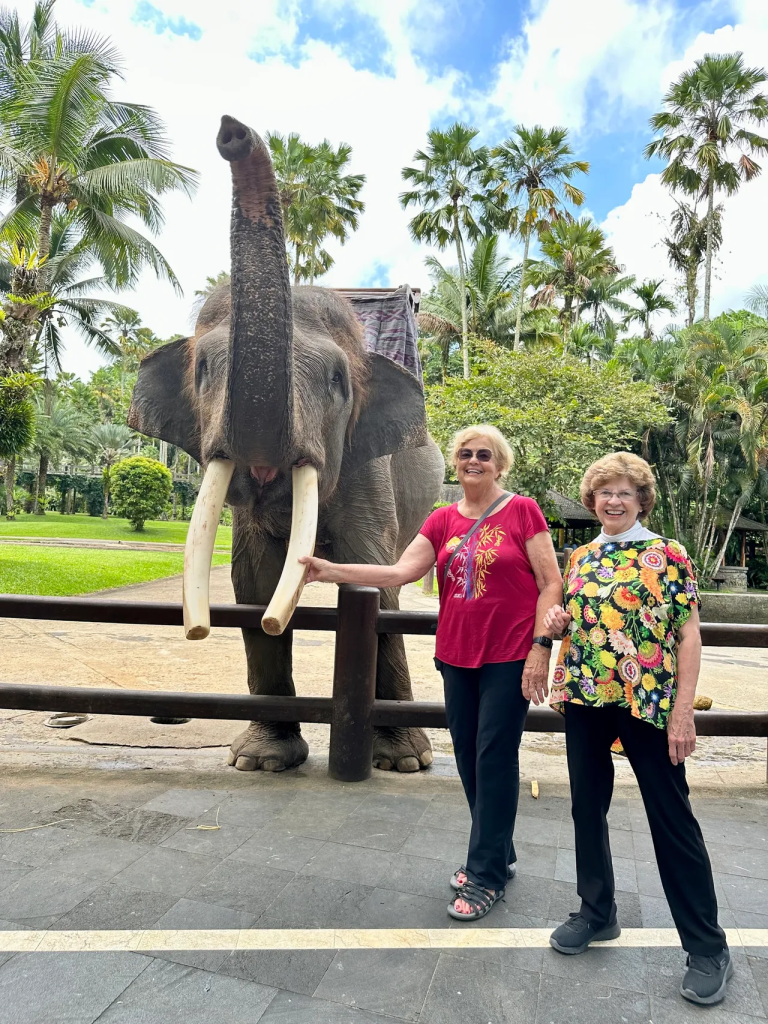
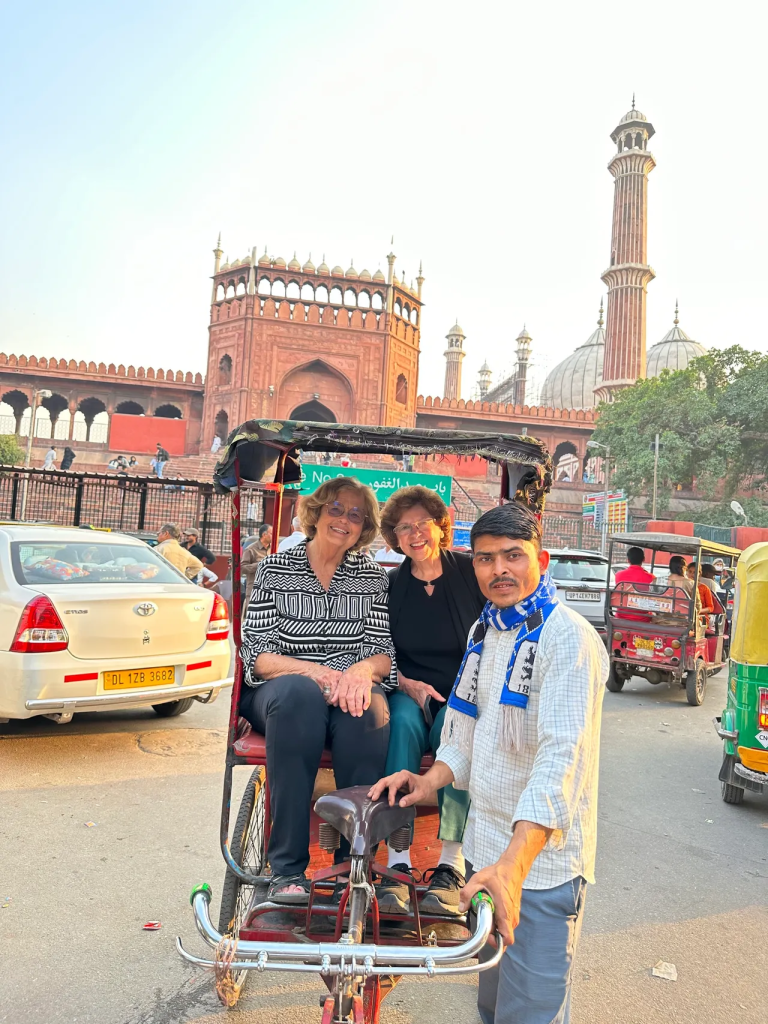
When Ellie Hamby (a documentary photographer) and Sandy Hazelip (a physician) neared their 81st birthdays, they didn’t look for a quiet way to celebrate. Inspired by Jules Verne’s classic tale, they decided to circle the entire globe in 80 days. A minor delay pushed their plans back a year, meaning that at 82 years old, they strapped on a single backpack each and set off into the unknown.
They didn’t book luxury cruise ships or insulated first-class tours. Instead, they traveled on a strict budget, booked modest hotels, took local transportation, and said an enthusiastic “yes” to whatever the world threw at them.
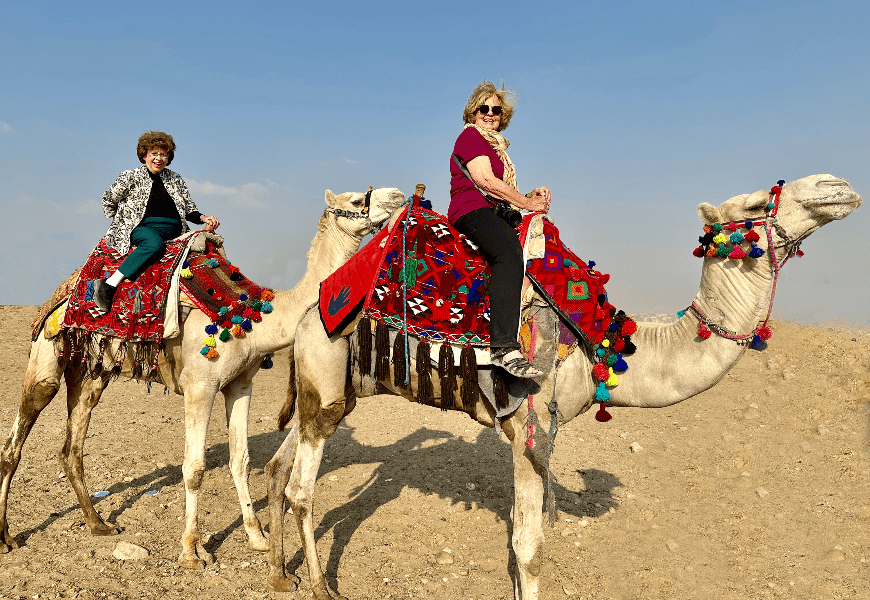
Over the course of nearly three months, they stood among penguins in the freezing winds of Antarctica, rode camels past the Egyptian pyramids, chased the Northern Lights in a reindeer sleigh in Lapland, and navigated the high-speed rush of Tokyo.
1. Nature Doesn’t Care How Old You Are
Whether you are standing before the vast, icy expanse of the Drake Passage or looking up at a desert sky, nature has a beautiful way of making us feel small—and incredibly alive. Ellie and Sandy proved that the awe of a pristine landscape or the thrill of an outdoor challenge belongs to everyone. The earth doesn’t ask for your birth certificate before it takes your breath away.
2. The Power of “Yes” Over “What If”
As we grow older, we tend to let caution dictate our choices. We focus on the “what ifs”—What if I get tired? What if it rains? What if it’s uncomfortable? Ellie and Sandy replaced those doubts with a simple commitment to open-mindedness. By stepping out of their comfort zones, they unlocked a level of vitality that many people half their age struggle to find.
3. Connection is the Greatest Souvenir
While the landscapes they saw were beautiful, the heart of their adventure was human connection. By choosing budget travel and local paths, they interacted deeply with different cultures, made friends worldwide, and relied on the enduring strength of their own lifelong friendship.
You don’t have to book a ticket to Antarctica tomorrow to live adventurously. Infusing your life with wonder starts exactly where you are:
Change Your Scenery: Find a local trail, a state park, or a nature reserve you’ve never visited. Feel the dirt under your shoes and breathe in the fresh air.
Ditch the Comfort Zone: Try a new outdoor activity. Go kayaking, try birdwatching, or sleep under the stars in a tent for a weekend.
Shift Your Mindset: Stop waiting for the “perfect time” or the “perfect age.” The ideal moment to enjoy the majesty of the natural world is right now.
Ellie and Sandy’s journey is a beautiful, vibrant proof that aging isn’t a process of shutting down—it’s an opportunity to keep opening up.
So, what are you waiting for? Step outside, look at the horizon, and remember: Adventure isn’t a matter of age. It’s a state of mind.
The reality of feeling alone is not what many people think. Claudia Hammond, who instigated a survey called the BBC Loneliness Experiment, explores five counterintuitive findings.
About the results
The findings in this article are based on an online survey of 55,000 people from around the world, called the BBC Loneliness Experiment. It was created by academics at three British universities in collaboration with Wellcome Collection.
1. Younger people feel lonelier than older people
When you picture someone who’s lonely, the stereotype is often an older person who lives alone and hardly sees anyone. Indeed, in the BBC Loneliness Experiment, 27% of over 75s said they often or very often feel lonely. This is higher than in some surveys, but because the survey was online we had a self-selecting sample and might have attracted more people who feel lonely.
Yet the differences between age groups are striking. Levels of loneliness were actually highest among 16-24 year olds, with 40% saying they often or very often feel lonely.
This begs the question of why so many young people say they feel lonely. Perhaps they are more prepared to admit to feelings of loneliness than older people who might feel they need to stress their independence. But it was noticeable that when everyone was asked at which point in their life they’d felt lonely, even retrospectively the most common answer people gave was when they were young adults.
So it’s not necessarily modern life that’s making young people feel lonelier, but factors associated with being young itself. Although we might think of the ages of 16-24 as a time of new freedom to have fun, leaving school and having more control over your life, it’s also a time of transition – moving away from home, starting college, starting a new job – all of which take you away from the friends you’ve grown up with. At the same time people are trying to work out who they are and where they fit into the world.
In addition to this, people aren’t accustomed to these feelings of loneliness and haven’t yet had the experience to know that they often pass, or to the chance to find ways to cope with those feelings, such as distracting themselves or looking for company.
2. 41% of people think loneliness can be positive
This finding fits in with the ideas of people such as the late neuroscientist John Cacioppo, who believed that we evolved to experience loneliness because it can be useful, even though it’s so unpleasant. Humans have survived through forming co-operative groups. If people feel they are excluded from a group then feelings of loneliness might drive them to connect with people, finding new friends or rekindling old relationships.
The problem is that it can become chronic, with a serious impact on well-being and maybe even on health.
Feelings of chronic loneliness are associated with an increased risk of depression a year later. It was striking that in the survey, although 41% of all the participants said loneliness could be positive, this rate dropped to 31% in those who told us they often feel lonely. Loneliness can be so miserable and distressing, that when it’s long-lasting it can be hard to see any positive side.
3. People who feel lonely have social skills that are no better or worse than average
Sometimes it’s assumed that people feel lonely because they’ve found it hard to make friends and help with improving social skills would make a difference. This isn’t what we found. A key element of social interaction is the ability to tell what other people are feeling, so that you can adjust your responses accordingly. Perhaps they’re worried about something or you’ve accidentally offended them.
One way of measuring this skill is to give people a series of full faces or even just pairs of eyes to assess how good they are at working out which emotion people are experiencing. There was no difference between the average scores of the people who often felt lonely and the people who didn’t. There were differences in scores on neuroticism, so perhaps it’s the anxiety provoked by social situations that can make them harder to cope with if you feel lonely, rather than social skills.
4. Winter is no lonelier than any other time of year
People report loneliness in all seasons, not just winter (Credit: Getty Images)
In the run-up to Christmas, you often see campaigns from charities who help the elderly featuring picture of isolated old people. It’s a day of the year that’s all about gathering with your loved ones to celebrate, so the idea of facing the day alone is something a lot of people would dread. British comedian Sarah Millican runs a very successful #joinin campaign on Twitter on Christmas Day so that people who feel lonely can chat to each other. And if you live in the northern hemisphere then Christmas also falls in the middle of winter when days are shortest and people stay in more, leaving you even more isolated if you feel lonely.
But we found that for many who feel lonely, winter is no worse than any other time of year. We asked people to tell us the time of year and the time of day when they felt loneliest. More than two thirds of people said winter was no lonelier than any other time of year. The minority of people who did say one particular time of year is lonelier chose winter, but a few even chose summer. At Christmas, many people go to great lengths to ensure that everyone is included, inviting friends over if they know they might be alone. But in summer if everyone else goes on holiday, you might be the one feeling left behind. So perhaps we should start wondering whether other people might be lonely all year round, instead of just at Christmas.
5. People who often feel lonely have higher levels of empathy than everyone else
In the survey two kinds of empathy were measured. One was empathy for people’s physical pain – how sorry you feel for someone who has accidentally slammed their hand in a door, picked up a scalding frying pan or been stung by a wasp. The other was how much empathy you have for other people’s social pain – for someone who’s been bullied at school, not invited to a party or dumped by their partner.
There was no difference in empathy for physical pain between the people who felt more or less lonely. But the people who said they often or very often felt lonely scored higher on average for empathy for social pain. Maybe because they have experienced for themselves what it feels like to be left out, they empathise more with other people who find themselves in the same situation.
How many times have you found yourself on a Friday evening, sighing, “Wow, this week went by so fast”?
We often live under the illusion that time is an endless reservoir and that tomorrow’s sun is guaranteed to rise. Because of this, we generously surrender our hours to mindless social media scrolling, infinite short videos, and the trivial daily tasks that drain our energy by day and leave us feeling empty by night.
Recently, I came across an ancient, striking Latin concept being discussed online: Memento Mori—“Remember you must die.”
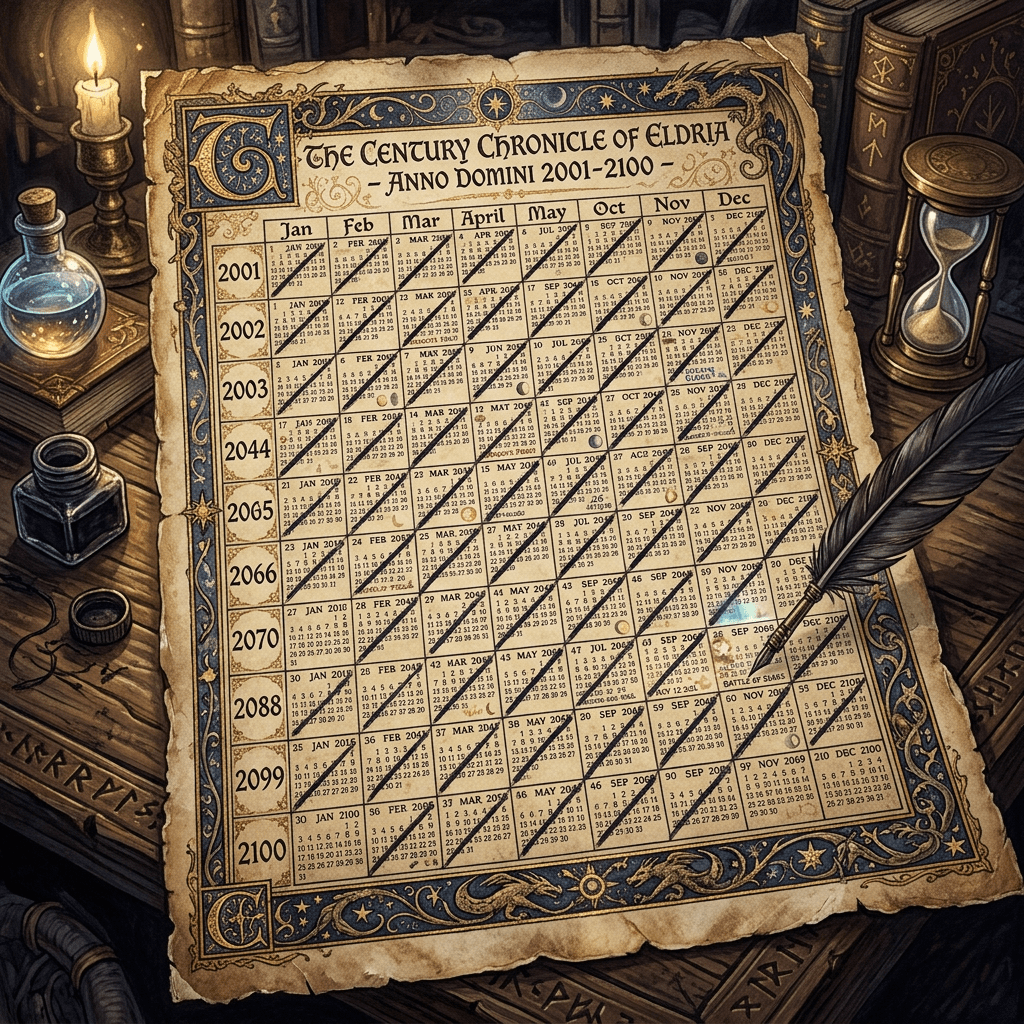
To turn this abstract philosophy into something physical and undeniable, someone created an incredibly simple yet visceral tool: the Life Calendar.
It is just a standard sheet of A4 paper covered in a dense grid of tiny squares. Each square represents one week of your life.
If we assume an average lifespan of 80 years, that is 52 weeks multiplied by 80 years, which equals exactly 4,160 squares.
When you print this sheet out and sit before it, the visual impact is startling. You realize with a jolt that our long, passionate, complex lives, when stripped down to their absolute essence, can fit onto a single sheet of paper—with room to spare.
Now, at the end of every weekend, I take a pen and firmly cross off a square.
The scratch of the pen against the paper sounds like the quiet, relentless step of passing time. As the ink buries those past seven days, a few inescapable questions rise to the surface:
“Is this really all the squares I have left?”
“What did I actually do with the seven days I just crossed off?”
“If life is this brief, am I truly willing to trade my remaining squares for superficial social obligations and mental clutter?”
“Is where I am pouring my heart and energy truly worth the exchange?”
Admittedly, this ritual might seem extreme, even cold—like a daily countdown to the end. But when daily life becomes numb and repetitive, radical measures are often the most effective way to wake up.
Throughout history, those who achieved mastery in their fields often held onto habits that others found bizarre. They were willing to appear eccentric because they understood a fundamental truth: life is too short, and what truly matters must be fiercely guarded.
Steve Jobs: Every morning, he looked in the mirror and asked, “If today were the last day of my life, would I want to do what I am about to do today?” If the answer was “no” too many days in a row, he knew it was time to change.
Yuval Noah Harari: The author of Sapiens goes on a strict 60-day silent meditation retreat every single year. For 10 hours a day, he completely disconnects from the digital noise—no phones, no talking.
As Cal Newport notes in Deep Work, a personal ritual might seem strange to outsiders, but if it works for you, it is absolutely worth it. These extraordinary individuals weren’t being quirky; they were aggressively reclaiming their finite time.
Since adopting the Life Calendar, my daily habits have shifted dramatically.
Previously, whenever boredom or fatigue crept in, my hand would instinctively reach for my phone to mindlessly scroll through YouTube or social media feeds. Now, the moment my fingers hover over the screen, that dense grid of 4,160 squares flashes in my mind.
A voice pulls me back: “Careful. You are about to trade a portion of your remaining squares for a few seconds of cheap dopamine. Is it really worth the swap?”
This instant awareness acts as a powerful pattern-interrupter. It keeps me focused and intentional during the day, and gives me the resolve to step away from empty entertainment in the evenings to focus on personal growth and long-term aspirations.
But my practice of crossing off a square each week has a deeper, more profound purpose. It has anchored my spiritual path and Buddhist practice with absolute clarity.
The world is full of dazzling distractions—wealth, achievements, and praise. Yet, looking at that slowly darkening sheet of paper, a quiet truth settles in: when the final square is crossed off and impermanence claims us, not a single cent of wealth or ounce of worldly fame can be taken with us.
I do not want my limited squares to be filled with things that vanish like smoke.
Instead, I want to use this finite life to cultivate eternal value. By practicing the Dharma and dedicating myself to genuine spiritual cultivation, I am building the kind of merit and wisdom that transcends this single lifetime.
The calendar silently urges me every day: Be diligent! Do not waste time! Only by practicing mindfully in the present can we transcend the cycles of suffering and cultivate true, lasting liberation.
As you finish reading this, take a moment to draw your own grid in your mind. Count how many squares you have already crossed off, and look at how many blank spaces remain.
Life is brief, and this world of ours has no shortage of struggles. Stop spending your most precious squares on people and things that do not serve your deeper purpose. Plan wisely, live intentionally, and make every square count. May we all find true freedom and peace within the pages of our finite lives.
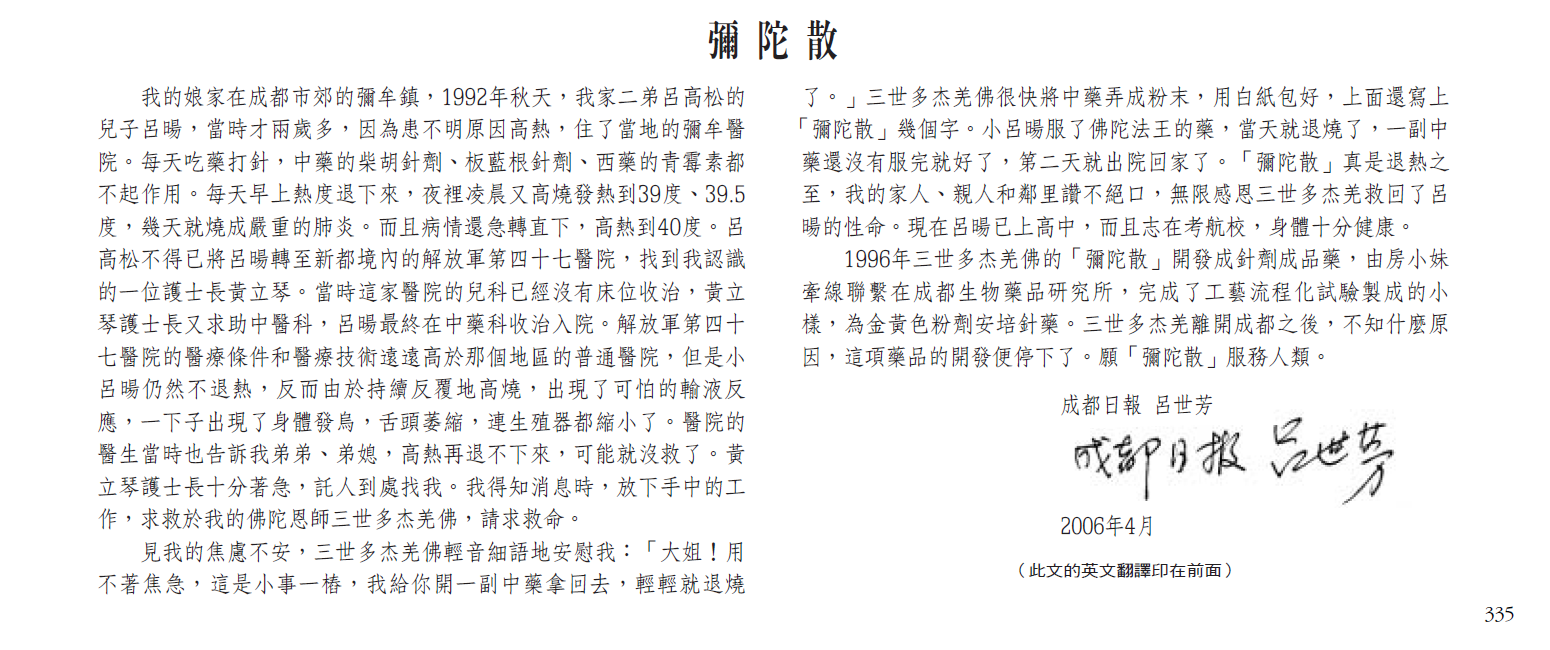
My family is originally from Mimou in the suburbs of Chengdu. In the autumn of 1992, my second younger brother Gao-Song Lu’s two-year-old son, Yang Lu, was hospitalized in the local Mimou Hospital with a mysterious high fever. Every day he received shots and took all sorts of medicine. This included Chinese herbal medicine, such as bupleurum falcatum and isalis root, and Western medicine, such as penicillin. None of them did any good. Every morning his fever would go down, but late at night it would rise up to 39°C (102.2°F) or 39.5°C (103.1°F). Within a few days, Yang Lu had developed a serious case of pneumonia. His condition worsened quickly, and his fever rose to 40°C (104°F). His father Gao-Song Lu had no choice but to move him to the 47th Military Hospital in Xindu.
There was a shortage of beds at the pediatric department, but with the help of the hospital’s head nurse, Li-Qin Huang, a friend of mine, Yang Lu found a place to stay at the department of Chinese herbal medicine. Yang Lu received much more advanced treatment at the military hospital than he did at that local ordinary hospital, but his temperature did not come down. To make matters worse, because of his continuous high fever, a horrible reaction to one of the intravenous shots all of a sudden caused his skin to blacken and and his tongue and reproductive organs to shrink. The doctor told my brother and his wife that Yang Lu might not live if the fever did not abate soon. Li-Qin Huang, the head nurse, was very worried and had someone look all over for me. When I finally heard what was happening, I dropped my work immediately and went to the residence of my respected Buddha master, His Holiness Dorje Chang Buddha III, to seek help.
I was very anxious, but H.H.Dorje Chang Buddha III consoled me. “Do not worry. This is a small matter. I will give you Chinese herbal medicine that will bring down the fever in no time.” H.H. Dorje Chang Buddha III promptly ground the medicine to powder, wrapped it in white paper, and wrote on it “Mi Tuo Powder.” Yang Lu took the medicine, and his fever came down that very day. He was cured without even taking all of the Chinese medicine. The next day he was able to check out of the hospital and return home. My family and neighbors marveled at the effectiveness of “Mi Tuo Powder” and were all deeply grateful to H.H. Dorje Chang Buddha III for saving Yang Lu’s life. Yang Lu is now in high school and plans to apply to the air force academy. He is very healthy.
In 1996, an injected form of H.H. Dorje Chang Buddha III’s “Mi Tuo Powder” was developed. Xiao-Mei Fang made arrangements with the Chengdu Institute of Biological Medicine to complete production procedures and produce a sample of golden ampere injected medicine. After H.H. Dorje Chang Buddha III left Chengdu, the development was terminated for some reason. I hope that someday “Mi Tuo Powder” will be made available to help all people.
Chengdu Daily News Shih-Fang Lu,
April, 2006
(This is a complete translation of the Chinese text that follows originally written and signed by Shi-Fang Lu.)
Editor’s Note: This article is dedicated to Mother’s Day. The author is a 47-year-old mother whose eldest son is already 20 years old. Two years ago, after unexpectedly becoming pregnant with a second child, she firmly chose to give birth despite her husband’s threats of divorce, opposition from family members, and the risks associated with advanced maternal age. How did she maintain such a moving and unwavering maternal love? What gave her the strength to stand against worldly pressures?
I. I Planned to Become a Nun, but Unexpectedly Became Pregnant
“If you insist on keeping this baby, then let’s get divorced! The older child stays with me, and you can raise the second child by yourself!”
My husband nearly shouted those words at me.
“Please,” I replied through tears, “the baby is perfectly healthy. Please give this child a chance to be born and live.”
That evening, after dinner, we once again argued fiercely about whether I should keep or abort this unexpected pregnancy. My husband presented every possible reason why we should not have a second child. Whether through persuasion or pressure, his goal was the same: he was determined that I terminate the pregnancy.
At that point, the “uninvited guest” in my womb was exactly three months old.
I call the baby an “uninvited guest” because I had already made up my mind to become a nun.
One day in 2017, I attended a Dharma listening session at a Buddhist center and respectfully listened to the Dharma discourses of H.H. Dorje Chang Buddha III. That gathering opened a completely new chapter in my life.
I subsequently took refuge in the Three Jewels. Through continuously listening to the Buddha’s Dharma discourses and studying Buddhist teachings, I gradually understood the true direction of my life and became determined to cultivate diligently. Eventually, I developed the aspiration to renounce worldly life and even completed an application to enter monastic life.
A few days after submitting the application, on December 8, 2018, I suddenly felt weak and nauseated. When I went to the hospital for an examination, the doctor informed me that I was pregnant.
It was completely unexpected.
Shock, confusion, struggle, disappointment—my emotions surged all at once. I had no idea what to do.
Had I not been studying Buddhism, I might have simply chosen abortion as many women do when they do not want a child. But as a Buddhist disciple, I had come to understand the law of cause and effect and the preciousness of obtaining a human birth.
How could I harm my own child and deprive a soul of the opportunity to be reborn as a human being?
Most importantly, I had already resolved to become a nun. Yet now this “uninvited guest” had arrived. Surely I could not enter monastic life while carrying a child.
Would I spend the rest of my life occupied with the responsibilities of family life?
Soon I came to accept the situation. This was karmic affinity—something beyond my control. I decided to follow the natural course of events.
While silently reciting the holy name of Namo Avalokitesvara Bodhisattva, I underwent an ultrasound examination. The baby was healthy and developing normally.
The doctor said, “At your age, becoming pregnant is not easy. I’ll prescribe medication to help stabilize the pregnancy. If you don’t intend to keep the baby, you should schedule the procedure soon. You’re already nearly two months pregnant.”
His words only strengthened my determination to give birth.
II. “I Will Protect This Child with My Life”
Both my husband and I had health issues. It had not been easy raising our first son, who was already in high school. My husband had long opposed the idea of having another child, so I initially concealed the pregnancy from him.
However, he soon found out.
Our household erupted into turmoil.
Whether during meals, before bed, or through messages on WeChat, he constantly urged me to undergo an abortion. We argued repeatedly. He even accused me of being selfish.
I felt helpless and dreaded going home. I tried to avoid seeing him whenever possible.
The only place where I found peace was at the Buddhist center, listening to the Dharma discourses of H.H. Dorje Chang Buddha III and reciting the holy name of Namo Avalokitesvara Bodhisattva. Whenever I bowed before the Buddha or looked upon the image of Avalokitesvara Bodhisattva, I would burst into tears uncontrollably.
My husband then organized a family gathering and invited my siblings to persuade me to abandon the pregnancy.
Everyone expressed their opinions. Alone, I found myself debating against the entire family.
Then my husband delivered what he believed was the ultimate threat:
“If you insist on giving birth, then you’re on your own. We’ll get divorced. I’ll only take responsibility for our older child.”
Without hesitation, I replied:
“I will take full responsibility for whatever happens. Even if I become a beggar, I will raise this child. If anyone tries to take this child away, I will protect him or her with my life.”
I cried and ran outside.
In late December 2018, my husband placed a divorce agreement and our marriage certificate in front of me and demanded that I sign.
I faced the most difficult decision of my life:
Should I choose my child or my marriage?
Should I raise an infant alone, or maintain our family of three and continue our comfortable life together?
I did not sign the agreement.
Instead, I wrote a will.
As an older expectant mother, I knew there were risks associated with childbirth. I carefully arranged my affairs and entrusted a Dharma sister with the responsibility of raising the child if something happened to me. I hoped she would one day bring the child to pay respects to the Buddha. If that became impossible, I requested that a temple care for the child.
By continuously listening to the Buddha’s Dharma teachings, I gained a deeper understanding of karma and causality. I firmly believed that if I sincerely practiced according to Buddhist principles, the future would not be as bleak as I feared.
Kneeling before the Buddha altar, I made a solemn vow:
No matter how difficult the future became, I would not abort this child. Even if my own life were at risk, I would give birth. I prayed for the blessings of the Buddhas and Bodhisattvas to protect both myself and my child.
III. Upholding Buddhist Principles Brings the Best Outcome
Life is often full of unexpected turns.
On New Year’s Day 2019, my son returned home from school and accidentally discovered the unsigned divorce agreement on my bedside table.
Without hesitation, he tore it up.
Before returning to school, he secretly wrote a letter to his father and slipped it into his coat pocket.
When I later read the letter, I broke down in tears.
My son recalled how hard our family had worked to raise him, how loving his parents once were, and how much his mother had sacrificed. He even included a cherished family photograph.
After reading the letter, my husband’s attitude gradually softened.
When an ultrasound later confirmed that the baby was a healthy girl, the entire family rejoiced. My husband’s family had always hoped for a daughter.
From that moment onward, everyone’s attitude changed dramatically. Instead of opposition, they began showing genuine care and support.
Throughout the pregnancy, I continued attending Dharma study sessions, participating in Buddhist activities, and praying to Namo Avalokitesvara Bodhisattva. I also engaged in acts of merit such as life release, offering lamps, making offerings to the Buddha and Sangha, and reciting the Universal Gate Chapter of the Lotus Sutra.
Although I was considered an older expectant mother, my pregnancy progressed remarkably well.
On July 4, 2020, while lying on the operating table, I focused wholeheartedly on reciting the holy name of Namo Avalokitesvara Bodhisattva.
The cesarean section proceeded smoothly and without complications.
A healthy baby girl weighing 6.8 pounds was born.
Family and friends waiting outside the operating room were overjoyed.
My first cesarean section had been extremely difficult, with serious complications for both mother and child. Yet this time, I was able to get out of bed and walk the very next day.
When I returned to work after maternity leave, my colleagues remarked that I looked unchanged despite having given birth and joked that I had gained the perfect blessing—a son and a daughter.
I proudly replied:
“Of course it’s different when one has the blessings of the Buddhas and Bodhisattvas.”
And that is exactly how it felt.
Today, my daughter is nearly two years old.
Time and again, circumstances have unfolded in the best possible way. Relatives unexpectedly appeared when childcare help was needed. Teachers made special accommodations for her. She became beloved by classmates and teachers alike.
Everything seemed to fall naturally into place.
Only a few days after her birth, my husband was recommended for a local leadership development position. Friends congratulated him on receiving two blessings at once.
The storms that once threatened our family have long since passed.
Our family of four now enjoys a harmonious and happy life together.
Through this experience, I came to understand the true meaning of perseverance.
A mother’s willingness to protect her child, no matter the hardship or sacrifice, is perseverance.
A Buddhist disciple’s commitment to cherish all life and uphold the principle of “Refrain from all evil and practice all good” despite difficulties and humiliation is also perseverance.
People often ask me what gave me the strength to remain steadfast.
I can only say that beyond the power of maternal love, there was also the power of Buddha Dharma.
As Mother’s Day approaches, I hope that all parents may find the courage to uphold what is right and allow those karmically connected children who come into this world the precious opportunity of human life.
As long as we uphold wholesome causes and conditions, no obstacle is impossible to overcome.
Written by: Ye Mingzhu Edited by: Lamp Before the Buddha (Fo Qian Deng)