
As parents, how often do we catch ourselves saying things like: “Why are you being so lazy?” “Look at your cousin, why can’t you be more like them?” “If you keep acting like this, you’ll never amount to anything.”
We often mistakenly believe that harsh criticism will motivate a child to change. But psychological reality shows us the exact opposite: children almost always grow into the exact labels their parents and teachers place on them.
If we want our children to break barriers and achieve great things, we must stop raising them in an environment of constant negative feedback. Instead, we need to understand the life-altering power of a “positive prophecy.”
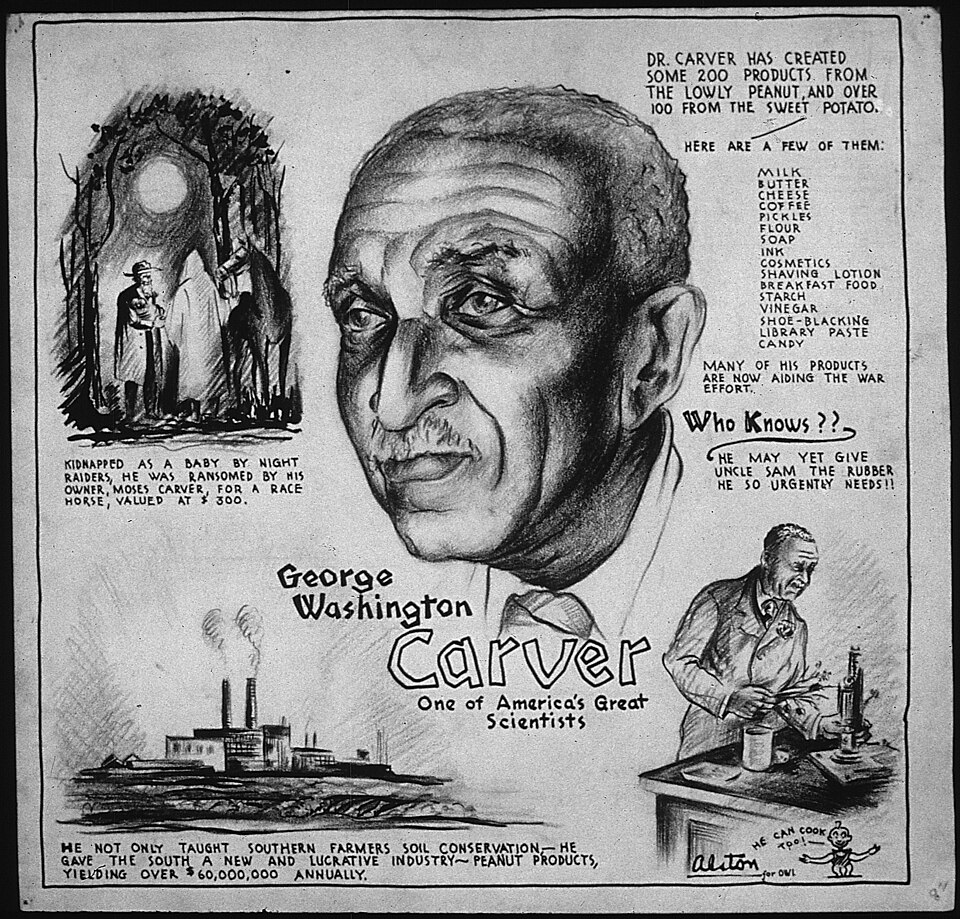
To understand how a single person’s belief can reshape a child’s destiny, we don’t need to look at internet fables—we only need to look at the historical reality of Dr. George Washington Carver.
Born into slavery in Missouri during the American Civil War, George faced an unimaginable start to life. He was a frail, sickly child, orphaned at a tender age, and growing up in an era rife with brutal systemic oppression. In the eyes of the world at that time, his future was virtually nonexistent.
But George was an exception. He didn’t just survive; he became one of the greatest agricultural scientists, inventors, and educators in American history, ultimately advising presidents and transforming the agricultural economy of the American South.
What pushed a young boy from the absolute margins of society to the heights of global respect? It wasn’t just luck. It was the unwavering, positive expectations of the adults who raised and taught him.
After slavery was abolished, the couple who had previously owned George’s mother, Moses and Susan Carver, chose to keep George and his brother on their farm. Instead of treating him as an afterthought, Susan Carver noticed something extraordinary in the frail boy: an insatiable curiosity for nature and a brilliant mind.
Susan gave him a positive identity. She didn’t see a sickly orphan; she saw a gifted child. She taught him to read, nurtured his love for plants, and constantly reinforced the idea that his mind was a precious tool meant for great things.
Later, when George walked miles to attend a school for Black children, a midwife named Mariah Watkins took him in. Seeing his determination, Mariah looked at him and delivered a powerful prophecy that George carried for the rest of his life:
“You must learn all you can, and then go back out into the world and give your learning back to our people.”
These weren’t just empty words of praise. They were high-specification “identity anchors.” They gave George a banner to march under. From that point forward, he didn’t view himself as a victim of his circumstances; he viewed himself as a custodian of knowledge with a grand purpose. He held himself to the standard of the brilliant educator they promised he would be, eventually becoming the first Black student and faculty member at Iowa State Agricultural College.

What George Washington Carver experienced is a phenomenon heavily documented in modern psychology known as the Pygmalion Effect (or the Expectation Effect). When a caregiver or educator holds high expectations for a child and communicates them through positive reinforcement, the child subconsciously alters their behavior, self-image, and effort to meet that expectation.
Famous education expert Karl Witte famously noted: “Every child is a genius.” He firmly believed that the method of education is paramount. With the right approach, an ordinary child can achieve extraordinary things.
Psychological and statistical data strongly back this up:
Studies in early childhood development show that children with severe, unfixable intellectual disabilities make up only about 1.07% of the population, while highly precocious children make up about 0.03%.
This means that roughly 98% of children are born with perfectly healthy, fully capable intellectual baselines!
The gap that widens between children as they grow is rarely a matter of raw genetic IQ. Instead, it is a question of motivation, mindset, and confidence. And the primary fuel for a child’s confidence is the reflection they see of themselves in their parents’ eyes.
How can today’s parents apply the lessons of Dr. Carver’s life and cognitive psychology to raise thriving children?
1. Shift from “Flaw-Finding” to “Gold-Digging”
If you look at your child and constantly notice their messiness, their loud voice, or their stubbornness, you will naturally project an aura of disappointment. You must train yourself to see the gold hidden in the dirt. Is your child stubborn? Reframe it: “You have incredible persistence; you don’t give up easily.” Is your child loud and disruptive? Reframe it: “You have a powerful presence and great leadership energy.”
2. Give High-Specification “Identity Labels”
Stop using generic insults like “lazy” or “clumsy.” Instead, anchor your child with a noble identity based on their actions. When your child carefully builds a Lego set, say: “I can see how deeply you focus; you have the mind of a meticulous engineer.” When they share a toy, tell them: “You have a deeply generous heart; you are a natural caretaker.” Give them a noble banner, and they will naturally straighten their backs to carry it.
3. Translate Expectations into Inner Standards
The power of Susan Carver and Mariah Watkins’ encouragement wasn’t just that it made George feel good—it changed his daily self-discipline. True positive reinforcement encourages a child to hold themselves to a higher standard. Help your child understand: “Because you are a capable, intelligent person, we are going to practice managing your time and respecting others the way great people do.”

Every child enters this world as a blank canvas of infinite potential. Whether they become someone who drifts aimlessly through life or someone who stands tall and alters history depends entirely on the blueprint drawn for them by the people they trust the most.
As parents, let us put away our critical, depreciating lenses. Let us irrigate our homes with trust and empower our children with genuine, high expectations.
Remember: When your educational method shifts from criticism to profound belief, your child will finally have the freedom to become the genius they were born to be.
#ParentingWisdom #PositiveReinforcement #FamilyEducation #PygmalionEffect #GeorgeWashingtonCarver #RaiseAGenius #MindsetShift


