Expounding the Absolute Truth Through the Heart Sutra

        This book by H.H. Dorje Chang Buddha III was released in Chinese in 2014 but is not yet available in English. It is based on a series of very famous discourses given in China in 1992, using the text, meaning, and principles of the Heart Sutra to transmit Dharma. It clearly explains the relationships between mind, Buddha, and living beings. It tells everyone what the absolute truth of Buddha-dharma and liberation is. Several years ago, His Holiness told a number of Western disciples that this is the only book you need to read to understand emptiness and become enlightened. This text is for acquiring prajna or transcendental wisdom, although it also teaches the importance of cultivating character.

        To stress how important this holy book is, we must remember that just before the Buddha left this world His Holiness told us that “. . . At all times, we must think about bringing auspiciousness, serenity, happiness, and peace to living beings and to the world, to the extent of giving our all and even our lives. I have already brought true Buddha Dharma to this world. Everyone who practices in accordance with The Supreme and Unsurpassable Mahamudra of Liberation and Expounding the Absolute Truth Through the Heart Sutra will surely attain liberation. That’s all. I wish all living beings happiness.”

Venerable Master Puguan’s Reflection After Listening to Expounding the Absolute Truth Through the Heart Sutra

Below is the heartfelt reflection of Venerable Master Puguan, the abbot of Kaihua Monastery on Mount Wuzhong—the first site of Southern Transmission Buddhism and the thirteenth-generation patriarch of Mount Emei—after listening to the Dharma discourses of Expounding the Absolute Truth Through the Heart Sutra spoken by H.H. Dorje Chang Buddha III.

Venerable Master Puguan said:

“No matter what words I use today, they cannot fully express the supreme joy and wonder in my heart.
My most magnificent and compassionate Buddha Master, the Great Dharma King Yangwo, once visited Mount Wuzhong in person. At that time, my junior Dharma brother, Dharma Master Guozhang, and I were on the third day of a Zen retreat with the four assemblies of disciples when suddenly the Dharma protector came and told me, ‘The greatest holy being has arrived! He is wearing white clothes. Quickly cancel the Chan session and lead everyone to greet Him with full ceremony!’

Dharma Master Guozhang also received the same message—that the highest Holy One had come. We immediately announced to all disciples that the Zen session was to be stopped, and we prepared the ceremonial welcome with drums and bells. Indeed, about ten minutes later, a group of dozens of people arrived at the foot of the mountain—it was my revered Master, the Great Dharma King Yangwo (H.H. Dorje Chang Buddha III).

When I supported my Master while walking toward the Bright Moon Pool, He gently took hold of my hand instead and said, ‘I am younger than you; you should not support me. It is I who should support you, the elder.’

At that moment, I felt deeply ashamed. How could a disciple ever deserve to be supported by his Master, the Great Dharma King?

Now, after listening to Expounding the Absolute Truth Through the Heart Sutra, I finally realize that what my Master said back then was the very expression of ultimate truth!
We practitioners must rely on our Master’s steadfast guidance, never letting go of His compassionate hand, until we are led to the pure Buddha-land of ultimate Nirvana. How could we ever imagine supporting our Master?

Having repeatedly listened to this Dharma discourse, I can only say that my Master has explained the very essence of all 600 volumes of the Prajnaparamita Sutras and the two essential provisions of precepts and practice. The Dharma He expounded is so profound that the deep will see its depth and the shallow will see its shallowness—it is wondrous beyond description, extraordinary within the ordinary. In truth, it is the supreme teaching of the ultimate truth since the beginning of time.

After listening to this unparalleled Dharma spoken by my Buddha Master, I was instantly and completely awakened—the bottom of the bucket had fallen out! Unfortunately, my age has deprived me of the condition to attain rainbow-body ascension, but I rejoice that I have realized the state of indestructible flesh body. After my parinirvana, this body can serve as evidence to the world that my Great Dharma King, my Buddha Master, is truly the Dharma King who unites all Buddhas of the ten directions.

When I think back on my earlier misunderstandings, I feel deeply ashamed. I once mistakenly believed that only Tibetan Esoteric Buddhism possessed the Great Dharma that enables enlightenment within one lifetime. Now that I have attained realization, I truly understand that the authentic Dharma of the Tathagata transcends all schools and sects.

In fact, the true Buddha Dharma is a wondrous treasure existing independently of any tradition. It is neither exclusive to nor absent from any particular school—because genuine Dharma is not governed by sects but by Buddhas and Bodhisattvas themselves. Wherever a Buddha or Bodhisattva manifests as a teacher, that school naturally possesses the Great Dharma.

When I recall my past cultivation at the Golden Summit of Mount Emei, I can only remain speechless in humility. Today, immersed in the bliss of Dharma joy, I can only pray:

May all Buddhas bless that the great karmic conditions of the Tathagata ripen soon.
May all sentient beings swiftly hear the teachings of my Buddha Master—the Mother of All Buddhas’ Dharmas, Expounding the Absolute Truth Through the Heart Sutra
so that their blessings and wisdom may swiftly and perfectly flourish,
attaining Bodhi and liberation in this very life,
and achieving freedom from life and death!

Namo Amitabha Buddha!
Namo Avalokiteshvara Bodhisattva!

Note: In 1998, Master Pu Guan passed away while in meditation, having attained mastery over his life and death. Remarkably, even eight years after his passing, his remains rest within a stupa, preserved in the meditation posture without any signs of decay.

The following is the English translation of Venerable Master Pu Guan’s Dharma discourse, rendered into English by Linda Chang. The original Chinese version is provided below.

普觀長老聽《藉心經說真諦》法音感言

下面是峨嵋山第十三代祖師、佛教南傳第一站霧中山開化寺方丈普觀老和尚聽 H.H. 第三世多杰羌佛說法《藉心經說真諦》法音後的感言,老和尚說:

我今天無論說出什麼樣的話,也代表不了我內心的喜悅殊勝,我最偉大的如佛恩師,仰諤大法王聖駕霧中山,當時我和我的師弟果章法師正在與四眾弟子打禪七的第三天,突然護法叫我說:「最偉大的巨聖德駕臨了,祂穿的是白衣服,趕快取消禪七,率領大眾大禮接駕吧!」這時果章師弟對我說,他接到護法的報告,有最大的聖德駕臨;我們當場宣布四眾弟子取消禪七,立刻擺駕擂鼓鳴鐘接駕,果然十分鐘後山下來了一隊幾十人,原來是我的恩師仰諤總持大法王駕到,當我攙扶恩師登上明月池的途中,師父反攙著我的手說:「我年輕,你不要攙扶我,應該我攙著你這位老人。」當時我深感慚愧,弟子怎能有資格讓大法王恩師攙扶呢?現在聽完《藉心經說真諦》以後,恩師說的才是一語道斷的真理哦!我們這些行人,就是要依靠恩師不鬆手地把我們攙扶著到究竟涅槃的佛土,我們哪裡有資格攙扶恩師啊!當我反覆聽到《藉心經說真諦》的開示說法般若心髓,我只能說講透了六百卷般若的心要和行修戒體二資糧,恩師的說法深者見深,淺者見淺,微妙至極,平中見奇,實在說來,是開天闢地第一義諦之無上說法。聽了恩師講說的法音無上大法以後,讓我頓然大徹大悟,桶底脫落,可惜我歲數太大,失掉化虹飛升的條件,但慶幸的是,我證到了肉身不壞的境界,今後圓寂後,可以為世人證明我大法王如佛恩師,才是十方諸佛的總匯法王。回想起當初錯誤的認識,深感羞慚,誤認為只有西藏密宗才有即身成佛的大法,現在我得到了,才真正瞭解如來的正法不是哪一宗有、哪一宗沒有,其實佛法是獨立在世外的妙寶,與密宗、顯宗沒有任何關係,任何一宗都有佛法,也沒有佛法,關鍵在於真正的佛法不是宗在掌管,而是佛菩薩在掌法,佛菩薩化身在哪一宗為師,哪一宗就有大法。想到當初我在峨嵋金頂的修持,只能無言以對,而今天處於法樂中的我,只能祈請諸佛加持,如來大事因緣早日成熟,眾生早日得聞恩師講說出諸佛之母法《藉心經說真諦》,福慧速猛圓滿,今生必證菩提聖道,生死自由!

南無阿彌陀佛!

南無觀世音菩薩!

Link:https://peacelilysite.com/2025/10/31/expounding-the-absolute-truth-through-the-heart-sutra/

Source: https://cabuddhists.org/en/expounding-the-absolute-truth-through-the-heart-sutra/buddhist-books/h-h-dorje-chang-buddha-iii-expounding-buddha-dharma/; https://www.wbahq.org/ch/dharma-discourses/sf-jxjszd/

Yoga is so much more than just stretching

What’s the first image that comes to mind when you think of Yoga?  

It’s not uncommon for this image to consist of individuals contorting their bodies into impossible positions that are more appropriate for the Cirque du Soleil.  There is nothing wrong with some of these breathtaking images, and I love looking at them because I’m in awe of the strength, grace, practice, and determination it takes to hold these postures.  My issue with these images flooding social media is that these postures are not possible for most individuals (including me) and the models are usually young, white, beautiful, slim women.  This makes it hard to connect to Yoga’s rich Indian history or how it is a practice that is for EVERYONE regardless of age, body type or ability.

In the last few decades, Yoga has become a billion-dollar business.  When I started attending yoga studios in Toronto in the early 1990s, there were only 2 studios, and now there is a studio every 3 blocks.  There are “yoga teacher rock stars” and businesses that make high-end yoga gear. I’m glad that Yoga has become so popular because this beautiful healing practice impacts more people.  However, I believe this commercialism and competitiveness have diluted the teachings and appropriates this ancient practice in some situations. 

There is evidence that Yoga existed in India as far back as 500 BC with roots in Hinduism, Buddhism, Jainism and other religions.   Sanskrit is the sacred language of Hinduism, classical Hindu philosophy, and other historical religious texts. The word ‘Yoga‘ is derived from the Sanskrit root ‘Yuj’, meaning ‘to join’ or ‘to yoke’ or ‘to unite-union of mind, body and spirit.  

As a yoga teacher and student, I want my students to be familiar with Yoga’s roots and understand that what happens on the mat is more than just stretching and holding postures.   This union of mind, body and spirit, happens while practicing the asanas-Sanskrit word for postures.  A regular practice will increase flexibility, strength and mobility, and while you are holding the postures, you are practicing pranayama-breath control, meditation, and mindfulness.   This holistic practice is how transformation happens and the “union” builds a healthier, more agile body, calms the nervous system, teaches presence, and provides us with tools that we can use off the mat.  

Yoga has a rich philosophical history that includes sacred and treasured texts: The Vedas, The Upanishads, The Bhagavad Gita and Pantanjali’s Sutras.  

Pantanjali was an Indian sage and thought to be the author of the Yoga Sutras, which is a classical yoga text on yoga theory and practice.  According to his teachings, there are 8 components to Yoga:  

1.   Yamas-attitudes towards environments. 

2.   Niyamas-attitude towards ourselves 

3.   Asana-yoga postures 

4.   Pranayama-breath control and breathing exercises

5.   Pratyahar-withdrawal of senses

6.  Dharana-concentration

7.  Dhyana-meditation

8.  Samadi-complete integration

One of the most compelling benefits of Yoga is stress reduction. It’s inspiring to see how it has helped individuals recover from trauma, PTSD, depression, and anxiety.  

Enjoy the stretching and postures, and know that you are also calming your mind and relaxing your body.  Instead of thinking of Yoga as work out, think of it as a work in.  

Be well.

Anita

Link:https://peacelilysite.com/2025/10/29/yoga-is-so-much-more-than-just-stretching/

Source: https://countyyogaloft.ca/blog/yoga-is-so-much-more-than-just-stretching

My Father Before Me — The Unspoken Bond Between Fathers and Sons

There are few relationships as powerful—and as quietly transformative—as the one between a father and a son. Yet in modern life, it’s often overlooked. We talk about mothers and children, but the emotional depth between fathers and sons remains one of the least explored terrains of the human heart.

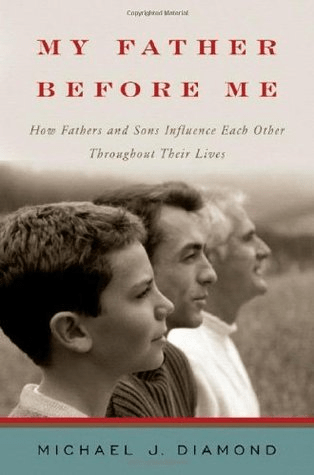
In My Father Before Me: How Fathers and Sons Influence Each Other Throughout Their Lives, psychoanalyst Michael J. Diamond takes us into that emotional landscape with remarkable sensitivity. Through vivid stories, psychological insight, and tender reflection, he reveals how fathers and sons shape, challenge, and heal each other across a lifetime.

Most people think of fatherhood as a one-directional journey: the father influences the son. But Diamond turns that idea around. He shows that the father–son relationship is mutual, not hierarchical.

A father helps mold his son—but the son also transforms the father. Each becomes a mirror for the other’s hopes, fears, and hidden strengths.

Diamond writes about how fatherhood can awaken parts of a man he never knew existed. When a son is born, the father doesn’t just gain a child—he also gains a deeper understanding of himself. The baby’s presence demands patience, tenderness, and emotional openness. In nurturing another, the father learns to nurture himself.

Moments That Change Everything

Diamond fills the book with moving, relatable stories that show this mutual transformation.

One story tells of a man who, having grown up with a distant father, vows to be emotionally present for his own son. Yet when his son enters adolescence and begins to push back, the man feels rejected and hurt—just as he once felt with his own father. Through reflection, he realizes that this is his chance to break the cycle: to stay connected even when it’s uncomfortable. In doing so, both he and his son begin to heal wounds that stretch back generations.

In another example, a father describes watching his young son struggle to build a toy tower. His first instinct is to step in and fix it, but he resists. Instead, he watches quietly, offering small words of encouragement. When the tower finally stands, he sees not just his son’s triumph—but his own growth in learning to let go.

These moments, Diamond suggests, are not small. They are the foundation of how love, trust, and resilience are built between generations.

The Phases of the Father–Son Journey

Diamond explores how this relationship evolves through every stage of life:

  • Early Childhood: The father is a protector and guide, introducing the child to the outside world. But he also begins to sense his son’s individuality—someone both familiar and mysterious.
  • Adolescence: As the son seeks independence, conflict can arise. Here the father’s challenge is to stay connected without controlling—to allow the son to become his own person.
  • Adulthood: When the son grows up, both men must renegotiate their roles. Often, the adult son begins to understand his father with new empathy, and the father learns to accept his son as an equal.
  • Later Years: In time, roles may reverse—the son becomes the caregiver, the listener, the one offering strength. This reversal, Diamond suggests, completes the circle of life.

Through each phase, fathers and sons are constantly exchanging something precious: understanding, forgiveness, and love.

Redefining Masculinity

A core theme in My Father Before Me is emotional honesty. Diamond challenges old stereotypes of men as stoic and distant. True masculinity, he argues, is not about dominance or silence—it’s about being open, authentic, and emotionally present.

When a father shows vulnerability, it doesn’t make him weak—it makes him real. And when a son witnesses that authenticity, he learns that being a man means embracing both strength and tenderness.

In one memorable story, a son recalls seeing his father cry for the first time—after the death of the grandfather. “That day,” he says, “I stopped fearing emotion. I realized that love and grief are part of the same heart.”

A Relationship That Never Stops Evolving

Even when fathers and sons grow older, the dialogue between them continues. Diamond describes adult sons helping aging fathers find meaning and dignity in later life. Some reconcile after years of distance. Others simply learn to say what was once left unsaid: “I love you,” “I understand you,” or even “I forgive you.”

These late-life moments, he writes, can be profoundly healing. They remind us that it is never too late to reach across the years—to understand, to listen, and to love.

A Mirror for All of Us

Whether you’re a father, a son, or simply someone reflecting on your family history, My Father Before Me offers both insight and comfort. It reminds us that every father carries the echoes of his own father within him—and that every son, in turn, shapes what fatherhood will mean for the next generation.

Ultimately, Diamond’s message is one of hope: that through empathy, self-awareness, and courage, fathers and sons can support each other’s growth, forgive each other’s shortcomings, and honor the love that lies beneath it all.

Link:https://peacelilysite.com/2025/10/29/my-father-before-me-the-unspoken-bond-between-fathers-and-sons/

The Lesson of the Apple: How a Mother’s Words Shape a Child’s Life

“A mother’s words can build a child—or break one.”

Recently, while reading a Chinese book on child education, I came across a story that deeply touched my heart. It perfectly illustrates how a mother’s attitude and behavior can influence a child’s entire life. I’d love to share this story with all mothers, as a gentle reminder of the quiet power we hold in shaping our children’s hearts and minds.


🍏 Two Letters, Two Lives

A famous American psychologist once conducted a fascinating study on the lifelong effects of early education. He selected 50 successful people from various fields—leaders, professionals, innovators—and 50 people with criminal records. He wrote to each of them, asking the same question:

“What influence did your mother have on you?”

Two of the replies left a lasting impression on him.
One came from a prominent White House official, the other from a prison inmate.
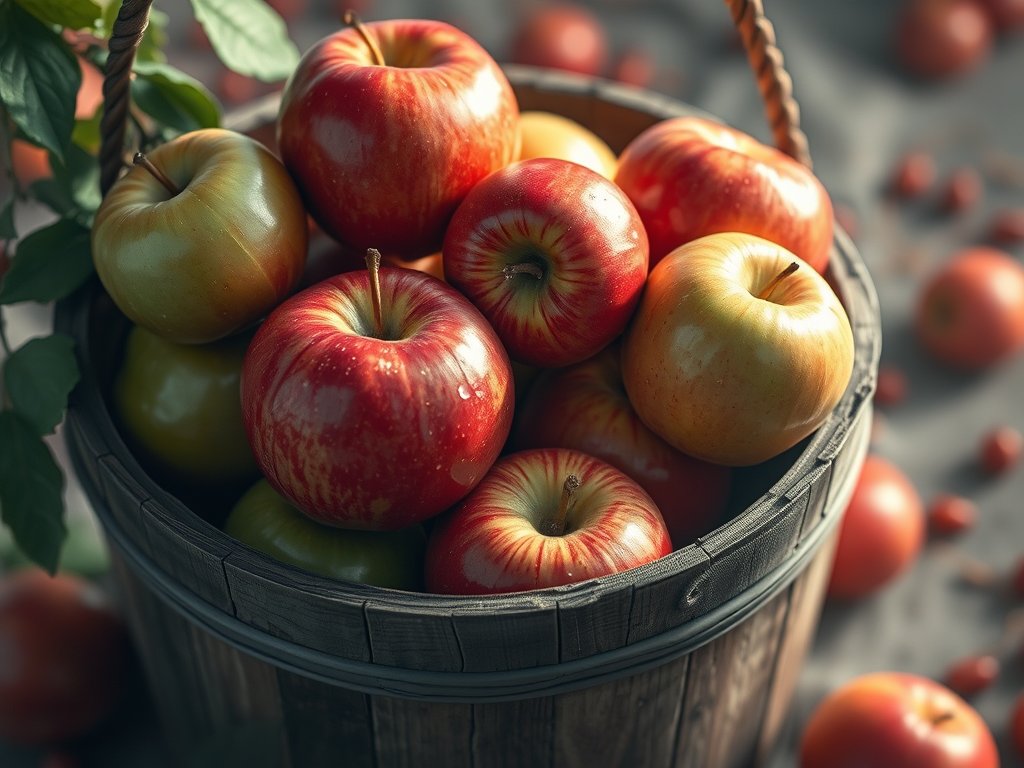
Surprisingly, both men spoke about the same childhood memory—their mother dividing apples.


🍎 The Prisoner’s Story: The Day He Learned to Lie

The prisoner wrote:

“When I was a child, my mother once brought home several apples—red, green, big, and small.
I immediately wanted the biggest, reddest one. Before I could speak, my little brother shouted, ‘I want the big one!’

My mother frowned and scolded him: ‘A good boy should learn to give the best to others.’

I quickly changed my words and said, ‘Mom, I’ll take the smallest one. Let my brother have the big one.’

My mother smiled proudly, kissed me on the cheek, and rewarded me with the biggest, reddest apple.”

He ended his letter with heartbreakingly honest words:

“That day, I learned that lying could bring rewards.
Later, I learned to cheat, to steal, to fight—anything to get what I wanted.
Today, I am in prison because of the lesson I learned that day.”

🍏 The White House Official’s Story: The Value of Effort

The second letter came from a White House official:

“When I was young, my mother brought home several apples, all different sizes. My brothers and I argued over who would get the biggest one.

Mother held up the largest apple and said, ‘Everyone wants the best, and that’s normal. So let’s have a little contest: I’ll divide the lawn into three sections. Whoever trims their section the fastest and neatest gets the big apple.’

We raced to finish, and I won the apple.”

He continued:

“From that day on, my mother taught us this simple but powerful truth:
If you want the best, you must earn it.

Everything good in our home had to be earned through effort and fairness. She lived by this principle herself. That’s how I learned discipline, persistence, and integrity—lessons that shaped my entire life.”

🌱 A Mother’s Words Are Seeds in a Child’s Heart

Both mothers divided apples.
Both children learned a lesson.
But one learned deception—while the other learned effort.

A mother’s reaction in a single moment, her tone of voice, or even a casual reward can plant seeds deep in a child’s heart.
Those seeds may grow into honesty and strength—or into cunning and selfishness.

Children mirror their mothers.
The way a mother faces life—whether with truth or pretense, effort or avoidance—becomes the way her child faces the world.

Education doesn’t always happen in grand lessons or classrooms.
Sometimes, it happens in small, everyday choices—like how we divide an apple, handle conflict, or teach fairness.

A wise mother uses love and insight to guide her child to understand that:

  • Honesty is more precious than cunning,
  • Effort is more reliable than shortcuts,
  • Sharing brings deeper joy than possessing.

These values, taught through simple acts, become the foundation of a child’s character.

Photo by Ivan Samkov on Pexels.com

A mother’s way of teaching doesn’t just shape a child’s childhood—it molds their destiny.
Every look, every word, every reaction writes silently into a child’s heart the story of who they will become.

May all mothers guide their children with both love and wisdom,
so that the lessons we leave behind are those of kindness, courage, and truth.

Because sometimes, all it takes is one apple—and one mother’s choice—to change a life forever.

Link:https://peacelilysite.com/2025/10/27/the-lesson-of-the-apple-how-a-mothers-words-shape-a-childs-life/

When the Flu Is Gone but Fatigue Remains: How to Help Your Immune System Truly Recover

“Healing doesn’t end when the symptoms disappear — it ends when the body finally feels safe to rest.”

As the weather cools and flu season approaches, I came across some fascinating medical insights online that I felt were worth sharing with everyone reading my blog. Many of us have experienced this: the cold or flu seems gone, yet fatigue, throat irritation, or strange discomforts linger. Why does this happen, and how can we truly recover?


🧠 The Immune System Has a Memory—And Sometimes a Grudge

Doctors often hear this kind of complaint:

“My cold is gone, but I’m still exhausted. My throat feels weird, I get dizzy, and my stomach’s off…”

This isn’t because the virus remains—it’s because your immune system hasn’t fully stood down.

According to a 2025 review published in Cell Research, our immune system possesses something called trained immunity. That means it “remembers” past infections, stress, or inflammation. This helps it react faster next time—but sometimes, it overreacts.

It’s like your body has fought a war, and though the battle is over, the soldiers are still gripping their weapons, ready to defend at the slightest sound.

That’s why after you’ve “recovered,” you may still feel fatigued, have a scratchy throat, dry skin, or stomach issues. Your immune system is still in battle mode.


🦴 Memory Hidden in the Bone Marrow

This “memory” lives deep in your bone marrow stem cells, which remember intense inflammation and produce more reactive immune cells afterward.

In moderation, this keeps you alert to future threats. But under constant stress—lack of sleep, oily food, pollution, or anxiety—your immune system becomes overly vigilant.

Over time, this can cause chronic low-grade inflammation, leading to lingering tiredness, allergies, digestive issues, and even chronic diseases like diabetes or heart problems.


⚠️ When the Immune System Is Too Vigilant

The immune system is meant to react swiftly and then reset. But when it forgets how to relax, it starts misidentifying harmless things as threats.

You might notice:

  • Sore throats that flare up with stress
  • Headaches or bloating after emotional tension
  • Skin or gut reactions after eating sweets or processed food

These are signs of an overtrained immune system—one that’s too loyal for its own good.


🌼 How to Help Your Immune System “Let Go”

The best medicine isn’t a pill—it’s how you live every day. Here are four gentle ways to guide your immune system back to balance:

1. Eat for Calm, Not Chaos

Skip high-fat, high-sugar, and processed foods that fuel inflammation.
Instead, try a Mediterranean-style diet—fresh vegetables, fruits, olive oil, nuts, fish, and whole grains.
These nourish your immune cells and teach them to stay calm.

2. Sleep: The Reset Button

Sleep resets immune memory. Without enough rest, bone marrow cells stay in high-alert mode.
A regular sleep schedule is like a classroom where your body learns order and recovery.

3. Manage Stress Gently

Emotions like anxiety, anger, and loneliness all affect immunity.
Take time for deep breathing, sunlight, music, or quiet moments. Even doing nothing helps your body hear the message: “It’s safe now.”

4. Move, Don’t Push

Moderate aerobic exercise trains your immune system to respond wisely.
Studies show that people who move regularly—three to five times a week—have stronger, steadier immunity and less fatigue.


🌸 True Health Is Intelligent Immunity

Many believe “strong immunity” means “never getting sick.”
But true health means having an intelligent immune system—one that knows when to fight and when to rest.

So if you’ve recently recovered from a cold but still feel drained, don’t worry. Your body isn’t weak—it’s simply learning how to relax after the storm.

Be patient and kind to yourself.
Eat well, sleep deeply, breathe freely, and move with ease.
That heavy, lingering fatigue will soon melt away.

Because your body remembers not just pain—it also remembers peace.

Your body’s memory is a diary of your life.
When you fill your days with calm, warmth, and balance, your immune system learns to trust again.
And in that trust, you don’t just recover from illness—you truly return to health.

Link:https://peacelilysite.com/2025/10/24/when-the-flu-is-gone-but-fatigue-remains-how-to-help-your-immune-system-truly-recover/

H.H. Dorje Chang Buddha III: Teaching People to Attain Wisdom Through Compassion, Especially in These Uncertain Times

One recognition certificate from a sect can make the status of a rinpoche, while being recognized as the reincarnation of a Buddha requires confirmation from multiple Dharma kings of all different sects.

Generally, when a rinpoche reaches significant status, they are also recognized by more than one of the eminent monastics. H.H. Dorje Chang Buddha III, who has been recognized by over 100 Dharma kings, regent Dharma kings, great rinpoches, and top leaders of various Buddhist sects, is the first person in Buddhist history to receive this many recognitions.

It is the belief of all of these powerful individuals that H.H. Dorje Chang Buddha III is the true reincarnation of the Primordial Buddha, Dorje Chang Buddha. For over 1,000 years, this system has been used by numerous sects in order to recognize their reincarnated Buddhist practitioners.

Based on Buddhist principles, a “Buddha” has attained the supreme level of wisdom and enlightenment, and there is no one above a Buddha. So it goes without saying that a Buddha is the highest leader in the world when it comes to that religion and culture. That makes H.H. Dorje Chang Buddha III the highest leader of Buddhism in today’s world.

Building on the Foundation of Compassion

As H.H. Dorje Chang Buddha III works with others and makes his way in the world, he remains unaffected by awards and fame, and by those who would seek to slander him. His goal is only to contribute to the world, and to teach Buddhism to people, so the world can have more peace and happiness in it.

The cultivation of Buddha Dharma is what H.H. Dorje Chang Buddha III focuses on, rather than his standing and status as the reincarnation of a Buddha. Buddhist teachings are based on causality, peace, harmony, and compassion, and these are the main tenets that H.H. Dorje Chang Buddha III lives by. As he shares his compassion with others, he is able to change lives.

At the very beginning of the COVID-19 pandemic outbreak, His Holiness Dorje Chang Buddha III took the lead, donating equipment and materials for personal protection. This equipment for fighting the pandemic was donated to police departments, hospitals, and other public service institutions. His Holiness the Buddha also told people publicly:

“The emergence of the pandemic is a result from causality. Throughout the history of mankind and society, there have been occurrences of many pandemics of different types and forms. The COVID-19 pandemic is a type of contagious plaque, which is just infection through popular contact.

The symptoms would transform based on the changes in one’s physical conditions and the climate and spread to others. But people will also generate antibodies in response. However, this disease is not going to become extinct. Yet vaccines can provide very significant protecting effects to people.

Therefore, all of you should not be under pressure or become worried. Rather, all should follow the exhortation of the government and obey the government regulations.

Have yourself vaccinated. That will protect yourself and also others. Furthermore, the pandemic will not cause a closure to people. In the end, it will be opened up everywhere because our country will not allow closure to happen, and the world will not allow closure to happen.”

Living simply and focusing on humility rather than material rewards, he has never been concerned with his own well-being. He lives for the service and well-being of others, and to teach them the Buddha Dharma that will bring them enlightenment and liberation.

The more people who have this understanding, the more people will continue to show that understanding to others, to help others and to benefit society. This can cause a ripple effect of peace and harmony, which will spread far and wide through his teachings and the information he passes along to people around the globe.

Celebrated as a Scholar, an Artist, and a Healer

From a very early age, H.H. Dorje Chang Buddha III has been seen as extremely talented in a number of areas of life. Even as a child, he had wisdom beyond his years and talents that were strong and unexpected. Documentaries were made about his artistic abilities, and people came from far and wide to learn Buddha Dharma from him.

That occurred even before he was officially recognized as he is today. It is the belief of Buddhists that H.H. Dorje Chang Buddha III holds supreme knowledge of the universe.

Others have spent their entire lives seeking the wisdom and understanding H.H. Dorje Chang Buddha III has, but it seems as though he was born with it. His Holiness has taught many Buddhist leaders, holy gurus, Buddhist practitioners, and people from every walk of life who seek out his wisdom.

Whether people have questions about Buddhism, need mental or physical healing, or want a deeper understanding of life, H.H. Dorje Chang Buddha III will not turn them away. As the sutra said that a Buddha is the king of healing, he helped more than 300 people in one day during his time in China.

Born in China, he was quickly recognized there as having abilities well beyond his years. His artwork was exhibited in Taiwan, and he was named to the presidency of The Chinese Painting Research Association in Beijing in 1987. He has met with dignitaries from all over the world, including many in China before he moved to the United States.

When he visited Taiwan in 1995, it was not just dignitaries and important people he met with, but people from all over the area who lined up at his hotel to seek his help and guidance.

All throughout the day and night, the Buddha helped people without resting. H.H. Dorje Chang Buddha III does not turn any of them away from the help they were seeking and the guidance they wanted and needed from the Buddha.

He has remained selfless and compassionate, helping those who are distressed, elderly, poor, or sick and infirm, as well as any injured or stray animals he finds during his travels. No one and nothing are turned away from the Buddha’s help.

Subjected to Defamation and Injustice

Throughout his life, H.H. Dorje Chang Buddha III has been subjected to injustice, and had his name defamed and slandered. Two years after he came to the United States, the Guangdong Shenzhen Public Security Bureau in China made a case against him and charged him with defrauding someone during a property sale.

But even the person who was named in the case came forward and said that it had not happened. The Buddha also had no record of ever owning the property, or of anyone else transferring it to him.

The case lingered for years, even going so far as getting INTERPOL involved and asking that they issue Red Notices for the arrest of H.H. Dorje Chang Buddha III. After an investigation in China, thirteen legal experts came together and stated that the case was incorrect and fabricated, and that it was not accurate at all. INTERPOL’s investigation showed the same conclusion.

Eventually, China requested INTERPOL to withdraw the Red Notices against the Buddha, and in November 2009 INTERPOL wrote to His Holiness the Buddha that the Red Notices against him had been canceled. But all through the years when he was being defamed and investigated, he never said a word about it.

He made no public statement about the case, nor did he try to clear his name in any way. When he was asked to show the INTERPOL letter he received, he also chose not to do that.

The reason that Shenzhen Public Security Bureau made the case against the Buddha, is because Shenzhen Public Security Bureau illegally took more than 700 paintings from the house the Buddha resided in.

These were paintings that were created by him during past decades. But he never said anything. In order to keep these paintings, the public security agents still tried to slander the Buddha through the internet, and continued to make claims that he was guilty.

If they stated his innocence, they would have to acknowledge their own crimes, including the made-up case and the stolen paintings from the Buddha and his disciple.

Finally, in 2019, due to mounting requests from the Buddhist community and its leaders, H.H. Dorje Chang Buddha III agreed to make the INTERPOL letter public. The World Buddhism Association Headquarters made the letter public and issued a statement as well.

That allowed those who were faithful to Buddhism all around the world see the truth of the facts in the case, and put their fears and concerns to rest. During the entire time, H.H. Dorje Chang Buddha III never said anything negative about his accusers.

The Most Dignified Buddha Treats Himself As Humanity’s Servant

Ever since the founding of Buddhism, it has been common practice for Buddhist disciples to make offerings to their teachers and masters. But H.H. Dorje Chang Buddha III has vowed never to accept offerings, and to do everything out of love and compassion, without any requirements for compensation. He serves people only on a voluntary basis and will never take something in return for his services.

His compassion for the people who have helped him, those who have tried to harm him, and the world in general, seems to be unwavering. H.H. Dorje Chang Buddha III is committed to his teachings, and understands that the care and compassion he displays to the world is what matters.

From the art he creates to the people who come to him for healing, everything and everyone is treated with care. This is the way it has been done for more than 2,500 years, and H.H. Dorje Chang Buddha III carries on the tradition.

By focusing on the situations of other people, instead of his own, the Buddha is able to show that he values the world and everyone in it, and that other people should do the same. It is only through serving others and having compassion for them that people can truly reach an enlightened state of joy and happiness.

While not necessarily easy to do in modern society, H.H. Dorje Chang Buddha III has been focused on the value of this accomplishment since he came to this world, and remains committed to it today.

During his life in China, and now that he lives in the United States, he has frequently been offered millions and even tens of millions of dollars in offerings.

He has never taken even a dollar of it, and has always turned it away. Some disciples have written about how they have wanted to give offerings, but that the Buddha would not accept them. Although he is always modest and says that he is humanity’s servant, we know that he is the most dignified Buddha in the world.

Link:https://peacelilysite.com/2025/10/24/h-h-dorje-chang-buddha-iii-teaching-people-to-attain-wisdom-through-compassion-especially-in-these-uncertain-times/

source: https://vocal.media/journal/h-h-dorje-chang-buddha-iii-teaching-people-to-attain-wisdom-through-compassion-especially-in-these-uncertain-times

The Thousand-Year Wonder: Fengguo Temple and Its Eternal Great Hall

Hidden in the quiet county of Yixian in northern China, Fengguo Temple has stood for over a thousand years as a living testament to ancient Chinese wisdom and spiritual devotion. Its magnificent Mahavira Hall, the largest single-story wooden structure of its time, houses seven colossal clay Buddhas that have miraculously survived the centuries. This temple is not only an architectural marvel but also a sacred symbol of harmony, resilience, and faith that continues to inspire all who visit.

A Thousand Years of Faith and Architecture

Beyond the Shanhai Pass, in the northern part of Jinzhou City, Liaoning Province, stands the quiet county of Yixian, home to one of China’s most magnificent ancient temples — Fengguo Temple. This remarkable site, founded over a millennium ago, is not only a masterpiece of Liao Dynasty Buddhist architecture but also a living testament to the extraordinary ingenuity of ancient Chinese builders and the enduring power of faith.

In 2020, Fengguo Temple celebrated its thousandth anniversary. Through a thousand years of wind, snow, wars, and earthquakes, its grand Mahavira Hall still stands tall — a miracle in both architecture and spirituality.


The Majestic Great Hall

The heart of Fengguo Temple is its Mahavira Hall (Great Buddha Hall), one of the Eight Great Structures of the Liao Dynasty. Built in 1020 CE, it measures 49.5 meters wide, 26.6 meters deep, and 19.9 meters high, covering an area of 1,317 square meters. Standing on a 3.2-meter-high platform, the hall is the largest single-story wooden structure of ancient China — magnificent, solemn, and breathtaking.

Ingeniously designed, the hall uses a “reduced-column” method to maximize interior space while maintaining perfect stability. Ancient builders applied advanced techniques known as “side-foot” and “rising beam”, ensuring the building’s balance and graceful proportions. The massive bracket sets under the eaves are bold yet refined, exuding strength and elegance.

Thanks to its precise structural mechanics, the Great Hall has remained perfectly upright for a thousand years, without any sign of warping or tilting — an unparalleled achievement in the history of wooden architecture.


The Seven Buddhas: Eternal Clay Sculptures

Inside the Great Hall, seven colossal clay Buddha statues, each about nine meters tall, sit side by side upon a brick platform. From east to west, they are:
Kashyapa Buddha, Krakucchanda Buddha, Sikhin Buddha, Vipashyin Buddha, Visvabhu Buddha, Kanakamuni Buddha, and Shakyamuni Buddha.

These are the “Seven Buddhas of the Past” mentioned in Buddhist scriptures, symbolizing the eternal cycle of enlightenment in our world. Each Buddha exudes solemn dignity, with serene expressions and graceful postures, reflecting the Liao Dynasty’s continuation of Tang-style Buddhist artistry. Two bodhisattvas stand beside each Buddha, adding vitality and compassion to this sacred tableau.

This magnificent ensemble is the oldest and largest group of colored clay Buddha statues in the world. Despite being made of fragile clay, they have miraculously survived for over a thousand years, their colors still soft and luminous. This endurance is nothing short of a miracle — a union of artistic mastery and the blessings of faith.

The Legend of the Buddha Catching a Shell

During the Liaoshen Campaign in the late 1940s, Yixian became a battlefield. Amid the chaos, a shell pierced through the roof of the Great Hall and fell directly into the right hand of the Shakyamuni Buddha statue. Miraculously, the shell did not explode.

Locals still tell this story as “The Buddha Caught the Shell with His Hand.” Whether fact or legend, it adds an aura of mystery and divine protection to the temple’s long history — as if the Buddhas themselves were silently safeguarding their sacred home.

The Flying Devas of Liao

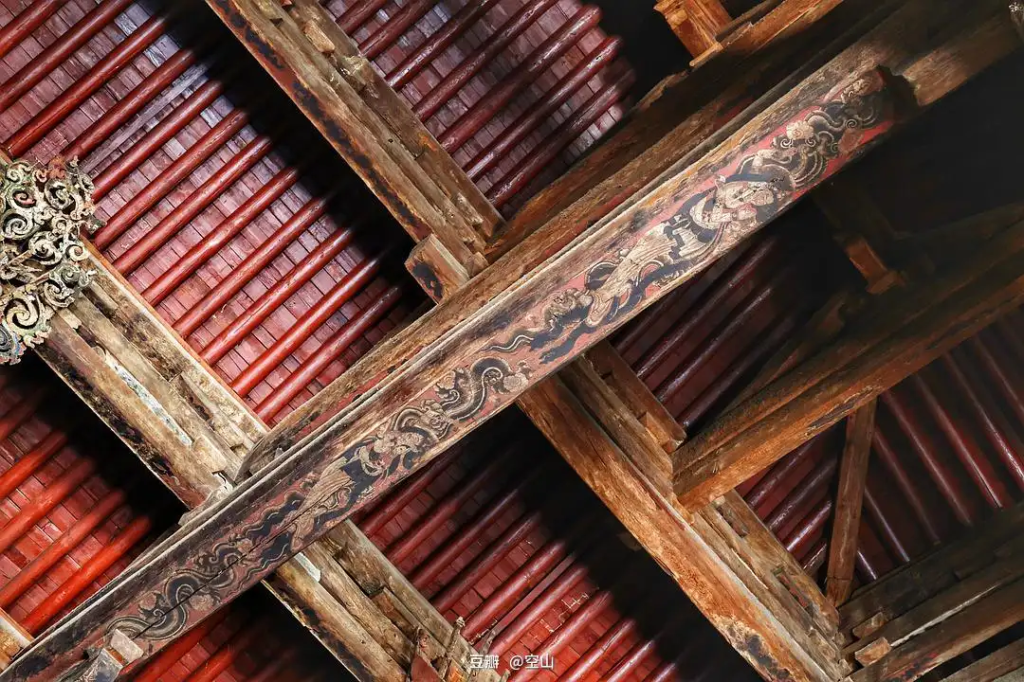
The beams and rafters inside the Great Hall are adorned with over 4,000 square meters of original Liao Dynasty murals. Among them, the heavenly maidens — the Flying Devas — are the most enchanting. With radiant faces and flowing ribbons, they drift gracefully through clouds, offering flowers and fruits to the Seven Buddhas below.

Their movement contrasts beautifully with the Buddhas’ stillness, creating a breathtaking scene of divine harmony and devotion. The surrounding walls also preserve Yuan and Ming dynasty murals depicting ten Buddhas, eight Bodhisattvas, and the Eleven-Faced Avalokiteshvara, adding even more layers of spiritual and artistic richness to this timeless sanctuary.


A Thousand Years of Wonder

Standing before this majestic hall — a wooden structure that has endured a millennium — and gazing upon the clay Buddhas whose serene faces have survived a thousand winters, one cannot help but wonder:

How can a wooden palace withstand ten centuries of storms and wars? How can clay sculptures remain whole and radiant after a thousand years?

Is it the wisdom of the ancients? The strength of art? Or the blessing of the Dharma itself?

Perhaps the answer lies within every beam, every brushstroke, and every tranquil smile of the Buddhas.

May the Buddhas and Bodhisattvas bless all beings with peace, compassion, and happiness.
Namo Amitabha.

Link:https://peacelilysite.com/2025/10/23/the-thousand-year-wonder-fengguo-temple-and-its-eternal-great-hall/

Source: https://www.hzfxy.net/detail_1020_10154.html, https://zhuanlan.zhihu.com/p/721178084

A Miracle in Pleasanton: How a Police Car Accident Became a Lesson in Karma and Protection

On the evening of May 31, 2013, an ordinary family outing turned into a life-changing experience that revealed to me the power of karma, faith, and divine protection.

That spring, my two daughters had just returned home from their colleges on the East Coast for summer vacation. We were all joyful to be reunited as a family. After dinner that evening, my husband, Yiao-Tee, and our daughters decided to take a short walk to the nearby Walmart in Pleasanton, California, to buy a watch battery.

It was around 9 p.m. when we stepped out of the store. My husband and daughters walked a few meters ahead, while I followed behind them on the pedestrian walkway. Suddenly, a police car pulled out of a parking space.

The officer inside noticed my daughters walking past his vehicle and, focusing on them, momentarily forgot that he was still driving. In that instant, he failed to see me. By the time he realized I was there, it was too late—
the police car struck me squarely. Screams broke out around us as I was thrown into the air and landed heavily on the ground.

When the officer got out of his vehicle, his first reaction was to blame me, claiming I had suddenly stepped in front of his car. My husband and daughters immediately refuted this. They knew I would never rush recklessly in front of a moving vehicle.

Eyewitnesses later confirmed that the impact had lifted me several feet into the air. Yet, against all odds, I was conscious and could move. An ambulance soon arrived and rushed me to the emergency room.

After thorough examinations and X-rays, the doctor and nurses were astonished.
They told me, almost in unison, that my survival was nothing short of a miracle.

There were no broken bones, no internal injuries, not even minor scrapes. Only a light swelling and redness on my left thigh showed any sign of trauma. The next day, I received acupuncture and laser treatment—and even went to work as usual. My daily life was completely unaffected.

When I reflect on that night, I recall no sensation of pain or impact. My mind had gone blank. Yet, very subtly, I felt as though someone had caught me and gently placed me back on the ground.

That feeling was profound and beyond words.

I have always worn the Vajra Thread given to me by my master when I took Refuge. I believe wholeheartedly that the compassionate empowerment of H.H. Dorje Chang Buddha III and the blessings of Buddhas and Bodhisattvas protected me from harm.

While I was physically unharmed, the aftermath was not easy. The police department initially refused to accept responsibility. They attempted to shift the blame to Walmart, claiming the store had not provided adequate pedestrian markings. As a result, they also refused to cover the nearly ten thousand dollars in ambulance and medical expenses.

It was only through Walmart’s surveillance footage, which captured the entire incident, that the truth could be verified.

I reported the situation to my master, explaining how I had been struck by a car yet walked away without injury.

Then, three months later, a call came from the police department’s insurance representative:
they would cover all the expenses in full.

In that moment, my heart overflowed with gratitude—to the Buddhas and Bodhisattvas for their protection, and to H.H. Dorje Chang Buddha III for His compassion and empowerment.

This experience deepened my faith and strengthened my resolve to cultivate diligently. Our whole family now listens to the Buddha Dharma of H.H. Dorje Chang Buddha III and practices accordingly.

Through continued study and sincere cultivation, we have found that every aspect of our lives—career, health, and even our children’s educational paths—has been smooth and filled with blessings.

Inspired by this miracle, our family established a Dharma Listening Center to share the authentic Buddha Dharma of H.H. Dorje Chang Buddha III, so that others may also receive the same blessings of wisdom and protection.

From the bottom of my heart, I express my deepest gratitude to H.H. Dorje Chang Buddha III, the Pope of Buddhism, for expounding the supreme and authentic Buddha Dharma.

I also bow in reverence to all Buddhas and Bodhisattvas for their compassionate protection. This experience reminded me of an unshakable truth:
the law of cause and effect never errs.

This accident was no coincidence—it was the ripening of past karmic causes. Yet, through sincere cultivation and the accumulation of merits, even serious calamities can be transformed.

This event has forever affirmed my faith in the Buddha’s teachings.
If we believe in the law of cause and effect, remain steadfast in our cultivation, and dedicate ourselves to doing good and spreading the true Dharma, every bit of merit will bring us peace and blessings.

When one lives in alignment with the Buddha Dharma, miracles are not extraordinary—they are the natural expression of divine compassion.

Link:https://peacelilysite.com/2025/10/22/a-miracle-in-pleasanton-how-a-police-car-accident-became-a-lesson-in-karma-and-protection/

Why did The Eminent Master Qing Ding Acknowledge H.H. Dorje Chang Buddha III as His Master?


Early Life and Ordination of Dharma Master Qing Ding

Dharma Master Qing Ding was originally named Zheng QuanShan. He was born in 1903 from a well-known large family that had the Buddhist faith for many generations. He started to read and chant Buddhist sutras at the age of 7 and received basic knowledge about Buddhism from his father.

In 1939, when Zheng Quan Shan was 36, he was the major-general director of the Advanced Party, Government, and Military Training Corp of China’s Nationalist Government. While working in Chongqing, he often spent his leisure time to go to Ciyun Temple nearby to listen to Dharma Master Cheng Yi’s expositions of Buddhist sutras and Buddha-dharma.

Under the introduction and guidance of Dharma Master Cheng Yi, Zheng Quanshan was ordained as a monk in 1941 at Ciyun Temple in Chongqing and received his dharma name “Qing Ding.” During the same year, Dharma Master Qing Ding received the complete set of monastic precepts at Zhaojue Temple in Chengdu.

Dharma Master Qing Ding (Disciple of H.H. Dorje Chang Buddha III)
Dharma Master Qing Ding(Disciple of H.H. Dorje Chang Buddha III)

Zhaojue Temple in Chengdu.
Zhaojue Temple in Chengdu

Following Dharma Master Neng Hai and Attaining Lineage

Dharma Master Neng Hai

After receiving the precepts, Dharma Master Qing Ding also became a disciple of  Dharma Master Neng Hai, who was a famous eminent monk in modern Chinese history. He learned the Yidam dharma of  Yamantaka Vajra from Dharma Master Neng Hai.

After Dharma Master Neng Hai had entered nirvana, Dharma master Qing Ding succeeded Dharma Master Neng Hai’s lineage and became a dharma king and leader of the Gelug Sect of esoteric Buddhism. Dharma Master Qing Ding’s dharma power and virtue majestically astounded the world. He once manifested great supernormal powers at a demon-subduing dharma assembly and changed his own appearance into that of Ksitigarbha Bodhisattva.

The Supreme Encounter

However, at the high age of 90, he paid homage to acknowledge a young tremendous holy virtuous person as his master. Who is this young tremendous holy virtuous person? Why did Dharma Master Qing Ding acknowledge Him as his master?

This young tremendous holy virtuous person is His Holiness Dorje Chang Buddha IIIDharma Master Qing Ding observed from his state of realization that this young person is the genuine incarnation of Dorje Chang Buddha the primordial Sambhogakaya of the dharma sphere. He seized this magnificent karmic condition that is difficult to encounter in millions of eons.

Acknowledging H.H. Dorje Chang Buddha III as His Master

Dharma Master Qing Ding acknowledged H.H. Dorje Chang Buddha III as his master and beseeched for Buddha-dharma.
Dharma Master Qing Ding acknowledged H.H. Dorje Chang Buddha III as his master and beseeched for Buddha-dharma.

A Dharma brother supported Dharma Master Qing Ding and said to H.H. Dorje Chang Buddha III, “Master, Great Monk Qing Ding of zhaojue Temple came today to pay homage to become your disciple and beseech for Buddha-dharma.”

H.H. Dorje Chang Buddha III: “Okay, go ahead. You can just do four prostrations according to the four refuges. Monk Qing Ding, your are my disciple from now on. Since you are my disciple, you should act in accord with my conduct, and cultivate yourself earnestly according to my method. Sit on the seating cushion.”

(Sitting at the side was Yang Wen who worked at Chengdu No. 2 Hospital and came with Dharma Master Qing Ding. Helping Dharma Master Qing Ding from behind was the lead attendant of H.H. Dorje Chang Buddha III.)

H.H. Dorje Chang Buddha III: “I will transmit my Buddha-dharma to Great Monk Qing Ding. I hope that you will definitely abide by the religious policies, continue your advancement, and be a good monk.”

Receiving the Inner-Tantric Initiation

Master Qing Ding acknowledged H.H. Dorje Chang buddha III as his master and beseeched for Buddha-dharma. He beseeched H.H. Dorje Chang Buddha III to confer make-up inner- tantric initiation of the Yidam dharma of Yamantaka Vajra.

It turned out that when Dharma Master Qing Ding beseeched and learned the Yidam dharma of Yamantaka Vajra from Dharma Master Neng Hai, he did not receive an inner- tantric initiation. This was because although Dharma Master Neng Hai had received an inner- tantric initiation himself, he did not have the ability to confer an inner- tantric initiation to his disciple, Dharma Master Qing Ding.

The Profound Importance of Inner-Tantric Initiation

Why is an inner- tantric initiation so important? The effect of an inner-tantric initiation is that the master transmitting the dharma invites the Yidam of the dharma to be transmitted to come to the site. The Yidam will then accept the disciple in person. Therefore, as long as the disciple engages in self- cultivation in accord with the dharma, liberation from birth and death is guaranteed with a one- hundred- percent certainty.

H.H. Dorje Chang Buddha III conferred an inner- tantric initiation of the Yidam dharma of Yamantaka Vajra to Dharma Master Qing Ding. That made up what Dharma Master Qing Ding lacked and fulfilled the wish that he cherished for many years.

Why did The Eminent Master Qing Ding Acknowledge H.H. Dorje Chang Buddha III as His Master?

Video Link: https://www.youtube.com/watch?v=-L0P9wJ7KkI&feature=youtu.be

Link:https://hhdorjechangbuddhaiiidharma.com/2025/10/12/why-did-the-eminent-master-qing-ding-acknowledge-h-h-dorje-chang-buddha-iii-as-his-master/

#DorjeChangBuddhaIII #HHDorjeChangBuddhaIII #DorjeChangBuddha #MasterWanKoYee #MasterYiYunGao #DharmaMasterQingDing #DorjeChangBuddhaDisciple #InnerTantricInitiation #ChineseBuddhism #GelugEsotericLineage #LineageTransmission #BuddhistKarmaConnection #TrueBuddhaIncarnation #Karma

Is H.H. Dorje Chang Buddha III Truly a Buddha? Recognition, Teachings, and Holy Accomplishments

Is H.H. Dorje Chang Buddha III Truly a Buddha? Recognition, Teachings, and Holy Accomplishments


Nowadays, some heretical individuals on the internet are spreading slander. They are fabricating lies such as claiming to be a living Buddha in order to exploit followers. Many people may begin to wonder: Is H.H. Dorje Chang Buddha III truly a Buddha?

The Purpose of a Buddha’s Appearance in the World

In reality, when a Buddha comes into this world, it is to let sentient beings hear the true dharma. The purpose is to liberate from samsara and attain great accomplishment — not to prove that they are a Buddha! If you believe in Him, He is a Buddha; if you do not believe in Him, He is still a Buddha. This is just like the ignorant people who sought evidence that Namo Shakyamuni Buddha was a Buddha — they spent their whole lives doubting. Meanwhile, Namo Shakyamuni Buddha’s disciples focused on listening to the teachings. They were practicing according to them. Each attained great supernatural powers and liberation. Those burdened with doubts, even until death, were still questioning, “Was He truly a Buddha?”

Universal Recognition Across All Buddhist Sects

The Pope of Buddhism H.H. Dorje Chang Buddha III
The Pope of Buddhism H.H. Dorje Chang Buddha III

H.H. Dorje Chang Buddha III is the true incarnation of the Primordial Sambhogakaya Buddha, Dorje Chang Buddha. The status of His Holiness the Buddha is universally recognized by leaders, Dharma Kings, Regent Dharma Kings, and eminent Rinpoches representing all major Tibetan Buddhist sects, through the issuance of official recognition documents. He was unanimously recognized and affirmed as a Buddha, not as belonging exclusively to any single sect. If it were merely a Dharma King or Living Buddha of a particular sect, recognition would be confined to that sect. It would not be endorsed by leaders and regent Dharma Kings across all schools. The recognition of H.H. Dorje Chang Buddha III is equivalent to how Namo Shakyamuni Buddha is venerated by all sects — Namo Shakyamuni Buddha does not belong to any one school but is the Buddha of the entirety of Buddhism.

Recognitions-Congratulations-to-H.H.-Dorje-Chang-Buddha-III.

Humility of H.H. Dorje Chang Buddha III

Since coming into this world, H.H. Dorje Chang Buddha III has manifested unparalleled Buddha wisdom. Even though H.H. Dorje Chang Buddha III knew that He was indeed Dorje Chang Buddha III, He always described Himself as a humble and ashamed person. He never once declared that He was a Buddha. This is evident from the many dharma discourses and audio teachings He has given and spread worldwide over the years. Only after He was formally recognized by the “Three Masters and Ten Witnesses” with written certifications and congratulatory endorsements did H.H. Dorje Chang Buddha III acknowledge this identity.

H.H. Dorje Chang Buddha III’s Teachings Are No Different from Shakyamuni Buddha’s Dharma

The teachings of Namo Shakyamuni Buddha and the teachings of H.H. Dorje Chang Buddha III are no different. They are in complete interpenetration without obstruction. Just as Namo Shakyamuni Buddha’s disciples in ancient times attained supernatural powers and great accomplishment, the holy achievements of disciples under H.H. Dorje Chang Buddha III are likewise numerous and undeniable.

Holy Accomplishments of Disciples Under H.H. Dorje Chang Buddha III

This is also why leaders of many sects have sought profound dharmas from H.H. Dorje Chang Buddha III, thereby attaining great accomplishment. To name a few well-known accomplished figures:

  • Elder Puguan of Kaihua Temple at Misty Mountain, the first station of Southern Transmission Buddhism in China, and 13th-generation Patriarch of Golden Summit, Mount Emei — his holy body remained incorrupt.
  • Elder Zhang Wangtingguo — attained accomplishment of freedom in life and death at age 109; eleven days after parinirvana, fresh blood still flowed from his body like that of a living person.
  • Elder Yinhai — after passing away, his holy body transformed into a vajra body as hard as stone, an unprecedented holy manifestation in Buddhist history.
  • Great Master Desi Rinpoche of the Sherpa lineage — attained rainbow body accomplishment.
  • Dharma Master Tonghui — accomplished the state of Golden Arhat, his holy body remaining incorrupt, now enshrined in gold.
  • Dharma Master Yongding — possessed vast supernatural powers, traversing freely through the Three Realms.
  • Elder Wuming — worldly spiritual leader of exoteric Buddhism — holy body remained incorrupt.
  • Elder Yizhao of Hong Kong’s Zhulin Chan Temple, Dharma heir of the Venerable Master Hsu Yun — also attained great accomplishment.

Additionally, Lobsang Zhenzhu, who mastered the Tripitaka and was champion of the entire Buddhist debate system, achieving the highest Lharampa Geshe degree, also studied dharma under H.H. Dorje Chang Buddha III.

In conclusion, no amount of slander or doubt can obscure the truth. The dharma teachings of H.H. Dorje Chang Buddha III, together with the undeniable holy accomplishments of His disciples, stand as living testimony to the authenticity of the Buddha-dharma. Just as Namo Shakyamuni Buddha was not confined to any sect but was the Buddha of all Buddhism, so too is H.H. Dorje Chang Buddha III universally recognized by Dharma Kings, Regent Dharma Kings, and eminent Rinpoches from every major sect. His Holiness has never sought to prove His own Buddhahood. Instead, He has selflessly devoted His life to guiding sentient beings toward liberation and accomplishment. For those with faith, the truth is luminous and undeniable: H.H. Dorje Chang Buddha III is indeed a true Buddha, manifesting in this world to bring sentient beings onto the path of liberation and enlightenment.

Source: https://dharma-hhdorjechangbuddhaiii.org/h-h-dorje-chang-buddha-iii-truly-a-buddha-recognition-teachings-and-holy-accomplishments/

Link: https://hhdorjechangbuddhaiiidharma.com/2025/10/19/is-h-h-dorje-chang-buddha-iii-truly-a-buddha-recognition-teachings-and-holy-accomplishments/

#HHDorjeChangBuddhaIII #DorjeChangBuddhaIII #DorjeChangbudda #ShakyamuniBuddhaTeachings #TrueBuddhaRecognition #LivingBuddhaControversy #TibetanBuddhismRecognition #DharmaKingsRecognition #RinpochesRecognition #TrueDharma #HolyAccomplishments #UniversalRecognitionOfBuddha #ShakyamuniBuddhaScriptures #compassion