Inspired by Buckminster Fuller
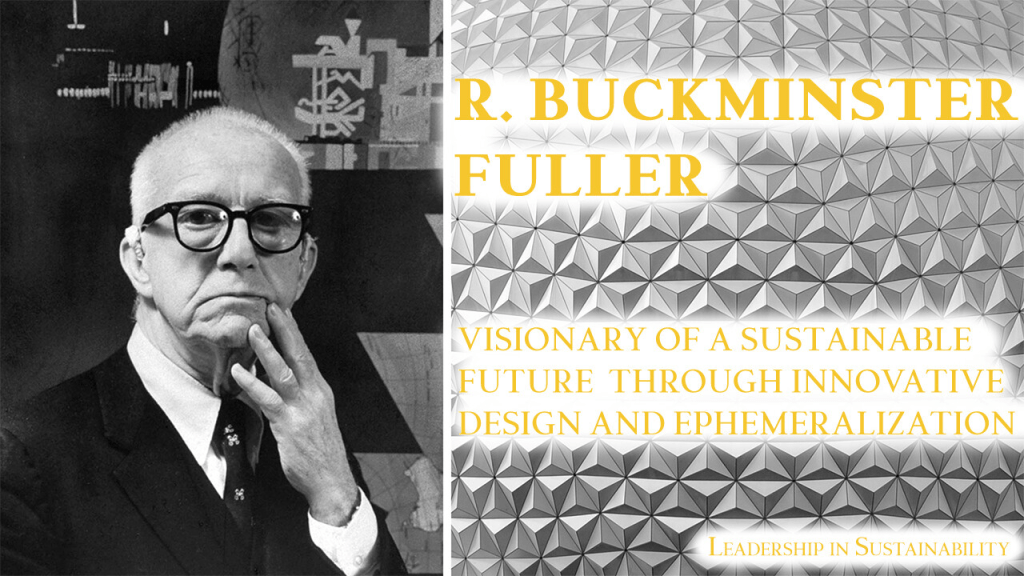
“It is now highly feasible to take care of everybody on Earth at a ‘higher standard of living’ than any have ever known. It no longer has to be you or me. Selfishness is unnecessary and henceforth unrationalizable as mandated by survival.”
— Buckminster Fuller
These words, spoken decades ago, feel more relevant today than ever before.
We live in a time of extraordinary technological advancement. We can communicate instantly across continents. We can grow food more efficiently than at any other time in history. We have the scientific knowledge and global infrastructure necessary to ensure that every human being has access to clean water, nourishment, shelter, education, and healthcare.
And yet, division persists. Scarcity thinking dominates. Nations compete. Individuals hoard. Systems prioritize profit over people.
Buckminster Fuller saw clearly what many still struggle to accept: the world already has enough. The issue is not capacity—it is consciousness.
For centuries, humanity operated under survival-based thinking. Resources seemed limited. Expansion required conquest. Security demanded competition. But Fuller argued that we have entered a new era—an era where cooperation is not only morally preferable, but practically possible.
Today, it is technologically feasible to care for everyone on Earth. Renewable energy can power entire regions. Regenerative agriculture can restore depleted soil. Global collaboration can solve complex problems faster than any single nation working alone.
What prevents us from realizing this potential is not a lack of tools—it is a lack of shared vision.
To build a world that works for everyone, we must shift from isolation to interconnection.

Every action we take ripples outward. The food we purchase affects farmers and ecosystems. The words we speak shape emotional climates. The values we teach our children become the architecture of tomorrow’s society.
A conscious world begins with conscious individuals.
It begins when we recognize that no one truly thrives while others suffer. It begins when we see that compassion is not weakness—it is intelligent design for humanity’s future.
Fuller’s statement—“It no longer has to be you or me”—is revolutionary. For much of history, survival appeared to demand winners and losers. But in a globally connected civilization, that paradigm is outdated.
Environmental collapse in one region affects the whole planet. Economic instability spreads across borders. Violence anywhere diminishes humanity everywhere.
Likewise, innovation anywhere uplifts humanity everywhere. Kindness anywhere restores hope everywhere.
The future no longer belongs to competition alone. It belongs to collaboration.
Our mission to cultivate a more conscious, interconnected world is not idealistic—it is realistic.
It asks us to:
- Think beyond personal gain.
- Support systems that uplift the many, not just the few.
- Practice compassion in daily life.
- Align innovation with wisdom.
- Remember that humanity shares one home.
The tools are here. The knowledge is here. The opportunity is here.
What remains is our collective choice.
Will we cling to outdated models of fear and separation?
Or will we step into the maturity of cooperation and shared flourishing?
Buckminster Fuller believed humanity was capable of making that leap. The question now is whether we are ready to live up to that possibility.
The future is not something that happens to us.
It is something we consciously create—together.

Link:https://peacelilysite.com/2026/02/26/building-a-world-that-works-for-everyone/

 Peace LiLy