Attended Meditation Retreat-Benevolence Temple, Las Vegas

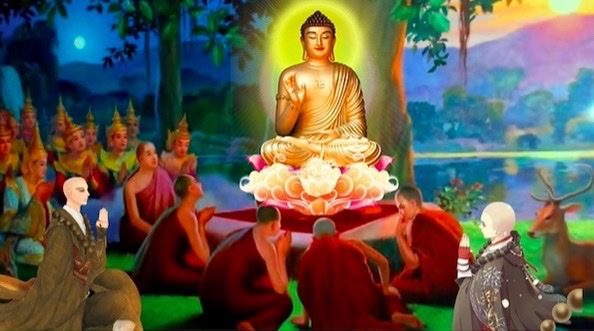
Photo of Shakyamuni Buddha at Benevolence Temple, Las Vegas, Nevada.
Shakyamuni Buddha at Benevolence Temple, Las Vegas, Nevada.

On November 13 and 14, The Benevolence and Pure Cultivation Temples in Las Vegas, Nevada conducted a special Zen Meditation Retreat for English (and Chinese) speakers that taught, demonstrated, and finally allowed all who attended to participate in their form of meditation. This Ru Lai Zheng Fa (Tathagata True Dharma) method features the Great Dharma of Zen Practice by H.H. Dorje Chang Buddha III and the traditional methods followed in ancient China that combined fast walking or moving meditation with silent sitting meditation. Although His Holiness transmitted three mantras that enhance the experience, alternatives are also provided for anyone wishing to participate who has not received them.

Photo of Kuan Yin Bodhisattva shrine at the Benevolence Temple.
Kuan Yin Bodhisattva shrine at the Benevolence Temple.

The first day gave us a tour of the beautiful hidden Benevolence Temple and the experience of what it took for the monastics and lay people of that temple and their companion Pure Cultivation Temple to transform their central Grand Buddha Hall into a Meditation Hall. They would normally do their meditation in a private smaller hall, but this space was created to accommodate the 43 who attended the actual retreat. The afternoon consisted of training for the experience, which we all enjoyed the following day. The second day was the actual Meditation Retreat. It consisted of ten sessions—five fast walking or moving and five sitting sessions. It also included a delicious breakfast, lunch, and evening meal in the nun’s dining hall plus snacks during the morning and afternoon sessions in the Meditation Hall. Everything was conducted in silence except for the bells, gongs, and instructions from Venerable Fa Chao, the abbot of the Pure Cultivation Temple who led the event, and an occasional crack of the cudgel to start each moving session and monitor the sitting sessions.

Grand Buddha Hall at the Benevolence Temple before converting it into a Meditation Hall for the retreat.
Photo of Removing desks and benches at Benevolence Temple to create Meditation Hall.
Removing desks and benches at Benevolence Temple to create Meditation Hall.
Photo of Constructing a new altar for the Meditation Retreat at Benevolence Temple.
Constructing a new altar for the Meditation Retreat at Benevolence Temple.
Photo of Waiting for sitting meditation instruction at Benevolence Temple.
Waiting for sitting meditation instruction at Benevolence Temple.
Photo of Altar with Cudgels during moving meditation.
Altar with Cudgels during moving meditation.
Photo of walking meditation stopped.
Walking meditation.

Link:https://www.zhaxizhuoma.org/attended-meditation-retreat-benevolence-temple-las-vegas/

Why Spiritual Cultivation Matters More Than Ever in a Rapidly Advancing World

In recent years, I’ve often found myself reflecting on the pace of our modern world. Everywhere we look, technology advances with breathtaking speed—AI systems that learn in seconds, devices that connect continents instantly, and scientific breakthroughs that would have been unimaginable a generation ago.

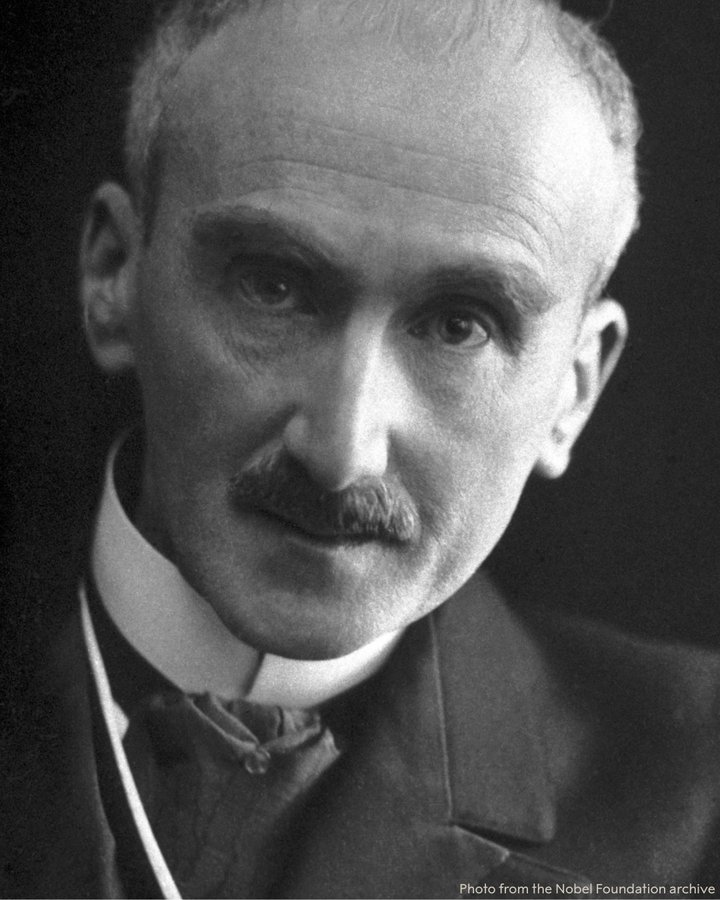
And yet, despite all this progress, people still feel anxious, divided, and spiritually adrift. It was during one of these reflections that I came across a profound message from French philosopher Henri Bergson, winner of the 1927 Nobel Prize in Literature. His words, spoken nearly a century ago, resonated deeply with me:

“An increase in the material means at the disposal of humanity may even present dangers unless it is accompanied by a corresponding spiritual effort.”

This single sentence contains a timeless truth.

The Wisdom of Henri Bergson: Progress Requires Balance

When Bergson delivered his Nobel Prize banquet speech in 1928, he had witnessed the sweeping transformations brought by steam power, electricity, and industrialization. Many believed that these innovations would naturally lead to a better, more harmonious world.

But Bergson saw with clarity that outer progress alone is not enough. Without cultivating our inner world—our morality, our compassion, our spiritual understanding—technology can deepen misunderstandings and widen divisions.

How true this remains today.

The Modern Paradox: Hyper-Connection, Inner Disconnection

We live in a time of extraordinary access and convenience:

  • We can video chat across the planet, yet many feel more isolated than ever.
  • We scroll endlessly through social media, yet our hearts grow restless and overwhelmed.
  • We generate more data in a day than ancient civilizations produced in centuries, yet wisdom feels increasingly rare.

Technology connects our devices, but only spiritual cultivation connects our hearts.

Why Spiritual Effort Is Essential Today

1. It grounds us amid the noise.

With information constantly flooding our minds, spiritual practice helps us regain clarity and stay anchored in truth.

2. It builds our inner resilience.

Life will always bring challenges. Meditation, reflection, and ethical living strengthen the mind and heart to navigate them with wisdom.

3. It cultivates compassion in a divided world.

True peace comes not from advanced systems but from understanding, patience, and kindness—qualities only nurtured through spiritual effort.

4. It reminds us of our shared purpose.

Spiritual insight dissolves boundaries, allowing us to see one another not as competitors but as fellow travelers on the path of life.

Bergson’s warning pierces straight into the heart of our time:

If humanity’s material power grows faster than its moral and spiritual maturity, danger follows.
But when the two rise together, society finds harmony.

This is not just a philosophical idea—it is a blueprint for a peaceful, sustainable future. Whether through meditation, prayer, study, service, or simple acts of kindness, each of us has the power to elevate our inner life.

Our modern world celebrates speed, innovation, and efficiency. But the deeper question is: Do these advances help us become better human beings?

If spiritual cultivation becomes the guiding compass of our progress, then technology becomes a tool for upliftment rather than turmoil.

As we look toward the future, may we remember:

  • Our machines may evolve, but our hearts must evolve too.
  • Our knowledge may expand, but our wisdom must deepen.
  • Our world may grow louder, but our inner clarity must grow stronger.

Only then can humanity advance not just outwardly, but inwardly—toward peace, wisdom, and true connection.

Link:https://peacelilysite.com/2025/11/25/why-spiritual-cultivation-matters-more-than-ever-in-a-rapidly-advancing-world/

The Supreme Buddha Dharma

Every Buddhist practitioner longs for achievement and liberation.
Hearing the true Buddha-Dharma is the key.
The following article is a genuine account written by a monastic bhikshu Huihai (慧海) who personally listened to the Dharma teachings of H.H. Dorje Chang Buddha III.

In this life, I am able to encounter my supreme and unsurpassable Buddha Master—this truly is the greatest blessing I have accumulated through many lives and countless eons!

The Buddha Master’s genuine and pure teachings, in the turbulent waves of today’s chaotic era, are the vessel that carries sentient beings to the shore of liberation. The Buddha Master’s profound and skillful instructions transcend religion, directly point to mind-transmission, accord with conditions and the Dharma-realm, and enlighten sentient beings to step onto the path of awakening.

As a disciple, whenever I am in the presence of the Buddha Master, my heart always feels immeasurably moved, deeply experiencing the holiness and greatness of the Buddha’s virtue

I remember it was in early September of 2005 that I had an audience with the Buddha Master. The Buddha Master said: “In the history of Tibet and the Han region, there were many practitioners who cultivated many Dharma methods, yet achieved very little in their entire lifetime. Only in their old age did they realize that they had seldom listened to true Dharma, which caused them not to understand the Buddha-principles, and thus they walked a deviated path.

Most of the ancestral masters through generations, most of the Buddhas and Bodhisattvas of the past, attained great accomplishment precisely because they listened to Dharma. Therefore, listening to Dharma is extremely important. Now, in this degenerate era, there is truly far too much false Dharma. You must listen to Dharma more, listen more to the Dharma I teach. Only by clearly understanding the Dharma sounds, learning the true Buddha-Dharma, and deeply applying it in actual practice, can the problem of birth and death be resolved. This is the most important, most important thing!”

I knelt and prostrated to the Buddha Master and said: “Your disciple is very grateful for the Buddha Master’s teachings, and I hope all sentient beings may hear and receive the Buddha’s Dharma sound and learn the true Buddha-Dharma.”

The Buddha Master sat for a moment and then went into the room. Several senior brothers and sisters happened to come out, each with joyful expressions on their faces. I asked them curiously: “I see all of you beaming with smiles—what joyful thing has happened?”

One senior brother said: “We just respectfully listened to a recording of a most supreme Dharma-sound.”

I said: “No wonder you are filled with Dharma joy. May I listen to this Dharma-sound recording?” The senior brother said: “This is a rarely accessible Dharma-sound. Permission must be requested before you can listen.”

At that moment, the Buddha Master came out from the room. I quickly reported: “I request Buddha Master’s permission—may I listen to that Dharma-sound recording?”

The Buddha Master smiled and said to me: “Of course you may. You certainly may listen. If even you, a monastic, cannot listen, then who else could?” I joyfully placed my palms together and prostrated to my kind Master, saying: “Thank you, Buddha Master.”


I went to the altar to pay respect to the Buddha, offered a khata and offerings, performed the pre-Dharma-listening rituals, and began to attentively and reverently listen to the Dharma. The Dharma-teaching that the Buddha Master expounded in the recording was unprecedented—unmatched in its sublimity.

Upon hearing this Dharma, I received tremendous blessing power; suddenly my obstructions opened, joy surged within me, like a spontaneous celestial empowerment pouring down, nectar filling me completely. The karmic forces of beginningless time all became like illusions. Such a supreme Dharma—how could it not be something that is difficult to encounter even in hundreds of thousands of eons?


What sentient beings find hard to see, I now see; what sentient beings have not heard, I have now heard. How could beings burdened by countless karmas possibly comprehend its wondrous principles?
After leaving the altar, I saw the Buddha Master and immediately knelt down in gratitude.

I said excitedly: “Buddha Master! How could this merely be a teaching or a Dharma-sound? This is fundamentally a great Dharma—an unsurpassable great Dharma!”

The Buddha Master looked at me and smiled: “Excellent! You received the blessing of Buddhas and Bodhisattvas and understood the Dharma I taught.”

I continued: “Buddha Master, this Dharma truly leaps directly and suddenly into the Tathāgata’s state! And truly, it requires no effort—you can attain it instantly.”
The Buddha Master said: “Indeed so.”

I further said: “This Dharma is truly magnificent. Indeed, everyone can practice it, but ordinary people will not understand it and will only regard it as an ordinary teaching.”

The Buddha Master said: “This is even easier than realizing mind and seeing one’s nature. Even those who realize mind and see their nature may not attain this state.”

My Buddha Master—the Supreme Protector, H.H. Dorje Chang Buddha III—expounds Dharma by observing sentient beings’ karmic conditions through the complete Buddha-wisdom. Every teaching is given for the liberation of Buddhist disciples and future beings. The Dharma principles revealed are tailored to each person’s capacity, deep yet simple. Though spoken casually, they unfailingly accord with the profound truths of the Buddhist Tripiṭaka and esoteric scriptures. Moreover, many penetrating and unique Dharma principles are not found in any sutras—they arise directly from the Buddha Master’s innate enlightened realization.


Since I drew close to the Buddha Master and respectfully listened to the Buddha Master’s Dharma-sounds, I have finally gained a complete understanding of the Tathāgata’s perfect and true teachings. The benefits I have received are far too many to express in words—far surpassing everything I had learned in Buddhism over the past decades.

Because Buddhist sutras have been transmitted in the world—especially after translation—they inevitably contain mistranslations or misinterpretations. Moreover, the classical literary language used in the scriptures is truly difficult for modern readers accustomed to vernacular style. The numerous technical terms in the sutras also pose a challenge for beginners entering the Buddhist path.

The Dharma-sounds taught by H.H. Dorje Chang Buddha III are the authentic Tathāgata true Dharma, explained through modern language and analogies, expressing principles in accordance with intrinsic nature, unfolding the stages of realization, and enlightening the ignorant. Those who listen can easily learn pure Buddha-Dharma and establish correct understanding and correct views. Therefore, it is most suitable for every practitioner in today’s world to rely on and cultivate.

The Dharma-sounds spoken by H.H. Dorje Chang Buddha III are a bright lamp illuminating the path of cultivation. They are the supreme Dharma-treasure that enables sentient beings to become Arhats, enables Arhats to become Bodhisattvas, and enables Bodhisattvas to become Buddhas—to attain accomplishment, liberation, realization, and sainthood.


I often feel this: whenever the Buddha Master expounds Dharma with perfect, lion-like sound, the Dharma-voice flows throughout the boundless space; humans and non-humans all receive its benefit; the Dharma assembly at Vulture Peak seems as if it has never dispersed—

Before my eyes it is as if scenes from ancient times appear again: the Buddha teaching under the Bodhi tree, when Bodhisattva-Mahāsattvas, monks, nuns, laymen, laywomen, along with heavenly beings, nāgas, humans, and non-humans—countless multitudes—surrounded Him, making offerings, honoring, respecting, and praising. Heavenly mandārava flowers rained down, scattering over the Buddha and the assembly…

In this degenerate age, as a disciple of the Buddha, I feel fortunate to have this rare Dharma affinity, able to personally hear the Dharma before the Buddha and practice the true Dharma. I sincerely pray:

May the Dharma Wheel of the supreme and great H.H. Dorje Chang Buddha III always turn, and may He abide in this world forever.

May all beings in the Dharma-realm hear the Dharma-sounds spoken by H.H. Dorje Chang Buddha III, increase in blessings and wisdom, forever leave all suffering and obtain happiness, and together realize Bodhi.


Disciple of the Buddha — Huihai

For the original Chinese speech, please click here. This English translation is by Linda Chang and is provided for reference only.

Link:https://peacelilysite.com/2025/11/21/the-supreme-buddha-dharma/

The Monk Who Remembered His Past Lives: A Tale of Karma, Awakening, and Renewal

In the Tang Dynasty, there lived a monk named Jian Kong (Venerable “Mirror-of-Emptiness”), who in his previous life had been a diligent spiritual practitioner. Yet after reincarnating, he was born not as a monk, but as a poor scholar—one who, despite twenty long years of effort, could not pass the imperial examinations. He had no money, no connections, and often struggled even to find a simple meal. Hunger followed him like a shadow.

One day, after days of near-starvation, he set out toward a nearby temple, hoping to find something—anything—to eat. But halfway there, by the side of a river, his strength gave out completely. Weighed down by exhaustion and despair, he collapsed on the riverbank and began to cry. He was already around forty-five years old, and life felt unbearably harsh.

As he wept, a Brahmin monk suddenly appeared before him, radiant and calm.

Venerable Dharma Master,” the monk said, “are you satisfied with the taste of wandering through worldly life?

The scholar was startled.
Satisfied? It has been nothing but suffering! But I am a layman—why do you call me “Dharma Master”? That title doesn’t belong to me.

The Brahmin monk smiled gently.
You are starving and confused now, so you’ve forgotten everything.

He reached into his bag and took out a large, fist-sized date.
“This is a special fruit from my homeland. Eat it. Then you’ll understand.”

The scholar ate the date. Sleepiness washed over him at once, and he lay down beside the river. When he awoke, something astonishing had occurred—
his entire past life came flooding back.

He remembered that he, the Brahmin monk standing before him, and three others had all been fellow practitioners in their previous lives. Filled with emotion, he asked:

What about Monk Zhen? How is he doing in this life?

The Brahmin monk replied, “In his past life he had not yet cut off worldly attachments, nor had he achieved realization. In this life, he has become a monk again in Sichuan. He has now completely severed his desire for fame and fortune. He will attain accomplishment in this very life.

The scholar asked about another of their five companions.
And Master Shen? What about him?
His wishes remain unfulfilled,” the monk answered.

Then he asked about the third companion, Master Wu.
The monk sighed gently:
You know him. In our past life, he once joked before a stone Buddha statue: ‘If I cannot attain supreme enlightenment, then at least let me become a mighty nobleman.’
Well, his vow has come true. Just yesterday, I heard he was appointed a general. He has completely forgotten he was once a monk.*”

Finally, the Brahmin monk turned to him and said:

Among the five of us, I alone have attained liberation. And you—of all of us—you alone have fallen to such a state that you cannot even find enough food to fill your stomach.

The scholar was bewildered.
In my past life,” he said, “for decades I ate only one meal a day and wore one tattered robe for over thirty years. I practiced diligently and lectured on the Dharma tirelessly. I was a well-known Dharma Master. How could my karma now be so miserable?

The Brahmin monk answered with unmistakable compassion:

Yes, you cultivated hard. But when you taught the Dharma, you often mixed in ideas from Daoist and other non-Buddhist teachings. This confused your listeners. You also held back special teachings out of stinginess, unwilling to share them openly. And although you kept the precepts, you broke them in many subtle ways. Given all this, your current life’s hardship is already a fortunate result.

Hearing this, the scholar felt deep remorse and sadness. But instead of despair, a new resolve arose within him.

He vowed to renounce worldly life and become a monk once more.

Seeing his sincerity, the Brahmin monk took out a mystical mirror from his bag.
In it, the scholar saw with clarity:

  • his own past lives,
  • the karmic results of all beings’ actions,
  • even the future rise and fall of the Dharma.

The mirror was said to be like the Seven-Jewel Trees of the Pure Land, which reveal the karmic truths of the universe with perfect brightness.

With this profound vision, his conviction became unshakable.
He immediately entered monastic life, practiced with genuine diligence, and in time became a highly respected and accomplished master.

Link:

The Recognition of H.H. Dorje Chang Buddha III: Does a Buddha Need to Be Recognized?


The Recognition of H.H. Dorje Chang Buddha III: Does a Buddha Need to Be Recognized?

The Recognition of H.H. Dorje Chang Buddha III: Does a Buddha Need to Be Recognized?

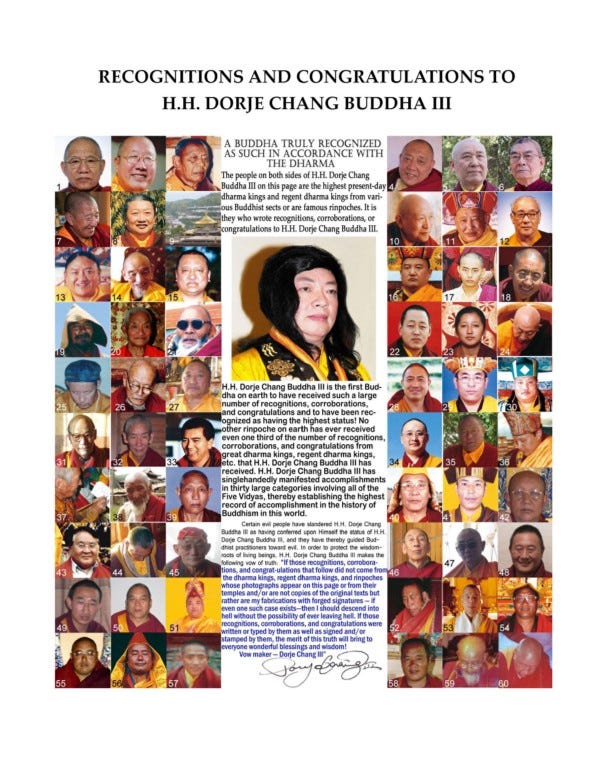
Worldwide Recognition of H.H. Dorje Chang Buddha III by Eminent Buddhist Leaders

Recognitions and Congratulations to H.H. Dorje Chang Buddha III

When over a hundred great Dharma Kings, Regents, and Rinpoches from various Buddhist traditions throughout the world lawfully recognized, in accordance with Buddhist precepts, that Namo H.H. Dorje Chang Buddha III is the reincarnation of the ancient Buddha, Buddhist disciples around the globe rejoiced in celebration. The descent of Namo H.H. Dorje Chang Buddha III brings to the beings of this Dharma-ending age the correct and unerring True Dharma of the Tathagata that leads to liberation from the cycle of birth and death. How fortunate living beings are to personally hear the teachings of the Buddha — there is now hope for attaining enlightenment in this very lifetime!

Online Slander and Misunderstanding of H.H. Dorje Chang Buddha III’s Holy State

However, some people on the internet refuse to face the legitimate recognitions, the holy realization, and the perfect mastery of the Five Vidyās and teachings of H.H. Dorje Chang Buddha III with reason or correct understanding. Instead, they fabricate rumors, spread insults, slander, defamation, and false accusations — maliciously twisting facts, inventing lies, and making baseless claims. They use vulgar words, forge fake documents, false notices, and false statements, and even create distorted images and mocking content — doing everything they can to attack H.H. Dorje Chang Buddha III. Through their own words and actions, they merely expose their ignorance and lack of virtue.

Some say, “A Buddha or Bodhisattva is realized through practice, not by ‘recognition.’” “Shakyamuni Buddha didn’t need a certificate of recognition.” But their purpose is clear — to stop more people from learning the true Buddha Dharma and attaining liberation!

So, does a Buddha need recognition when descending into the world?

A Practice for the Benefit of Sentient Beings.

A Buddha is one of unsurpassed, perfect enlightenment and complete wisdom. The reason one is a Buddha lies in their realization and enlightenment — not because of any recognition by others. No matter how great a Dharma King, Regent, or Rinpoche may be, their level of realization is far inferior to that of a Buddha; thus, any recognition they offer to a Buddha would be, in essence, just a piece of paper of no value to the Buddha.

However, because sentient beings in this world often lack the wisdom to discern between true and false saints, between genuine Buddha Dharma and false teachings that imitate Buddhism, they may easily be misled by superficial appearances and deviant views. Therefore, for the benefit of sentient beings, by following the Buddhist tradition of formal recognition, those virtuous masters issued such recognitions that help people give rise to faith and thus be saved. This is an act of right knowledge and right view.

The Example of Master Padmasambhava and the Importance of Recognition

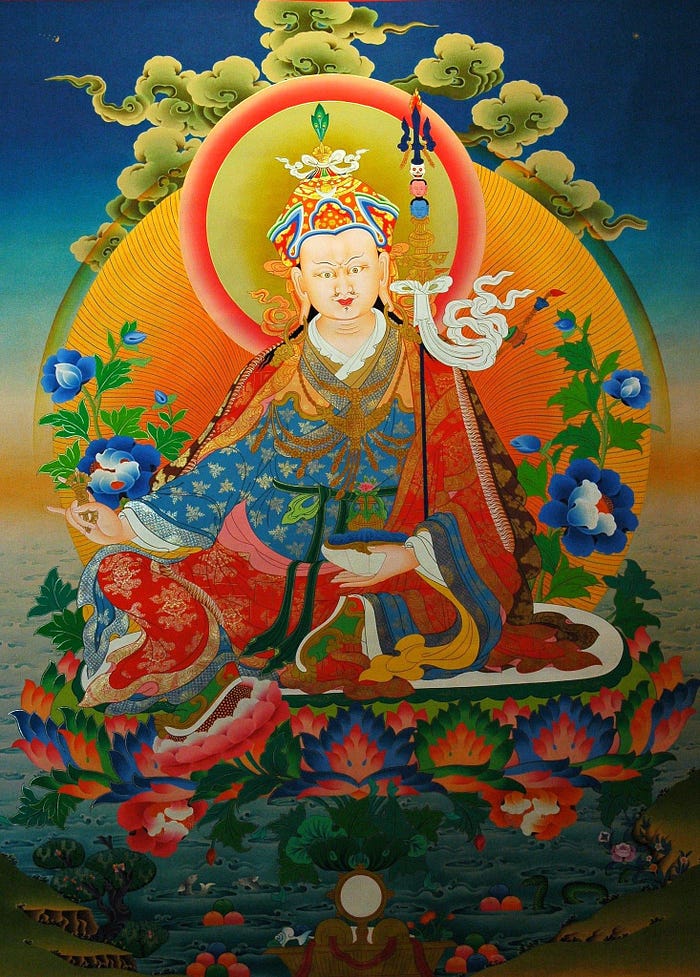
Master Padmasambhava

When Master Padmasambhava first went to Tibet to propagate the Dharma, he was not greeted with respectful welcoming crowds. Instead, the Tibetan people were terrified and shouted, “Quick! Drive out this sorcerer who performs strange magic without lineage transmission! Do not let him deceive us with his witchcraft!” They even lifted him up and threw him into a muddy pit. Later, Master Padmasambhava returned to India and asked two renowned masters to write letters of recognition. Only then did Buddhism begin to flourish in Tibet. In fact, those two masters later became Master Padmasambhava’s disciples.

Therefore, when Buddhas or Bodhisattvas reincarnate and manifest again in this world, undergoing recognition according to Buddhist rules is not for their own sake, but for the sake of helping sentient beings generate faith and thereby be liberated.

The Supreme Conduct and Realization of H.H. Dorje Chang Buddha III

Indeed, the realization and attainment of a Buddha or Bodhisattva come from their own cultivation and enlightenment. The realization, virtue, and attainment of all Buddhas and Bodhisattvas are the manifestation of their supreme enlightenment. The pure and flawless conduct of Namo H.H. Dorje Chang Buddha III, His mastery of both exoteric and esoteric teachings, His perfect command of the Five Vidyās, and His countless acts of liberating sentient beings — all fully demonstrate the enlightenment and realization of a true Buddha!

Therefore, I sincerely advise those who slander: repent sincerely before the Buddhas and Bodhisattvas, or karmic retribution will not spare you! At the same time, I compassionately remind all who truly wish to learn and practice Buddhism: we live in the Dharma ending age, when confusion prevails, and the nature of the demonic offspring is to destroy the Dharma and obstruct sentient beings from learning the true path. Kind-hearted beings, please open your eyes of wisdom, discern the true from the false, and do not be deceived by demonic forces — lest you miss the supreme Dharma opportunity that can bring you liberation from birth and death in this very lifetime!

Source: https://dharma-hhdorjechangbuddhaiii.org/the-recognition-of-h-h-dorje-chang-buddha-iii-does-a-buddha-need-to-be-recognized/

Link: https://hhdorjechangbuddhaiiidharma.com/2025/11/17/the-recognition-of-h-h-dorje-chang-buddha-iii-does-a-buddha-need-to-be-recognized/

#DorjeChangBuddhaIII #HHDorjeChangBuddhaIII #DorjeChangBuddha #TrueDharma #Buddhism #Vajradhara #LivingBuddha #BuddhistWisdom #BuddhaRecognition #ModernBuddhism

Compassion in Action: Life Release Day Observed Through Prayer, Education, and Service

November 4, 2025 San Francisco Post

Photo Courtesy: Hua Zang Si (Community members unite across California to honor the Life Release Day Designated by Buddha, transforming compassion into action through ceremonies, education, and charitable outreach.)

        Buddhist communities across California came together on October 29 to honor “The Life Release Day Designated by Buddha,” a global observance dedicated to compassion, the protection of life, and the collective aspiration for peace. 

        On the morning of October 29, 2025, the H.H. Dorje Chang Buddha III Cultural and Art Museum hosted a life release event at the Marina Del Rey harbor, drawing spiritual leaders and community members from across Southern California. The event was led by Venerable Master Ruzun Ruohui, Abbess of Hua Zang Si Temple and Hongfa Temple.

        Participants gathered in unity to chant praises and recite the  Great Compassion Mantra of Avalokiteshvara Bodhisattva. Venerable Master Ruzun Ruohui blessed the fish awaiting release with consecrated Dharma water, offering prayers that these sentient beings be freed from suffering and karmic obstructions. Upon release, the fish were returned to the ocean with the hope that they would find safety and live free from harm and predators. 

        The Life Release Day Designated by Buddha originated on October 29, 2009, when H.H. Dorje Chang Buddha III personally led His disciples in a life release ceremony following a significant Buddhist event. He compassionately declared this day as “Life Release Day” to promote the protection of life and the practice of compassion.

        The H.H. Dorje Chang Buddha III Cultural and Art Museum upholds the compassionate teachings of H.H. Dorje Chang Buddha III. The museum urges all sectors of society to transform empathy into action—promoting the safeguarding of life, the cessation of killing, and the daily practices of kindness as a fundamental way of living. Venerable Master Ruzun Ruohui emphasized that life release practices are not confined to specific days or locations. Whenever a life is in danger, we are called to act—to return it to a suitable environment, to grant it freedom, and to relieve it from fear.

        On October 29, 2025, San Francisco’s Hua Zang Si Temple also held a life release ceremony at San Rafael. Participants from diverse cultural backgrounds gathered to recite the Heart Sutra and the Great Compassion Mantra before gently releasing fish back to their natural habitat. Organizers emphasized that life release is not only a spiritual practice, but also a call to awaken society’s compassion and deepen our care for the sentient beings. 

Photo Courtesy: H.H. Dorje Chang Buddha III Cultural and Art Museum
Venerable Master Ruzun Ruohui blesses fish awaiting release with Dharma water during the Life Release Day ceremony at Marina Del Rey.

Photo Courtesy: H.H. Dorje Chang Buddha III Cultural and Art Museum
Upon release, the fish were returned to the ocean.

        To nurture compassion in the next generation, Hua Zang Si Temple held a Buddhist children’s story class on October 19. Through storytelling and interactive learning, the program guided young participants to understand the core values of “equality of all life” and “compassion without harm.” The initiative was warmly received by parents, who expressed deep appreciation for the temple’s commitment to meaningful and values-based education.

        On October 26, Macang Monastery in San Francisco held a special “Life Release Day Blessing and Food Donation Ceremony” in honor of the Life Release Day Designated by Buddha. Following collective sutra recitation and prayers by both monastics and lay practitioners, the temple donated food supplies to unhoused individuals and low-income families—embodying the Buddhist spirit of compassion and service to those in need.

        This year’s Life Release Day Designated by Buddha brought together Buddhist disciples and compassionate leaders from all walks of life through a range of activities—including life release ceremonies, prayer gatherings, educational outreach, and food donations. Participants were reminded that cultivation is not merely a slogan, but a continuous practice through every kind thought and virtuous deed.

Expounding the Absolute Truth Through the Heart Sutra

        This book by H.H. Dorje Chang Buddha III was released in Chinese in 2014 but is not yet available in English. It is based on a series of very famous discourses given in China in 1992, using the text, meaning, and principles of the Heart Sutra to transmit Dharma. It clearly explains the relationships between mind, Buddha, and living beings. It tells everyone what the absolute truth of Buddha-dharma and liberation is. Several years ago, His Holiness told a number of Western disciples that this is the only book you need to read to understand emptiness and become enlightened. This text is for acquiring prajna or transcendental wisdom, although it also teaches the importance of cultivating character.

        To stress how important this holy book is, we must remember that just before the Buddha left this world His Holiness told us that “. . . At all times, we must think about bringing auspiciousness, serenity, happiness, and peace to living beings and to the world, to the extent of giving our all and even our lives. I have already brought true Buddha Dharma to this world. Everyone who practices in accordance with The Supreme and Unsurpassable Mahamudra of Liberation and Expounding the Absolute Truth Through the Heart Sutra will surely attain liberation. That’s all. I wish all living beings happiness.”

Venerable Master Puguan’s Reflection After Listening to Expounding the Absolute Truth Through the Heart Sutra

Below is the heartfelt reflection of Venerable Master Puguan, the abbot of Kaihua Monastery on Mount Wuzhong—the first site of Southern Transmission Buddhism and the thirteenth-generation patriarch of Mount Emei—after listening to the Dharma discourses of Expounding the Absolute Truth Through the Heart Sutra spoken by H.H. Dorje Chang Buddha III.

Venerable Master Puguan said:

“No matter what words I use today, they cannot fully express the supreme joy and wonder in my heart.
My most magnificent and compassionate Buddha Master, the Great Dharma King Yangwo, once visited Mount Wuzhong in person. At that time, my junior Dharma brother, Dharma Master Guozhang, and I were on the third day of a Zen retreat with the four assemblies of disciples when suddenly the Dharma protector came and told me, ‘The greatest holy being has arrived! He is wearing white clothes. Quickly cancel the Chan session and lead everyone to greet Him with full ceremony!’

Dharma Master Guozhang also received the same message—that the highest Holy One had come. We immediately announced to all disciples that the Zen session was to be stopped, and we prepared the ceremonial welcome with drums and bells. Indeed, about ten minutes later, a group of dozens of people arrived at the foot of the mountain—it was my revered Master, the Great Dharma King Yangwo (H.H. Dorje Chang Buddha III).

When I supported my Master while walking toward the Bright Moon Pool, He gently took hold of my hand instead and said, ‘I am younger than you; you should not support me. It is I who should support you, the elder.’

At that moment, I felt deeply ashamed. How could a disciple ever deserve to be supported by his Master, the Great Dharma King?

Now, after listening to Expounding the Absolute Truth Through the Heart Sutra, I finally realize that what my Master said back then was the very expression of ultimate truth!
We practitioners must rely on our Master’s steadfast guidance, never letting go of His compassionate hand, until we are led to the pure Buddha-land of ultimate Nirvana. How could we ever imagine supporting our Master?

Having repeatedly listened to this Dharma discourse, I can only say that my Master has explained the very essence of all 600 volumes of the Prajnaparamita Sutras and the two essential provisions of precepts and practice. The Dharma He expounded is so profound that the deep will see its depth and the shallow will see its shallowness—it is wondrous beyond description, extraordinary within the ordinary. In truth, it is the supreme teaching of the ultimate truth since the beginning of time.

After listening to this unparalleled Dharma spoken by my Buddha Master, I was instantly and completely awakened—the bottom of the bucket had fallen out! Unfortunately, my age has deprived me of the condition to attain rainbow-body ascension, but I rejoice that I have realized the state of indestructible flesh body. After my parinirvana, this body can serve as evidence to the world that my Great Dharma King, my Buddha Master, is truly the Dharma King who unites all Buddhas of the ten directions.

When I think back on my earlier misunderstandings, I feel deeply ashamed. I once mistakenly believed that only Tibetan Esoteric Buddhism possessed the Great Dharma that enables enlightenment within one lifetime. Now that I have attained realization, I truly understand that the authentic Dharma of the Tathagata transcends all schools and sects.

In fact, the true Buddha Dharma is a wondrous treasure existing independently of any tradition. It is neither exclusive to nor absent from any particular school—because genuine Dharma is not governed by sects but by Buddhas and Bodhisattvas themselves. Wherever a Buddha or Bodhisattva manifests as a teacher, that school naturally possesses the Great Dharma.

When I recall my past cultivation at the Golden Summit of Mount Emei, I can only remain speechless in humility. Today, immersed in the bliss of Dharma joy, I can only pray:

May all Buddhas bless that the great karmic conditions of the Tathagata ripen soon.
May all sentient beings swiftly hear the teachings of my Buddha Master—the Mother of All Buddhas’ Dharmas, Expounding the Absolute Truth Through the Heart Sutra
so that their blessings and wisdom may swiftly and perfectly flourish,
attaining Bodhi and liberation in this very life,
and achieving freedom from life and death!

Namo Amitabha Buddha!
Namo Avalokiteshvara Bodhisattva!

Note: In 1998, Master Pu Guan passed away while in meditation, having attained mastery over his life and death. Remarkably, even eight years after his passing, his remains rest within a stupa, preserved in the meditation posture without any signs of decay.

The above is the English translation of Venerable Master Pu Guan’s Dharma discourse, rendered into English by Linda Chang. The original Chinese version is provided below.

普觀長老聽《藉心經說真諦》法音感言

下面是峨嵋山第十三代祖師、佛教南傳第一站霧中山開化寺方丈普觀老和尚聽 H.H. 第三世多杰羌佛說法《藉心經說真諦》法音後的感言,老和尚說:

我今天無論說出什麼樣的話,也代表不了我內心的喜悅殊勝,我最偉大的如佛恩師,仰諤大法王聖駕霧中山,當時我和我的師弟果章法師正在與四眾弟子打禪七的第三天,突然護法叫我說:「最偉大的巨聖德駕臨了,祂穿的是白衣服,趕快取消禪七,率領大眾大禮接駕吧!」這時果章師弟對我說,他接到護法的報告,有最大的聖德駕臨;我們當場宣布四眾弟子取消禪七,立刻擺駕擂鼓鳴鐘接駕,果然十分鐘後山下來了一隊幾十人,原來是我的恩師仰諤總持大法王駕到,當我攙扶恩師登上明月池的途中,師父反攙著我的手說:「我年輕,你不要攙扶我,應該我攙著你這位老人。」當時我深感慚愧,弟子怎能有資格讓大法王恩師攙扶呢?現在聽完《藉心經說真諦》以後,恩師說的才是一語道斷的真理哦!我們這些行人,就是要依靠恩師不鬆手地把我們攙扶著到究竟涅槃的佛土,我們哪裡有資格攙扶恩師啊!當我反覆聽到《藉心經說真諦》的開示說法般若心髓,我只能說講透了六百卷般若的心要和行修戒體二資糧,恩師的說法深者見深,淺者見淺,微妙至極,平中見奇,實在說來,是開天闢地第一義諦之無上說法。聽了恩師講說的法音無上大法以後,讓我頓然大徹大悟,桶底脫落,可惜我歲數太大,失掉化虹飛升的條件,但慶幸的是,我證到了肉身不壞的境界,今後圓寂後,可以為世人證明我大法王如佛恩師,才是十方諸佛的總匯法王。回想起當初錯誤的認識,深感羞慚,誤認為只有西藏密宗才有即身成佛的大法,現在我得到了,才真正瞭解如來的正法不是哪一宗有、哪一宗沒有,其實佛法是獨立在世外的妙寶,與密宗、顯宗沒有任何關係,任何一宗都有佛法,也沒有佛法,關鍵在於真正的佛法不是宗在掌管,而是佛菩薩在掌法,佛菩薩化身在哪一宗為師,哪一宗就有大法。想到當初我在峨嵋金頂的修持,只能無言以對,而今天處於法樂中的我,只能祈請諸佛加持,如來大事因緣早日成熟,眾生早日得聞恩師講說出諸佛之母法《藉心經說真諦》,福慧速猛圓滿,今生必證菩提聖道,生死自由!

南無阿彌陀佛!

南無觀世音菩薩!

Link:https://peacelilysite.com/2025/10/31/expounding-the-absolute-truth-through-the-heart-sutra/

Source: https://cabuddhists.org/en/expounding-the-absolute-truth-through-the-heart-sutra/buddhist-books/h-h-dorje-chang-buddha-iii-expounding-buddha-dharma/; https://www.wbahq.org/ch/dharma-discourses/sf-jxjszd/

Yoga is so much more than just stretching

What’s the first image that comes to mind when you think of Yoga?  

It’s not uncommon for this image to consist of individuals contorting their bodies into impossible positions that are more appropriate for the Cirque du Soleil.  There is nothing wrong with some of these breathtaking images, and I love looking at them because I’m in awe of the strength, grace, practice, and determination it takes to hold these postures.  My issue with these images flooding social media is that these postures are not possible for most individuals (including me) and the models are usually young, white, beautiful, slim women.  This makes it hard to connect to Yoga’s rich Indian history or how it is a practice that is for EVERYONE regardless of age, body type or ability.

In the last few decades, Yoga has become a billion-dollar business.  When I started attending yoga studios in Toronto in the early 1990s, there were only 2 studios, and now there is a studio every 3 blocks.  There are “yoga teacher rock stars” and businesses that make high-end yoga gear. I’m glad that Yoga has become so popular because this beautiful healing practice impacts more people.  However, I believe this commercialism and competitiveness have diluted the teachings and appropriates this ancient practice in some situations. 

There is evidence that Yoga existed in India as far back as 500 BC with roots in Hinduism, Buddhism, Jainism and other religions.   Sanskrit is the sacred language of Hinduism, classical Hindu philosophy, and other historical religious texts. The word ‘Yoga‘ is derived from the Sanskrit root ‘Yuj’, meaning ‘to join’ or ‘to yoke’ or ‘to unite-union of mind, body and spirit.  

As a yoga teacher and student, I want my students to be familiar with Yoga’s roots and understand that what happens on the mat is more than just stretching and holding postures.   This union of mind, body and spirit, happens while practicing the asanas-Sanskrit word for postures.  A regular practice will increase flexibility, strength and mobility, and while you are holding the postures, you are practicing pranayama-breath control, meditation, and mindfulness.   This holistic practice is how transformation happens and the “union” builds a healthier, more agile body, calms the nervous system, teaches presence, and provides us with tools that we can use off the mat.  

Yoga has a rich philosophical history that includes sacred and treasured texts: The Vedas, The Upanishads, The Bhagavad Gita and Pantanjali’s Sutras.  

Pantanjali was an Indian sage and thought to be the author of the Yoga Sutras, which is a classical yoga text on yoga theory and practice.  According to his teachings, there are 8 components to Yoga:  

1.   Yamas-attitudes towards environments. 

2.   Niyamas-attitude towards ourselves 

3.   Asana-yoga postures 

4.   Pranayama-breath control and breathing exercises

5.   Pratyahar-withdrawal of senses

6.  Dharana-concentration

7.  Dhyana-meditation

8.  Samadi-complete integration

One of the most compelling benefits of Yoga is stress reduction. It’s inspiring to see how it has helped individuals recover from trauma, PTSD, depression, and anxiety.  

Enjoy the stretching and postures, and know that you are also calming your mind and relaxing your body.  Instead of thinking of Yoga as work out, think of it as a work in.  

Be well.

Anita

Link:https://peacelilysite.com/2025/10/29/yoga-is-so-much-more-than-just-stretching/

Source: https://countyyogaloft.ca/blog/yoga-is-so-much-more-than-just-stretching

A Miracle in Pleasanton: How a Police Car Accident Became a Lesson in Karma and Protection

On the evening of May 31, 2013, an ordinary family outing turned into a life-changing experience that revealed to me the power of karma, faith, and divine protection.

That spring, my two daughters had just returned home from their colleges on the East Coast for summer vacation. We were all joyful to be reunited as a family. After dinner that evening, my husband, Yiao-Tee, and our daughters decided to take a short walk to the nearby Walmart in Pleasanton, California, to buy a watch battery.

It was around 9 p.m. when we stepped out of the store. My husband and daughters walked a few meters ahead, while I followed behind them on the pedestrian walkway. Suddenly, a police car pulled out of a parking space.

The officer inside noticed my daughters walking past his vehicle and, focusing on them, momentarily forgot that he was still driving. In that instant, he failed to see me. By the time he realized I was there, it was too late—
the police car struck me squarely. Screams broke out around us as I was thrown into the air and landed heavily on the ground.

When the officer got out of his vehicle, his first reaction was to blame me, claiming I had suddenly stepped in front of his car. My husband and daughters immediately refuted this. They knew I would never rush recklessly in front of a moving vehicle.

Eyewitnesses later confirmed that the impact had lifted me several feet into the air. Yet, against all odds, I was conscious and could move. An ambulance soon arrived and rushed me to the emergency room.

After thorough examinations and X-rays, the doctor and nurses were astonished.
They told me, almost in unison, that my survival was nothing short of a miracle.

There were no broken bones, no internal injuries, not even minor scrapes. Only a light swelling and redness on my left thigh showed any sign of trauma. The next day, I received acupuncture and laser treatment—and even went to work as usual. My daily life was completely unaffected.

When I reflect on that night, I recall no sensation of pain or impact. My mind had gone blank. Yet, very subtly, I felt as though someone had caught me and gently placed me back on the ground.

That feeling was profound and beyond words.

I have always worn the Vajra Thread given to me by my master when I took Refuge. I believe wholeheartedly that the compassionate empowerment of H.H. Dorje Chang Buddha III and the blessings of Buddhas and Bodhisattvas protected me from harm.

While I was physically unharmed, the aftermath was not easy. The police department initially refused to accept responsibility. They attempted to shift the blame to Walmart, claiming the store had not provided adequate pedestrian markings. As a result, they also refused to cover the nearly ten thousand dollars in ambulance and medical expenses.

It was only through Walmart’s surveillance footage, which captured the entire incident, that the truth could be verified.

I reported the situation to my master, explaining how I had been struck by a car yet walked away without injury.

Then, three months later, a call came from the police department’s insurance representative:
they would cover all the expenses in full.

In that moment, my heart overflowed with gratitude—to the Buddhas and Bodhisattvas for their protection, and to H.H. Dorje Chang Buddha III for His compassion and empowerment.

This experience deepened my faith and strengthened my resolve to cultivate diligently. Our whole family now listens to the Buddha Dharma of H.H. Dorje Chang Buddha III and practices accordingly.

Through continued study and sincere cultivation, we have found that every aspect of our lives—career, health, and even our children’s educational paths—has been smooth and filled with blessings.

Inspired by this miracle, our family established a Dharma Listening Center to share the authentic Buddha Dharma of H.H. Dorje Chang Buddha III, so that others may also receive the same blessings of wisdom and protection.

From the bottom of my heart, I express my deepest gratitude to H.H. Dorje Chang Buddha III, the Pope of Buddhism, for expounding the supreme and authentic Buddha Dharma.

I also bow in reverence to all Buddhas and Bodhisattvas for their compassionate protection. This experience reminded me of an unshakable truth:
the law of cause and effect never errs.

This accident was no coincidence—it was the ripening of past karmic causes. Yet, through sincere cultivation and the accumulation of merits, even serious calamities can be transformed.

This event has forever affirmed my faith in the Buddha’s teachings.
If we believe in the law of cause and effect, remain steadfast in our cultivation, and dedicate ourselves to doing good and spreading the true Dharma, every bit of merit will bring us peace and blessings.

When one lives in alignment with the Buddha Dharma, miracles are not extraordinary—they are the natural expression of divine compassion.

Link:https://peacelilysite.com/2025/10/22/a-miracle-in-pleasanton-how-a-police-car-accident-became-a-lesson-in-karma-and-protection/

5 Morning Affirmations to Begin Your Day with Peace and Strength

This morning, I stumbled upon a truly inspiring video—one that I feel compelled to share. It’s about something simple yet deeply powerful: the words we choose to tell ourselves at the start of each day.

The video introduces five morning affirmations—phrases rooted in mindfulness, gratitude, and self-compassion. These words are not just reminders; they are seeds we plant in our hearts. By repeating them daily, we can replace anxiety with calm, transform doubt into confidence, and begin our day already centered in peace.

Here are the affirmations:

  1. I am here, I am alive. This moment is enough.
  2. Nothing outside me can disturb my peace unless I let it.
  3. I will treat myself with kindness, not judgment.
  4. Everything I need is already within me.
  5. Let me be the cause of peace today.

These may seem like simple sentences, yet they carry thousands of years of wisdom. Buddhist teachings remind us that the mind shapes our reality. When we begin each day with thoughts of peace, compassion, and self-respect, we set the tone for everything that follows.

What I love most is the last affirmation: “Let me be the cause of peace today.” Imagine the ripple effect if each of us carried this intention into our daily lives—peace would not just be something we seek, but something we create and share.

The words we tell ourselves each morning truly have the power to shape a lifetime of peace and wisdom.

✨ I wish everyone who watches this video peace, clarity, and growth on their journey. May these affirmations bring light to your mornings and strength to your days.

🌸 Why not give it a try? For the next seven mornings, say these affirmations to yourself before you start your day. Notice how they shift your mood, your focus, and even the way you interact with others. If you feel inspired, share your experience—it might just encourage someone else to begin their own journey of mindful mornings.

Link: https://peacelilysite.com/2025/09/12/5-morning-affirmations-to-begin-your-day-with-peace-and-strength/