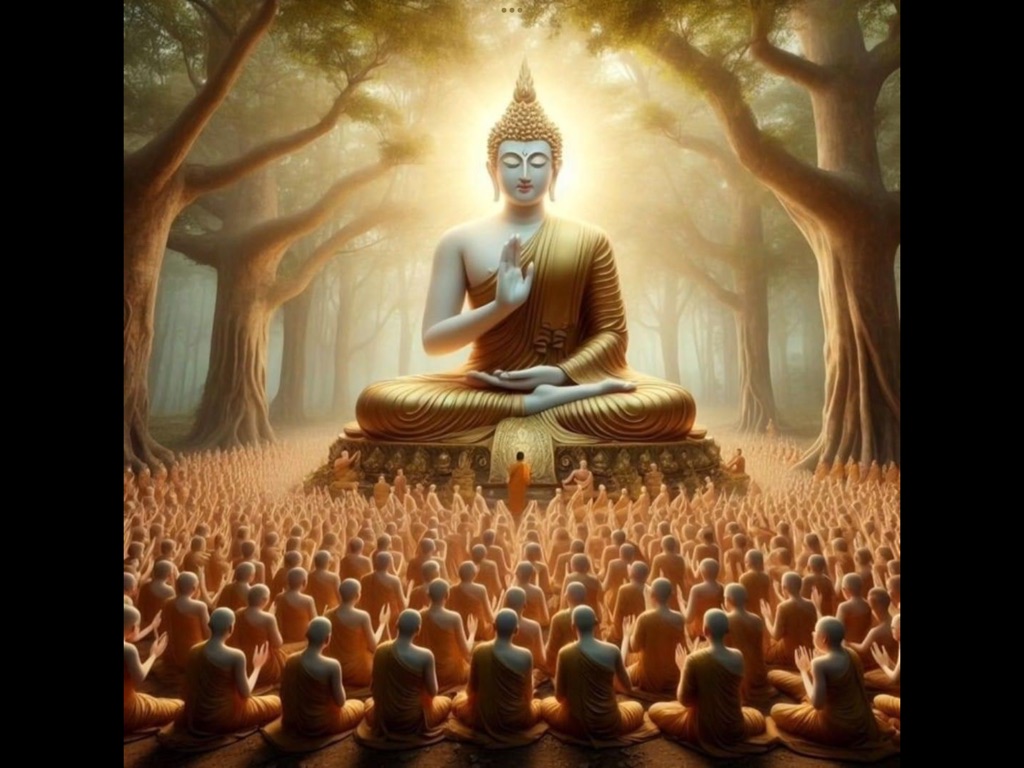
During the time of Shakyamuni Buddha, there was a day when the Buddha was giving teachings to his disciples. In the middle of the discourse, he suddenly turned to Ananda and said:
“Take a bucket and go to a small village about five miles ahead. There, you will find an elderly woman washing clothes by a well. Ask her for a bucket of water—and remember to be polite and kind.”
Ananda respectfully nodded and set off with confidence. Such a simple task, he thought. Surely, it would be completed without difficulty.
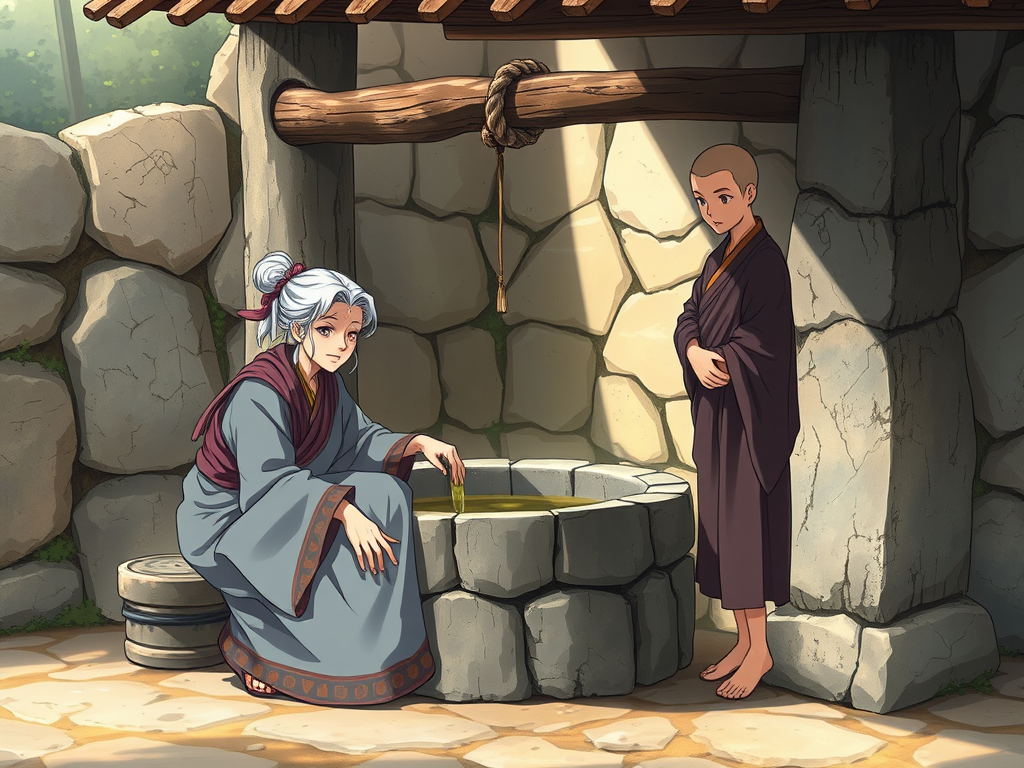
When Ananda arrived at the village, he indeed found a gray-haired elderly woman by the well. With sincerity and respect, he bowed and said:
“Dear elder, may I please have a bucket of water?”
To his surprise, the woman looked up at him with irritation. Her expression hardened, and she replied sharply:
“No! This well is only for the people of this village. Outsiders are not allowed to use it!”
No matter how politely Ananda pleaded, she refused. Helpless, he returned empty-handed.
Back before the Buddha, Ananda recounted everything that had happened. The Buddha simply nodded and asked him to sit down. Then he turned to another disciple—Sariputra—and gave him the same instruction.
A Completely Different Outcome
Sariputra walked the same path and arrived at the same village. The same elderly woman was still there, washing clothes by the well.
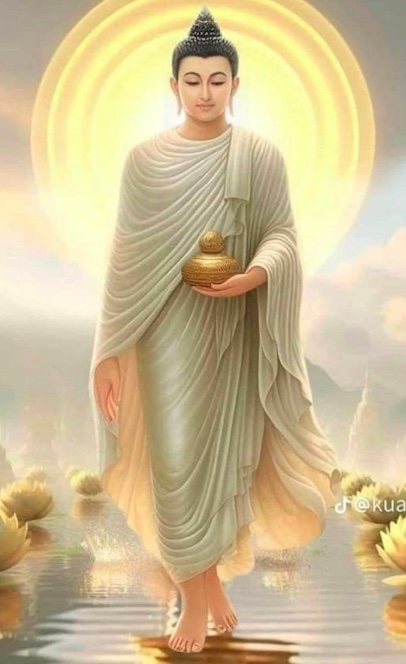
He approached her with equal politeness:
“Dear elder, may I ask for a bucket of water?”
This time, something remarkable happened.
The woman looked up—and her face lit up with warmth and joy, as if she had just met a long-lost relative.
“Of course! Of course!” she said happily. “Come, let me draw the water for you.”
Not only did she fill a bucket for him, but she also insisted he wait. She hurried home and brought back some food, urging him to take it along for his journey.
Sariputra returned with a full bucket—and a heart full of wonder.
The disciples were puzzled. How could the same request, from two equally respectful monks, lead to such completely different outcomes?
They turned to the Buddha and asked for an explanation.
The Buddha revealed:
“In a distant past life, this elderly woman had been reborn as a mouse. One day, she died by the roadside, her body exposed under the burning sun.
At that time, Ananda was a traveling merchant. When he saw the dead mouse, he felt disgust and turned away, covering his nose as he passed.
Sariputra, on the other hand, was a scholar on his way to an important examination. When he saw the same mouse, he felt compassion. He gently covered the body with some earth, offering it a small act of dignity.

After countless lifetimes, the causes they planted ripened into the results you see today.”
This story reveals a profound truth:
Even the smallest thought—whether of kindness or indifference—can plant seeds that shape our future.
Ananda did not commit a great wrong; he simply turned away in aversion. Sariputra did not perform a grand act; he simply offered a moment of compassion. Yet the results, across time, were vastly different.
If such a small moment can create such powerful consequences, how much more impact do our daily actions have?
Every word we speak, every thought we nurture, every action we take—these are all seeds of karma.
To harm others is to plant suffering for ourselves.
To act with kindness is to cultivate blessings we may one day receive.
In our daily lives, we may not notice the immediate results of our actions. But the law of cause and effect is always at work—quietly, patiently, unfailingly.
So let us remember:
- Avoid harming others
- Practice kindness whenever possible
- Build connections rooted in goodwill
Because even a single moment of compassion…
may one day return to us as unexpected grace.

 Peace LiLy