Photo Courtesy: Hua Zang Si (Community members unite across California to honor the Life Release Day Designated by Buddha, transforming compassion into action through ceremonies, education, and charitable outreach.)
Buddhist communities across California came together on October 29 to honor “The Life Release Day Designated by Buddha,” a global observance dedicated to compassion, the protection of life, and the collective aspiration for peace.
On the morning of October 29, 2025, the H.H. Dorje Chang Buddha III Cultural and Art Museum hosted a life release event at the Marina Del Rey harbor, drawing spiritual leaders and community members from across Southern California. The event was led by Venerable Master Ruzun Ruohui, Abbess of Hua Zang Si Temple and Hongfa Temple.
Participants gathered in unity to chant praises and recite the Great Compassion Mantra of Avalokiteshvara Bodhisattva. Venerable Master Ruzun Ruohui blessed the fish awaiting release with consecrated Dharma water, offering prayers that these sentient beings be freed from suffering and karmic obstructions. Upon release, the fish were returned to the ocean with the hope that they would find safety and live free from harm and predators.
The Life Release Day Designated by Buddha originated on October 29, 2009, when H.H. Dorje Chang Buddha III personally led His disciples in a life release ceremony following a significant Buddhist event. He compassionately declared this day as “Life Release Day” to promote the protection of life and the practice of compassion.
The H.H. Dorje Chang Buddha III Cultural and Art Museum upholds the compassionate teachings of H.H. Dorje Chang Buddha III. The museum urges all sectors of society to transform empathy into action—promoting the safeguarding of life, the cessation of killing, and the daily practices of kindness as a fundamental way of living. Venerable Master Ruzun Ruohui emphasized that life release practices are not confined to specific days or locations. Whenever a life is in danger, we are called to act—to return it to a suitable environment, to grant it freedom, and to relieve it from fear.
On October 29, 2025, San Francisco’s Hua Zang Si Temple also held a life release ceremony at San Rafael. Participants from diverse cultural backgrounds gathered to recite the Heart Sutra and the Great Compassion Mantra before gently releasing fish back to their natural habitat. Organizers emphasized that life release is not only a spiritual practice, but also a call to awaken society’s compassion and deepen our care for the sentient beings.
Photo Courtesy: H.H. Dorje Chang Buddha III Cultural and Art Museum Venerable Master Ruzun Ruohui blesses fish awaiting release with Dharma water during the Life Release Day ceremony at Marina Del Rey.
Photo Courtesy: H.H. Dorje Chang Buddha III Cultural and Art Museum Upon release, the fish were returned to the ocean.
To nurture compassion in the next generation, Hua Zang Si Temple held a Buddhist children’s story class on October 19. Through storytelling and interactive learning, the program guided young participants to understand the core values of “equality of all life” and “compassion without harm.” The initiative was warmly received by parents, who expressed deep appreciation for the temple’s commitment to meaningful and values-based education.
On October 26, Macang Monastery in San Francisco held a special “Life Release Day Blessing and Food Donation Ceremony” in honor of the Life Release Day Designated by Buddha. Following collective sutra recitation and prayers by both monastics and lay practitioners, the temple donated food supplies to unhoused individuals and low-income families—embodying the Buddhist spirit of compassion and service to those in need.
This year’s Life Release Day Designated by Buddha brought together Buddhist disciples and compassionate leaders from all walks of life through a range of activities—including life release ceremonies, prayer gatherings, educational outreach, and food donations. Participants were reminded that cultivation is not merely a slogan, but a continuous practice through every kind thought and virtuous deed.
In 1947, shortly after Japan’s surrender and withdrawal from China, the great Zen Master Xuyun (Empty Cloud) gave a profound speech at a middle school. The nation was still recovering from the devastation of war, and hearts were heavy with both relief and sorrow. With deep compassion, Master Xuyun used the timeless wisdom of the Buddha to explain the law of cause and effect (karma) — reminding people that wars do not arise by chance, but are the result of humanity’s collective actions.
He taught that true peace cannot be achieved through force or politics alone. Only by transforming our hearts and purifying our minds through virtue, compassion, and the practice of Buddhist teachings can we bring real and lasting peace to the world.
War does not arise by chance — it is the collective karma of all beings that brings it forth.
Dear friends, during the years of occupation, we endured immense suffering under the enemy’s oppression — our lives were steeped in water and fire, hardship and pain. Now that our nation has regained its light, we should feel endless gratitude and reflection. We must understand that the outbreak of war is not accidental; it is the result of the shared karma created by all individuals.
The ancient masters said, “If you wish to know the causes of your past lives, look at what you are experiencing in this life. If you wish to know the results of your future lives, look at what you are doing now.” They also said, “Even after hundreds or thousands of eons, the karma one has created will not disappear. When the conditions ripen, the results will be experienced by oneself.”
When people lose their moral compass and commit all kinds of evil, they plant the seeds for calamities such as war, floods, fires, and famine. If we wish to change the will of Heaven and eliminate disasters, we must begin by transforming human hearts — by restoring virtue and morality. When everyone practices the Five Precepts and the Ten Good Deeds, cultivates upright minds and pure conduct, and lives with benevolence, trust, and righteousness, then the hearts of men and the will of Heaven will naturally align.
But if people persist in wrongdoing and refuse to repent, how can hostility and suffering ever be dissolved? The Buddha said, “The sea of suffering has no end, but when one turns around, there is the shore.” This means awakening from delusion and returning to goodness — the essential path to liberation.
We must truly believe in the law of cause and effect. It is not fiction but reality. If everyone understood that good deeds bring good results, and evil deeds bring suffering — that when one plants melons, one harvests melons; when one plants beans, one harvests beans — then no one would dare to act against conscience or break the law. Out of great compassion for all beings, Shakyamuni Buddha renounced his royal life and underwent arduous practice to save the world from ignorance and suffering.
If we understand the principle of cause and effect and wish to avoid future suffering, we must now create good causes. The hardships we experience today are the results of past evil actions. Therefore, we should now sow good seeds, and in time, we will naturally reap good fruits.
The scriptures speak of “Anuttara-samyak-sambodhi,” meaning “unsurpassed perfect enlightenment.” In its essence, it transcends the distinction of self and others — there is no “you” and “me.” But this state must be cultivated from one’s own heart. If our minds remain filled with greed, anger, and ignorance, unable to abandon all evil and practice all good, the barriers of self and ego become like iron mountains, preventing us from reaching the Pure Land or true harmony. This is the most crucial point — one we must all remember well.
The Sanskrit word “Buddha” means “the Awakened One.” Enlightenment has three aspects: awakening oneself, awakening others, and perfecting both understanding and conduct.
To awaken oneself is to realize that all experiences of good and evil, joy and suffering, arise from cause and effect. Once a person truly understands this, delusion fades, the four attachments dissolve, and one becomes enlightened.
To awaken others means recognizing that all living beings — whether born from the womb, from eggs, from moisture, or by transformation — all possess Buddha nature. They are called “sentient beings” only because they are deluded and unaware. We should therefore cherish and respect ourselves, and in keeping with the Buddha’s great vow of compassion and universal salvation, share these truths with others, guiding them out of the sea of suffering.
As stated in the Śūraṅgama Sūtra: “Regard all men as your fathers and all women as your mothers.” If we cultivate such deep reverence and love, especially for widows, orphans, and those who are lonely or destitute, and show them kindness and compassion through giving and aid, we can realize true equality and the ideal of great harmony.
To perfect both understanding and conduct means to live according to the Buddha’s teachings and precepts until one’s virtue and merit are complete. After the Buddha’s passing, he left behind the Three Baskets of Scriptures — Sutra, Vinaya, and Abhidharma — as our priceless raft to cross the sea of suffering. All the rules and precepts should be faithfully practiced. When one fulfills them completely, that is the perfection of wisdom and conduct.
Thus, the Buddha is the awakened one, while sentient beings are the deluded. The distinction between delusion and enlightenment marks the boundary between beings and Buddhas. To turn away from delusion and return to truth — that is awakening, and that is Buddhahood.
To further illustrate the law of karma, there is a story from one of Shakyamuni Buddha’s past lives.
Long ago, in the city of Rajagaha, there was a fishing village with a large pond. One year, a great drought struck, and the pond began to dry up. The villagers caught and ate almost all the fish, until only one giant fish remained, which was finally killed and eaten. Only one eight-year-old boy refused to eat the fish; he simply watched and laughed.
In his later life as the Buddha, King Prasenajit of Kosala, a devoted follower of the Buddha, married a princess of the Shakya clan, and they had a son named King Virudhaka. After ascending the throne, Virudhaka led his army to attack the Shakya capital of Kapilavastu and slaughtered all its inhabitants.
During that time, the Buddha suffered a severe headache for three days. His disciples begged him to use his powers to save the Shakya people, but he refused. Even when Maudgalyayana repeatedly pleaded, the Buddha said no. Maudgalyayana tried to rescue some survivors with his alms bowl, but when he put it down, all he found was a pool of blood.
When the disciples asked why, the Buddha revealed the cause: in a past life, during a great drought in Rajagaha, the villagers had killed and eaten the fish in that pond. The giant fish was reborn as King Virudhaka, and the villagers were reborn as the Shakyas who were killed. The young boy who merely watched and laughed was reborn as Shakyamuni Buddha himself. Because this karma had matured, the outcome was unchangeable.
The Buddha fully understood this karmic connection and taught it to his disciples as a warning. Chan Master Yuan Yun wrote in verse:
“For hundreds of years, the soup in your bowl Is filled with deep hatred, hard to dissolve. If you wish to know why wars arise, Listen to the cries from the butcher’s gate at midnight.”
Reflect on this story and recite the verse, and you will awaken to the true causes of war and violence — and learn to guard your conduct with mindfulness.
If we wish to transform the world and move toward true harmony, everything must begin with our hearts. Students should study diligently, yet never forget the greater mission of saving the world. And the first step to saving the world is saving the heart — correcting one’s own wrong thoughts and firmly believing in the law of cause and effect, avoiding all evil paths.
By cultivating sincerity, righteousness, self-discipline, and harmony within the family, one can extend peace to the nation and the world. If all the people of every country sincerely believe in karma and practice the Eight Virtues and Ten Precepts, then oppression, violence, and wars will cease to arise. True peace, equality, and the Pure Land of Great Harmony will appear, free from the Five Defilements and all suffering.
For the original Chinese speech, please click here. This English translation is by Linda Chang and is provided for reference only.
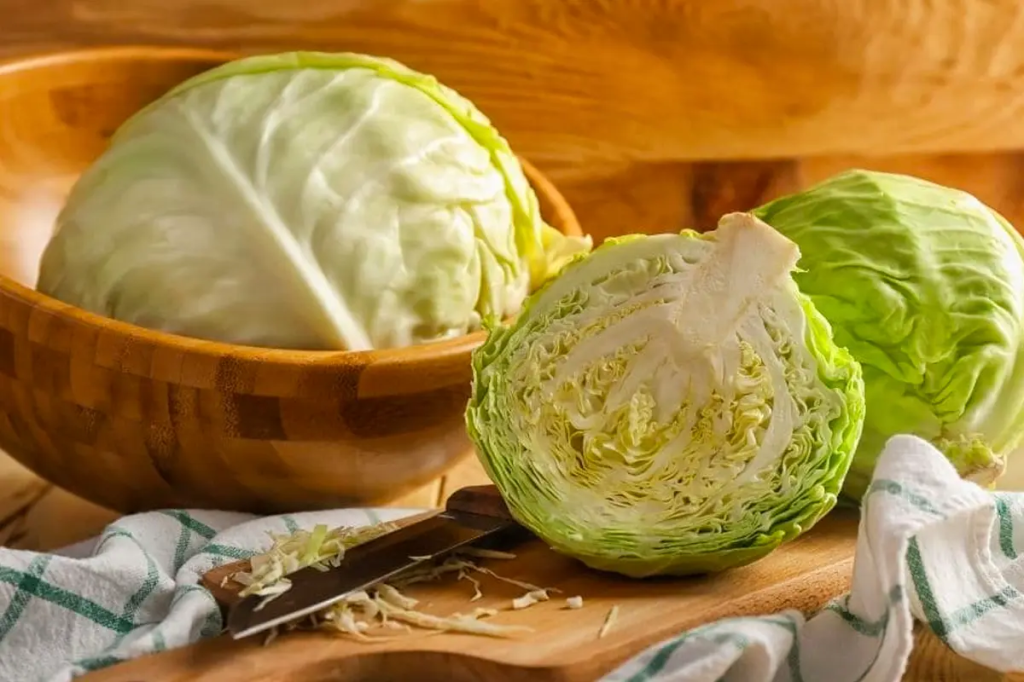
Cabbage is one of the most common vegetables in our daily lives. Because it is so ordinary, many people tend to overlook its remarkable health benefits. While people often say “rarity makes things precious,” the truth is that some of the simplest, most affordable foods are also the most nourishing — and cabbage is one of them.
Once considered “the food of the poor,” cabbage has long been underestimated. In the 15th century, a Parisian writer even remarked that the poor ate cabbages and turnips instead of bread. Perhaps that old prejudice lingers today — many still see cabbage as plain and unrefined. Yet, with rising grocery costs and a renewed interest in wholesome eating, it’s time to rediscover this modest, versatile vegetable and bring it back to our tables.
A Traditional View: Cabbage in Chinese Medicine
According to Traditional Chinese Medicine (TCM), cabbage has a neutral nature and a sweet flavor. It nourishes the stomach and intestines, promoting healthy digestion and balanced energy.
Let’s explore some of its wonderful health benefits:
1. Anti-Aging Properties
Cabbage is rich in antioxidants that combat cellular oxidation and delay the aging process. For those seeking to maintain youthful vitality, a simple bowl of cabbage may hold more power than any expensive serum.
2. Boosts Immunity
Packed with vitamin C, cabbage strengthens the immune system, helping the body fend off colds and infections while enhancing overall energy and resilience.
3. Supports Healthy Blood Pressure
Cabbage contains high levels of potassium, which helps regulate blood pressure by balancing sodium levels and supporting cardiovascular health.
4. Prevents Osteoporosis
Abundant in vitamin K, cabbage aids in blood clotting and calcium absorption, strengthening bones and teeth while preventing osteoporosis.
5. Promotes Digestive Health
Cabbage contains vitamin U, known as the “anti-ulcer factor.” It helps regulate stomach acid, heal ulcers, and soothe the digestive tract. Japanese studies have found that cabbage’s glucosinolates can inhibit Helicobacter pylori, the bacteria linked to gastritis and ulcers.
6. Cancer Prevention
The sulfur-containing compound isothiocyanate gives cabbage its distinctive aroma — and its powerful anti-cancer properties. This compound helps neutralize toxins, protect cells, and reduce cancer risk.
7. Rich in Folic Acid
Folic acid in cabbage is essential for pregnant women, helping prevent fetal malformations and supporting healthy red blood cell production.
8. Anti-Bacterial and Anti-Inflammatory Effects
Cabbage contains natural phytoncides — plant-based antibacterial compounds — that reduce inflammation, fight infections, and even soothe sore throats or small wounds.
Culinary Versatility
Cabbage’s mild flavor and satisfying crunch make it a versatile kitchen staple:
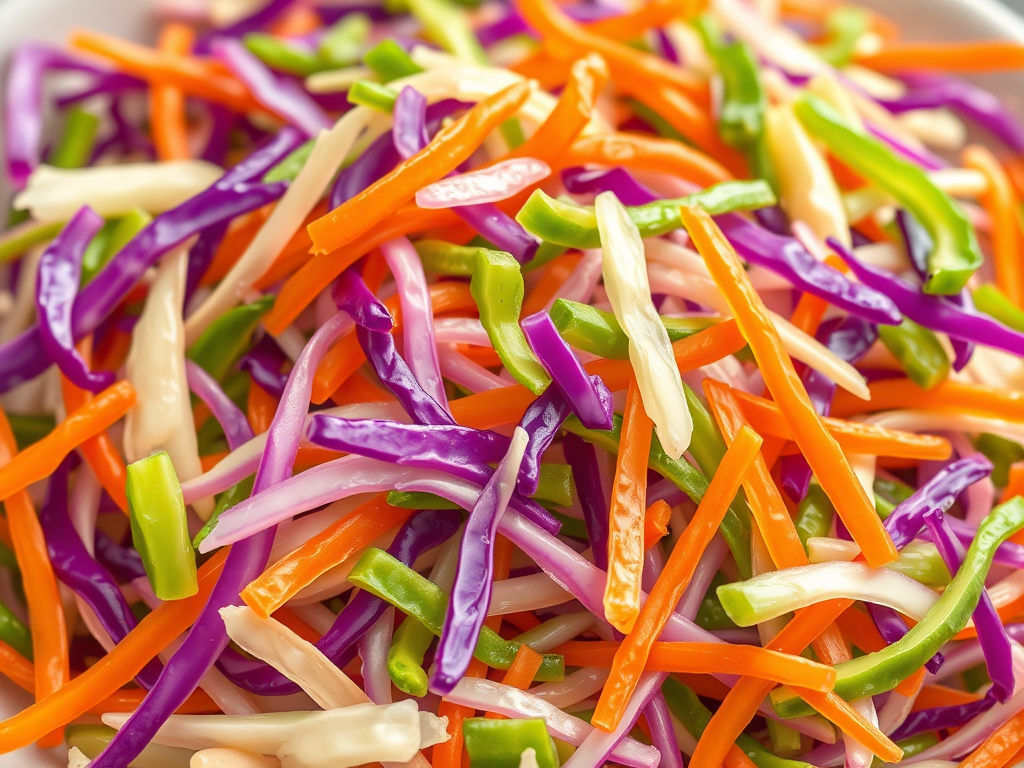
Salads and Slaws: Shred cabbage with carrots, apples, or nuts for a refreshing, colorful slaw.
Stir-Fry: Sauté with garlic and soy sauce for a simple yet delicious side.
Soups and Stews: Add chopped cabbage for extra nutrition and heartiness.
Fermented Foods: The star ingredient in sauerkraut and kimchi — both rich in probiotics and flavor.
Stuffed Dishes: Use cabbage leaves to wrap rice, lentils, or meats for comforting stuffed rolls.
Lightly Pickled Cabbage: A Liver Cleanser and Detox Aid
Cabbage contains indoles, anti-cancer nutrients that also protect the liver and enhance detoxification. When cabbage is lightly pickled, its benefits multiply.
In Traditional Chinese Medicine, sour flavors are believed to nourish the liver. Lightly pickled cabbage helps detoxify the body, strengthen immunity, beautify the skin, and support cardiovascular and digestive health.
Fermented cabbage is also a powerful probiotic food. Lactobacillus plantarum, a beneficial bacteria from fermented cabbage like kimchi, supports the gut microbiome — the foundation of our immune system and overall well-being.
Easy Recipe: Lightly Pickled Cabbage
Ingredients
500 g cabbage
2 teaspoons salt
1 teaspoon sugar
Instructions
Wash and drain the cabbage, then slice it finely.
Divide into two portions. Place half in a bowl, sprinkle with 1 teaspoon of salt, and gently knead until softened.
Add the remaining half, the rest of the salt, and sugar. Continue kneading until juicy.
Pack into a clean glass jar with its liquid.
Seal and leave in a cool place for half a day to lightly ferment, then refrigerate. Serve chilled.
Shutterstock
Cabbage may not have the glamour of kale or the trendiness of arugula, but it carries quiet strength and wisdom — a reminder that simplicity often hides great value. In a world obsessed with novelty and luxury, perhaps we can learn from this humble vegetable: to nourish deeply, give generously, and thrive quietly.
This book by H.H. Dorje Chang Buddha III was released in Chinese in 2014 but is not yet available in English. It is based on a series of very famous discourses given in China in 1992, using the text, meaning, and principles of the Heart Sutra to transmit Dharma. It clearly explains the relationships between mind, Buddha, and living beings. It tells everyone what the absolute truth of Buddha-dharma and liberation is. Several years ago, His Holiness told a number of Western disciples that this is the only book you need to read to understand emptiness and become enlightened. This text is for acquiring prajna or transcendental wisdom, although it also teaches the importance of cultivating character.
To stress how important this holy book is, we must remember that just before the Buddha left this world His Holiness told us that “. . . At all times, we must think about bringing auspiciousness, serenity, happiness, and peace to living beings and to the world, to the extent of giving our all and even our lives. I have already brought true Buddha Dharma to this world. Everyone who practices in accordance with The Supreme and Unsurpassable Mahamudra of Liberation and Expounding the Absolute Truth Through the Heart Sutra will surely attain liberation. That’s all. I wish all living beings happiness.”
Venerable Master Puguan’s Reflection After Listening to Expounding the Absolute Truth Through the Heart Sutra
Below is the heartfelt reflection of Venerable Master Puguan, the abbot of Kaihua Monastery on Mount Wuzhong—the first site of Southern Transmission Buddhism and the thirteenth-generation patriarch of Mount Emei—after listening to the Dharma discourses of Expounding the Absolute Truth Through the Heart Sutra spoken by H.H. Dorje Chang Buddha III.
Venerable Master Puguan said:
“No matter what words I use today, they cannot fully express the supreme joy and wonder in my heart. My most magnificent and compassionate Buddha Master, the Great Dharma King Yangwo, once visited Mount Wuzhong in person. At that time, my junior Dharma brother, Dharma Master Guozhang, and I were on the third day of a Zen retreat with the four assemblies of disciples when suddenly the Dharma protector came and told me, ‘The greatest holy being has arrived! He is wearing white clothes. Quickly cancel the Chan session and lead everyone to greet Him with full ceremony!’
Dharma Master Guozhang also received the same message—that the highest Holy One had come. We immediately announced to all disciples that the Zen session was to be stopped, and we prepared the ceremonial welcome with drums and bells. Indeed, about ten minutes later, a group of dozens of people arrived at the foot of the mountain—it was my revered Master, the Great Dharma King Yangwo (H.H. Dorje Chang Buddha III).
When I supported my Master while walking toward the Bright Moon Pool, He gently took hold of my hand instead and said, ‘I am younger than you; you should not support me. It is I who should support you, the elder.’
At that moment, I felt deeply ashamed. How could a disciple ever deserve to be supported by his Master, the Great Dharma King?
Now, after listening to Expounding the Absolute Truth Through the Heart Sutra, I finally realize that what my Master said back then was the very expression of ultimate truth! We practitioners must rely on our Master’s steadfast guidance, never letting go of His compassionate hand, until we are led to the pure Buddha-land of ultimate Nirvana. How could we ever imagine supporting our Master?
Having repeatedly listened to this Dharma discourse, I can only say that my Master has explained the very essence of all 600 volumes of the Prajnaparamita Sutras and the two essential provisions of precepts and practice. The Dharma He expounded is so profound that the deep will see its depth and the shallow will see its shallowness—it is wondrous beyond description, extraordinary within the ordinary. In truth, it is the supreme teaching of the ultimate truth since the beginning of time.
After listening to this unparalleled Dharma spoken by my Buddha Master, I was instantly and completely awakened—the bottom of the bucket had fallen out! Unfortunately, my age has deprived me of the condition to attain rainbow-body ascension, but I rejoice that I have realized the state of indestructible flesh body. After my parinirvana, this body can serve as evidence to the world that my Great Dharma King, my Buddha Master, is truly the Dharma King who unites all Buddhas of the ten directions.
When I think back on my earlier misunderstandings, I feel deeply ashamed. I once mistakenly believed that only Tibetan Esoteric Buddhism possessed the Great Dharma that enables enlightenment within one lifetime. Now that I have attained realization, I truly understand that the authentic Dharma of the Tathagata transcends all schools and sects.
In fact, the true Buddha Dharma is a wondrous treasure existing independently of any tradition. It is neither exclusive to nor absent from any particular school—because genuine Dharma is not governed by sects but by Buddhas and Bodhisattvas themselves. Wherever a Buddha or Bodhisattva manifests as a teacher, that school naturally possesses the Great Dharma.
When I recall my past cultivation at the Golden Summit of Mount Emei, I can only remain speechless in humility. Today, immersed in the bliss of Dharma joy, I can only pray:
May all Buddhas bless that the great karmic conditions of the Tathagata ripen soon. May all sentient beings swiftly hear the teachings of my Buddha Master—the Mother of All Buddhas’ Dharmas, Expounding the Absolute Truth Through the Heart Sutra— so that their blessings and wisdom may swiftly and perfectly flourish, attaining Bodhi and liberation in this very life, and achieving freedom from life and death!
Namo Amitabha Buddha! Namo Avalokiteshvara Bodhisattva!
Note: In 1998, Master Pu Guan passed away while in meditation, having attained mastery over his life and death. Remarkably, even eight years after his passing, his remains rest within a stupa, preserved in the meditation posture without any signs of decay.
The above is the English translation of Venerable Master Pu Guan’s Dharma discourse, rendered into English by Linda Chang. The original Chinese version is provided below.
Hidden in the quiet county of Yixian in northern China, Fengguo Temple has stood for over a thousand years as a living testament to ancient Chinese wisdom and spiritual devotion. Its magnificent Mahavira Hall, the largest single-story wooden structure of its time, houses seven colossal clay Buddhas that have miraculously survived the centuries. This temple is not only an architectural marvel but also a sacred symbol of harmony, resilience, and faith that continues to inspire all who visit.
A Thousand Years of Faith and Architecture
Beyond the Shanhai Pass, in the northern part of Jinzhou City, Liaoning Province, stands the quiet county of Yixian, home to one of China’s most magnificent ancient temples — Fengguo Temple. This remarkable site, founded over a millennium ago, is not only a masterpiece of Liao Dynasty Buddhist architecture but also a living testament to the extraordinary ingenuity of ancient Chinese builders and the enduring power of faith.
In 2020, Fengguo Temple celebrated its thousandth anniversary. Through a thousand years of wind, snow, wars, and earthquakes, its grand Mahavira Hall still stands tall — a miracle in both architecture and spirituality.
The Majestic Great Hall
The heart of Fengguo Temple is its Mahavira Hall (Great Buddha Hall), one of the Eight Great Structures of the Liao Dynasty. Built in 1020 CE, it measures 49.5 meters wide, 26.6 meters deep, and 19.9 meters high, covering an area of 1,317 square meters. Standing on a 3.2-meter-high platform, the hall is the largest single-story wooden structure of ancient China — magnificent, solemn, and breathtaking.
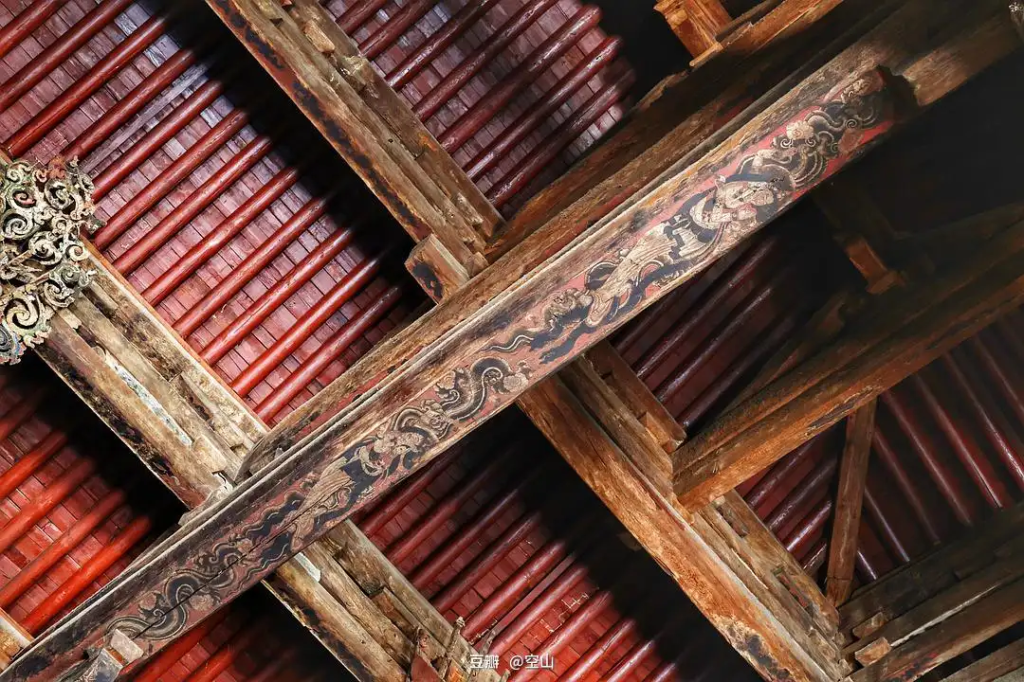
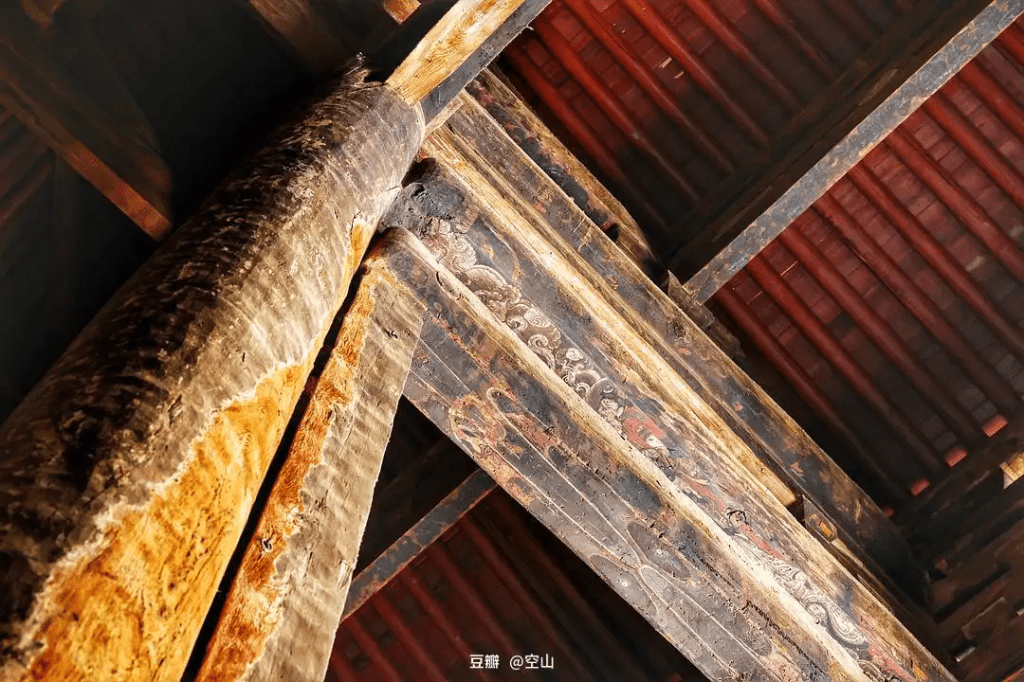
Ingeniously designed, the hall uses a “reduced-column” method to maximize interior space while maintaining perfect stability. Ancient builders applied advanced techniques known as “side-foot” and “rising beam”, ensuring the building’s balance and graceful proportions. The massive bracket sets under the eaves are bold yet refined, exuding strength and elegance.
Thanks to its precise structural mechanics, the Great Hall has remained perfectly upright for a thousand years, without any sign of warping or tilting — an unparalleled achievement in the history of wooden architecture.
The Seven Buddhas: Eternal Clay Sculptures
Inside the Great Hall, seven colossal clay Buddha statues, each about nine meters tall, sit side by side upon a brick platform. From east to west, they are: Kashyapa Buddha, Krakucchanda Buddha, Sikhin Buddha, Vipashyin Buddha, Visvabhu Buddha, Kanakamuni Buddha, and Shakyamuni Buddha.
These are the “Seven Buddhas of the Past” mentioned in Buddhist scriptures, symbolizing the eternal cycle of enlightenment in our world. Each Buddha exudes solemn dignity, with serene expressions and graceful postures, reflecting the Liao Dynasty’s continuation of Tang-style Buddhist artistry. Two bodhisattvas stand beside each Buddha, adding vitality and compassion to this sacred tableau.
This magnificent ensemble is the oldest and largest group of colored clay Buddha statues in the world. Despite being made of fragile clay, they have miraculously survived for over a thousand years, their colors still soft and luminous. This endurance is nothing short of a miracle — a union of artistic mastery and the blessings of faith.
The Legend of the Buddha Catching a Shell
During the Liaoshen Campaign in the late 1940s, Yixian became a battlefield. Amid the chaos, a shell pierced through the roof of the Great Hall and fell directly into the right hand of the Shakyamuni Buddha statue. Miraculously, the shell did not explode.
Locals still tell this story as “The Buddha Caught the Shell with His Hand.” Whether fact or legend, it adds an aura of mystery and divine protection to the temple’s long history — as if the Buddhas themselves were silently safeguarding their sacred home.
The Flying Devas of Liao
The beams and rafters inside the Great Hall are adorned with over 4,000 square meters of original Liao Dynasty murals. Among them, the heavenly maidens — the Flying Devas — are the most enchanting. With radiant faces and flowing ribbons, they drift gracefully through clouds, offering flowers and fruits to the Seven Buddhas below.
Their movement contrasts beautifully with the Buddhas’ stillness, creating a breathtaking scene of divine harmony and devotion. The surrounding walls also preserve Yuan and Ming dynasty murals depicting ten Buddhas, eight Bodhisattvas, and the Eleven-Faced Avalokiteshvara, adding even more layers of spiritual and artistic richness to this timeless sanctuary.
A Thousand Years of Wonder
Standing before this majestic hall — a wooden structure that has endured a millennium — and gazing upon the clay Buddhas whose serene faces have survived a thousand winters, one cannot help but wonder:
How can a wooden palace withstand ten centuries of storms and wars? How can clay sculptures remain whole and radiant after a thousand years?
Is it the wisdom of the ancients? The strength of art? Or the blessing of the Dharma itself?
Perhaps the answer lies within every beam, every brushstroke, and every tranquil smile of the Buddhas.
May the Buddhas and Bodhisattvas bless all beings with peace, compassion, and happiness. Namo Amitabha.
Dharma Master Qing Ding was originally named Zheng QuanShan. He was born in 1903 from a well-known large family that had the Buddhist faith for many generations. He started to read and chant Buddhist sutras at the age of 7 and received basic knowledge about Buddhism from his father.
In 1939, when Zheng Quan Shan was 36, he was the major-general director of the Advanced Party, Government, and Military Training Corp of China’s Nationalist Government. While working in Chongqing, he often spent his leisure time to go to Ciyun Temple nearby to listen to Dharma Master Cheng Yi’s expositions of Buddhist sutras and Buddha-dharma.
Under the introduction and guidance of Dharma Master Cheng Yi, Zheng Quanshan was ordained as a monk in 1941 at Ciyun Temple in Chongqing and received his dharma name “Qing Ding.” During the same year, Dharma Master Qing Ding received the complete set of monastic precepts at Zhaojue Temple in Chengdu.
Dharma Master Qing Ding(Disciple of H.H. Dorje Chang Buddha III)
Zhaojue Temple in Chengdu
Following Dharma Master Neng Hai and Attaining Lineage
Dharma Master Neng Hai
After receiving the precepts, Dharma Master Qing Ding also became a disciple of Dharma Master Neng Hai, who was a famous eminent monk in modern Chinese history. He learned the Yidam dharma of Yamantaka Vajra from Dharma Master Neng Hai.
After Dharma Master Neng Hai had entered nirvana, Dharma master Qing Ding succeeded Dharma Master Neng Hai’s lineage and became a dharma king and leader of the Gelug Sect of esoteric Buddhism. Dharma Master Qing Ding’s dharma power and virtue majestically astounded the world. He once manifested great supernormal powers at a demon-subduing dharma assembly and changed his own appearance into that of Ksitigarbha Bodhisattva.
The Supreme Encounter
However, at the high age of 90, he paid homage to acknowledge a young tremendous holy virtuous person as his master. Who is this young tremendous holy virtuous person? Why did Dharma Master Qing Ding acknowledge Him as his master?
This young tremendous holy virtuous person is His Holiness Dorje Chang Buddha III. Dharma Master Qing Ding observed from his state of realization that this young person is the genuine incarnation of Dorje Chang Buddha the primordial Sambhogakaya of the dharma sphere. He seized this magnificent karmic condition that is difficult to encounter in millions of eons.
Acknowledging H.H. Dorje Chang Buddha III as His Master
Dharma Master Qing Ding acknowledged H.H. Dorje Chang Buddha III as his master and beseeched for Buddha-dharma.
A Dharma brother supported Dharma Master Qing Ding and said to H.H. Dorje Chang Buddha III, “Master, Great Monk Qing Ding of zhaojue Temple came today to pay homage to become your disciple and beseech for Buddha-dharma.”
H.H. Dorje Chang Buddha III: “Okay, go ahead. You can just do four prostrations according to the four refuges. Monk Qing Ding, your are my disciple from now on. Since you are my disciple, you should act in accord with my conduct, and cultivate yourself earnestly according to my method. Sit on the seating cushion.”
(Sitting at the side was Yang Wen who worked at Chengdu No. 2 Hospital and came with Dharma Master Qing Ding. Helping Dharma Master Qing Ding from behind was the lead attendant of H.H. Dorje Chang Buddha III.)
H.H. Dorje Chang Buddha III: “I will transmit my Buddha-dharma to Great Monk Qing Ding. I hope that you will definitely abide by the religious policies, continue your advancement, and be a good monk.”
Receiving the Inner-Tantric Initiation
Master Qing Ding acknowledged H.H. Dorje Chang buddha III as his master and beseeched for Buddha-dharma. He beseeched H.H. Dorje Chang Buddha III to confer make-up inner- tantric initiation of the Yidam dharma of Yamantaka Vajra.
It turned out that when Dharma Master Qing Ding beseeched and learned the Yidam dharma of Yamantaka Vajra from Dharma Master Neng Hai, he did not receive an inner- tantric initiation. This was because although Dharma Master Neng Hai had received an inner- tantric initiation himself, he did not have the ability to confer an inner- tantric initiation to his disciple, Dharma Master Qing Ding.
The Profound Importance of Inner-Tantric Initiation
Why is an inner- tantric initiation so important? The effect of an inner-tantric initiation is that the master transmitting the dharma invites the Yidam of the dharma to be transmitted to come to the site. The Yidam will then accept the disciple in person. Therefore, as long as the disciple engages in self- cultivation in accord with the dharma, liberation from birth and death is guaranteed with a one- hundred- percent certainty.
H.H. Dorje Chang Buddha III conferred an inner- tantric initiation of the Yidam dharma of Yamantaka Vajra to Dharma Master Qing Ding. That made up what Dharma Master Qing Ding lacked and fulfilled the wish that he cherished for many years.
There are some people whose presence feels like sunlight—warm, gentle, and full of hope. Louise Hay was one of them. An internationally renowned spiritual teacher, best-selling author, and pioneer of the self-help movement, she inspired millions of people around the world to believe in their own healing power. Her landmark book You Can Heal Your Life has sold over 50 million copies in 35 countries, translated into 29 languages, and for many, it sits by the bedside as a trusted guide through life’s storms.
To the world, Louise Hay seemed perfect—healthy, elegant, wise, always radiating grace. Her teachings lifted countless people out of despair, helped them restore their health, and gave them courage to live again. Media across the globe lovingly called her “the closest person to a saint.”
But what made Louise extraordinary was not that her life was flawless—it was that she transformed the deepest wounds into the greatest gifts. Behind her radiant presence was a childhood filled with suffering, abuse, and neglect. It was from that very pain that she forged the wisdom that changed the lives of millions.
1. Falling Amid Misfortune
When Louise was just 18 months old, her parents divorced, abruptly ending her once-happy family life.
At that time, women had little social standing. After the divorce, her mother could only work as a maid to survive, while Louise was sent to live in foster care.
At age five, her mother remarried in the hope of giving Louise a complete home. But this marked the beginning of her nightmare.
Louise was raped by a neighbor, abused and assaulted by her stepfather, and subjected to violence and sexual exploitation. These experiences left her with deep wounds and a lack of self-worth. In her teenage years, as long as a man showed her the slightest kindness, she would give herself to him. By the age of sixteen, she had already given birth to a daughter.
Her childhood was filled with tragedy, and her youth with self-destruction. Those early wounds shaped her into someone who did not know how to love herself.
Yet later in life, Louise chose not to remain trapped in resentment or regret. She said, “No little boy is born a predator, and no little girl is born a victim. These are learned behaviors shaped by childhood experiences.”
2. Awakening and Transformation
In her forties, Louise was diagnosed with cancer. That moment became her wake-up call. She realized how little she had cared for her own body, and she resolved to change.
Instead of following the conventional treatment suggested by her doctors, she turned to what she called “holistic healing.” Within six months, her cancer had disappeared.
Holistic healing, as Louise practiced it, meant changing destructive thought patterns and adopting healthier eating habits. She stopped mourning her unhappy past and stopped blaming her parents. Instead, she came to understand their own painful childhoods.
During her recovery, she ate mostly sprouts and simple natural foods, avoiding processed products entirely. She also trained her mind daily—using positive affirmations, choosing not to let negative emotions dominate her, and seeing every situation through a more uplifting perspective.
Her life changed completely. She documented her experiences and insights in books, which went on to inspire millions and transform countless lives.
3. You Can Choose Your Own Destiny
There are many in this world who have been hurt or are still suffering. Their stories move us deeply.
But as an old Chinese saying goes, “Those who seem pitiable often have traits that make them vulnerable.” In truth, much of life’s suffering continues because, consciously or unconsciously, we allow it. And the root often lies in our formative years.
Take, for example, teenage pregnancies. While news headlines may highlight shocking cases, the majority stem not from coercion but from lack of self-respect or proper knowledge. Similarly, many women trapped in abusive relationships remain because they lack self-worth and the courage to leave.
We cannot rewrite our childhoods, but we can shape our adult lives. As Louise Hay wrote in You Can Heal Your Life: Mindfulness Edition:
“Every negative message you received as a child can be transformed into a positive affirmation.”
If you had an unhappy past, stop feeding yourself negative words. Begin telling yourself: I am worthy of love. I am needed. I have many strengths. I can live the life I choose.
And if doubt still lingers, look at Louise Hay’s journey. Few have endured the kind of suffering she did—yet she lived a life admired and envied by many. If she could, why not you?
In the infinity of life where I am, all is perfect, whole, and complete.
Life Is Really Very Simple. What We Give Out, We Get Back. What we think about ourselves becomes the truth for us. I believe that everyone, myself included, is responsible for everything in our lives, the best and the worst. Every thought we think is creating our future. Each one of us creates our experiences by our thoughts and our feelings. The thoughts we think and the words we speak create our experiences.”
Her books may be called “chicken soup for the soul,” but isn’t that exactly what we need sometimes? A warm voice reminding us that we are enough, that healing is possible, and that life can be beautiful again.
You Can Heal Your Life walks us through every stage of existence—childhood pain, love’s struggles, career challenges, health worries, aging, and even the fear of death. Louise’s message is simple but powerful: change your beliefs, and you will change your life.
This “chicken soup” has comforted millions, given them strength, and helped them step into new beginnings.
💖 A Gentle Reminder
If you feel lost, unworthy, or stuck in a cycle of pain—Louise’s story is a light in the darkness. Her life teaches us that healing begins not from the outside, but from within.
No obstacle is too great. No past is too broken. Deep within each of us lies an infinite potential waiting to bloom. When we dare to change our thoughts and love ourselves, life unfolds in colors we never imagined.
Believe it: just like Louise Hay, you too can heal your life—and create a future filled with peace, love, and joy.
Sometimes beauty finds us when we least expect it—appearing like a sudden blossom of color in an ordinary moment, stopping us in our tracks and opening our hearts to wonder.
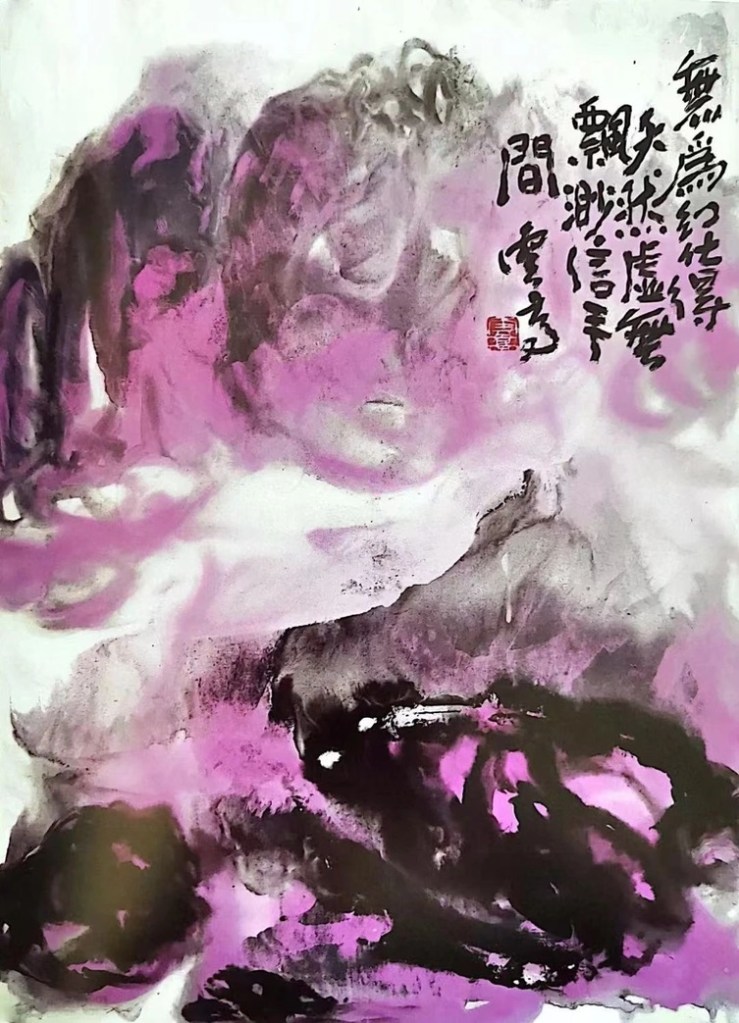
I happened to come across two traditional Chinese paintings online, both dominated by bright pink, and was utterly astonished. I couldn’t help but study them carefully. In Chinese painting, it is rare to see large areas of pink used as the main color, since it often risks appearing vulgar. Yet in the works of H.H. Dorje Chang Buddha III, there is not the slightest trace of vulgarity. On the contrary, they radiate grandeur and magnificence, and the artist’s confident mastery of color bursts forth boldly from the canvas.
The above piece in particular was painted with a heart as pure and untainted as that of a child. Within the seemingly naïve brushstrokes lies immense skill and mastery. The style is free and natural, bold and unrestrained yet still gentle. Its simple composition is infused with deep emotion and imagination, brimming with the vitality of childlike wonder that uplifts the viewer’s spirit.
A few pink houses stand in the scene, behind which several pink fruit trees sway delicately. Ink outlines give the houses their structure, while the softly hanging trees add a tender rhythm to the picture. The artist’s unique technique and extraordinary control of color are truly breathtaking. The inscription on the work further enhances its spiritual resonance:
“Brilliant colors, vivid yet dignified; consummate skill that reveals the heart of a child.”
Indeed, this is a rare and outstanding masterpiece of Chinese painting.
This masterpiece is a freehand splash-ink landscape, where the brush moves with effortless freedom. Layer upon layer of crimson cliffs rise as though born from the artist’s own heart—lines powerful, vigorous, and full of life. Ink strokes carve the very bones of mountains and rocks, each one natural, unrestrained, yet perfectly balanced. Broad washes of pink suffuse the scene, creating an ethereal, dreamlike realm that lingers between presence and absence, as if belonging to an immortal world. To gaze upon this painting is to step into another dimension—where the heart gradually settles into stillness and begins to sense the hidden rhythms of the cosmos.
This painting was not created to showcase skill or to dazzle the eye, but as a natural outpouring of inspiration and emotion. Both ink and color arise directly from the pure stirrings of the artist’s heart.
Here, the true essence of Chinese painting—shen yun (spiritual resonance)—is revealed in its fullest clarity. The inscription makes the artist’s intent unmistakable: “With effortless spontaneity, illusion transforms into nature; in the fleeting and ethereal, the hand finds its way.” The purpose is not simply to depict form, but to open a gateway into a spiritual realm that transcends the material.
Shen yun is at once vivid and elusive—an ineffable charm, a subtle spiritual force that cannot be captured in words. It flows from the painter’s inner cultivation and profound state of mind. When spirit and technique merge seamlessly, the work attains a power far beyond outward appearance.
It is only when the viewer is touched by this shen yun that the formal elements of the painting—the structure of its composition, the interplay of colors, the rhythm of the brush, the unity of poetry and image, the harmony of form and spirit—truly come alive. These elements are essential, of course, but they are not the destination. They are the pathway to something deeper, pointing always toward a higher, transcendent experience.
These two paintings are rare gems of Chinese art, that surprise, inspire, and open a doorway to beauty both profound and pure.
At late Qing Dynasty, during the reign of Emperor Guangxu, there was a true story that took place:
Mr. Jia from Jiangsu worked for a foreign trading company in the Shanghai concession. He had earned the deep trust of his employer. Just before the Dragon Boat Festival, his boss sent him south of the city to collect debts. With a leather money pouch in hand, Mr. Jia set off.
The collections went smoothly, and by noon he had received more than 1,800 silver dollars. After walking and talking all morning, he was parched and exhausted. Passing by the famous Shiliupu teahouse, he hurried inside for a quick cup of tea before rushing back to deliver the money and finally rest.
When he returned to the company, he suddenly realized—the leather pouch was gone. Thunderstruck, drenched in sweat, and nearly fainting, he could not explain himself clearly in his panic.
Seeing his flustered state, the boss grew suspicious, believing Jia might be dishonest. He harshly rebuked him for betraying trust, warning that if the money was not returned quickly, Jia would be handed over to the authorities.
At that time, 1,800 silver dollars was a fortune—enough for a person to live on comfortably for a lifetime if carefully spent. How could Mr. Jia ever repay such a sum? With his reputation and life on the line, he felt utterly ruined and broke down in despair.
Meanwhile, in another part of the concession, a merchant from Pudong, surnamed Yi, had recently lost all his money in business. Discouraged, he bought a boat ticket for that very afternoon to return home across the river.
With time to spare before boarding, Mr. Yi also went to Shiliupu teahouse, intending to sip tea slowly while pondering his uncertain future.
By coincidence, just as Mr. Jia had hurried out, Mr. Yi walked in. As he sat down, he noticed a small leather pouch left on a chair. He paid it little mind at first and began drinking tea.
After some time, no one came to claim it. Curious, he lifted it and felt its weight. Opening it, he nearly dropped it in shock—inside was a fortune in gleaming silver coins!
At first he was overwhelmed with joy. Such a windfall could end his misfortune and secure a comfortable life. But then he thought: No, money belongs to its rightful owner. If I keep it, the loser may be ruined, disgraced, or even driven to death. The sin would be unbearable.
In those days, most decent people knew the saying: “Ill-gotten wealth must not be taken.” Mr. Yi resolved: Since fate placed this money in my hands, I have the responsibility to return it.
At lunchtime, only eight or nine guests remained in the teahouse. None appeared to be searching for lost money, so Yi, hungry as he was, decided to keep waiting.
By evening, as lamps were being lit, the teahouse emptied out—only Mr. Yi remained, watching the entrance intently.
Suddenly, he saw a pale, staggering man rush in, followed by two companions. It was Mr. Jia. As soon as he entered, Jia pointed at Yi’s table and cried, “There! That’s where I was sitting!” The three came straight toward Yi.
Yi smiled and asked, “Are you looking for a lost pouch?”
Jia stared in disbelief and nodded repeatedly. “I’ve been waiting for you,” Yi said, producing the leather pouch.
Overcome with relief, Jia trembled all over. “You are my savior! Without you, I would have hanged myself tonight!”
It turned out that when Jia had discovered the loss, he had begged to retrace his steps, though he knew recovery was unlikely. His boss, fearing he might flee, initially forbade it. After much pleading, the boss finally allowed him to go, but only under the close watch of two escorts, who were ordered to bring him back regardless of the outcome.
After exchanging names, Jia gratefully offered Yi a fifth of the money as a reward. Yi firmly refused. Jia lowered it to a tenth, then to a hundredth—Yi grew angry and sternly declined.
Flustered, Jia said, “Then at least let me treat you to a drink!” Yi still refused. Finally Jia pleaded, “If I cannot show gratitude, my conscience will not rest. Tomorrow morning, please allow me to host you at such-and-such tavern. I beg you to come—without fail.” Bowing deeply, he left.
The next morning, Yi did indeed appear. Jia was just about to bow in thanks when Yi quickly interrupted, saying:
“Actually, it is I who should thank you. If not for your lost pouch, I would not be alive today!”
Puzzled, Jia asked what he meant. Yi explained:
“Yesterday, I had bought a one o’clock boat ticket to return home. But because I waited in the teahouse to return your money, I missed the departure. When I finally returned to my lodging, I learned that the boat had capsized midway in a violent wave. All 23 passengers drowned. Had I boarded, I too would be dead. So you see, it was you who saved my life!”
The two men, overwhelmed, bowed to each other in tears.
Onlookers marveled, toasting the pair. They said Mr. Yi’s single good deed had saved not just Jia’s life, but his own as well.
The story did not end there. When Jia and his escorts returned and reported everything, the boss was astonished. “Such a virtuous man is rare indeed!” he exclaimed, insisting on meeting Yi.
The two met and felt an immediate bond. After a long conversation, the boss earnestly invited Yi to stay, offering him a high salary to manage accounts. Months later, he even married Yi into his family as a son-in-law. In time, the boss entrusted the entire business to him.
“Cause and effect of good and evil” is absolutely true, without the slightest mistake. Goodness nurtures more goodness, and goodness attracts goodness. To treat others with kindness is, in fact, to accumulate blessings and good fortune for oneself. A human life is not lived for just a fleeting moment. The speed of temporary gains or losses, the ups and downs of a single day, even honor or disgrace in the short term—none of these truly matter. Today’s kindness becomes tomorrow’s blessings. Today’s evil leads to tomorrow’s misfortune. Time is a great author, and it will always write the perfect answer.
Therefore, simply be a good person, and the future will be full of hope. Do good deeds, and the road ahead will surely be bright and promising.
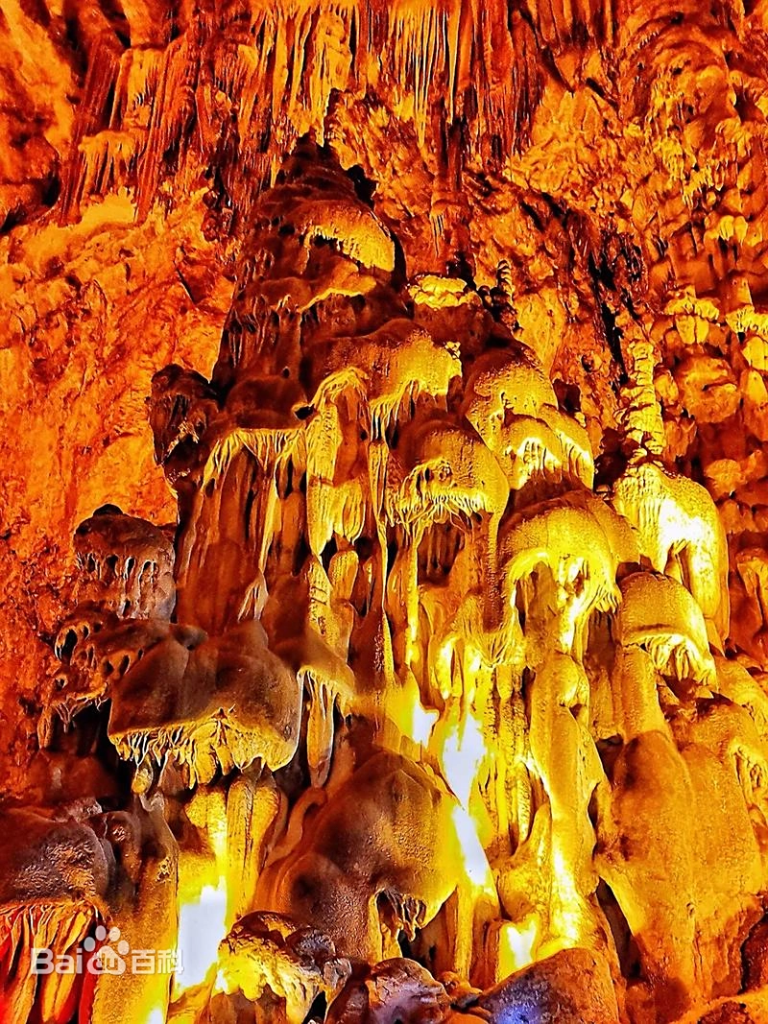
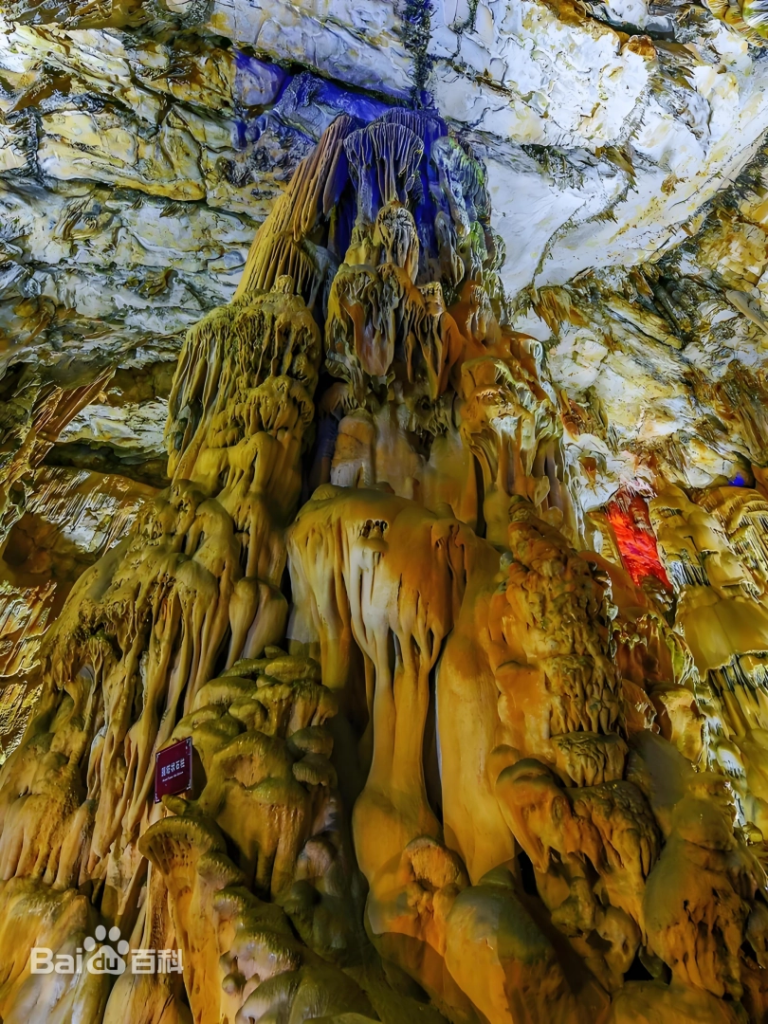
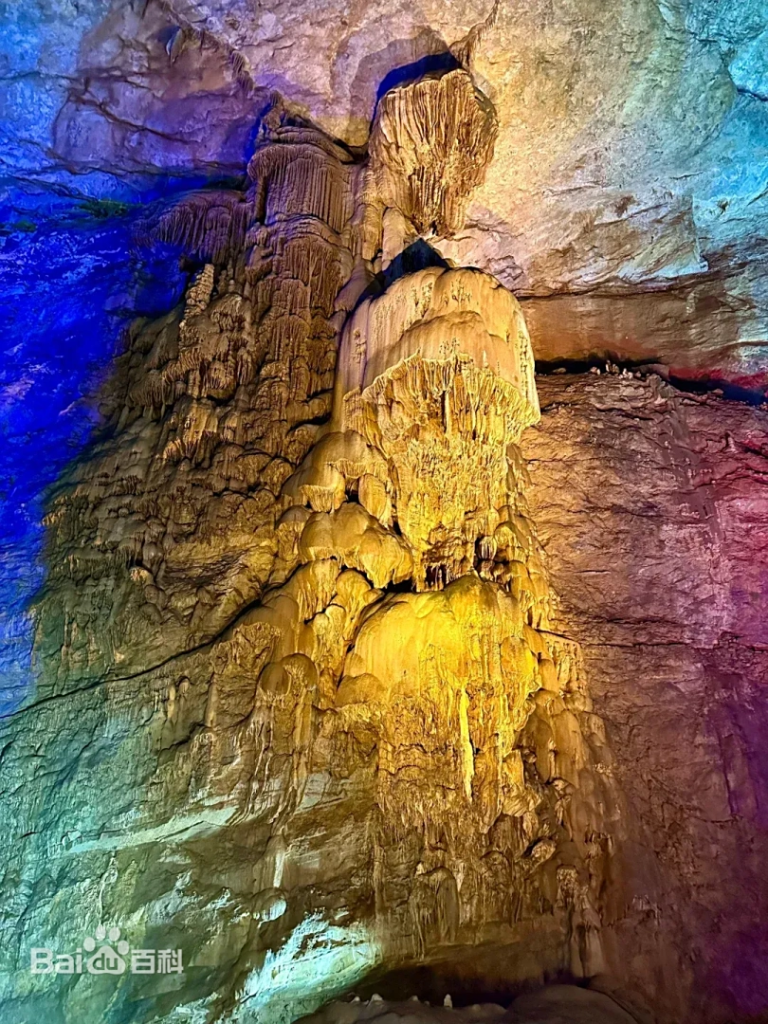
Zhijin Cave, located in Zhijin County, Bijie City, Guizhou Province, is a high-altitude dry cave of great diversity, complexity, and scale. Inside, the karst formations are unique, vast, majestic, and breathtakingly exquisite, making it a dream destination for countless visitors.
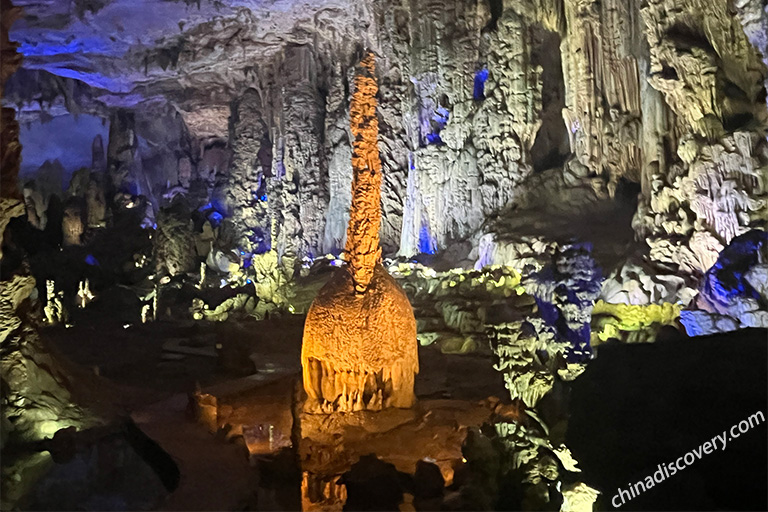
Zhijin Cave, renowned as the “King of Karst Caves,” stands out among other famous karst caves such as Zhangjiajie’s Yellow Dragon Cave (about 100,000 sqm), Chongqing’s Furong Cave (about 37,000 sqm), and Guilin’s Reed Flute Cave (about 14,900 sqm) due to its unparalleled size and grandeur. Spanning over 700,000 square meters, Zhijin Cave is the largest of its kind, featuring 12 grand halls and 47 chambers, each adorned with unique and breathtaking formations. The cave’s largest chamber reaches an impressive width of 175 meters, while six of its halls exceed 10,000 square meters in area, highlighting its monumental scale.
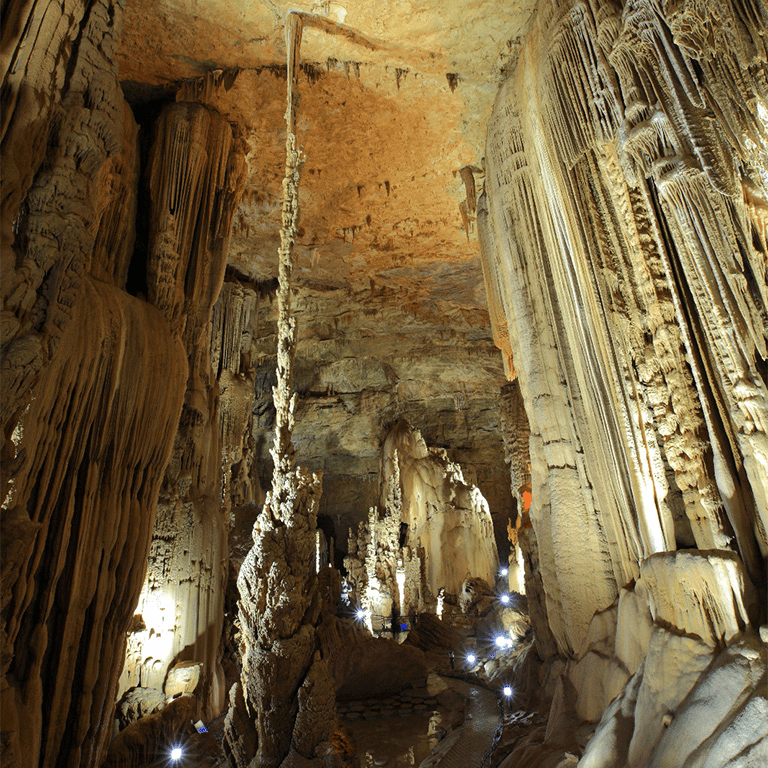
The cave is adorned with a wide variety of karst formations, including stalactites, stalagmites, stone pillars, flowstones, and stone curtains. These formations come in unique shapes, resembling pagodas, plants, animals, and even mythical creatures, showcasing nature’s artistic craftsmanship.
Among its countless highlights, several are especially unforgettable:
The Overlord’s Helmet (“Ba Wang Kui”) – A 17-meter-tall stalagmite shaped like a warrior’s helmet, known as the crown jewel of Zhijin Cave. Lit by orange light and reflected in the pool below, it appears both majestic and lifelike, as if the legendary warlord Xiang Yu himself had left his helmet behind.
The Pillar of Heaven (“Qian Ceng Bao Ta”) – At the junction of the North and South Gates stands a towering stone column that seems to prop up the sky. Called the “Mainstay of the River,” it symbolizes strength, resilience, and the ability to stand tall in times of trial.
Mother-in-law and Daughter-in-law (“Po Xi Qing Shen”) – Two pine-shaped stalagmites, one stooped like an old woman and the other upright like her filial daughter-in-law massaging her back. The scene is tender, lifelike, and moving, embodying the Chinese virtue of filial piety.
The Lingxiao Palace – A stunning stone waterfall, one of the largest yet discovered, cascading magnificently from the ceiling. Around it stand stone banners, draperies, and a majestic hall of “stalagmite soldiers,” as if a grand palace had opened its doors for a celestial council.
Snow Pressing on the Green Pine (“Xue Ya Qing Song”) – A 20-meter-tall stalagmite shaped like a pine tree blanketed in snow, one of the cave’s signature sights. Its upright strength recalls Marshal Chen Yi’s famous poem: “Though snow weighs heavily on the pine, the pine stands tall and straight.” It symbolizes resilience, dignity, and unyielding spirit.
The spectacular karst landscapes of Zhijin Cave embody grandeur, vastness, and beauty beyond imagination. A tour through its endless halls, lasting over two hours, is an ever-unfolding journey of wonder—each chamber a new astonishment, each formation a marvel of nature.
It’s no surprise that Zhijin Cave is honored as the “King of Caves.” As the saying goes: “After Huangshan, no other mountains; beyond Zhijin Cave, no other caves.” The reputation is well deserved.
Practical Tips to Visit Zhijin Cave
Zhijin Cave is located in Guanzhai Miao Ethnic Village, Zhijin County, Bijie City, Guizhou Province. The cave is approximately 120 kilometers (75 miles) from Guiyang, the capital of Guizhou Province.
Bijie City has a total of 9 railway stations and 1 airport. 2 stations are located in Zhijin County, only serving normal trains. The closest high-speed rail station to Zhijin Cave is Qianxi Railway Station, about 45 km away.
Footwear: The cave has stairs and a small section of uneven paths, and the ground can be wet and slippery. Anti-slip footwear is recommended for safety and comfort.
Clothing: The cave maintains a constant temperature of 16°C (61°F). However, the humidity and cool air can make it feel chilly, so it’s best to carry a light jacket.
Food and Drinks: There are no dining options or shops within the cave, so it’s a good idea to bring your own snacks and drinks to stay energized during your visit. If you forget to bring snacks, there is a convenience store at the cave exit where you can purchase refreshments.



















 Peace LiLy