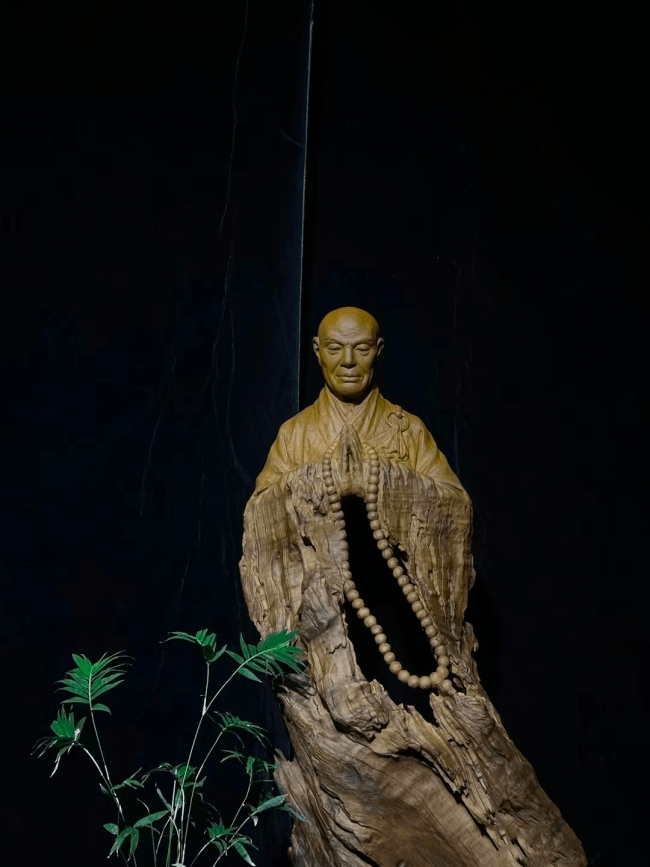
In the annals of spiritual history, few figures are as revolutionary as Huineng (慧能), the Sixth Patriarch of Zen (Chan) Buddhism. His life story is a profound testament to the idea that enlightenment is not reserved for the elite or the scholarly, but is the inherent birthright of every human being.
Known for the iconic verse you mentioned—“Bodhi originally has no tree”—Huineng transformed Zen from a complex Indian philosophy into the direct, spontaneous practice we recognize today.
Huineng’s journey did not begin in a monastery. He was born into a poor family in 7th-century China and worked as an illiterate woodcutter to support his widowed mother.
His life changed in an instant when he overheard a traveler reciting the Diamond Sutra. Upon hearing the line, “Depending upon nothing, the mind arises,” Huineng experienced a sudden moment of clarity. This “sudden awakening” became the hallmark of his future teachings.
Driven by this experience, he traveled to the Dongshan Monastery to seek guidance from the Fifth Patriarch, Hongren.
Huineng’s status as an illiterate outsider meant he was initially assigned to the kitchen to hull rice. When the time came for the Fifth Patriarch to choose a successor, he asked his disciples to write a “mind-verse” to demonstrate their understanding.
The lead disciple, Shenxiu, wrote a verse emphasizing constant, diligent practice:
“The body is the Bodhi tree; the mind is like a bright mirror on a stand. Take care to wipe it always, and let no dust collect.”
Huineng, hearing the verse, realized it missed the ultimate truth of emptiness. He dictated his now-famous response to be written on the wall:
“Bodhi originally has no tree. The bright mirror on a stand is also not real. From the beginning, not a single thing exists. Where, then, can dust collect?”
Hongren recognized Huineng’s superior realization and secretly passed him the robe and bowl—the symbols of the Patriarchy—in the middle of the night, instructing him to go into hiding until the time was right to teach.
Huineng eventually emerged from hiding and began teaching at Nanhua Temple. His impact on Buddhism was so immense that his teachings were recorded in the Platform Sutra of the Sixth Patriarch. This is the only Buddhist scripture not spoken by a Buddha to be officially granted the title of a “Sutra.”
His major achievements include:
- The Southern School of Zen: He founded the “Southern School,” which emphasizes “Sudden Enlightenment” (Dunwu) over gradual study.
- Democratizing Wisdom: He taught that the “Buddha-nature” is present in everyone, regardless of literacy or social status.
- The Foundation of Zen: Nearly all surviving Zen lineages (including Japanese Zen and Korean Seon) trace their ancestry back to Huineng.
A Living Legacy: The Whole-Body Relic
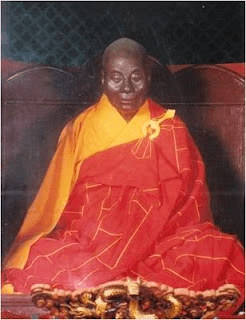
Perhaps the most miraculous aspect of Huineng’s story is his physical departure from this world. In 713 AD, Huineng entered Nirvana, but his body did not decay.
To this day, his whole-body relic (mummy) is enshrined and preserved at Nanhua Temple in Shaoguan, Guangdong Province. For over 1,300 years, devotees have traveled to the temple to pay respects to the Sixth Patriarch. His physical presence remains a powerful symbol of the “Diamond Body”—the incorruptible nature of a truly enlightened mind.
Huineng reminds us that we do not need to look outside ourselves for wisdom. As he famously taught, our original nature is pure, and enlightenment is simply the act of seeing through the “dust” to the emptiness that was there all along.

 Peace LiLy