Traveling the World on Just $80: Why You Should Never Wait for “Perfect Conditions”

Have you ever had a moment like this? A brilliant, fiery idea ignites in your heart, but in the very next second, reality and the voices around you pour cold water all over it: “That’s impossible.” “You aren’t ready yet.” “Don’t be naive—wait until you have enough money and time.”

And so, countless life-changing possibilities quietly wither away in the endless cycle of “waiting.”

Today, I want to share a true miracle that might sound absolutely absurd at first. But after reading it, you might just find yourself re-evaluating the dreams you once labeled as “impossible.”

Crew on a boat spotting the container ship Ocean Odyssey with colorful containers

Years ago, a 26-year-old American youth named Robert Christopher watched people working on cargo ships, hitchhiking across the Atlantic, and traveling the globe. A simple question popped into his head: “If others can do it, why can’t I?”

When he shared this wild idea with his friends, it was met—unsurprisingly—with a chorus of mockery: “You are being way too naive!”

An ordinary person might have backed down. But Robert ignored the laughter. Instead, he pulled a fountain pen and a small slip of paper from his pocket, doing something that would completely alter the trajectory of his life: he listed every single difficulty he could foresee on the journey, and right next to each one, he meticulously wrote down a concrete solution.

He didn’t waste a single minute. The moment the list was done, the action began.

Mastering the Art of Resource Management

What is the biggest obstacle to traveling the world? Visas, transportation, maps, and money. Robert had a mere $80 in his pocket—an amount that, even back then, wasn’t enough to cover a young boy’s monthly living expenses. Yet, instead of letting financial scarcity limit him, he launched a textbook masterclass in resource integration:

  • No money for airfare? He struck a deal with a cargo airline, agreeing to take promotional photographs for the company in exchange for a flight across the Atlantic.
  • No maps or international driving permit? He approached the relevant authorities and promised to provide a detailed report on the road conditions in the Middle East. In return, he secured his permit and maps for free.
  • No safety net? He signed a contract with a pharmaceutical company, guaranteeing to collect soil samples from the countries he visited. He even hustled to secure seaman’s papers, a clean criminal record certificate from New York authorities, and a youth hostel membership.

When he finally waved goodbye to New York with just $80, his true global currency wasn’t cash—it was the unique value he could offer to others.

In the Face of the Impossible, There is Always a Way

A person in a cloak climbing a steep snow-covered mountain path with lightning in the dark sky and sunlight breaking through clouds above the peak

How do you survive a journey around the world on $80? Robert proved through his actions that when your desire is strong enough, solutions will always outnumber problems.

In Gander, Newfoundland, unable to afford his first breakfast, he took professional photographs of the kitchen cooks. The joy he brought them was exchanged for a hearty, warm meal. In Ireland, he spent $4.80 on four cartons of American cigarettes. He keenly understood that in many countries, cigarettes functioned as smoothly as paper currency. From Paris to Vienna, and through the Alps into Switzerland, he used cigarettes as tips and payment to secure rides from drivers and conductors.

In Damascus, his enthusiastic photography for a local policeman filled the officer with such pride that he ordered a public bus to provide Robert with free service. In Baghdad, the manager and staff of the Iraq Express Transport Company loved his photos so much that they invited him to travel by boat to Tehran, completely free of charge. In Bangkok, he provided a luxury travel agency manager with highly sought-after, detailed maps and information about a specific region, earning himself a reception fit for a king. Finally, working as a sailor aboard the ship “Flying Spray,” he navigated from Japan back to San Francisco.

84 days. 80 dollars. He didn’t just survive; he witnessed the world.

Looking back at Robert’s legendary journey, we have to ask: Why did such a seemingly reckless plan unfold so smoothly?

Did Robert fail to foresee the immense risks involved? Of course he foresaw them. But it was precisely because he knew the risks that he chose to take the leap—using adventure to add color and flavor to his life. In this grand game, he fully mobilized his intelligence and brilliantly orchestrated every resource around him.

Too often, we use the word “impossible” as an excuse for inaction, when in reality, we are just hiding our fear of the unknown.

  1. The Trap of “Waiting for the Perfect Moment”: Most people wait until they have saved enough money or until the timing is flawless. The truth is, that “perfect moment” does not exist.
  2. Underestimating Our Own Value: Robert lacked money, but he possessed photography skills, the ability to gather data, the courage to negotiate, and the willingness to harvest soil samples. Money is just one form of wealth. Your wisdom, skills, and passion are all highly spendable currencies in the real world.

Pixel-art character breaking through a stone wall with sunrise and landscape beyond

Many things in life seem impossible only until we decide to do them.

Obstacles are like a mirror—they are only as intimidating as you allow them to be. When you fixate entirely on what you lack—“I don’t have money,” “I don’t have time,” “I don’t have the background”—you trap yourself in place.

The next time a deep aspiration sparks within you, remember 26-year-old Robert: Ignore the skepticism around you. Tear out a piece of paper, write down the hurdles, and ask yourself: “To solve this, what is one thing I can do right now?”

The moment you truly commit and take action, you will find that the universe has a funny way of clearing a path for you.

#Inspiration #MindsetShift #PersonalGrowth #OvercomeObstacles #RobertChristopher #GlobalAdventure #TakeAction #Travel

Link:https://peacelilysite.com/2026/05/28/traveling-the-world-on-just-80-why-you-should-never-wait-for-perfect-conditions/

The Ultimate Croatian Summer 2026 Itinerary of ‘Must-Do’ Experiences

Courtesy of Boris Kacan / Korcula Tourist Board

By Malana VanTyler Contributor May 21, 2026, 5:14 p.m. ET

Summer 2026 is the year to go deeper into Croatia than most travelers ever do, reaching destinations and experiences sometimes left under the radar. Most first-timers land in Dubrovnik, work their way up the coast, and leave wondering what they missed. The answer is usually everything inland and everything that does not show up on a standard ten-day package. This itinerary is an insider’s handbook on experiences, locations, and sceneries a seasoned Croatia traveler would recommend. From music festivals and Michelin star restaurants, to vitality islands, medieval stone towns, and 3000-year-old palaces. Croatia is more than just a single destination. There are at least ten distinct ones, and this is where to start.

Drink Wine in a Roman Palace in Split

Courtesy of Split and Dalmatia County Tourist Board

The journey begins the moment you land in Split, now reachable on a direct flight from New York. Here, waking up inside a Roman emperor’s palace is not history. It is just Tuesday. The palace Diocletian built here in 305 AD became what the city is today. Sipping local wine perched on 1,700-year-old walls is not a novelty here; it is just a Tuesday, and the city is so diverse that there’s something for everyone who visits. From climbing Marjan hill in the morning and afternoons on the waterfront promenade watching the sunset, to staying for the evening when the city shifts into the slow pace that Dalmatians call pomalo.  Every island on this itinerary leaves from here, which means Split is not just a stop. It is the center of gravity of the entire Dalmatian coast.

Seasoned traveler’s advice: Climb Marjan Hill. Use it as your base for the islands.

Live Island Life at Its Finest in Korčula Town

Courtesy of Andro Tasovac / Korcula Tourist Board

From Split, a ferry southeast through the Dalmatian islands brings you to Korčula, a medieval town located on a narrow stone peninsula that some historians argue was the birthplace of Marco Polo. Step outside the old town walls and within ten minutes you’ll be met with beaches and coves with some of the clearest water on the Dalmatian coast. The island’s gems are Posip and Grk, two white wines indigenous to the island, with Grk believed to be one of the oldest grape varieties in Croatia. On summer evenings, the Moreska, a sword dance performed here continuously since the 17th century, plays out in the open squares by torchlight. An island that delivers medieval architecture, exceptional wine, and some of the clearest water on the Dalmatian coast, and somehow still hasn’t made it onto everyone’s list. That’s exactly why it’s on this one.

Seasoned traveler’s advice: Rent a bike, find a beach, try the Posip.

Experience the Art of the Adriatic Day at Carpe Diem Beach, Hvar

Courtesy of Carpe Diem Beach

The ferry from Korčula to Hvar takes less than an hour. From Hvar town, a boat across the channel brings you to Carpe Diem Beach, a pine-covered cove in the Pakleni Islands that almost everyone who wants to visit Croatia has on their bucket list. Crystal-clear water, a pool above the open Adriatic, nets suspended over the sea. Arrive in the morning for the stillness of it. By afternoon, the sun is down, the crowd has found its way in, and the cove has become something else entirely. The kitchen runs all day, Mediterranean dishes and fresh sushi from lunch through the long Adriatic evening. As the sun drops over the Pakleni Islands, the energy is at its peak, and this pine-covered cove in the middle of the Adriatic becomes the exact center of the Mediterranean summer.

Seasoned traveler’s advice: Get on the first boat from Hvar to enjoy the day to the fullest.

Eat Above the Adriatic with Dinner in the Sky, Dubrovnik

Courtesy of Dinner in the Sky

Take a ferry south, and within a few hours, Dubrovnik appears on the horizon. View from a distance is one thing. From fifty meters above the Adriatic, with the old city walls below you and the open sea stretching in every direction, it is something else entirely. Dinner in the Sky puts a dining table up there, with a chef, a three-course menu of Croatian specialties, and a platform that rotates to catch every angle of the coast. The moment it lifts, and the city drops away, is one of those travel experiences that is genuinely difficult to prepare for. The food is serious, the wine is local, and what started as an unlikely concept has quietly become one of the hardest reservations to get on the entire Dalmatian coast. Some experiences build expectation. This one lives up to it.

Seasoned traveler’s advice: Book the sunset slot. It sells out weeks in advance.

Claim Your Own Island with Master Charter

Courtesy of Master Charter

After Dubrovnik, the journey north is best made by water. The Croatian archipelago is expansive, which is where the Master Charter comes in. Since 2006, the company has been building bespoke sailing itineraries along the Croatian coast. Their expertise lies in matching small groups to handpicked vessels from a fleet. There’s something for everyone, from traditional wooden gulets to luxury motor sailers and beyond. Several captains own the yacht they sail, a rarity in the charter industry, ensuring every detail of the trip (and the stay) gets the attention it deserves. Sun decks, jacuzzis, water toys, and cabins all come as the finishing touches that make going ashore feel like a step down. Out here, with the right crew and the right vessel, a Master Charter voyage is the difference between seeing Croatia and understanding it.

Seasoned traveler’s advice: Book well ahead. The best yachts go early.

Find Yourself on Lošinj, Croatia’s Island of Vitality

Courtesy of Hrvoje Serdar / Mali Lošinj Tourist Board

Before you know it, the sail brings you to the island of Lošinj. To pine-scented air, clean enough to feel like a treatment in itself. Sea so clear the seabed is visible from the surface. A town where food comes with a philosophy– the Taste of Vitality. Seasonal and nutrient-rich, prepared with wellbeing and health in mind. Mali Lošinj has been doing vitality before it became a lifestyle industry. The island sits in the Kvarner Bay, surrounded by one of the cleanest seas in Europe, and 220 kilometers of hiking and cycling trails through pine forests to hidden coves. Options here are endless. Sail, dive, do SUP yoga at sunrise, or simply sit in the pine forest and breathe. Mali Lošinj is a place where rest, movement, nature, and food work together in perfect balance. An island where vitality comes naturally.

Seasoned traveler’s advice: Extend your stay. Come with no agenda.

Dine at a Three Michelin Star Destination at Hotel Grand Park, Rovinj

Courtesy of Grand Park Hotel Rovinj

A short journey away stands the Istrian coast, home of truffles, olives, and wine, with the same seriousness as Tuscany. Rovinj is unique, and Grand Park Hotel Rovinj gives reason to make it a dedicated stop. The hotel sits above the sea at the edge of the Golden Cape forest park, looking out across the Adriatic from one of the finest positions on the Istrian coast. The hotel’s been featured on the World’s 50 Best Hotels 2025 list, and the dining alone justifies it. Rovinj carries more Michelin stars than any other destination in Croatia, and three of them are inside this hotel: Agli Amici Rovinj holds two, Cap Aureo one. Few hotels in Europe can claim a world-ranked address, three Michelin stars, and a view like this. Grand Park earns every night you give it.

Seasoned traveler’s advice: Book a table at one of the Michelin-star restaurants even if you are not staying overnight.

See the Show of the Summer at INmusic Festival, Zagreb

Courtesy of INmusic festival

Reaching Zagreb in June means one thing. For twenty years, Lake Jarun has hosted INmusic, and the festival earned its place on the European calendar edition by edition. A lake island inside a capital city. Stages facing the water. The Zagreb skyline in the background. This year’s lineup for the 20th anniversary is the strongest the festival has put together. It’s a true gem– a mix of global headliners and emerging European acts reflecting what INmusic has always been about. An immersive, laid-back escape, whose two decades of cultural weight are hard to overstate. Zagreb takes its summers seriously, and INmusic’s the reason June belongs to the city. Tens of thousands of people gathering on a lake island in the heart of the capital. A lineup that raises the bar every year. Taken together, it makes INmusic one of Europe’s must-visit festivals, shaping the summer cultural calendar.

Seasoned traveler’s advice: Find accommodation well in advance or opt for on-site camping. 

Walk Across the Water at Plitvice Lakes National Park

Courtesy of National Park Plitvice Lakes Archive

Plitvice Lakes National Park is one of Croatia’s most visited destinations, and it belongs on every itinerary that touches more than just the coast. Located two hours from Zagreb, this national park covers nearly 300 square kilometers of forested karst terrain. What you see is unique– 16 crystalline lakes connected by more than 90 cascades and waterfalls spill over travertine barriers that have been accumulating for millennia. It’s a perfect weekend getaway with an on-site hotel within the National Park and charming restaurants showcasing the local gourmet specialties. It’s been a UNESCO World Heritage Site since 1979, and for a reason. Plitvice stops people in a way that very few places in Europe still can. The water, the color, the scale of it. Some landscapes simply speak for themselves.

Seasoned traveler’s advice: Visit May through September. Book tickets in advance.

Taste the Region at Korak Winery, Plešivica

Courtesy of Korak Winery

From Plitvice back to Zagreb, take a detour to Plešivica, a wine region that Croatians have been calling their Champagne for decades, and Korak Winery is the reason to stop. Their philosophy, heritage and authenticity; all bottled into small batches of premium organic wines. Five generations of hands-on family stewardship, and each member takes a hands-on approach. Josip is the enologist. Vera leads the service, awarded Michelin Best Service 2025. Bernard takes charge of the kitchen. What he built goes beyond a winery restaurant. He cooks the land around him, sourcing from local growers, hunters, and foragers as the season dictates, an approach that earned Korak a Michelin Green star alongside its one Michelin star for cuisine. The eight-course tasting menu, paired with estate wines, makes this detour feel like the whole point of the trip. 

Seasoned traveler’s advice: Take the winery tour and book the restaurant in advance.

Make It Count

Croatia rewards the traveler who plans ahead. The best restaurants fill up weeks in advance. The national park requires timed entry in summer. The distances are short, the people are welcoming, and a country that runs from the mountains of the interior to the islands of the southern Adriatic can be covered in ten days without feeling rushed. Start in Split. Work your way through the islands, up the coast, through the lakes, and into Zagreb just in time for the most anticipated festival in the region. Croatia has a way of filling every day of a trip and leaving you with a list of reasons to come back.

Link:https://peacelilysite.com/2026/05/22/the-ultimate-croatian-summer-2026-itinerary-of-must-do-experiences/

Source: https://www.usatoday.com/story/special/contributor-content/2026/05/21/the-ultimate-croatian-summer-2026-itinerary-of-must-do-experiences/90202255007/

Ancient Wisdom Meets Modern Fluid Dynamics: How Abdominal Breathing Literally Washes Waste From Your Brain

Remove extra people, keep only one person

Have you ever experienced that mid-afternoon wall? You’ve been sitting at your desk for three hours. You haven’t done any heavy lifting, yet your head feels like it’s filled with lead, your thinking slows to a crawl, and your focus completely evaporates.

We used to think the worst side effects of prolonged sitting were just weight gain, bad posture, or a sluggish metabolism. But a groundbreaking study published in the prestigious journal Nature Neuroscience has shattered that assumption, revealing a silent, terrifying reality: When you slump in an office chair with your core disengaged, your brain is quite literally marinating in its own cellular waste.

The human brain is an energy-hogging powerhouse. As long as you are alive, your neurons are firing wildly, producing vast amounts of metabolic waste—including amyloid-beta proteins, the primary culprits linked to Alzheimer’s disease.

But here is the catch: while every other organ in your body relies on the lymphatic system to flush out waste, the brain is sealed tight inside a rigid skull. It has no traditional lymphatic vessels. For decades, scientists believed the brain only did its heavy cleaning during deep sleep, when cerebrospinal fluid (CSF) rushes through like an automatic car wash. But this left a massive blind spot in medical science: If sleep is the only cleaning cycle, why do active people who exercise regularly have a drastically lower risk of cognitive decline and dementia—even if they get the exact same amount of sleep?

A cross-disciplinary team at Penn State University just found the missing puzzle piece.

Using high-resolution, two-photon microscopes focused on live mice, researchers witnessed something extraordinary.

They noticed that right before an animal moves—even if it is just preparing to stand up or take a single step—its core muscles, specifically the abdominal muscles, instinctively contract.

This seemingly minor “belly squeeze” is actually the trigger for a highly precise hydraulic clearing system.

When your abdominal muscles contract, they act like a powerful manual pump. They instantly force abdominal blood upward into the spinal venous plexus. That sudden pressure wave travels all the way up into the sealed skull. At that exact micro-second, the brain physically moves. With every single squeeze of your abdomen, the brain undergoes a tiny but distinct displacement inside the skull.

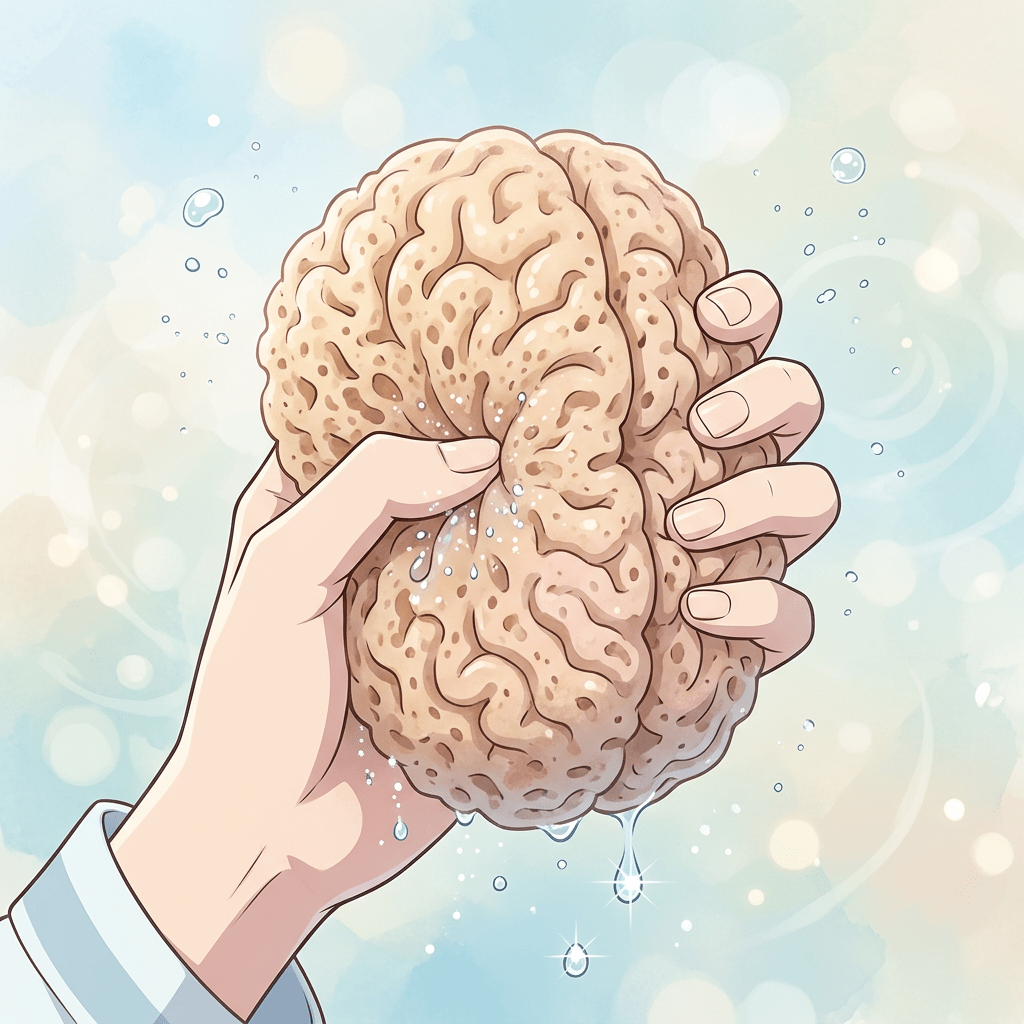
Brain as sponge being gently squeezed

Professor Francesco Costanzo, an expert in fluid mechanics involved in the study, offered a brilliant analogy:

“The structure of the brain is actually like a soft sponge soaked in water. How do you clean a dirty sponge? You don’t just let it sit in a bucket of water. You have to gently squeeze it.”

Every time your core contracts, it gently squeezes that “brain sponge.” This physical shift forces cerebrospinal fluid to rush through the brain’s intricate folds and crevices, flushing out the toxic metabolic waste that disrupts your neurons.

☯️ Ancient Mindfulness Meets Modern Science: The Power of the Belly

Reading this study, I got absolute goosebumps.

For thousands of years, Eastern traditional medicine and mindfulness practices (like Qi Gong and Tai Chi) have passionately advocated for “Abdominal Breathing” (diaphragmatic breathing) and centering one’s energy in the core (the Dan Tian).

Ancient masters didn’t have high-resolution microscopes or computer fluid modeling, yet they deeply understood the body’s mechanics. They knew that rhythmic, deep belly breathing regulates the body’s internal pressure and vital energy. Today, Western peak science has finally validated this ancient wisdom: Changes in abdominal pressure are the literal engine driving your brain’s daily cleaning cycle.

When we slouch in a chair for hours, our core muscles fall completely asleep. The hydraulic pump shuts down. The brain sponge just sits there, trapped in its own debris, quietly accumulating the tiny cellular triggers of neurodegeneration.

The best news from this research? You don’t need to run a ultramarathon or become an Olympic weightlifter to clear your head. The study emphasizes that even the slight core engagement required to stand up from a chair, or the natural core activation of walking, fires up the pump.

💡 My Quick Health Hack for Digital Workers: The next time you’ve been at your computer for too long and your brain feels foggy, don’t reach for another espresso. Try this Brain Reboot Routine:

  1. Get Up and Move: Walk to grab a glass of water. As you walk, consciously engage your core and feel your abdomen lightly pull inward.
  2. Do 3-5 Deep Abdominal Breaths: Inhale deeply, allowing your belly to expand outward. As you exhale, intentionally pull your lower abdomen tightly back toward your spine.
Person running on treadmill inside gym with brain activation and flow diagram

You aren’t doing this to sculpt six-pack abs; you are doing it to activate your internal hydraulic pump, gently shifting your brain inside your skull and flushing away hours of accumulated neurological fog.

True movement isn’t just about the muscles we can see in the mirror—it’s about driving the invisible cleaning pumps that keep our minds sharp.

Listen closely. Your brain is waiting for you to stand up. The next time you catch yourself staring blankly at your monitor, remind yourself: Time to get up and stretch—your brain is waiting for its shower.

Link:https://peacelilysite.com/2026/05/21/ancient-wisdom-meets-modern-fluid-dynamics-how-abdominal-breathing-literally-washes-waste-from-your-brain/

#BrainHealth #Neuroscience #Mindfulness #DiaphragmaticBreathing #HealthyLifestyle #NatureResearch #Biohacking #DeskJobHealth #BrainFog #AlzheimersPrevention

The Miraculous Healing: A True Witness to the Inconceivable Power of Buddha Dharma

This post is adapted from a true account personally shared by Dr. Xisi Huang during her appearance on the “Buddhist Disciples Interview” program. It is our sincere hope that through this extraordinary testimonial, readers can deeply feel the inconceivable greatness of the Buddha Dharma and the peerless, boundless compassion of Namo H.H. Dorje Chang Buddha III.

Young girl lying in bed with fever, sweating, crying, and covered in a red rash

In 2018, a nightmare began for our family. The skin on my 20-year-old younger daughter’s legs began breaking out in ulcerated rashes. Over time, the condition worsened drastically, leaving open wounds that rotted down to the raw flesh.

We sought help everywhere. We consulted Western doctors, traditional Chinese medicine practitioners, dermatologists, and natural therapies specialists. The diagnoses were completely inconsistent—ranging from severe mosquito bite allergies and stress to eczema and autoimmune failures. Yet, every doctor resorted to the same treatment: prescribing topical or oral steroids, and eventually, steroid injections. None of it worked. Instead, her body developed a resistance to the medication, and the painful, itchy rashes began spreading uncontrollably across her entire body.

By June, medical reports revealed she had developed severe allergies to over 50 types of food, a clear sign that her immune system was entirely compromised. She had to suspend her studies and was confined to the house, as any exposure to ambient bacteria could have been fatal. Suffering from constant hunger due to her restricted diet, she wasted away until she was practically skin and bones. As a mother, watching her suffer in agony while being utterly helpless was heartbreaking. It made me realize how limited and powerless human medicine can truly be.

The ultimate crisis struck on July 10th. Her immune system collapsed completely. Her fingers and toes swelled so severely that they fused together, rendering her unable to move or get out of bed. Soon, she began having difficulty breathing. When I desperately asked if she wanted to go to the hospital, she weakly replied, “It’s no use anymore, Mom. I finally truly understand what the Buddha taught—that human life hangs entirely on the balance of a single breath.” When I called her doctor in a panic, he looked at her and flatly admitted that they had never encountered such a case and could do nothing more. He implied that the end was near; if the inflammation attacked her heart, it would stop, and if it hit her throat, her airway would close. She was living on borrowed time, facing death every single second.

In the dead of night, at 2:00 AM, driven by sheer desperation as my daughter lay dying, I knelt on my living room floor. I prayed to the heavens, crying out for the blessings and salvation of our Buddha Master. The next morning, I took photos of her condition and sent them to Dharma Master Jue Hui at the Holy Miracles Temple in the United States. Very quickly, the Dharma Master called back with an urgent message: “The Buddha Master is aware of the situation. Your daughter is in extreme danger. You must come to America immediately.”

Because urgent matters prevented me from leaving Hong Kong, my eldest daughter boarded a flight to Los Angeles that very night and rushed straight to Holy Miracles Temple. When she arrived around 7:00 PM, hundreds of disciples were already waiting to be received. By midnight, though the Buddha Master was exhausted from tirelessly helping disciples all day, He compassionately chose to forgo rest to receive my daughter.

The Buddha Master revealed the true cause of the affliction: my younger daughter’s condition was the manifestation of a massive karmic retribution, where her past karmic creditors had materialized as a demonic force possessing her body, intending to attack her until she perished.

The Buddha Master then asked my eldest daughter to step outside the hall, then His Holiness performed a holy Dharma rite. During the ritual, a profound, exquisite fragrance suddenly enveloped the entire temple—a heavenly scent my eldest daughter noted she had never experienced anywhere on Earth. Afterward, the Buddha Master, with boundless patience and compassion, repeatedly instructed my daughter on how to safely transport the large gallon of holy Dharma water back to Hong Kong and exactly how to administer it to her dying sister.

My eldest daughter packed the Dharma water into small bottles to bring back. Given the notoriously strict security checks at US customs, we were terrified that a suitcase full of fragrant liquids would be confiscated. Yet, a miracle occurred: when she opened the suitcase in Hong Kong, she found an official customs inspection letter inside. The officers had opened and checked the bag, yet they allowed every single bottle to pass through untouched.

The healing that followed was nothing short of miraculous. On the second day of using the Dharma water, my younger daughter’s spirit returned; she could sit up, and her breathing became smooth.

Most incredible of all, within just one single week, the rashes across her entire body vanished. The deep, ulcerated wounds on her legs that had previously exposed her flesh healed completely, leaving absolutely no scars behind! According to medical science, human skin tissue regeneration takes a bare minimum of 28 days. Yet, through the blessing of the Buddha Dharma, she was fully restored in seven days. A month later, she was healthy enough to study abroad in France.

Sometime later, her doctor—who had assumed she had passed away—called me to express his condolences. When I told him, “Doctor, my daughter is completely fine. She is fully recovered and is currently studying in France,” he was stunned into silence, able to utter only one phrase: “That is truly a miracle.”

In the face of such an undeniable transformation of karma, the scientific community can only use the word “miracle” to cloak the limitations of human knowledge. But today, I stand before you to declare boldly: This was not a mere coincidence or a stroke of luck. This is the tangible, magnificent manifestation of the supreme power of Buddha Dharma, and the unparalleled, life-saving compassion of our beloved Buddha Master, Namo Dorje Chang Buddha III!

Link:https://peacelilysite.com/2026/05/19/the-miraculous-healing-a-true-witness-to-the-inconceivable-power-of-buddha-dharma/

This post is translated and edited from Interview with a Buddhist Disciple (59): AM1300 Chinese Radio Station – Exclusive Interview with PhD. Huang Xisi 《佛弟子訪談(五十九:AM1300中文廣播電臺-專訪香港黃僖偲博士》 by Linda Chang. For original records, please click here.

Click here to Wikitia page on H.H. Dorje Chang Buddha III that list major accomplishments and teachings with links.

The Body Listens to How We Live

A mage casting a spell to levitate books in a grand circular library filled with glowing crystals

The Life We Live Beneath Our Genes

Sometimes, when illness runs through a family for generations, people quietly carry a hidden fear in their hearts.

“My parents had this disease.”
“My grandparents suffered from it too.”
“Perhaps one day, it will happen to me as well.”

For a long time, science itself seemed to support this worry. We were taught that our genes determined much of our future, as though our health had already been written into the body from the very beginning.

But modern research is beginning to reveal a more hopeful and more compassionate understanding of human life.

In recent years, scientists studying the field of epigenetics have discovered that while our DNA sequence remains largely unchanged, the body possesses another powerful system — the epigenome — that helps regulate how genes behave.

If the genome is like the body’s library of instructions, the epigenome acts more like the librarian, helping decide which pages are opened, which are closed, and which instructions are emphasized or quieted.

This process does not change the genetic code itself. Instead, it involves tiny chemical markers that attach to DNA and surrounding proteins. These markers can influence whether certain genes become more active or less active over time.

Two of the best-known mechanisms are called DNA methylation and histone modification.

DNA methylation occurs when small chemical groups attach to certain regions of DNA, often reducing the activity of nearby genes. Histone modification affects how tightly DNA is wrapped around proteins called histones. When DNA is tightly packed, genes become harder for the body to “read.” When it loosens, those genes may become more active.

What makes this discovery so fascinating is that the epigenome is not completely fixed. It responds continuously to life itself.

DNA double helix surrounded by icons representing exercise, relaxation, nutrition, positive relationships, quality sleep, and stress management for strong immunity
Healthy lifestyle choices positively impact your genes and overall health.

Researchers have found that factors such as nutrition, sleep, stress, exercise, pollution, smoking, emotional health, and even social environment may influence epigenetic patterns over time.

In other words, our bodies are listening to how we live.

This does not mean we can control everything, nor does it mean genetics no longer matter. Some inherited conditions remain powerful and complex. But epigenetics suggests that biology is not simply destiny. The environment we create within and around ourselves may help shape how certain genetic tendencies are expressed.

This is both humbling and deeply encouraging.

It reminds us that health is not built in one dramatic moment.
It is shaped quietly through small choices repeated day after day.

A simple home-cooked meal.
A daily walk.
Enough sleep.
Fresh air and sunlight.
Learning to calm the mind instead of living in constant stress and tension.

These habits may seem ordinary, but science increasingly suggests they can influence the body in profound ways over time.

Modern life often pushes people toward speed, overstimulation, and exhaustion. Many live under continuous pressure, with minds that rarely rest and bodies that rarely recover. Yet the human nervous system was never designed for endless stress.

One of the most hopeful messages from epigenetics is that positive change may still matter greatly, even when there is a family history of disease.

A person may inherit certain risks, but risk is not always certainty.

Good habits cannot guarantee perfect health, but they may help support the body, reduce vulnerability, and improve resilience across a lifetime.

Perhaps this is why simple living has always carried quiet wisdom.

Eat more naturally.
Sleep more deeply.
Move the body regularly.
Reduce unnecessary stress.
Live with greater balance and peace.

The body responds not only to medicine, but also to the way we live every day.

And maybe that is one of the most beautiful discoveries modern science is beginning to confirm:

Our genes may shape the beginning of our story,
but our daily lives continue helping to shape what comes next.

Link:https://peacelilysite.com/2026/05/09/the-body-listens-to-how-we-live/

Your Aura is a Map of Your Soul: The Ancient Chinese Wisdom of “Xiang You Xin Sheng”

A Turn of Thought, A Turn of Fate — A Story of Conscience and Choice

Ever wonder if people can ‘sense’ what you’re thinking? In Chinese culture, we call this ‘Xiang You Xin Sheng.’ It’s the idea that your aura is a mirror of your soul. I found this traditional story particularly striking today, as it shows how changing your mind is the ultimate way to change your luck.

In Chinese culture, there is an ancient proverb: “Xiang You Xin Sheng” (相由心生). While it literally translates to “one’s appearance is born from the heart,” its wisdom goes far deeper than physical beauty.

In this context, “Xiang” (相) refers to much more than just the face; it encompasses one’s “aura,” “vibe,” or the invisible energy one radiates to the world. The teaching suggests that our persistent thoughts eventually sculpt our features and our presence, and this shift in our “countenance” often signals a pivotal turn in our destiny.

There is a traditional story that perfectly illustrates this profound connection between thought, aura, and fate.

Long ago, a wealthy man with no children of his own adopted a young orphan. He raised the boy as his own flesh and blood, providing him with a fine education and teaching him the intricacies of business and integrity. As the boy grew into a young man, he became exceptionally handsome and capable. To any observer, he was the clear heir to a vast fortune.

However, the human heart can be like a dark, fathomless pond. In moments of solitude, a shadow began to creep into the young man’s mind: “Since all of this will eventually be mine, why shouldn’t I have it sooner?”

At first, this thought was a mere spark. But over time, it began to smolder. It subtly changed his “Xiang”—his once-clear eyes grew clouded with a trace of calculation, and his once-welcoming aura took on a subtle edge of coldness.

One day, a guest skilled in the ancient art of physiognomy (face reading) visited the house. After observing the young man, the guest whispered to the father: “This young man’s spirit is darkened. There is a hidden greed between his brows. He may harbor betrayal in his heart; you must be on your guard.”

The young man happened to overhear this from behind a wall. In that moment, he felt as though he had been struck by lightning. He wasn’t angry at being insulted; he was terrified of being seen. He realized that his inner “vibe” had betrayed him—the “thief” in his heart had indeed been lurking there for a long time.

“My father has treated me with the kindness of a mountain, yet I covet his life and wealth. How am I different from a beast?” he thought. This intense shame acted like a mirror, reflecting the stains on his soul. In that instant, he made the most important decision of his life: he would cut off his greed, leave his comfortable home, and find his true, clean self again.

He bid farewell to his father and set out to make his own way. Not long after, while traveling a lonely path, he found a heavy pouch filled with gold and silver—enough wealth to change a man’s life instantly.

In the silence of the wilderness, with no one watching, the old greed flickered for a second. But he immediately remembered the shame and the awakening he had experienced. Instead of taking the pouch, he waited. He stood his ground from noon until dusk, until a frantic traveler appeared, searching in despair for his lost property.

Young man giving a bag labeled GOLD to an elderly woman crying with gratitude

When the young man returned the wealth, the owner was moved to tears. Impressed by such rare integrity, the traveler used his influence to recommend the young man for a prestigious and honorable career. From that point on, the young man no longer relied on an inheritance. Through his own hard work and “righteous spirit,” he built a life of genuine dignity and peace.

Years later, when people spoke of him, they saw a man with a gentle face and a clear, peaceful aura. The gloom of his youth had vanished. He finally understood that what changed his fate wasn’t the bag of gold or the new job; it was the moment he chose to face his own inner ugliness and personally extinguish the fire of greed.

The turning points in our lives rarely happen during grand, public moments. They happen in the silent depths of the heart. One thought can lead a person into an abyss; one shift in thought can lead them back to the light.

We cannot guarantee that we will never harbor a dark thought, but we can choose—the moment we become aware of it—not to follow where it leads.

As the old wisdom teaches: Good and evil exist within a single thought. And destiny? It often waits at the corner of that very same thought, ready to turn your life in a whole new direction.

#Mindfulness #AsianCulture #SelfImprovement #ChineseWisdom#AsianPhilosophy #TraditionalCulture#Chinesestories #Chinesetraditionalconcepts

Link:https://peacelilysite.com/2026/05/04/your-aura-is-a-map-of-your-soul-the-ancient-chinese-wisdom-of-xiang-you-xin-sheng/

The Dry Earth Listens


The Dry Earth Listens

In an age when the earth had forgotten the taste of rain, there was a valley of farmers whose lives clung to the soil like fragile roots.

The land had once been generous. Rivers flowed like silver ribbons, and the fields bowed heavy with grain. But seasons turned, and the sky grew silent. The clouds passed without mercy, the rivers thinned into dust, and the ground cracked open like a weary heart.

The farmers did not abandon the land. Each morning, they walked into their fields with quiet determination, though their hands returned empty. They dug deeper wells, prayed to the sky, and rationed each drop of water as if it were life itself—because it was.

Their suffering rose—not in loud cries, but in quiet endurance.

And far beyond the human world, Kwan Yin heard them.

She heard the mother who gave her last cup of water to her child.
She heard the old farmer who pretended he was not thirsty so the young might drink.
She heard the unspoken fear that soon, even hope would dry up like the riverbeds.

Kwan Yin’s heart trembled with compassion—not as a fleeting emotion, but as a boundless vow.

“I will go,” she said, “not only to give relief, but to awaken what still flows unseen.”

And so, she descended once more to the human world.

She came not as a radiant figure, but as a humble woman walking along the dusty road that led into the valley. Her robes were simple, her face serene, her steps light as though guided by something deeper than the earth beneath her.

The farmers noticed her, but paid little attention at first. Strangers came and went, and none had brought rain.

Yet she did not speak of miracles.

Instead, she walked to the driest field and knelt down, placing her hand gently upon the cracked earth. She closed her eyes, as though listening—not to the sky, but to the ground itself.

A nearby farmer approached her, shaking his head.

“There is nothing left here,” he said. “We have tried everything. Even the wells have abandoned us.”

Kwan Yin opened her eyes and looked at him—not with pity, but with a deep, steady compassion.

“Has the earth abandoned you,” she asked softly, “or have you forgotten how to listen to it?”

The farmer frowned. “What is there to hear? It is dry. It is dead.”

Kwan Yin did not argue. She simply rose and asked the villagers to gather.

When they had come, tired and uncertain, she drew a small circle in the dust.

“Bring me what water you have,” she said.

They hesitated. What she asked felt impossible. Water was no longer something to give—it was something to guard.

But something in her presence stirred trust.

One by one, they brought what little they could: a half-filled cup, a small jar, a damp cloth wrung into drops. It was not much. It was barely anything at all.

Kwan Yin poured it gently into the circle she had drawn.

“This,” she said, “is not just water. It is your willingness to share life, even in scarcity.”

Then she took a simple branch and pressed it into the center of the dampened earth.

“Now,” she said, “care for this together—not as individuals, but as one body.”

The villagers were confused, but they obeyed.

Each day, they took turns offering a few drops of water to the small patch of soil. They shaded it from the harsh sun, loosened the surrounding earth, and sat quietly beside it—some in hope, others in doubt.

Days passed.

Then one morning, a child cried out.

A small green shoot had emerged.

It was delicate, almost too fragile to see—but it was alive.

The villagers gathered around it, their hearts stirring with something they had nearly lost.

Encouraged, they continued. They began to work the land differently—not digging blindly for water, but observing the flow of wind, the shape of the land, the hidden places where moisture still lingered beneath the surface. They shared labor, tools, and knowledge. What one discovered, all learned.

And slowly, the valley began to change.

It did not happen all at once. There was no sudden storm, no dramatic flood from the heavens.

But the earth, once hardened, began to soften. Dew gathered in the early mornings. Small channels guided what little rain fell into the soil instead of letting it vanish. The fields, once abandoned, showed signs of life again.

And the farmers, who had once endured in silence, now worked together—with care, with awareness, with a renewed sense of connection.

One evening, as the sun dipped low, the farmer who had first spoken to Kwan Yin approached her again.

“Who are you?” he asked quietly. “You have not brought rain, yet you have saved us.”

Kwan Yin smiled, her gaze resting on the small green field that had begun to spread across the valley.

“I did not save you,” she said gently. “You remembered how to live—with the earth, and with one another.”

The farmer lowered his head, understanding not fully, but enough.

The next morning, she was gone.

No one saw her leave. No footsteps marked the path.

But in the center of the valley, where the first shoot had grown, they found the branch she had planted—now blossoming, though no one had seen it flower before.

From that day on, the farmers told no stories of miracles.

Instead, they spoke of listening.

They spoke of sharing even when there was little.
They spoke of the quiet wisdom of the earth.
And sometimes, when the wind moved softly across the fields at dawn, they felt a presence—not seen, not heard, but known.

As though compassion itself had once walked among them… and never truly left.

Link: https://wisdomtea.org/2026/03/19/the-dry-earth-listens/

When Anger Wears the Mask of “Protecting the Dharma” — A Reflection on My Practice

After years of practice, we often believe we are walking the right path. We may even feel completely confident in our own “devotion.” Yet sometimes, in a single moment, a line of true Dharma strikes like thunder—and we suddenly realize that all along, we have only been practicing on the surface.

Recently, while listening to Fundamental Dharma Expounded in the East, Volume 8 by Namo Dorje Chang Buddha III, I was deeply shaken. In the teaching, a disciple shared her confusion: she was extremely respectful toward the Buddhas, Bodhisattvas, and her guru, yet her practice did not truly resonate, and she gained no real benefit. In particular, whenever she saw others showing disrespect or even slandering the Buddhas and Bodhisattvas, her heart would fill with anger and aversion.

The Buddha’s teaching was like a clear mirror. It revealed not only her blind spot, but also something hidden deep within my own heart.

The Buddha compassionately taught that when facing the ignorance and slander of others, a practitioner should not give rise to anger, but to compassion.

When we see someone slandering the Buddhas and Bodhisattvas out of ignorance, we should think: “Because of her ignorance, she may fall into suffering. Her pain is also my responsibility.” This willingness to take others’ suffering as one’s own is the heart of a Bodhisattva.

Not only that—we should quietly pray for them, wishing that they awaken as soon as possible. We may even make this vow: “I must attain realization as quickly as I can, so I can help liberate her. Otherwise, how could she endure the suffering of lower realms?”

The Buddha gave the example of King Kali cutting the body. When Śākyamuni Buddha was subjected to extreme physical harm, there was not the slightest hatred in his heart. Instead, he vowed that after attaining Buddhahood, he would be the first to liberate that very person. This state—where there is no separation between self and others—is true great compassion, the genuine expression of the Four Immeasurables.

Multi-generational family sharing food and laughter at dinner table

As I listened, I broke into a cold sweat. I was reminded of something that happened in 2025, when I returned to my hometown to visit family.

At a family gathering, my cousin’s husband was filled with anger. He had suffered a stroke and complained that he had never done anything bad in his life, yet had not been protected. My cousin, who has faith in Buddhism—perhaps more from a wish for protection—kept a statue of Guanyin at home. After recovering, he angrily threw the statue onto the ground.

In that moment, a surge of anger rose within me. I felt this was a serious insult to the Buddhas and Bodhisattvas. I argued with him fiercely, my heart filled with resentment. I even thought to myself, “For someone like you, I will never dedicate blessings or prayers again.” After that, I have not contacted with them again.

What is more unsettling is that, at the time, I even felt a subtle sense of righteousness—as if I were “protecting the Dharma,” as if I were standing on principle.

Only after hearing this teaching did I truly see clearly: my anger was not for the sake of the Dharma—it came from my attachment to self.

To “protect the Dharma” without compassion is already to go astray.
The moment I gave rise to anger, refused to communicate, and gave up caring for them, I had already lost the four limitless states of mind. As the Buddha taught, if we turn away from someone, they are more likely to fall. What I thought was “holding my ground” was actually pushing away someone who needed help.

That was merely futile practice.
My mouth recited sutras and mantras, but my heart built a wall of resentment. Outwardly respectful, inwardly hardened—how could such practice bring any true benefit?

Worse still, it was faulty practice.
Facing others with anger creates no merit—it only accumulates karma.

This teaching helped me see the deepest blind spot in my practice.

I came to understand that the essence of practice is not how devout we appear on the outside, but this: when we encounter misunderstanding, slander, or ignorance, what arises in our heart—fire, or light?

Now, I feel both shame and gratitude. Shame for my ignorance and attachment, and deep gratitude for the Buddha’s teaching, which allowed me to turn back in time.

In my heart, I have quietly repented to my cousin’s husband. I have also begun again to pray for them, wishing that they may be free from suffering and awaken soon.

Practice is, in truth, a long process of “tearing down walls”—walls built from self-attachment, prejudice, and emotional reactions.

May we all, guided by the true Dharma, cleanse the dust from our hearts and cultivate a mind that is truly soft and vast—a heart that sees all beings as our own family.

Link:https://peacelilysite.com/2026/04/24/when-anger-wears-the-mask-of-protecting-the-dharma-a-reflection-on-my-practice/

A Quiet Offering: Reflecting on National Volunteer Week

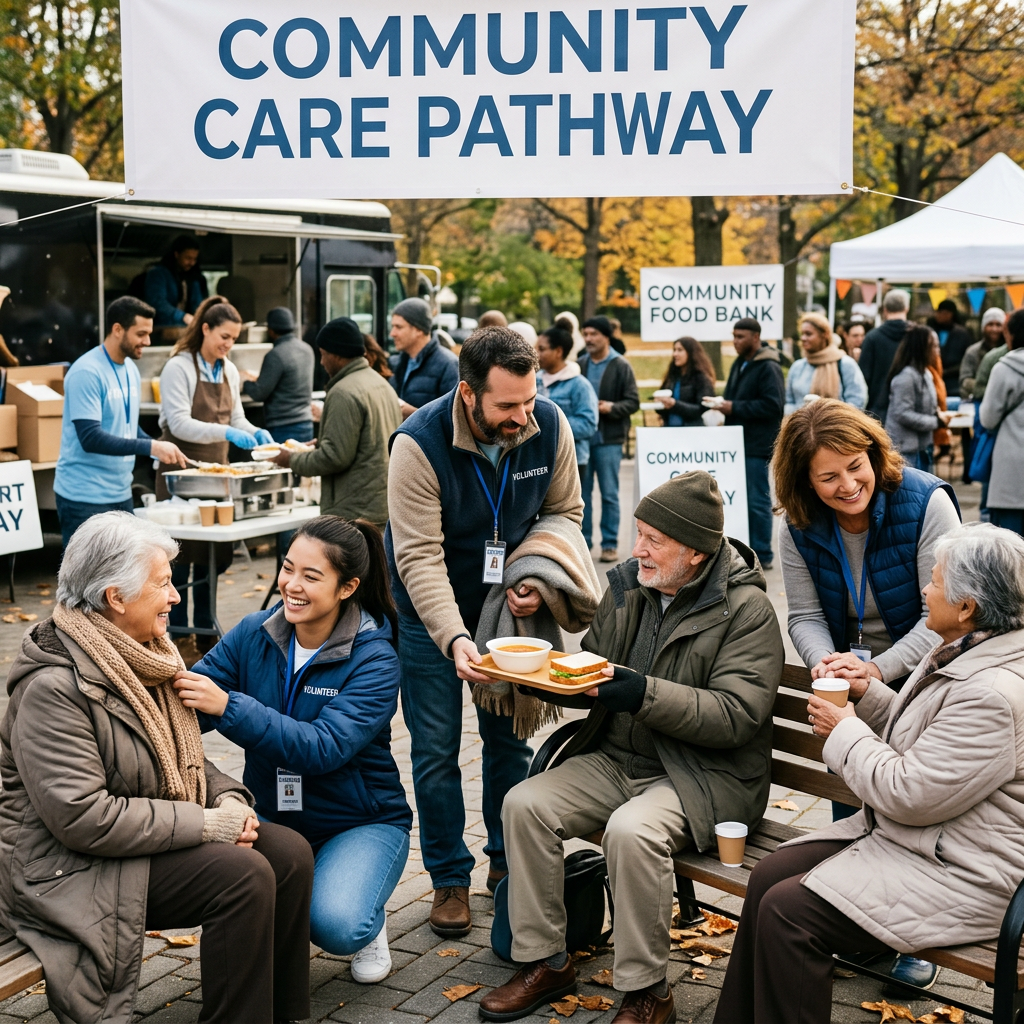
Volunteers serving food and offering support to elderly people at an outdoor community care event

This week is National Volunteer Week, April 19th-25th, a time to recognize those who quietly give their time, energy, and care to others.

In many ways, volunteering is not about doing something extraordinary. It is about doing small things, with a sincere heart, again and again.

Some people offer food.
Some offer time.
Some offer skills.
Some simply offer presence.

These actions may seem simple, but they carry great meaning.

When we think of service, we may remember people like Mohamed Mashally, who spent his life caring for those who could not afford treatment. He did not seek recognition. He simply did what he felt was right.

His life reminds us that helping others does not always require great resources. What matters most is the heart behind the action.

From the teaching of Gautama Buddha, we learn that true giving is not measured by how much we give, but by the intention within. A small act, done with kindness and sincerity, can have a lasting impact.

During this week, we may ask ourselves a simple question:

In our daily life, how can we help others, even in a small way?

It may be offering a kind word.
It may be listening with patience.
It may be giving time to someone in need.

These small actions are like seeds. When planted with care, they grow in ways we may not immediately see.

Volunteering is not only about helping others—it also changes our own mind. When we focus less on ourselves and more on the well-being of others, the heart becomes softer, more open, and more at peace.

In a busy world, it is easy to think that we do not have enough time. But often, it is not about having more time—it is about using a little time with sincerity.

This National Volunteer Week, we do not need to do something grand.

We can begin with something simple.

A small act of kindness.
A moment of patience.
A quiet willingness to help.

And from there, something meaningful can grow.

Because sometimes, the most powerful offering is not something big—

but something done with a true and caring heart.

Link:https://peacelilysite.com/2026/04/21/a-quiet-offering-reflecting-on-national-volunteer-week/

No One to Blame: Understanding the Root of Anger

When Anger Has Nowhere to Stay

In our daily lives, anger often appears without invitation. A single word, a small inconvenience, or an unmet expectation can stir something deep within us. Before we realize it, the mind is no longer calm, and the heart feels as though it is burning.

There was once a woman who had a very bad temper. She often got angry over small things. Afterward, she would regret it. She knew her anger hurt others, and she truly wanted to change. But when anger came, she felt she could not control it.

One day, a friend told her, “There is a wise monk nearby. Maybe he can help you.”
So she decided to go.

When she met the monk, she told him everything—how easily she lost her temper, how much pain it caused, and how helpless she felt. She hoped he would give her some advice.

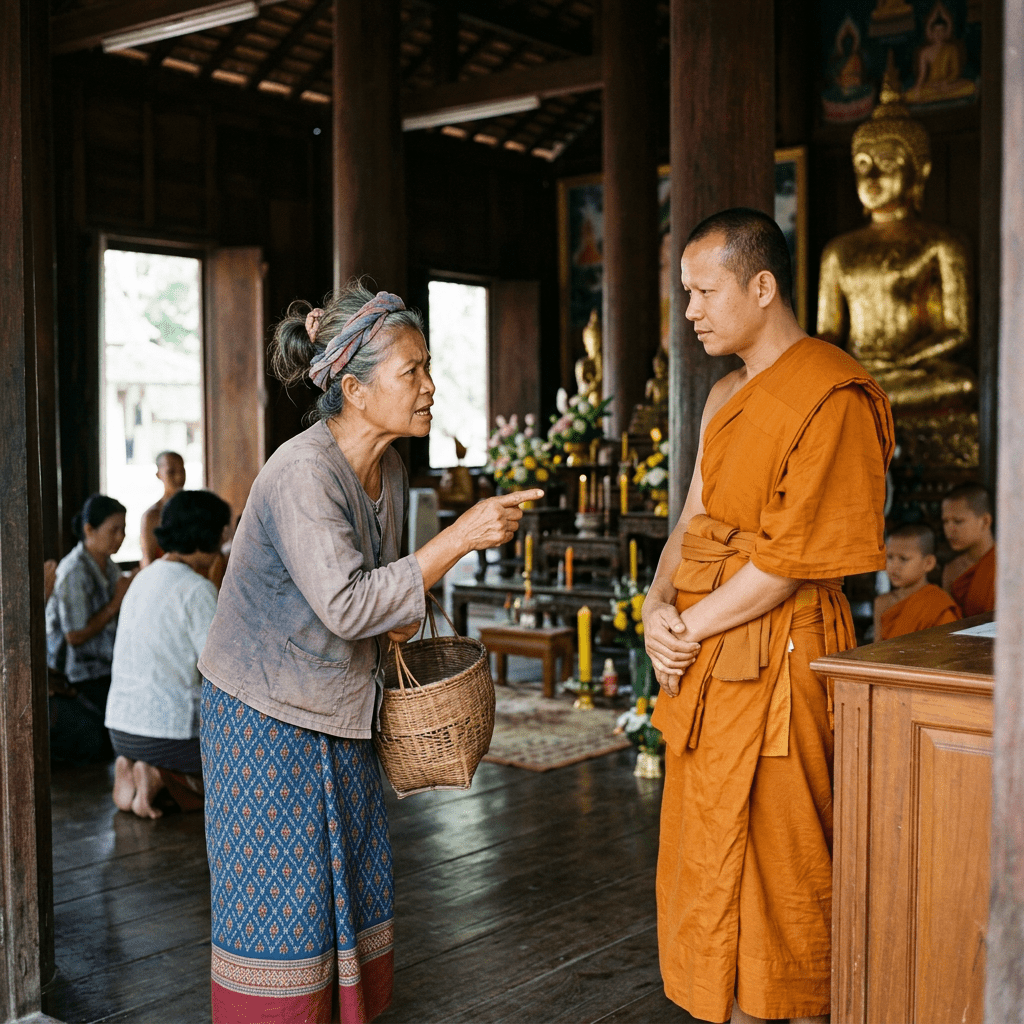
Elder woman talking to a Buddhist monk inside a temple with statues and worshippers in the background

The monk listened quietly. When she finished, he said nothing. He simply led her to a small room, stepped outside, and closed the door.

Soon she realized—the door was locked.

At first, she was confused. Then she became angry.

“I came here for help, and he locks me in?” she thought.

The room was dark and cold. The more she thought about it, the angrier she became. She started shouting, knocking on the door, and scolding the monk loudly.

But there was no answer.

No matter how much she shouted, the monk did not respond.

After a long time, she became tired. Her voice grew quiet.

Then the monk asked from outside, “Are you still angry?”

She said, “I’m angry at myself! Why did I come here?”

The monk replied, “If you cannot forgive yourself, how will you forgive others?” Then he left.

The room became quiet again.

After some time, the monk returned and asked, “Are you still angry?”

She said, “No, I’m not angry anymore.”

“Why?” he asked.

She said, “What’s the use of being angry? I’m still stuck in this dark, cold room.”

Her anger had weakened, but it was still there.

Later, when the monk asked again, she said, “I’m not angry anymore, because you are not worth my anger.”

The monk said, “The root of your anger is still there. You have not let it go.”

His words stayed in her mind.

After a long silence, she asked, “Can you tell me—what is anger?”

This time, the monk came to the door. He did not speak. He simply poured the tea in his cup onto the ground.

The woman watched quietly.

Suddenly, she understood.

“If I do not get angry, where does anger come from?” she thought.
“If my mind is clear, what is there to be angry about?”

At that moment, she saw the truth: anger does not come from others. It comes from our own mind.

From the teaching of Gautama Buddha, we learn that anger arises when the mind is not open—when we hold on too tightly to our own thoughts, feelings, and expectations.

If we do not hold onto anger, it cannot stay.

In our daily life, anger often feels very real. We think others cause it. But if we look carefully, we see that it begins inside us.

When anger comes, we can pause and ask:
Why am I reacting this way?
What am I holding onto?
Can I let it go?

If we become more patient, more tolerant, and more willing to step back, anger will slowly lose its power.

Letting go of anger does not make us weak. It frees us.

When we put down the fire in our heart, we will see that things are not as bad as we thought. Other people are not as terrible as we imagined.

In the end, the lesson is simple:

If we do not create anger, it has nowhere to stay.

Link:https://peacelilysite.com/2026/04/21/no-one-to-blame-understanding-the-root-of-anger/